1. Introduction
University students’ mental health is increasingly recognized as a public health priority, with students typically entering higher education during a developmental stage that seems to carry a heightened risk for the onset of mental health issues [
1,
2]. Within this broader context, international students are a particularly vulnerable subgroup who face challenges with counselling [
3].
According to the UNESCO Institute for Statistics, more than 6.4 million students were enrolled in tertiary education outside their home countries worldwide in 2023, and Chinese students continue to represent one of the largest international student populations globally. Despite increasing awareness of student mental health, international students consistently report lower utilization of university counselling services than domestic students. Among Chinese international students, concerns about language barriers, cultural stigma, and limited trust in mental health professionals remain among the most frequently reported barriers to help-seeking. These trends highlight the growing need to better understand factors influencing counselling satisfaction in culturally diverse university settings.
Among the diverse international student population, Chinese students constitute one of the largest groups within the global population of international students. It has been illustrated that there is an increased level of anxiety, depression, and loneliness among Chinese international students [
4], which correlates with the increased need for campus mental services. Despite the considerable need for psychological support, Chinese international students often encounter distinctive challenges when seeking counselling services [
5,
6].
Existing studies have consistently identified language and cultural differences as major determinants of Chinese international students’ counselling experiences [
7,
8]. The L2 cognitive load hypothesis posits that processing and communicating in a non-native language increases cognitive demands, leading to reduced emotional depth, expressiveness, and spontaneity. In contrast, the affective distance hypothesis suggests that using a second language can create psychological distancing from distressing emotions [
9]. According to the study of [
10], linguistic distancing may improve therapeutic openness and honesty, which may strengthen the working alliance. Cultural differences represent another important dimension of counselling experiences. In many Asian communities, professional counselling may be associated with stigma or concerns about social judgement, which can reduce willingness to seek psychological support [
11,
12]. Cultural incongruence may also influence how clients interpret counsellors’ communication styles, therapeutic expectations, and expressions of empathy. Previous research has shown that perceived cultural mismatch can negatively shape Asian clients’ evaluations of counselling, highlighting the importance of culturally responsive practice [
13]. In contrast, cultural humility emphasizes counsellors’ openness, self-reflection, adaptability, and willingness to learn from clients’ cultural perspectives [
14]. These contrasting possibilities suggest that culture should not be understood solely as a fixed barrier; rather, its influence may depend partly on the degree of cultural congruence and counsellor responsiveness within the counselling relationship.
Previous studies [
15] have treated language-related and cultural factors as two distinct but potentially interacting variables influencing Chinese international students’ counselling experiences. The existing literature suggests that both can present notable barriers to engagement and satisfaction [
16]. Although previous studies have demonstrated that both language barriers and cultural differences influence international students’ counselling experiences, several important gaps remain. First, existing research has generally examined language and culture as independent predictors, with limited attention to how these factors interact in shaping counselling satisfaction. Second, although the working alliance has consistently been identified as a key determinant of psychotherapy outcomes, relatively few studies have explored how alliance-related processes may help explain international students’ counselling experiences in cross-cultural contexts. Third, most previous studies have relied exclusively on quantitative surveys or qualitative interviews, while comparatively few have adopted an integrated mixed-methods approach capable of explaining statistical findings through participants’ lived experiences. These limitations motivate the present study.
Therefore, this study adopted an explanatory sequential mixed-methods design to investigate how perceived language barriers and cultural differences are associated with counselling satisfaction among Chinese international students. Quantitative findings were subsequently elaborated through qualitative interviews to better understand the experiences underlying statistical patterns. Rather than testing the working alliance as a mediator, the qualitative analysis explored how alliance-related experiences, including goal agreement, emotional bonding, and therapeutic tasks, may help explain counselling satisfaction across diverse counselling contexts.
The remainder of this paper is structured as follows.
Section 2 describes the materials and methods, including the study design, participants, measures, and data analysis procedures.
Section 3 presents the quantitative results, followed by the qualitative findings and their integration through a joint display.
Section 4 discusses the principal findings in relation to the existing literature, theoretical mechanisms, and practical implications for university counselling services. Finally,
Section 5 concludes the study with a summary of contributions, acknowledges the limitations, and outlines directions for future research.
The study integrates quantitative associations between perceived language and cultural barriers and counselling satisfaction with qualitative accounts explaining how language, cultural congruence, and alliance-related experiences are experienced during counselling.
2. Materials and Methods
Ethical approval for the study was granted on 17 June 2025 by Education Studies under the authority of the Humanities and Social Science Research Ethics Committee (HSSREC) at the University of Warwick. Two faculty members of the Education Studies Department independently conducted the ethical review of the research proposal. As this was a student research project, no separate ethical approval or reference number was issued. Only after securing this approval did the actual data collection process begin. All participants were provided with a comprehensive information leaflet explaining the study’s purpose, procedures, potential risks and benefits, confidentiality measures, and data handling protocols. Written informed consent was obtained from all participants prior to data collection, and participants were informed of their right to withdraw from the study at any time. All questionnaire data were collected anonymously, and identifiable information from the interview data was removed during transcription to protect participants’ privacy.
2.1. Study Design
This study adopted an explanatory sequential mixed-methods design. Quantitative data were collected first to examine the associations among perceived language barriers, cultural differences, and counselling satisfaction. Qualitative interviews were subsequently conducted to explain and elaborate on the quantitative findings, particularly the unexpected non-significant association between language barriers and counselling satisfaction after controlling for cultural differences. Integration occurred during interpretation through comparison of quantitative statistical results with qualitative themes.
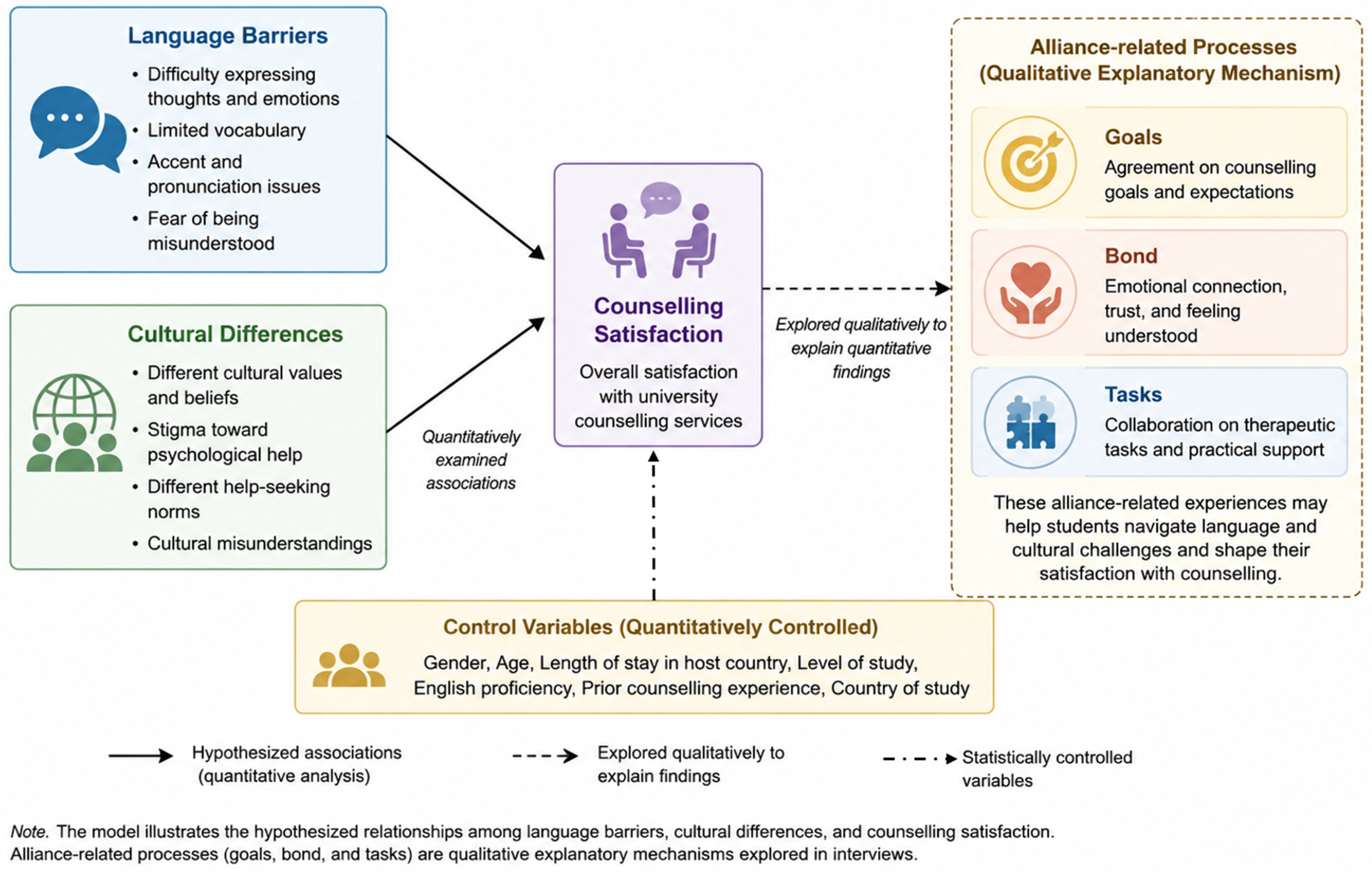
Figure 1 presents the conceptual framework guiding this study. Based on the previous literature, language barriers and cultural differences were expected to be associated with counselling satisfaction. The qualitative component further explored how alliance-related experiences—including goal agreement, emotional bonding, and collaborative therapeutic tasks—may help explain these relationships.
Rather than viewing these theoretical perspectives independently, the present study considers them as complementary lenses for understanding counselling satisfaction among Chinese international students. Acculturation theory explains how adaptation to a new linguistic and cultural environment may shape counselling experiences. Cultural humility emphasizes counsellors’ openness, self-reflection, and responsiveness to clients’ cultural identities, which may reduce perceived cultural distance during counselling. Finally, the Working Alliance Model provides a conceptual lens for understanding how collaborative therapeutic relationships—including shared goals, emotional bonds, and agreed therapeutic tasks—may help explain why some students report positive counselling experiences despite language or cultural challenges. Importantly, in the present study, the working alliance is treated as a qualitative explanatory framework rather than as a quantitatively tested mediator or moderator.
2.2. Quantitative Methodology
The total number of respondents to the questionnaire, which was completed online, was 125. Snowball sampling was used to recruit the participants through a social network. A non-probability snowball sampling strategy was adopted because Chinese international students who had previously received university counselling constitute a relatively difficult-to-access population. Initial participants were invited through the researcher’s academic network and Red Note (Xiaohongshu), after which they were encouraged to share the survey with other eligible students. Although snowball sampling may increase selection bias and reduce representativeness, it has been widely recommended for recruiting hidden or dispersed international student populations.
Red Note (Xiaohongshu) was selected because it has become one of the most widely used online social platforms among Chinese international students. Compared with general social media platforms, Red Note contains numerous overseas student communities, where users actively discuss university life, mental health, and counselling experiences. Therefore, it provided an efficient platform for reaching the target population. Recruitment information was also shared through the researcher’s personal academic and social networks. No other online recruitment platforms were used.
An a priori power analysis was conducted using G*Power 3.1 for multiple linear regression. Assuming a medium effect size (f2 = 0.15), α = 0.05, statistical power = 0.80, and two primary predictors, the minimum required sample size was 107 participants. Therefore, the final sample of 125 participants exceeded the recommended sample size and was considered adequate for the planned statistical analyses.
2.3. Qualitative Methodology
The total number of respondents to interviews was 10; interviews were performed with the use of an online meeting platform (Microsoft Teams). From the sample, ten participants were selected for semi-structured interviews, to be conducted on a voluntary basis. The interviewees were not randomly selected. They were self-selected by indicating in the final question of the questionnaire their willingness to participate in a follow-up interview. These interview participants were studying in various countries, including the United Kingdom, Canada, Australia, and Germany, providing a diverse institutional and cultural background through which they had experienced counselling services. Although this sample was not chosen based on a statistical power test or saturation approach, it was selected to capture a diverse range of significant views within the target population.
Ten participants were purposively selected from survey respondents who indicated willingness to participate in follow-up interviews. Selection sought to maximize variation in gender, country of study, counselling satisfaction, and language proficiency. Because the purpose of the qualitative phase was explanatory rather than theory generation, thematic sufficiency rather than formal data saturation guided sample size. Previous mixed-methods studies have similarly demonstrated that approximately 8–15 interviews are sufficient to explain quantitative findings when participants possess rich experience relevant to the research question.
2.4. Tools
2.4.1. Questionnaire
The questionnaire consisted of three sections. The first collected demographic information, including age, gender, host country, duration of study abroad, English proficiency, and previous counselling experience. The second consisted of an adapted version of the Satisfaction with Therapy and Therapist Scale—Revised (STTS-R). The third included six self-developed items measuring perceived language barriers and cultural differences.
The self-developed items were developed following an extensive review of the previous literature on international student counselling and were refined through expert consultation and pilot testing involving ten Chinese international students.
The quantitative tool used in this study was an online questionnaire created using Qualtrics. It consisted of 29 items and took approximately three minutes to complete. The final version is provided in
Appendix A. It included three main sections: demographic information, satisfaction with counselling services, and perceptions of language and cultural barriers. Demographic questions were used to verify participants’ eligibility, including age, nationality, language background, length of stay in the host country (less than 6 months, 6 to 12 months, more than 1 year), and prior use of university counselling services.
The Satisfaction With Therapy and Therapist Scale—Revised (STTS-R) was adapted for this study. The Outcome Variable subscale was removed; some item orders were modified based on pilot test feedback to better match participants’ thought processes; and one item, “I would recommend the program to a friend”, was changed to “I would recommend the service to other international students” to fit the study population and research questions. At the start of this section, an additional item asked how many times the participant had attended counselling, which served as a validity check for prior counselling experience. The STTS-R items were measured on a five-point Likert scale (1 = strongly disagree, 2 = disagree, 3 = neutral, 4 = agree, 5 = strongly agree). Example items include:
I am satisfied with the quality of the therapy I received.
I am now able to deal more effectively with my problems.
The therapist seemed to understand what I was thinking and feeling.
Six self-developed items were included to assess participants’ perceptions of language and cultural barriers in counselling. Three items addressed language-related factors, and three addressed cultural background factors. These items were also measured on a five-point Likert scale (1 = strongly disagree, 2 = disagree, 3 = neutral, 4 = agree, 5 = strongly agree). The items were:
Speaking in a second language made it hard to express my feelings in counseling.
I was worried the counselor might misunderstand me because of language.
I sometimes needed to translate mental-health terms mentally before answering.
Cultural differences (values, communication style) made counseling less comfortable.
I felt the counselor sometimes compared my behaviour to that of local (majority-culture) students.
The counselor did not show understanding of the historical and social context affecting people from my culture.
2.4.2. Semi-Structured Interviews
The qualitative component consisted of semi-structured interviews conducted via Microsoft Teams. Each interview lasted between 15 and 25 min. The interview guide included open-ended questions covering four main areas:
Experiences of satisfaction with counselling services.
Language barriers encountered during counselling (for example, “How easy or difficult was it to express your thoughts and feelings in a second language? Can you give an example?”).
Cultural barriers in counselling (for example, “How much did your cultural background influence your comfort in counseling? Can you give an example?”).
Suggestions for improving access to services.
Alliance-related experiences during counselling, including goal agreement, emotional bonding, trust, and collaboration on therapeutic tasks (for example, “Did you feel that you and the counsellor shared a clear understanding of what you wanted to achieve in counselling?”, “Did you feel understood and accepted by the counsellor?”, and “How did you and the counsellor work together on strategies or tasks during the counselling sessions?”).
These questions were included to explore alliance-related experiences as a qualitative explanatory context rather than to measure the working alliance quantitatively or test it as a mediator or moderator.
Since a semi-structured format was employed, the questions were asked in a flexible way, with additional questions to discuss some experiences and examples in more detail according to the answers of the participants. All interviews were conducted in Chinese, as preferred by participants. The interview guide was translated by the researcher and refined through pilot testing to improve accuracy and ease of understanding. The final version is provided in
Appendix B.
All the interviews were audio-taped and the spoken words transcribed verbatim, with the researcher reviewing transcripts carefully and correcting any errors. Inductive thematic analysis was done, whereby the themes were identified directly in the data, thereby improving the credibility and authenticity of the results. Additionally, reflexive journaling was employed to record personal assumptions, emotional responses and decisions regarding the data coding and interpretation. The practice favoured openness and assisted in the effort to make sure that the analysis was based on stories of participants, not researcher expectations.
Internal consistency for the language barrier subscale was acceptable (Cronbach’s α = 0.96), while the cultural difference subscale demonstrated satisfactory reliability (Cronbach’s α = 0.97).
In order to increase accessibility, the researcher, as a fluent bilingual speaker, translated all the questionnaires into simplified Chinese. Although there was no formal back-translation, translation was revised after the pilot with a view to semantic fidelity, clarity, and cultural relevancy.
2.5. Data Analysis
2.5.1. Quantitative Data Analysis
Quantitative data analysis was conducted using SPSS 26.0. Descriptive statistics were first used to summarize participants’ demographic characteristics, satisfaction scores, perceived language barrier scores, and perceived cultural barrier scores. Inferential statistics were then applied to examine group differences and relationships among variables. Independent-samples t-tests were used to compare scores for each dimension (satisfaction, language barriers, cultural barriers) between two-group variables, such as gender. Because the language barrier and cultural difference items were newly developed exploratory measures consisting of three items per construct, no exploratory or confirmatory factor analysis was conducted in the present study. Their preliminary reliability was instead evaluated using Cronbach’s alpha, and their construct validity remains to be established in future research using larger independent samples. Prior to regression analysis, assumptions including normality of residuals, homoscedasticity, multicollinearity, and independence of errors were examined. Variance Inflation Factors (VIFs) were below commonly accepted thresholds, indicating no evidence of problematic multicollinearity.
In the case of checking for associations between key continuous variables, Pearson correlation analysis was employed to assess relationships that existed between satisfaction scores, language barrier scores, and cultural barrier scores. Subsequently, multiple linear regression was used to examine the unique associations of perceived language barriers and cultural differences with counselling satisfaction. Multiple linear regression was subsequently conducted with counselling satisfaction as the dependent variable and perceived language barriers and cultural differences as the primary predictors. Demographic variables were examined separately through group comparisons but were not entered as covariates in the final regression model. This specification was chosen to focus on the two theoretically central predictors examined in the present study. The absence of demographic covariates is acknowledged as a limitation of the regression analysis.
2.5.2. Qualitative Data Analysis
Interviews were analyzed following Braun and Clarke’s six-step thematic analysis. Initial codes were generated independently from repeated reading of transcripts. Similar codes were subsequently grouped into candidate themes. Themes were reviewed, refined, and discussed with the research supervisor until conceptual agreement was reached. Reflexive memo writing was maintained throughout analysis to enhance transparency and reduce researcher bias.
We coded the transcripts of the interviews line by line, and codes and themes emerged inductively. Even though the initial coding process was data-driven, the corresponding theories of language barriers, acculturation, and cultural competence were referred to in the interpretation stage in order to refine and contextualize the analysis. Manual coding allows for close engagement with the data, enabling the researcher to detect subtle linguistic and cultural nuances. To ensure transparency and analytical rigour, the researcher engaged in iterative code-review cycles, refining codes and themes through multiple passes. Reflexive journaling was also employed in recording coding decisions, analytical thoughts, and positionality of the researcher. The dissertation supervisor could access selected transcripts and coding records to be viewed in order to have an independent critical evaluation of the study.
During interpretation, acculturation theory was used to contextualize participants’ experiences of adapting to the linguistic and social environment of the host country, while cultural competence and cultural humility perspectives were used to interpret accounts concerning counsellor responsiveness, cultural congruence, and perceived misunderstanding. These theoretical perspectives were used as interpretive lenses after inductive themes had been identified rather than as predetermined coding categories.
Finally, the findings derived from the quantitative and qualitative analyses were compared and integrated. This process involved examining how quantitative results, such as satisfaction scores and reported barrier intensities, aligned with or differed from qualitative themes, such as communication difficulties and cultural mismatches. The aim was to use insights from each dataset to complement and cross-validate the other, supporting a cohesive and holistic understanding of participants’ experiences.
Trustworthiness was enhanced through prolonged engagement with the data, reflexive journaling, regular supervisory discussions, and maintenance of an audit trail documenting analytical decisions.
2.6. Integration of Mixed Methods
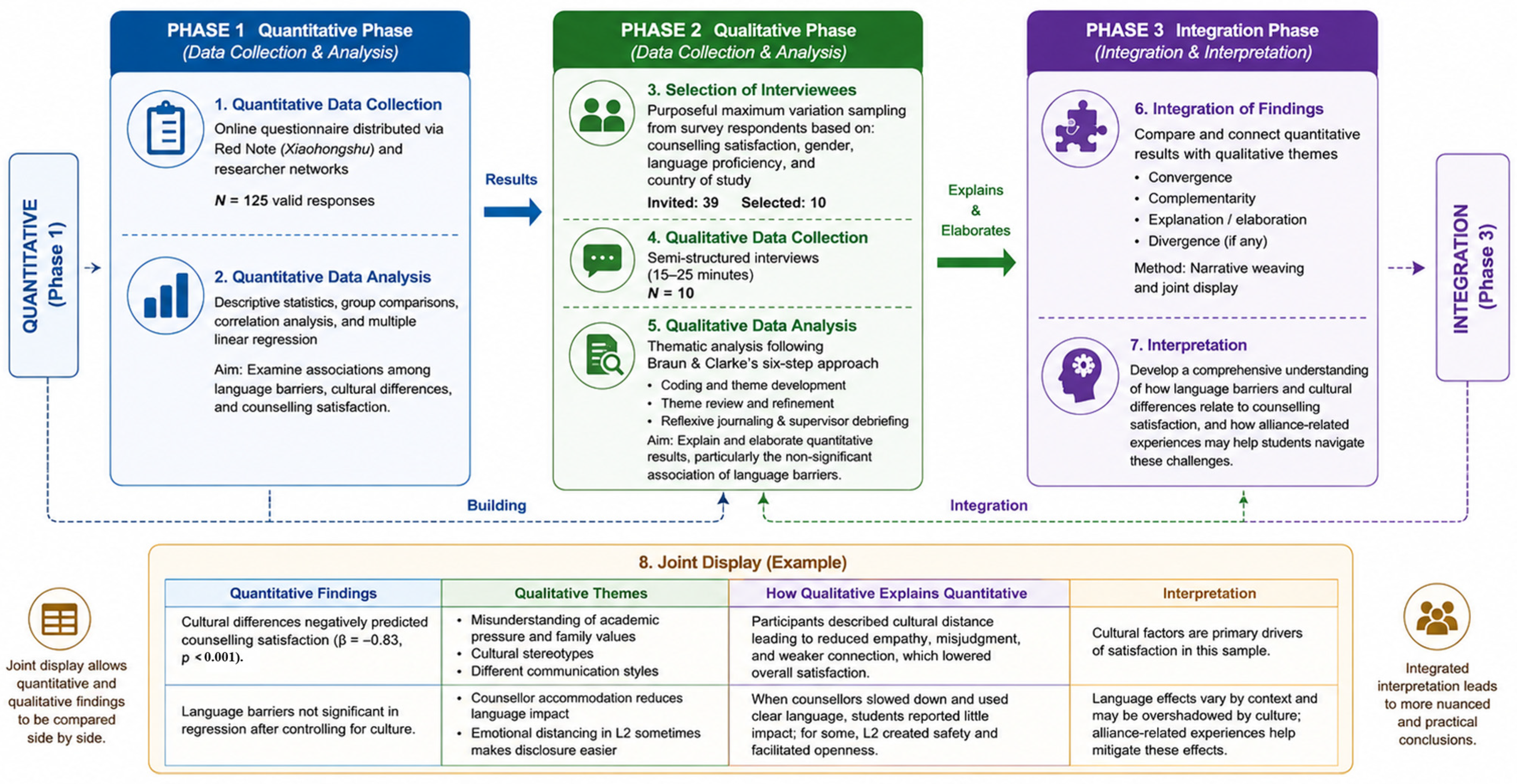
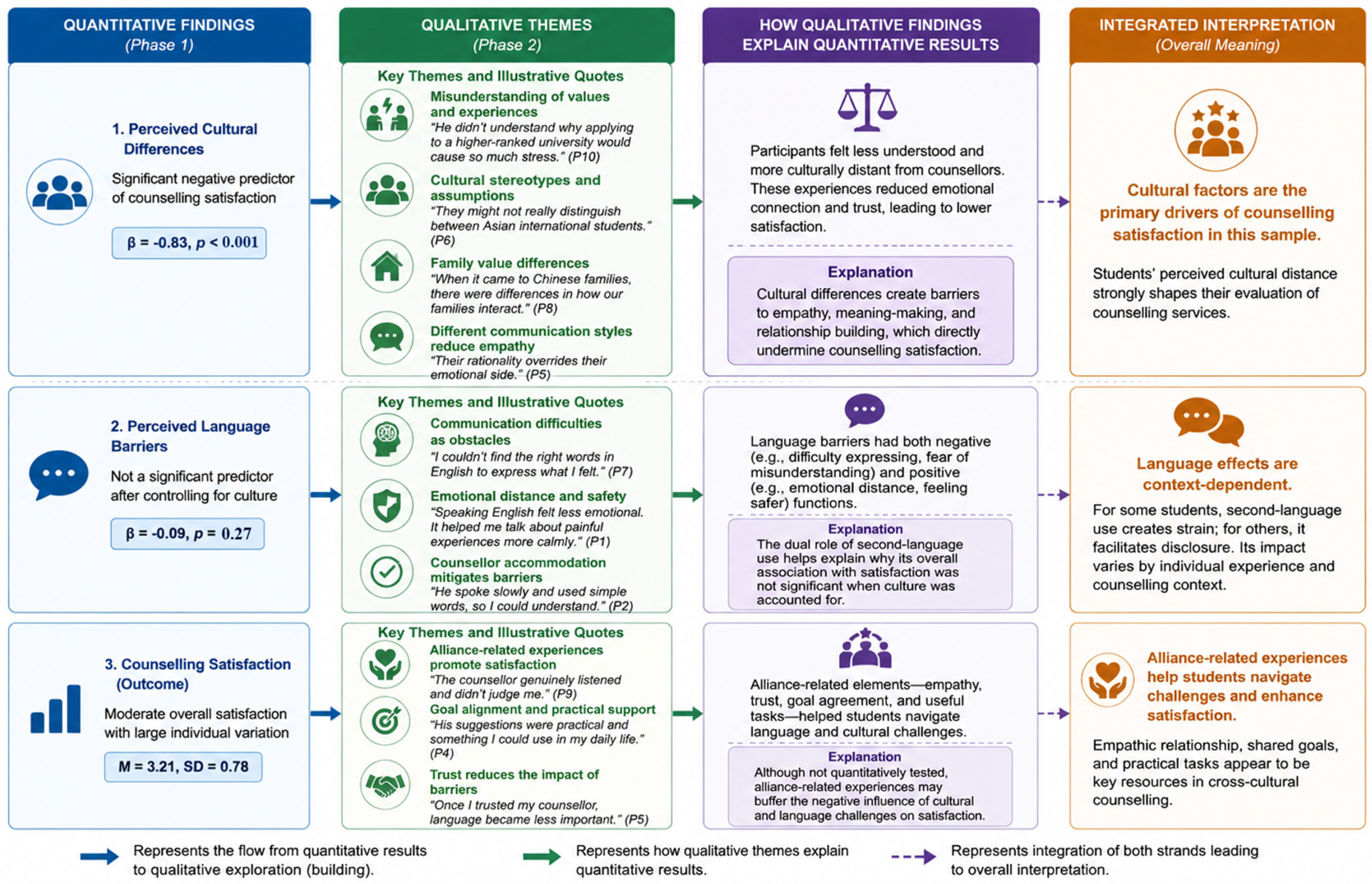
Figure 2 illustrates the explanatory sequential mixed-methods design adopted in the present study. In Phase 1, quantitative data were collected through an online questionnaire administered to Chinese international students who had previously used university counselling services. Descriptive statistical analysis, group comparisons, correlation analyses, and multiple linear regression were conducted to identify the relationships among perceived language barriers, cultural differences, and counselling satisfaction. In Phase 2, a purposive sample of participants was selected from survey respondents to participate in semi-structured interviews. The qualitative phase was designed to provide a deeper understanding of the quantitative findings, particularly to explain why perceived language barriers were no longer statistically significant after cultural differences were included in the regression model. Finally, in Phase 3, quantitative and qualitative findings were integrated through narrative comparison and joint interpretation, allowing statistical associations to be interpreted alongside participants’ lived experiences.
Integration occurred during interpretation using a narrative weaving strategy and a joint display. Quantitative findings were first summarized statistically and then compared with qualitative themes to identify areas of convergence, complementarity, and explanation. Particular attention was given to explaining why perceived language barriers became statistically non-significant after cultural differences were included in the regression model. Rather than testing causal mechanisms, the qualitative findings were used to provide contextual explanations for quantitative associations.
Several methodological considerations should be acknowledged. First, snowball sampling may have introduced self-selection bias and limited representativeness. Second, the newly developed language and cultural difference items underwent pilot testing but were not subjected to exploratory or confirmatory factor analysis. Third, back-translation was not performed during questionnaire translation. Finally, the qualitative phase emphasized explanatory depth rather than theoretical saturation.
Because the analysis followed a reflexive thematic approach conducted by the primary researcher, formal inter-coder reliability statistics were not calculated. Analytical credibility was instead supported through iterative code review, reflexive journaling, supervisory discussion, and maintenance of an audit trail.
4. Discussion
4.1. Principal Finding
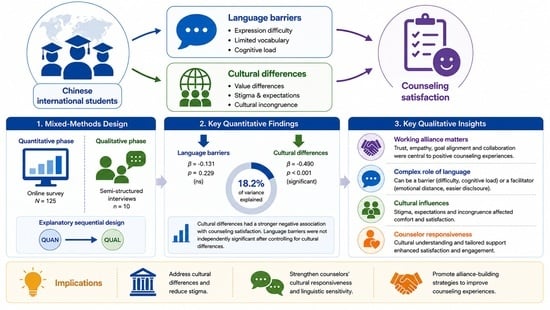
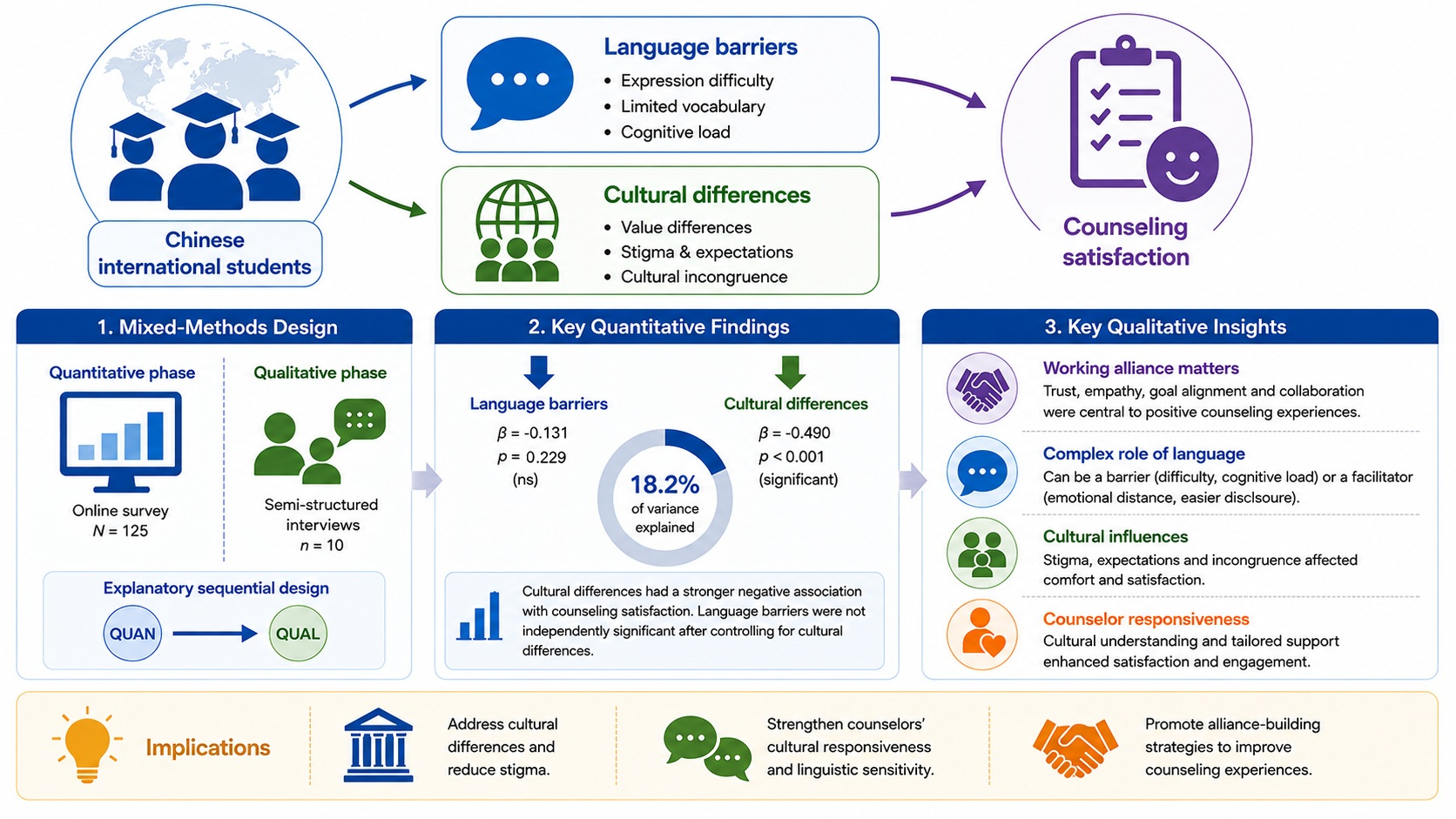
The present study employed an explanatory sequential mixed-methods design to investigate counselling satisfaction among Chinese international students. Overall, three principal findings emerged. First, perceived cultural differences showed the strongest negative association with counselling satisfaction. Second, perceived language barriers were not independently associated with counselling satisfaction after cultural differences were controlled for. Third, qualitative findings suggested that alliance-related experiences—including empathy, trust, collaborative goal setting, and practical therapeutic support—may help explain why some students reported positive counselling experiences despite language and cultural challenges. Together, these findings provide a more nuanced understanding of counselling experiences among Chinese international students.
An important contribution of this study lies in the integration of quantitative and qualitative evidence. Whereas quantitative analyses identified statistical associations, qualitative interviews provided contextual explanations for these findings. In particular, interviews clarified why language barriers did not remain statistically significant after accounting for cultural differences and illustrated how culturally responsive communication practices may improve counselling experiences. These findings demonstrate the added value of the explanatory sequential mixed-methods design.
4.2. Language Mechanisms: Cognitive Load and Affective Distance in a Mixed Pattern of Effects
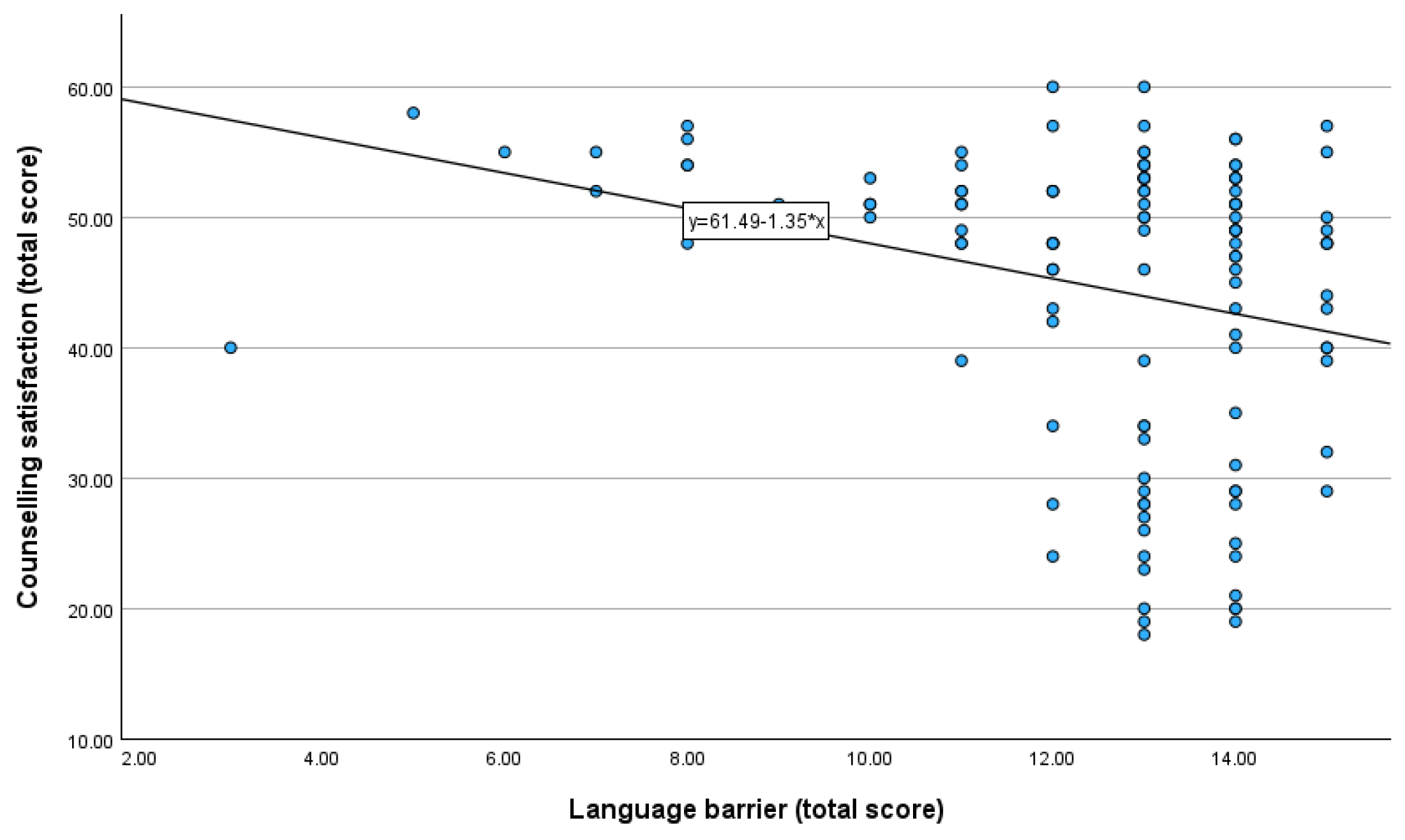
Quantitatively, perceived language barriers show a modest negative correlation with satisfaction. However, when cultural differences are entered into the regression, the language coefficient is not significant. There are several theoretically grounded reasons for this. First, the qualitative interviews demonstrate heterogeneity. Several participants described clear cognitive load effects. They struggled to retrieve precise words, could not easily convey fine-grained details, and felt that their emotions were not conveyed by their words. Second, others experienced little impact because sessions centred on being listened to, supported by non-verbal attunement and deliberate accommodation by counsellors. Additionally, the sample composition likely attenuated language effects through restriction of range. Nearly half of participants reported proficient or native-level fluency in the university’s language. Where proficiency is high and counsellors routinely adjust pacing and vocabulary, the cognitive load pathway is less likely to depress satisfaction, which again reduces the size of the language effect. Together, these reasons support the current result that the unique language effect is small.
Finally, the interviews showed mechanisms by which language effects are moderated by counsellor behaviour. Slowing down, simplifying phrasing, checking understanding, and noticing emotional cues all reduce cognitive load and make room for meaning repair. Where such adjustments were perceived, language seemed to matter less. Where such adjustments did not occur, participants reported reduced efficiency, fear of being misunderstood, and intensification of negative effects during their attempt to narrate trauma. Taken together, these patterns indicate that the effect of language on satisfaction is unstable across students and sessions, with substantial variability driven by whether cognitive load or affective distance is activated and by the extent of counsellor accommodation.
Contrary to our initial expectation, perceived language barriers did not remain statistically significant after cultural differences were included in the regression model. The qualitative findings provide several possible explanations for this result. First, language barriers may partially overlap with broader cultural adaptation processes. Second, participants reported that counsellors’ communication strategies, including slowing speech, checking understanding, and adapting explanations, substantially reduced communication difficulties. Third, some students perceived communicating in English as emotionally less intense than communicating in Chinese, allowing greater psychological distance when discussing sensitive experiences. These findings suggest that the influence of language is context-dependent and may differ across counselling settings and individual communication preferences.
4.3. Cultural Congruity and Cultural Humility as Primary Drivers of Satisfaction
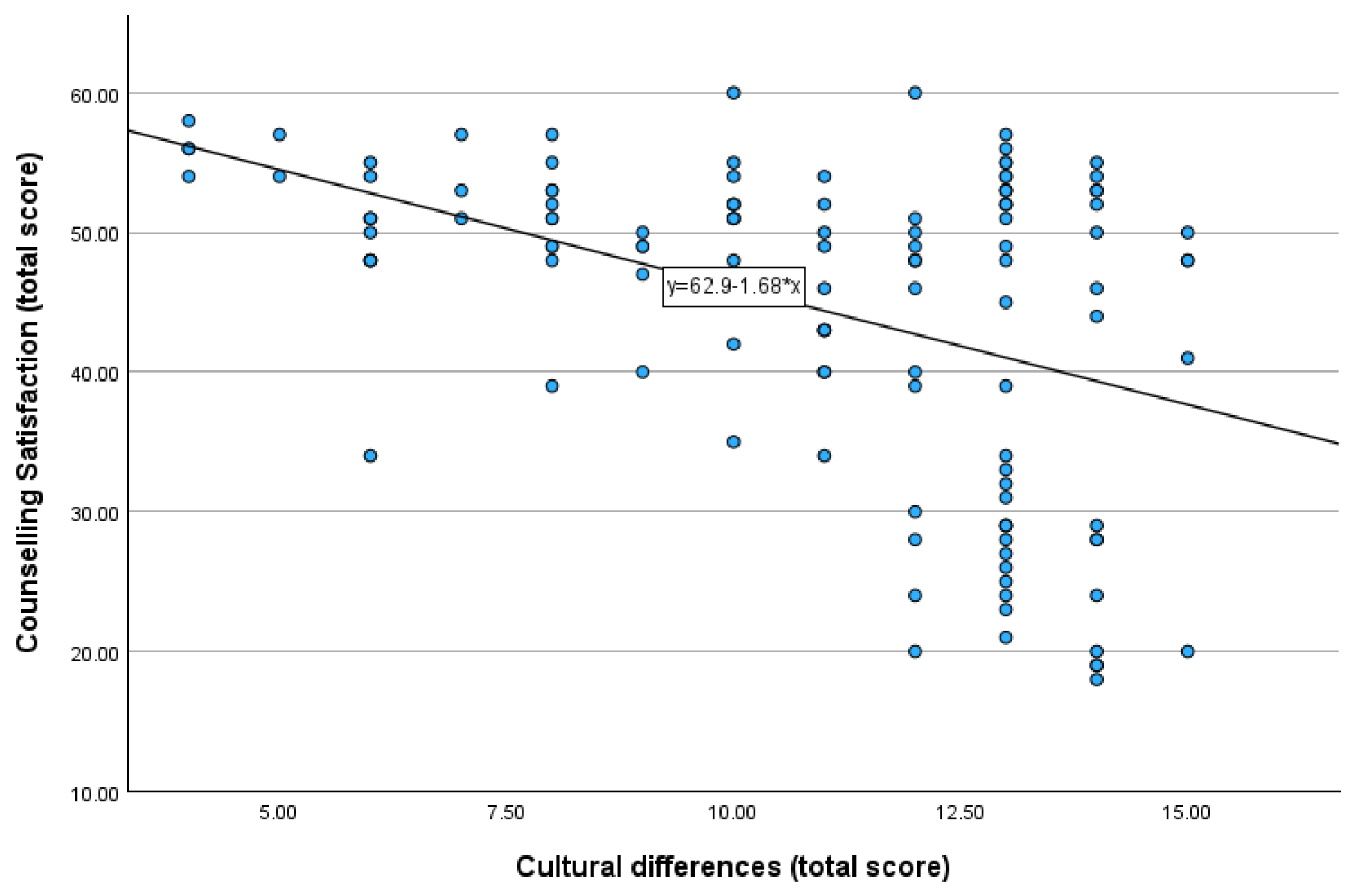
The finding that perceived cultural differences were more strongly associated with counselling satisfaction than language barriers is consistent with previous research emphasizing the importance of culturally responsive counselling. Rather than reflecting differences in language alone, participants frequently described broader challenges involving family expectations, communication styles, emotional expression, and culturally shaped attitudes toward mental health. These findings suggest that cultural understanding may play a more influential role than linguistic proficiency in shaping counselling experiences among Chinese international students.
The cultural lens receives the strongest empirical support in this study. Perceived cultural differences showed the clearest and most consistent link with lower counselling satisfaction, and this association remained robust in the multivariate model. In practical terms, greater perceived cultural distance went hand in hand with noticeably lower satisfaction. The qualitative accounts supply concrete content for these concepts. Students described moments when counsellors did not understand the academic prestige economy that structured their stress, relied on broad regional stereotypes, or approached sessions with a communication style that felt argumentative rather than empathic. These are instances of low cultural congruity that undermine alliance formation and depress satisfaction. In contrast, when counsellors showed curiosity about family dynamics, slowed down to ask about context, or shared a similar cultural background, participants reported easier rapport, less need for lengthy explanations, and a feeling of being known.
It is noteworthy that perceived cultural differences did not vary reliably by age, duration abroad, or language proficiency in the quantitative analyses. This suggests an interactional experience in counselling rather than a stable trait. In other words, cultural differences are registered in the room through the way counsellors understand academic pressure, family roles, and acceptable emotional expression.
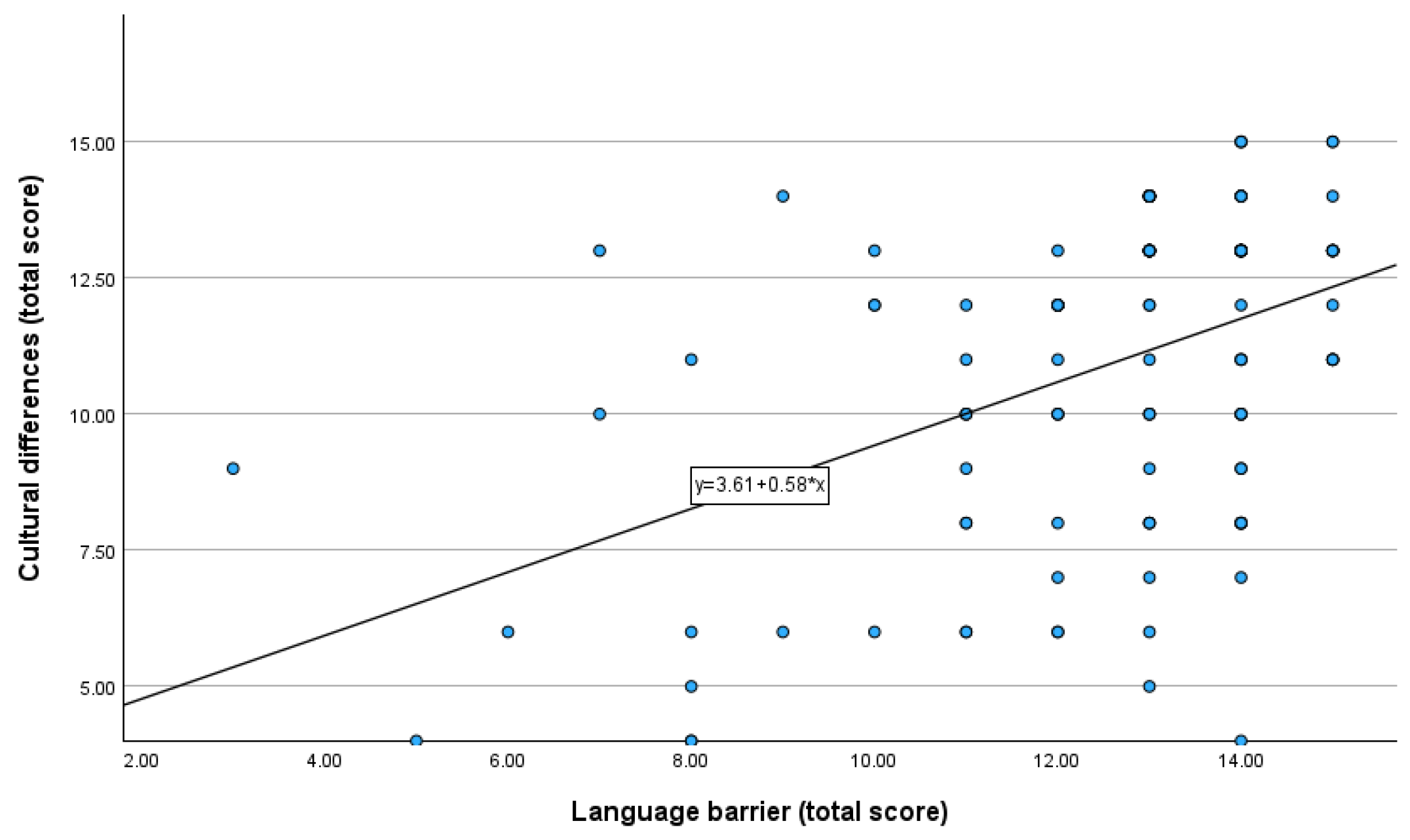
A further observation helps to explain why culture emerges as a primary predictor. Perceived language barriers were positively associated with perceived cultural differences. This pattern points to conceptual overlap, which is visible in the interview material. Many misunderstandings were not about vocabulary or grammar but about reasoning styles, assumptions about family obligations, and expectations of what a counsellor should do in a session. These are cultural frames within which words are interpreted. When that frame is misaligned, students may also experience the language as more effortful. In the regression model, once this shared variance is accounted for by the cultural difference measure, the unique contribution of language barriers becomes small, which is exactly what the non-significant language coefficient indicates.
Two additional interpretive points reinforce this reading. First, the qualitative material indicates that culture exerts a more immediate influence on satisfaction than language and therefore functions as the more proximal driver. When the cultural fit is good or when counsellors practice cultural humility, students can tolerate modest language strain and still evaluate sessions positively. When cultural congruence is poor, even fluent exchanges can feel off-target because meanings and role expectations diverge. Second, the same material shows how the working alliance operates within the cultural frame. Clear goals, an empathic bond, and practical tasks often restored momentum even when students perceived distance. Where these alliance elements were thin, the effects of cultural distance were amplified.
4.4. Alliance-Related Experiences as a Qualitative Explanatory Context
Although the present study did not quantitatively measure the working alliance, interview findings consistently highlighted alliance-related experiences—including empathy, trust, collaborative goal setting, and practical therapeutic support—as important aspects of positive counselling experiences. Therefore, rather than demonstrating mediation or buffering effects, the present findings suggest that alliance-related processes may help explain how some students successfully navigated language and cultural challenges during counselling. Future research should employ validated measures of the working alliance to examine these relationships more rigorously.
4.5. Exploratory Implications from Participants
Several practical implications emerge from the present findings. First, universities should strengthen culturally responsive counselling training by increasing counsellors’ understanding of Chinese cultural values, family expectations, and help-seeking beliefs. Second, counsellors should adopt communication strategies that reduce language-related difficulties, including checking understanding, using plain language, and encouraging clarification. Third, universities may consider providing multilingual counselling resources or interpreter support where appropriate. Finally, training programmes should emphasize alliance-related skills such as empathy, collaborative goal setting, and trust building, which participants consistently identified as important components of satisfying counselling experiences.
Participants emphasized a friendly and encouraging stance, stronger cross-cultural understanding, communication calibrated to the client’s language ability, adaptation to cultural and developmental background, and listening with individualized analysis. These preferences help to account for the variation in satisfaction observed across interviews. Warmth and careful listening support the bond element of the working alliance and make it easier to persist through moments of imprecision. Curiosity about family roles, academic pressures, and social values reduces the sense of cultural distance that emerged as the strongest quantitative predictor of lower satisfaction. Adjustments in pace and vocabulary and checks of understanding lower processing demands, which clarifies why some participants experienced little impact of language while others described a clear strain. Tailoring approaches to background aligns goals and makes concrete tasks feel doable beyond the session, consistent with reports of continued use of techniques.
- 2.
Advice for services.
Participants wanted to know about and choose counsellors, to have shorter waits and easier access, to receive clearer communication about available support, to have more flexible session lengths and formats, and to see more diverse counselling resources, including translation assistance when native language provision is not feasible. These requests speak directly to the mechanisms identified above. Choice increases the likelihood of cultural congruity from the outset and reduces explanatory burden in early meetings. Shorter waiting times and clearer routes into care encourage earlier help-seeking, which allows communication adjustments and alliance building before distress escalates. Flexibility in session structure makes it more feasible to teach and rehearse practical strategies that transfer to daily life. Diversifying resources and offering translation support reduce misunderstandings when language demands are high and lessen perceived cultural distance. Together, the counsellor level and service level changes address the routes through which culture and language affected satisfaction in this sample.
4.6. Strengths and Limitations
This study has several strengths. It is among the few studies to investigate counselling satisfaction among Chinese international students using an explanatory sequential mixed-methods design. The integration of quantitative and qualitative findings provided richer insights than either method alone and highlighted the complexity of counselling experiences in cross-cultural contexts.
Several limitations should be acknowledged. First, the use of non-probability snowball sampling may have introduced self-selection and network-related sampling bias and may limit the representativeness of the quantitative sample. Participants who were more connected to relevant social networks or more willing to discuss counselling experiences may have been more likely to participate. Second, the qualitative interview participants were self-selected from survey respondents who volunteered for follow-up interviews. Although purposive selection was subsequently used to maximize variation in gender, host country, counselling satisfaction, and language proficiency, self-selection may still have favoured participants with stronger or more salient counselling experiences.
Third, the quantitative sample was not sufficiently balanced across demographic categories. Female participants accounted for approximately 80% of the sample, while some age and language-proficiency groups contained very few participants. These imbalances reduce statistical power for subgroup comparisons and limit the generalizability of the findings. In addition, the regression model included language barriers and cultural differences as the primary predictors and did not include demographic control variables such as gender or duration of stay. The resulting estimates should therefore be interpreted as associations within the present sample rather than comprehensive explanations of counselling satisfaction.
Fourth, the language barrier and cultural difference measures were developed specifically for this study. Although both subscales demonstrated high internal consistency in the present sample, internal consistency does not establish construct validity. Exploratory and confirmatory factor analyses were not conducted because these measures were exploratory, newly developed short scales, and the available sample was limited. Future studies should validate these measures in larger and independent samples using factor-analytic and other validity procedures.
Fifth, the qualitative interviews lasted approximately 15–25 min. Although this duration allowed participants to describe experiences directly relevant to the quantitative findings, it may have restricted the depth and breadth of their accounts. The qualitative sample was also relatively small and was selected for explanatory purposes rather than statistical representation. The findings should therefore be interpreted as contextual explanations rather than as exhaustive accounts of Chinese international students’ counselling experiences.
Sixth, participants were studying in different host countries, including the United Kingdom, Canada, Australia, and Germany. Differences in university counselling systems, service accessibility, counsellor training, and language provision across these settings may have influenced participants’ experiences. These contextual differences were not examined as independent predictors in the present analysis and therefore represent an additional source of unexplained variation.
Seventh, the study relied primarily on self-reported perceptions of counselling satisfaction, language barriers, and cultural differences. Such measures may be affected by recall, response style, or participants’ subjective interpretation of their counselling experiences. The cross-sectional design also prevents conclusions about temporal or causal relationships among the variables.
Finally, although alliance-related experiences emerged consistently in the qualitative data, the working alliance was not measured using a validated quantitative instrument. Accordingly, the present study cannot establish whether the working alliance statistically mediates or moderates the associations between language barriers, cultural differences, and counselling satisfaction. The alliance-related findings should therefore be interpreted as qualitative explanatory evidence and as a basis for future hypothesis testing rather than as evidence of empirically established mediation or moderation.
Future research should recruit larger and more diverse samples using probability-based sampling where feasible. Longitudinal and cross-cultural comparative studies would further clarify how counselling experiences evolve over time and across host countries. Future studies should also incorporate validated measures of the working alliance and culturally responsive counselling competencies to better understand the mechanisms underlying counselling satisfaction among international students.
In conclusion, the present study demonstrates that counselling satisfaction among Chinese international students is shaped primarily by perceived cultural differences rather than language barriers alone. Qualitative findings further indicate that alliance-related experiences, including empathy, trust, collaborative goal setting, and practical therapeutic support, may help students navigate cross-cultural counselling more effectively. These findings highlight the importance of integrating culturally responsive counselling practices with alliance-building strategies to improve mental health support for international students.
5. Conclusions
This study employed an explanatory sequential mixed-methods design to investigate counselling satisfaction among Chinese international students, with particular attention to perceived language barriers, cultural differences, and alliance-related experiences. The quantitative findings indicated that perceived cultural differences showed the strongest negative association with counselling satisfaction, whereas perceived language barriers were not independently associated with satisfaction after cultural differences were taken into account. Qualitative findings further demonstrated that students’ counselling experiences were shaped by complex interactions among cultural understanding, communication practices, and counsellor responsiveness. Together, these findings provide a more comprehensive understanding of counselling satisfaction within cross-cultural university counselling contexts.
Although the present study did not quantitatively measure the working alliance, qualitative findings consistently highlighted alliance-related experiences—including empathy, trust, collaborative goal setting, and practical therapeutic support—as important elements associated with positive counselling experiences. Accordingly, the findings should not be interpreted as evidence of mediation or buffering effects. Rather, they suggest that alliance-related experiences may help explain how some Chinese international students navigate language and cultural challenges during counselling. The study also contributes to the growing literature on international students’ mental health by demonstrating the value of integrating quantitative and qualitative evidence. Rather than relying solely on statistical associations, the explanatory sequential mixed-methods design enabled interview findings to contextualize and extend quantitative results, thereby providing a more nuanced understanding of counselling experiences among Chinese international students.
From a practical perspective, the findings suggest that universities should strengthen culturally responsive counselling practices by improving counsellors’ understanding of Chinese cultural values, enhancing culturally sensitive communication skills, and promoting alliance-related counselling practices such as empathy, collaborative goal setting, and trust building. These approaches may contribute to improving counselling experiences for international students from diverse cultural backgrounds. Although exploratory and cross sectional, the study offers a coherent account of when and why language and culture matter for satisfaction in university settings and how their influence travels through alliance processes. Future research should recruit larger and more diverse samples, include validated measures of the working alliance, and further examine counselling experiences across different host countries and counselling contexts. Longitudinal and cross-cultural comparative studies would also help clarify how counselling satisfaction develops over time and whether alliance-related experiences operate similarly across different international student populations.
By integrating quantitative analyses with qualitative explanations, this study extends current understanding of counselling satisfaction beyond simple statistical relationships. The mixed-methods approach enabled the identification of contextual factors that would not have been apparent through quantitative analysis alone, illustrating the importance of combining numerical evidence with participants’ lived experiences when investigating culturally complex counselling processes. Overall, the present findings underscore the importance of culturally responsive counselling and highlight the value of explanatory sequential mixed-methods research for advancing understanding of international students’ counselling experiences in increasingly diverse higher education settings.