Multidisciplinary Strategies to Manage Treatment-Related Dermatologic Toxicity and Improve Quality of Life in Cancer Patients: A Narrative Review

 , , , , , and
Highlights
- Dermatologic toxicities are highly prevalent across anticancer therapies and significantly impact patients’ quality of life, body image, and treatment adherence.
- Proactive and multidisciplinary management—particularly involving pharmaceutical care—can reduce severity of toxicities and promote treatment adherence, despite the certainty of the evidence being low to moderate.
- Early identification and structured management of dermatologic adverse events should be integrated into routine oncology care to improve patient outcomes.
- There is a need for standardized, evidence-based pharmaceutical care protocols and higher-quality studies to guide clinical practice in oncodermatology.
Abstract
1. Introduction
2. Materials and Methods
2.1. Protocol and Registration
2.2. Research Question and Eligibility Criteria
- -
- Studies reporting on the incidence or prevalence of dermatologic toxicities in oncology patients undergoing anticancer therapy OR
- -
- Studies evaluating preventive, monitoring, or management strategies for dermatologic toxicities, including pharmaceutical and multidisciplinary care interventions OR
- -
- Studies addressing patient-reported outcomes (such as body image or quality of life) in the context of dermatologic toxicity AND
- -
- Study designs including randomized or non-randomized clinical trials, observational studies, systematic or narrative reviews, and clinical practice guidelines AND
- -
- Publications in English, Portuguese, Spanish, or French within the last 10 years.
- -
- Single case reports, editorials, commentaries, and letters to the editor OR
- -
- Non-human studies.
2.3. Information Sources and Search Strategy
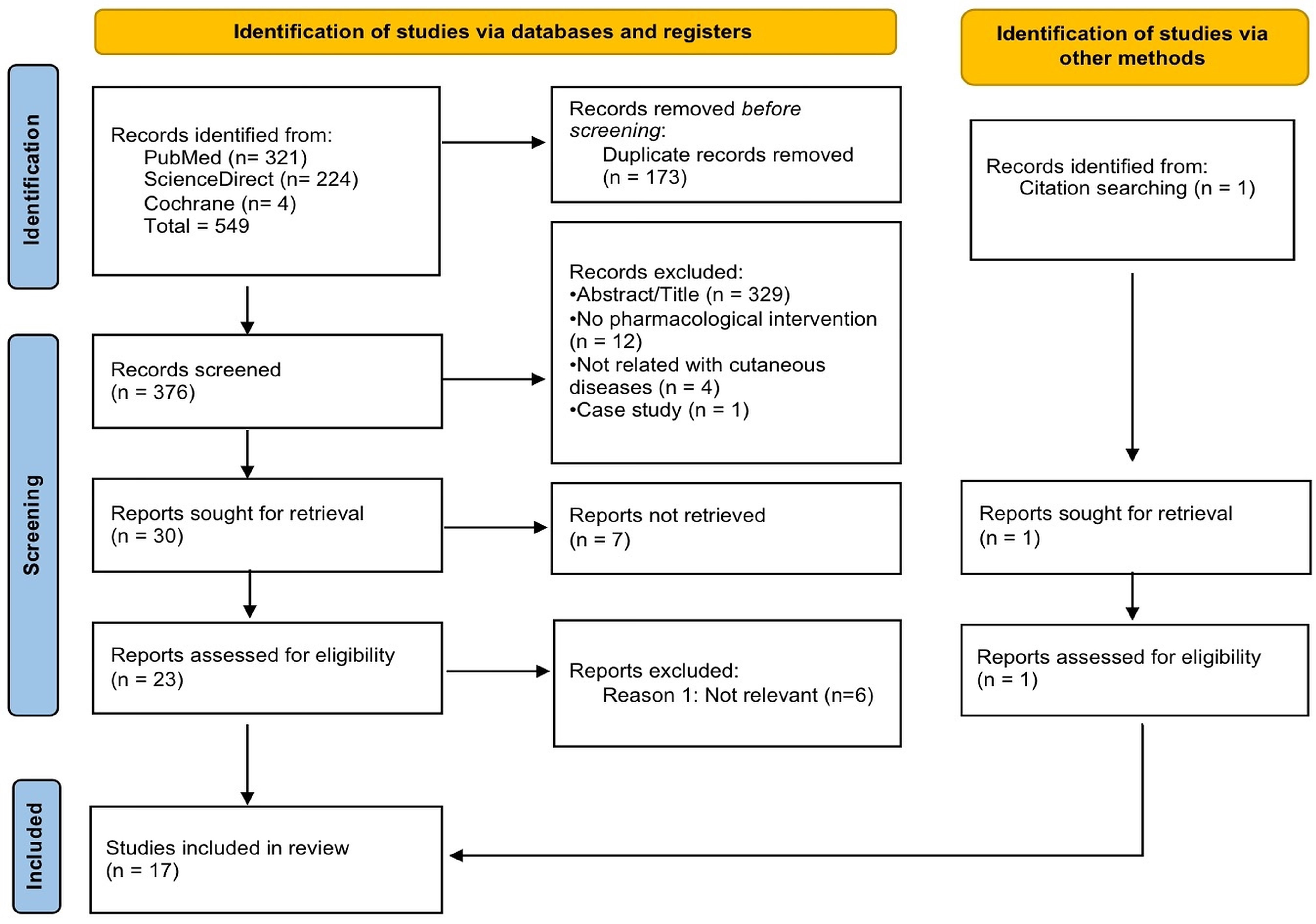
2.4. Study Selection
2.5. Data Extraction
- -
- Study characteristics: first author, year of publication, country, setting, and study design.
- -
- Population: sample size, demographic and clinical characteristics, cancer type, and anticancer treatments.
- -
- Intervention: description of the pharmaceutical care or multidisciplinary intervention (content, timing, duration, frequency, setting, and professionals involved).
- -
- Comparators: description of usual care or alternative interventions.
- -
- Outcomes: measures related to dermatologic toxicity (incidence, severity, grading, time to onset), treatment adherence, health-related quality of life, and body image.
- -
- Key findings and authors’ conclusions.
- -
- Reported limitations and potential sources of bias.
2.6. Risk of Bias and Quality Assessment
2.7. Data Synthesis
- -
- Type and severity of dermatologic toxicity.
- -
- Type and setting of pharmaceutical care intervention (e.g., preventive skin-care counselling, monitoring and early management of cutaneous events, adherence support, structured toxicity management protocols).
- -
- Reported effects on toxicity outcomes, treatment adherence, quality of life, and body image.
3. Results
3.1. Chemotherapy-Related Toxicities
3.2. Targeted Therapy-Associated Reactions
3.3. Immune Checkpoint Inhibitor-Related Adverse Events
4. Discussion
4.1. Interpretation in the Context of Previous Evidence
4.2. Severity, Patient Burden and Effectiveness of Supportive Interventions
4.3. Role of Pharmaceutical and Multidisciplinary Care
5. Limitations and Future Research
6. Conclusions
Supplementary Materials
Author Contributions
Funding
Institutional Review Board Statement
Informed Consent Statement
Data Availability Statement
Conflicts of Interest
Abbreviations
| AMSTAR 2 | A MeaSurement Tool to Assess systematic Reviews 2 |
| BTK | Bruton tyrosine kinase |
| CAE | Cutaneous adverse event |
| EGFR | Epidermal growth factor receptor |
| GRADE | Grading of Recommendations Assessment, Development and Evaluation |
| HFSR | Hand–foot skin reaction |
| ICI | Immune checkpoint inhibitor |
| MEK | Mitogen-activated protein kinase |
| MeSH | Medical Subject Headings |
| PD-1 | Programmed cell death protein 1 |
| PD-L1 | Programmed death-ligand 1 |
| PICO(R) | Population, Intervention, Comparison, Outcome (Context) |
| PRISMA | Preferred Reporting Items for Systematic Reviews and Meta-Analyses |
| PROSPERO | International Prospective Register of Systematic Reviews |
| RoB 2 | Revised Cochrane Risk of Bias tool for randomized trials |
| ROBINS-I | Risk Of Bias In Non-randomized Studies of Interventions |
| ROBIS | Risk Of Bias In Systematic reviews |
| SWiM | Synthesis Without Meta-analysis |
| TKI | Tyrosine kinase inhibitor |
References
- Bray, F.; Laversanne, M.; Sung, H.; Ferlay, J.; Siegel, R.L.; Soerjomataram, I.; Jemal, A. Global cancer statistics 2022: GLOBOCAN estimates of incidence and mortality worldwide for 36 cancers in 185 countries. CA Cancer J. Clin. 2024, 74, 229–263. [Google Scholar] [CrossRef] [Scilit] [PubMed]
- Lacouture, M.E.; Sibaud, V.; Gerber, P.A.; van den Hurk, C.; Fernández-Peñas, P.; Santini, D.; Jahn, F.; Jordan, K. Prevention and management of dermatological toxicities related to anticancer agents: ESMO Clinical Practice Guidelines. Ann. Oncol. 2021, 32, 157–170. [Google Scholar] [CrossRef] [Scilit] [PubMed]
- Rosen, A.C.; Case, E.C.; Dusza, S.W.; Balagula, Y.; Gordon, J.; West, D.P.; Lacouture, M.E. Impact of dermatologic adverse events on quality of life in 283 cancer patients: A questionnaire study in a dermatology referral clinic. Am. J. Clin. Dermatol. 2013, 14, 327–333. [Google Scholar] [CrossRef] [Scilit] [PubMed]
- Almeida, V.; Pires, D.; Silva, M.; Teixeira, M.; Teixeira, R.J.; Louro, A.; Dinis, M.A.P.; Ferreira, M.; Teixeira, A. Dermatological Side Effects of Cancer Treatment: Psychosocial Implications—A Systematic Review of the Literature. Healthcare 2023, 11, 2621. [Google Scholar] [CrossRef] [Scilit] [PubMed]
- Silva, D.; Gomes, A.; Lobo, J.M.S.; Almeida, V.; Almeida, I.F. Management of skin adverse reactions in oncology. J. Oncol. Pharm. Pract. 2020, 26, 1703–1714. [Google Scholar] [CrossRef] [Scilit] [PubMed]
- Duarte, N.C.; Barbosa, C.R.; Tavares, M.G.R.; Dias, L.P.; Souza, R.N.; Moriel, P. Clinical oncology pharmacist: Effective contribution to patient safety. J. Oncol. Pharm. Pract. 2019, 25, 1665–1674. [Google Scholar] [PubMed]
- Xiang, H.W.; Shen, Y.Y.; Wang, J.X.; Zhao, Y.; Yi, B.W.; Zhao, N. Impact of pharmacist-led interventions on oncology drug therapy outcomes: A systematic review and meta-analysis. Int. J. Pharm. Pract. 2025, in press. [Google Scholar] [CrossRef] [Scilit] [PubMed]
- Mendes, D.; Rigueiro, G.; Silva, R.S.; Penedones, A.; Alves, C.; Sousa, G.; Batel-Marques, F. Intensive safety monitoring program of antineoplastic medicines: A pilot study in a Portuguese oncology hospital. J. Oncol. Pharm. Pract. 2020, 26, 133–140. [Google Scholar] [PubMed]
- Fernandes, J.P.; Advinha, A.M.; Oliveira-Martins, S. Pharmaceutical consultation on patients receiving oral antineoplastic agents: A systematic review. Eur. J. Hosp. Pharm. 2025, in press. [Google Scholar] [CrossRef] [Scilit] [PubMed]
- Teixeira, A.; Teixeira, M.; Herdeiro, M.T.; Vasconcelos, V.; Correia, R.; Bahia, M.F.; Almeida, I.F.; Vidal, D.G.; Pedrosa e Sousa, H.F.; Dinis, M.A.P.; et al. Knowledge and Practices of Community Pharmacists in Topical Dermatological Treatments. Int. J. Environ. Res. Public Health 2021, 18, 2928. [Google Scholar] [CrossRef] [Scilit] [PubMed]
- Faller, H.; Schuler, M.; Richard, M.; Heckl, U.; Weis, J.; Küffner, R. Effects of psycho oncologic interventions on emotional distress and quality of life in adult patients with cancer: Systematic review and meta analysis. J. Clin. Oncol. 2013, 31, 782–793. [Google Scholar] [CrossRef] [Scilit] [PubMed]
- White, K.; Roydhouse, J.K.; Scott, K.M. Psychosocial Impact of Cutaneous Toxicities Associated with Epidermal Growth Factor Receptor-Inhibitor Treatment. Clin. J. Oncol. Nurs. 2011, 15, 88–96. [Google Scholar] [CrossRef] [Scilit] [PubMed][Green Version]
- Charles, C.; Bungener, C.; Razavi, D.; Mateus, C.; Routier, E.; Lanoy, E.; Verschoore, M.; Robert, C.; Dauchy, S. Impact of Dermatologic Adverse Events Induced by Targeted Therapies on Quality of Life. Crit. Rev. Oncol. Hematol. 2016, 101, 158–168. [Google Scholar] [CrossRef] [Scilit] [PubMed]
- Chan, A.; Cameron, M.C.; Garden, B.; Boers-Doets, C.B.; Schindler, K.; Epstein, J.B.; Choi, J.; Beamer, L.; Roeland, E.; Russi, E.G.; et al. A Systematic Review of Patient-Reported Outcome Instruments of Dermatologic Adverse Events Associated with Targeted Cancer Therapies. Support. Care Cancer 2015, 23, 2231–2244. [Google Scholar] [CrossRef] [Scilit] [PubMed]
- Arıkan, F.; Kartöz, F.; Karakuş, Z.; Altınışık, M. Body image and social appearance anxiety in patients with cancer undergoing radiotherapy: A cross sectional study. BMC Psychol. 2024, 12, 363. [Google Scholar] [CrossRef] [Scilit] [PubMed]
- Dunne, S.; Semple, C.; Fitch, M. Editorial: Body image following cancer treatment. Front. Psychol. 2022, 13, 1068977. [Google Scholar] [CrossRef] [Scilit] [PubMed]
- Page, M.J.; McKenzie, J.E.; Bossuyt, P.M.; Boutron, I.; Hoffmann, T.C.; Mulrow, C.D.; Shamseer, L.; Tetzlaff, J.M.; Akl, E.A.; Brennan, S.E.; et al. The PRISMA 2020 statement: An updated guideline for reporting systematic reviews. BMJ 2021, 372, n71. [Google Scholar] [CrossRef] [Scilit] [PubMed]
- Kale, I.P.; McCauley, E.M.; Patel, A.B. Cutaneous adverse effects of combination epidermal growth factor receptor inhibitor and immune checkpoint inhibitor cancer therapy. Support. Care Cancer 2025, 33, 524. [Google Scholar] [CrossRef] [Scilit] [PubMed]
- Friedland, R.; Glick, M.; Amitay-Laish, I.; Toledano, H. Cutaneous Reactions in Pediatric Patients Treated with MEK Inhibitors: A Retrospective Single-Center Study. Dermatology 2024, 240, 565–571. [Google Scholar] [CrossRef] [Scilit] [PubMed]
- Dávila Osorio, V.L.; Vicente, M.A.; Baselga, E.; Salvador, H.; Cruz, O.; Prat, C. Adverse cutaneous effects of mitogen-activated protein kinase inhibitors in children. Pediatr. Dermatol. 2021, 38, 420–423. [Google Scholar] [CrossRef] [Scilit] [PubMed]
- Anoop, T.M.; Rona Joseph, J.; Min, P.N.; Pranab, K.P.; Gopan, G.; Chacko, S. Cutaneous Toxicities in Breast Cancer Patients Receiving Chemotherapy and Targeted Agents––An Observational Clinical Study. Clin. Breast Cancer 2021, 21, e434–e447. [Google Scholar] [CrossRef] [Scilit] [PubMed]
- Keiser, M.F.; Patel, A.B.; Altan, M. Cutaneous Toxicities in Lung Cancer Patients on Immune Checkpoint Inhibitor Therapy. Clin. Lung Cancer 2021, 22, 195–200.e1. [Google Scholar] [CrossRef] [Scilit] [PubMed]
- Lee, Y.S.; Jung, Y.K.; Kim, J.H.; Cho, S.B.; Kim, D.Y.; Kim, M.Y.; Kim, H.J.; Seo, Y.S.; Yoon, K.T.; Hong, Y.M.; et al. Effect of urea cream on sorafenib-associated hand-foot skin reaction in patients with hepatocellular carcinoma: A multicenter, randomised, double-blind controlled study. Eur. J. Cancer 2020, 140, 19–27. [Google Scholar] [CrossRef] [Scilit] [PubMed]
- Lüftner, D.; Dell’Acqua, V.; Selle, F.; Khalil, A.; Leonardi, M.C.; Tomás, A.D.L.T.; Shenouda, G.; Fernandez, J.R.; Orecchia, R.; Moyal, D.; et al. Evaluation of supportive and barrier-protective skin care products in the daily prevention and treatment of cutaneous toxicity during systemic chemotherapy. Onco Targets Ther. 2018, 11, 5865–5872. [Google Scholar] [CrossRef] [Scilit] [PubMed]
- Berger, A.; Regueiro, C.; Hijal, T.; Pasquier, D.; De La Fuente, C.; Le Tinier, F.; Coche-Dequeant, B.; Lartigau, E.; Moyal, D.; Seité, S.; et al. Interest of Supportive and Barrier Protective Skin Care Products in the Daily Prevention and Treatment of Cutaneous Toxicity during Radiotherapy for Breast Cancer. Breast Cancer 2018, 12, 1178223417752772. [Google Scholar] [CrossRef] [Scilit] [PubMed]
- Dika, E.; Ravaioli, G.M.; Fanti, P.A.; Piraccini, B.M.; Lambertini, M.; Chessa, M.A.; Baraldi, C.; Ribero, S.; Andrea, A.; Melotti, B.; et al. Cutaneous adverse effects during ipilimumab treatment for metastatic melanoma: A prospective study. Eur. J. Dermatol. 2017, 27, 266–270. [Google Scholar] [CrossRef] [Scilit] [PubMed]
- Shi, V.J.; Rodic, N.; Gettinger, S.; Leventhal, J.S.; Neckman, J.P.; Girardi, M.; Bosenberg, M.; Choi, J.N. Clinical and Histologic Features of Lichenoid Mucocutaneous Eruptions Due to Anti-Programmed Cell Death 1 and Anti-Programmed Cell Death Ligand 1 Immunotherapy. JAMA Dermatol. 2016, 152, 1128–1136. [Google Scholar] [CrossRef] [Scilit] [PubMed]
- Bitar, C.; Farooqui, M.Z.H.; Valdez, J.; Saba, N.S.; Soto, S.; Bray, A.; Marti, G.; Wiestner, A.; Cowen, E.W. Hair and Nail Changes during Long-term Therapy with Ibrutinib for Chronic Lymphocytic Leukemia. JAMA Dermatol. 2016, 152, 698–701. [Google Scholar] [CrossRef] [Scilit] [PubMed]
- Ren, Z.; Zhu, K.; Kang, H.; Lu, M.; Qu, Z.; Lu, L.; Song, T.; Zhou, W.; Wang, H.; Yang, W.; et al. Randomized Controlled Trial of the Prophylactic Effect of Urea-Based Cream on Sorafenib-Associated Hand-Foot Skin Reactions in Patients with Advanced Hepatocellular Carcinoma. J. Clin. Oncol. 2015, 33, 894–900. [Google Scholar] [CrossRef] [Scilit] [PubMed]
- Eshaq, A.M.; Flanagan, T.W.; Ba Abbad, A.A.; Makarem, Z.A.A.; Bokir, M.S.; Alasheq, A.K.; Al Asheikh, S.A.; Almashhor, A.M.; Binyamani, F.; Al-Amoudi, W.A.; et al. Immune Checkpoint Inhibitor-Associated Cutaneous Adverse Events: Mechanisms of Occurrence. Int. J. Mol. Sci. 2024, 26, 88. [Google Scholar] [CrossRef] [Scilit] [PubMed]
- Madan, V.; Ortiz-López, L.I.; Sakunchotpanit, G.; Chen, R.; Nayudu, K.; Nambudiri, V.E. Psoriasis in the Era of Targeted Cancer Therapeutics: A Systematic Review on De Novo and Pre-existing Psoriasis in Oncologic Patients Treated with Emerging Anti-neoplastic Agents. Dermatol. Ther. 2024, 14, 1755–1766. [Google Scholar] [CrossRef] [Scilit] [PubMed]
- Haynes, D.; Morgan, E.E.; Chu, E.Y. Cutaneous adverse reactions resulting from targeted cancer therapies: Histopathologic and clinical findings. Hum. Pathol. 2023, 140, 129–143. [Google Scholar] [CrossRef] [Scilit] [PubMed]
- Emvalomati, A.; Oflidou, V.; Papageorgiou, C.; Kemanetzi, C.; Giannouli, M.; Kalloniati, E.; Efthymiadis, K.; Koukoutzeli, C.; Timotheadou, E.; Trigoni, A.; et al. Narrative Review of Drug-Associated Nail Toxicities in Oncologic Patients. Dermatol. Pract. Concept. 2023, 13, e2023064. [Google Scholar] [CrossRef] [Scilit] [PubMed]
- Macdonald, J.B.; Macdonald, B.; Golitz, L.E.; LoRusso, P.; Sekulic, A. Cutaneous adverse effects of targeted therapies: Part I: Inhibitors of the cellular membrane. J. Am. Acad. Dermatol. 2015, 72, 203–218. [Google Scholar] [CrossRef] [Scilit] [PubMed]
- Attili, I.; Tosti, G.; Pepe, F.; Passaro, A.; de Marinis, F. Optimizing management of cutaneous toxicities from amivantamab in first-line non-small cell lung cancer: A clinical perspective. Crit. Rev. Oncol. Hematol. 2025, 215, 104926. [Google Scholar] [CrossRef] [Scilit] [PubMed]
- Vaez-Gharamaleki, Y.; Akbarzadeh, M.A.; Jadidi-Niaragh, F.; Mahmoodpoor, A.; Sanaie, S.; Hosseini, M.S. Dermatologic toxicities related to cancer immunotherapy. Toxicol. Rep. 2025, 14, 102021. [Google Scholar] [CrossRef] [Scilit] [PubMed] [PubMed Central]
- Peuvrel, L.; Dréno, B. Dermatological toxicity associated with targeted therapies in cancer: Optimal management. Am. J. Clin. Dermatol. 2014, 15, 425–444. [Google Scholar] [CrossRef] [Scilit] [PubMed]
- Zhou, S.; Kishi, N.; Alerasool, P.; Rohs, N.C. Adverse Event Profile of Epidermal Growth Factor Receptor Tyrosine Kinase Inhibitors for Non-small Cell Lung Cancer: An Updated Meta-analysis. Target. Oncol. 2024, 19, 547–564. [Google Scholar] [CrossRef] [Scilit] [PubMed]
- Lacouture, M.E.; Mitchell, E.P.; Piperdi, B.; Pillai, M.V.; Shearer, H.; Iannotti, N.; Xu, F.; Yassine, M. Skin toxicity evaluation protocol with panitumumab (STEPP), a phase II, open-label, randomized trial evaluating the impact of a pre-Emptive Skin treatment regimen on skin toxicities and quality of life in patients with metastatic colorectal cancer. J. Clin. Oncol. 2010, 28, 1351–1357. [Google Scholar] [CrossRef] [Scilit] [PubMed]
- Geisler, A.N.; Phillips, G.S.; Barrios, D.M.; Wu, J.; Leung, D.Y.M.; Moy, A.P.; Kern, J.A.; Lacouture, M.E. Immune checkpoint inhibitor-related dermatologic adverse events. J. Am. Acad. Dermatol. 2020, 83, 1255–1268. [Google Scholar] [CrossRef] [Scilit] [PubMed] [PubMed Central]
- Ladwa, R.; Fogarty, G.; Chen, P.; Grewal, G.; McCormack, C.; Mar, V.; Kerob, D.; Khosrotehrani, K. Management of Skin Toxicities in Cancer Treatment: An Australian/New Zealand Perspective. Cancers 2024, 16, 2526. [Google Scholar] [CrossRef] [Scilit] [PubMed]
- Du, Y.; Wu, W.; Chen, M.; Dong, Z.; Wang, F. Cutaneous Adverse Events and Cancer Survival Prognosis with Immune Checkpoint Inhibitor Treatment: A Systematic Review and Meta-Analysis. JAMA Dermatol. 2023, 159, 1093–1101. [Google Scholar] [CrossRef] [Scilit] [PubMed] [PubMed Central]
- Ra, H.S.; Shin, S.J.; Kim, J.H.; Lim, H.; Cho, B.C.; Roh, M.R. The impact of dermatological toxicities of anti-cancer therapy on the dermatological quality of life of cancer patients. J. Eur. Acad. Dermatol. Venereol. 2013, 27, e53–e59. [Google Scholar] [CrossRef] [Scilit] [PubMed]
- Hoheisel, S.; Roggero, J.; Mangana, J.; Dummer, R.; Kraehenbuehl, L.; Ramelyte, E. Cutaneous adverse events of pan-RAF inhibitor naporafenib (LXH254) containing drug combinations in NRAS-mutant metastatic melanoma. EJC Ski. Cancer 2025, 3, 100283. [Google Scholar] [CrossRef] [Scilit]
- Wongkraisri, C.; Chusuwanrak, K.; Laocharoenkeat, A.; Chularojanamontri, L.; Nimmannit, A.; Ithimakin, S. Randomized controlled trial on the efficacy of topical urea-based cream in preventing capecitabine-associated hand-foot syndrome. BMC Cancer 2025, 25, 275. [Google Scholar] [CrossRef] [Scilit] [PubMed] [PubMed Central]
- Lacouture, M.E.; Anadkat, M.; Jatoi, A.; Garawin, T.; Bohac, C.; Mitchell, E. Dermatologic Toxicity Occurring during Anti-EGFR Monoclonal Inhibitor Therapy in Patients with Metastatic Colorectal Cancer: A Systematic Review. Clin. Color. Cancer 2018, 17, 85–96. [Google Scholar] [CrossRef] [Scilit] [PubMed] [PubMed Central]
- Yagasaki, K.; Komatsu, H.; Soejima, K.; Naoki, K.; Kawada, I.; Yasuda, H.; Hamamoto, Y. Targeted Therapy-induced Facial Skin Toxicities: Impact on Quality of Life in Cancer Patients. Asia Pac. J. Oncol. Nurs. 2018, 5, 172–177. [Google Scholar] [CrossRef] [Scilit] [PubMed] [PubMed Central]
- Dreno, B.; Khosrotehrani, K.; De Barros Silva, G.; Wolf, J.R.; Kerob, D.; Trombetta, M.; Atenguena, E.; Dielenseger, P.; Pan, M.; Scotte, F.; et al. The role of dermocosmetics in the management of cancer-related skin toxicities: International expert consensus. Support. Care Cancer 2023, 31, 672. [Google Scholar] [CrossRef] [Scilit] [PubMed]
- Urakawa, R.; Hashimoto, S.; Hirohata, H.; Sakai, K.; Matsuura, K.; Ito, Y.; Tarutani, M.; Kubota, K.; Ueda, M.; Uejima, E. Skin disorder management in oral anticancer drugs by collaboration of hospital pharmacists and community pharmacists. Support. Care Cancer 2021, 29, 3577–3583. [Google Scholar] [CrossRef] [Scilit] [PubMed] [PubMed Central]
- Alabbasi, A.K.; Green, M.S.; Brammli-Greenberg, S.; Haj, M.B.; Preis, M.; Schwartz, N.; Lavon, O.; Klang, S.; Cohen, S. Role of a Designated Pharmacist in Reducing Adverse Drug Reaction Rates and Preventing Potential Medication Errors in Hematology-Oncology: A Randomized Controlled Trial. JCO Oncol. Pract. 2026, 22, 1066–1074. [Google Scholar] [CrossRef] [Scilit] [PubMed]
- Rudin, C.M.; Liu, W.; Desai, A.; Karrison, T.; Jiang, X.; Janisch, L.; Das, S.; Ramirez, J.; Poonkuzhali, B.; Schuetz, E.; et al. Pharmacogenomic and pharmacokinetic determinants of erlotinib toxicity. J. Clin. Oncol. 2008, 26, 1119–1127. [Google Scholar] [CrossRef] [Scilit] [PubMed]


| Database | Search Strategy | Limits Applied |
|---|---|---|
| PubMed | 1. (“chemotherapy” OR “cancer treatment”) AND (“skin side effect” OR “cutaneous toxicity”) AND “antineoplastic” 2. “cutaneous adverse effects” AND “oncology” 3. “cancer therapy” AND “dermatologic toxicity” 4. (“chemotherapy” OR “cancer treatment”) AND (“skin side effect” OR “cutaneous toxicity”) AND “frequency” 5. (“dermatologic toxicity” OR “cutaneous adverse effects”) AND (“cancer therapy” OR “oncology patients”) 6. (“chemotherapy” OR “cancer treatment”) AND (“skin side effect” OR “cutaneous toxicity”) AND “antineoplastic” AND (“treatment” OR “management”) | Publication date restricted to the last 10 years |
| ScienceDirect | 1. oncology patients AND (dermatologic toxicity OR cutaneous adverse effects) AND (pharmaceutical care OR management) 2. oncology patients AND (dermatologic toxicity OR cutaneous adverse effects) AND (pharmaceutical care OR management) AND skin care | Publication date restricted to the last 10 years; search fields limited to title, abstract, and keywords; additional terms included cancer, cutaneous side effect, management, and skin care |
| Cochrane Library | MeSH descriptor: [Antineoplastic Agents] AND MeSH descriptor: [Skin] explode all trees AND MeSH descriptor: [Drug-Related Side Effects and Adverse Reactions] | Publication date restricted to the last 10 years |
| Reference (Year) | Main Finding | Risk of Bias |
|---|---|---|
| Kale et al. (2025) [18] | Cutaneous adverse events occurred in 59% of patients, were mainly acneiform eruptions and eczema related to EGFR inhibitors and were usually manageable without treatment discontinuation. | Moderate (ROBINS-I: with concerns mainly related to confounding and selection bias). |
| Friedland et al. (2024) [19] | Pediatric MEK inhibitor therapy was associated with frequent mainly mild dermatologic toxicities, particularly xerosis, dermatitis, paronychia, and hair changes, although these still caused clinical burden. | Moderate (ROBINS-I: with moderate concerns for confounding and outcome assessment). |
| Dávila Osorio et al. (2021) [20] | Pediatric patients receiving MEK inhibitors showed universal cutaneous toxicity, with eczema, hair changes, paronychia, and acneiform manifestations differing from adult patterns. | High (ROBINS-I: with moderate-high confounding and selection bias in a single-center retrospective chart review). |
| Anoop et al. (2021) [21] | Chemotherapy-related toxicities, including alopecia, xerosis, hand–foot syndrome, and melanonychia, were common and mainly associated with taxanes, paclitaxel, docetaxel, and capecitabine. | Moderate (ROBINS-I: with concerns related to selection and outcome assessment). |
| Keiser et al. (2021) [22] | Immune checkpoint inhibitor-related skin toxicities were most often eczematous or morbilliform, and most cases improved or resolved with topical or oral treatment, with limited treatment discontinuation. | Moderate-high (ROBINS-I: with high concerns for selection bias and confounding). |
| Lee et al. (2020) [23] | Prophylactic 20% urea cream did not reduce overall 12-week HFSR incidence but reduced early grade II or higher HFSR and improved quality of life in sorafenib-treated patients. | Low-moderate (RoB-2: randomized double-blind trial with attrition and adherence concerns). |
| Lüftner et al. (2018) [24] | A dermocosmetic kit was associated with less worsening of skin toxicity during chemotherapy with or without radiotherapy and was well tolerated. | Moderate-high (non-randomized observational design with exposure misclassification, subjective assessment, and industry sponsorship). |
| Berger et al. (2018) [25] | A structured dermocosmetic regimen during breast radiotherapy was well tolerated and associated with fewer early skin reactions and better perceived benefit, without proving efficacy against no skin care. | Moderate–high (observational study with industry involvement, no randomized control, and subjective endpoints). |
| Dika et al. (2017) [26] | Early cutaneous adverse events were common but mostly mild, and severe reactions were rare and generally responsive to conventional treatment. | Low-moderate (prospective study with small sample size, no control group, and outcome detection concerns). |
| Shi et al. (2016) [27] | Lichenoid eruptions were an identifiable immune-related toxicity pattern and were usually manageable with topical corticosteroids, with rare discontinuation. | Moderate-high (ROBINS-I: retrospective series with confounding and selection bias). |
| Bitar et al. (2016) [28] | BTK inhibitors were associated with frequent low-grade hair and nail toxicities that had relevant quality-of-life impact. | Low-moderate (ROBINS-I prospective trial substudy with small simple size, no control group and outcome detection concerns). |
| Ren et al. (2015) [29] | Prophylactic 10% urea cream reduced the incidence and severity of sorafenib-related HFSR, delayed onset, and improved quality of life without affecting efficacy. | Low-moderate (RoB-2: randomized trial with lack of blinding as the main concern). |
| Reference (Year) | Main Finding | Risk of Bias |
|---|---|---|
| Eshaq et al. (2025) [30] | CAEs were described as the most common immune-related adverse events, with mechanistic links involving immune activation and vitiligo as a possible response marker. | High (narrative review; critical appraisal identified important limitations in search transparency, study selection, and quantitative synthesis). |
| Madan et al. (2024) [31] | Psoriasis may improve or worsen with targeted therapies and immune checkpoint inhibitors, and early dermato-oncology collaboration may help reduce treatment interruption. | Moderate-high (systematic review based largely on case reports and case series, with ROBIS indicating concerns in the review process and AMSTAR 2 suggesting only moderate methodological quality). |
| Haynes et al. (2023) [32] | EGFR-targeted therapies were associated with predictable and severe skin reactions, and clinicopathologic correlation was considered important for diagnosis and management. | Moderate (narrative review; critical appraisal identified moderate concerns related to selective literature coverage and lack of systematic search methods). |
| Emvalomati et al. (2023) [33] | Nail toxicities were common across chemotherapy, targeted therapies, and immune checkpoint inhibitors, and cryotherapy was suggested as a preventive strategy for taxane-related toxicity. | High (narrative review; critical appraisal identified substantial limitations related to non-systematic methods and reliance on lower-level evidence). |
| Macdonald et al. (2015) [34] | Dermatologic toxicities were common across targeted therapies, and supportive management was considered important to prevent treatment interruption and support multidisciplinary care. | Moderate-high (narrative review; critical appraisal identified relevant concerns regarding selective evidence synthesis and absence of systematic review methods). |
| Overall finding 1: Dermatologic toxicities are common across cancer therapies but are usually mild to moderate and generally manageable with supportive treatment. | |||
| Contributing studies | Summary of evidence | GRADE | Main reasons for rating |
| Kale et al. (2025) [18]; Friedland et al. (2024) [19]; Anoop et al. (2021) [21]; Keiser et al. (2021) [22]; Dika et al. (2017) [26]; Haynes et al. (2023) [32]; Macdonald et al. (2015) [34] | Across observational studies and secondary sources, dermatologic toxicities were frequent in patients receiving chemotherapy, EGFR-targeted therapy, MEK inhibitors, and immune checkpoint inhibitors. Most reported events were non-severe and were managed with topical or oral supportive measures, with limited treatment discontinuation. | ⨁⨁◯◯ Low | Downgraded for predominance of observational evidence, risk of bias, heterogeneity across cancer treatments and toxicity definitions, and indirectness from narrative reviews. |
| Overall finding 2: MEK inhibitors and EGFR-targeted therapies are associated with recognizable patterns of cutaneous toxicity | |||
| Contributing studies | Summary of evidence | GRADE | Main reasons for rating |
| Kale et al. (2025) [18]; Friedland et al. (2024) [19]; Dávila Osorio et al. (2021) [20]; Haynes et al. (2023) [32] | EGFR inhibitors were mainly associated with acneiform eruptions and eczema, whereas pediatric MEK inhibitor therapy was frequently associated with xerosis, dermatitis, paronychia, hair changes, and acneiform manifestations. | ⨁⨁◯◯ Low | Downgraded for observational design, confounding, selection bias, and limited direct comparative evidence. |
| Overall finding 3: Immune checkpoint inhibitor-related cutaneous toxicities appear frequent, with eczematous, morbilliform, and lichenoid patterns that are usually manageable | |||
| Contributing studies | Summary of evidence | GRADE | Main reasons for rating |
| Keiser et al. (2021) [22]; Shi et al. (2016) [27]; Eshaq et al. (2025) [30] | Primary and secondary evidence consistently described immune-related skin toxicities as common, with most cases improving with conventional dermatologic treatment and only rare discontinuation of anticancer therapy. | ⨁⨁◯◯ Low | Downgraded for retrospective and narrative evidence, risk of bias, and imprecision. |
| Overall finding 4: Prophylactic urea-based interventions may reduce sorafenib-related hand–foot skin reaction severity or delay onset, but evidence is not fully consistent. | |||
| Contributing studies | Summary of evidence | GRADE | Main reasons for rating |
| Ren et al. (2015) [29]; Lee et al. (2020) [23] | One randomized trial reported reduced incidence and severity of sorafenib-related HFSR with 10% urea cream, whereas another found no reduction in overall 12-week incidence with 20% urea cream but did show benefit for early grade II or higher HFSR and quality of life. | ⨁⨁⨁◯ Moderate | Randomized evidence supports the finding, but certainty was downgraded for inconsistency between trials and some risk-of-bias concerns. |
| Overall finding 5: Dermocosmetic and supportive skin-care strategies may improve tolerability and patient-reported benefit during cancer treatment, although efficacy evidence remains limited. | |||
| Contributing studies | Summary of evidence | GRADE | Main reasons for rating |
| Lüftner et al. (2018) [24]; Berger et al. (2018) [25]; Macdonald et al. (2015) [34] | Supportive dermocosmetic interventions were generally well tolerated and associated with less worsening of symptoms or fewer early skin reactions, but studies were mostly non-randomized and relied on subjective outcomes. | ⨁◯◯◯ Very low | Downgraded for serious risk of bias, non-randomized designs, subjective endpoints, and imprecision |
| Overall finding 6: Hair and nail toxicities may have relevant quality-of-life impact, but evidence for prevention and management is limited | |||
| Contributing studies | Summary of evidence | GRADE | Main reasons for rating |
| Bitar et al. (2016) [28]; Emvalomati et al. (2023) [33] | Hair and nail toxicities were described as frequent but often low-grade; however, they may affect quality of life. Preventive approaches such as cryotherapy were suggested, but support comes mainly from low-level evidence. | ⨁◯◯◯ Very low | Downgraded for limited primary evidence, reliance on narrative review data, and indirectness regarding management effectiveness |
| Overall finding 7: Early multidisciplinary supportive care, including dermato-oncology and pharmaceutical care input, may help reduce treatment interruption, but direct evidence remains sparse. | |||
| Contributing studies | Summary of evidence | GRADE | Main reasons for rating |
| Madan et al. (2024) [31]; Macdonald et al. (2015) [34]; relevant contextual support from primary studies [18,22,26] | Secondary sources and contextual interpretation of primary studies suggest that structured supportive care may improve tolerability and continuity of anticancer treatment, but direct interventional evidence specifically evaluating multidisciplinary or pharmaceutical care models is limited. | ⨁◯◯◯ Very low | Downgraded for indirectness, reliance on secondary sources, and lack of direct controlled studies of multidisciplinary/pharmaceutical care interventions. |
| Adverse Event | Typical Severity and Impact | Prevention | Treatment | Reported Effects on Outcomes | ||
|---|---|---|---|---|---|---|
| Acneiform rash/folliculitis | Usually mild to moderate; may be painful, visible, and adherence-limiting | † Gentle cleansing, avoid irritants and occlusive cosmetics, daily emollients, sunscreen, early education | ‡ Oral tetracycline prophylaxis in higher-risk patients | ‡ Continue skin-barrier care, avoid sun and friction | † Topical corticosteroids, topical antibiotics when indicated, oral doxycycline or minocycline; systemic corticosteroids in selected severe cases | Often reduces symptom burden and need for dose modification; improves tolerability |
| Xerosis/pruritus | Very common; often low grade but persistent and distressing | ‡ Soap substitutes, lukewarm showers, fragrance-free moisturizers, regular emollient use | ‡ Limited role; sometimes topical anti-inflammatory prophylaxis in high-risk inflammatory dermatoses | † Barrier repair, avoidance of irritants, cooling measures, scratch prevention | † Topical corticosteroids for eczematous inflammation, oral antihistamines, pramoxine or other antipruritics | Can improve comfort, sleep, and adherence when treated early |
| Hand–foot syndrome | Ranges from erythema and dysesthesia to painful hyperkeratosis and functional limitation | † Reduce friction and heat, protective footwear/gloves, regular skin inspection, urea-based creams | ‡ In some settings, prophylactic pyridoxine is used, though evidence is inconsistent | † Activity modification, rest, cooling, avoid pressure and trauma | † Topical corticosteroids, keratolytics such as urea/salicylic acid, analgesics, dose reduction or interruption if severe | May reduce severity and delays; improves daily functioning when proactively managed |
| Radiation dermatitis | Cumulative, from mild erythema to moist desquamation or ulceration | † Gentle cleansing, moisturization, friction avoidance, sun protection, structured nursing education | † Topical corticosteroids may be used prophylactically in some protocols | † Non-adherent dressings, wound care, infection surveillance, avoid trauma | † Topical corticosteroids, antiseptics or antibiotics if infected, advanced dressings for moist desquamation | May reduce early worsening and improve tolerance of radiotherapy |
| Maculopapular/immune-related rash | Usually mild to moderate, but may become extensive or symptomatic | † Moisturizers, photoprotection, early reporting of lesions | ‡ No standard routine prophylaxis; sometimes topical anti-inflammatory support in selected patients | ‡ Avoid irritants, maintain skin hydration, monitor progression | † Topical corticosteroids, oral antihistamines, systemic corticosteroids for more severe cases, temporary treatment interruption if needed | Improves symptom control and may prevent escalation or treatment discontinuation |
| Photosensitivity | Often preventable; may be sudden and symptomatic even after brief exposure | †Strict photoprotection, broad-spectrum sunscreen, hats, protective clothing, patient education | ‡ No routine systemic prophylaxis | † Cool compresses, soothing emollients, avoid further UV exposure | † Topical corticosteroids if inflamed, analgesics as needed | Strongly dependent on preventive counselling; can avoid recurrence |
| Pigmentary changes/vitiligo-like lesions | Usually not medically severe, but highly visible and body-image affecting | † Photoprotection, avoid trauma and irritation | ‡ No established routine prophylaxis | ‡ Cosmetic camouflage, reassurance, monitoring | † Topical corticosteroids, calcineurin inhibitors, selected phototherapy for vitiligo-like lesions | Main effect is psychosocial; may affect body image more than physical function |
| Alopecia/hair disorders | Often reversible but emotionally significant; body-image impact can be substantial | † Gentle hair care, scalp protection, scalp cooling when appropriate | † Scalp cooling in selected chemotherapy regimens | ‡ Wigs, head coverings, cosmetic support, counselling | ‡ Topical or oral minoxidil in selected cases after treatment or when appropriate | Improves self-image and treatment acceptability; may reduce distress |
| Paronychia/nail toxicity | Often chronic, painful, and functionally limiting | † Nail care education, avoid trauma, gloves for wet work, keep nails short | ‡ No routine pharmacological prophylaxis | ‡ Reduce pressure and trauma, warm soaks, local hygiene | † Topical antiseptics, topical corticosteroids, topical antibiotics; systemic antibiotics if infected | Can reduce infection risk and preserve function |
| Severe cutaneous adverse reactions | Rare but potentially life-threatening | ‡ Early recognition and patient education about warning signs | ‡ None routinely | ‡ Immediate discontinuation, urgent evaluation, supportive care | ‡ Systemic corticosteroids or specialist-directed therapy depending on syndrome | Critical for safety; may prevent progression and complications |
Disclaimer/Publisher’s Note: The statements, opinions and data contained in all publications are solely those of the individual author(s) and contributor(s) and not of MDPI and/or the editor(s). MDPI and/or the editor(s) disclaim responsibility for any injury to people or property resulting from any ideas, methods, instructions or products referred to in the content. |
© 2026 by the authors. Licensee MDPI, Basel, Switzerland. This article is an open access article distributed under the terms and conditions of the Creative Commons Attribution (CC BY) license.
Share and Cite
Monteiro, J.F.; Salvador-Entradas, C.; Marrot, D.; Teixeira, M.; Milhazes, N.; Almeida, V.; Teixeira, A. Multidisciplinary Strategies to Manage Treatment-Related Dermatologic Toxicity and Improve Quality of Life in Cancer Patients: A Narrative Review. Healthcare 2026, 14, 2514. https://doi.org/10.3390/healthcare14162514
Monteiro JF, Salvador-Entradas C, Marrot D, Teixeira M, Milhazes N, Almeida V, Teixeira A. Multidisciplinary Strategies to Manage Treatment-Related Dermatologic Toxicity and Improve Quality of Life in Cancer Patients: A Narrative Review. Healthcare. 2026; 14(16):2514. https://doi.org/10.3390/healthcare14162514
Chicago/Turabian StyleMonteiro, Joaquim Faria, Clémence Salvador-Entradas, Dorian Marrot, Maribel Teixeira, Nuno Milhazes, Vera Almeida, and Ana Teixeira. 2026. "Multidisciplinary Strategies to Manage Treatment-Related Dermatologic Toxicity and Improve Quality of Life in Cancer Patients: A Narrative Review" Healthcare 14, no. 16: 2514. https://doi.org/10.3390/healthcare14162514
APA StyleMonteiro, J. F., Salvador-Entradas, C., Marrot, D., Teixeira, M., Milhazes, N., Almeida, V., & Teixeira, A. (2026). Multidisciplinary Strategies to Manage Treatment-Related Dermatologic Toxicity and Improve Quality of Life in Cancer Patients: A Narrative Review. Healthcare, 14(16), 2514. https://doi.org/10.3390/healthcare14162514