Inverse Association Between Composite Dietary Antioxidant Index and Prevalence of Pelvic Inflammatory Disease Among Women: A Cross-Sectional Study of NHANES 2013–2018

Abstract
1. Introduction
2. Methods
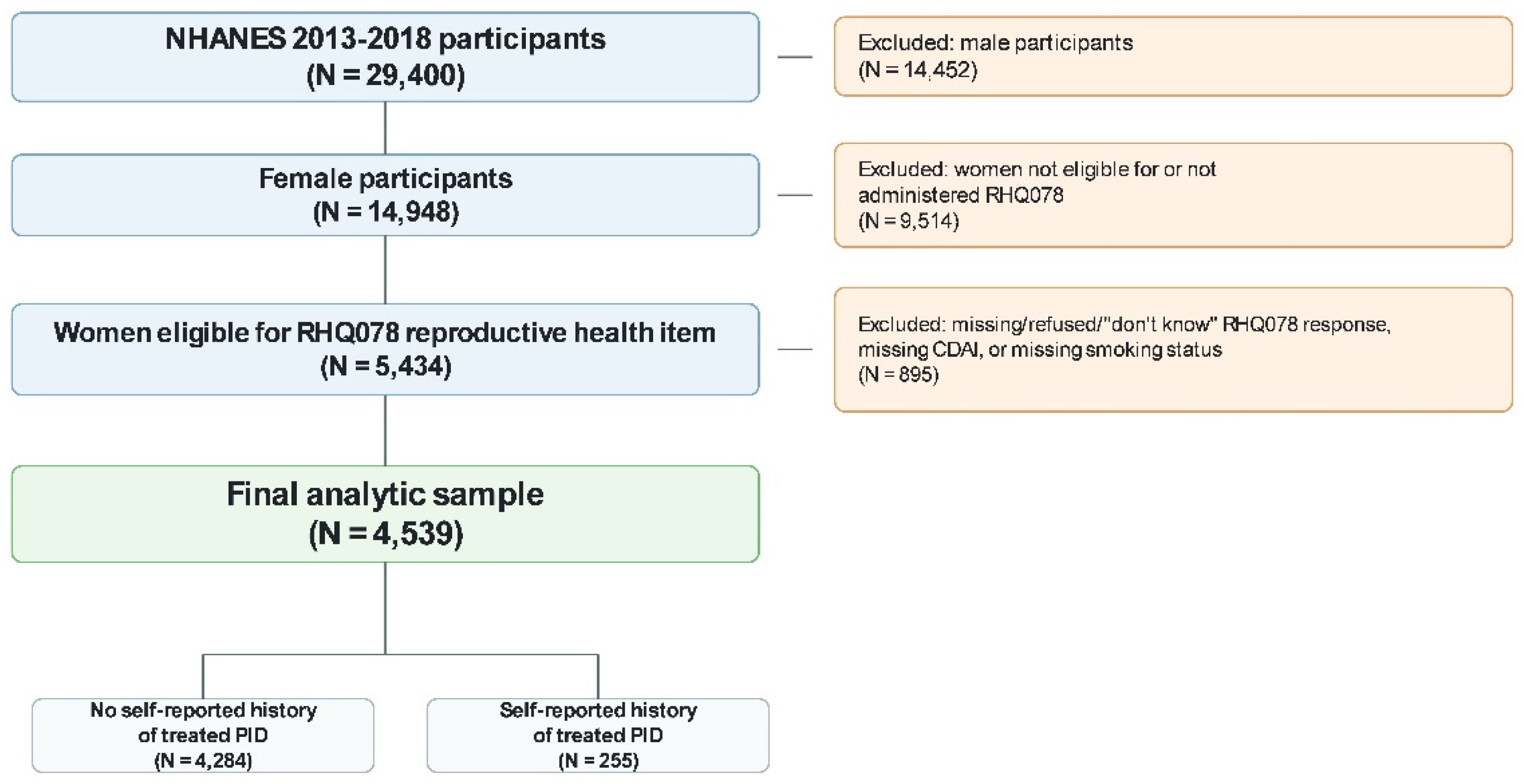
2.1. Study Population
2.2. Measurement of CDAI
2.3. Assessment of the Diagnosis of PID
2.4. Covariates
- Race/ethnicity was categorized into five groups: Mexican American, Other Hispanic, non-Hispanic White, non-Hispanic Black, and Other Race.
- Education level was classified into three categories: less than high school, high school graduate, and more than high school.
- Marital status was grouped into: married/living with a partner, divorced/separated/widowed, and never married.
- Body Mass Index (BMI) was categorized as: normal weight (BMI < 25), overweight (25 ≤ BMI ≤ 30), and obese (BMI > 30).
- Poverty Income Ratio (PIR): reflecting socioeconomic status by comparing household income to the federal poverty threshold, was divided into three levels: low (PIR < 1.35), medium (1.35 ≤ PIR ≤ 3.0), and high (PIR > 3.0) [18].
- Smoking status was classified according to the National Health and Nutrition Examination Survey (NHANES) detailed records on participants’ smoking behavior, including status, duration, and related activities. The categories were defined as: never smokers (individuals who have never smoked or have smoked fewer than 100 cigarettes in their lifetime); former smokers (individuals who have smoked 100 or more cigarettes in their lifetime but are currently not smoking); and current smokers (individuals who have smoked 100 or more cigarettes in their lifetime and are still smoking, regardless of frequency) [30].
- Diabetes was assessed through a questionnaire asking participants, “Has a doctor or other health professional ever told you that you have diabetes?” Those who answered affirmatively were classified as having diabetes [31].
- Hypertension was determined by a similar questionnaire question: “Has a doctor or other health professional ever told you that you have high blood pressure?” Participants who answered “yes” were classified as having hypertension.
- Menstrual cycle regularity was judged based on a question in the reproductive health questionnaire: “Has your menstrual cycle been regular in the past 12 months?” (applicable to participants aged 12 years and older).
2.5. Machine Learning
2.6. Statistical Analysis
3. Results
3.1. Participant Characteristics
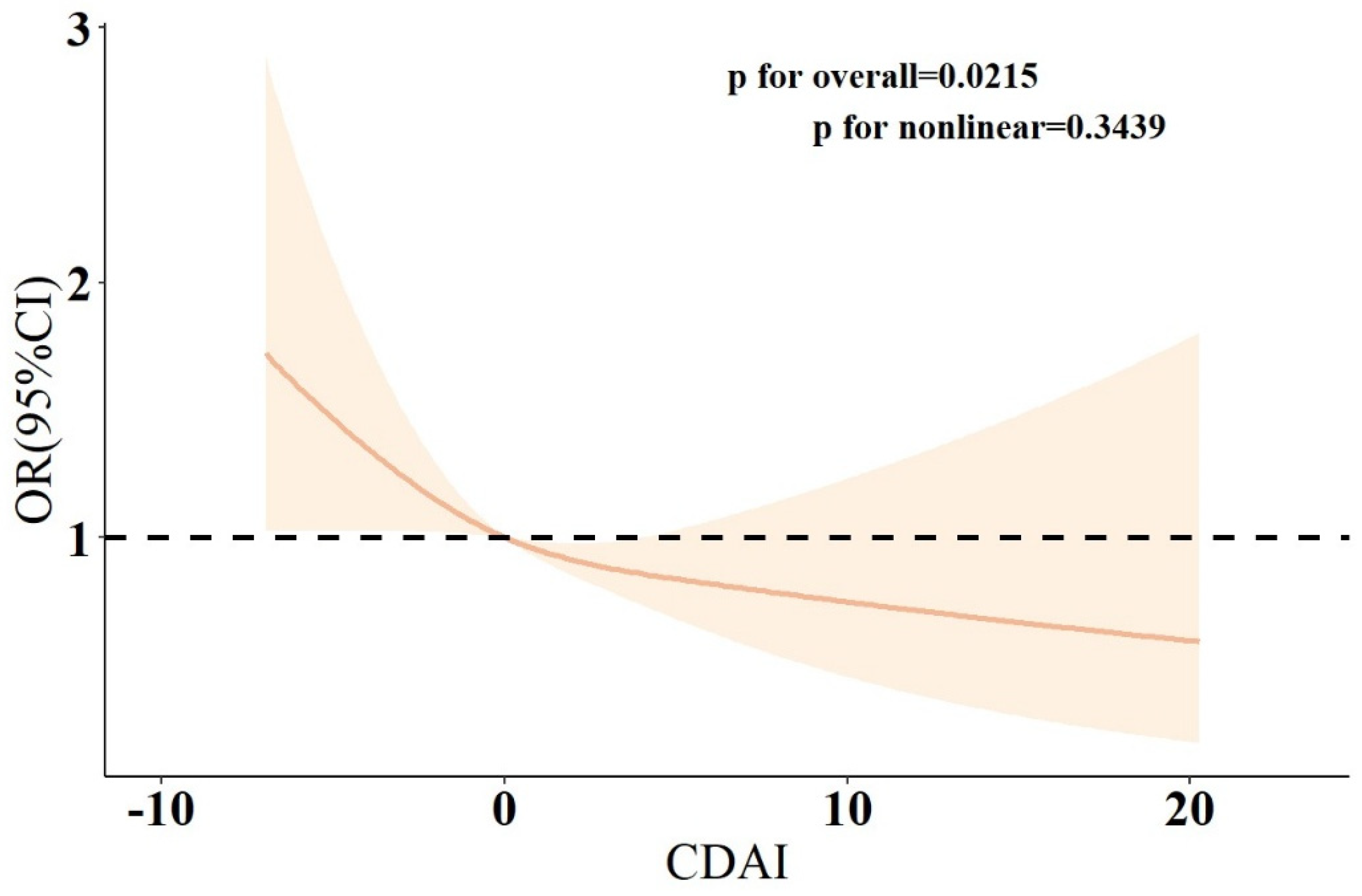
3.2. The Association Between CDAI and PID
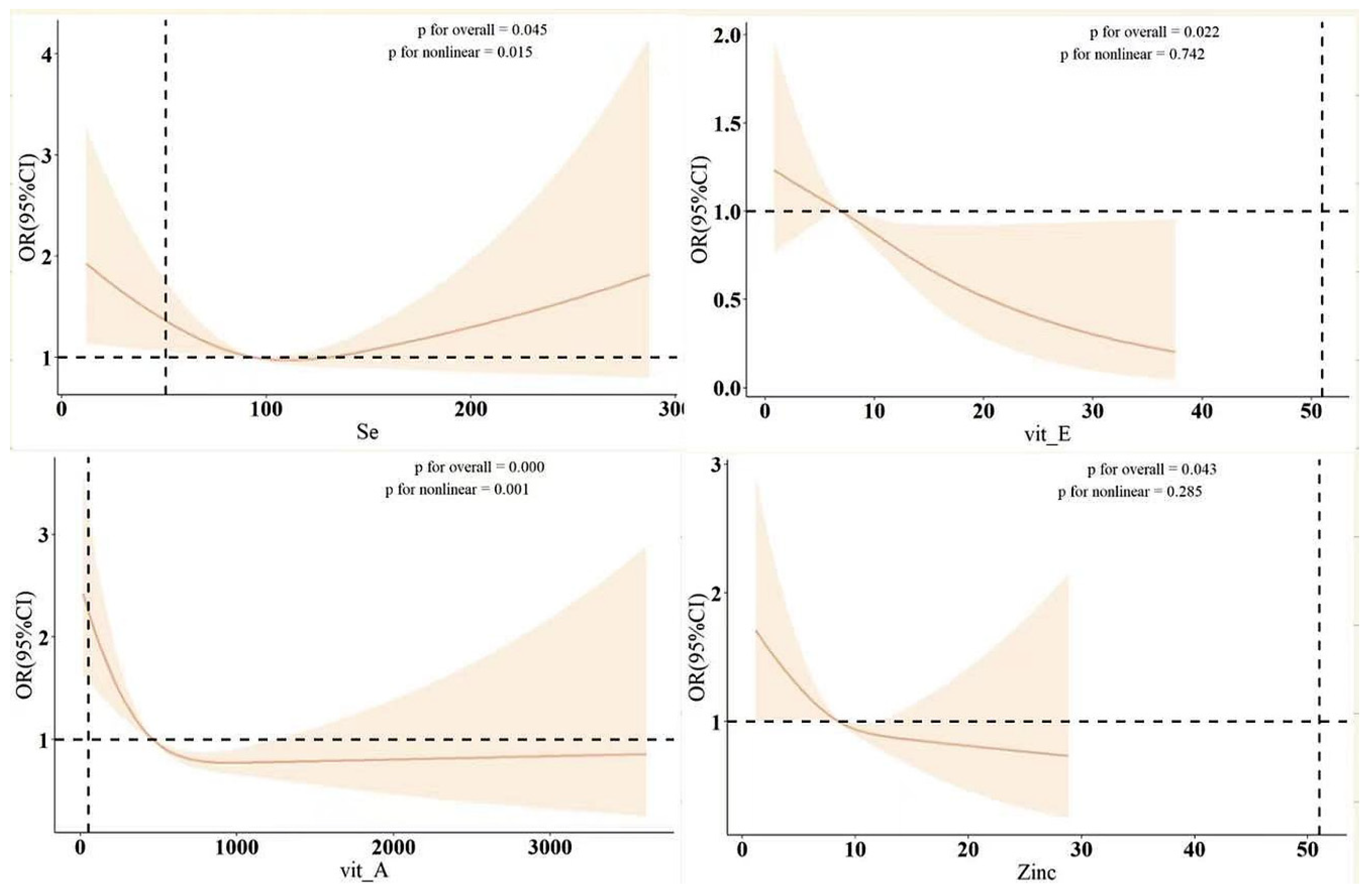
3.3. Association Between CDAI Components and PID
- ■
- Vitamin E showed a significant inverse association with PID (OR = 0.963, 95% CI: 0.933–0.995, p = 0.032).
- ■
- The remaining components, including vitamin A (p = 0.151), vitamin C (p = 0.312), zinc (p = 0.310), selenium (p = 0.220), and carotenoids (p = 0.405), did not demonstrate statistically significant associations with PID risk.
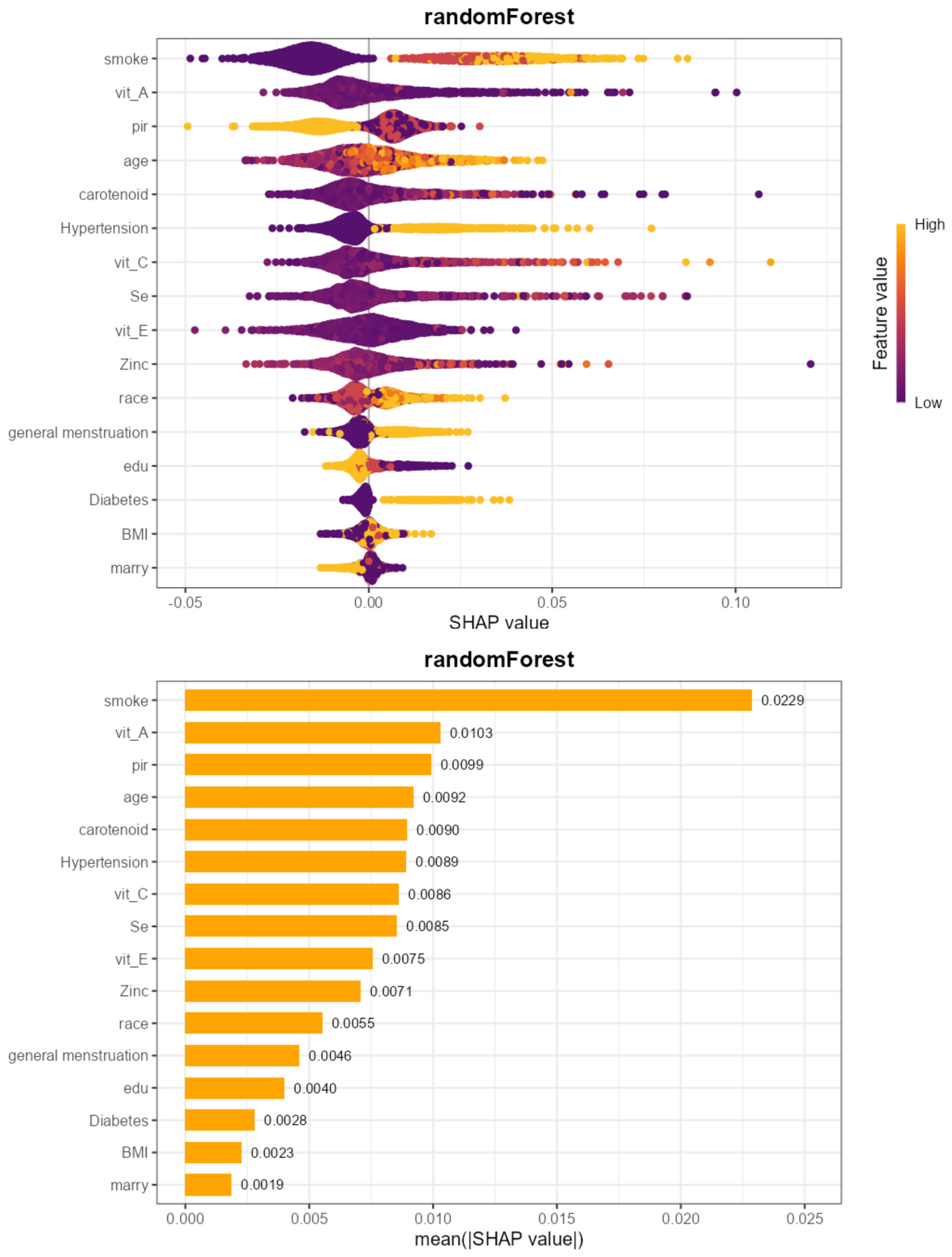
3.4. SHAP-Based Ranking of Antioxidant Contributions from CDAI Components
- ●
- Vitamin A, carotenoids, and vitamin C exhibited the highest SHAP values among CDAI components, ranking first, second, and third, respectively. This ranking indicates that these components had the largest model-based contributions among CDAI components to PID classification in the random forest model, highlighting nutrients that may warrant further investigation in future mechanistic or longitudinal studies.
- ●
- Furthermore, smoking status had the largest mean absolute SHAP value, suggesting the greatest model-based contribution to PID classification among the included variables.
- ●
- This suggests that, although vitamin E showed a significant inverse association with PID in the component-specific fully adjusted regression model, the random forest model assigned higher predictive contributions to vitamin A, carotenoids, and vitamin C among CDAI components. This discrepancy may reflect differences between regression-based marginal association estimates and model-based predictive attribution, and should be interpreted as exploratory rather than causal evidence.
3.5. Subgroup Analysis
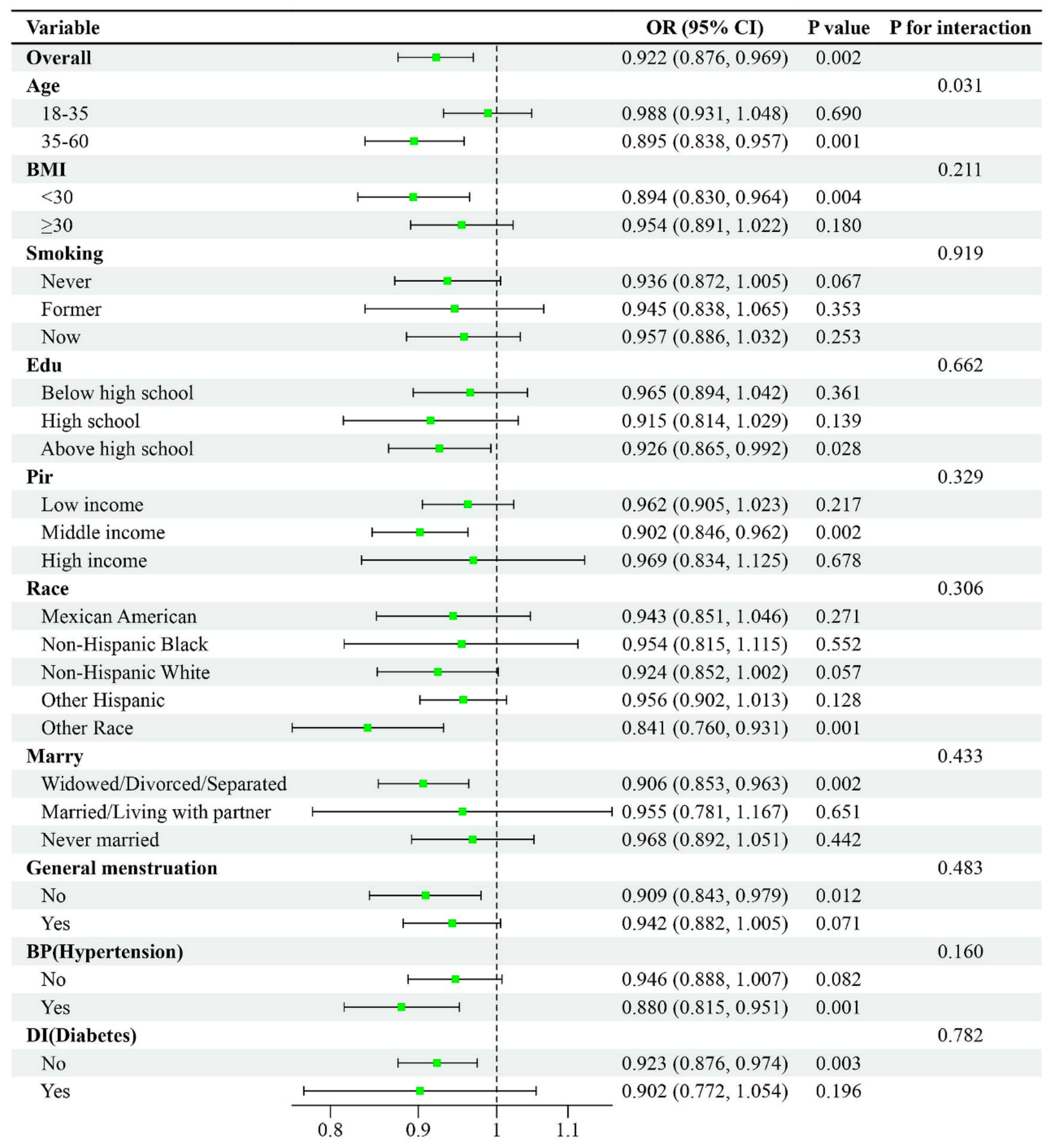
- Significant inverse associations between CDAI and PID risk were observed in the following subgroups: age 35–60 years, BMI < 30, education level above high school, middle-income, Other Race, divorced/widowed/separated, absence of menstruation, and hypertension.
- The interaction p-value for age in the model was 0.031, indicating a significant difference in the association of CDAI with PID across age groups.
- Interaction terms for other variables, such as BMI, smoking, income, marital status, and chronic disease status, all had p-values > 0.05, suggesting that the overall trend remained consistent across most subgroups.
4. Discussion
5. Study Limitations
6. Conclusions
Supplementary Materials
Author Contributions
Funding
Institutional Review Board Statement
Informed Consent Statement
Data Availability Statement
Acknowledgments
Conflicts of Interest
References
- Hocking, J.S.; Geisler, W.M.; Kong, F.Y.S. Update on the epidemiology, screening, and management of Chlamydia trachomatis infection. Infect. Dis. Clin. N. Am. 2023, 37, 267–288. [Google Scholar] [CrossRef] [PubMed]
- Xu, S.X.; Gray-Owen, S.D. Gonococcal pelvic inflammatory disease: Placing mechanistic insights into the context of clinical and epidemiological observations. J. Infect. Dis. 2021, 224, S56–S63. [Google Scholar] [CrossRef]
- Brunham, R.C.; Gottlieb, S.L.; Paavonen, J. Pelvic inflammatory disease. N. Engl. J. Med. 2015, 372, 2039–2048. [Google Scholar] [CrossRef]
- Haggerty, C.L.; Gottlieb, S.L.; Taylor, B.D.; Low, N.; Xu, F.; Ness, R.B. Risk of sequelae after Chlamydia trachomatis genital infection in women. J. Infect. Dis. 2010, 201, S134–S155. [Google Scholar] [CrossRef]
- Shroff, S. Infectious vaginitis, cervicitis, and pelvic inflammatory disease. Med. Clin. N. Am. 2023, 107, 299–315. [Google Scholar] [CrossRef] [PubMed]
- Ross, J.; Guaschino, S.; Cusini, M.; Jensen, J. 2017 European guideline for the management of pelvic inflammatory disease. Int. J. STD AIDS 2018, 29, 108–114. [Google Scholar] [CrossRef]
- Chen, X.; Lu, H.; Chen, Y.; Sang, H.; Tang, Y.; Zhao, Y. Composite dietary antioxidant index was negatively associated with the prevalence of diabetes independent of cardiovascular diseases. Diabetol. Metab. Syndr. 2023, 15, 183. [Google Scholar] [CrossRef] [PubMed]
- Wu, M.; Si, J.; Liu, Y.; Kang, L.; Xu, B. Association between composite dietary antioxidant index and hypertension: Insights from NHANES. Clin. Exp. Hypertens. 2023, 45, 2233712. [Google Scholar] [CrossRef] [PubMed]
- Zhou, L.; Xu, X.; Li, Y.; Zhang, S.; Xie, H. Association between dietary antioxidant levels and diabetes: A cross-sectional study. Front. Nutr. 2024, 11, 1478815. [Google Scholar] [CrossRef] [PubMed]
- Ma, R.; Zhou, X.; Zhang, G.; Wu, H.; Lu, Y.; Liu, F.; Chang, Y.; Ding, Y. Association between composite dietary antioxidant index and coronary heart disease among US adults: A cross-sectional analysis. BMC Public Health 2023, 23, 2426. [Google Scholar] [CrossRef]
- Zheng, M.; Li, C.; Fu, J.; Bai, L.; Dong, J. Association between composite dietary antioxidant index and fatty liver index among US adults. Front. Nutr. 2024, 11, 1466807. [Google Scholar] [CrossRef]
- Jiang, J.; Li, D.; Huang, T.; Huang, S.; Tan, H.; Xia, Z. Antioxidants and the risk of sleep disorders: Results from NHANES and two-sample Mendelian randomization study. Front. Nutr. 2024, 11, 1453064. [Google Scholar] [CrossRef]
- Wu, D.; Wang, H.; Wang, W.; Qing, C.; Zhang, W.; Gao, X.; Shi, Y.; Li, Y.; Zheng, Z. Association between composite dietary antioxidant index and handgrip strength in American adults: Data from National Health and Nutrition Examination Survey (NHANES, 2011–2014). Front Nutr. 2023, 10, 1147869. [Google Scholar] [CrossRef]
- Liu, Z.; Li, J.; Chen, T.; Zhao, X.; Chen, Q.; Xiao, L.; Peng, Z.; Zhang, H. Association between dietary antioxidant levels and chronic obstructive pulmonary disease: A mediation analysis of inflammatory factors. Front. Immunol. 2024, 14, 1310399. [Google Scholar] [CrossRef] [PubMed]
- Zheng, Y.; Liu, W.; Zhu, X.; Xu, M.; Lin, B.; Bai, Y. Associations of dietary inflammation index and composite dietary antioxidant index with preserved ratio impaired spirometry in US adults and the mediating roles of triglyceride-glucose index: NHANES 2007–2012. Redox Biol. 2024, 76, 103334. [Google Scholar] [CrossRef]
- Xu, X.; Liu, R. Association between antioxidants and pelvic inflammatory disease: A nationwide survey and Mendelian randomisation study. J. Obstet. Gynaecol. 2025, 45, 2593275. [Google Scholar] [CrossRef] [PubMed]
- Hu, P.; Zhang, S.; Li, H.; Yan, X.; Zhang, X.; Zhang, Q. Association between dietary trace minerals and pelvic inflammatory disease: Data from the 2015–2018 National Health and Nutrition Examination Surveys. Front. Nutr. 2023, 10, 1273509. [Google Scholar] [CrossRef]
- Chen, Z.; Wu, Z.; Zhang, Y. Association between dietary magnesium intake and pelvic inflammatory disease in US women: A cross-sectional study of NHANES. Front. Nutr. 2024, 11, 1430730. [Google Scholar] [CrossRef]
- Wang, G.; Zhang, S. Nutrition in the prevention and treatment of pelvic inflammatory disease: A review. Front. Nutr. 2026, 13, 1802637. [Google Scholar] [CrossRef]
- Avery, J.C.; Hoffmann, P.R. Selenium, selenoproteins, and immunity. Nutrients 2018, 10, 1203. [Google Scholar] [CrossRef]
- Prasad, A.S. Zinc in human health: Effect of zinc on immune cells. Mol. Med. 2008, 14, 353–357. [Google Scholar] [CrossRef]
- Brigelius-Flohe, R.; Traber, M.G. Vitamin E: Function and metabolism. FASEB J. 1999, 13, 1145–1155. [Google Scholar] [CrossRef]
- Hondal, R.J. Selenium vitaminology: The connection between selenium, vitamin C, vitamin E, and ergothioneine. Curr. Opin. Chem. Biol. 2023, 75, 102328. [Google Scholar] [CrossRef] [PubMed]
- Niki, E.; Noguchi, N.; Tsuchihashi, H.; Gotoh, N. Interaction among vitamin C, vitamin E, and beta-carotene. Am. J. Clin. Nutr. 1995, 62, 1322S–1326S. [Google Scholar] [CrossRef] [PubMed]
- Tappel, A.L. Selenium-glutathione peroxidase and vitamin E. Am. J. Clin. Nutr. 1974, 27, 960–965. [Google Scholar] [CrossRef]
- Ahuja, J.K.C.; Moshfegh, A.J.; Holden, J.M.; Harris, E. USDA food and nutrient databases provide the infrastructure for food and nutrition research, policy, and practice. J. Nutr. 2013, 143, 241S–249S. [Google Scholar] [CrossRef]
- Bodner-Montville, J.; Ahuja, J.K.C.; Ingwersen, L.A.; Haggerty, E.S.; Enns, C.W.; Perloff, B.P. USDA Food and Nutrient Database for Dietary Studies: Released on the web. J. Food Compos. Anal. 2006, 19, S100–S107. [Google Scholar] [CrossRef]
- Wright, M.E.; Mayne, S.T.; Stolzenberg-Solomon, R.Z.; Li, Z.; Pietinen, P.; Taylor, P.R.; Virtamo, J.; Albanes, D. Development of a comprehensive dietary antioxidant index and application to lung cancer risk in a cohort of male smokers. Am. J. Epidemiol. 2004, 160, 68–76. [Google Scholar] [CrossRef] [PubMed]
- Maugeri, A.; Hruskova, J.; Jakubik, J.; Kunzova, S.; Sochor, O.; Barchitta, M.; Agodi, A.; Bauerova, H.; Medina-Inojosa, J.R.; Vinciguerra, M. Dietary antioxidant intake decreases carotid intima media thickness in women but not in men: A cross-sectional assessment in the Kardiovize study. Free Radic. Biol. Med. 2019, 131, 274–281. [Google Scholar] [CrossRef]
- Bondy, S.J.; Victor, J.C.; Diemert, L.M. Origin and use of the 100 cigarette criterion in tobacco surveys. Tob. Control 2009, 18, 317–323. [Google Scholar] [CrossRef]
- Menke, A.; Casagrande, S.; Geiss, L.; Cowie, C.C. Prevalence of and trends in diabetes among adults in the United States, 1988–2012. JAMA 2015, 314, 1021–1029. [Google Scholar] [CrossRef]
- Cutler, D.R.; Edwards, T.C., Jr.; Beard, K.H.; Cutler, A.; Hess, K.T.; Gibson, J.; Lawler, J.J. Random forests for classification in ecology. Ecology 2007, 88, 2783–2792. [Google Scholar] [CrossRef] [PubMed]
- Ravel, J.; Moreno, I.; Simon, C. Bacterial vaginosis and its association with infertility, endometritis, and pelvic inflammatory disease. Am. J. Obstet. Gynecol. 2021, 224, 251–257. [Google Scholar] [CrossRef] [PubMed]
- Turpin, R.; Tuddenham, S.; He, X.; Klebanoff, M.A.; Ghanem, K.G.; Brotman, R.M. Bacterial vaginosis and behavioral factors associated with incident pelvic inflammatory disease in the Longitudinal Study of Vaginal Flora. J. Infect. Dis. 2021, 224, S137–S144. [Google Scholar] [CrossRef] [PubMed] [PubMed Central]
- Noormohammadi, M.; Eslamian, G.; Kazemi, S.N.; Rashidkhani, B. Association between dietary patterns and bacterial vaginosis: A case-control study. Sci. Rep. 2022, 12, 12199. [Google Scholar] [CrossRef] [PubMed]
- Ma, J.J.; Hu, P.W.; Zhang, Q.H.; Pei, J. Association between the dietary inflammatory index and pelvic inflammatory disease: Findings from the NHANES data (2015–2018). Nutr. Hosp. 2024, 41, 858–865. [Google Scholar] [CrossRef]
- Thoma, M.E.; Klebanoff, M.A.; Rovner, A.J.; Nansel, T.R.; Neggers, Y.; Andrews, W.W.; Schwebke, J.R. Bacterial vaginosis is associated with variation in dietary indices. J. Nutr. 2011, 141, 1698–1704. [Google Scholar] [CrossRef] [PubMed]
- Sultan, S.; Zoofeen, U.; Shah, I.; Bukhari, S.M.S.; Sharif, N.; Khan, M.; Habib, S.H.; Shah, F.A.; Alamoudi, M.K.; Shah, M. Enhanced inflammatory and oxidative response mitigation by acetyl-L-carnitine in a rat model of pelvic inflammatory disease. Naunyn Schmiedeberg’s Arch. Pharmacol. 2025, 398, 9215–9224. [Google Scholar] [CrossRef]
- Shokrpour, M.; Asemi, Z. The effects of magnesium and vitamin E co-supplementation on hormonal status and biomarkers of inflammation and oxidative stress in women with polycystic ovary syndrome. Biol. Trace Elem. Res. 2019, 191, 54–60. [Google Scholar] [CrossRef]
- Hillier, S.L.; Bernstein, K.T.; Aral, S. A review of the challenges and complexities in the diagnosis, etiology, epidemiology, and pathogenesis of pelvic inflammatory disease. J. Infect. Dis. 2021, 224, S23–S28. [Google Scholar] [CrossRef]
- Wang, C.; La, L.; Feng, H.; Yang, Q.; Wu, F.; Wang, C.; Wu, J.; Hou, L.; Hou, C.; Liu, W. Aldose reductase inhibitor engeletin suppresses pelvic inflammatory disease by blocking the phospholipase C/protein kinase C-dependent NF-kappaB and MAPK cascades. J. Agric. Food Chem. 2020, 68, 11747–11757. [Google Scholar] [CrossRef]
- Rudin, C. Stop explaining black box machine learning models for high stakes decisions and use interpretable models instead. Nat. Mach. Intell. 2019, 1, 206–215. [Google Scholar] [CrossRef]
- Lundberg, S.M.; Erion, G.; Chen, H.; DeGrave, A.; Prutkin, J.M.; Nair, B.; Katz, R.; Himmelfarb, J.; Bansal, N.; Lee, S.-I. From local explanations to global understanding with explainable AI for trees. Nat. Mach. Intell. 2020, 2, 56–67. [Google Scholar] [CrossRef] [PubMed] [PubMed Central]
- Bagley, S.C.; White, H.; Golomb, B.A. Logistic regression in the medical literature: Standards for use and reporting, with particular attention to one medical domain. J. Clin. Epidemiol. 2001, 54, 979–985. [Google Scholar] [CrossRef]
- Speiser, J.L.; Miller, M.E.; Tooze, J.; Ip, E. A comparison of random forest variable selection methods for classification prediction modeling. Expert Syst. Appl. 2019, 134, 93–101. [Google Scholar] [CrossRef]
- Strumbelj, E.; Kononenko, I. Explaining prediction models and individual predictions with feature contributions. Knowl. Inf. Syst. 2014, 41, 647–665. [Google Scholar] [CrossRef]
- Toppo, S.; Flohe, L.; Ursini, F.; Vanin, S.; Maiorino, M. Catalytic mechanisms and specificities of glutathione peroxidases: Variations of a basic scheme. Biochim. Biophys. Acta 2009, 1790, 1486–1500. [Google Scholar] [CrossRef] [PubMed]
- Halpner, A.D.; Handelman, G.J.; Belmont, C.A.; Harris, J.M.; Blumberg, J.B. Protection by vitamin C of oxidant-induced loss of vitamin E in rat hepatocytes. J. Nutr. Biochem. 1998, 9, 355–359. [Google Scholar] [CrossRef]
- Blaner, W.S.; Shmarakov, I.O.; Traber, M.G. Vitamin A and vitamin E: Will the real antioxidant please stand up? Annu. Rev. Nutr. 2021, 41, 105–131. [Google Scholar] [CrossRef]
- Nelson, T.M.; Borgogna, J.C.; Michalek, R.D.; Roberts, D.W.; Rath, J.M.; Glover, E.D.; Ravel, J.; Shardell, M.D.; Yeoman, C.J.; Brotman, R.M. Cigarette smoking is associated with an altered vaginal tract metabolomic profile. Sci. Rep. 2018, 8, 852. [Google Scholar] [CrossRef] [PubMed]
- Brotman, R.M. Vaginal microbiome and sexually transmitted infections: An epidemiologic perspective. J. Clin. Investig. 2011, 121, 4610–4617. [Google Scholar] [CrossRef] [PubMed] [PubMed Central]



| Variable | Overall (n = 4539) | Non-PID (n = 4284) | PID (n = 255) | p |
|---|---|---|---|---|
| age | 38.31 (12.38) | 38.06 (12.44) | 42.46 (11.07) | <0.001 |
| smoke (%) | <0.001 | |||
| Never | 3163 (69.7) | 3052 (71.2) | 111 (43.5) | |
| Former | 597 (13.2) | 541 (12.6) | 56 (22.0) | |
| Now | 779 (17.2) | 691 (16.1) | 88 (34.5) | |
| marry (%) | <0.001 | |||
| Widowed/Divorced/Separated | 2657 (58.5) | 2519 (58.8) | 138 (54.1) | |
| Married/Living with partner | 817 (18.0) | 741 (17.3) | 76 (29.8) | |
| Never married | 1065 (23.5) | 1024 (23.9) | 41 (16.1) | |
| race (%) | <0.001 | |||
| Mexican American | 733 (16.2) | 711 (16.6) | 22 (8.6) | |
| Non-Hispanic Black | 490 (10.8) | 466 (10.9) | 24 (9.4) | |
| Non-Hispanic White | 1565 (34.5) | 1468 (34.3) | 97 (38.0) | |
| Other Hispanic | 1043 (23.0) | 962 (22.5) | 81 (31.8) | |
| Other Race | 708 (15.6) | 677 (15.8) | 31 (12.2) | |
| edu (%) | 0.314 | |||
| Below high school | 713 (15.7) | 667 (15.6) | 46 (18.0) | |
| High school | 921 (20.3) | 864 (20.2) | 57 (22.4) | |
| Above high school | 2905 (64.0) | 2753 (64.3) | 152 (59.6) | |
| pir (%) | <0.001 | |||
| low income | 1605 (35.4) | 1493 (34.9) | 112 (43.9) | |
| middle income | 1636 (36.0) | 1536 (35.9) | 100 (39.2) | |
| high income | 1298 (28.6) | 1255 (29.3) | 43 (16.9) | |
| BMI (%) | 0.001 | |||
| normal | 1457 (32.1) | 1399 (32.7) | 58 (22.7) | |
| overweight | 1118 (24.6) | 1056 (24.6) | 62 (24.3) | |
| obesity | 1964 (43.3) | 1829 (42.7) | 135 (52.9) | |
| Hypertension = Yes (%) | 1044 (23.0) | 944 (22.0) | 100 (39.2) | <0.001 |
| Diabetes = Yes (%) | 351 (7.7) | 325 (7.6) | 26 (10.2) | 0.163 |
| general menstruation = Yes (%) | 3166 (69.8) | 3022 (70.5) | 144 (56.5) | <0.001 |
| CDAI | 0.63 (4.13) | 0.68 (4.14) | −0.20 (3.89) | 0.001 |
| vit_A | 559.40 (457.20) | 563.24 (455.44) | 494.32 (490.27) | 0.019 |
| vit_C | 74.27 (65.01) | 74.59 (64.94) | 68.59 (66.25) | 0.153 |
| vit_E | 8.08 (5.18) | 8.13 (5.21) | 7.28 (4.75) | 0.011 |
| Zinc | 9.21 (4.20) | 9.25 (4.22) | 8.47 (3.93) | 0.004 |
| Se | 99.55 (43.95) | 99.96 (44.11) | 93.00 (41.19) | 0.014 |
| carotenoid | 8602.20 (9314.00) | 8654.00 (9400.81) | 7339.28 (7677.76) | 0.029 |
| Model 1 | Model 2 | Model 3 | ||||
|---|---|---|---|---|---|---|
| CDAI | OR (95% CI) | p-value | OR (95% CI) | p-value | OR (95% CI) | p-value |
| Q1 | Ref | Ref | Ref | |||
| Q2 | 0.593 (0.432, 0.813) | 0.006 | 0.682 (0.485, 0.959) | 0.036 | 0.731 (0.523, 1.023) | 0.079 |
| Q3 | 0.417 (0.286, 0.609) | <0.001 | 0.524 (0.334, 0.819) | 0.009 | 0.576 (0.374, 0.886) | 0.019 |
| Q4 | 0.473 (0.282, 0.827) | 0.014 | 0.666 (0.380, 1.167) | 0.167 | 0.744 (0.429, 1.292) | 0.304 |
| p for trend | <0.001 | 0.029 | 0.076 | |||
| Model 1 | Model 2 | Model 3 | ||||
|---|---|---|---|---|---|---|
| OR (95% CI) | p-value | OR (95% CI) | p-value | OR (95% CI) | p-value | |
| VIT-A | 0.999 (0.998, 1.000) | 0.048 | 0.999 (0.998, 1.000) | 0.144 | 0.999 (0.998, 1.000) | 0.151 |
| VIT-C | 1.000 (0.997, 1.003) | 0.863 | 1.002 (0.998, 1.006) | 0.302 | 1.002 (0.998, 1.006) | 0.312 |
| VIT-E | 0.952 (0.915, 0.990) | 0.018 | 0.964 (0.933, 0.996) | 0.032 | 0.963 (0.933, 0.995) | 0.032 |
| Zinc | 0.981 (0.922, 1.043) | 0.541 | 0.971 (0.916, 1.030) | 0.329 | 0.970 (0.915, 1.027) | 0.310 |
| Se | 1.002 (0.996, 1.008) | 0.461 | 1.003 (0.998, 1.009) | 0.238 | 1.004 (0.998, 1.009) | 0.220 |
| Carotenoid | 1.000 (0.999, 1.000) | 0.433 | 1.000 (0.999, 1.000) | 0.394 | 1.000 (0.999, 1.000) | 0.405 |
Disclaimer/Publisher’s Note: The statements, opinions and data contained in all publications are solely those of the individual author(s) and contributor(s) and not of MDPI and/or the editor(s). MDPI and/or the editor(s) disclaim responsibility for any injury to people or property resulting from any ideas, methods, instructions or products referred to in the content. |
© 2026 by the authors. Licensee MDPI, Basel, Switzerland. This article is an open access article distributed under the terms and conditions of the Creative Commons Attribution (CC BY) license.
Share and Cite
Liu, Y.; Hu, G.; Zhou, Z.; Liu, S. Inverse Association Between Composite Dietary Antioxidant Index and Prevalence of Pelvic Inflammatory Disease Among Women: A Cross-Sectional Study of NHANES 2013–2018. Healthcare 2026, 14, 1682. https://doi.org/10.3390/healthcare14121682
Liu Y, Hu G, Zhou Z, Liu S. Inverse Association Between Composite Dietary Antioxidant Index and Prevalence of Pelvic Inflammatory Disease Among Women: A Cross-Sectional Study of NHANES 2013–2018. Healthcare. 2026; 14(12):1682. https://doi.org/10.3390/healthcare14121682
Chicago/Turabian StyleLiu, Yuhang, Gu Hu, Ziyue Zhou, and Shuaibin Liu. 2026. "Inverse Association Between Composite Dietary Antioxidant Index and Prevalence of Pelvic Inflammatory Disease Among Women: A Cross-Sectional Study of NHANES 2013–2018" Healthcare 14, no. 12: 1682. https://doi.org/10.3390/healthcare14121682
APA StyleLiu, Y., Hu, G., Zhou, Z., & Liu, S. (2026). Inverse Association Between Composite Dietary Antioxidant Index and Prevalence of Pelvic Inflammatory Disease Among Women: A Cross-Sectional Study of NHANES 2013–2018. Healthcare, 14(12), 1682. https://doi.org/10.3390/healthcare14121682