Article

Surveillance of SARS-CoV-2 in Healthcare Workers Before and After COVID-19 Vaccination: A Cohort Study in a Primary Care Unit of Brazil

by
Ana Cláudia Pinheiro Torres
1,
Raissa Nogueira de Brito
2,
Wildo Navegantes de Araújo
1,3,4,
Priscilla Pedrette
5,
Daiani Cristina Cilião Alves
6,
Ana Izabel Passarella Teixeira
7,
Carolina Carvalho Gontijo
8,
Gustavo Adolfo Sierra Romero
1,
Rodrigo Gurgel-Gonçalves
1 and
Walter Massa Ramalho
1,3,*
1
Center for Tropical Medicine, University of Brasília, Brasília 70910-900, DF, Brazil
2
Department of Anthropology, University of Georgia, Athens, GA 30602, USA
3
Ceilândia Campus, University of Brasília, Brasília 70910-900, DF, Brazil
4
National Institute for Science and Technology for Health Technology Assessment, Porto Alegre 90035-003, RS, Brazil
5
Laboratory of Geography, Environment and Health, University of Brasília, Brasília 70910-900, DF, Brazil
6
Laboratory of Molecular Diagnostics of University Hospital—EBSERH, University of Brasília, Brasília 70910-900, DF, Brazil
7
Campus Paranaíba, Federal University of Mato Grosso do Sul, Paranaíba 79070-900, MS, Brazil
8
Laboratory of Human Genetics, University of Brasília, Brasília 70910-900, DF, Brazil
*
Author to whom correspondence should be addressed.
Healthcare 2024, 12(22), 2298; https://doi.org/10.3390/healthcare12222298

Submission received: 29 August 2024 / Revised: 10 October 2024 / Accepted: 14 October 2024 / Published: 17 November 2024

Abstract

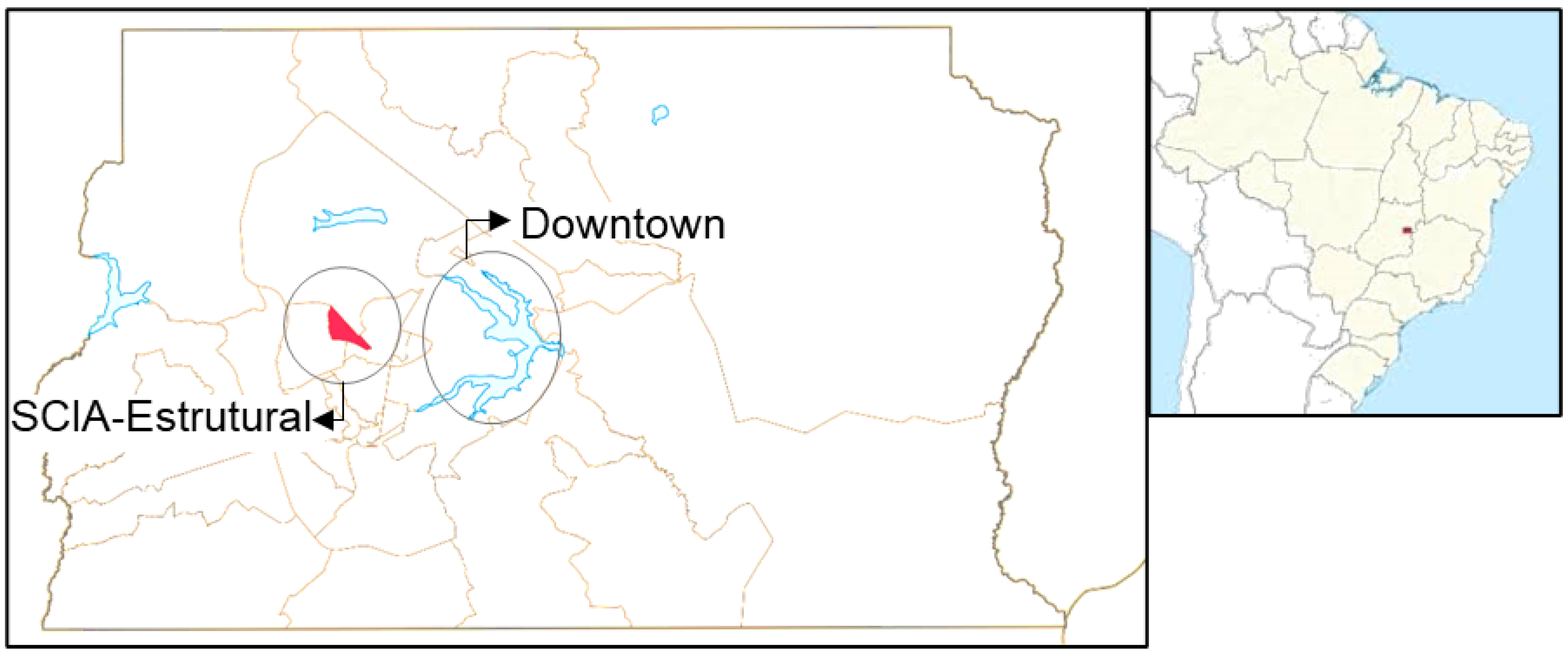
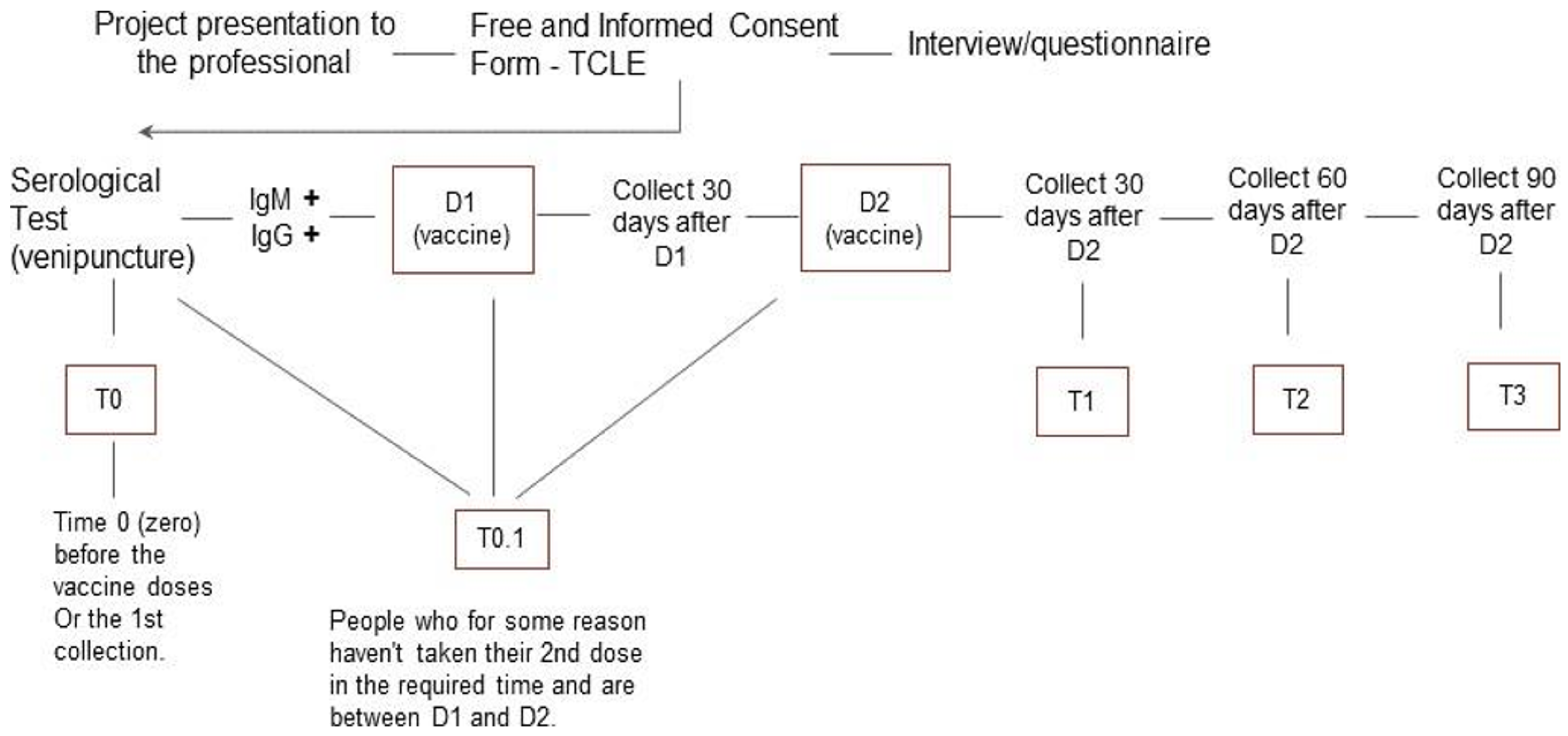
Introduction: Healthcare workers (HCWs) are at higher risk of SARS-CoV-2 infection. Viral surveillance for early detection of COVID-19 is a critical strategy to understand this population’s infection dynamics and prevent transmission. The study examines SARS-CoV-2 infection and reinfection among HCWs vaccinated against COVID-19 working at a primary healthcare unit serving a disenfranchised community in Brazil. Methods: The study was conducted in Cidade Estrutural, Federal District, Brazil, between February and October 2021. Participants were interviewed and provided samples. A prospective open cohort study was used to analyze the frequency of SARS-CoV-2 infection and reinfection, and the vaccine-induced seroconversion. Nasopharyngeal swab specimen was collected from workers presenting with flu-like symptoms and subjected to RT-qPCR. Peripheral blood samples were also collected every 30 ± 2 days for eight months, starting from the day participants received their first dose of COVID-19 vaccine, and submitted to serological testing (IgM and IgG chemiluminescence). The frequencies of infection and reinfection (RT-qPCR positive results 90 days after the infection) were calculated along with their respective confidence intervals (95% CI). Results: Of the 128 workers, 61 (47.65%; CI: 39.19–56.25) reported probable SARS-CoV-2 infection before vaccination and 50 (39.06%; CI: 31.04–47.71) had SARS-CoV-2 infection after vaccination, confirmed by molecular test. Reinfection was identified in seven workers (7/50, 14%; CI: 6.95–26.18) based on the 90-day interval between results. The serological data from the 128 workers during the cohort indicated that 68 (53.12%; CI: 44.5–61.5) had IgG antibodies and 46 had IgM antibodies (35.93%; CI: 28.14–44.54) against SARS-CoV-2. SARS-CoV-2 infection was common in 56% of the community health workers (CHWs), 50% of registered nurses, and licensed vocational nurses (33%). Following the COVID-19 vaccination, the percentage of infections among HCWs decreased from 47.83% to 4.35%. Conclusion: These results demonstrate that (i) approximately 40% of the workers were infected with SARS-CoV-2 in 2021 and (ii) reinfections confirmed by RT-qPCR occurred in 14% of the HCWs after vaccination. The results provide valuable insights into the circulation of SARS-CoV-2 among HCWs in a primary care unit serving a minoritized community.
Keywords: monitoring; seroprevalence; SARS-CoV-2; COVID-19 monitoring; seroprevalence; SARS-CoV-2; COVID-19