1. Introduction
Sequential statistical monitoring schemes play a fundamental role in detecting distributional changes in stochastic processes. In particular, procedures designed to identify small shifts in a location parameter have attracted sustained attention due to their relevance in a wide range of applied and theoretical contexts. Classical approaches, such as Shewhart-type schemes, are well known for their effectiveness in detecting large and abrupt changes; however, their performance deteriorates substantially when changes are small or evolve gradually over time [
1].
To address this limitation, cumulative monitoring schemes such as the exponentially weighted moving average (EWMA) and cumulative sum (CUSUM) procedures have been extensively studied [
2,
3]. These methods exploit temporal aggregation to enhance sensitivity to persistent changes and are now regarded as classical tools in sequential statistical analysis. Nevertheless, both EWMA and CUSUM rely fundamentally on mean-based statistics and are typically developed under assumptions of normality or near symmetry [
4]. When the underlying distribution is asymmetric or heavy-tailed, these assumptions may no longer be appropriate, and the resulting monitoring statistics can exhibit distorted behavior, including delayed detection of small shifts or an increased rate of false alarms [
5,
6].
Non-normal and positively skewed distributions arise naturally in many stochastic models, and their presence motivates the development of distribution-aware monitoring procedures [
7]. In such settings, the sample mean is particularly sensitive to tail behavior, and even isolated extreme observations may exert disproportionate influence on cumulative statistics. As a result, a growing body of literature has explored robust and alternative monitoring schemes based on resistant estimators, including median-based and quantile-based statistics [
8,
9,
10], as well as adaptive or bounded-influence variants of classical EWMA-type procedures [
11,
12]. While these approaches improve resistance to outliers, they typically preserve the time-based exponential weighting structure and remain centered on mean-type summaries, limiting their ability to distinguish persistent small location shifts from intrinsic tail variability in skewed distributions.
Recent studies have further emphasized the importance of robust monitoring procedures capable of operating reliably under non-normal and asymmetric distributions. For example, Saesuntia et al. [
13] proposed a robust TEWMA–MA control chart based on sign statistics for monitoring manufacturing processes, demonstrating improved robustness when distributional assumptions are violated. In a related line of research, Gillariose et al. [
14] introduced a flexible heavy-tailed modeling framework based on Gauss hypergeometric functions for survival data characterized by strong skewness and extreme observations. These developments highlight the increasing importance of distribution-aware statistical methodologies for analyzing skewed and heavy-tailed data structures.
A complementary perspective is to reconsider not only the choice of the centering statistic but also the structure of the weighting mechanism itself. In classical sequential schemes, weights are assigned according to temporal order, reflecting the recency of observations rather than their positional relevance within the distribution. For asymmetric distributions, however, observations near the center of the distribution may carry more reliable information about gradual location changes than extreme tail values [
15]. This observation motivates the construction of monitoring statistics that are both median-centered and distribution-aware, assigning weights according to distance from a central order statistic rather than time.
In this study, we introduce a new sequential monitoring scheme, referred to as the Golden Ratio (GR) control chart, designed for detecting small location shifts in right-skewed distributions. The proposed method combines median centering with a geometrically decaying weighting mechanism based on the golden ratio, yielding a structured attenuation of tail contributions while preserving information from the central region of the distribution [
16]. Observations are weighted according to their rank-based distance from the sample median, inducing a rank-based weighting structure that suppresses tail influence while retaining sensitivity to gradual location changes. This weighting scheme provides a mathematically transparent alternative to time-based exponential smoothing and aligns naturally with order-statistic representations of skewed distributions. This structure enables the proposed chart to balance robustness to tail-driven fluctuations with sensitivity to persistent small location shifts.
In addition, the proposed GR scheme incorporates a run-based signaling rule, requiring sustained exceedance of a control threshold before an alarm is issued. Run-based decision rules have long been recognized as an effective mechanism for suppressing spurious signals caused by isolated fluctuations while maintaining sensitivity to persistent changes [
17]. The theoretical properties of the resulting monitoring statistic are examined, and its run-length behavior is investigated under non-normal distributions using simulation-based analysis and classical run-length formulations commonly used in the SPC literature [
18].
The remainder of the paper is organized as follows.
Section 2 reviews relevant background on sequential monitoring under non-normality and motivates the proposed approach.
Section 3 introduces the construction of the GR control chart.
Section 4 presents theoretical considerations and run-length analysis.
Section 5 reports simulation results, and
Section 6 concludes with final remarks and directions for future research.
2. Materials and Methods
2.1. Sequential Monitoring Under Non-Normality
Sequential monitoring procedures are widely used to detect distributional changes in stochastic processes. Classical schemes such as Shewhart-type charts, EWMA, and CUSUM have been studied extensively and are known to provide effective detection of location shifts under normal or near-symmetric distributional assumptions [
1,
2,
3,
4]. In particular, cumulative schemes exploit temporal aggregation to enhance sensitivity to small and persistent changes [
2,
3].
However, when the underlying distribution deviates from normality, especially in the presence of skewness or heavy tails, the performance of these classical procedures may deteriorate substantially. Several studies have demonstrated that non-normality can distort the run-length behavior of mean-based monitoring statistics, leading to delayed detection or inflated false alarm rates [
5,
6,
7,
8]. This issue is particularly pronounced for right-skewed distributions, where upper-tail observations occur more frequently and may exert disproportionate influence on cumulative statistics.
These limitations motivate the development of monitoring procedures that explicitly account for distributional asymmetry rather than relying on normal approximations or ad hoc transformations. Accordingly, fair performance comparisons under skewness require calibrating competing charts to comparable in-control run-length properties.
2.2. Median-Based and Robust Monitoring Statistics
To mitigate the sensitivity of mean-based procedures to non-normality and outliers, a growing body of literature has proposed monitoring schemes based on robust location estimators. Among these, the sample median has attracted particular attention due to its resistance to extreme observations and its stability under skewed distributions [
9,
10,
11]. Median-based monitoring schemes have been shown to provide improved robustness, particularly when a fixed in-control reference median is employed to detect systematic location changes.
Related approaches include control charts based on robust scale estimators, such as the median absolute deviation (MAD), and loss-based formulations that down-weight extreme observations [
10,
16]. While robust scale-based charts primarily target variability changes, the present study focuses on detecting small location shifts under skewness.
Nevertheless, most median-based and robust schemes retain the traditional time-based weighting paradigm inherent in EWMA-type procedures. As a result, although robustness to isolated outliers is improved, the underlying structure of temporal weighting remains unchanged. In this study, we focus on contrasting the proposed rank-weighted median-centered chart with widely used mean-based EWMA and CUSUM schemes, leaving comparisons with other robust variants for future work.
2.3. Limitations of Time-Based Weighting Schemes
In classical sequential monitoring procedures, weighting mechanisms are predominantly time-based: recent observations receive greater weight, while older observations are exponentially down-weighted, as in EWMA-type schemes [
2]. This structure is well suited for emphasizing recent information and gradual shifts in symmetric settings. However, it does not explicitly distinguish between observations that are informative about location changes and those that primarily reflect tail variability.
For right-skewed distributions, extreme observations in the upper tail may arise naturally from the distribution rather than from genuine shifts in the location parameter. Time-based weighting schemes treat such observations similarly to central observations, potentially amplifying tail noise and obscuring small but persistent distributional shifts. Robust variants of EWMA mitigate this issue by bounding the influence of extreme values [
12,
15], yet they continue to rely on temporal ordering as the primary weighting criterion.
These observations suggest that robustness alone is insufficient if the weighting structure itself does not incorporate information about the positional relevance of observations within the distribution.
2.4. Motivation for Distribution-Aware Weighting
An alternative perspective is to construct monitoring statistics that are not only robust in terms of centering but also distribution-aware in terms of weighting. From an order-statistic viewpoint, observations closer to the center of a skewed distribution may provide more reliable information about gradual location changes than those in the tails. Consequently, assigning weights according to distance from a central order statistic, rather than temporal order, may enhance sensitivity to persistent shifts while suppressing the influence of isolated extremes.
This idea motivates the proposed median-centered monitoring scheme with golden ratio–based geometric weighting. The golden ratio induces a natural and mathematically transparent geometric decay structure, yielding a hierarchy of weights that decreases smoothly with rank-based distance from the median [
16,
17]. Moreover, a sensitivity study over nearby decay bases is reported to show that the GR choice provides a balanced representative within the broader geometric weighting family. By combining median centering with distribution-aware weighting, the proposed approach departs fundamentally from classical time-based schemes and provides a new framework for sequential monitoring under skewness.
The subsequent sections formalize this framework, introduce the construction of the Golden Ratio (GR) monitoring scheme, and investigate its theoretical and empirical properties.
3. Construction of the Golden Ratio Monitoring Scheme
This section introduces the construction of the proposed median-centered sequential monitoring scheme based on golden ratio weighting. The methodology is developed for detecting small location shifts in stochastic processes with skewed distributions. The proposed framework consists of three key components: a median-centered statistic, a rank-based geometric weighting mechanism derived from the golden ratio, and a run-based signaling rule.
3.1. Problem Setup and Notation
For clarity, the notation used in the proposed monitoring scheme is summarized in
Table 1.
Let denote a sequence of independent subgroups from a stochastic process with distribution function . Under in-control conditions, the process is assumed to follow a baseline distribution with location parameter . A small location shift is modeled as a change to , where represents the magnitude of the shift.
Let M0 denote the in-control reference median estimated from Phase-I data consisting of G subgroups. The proposed monitoring scheme follows the conventional Phase-I/Phase-II framework: Phase-I data are used to estimate M0 which serves as a fixed benchmark, and Phase-II monitoring is then performed using the GR statistic to detect departures from the in-control state.
At each monitoring epoch , a subgroup of size is observed, Let denote the corresponding order statistics. The objective is to detect small changes in the location parameter as rapidly as possible while maintaining a prescribed in-control run-length performance.
3.2. Median-Centered Statistic
To enhance robustness under skewed distributions, the proposed monitoring scheme employs median centering rather than mean centering. The sample median at time
, denoted by
, is defined as
The median provides a robust measure of central tendency that is less sensitive to extreme observations, particularly in right-skewed distributions. Centering the monitoring statistic at ensures that isolated tail observations exert limited influence on the overall monitoring behavior.
In the proposed scheme, the sample median is used only to determine the rank structure of observations, whereas the monitoring statistic is centered at the fixed Phase-I reference median .
3.3. Golden Ratio–Based Rank Weighting
More generally, rank-based geometric weighting schemes can be written as , where is a decay parameter controlling the rate at which weights decrease with distance from the median. In the proposed GR chart, this parameter is fixed at , where denotes the golden ratio.
Let denote the median rank (or the midpoint for even ). For the -th order statistic, define the rank-based distance from the median as The corresponding golden ratio weight is defined as This weighting mechanism induces a geometric decay structure with the following properties:
Observations closer to the median receive larger weights;
Weights decrease smoothly as observations move toward the tails;
No observation is discarded, but tail contributions are progressively attenuated.
Weights are assigned to the ordered observations and normalized such that .
The choice of the golden ratio as the decay parameter is motivated by its unique balance between memory retention and adaptability. In geometric weighting schemes, excessively rapid decay concentrates weight on a narrow central region, while slower decay allows tail observations to exert undue influence. The golden ratio yields a geometric decay structure with respect to the rank-distance from the median. Specifically, letting , the ratio between successive distance levels satisfies .
This property provides a natural compromise between concentration and dispersion. When combined with median centering, this balance is particularly effective for right-skewed distributions. Central observations retain sufficient influence to reflect gradual location changes, while tail contributions are progressively attenuated without being abruptly truncated. Unlike time-based exponential smoothing, which prioritizes recency, the proposed rank-based golden ratio weighting prioritizes positional relevance within the distribution, enhancing robustness without introducing additional tuning parameters.
Illustrative Example
The median rank is . For the ordered subgroup the rank-based distances from the median are Using the golden ratio , the unnormalized weights are After normalization (such that ), the weights become approximate Thus, observations closest to the median receive the largest weight, while tail observations are progressively down-weighted in a symmetric and geometrically decaying manner.
3.4. GR Monitoring Statistic
Using the normalized rank-based weights
and the fixed Phase-I reference median
, the proposed charting statistic at time
is defined as
Here, is used only to determine the rank-based weighting structure through the ordering , whereas serves as the fixed in-control reference for detecting sustained location shifts in Phase II.
3.5. Signaling Rule
Let denote the upper control threshold for the proposed GR monitoring statistic. Since the distribution of depends on the underlying process distribution, the threshold is determined to achieve a desired in-control average run length.
Rather than signaling an alarm based on a single threshold exceedance, the proposed scheme employs a run-based decision rule. Let h denote the required run length. An out-of-control signal is generated at time t if . This rule requires sustained evidence of departure before signaling and further suppresses spurious alarms caused by isolated extreme observations.
3.6. Summary of the GR Monitoring Algorithm
The proposed Golden Ratio monitoring scheme operates according to the following steps:
- 1.
At time , observe a subgroup of size .
- 2.
Compute the sample median .
- 3.
Assign golden ratio weights based on rank-based distance from the median.
- 4.
Compute the monitoring statistic .
- 5.
Signal an out-of-control condition if the run-based rule is satisfied.
This construction provides a distribution-aware alternative to classical time-based sequential monitoring schemes and forms the basis for the theoretical and empirical analysis presented in the subsequent sections.
4. Theoretical Properties and Run-Length Analysis
This section examines key theoretical properties of the proposed Golden Ratio (GR) monitoring scheme and outlines a framework for analyzing its run-length behavior under non-normal distributions. The emphasis is on understanding how median centering, distribution-aware geometric weighting, and run-based signaling jointly contribute to robustness and sensitivity in skewed settings.
4.1. Robustness Induced by Median Centering
Let denote a generic observation from the in-control distribution . For right-skewed distributions, the sample mean is known to be highly sensitive to upper-tail observations, which may inflate the variability of mean-based monitoring statistics. In contrast, the sample median exhibits bounded influence and remains stable unless a substantial proportion of observations are affected.
By employing a median-based reference structure—using the subgroup median to define rank-based weights and a fixed Phase-I median for centering—the GR scheme reduces the impact of isolated extreme observations on the charting statistic. Since the median depends only on the order of observations rather than their magnitudes, occasional tail values exert limited influence on . This property enhances in-control stability and reduces the likelihood of false alarms in skewed distributions.
4.2. Geometric Attenuation via Golden Ratio Weighting
The rank-based weighting mechanism defined in
Section 3 induces a geometric attenuation structure governed by the golden ratio
. Specifically, the weights assigned to the ordered observations decrease geometrically with the rank-based distance from the median according to
, where
denotes the distance of the
-th order statistic from the median rank.
This structure assigns the largest weights to observations located near the center of the distribution, where information about gradual location shifts is typically most reliable, while progressively down-weighting observations located in the distribution tails. Unlike time-based exponential smoothing, which prioritizes the temporal order of observations, the GR weighting scheme prioritizes positional relevance within the distribution.
Consequently, the statistic is less affected by tail variability that naturally occurs in right-skewed distributions, while maintaining sensitivity to persistent distributional displacement around the central region.
4.3. Suppression of Spurious Signals via Run-Based Decision Rules
The proposed GR monitoring scheme employs a run-based signaling rule that requires consecutive exceedances of the control threshold before signaling an out-of-control condition. Let denote the exceedance event at time .
Under in-control conditions, exceedance events occur sporadically due to random variation. Requiring a run of length effectively reduces the probability that isolated exceedances trigger false alarms. Although the exceedance indicators are not strictly independent, the run-based rule ensures that only sustained departures from the baseline distribution lead to signaling. This mechanism complements median centering and geometric attenuation by providing an additional layer of robustness against tail-driven fluctuations.
4.4. Sensitivity to Small Location Shifts in Skewed Distributions
Consider a small location shift modeled as (in control),
(out of control), where is small. In right-skewed distributions, small shifts typically manifest as persistent changes affecting a broad portion of the distribution rather than as isolated extreme values. The GR statistic is designed to amplify such collective displacement around the median. Median centering ensures stability, while geometric weighting concentrates sensitivity near the center of the distribution. Consequently, sustained increases in are more likely to occur following a genuine shift, enabling earlier detection when combined with the run-based signaling rule.
4.5. Run-Length and Average Run Length Framework
Let denote the run length, defined as the number of monitoring epochs until the first out-of-control signal is generated. The average run length serves as the primary performance measure for evaluating sequential monitoring schemes.
For charts with independent charting statistics, the run-length distribution is geometric. However, for schemes involving run-based rules or cumulative statistics, such as the GR chart, the run-length distribution exhibits dependence and is generally non-geometric. In the presence of non-normality, closed-form expressions for are rarely available.
To address this, the run-length behavior of the GR scheme can be analyzed using simulation-based approaches and reliability-oriented formulations that model the probability of observing a run of exceedances of length . This framework allows the in-control threshold to be calibrated to achieve a desired in-control , facilitating fair comparison with classical EWMA and CUSUM procedures under identical operating conditions. In the present study, the required control thresholds are obtained by Monte Carlo simulation combined with a bisection search procedure to achieve a target in-control average run length of .
4.6. Testable Theoretical Implications
The preceding discussion leads to the following testable implications, which guide the empirical evaluation in the subsequent section:
I1 (In-control robustness): Under right-skewed distributions, the GR scheme achieves comparable in-control average run lengths relative to classical mean-based procedures calibrated to the same nominal level.
I2 (Small-shift sensitivity): For small location shifts, the GR scheme yields shorter out-of-control average run lengths due to its median-centered, distribution-aware weighting structure.
I3 (Resistance to isolated extremes): The combination of geometric attenuation and run-based signaling suppresses false alarms caused by isolated extreme observations.
These implications are evaluated through Monte Carlo simulation experiments under several right-skewed distributional models, including Gamma distributions, as presented in
Section 5.
5. Results and Discussion
This section presents a comprehensive simulation study designed to evaluate the performance of the proposed GR control chart and to compare it with classical EWMA and CUSUM schemes under right-skewed process distributions. All procedures are calibrated to achieve comparable in-control performance, ensuring a fair and interpretable comparison.
5.1. Simulation Design and Calibration
For each distributional setting, all control charts are calibrated to attain an in-control average run length of approximately which is a standard benchmark in the statistical process control literature. The proposed GR chart employs a one-sided signaling rule with a fixed run parameter .
Subgroups of size n = 5 are generated sequentially from the underlying process distribution. Location shifts are introduced through a shift parameter , with
The EWMA chart is implemented with smoothing parameter , while the CUSUM chart uses the commonly adopted reference value for small-shift detection.
For each distribution and method, the control limit is calibrated to achieve under in-control conditions. Calibration is performed using Monte Carlo estimation of combined with a bisection search over the threshold parameter.
For each configuration, 10,000 Monte Carlo replications are used to estimate the average run length (ARL) and the standard deviation of the run length (SDRL). The calibration parameters obtained under the in-control state are then held fixed across all out-of-control scenarios to ensure fair comparisons among the competing monitoring schemes. In addition to ARL and SDRL, we report the Monte Carlo standard error of the estimated ARL (denoted as ), computed as , where is the number of simulation replications. All Monte Carlo simulations were performed using Python 3.12 in the Google Colaboratory environment (Google Colab, Google LLC, Mountain View, CA, USA).
5.2. Results for the Distribution
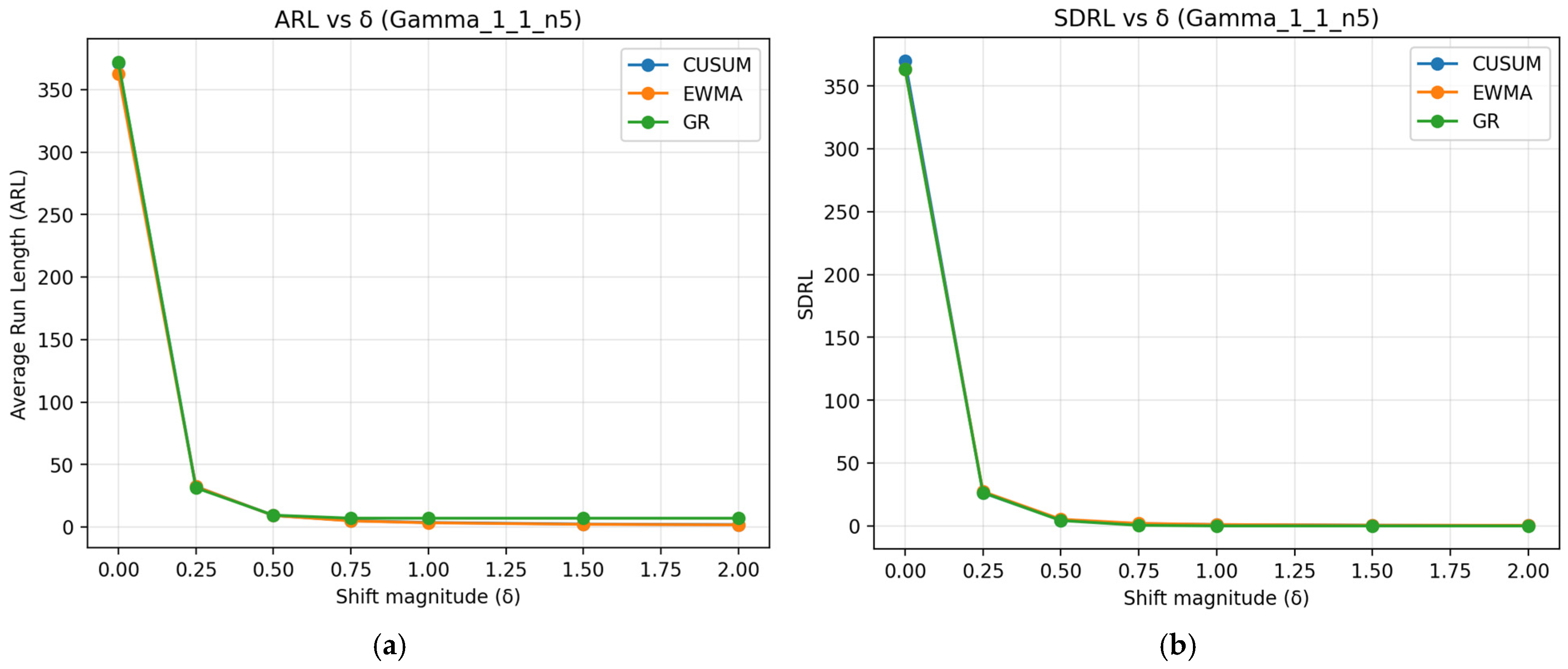
Table 2 reports the average run length (ARL) and the standard deviation of run length (SDRL) for the highly right-skewed
distribution with subgroup size
. All charts achieve in-control ARL values close to the nominal target, confirming successful calibration.
Figure 1 provides a graphical representation of the ARL and SDRL results reported in
Table 2 as functions of the shift magnitude
for the
distribution.
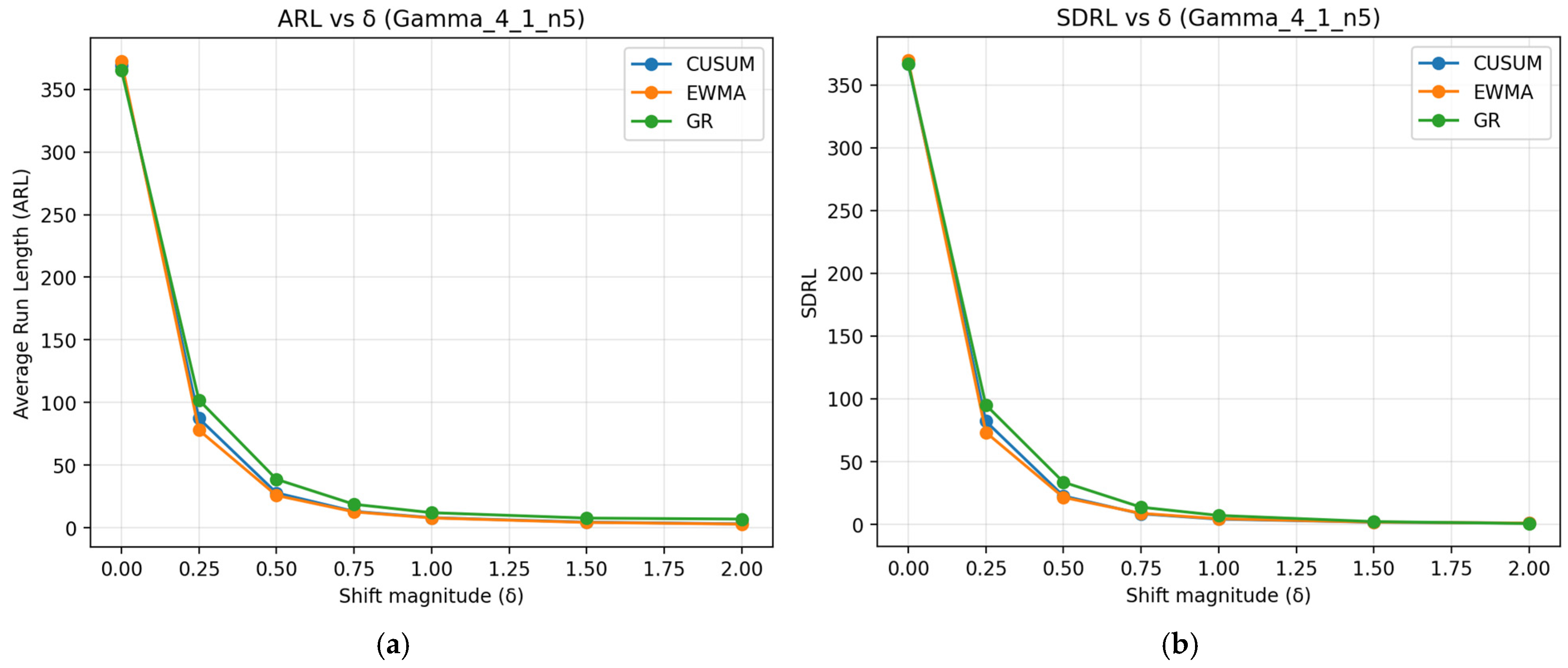
5.3. Results for the Distribution
The results for the moderately skewed
distribution are summarized in
Table 3. As in the previous case, all charts maintain in-control ARL values close to the nominal level.
Figure 2 provides a graphical representation of the ARL and SDRL results reported in
Table 3 as functions of the shift magnitude
for the
distribution.
5.4. Results for Additional Right-Skewed Distributions
To further examine the robustness of the proposed monitoring scheme, additional experiments were conducted under and distributions. These distributions represent commonly encountered right-skewed process models and provide complementary distributional structures compared with the Gamma family.
The simulation design follows the same calibration procedure described in
Section 5.1. In particular, all monitoring schemes were calibrated to achieve an in-control average run length of approximately
. Subgroups of size
were generated sequentially, and location shifts were introduced through the parameter
.
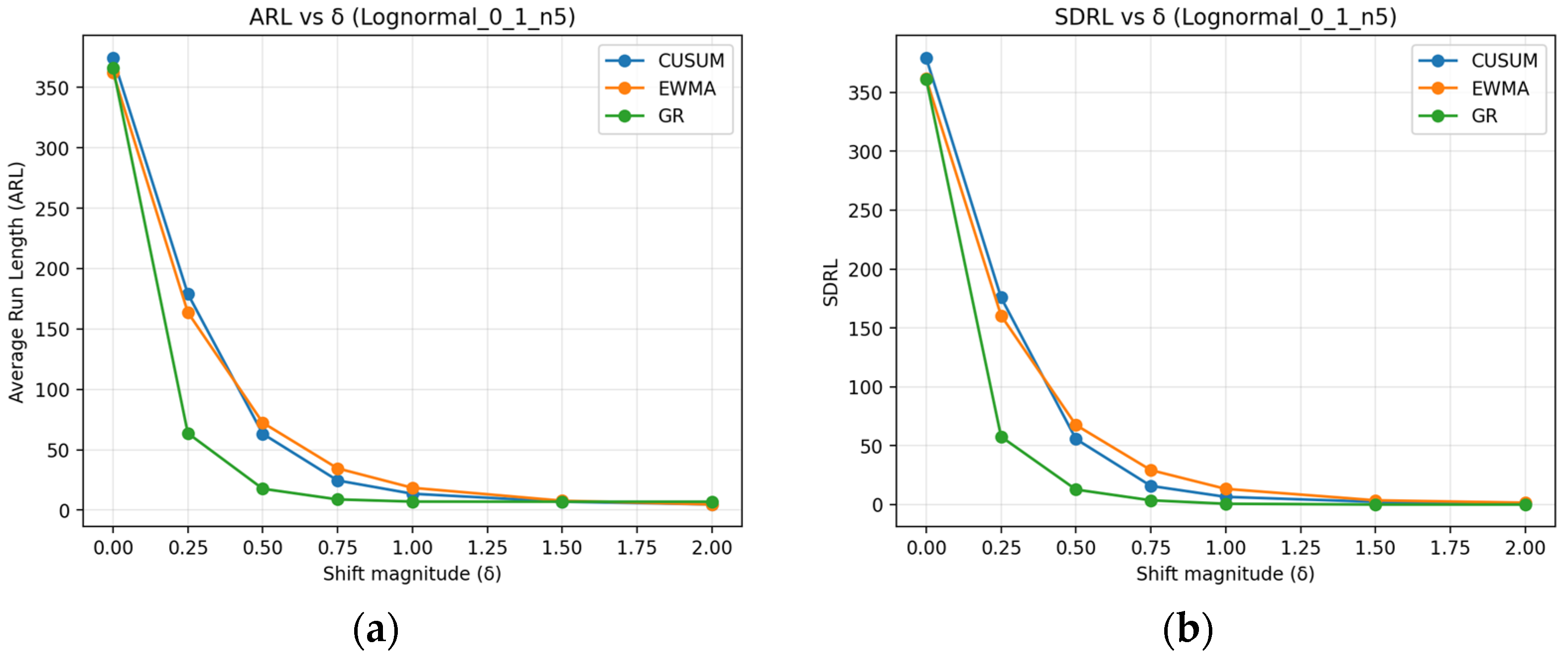
Table 4 summarizes the average run length (ARL) and standard deviation of run length (SDRL) results for the
distribution, while
Figure 3 provides the corresponding graphical representation of ARL and SDRL as functions of the shift magnitude.
The results indicate that the qualitative performance pattern observed for the Gamma models remains largely consistent under alternative right-skewed distributions. In particular, the GR chart maintains competitive performance for small location shifts while exhibiting stable run-length variability. These results suggest that the proposed monitoring scheme is not tailored to a specific distributional form but retains similar behavior across multiple classes of skewed distributions.
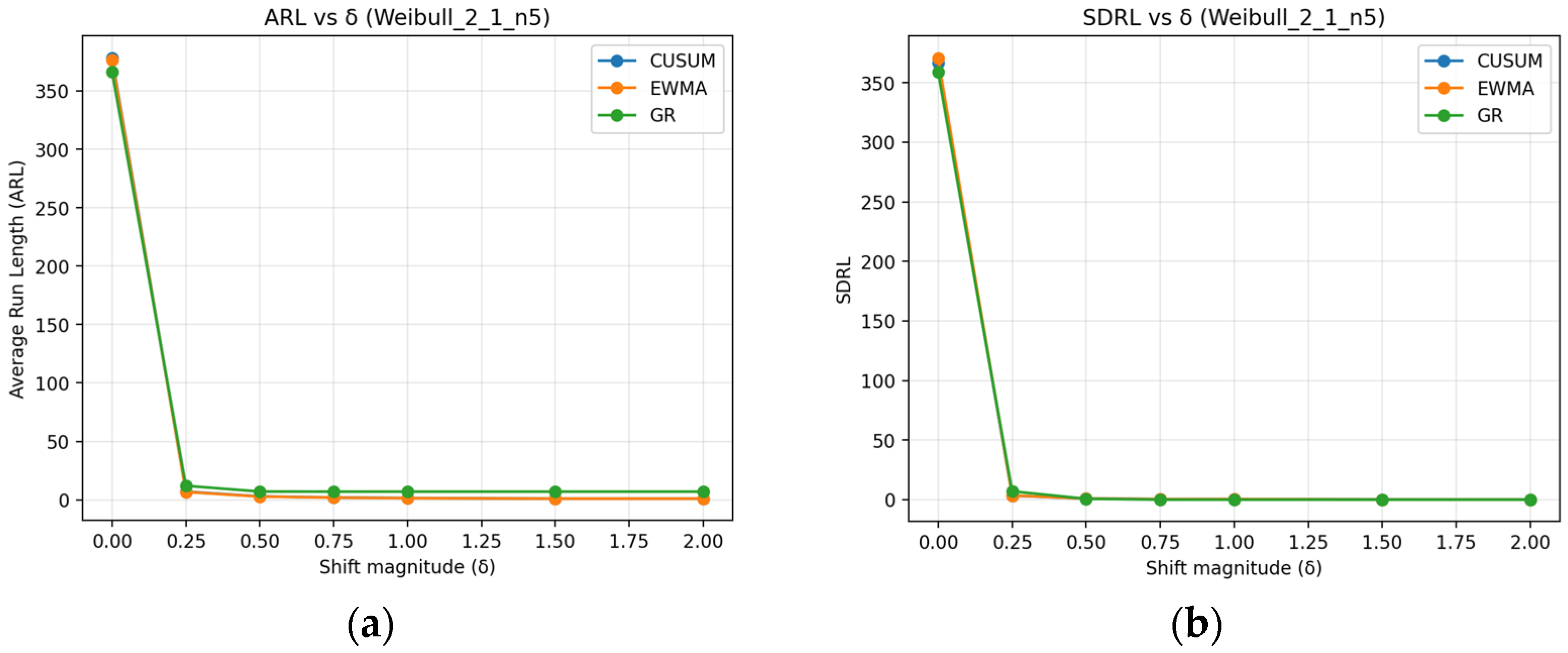
Table 5 reports the corresponding ARL and SDRL values for the
) distribution, and
Figure 4 illustrates the associated ARL and SDRL curves.
Across both additional distributions, the GR monitoring scheme demonstrates behavior comparable to that observed under Gamma models. The results confirm that the proposed method provides reliable performance across multiple classes of right-skewed distributions rather than being tailored to a specific distributional form.
5.5. Sensitivity Analysis
To further assess the robustness of the proposed monitoring framework, additional sensitivity analyses were conducted with respect to the subgroup size and the decay parameter used in the rank-based weighting scheme. The ) distribution is selected as a representative highly skewed model, providing a conservative benchmark for assessing the sensitivity of the proposed weighting mechanism.
First, the effect of subgroup size was examined by comparing results obtained with
and
under the highly skewed
distribution. The simulation design and calibration procedure remained identical to those described in
Section 5.1.
Table 6 reports the corresponding ARL, SDRL and
values for both subgroup sizes.
The results indicate that the qualitative performance of the GR chart remains stable across subgroup sizes. Although larger subgroup sizes naturally reduce variability in the monitoring statistic, the relative performance differences between the GR, EWMA, and CUSUM procedures remain consistent.
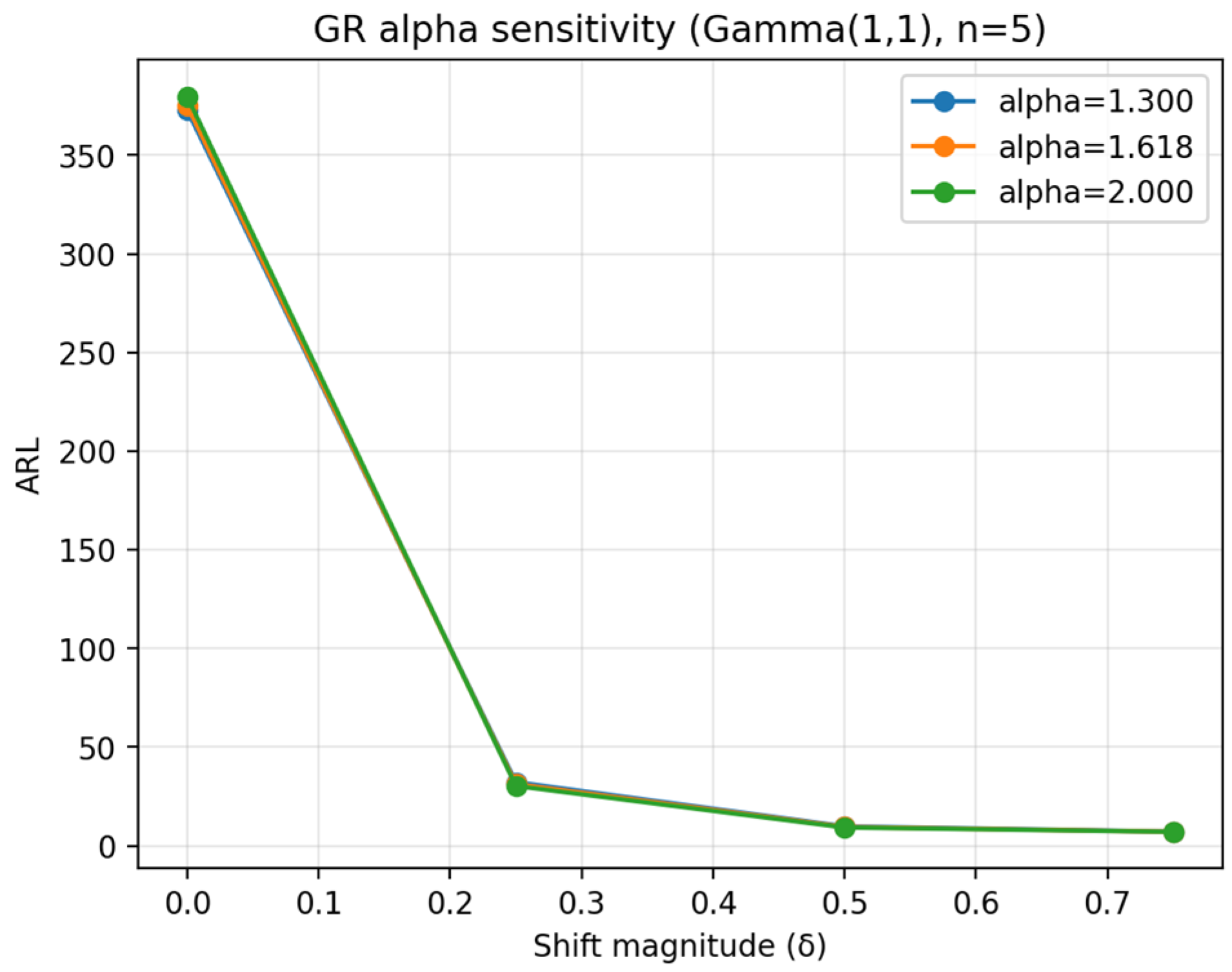
To examine the influence of the geometric decay parameter used in the rank-based weighting scheme, a sensitivity analysis was conducted for under the distribution with subgroup size
Figure 5 illustrates the resulting ARL curves for different α values. The results indicate that moderate variations in
α slightly modify the concentration of weights around the median but do not substantially alter the overall detection behavior. The golden ratio value provides a balanced weighting structure that yields stable and competitive performance across the tested scenarios.
Table 7 presents the ARL, SDRL and
values obtained for the different α values under the
distribution.
The results show that moderate variations in α slightly modify the concentration of weights around the median but do not substantially alter the overall detection behavior. The golden ratio value provides a balanced weighting structure that yields stable and competitive performance across the tested scenarios.
5.6. Illustrative Control Chart Example
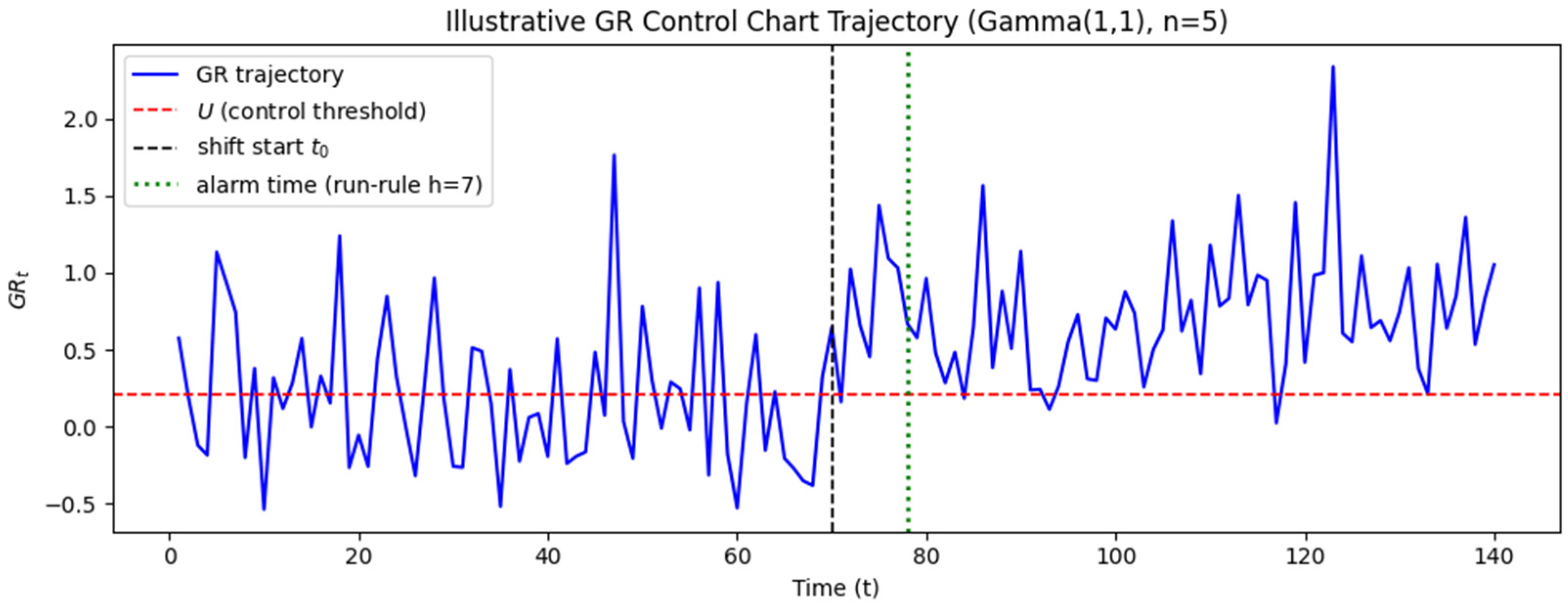
To visually illustrate the proposed GR monitoring scheme,
Figure 6 shows a representative chart trajectory for a right-skewed process. In this illustration, Phase-II subgroups of size
are generated from a
distribution. A small positive location shift in magnitude
is introduced at time
. The upper control threshold
is calibrated under the in-control state to achieve an in-control average run length of approximately
using Monte Carlo simulation combined with a bisection search. The run-based signaling rule with parameter
is then applied, and an out-of-control signal is issued when
for
consecutive monitoring epochs. As shown in
Figure 6, the chart fluctuates stably around its baseline level prior to
, increases systematically after the shift, and signals after a sustained sequence of threshold exceedances, illustrating how the run-rule suppresses isolated exceedances while responding to persistent displacement.
5.7. Discussion of Simulation Results
The simulation results provide a comprehensive comparison of the proposed GR monitoring scheme with classical EWMA and CUSUM charts under several right-skewed distributions. Across all considered models, the calibration procedure successfully achieved in-control average run length values close to the nominal benchmark of , ensuring a fair comparison among the competing monitoring schemes.
For small location shifts and the GR chart exhibits ARL values comparable to those of EWMA and CUSUM, indicating similar detection capability under skewed distributions. This behavior is consistently observed across the Gamma, Lognormal, and Weibull models. In particular, under the highly skewed distribution, the GR chart demonstrates noticeably shorter ARL values for small shifts compared with the classical charts, suggesting improved responsiveness when the underlying distribution exhibits strong asymmetry.
As the shift magnitude increases, EWMA and CUSUM generally detect changes more rapidly than GR, which is consistent with the more aggressive nature of mean-based monitoring statistics. In contrast, the GR chart displays a smoother decrease in ARL values as δ increases, reflecting a more conservative response to large shifts. Notably, for larger shifts the GR chart’s ARL approaches the theoretical lower bound imposed by the run rule, which explains the observed and behavior.
An important observation concerns the variability of the run-length distribution. In several scenarios, particularly for moderate and large shifts, the GR chart produces smaller SDRL values compared with the classical charts. This suggests that once a sustained shift occurs, the signaling behavior of the GR chart becomes more stable and less variable compared with mean-based procedures.
Overall, the results highlight a clear trade-off between detection speed and robustness. While EWMA and CUSUM tend to detect large shifts more quickly, the GR chart provides competitive performance for small shifts while offering improved robustness to tail-driven fluctuations that naturally occur in skewed distributions. This robustness arises from the combined effects of median centering, rank-based golden ratio weighting, and the run-based signaling rule.
Taken together, the simulation results demonstrate that the GR monitoring scheme offers a reliable and distribution-aware alternative to classical mean-based control charts. In particular, the proposed chart maintains stable in-control performance while providing competitive detection capability for small shifts across multiple classes of right-skewed distributions.
6. Conclusions and Future Research
This study introduced a new sequential monitoring scheme, referred to as the Golden Ratio (GR) control chart, for detecting small positive location shifts in right-skewed distributions. The proposed approach combines (i) a fixed Phase-I reference median for centering, (ii) a rank-based geometric weighting structure derived from the golden ratio to attenuate tail contributions, and (iii) a run-based signaling rule that requires sustained evidence before an alarm is issued. Together, these components yield a distribution-aware framework that reduces the impact of isolated extreme observations while remaining responsive to persistent distributional displacement around the central region.
Monte Carlo experiments calibrated to a common in-control benchmark ( ≈ 370) show that the GR chart provides a robust monitoring alternative under skewness. Across the studied right-skewed models (Gamma, Lognormal, and Weibull), the GR procedure maintains stable in-control behavior and delivers competitive detection performance for small location shifts when compared with classical mean-based EWMA and CUSUM charts under identical calibration. The results further indicate that the proposed rank-based weighting and run-based decision mechanism can reduce spurious signaling driven by tail variability that naturally arises in asymmetric distributions.
The proposed GR framework is transparent and interpretable, and it can be implemented with minimal tuning once the in-control reference median and control threshold are established.
Future research may extend the GR chart to two-sided monitoring, alternative skewed or heavy-tailed models, and dependent data settings. Additional work could also investigate analytic or approximation-based run-length characterizations for the proposed run-based scheme and explore design trade-offs among the weighting decay parameter, subgroup size, and run length requirement.
From a practical perspective, the proposed GR chart may be particularly useful in monitoring processes where measurements naturally exhibit right-skewed behavior, such as reliability data, service-time distributions, environmental measurements, and financial transaction processes.