1. Introduction
As is well known, the conventional vibration isolation model, including a linear spring in parallel with a damper, is one of the common methods for preventing the vibration transmission from source to isolated object, showing that the starting frequency for suppressing vibration is higher than the
natural frequency (
was denoted as the natural frequency) [
1]. Hence, there exists the dichotomy between load-bearing capacity and low stiffness, indicating limited isolation performance [
2]. Recently, the growing demand for vibration isolation under diverse loading conditions and complex excitation environments has posed significant challenges for the scientific and engineering community to protect machinery, equipment, and even human health.
The quasi-zero stiffness (QZS), also referred to as high-static–low-dynamic stiffness (HSLDS) vibration isolation, is widely regarded as a promising approach to overcome the limitations of the conventional isolator, as it can extend the isolation region and enhance the capacity for vibration isolation attenuation [
3]. The design principle is based on the appropriate arrangement of linear elastic elements to obtain the isolation model with QZS characteristics. For example, a vibration isolation model including three coil springs was proposed, in which one vertical spring supports the load, and a pair of oblique springs is used to modify the total stiffness. This configuration yields a symmetric stiffness curve and obtains quasi-zero stiffness at the equilibrium position as reported by Carrella et al. [
4]. The dynamic analysis of this model was conducted in consideration of the effects of the configurative parameters on the system behavior, revealing the complex dynamical phenomena such as periodic, chaotic motion in [
5,
6]. Based on a scissor structure, an n-layer vibration isolator was proposed and experimentally evaluated by Sun et al. [
7], who concluded that this mode can achieve a tunable isolation response without a resonance phenomenon. A one-DOF mechanical oscillator with quasi-zero stiffness, in which the isolated load is supported by four oblique springs arranged in a symmetric configuration, was developed and analyzed by Gatti et al. [
8], showing that the system offers a softening behavior in the region of interest. Shi et al. [
9] proposed and analyzed an HSLDS vibration isolation model. The system can offer low dynamic stiffness at large deflections, which remains effective for vibration isolation under complex loading conditions and large excitation amplitudes. The dynamic performance of a vibration isolation model studied by Nguebem et al. [
10], which comprises a quasi-zero stiffness mechanism, a damper, and an inerter, was evaluated to mitigate vibration of a multi-span continuous beam bridge under moving load. The results showed that the resonance peak shift toward a higher frequency can be remarkably decreased by adding inertance.
Additionally, the combination of the Euler buckling beam and air spring in the QZS vibration isolation model has been considered. For example, Oyelade et al. [
11] developed the negative-stiffness structure based on two Euler beams serving as variable stiffness springs. A parameter selection methodology for vehicle seat design was suggested for aiming to enhance driver comfort in the low-frequency range. A variable-stiffness vibration isolator exhibiting positive–negative stiffness characteristics was proposed by Chen et al. [
12]. The system is configured with four Euler beams connected by rods through universal joints, maintaining the isolation performance by adjusting the spring stiffness according to the changing isolated mass. A quasi-zero stiffness device, which is configured by four horizontal piezoelectric buckled beams in parallel with a vertical coil spring, was proposed and successfully experimented with by Liu et al. [
13]. This model can convert the mechanical energy into electrical energy and hence reduce the vibration transmission from the source to the receiver. Additionally, a vibration isolator, which is composed of four arc-shaped flexible beams, was designed and analyzed to achieve quasi-zero stiffness as reported by Zhou et al. [
14]. The results indicated that the starting frequency for effective isolation of this model is higher than that of its linear counterpart. Alternatively, a quasi-zero stiffness vibration isolation system was proposed by Jiang et al. [
15], which consists of an air spring in the vertical direction arranged in parallel with electromagnetic springs in the horizontal direction. This magnetic-air hybrid QZS system achieves both effective vibration isolation and adaptability to variable support loads. Palomares et al. [
16] developed a vibration isolation seat for ground vehicles, in which two pneumatic cylinders providing negative stiffness are arranged in parallel with a positive-stiffness rubber air spring. A vibration isolation model for a vehicle seat using a rubber air spring was studied by Nguyen et al. [
17], who showed that the system can achieve high static and low dynamic stiffness under specific operating conditions.
An alternative approach to achieving quasi-zero stiffness employs cam–roller–spring mechanisms, such as a vibration isolation system including one vertical spring with positive stiffness connected in parallel with a semicircular cam-roller mechanism generating negative stiffness, which was proposed and experimentally evaluated by Zhoiu et al. [
18]. The findings showed that the initial frequency of the isolator never exceeds that of the corresponding linear model, irrespective of excitation amplitude. Sun et al. [
19] proposed a high-static–low-dynamic stiffness (HSLDS) vibration isolator featuring an asymmetric load-support configuration, where negative stiffness was introduced through a cam mechanism with a parabolic profile. The effects of the negative stiffness mechanism on the system behavior were examined. The results revealed that the isolation effectiveness remained irrespective of structural asymmetry. A QZS vibration isolation system combining a rubber air spring and a semicircular cam mechanism was theoretically analyzed and experimentally validated by Vo et al. [
20,
21]. Although the results demonstrated superior performance compared with the linear counterpart, bifurcation phenomena were observed in the isolation region when the isolated mass departed from the optimal loading condition. As is well known, the aforementioned QZS vibration isolation models provide better isolation performance than conventional linear systems, such as extending the isolation region and enhancing vibration attenuation while maintaining load-bearing capacity. However, the transmissibility curve tends to bend toward the left. This behavior is attributed to the nonlinear dynamic stiffness characteristic. As a result, the onset frequency of isolation may increase and even exceed that of the corresponding linear counterpart, thereby reducing the overall isolation performance. To mitigate the adverse effects induced by nonlinear dynamic stiffness, a constant-force vibration isolation isolator based on a cam mechanism was proposed and experimented with by Trinh et al. [
22], in which the cam profile was designed according to user requirements. The finding showed that the model can achieve a constant force-displacement relationship within the expected working region, thereby remaining quasi-zero stiffness in this range. However, the existing study mainly focused on the analysis and design of the cam profile, and no prior work has explored the system behavior as well as vibration isolation performance under base excitation. Accordingly, this paper discovers the dynamic response and isolation effectiveness of the CFVI through numerical simulation. The remainder of the paper is organized as follows. First, the vibration isolation model is presented in
Section 2. Then, the governing dynamic equations are analyzed and established in
Section 3. Based on this analysis, the amplitude-frequency relation is derived; subsequently, the system behavior and isolation performance are investigated through numerical simulation in
Section 4. Finally, some main conclusions are drawn in
Section 5.
2. Description of CFVI
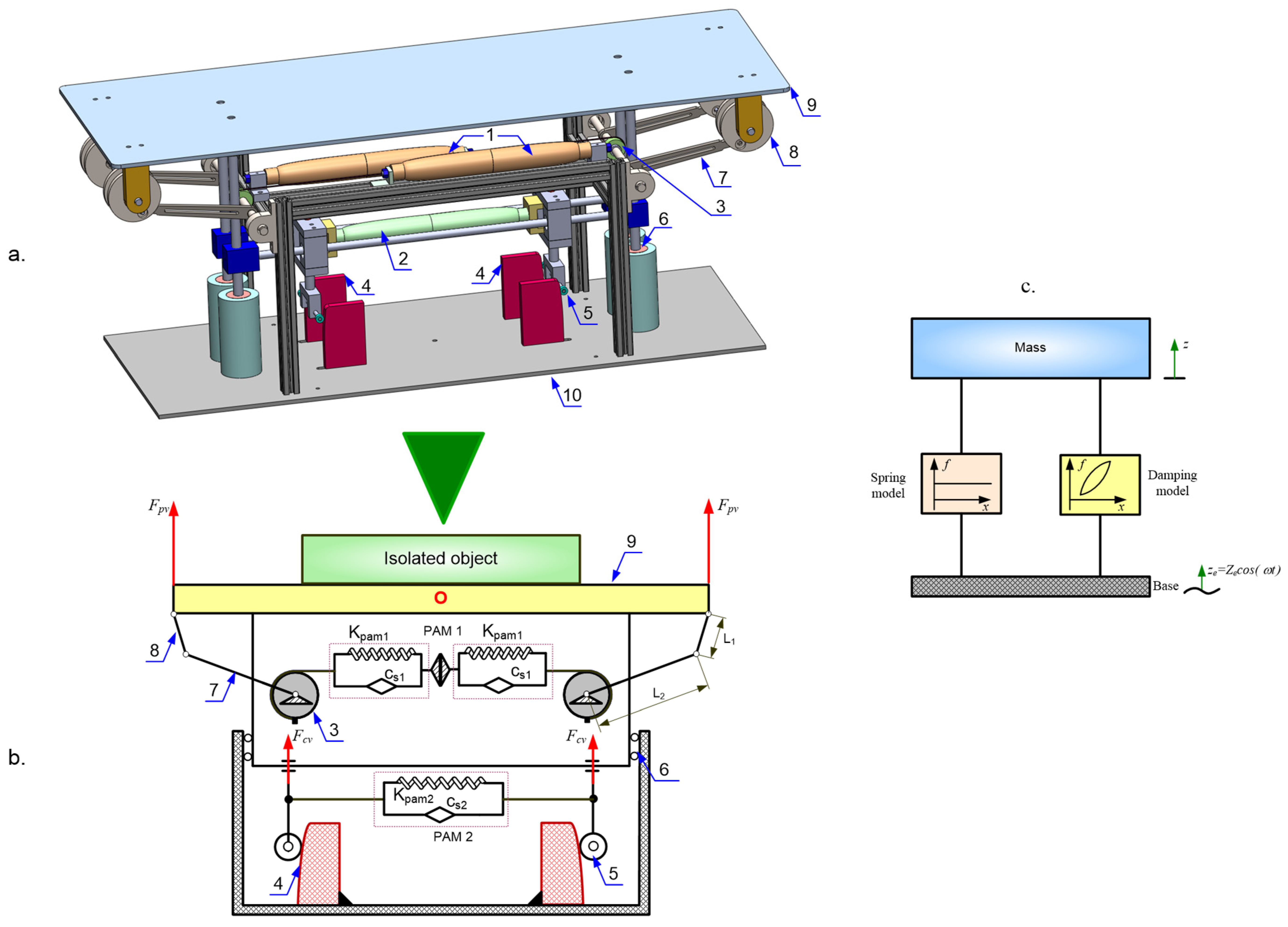
Consider a vibration isolation model with a constant-force characteristic as shown in
Figure 1a [
22]. Herein, unlike traditional isolators, which use elastic elements such as coil mechanical springs, rubber air springs, or magnetic springs, and so on, this isolation platform utilizes three pneumatic artificial muscles (PAM) as elastic elements. Hence, the key merit of the platform is that it is easy to convert from a passive into an active working state without the addition of an actuator. Moreover, a cam-roller mechanism with the profile of cam (4) is especially designed for the purpose of obtaining the constant-force characteristic in the working region. The load plate (9) is vertically supported by two pulley-disk mechanisms, each of which includes a PAM (1) connected to a pulley (3) through the cable, a crank (7), and a disk (8). Meanwhile, the cam (4), roller (5), and PAM (2) are called the cam-roller mechanism, forming a negative stiffness structure in the vertical direction for the purpose of correcting the stiffness of the platform. The linear bearing (6) is used to guide the load plate, moving only vertically without friction.
Owing to the isolation platform having a symmetric structure, it can be simplified as a plane mechanism, as shown in
Figure 1b, which expresses the front view of the platform. The mass of the load plate and isolated object is lumped into M. PAM has a complex dynamic behavior, which includes the restoring response generated by compressed air and the viscoelastic response of rubber material. Hence, each APM is denoted by a coil spring having stiffness
Kpam and structure damping C
s; herein, the subscripts “1” and “2” are representative of PAM 1 and PAM 2, respectively. The four disks have the same working radius, denoted by L
1, which is hung at four corners of the load plate by the rotational joints. This disk is connected to the transmission pulley (3) through the crank (7) with the length
L2 and corresponding rotational joints. It is noted that the pulley (3) and crank (7), which are mounted on the base (10) by the connecting rod, have the same rotational speed.
As shown in
Figure 1b, the static force exerted on the flat plate can be contributed by two components: one is the force due to the pulley-disk mechanism, denoted by
Fpv, and the other is the force of the cam-roller mechanism, denoted by
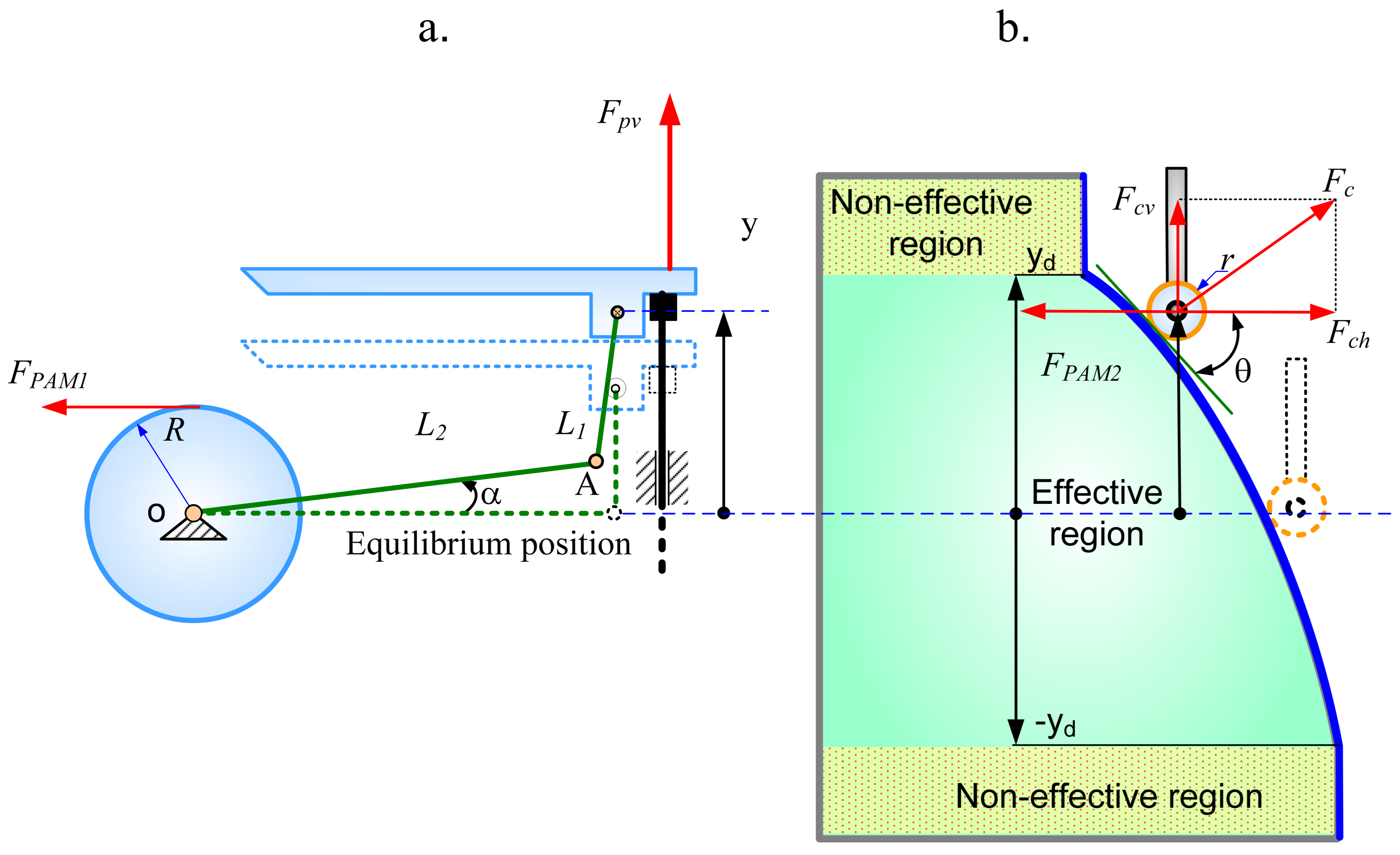
Fcv. Considering the vibration of the load plate around the equilibrium position (as shown in
Figure 2a) with a small amplitude, it means that the angle a is within −10° ÷ 10°.
The restoring force
Fpv is determined as follows:
where
R is the radius of the pulley,
L2 is the length of the crank,
with
is the shrinkable length of the PAM1, and
is the working length of the PAM1 defined as the length at which the stiffness of the PAM1 (
) is linearized.
is the shrinkable force of the PAM1 at the working length.
According to geometric relations, we have:
. Herein, α is the angle of the crank with respect to the horizontal direction, and accordingly, the length of
is expressed by:
Accordingly, Equation (1) can be rewritten according to the y coordinate:
The structure of the cam profile is divided into two regions, including the effective region and the non-effective region, as shown in
Figure 2b. If the roller contacts the cam surface in a non-effective region, the force acting on the load plate is only contributed by the
Fpv. However, the load plate is supported by the forces
Fpv and
Fcv when the contact between the roller and the cam surface occurs in the effective region.
In the effective region, the reaction between the cam surface and roller is generated due to the pulling force (
Fpam2) of PAM2 being
Fc. This projection of this force in the vertical and horizontal directions includes two components, which are
Fcv and
Fch, respectively, as shown in
Figure 2b. The relation of
Fcv and
Fch is expressed as follows:
where θ is the angle of the tangent line of the cam profile with respect to the horizontal direction. The component
Fch is equal to the value of
Fpam2. In order to obtain a constant force-displacement characteristic during the expected working region, the force
Fcv is determined as follows:
With
b as a constant, it is determined through the expected working.
Based on this ideal, the design principle of the cam profile was presented clearly in [
23]. The equation of the cam profile can be expressed approximately as follows:
Herein,
bi (
i = 1 ÷ 4) are coefficients of the polynomial.
Therefore, the force acting on the load plate is:
where
yd denotes the critical position; when the vertical displacement of the roller center exceeds this value, the contact state of the roller transitions from the effective region into the non-effective region of the cam profile.
3. Dynamic Modeling of Platform
In the case in which the base is excited vertically by a signal of
ze, the absolute motion of the load plate is
z (as denoted in
Figure 1c), and the relative motion between the load plate and the base is
y =
z −
ze. The kinetic energy
T of the system includes the translational energy of the load plate and the rotational energy of pulleys, cranks, and disks, which can be written as follows:
where
M is the mass of the load plate and the isolated object (called isolated mass),
Md is the mass of the disk,
Joi (i = 1, 2, 3) is the moment of inertia of the disk, crank, and pulley, respectively,
ωi is the corresponding angular velocities, and
is the translational velocity of the load plate.
Considering a small displacement vibration around the equilibrium position and based on geometrical and kinematic relations, we have:
with
Mc being the mass of the crank. Equation (8) is rewritten as follows:
The potential energy
V of the system is the elastic energy, which can be expressed as follows:
where
g is the gravitational acceleration.
The damping forces generated by viscous damper (
C) and structure damper (C
s)1 and 2 are defined as
Fd,
Fsd1, and
Fsd2 as follows:
The generalized force
Q is defined as follows:
Therefore, the Lagrange equation is written as follows:
At the static equilibrium position, the isolated mass is determined as follows:
Substituting kinetic energy (10) and potential energy (11), the piecewise dynamic equation of the vibration platform can be attained as follows:
where
is the equivalent damping force, and
is the equivalent restoring force.
Meanwhile
is the equivalent mass, defined by
Considering the dimensionless form of the equivalent mass, defined as follows:
, we have:
The condition for which the nonlinear term M
2 can be ignored can be obtained as follows:
Therefore, if the mass (
Md) of the disk is designed to be much smaller than the parameter
, the equivalent mass can be approximately considered as a constant value of
M1, while the nonlinear component
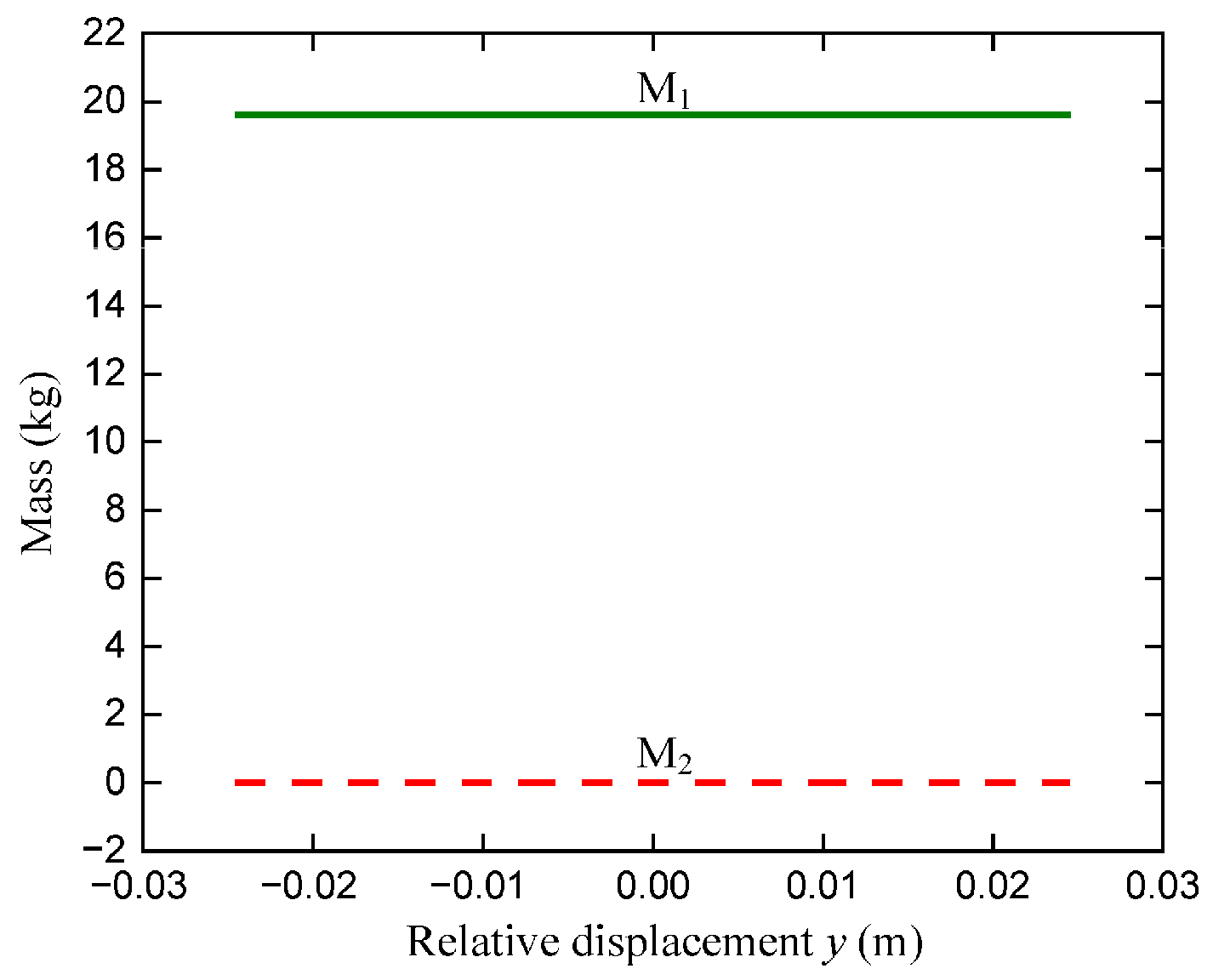
M2 can be ignored. For instance, if the value of
M = 19 kg,
Md = 0.1 kg,
Mp = 0.4 kg, and
Mc = 0.2 kg, as shown in
Figure 3, the component
M2 is too small compared with the component
M1.
5. Conclusions
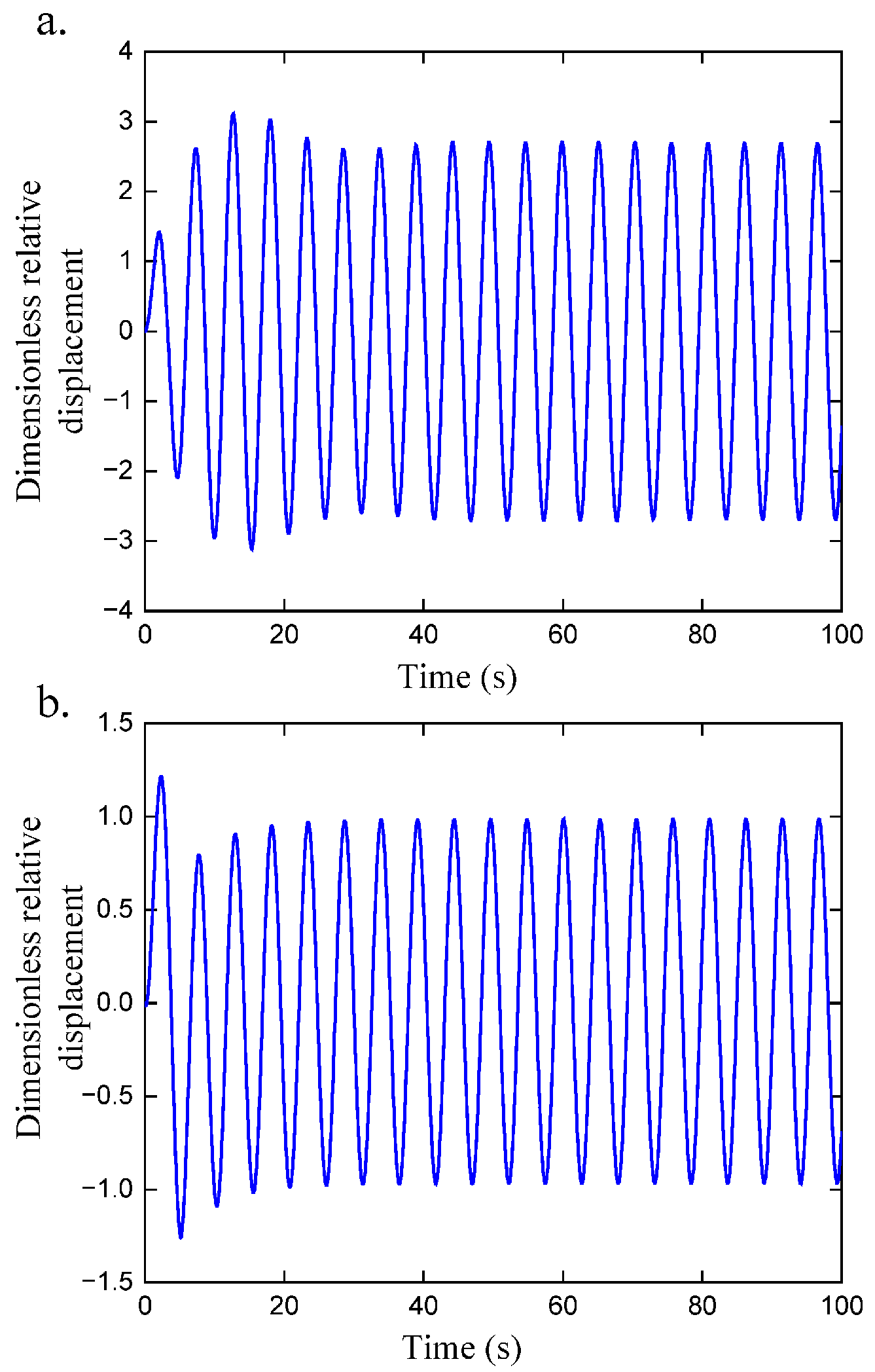
This work introduced an innovative vibration isolation model using a piecewise cam mechanism in which the cam’s working surface is separated into two distinct regions involving effective and non-effective regions. The cam profile within the effective region has been predefined by the user. During the vertical movement of the cam, the rollers always remain in contact with the cam surface during the vertical movement of the cam via pneumatic artificial muscles, thereby generating constant force behavior within the working range. Then, the piecewise dynamic model of the CFVI was established, and the relative displacement-frequency relation and the amplitude transmissibility were analyzed and derived by using the average method.
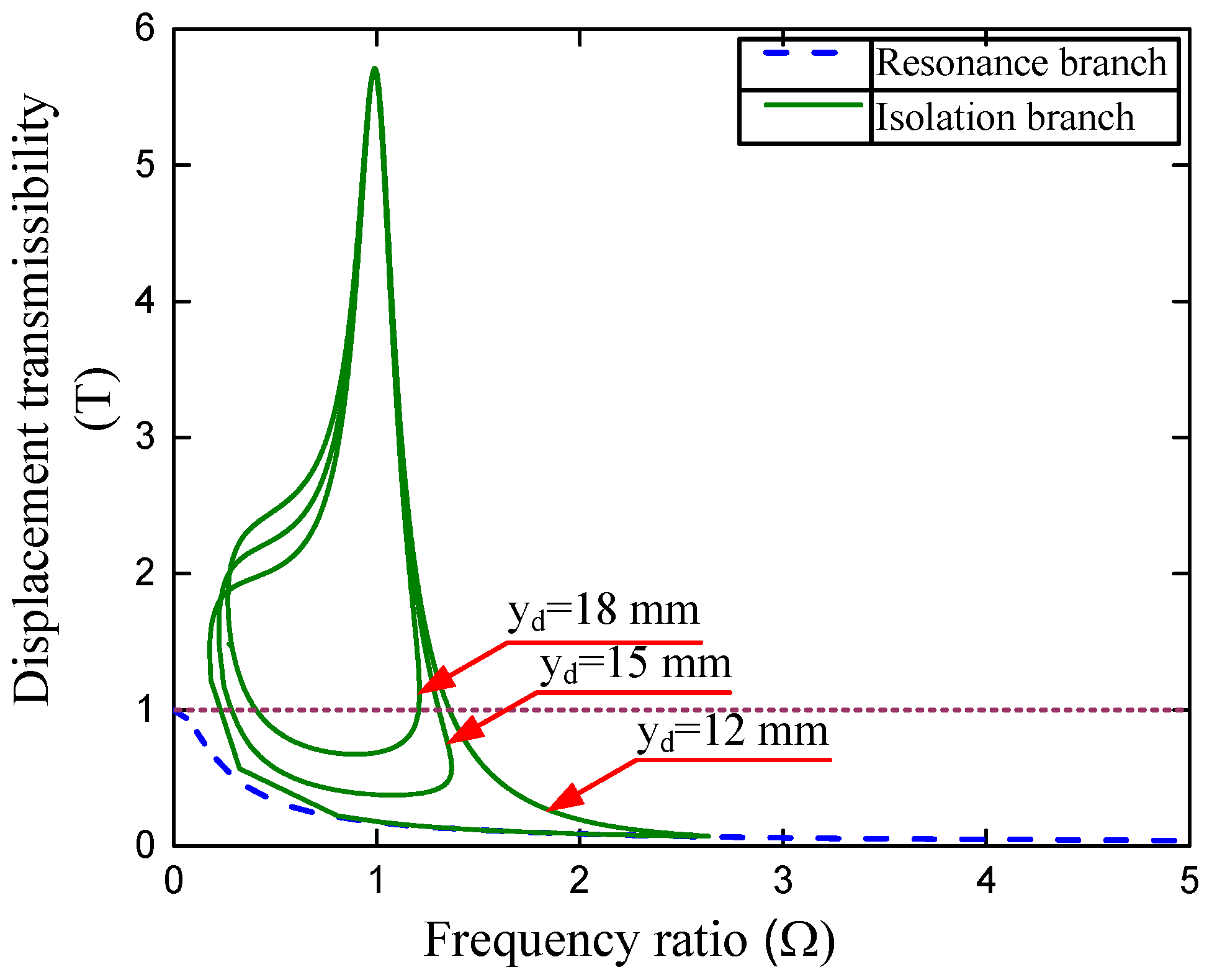
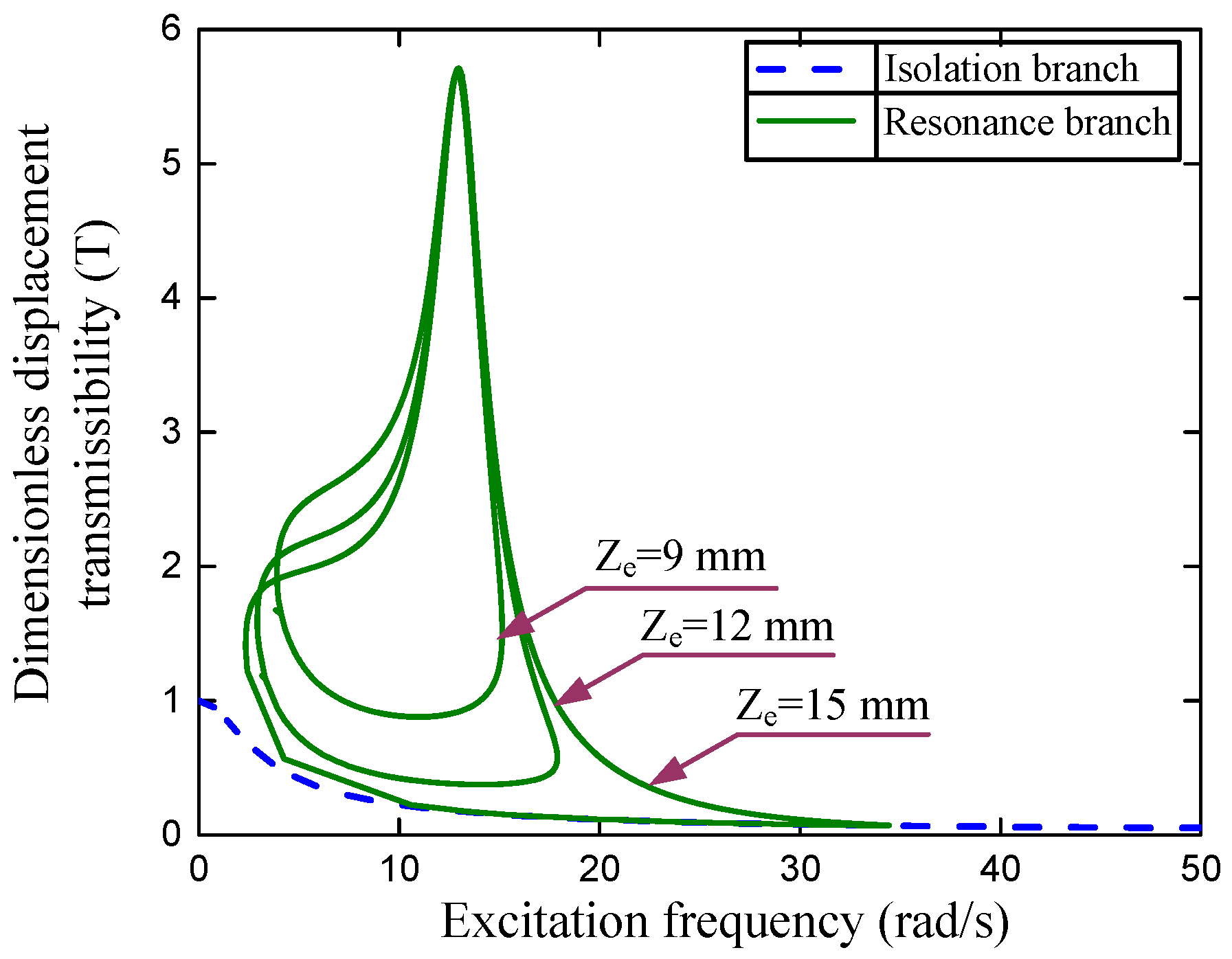
Subsequently, numerical simulation was conducted to investigate the tendency of the piecewise dynamic behavior as well as the absolute displacement transmissibility of the CFVI when the working parameters of the model are varied. The results confirmed that the dynamic response of the CFVI includes the resonance and isolation branches. The dynamic response of the resonance branch is remarkably affected by the damping coefficient, critical position, and excited amplitude, whereas the isolation branch is only weakly influenced by these parameters. Specifically, the effective isolation region will be increased according to the development of the critical position, while the resonance peak is almost unaffected regardless of the variation in the critical position. This effect is due to the extension of the cam’s effective surface corresponding to the increase in the critical position. In contrast, the isolation region is also enlarged as there is a reduction in the excited amplitude. Especially, this model can isolate over the entire frequency range as the excitation amplitude is reduced to a moderate value.
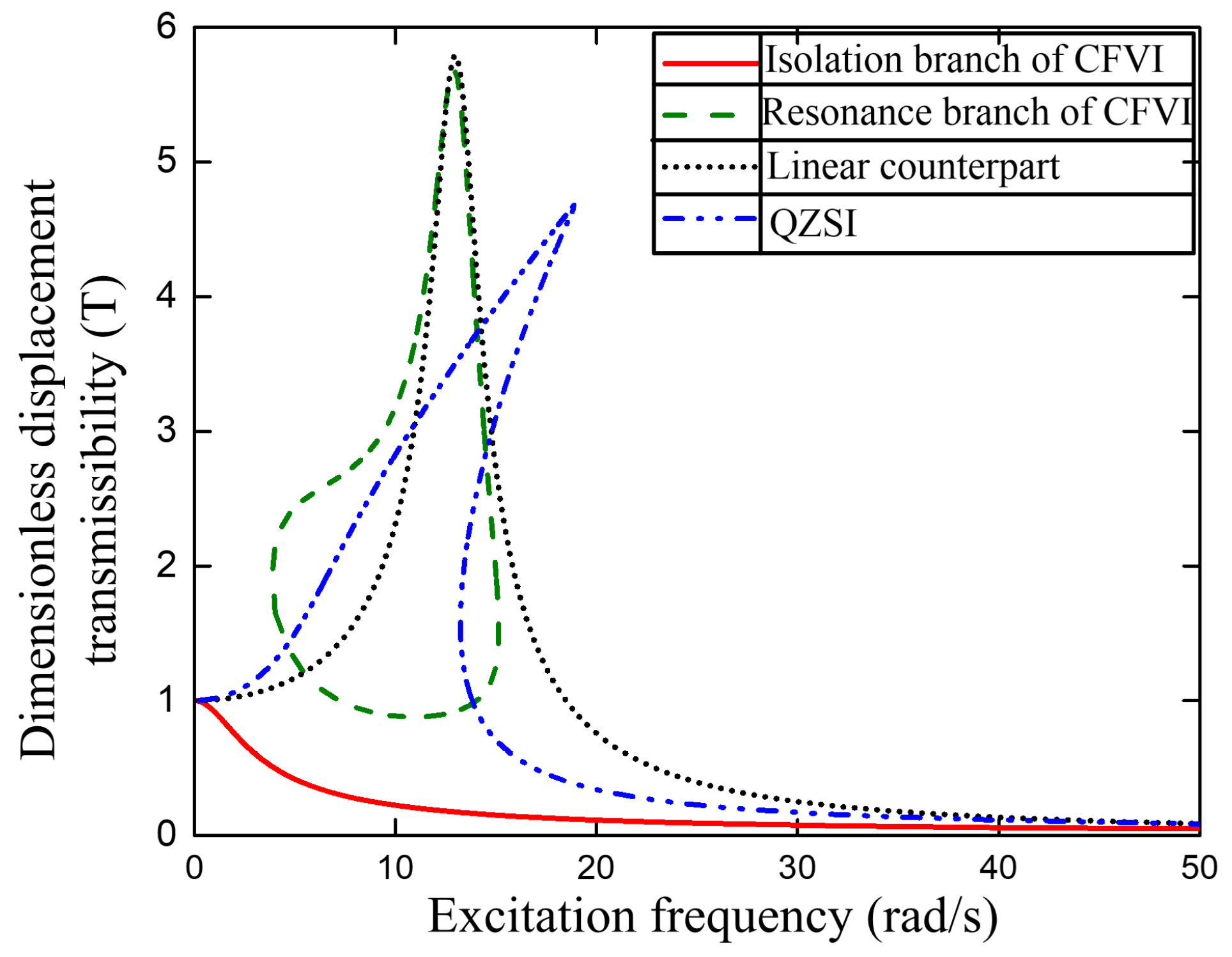
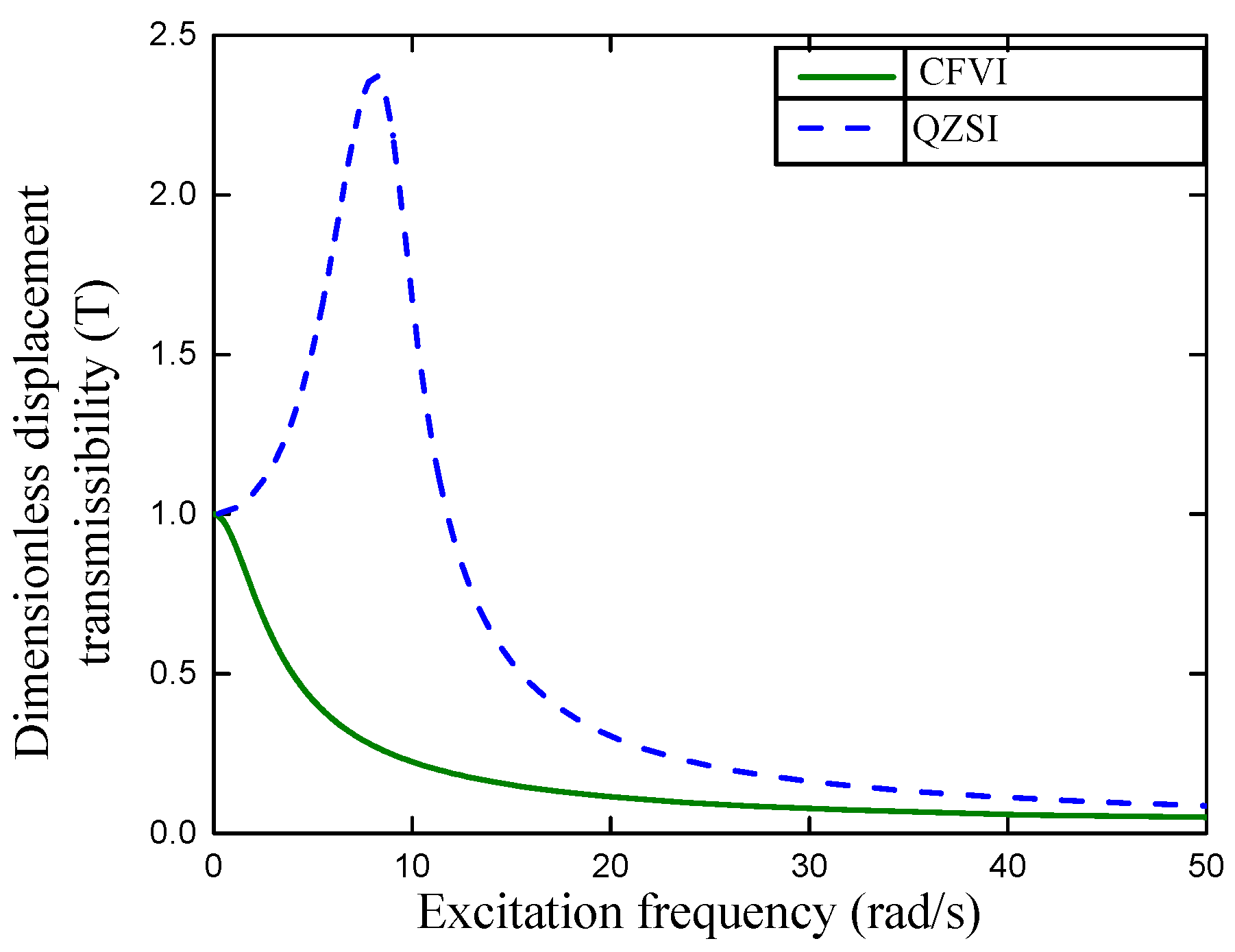
A comparison of the isolation effectiveness among the CFVI, its linear counterpart, and the QZSI under base motion excitation was performed by numerical simulation. As a result, the CFVI can provide the best isolation effectiveness. Specifically, the effective isolation region of the CFVI is larger than that of the other two models. Simultaneously, the vibration attenuation capability of the CFVI is significantly higher. In future work, a prototype of this model and the corresponding experimental apparatus will be fabricated and established to further assess the validity of the theoretical model.