An Evolutionary Neural-Enhanced Intelligent Controller for Robotic Visual Servoing Under Non-Gaussian Noise

Abstract
1. Introduction
1.1. Related Work
1.2. Motivation and Contribution
2. Description of the Problem
2.1. Background
2.2. Non-Gaussian Noise Modeling Based on -Steady-State Distribution
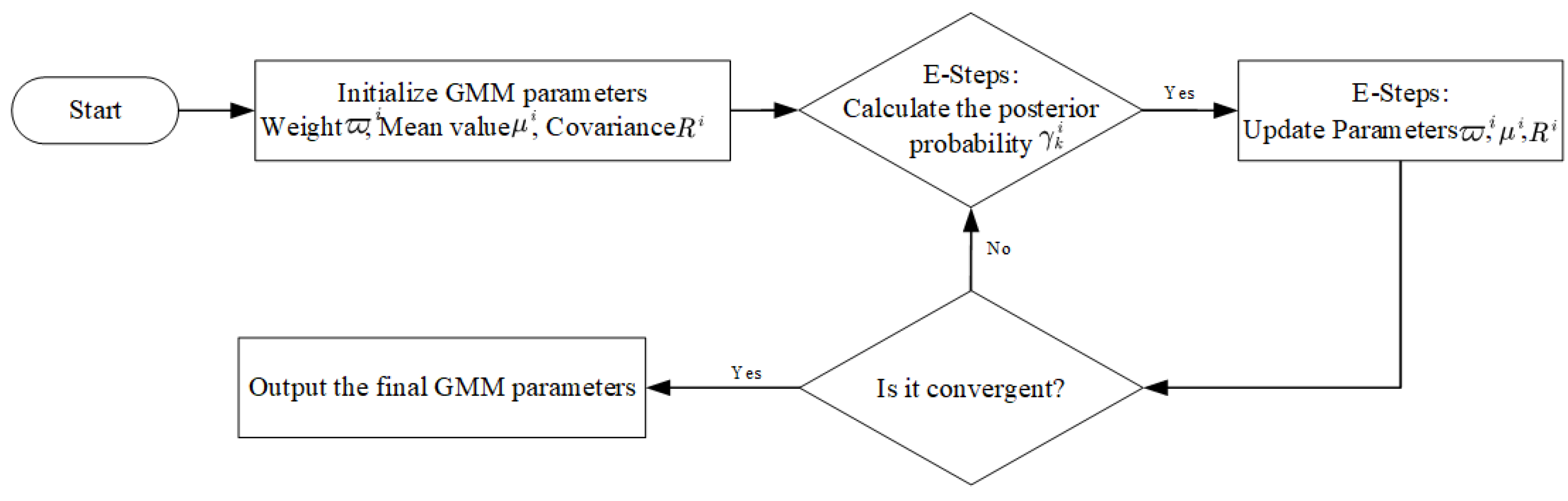
- 1.
- Begin iteration with the initial value of the parameter, ;
- 2.
- E-step: Calculate the posterior probability of each sample belonging to each Gaussian distribution, i.e., compute the probability distribution of each sample point within each Gaussian mixture component, as expressed by Equation (8):
- 3.
- 4.
- Repeat the E-step and M-step until convergence.
2.3. Controller Stability Analysis
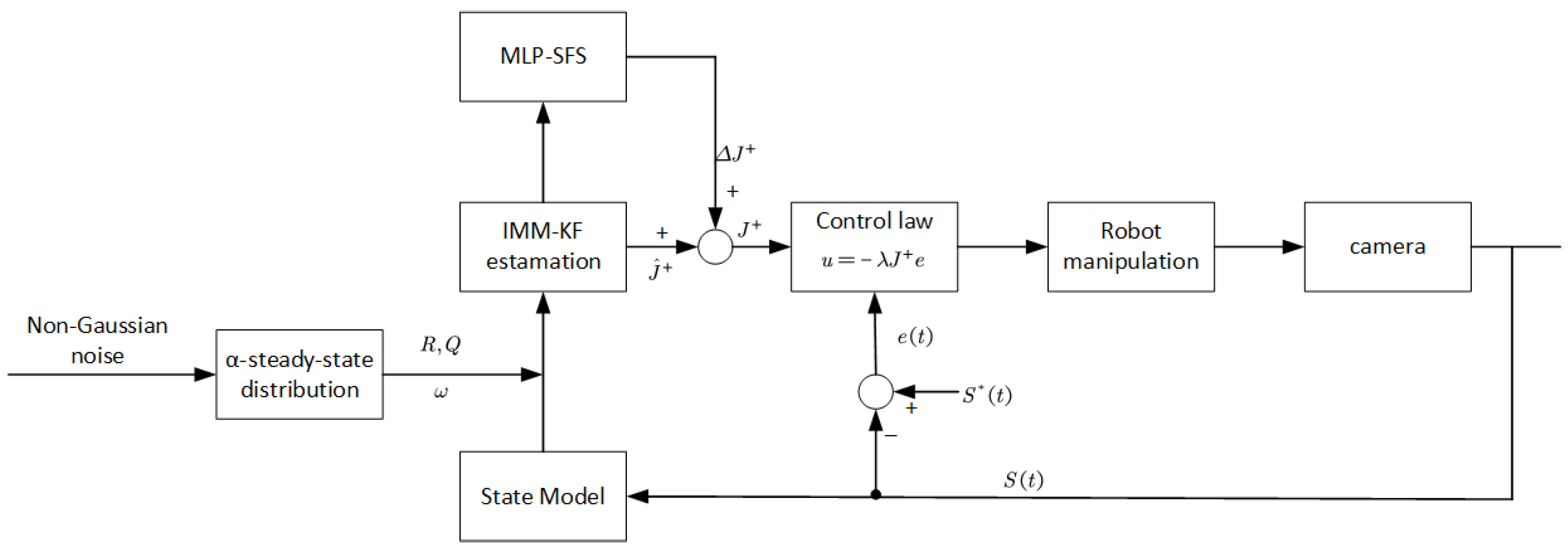
3. IMM-KF with α-Stable Noise Modeling and SFS-Optimized MLP Compensation
3.1. Parameter Selection Rationale
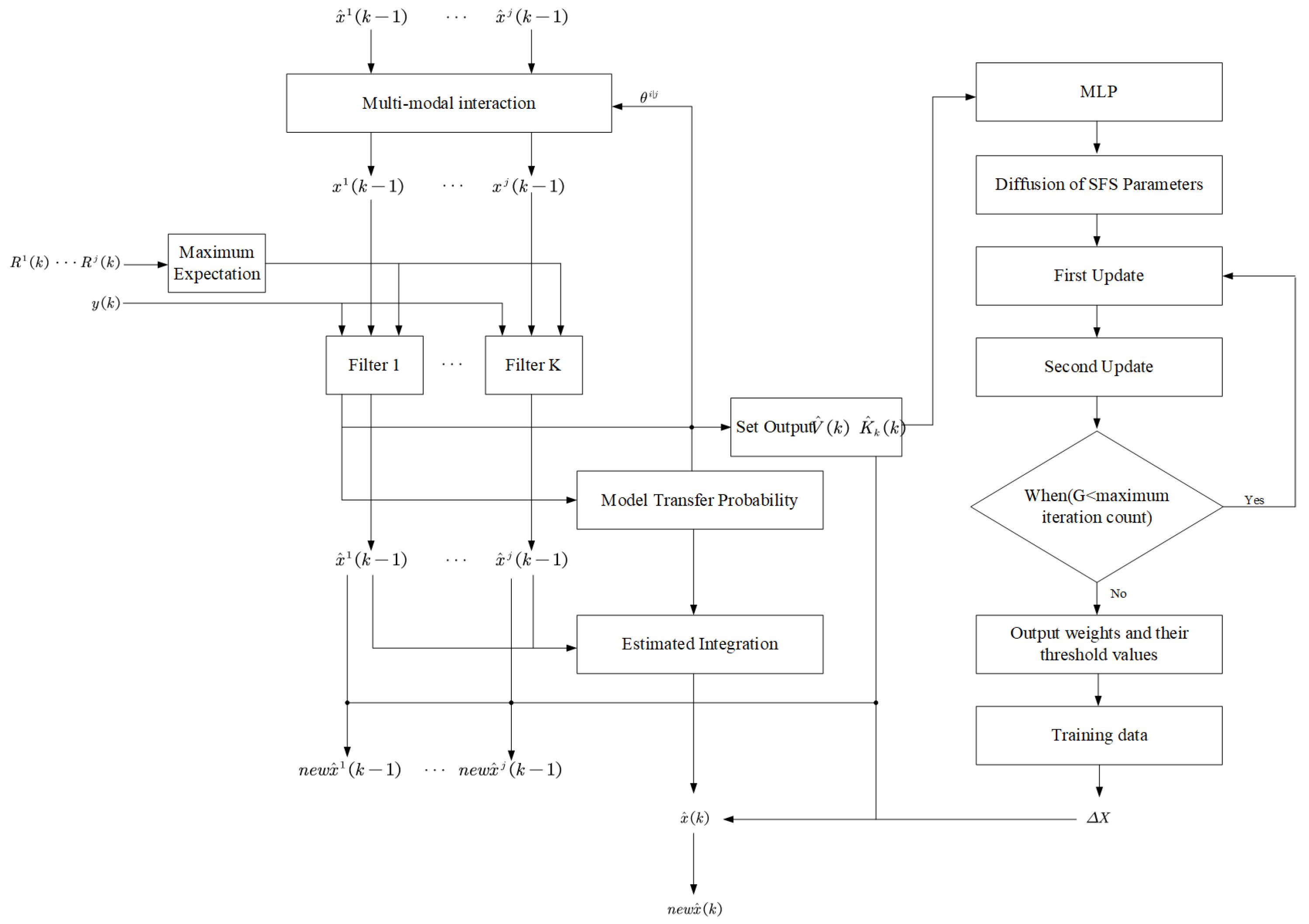
3.2. Robust Estimation Under -Stable Noise via IMM-KF
- 1.
- Model interaction:where is the transition probability from model i to model j, is the prediction probability of model j, and denote the state estimate and covariance estimate at time .
- 2.
- Parallel filtering:
- 3.
- Model probability updates:
- 4.
- Estimation fusion:
3.3. Accuracy Compensation Strategy for MLP Based on SFS Technology
- Initialization of SFS and MLP parameters, including population size, upper and lower bounds, number of neurons in hidden layers, lateral walk, and maximum diffusion number.
- Matrix Encoding StrategyConcatenate the fusion values of the measurement noise and the fusion values of the Kalman gain in chronological order to form the input matrix , which serves as the input to the MLP-SFS:This input simultaneously incorporates the statistical characteristics of the system’s observational noise and the historical information of the filtering gain, which is helpful for the MLP to learn the dynamic pattern of the estimation error.Based on the given input samples and output targets, the network structure of the MLP is determined. This paper adopts a 49-10-6 structure for design, and its encoding strategy can be expressed aswhere w represents the input weight matrix of the hidden layer, b represents the bias matrix of the hidden layer, v represents the output weight matrix of the hidden layer, and d represents the output layer bias matrix.The hidden layer input and output are as follows:where denotes the sigmoid function.MLP employs a single hidden layer structure, with the hidden layer containing neurons. The input layer has nodes (corresponding to the dimension of), and the output layer has nodes (corresponding to the dimension of the state vector). The hidden layer uses the sigmoid activation function, while the output layer uses a linear activation function. The training data consists of historical estimation errors from simulations and their corresponding noise sequences. The loss function employs mean squared error (MSE), with the training objective being to minimize the gap between the predicted compensation value and the actual error.Based on the idea of error decomposition, the estimation error of IMM-KF can be regarded as two parts: model mismatch and noise interference. By learning the historical noise and gain information, MLP outputs the prediction compensation value of the current time estimation error. The compensation term is assigned to the predicted value of each filter according to the posterior probability of each model:In the equation, is a linear function.where represents the output after optimizing the weights in the MLP-SFS, which incorporates the model error and noise error , denotes the accuracy compensation for the prediction value of the j-th parallel filter in the IMM-KF, where and represent the error between the true value and the predicted value. is the true value, and is the predicted value.Then, use MSE to evaluate the accuracy of the predicted values relative to the actual values, with the formula as follows:The fusion method is essentially an error correction strategy based on posterior probability weighting, and its effectiveness has been verified in the framework of Bayesian estimation [37].Here, represents the output after optimizing the weights in the MLP-SFS, denotes the accuracy compensation for the prediction value of the j-th parallel filter in the IMM-KF, where and represent the error of the true value relative to the predicted value. is the true value, and is the predicted value. Then, the accuracy of the predicted values is evaluated relative to the actual values using MSE.
- Diffusion processAt each iteration before convergence, the MLP’s parameters (weights and thresholds) diffuse from their current positions using Gaussian sampling. This diffusion mechanism enables comprehensive exploration of the search space to identify optimal parameter configurations.where and are random numbers uniformly distributed over , is the optimal point, is the point at the i-th position, and and are equivalent to and .
- SortingDuring diffusion, parameters (weights and thresholds) are probabilistically screened, with top-ranked candidates selected for the search space. Following initialization, a merit-based ranking is applied to refine parameter sets, systematically improving the probability of converging to the global optimum.where denotes all parameters, while denotes the number N of all parameters, indicates the position of after sorting the data in ascending order.
- Update ProcessAfter all weights and thresholds are sorted, these values undergo a first update and are reordered based on the output error of the fitness function. The second update aims to enhance the quality of the search space and satisfy diversity requirements.First UpdateSecond UpdatePoints and are randomly selected from the points chosen in the first update [38].
- Terminate training of the multilayer perceptronThe training process terminates when the mean squared error (MSE) of the objective function converges or shows negligible improvement over successive iterations. Otherwise, the algorithm returns to step (1).
4. Numerical Simulation and Analysis
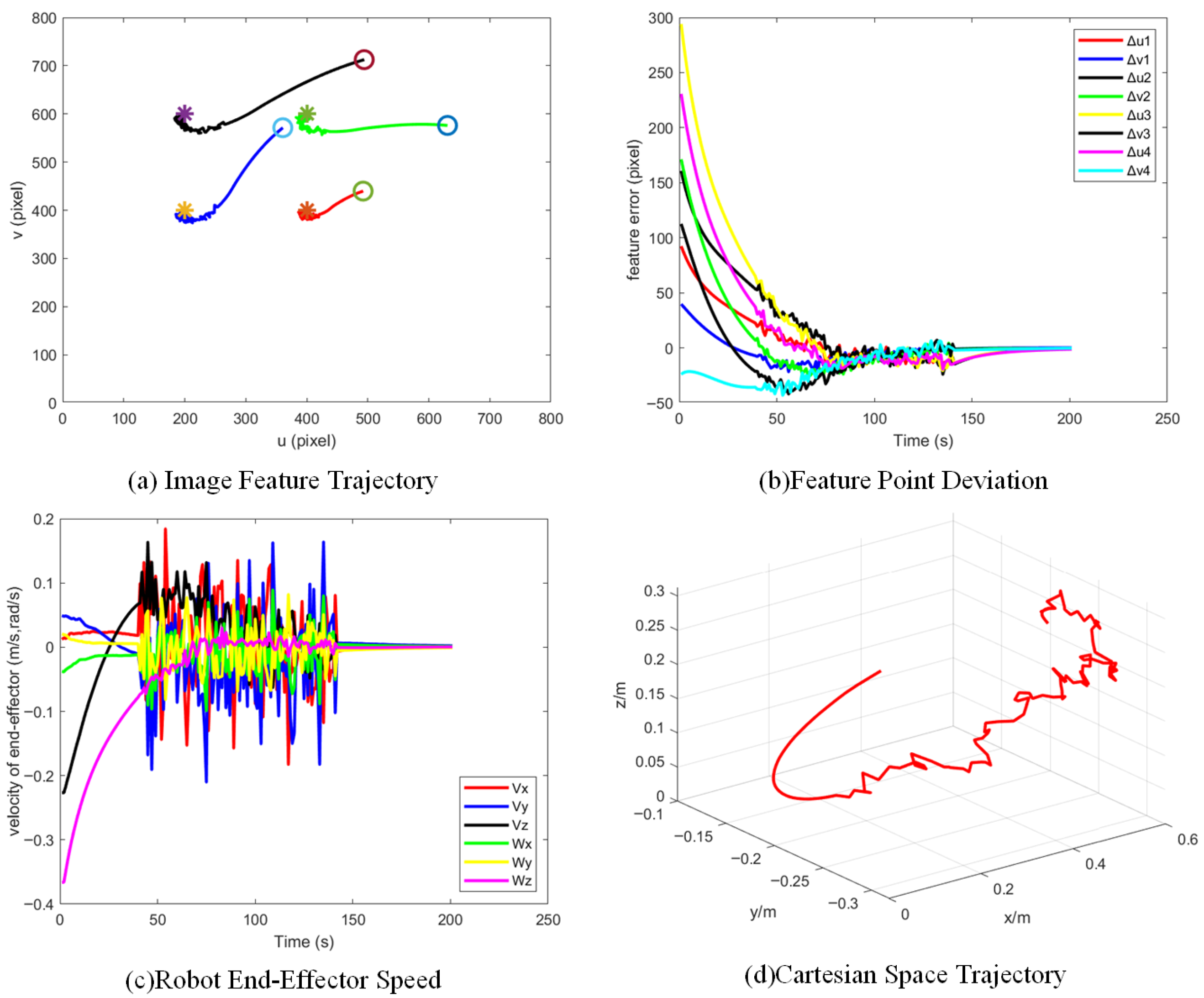
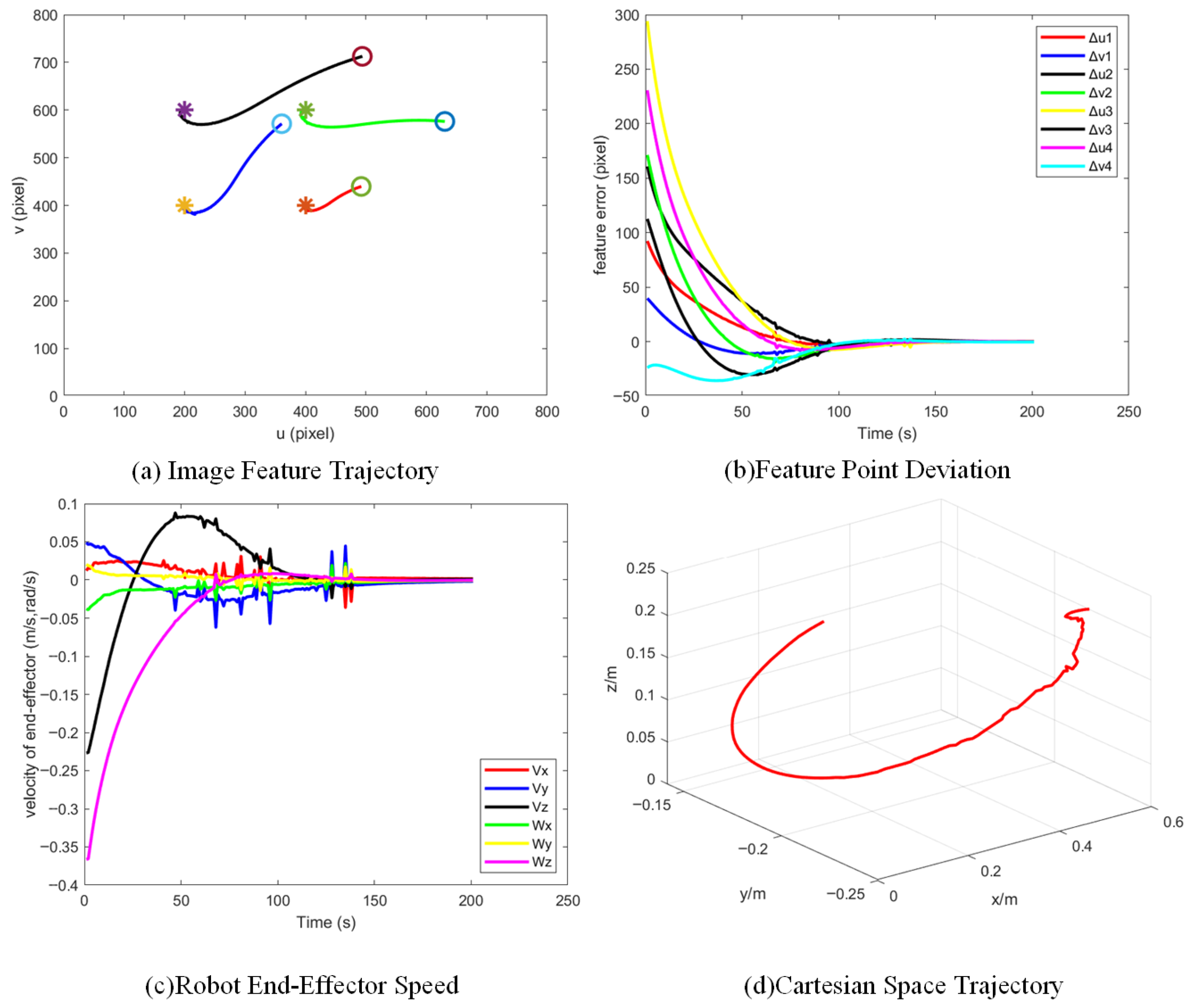
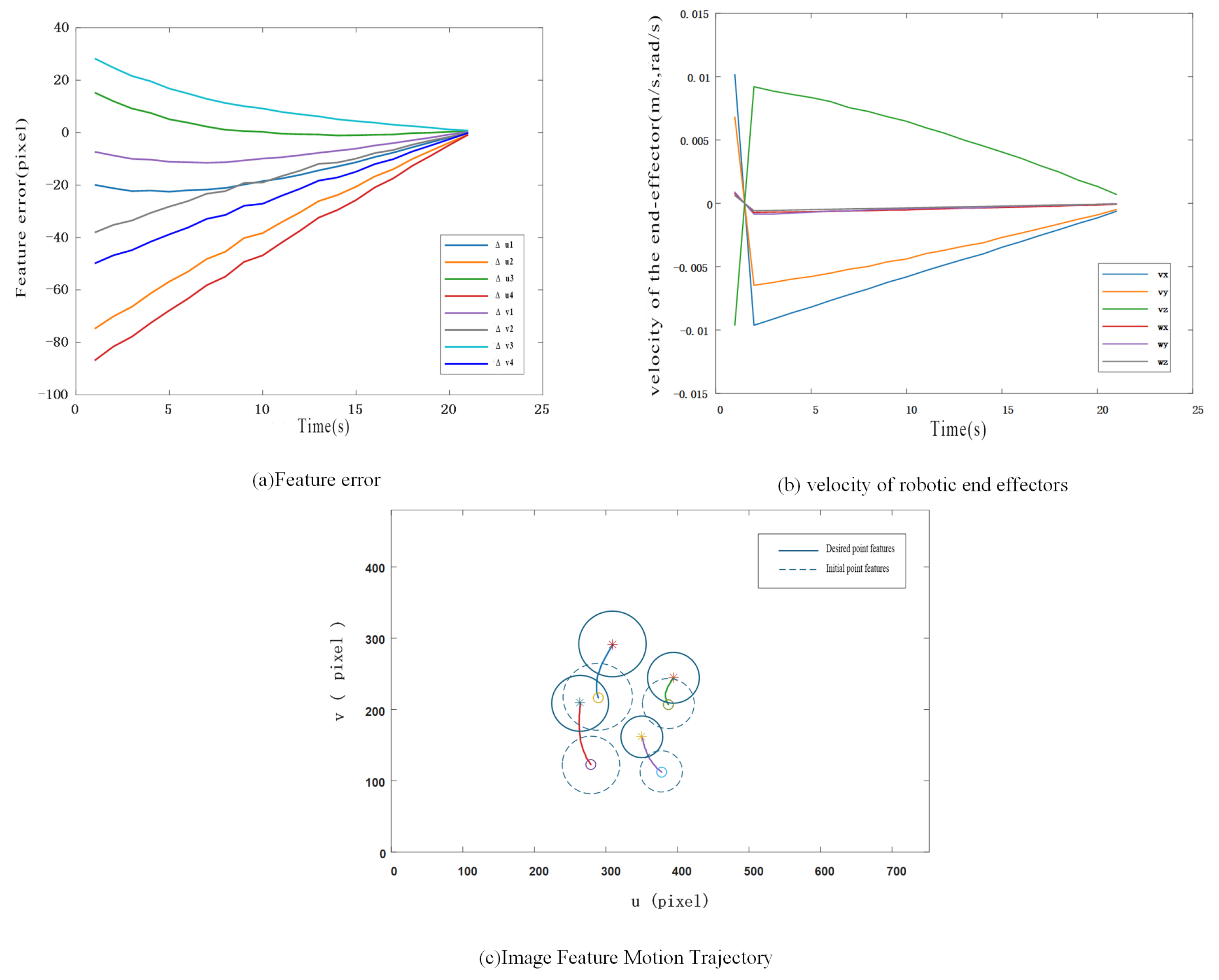
4.1. Simulation Case 1: Performance Validation of the IMM-MLP-SFS Algorithm
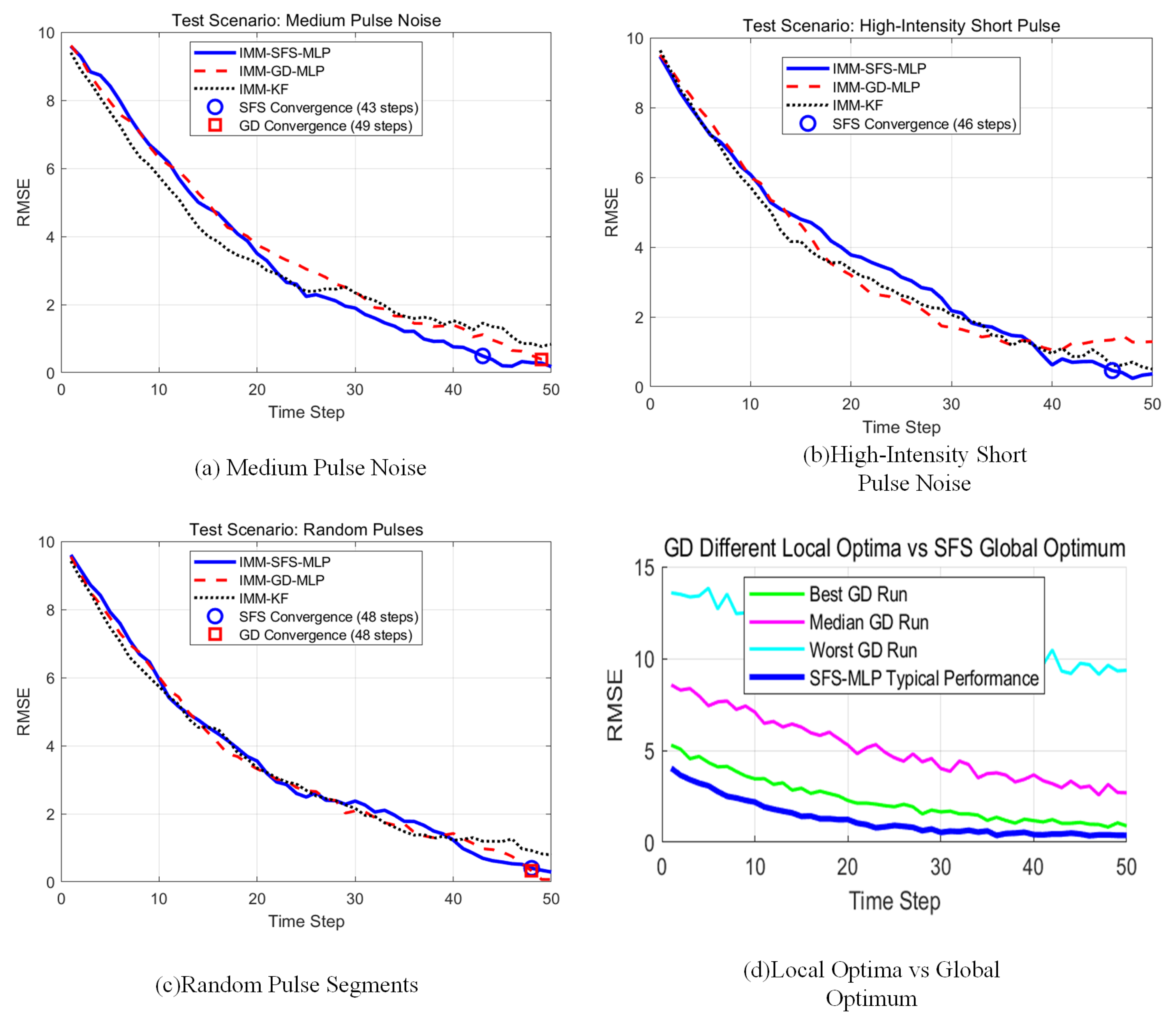
4.2. Simulation Case 2: Comparative Simulation of Different Algorithms
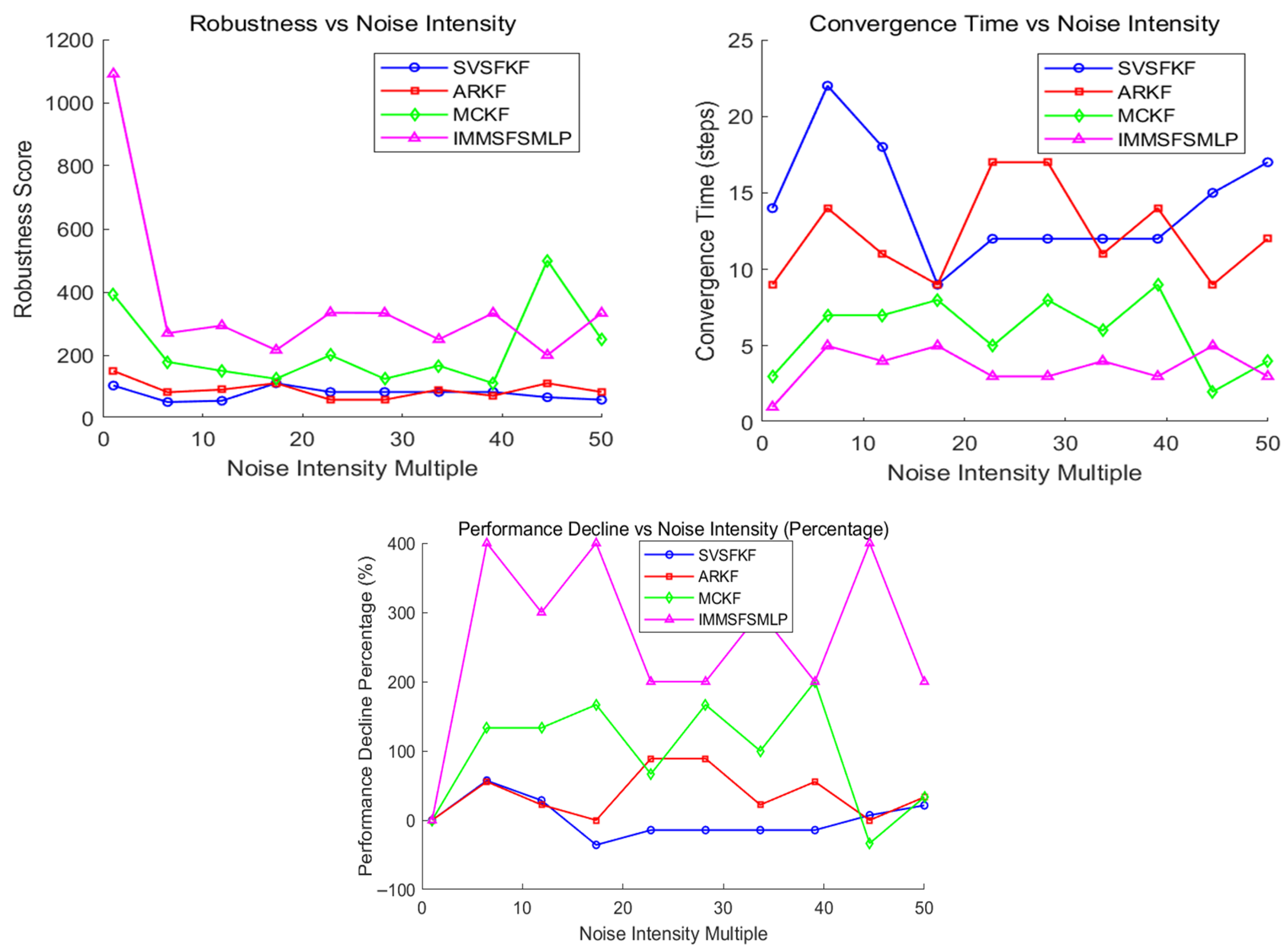
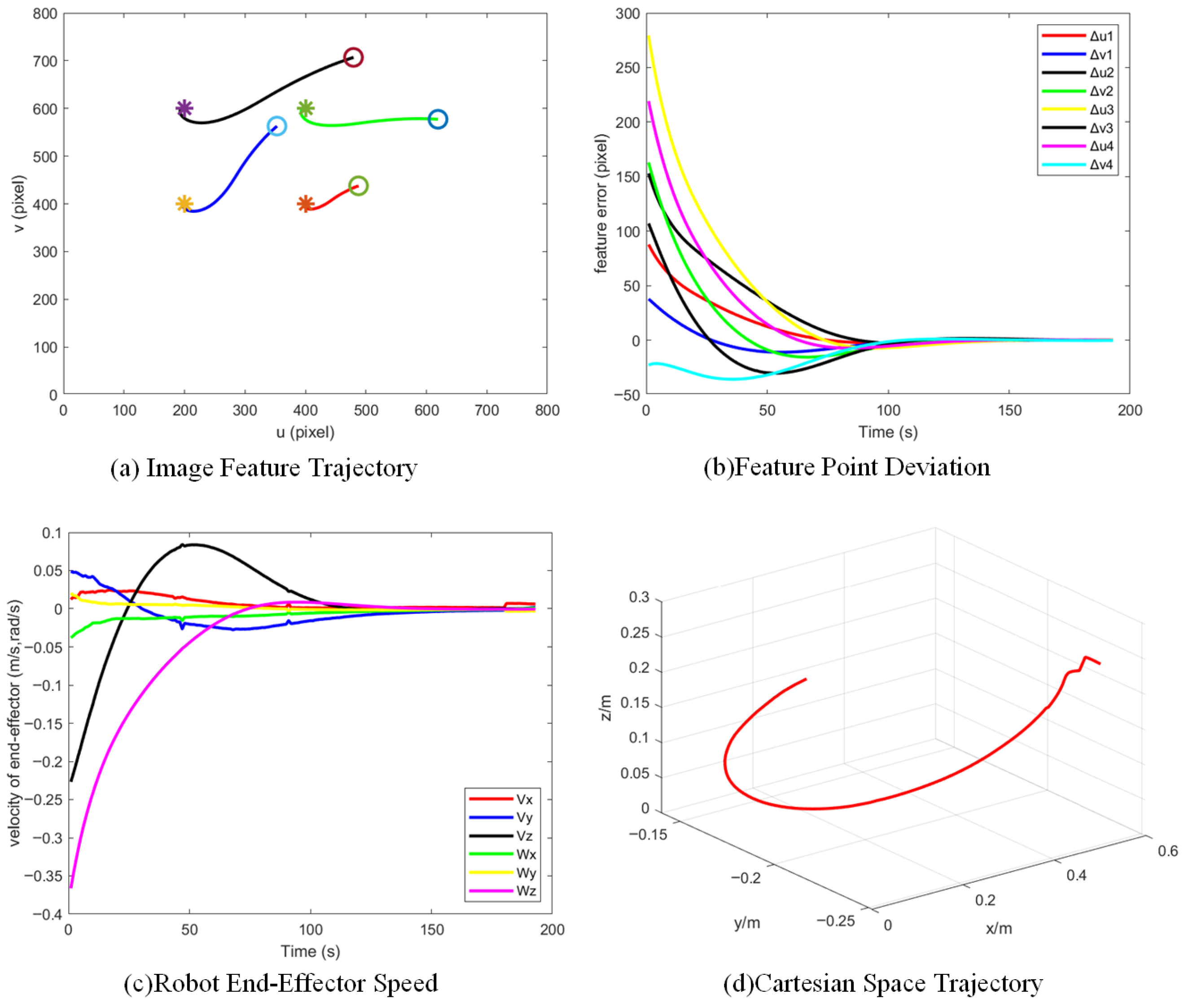
4.3. Simulation Case 3: Application Scope and Generalization Capability of the IMM-MLP-SFS Algorithm
5. Experimental Verification
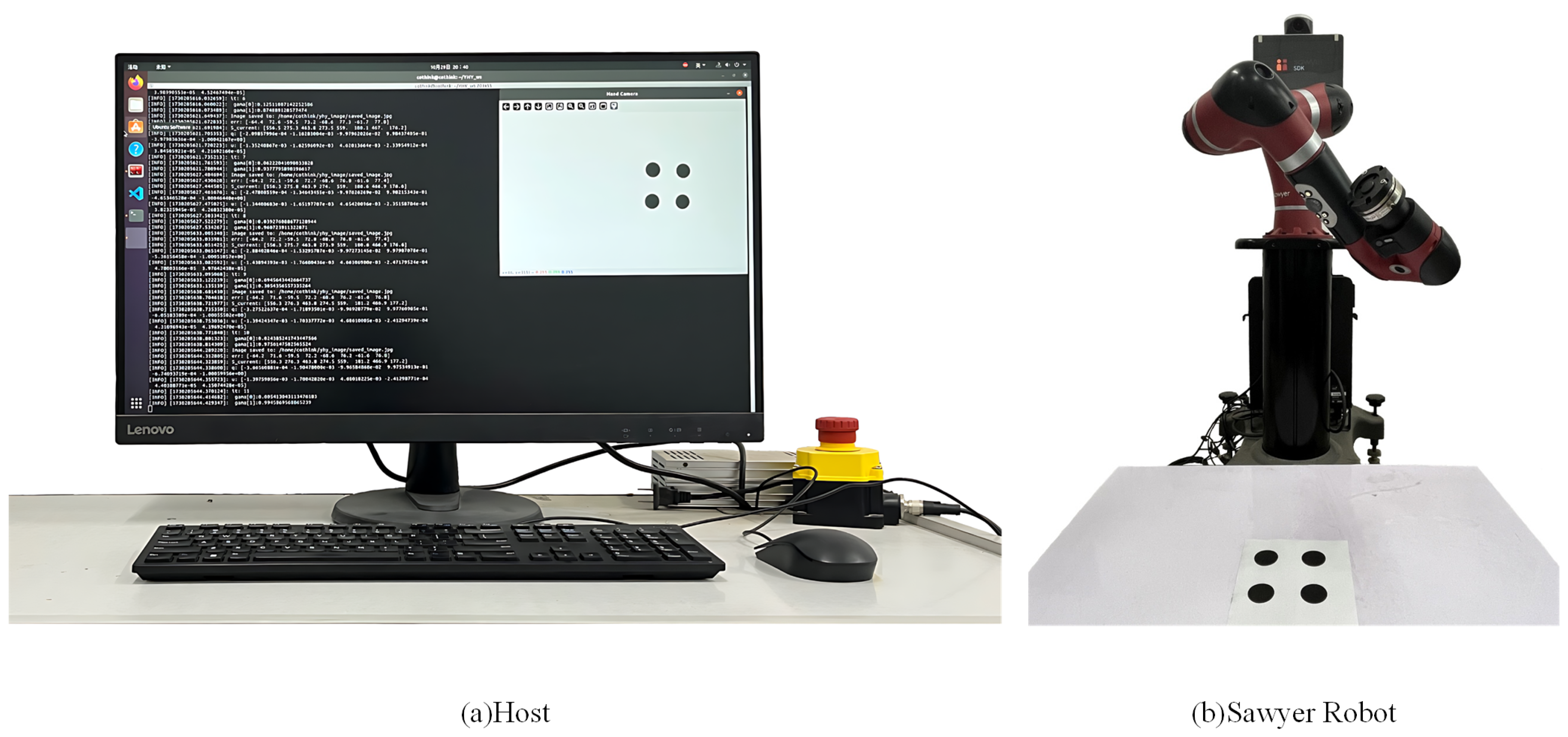
5.1. Experimental Platform and Disturbance Configuration
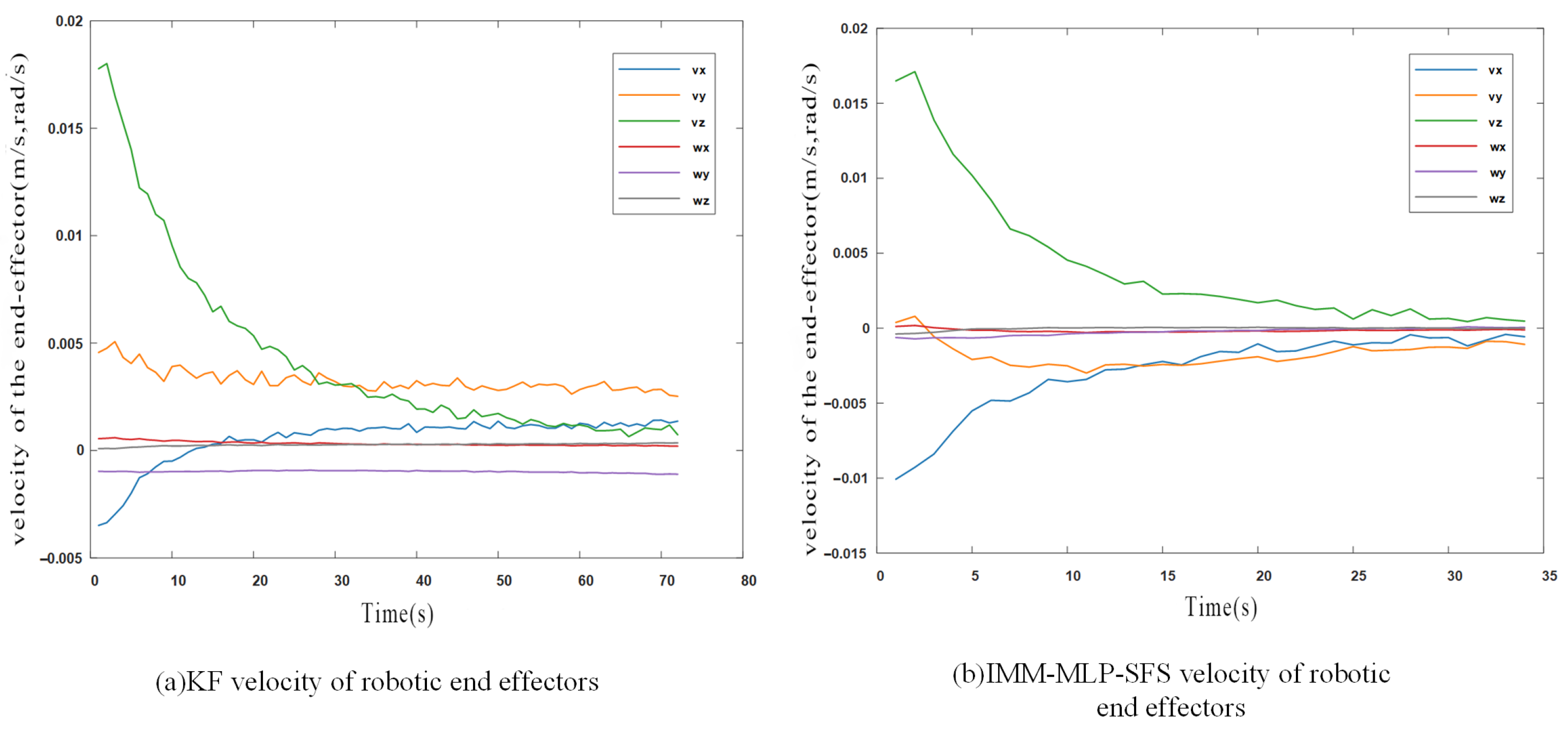
5.2. Accuracy Compensation Experiment
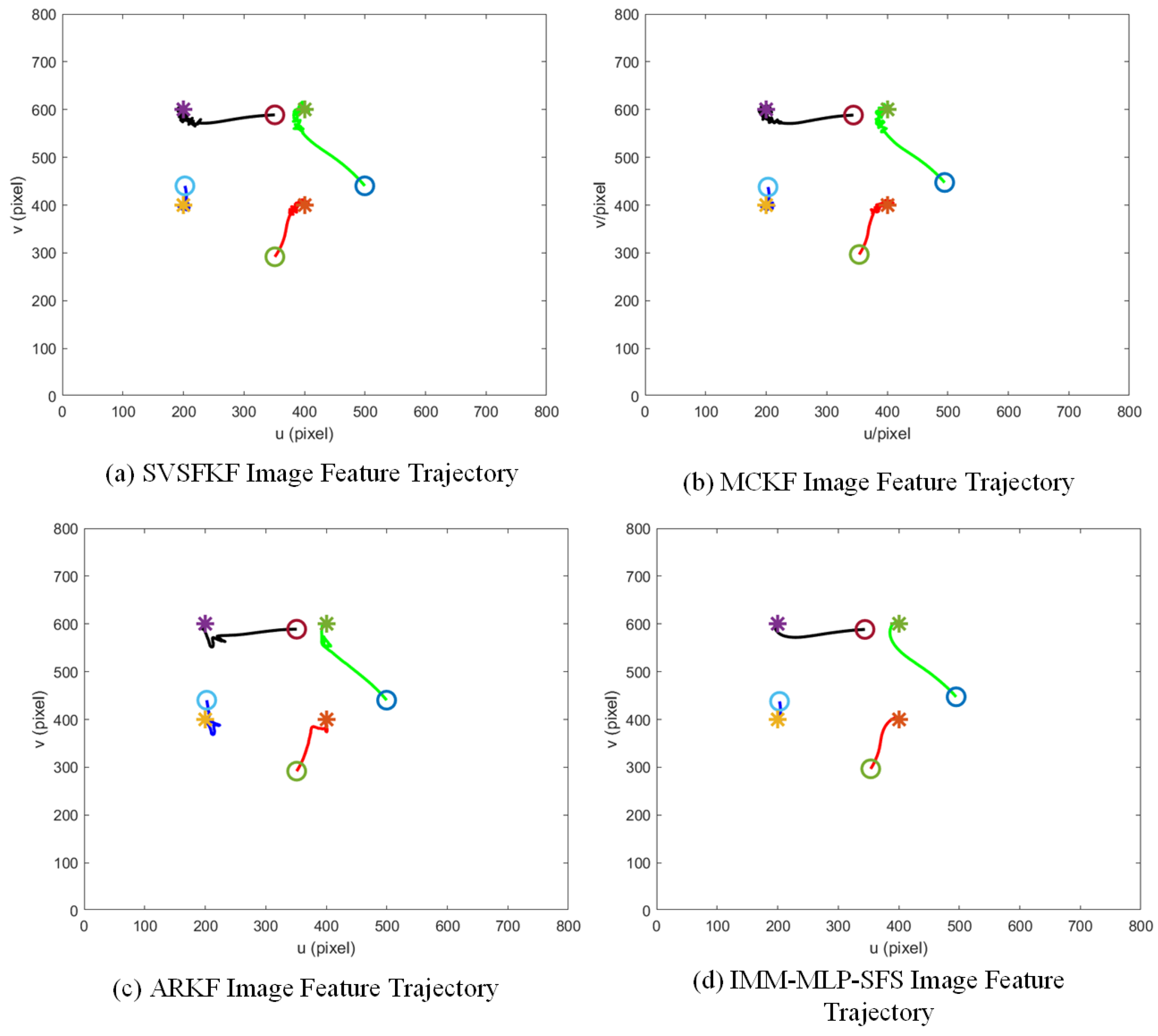
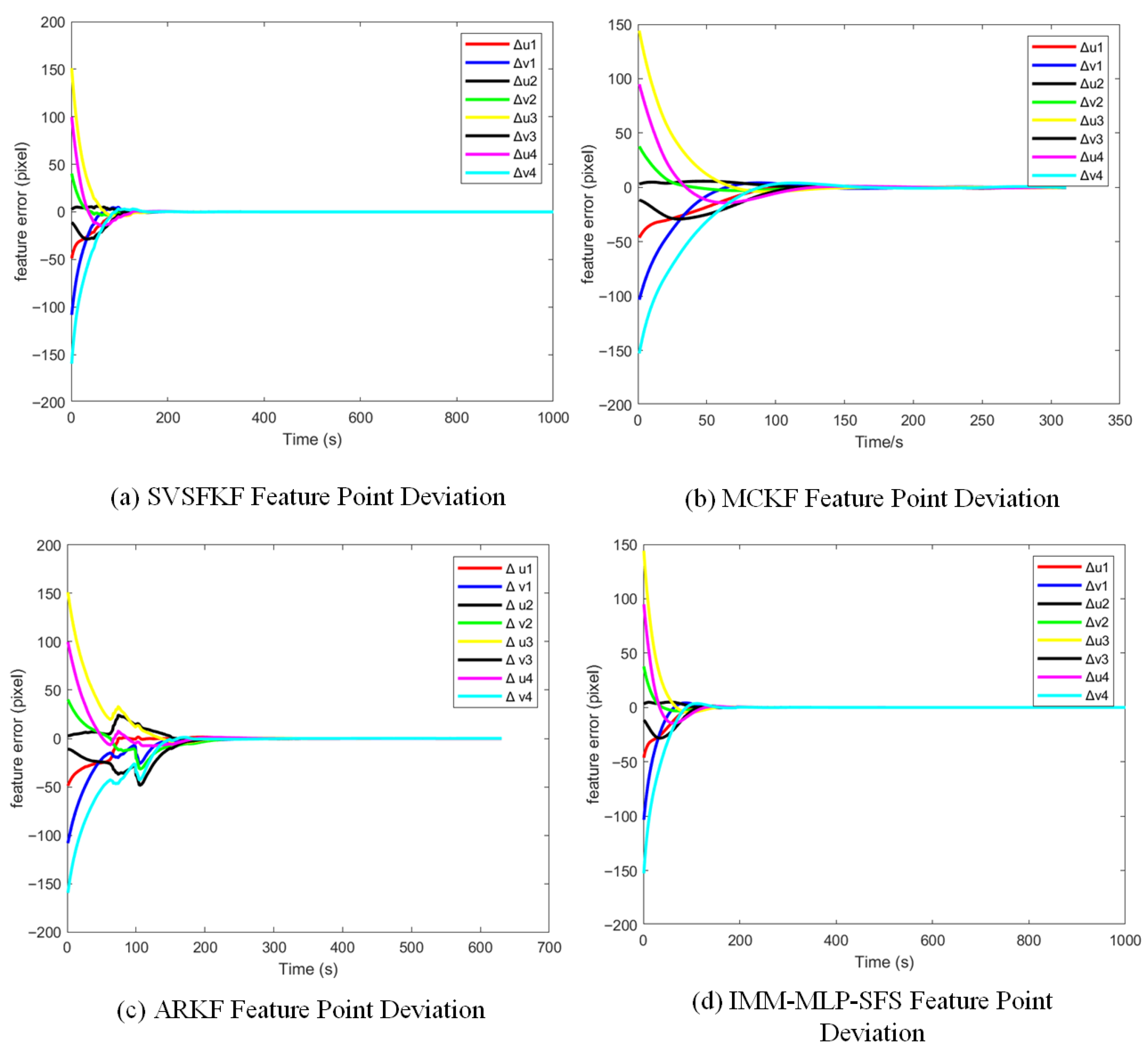
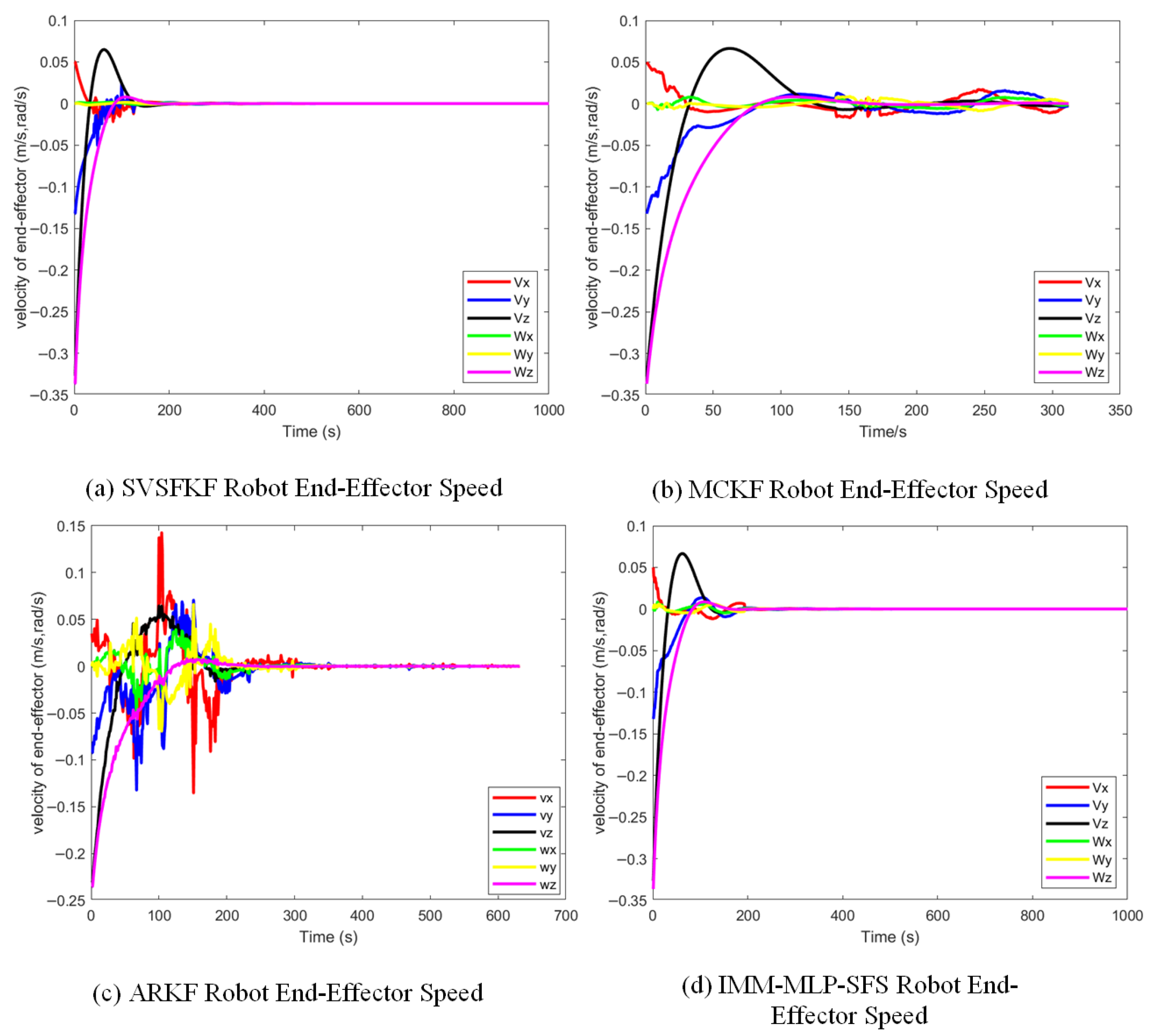
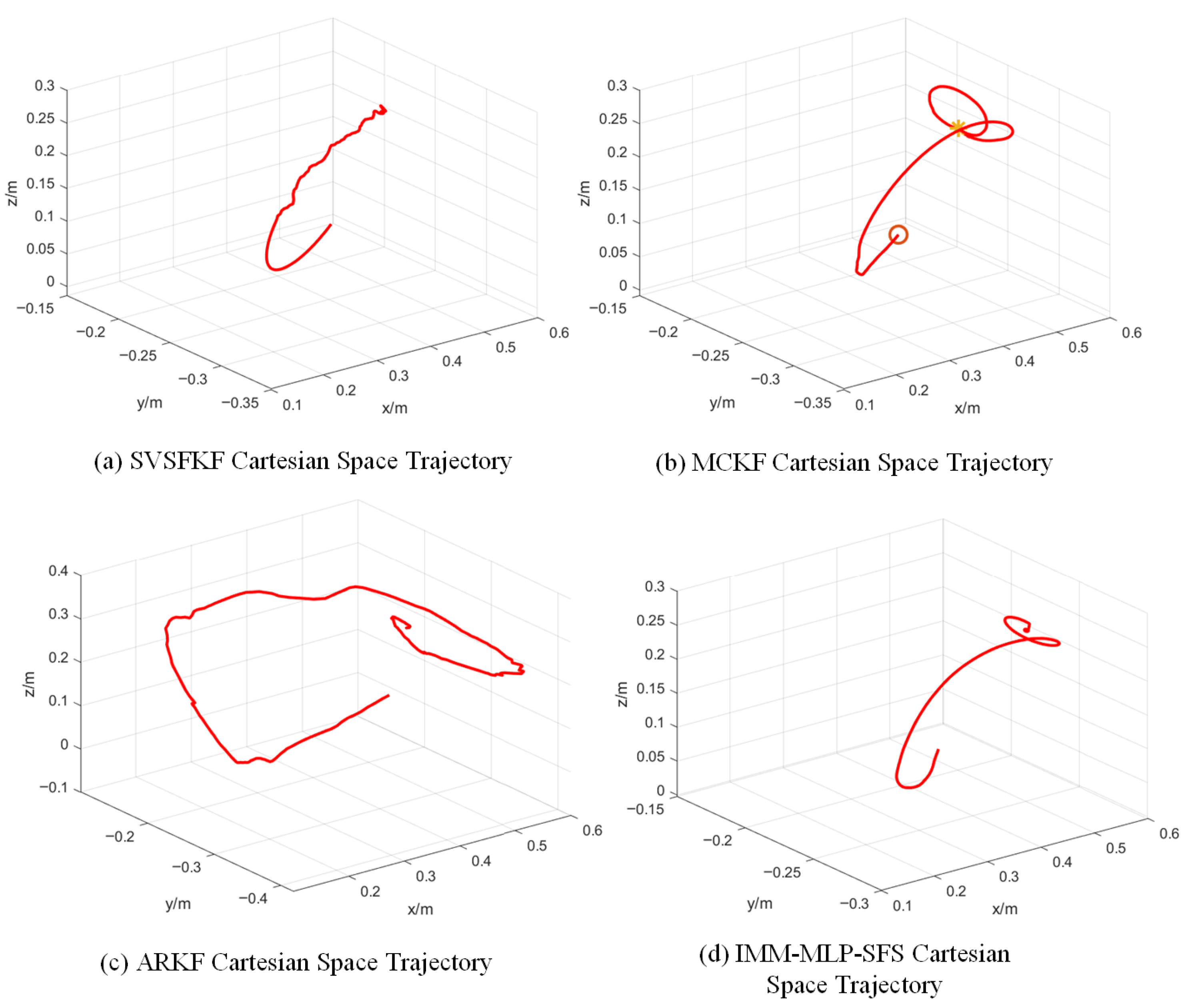
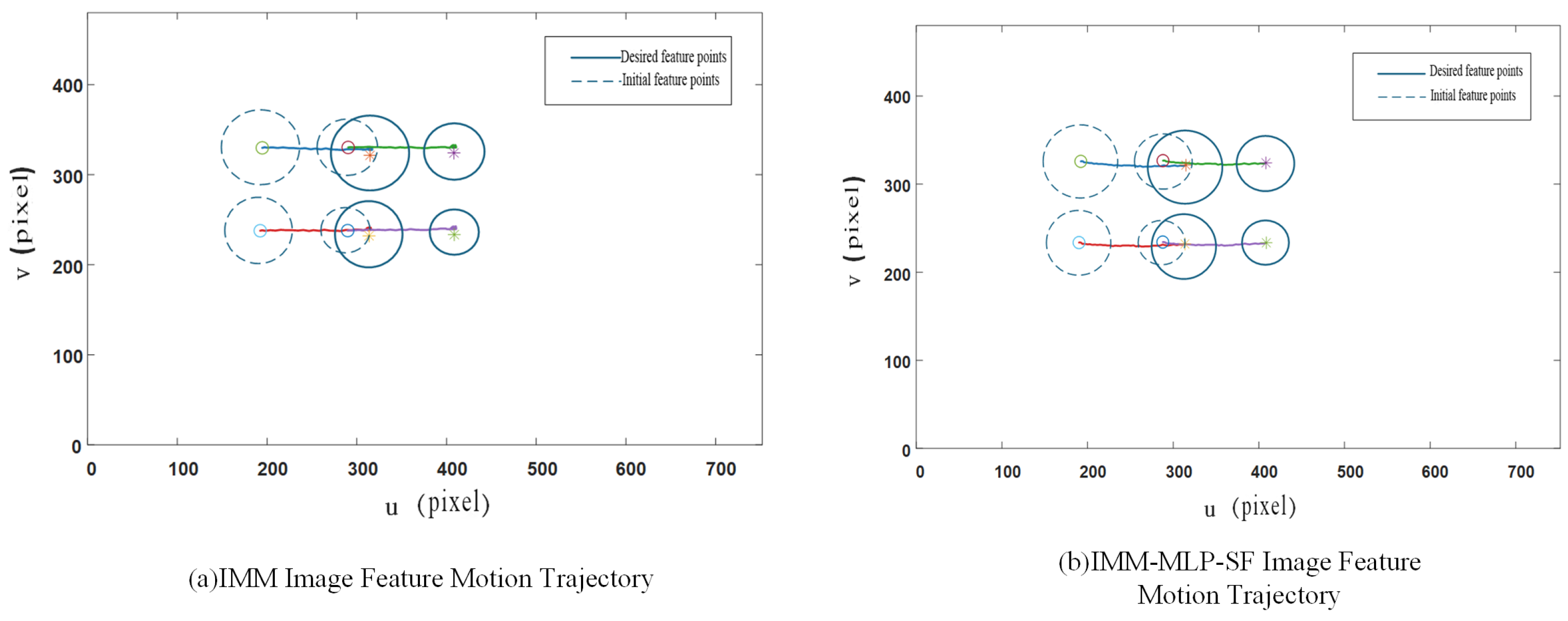
5.3. Performance Comparative Experiment
5.4. Composite Motion Experiment
5.5. Analysis of Computational Complexity and Real-Time Performance
6. Conclusions
Author Contributions
Funding
Data Availability Statement
Conflicts of Interest
References
- Tao, C.; Li, C.; Xu, H.; Zhu, Z.; Wang, G. A review of digital twin intelligent assembly technology and application for complex mechanical products. Int. J. Adv. Manuf. Technol. 2023, 127, 4013–4033. [Google Scholar] [CrossRef] [Scilit]
- Puttero, S.; Verna, E.; Genta, G.; Galetto, M. Collaborative robots for quality control: An overview of recent studies and emerging trends. J. Intell. Manuf. 2025, 1–37. [Google Scholar] [CrossRef] [Scilit]
- Parmar, H.; Khan, T.; Tucci, F.; Umer, R.; Carlone, P. Advanced robotics and additive manufacturing of composites: Towards a new era in Industry 4.0. Mater. Manuf. Process. 2022, 37, 483–517. [Google Scholar] [CrossRef] [Scilit]
- Banyai, A.D.; Brisan, C. Robotics in physical rehabilitation: Systematic Review. Healthcare 2024, 12, 1720. [Google Scholar] [CrossRef] [Scilit]
- Cieslak, C.; Shah, A.; Clark, B.; Childs, P. Wind-Turbine Inspection, Maintenance and Repair Robotic System. In Turbo Expo: Power for Land, Sea, and Air; American Society of Mechanical Engineers: New York, NY, USA, 2023; Volume 87127, p. V014T37A004. [Google Scholar]
- Khoei, T.T.; Slimane, H.O.; Kaabouch, N. Deep learning: Systematic review, models, challenges, and research directions. Neural Comput. Appl. 2023, 35, 23103–23124. [Google Scholar] [CrossRef] [Scilit]
- Liu, J.; Zhang, T.; Sun, S. Review of deep learning. Geosci. Front. 2024, 15, 101735. [Google Scholar] [CrossRef] [Scilit]
- Singh, B.; Kumar, R.; Singh, V.P. Reinforcement learning in robotic applications: A comprehensive survey. Artif. Intell. Rev. 2022, 55, 945–990. [Google Scholar] [CrossRef] [Scilit]
- Wu, J.; Jin, Z.; Liu, A.; Yu, L.; Yang, F. A survey of learning-based control of robotic visual servoing systems. J. Franklin Inst. 2022, 359, 556–577. [Google Scholar] [CrossRef] [Scilit]
- Nazari, A.A.; Zareinia, K.; Janabi-Sharifi, F. Visual servoing of continuum robots: Methods, challenges, and prospects. Int. J. Med. Robot. Comput. Assist. Surg. 2022, 18, E2384. [Google Scholar] [CrossRef] [Scilit] [PubMed]
- Ivan, I.T.; Christian, S. A Theoretical Overview on Kalman Filtering; Vanier College: Montreal, QC, Canada, 2018; Unpublished work. [Google Scholar]
- Grewal, M.S. Kalman filtering. In International Encyclopedia of Statistical Science; Springer: Berlin/Heidelberg, Germany, 2025; pp. 1285–1289. [Google Scholar]
- Kmich, M.; Karmouni, H.; Harrade, I.; Daoui, A.; Sayyouri, M. Image-Based Visual Servoing Techniques for Robot Control. In Proceedings of the 2022 International Conference on Intelligent Systems and Computer Vision (ISCV), Fez, Morocco, 18–19 May 2022; pp. 1–6. [Google Scholar]
- Fourlas, G.K.; Karras, G.C. A survey on fault diagnosis and fault-tolerant control methods for unmanned aerial vehicles. Machines 2021, 9, 197. [Google Scholar] [CrossRef] [Scilit]
- Tan, N.; Yu, P.; Zheng, W. Uncalibrated and unmodeled image-based visual servoing of robot manipulators using zeroing neural networks. IEEE Trans. Cybern. 2022, 54, 2446–2459. [Google Scholar] [CrossRef] [Scilit]
- Zhou, Y.; Xu, F.; Zhou, Y.; Zhang, Z.; Wang, H. Constrained Image-Based Visual Servoing With a Sampling-Based Planning Framework. IEEE/ASME Trans. Mechatronics 2025, 30, 4899–4909. [Google Scholar] [CrossRef] [Scilit]
- Leite, G.R. Uncalibrated Visual Servoing in the Presence of Non-Gaussian Feature Tracking Noise. Doctoral Dissertation, Universidade Federal do Rio Grande do Norte, Natal, Brazil, 2023. [Google Scholar]
- Akhtar, S.B.; Ray, R.; Sannyashi, T.S. Adaptive Kalman Filtering for Dynamic Systems with Nonlinearities. J. Innov. Adv. Electron. Front. 2024, 1, 1–8. [Google Scholar] [CrossRef] [Scilit]
- Zare, H.; Hajarian, M. An efficient Gauss—Newton algorithm for solving regularized total least squares problems. Numer. Algorithms 2022, 89, 1049–1073. [Google Scholar] [CrossRef] [Scilit]
- Liu, Q.; Wang, S.; Wei, Y. A Gauss—Newton method for mixed least squares-total least squares problems. Calcolo 2024, 61, 18. [Google Scholar] [CrossRef] [Scilit]
- Tufail, S.; Riggs, H.; Tariq, M.; Sarwat, A.I. Advancements and challenges in machine learning: A comprehensive review of models, libraries, applications, and algorithms. Electronics 2023, 12, 1789. [Google Scholar] [CrossRef] [Scilit]
- Long, Z.Z.; Guo, J.L.; Wang, X.M. Noise-Robust Image Jacobian Estimation for Visual Servoing Using BP Neural Network and Robust Kalman Filtering. In Proceedings of the 2025 IEEE International Conference on Industrial Technology (ICIT), Wuhan, China, 26–28 March 2025; pp. 1–5. [Google Scholar]
- Przystupa, M.; Dehghan, M.; Jagersand, M.; Mahmood, A.R. Analyzing Neural Jacobian Methods in Applications of Visual Servoing and Kinematic Control. In Proceedings of the 2021 IEEE International Conference on Robotics and Automation (ICRA), Xi’an, China, 30 May–5 June 2021; pp. 14276–14283. [Google Scholar]
- Khodarahmi, M.; Maihami, V. A review on Kalman filter models. Arch. Comput. Methods Eng. 2023, 30, 727–747. [Google Scholar] [CrossRef] [Scilit]
- Ren, X.; Li, H.; Li, Y. Online Image Jacobian Identification Using Optimal Adaptive Robust Kalman Filter for Uncalibrated Visual Servoing. In Proceedings of the 2017 2nd Asia-Pacific Conference on Intelligent Robot Systems (ACIRS), Wuhan, China, 16–18 June 2017; pp. 53–57. [Google Scholar]
- Elfring, J.; Torta, E.; Van De Molengraft, R. Particle filters: A hands-on tutorial. Sensors 2021, 21, 438. [Google Scholar] [CrossRef] [Scilit]
- Yu, Z.; Lin, L.; Xue, C.; Zhuo, L.; Yuan, J. Application of Untracked Particle Filter (PSO-UPF) Based on Particle Swarm Optimization in Indoor Target Tracking. In Proceedings of the 2024 20th International Conference on Natural Computation, Fuzzy Systems and Knowledge Discovery (ICNC-FSKD), Guangzhou, China, 27–29 July 2024; pp. 1–6. [Google Scholar]
- Leite, G.R.; Araújo, Í.B.Q.; Martins, A.M. Regularized Maximum Correntropy Criterion Kalman Filter for Uncalibrated Visual Servoing in the Presence of Non-Gaussian Feature Tracking Noise. Sensors 2023, 23, 8518. [Google Scholar] [CrossRef] [Scilit] [PubMed]
- Zhong, X.; Zhou, Q.; Sun, Y.; Kang, S.; Hu, H. Deep Reinforcement Learning-Based Uncalibrated Visual Servoing Control of Manipulators with FOV Constraints. Appl. Sci. 2025, 15, 4447. [Google Scholar] [CrossRef] [Scilit]
- Zhou, Z.; Guo, J.; Zhu, Z.; Guo, H. Uncalibrated visual servoing based on Kalman filter and mixed-kernel online sequential extreme learning machine for robot manipulator. Multimed. Tools Appl. 2024, 83, 18853–18879. [Google Scholar] [CrossRef] [Scilit]
- Kang, C.; Qu, X. Visual Servoing Method Based on Partial Convolution Acceleration and Improved Kalman Filter for Robotic Arm. In Proceedings of the 2025 6th International Conference on Electrical Technology and Automatic Control (ICETAC), Nanjing, China, 20–22 June 2025; IEEE: Piscataway, NJ, USA, 2025; pp. 696–703. [Google Scholar]
- Dingler, S. State estimation with the Interacting Multiple Model (IMM) method. arXiv 2022, arXiv:2207.04875. [Google Scholar] [CrossRef] [Scilit]
- Safar, A.A.; Salih, D.M.; Murshid, A.M. Pattern recognition using the multi-layer perceptron (MLP) for medical disease: A survey. Int. J. Nonlinear Anal. 2023, 14, 1989–1998. [Google Scholar]
- El-Shorbagy, M.A.; Bouaouda, A.; Abualigah, L.; Hashim, F.A. Stochastic fractal search: A decade comprehensive review on its theory, variants, and applications. Comput. Model. Eng. Sci. 2025, 142, 2339. [Google Scholar] [CrossRef] [Scilit]
- Lu, J. A survey on Bayesian inference for Gaussian mixture model. arXiv 2021, arXiv:2108.11753. [Google Scholar] [CrossRef] [Scilit]
- Xie, G.; Sun, L.; Wen, T.; Hei, X.; Qian, F. Adaptive transition probability matrix-based parallel IMM algorithm. IEEE Trans. Syst. Man Cybern. Syst. 2019, 51, 2980–2989. [Google Scholar] [CrossRef] [Scilit]
- Leoni, N.; Le Maître, O.; Rodio, M.-G.; Congedo, P.M. Bayesian calibration with adaptive model discrepancy. Int. J. Uncertain. Quantif. 2024, 14, 19–41. [Google Scholar] [CrossRef] [Scilit]
- Salimi, H. Stochastic fractal search: A powerful metaheuristic algorithm. Knowl.-Based Syst. 2015, 75, 1–18. [Google Scholar] [CrossRef] [Scilit]







| Iterations (s) | Convergence (s) | Magnitude of Fluctuation (m/s) | |
|---|---|---|---|
| KF | 150 | 200 | [−0.223, 0.191] |
| IMM | 160 | 165 | [−0.034, 0.042] |
| SVSF-KF | 200 | 200 | [−0.051, 0.022] |
| MCKF | 320 | 175 | [−0.013, 0.015] |
| ARKF | 315 | 235 | [−0.149, 0.147] |
| IMM-MLP-SFS (our) | 200 | 150 | [−0.013, 0.023] |
Disclaimer/Publisher’s Note: The statements, opinions and data contained in all publications are solely those of the individual author(s) and contributor(s) and not of MDPI and/or the editor(s). MDPI and/or the editor(s) disclaim responsibility for any injury to people or property resulting from any ideas, methods, instructions or products referred to in the content. |
© 2026 by the authors. Licensee MDPI, Basel, Switzerland. This article is an open access article distributed under the terms and conditions of the Creative Commons Attribution (CC BY) license.
Share and Cite
Ren, X.; Cui, H.; Yan, H.; Liu, Y. An Evolutionary Neural-Enhanced Intelligent Controller for Robotic Visual Servoing Under Non-Gaussian Noise. Mathematics 2026, 14, 653. https://doi.org/10.3390/math14040653
Ren X, Cui H, Yan H, Liu Y. An Evolutionary Neural-Enhanced Intelligent Controller for Robotic Visual Servoing Under Non-Gaussian Noise. Mathematics. 2026; 14(4):653. https://doi.org/10.3390/math14040653
Chicago/Turabian StyleRen, Xiaolin, Haobing Cui, Haoyu Yan, and Yidi Liu. 2026. "An Evolutionary Neural-Enhanced Intelligent Controller for Robotic Visual Servoing Under Non-Gaussian Noise" Mathematics 14, no. 4: 653. https://doi.org/10.3390/math14040653
APA StyleRen, X., Cui, H., Yan, H., & Liu, Y. (2026). An Evolutionary Neural-Enhanced Intelligent Controller for Robotic Visual Servoing Under Non-Gaussian Noise. Mathematics, 14(4), 653. https://doi.org/10.3390/math14040653