1. Introduction
Second–order linear differential equations with regular singular points play a fundamental role in classical spectral theory and the theory of special functions. Among them, the Heun equation occupies a distinguished position as the most general Fuchsian equation with four regular singularities. It encompasses, as special or limiting cases, several well–known equations such as the hypergeometric, confluent hypergeometric, and Mathieu equations, and has therefore attracted sustained interest in both mathematics and physics [
1,
2,
3,
4,
5]. In its self–adjoint Sturm–Liouville formulation, the Heun operator admits a real spectrum and orthogonal eigenfunctions with respect to a suitable weight function, forming the basis for a rigorous spectral theory with numerous applications [
6,
7,
8].
In parallel, fractional calculus has emerged as a powerful framework for modeling nonlocal processes and systems with memory. Comprehensive treatments of fractional integrals and derivatives can be found in classical monographs such as [
9,
10,
11], while applications to physical systems and anomalous transport phenomena have been extensively discussed in [
12,
13]. Motivated by these developments, fractional extensions of Sturm–Liouville theory have been actively investigated over the past decade. Notable progress has been achieved for fractional analogues of classical operators and orthogonal polynomial systems, including Legendre-, Jacobi, and Laguerre-type problems, where appropriate formulations preserve essential spectral properties [
14,
15,
16,
17,
18].
Despite these advances, extending the Heun operator to the fractional setting remains a challenging and largely unresolved problem. The difficulty arises from the interaction between singular coefficients inherent in Heun-type equations and the nonlocal nature of fractional derivatives. Classical self–adjointness arguments rely heavily on local integration by parts and boundary conditions, which no longer apply directly in the fractional context [
19,
20]. Although several recent works have considered fractional equations with regular singular points or hypergeometric structure [
21,
22], existing formulations of fractional Heun–type equations either lack a rigorous self-adjoint framework or do not establish a clear spectral connection with the classical Heun operator [
23,
24]. Consequently, fundamental questions concerning the reality and discreteness of the spectrum, orthogonality of eigenfunctions, and convergence to the classical problem as the fractional order approaches unity remain open.
The aim of the present work is to address these issues by constructing a fractional Heun operator within a rigorously defined Hilbert space setting. The proposed operator is based on a symmetric composition of left and right Riemann–Liouville fractional derivatives, a strategy that has proved effective in related fractional Sturm–Liouville problems [
14,
20]. To ensure symmetry of the associated bilinear form, we derive a fractional Pearson-type equation, which leads to a natural weight function generalizing the classical Pearson equation in the limit of integer order. This approach allows self-adjointness to be recovered through analytical structure rather than imposed formally.
Within this framework, we establish the self-adjointness of the fractional Heun operator and develop its spectral theory. In particular, we show that the operator admits a real, discrete spectrum and that its eigenfunctions form a complete orthogonal system in an appropriate weighted space. Moreover, under suitable assumptions on the convergence of the fractional weight function, we analyze the behavior of the spectrum as the fractional order tends to one and prove convergence to the classical Heun operator. This result provides a precise analytical bridge between fractional and integer-order Sturm–Liouville theories and clarifies the role of the proposed operator as a continuous deformation of the classical Heun framework.
The paper is organized as follows.
Section 2 introduces the necessary preliminaries from fractional calculus and defines the functional setting of the problem. In
Section 3, the fractional Heun operator is constructed and its self-adjointness is established. The spectral properties of the operator are analyzed in
Section 4.
Section 5 is devoted to spectral convergence as the fractional order approaches unity. A numerical illustration based on a fractional Legendre-type case is presented to complement the theoretical results, followed by concluding remarks.
2. Preliminaries
In this section, we collect the necessary definitions and facts from fractional calculus and classical Sturm–Liouville theory that will be used throughout the paper.
Definition 1 (Fractional integrals [
11])
. Let and u be locally integrable on . The left and right Riemann–Liouville fractional integrals of order α are defined, respectively, by Definition 2 (Fractional derivatives [
10,
11])
. For , assume that and are absolutely continuous. The left and right Riemann–Liouville fractional derivatives of order α are defined by A crucial tool for handling fractional differential operators is the following integration-by-parts identity.
Lemma 1 (Fractional integration by parts [
15,
20])
. For and functions u and v for which the expressions make sense, Lemma 1 shows that fractional derivatives are not symmetric without appropriate boundary conditions; the boundary term involves fractional integrals rather than pointwise values. This observation forces a new treatment of boundary conditions in the fractional setting, which will be essential for constructing a self-adjoint operator.
We shall work in the following fractional Sobolev space, which is the natural domain for operators involving both left and right fractional derivatives.
Definition 3 (Fractional Sobolev space [
19,
20])
. For , defineequipped with the norm Finally, we recall the classical Heun operator in its Sturm–Liouville form, which will serve as the reference point for our fractional generalization.
Definition 4 (Classical Heun operator [
2,
3,
7])
. Let , and be smooth functions on with except at the (regular) singular points. The classical Heun operator is If a positive weight
satisfies the classical Pearson equation
, then the operator can be written symmetrically as
and becomes self-adjoint in
under suitable boundary conditions. Our goal is to develop a fractional analogue of this construction, replacing ordinary derivatives by Riemann–Liouville fractional derivatives while retaining the essential self-adjoint and spectral features.
3. Self-Adjointness and Spectral Properties of the Fractional Heun Operator
In this section, we define the fractional Heun operator in a weighted Hilbert space and establish its self-adjointness. We then derive the discreteness and completeness of the spectrum and finally prove the convergence of fractional eigenpairs to their classical counterparts as . Throughout, is a bounded interval and unless stated otherwise.
We work in the weighted space
where
is a positive weight. Fractional derivatives are understood in the Riemann–Liouville sense as recalled in
Section 2.
Definition 5 (Fractional Heun operator)
. Let with on , and let satisfy on . For sufficiently regular u, define We assume that the weight
is chosen to satisfy the fractional Pearson relation
which is the compatibility condition ensuring symmetry in the weighted pairing.
Definition 6 (Operator domain)
. Let ω satisfy the fractional Pearson relation above. We define as the set of all such that and The boundary conditions in Definition 6 are designed so that all boundary terms generated by fractional integration by parts vanish in the weighted pairing. This replaces the classical endpoint conditions and is the only point where the nonlocal character of the fractional derivatives enters the symmetry argument.
Theorem 1 (Self-adjointness)
. Let with on and . Let be positive and satisfyThen the operator is symmetric. Moreover, admits a self-adjoint realization in whose form domain contains . Proof. We first establish symmetry on
. Fix
. By Definition 5,
We treat the principal part using the fractional integration by parts formula (Lemma 1). Applying it with
we obtain
The boundary term vanishes for
by Definition 6. Hence
Next we consider the term involving
. Applying again Lemma 1 with
yields
The boundary term vanishes since
and
on
, and therefore
Since and the Pearson relation holds in , the product is well defined and the compositions with used below are understood in the weak sense on .
Combining (
1) and (
2), we obtain
The last term is symmetric. To handle the remaining terms, we use the Pearson relation in the form
. Applying Lemma 1 to
against the product
, we obtain
with vanishing boundary contribution due to the conditions in Definition 6. This identity allows the drift terms to be absorbed into the same bilinear structure as the principal part. Consequently, the expression above is invariant under exchanging
u and
v, and hence
This proves symmetry.
To obtain a self-adjoint realization, we introduce the bilinear form
interpreted in the weak sense induced by Lemma 1 and the boundary conditions in Definition 6. The symmetry proved above shows that
is symmetric. Since
A and
are bounded and bounded away from zero and
, the form is lower bounded. Endowed with the norm
the form is closable, and its closure is a densely defined closed symmetric form on
. By the representation theorem for closed, densely defined, lower-bounded symmetric forms, there exists a unique self-adjoint operator associated with the closure of
, which extends the symmetric realization of
on
. □
Corollary 1. Under the hypotheses of Theorem 1, every eigenvalue of is real, and eigenfunctions corresponding to distinct eigenvalues are orthogonal in .
Proof. Let
be an eigenfunction associated with an eigenvalue
, i.e.,
Taking the weighted inner product of (
3) with
u yields
On the other hand, taking the weighted inner product of
u with (
3) gives
Since
is self-adjoint in
by Theorem 1, we have
Combining this identity with (
4) and (
5) yields
Because
for
, it follows that
, hence
. This proves that all eigenvalues are real.
Next, let
be eigenfunctions corresponding to eigenvalues
, respectively, with
:
Taking the weighted inner product of the first equation with
v gives
and taking the weighted inner product of the second equation with
u gives
Self-adjointness again implies
Therefore, (
6) and (
7) yield
hence
Since
, we conclude that
, i.e.,
u and
v are orthogonal in
. □
We now address discreteness of the spectrum. To avoid ambiguity, we explicitly separate uniform positivity of the coefficients. Let
Theorem 2 (Spectral theorem). Assume the hypotheses of Theorem 1. In addition, suppose is bounded and A and ω are continuous with and on . Then the self-adjoint realization of in has compact resolvency. Consequently, its spectrum is purely discrete, consisting of real eigenvalues with as , and the associated eigenfunctions form a complete orthogonal basis of .
Proof. We use the closed, lower- bounded form
from the proof of Theorem 1. Uniform positivity of
A and
implies
Since
is bounded, the embedding of the fractional form domain induced by Definition 6 into
is compact. By a standard contradiction argument, compactness of this embedding yields the existence of a constant
such that
Combining the two estimates shows that
is coercive up to a shift. Hence there exists
such that
defines an equivalent norm on the form domain.
Let be the self-adjoint operator associated with . The coercivity implies that maps continuously into the form domain. By compactness of the embedding, is compact on . The spectral theorem for self-adjoint operators with compact resolvent then yields the stated discreteness, divergence of eigenvalues, and completeness of eigenfunctions. □
We next study the classical limit . To compare fractional and classical problems within a fixed Hilbert space, we impose a structural assumption on the convergence of the weights.
We impose the uniform convergence assumption on as in order to compare the fractional and classical realizations within a fixed weighted Hilbert space and to guarantee uniform equivalence of the associated norms. This hypothesis is therefore structural and serves only to place the family of problems in a common functional framework.
Theorem 3 (Spectral convergence as
)
. Let be the self-adjoint realization from Theorem 1 in , where satisfiesAssume uniformly on as , where is positive and satisfiesLet denote the classical self-adjoint Heun operator in . Then, for each fixed ,and, after suitable normalization, Proof. By uniform convergence of
and positivity of the weights, there exist constants
such that
for
sufficiently close to 1. Hence, the norms of
and
are uniformly equivalent, and we identify all spaces with
.
Let
and
be the closed, lower-bounded forms associated with
and
, respectively. On the common core
, standard continuity properties of Riemann–Liouville derivatives with respect to the order imply
as
. Together with uniform convergence of
and boundedness of
A and
C, this yields
The convergence of closed, lower-bounded symmetric forms on a common core implies strong resolvent convergence of the associated self-adjoint operators. Since the resolvents are compact by Theorem 2, strong resolvent convergence yields convergence of eigenvalues and of the corresponding spectral projections. This proves convergence of eigenpairs as stated. □
4. Numerical Illustration
This section presents a numerical study that complements the theoretical results established in
Section 3. The purpose of the computations is to illustrate key qualitative features of the fractional Heun operator, such as the reality and discreteness of the spectrum, the structure of eigenfunctions, and the convergence of eigenpairs as
. All numerical experiments are constructed in direct correspondence with the self-adjoint framework introduced in Definition 5 and analyzed in Theorems 1–3.
4.1. Fractional Legendre Case
We consider a concrete example corresponding to a fractional generalization of the classical Legendre equation. The computational interval is
, and the coefficient functions are chosen as
For the classical order
, the Pearson equation
admits the constant solution
, which yields the standard Legendre weight. The associated self-adjoint operator is
whose eigenfunctions are the Legendre polynomials
with eigenvalues
.
For a fractional order
, the corresponding fractional Pearson equation takes the form
An explicit closed-form expression for
is not readily available; therefore, an approximation
is computed numerically. The resulting fractional Heun operator reads
and is considered on the domain
This choice places the operator
within the self-adjoint framework established in Theorem 1.
4.2. Numerical Scheme
The fractional eigenvalue problem associated with
is approximated by a spectral collocation method adapted to Riemann–Liouville fractional derivatives on
. The discretization is constructed so as to preserve the symmetric structure induced by the weighted inner product, in accordance with the self-adjoint framework established in
Section 3. No claim of numerical convergence is made; the scheme is employed solely to generate representative eigenpairs for qualitative comparison.
Fractional derivatives are evaluated using a collocation grid based on Jacobi-type nodes, and the resulting discrete operator is assembled in matrix form. The weight obtained from the fractional Pearson equation is incorporated at the discrete level to maintain consistency with the continuous weighted formulation. The resulting generalized eigenvalue problem is then solved using standard linear algebra routines, yielding approximations of the lowest eigenvalues and corresponding eigenfunctions.
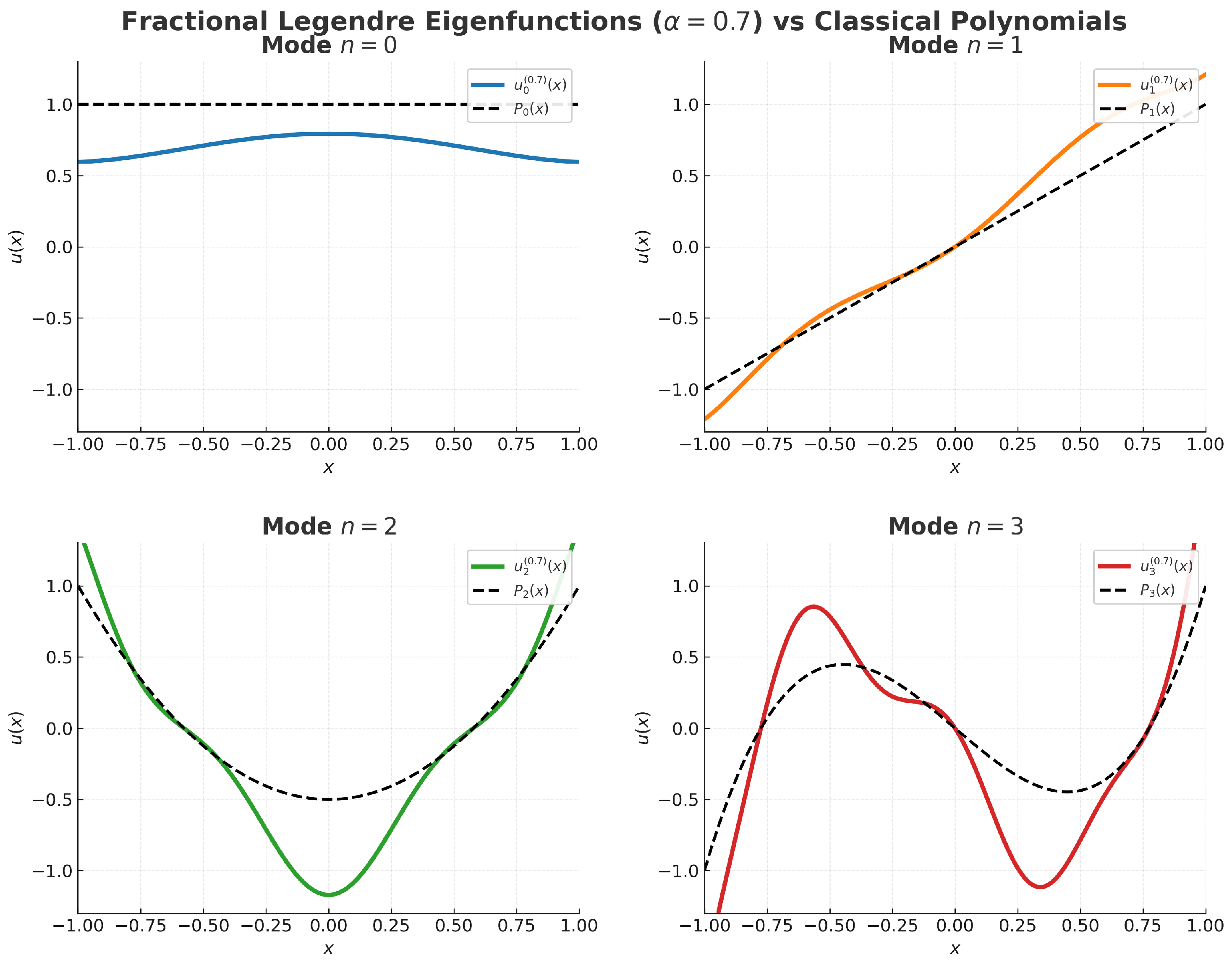
Figure 1 illustrates the first few eigenfunctions for the fractional order
together with their classical counterparts. The comparison highlights the qualitative effect of nonlocality on the eigenfunction profiles. In particular, while the fractional eigenfunctions exhibit smoother behavior near the endpoints due to the influence of fractional boundary conditions, the nodal structure remains consistent with that predicted by the self-adjoint realization. This observation is in line with the reality and orthogonality properties implied by Theorem 1 and Corollary 1.
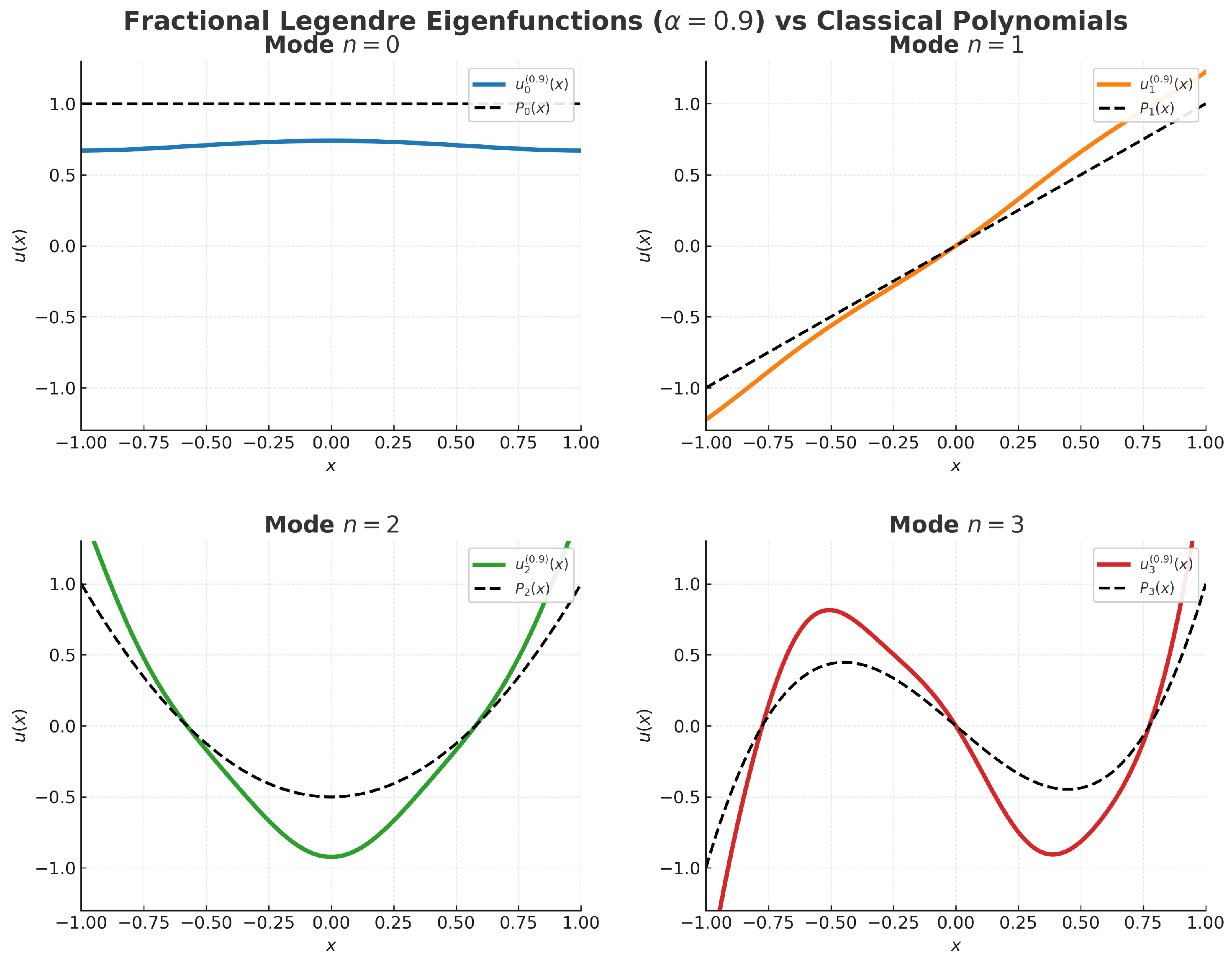
Figure 2 presents the same comparison for
. As the fractional order approaches the classical limit, the fractional eigenfunctions become increasingly close to the Legendre polynomials. This gradual alignment provides a visual interpretation of the spectral convergence described in Theorem 3, illustrating how the nonlocal operator transitions smoothly toward its classical counterpart as
.
4.3. Eigenvalue Convergence and Eigenfunction Error Analysis
To further illustrate the convergence behavior predicted by Theorem 3, we examine the dependence of the computed eigenvalues and eigenfunctions on the fractional order . The emphasis is on the qualitative trend as increases toward the classical limit, rather than on extracting a quantitative convergence rate.
Table 1 reports the first few eigenvalues of the fractional Heun operator for several values of
approaching 1. For comparison, the corresponding classical eigenvalues
are also listed. The data indicate that as
increases, the fractional eigenvalues move toward their classical counterparts, which is consistent with the spectral convergence stated in Theorem 3.
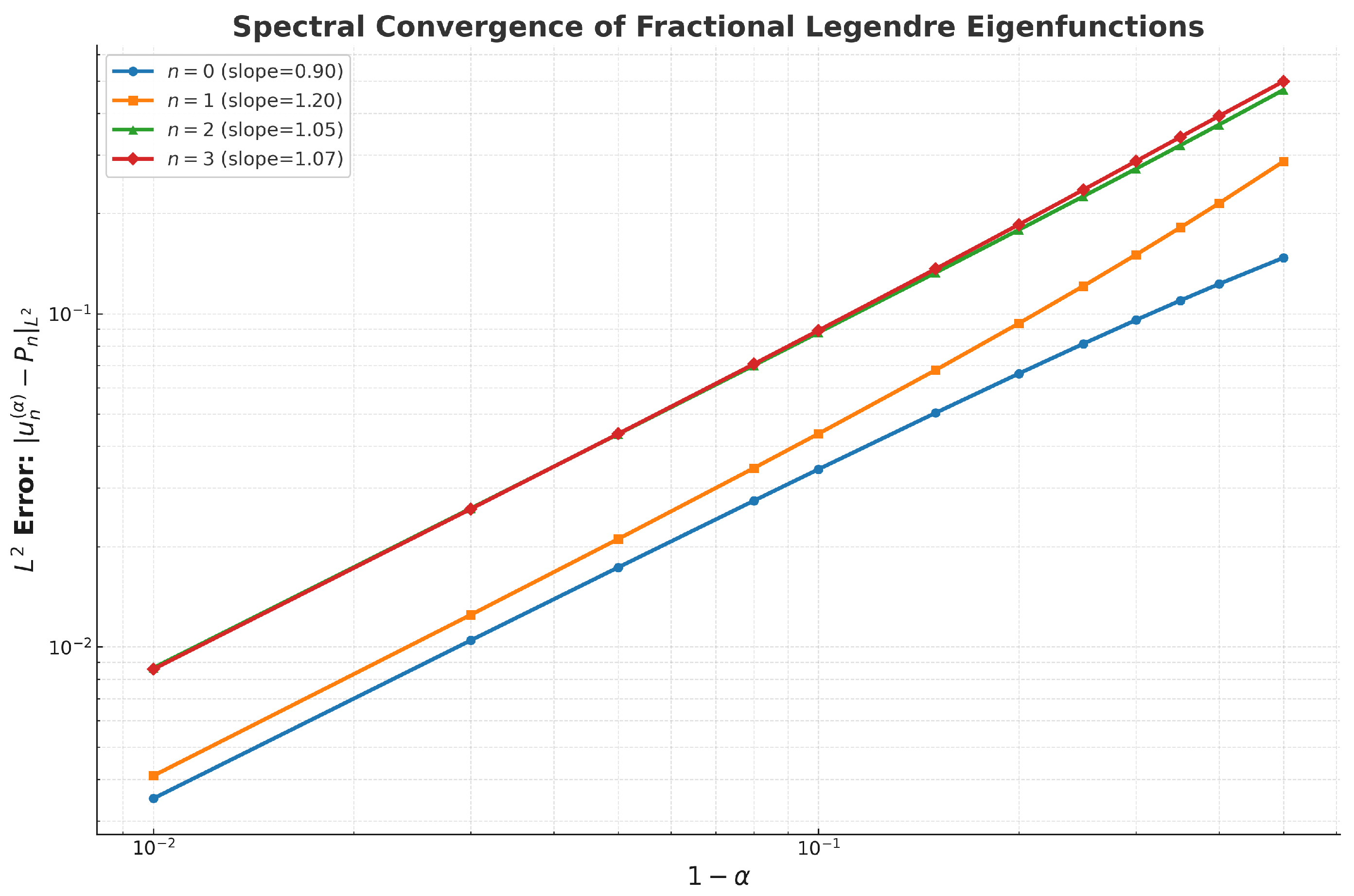
Figure 3 provides a complementary visualization by displaying the
-error between the fractional eigenfunctions and their classical counterparts as a function of
. The decreasing error as
increases offers a graphical interpretation of the convergence of eigenfunctions described in Theorem 3, illustrating how the fractional modes progressively approach the classical Legendre eigenfunctions as
.
5. Conclusions
This paper introduces a self-adjoint fractional Heun operator constructed via symmetric Riemann–Liouville derivatives and a fractional Pearson-type weight. Within this formulation, the operator was shown to admit a self-adjoint realization in an appropriate weighted Hilbert space, extending the classical Sturm–Liouville framework to a fractional, nonlocal setting for Heun-type operators.
The spectral analysis established the existence of a real, discrete spectrum together with a complete orthogonal system of eigenfunctions. Moreover, it was proved that as the fractional order approaches the classical limit, the fractional eigenpairs converge to those of the classical Heun operator, providing a precise analytic connection between fractional and classical spectral theories.
Numerical illustrations based on the fractional Legendre case are presented to complement the theoretical findings. These computations offer a qualitative visualization of the spectral properties and convergence behavior predicted by the analysis, without serving as numerical proofs.
The framework introduced here can be extended in several directions. Possible developments include the study of other Heun-type and special-function systems within the same fractional self-adjoint setting, the treatment of operators with singular coefficients, and the design of efficient numerical methods tailored to fractional spectral problems. These directions suggest a broader program toward a unified spectral theory linking fractional calculus, orthogonal polynomials, and classical Sturm–Liouville analysis.