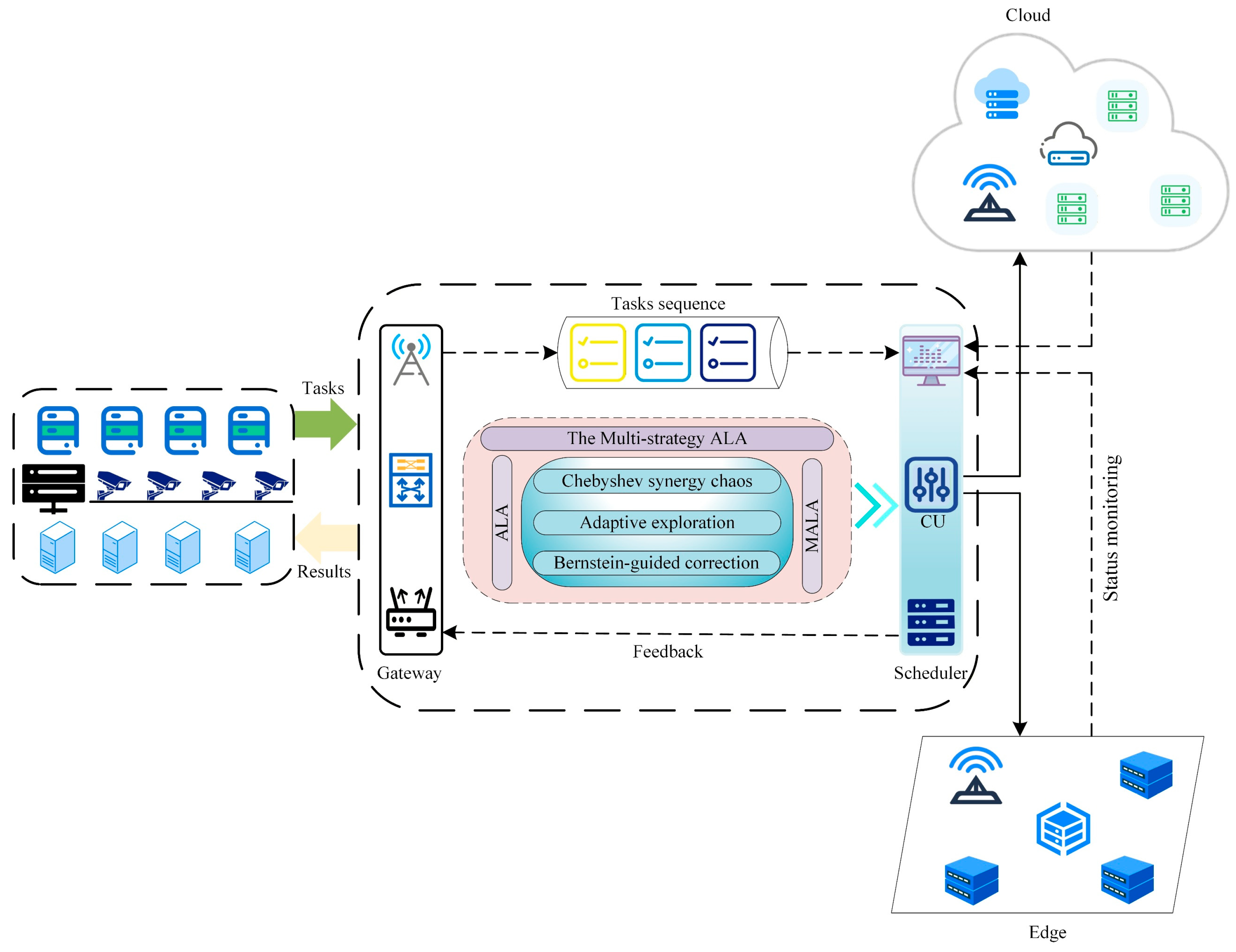
To verify the effectiveness of MALA in the task scheduling problem of cloud-edge collaborative architecture, this section will cover Whale Optimization Algorithm (WOA) [
32], Cloud Task Scheduling Improved Whale Optimization algorithm (IWC) [
33], Multi-strategy Enhanced Hiking optimization algorithm (CMOHOA) [
34], and Red-billed Blue Magpie Optimizer (RBMO) [
35]. ALA and Multi-Strategy Artificial Lemming Algorithm were applied to this problem for comparative experiments. The settings of the remaining parameters in the experiment were consistent with the original text, and all experiments were run under the Windows 11 operating system and MATLAB 2024b environment.
In all experiments of this section, we assume that every resource node remains continuously available throughout the entire scheduling horizon of each run. That is, no node joins, leaves, or experiences temporary failure during the execution of a given set of tasks. This static node availability assumption is adopted to isolate the algorithm’s performance under stable resource conditions, which serves as a necessary baseline before introducing dynamic disturbances.
5.1. Weight Sensitivity Analysis
In this section, a experimental study is first conducted to investigate the impact of varying weight configurations for cloud-edge collaborative task scheduling. Recognizing that practical applications exhibit diverse user preferences and business requirements regarding the trade-offs among user satisfaction, execution cost, and time cost, six representative weight combination schemes are designed for comparative analysis. Specifically, the weight vectors are configured as follows: W
1 = [0.3, 0.3, 0.4], W
2 = [0.3, 0.4, 0.3], W
3 = [0.4, 0.3, 0.3], W
4 = [0.8, 0.1, 0.1], W
5 = [0.6, 0.2, 0.2], W
6 = [0.5, 0.25, 0.25]. The first three configurations (W
1–W
3) cover typical decision-making inclinations where one objective is moderately favored, while the latter three (W
4–W
6) explore scenarios where user satisfaction is given progressively higher dominance, reflecting real-world service-level agreements. In all experiments, the population size is set to 30, the maximum number of iterations to 100, and the task scale comprises 100 independent tasks to be scheduled across 40 heterogeneous resource nodes. The remaining relevant parameters are specified in
Table 2. Comparative experimental results, including convergence trajectories and final optimization outcomes under different weight configurations, are presented in
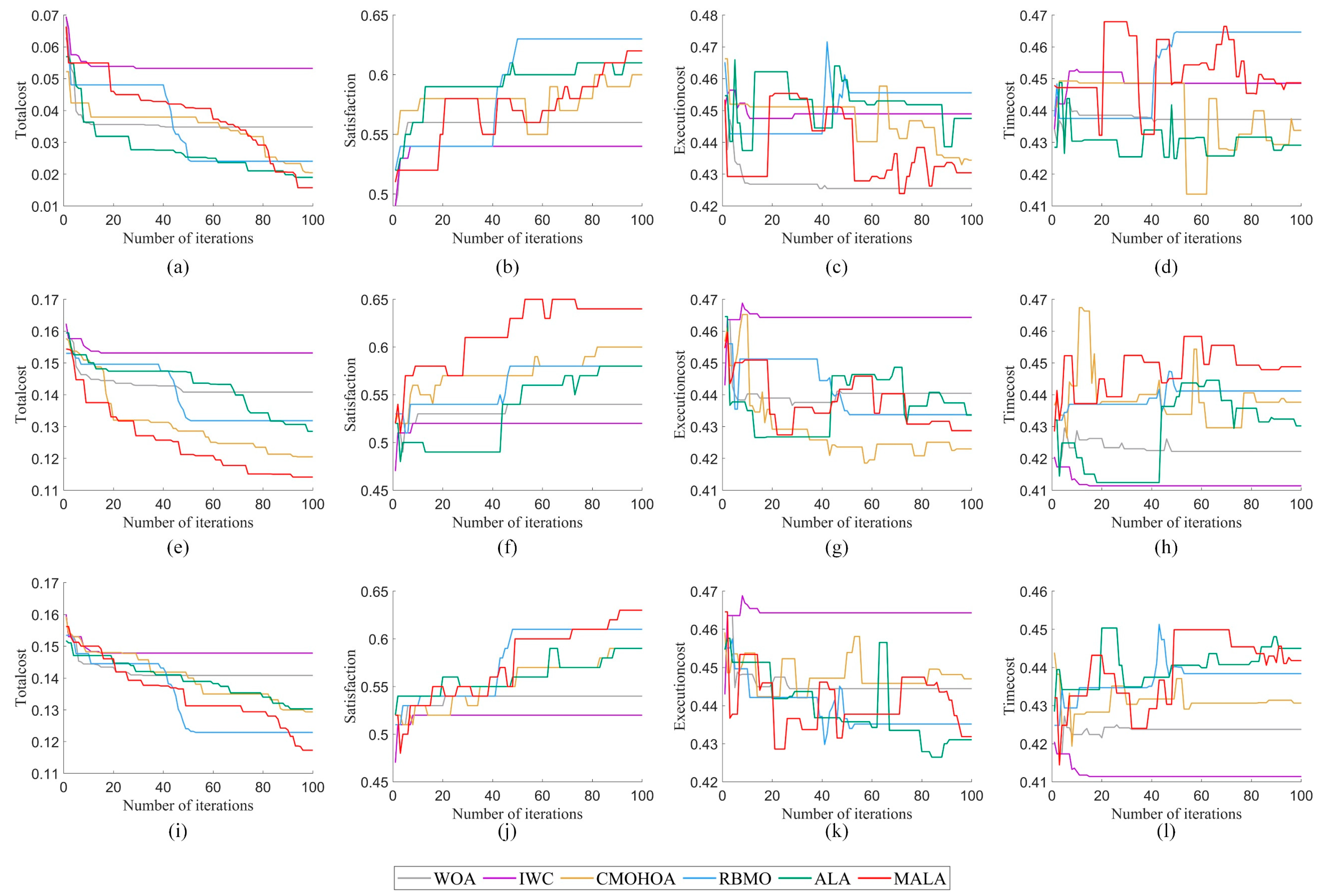
Figure 6 and
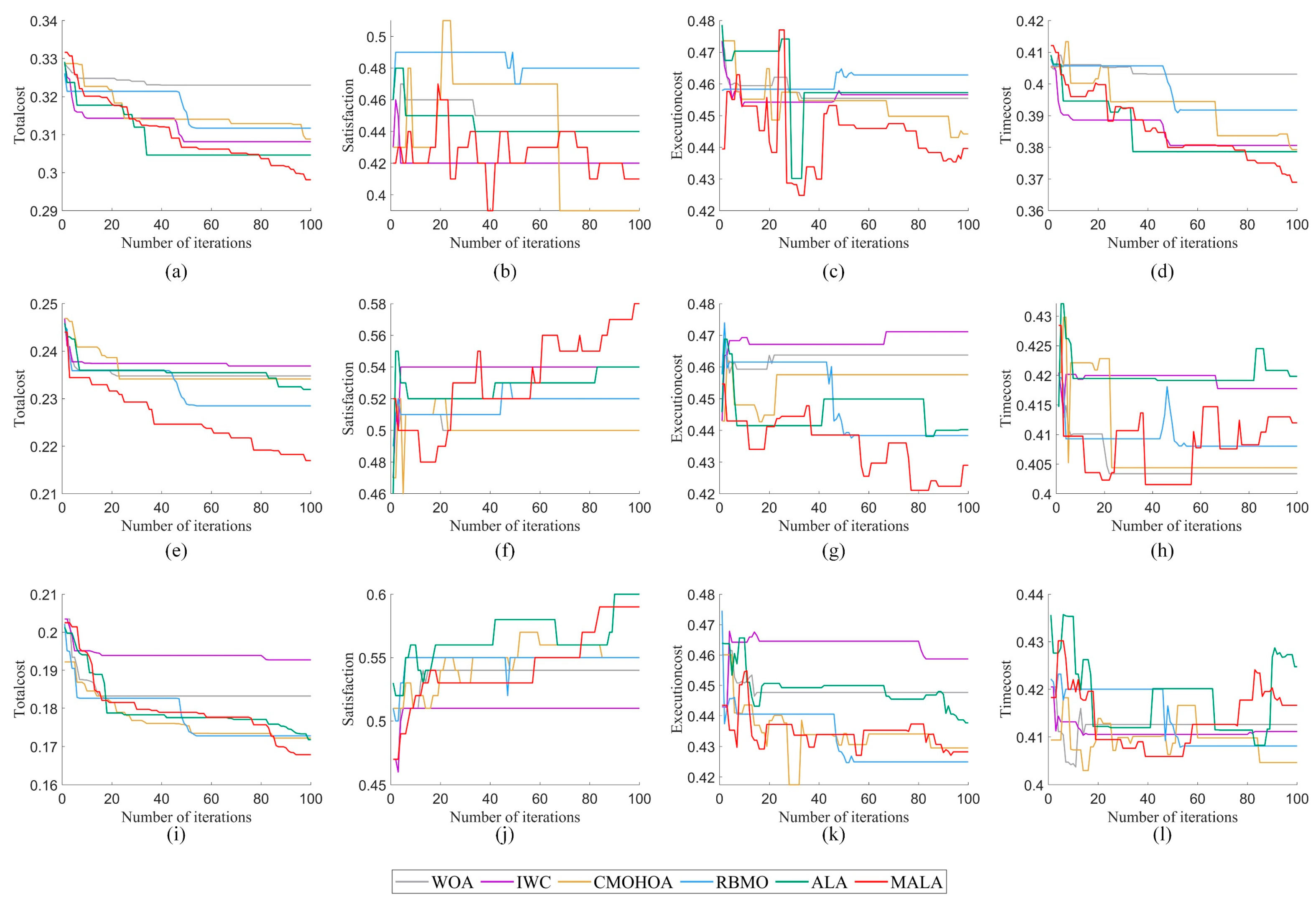
Figure 7.
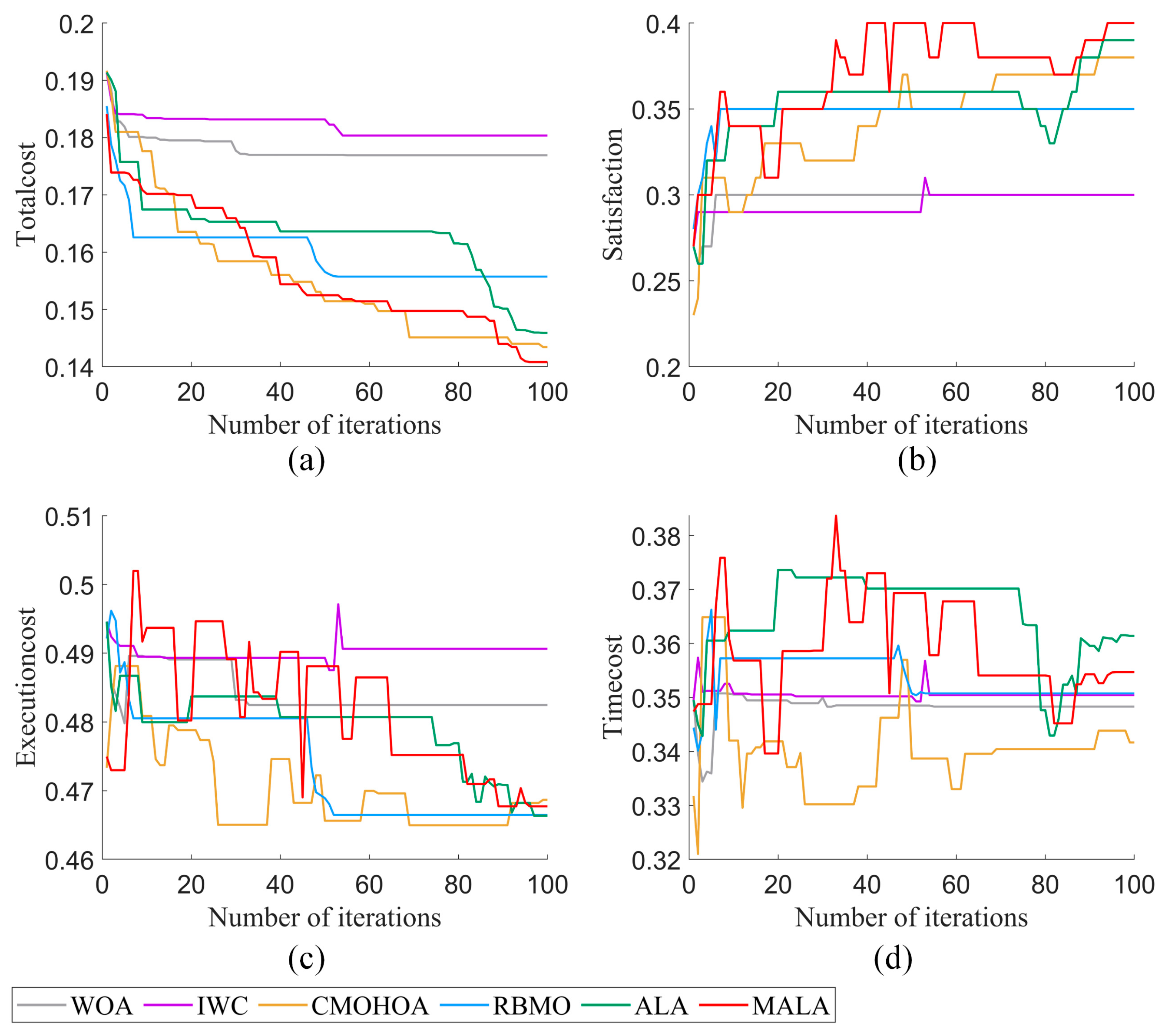
As illustrated in
Figure 6a–d present the optimization results under configuration W
1 = [0.3, 0.3, 0.4], where time cost is given the highest weight, simulating latency-critical applications such as real-time video analytics and industrial IoT control systems.
Figure 6e–h correspond to W
2 = [0.3, 0.4, 0.3], with execution cost prioritized, representing cost-sensitive workloads including large-scale data batch processing and backup operations.
Figure 6i–l show the outcomes under W
3 = [0.4, 0.3, 0.3], where user satisfaction is prioritized, reflecting quality-of-service-oriented scenarios such as interactive web services and remote healthcare applications. The color coding for all algorithms remains consistent across the figure: gray curves denote WOA, purple curves represent IWC, brown curves indicate CMOHOA, light blue curves correspond to RBMO, green curves signify ALA, and red curves illustrate the proposed MALA.
Across all three weight scenarios, MALA consistently outperforms the compared algorithms in both convergence speed and final optimization performance. Specifically, MALA exhibits the steepest decline in total cost during the early iterations, typically achieving near-optimal solutions within 40–60 iterations, whereas baseline algorithms such as WOA and IWC demonstrate considerably slower convergence trajectories and frequently plateau at suboptimal levels. In the time-cost-prioritized scenario (W1), MALA achieves the fourth-best time cost optimization effect among all competitors while maintaining competitive execution cost and satisfaction indicators, effectively addressing the strict delay limitations of real-time applications. Under the execution-cost-prioritized configuration (W2), MALA demonstrates the most pronounced reduction in execution cost without triggering severe deterioration in user satisfaction or time cost, underscoring its capacity to identify cost-efficient resource allocation strategies. When user satisfaction is prioritized (W3), MALA attains the highest satisfaction values while preserving reasonable control over both economic and temporal expenses, thereby ensuring a superior quality of experience for end users. A particularly noteworthy characteristic of MALA is its adaptive optimization behavior in response to weight variations. When the weight of a specific objective is increased, MALA exhibits a stronger optimization tendency toward that objective through its dynamic strategy adjustment mechanism, yet it successfully avoids causing severe degradation in other metrics. The algorithm’s inherent diversity preservation and local exploitation mechanisms enable it to navigate the complex trade-off surface among conflicting objectives without collapsing into single-objective optima. In contrast, several baseline algorithms demonstrate unstable or even poor performance under certain weight configurations. For instance, WOA frequently exhibits premature convergence in the satisfaction-prioritized scenario, failing to explore high-satisfaction regions adequately. IWC shows oscillatory behavior in execution cost optimization when time cost is prioritized, indicating its inability to adapt to changing objective preferences. CMOHOA and RBMO occasionally achieve competitive results in isolated metrics but struggle to maintain balanced performance across all objectives simultaneously. ALA, as MALA’s predecessor, shows moderate performance but lacks the strategic adaptability conferred by the multi-strategy enhancement.
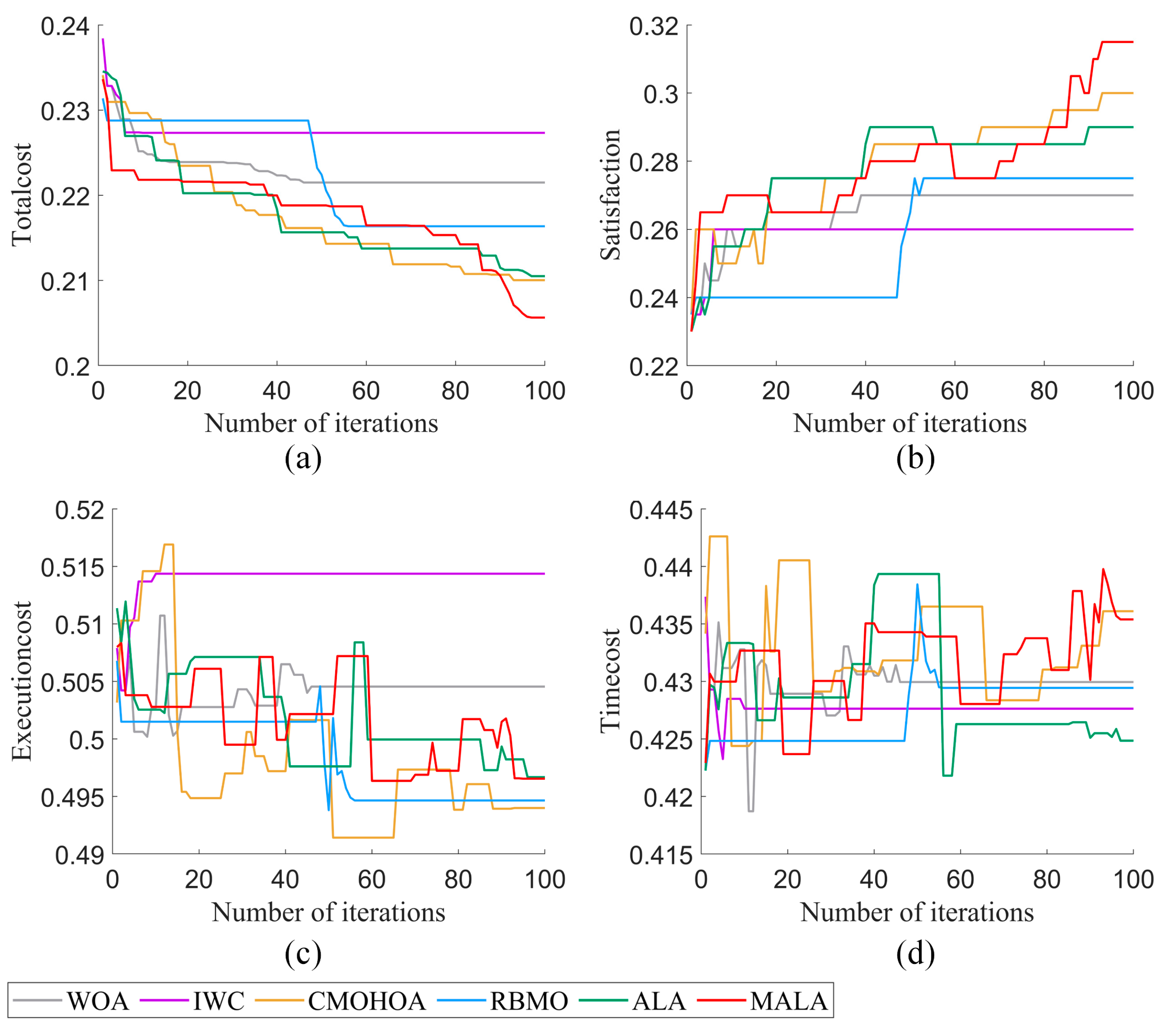
As illustrated in
Figure 7a–d present the optimization results under configuration W
4 = [0.8, 0.1, 0.1], where user satisfaction is assigned the highest priority, simulating quality-of-service-oriented scenarios such as interactive web services, and premium content streaming, where maintaining high user experience is paramount.
Figure 7e–h correspond to W
5 = [0.6, 0.2, 0.2], representing a moderately satisfaction-prioritized approach that still acknowledges the importance of economic and temporal efficiency.
Figure 7i–l demonstrate the outcomes under W
6 = [0.5, 0.25, 0.25], reflecting a more balanced distribution where satisfaction retains slight precedence while execution cost and time cost receive proportionally increased consideration.
Across all three weight scenarios, MALA consistently outperforms the compared algorithms in both convergence speed and final optimization performance. Specifically, MALA exhibits the steepest decline in total cost during the early iterations, typically achieving near-optimal solutions within 40–60 iterations, whereas baseline algorithms such as WOA and IWC demonstrate considerably slower convergence trajectories and frequently plateau at suboptimal levels. In the satisfaction-dominated scenario (W
4), MALA demonstrates the most pronounced reductions in execution cost and time cost among all competitors, rapidly converging to the lowest values for these two metrics while maintaining a moderate satisfaction level. As depicted in
Figure 7b–d, MALA achieves the optimal execution cost and time cost performance, effectively minimizing operational expenses and task completion latency despite the dominant satisfaction weight. This trade-off behavior indicates that when satisfaction is heavily prioritized in the weight configuration, MALA strategically reallocates resources to suppress execution and temporal overheads, recognizing that excessive satisfaction optimization may lead to prohibitive costs in practical deployment contexts. Under the moderately prioritized configuration (W
5), MALA demonstrates significant enhancement in execution cost and time cost without triggering severe deterioration in satisfaction, underscoring its capacity to identify balanced resource allocation strategies. As shown in
Figure 7f–h, MALA maintains its superiority in execution cost minimization while achieving competitive time cost reduction, with satisfaction levels remaining within acceptable bounds. When a more equitable weight distribution is adopted (W
6), MALA attains the most favorable aggregate performance across all three objectives, achieving optimal execution cost while simultaneously optimizing time cost and maintaining reasonable satisfaction levels. As illustrated in
Figure 7i–l, this balanced configuration enables MALA to fully exploit its multi-strategy mechanisms, navigating the complex trade-off surface among conflicting objectives without collapsing into single-metric optima. Notably, under W
6, MALA achieves the best execution cost performance among all algorithms while securing competitive rankings in both time cost and satisfaction, thereby ensuring superior overall system efficiency under diversified operational constraints.
A particularly noteworthy characteristic of MALA is its adaptive optimization behavior in response to weight variations. When the weight of user satisfaction is increased from W6 to W4, MALA exhibits a progressively stronger optimization tendency toward execution cost and time cost minimization through its dynamic strategy adjustment mechanism, rather than blindly pursuing satisfaction maximization. The algorithm’s inherent diversity preservation and local exploitation mechanisms enable it to identify non-intuitive yet practically valuable solutions that prioritize economic and temporal efficiency even under satisfaction-dominated configurations. This counter-intuitive behavior suggests that MALA possesses sophisticated internal trade-off assessment capabilities, recognizing that in real-world cloud-edge deployments, excessive satisfaction optimization often incurs unsustainable resource expenditures. In contrast, several baseline algorithms demonstrate unstable or even poor performance under these configurations. WOA frequently exhibits premature convergence across all scenarios, failing to explore high-performance regions adequately and settling into local optima with mediocre metrics. IWC shows pronounced oscillatory behavior in execution cost optimization when satisfaction is prioritized, indicating its inability to adapt to changing objective preferences and maintain stable economic performance. CMOHOA and RBMO occas.
5.2. Analysis of Strategy Effectiveness
Most existing studies use CEC benchmark functions to evaluate intelligent optimization algorithms. The CEC test suite covers unimodal, multimodal, hybrid, and composite problems. Accordingly, this section employs the CEC 2022 test suite for validation. First, we verify the effectiveness of the High-Order Chebyshev Polynomial Cooperative Chaotic strategy in enhancing initial population diversity. Then, we test the standard ALA, single-strategy ALA, and two-strategy ALA on CEC 2022 functions to validate the individual and synergistic effects of each improved component during iterative optimization.
5.2.1. Validation of the Effectiveness of the Initialization Strategy
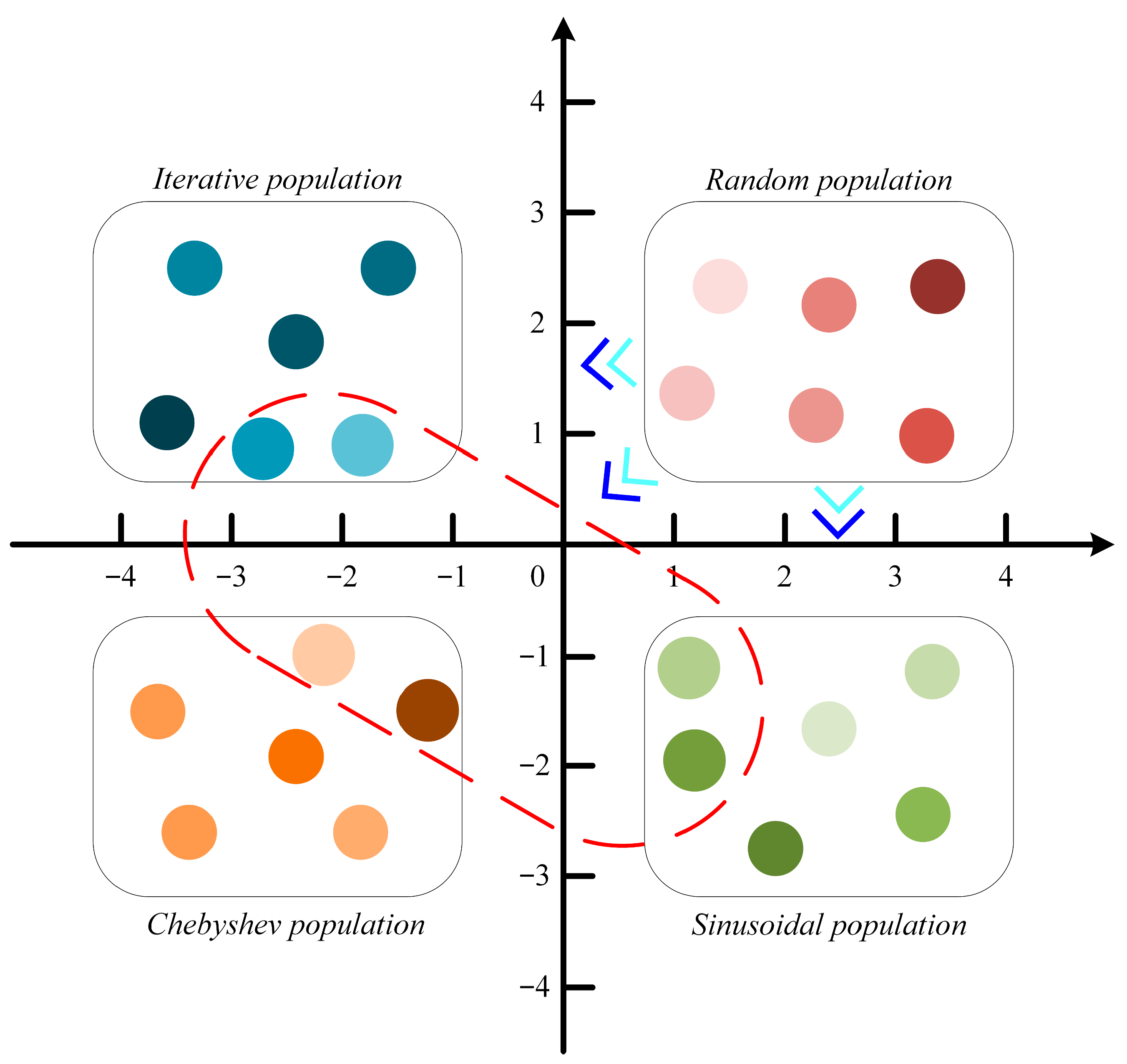
To verify the effectiveness of the proposed High-Order Chebyshev Polynomial Cooperative Chaotic initialization strategy (HCPC) in improving the quality of the initial population, population diversity is introduced in this section as a quantitative metric to characterize population distribution and exploration potential. A higher population diversity indicates a larger dispersion among individuals and a wider spatial distribution, which enables the algorithm to explore a broader solution space in the subsequent iterative process, thereby enhancing the global search capability and reducing the probability of premature convergence. The definition of population diversity is given as follows.
Here,
denotes the population diversity value at the
iteration, and
denotes the centroid value at the
iteration, which is calculated by Equation (29).
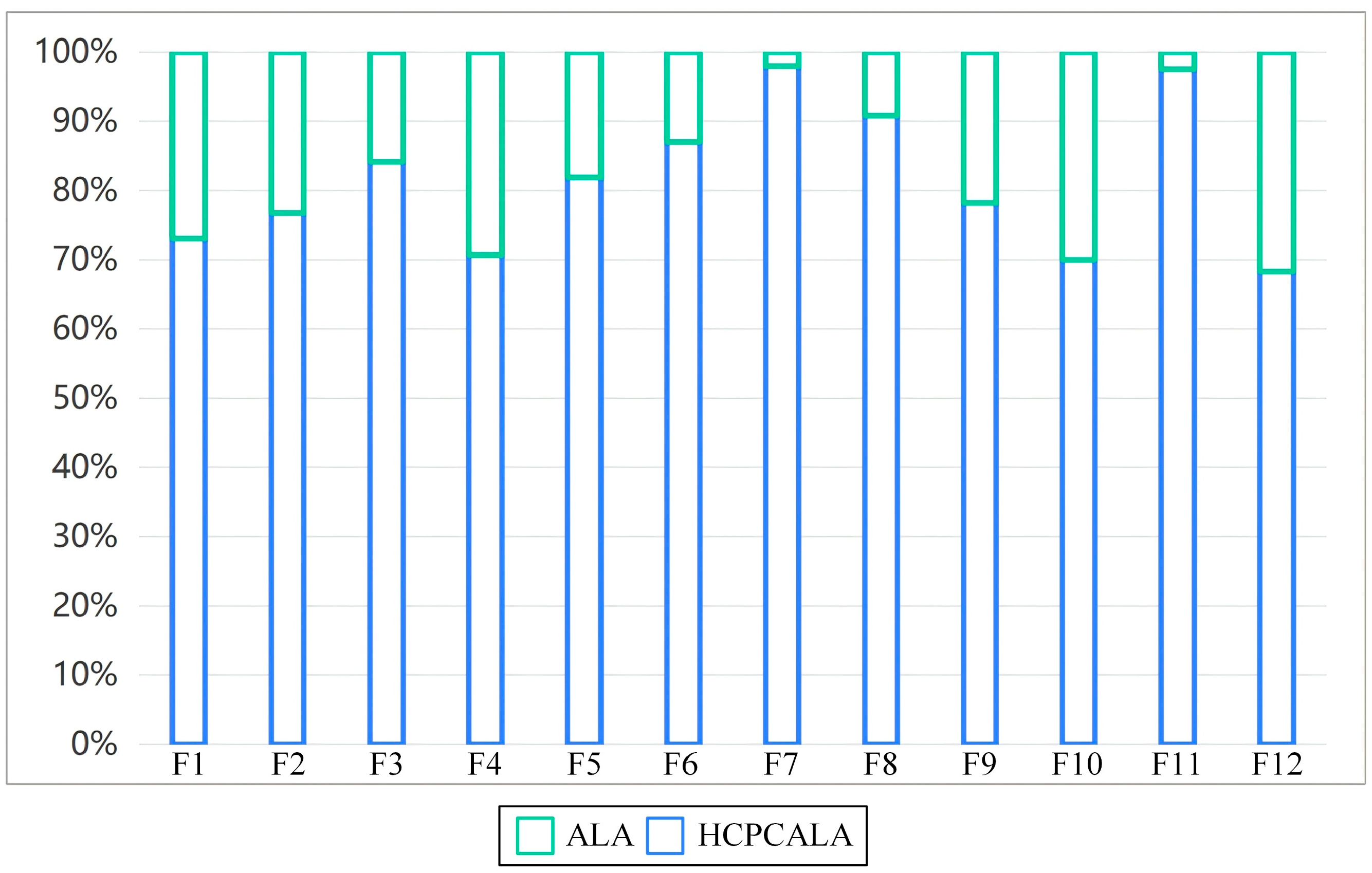
To verify the effectiveness of the proposed Initialization for the High-Order Chebyshev Polynomial Cooperative Chaotic in enhancing the diversity of the initial population, a set of comparative experiments is conducted in this section. Specifically, the standard ALA and the improved ALA, only embedded with the HCPC initialization strategy (denoted as HCPCALA), are both tested on the CEC 2022 benchmark functions. The results are exhibited in
Figure 8. Detailed descriptions of the CEC 2022 test functions are listed in
Table 3. In all experiments, the problem dimension is set to 20, the population size is set to 30, and the maximum number of iterations is uniformly set to 500.
The results are visualized in
Figure 8 as stacked bar charts, where the blue segment represents the diversity proportion contributed by HCPCALA and the green segment corresponds to that of the standard ALA, with the total height of each bar summing to 100%.
Across the entire test suite, HCPCALA consistently exhibits a significantly higher contribution to population diversity compared to the ALA. Specifically, on functions F1–F6, F9–F10, HCPCALA accounts for more than 70% of the total diversity, with particularly prominent performance on F7 and F11, where its contribution exceeds 95%. In contrast, the diversity proportion of the ALA remains relatively low across all test cases, only reaching approximately 10% on F8 and generally staying below 30% in most scenarios. These results clearly demonstrate that the HCPC initialization strategy effectively enhances the spatial dispersion and ergodicity of the initial population, avoiding the clustering and poor coverage issues often associated with the random initialization of the standard ALA.
Such superior initial population diversity is of great practical significance for cloud-edge collaborative resource scheduling problems. In these scenarios, the solution space is typically characterized by high heterogeneity, multi-modality, and numerous local optima, making it challenging for optimization algorithms to explore the full range of feasible resource allocation strategies. The HCPCALA, with its widely distributed initial population, is able to explore a broader set of scheduling configurations from the very beginning, reducing the risk of premature convergence to suboptimal solutions. This advantage is particularly critical for large-scale, high-concurrency cloud-edge scheduling tasks, where the ability to quickly identify high-quality initial solutions can significantly improve overall optimization efficiency and the quality of final scheduling decisions. In summary, the HCPC strategy provides a solid foundation for subsequent iterative optimization by significantly boosting initial population diversity, which is a key prerequisite for achieving stable and high-performance scheduling in complex cloud-edge environments.
5.2.2. Analysis of the Effectiveness of Iterative Optimization Strategies
In this section, comprehensive comparative experiments are conducted on the CEC 2022 benchmark suite to verify the effectiveness of the proposed strategies. The compared algorithms include the standard ALA, ALA equipped with only the Adaptive Spatial Search Mechanism (denoted as ASSALA), ALA equipped with only the Bernstein-Guided Correction Strategy (denoted as BGCSALA), and ALA integrated with both strategies (denoted as HALA). In experiments, the population size is set to 30, the maximum number of iterations is set to 400, and the dimension is set to 20. The experimental results in terms of optimization accuracy are summarized in
Table 4, where the bold value in each row represents the best performance among all competitors, and the last row records the average ranking (Ave rank) of each algorithm across all 12 test functions.
As can be observed from the quantitative results, the standard ALA yields the largest fitness values on all CEC 2022 test problems, indicating the weakest optimization accuracy and convergence performance. Due to insufficient global exploration and weak local exploitation capabilities, the standard ALA struggles to jump out of local optima and locate high-quality solutions efficiently, which directly limits its applicability in complex cloud-edge collaborative resource scheduling scenarios with heterogeneous resources, dynamic loads, and high-dimensional solution spaces.
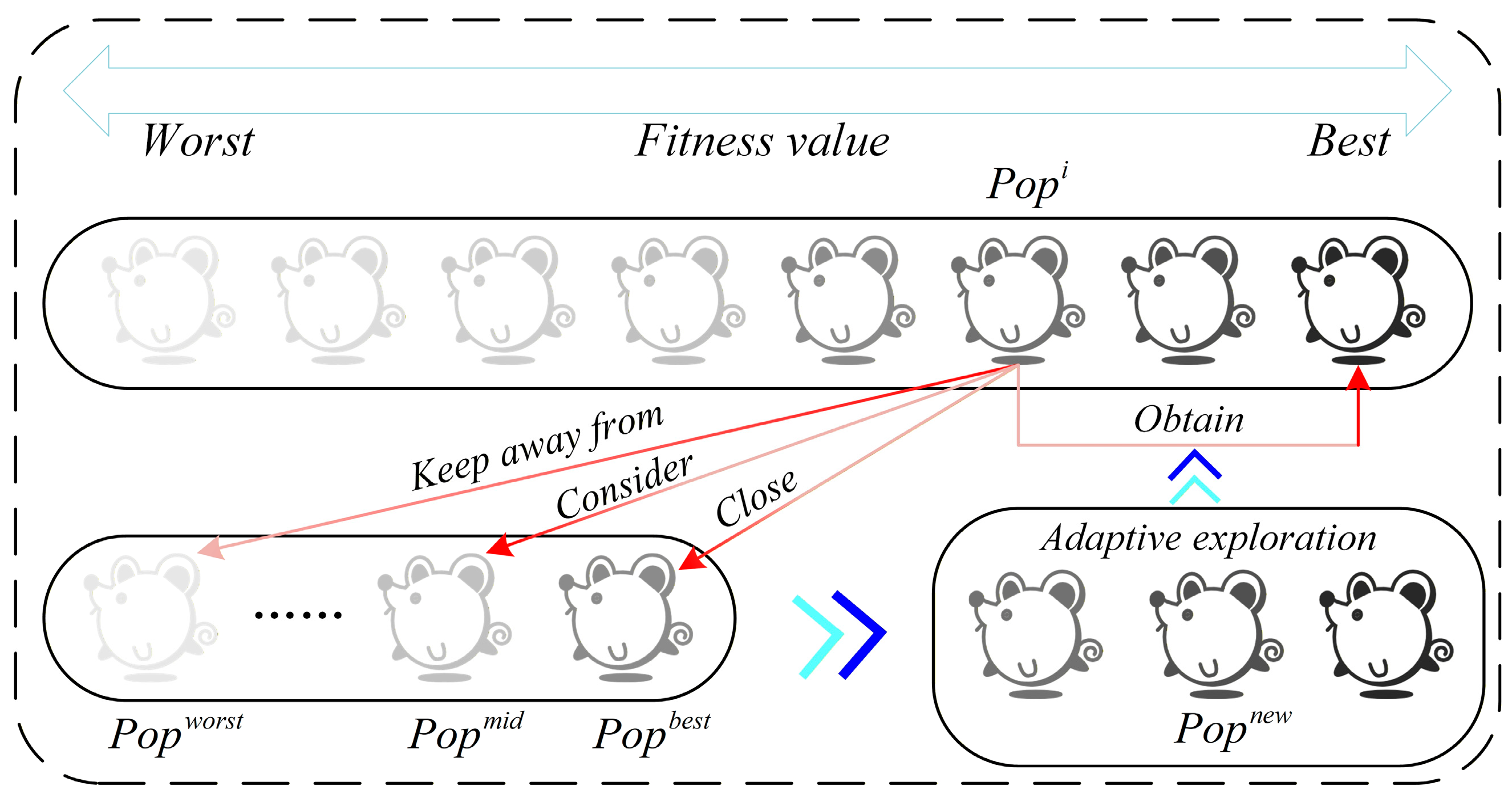
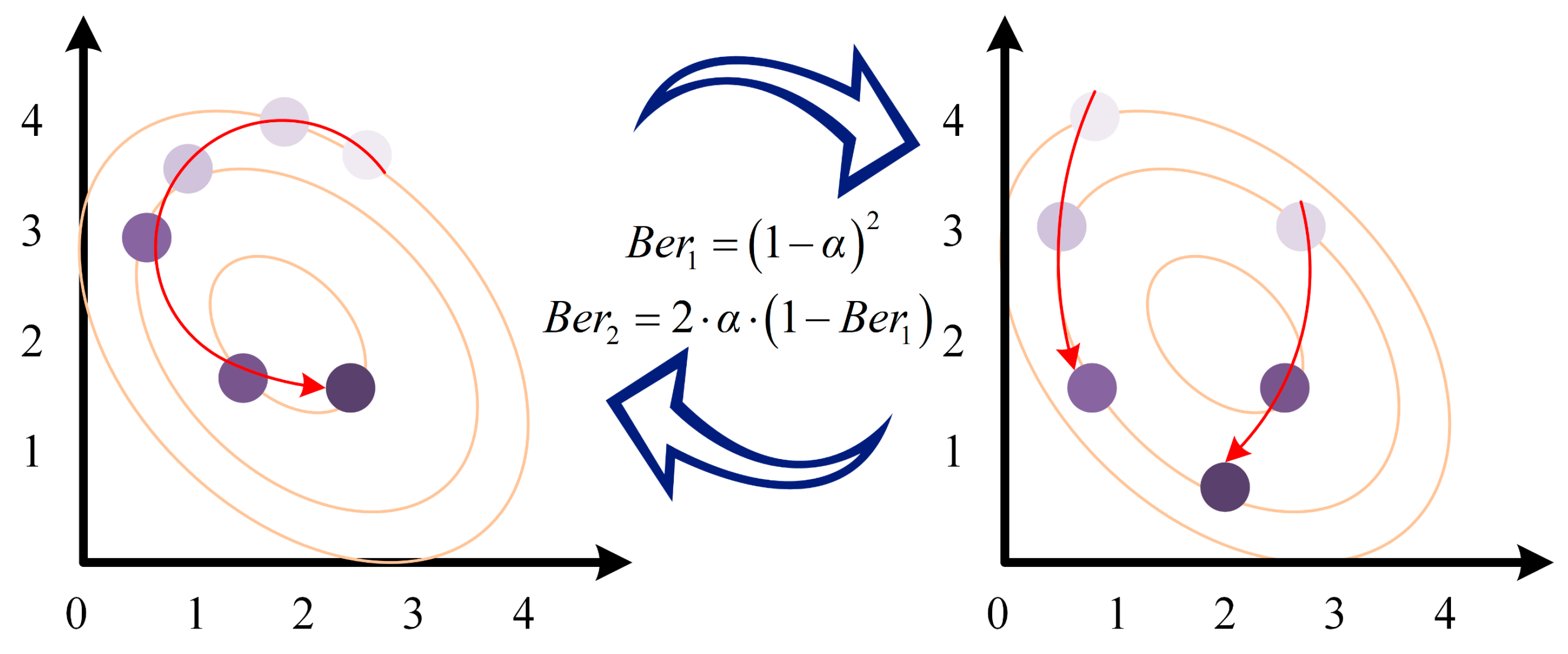
Compared with the standard ALA, both ASSALA and BGCSALA achieve remarkable performance improvements. Specifically, the Adaptive Spatial Search Mechanism endows ASSALA with enhanced global exploration ability by dynamically adjusting the search step and direction, which helps the algorithm expand the search range and avoid premature convergence. Similarly, the Bernstein-Guided Correction Strategy strengthens the local exploitation ability of BGCSALA, enabling the algorithm to conduct refined search near promising regions and improve solution precision. Consequently, both ASSALA and BGCSALA outperform ALA on most test functions, and their average ranks reach 2.50 and 2.58, respectively, confirming the effectiveness of every single strategy in elevating optimization performance.
Notably, the HALA achieves the best optimization accuracy on most CEC 2022 test functions. In particular, on complex multimodal and composite functions such as F6, F7, F8, F11, and F12, HALA exhibits overwhelming advantages over the other three algorithms. More importantly, HALA achieves an average rank of 1.17, which is far superior to 3.67 (ALA), 2.50 (ASSALA), and 2.58 (BGCSALA). This fully demonstrates that the two proposed strategies are highly complementary: the adaptive spatial search mechanism expands the exploration scope to discover potential promising regions, while the Bernstein-guided correction strategy performs targeted refinement and stabilization, forming a closed-loop and efficient search mechanism.
For cloud-edge collaborative resource scheduling scenarios, such excellent optimization performance is of critical practical value. Cloud-edge scheduling problems typically involve high-dimensional, multi-constraint, and strongly coupled solution spaces, where algorithms are prone to stagnating in local optima, leading to unreasonable resource allocation, high execution cost, long time delay, and low user satisfaction. Benefiting from the collaborative mechanism of balanced exploration and exploitation, HALA can efficiently locate high-quality resource allocation schemes and reduce total scheduling cost. Therefore, the proposed HALA possesses stronger search ability, higher convergence accuracy, and better robustness, making it more suitable for solving complex, large-scale cloud-edge collaborative task scheduling problems.
5.3. Small-Scale Cloud-Edge Collaborative Task Scheduling Test
In this experiment, a standardized test scenario is constructed with 100 computing tasks and 30 heterogeneous computing resource nodes. The maximum number of iterations is set to 100 and the population size to 40 to ensure sufficient convergence and stable optimization. Detailed task and resource parameters are listed in
Table 5, and the scheduling results of the compared algorithms are illustrated in
Figure 9.
Since the experiments in this study mainly focus on performance optimization, equal importance is assigned to the three optimization objectives to avoid biased evaluation caused by unbalanced weight settings. Specifically, the weight parameters for user satisfaction, execution cost, and time cost are all set to one-third, respectively. In all subsequent comparative experiments, the weight parameters are kept unchanged at 1/3.
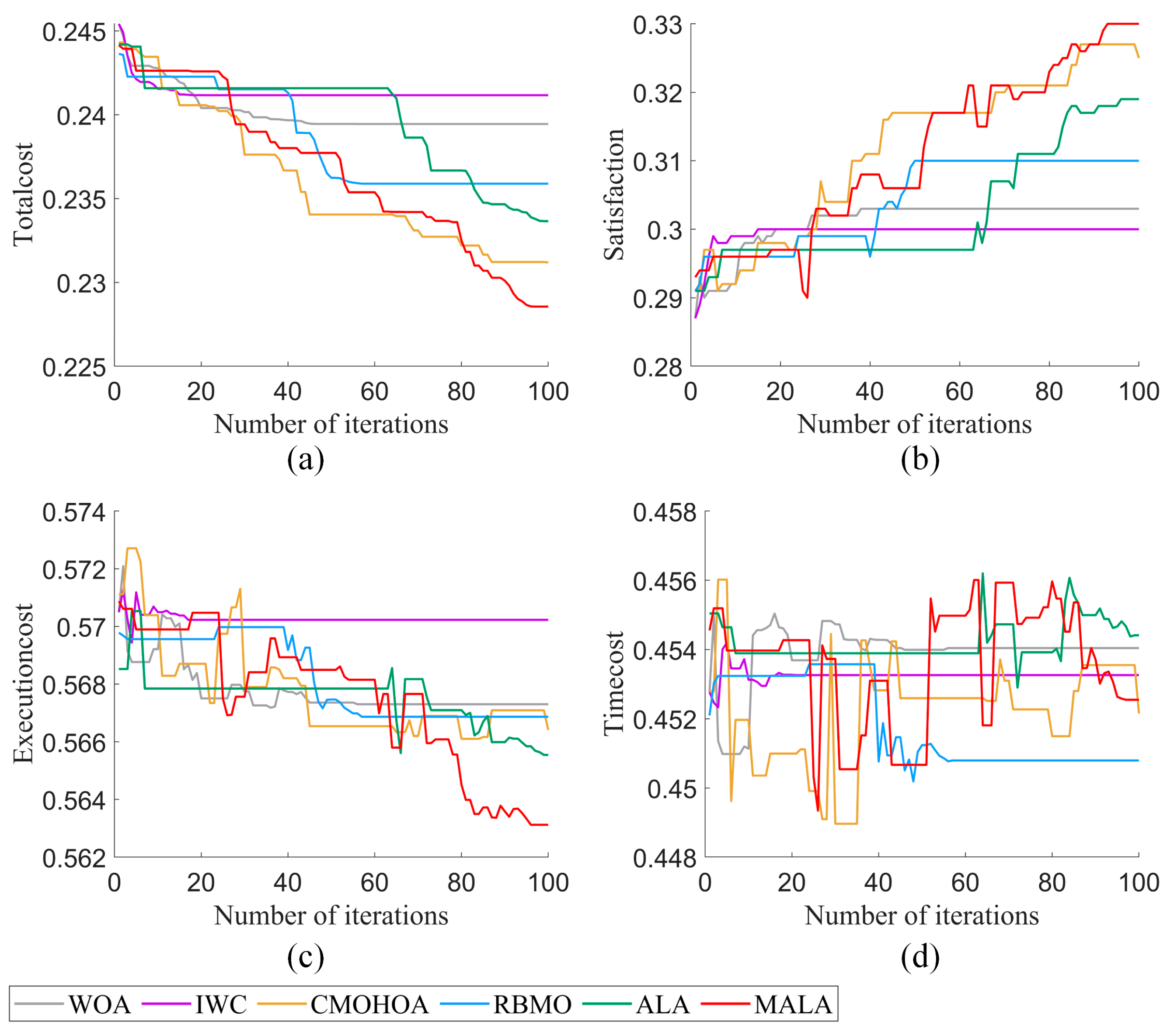
It can be observed from
Figure 9a that all the algorithms involved in the comparison show a gradually increasing trend in the dimension of total cost optimization. This phenomenon directly confirms that in the cloud-edge collaborative scheduling scenario, intelligent optimization algorithms have the ability to effectively regulate and improve the scheduling process. Through the iterative optimization of the algorithm, the resource consumption and time cost in the scheduling process can be continuously compressed, verifying the practical value of the intelligent optimization method in this scenario. A further analysis of the data trend in
Figure 9a reveals that among all benchmark algorithms, MALA has the most outstanding optimization performance. It has a greater reduction in total cost and a more stable convergence speed. The total cost figure has decreased by approximately 3%. This result fully demonstrates that for small-scale cloud-edge collaborative task scheduling problems, MALA, with its improved optimization mechanism, can more accurately balance task allocation and resource utilization, showing performance advantages over similar algorithms. The results in
Figure 9b further confirm the potential of MALA from the perspective of satisfaction optimization. As the iterative process progresses, MALA consistently leads in the satisfaction index and remains in the optimal position until the end of the iteration. Although the standard ALA can also produce certain effects in optimizing satisfaction, there is a significant gap between its improvement range and final performance, and that of MALA. This also highlights from the side the improvement effect of MALA in meeting user needs and balancing the interests of multiple parties. At the level of cost optimization, the optimization effects of MALA and various baseline algorithms show a similar trend, indicating that there are certain commonalities in the improvement space and optimization paths of existing algorithms in this specific indicator, and MALA does not show significant differences.
5.5. Large-Scale Cloud-Edge Collaborative Task Scheduling Test
To further explore the processing capacity of MALA in large-scale cloud-edge collaborative task scheduling scenarios, this experiment constructed a complex test environment that is closer to actual business: the number of tasks was increased to 1000 to simulate the scenario of massive concurrent tasks, while the number of computing resource nodes was increased to 50. To ensure the longitudinal comparability of the experiment, the number of iterations and the population size of this scenario strictly follow the parameter Settings in
Section 5.3. In addition, to make the experimental scenarios more in line with the characteristics of real large-scale scheduling, we have improved the core parameters of tasks and computing resources. The detailed parameter configuration of the above tasks and computing resources has been sorted out in
Table 6, providing a clear quantitative input basis for the experiment. Based on the above Settings, this section once again verifies the performance of MALA and each benchmark algorithm. The relevant experimental results are shown in
Figure 11.
When the task scale expands to 1000, the optimization performance of ALA in cloud-edge collaborative task scheduling shows a more significant decline. Its regulatory ability over the scheduling process has been further weakened, making it difficult to cope with the complex constraints and resource competition pressure brought about by large-scale tasks. In contrast, MALA further highlights its core advantages in large-scale scheduling in this highly complex scenario, and its leading position in various performance indicators is even more prominent. It can be clearly observed from the evolution curve in
Figure 11a that when the iteration reaches approximately 50 times, the optimization effects of algorithms such as IWC, WOA, and RBMO all come to a standstill, and their curves tend to flatten, indicating that these algorithms are no longer capable of mining better solutions when dealing with massive tasks. Compared with ALA, the total cost value has decreased by approximately 3.5%. Although standard ALA has not completely come to a standstill, its optimization efficiency has dropped significantly. In contrast, MALA has maintained a stable upward trend, with its optimization curve continuously extending downward. The total cost of cloud-edge collaborative task scheduling ultimately obtained is significantly lower than that of other algorithms, confirming its strong optimization resilience in large-scale scenarios. The experimental results show that, compared with other baseline algorithms, MALA can meet the prescribed time limits of various tasks to the greatest extent under more stringent task parameter constraints, providing a reliable guarantee for business continuity. In the dimension of time cost optimization, although MALA ranks third, the gap with the top two is relatively small, and it is significantly better than most baseline algorithms. It fully proves that it is an efficient optimization method that can effectively deal with cloud-edge collaborative task scheduling problems of different scales.
5.6. Evaluation of Algorithm Scalability Under Expanded Task Scales
To further strengthen the experimental rigor and fully validate the superiority of the proposed algorithm, this section conducts testing experiments under large-scale task scenarios. Considering that cloud-edge scheduling bottlenecks typically arise under heavy workloads, the number of tasks is set from 1000 to 10,000 with a step size of 1000. In the experimental setup, the population size is 50, the number of resource nodes is 70, and the maximum number of iterations is 200. Other parameters remain consistent with those in
Table 7. Under these settings, comprehensive simulation experiments are performed, and the overall performance comparisons of different algorithms are shown in
Figure 12.
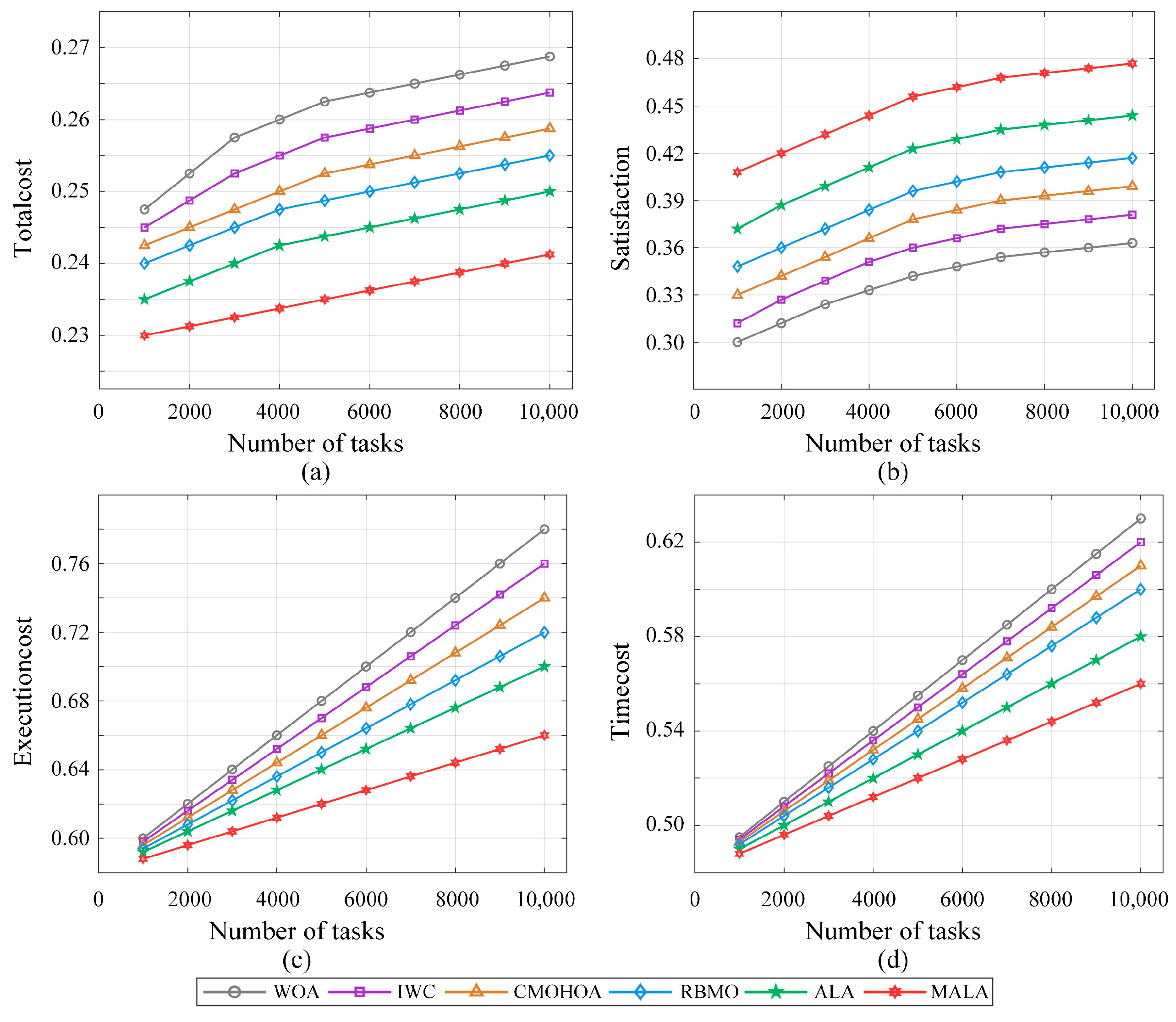
As depicted in
Figure 12, the gray curve with circle markers denotes the optimal scheduling results obtained by the WOA. The purple curve with rectangle markers represents the optimization performance of the IWC algorithm. The brown curve with triangle markers illustrates the optimal outcomes achieved by the CMOHOA. The light blue curve with diamond markers corresponds to the results generated by the RBMO algorithm. The green curve with pentagram markers shows the optimal values derived from the ALA. Meanwhile, the red curve with hexagram markers represents the optimal scheduling cost values obtained by the proposed MALA. In this figure, the horizontal axis illustrates the variation in the number of tasks, ranging from 1000 to 10,000, while the vertical axis represents the optimal comprehensive scheduling cost values achieved by each algorithm upon the completion of iterations.
As shown in
Figure 12a, the total cost of all algorithms increases monotonically with the number of tasks, which is consistent with the inherent complexity of resource scheduling under growing workloads. However, significant differences in both absolute values and growth rates are observed across algorithms. MALA consistently achieves the lowest total cost across all task scales, with the slowest growth trend as the number of tasks increases. In contrast, the baseline WOA exhibits the highest total cost and the steepest increase, indicating its poor scalability in large-scale scenarios. Other algorithms, including IWC, CMOHOA, RBMO, and ALA, perform between WOA and MALA but are unable to match the cost reduction achieved by MALA, especially under high-concurrency conditions with over 6000 tasks. Regarding user satisfaction (
Figure 12b), MALA maintains the highest satisfaction level throughout the entire task range, and its advantage becomes more pronounced as the workload increases. While all algorithms show an upward trend in satisfaction with task volume, the growth rate of MALA is the most favorable, demonstrating its ability to balance scheduling efficiency with user experience under heavy loads. Conversely, WOA shows the lowest and least responsive satisfaction improvement, reflecting its limited capability to optimize user-oriented objectives in large-scale scheduling. For execution cost and time cost, the performance differences are even more evident. MALA achieves the lowest values in both metrics, with significantly gentler slopes compared to other algorithms. This indicates that MALA not only reduces the absolute resource consumption and scheduling latency but also effectively mitigates the performance degradation caused by increasing task volume. WOA, on the other hand, suffers from a rapid rise in both execution and time costs, suggesting severe scalability bottlenecks when dealing with large numbers of concurrent tasks.
5.7. Verification of Scheduling Stability
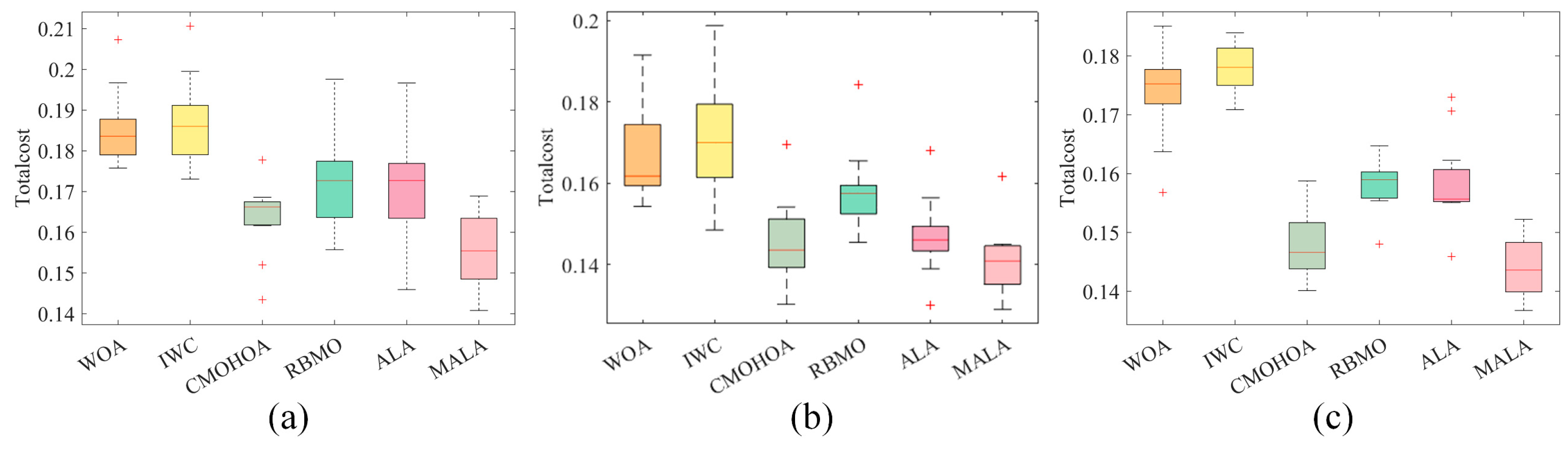
To further verify the stability and robustness of MALA in the task scheduling of the cloud-edge collaborative architecture, this section designs a multi-parameter dynamic adjustment experiment. Based on this, the experiment will systematically adjust the core parameters and compare and analyze the stability differences in scheduling performance between MALA and other baseline algorithms. Specifically, the experiment selects three types of parameters that have a significant impact on the scheduling process for gradient adjustment: the first is the number of tasks, the second is the number of computing resource nodes, and the third is the number of algorithm populations. In the experiment, the basic parameter configuration of tasks and computing resources is still based on
Table 5. The stability performance of each algorithm under different parameter combinations has been visually presented in
Figure 13.
Figure 13 presents the total cost distribution characteristics of each algorithm when different parameters are dynamically adjusted through three sets of box plots, intuitively reflecting the stability differences in scheduling performance. Among them,
Figure 13a focuses on the impact of changes in the number of tasks on stability: The experiment sets the number of tasks to gradually increase from 100 to 130, while fixing the number of computing resource nodes at 30, the total number of iterations at 100, and the algorithm population size at 40, to observe the cost stability under the fluctuation of task load.
Figure 13b analyzes the dynamic adjustment of the number of computing resource nodes: The experiment gradually increases the number of resource nodes from 5 to 40, while fixing the number of tasks at 30, the total number of iterations at 100, and the population size at 40. The results show that the cost distribution of most baseline algorithms fluctuates significantly with the change in the number of resource nodes. The box of MALA remains compact all the time, with the median stably at a relatively low level. Even if the number of resource nodes changes significantly, the degree of dispersion of the cost distribution is still significantly lower than that of other algorithms.
Figure 13c further explores the impact of changes in the algorithm’s population size on stability. The experiment increases the population size from 20 to 55, while fixing the number of tasks at 100, the total number of iterations at 100, and the number of computing resource nodes to match the task scale. The results clearly show that the stability defect of the standard ALA is particularly prominent in this scenario, making it difficult to maintain stable performance under different population configurations. In contrast, the cabinet of MALA always remains at a low and concentrated position, demonstrating strong adaptability to the adjustment of its own parameters. Based on the results of the three sets of experiments, it can be seen that when the task load, resource scale, or population parameters change dynamically, the baseline algorithm generally has problems with large performance fluctuations and insufficient stability. However, MALA, with its improved optimization mechanism, always maintains the dual advantages of low cost and high stability under various parameter disturbances. This feature fully demonstrates that MALA is a robust and widely adaptable cloud-edge collaborative task scheduling optimization method, capable of reliably addressing the complex demands of dynamic parameter changes in actual scenarios.
To further validate the adaptability of the proposed MALA in handling dynamic optimization scenarios with various problem scales, the indicators reflecting algorithmic performance from the experimental results in this section are listed in
Table 8.
The symbol “+” denotes that the competitor is significantly better than MALA; “−” denotes that the competitor is significantly worse than MALA; “=” denotes no significant difference between the competitor and MALA. All
p < 0.05 indicate statistically significant differences. As observed in
Table 8, all
p-values between MALA and the five baseline algorithms are far below 0.05, demonstrating that the performance advantages of MALA are statistically significant at the 95% confidence level, rather than random experimental fluctuations. According to the significance judgment rule, all comparison algorithms are marked with “−” in all scenarios, indicating that WOA, IWC, CMOHOA, RBMO, and ALA are significantly worse than MALA.
Under task scale variation, MALA shows extremely significant differences compared with WOA and IWC. Even for CMOHOA, RBMO, and the original ALA, the p-values remain at a low level, indicating that MALA maintains stable and outstanding scheduling performance when the task load increases. In the scenario of resource node variation, MALA still presents remarkably small p-values, which confirms its strong robustness against dynamic resource scales and heterogeneous node environments typical in cloud-edge systems. When the population size varies, the p-values are even lower, especially in comparison with WOA and IWC, revealing that MALA is insensitive to parameter changes and can consistently deliver reliable optimization results.
Furthermore, the significant differences between MALA and the standard ALA validate the effectiveness of the proposed multi-strategy improvements. These mechanisms effectively enhance population diversity, strengthen global exploration and local exploitation capabilities, and improve the convergence stability of the algorithm.
The evaluation metrics include the optimal value (Best), mean value (Mean), worst value (Worst), standard deviation (Std), and running time. Specifically, lower values of Best, Mean, Worst, and Std indicate better optimization performance and robustness, while shorter running time represents higher computational efficiency. In terms of optimization accuracy, MALA exhibits overwhelming advantages under all three test conditions. With the variation in task size, MALA achieves the optimal value of 0.148 and a mean value of 0.156, which are significantly lower than those of WOA, IWC, CMOHOA, RBMO, and ALA. Under different resource node scales, MALA delivers a mean value of 0.140, outperforming all comparative algorithms. Similarly, in the population size variation test, MALA obtains the minimum Best (0.138) and Mean (0.144) values. These results consistently demonstrate that MALA possesses stronger search capability and can obtain higher-quality solutions in dynamic optimization environments.
Regarding algorithm stability, MALA maintains a low standard deviation across all experimental scenarios. Concretely, the standard deviation of MALA is 0.009 in the task size test, 0.009 in the resource node size test, and 0.005 in the population size test, which are the lowest among all compared algorithms. This indicates that MALA features robust search stability and is less affected by fluctuations in problem scale and parameter configuration, thereby ensuring the reliability of optimization results. In respect of computational efficiency, MALA presents distinct advantages in running time. Under the task size condition, MALA costs only 4.189 s, which is the shortest among all algorithms. In the resource node size test, although the running time of all algorithms is prolonged to a certain extent, MALA still maintains the fastest speed (6.049 s). In the population size test, MALA completes the computation within 4.219 s, which is superior to most comparative algorithms. The above results reveal that MALA effectively reduces computational overhead while improving optimization performance.
Comprehensive comparison results illustrate that MALA outperforms WOA, IWC, CMOHOA, RBMO, and ALA in optimization accuracy, stability, and computational efficiency under different change indicators. The improved strategies adopted in MALA effectively enhance its search performance and adaptability in dynamic optimization problems, which further verifies the effectiveness and superiority of the proposed algorithm.