Article

Feasibility-Weighted Multi-Layer Benchmarking Path Optimization Model: The Cases of International Port Terminals
Department of Business Administration, Changwon National University, Changwon 51140, Republic of Korea
*
Author to whom correspondence should be addressed.
Mathematics 2025, 13(24), 3927; https://doi.org/10.3390/math13243927
Submission received: 13 November 2025 / Revised: 7 December 2025 / Accepted: 8 December 2025 / Published: 9 December 2025

Abstract

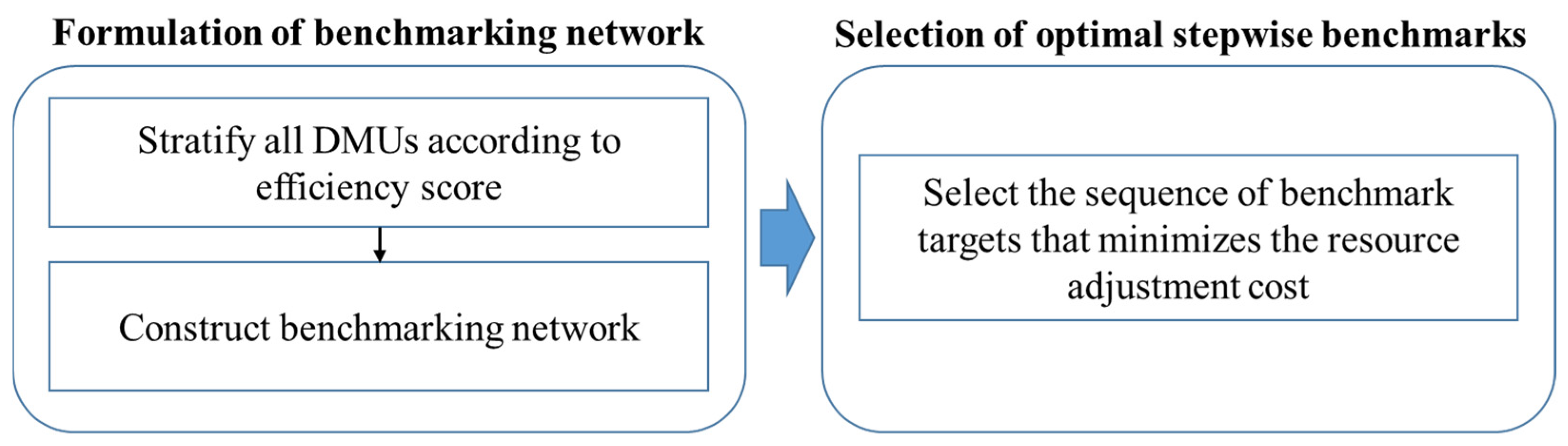
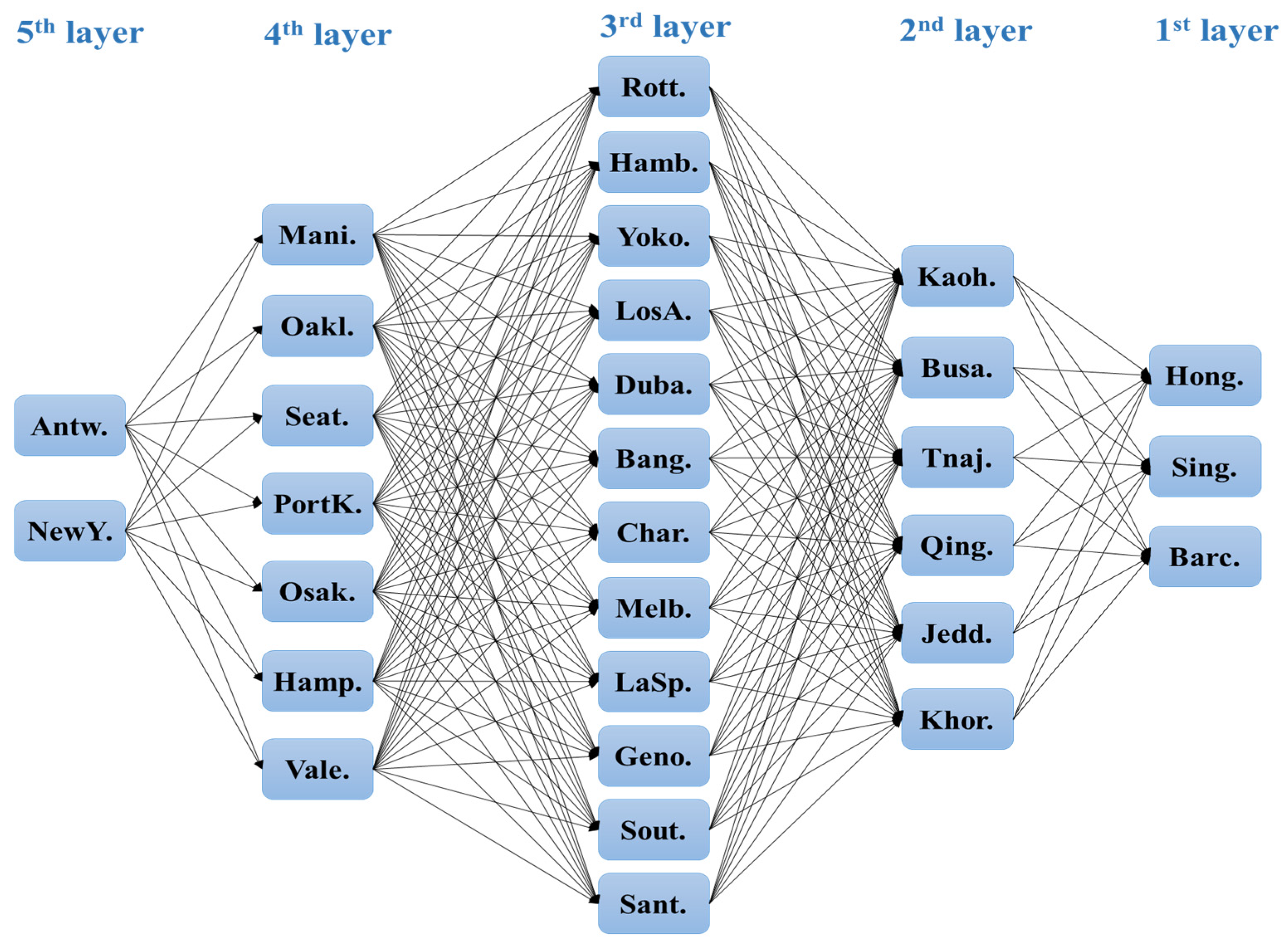
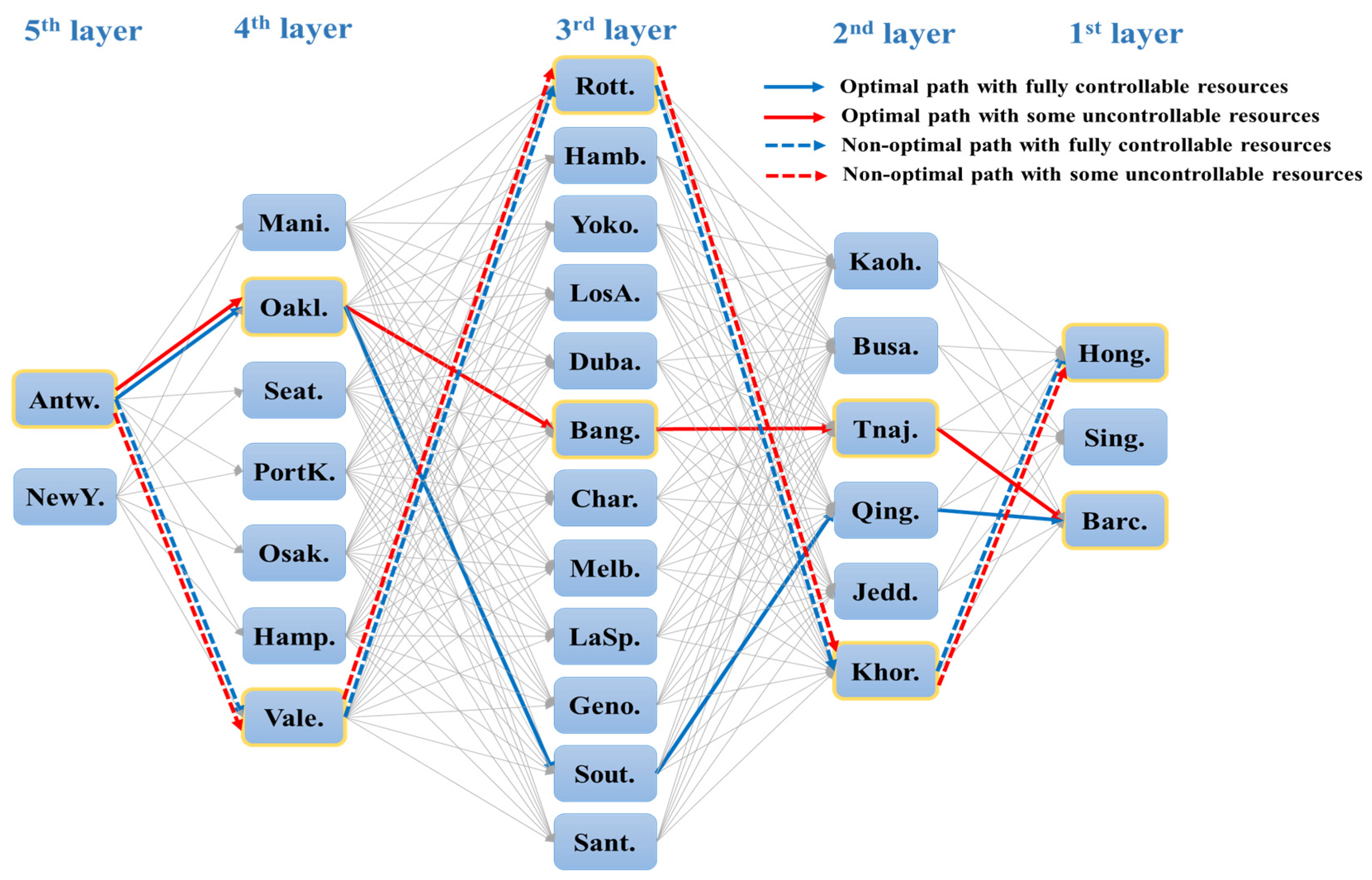
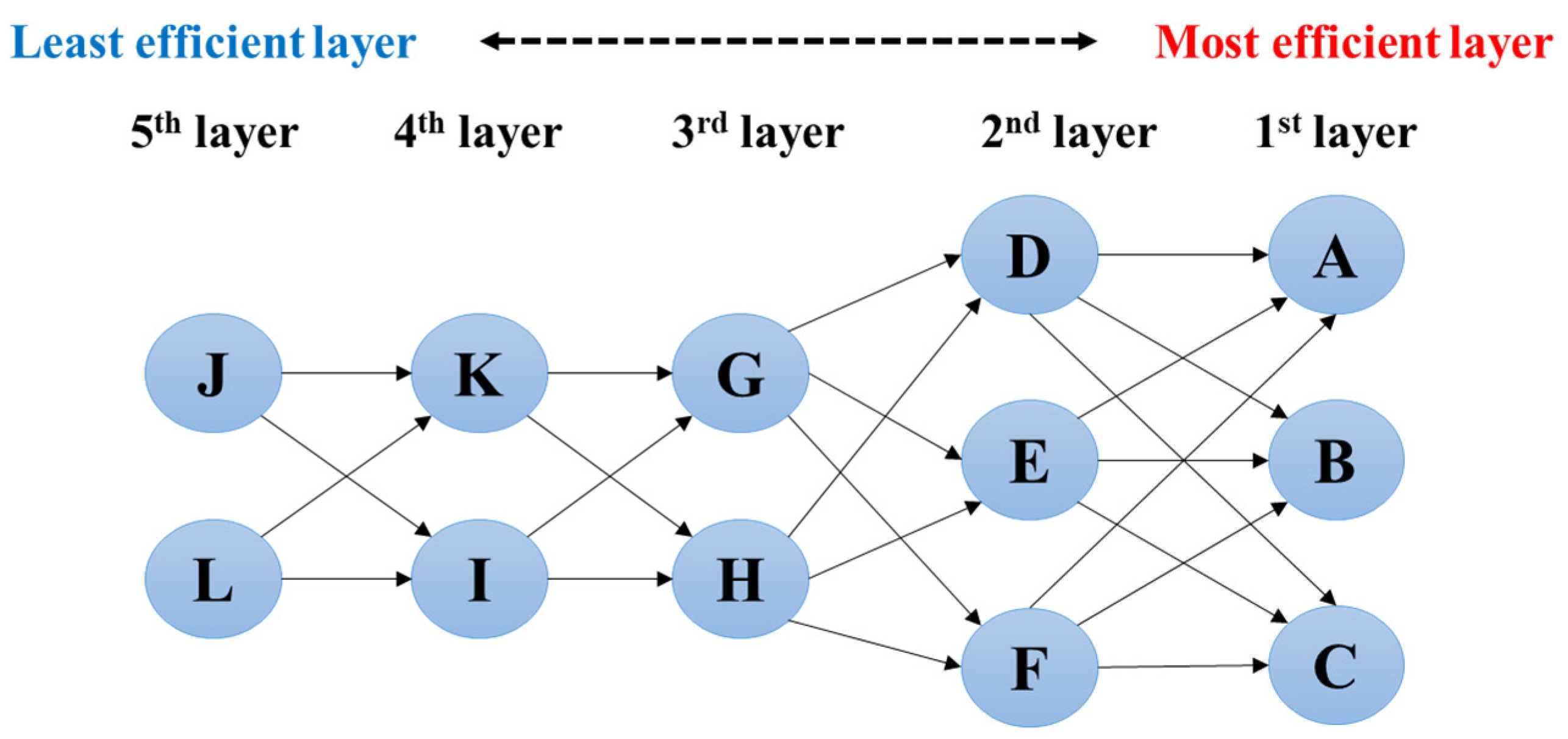
Several Data Envelopment Analysis (DEA)-based benchmarking approaches have been proposed to enable step-by-step performance improvement; however, they frequently overlook the practical aspects necessary to ensure the feasibility and success of the benchmarking process for real-world operations. Simply, these approaches allow inefficient Decision Making Units (DMUs) to reach their targets step by step, thus facilitating gradual performance improvement. Most of the relevant studies in the literature have focused on stratifying DMUs into multiple efficiency layers. This paper introduces a new, practical DEA-based benchmarking framework tailored to the maritime port industry. Specifically, it proposes a feasibility-weighted multi-layer benchmarking path optimization (FW-MLBP) model that determines optimal stepwise benchmarking targets for inefficient ports by minimizing the total amount of controllable resource adjustment required at each stage. This model enables an inefficient port to select a series of manageable intermediate benchmarking targets from a set of efficient ports before ultimately reaching the best-performing one. To validate the effectiveness and practicality of our proposed methodology, we applied it to 30 international port terminals, successfully identifying their optimal stepwise benchmarking targets and demonstrating a viable, incremental path toward enhanced efficiency.
Keywords: Data Envelopment Analysis (DEA); benchmarking path optimization; port-operational efficiency; port benchmarking Data Envelopment Analysis (DEA); benchmarking path optimization; port-operational efficiency; port benchmarking