


Abstract
This research examines a multinational supply chain inventory problem involving one manufacturer and multiple retailers across a range of carbon emission combinations and an incomplete production system. It aims to identify the optimal strategies for material use, production, delivery, replenishment, and pricing to maximize the integrated total profits under various situations. Three particle swarm optimization techniques are used to solve all the models. Numerical examples and sensitivity analyses on parameter changes are provided. The findings indicate that in a multinational supply chain, currency appreciation in individual retailers’ countries decreases their optimal order quantities and the manufacturer’s optimal material purchase quantity, but increases the optimal quantity for other retailers. In summary, this study offers valuable guidance to enterprises and supply chain decision-makers, especially those operating in a multinational framework, aiming to effectively balance carbon reduction and profitability within the context of global trends in carbon emission reduction.
Keywords:
production-inventory model; multinational supply chain; carbon emission combination; multiple retailers; particle swarm algorithm MSC:
90B05
1. Introduction
Climate change has become a significant concern for many countries in recent years. Due to the significant emissions of greenhouse gases into the atmosphere, their concentration has reached a concerning level, causing extreme climates that cause serious loss of life and property in many countries. In 2024, the World Economic Forum reported that global warming and extreme climate conditions make up four of the top five global risks. Further, global consensus agrees that carbon emissions primarily drive climate change, and the magnitude of this threat escalates annually. Based on this, numerous countries have formulated environmental policies and regulations to control the carbon emissions produced by enterprises or supply chains in their operations. In such a situation, one of the primary goals of supply chain systems is to reduce carbon emissions and environmental pollution throughout the stages of production, shipping, and sales. In other words, integrating green policies into production and inventory decisions, followed by a commitment to sustainable development, has become a critical concern in modern supply chain management. This is particularly true for multinational supply chains, where members contend with diverse carbon emission reduction policies.
Most real-world optimization problems related to production-inventory models, whether centered on maximizing integrated profit or minimizing the integrated cost of the entire supply chain system, involve objective functions that are highly complex, nonlinear, and often non-differentiable [1]. In this scenario, traditional optimization methods are very often stuck in local optima and struggle to find the optimal solution. Consequently, non-traditional or metaheuristic optimization techniques, which do not require derivative information of the objective functions, are preferred. The particle swarm optimization (PSO) algorithm, first proposed by Kennedy and Eberhart [2], has become one of the most widely used metaheuristic optimization techniques. In contrast to other metaheuristic algorithms, such as the genetic algorithm, the PSO algorithm demonstrates a faster convergence rate and requires very few adjustable parameters. The standard PSO algorithm and its modified versions have been successfully applied to solve various types of decision-making problems. To the best of our knowledge, Taşgetiren and Liang [3] were among the first to apply the PSO algorithm for the lot sizing problem and determine optimal order quantities for minimizing total ordering and holding costs. After that, numerous scholars started using the PSO algorithm to solve inventory problems. These studies primarily focus on addressing diverse scenarios, including fluctuating demand [4,5], multi-product [5] two-warehouse systems [6,7,8,9], trade credit [10,11], and discount policies [12], among others. The objective of these works is to assist businesses in enhancing their inventory management practices, thereby reducing costs, improving efficiency, and adapting to ever-changing market demands. Additionally, some studies delve into environmental sustainability concerns, aiming to provide a more comprehensive perspective on the implications of inventory management [13,14,15,16,17,18,19].
However, most existing studies have either considered only a single retailer or assumed homogeneous carbon emission mechanisms, limiting their applicability to multinational supply chains where multiple retailers interact simultaneously, exchange rates vary across markets, and carbon emission policies differ across countries. Moreover, no prior study has jointly integrated carbon policy heterogeneity, deteriorating items, multi-retailer interactions, and multinational exchange rate environments within a production–inventory framework. This constitutes the central research gap that the present study aims to address.
This study contributes in the following ways. First, it not only examines a supply chain system involving one manufacturer and multiple retailers, but also explores how material supply, production, delivery, ordering, and pricing policies interact within a multi-stage supply chain integration framework. Moreover, the reduction of carbon emissions holds significant importance for enterprises in the current landscape. When dealing with a multinational supply chain, it is crucial to recognize that carbon emission reduction policies can vary across different countries. Therefore, this study not only addresses the reduction of carbon emissions stemming from operational activities through capital investment but also incorporates the heterogeneous carbon emission reduction policies embraced by the supply chain member countries. Finally, this study aims to employ three effective PSO algorithms to solve the proposed model and compare their effects. The first is the Standard PSO (SPSO) algorithm. The second is a modified PSO algorithm called Linear Decreasing Inertia Weight PSO (LDIW-PSO), which incorporates a linear adjustment method within the algorithm [20]. The third is another modified PSO algorithm—Adaptive PSO (APSO), which integrates the distribution information of the population and particle fitness into the algorithm [21]. By applying multiple PSO variants to a problem that integrates multi-retailer interactions, multinational supply chains, and different carbon emission policy combinations, this study addresses a more complex problem than those explored in previous research and thereby delivers a novel methodological and analytical contribution to the sustainable production–inventory problem.
The rest of this study is structured as follows: Section 2 provides the literature review for the sustainable supply chain inventory management issues and uses PSO to solve inventory models. Section 3 describes the research problem and develops the production inventory problems of a multinational supply chain with multi-retailer and carbon emission policy combination. Section 4 introduces the solution process of the mixed nonlinear integer programming problems and investigates the PSO algorithms. Section 5 presents several numerical examples and performs sensitivity analyses. Finally, Section 6 provides the concluding remarks and suggestions for future research.
2. Literature Review
This section intends to compile and organize the relevant literature concerning the sustainable supply chain inventory model and the utilization of PSO algorithms in the inventory model. Next, this study endeavors to highlight potential research gaps identified in the previous literature.
2.1. Sustainable Supply Chain Inventory Models
In light of the increasing concern over global carbon emissions, Hua et al. [22], Arslan and Turkay [23], and Chen et al. [24] proposed sustainable EOQ-based inventory models, incorporating carbon policies like carbon cap-and-trade, carbon offsets, and carbon taxation. Adopting a supply chain integration perspective, Jauhari et al. [25] developed a production inventory model for one vendor and one buyer with deterministic demand. Datta [26] analyzed a production-inventory model that incorporated defective items and price-dependent demand, while also addressing the critical issue of carbon emissions and their impact on global warming. Gautam and Khanna [27] developed a sustainable supply chain model involving a vendor and a buyer, addressing defects, quality standards, carbon emissions, and cost optimization. Further, Saga et al. [28] introduced a two-stage supply chain inventory model accounting for imperfect production processes, inspection errors, and carbon emissions policies. Lu et al. [29] applied Stackelberg game theory to construct a multi-stage sustainable production-inventory model integrating carbon emission reduction initiatives. Pan et al. [30] explored multi-stage sustainable production-inventory models wherein demand depends on both price and advertising simultaneously. De-la-Cruz-Márquez et al. [31] proposed an advanced production-inventory optimization model for a three-stage supply chain, addressing imperfect quality, mortality, shortages with full backordering, and carbon emissions. Lu et al. [32] were the first to examine combinations of carbon emission policies within a multinational supply chain. Muthusamy et al. [33] recently examined the effects of integrated policy interventions on perishable goods supply chains, offering optimization strategies to multinational corporations for production, distribution, and emissions reduction. Alongside these, it is worth mentioning the research conducted by Sebatjane [19], Hammami et al. [34], Tiwari et al. [35], Aliabadi et al. [36], Rout et al. [37], Sepehri et al. [38], and Lu et al. [39]. While prior work, such as Lu et al.’s [32], has provided important insights into the interaction between carbon policies and exchange-rate movements, previous studies primarily considered single-retailer systems. In contrast, this research advances the literature by investigating a multi-retailer, multinational supply chain in which each retailer faces distinct exchange rates, leading to richer strategic interactions and more complex joint decisions regarding production, replenishment, and carbon emissions.
2.2. Applying PSO Algorithms to Inventory Models
As PSO algorithms are powerful, efficient, and easier to understand metaheuristic methods, they have been successfully applied to solve various types of supply chain problems, including the widespread discussion of using PSO for solving inventory models. For example, Domoto et al. [40] proposed a PSO-based method for determining the optimal order quantity in the automotive industry’s supply chain. Dye and Hsieh [4] devised an EOQ model that incorporates price-dependent, time-varying demand, fluctuating unit purchasing costs, and partial backlogging, and utilized the PSO algorithm as an efficient search process to obtain the optimal solution. Dye [10] incorporated trade credit financing while addressing an EOQ model with time-varying demand, deteriorating items, and partial backlogging, and solved it using PSO. Bhunia et al. [12] utilized PSO to address a deteriorating inventory model, which incorporates displayed stock-level-dependent demand, partially backlogged shortages, and unit discount facilities. Bhunia et al. [6], Bhunia and Shaikh [7], Tiwari et al. [8], and Shaikh et al. [9] all used PSO to solve the two-warehouse inventory problems. Yadav et al. [41] explored a supply chain comprising a single manufacturer and multiple price-sensitive buyers where a PSO is applied. Recently, environmental sustainability issues have gradually received more attention in this area of research. For instance, Bhattacharjee and Sen [17] developed a sustainable production inventory model for bioethanol production, including materials ordering, fermentation plant, and finished product inventory, where weighted PSO and constriction factor PSO algorithms were applied. Ruids et al. [18] used PSO to investigate the impact of joint investments in green innovation and emission reduction technologies within a green production-inventory model. Other studies considering the applications of PSO to solve the sustainable inventory/supply chain problems can be found in Rahimi and Fazlollahtabar [13], Manna et al. [14], Ruidas et al. [15], and Manna et al. [16].
2.3. Potential Research Gaps
After conducting in-depth research on the existing literature in the field of production inventory, Table 1 presents the primary distinctions between this study and previous related research. According to the information in Table 1, although considerable research has addressed production-inventory problems involving deteriorating items, carbon emissions, or the use of algorithmic approaches, few studies have investigated systems with the joint management of raw material and finished goods inventories. More importantly, most existing models assume homogeneous carbon emissions across the supply chain system and therefore fail to capture the heterogeneity of emission sources. Furthermore, they overlook the multi-retailer decision interactions that arise within multinational supply chain inventory systems, particularly those shaped by differing exchange-rate environments and cross-market conditions. To address the aforementioned research gap, this study intends to explore the sustainability of different carbon emission policy combinations for deteriorating materials and finished products, emphasizing supply chain integration, while considering the price-dependent demand and defective finished products. We also apply three PSO algorithms to solve the production-inventory models and evaluate their computational performance. These enhancements collectively position our study as a more comprehensive and realistic framework relative to prior related research.
Table 1.
Comparison of this study’s main features with previous related literature.
3. Model Development
To develop a multi-stage cross-border production inventory model that incorporates diverse carbon reduction policy combinations, this study defines the following notation and assumptions.
3.1. Notation and Assumptions
| Parameters: | |
| m | number of retailers |
| currency exchange rate of retailer i relative to manufacturer, i = 1, 2, …, m | |
| production rate of the manufacturer | |
| number of materials required per unit of finished product | |
| setup cost incurred by the manufacturer for retailer i (in manufacturer’s currency), i = 1, 2, …, m | |
| material ordering cost incurred by the manufacturer for retailer i (in manufacturer’s currency), i = 1, 2, …, m | |
| the unit material cost incurred by the manufacturer (in manufacturer’s currency) | |
| the unit production cost incurred by the manufacturer (in the manufacturer’s currency) | |
| wholesale unit price for retailer i (in the manufacturer’s currency), i = 1, 2, …, m | |
| unit material holding cost per unit time incurred by the manufacturer (in the manufacturer’s currency) | |
| unit holding cost of finished product per unit time incurred by the manufacturer (in the manufacturer’s currency) | |
| rate of material deterioration | |
| rate of deterioration in finished products | |
| defect rate of finished products, where | |
| ordering cost of retailer i (in the currency of retailer i), i = 1, 2, …, m | |
| unit inspection cost of retailer i (in the currency of retailer i), i = 1, 2..., m | |
| unit holding cost of retailer i per unit time (in the currency of retailer i), i = 1, 2, …, m | |
| fixed shipping cost of retailer i (in the currency of retailer i), i = 1, 2, …, m | |
| unit variable shipping cost of retailer i (in the currency of retailer i), i = 1, 2, …, m | |
| carbon emissions produced by the manufacturer during the material procurement process for retailer i, i = 1, 2, …, m | |
| carbon emissions associated with the manufacturer’s setup activity | |
| unit carbon emission generated by the manufacturer engaged in material procurement | |
| unit carbon emission generated by the manufacturer engaged in production | |
| unit carbon emission generated by retailer i engaged in procurement activity, i = 1, 2, …, m | |
| carbon emissions generated by retailer i form ordering activity, i = 1, 2, …, m | |
| unit carbon emission generated by retailer i engaged in inspection activity, i = 1, 2, …, m | |
| unit carbon emission per unit time generated by retailer i engaged in finished product storage, i = 1, 2, …, m | |
| unit carbon emission per unit time generated by the manufacturer engaged in material storage | |
| unit carbon emission per unit time generated by the manufacturer engaged in product storage | |
| fixed carbon emissions of retailer i engaged in the delivery of finished goods, i = 1, 2, …, m | |
| unit carbon emission of retailer i engaged in the delivery of finished goods, i = 1, 2, …, m | |
| total cap on manufacturer’s carbon emissions | |
| total cap on retailer i’s carbon emissions, i = 1, 2, …, m | |
| Cv | unit carbon trading price of the manufacturer’s carbon trading market (in the manufacturer’s currency) |
| unit carbon trading price of retailer i ’s carbon trading market (in the currency of retailer i), i = 1, 2, …, m | |
| manufacturer’s unit carbon tax (in the manufacturer’s currency) | |
| retailer i ’s unit carbon tax (in the currency of retailer i), i = 1, 2, …, m | |
| length of time which the manufacturer ships the first order to retailer i, i = 1, 2, …, m | |
| Decision variable | |
| unit selling price of retailer i (in currency of retailer i), continuous variables, i = 1, 2, …, m | |
| retailer i ’s order quantity, continuous variables, i = 1, 2, …, m | |
| manufacturer’s material order quantity for retailer i, continuous variables, i = 1, 2, …, m | |
| length of retailer i’s replenishment cycle, continuous variables, i = 1,2,…, m | |
| length of production cycle for the manufacturer supplying retailer i, continuous variables, i = 1, 2, …, m | |
| length of the period during which the manufacturer produces for retailer i, continuous variables, i = 1, 2, …, m | |
| number of manufacturer shipments per production cycle for retailer i, integer variables, i = 1,2, …, m | |
| quantity of non-defect item that the manufacturer ships to retailer i each time, continuous variables, i = 1,2, …, m | |
| * | superscript symbol denoting the optimal solution |
3.2. Assumptions
- 1.
- The analysis focuses on a multinational supply chain system, consisting of one manufacturer and multiple retailers across different countries, using one material and producing one finished product.
- 2.
- The manufacturer and multiple retailers face their own carbon emission reduction policies, with differing currencies on either side.
- 3.
- The demand rate of retailers, denoted by D(), is a non-negative continuous function of its selling price [21].
- 4.
- In order to prevent the occurrence of continuous shortages, this study assumes that the manufacturer’s finite production rate of non-defective products exceeds the sum of the retailers’ demand rates, which implies (.
- 5.
- This study assumes that retailer i places an order of each time, and requires the manufacturer to make deliveries. Given the presence of defective products in the manufacturer’s finished goods with a proportion of , it will ship units to the retailer i during each shipment to ensure that non-defective products are inspected.
- 6.
- In the carbon cap-and-trade system, the manufacturer or retailer i has a carbon cap and , respectively, and can trade carbon rights through the carbon trading market with the price of Cv (in manufacturer’s currency) or (in retailer i’s currency).
- 7.
- Within the framework of the carbon tax policy, the government of the manufacturer or retailer i will impose a carbon tax of (in manufacturer’s currency) or (in retailer i’s currency) per unit of carbon emission, respectively, based on their carbon emissions.
- 8.
- Due to the frequent updates in foreign currency exchange rates, this study utilizes the average exchange rate over a specific time period to facilitate the development of the models.
- 9.
- Neither retailer i’s finished goods nor manufacturer’s materials are allowed to be out of stock.
- 10.
- Assume that there will be no errors in the inspection process of retailer i.
3.3. Problem Description
This study aims to formulate integrated production-inventory models for a multi-stage supply chain, comprising one manufacturer and multiple retailers. The three stages covered are: material supply, production, delivery, replenishment and sales. With respect to retailer i, the quantity of each order is , and the manufacturer is required to deliver in batches, where i = 1, 2, …, m. When receiving an order from retailer i, the manufacturer concurrently orders the necessary materials from its supplier to complete the production cycle.
Since the batch of finished products may contain defective products (defect rate is ), in order to ensure that the number of non-defective products delivered to retailer i is each time, the delivery batch of retailer i in a production cycle (the cycle length is ) is , and the quantity of each delivery is fixed as .
In alignment with just-in-time production principles, the manufacturer initiates shipments concurrently with the production process, and when the quantity ordered by retailer i is produced (the period is ), it is shipped to retailer i immediately, and then a fixed quantity is delivered to retailer i every fixed period ().
Furthermore, given that the manufacturer’s production rate significantly surpasses all retailers’ demand rates, production halts once a certain threshold is reached within the period. Subsequently, the manufacturer will intermittently use the warehouse inventory at regular intervals () to deliver a fixed quantity to retailer i until the complete order quantity is dispatched. Figure 1 shows the material supply, production, delivery, and sales across the multi-stage supply chain system. During the production cycle, retailer i’s finished product inventory level, as well as the manufacturer’s material and finished product inventory levels, are shown in Figure 2. The changes in inventory levels of retailers, manufacturing plants, and material warehouses in a production cycle are also illustrated in Figure 2.
Figure 1.
A multi-stage supply chain with one manufacturer and multiple retailers.
Figure 2.
Inventory level of materials and finished products of the manufacturer and finished products of retailer i.
Given the aforementioned notation and assumptions, we formulate the total profit and the aggregate carbon emissions of supply chain members as follows.
3.3.1. The Total Profit and Carbon Emissions for Retailer I
According to Figure 2, the inventory level of retailer i, denoted by changes over the interval [0, ] due to market demand and product deterioration, and it is described by the following differential equation (please refer to [6,8,9,12,19,35,42]).
In practical applications, the parameters in (1), such as the demand rate and the deterioration rate, can typically be estimated from the retailer’s operational data, including historical sales records, product shelf-life observations, and inventory management information systems. Next, by applying the boundary condition , the inventory level, , can be obtained by solving (1) as follows:
According to (2), it can be known that retailer i’s initial inventory quantity of each replenishment cycle is equal to which implies
Next, we derive the total profit of retailer i for each replenishment cycle (retailer i’s currency denomination), which is calculated as the sales revenue minus ordering cost, shipping cost, inspection cost, purchasing cost, and holding cost. Because of the replenishment cycle length of retailer i is , the total profit (denoted by is computed as follows:
where i = 1, 2, …, m.
Regarding the carbon emissions of retailer i, since the amount of carbon emission of each replenishment cycle involves activities such as ordering, delivery, inspection, and inventory, the total carbon emissions (denoted by ) is calculated as follows:
3.3.2. The Total Profit and Carbon Emissions for the Manufacturer
Both materials and finished products are included in the manufacturer’s inventory. In terms of material, its inventory level will be reduced due to production and deterioration (as shown in Figure 2). Therefore, for each retailer i, the manufacturer’s inventory level, , evolves over the production cycle [0, ] according to the following differential equation.
Similarly, using the boundary condition , the inventory level, , can be obtained by solving (6) as
According to (7), it can be known that the manufacturer’s initial material inventory quantity, , per production cycle is equal to for retailer i ’s, which implies
In terms of finished goods inventory, for each retailer i, the manufacturer’s inventory level over the interval [0, ], , changes due to production and the deterioration, which is expressed by the following differential equation.
By applying the boundary condition , the inventory level, , can be obtained by solving (9) as
For retailer i, the manufacturer makes the first delivery (the length of time is ) once the quantity of is reached. Subsequently, the manufacturer provides fixed deliveries at regular intervals. Therefore, it can be known that from (10), that is,
Under Assumption (3), which stipulates that the manufacturer’s finite non-defective production rate exceeds the combined demand rates of all retailers, the manufacturer will stop production at a certain point, . Subsequently, the manufacturer will ship the finished products to retailer i in batches until all are delivered (at time point ). Similarly, the manufacturer’s finished product inventory level for retailer i, , will only change due to the deterioration during the time interval [], which is described by the following differential equation.
By using the boundary condition , the inventory level, , can be obtained by solving (12) as
For retailer i, the manufacturer ships a total quantity of each production cycle, which implies . From (3) and (13), we can obtain
Next, we will calculate the manufacturer’s total profit in each replenishment cycle for retailer i (manufacturer’s currency denomination), which is derived by subtracting the ordering cost of material, purchasing cost of material, setup cost, production cost, and holding cost from the sales revenue. Since the production cycle length for retailer i, is the total profit, denoted by , can be computed as follows:
Because the manufacturer’s amount of carbon emission each production cycle is influenced by activities such as ordering and purchasing of material, setup, production, and inventory, the total carbon emissions (denoted by ) for retailer i can be calculated as follows:
Based on (11), (14), and the fact that , the total profit function, , and the total carbon emissions function, , can be reduced to and , respectively.
The major objective of this research is to examine the optimal production, delivery, ordering, and pricing policies within a multinational supply chain integration framework. Given the diverse carbon emission regulations across supply chain countries, we analyze distinct carbon emission combinations as shown in the following carbon portfolio matrix. The integrated total profit for each situation is described below (Table 2).
Table 2.
The carbon portfolio matrix for a multinational supply chain.
- Situation I.
In this situation, both the manufacturer and retailer i face the same carbon cap-and-trade policy, which implies that each party has its own individual carbon emission cap (with the carbon emission caps being and , respectively). When their carbon emissions exceed or fall below this limit, they can trade carbon rights through the open market (assuming that the carbon prices are and , respectively). Because the manufacturer and retailers are from different countries with different local currencies, all monetary values are converted into the manufacturer’s currency for calculating the integrated total profit. Therefore, we can obtain the integrated total profit for Situation I (denoted as ) as
- Situation II.
Similarly to Situation I, the manufacturer operates under a carbon cap-and-trade system characterized by a defined emission cap and an associated carbon price . The difference lies in that retailer i is subject to a carbon tax policy, that is, its government imposes a carbon tax on its carbon emissions (assuming the tax rate is ). Therefore, converted to the manufacturer’s currency denomination, the integrated total profit for Situation II (denoted as ) can be obtained as
- Situation III.
In this situation, the manufacturer is affected by a government-imposed carbon tax policy, which charges a tax on its carbon emissions at a rate of . Retailer i, conversely, operates within a carbon cap-and-trade framework, governed by a carbon emission cap denoted as and a corresponding carbon price . Similarly, converted to the manufacturer’s currency denomination, the integrated total profit for Situation III (denoted as ) can be obtained as
- Situation IV.
In this scenario, both manufacturer and retailer i face the same carbon tax policy, with the tax rates being and , respectively. Therefore, converted to the manufacturer’s currency denomination, the integrated total profit for Situation IV (denoted as ) can be obtained as
The following section presents the proposed models for different situations and then conducts numerical examples to compute and compare the optimal solution values.
4. Model Solution
4.1. Mixed Nonlinear Integer Programming Problem Solving
This research aims to optimize the manufacturer’s material ordering, production, and delivery decisions, along with the retailers’ ordering and pricing strategies across various scenarios in a multinational supply chain, to maximize the overall integrated profit. We can develop the following mixed nonlinear integer programming (MINLP) problems with the proposed models:
| , j = I, II, III, IV | |
| s. t. | |
| , i = 1, 2, …, m |
Since the objective function is a complex polynomial expression and involves both continuous and integer decision variables, it is extremely difficult to solve by traditional mathematical programming methods or to verify the concavity of the objective function. Although local concavity could be examined using the Hessian matrix for fixed integer values, the mixed-variable nature of the proposed model prevents a complete analytical characterization. Therefore, this study develops the following solution procedure.
- Step 1:
- Start with and , and the initial value of , where
- Step 2:
- Find and (denoted by and ) and then substitute (17–19), or (20) to calculate (denoted by ), where ,
- Step 3:
- Set , and . Then find and (denoted by and ), and substitute (17), (18), (19), or (20) to calculate (denoted by ), where ,
- Step 4:
- Compare and
- (i)
- If , then go to Step 5.
- (ii)
- If , then go back to Step 2.
- Step 5:
- Let , and then check if is equal to m:
- (i)
- If , then go to Step 6.
- (ii)
- If , then back to Step 2.
- Step 6:
- Set , and find and (denoted by and ). Then, substitute (17), (18), (19), or (20) to calculate (denoted by ), where ,
- Step 7:
- Compare and ,
- (i)
- If , then go to Step 7.
- (ii)
- If , then back to Step 6.
- Step 8:
- , , and are the optimal solutions, and the optimal integrated total profit is , where
While the above-mentioned solution procedure can obtain the optimal material order quantity for the manufacturer, the optimal order quantity for retailer i, and the optimal overall integrated profit in the proposed model, it becomes inefficient when a large number of retailers are involved. Therefore, this study adopts PSO algorithms as an alternative approach for solving the proposed models.
4.2. Particle Swarm Optimization (PSO)
In the PSO algorithm, each individual is regarded as a point in the search space and searches at a quantitative speed in the solution space. The speed is dynamically adjusted based on the movement experience of the individual particles and the movement experience of the group. Assume that the position vector of i-th particle in the solution space is expressed as
where and represent the upper and lower bounds of the search space. In the solution space of a single particle, the best position searched represents the best environmental adaptation value, which is called the local best solution (Pbest). Let the best position searched by particle i in the t-th generation be
In the swarm, the index number of the best position searched by the particle swarm is denoted by . Therefore, the best position searched by the particle swarm represents the best environmental adaptation value, which is called the global best solution (Gbest). Let the best position searched by the particle swarm in the t-th generation be
In the particle swarm, the rate of the position change, i.e., the velocity, for particle i (denoted by ) is
Every particle navigates the search space with a velocity that is dynamically adjusted based on its historical behavior and companions. Subsequently, the velocity and position of each particle are then updated according to the following equations:
where and are defined as the cognitive learning factor and the social learning factor, respectively.
Regarding the proposed model, this study uses the following standard PSO (SPSO) algorithm to solve the production-inventory problem (Algorithm 1).
| Algorithm 1. Standard PSO(SPSO) Algorithm |
| Step 1: Treat the optimization problem of d parameters as a d-dimensional solution space and define the decision variables , , and as a population of particles. The position and velocity of each particle are d-dimensional vectors. Step 2: Set the position and velocity of each particle in a random manner. Step 3: Substitute the position of each particle into the evaluation function of the solution problem to obtain the evaluation value. Step 4: Compare the evaluation value of each particle with the best evaluation value experienced by the particle and replace the best solution position of the particle with the new position and evaluation value if the new evaluation value is better than the best evaluation value of the particle. Step 5: Compare the best evaluation value of each particle with the best evaluation value of the group, and replace the best solution position of the particle with the new position and evaluation value if the new evaluation value is better than the best evaluation value of the group. Step 6: Change the individual velocity and move the particle position by using (25). Step 7: Repeat Steps 3–6 until the best evaluation value of the group meets the needs or reaches the maximum number of iterations. |
4.3. Linear Decreasing Inertia Weight PSO (LDIW-PSO)
The search results of the PSO algorithm will be greatly affected by the initial value. In the early search stage of the PSO algorithm, it is necessary to expand the search range and try to find more different combination solutions in the solution space. In the later search stage, since the particle swarm tends to be stable, the search will focus on the best solution area currently found. In order for the algorithm to perform better, particles need to move in a small range within the area in order to find a more accurate solution. Therefore, Ratnaweera et al. [20] proposed a Linear Decreasing Inertia Weight PSO algorithm (LDIW-PSO) using the linear adjustment method. This algorithm uses the number of iterations as the reference point, dividing it into the early stage and the late stage, and dynamically adjusting the inertia weight (denoted by ) and the adjustment acceleration factors and . As to the inertia weight, w, the value adjustment method is
where and represent the initial value and the final value, respectively. It is obvious that is a linear decrease based on the current number of iterations, t, and the total number of iterations of LDIW-PSO () with and . Next, the adjustment methods for the cognitive learning factor () and social learning factor () are
and
where and represent the maximum values of and ; and represent the minimum values of and .
The steps for solving the proposed production-inventory model using the LDIW-PSO algorithm are as follows (Algorithm 2):
| Algorithm 2. LDIW-PSO Algorithm |
| Step 1: Treat the optimization problem of d parameters as a d-dimensional solution space and define the decision variables , and as a population of particles. The position and velocity of each particle are d-dimensional vectors. Step 2: Set the linear adjustment range of LDIW-PSO algorithm parameters , and , the maximum number of iterations, and the size of the particle swarm. Step 3: Set the position and velocity of each particle in a random manner. Step 4: Substitute the position of each particle into the evaluation function of the solution problem to obtain the evaluation value. Step 5: Compare the evaluation value of each particle with the best evaluation value experienced by the particle and replace the best solution position of the particle with the new position and evaluation value if the new evaluation value is better than the best evaluation value of the particle. Step 6: Compare the best evaluation value of each particle with the best evaluation value of the group, and replace the best solution position of the particle with the new position and evaluation value if the new evaluation value is better than the best evaluation value of the group. Step 7: Linearly adjust w according to (26), adjust and according to (27) and (28), and change the individual velocity and move the particle position by using (25). Step 8: Repeat Steps 3–7 until the best evaluation value of the group meets the needs or reaches the maximum number of iterations. |
4.4. Adaptive (APSO)
Zhan et al. [21] focused on the convergence speed and the tendency to fall into the local optimal solution. They proposed an adaptive PSO (APSO) that utilizes two components: Evolutionary State Estimation (ESE) and Elitist Learning Strategy (ELS) into the algorithm. First, APSO adjusts w, as well as and , according to different situations, and according to the distribution of particles in each iteration, to achieve the effect of finding the best solution at the best speed throughout the ESE process. The description of ESE is as follows. Calculate the Euclidean average distance from the current particle i to all other particles (denoted by ) as follows:
Let the average distance of the current global best particle be expressed as . By comparing all , the maximum distance and the minimum distance are established, and the evolutionary factor (denoted by f) is calculated as
Zhan et al. [21] classified f into four states through Fuzzy Inference, namely Exploration (S1), Exploitation (S2), Convergence (S3), and Jumping-out (S4), and used Singleton Fuzzifier to determine the mode of f divided into four following modes for evaluation: 0~0.3 is classified as S3; 0.2~0.6 is classified as S2; 0.4~0.8 is classified as S1; 0.7~1.0 is classified as S4. The membership functions of each status are as follows:
Next, APSO sets the initial value of w to 0.9 and then changes w according to f (denoted by ). The adjustment method is as follows:
As for the cognitive learning factor () and social learning factor (), APSO sets the initial values of and to 2, and both of them are set between 1.5 and 2.5. If the value of plus is greater than 4, it must be adjusted by normalization to
Depending on the status, the values of and will be adjusted at the acceleration rate (denoted by ), which is a random number generated between 0.05 and 0.1 in APSO. It is not changed by the number of iterations for and , and has the following restrictions:
Next, in the ELS process, APSO proposes an interference strategy to try to obtain better Gbest and Pbest. That is, it selects the dth dimension of the Gbest particle P (denoted by ) and adds a Gaussian perturbation to help the particle move in a more directional direction, where the movement method is as follows:
where μ is the average value of 0, and represents the elitist learning rate, which will change with the number of iterations as follows.
where is the maximum number of iterations, is the current number of iterations, is 1, and is 0. After confirming that d is still in the solution space, calculate the fitness value of P. If the fitness value is better than the original fitness value, then replace P as the new Gbest. Otherwise, P replaces the particle with the current fitness value.
To solve the presented production-inventory model using the APSO algorithm, the process involves the following sequential steps (Algorithm 3).
| Algorithm 3. APSO Algorithm |
| Step 1: Treat the optimization problem of d parameters as a d-dimensional solution space and define the decision variables , , and as a population of particles. The position and velocity of each particle are d-dimensional vectors. Step 2: Set the linear adjustment range of the LDIW-PSO algorithm parameters , as well as and , the maximum number of iterations, and the size of the particle swarm. Step 3: Set the position and velocity of each particle in a random manner. Step 4: Calculate the Euclidean average distance from the current particle P to all other particles according to (29). Step 5: Determine the maximum distance and the minimum distance , and define the global optimal particle . Step 6: Calculate the evolution factor f according to (30) and perform ESE of f by (31)–(34). If the status is S3, then enter ELS. Step 7: Update w according to (35) and change and according to different states. If + and the value of does not exceed the limit range, then go to Step 8. Otherwise, adjust the values of , , and according to (36) and (37). Step 8: Substitute each particle into the objective function and evaluate the evaluation value of each particle. Step 9: Compare the evaluation value of each particle with the best evaluation value experienced by the particle and replace the best solution position of the particle with the new position and evaluation value if the new evaluation value is better than the best evaluation value of the particle. Step 10: Compare the best evaluation value of each particle with the best evaluation value of the group, and replace the best solution position of the particle with the new position and evaluation value if the new evaluation value is better than the best evaluation value of the group. Step 11: Change the individual velocity and move the particle position by using (25). Step 12: Repeat Steps 3–11 until the best evaluation value of the group meets the needs or reaches the maximum number of iterations. |
5. Numerical Examples
This section presents several numerical examples that are more in line with the actual situation to demonstrate the solution process and to validate and compare the proposed computational methods. Most initial parameter values are adapted primarily from Lu et al. [29] and Pan et al. [30] and are further expanded to encompass scenarios involving a multi-retailer and multinational supply chain.
5.1. Example 1
The following example examines a supply chain system comprising one manufacturer and two retailers (m = 2), all of whom are regulated under a carbon cap-and-trade scheme (Situation I). In this numerical example, the market demand faced by retailer is modeled using a linear price-dependent function of the form , where and denote the market potential and price sensitivity, respectively. This functional form is commonly adopted in production–inventory models due to its ability to capture the inverse relationship between price and demand. The supply chain system is characterized by the following parameters, including parameters related to retailers, the manufacturer, and carbon emissions, as detailed in Table 3.
Table 3.
The parameter values of a supply chain system, denoted as Situation I.
Based on the parameter settings outlined in Table 2, we first solve this MINLP problem using mathematical solvers according to the solution procedure shown in Section 4.1. This benchmark solution obtained from the solver serves as the reference for evaluating the performance of the metaheuristic algorithms. We then apply SPSO, LDIW-PSO, and APSO to address the proposed production-inventory model. The parameter configurations for the three algorithms follow the recommendations of Shi et al. [45], Ratnaweera et al. [20], and Zhan et al. [21]. Specifically, the number of iterations is set to 100, and the swarm size is set to 100 particles. For SPSO, the inertia weight is fixed at 0.5, and both the cognitive and social learning factors are set to 2. For LDIW-PSO, the inertia weight linearly decreases from 0.9 to 0.4 as suggested by Ratnaweera et al. [20], while the cognitive learning factor decreases linearly from 2.5 to 1.0, and the social learning factor increases linearly from 1.0 to 2.5. For APSO, the parameter settings are based on Zhan et al. [21], with the inertia weight varying from 0.9 to 0.4 and both the cognitive and social learning factors ranging from 1.5 to 2.5, starting from an initial value of 2.
The results illustrate that, despite differences in parameter settings and convergence conditions among the three methods (as summarized in Table 4), all methods consistently converge to the same outcome as follows. Specifically, the manufacturer’s optimal number of shipments and material order quantities , retailer i’s optimal pricing and order quantities , the total carbon emissions of the supply chain system () = 4995.46 and integrated total profit = 17,503.4 can be obtained. To further enhance transparency and demonstrate algorithmic reliability, Table 4 now reports CPU computation time for each PSO variant, and convergence plots for all algorithms are included in Figure 3 to illustrate their respective rates of convergence.
Table 4.
Comparison of parameter settings of the three used PSO algorithms.
Figure 3.
Comparison of convergence values of optimal solutions from different algorithms.
From this example, it can be found that by employing these three distinct and effective PSO algorithms, we can assess the stability and effectiveness of the obtained results. In particular, the consistency between the PSO-based results and the benchmark solution generated by the mathematical solver confirms that all three algorithms are capable of identifying the optimal solutions to the MINLP problem. Moreover, these results verify that the three PSO algorithms can also obtain optimal solutions for the mixed nonlinear integer programming problem. Specifically, when multiple retailers are considered in numerical analysis, the solution process using traditional mathematical analysis methods becomes highly complicated. At this point, PSO algorithms provide a feasible and effective alternative.
5.2. Example 2
This example is intended to compare the optimal number of shipments, material order quantity, pricing, order quantity, total carbon emission quantity, and integrated total profit under various combinations of carbon emission policy scenarios. We retain the parameters used in Example 1 and incorporate and . The resulting numerical analysis using the three PSO algorithms yields the following outcomes in Table 5.
Table 5.
Comparison of optimal solutions for different situations.
The results in Table 4 show that the manufacturer operates under a carbon cap-and-trade policy. A comparison between Situation I and Situation II highlights the consistency in optimal solution values and total carbon emissions, assuming retailers are subject to the same unit carbon price or tax. However, the total profit in Situation I is higher than that in Situation II. Similarly, comparing Situation III with Situation IV also yields the same results when considering the manufacturer facing carbon tax policy. On the other hand, under the retailers’ carbon cap-and-trade policies, a comparison between Situation I and Situation III reveals that the manufacturer’s optimal material procurement quantity, retailers’ order quantities, total carbon emissions, and the overall integrated profit are all higher in Situation I than in Situation III. Nevertheless, the optimal selling price in Situation I will be lower than that in Situation III. Likewise, comparing Situation II with Situation IV also yields the same results when considering retailers facing carbon tax policies.
5.3. Example 3
This example is intended to examine how variations in the retailer’s relevant parameter combinations affect the optimal outcomes, carbon emissions, and total combined profit. Taking the parameter values from Example 1 as an illustration, each parameter combination of the two retailers is changed by {+10%, +10%}, {+10%, −10%}, {−10%, +10%}, and {−10%, +10%} while other parameters remain unchanged. The results of the sensitivity analysis by using the three PSO algorithms are shown in Table 6.
Table 6.
The optimal solutions under different changing combinations of parameters.
- (1)
- Overall, the manufacturer’s optimal number of shipments is relatively sensitive to retailer i’s ordering cost, , wholesale price, , and currency exchange rate relative to the manufacturer, .
- (2)
- When retailer i’s ordering cost, , fixed shipping cost , manufacturer’s material ordering cost or setup cost increases, both the retailer i’s optimal selling price and order quantity are expected to increase, alongside the manufacturer’s optimal material order quantity. Consequently, total carbon emissions will rise, while the integrated profit of the entire supply chain will decline.
- (3)
- When retailer i’s inspection cost , holding cost , or unit shipping cost increases simultaneously, its optimal selling price will increase. However, both retailer i’s optimal order quantity and the manufacturer’s optimal material order quantity will decrease, leading to corresponding reductions in total carbon emissions and integrated total profit.
- (4)
- An increase in the unit wholesale price of retailer i leads to a decrease in its optimal selling price. At the same time, there is an increase in both retailer i’s optimal order quantity and the manufacturer’s optimal material order quantity. Consequently, the total carbon emissions and integrated total profit will also decrease accordingly.
- (5)
- As retailer i’s exchange rate relative to the manufacturer increases, its optimal selling price and integrated total profit will increase, but the total carbon emissions will decrease. In addition, if the retailer’s exchange rate relative to its manufacturer increases, its own optimal order quantity and the manufacturer’s material order quantity will decrease. However, this will lead to an increase in the optimal order quantity of another retailer and the corresponding manufacturer’s optimal material quantity.
- (6)
- While adjustments to retailer i’s carbon emissions cap do not affect the optimal solutions and total carbon emissions, they contribute positively to the overall profit of the integrated system. This implies that if retailer i is permitted a higher carbon emissions cap, the overall profit under integration is expected to rise.
- (7)
- When the unit carbon price of retailer i increases, its optimal selling price and integrated total profit will increase. However, both retailer i’s optimal order quantity and the manufacturer’s optimal material order quantity will decrease, leading to corresponding reductions in total carbon emissions.
5.4. Example 4
This example mainly performs a sensitivity analysis of manufacturer-related parameters to assess their impact on the manufacturer’s optimal number of shipments and material order quantity, retailer i’s optimal selling price and order quantity, total carbon emissions, and overall integrated profit. Similarly, we take the parameter value of Example 1 as an example. The analytical technique involves systematically adjusting each parameter within the range of −20% to +20%, with increments of 10%, while keeping other parameters constant. The numerical analysis results of using the three PSO algorithms are summarized in Table 7.
Table 7.
Sensitivity analysis for changes in manufacturer-related parameters.
From Table 7, one can derive the following insights:
- (1)
- The optimal number of deliveries to retailer i decreases gradually as the manufacturer’s production rate P rises. Assuming the manufacturer’s number of shipments remains unchanged, retailer i’s optimal selling price will decrease while the total amount of carbon emissions and the integrated total profit will increase with the increase in the production rate. It is worth noting that retailer i’s optimal order quantity and the manufacturer’s optimal material order quantity will first decrease and then increase as the production rate increases.
- (2)
- Assuming the number of shipments remains unchanged, when the market demand parameter increases, the optimal selling price of retailer i will increase. Conversely, when the market demand parameter b increases, the optimal selling prices of retailer i will decrease. Furthermore, an increase in either market demand parameter a or b leads to higher values of retailer i’s optimal order quantity, the manufacturer’s optimal material order quantity, total carbon emissions, and integrated total profit.
- (3)
- An increase in the manufacturer’s unit material cost , material holding cost , unit production cost or the holding cost of the finished product , leads to a higher optimal selling price set by retailer i. Conversely, retailer i’s order quantity, the manufacturer’s material procurement volume, total carbon emissions, and integrated total profit will all decrease as these costs rise.
- (4)
- As the deterioration rate of materials or finished products ( or ) increases, retailer i’s optimal selling price tends to rise. Conversely, retailer i’s optimal order quantity, the manufacturer’s material orders, and integrated total profit will all exhibit a declining trend. Notably, the finished products’ deterioration rate exhibits heightened sensitivity to variations in the manufacturer’s shipment frequency. Moreover, total carbon emissions decrease with an increasing deterioration rate of materials, whereas they rise when the finished products’ deterioration rate increases.
- (5)
- Assuming the number of shipments remains unchanged, an increase in either the material requirement per unit of finished products, , or the defect rate, , leads to a reduction in retailer i’s optimal order quantity and the overall integrated profit. Conversely, retailer i’s optimal selling price, manufacturer’s optimal material order quantity, and total carbon emissions will increase.
5.5. Example 5
Previous studies have indicated that an increase in carbon emission-related parameters will lead to higher total carbon emissions and a reduction in the integrated total profit. This example further extends the analysis by examining the sensitivity to total carbon emissions and overall integrated profit as carbon emission-related parameters change. Let us take the parameter values in Example 1 as an example. The method of analysis is to set the initial change in each parameter between −20% and +20%, with increments of 10%, when other parameters remain unchanged, and examine the percentage change in the total carbon emissions and the overall integrated profit. To clearly identify which parameters drive discrete changes in system decisions, the sensitivity results are presented using tornado diagrams in Figure 4 and Figure 5. These diagrams rank the parameters that exert the strongest positive or negative impact on carbon emissions and integrated total profit, and they further illustrate which parameters affect the discrete variables in the proposed model.
Figure 4.
The tornado diagram of the change for carbon emission-related parameters against the total carbon emissions (change %).
Figure 5.
The tornado diagram of the change for carbon emission-related parameters against the integrated total profit (change %).
The results in Figure 4 show that increases in carbon emission parameters lead to higher total carbon emissions when the optimal number of manufacturer shipments remains unchanged, which echoes previous studies. Further analysis shows that the top five items with the highest sensitivity to changes in total carbon emissions are unit carbon emissions generated by retailer i, , unit carbon emissions generated by the manufacturer engaged in production, , unit carbon emissions per unit time generated by the manufacturer engaged in product storage, , unit carbon emissions generated by the manufacturer engaged in material procurement, , and unit carbon emissions of retailer i engaged in the delivery of finished goods, . In terms of the impact on the integrated total profit, it can be seen from Figure 5 that the increase in carbon emission parameters will reduce the integrated total profit. Further, the top five parameters with the highest sensitivity to changes in the integrated prime profit are unit carbon emissions generated by retailer i, , unit carbon emission of retailer i engaged in the delivery of finished goods, , unit carbon emissions from retailer i’s inspection activities, , carbon emissions generated by retailer i form ordering, , and unit carbon emission per unit time from finished product storage by retailer i, . In addition, the tornado diagrams indicate that variations in the unit carbon emission per unit time from finished product storage by retailer 1 (), and retailer 1’s ordering-related carbon emission parameter () can alter the manufacturer’s optimal number of shipments, demonstrating that these parameters not only affect total profit and carbon emissions but also drive discrete changes in the manufacturer’s shipping strategy.
5.6. Managemental Insights
Considering the numerical example results mentioned above, we can summarize the following managerial implications:
- (1)
- By comparing the parameter settings and results of the three different PSO algorithms, it becomes evident that no matter which algorithm is used, the same optimal solutions can be obtained. It is believed that the PSO algorithms also have certain effects on solving the proposed multinational production–inventory models with multiple retailers.
- (2)
- Given the same carbon price and carbon tax, the cap-and-trade policy yields a higher optimal selling price, order quantity, material order quantity, and integrated total profit than the carbon tax policy, for both single manufacturers and multiple retailers. On the other hand, when evaluating the impact on carbon emission reduction, the carbon tax policy exhibits more pronounced effectiveness in reducing carbon emissions compared to the carbon cap-and-trade approach.
- (3)
- From the sensitivity analysis of the retailer’s two-parameter change, it is found that the ordering cost, unit wholesale price, and the exchange rate are relatively sensitive to the manufacturer’s number of shipments. Furthermore, as fixed cost parameters (ordering cost, setup cost, or fixed shipping cost) rise, the total carbon emissions increase. Conversely, an increase in variable cost parameters (inspection cost, holding cost, or variable shipping cost) leads to a decrease in total carbon emissions.
- (4)
- With an increasing production rate, both retailer i’s optimal order quantity and manufacturer’s material order quantity first decline before rising again.
- (5)
- When applied to a multinational supply chain system involving multiple retailers, an increase in the currency value of a specific retailer leads to a reduction in its optimal order quantity and the manufacturer’s optimal material order quantity. Conversely, this appreciation prompts an increase in the optimal order quantity for other retailers and their corresponding manufacturer’s material order quantity.
- (6)
- When simultaneously considering the deterioration of both finished products and materials, it is observed that the deterioration rate of finished products proves more sensitive to changes in the manufacturer’s number of shipments compared to the deterioration rate of materials. Additionally, an increase in the deterioration rate of raw materials tends to reduce total carbon emissions, whereas a higher deterioration rate of finished products leads to an increase in emissions.
- (7)
- Effectively reducing carbon emission-related parameters can take into account both carbon emission reduction and overall profit improvement. Nevertheless, investment in related equipment is required. To maximize the benefits of carbon reduction investments, the supply chain can prioritize the reduction of carbon emissions generated during the purchase, manufacturing, and delivery of finished products.
6. Conclusions
This research proposed an innovative multinational supply chain framework that considered different carbon emission combinations and developed multi-stage production-inventory models involving one manufacturer and multiple retailers, while accounting for the deterioration of materials and finished products. This contribution addressed significant gaps in existing research. In a multi-retailer supply chain system, the complexity of the proposed models escalates proportionally with the number of retailers involved. The PSO algorithm provided another relatively efficient and effective solution method.
In this study, we went beyond traditional mixed nonlinear integer programming and applied various PSO algorithms for solving and comparison. The primary goal was to effectively optimize decisions regarding material procurement, finished goods production, replenishment, inventory management, and pricing within a multinational supply chain system, with the ultimate aim of maximizing the total profit of the entire supply chain.
Based on the findings of numerical analysis, this research yields several meaningful management implications, which are briefly explained as follows:
- (1)
- The PSO algorithms demonstrate notable effectiveness in solving the proposed multinational supply chain production-inventory models with multiple retailers. Especially when the number of retailers considered is larger, it is more feasible and computationally efficient to use the PSO algorithms.
- (2)
- Based on the same unit carbon price and unit carbon tax, optimal selling price, order quantity, material order quantity, and integrated total profit with the carbon cap-and-trade policy are higher than carbon tax policy. However, in terms of carbon reduction effectiveness, the carbon tax policy outperforms the carbon cap-and-trade policy.
- (3)
- The sensitivity analysis of the retailer-related parameter combinations reveals that the manufacturer’s number of shipments is significantly influenced by changes in ordering cost, unit wholesale price, and exchange rate. Further, increased fixed cost parameters result in higher total carbon emissions, while heightened variable cost parameters lead to a reduction in total carbon emissions.
- (4)
- Consistent with the findings of Lu et al. [32], in a multinational supply chain system involving one manufacturer and one retailer, an appreciation of the retailer’s currency leads to higher optimal selling prices and increased total profit, while reducing the retailer’s order quantity, the manufacturer’s material order quantity, and total carbon emissions. Upon expansion to a multinational supply chain with multiple retailers, an increase in a specific retailer’s currency value reduces its optimal order quantity and the manufacturer’s material order quantity. However, this appreciation causes an increase in optimal order quantities for other retailers and their corresponding manufacturer’s material order quantities.
- (5)
- In comparison to material deterioration, the deterioration rate of finished products is more sensitive to the manufacturer’s shipping decisions. Consequently, total carbon emissions decrease as the deterioration rate of materials increases, and increase with the increase in the deterioration rate of finished products.
- (6)
- As illustrated in Figure 5, increases in carbon emission-related parameters lead to a decline in integrated total profit. The most influential factors include unit carbon emissions from retailers’ procurement activities, finished-goods delivery, inspection activities, ordering processes, and finished-product storage. These results highlight the critical role of emission-intensive activities in shaping overall economic and environmental performance.
- (7)
- Attaining net-zero carbon emissions is a significant and declared objective for enterprises, supply chains, and even governments. When carbon reduction investment is imperative, priority can be given to reducing the carbon emissions generated by the procurement, manufacturing, and delivery of finished products to achieve maximum benefits.
In conclusion, this study not only provides the important reference information for material procurement, finished product production and delivery, replenishment, and pricing adjustments in response to exchange rate fluctuations in multinational supply chains, but also offers a prioritized evaluation of significant carbon emission reduction investment options that effectively balance carbon reduction and profitability. Moreover, recognizing that small- and medium-sized enterprises (SMEs) often operate under constrained financial and analytical resources, the proposed models can be applied through a scalable, phased implementation strategy. SMEs may initially adopt simplified model components, such as a reduced decision set, a single-retailer structure, or fixed emission parameters, and subsequently expand toward the multi-retailer, multi-policy configuration as data availability and analytical capacity increase. Such a progressive adoption pathway enhances the practical applicability and accessibility of the framework for firms of varying sizes.
Although this research has incorporated the realistic operational considerations, there are still some research limitations based on the development of the model. For example, this research exclusively examines the combinations of two carbon emission policy mechanisms: cap-and-trade and taxation. Other potential policy options, such as carbon caps or carbon offsets, are not considered. Future research could enhance the incorporation of these various combinations of carbon emission policies. Furthermore, the world’s leading economies, including the European Union and the United States, have begun to impose carbon tariffs to prevent unfair competition within their domestic industries. This highlights the significance of examining the influence of carbon tariffs on production and inventory decisions within the framework of multinational supply chains.
In addition, this study employs PSO-based algorithms to address the proposed models. Although PSO is effective for the proposed production-inventory problems, future research could extend the solution approach by implementing and benchmarking alternative metaheuristic algorithms. This study also analyzes how each retailer’s exchange rate relative to the manufacturer affects its decisions and outcomes. In practice, exchange rates across retailers may be interdependent, and accounting for such correlations would require a more complex modeling framework, which is recommended for future research. Future extensions could incorporate stochastic exchange rate dynamics to more accurately capture exchange rate uncertainty in multinational supply chains. Finally, real-world inspection processes may involve false acceptance or false rejection, and incorporating imperfect inspection into the proposed model would be a valuable direction for further refinement.
Author Contributions
Conceptualization, C.-J.L.; methodology, D.-Y.J.; software, C.-T.Y.; validation, C.-J.L., C.-T.Y., and D.-Y.J.; formal analysis, C.-T.Y. and D.-Y.J.; writing—original draft preparation, C.-J.L., C.-T.Y., D.-Y.J., and M.-S.C.; supervision, M.-S.C.; project administration, C.-J.L. All authors have read and agreed to the published version of the manuscript.
Funding
The authors declare that no funds, grants, or other support were received during the preparation of this manuscript.
Data Availability Statement
The original contributions presented in this study are included in the article. Further inquiries can be directed to the corresponding author.
Conflicts of Interest
The authors declare no conflicts of interest.
References
- Manna, A.K.; Rahman, M.S.; Shaikh, A.A.; Bhunia, A.K.; Konstantaras, I. Modeling of a carbon emitted production inventory system with interval uncertainty via meta-heuristic algorithms. Appl. Math. Model. 2022, 106, 343–368. [Google Scholar] [CrossRef] [Scilit]
- Kennedy, J.; Eberhart, R. Particle swarm optimization. In Proceedings of the ICNN’95—International Conference on Neural Networks, Perth, Australia, 27 November–1 December 1995; Volume 4, pp. 1942–1948. [Google Scholar]
- Taşgetiren, M.F.; Liang, Y.C. A binary particle swarm optimization algorithm for lot sizing problem. J. Econ. Soc. Res. 2003, 5, 1–20. [Google Scholar]
- Dye, C.Y.; Hsieh, T.P. A particle swarm optimization for solving joint pricing and lot-sizing problem with fluctuating demand and unit purchasing cost. Comput. Math. Appl. 2010, 60, 1895–1907. [Google Scholar] [CrossRef] [Scilit]
- Mousavi, S.M.; Hajipour, V.; Niaki, S.T.A.; Aalikar, N. A multi-product multi-period inventory control problem under inflation and discount: A parameter-tuned particle swarm optimization algorithm. Int. J. Adv. Manuf. Technol. 2014, 70, 1739–1756. [Google Scholar] [CrossRef] [Scilit]
- Bhunia, A.K.; Shaikh, A.A.; Gupta, R.K. A study on two-warehouse partially backlogged deteriorating inventory models under inflation via particle swarm optimisation. Int. J. Syst. Sci. 2015, 46, 1036–1050. [Google Scholar] [CrossRef] [Scilit]
- Bhunia, A.K.; Shaikh, A.A. Investigation of two-warehouse inventory problems in interval environment under inflation via particle swarm optimization. Math. Comput. Model. Dyn. Syst. 2016, 22, 160–179. [Google Scholar] [CrossRef] [Scilit]
- Tiwari, S.; Jaggi, C.K.; Bhunia, A.K.; Shaikh, A.A.; Goh, M. Two-warehouse inventory model for non-instantaneous deteriorating items with stock-dependent demand and inflation using particle swarm optimization. Ann. Oper. Res. 2017, 254, 401–423. [Google Scholar] [CrossRef] [Scilit]
- Shaikh, A.A.; Das, S.C.; Bhunia, A.K.; Panda, G.C.; Al-Amin Khan, M. A two-warehouse EOQ model with interval-valued inventory cost and advance payment for deteriorating item under particle swarm optimization. Soft Comput. 2019, 23, 13531–13546. [Google Scholar] [CrossRef] [Scilit]
- Dye, C.Y. A finite horizon deteriorating inventory model with two-phase pricing and time-varying demand and cost under trade credit financing using particle swarm optimization. Swarm Evol. Comput. 2012, 5, 37–53. [Google Scholar] [CrossRef] [Scilit]
- Das, S.C.; Manna, A.K.; Rahman, M.S.; Shaikh, A.A.; Bhunia, A.K. An inventory model for non-instantaneous deteriorating items with preservation technology and multiple credit periods-based trade credit financing via particle swarm optimization. Soft Comput. 2021, 25, 5365–5384. [Google Scholar] [CrossRef] [Scilit]
- Bhunia, A.K.; Mahato, S.K.; Shaikh, A.A.; Jaggi, C.K. A deteriorating inventory model with displayed stock-level-dependent demand and partially backlogged shortages with all unit discount facilities via particle swarm optimisation. Int. J. Syst. Sci. Oper. Logist. 2014, 1, 164–180. [Google Scholar] [CrossRef] [Scilit]
- Rahimi, M.; Fazlollahtabar, H. Optimization of a closed loop green supply chain using particle swarm and genetic algorithms. Jordan J. Mech. Ind. Eng. 2018, 12, 77–91. [Google Scholar]
- Manna, A.K.; Dey, J.K.; Mondal, S.K. Controlling GHG emission from industrial waste—Perusal of production inventory model with fuzzy pollution parameters. Int. J. Syst. Sci. Oper. Logist. 2019, 6, 368–393. [Google Scholar] [CrossRef] [Scilit]
- Ruidas, S.; Seikh, M.R.; Nayak, P.K. A production inventory model with interval-valued carbon emission parameters under price-sensitive demand. Comput. Ind. Eng. 2021, 154, 107154. [Google Scholar] [CrossRef] [Scilit]
- Manna, A.K.; Das, S.; Shaikh, A.A.; Bhunia, A.K.; Moon, I. Carbon emission controlled investment and warranty policy based production inventory model via meta-heuristic algorithms. Comput. Ind. Eng. 2023, 177, 109001. [Google Scholar] [CrossRef] [Scilit]
- Bhattacharjee, N.; Sen, N. A sustainable production inventory model for profit maximization under optimum raw material input rate during production. Opsearch 2022, 59, 667–693. [Google Scholar] [CrossRef] [Scilit]
- Ruidas, S.; Seikh, M.R.; Nayak, P.K.; Tseng, M.L. An interval-valued green production inventory model under controllable carbon emissions and green subsidy via particle swarm optimization. Soft Comput. 2023, 27, 9709–9733. [Google Scholar] [CrossRef] [Scilit]
- Sebatjane, M. Three-echelon circular economic production–inventory model for deteriorating items with imperfect quality and carbon emissions considerations under various emissions policies. Expert Syst. Appl. 2024, 252, 124162. [Google Scholar] [CrossRef] [Scilit]
- Ratnaweera, A.; Halgamuge, S.K.; Watson, H.C. Self-organizing hierarchical particle swarm optimizer with time-varying acceleration coefficients. IEEE Trans. Evol. Comput. 2004, 8, 240–255. [Google Scholar] [CrossRef] [Scilit]
- Zhan, Z.H.; Zhang, J.; Li, Y.; Chung, H.S.H. Adaptive particle swarm optimization. IEEE Trans. Syst. Man Cybern. Part B 2009, 39, 1362–1381. [Google Scholar] [CrossRef] [Scilit]
- Hua, G.; Cheng, T.C.E.; Wang, S. Managing carbon footprints in inventory management. Int. J. Prod. Econ. 2011, 132, 178–185. [Google Scholar] [CrossRef] [Scilit]
- Arslan, M.C.; Turkay, M. EOQ revisited with sustainability considerations. Found. Comput. Decis. Sci. 2013, 38, 223–249. [Google Scholar] [CrossRef] [Scilit]
- Chen, X.; Benjaafar, S.; Elomri, A. The carbon-constrained EOQ. Oper. Res. Lett. 2013, 41, 172–179. [Google Scholar] [CrossRef] [Scilit]
- Jauhari, W.A.; Pamuji, A.S.; Rosyidi, C.N. Cooperative inventory model for vendor–buyer system with unequal-sized shipment, defective items and carbon emission cost. Int. J. Logist. Syst. Manag. 2014, 19, 163–186. [Google Scholar] [CrossRef] [Scilit]
- Datta, T.K. Effect of green technology investment on a production-inventory system with carbon tax. Adv. Oper. Res. 2017, 2017, 4834839. [Google Scholar] [CrossRef] [Scilit]
- Gautam, P.; Khanna, A. An imperfect production inventory model with setup cost reduction and carbon emission for an integrated supply chain. Uncertain Supply Chain. Manag. 2018, 6, 271–286. [Google Scholar] [CrossRef] [Scilit]
- Saga, R.S.; Jauhari, W.A.; Laksono, P.W.; Dwicahyani, A.R. Investigating carbon emissions in a production-inventory model under imperfect production, inspection errors and service-level constraint. Int. J. Logist. Syst. Manag. 2019, 34, 29–55. [Google Scholar] [CrossRef] [Scilit]
- Lu, C.J.; Lee, T.S.; Gu, M.; Yang, C.T. A multistage sustainable production–inventory model with carbon emission reduction and price-dependent demand under Stackelberg game. Appl. Sci. 2020, 10, 4878. [Google Scholar] [CrossRef] [Scilit]
- Pan, J.L.; Chiu, C.Y.; Wu, K.S.; Yang, C.T.; Wang, Y.W. Optimal pricing, advertising, production, inventory and investing policies in a multi-stage sustainable supply chain. Energies 2021, 14, 7544. [Google Scholar] [CrossRef] [Scilit]
- De-la-Cruz-Márquez, C.G.; Cárdenas-Barrón, L.E.; Mandal, B.; Smith, N.R.; Bourguet-Díaz, R.E.; Loera-Hernández, I.D.J.; Treviño-Garza, G. An inventory model in a three-echelon supply chain for growing items with imperfect quality, mortality, and shortages under carbon emissions when the demand is price sensitive. Mathematics 2022, 10, 4684. [Google Scholar] [CrossRef] [Scilit]
- Lu, C.J.; Gu, M.; Lee, T.S.; Yang, C.T. Impact of carbon emission policy combinations on the optimal production-inventory decisions for deteriorating items. Expert Syst. Appl. 2022, 201, 117234. [Google Scholar] [CrossRef] [Scilit]
- Muthusamy, P.; Murugesan, V.; Selvaraj, V. Optimal production–inventory decision with shortage for deterioration item and effect of carbon emission policy combination with green technology. Environ. Dev. Sustain. 2024, 26, 23701–23766. [Google Scholar] [CrossRef] [Scilit]
- Hammami, R.; Nouira, I.; Frein, Y. Carbon emissions in a multi-echelon production-inventory model with lead time constraints. Int. J. Prod. Econ. 2015, 164, 292–307. [Google Scholar] [CrossRef] [Scilit]
- Tiwari, S.; Daryanto, Y.; Wee, H.M. Sustainable inventory management with deteriorating and imperfect quality items considering carbon emission. J. Clean. Prod. 2018, 192, 281–292. [Google Scholar] [CrossRef] [Scilit]
- Aliabadi, L.; Yazdanparast, R.; Nasiri, M.M. An inventory model for non-instantaneous deteriorating items with credit period and carbon emission sensitive demand: A signomial geometric programming approach. Int. J. Manag. Sci. Eng. Manag. 2019, 14, 124–136. [Google Scholar] [CrossRef] [Scilit]
- Rout, C.; Paul, A.; Kumar, R.S.; Chakraborty, D.; Goswami, A. Cooperative sustainable supply chain for deteriorating item and imperfect production under different carbon emission regulations. J. Clean. Prod. 2020, 272, 122170. [Google Scholar] [CrossRef] [Scilit]
- Sepehri, A.; Mishra, U.; Sarkar, B. A sustainable production-inventory model with imperfect quality under preservation technology and quality improvement investment. J. Clean. Prod. 2021, 310, 127332. [Google Scholar] [CrossRef] [Scilit]
- Lu, C.J.; Gu, M.; Lee, T.S.; Yang, C.T. Integrated multistage supply chain inventory model of multiple retailers with imperfect production and inspection systems. Soft Comput. 2022, 26, 12057–12075. [Google Scholar] [CrossRef] [Scilit]
- Domoto, E.; Okuhara, K.; Ueno, N.; Ishii, H. Target inventory strategy in multistage supply chain by particle swarm optimization. Asia Pac. Manag. Rev. 2007, 12, 117–122. [Google Scholar]
- Yadav, S.; Agrawal, A.K.; Vora, M.K. A single manufacturer multiple buyers integrated production-inventory model with third-party logistics. Int. J. Bus. Perform. Supply Chain. Model. 2020, 11, 91–127. [Google Scholar] [CrossRef] [Scilit]
- Kundu, S.; Chakrabarti, T. An integrated multi-stage supply chain inventory model with imperfect production process. Int. J. Ind. Eng. Comput. 2015, 6, 568–580. [Google Scholar] [CrossRef] [Scilit]
- Gu, M.; Lu, C.J.; Lee, T.S.; Yang, C.T.; Lin, L.F. A two-stage inventory model for imported materials and deteriorating products with expiration date and expired rework. Int. J. Inf. Manag. Sci. 2020, 31, 331–352. [Google Scholar]
- Gautam, P.; Maheshwari, S.; Jaggi, C.K. Sustainable production inventory model with greening degree and dual determinants of defective items. J. Clean. Prod. 2022, 367, 132879. [Google Scholar] [CrossRef] [Scilit]
- Shi, Y.; Eberhart, R.C. Empirical study of particle swarm optimization. In Proceedings of the 1999 Congress on Evolutionary Computation-CEC99, Washington, DC, USA, 6–9 July 1999; Volume 3, pp. 1945–1950. [Google Scholar]
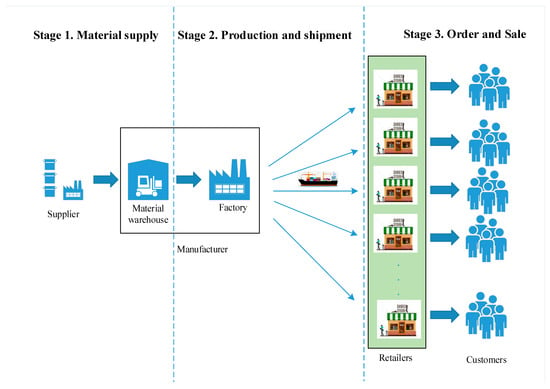
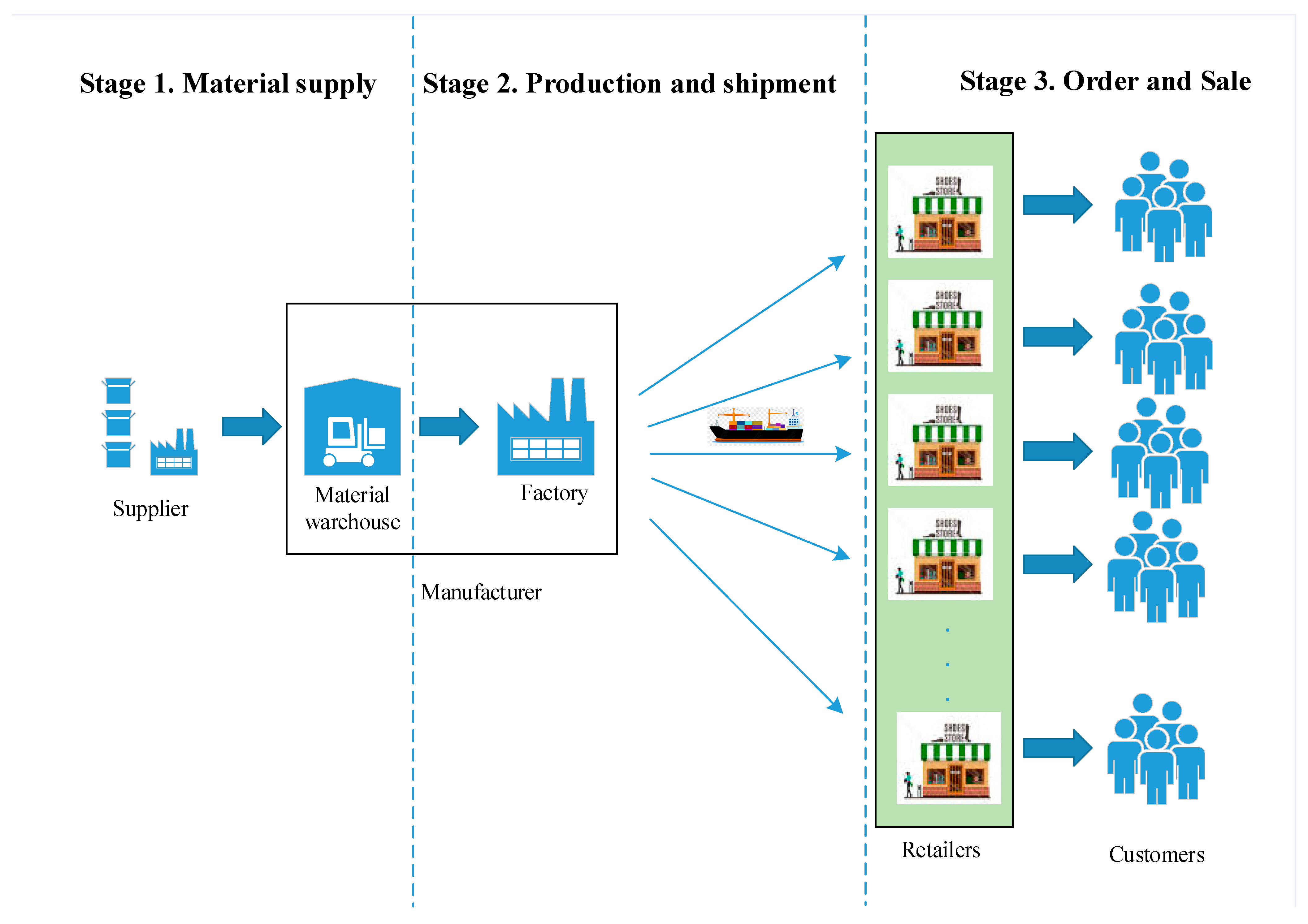
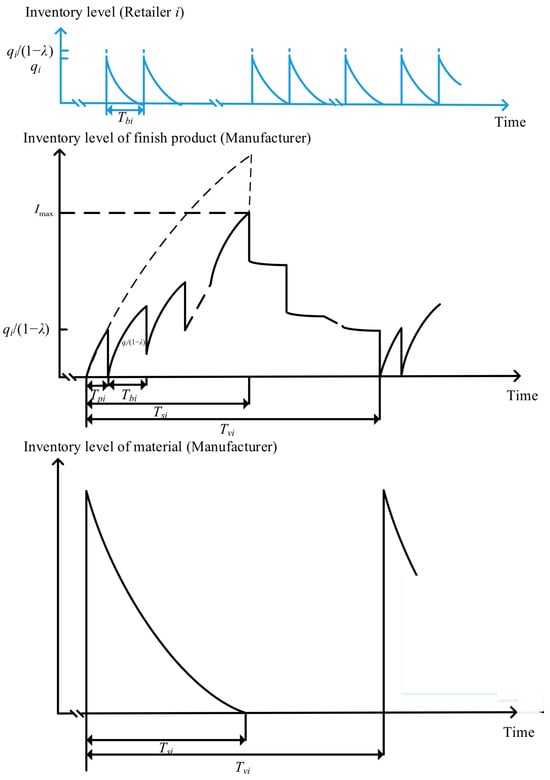
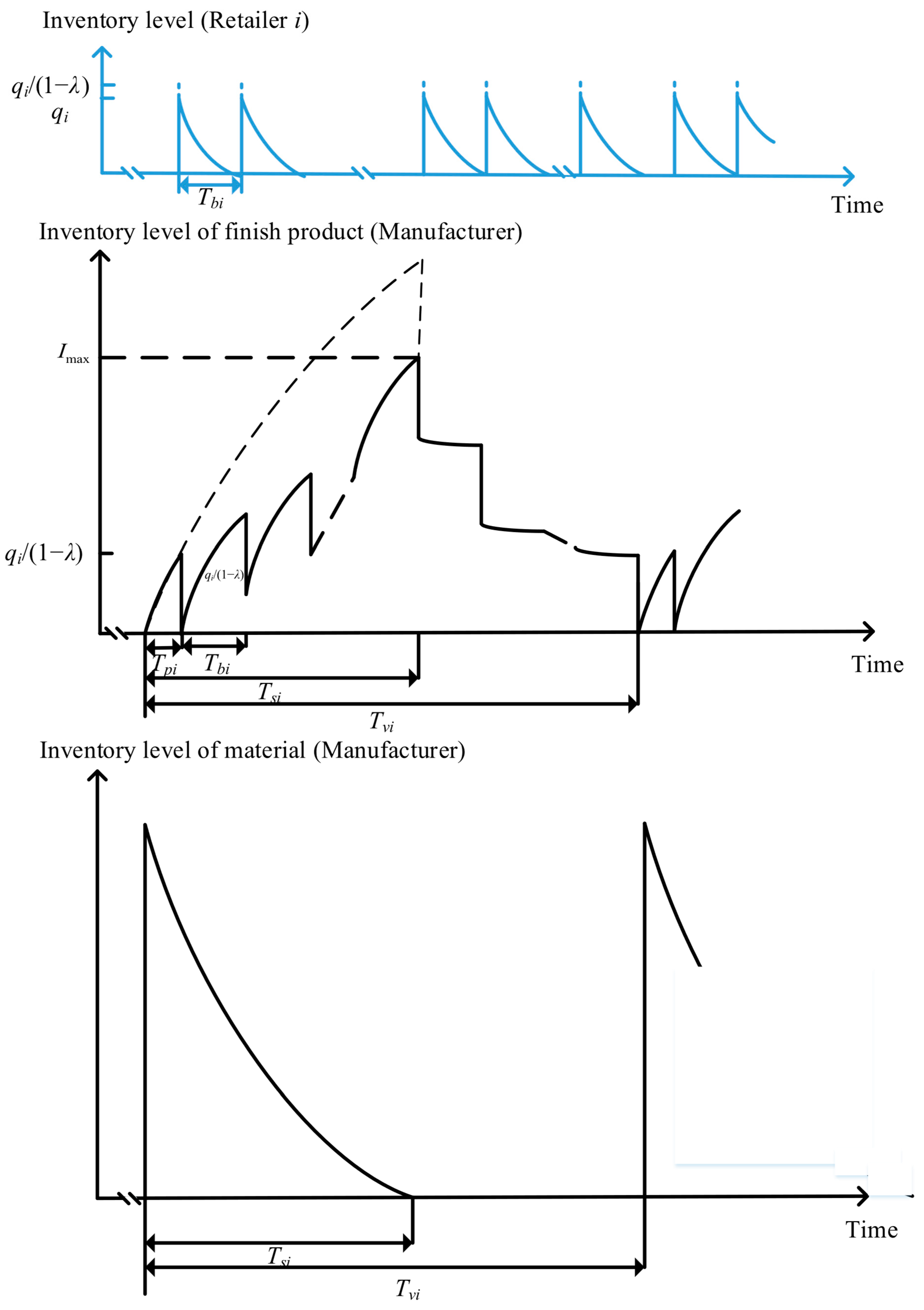
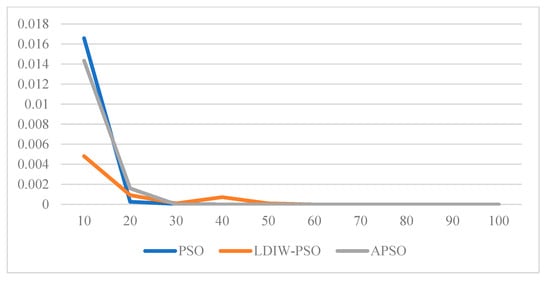
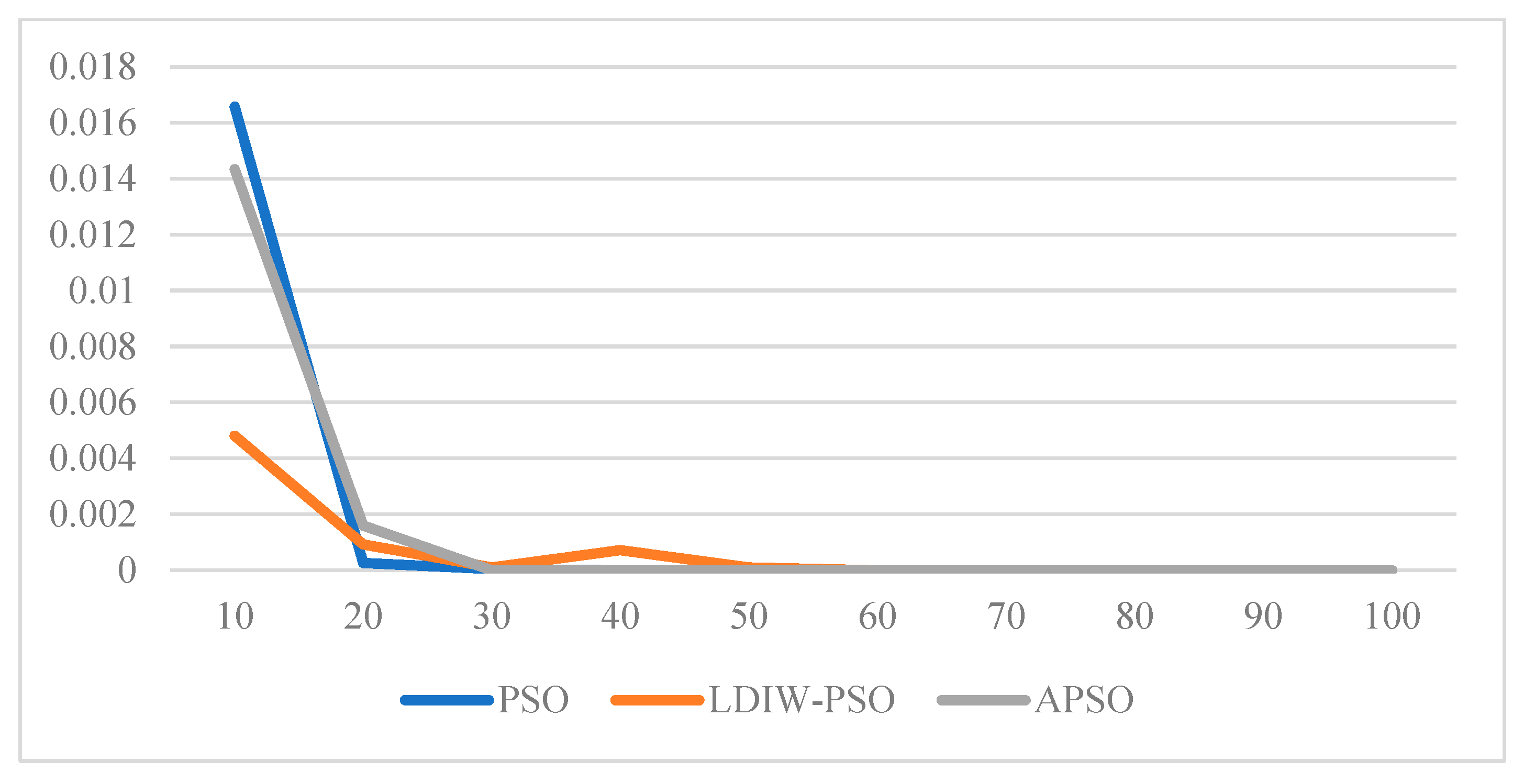
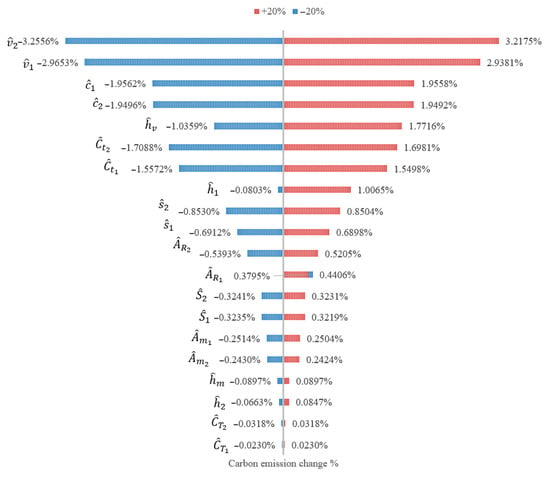
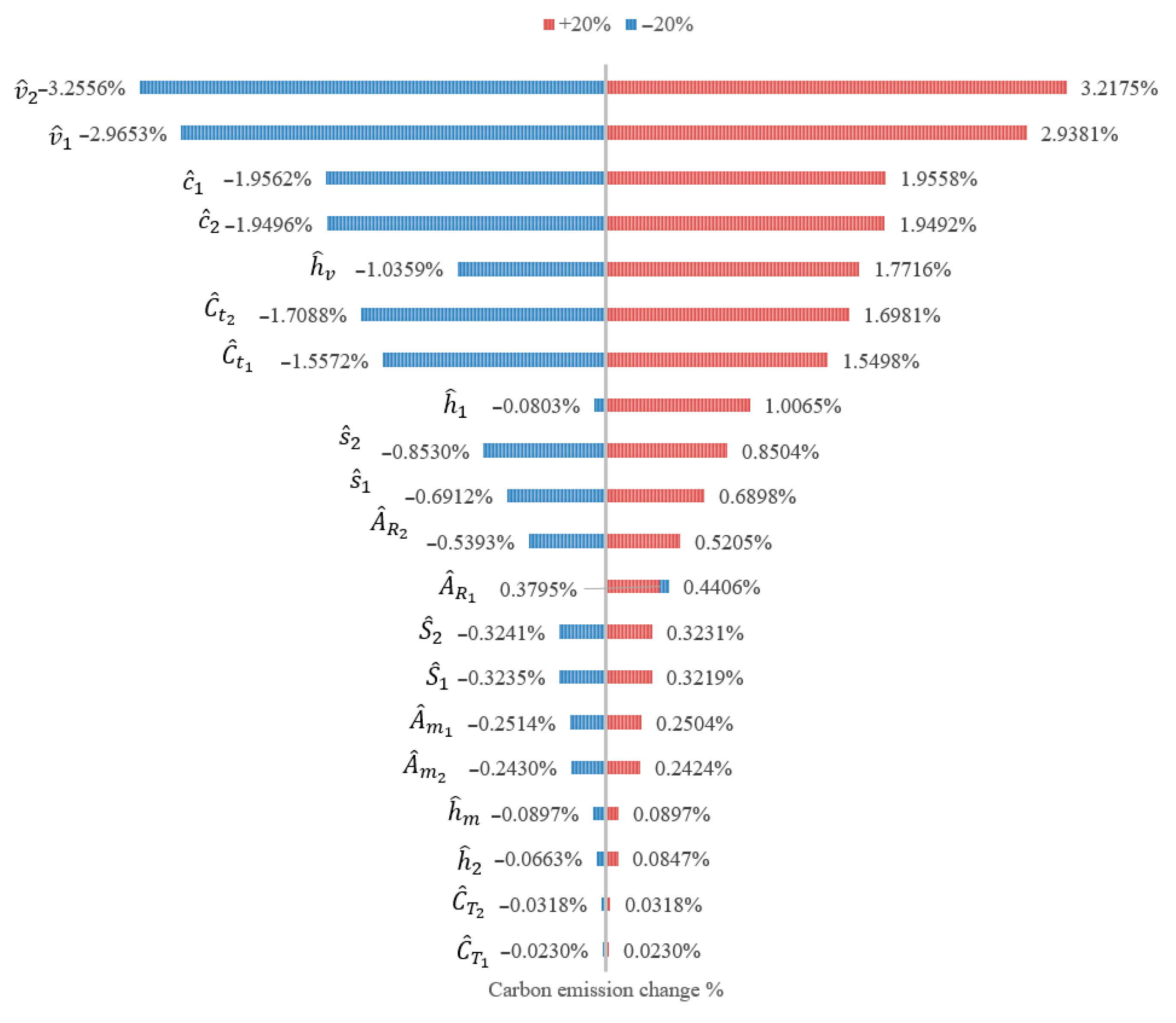
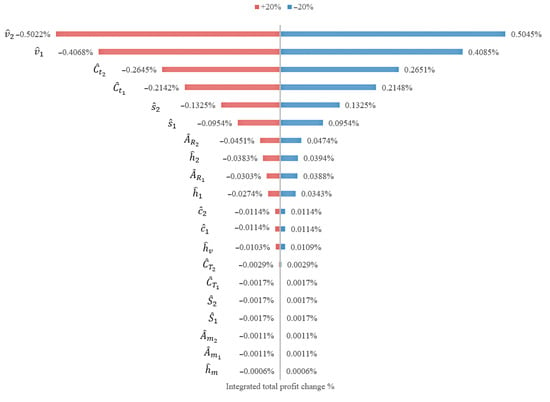
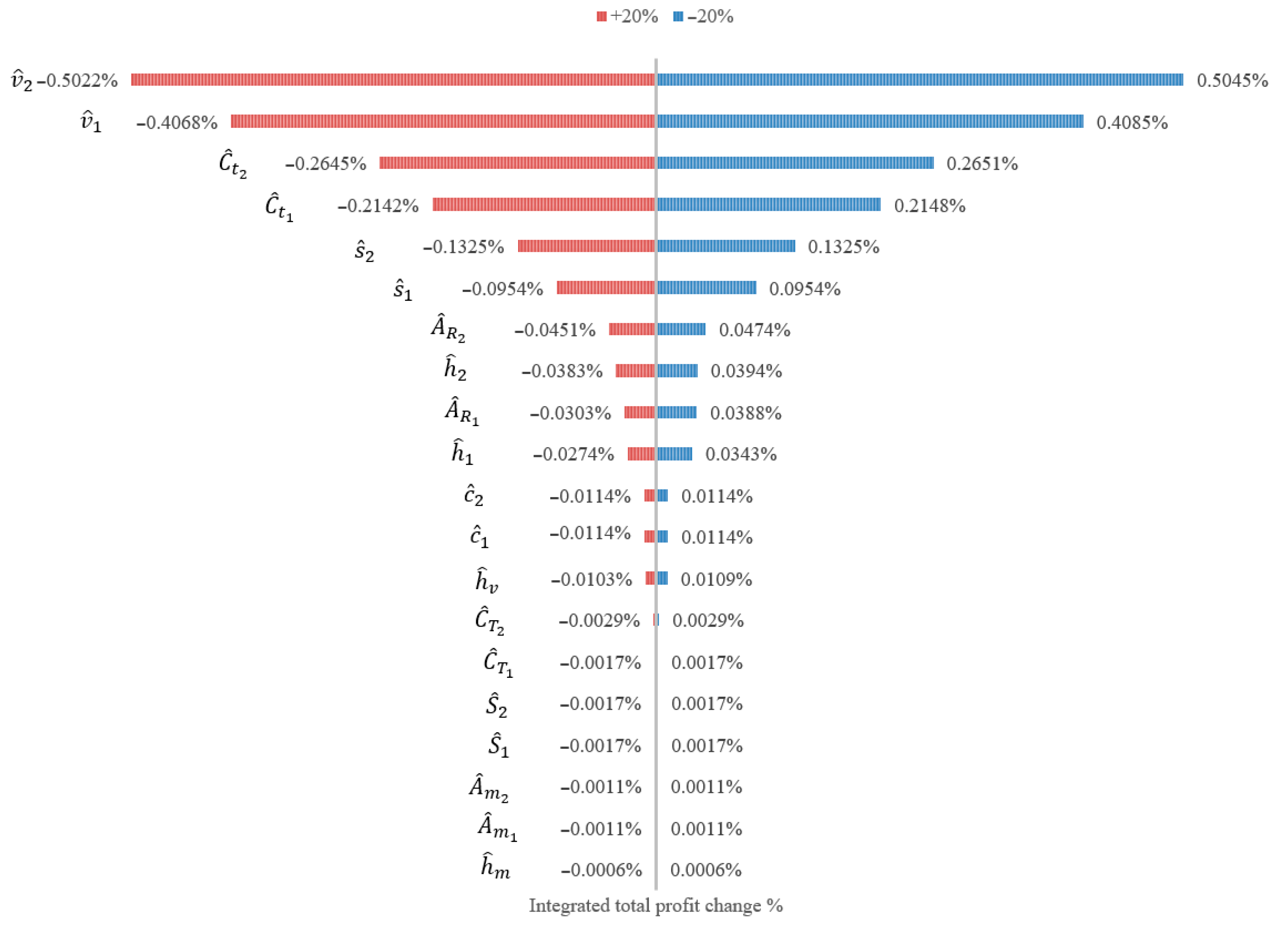

Disclaimer/Publisher’s Note: The statements, opinions and data contained in all publications are solely those of the individual author(s) and contributor(s) and not of MDPI and/or the editor(s). MDPI and/or the editor(s) disclaim responsibility for any injury to people or property resulting from any ideas, methods, instructions or products referred to in the content. |
© 2025 by the authors. Licensee MDPI, Basel, Switzerland. This article is an open access article distributed under the terms and conditions of the Creative Commons Attribution (CC BY) license (https://creativecommons.org/licenses/by/4.0/).