Article

YOLOv11-EMD: An Enhanced Object Detection Algorithm Assisted by Multi-Stage Transfer Learning for Industrial Steel Surface Defect Detection

1
Aulin College, Northeast Forestry University, Harbin 150040, China
2
College of Computer and Control Engineering, Northeast Forestry University, Harbin 150040, China
*
Author to whom correspondence should be addressed.
Mathematics 2025, 13(17), 2769; https://doi.org/10.3390/math13172769
Submission received: 31 July 2025 / Revised: 20 August 2025 / Accepted: 24 August 2025 / Published: 28 August 2025

Abstract

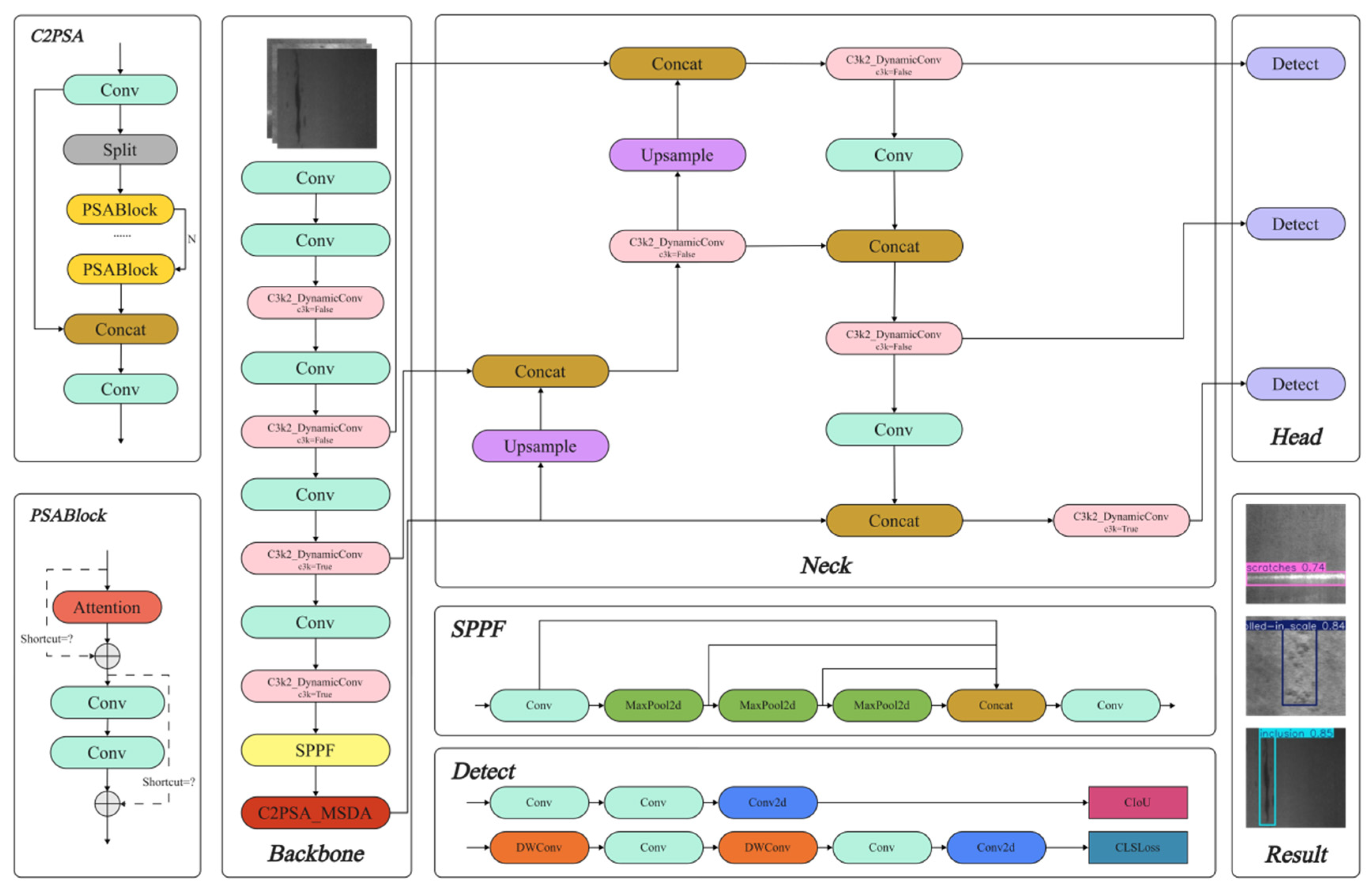
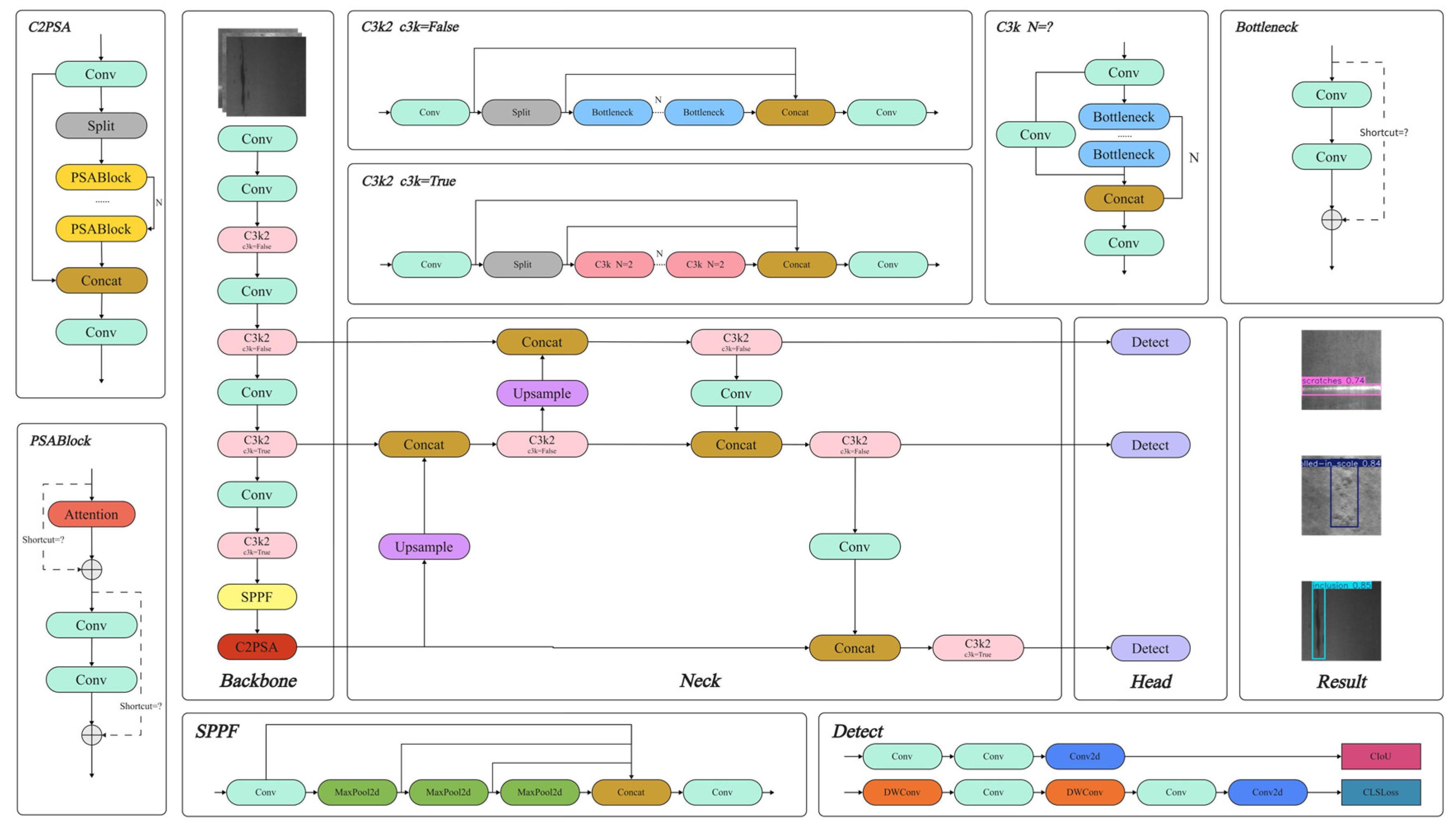
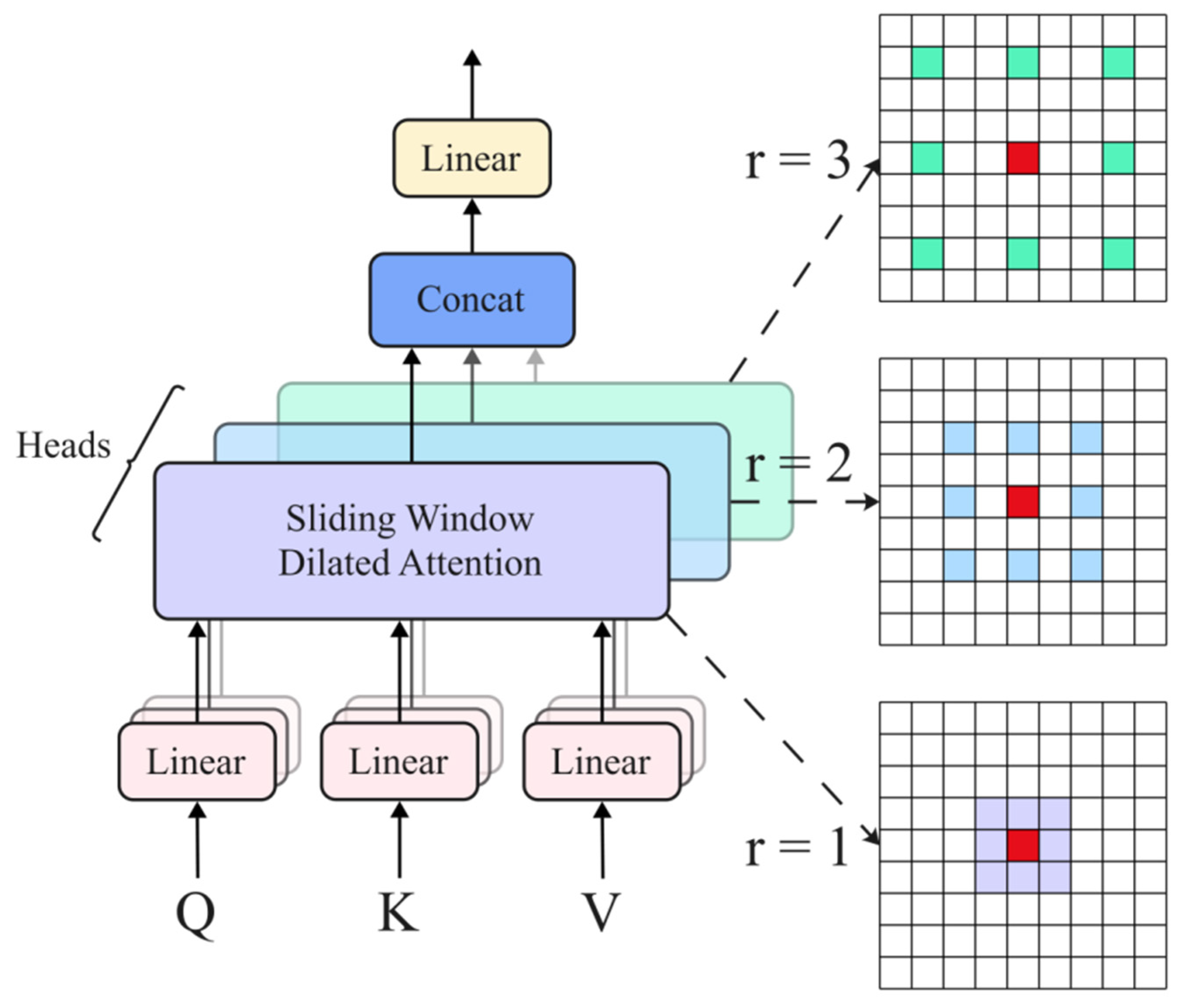
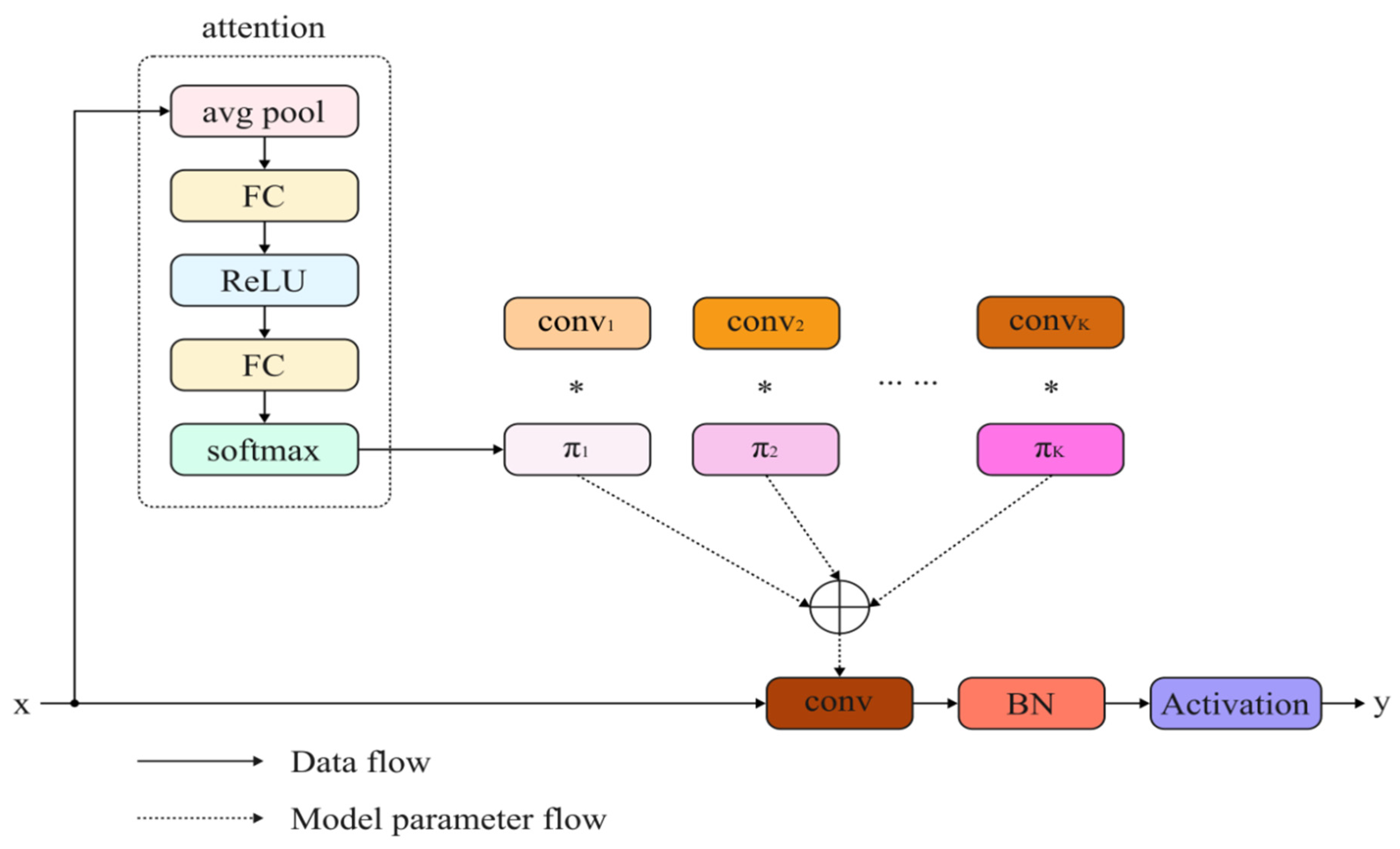
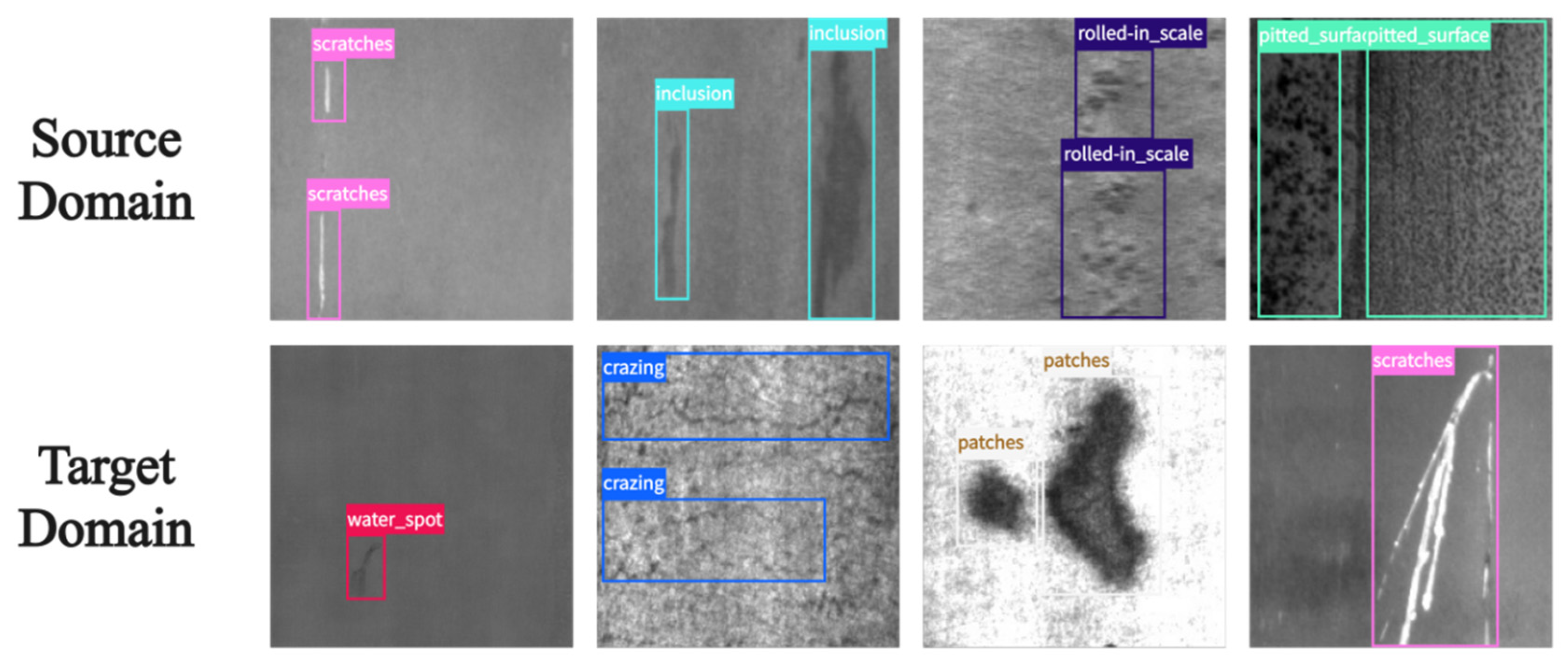
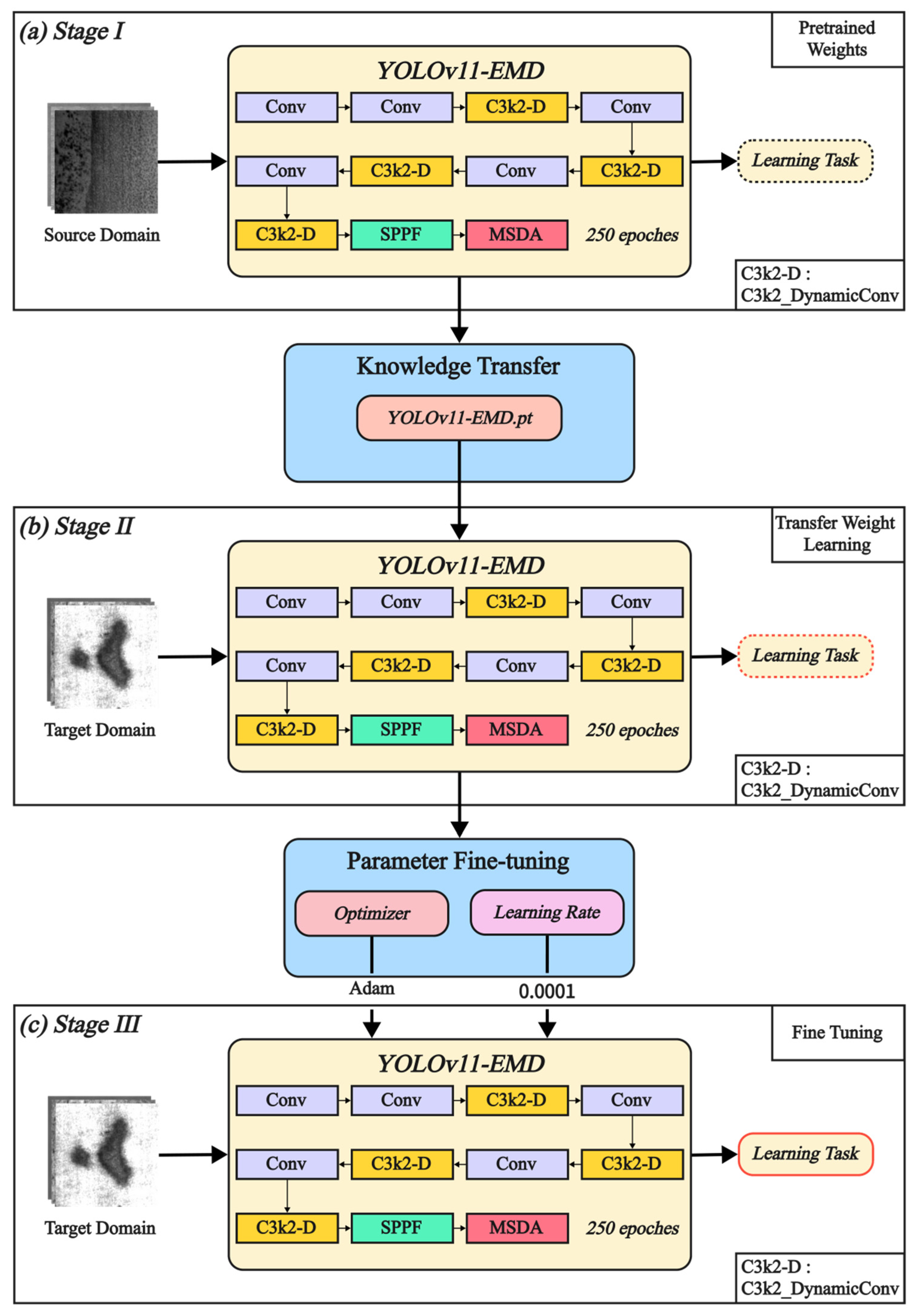
To address the issues of inaccurate positioning, weak feature extraction capability, and poor cross-domain adaptability in the detection of surface defects of steel materials, this paper proposes an improved YOLOv11-EMD algorithm and integrates a multi-stage transfer learning framework to achieve high-precision, robust, and low-cost industrial defect detection. Specifically, the InnerEIoU loss function is introduced to improve the accuracy of bounding box regression, the multi-scale dilated attention (MSDA) module is integrated to enhance the multi-scale feature fusion capability, and the Cross-Stage Partial Network with 3 Convolutions and Kernel size 2 Dynamic Convolution (C3k2_DynamicConv) module is embedded to improve the expression of and adaptability to complex defects. To address the problem of performance degradation when the model migrates between different data domains, a multi-stage transfer learning framework is constructed, combining source domain pre-training and target domain fine-tuning strategies to improve the model’s generalization ability in scenarios with changing data distributions. On the comprehensive dataset constructed of NEU-DET and Severstal steel defect images, YOLOv11-EMD achieved a precision of 0.942, a recall of 0.868, and an mAP@50 of 0.949, which are 3.5%, 0.8%, and 1.6% higher than the original model, respectively. On the cross-scenario mixed dataset composed of NEU-DET and GC10-DET data, the mAP@50 was 0.799, outperforming mainstream detection algorithms. The multi-stage transfer strategy can shorten the training time by 3.2% and increase the mAP by 8.8% while maintaining accuracy. The proposed method improves the defect detection accuracy, has good generalization and engineering application potential, and is suitable for automated quality inspection tasks in diverse industrial scenarios.
Keywords: steel surface defect detection; YOLOv11; transfer learning; multi-stage fine-tuning; InnerEIoU loss function; MSDA multi-scale feature fusion steel surface defect detection; YOLOv11; transfer learning; multi-stage fine-tuning; InnerEIoU loss function; MSDA multi-scale feature fusion