Article

Small Language Model-Guided Quantile Temporal Difference Learning for Improved IoT Application Placement in Fog Computing


by
Bhargavi Krishnamurthy
1,* and
Sajjan G. Shiva
2,*
1
Department of Computer Science and Engineering, Siddaganga Institute of Technology, Tumakuru 572103, India
2
Department of Computer Science, University of Memphis, Memphis, TN 38107, USA
*
Authors to whom correspondence should be addressed.
Mathematics 2025, 13(17), 2768; https://doi.org/10.3390/math13172768
Submission received: 17 May 2025 / Revised: 23 July 2025 / Accepted: 21 August 2025 / Published: 28 August 2025
(This article belongs to the Special Issue Advanced Reinforcement Learning in Internet of Things Networks)

Abstract

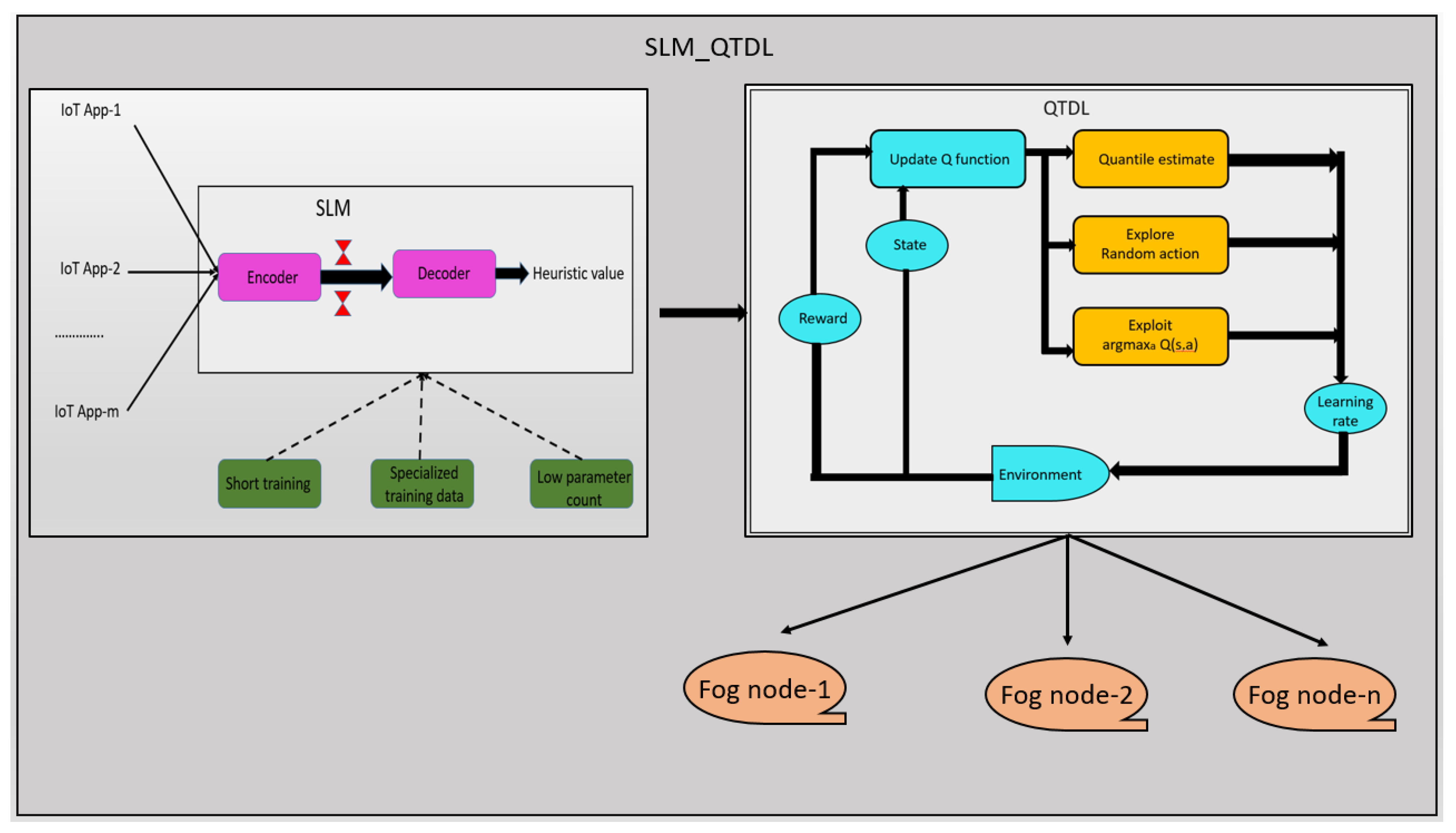
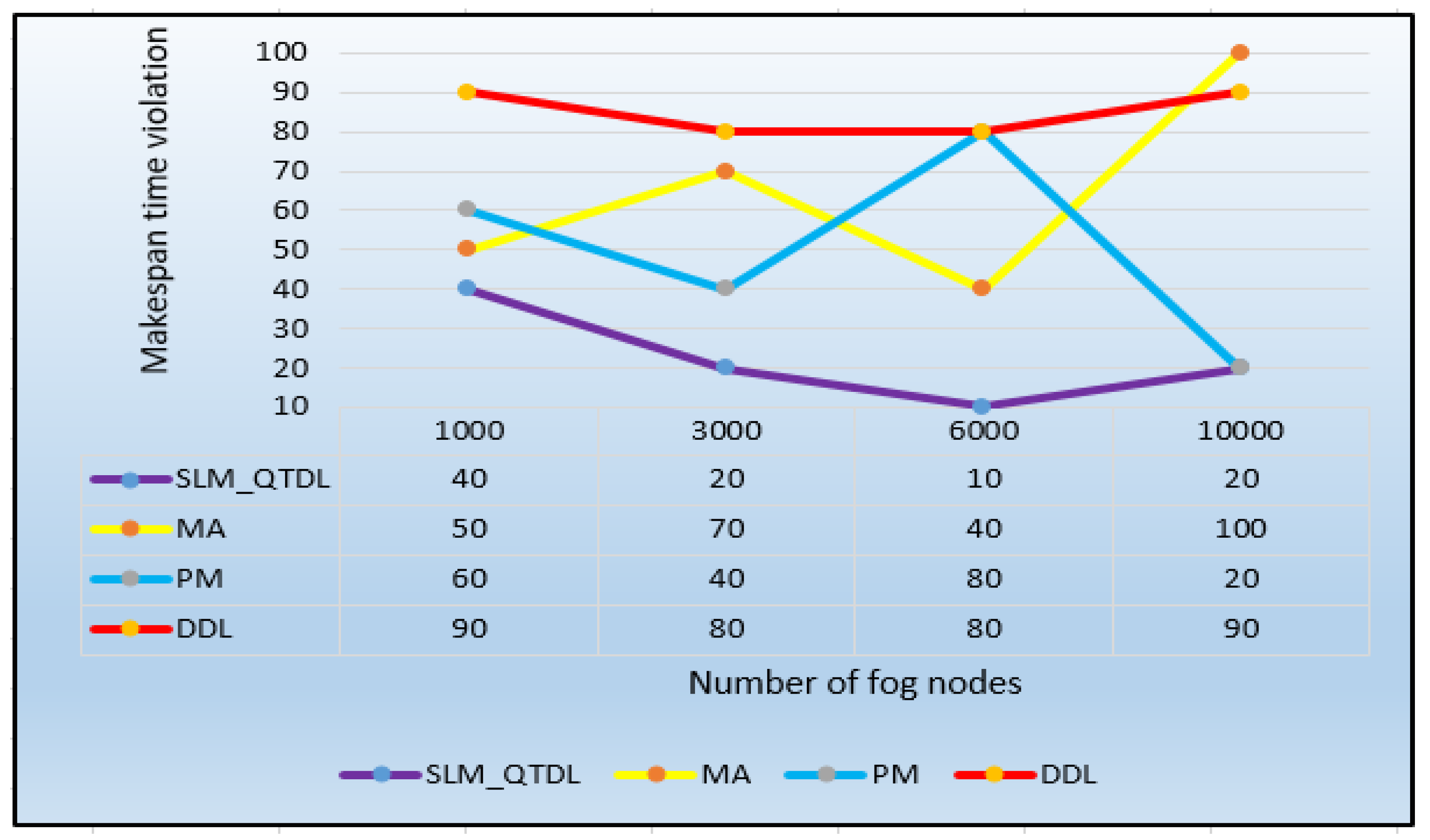
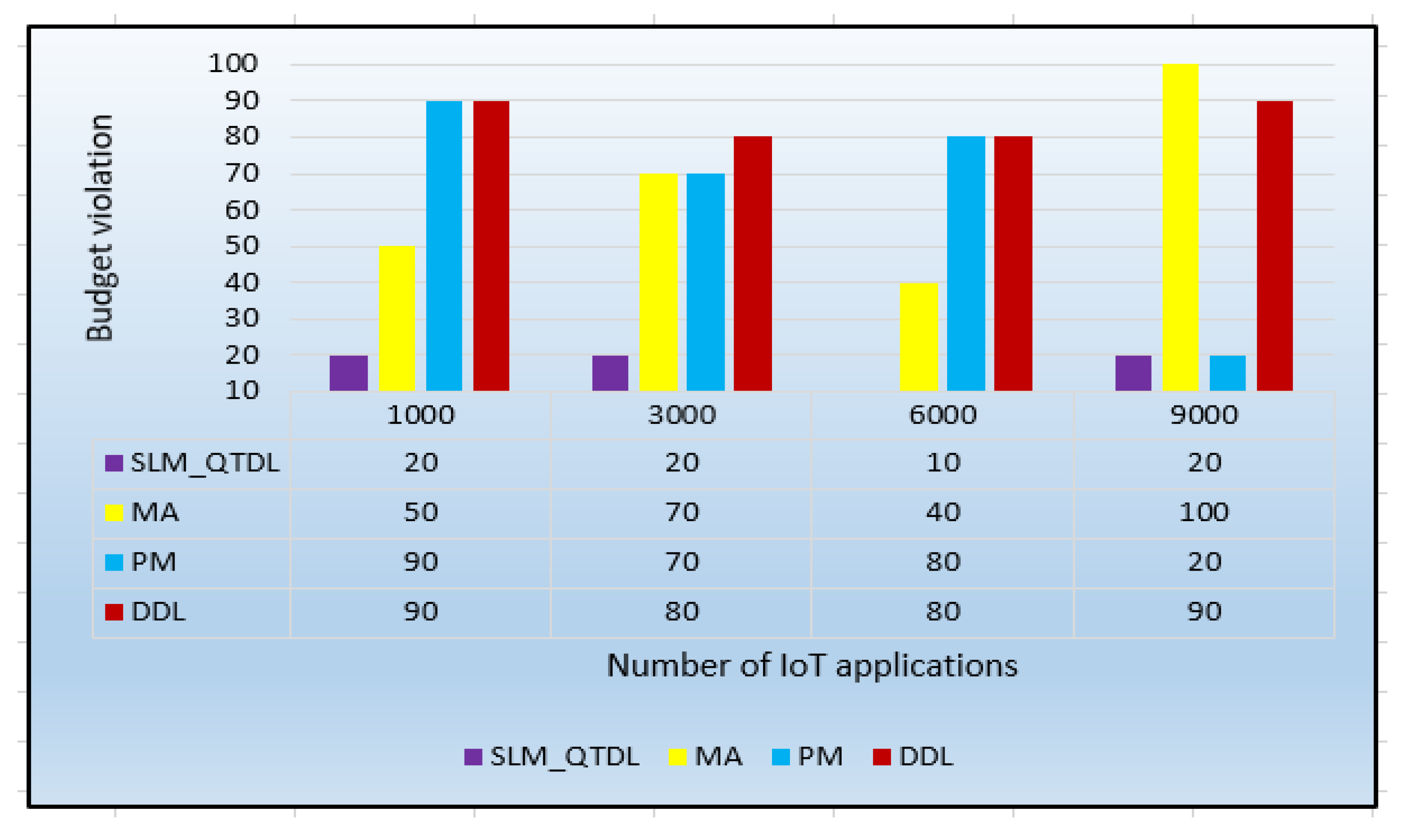
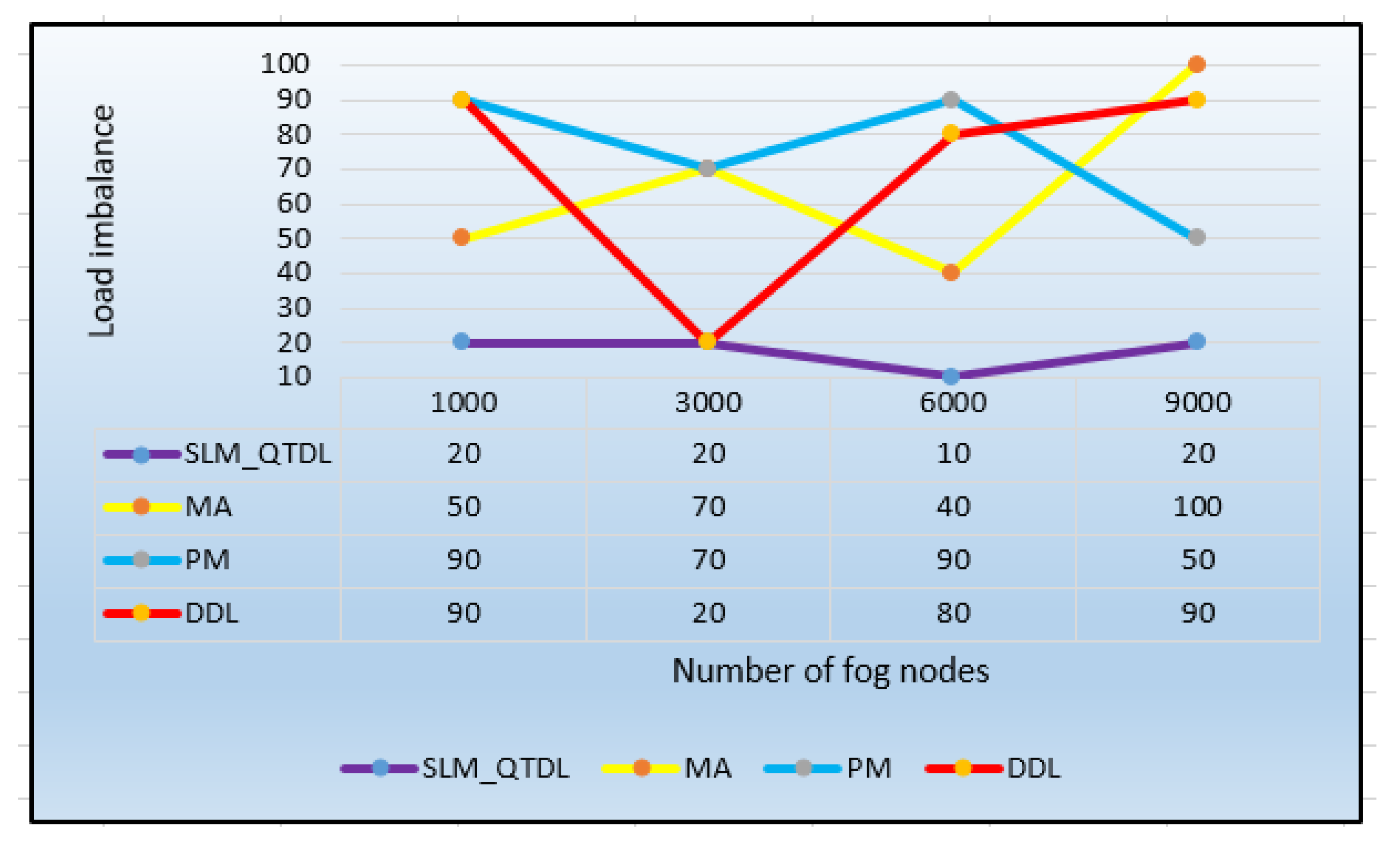
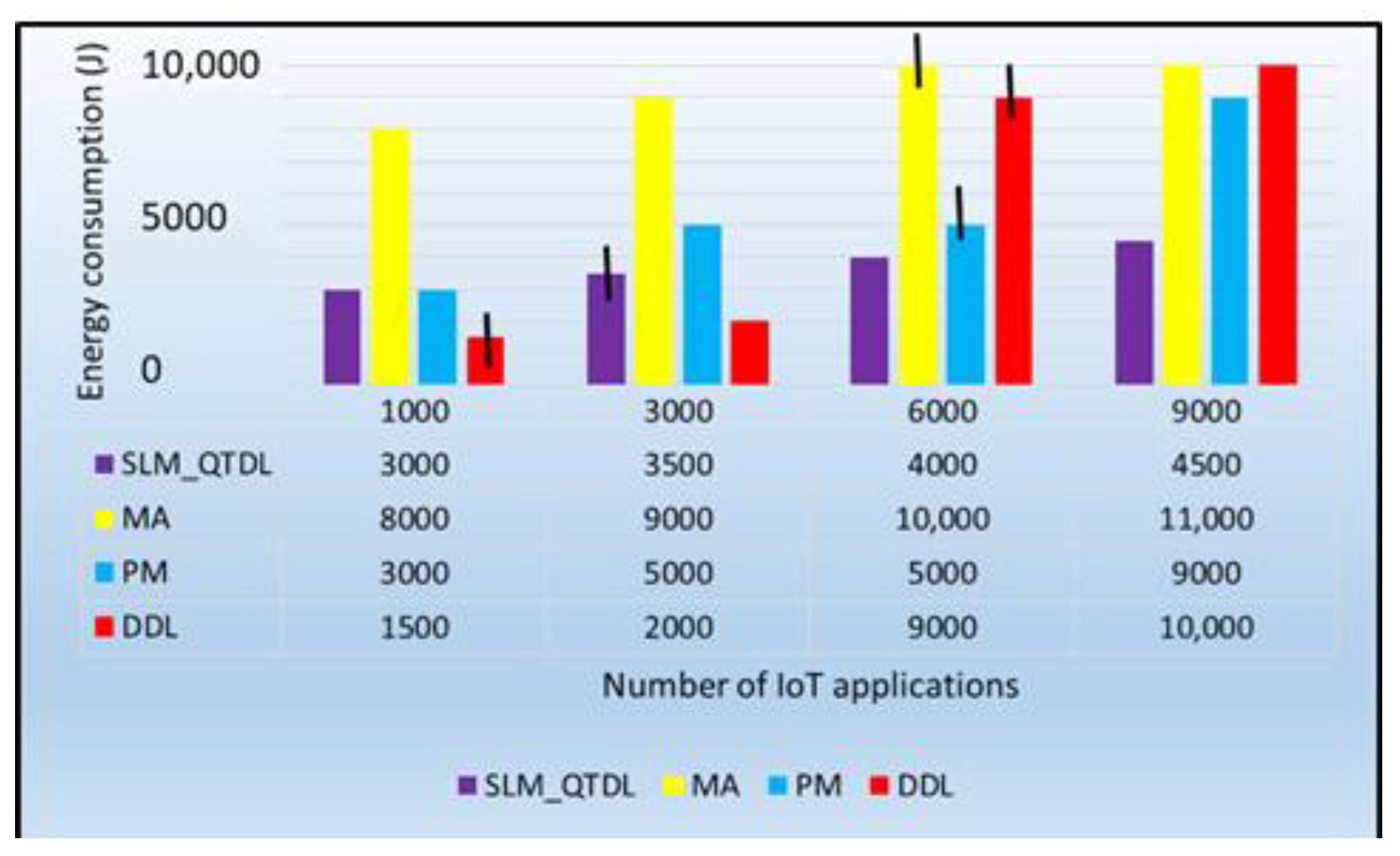
The global market for fog computing is expected to reach USD 6385 million by 2032. Modern enterprises rely on fog computing since it offers computational resources at edge devices through decentralized computation mechanisms. One of the crucial components of fog computing is the proper placement of applications on fog nodes (edge devices, Internet of Things (IoT)) for servicing. Large-scale, geographically distributed fog networks and heterogeneity of fog nodes make application placement a challenging task. Quantile Temporal Difference Learning (QTDL) is a promising distributed form of a reinforcement learning algorithm. It is superior compared to traditional reinforcement learning as it learns the act of prediction based on the full distribution of returns. QTDL is enriched by a small language model (SLM), which results in low inference latency, reduced costs of operation, and also enhanced rates of learning. The SLM, being a lightweight model, has policy-shaping capability, which makes it an ideal choice for the resource-constrained environment of edge devices. The data-driven quantiles of temporal difference learning are blended with the informed heuristics of the SLM to prevent quantile loss and over- or underestimation of the policies. In this paper, a novel SLM-guided QTDL framework is proposed to perform task scheduling among fog nodes. The proposed framework is implemented using the iFogSim simulator by considering both certain and uncertain fog computing environments. Further, the results obtained are validated using expected value analysis. The performance of the proposed framework is found to be satisfactory with respect of the following performance metrics: energy consumption, makespan time violations, budget violations, and load imbalance ratio.
Keywords: fog computing; application placement; quantile temporal difference learning; small language model fog computing; application placement; quantile temporal difference learning; small language model