Article

Full Forward Kinematics of Lower-Mobility Planar Parallel Continuum Robots

by
Oscar Altuzarra
,
Mónica Urizar
*,
Kerman Bilbao
and
Alfonso Hernández
Department of Mechanical Engineering, Bilbao School of Engineering, University of the Basque Country UPV/EHU, Plaza Ingeniero Torres Quevedo, 48013 Bilbao, Spain
*
Author to whom correspondence should be addressed.
Mathematics 2024, 12(22), 3562; https://doi.org/10.3390/math12223562
Submission received: 9 October 2024 / Revised: 11 November 2024 / Accepted: 12 November 2024 / Published: 14 November 2024
(This article belongs to the Special Issue Applied Mathematics to Mechanisms and Machines II)

Abstract

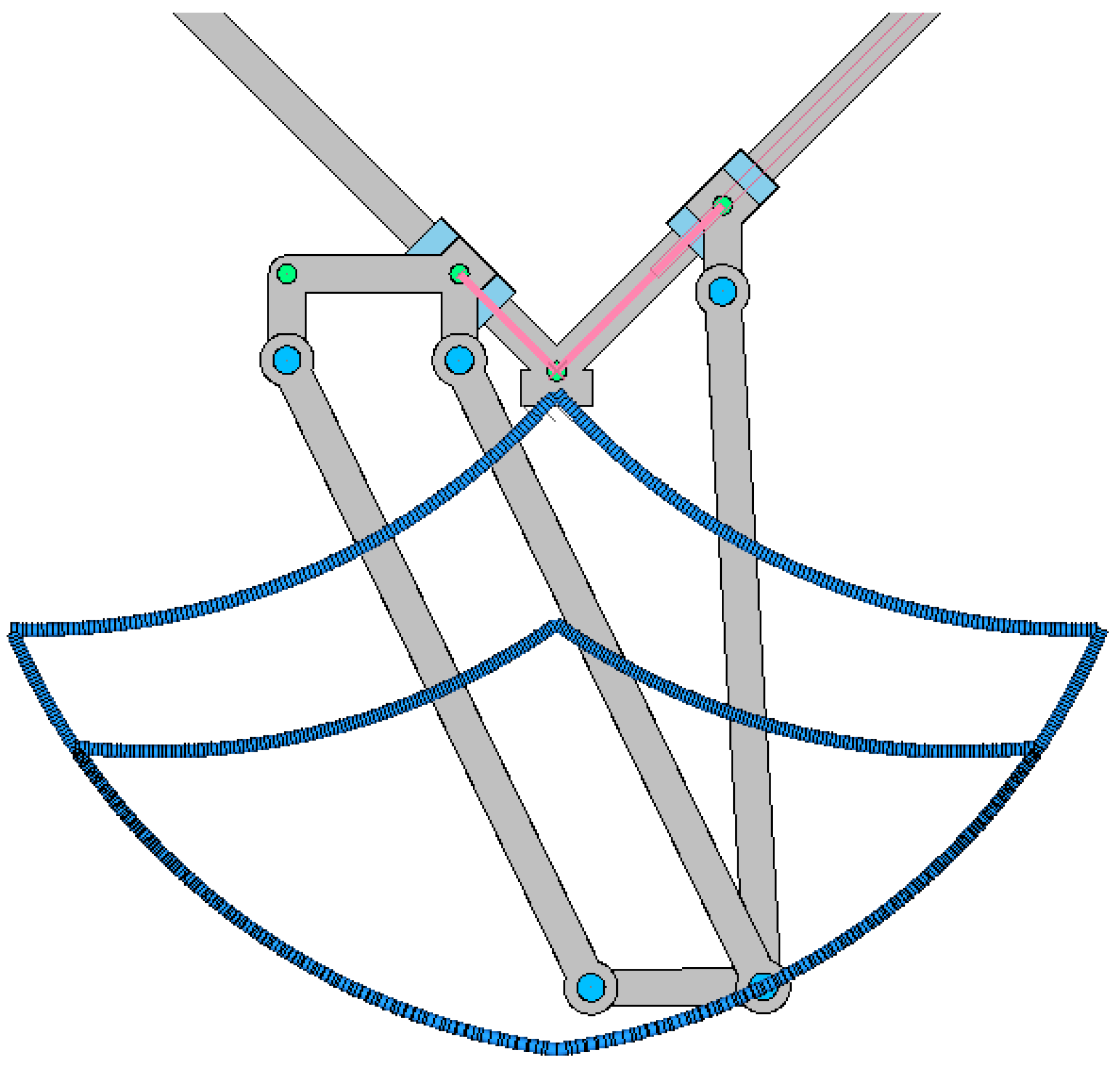
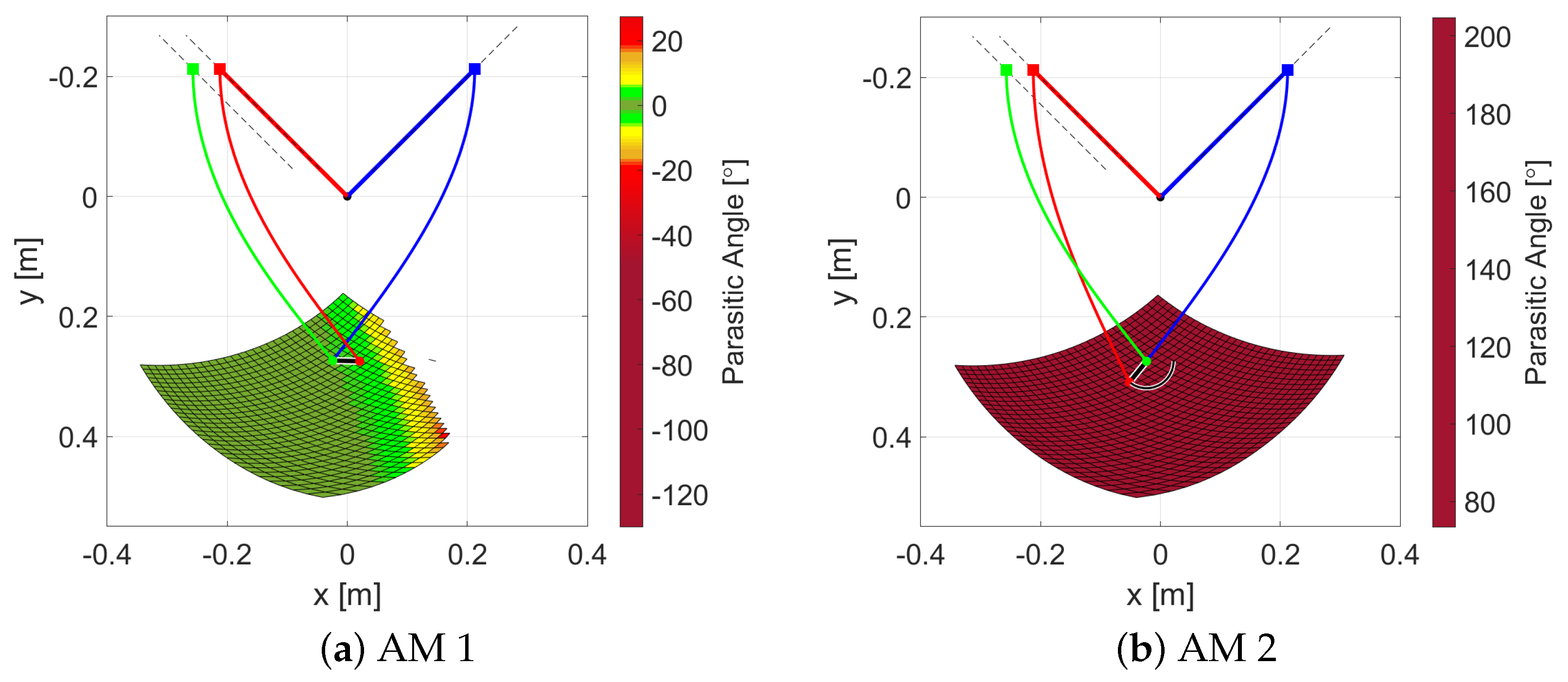
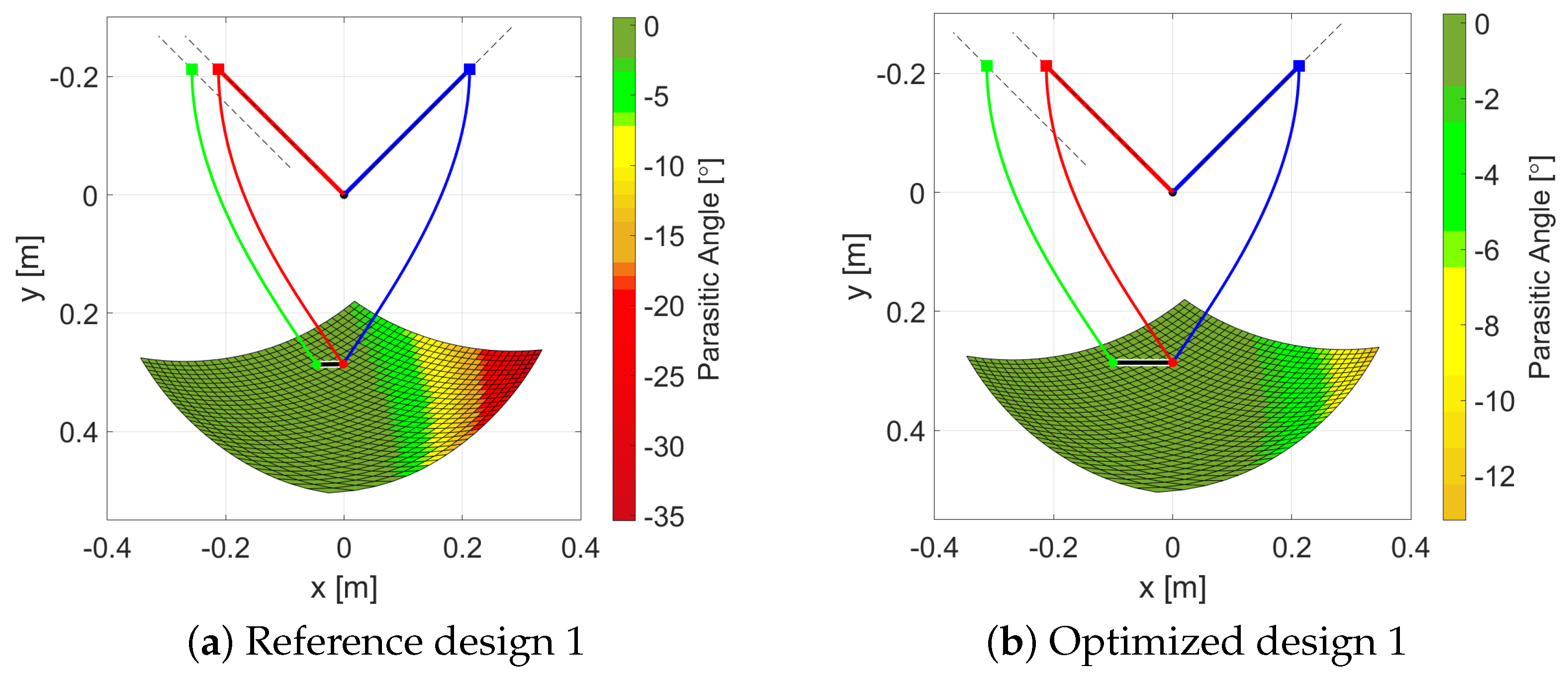
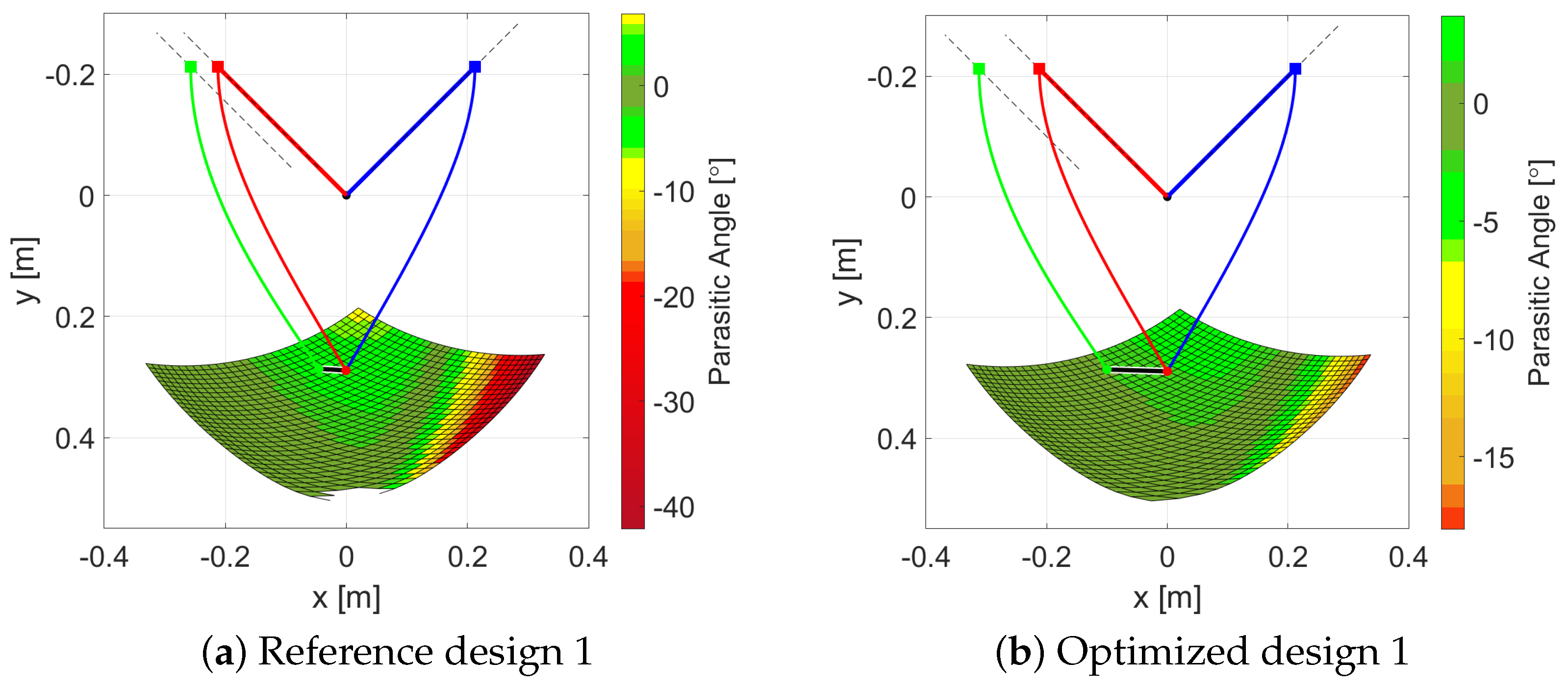
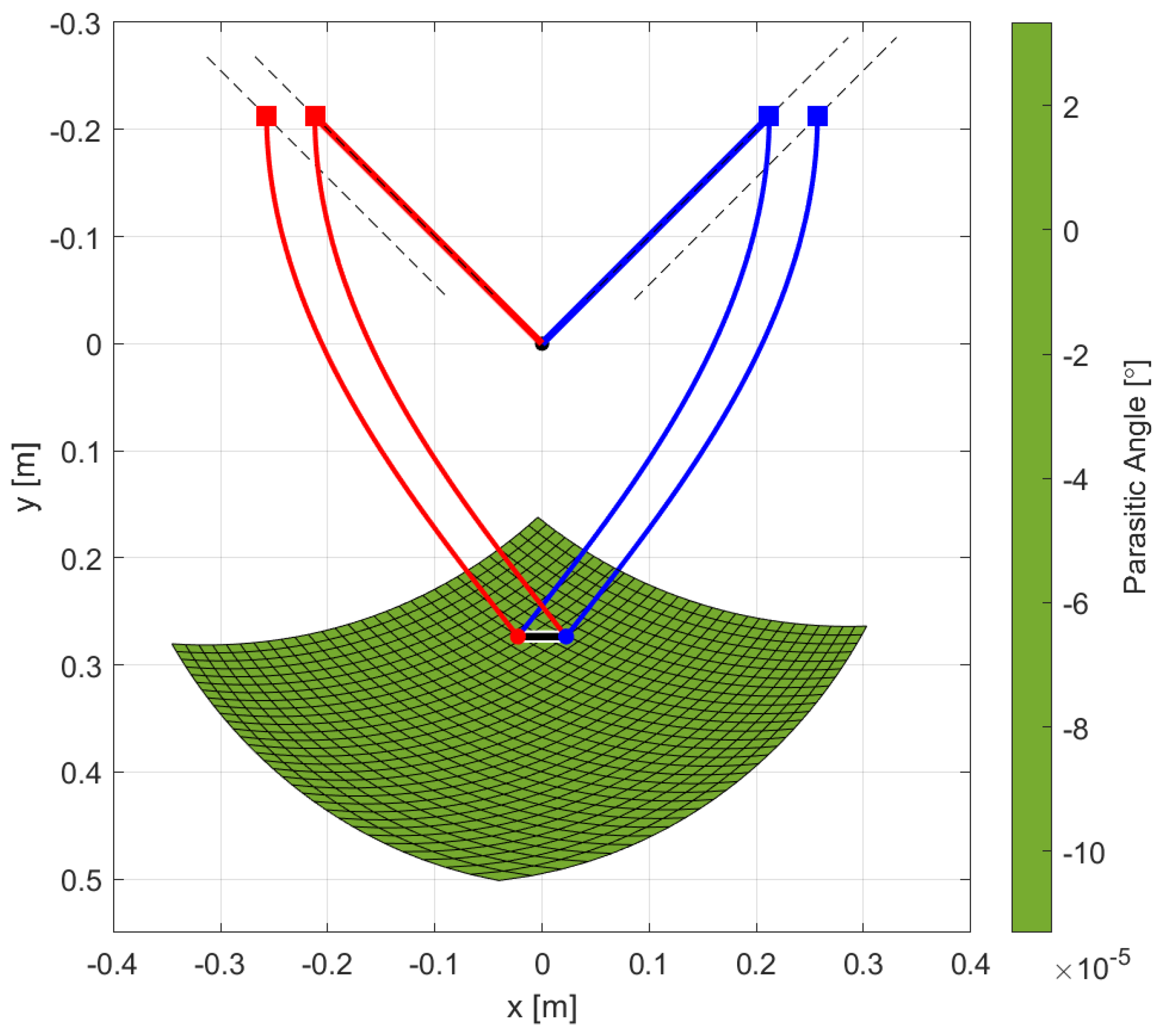
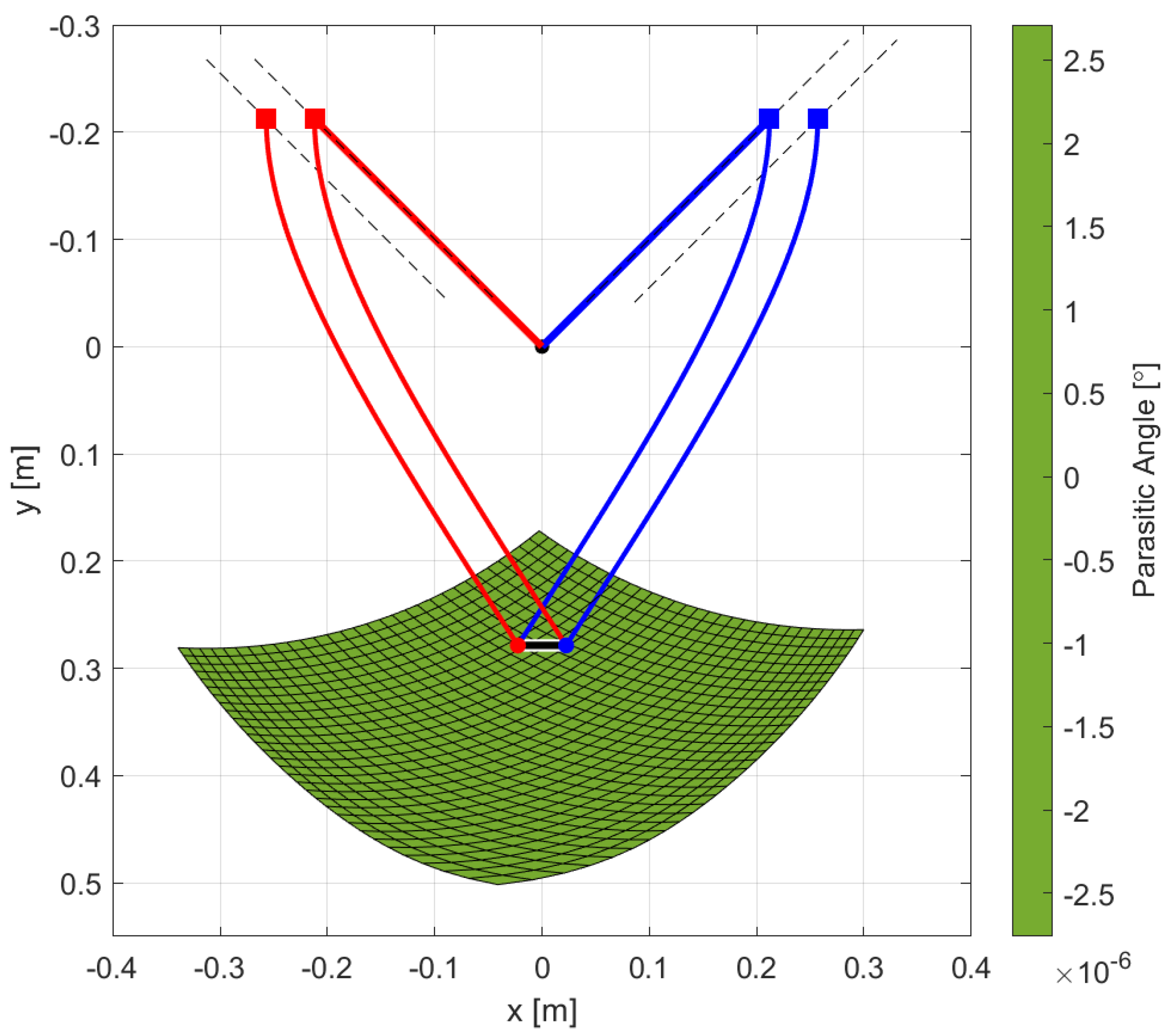
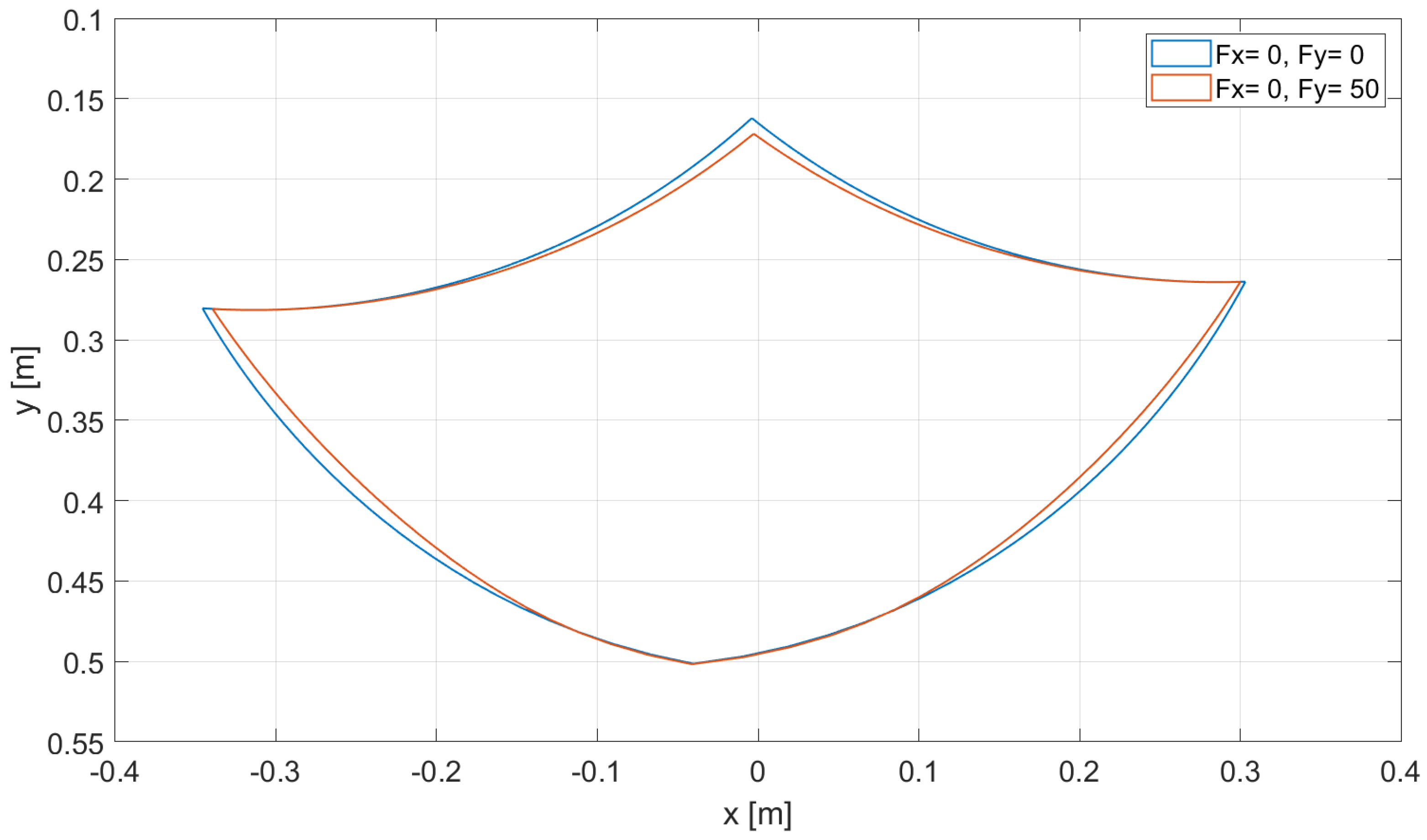
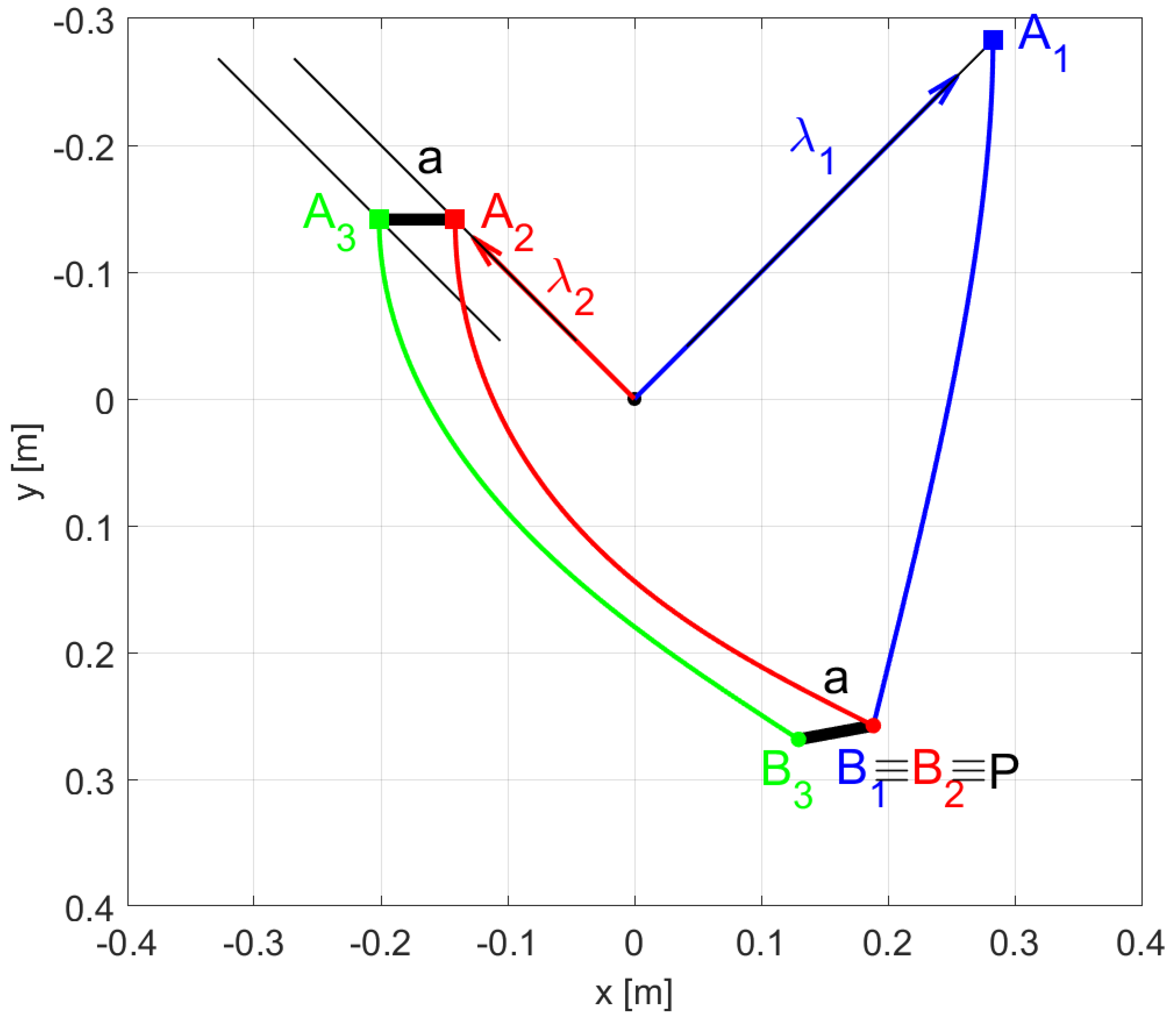
In rigid lower-mobility parallel manipulators the motion of the end-effector is partially constrained due to a combination of passive kinematic pairs and rigid components. Translational mechanisms, such as the Delta manipulator, are the most common ones among this type of mechanisms. When flexible elements are introduced, as in Parallel Continuum Manipulators, the constraint is no longer rigid, and new challenges arise in performing certain motions depending on the degree of compliance. Mobility analysis shifts from being purely a geometric issue to one that heavily relies on force distribution within the mechanism. Simply converting classical lower-mobility rigid parallel mechanisms into Parallel Continuum Mechanisms may yield unexpected outcomes. This work, making use of a planar parallel continuum Delta manipulator, on the one hand, presents two different approaches to solve the Forward Kinematics of planar continuum manipulators, and, on the other hand, explores some challenges and issues in assessing the resultant workspace for different design alternatives of this kind of flexible manipulators.
Keywords: continuum manipulators; cosserat rods; forward kinematics; workspace; quasi-translational motion; parasitic angle continuum manipulators; cosserat rods; forward kinematics; workspace; quasi-translational motion; parasitic angle