Article

Graph Neural Networks for Mesh Generation and Adaptation in Structural and Fluid Mechanics

1
Computing and Fluids Research Group (CFL), Centre for Material Forming (CEMEF), Mines Paris, PSL University, UMR7635 CNRS, 06904 Sophia Antipolis, France
2
Digital Sciences & Technologies Department, Safran Tech, Rue des Jeunes Bois, Châteaufort, 78114 Magny-Les-Hameaux, France
*
Author to whom correspondence should be addressed.
Mathematics 2024, 12(18), 2933; https://doi.org/10.3390/math12182933
Submission received: 22 August 2024 / Revised: 12 September 2024 / Accepted: 14 September 2024 / Published: 20 September 2024
(This article belongs to the Special Issue Artificial Intelligence for Fluid Mechanics)

Abstract

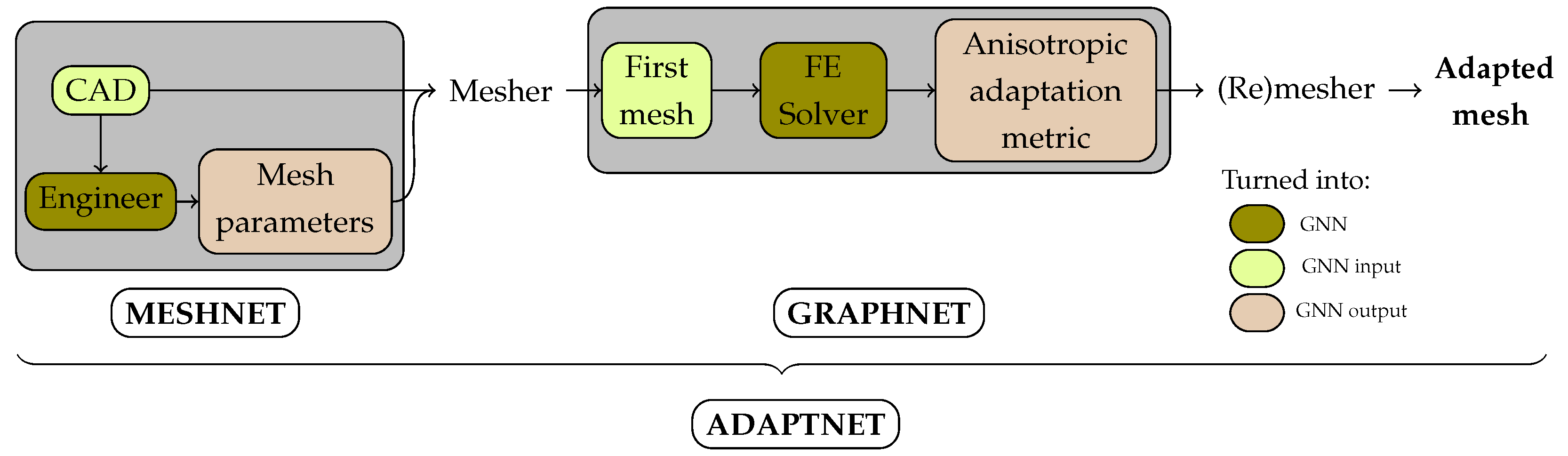
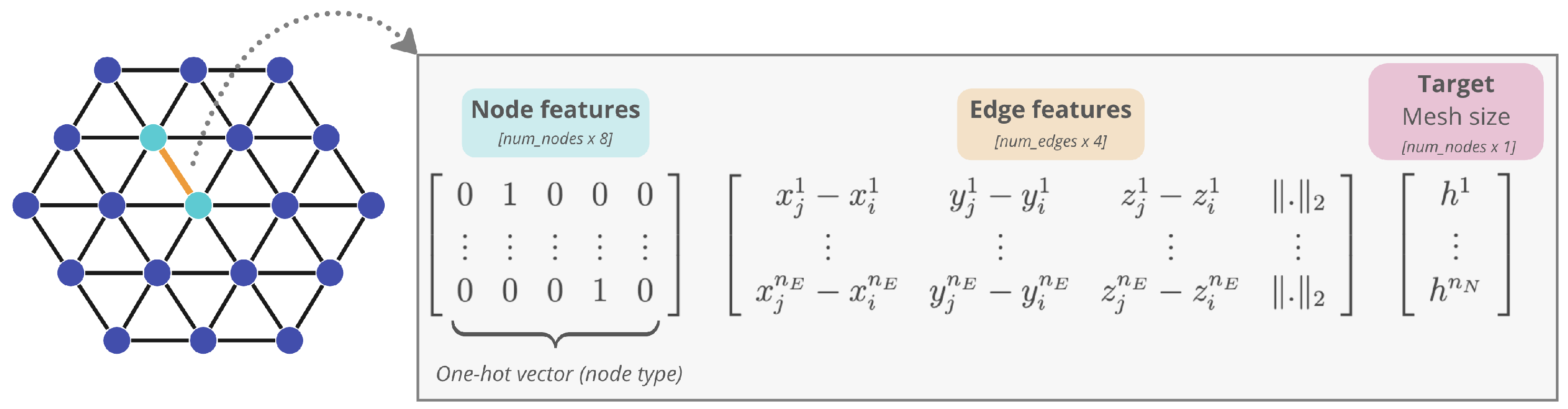
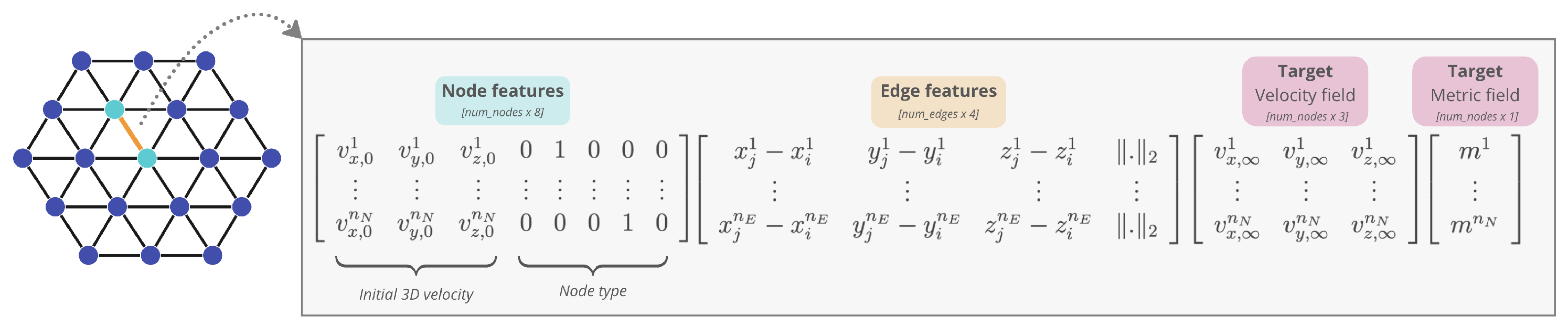
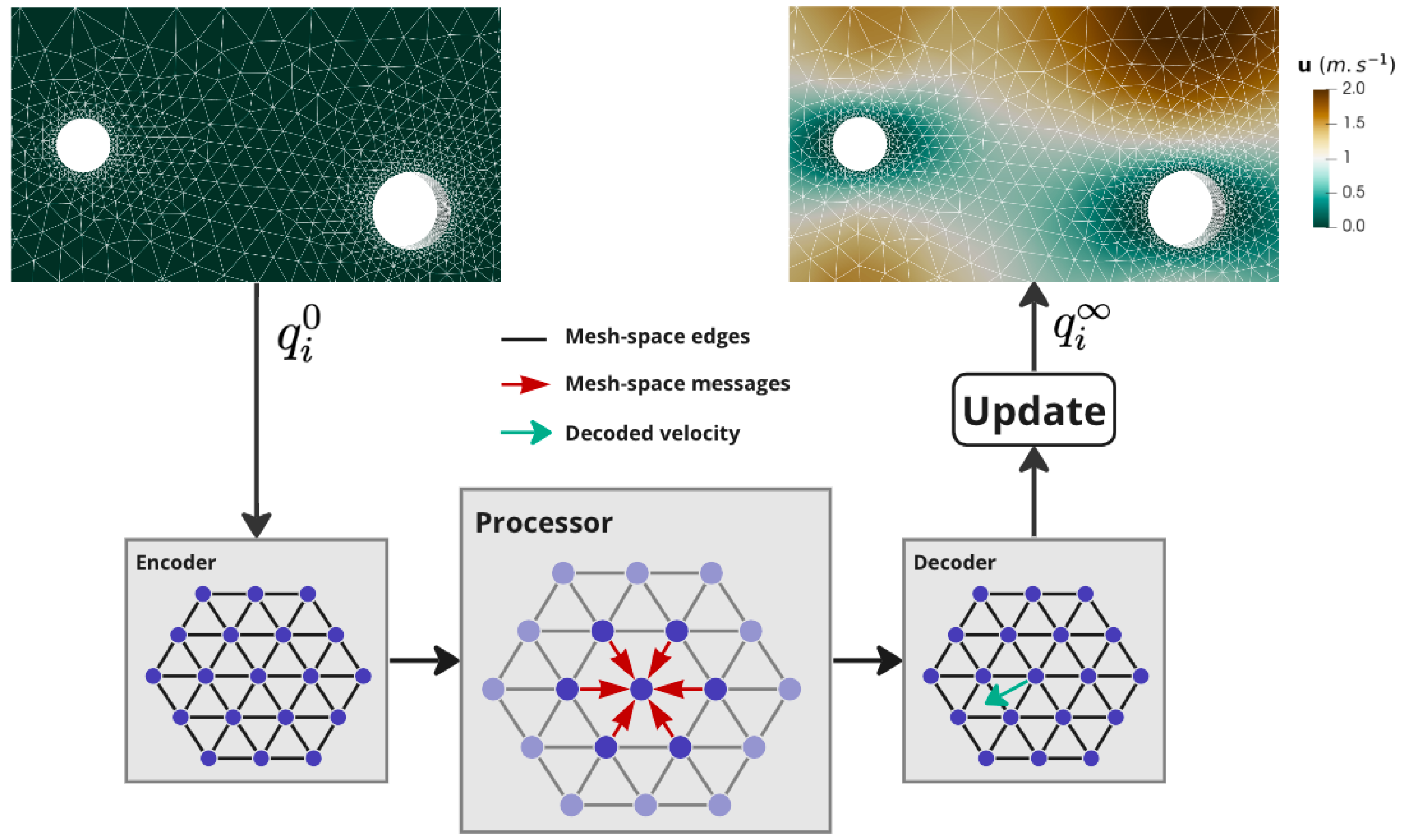
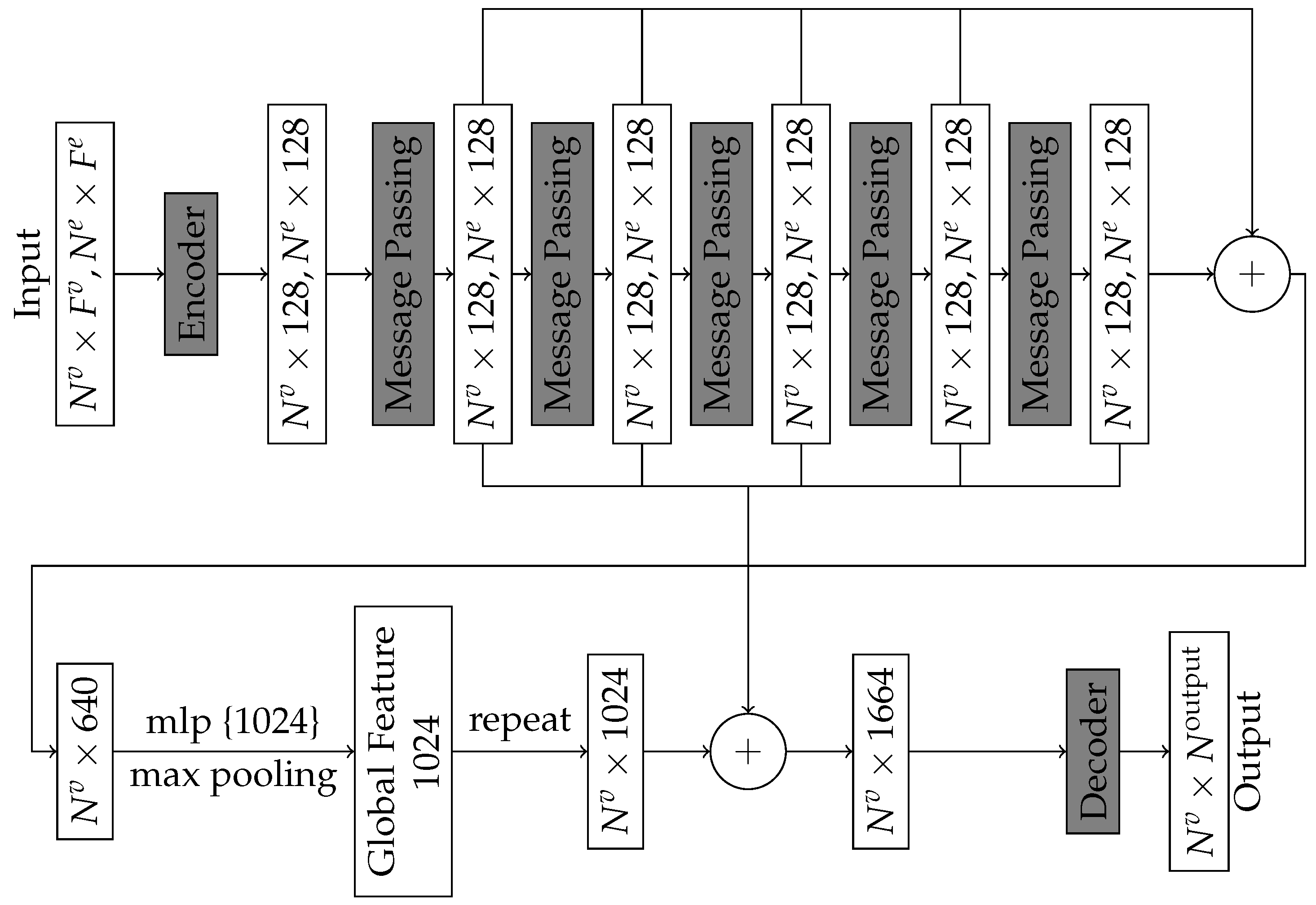
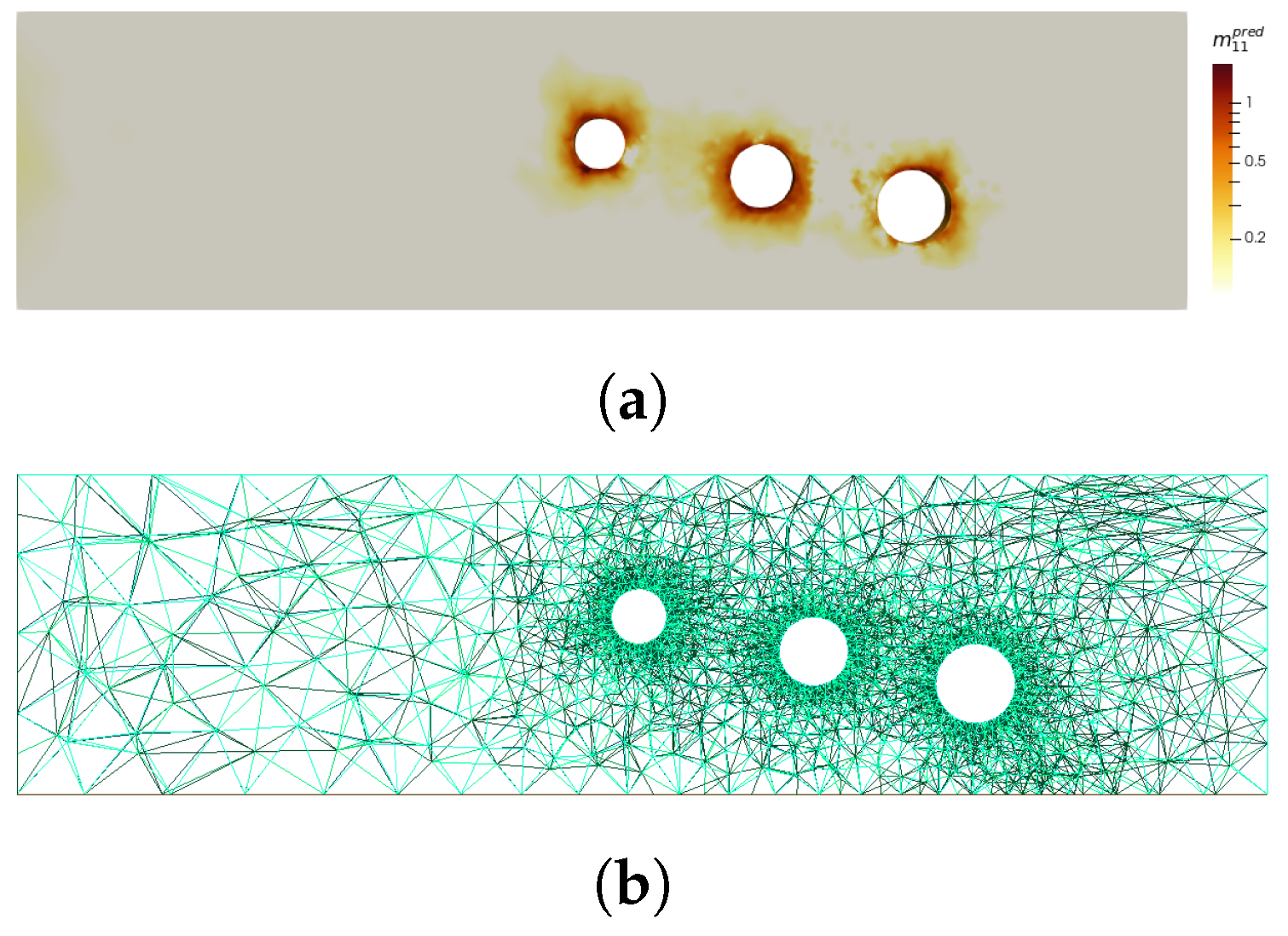
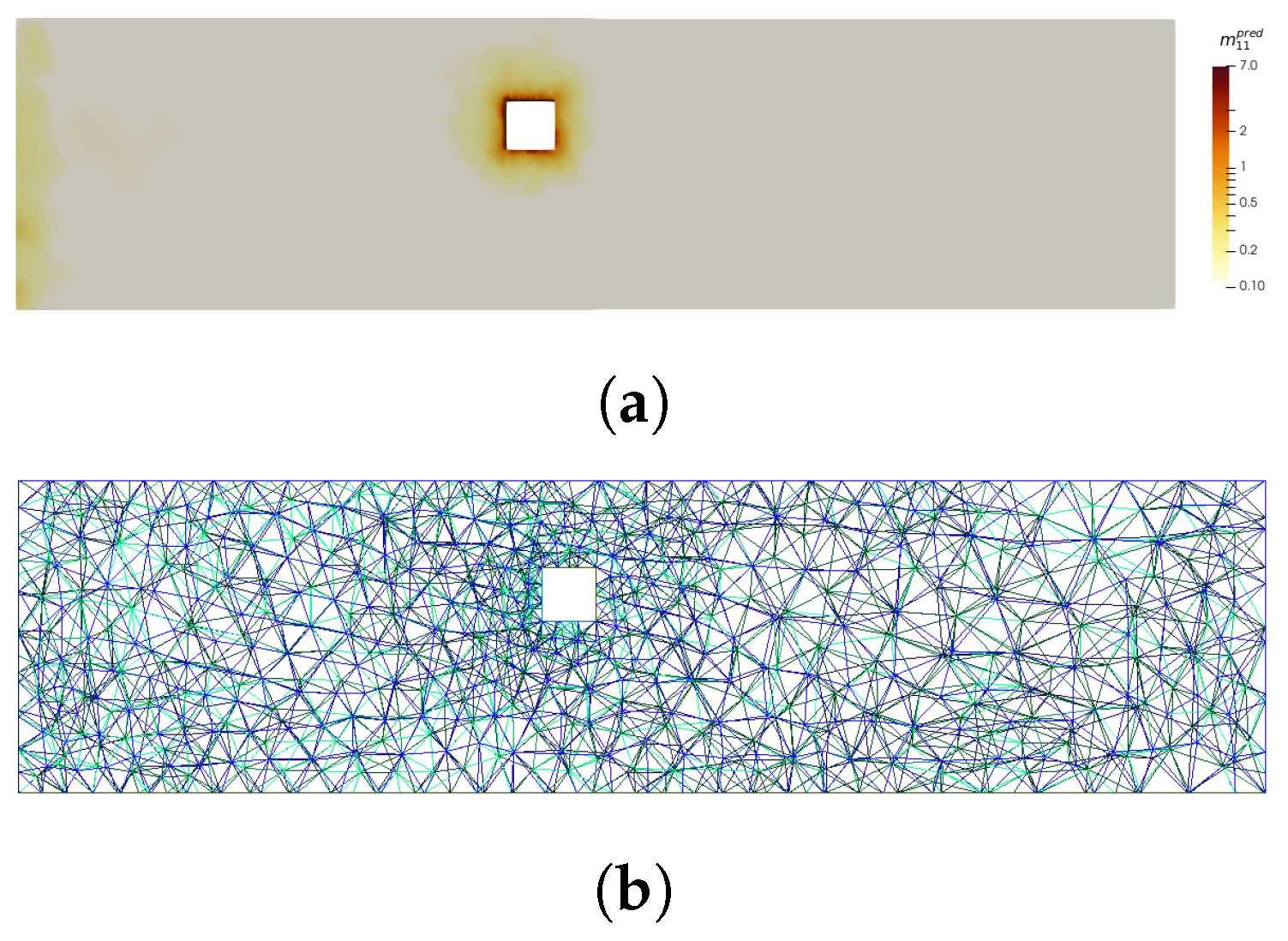
The finite element discretization of computational physics problems frequently involves the manual generation of an initial mesh and the application of adaptive mesh refinement (AMR). This approach is employed to selectively enhance the accuracy of resolution in regions that encompass significant features throughout the simulation process. In this paper, we introduce Adaptnet, a Graph Neural Networks (GNNs) framework for learning mesh generation and adaptation. The model is composed of two GNNs: the first one, Meshnet, learns mesh parameters commonly used in open-source mesh generators, to generate an initial mesh from a Computer Aided Design (CAD) file; while the second one, Graphnet, learns mesh-based simulations to predict the components of an Hessian-based metric to perform anisotropic mesh adaptation. Our approach is tested on structural (Deforming plate–Linear elasticity) and fluid mechanics (Flow around cylinders–steady-state Stokes) problems. Our findings demonstrate the model’s ability to precisely predict the dynamics of the system and adapt the mesh as needed. The adaptability of the model enables learning resolution-independent mesh-based simulations during training, allowing it to scale effectively to more intricate state spaces during inference.
Keywords: artificial intelligence; message passing graph neural networks; mesh adaptation; computational fluid dynamics artificial intelligence; message passing graph neural networks; mesh adaptation; computational fluid dynamics