Article

Reputation-Driven Asynchronous Federated Learning for Optimizing Communication Efficiency in Big Data Labeling Systems

1
Chinese People’s Armed Police Force Engineering University, Xi’an 710086, China
2
Department of Electronic Technology, Wuhan Naval University of Engineering, Wuhan 430033, China
3
School of Mechatronics Engineering and Automation, Shanghai University, Shanghai 200444, China
*
Author to whom correspondence should be addressed.
Mathematics 2024, 12(18), 2932; https://doi.org/10.3390/math12182932
Submission received: 19 August 2024 / Revised: 14 September 2024 / Accepted: 18 September 2024 / Published: 20 September 2024
(This article belongs to the Special Issue New Advances of Operations Research and Analysis)

Abstract

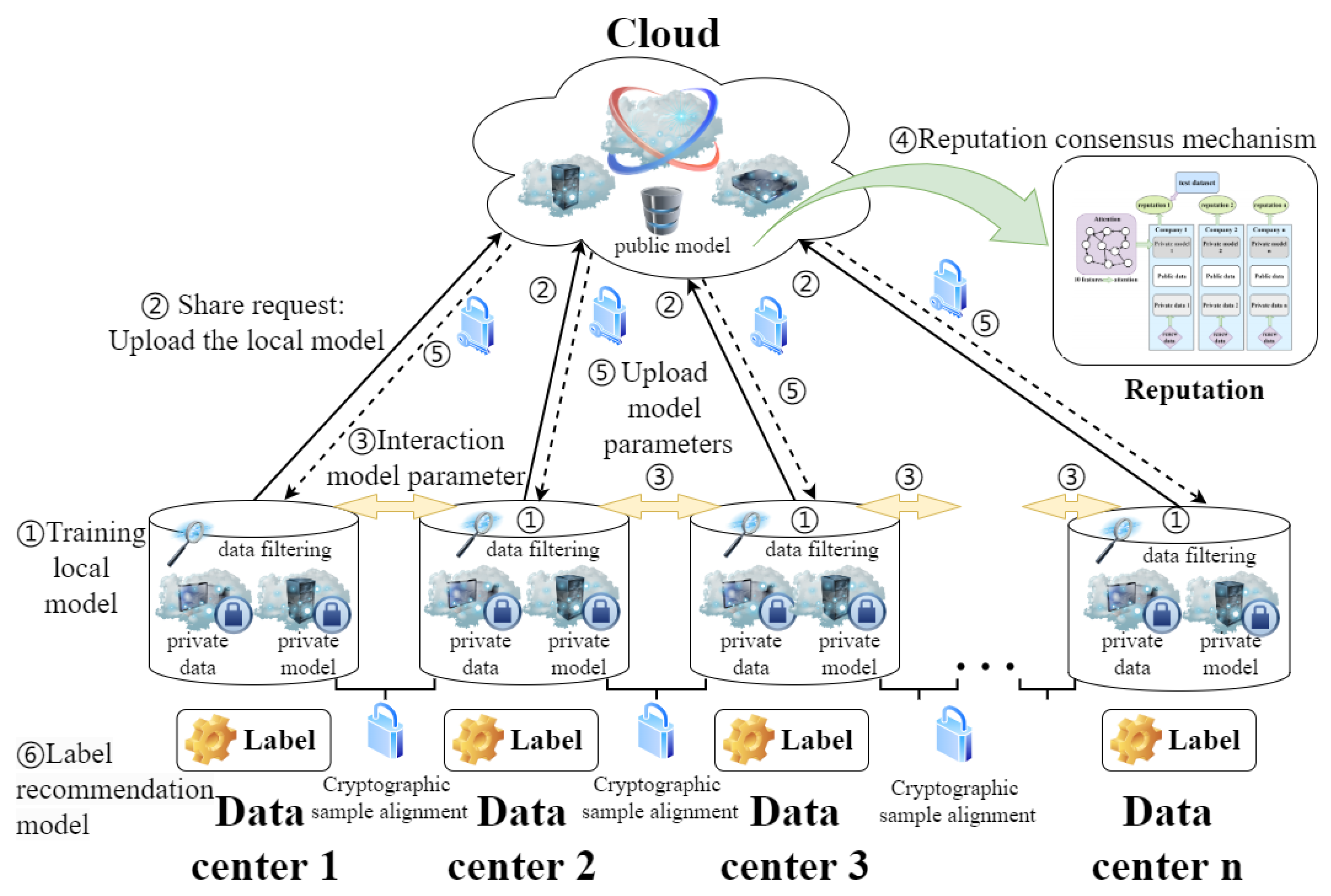
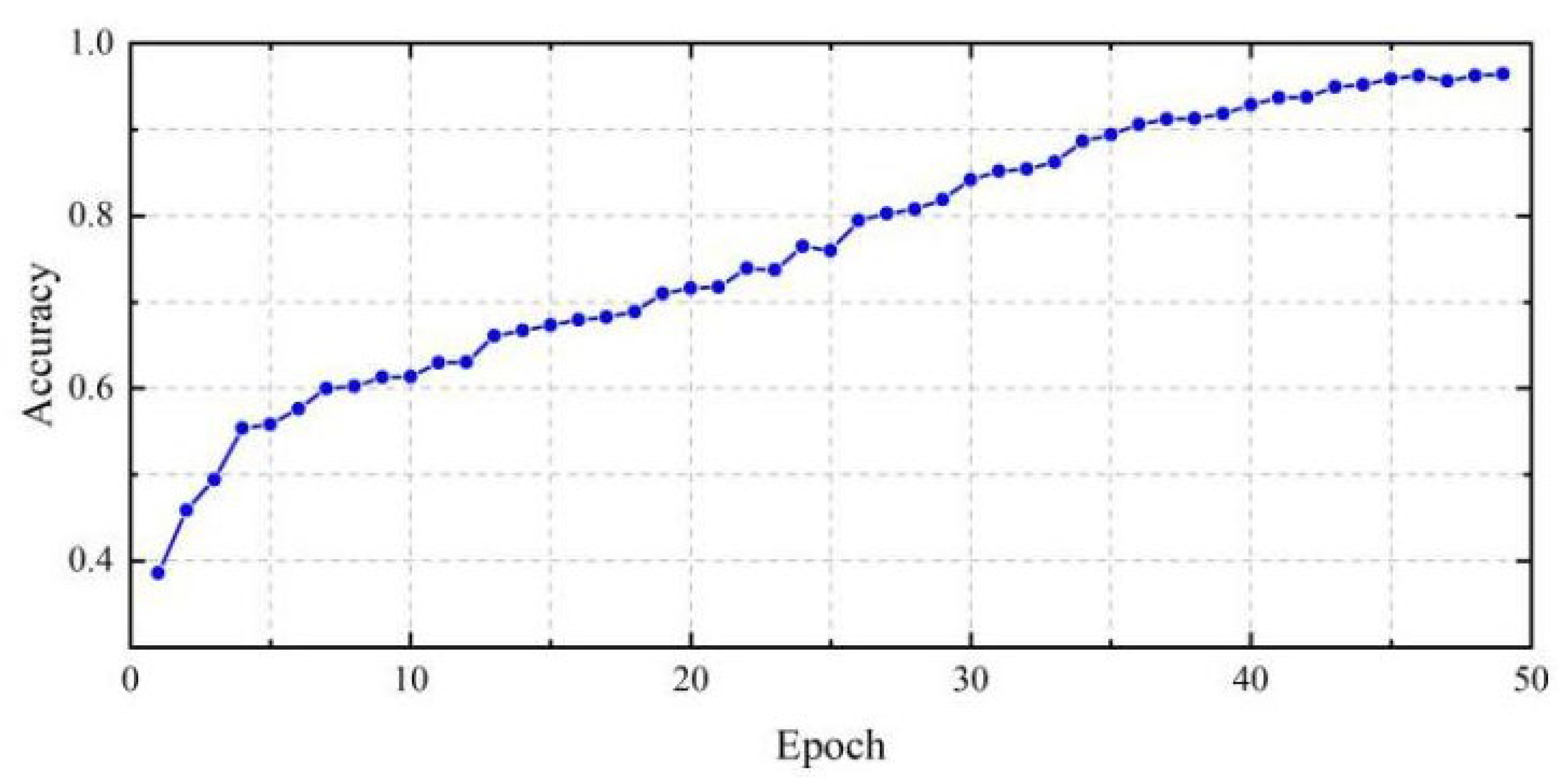
With the continuous improvement of the performance of artificial intelligence and neural networks, a new type of computing architecture-edge computing, came into being. However, when the scale of hybrid intelligent edge systems expands, there are redundant communications between the node and the parameter server; the cost of these redundant communications cannot be ignored. This paper proposes a reputation-based asynchronous model update scheme and formulates the federated learning scheme as an optimization problem. First, the explainable reputation consensus mechanism for hybrid intelligent labeling systems communication is proposed. Then, during the process of local intelligent data annotation, significant challenges in consistency, personalization, and privacy protection posed by the federated recommendation system prompted the development of a novel federated recommendation framework utilizing a graph neural network. Additionally, the method of information interaction model fusion was adopted to address data heterogeneity and enhance the uniformity of distributed intelligent annotation. Furthermore, to mitigate communication delays and overhead, an asynchronous federated learning mechanism was devised based on the proposed reputation consensus mechanism. This mechanism leverages deep reinforcement learning to optimize the selection of participating nodes, aiming to maximize system utility and streamline data sharing efficiency. Lastly, integrating the learned models into blockchain technology and conducting validation ensures the reliability and security of shared data. Numerical findings underscore that the proposed federated learning scheme achieves higher learning accuracy and enhances communication efficiency.
Keywords: federated learning; communication efficiency optimization; reputation consensus mechanism; big data labeling federated learning; communication efficiency optimization; reputation consensus mechanism; big data labeling