Abstract
In this paper, we delve into the dynamics of two and three coupled SRRs models, exploring their nonlinear properties such as stability, periodicity, or chaos. Additionally, we examine the energy function Hamilton within the context of these models. Numerical examples are provided to illustrate the obtained results and demonstrate the applicability of our findings.
MSC:
34C23; 35B32; 37G10; 37L110; 37M20; 35K57
1. Introduction
Metamaterials have garnered significant attention in the fields of physics and electromagnetic engineering due to their unusual properties, such as a negative index of refraction, perfect imaging, and inversion of the Doppler shift effect [1]. With further advancements in metamaterial research, the analysis of nonlinear electromagnetic responses within metamaterials (MMs) has emerged as a focal point [2].
In the realm of microwave metamaterials, the most prevalent configuration involves combining split ring resonators (SRRs) to provide negative permeability with metallic wires offering negative permittivity [2], although alternative geometries have also been proposed. While much of the research in this domain operates within a linear regime, where electromagnetic responses remain independent of external fields, there has been notable effort directed towards investigating nonlinear effects within metamaterials, particularly regarding the nonlinear tunability of SRRs [3,4].
Regarding the research on coupled nonlinear split-ring resonators (SRRs), we can summarize some key points from the provided literature search results, as follows:
- Experiments and theoretical models. Experiments have been conducted to analyze the properties of SRRs loaded with linear and nonlinear elements, and a theoretical model has been provided to explain all observed nonlinear effects;
- Nonlinear coupling. At high input powers, nonlinear SRRs exhibit spontaneous symmetry breaking (SSB) effects, where the optical power is unevenly distributed between the two resonators;
- Application prospects. Coupled nonlinear SRRs have potential applications in real-time all-optical switching, neuromorphic computing, active light distribution in telecommunications systems, and optical sensing;
- Theoretical analysis. Numerical simulations and theoretical analyses have been conducted to study the interplay between linear coupling and Kerr nonlinear effects and how they affect the transmission characteristics of the resonators.
These research findings indicate that coupled nonlinear SRRs are an interdisciplinary field of study involving electromagnetism, optics, materials science, and nonlinear dynamics. They hold significant potential in the design of new types of electromagnetic materials and devices, especially in achieving tunable electromagnetic responses and nonlinear optical phenomena.
To fully harness the potential of metamaterials for use in practical applications, achieving real-time tunability of their effective parameters has become imperative. This need has motivated the development of nonlinear split-ring resonators (SRRs), which are particularly effective at enhancing nonlinear phenomena. In fact, according to [5,6], we know that investigating the nonlinear properties of elementary units within dimer-based metamaterials, such as the nonlinear meta dimer, has become crucial.
In the realm of nonlinear dynamical systems, coupled systems have emerged as significant topics, leading to phenomena such as synchronization, chaos, and bifurcation of oscillators. Researchers have extensively undertaken the nonlinear analysis of coupled SRRs. For instance, some studies have delved into the coupling phenomena between artificial left-handed (LH) transmission lines [7], while others have investigated spatial solitons within nonlinear LH metamaterials [8]. Besides, more additional information can be found in [9,10,11,12,13,14,15,16,17,18,19].
In a recent study, an asymmetric meta dimer comprising multiple SRRs was considered, describing the dynamics of normalized charge and employing various models [5], such as the following models:
where denotes the dimensionless coupling parameter, represents the dimensionless driving frequency, denotes the RFM ratio, and we have for even (odd) integer .
The dynamic properties such as the stability of those coupled SRRs are also discussed numerically. Similar research can be found in [5], where the authors considered mutual coupling between two nonlinear SRRs. Some properties were experimentally measured.
In this paper, we discuss the nonlinear properties of coupled SRRs. In this study, we investigate two and three coupled models of SRRs with nonlinear resonant responses. By exploring the dynamics of these systems, we have uncovered the emergence of novel types of spatial solitons. Such solitons can have symmetric or anti-symmetric profiles. The main tool in this paper is the stable theorem of the nonlinear dynamic system.
2. Stability, Periodic and Chaos of Two Coupled Split-Ring Resonators Model
Coupled split-ring resonators can be regarded as several periodically driven, nonlinear resistor–inductor–capacitor oscillators driven by identical voltage sources. In this section, we consider two coupled split-rings with a geometry of asymmetry—see Figure 1 of Ref. [6]. The model describing the dynamics of (normalized) charge can be obtained from Equation (1):
where .
In the following, we consider two cases.
- Case One
In this case, Equation (2) can be written as
which is an autonomous system. The equilibrium of (3) is and with and . The linear parts of (3) at and are
and
respectively, where and . The characteristic equations of (4) and (5) are
and
respectively.
When all roots of Equations (6) or (7) have negative real parts, the equilibrium solution is considered asymptotically stable. Conversely, if at least one root of Equations (6) or (7) has a positive real part, the equilibrium solution is deemed unstable. Additionally, when Equations (6) or (7) yield a pair of roots, denoted as , periodic solutions emerge within system (3). Using the Hurwitz Criterion, the asymptotically stable conditions follow:
where for and for .
If the following conditions are satisfied, then the periodic solution appears around :
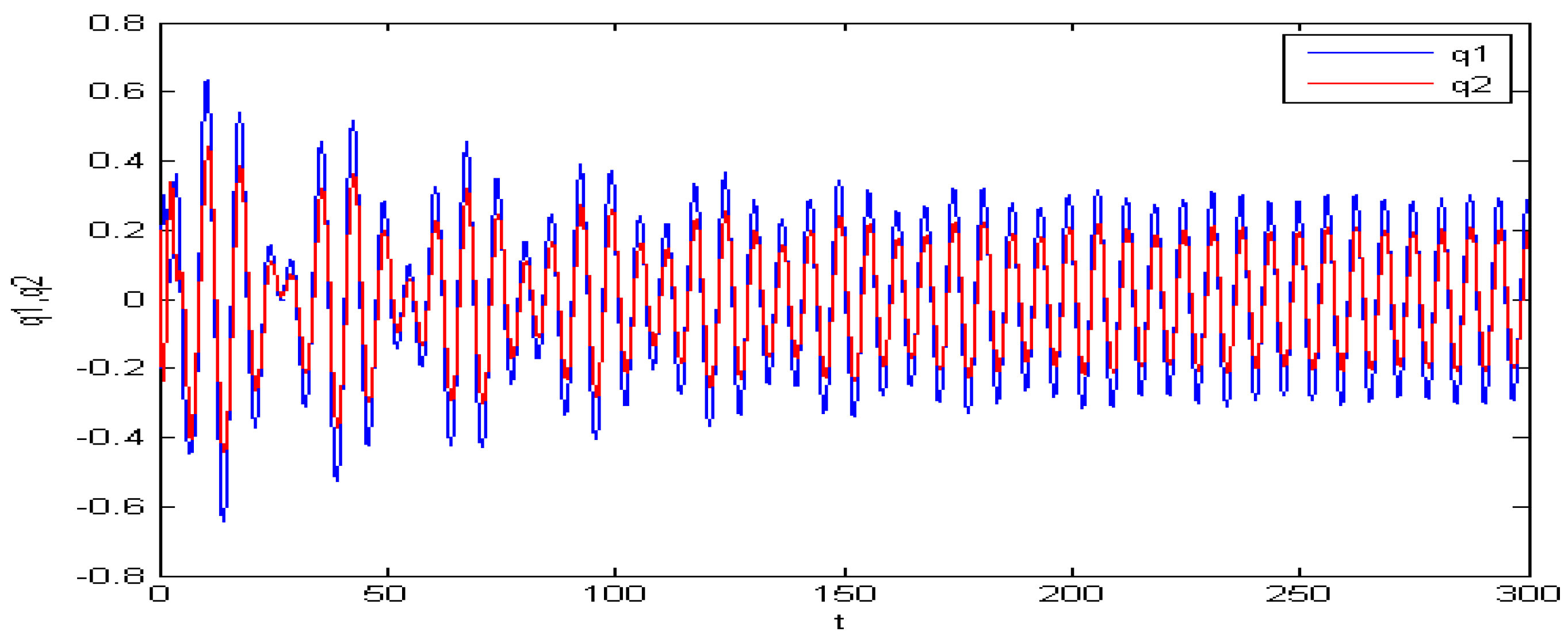
There is no periodic solution around , since Equation (6) has no root with a pure imaginary part. Some numerical simulations are given to illustrate the results obtained. We choose . If , the zero solution is asymptotically stable, and the periodic solution occurs if (see Figure 1).
Figure 1.
Time-dependence of when the parameters are or .
In the following, we consider a special case: . In this case, obviously, the system Equation (3) is invariant under coordinate transformation . Using the theorem of the symmetric differential equation, we know that the interaction of coupled SRRs can exhibit nonlinear resonance with two periodic solutions. There are two types periodic solutions that can occur:
- (1)
- Completely symmetrical periodic solution;
- (2)
- Anti-symmetrical periodic solution.
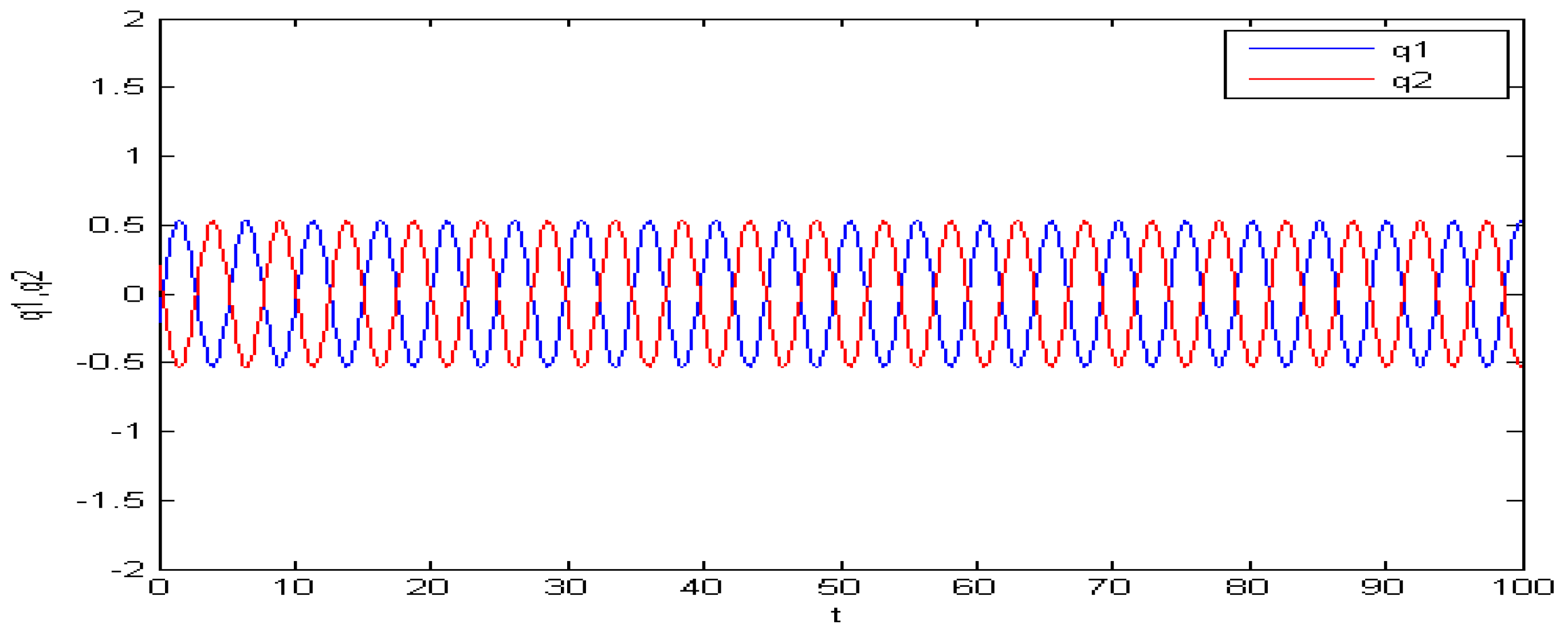
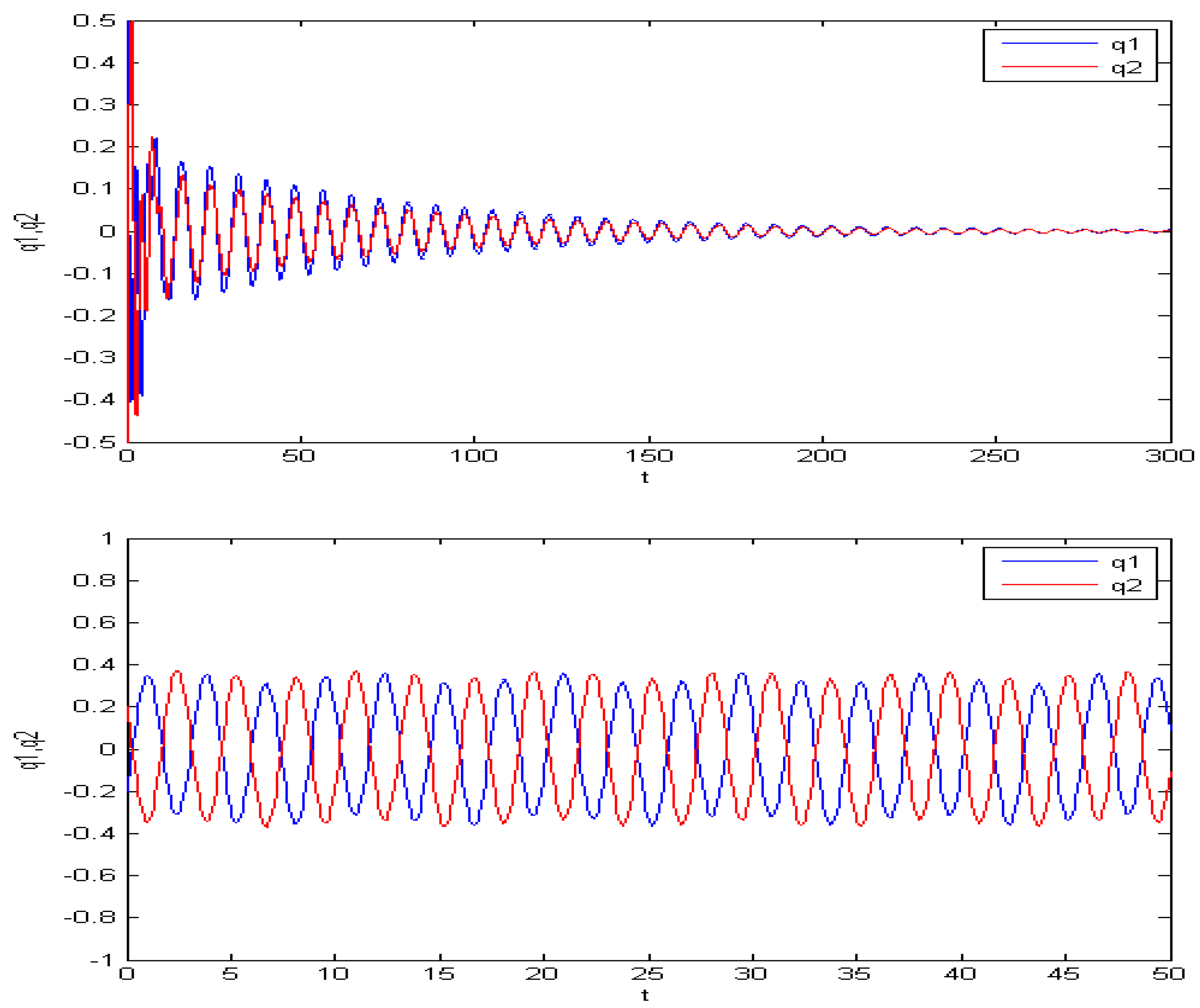
These phenomena are shown in the following figures. We chose . If the initial condition is (−0.2, 0.63, 0.22, 0.63) or (−0.2, 0.63, 0.2, 0.63), then two types of periodic charges may appear (see Figure 2 and Figure 3).
Figure 2.
Completely symmetrical periodic charge .
Figure 3.
Anti-symmetrical periodic charge .
In system (3), we call the oscillator with the state variables oscillator A, and the other, with the variables and , oscillator B, C. We fix the parameters at
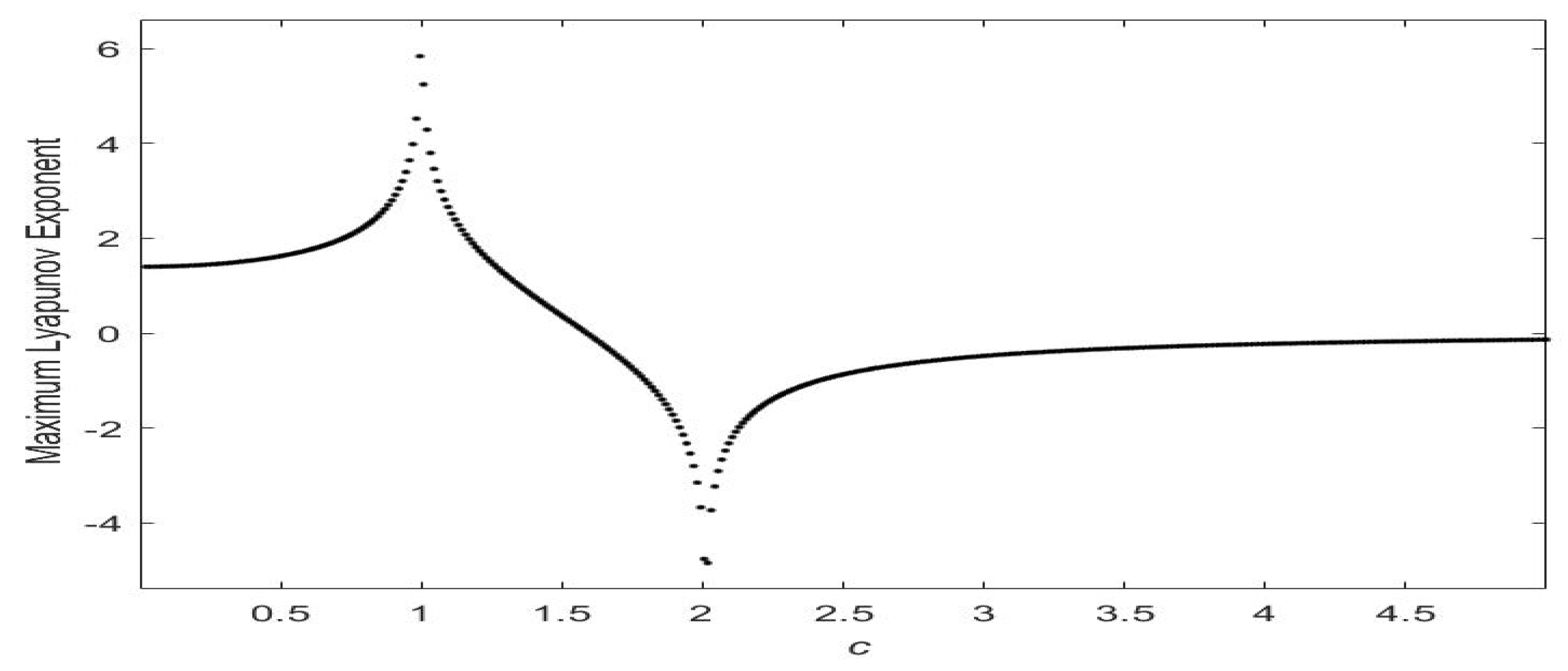
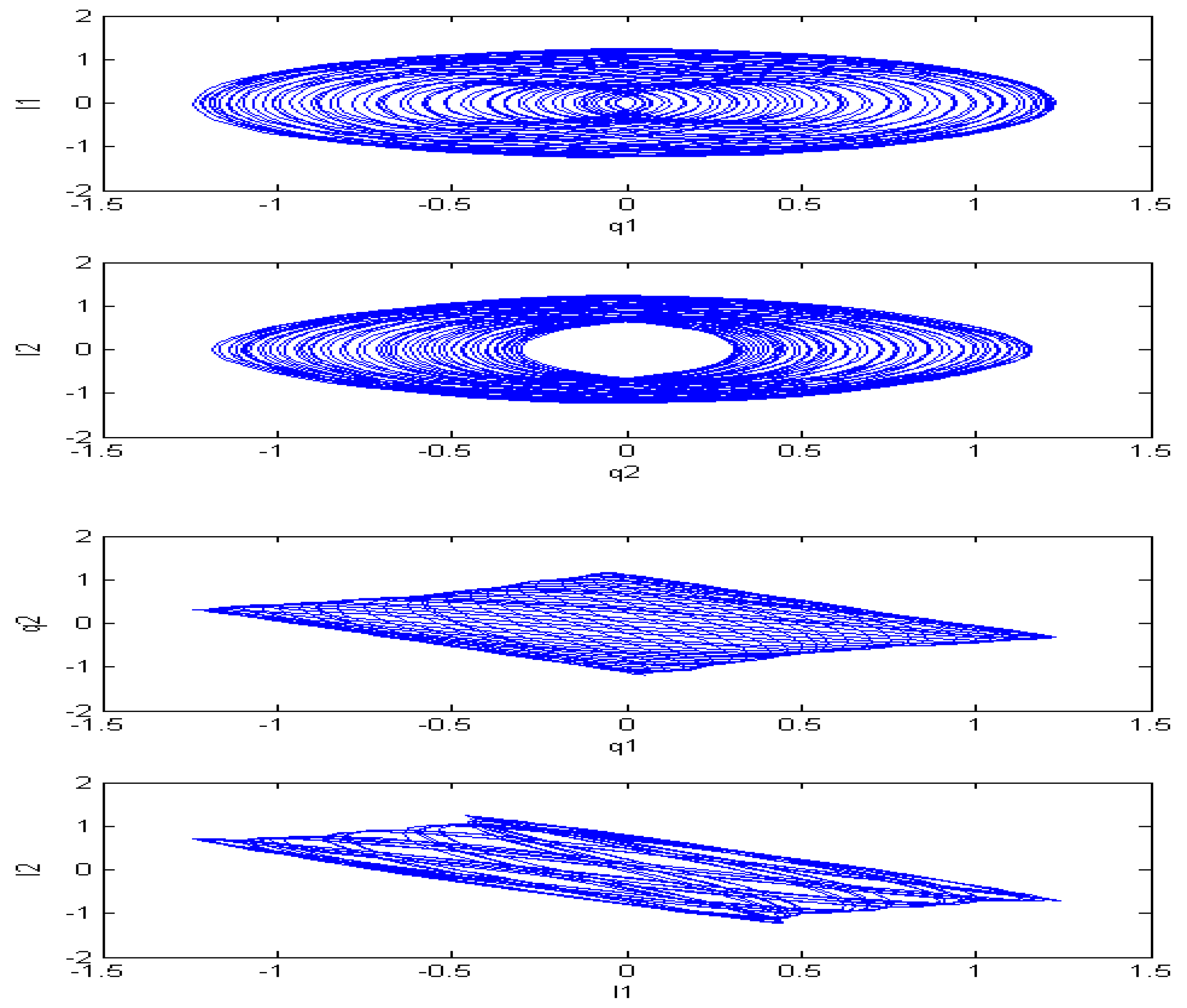
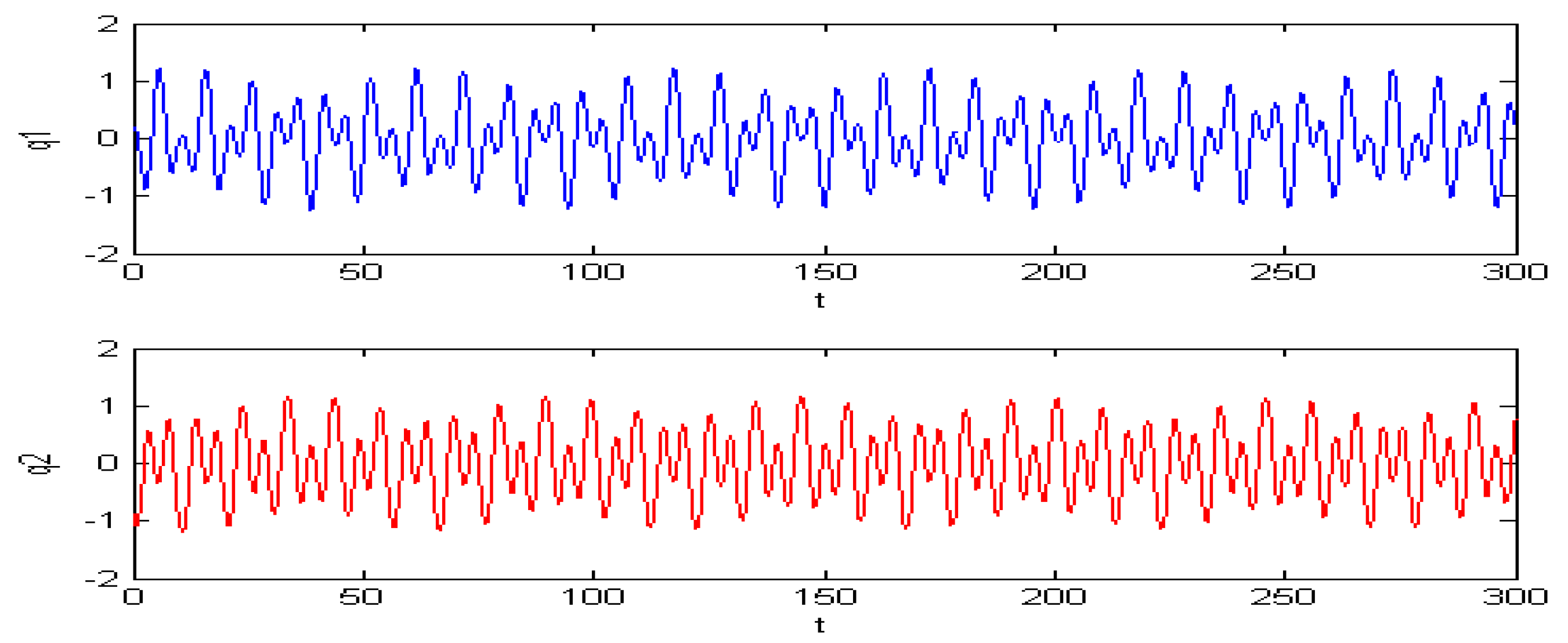
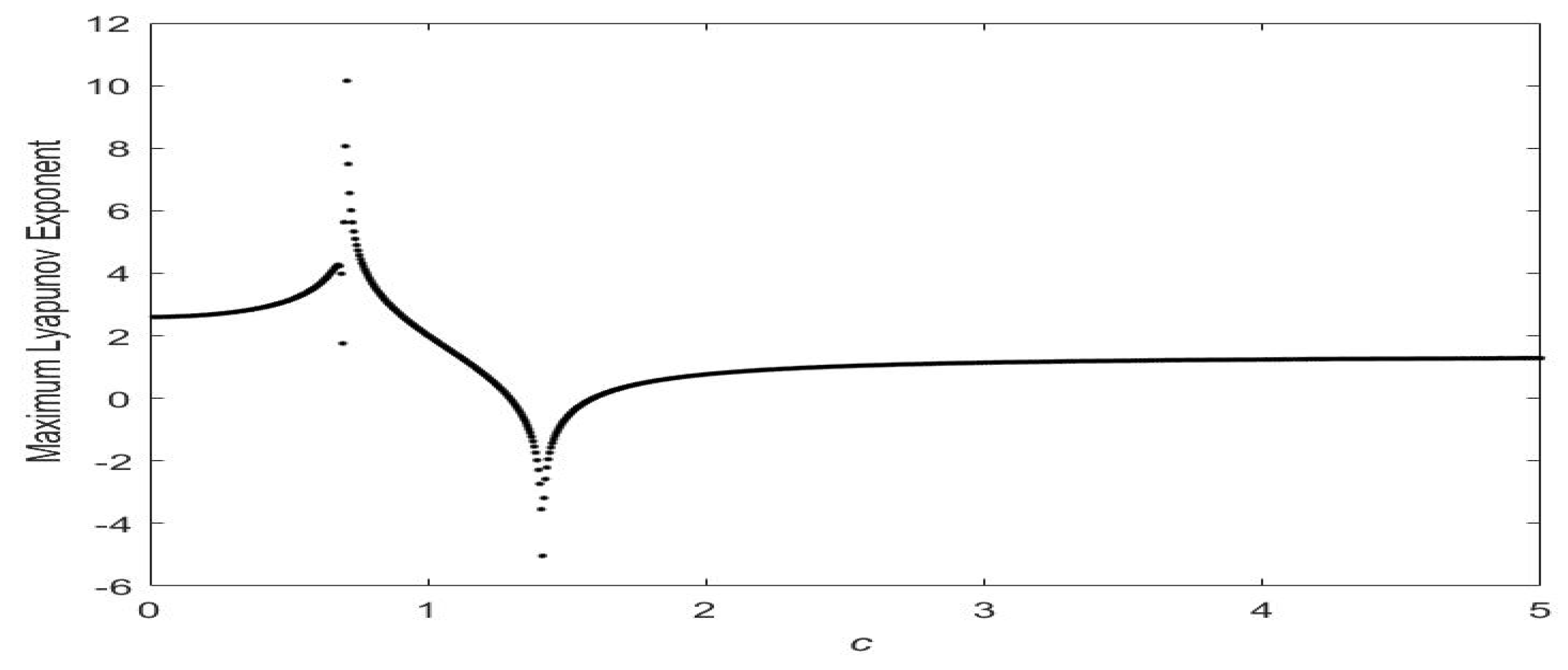
System (2) shows the coexistence of chaotic attractors. We can illustrate chaos via a Lyapunov exponents image (see Figure 4). According to the numerical results (see Figure 5 and Figure 6), the attractors can be obtained for the initial conditions (0.2, 0.1, 0.263, −0.892).
Figure 4.
Maximum Lyapunov exponents.
Figure 5.
Phase portraits of the coexisting attractor.
Figure 6.
Time series for the charges .
- Case Two
Firstly, we will consider how an excitation acts on coupled SRRs and brings them from asymptotically stable to periodic. We also choose , such as in Figure 1, but . If , according to Figure 7, the zero solution is not asymptotically stable, and a periodic solution occurs.
Figure 7.
Change periodic.
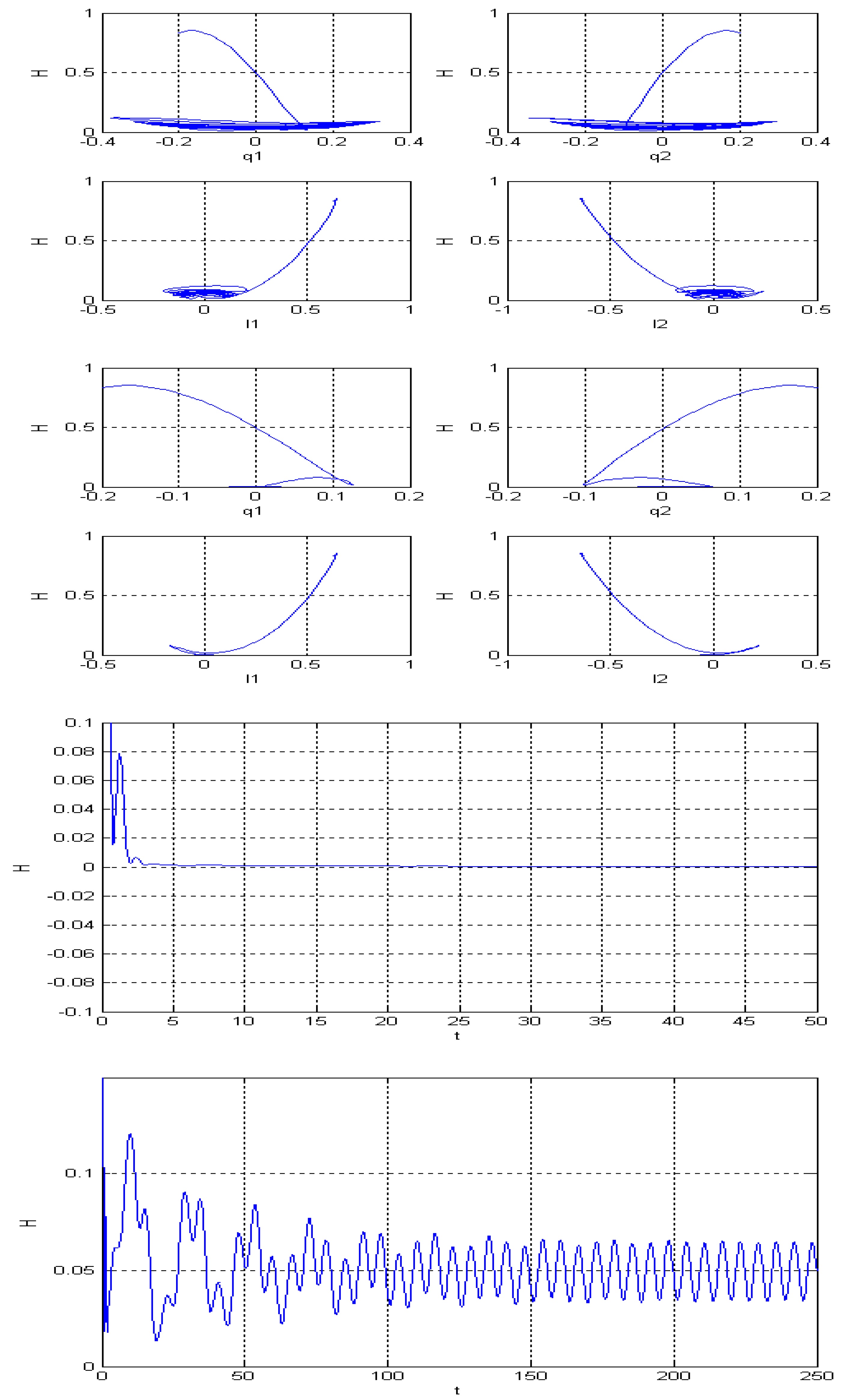
Next, we will see , which is an excitation, and consider the relations between Hamilton and or with parameters and , by using the results obtained in case one. The Hamilton is defined as [2]
In Figure 8, the contrast between images can reveal the energy described by Hamilton as a function of time t, charge and current.
Figure 8.
Hamilton is discussed as a function of time t, charge and current.
3. Three Coupled SRRs Combinatorial Resonance
In this section, we perform the analysis with the same method as in the previous section. Substituting for Equation (1) yields:
where .
In the case , the equilibrium solutions is and with and .
The characteristic equation at is
And the characteristic equation at is
If the condition or is satisfied, then the equilibrium or is asymptotically stable.
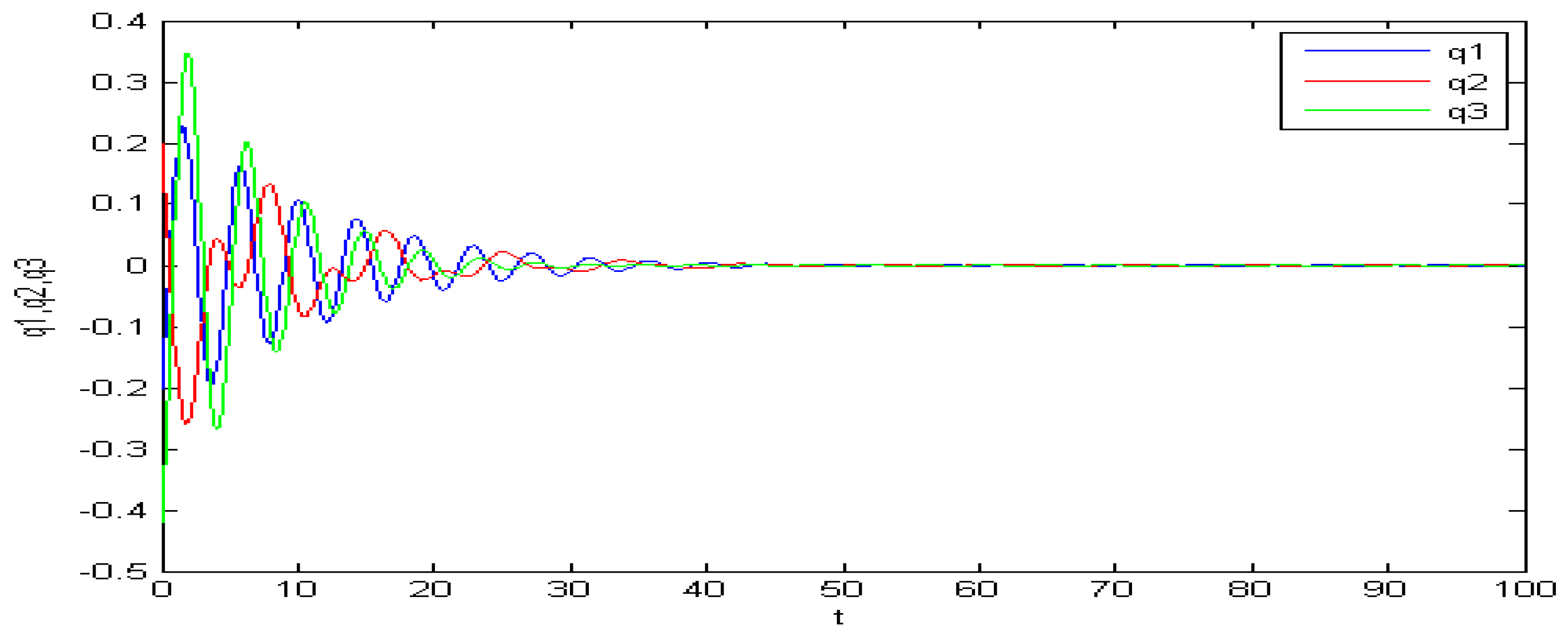
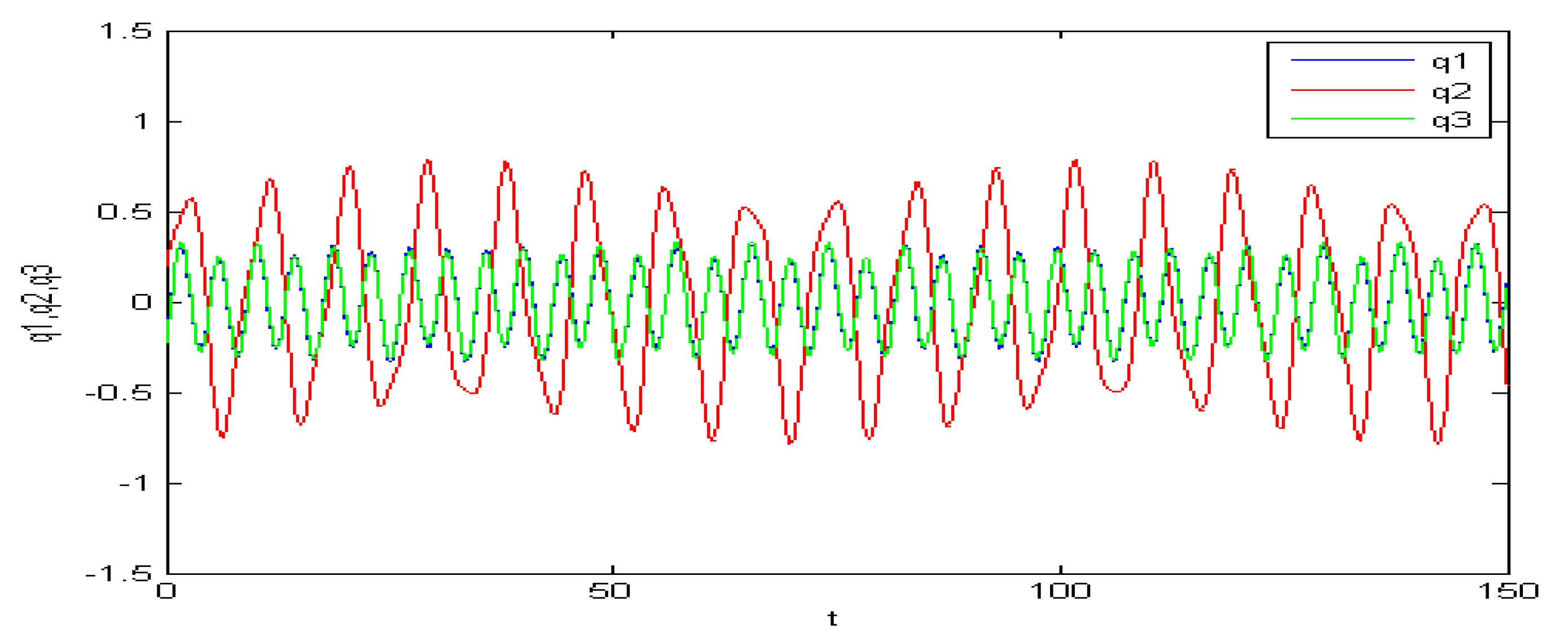
The periodic solutions occur if condition is satisfied. In the following, we will consider the symmetric periodic solution of Equation (8). Since Equation (8) is invariant under the coordinate transformation , and according to the numerical results (See Figure 9 and Figure 10), symmetric periodic solutions always exist.
Figure 9.
Time series for the charges with .
Figure 10.
Synchronized with for the initial conditions (−0.2, 0.3, 0.2, 0.3, −0.22, 0.3).
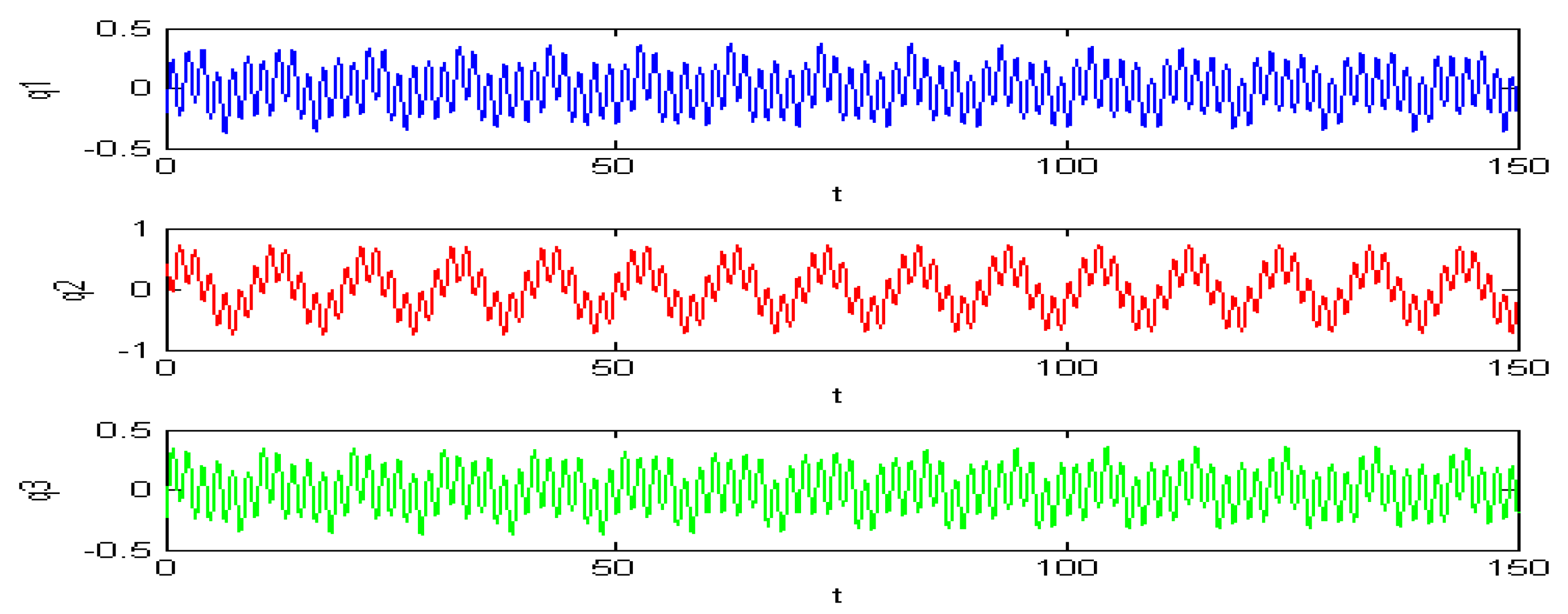
The system (8) also shows the coexistence of chaotic attractors when . Chaos can be inferred from the Lyapunov exponents image in Figure 11. Besides this, according to the numerical results (see Figure 12 and Figure 13), the attractors can be obtained for the initial conditions (−0.2, 0.33, 0.42, 0.03, −0.22, 0.3).
Figure 11.
Maximum Lyapunov exponents.
Figure 12.
Time series for the charges with .
Figure 13.
Phase portraits of the coexisting attractor are synchronized.
The Hamilton is
In the following, we give the relations between Hamilton . To choose parameters, we set .
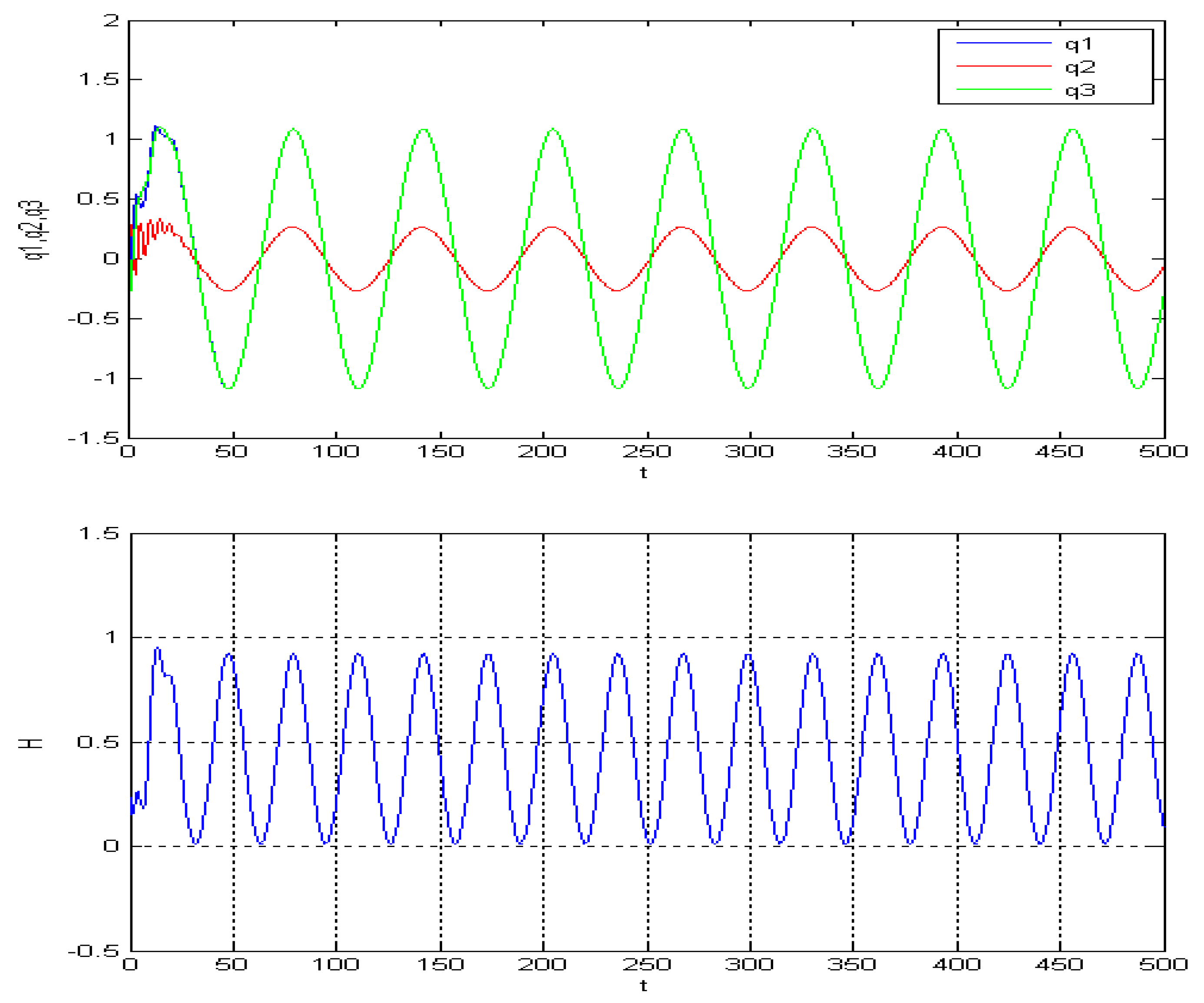
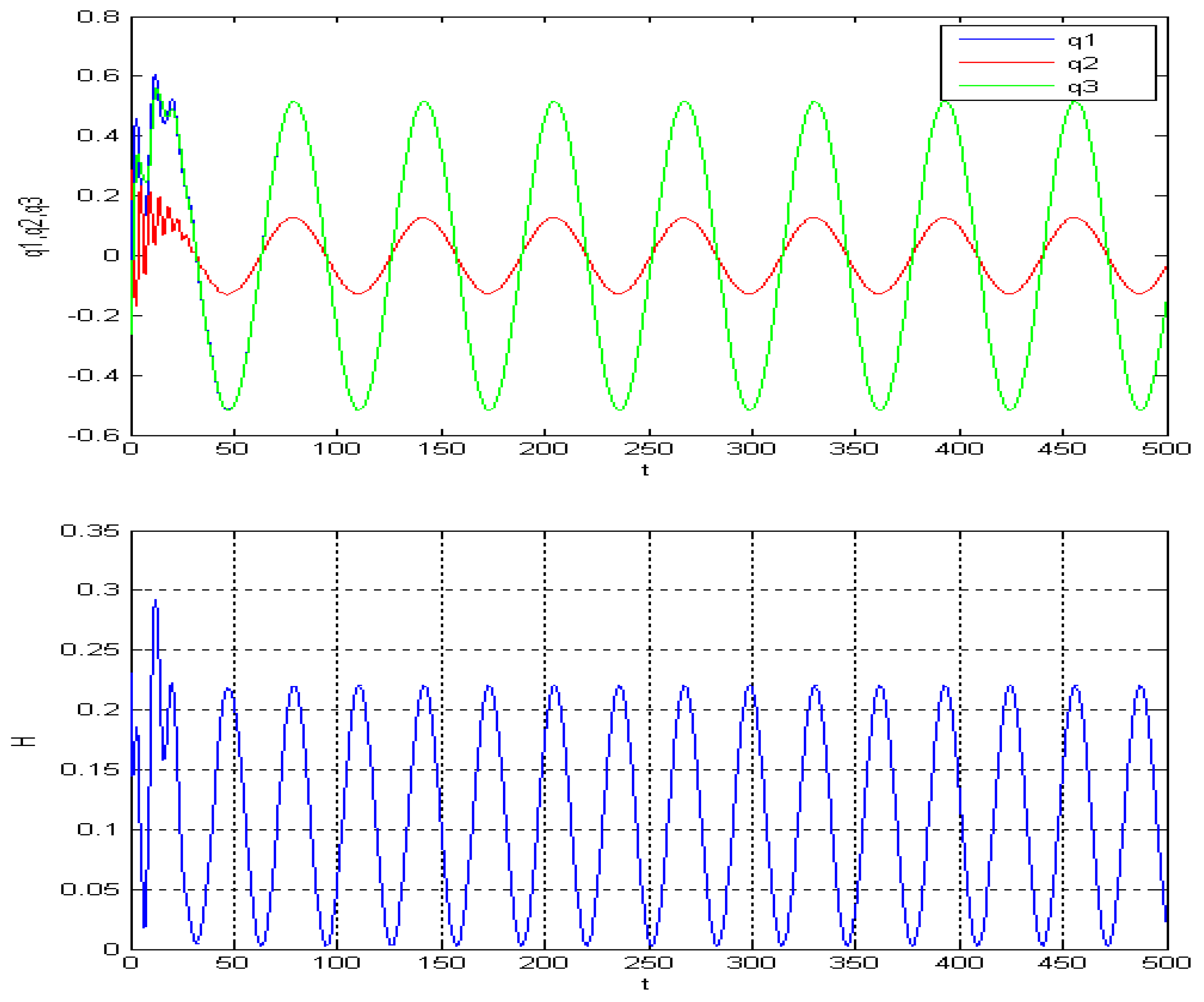
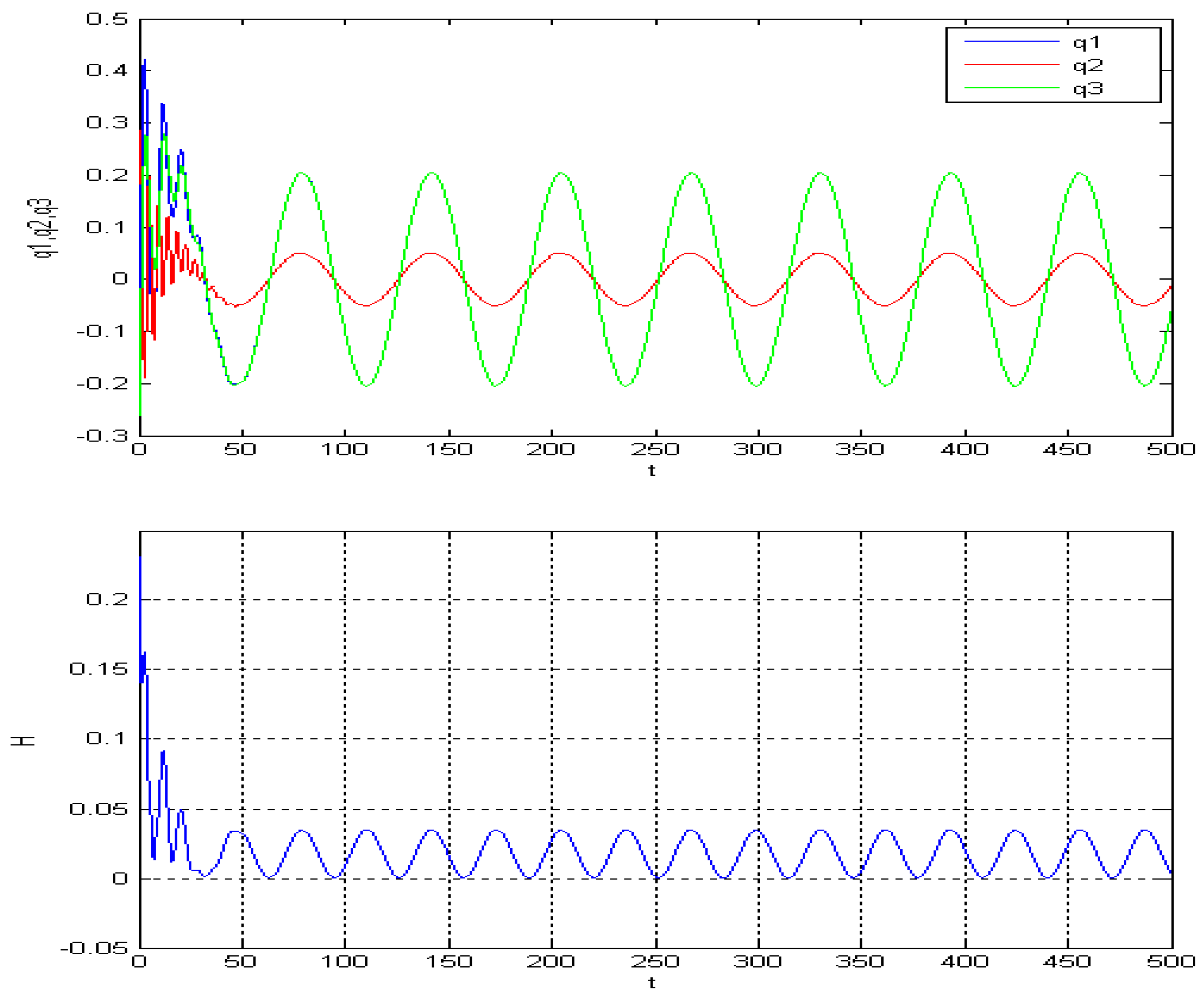
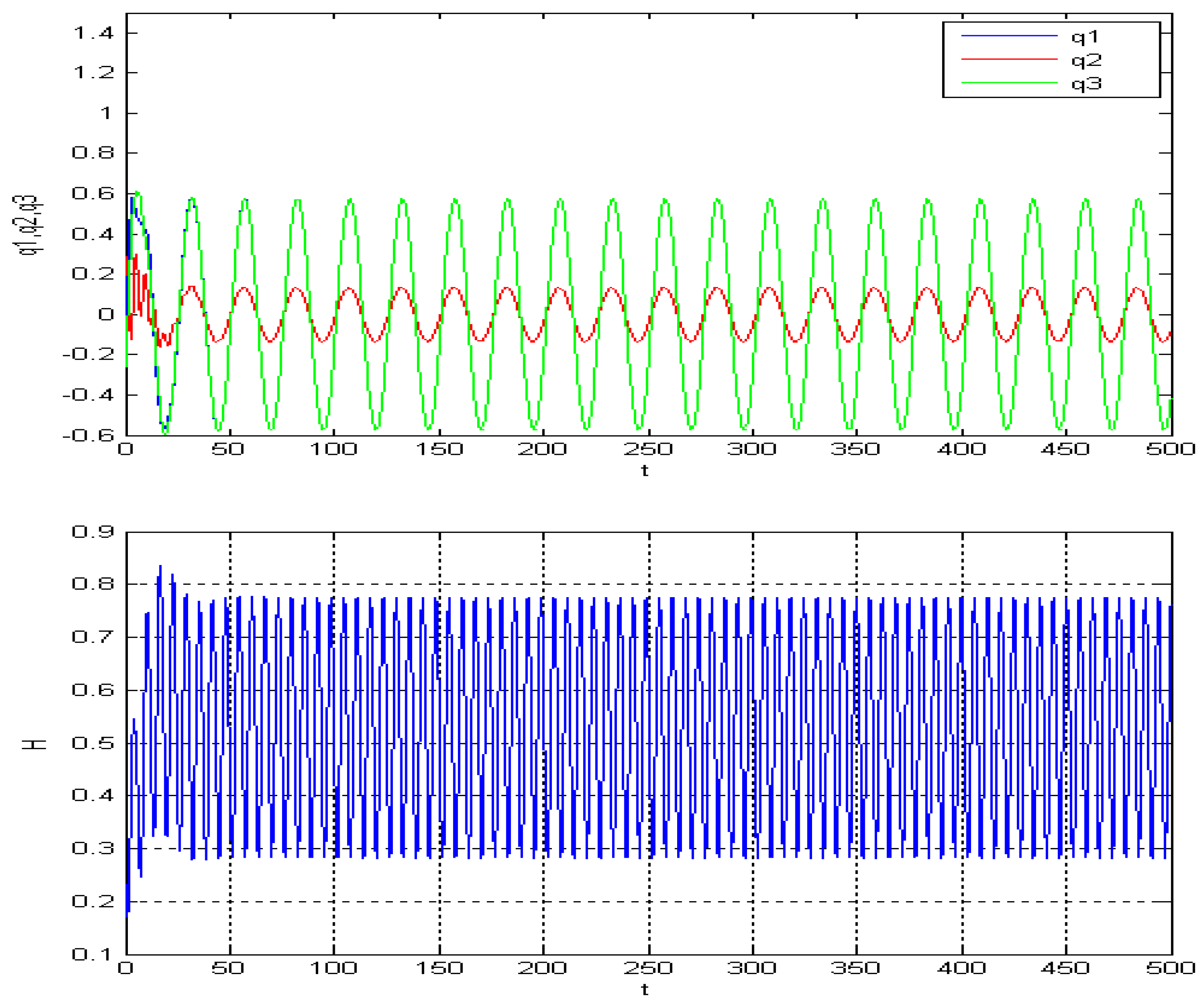
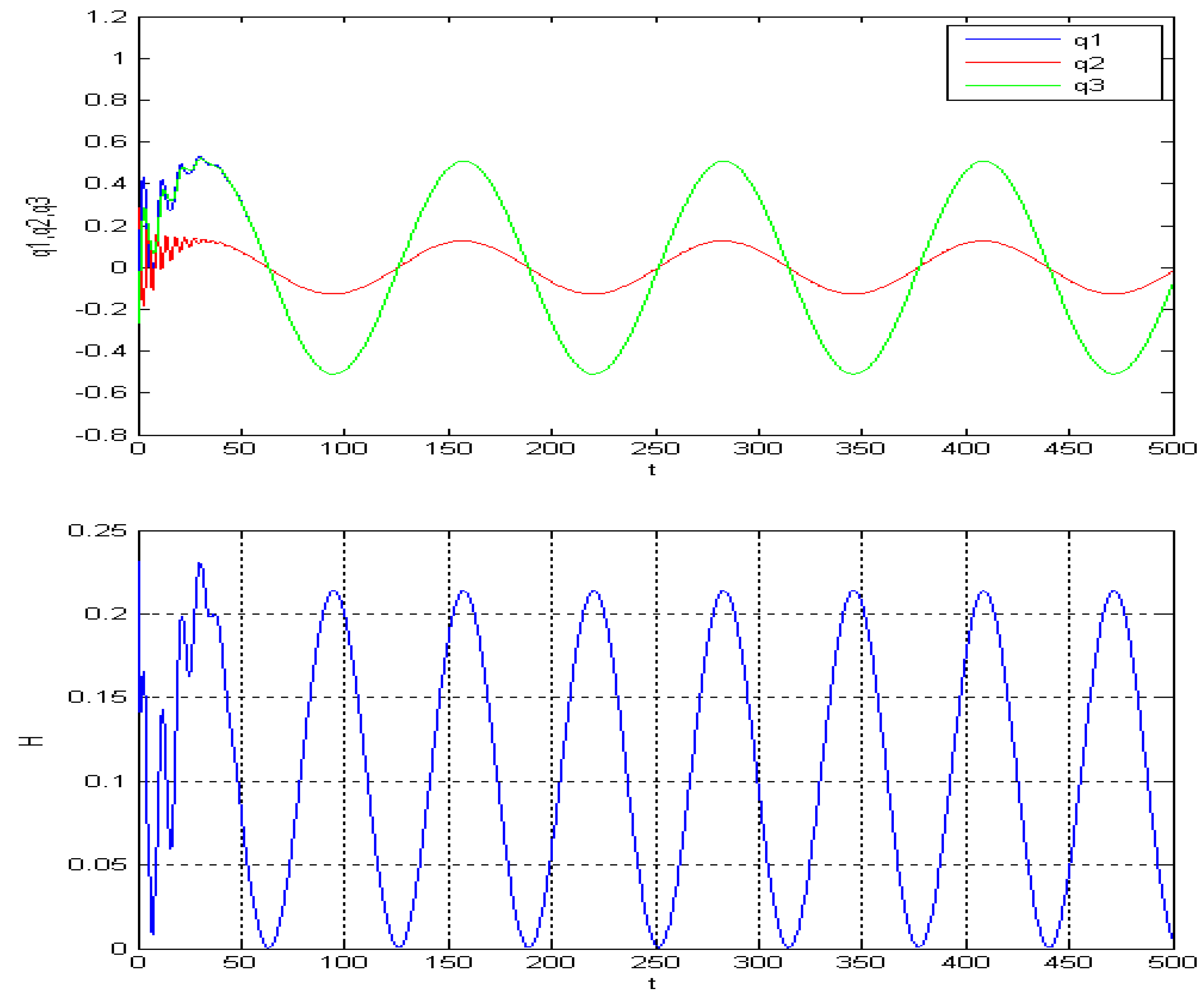
By generating images with varying parameters and conducting cross-comparisons, such as Figure 14, Figure 15, Figure 16, Figure 17, Figure 18 and Figure 19, we can see that the zero solution is not asymptotically stable; besides this, there is a periodic solution that relates to the driven term . In fact, the energy Hamilton is also a periodic function. Here, the amplitude of , and Hamilton can be determined by , , and frequently by .
Figure 14.
Time series and Hamilton for .
Figure 15.
Time series and Hamilton for .
Figure 16.
Time series and Hamilton for .
Figure 17.
Time series and Hamilton for .
Figure 18.
Time series and Hamilton for .
Figure 19.
Time series and Hamilton for .
4. Conclusions
In this paper, we have explored the dynamics of coupled split-ring resonators (SRRs) as large-scale nonlinear dynamic systems, characterized by their inherent complexity. The behavior of these systems is intricate and rich, influenced significantly by variations in their parameters. Our primary focus has been on understanding how these parameter changes impact the stability of the SRRs’ states, leading to either steady, oscillatory, or more complex dynamic behaviors, such as periodic or chaotic oscillations.
By proposing and analyzing two or three coupled SRRs models, we have demonstrated their capability to generate nonlinear behavior. Our findings highlight the critical importance of parameter tuning in influencing the overall dynamics of the system. Specifically, we have shown that slight adjustments in parameters can transition the system from stable to oscillatory states, induce further oscillations, or significantly alter existing oscillations, thereby producing complex periodic or chaotic patterns.
The results of our investigation contribute to a deeper understanding of the nonlinear dynamics inherent in coupled SRRs systems. These insights are crucial for practical applications, where precise control over dynamic behaviors is required. Future work will involve the further refinement of these models and experimental validation to enhance their applicability in real-world scenarios.
Author Contributions
Methodology, M.W.; Software, X.L.; Formal analysis, X.L.; Writing—original draft, X.L.; Writing—review & editing, M.W.; Funding acquisition, M.W. All authors have read and agreed to the published version of the manuscript.
Funding
This research was funded by the Fundamental Research Funds for the Central Universities, grant number 60201523050. The APC was funded by 60201523050.
Data Availability Statement
Data are contained within the article.
Conflicts of Interest
The authors declare no conflicts of interest.
References
- Poutrina, E.; Larouche, S.; Smith, D.R. Parametric oscillator based on a single-layer resonant metamaterial. Opt. Commun. 2010, 283, 1640–1646. [Google Scholar] [CrossRef]
- Tassin, P.; Gelens, L.; Danckaert, J.; Veretennicoff, I.; Van der Sande, G.; Kockaert, P.; Tlidi, M. Dissipative structures in left-handed material cavity optics. Chaos Interdiscip. J. Nonlinear Sci. 2007, 17, 037116. [Google Scholar] [CrossRef]
- Zharov, A.A.; Shadrivov, I.V.; Kivshar, Y.S. Nonlinear properties of left-handed metamaterials. Phys. Rev. Lett. 2003, 91, 037401. [Google Scholar] [CrossRef] [PubMed]
- Powell, D.A.; Shadrivov, I.V.; Kivshar, Y.S. Multistability in nonlinear left-handed transmission lines. Appl. Phys. Lett. 2008, 92, 264104. [Google Scholar] [CrossRef]
- Molina, M.I.; Lazarides, N.; Tsironis, G.P. Bulk and surface magnetoinductive breathers in binary metamaterials. Phys. Rev. E 2009, 80, 046605. [Google Scholar] [CrossRef]
- Lazarides, N.; Molina, M.I.; Tsironis, G.P.; Kivshar, Y.S. Multistability and localization in coupled nonlinear split–ring resonators. Phys. Lett. A 2010, 374, 2095–2097. [Google Scholar] [CrossRef]
- Shadrivov, I.V.; Kivshar, Y.S. Spatial solitons in nonlinear left-handed metamaterials. J. Opt. A Pure Appl. Opt. 2005, 7, S68–S72. [Google Scholar] [CrossRef]
- Liu, L.; Caloz, C.; Chang, C.-C.; Itoh, T. Forward coupling phenomena between artificial left-handed transmission lines. J. Appl. Phys. 2002, 92, 5560–5565. [Google Scholar] [CrossRef]
- Wang, B.; Zhou, J.; Koschny, T.; Soukoulis, C.M. Nonlinear properties of split-ring resonators. Opt. Express 2008, 16, 16058–16063. [Google Scholar] [CrossRef] [PubMed]
- Giri, P.; Choudhary, K.; Gupta, A.S.; Bandyopadhyay, A.K.; McGurn, A.R. Klein-Gordon equation approach to nonlinear split-ring resonator based metamaterials: One-dimensional systems. Phys. Rev. B 2011, 84, 155429. [Google Scholar] [CrossRef]
- Baena, J.D.; Bonache, J.; Martin, F.; Sillero, R.; Falcone, F.; Lopetegi, T.; Laso, M.; Garcia-Garcia, J.; Gil, I.; Portillo, M.; et al. Equivalent-circuit models for split-ring resonators and complementary split-ring resonators coupled to planar transmission lines. IEEE Trans. Microw. Theory Tech. 2005, 53, 1451–1461. [Google Scholar] [CrossRef]
- García-García, J.; Martín, F.; Baena, J.D.; Marqués, R.; Jelinek, L. On the resonances and polarizabilities of split ring resonators. J. Appl. Phys. 2005, 98, 033103. [Google Scholar] [CrossRef]
- Albishi, A.M.; El Badawe, M.K.; Nayyeri, V.; Ramahi, O.M. Enhancing the sensitivity of dielectric sensors with multiple coupled complementary split-ring resonators. IEEE Trans. Microw. Theory Tech. 2020, 68, 4340–4347. [Google Scholar] [CrossRef]
- Cui, W.; Zhu, Y.; Li, H.; Liu, S. Soliton excitations in a one-dimensional nonlinear diatomic chain of split-ring resonators. Phys. Rev. E 2010, 81, 016604. [Google Scholar] [CrossRef] [PubMed]
- Nickpay, M.-R.; Danaie, M.; Shahzadi, A. Highly sensitive THz refractive index sensor based on folded split-ring metamaterial graphene resonators. Plasmonics 2021, 17, 237–248. [Google Scholar] [CrossRef]
- Niksan, O.; Jain, M.C.; Shah, A.; Zarifi, M.H. A nonintrusive flow rate sensor based on microwave split-ring resonators and thermal modulation. IEEE Trans. Microw. Theory Tech. 2022, 70, 1954–1963. [Google Scholar] [CrossRef]
- Eutcho, G.D.; Woodward, L.; Blanchard, F. Nonlinear dynamics of a single-gap terahertz split-ring resonator under electromagnetic radiation. Chaos Interdiscip. J. Nonlinear Sci. 2023, 33, 103131. [Google Scholar]
- Omer, A.E.; Shaker, G.; Safavi-Naeini, S.; Kokabi, H.; Alquie, G.; Deshours, F.; Shubair, R.M. Low-cost portable microwave sensor for non-invasive monitoring of blood glucose level: Novel design utilizing a four-cell CSRR hexagonal configuration. Sci. Rep. 2020, 10, 15200. [Google Scholar] [CrossRef] [PubMed]
- Ebrahimi, A.; Scott, J.; Ghorbani, K. Differential sensors using microstrip lines loaded with two split-ring resonators. IEEE Sens. J. 2018, 18, 5786–5793. [Google Scholar] [CrossRef]
Disclaimer/Publisher’s Note: The statements, opinions and data contained in all publications are solely those of the individual author(s) and contributor(s) and not of MDPI and/or the editor(s). MDPI and/or the editor(s) disclaim responsibility for any injury to people or property resulting from any ideas, methods, instructions or products referred to in the content. |
© 2024 by the authors. Licensee MDPI, Basel, Switzerland. This article is an open access article distributed under the terms and conditions of the Creative Commons Attribution (CC BY) license (https://creativecommons.org/licenses/by/4.0/).