Article

Fuzzy Techniques and Adjusted Mixture Design-Based Scenario Analysis in the CLMV (Cambodia, Lao PDR, Myanmar and Vietnam) Subregion for Multi-Criteria Decision Making in the Apparel Industry


by
Pasura Aungkulanon
1,
Walailak Atthirawong
2,*,
Woranat Sangmanee
3 and
Pongchanun Luangpaiboon
4,*
1
Department of Materials Handling and Logistics Engineering, Faculty of Engineering, King Mongkut’s University of Technology North Bangkok, Bangkok 10800, Thailand
2
School of Science, King Mongkut’s Institute of Technology Ladkrabang, Bangkok 10520, Thailand
3
College of Innovation and Industrial Management, King Mongkut’s Institute of Technology Ladkrabang, Bangkok 10520, Thailand
4
Thammasat University Research Unit in Industrial Statistics and Operational Research, Department of Industrial Engineering, Faculty of Engineering, Thammasat School of Engineering, Thammasat University, Pathumthani 12120, Thailand
*
Authors to whom correspondence should be addressed.
Mathematics 2023, 11(23), 4743; https://doi.org/10.3390/math11234743
Submission received: 2 November 2023 / Revised: 20 November 2023 / Accepted: 22 November 2023 / Published: 23 November 2023

Abstract

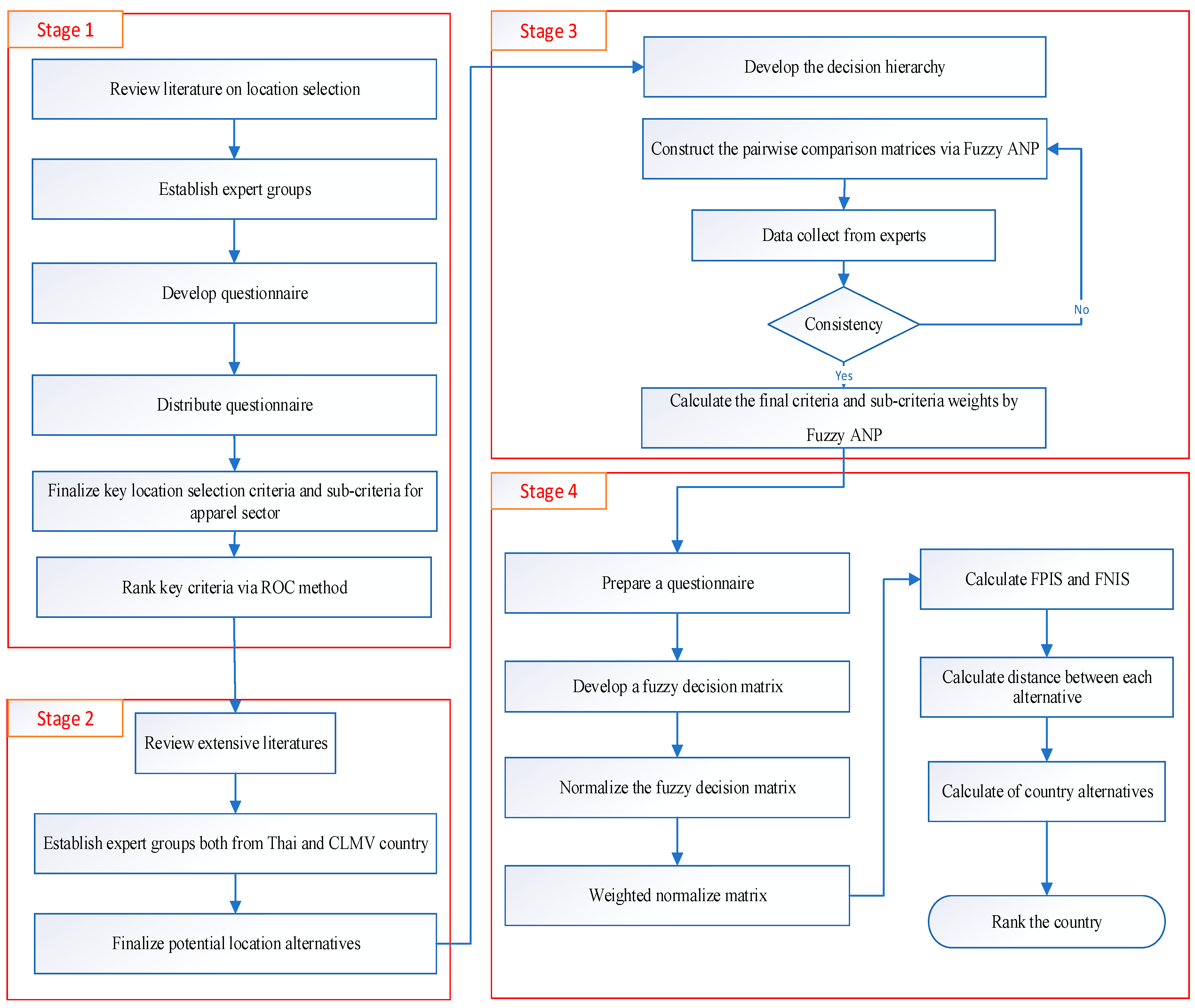
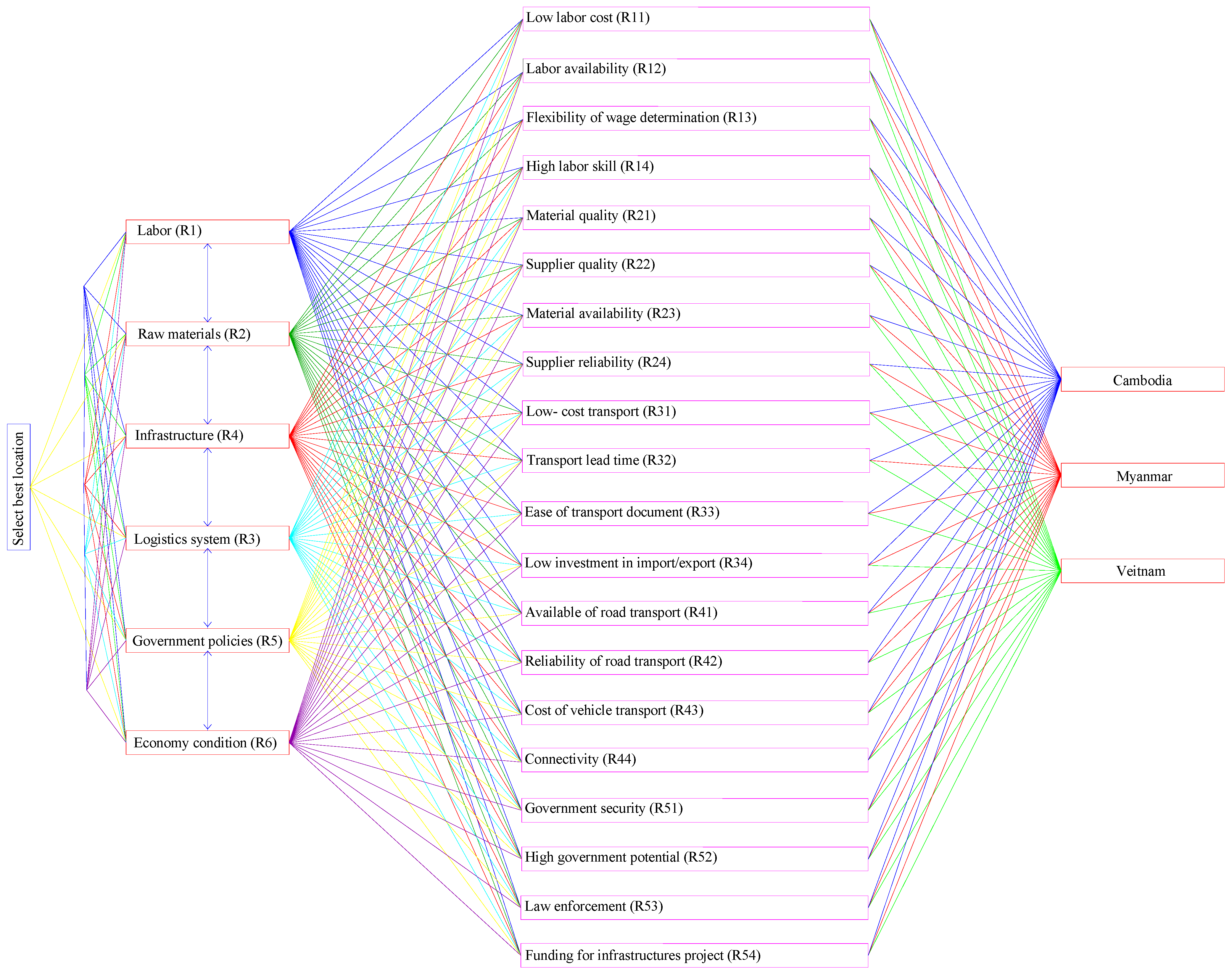
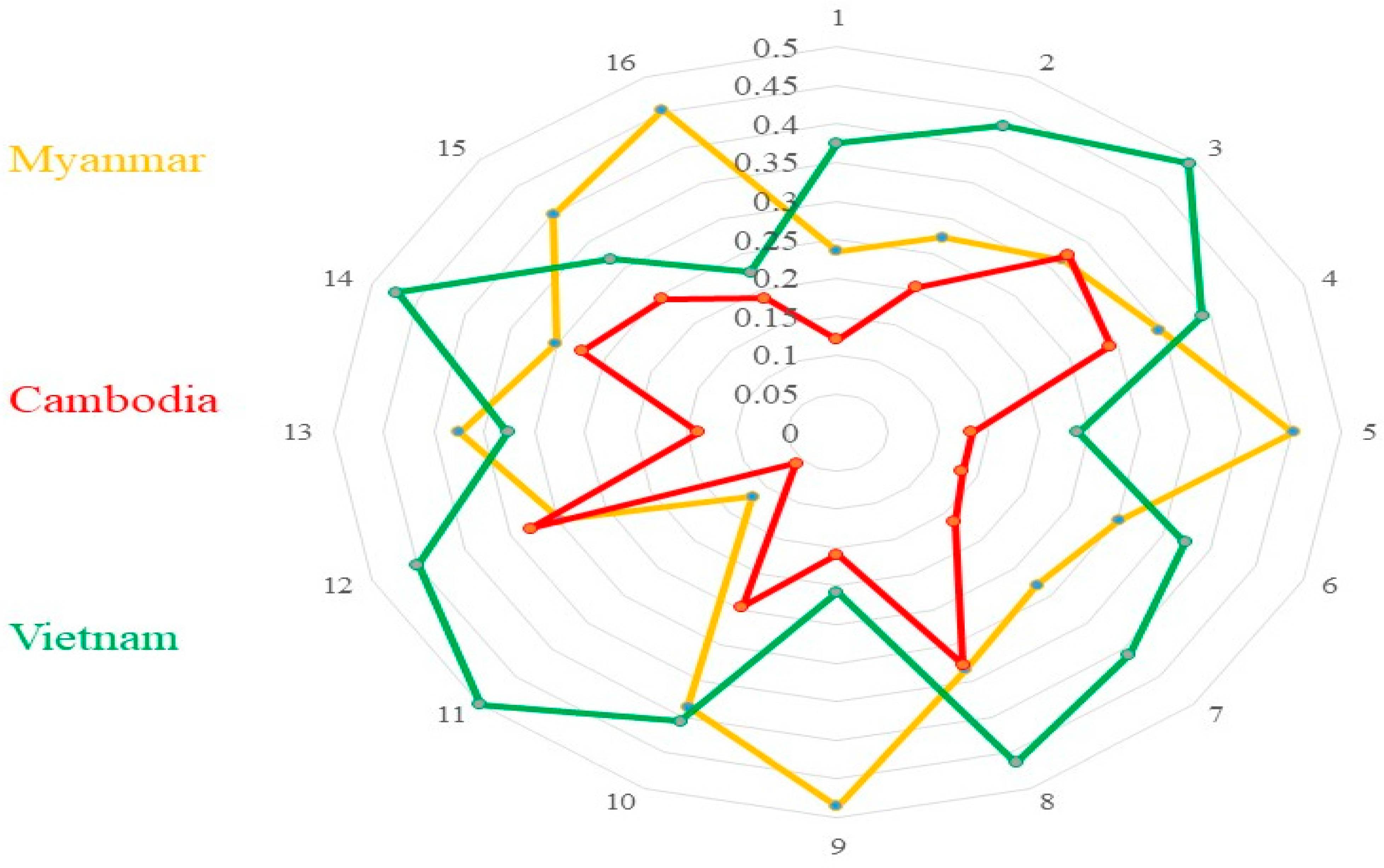
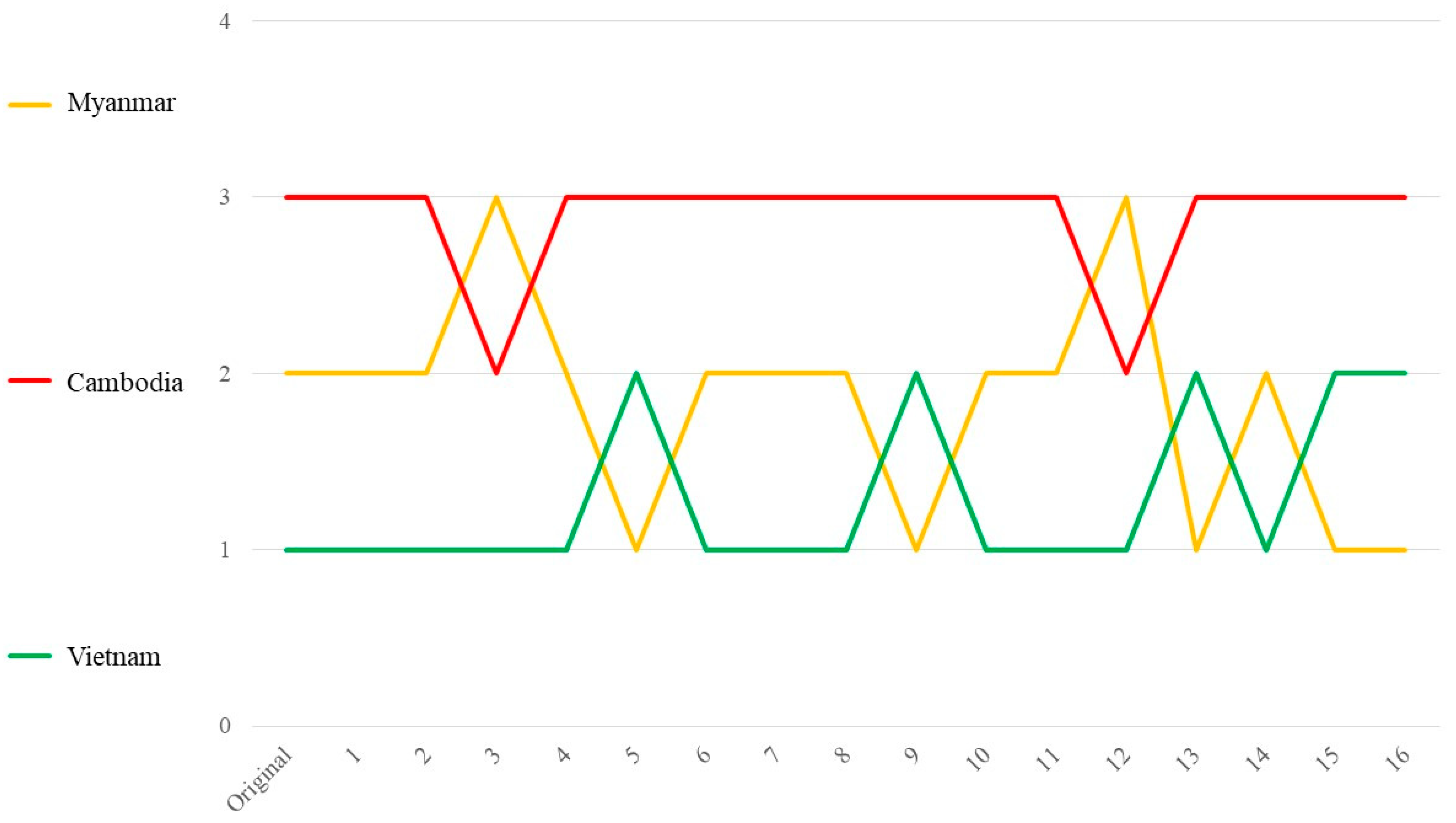
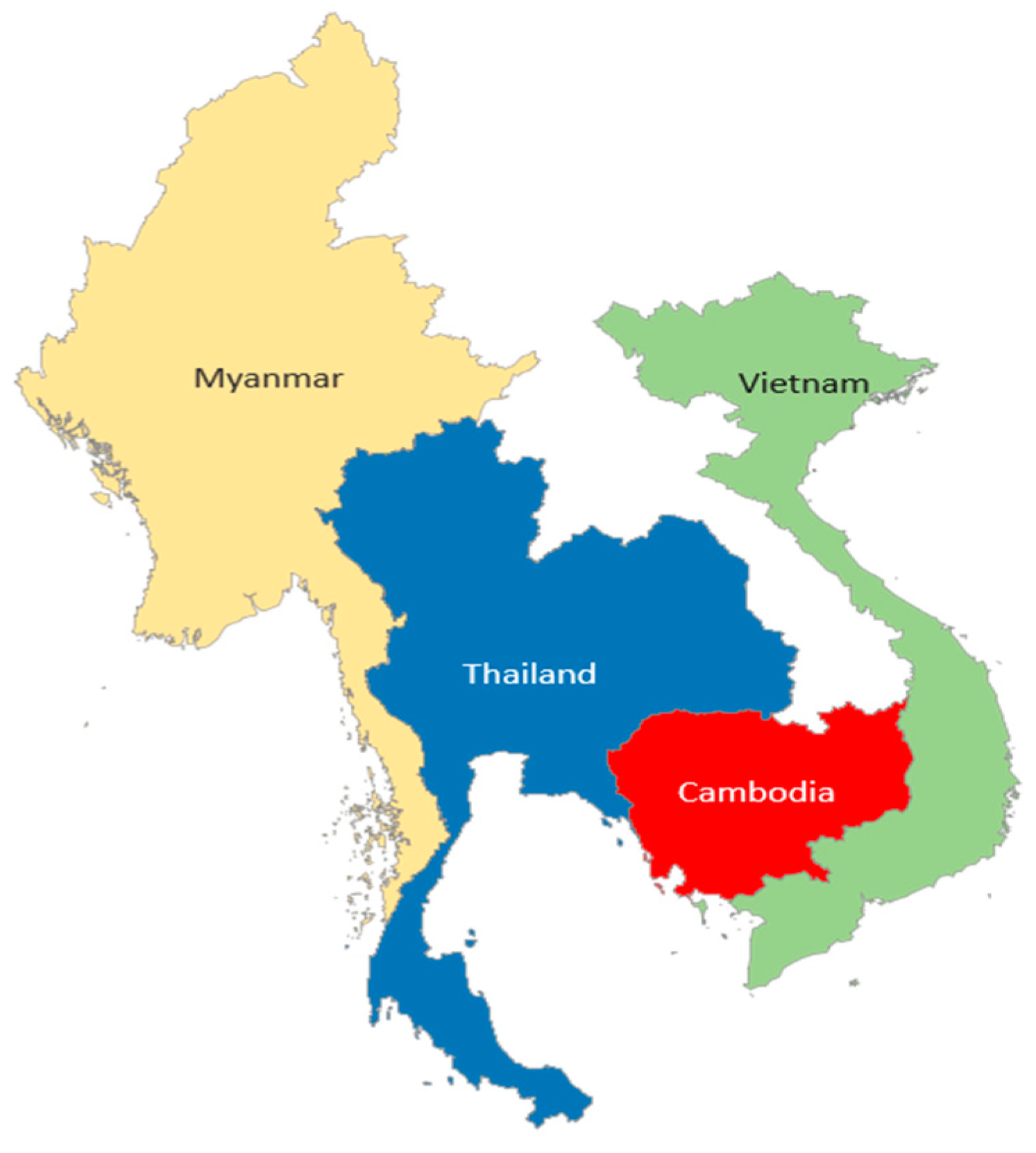
This research paper presents an all-encompassing methodology for multi-criteria decision-making in the apparel sector, with the particular objective of aiding in the determination of the most appropriate location within the CLMV subregion. The research is conducted in three crucial stages. The process began with the administration of a survey to proprietors of garment businesses in both Thailand and the CLMV countries. This survey resulted in the compilation of an exhaustive list of site-selection criteria and sub-criteria. Based on the findings of subject matter-expert interviews, Cambodia (C), Vietnam (V), and Myanmar (M) were identified as feasible alternatives. Subsequently, the questionnaire criteria and sub-criteria were evaluated utilizing the Fuzzy Analytic Network Process (Fuzzy ANP), which involved the utilization of meticulously designed pair-wise comparison matrices and local priorities. Five specialists from the Thai entrepreneurial community affirmed the effectiveness of Fuzzy ANP and expressed interest in expanding manufacturing operations in the CLMV subregion. The optimal location for Thai apparel manufacturers was subsequently determined using the Fuzzy Technique for Order of Preference by Similarity to Ideal Solution (Fuzzy TOPSIS). The results indicated that Vietnam is the most favorable option. In order to improve the dependability of results, an amended mixture-design scenario analysis was implemented. This analysis assessed the sensitivity and dependability of the proposed model in different scenarios, ensuring its applicability in real-world situations. In contrast to traditional models, this study integrates managerial judgments and preferences into the decision-making procedure, thereby accounting for the complex interdependencies among numerous criteria. The suggested methodology functions as a beneficial instrument for decision-makers, both domestic and international, as it integrates effortlessly into the organizational structure of the CLMV region. By harmonizing objectives pertaining to data acquisition, manipulation, retention, and dissemination, this framework not only enables enhanced decision-making processes, but also optimizes system efficiency.
Keywords: CLMV subregion; fuzzy analytic network process (Fuzzy ANP); fuzzy technique for order of preference by similarity to ideal solution (Fuzzy TOPSIS); location decision; multi-criteria decision making (MCDM); adjusted mixture design (AMD) CLMV subregion; fuzzy analytic network process (Fuzzy ANP); fuzzy technique for order of preference by similarity to ideal solution (Fuzzy TOPSIS); location decision; multi-criteria decision making (MCDM); adjusted mixture design (AMD)