Article

The Parabola: Section of a Cone or Locus of Points of a Plane? Tips for Teaching of Geometry from Some Writings by Mydorge and Wallis

Department of Mathematics and Computer Science, Università della Calabria, 87036 Rende, Italy
Mathematics 2022, 10(6), 974; https://doi.org/10.3390/math10060974
Submission received: 12 February 2022 / Revised: 7 March 2022 / Accepted: 16 March 2022 / Published: 18 March 2022

Abstract

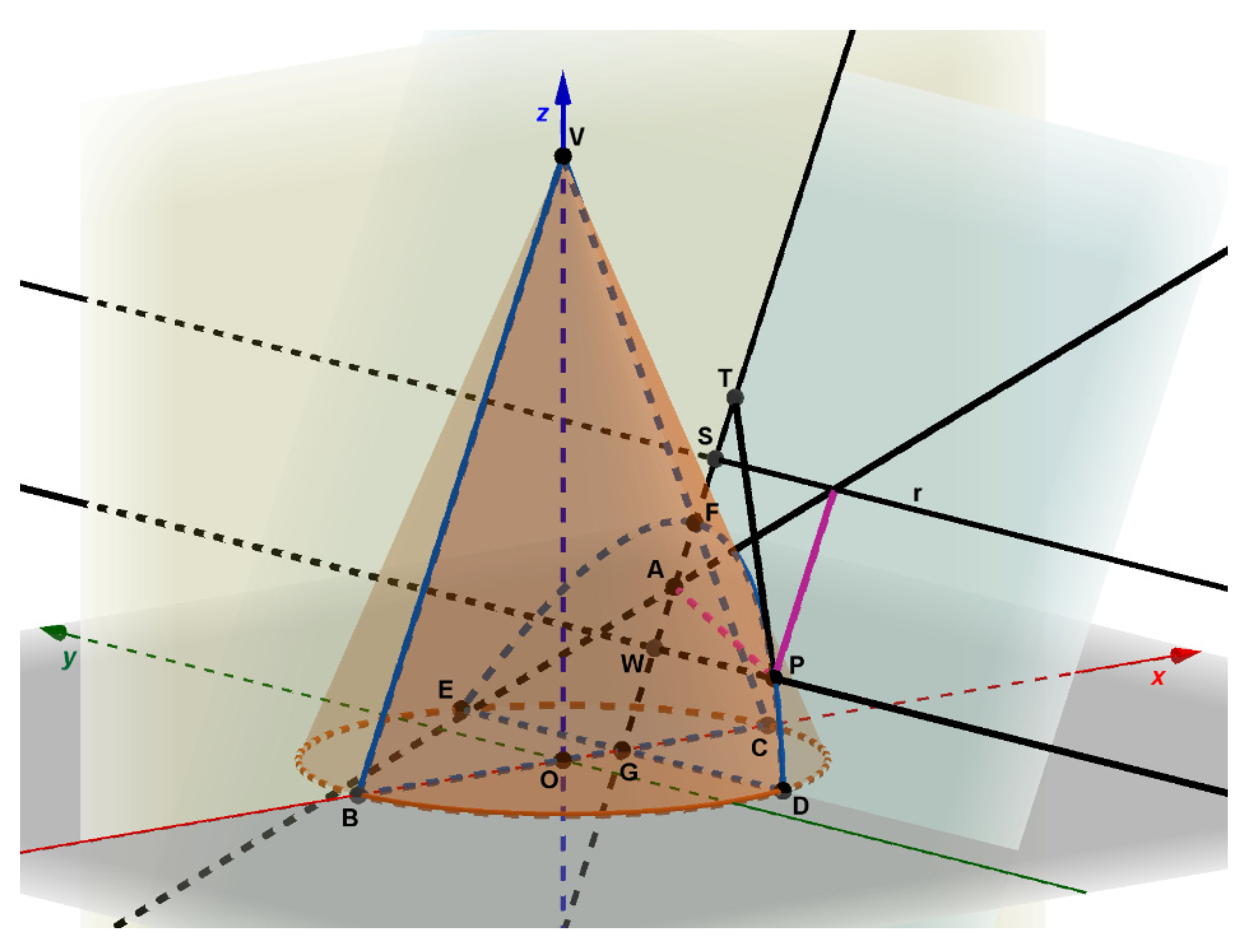
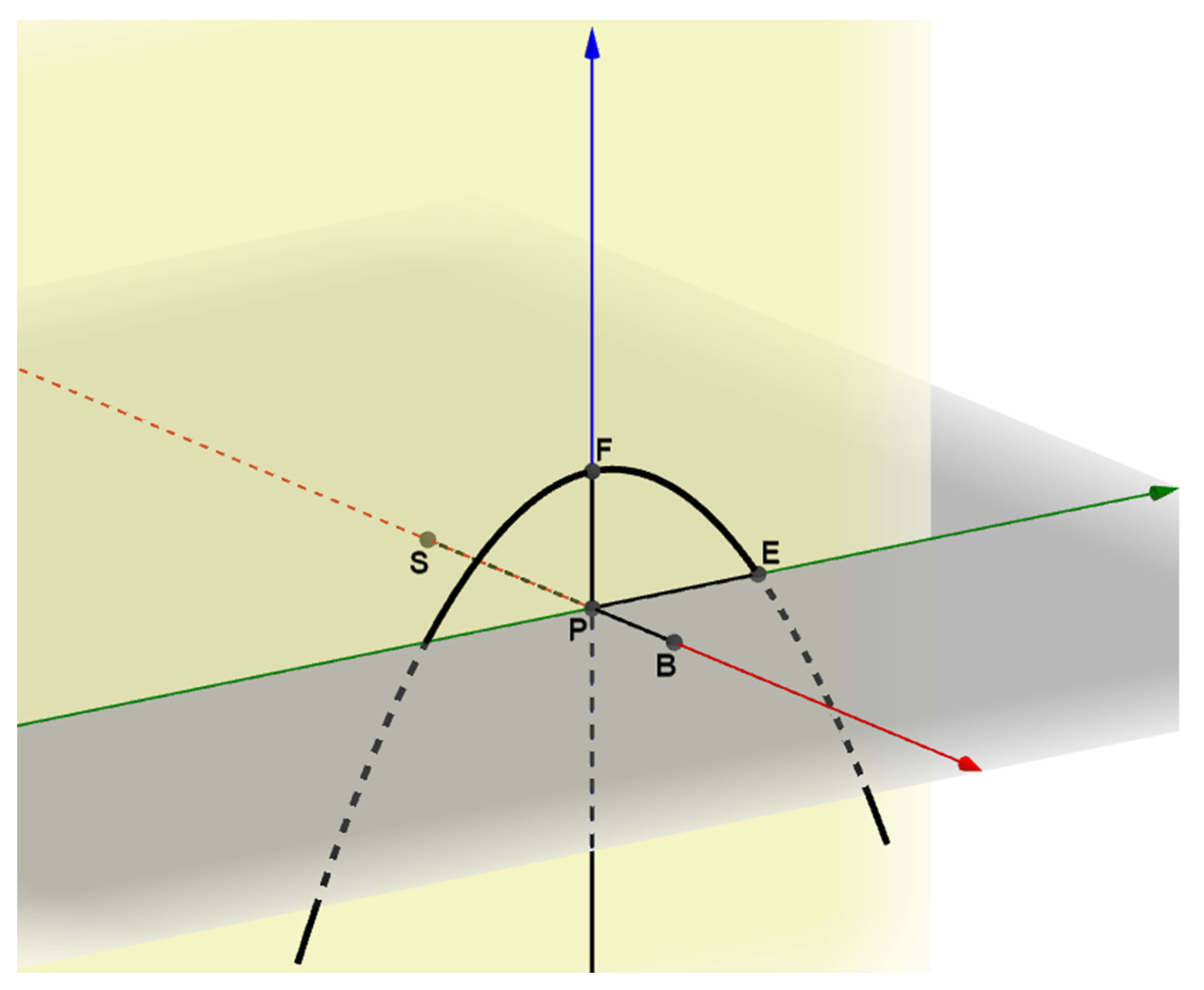
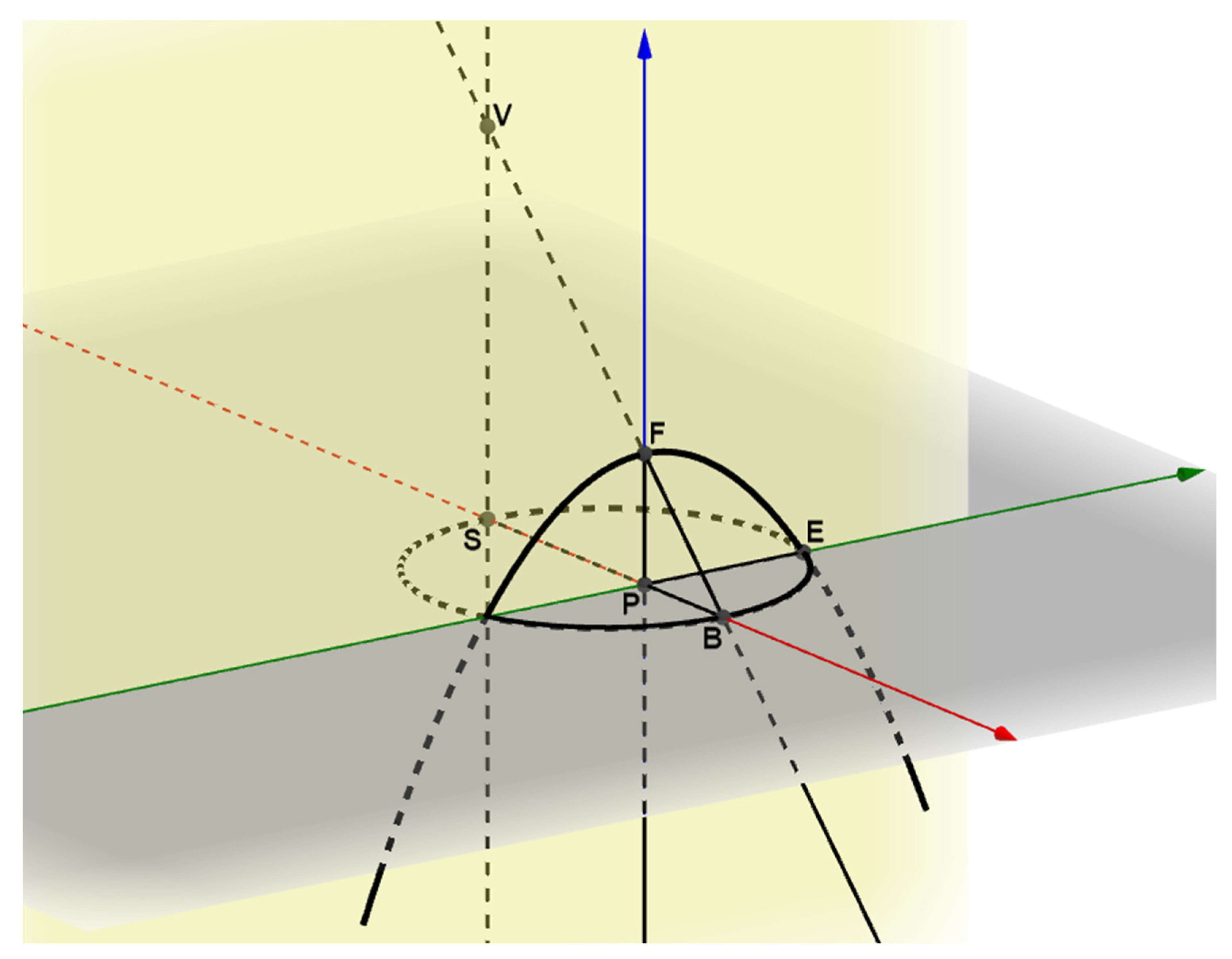
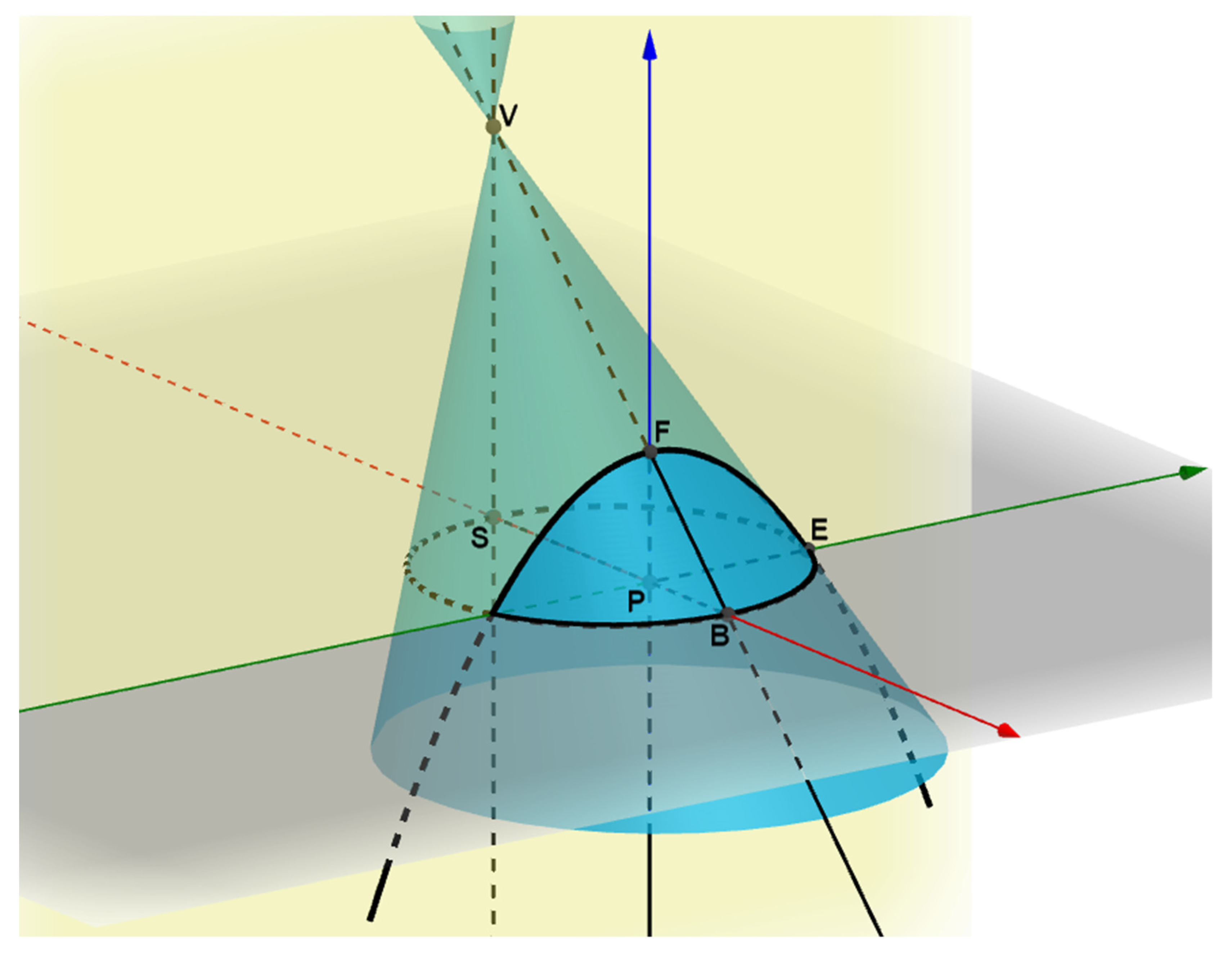
This article proposes a possible path devoted to upper secondary school and early university students, as well as training teachers, with the aim to build a conscious approach to the learning/teaching of the conics, which uses, for an educational purpose, the close relationship between conics as loci of points of a plane and conics as sections of a cone. In this path, we will refer to some elements taken from the history of mathematics relating to a particular conic: the parabola. These elements could help students to discover and realize the transition from a parabola considered as a curve in a plane to the same parabola considered on a cone of which it is a section, as well as the inverse passage, and to grasp the profound link between two presentations of the same geometric object. Both steps will be carried out through constructions made with the use of the GeoGebra dynamic geometry software. In addition, it will be highlighted how the construction of conics by points has allowed the creation of lenses and mirrors, which represents a practical application of geometry very relevant to physics and astronomy. Such a practical approach could help students to overcome the difficulty in understanding conics by making the argument less abstract. Moreover, this path could build up an environment in which teachers and students could explore some semiotic registers and their changes, through which Mathematics expresses itself. In the final part, an educational experiment of the path that was proposed will be shown to the students of the Master’s degree course of “mathematics education” at the Department of Mathematics and Computer Science of the University of Calabria. The results of this experiment are described in detail and seem to confirm that the twofold view of the parabola as a section of a cone and as locus of points of a plane helps the students in understanding its meaning in both theoretical and applicative fields.
Keywords: history of mathematics for mathematics education; mathematics education; history of science; conics; Apollonius; Mydorge; Wallis history of mathematics for mathematics education; mathematics education; history of science; conics; Apollonius; Mydorge; Wallis