



Fast Algorithms for Estimating the Disturbance Inception Time in Power Systems Based on Time Series of Instantaneous Values of Current and Voltage with a High Sampling Rate
 , , ,
, , , 
 and
and 
Abstract
1. Introduction
- Control actions are designed for priori-selected disturbances. It may result in unstable operation of a power system in the case of unplanned disturbance or several consecutive disturbances;
- The design of control action is carried out based on power system models that are different from the real ones, which may decrease the accuracy of emergency control;
- Considering the worst emergency scenarios may lead to the excessive triggering of control actions.
- The drawbacks of conventional emergency control systems are negated by the redundancy and backup structure of emergency control.
- Increasing penetration of renewable sources of energy results in a decreased total inertia of power systems through fewer numbers of rotating masses and increased irregular interconnection fluctuations of active power due to the stochastic nature of generation;
- PMU-based estimation of power systems parameters receives more attention, and it allows obtaining estimation results with minimal time delay (once per utility frequency period for conventional PMUs, once per 5–10 ms for experimental units) and high accuracy;
- Increasingly efficient methods of digital signal processing in combination with PMU data make it possible to estimate parameters of power system models using measurements directly, improving the overall adaptability and accuracy of emergency control;
- The higher efficiency and processing speed of modern computer systems enable maximally fast analysis of power system operation.
2. Related Works
- Fourier transform;
- Gabor transform;
- Kalman filter;
- Hilbert–Huang transform;
- Wavelet transform;
- S transform;
- Methods based on artificial intelligence (AI).
3. Description of the Algorithms of Disturbance Time Estimation Using Currents and Voltages
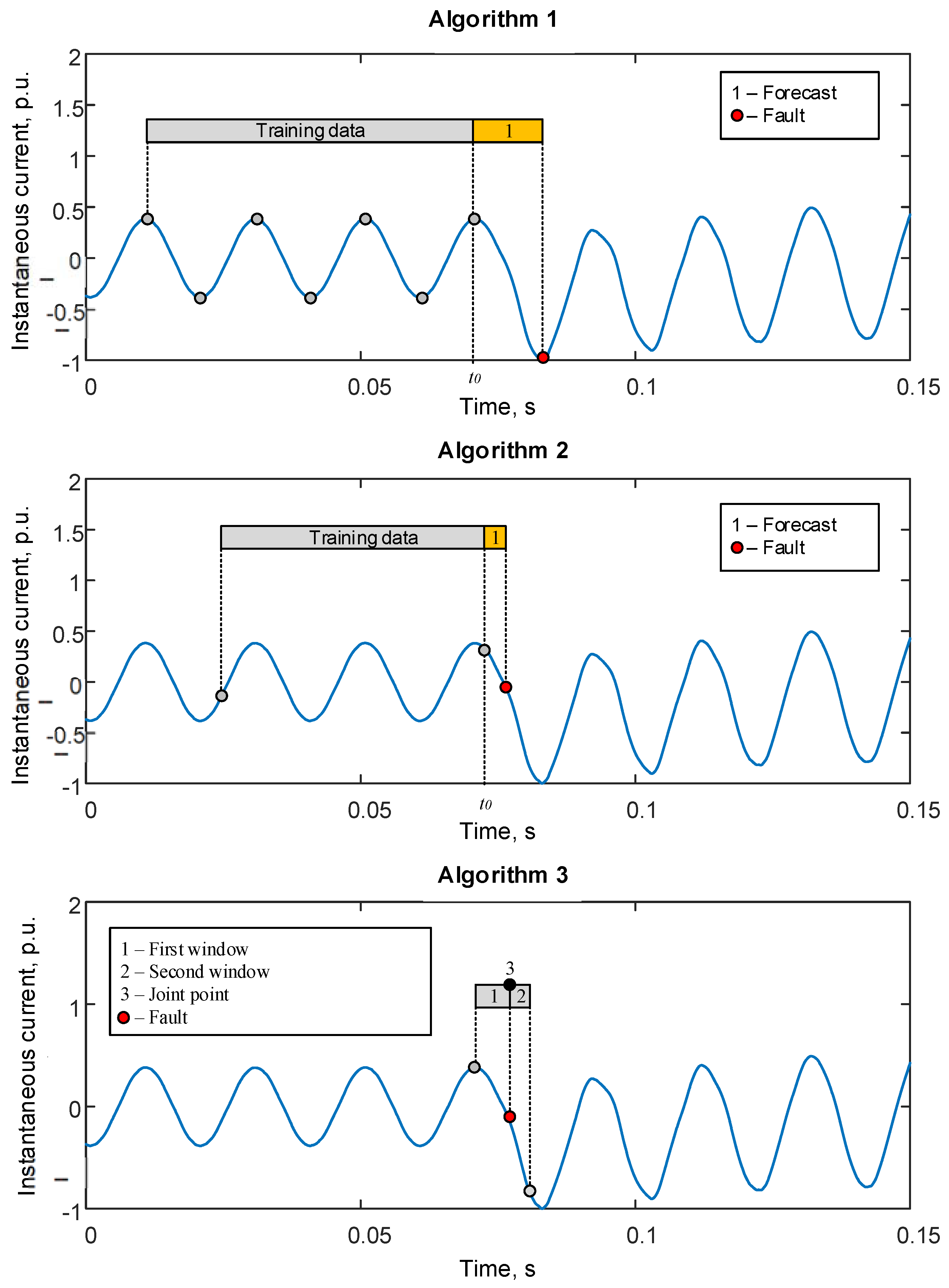
3.1. Algorithm 1
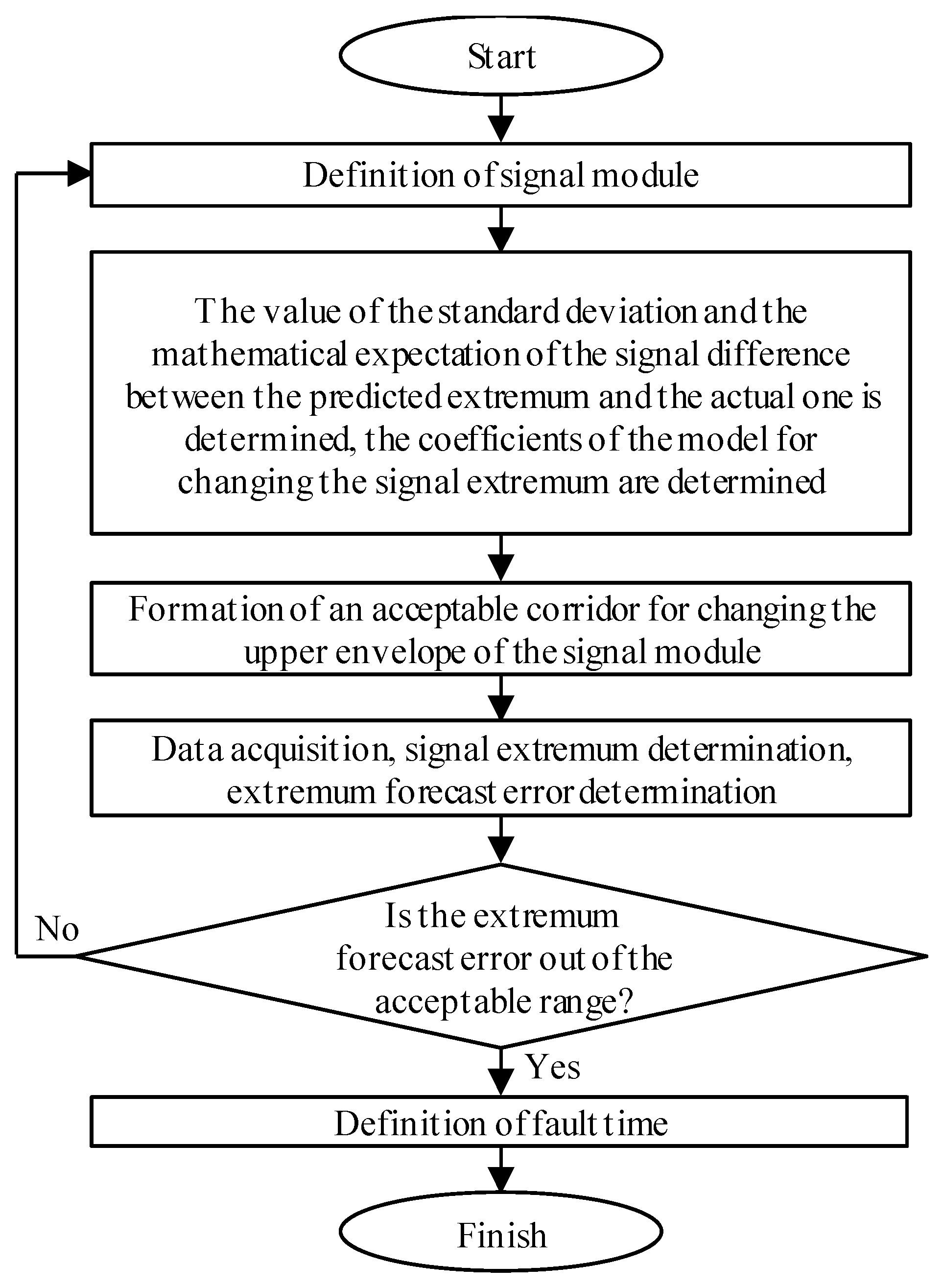
- For the selected training interval, the signal extremum is predicted;
- The difference between the actual extremum and the predicted one is found;
- The mathematical expectation and the standard deviation of the series of the difference between the actual and forecast extremes are determined;
- As a result of the execution of point 4, according to the three sigmas (3-σ) rule, the permissible range of change in the extremum forecast error is determined;
- For the prediction interval, an extremum is estimated;
- The difference between the actual value of the extremum and the predicted value is performed;
- If the difference between the actual value of the extremum and the predicted value is outside the allowable range, then the disturbance time is captured.
3.2. Algorithm 2
3.3. Algorithm 3
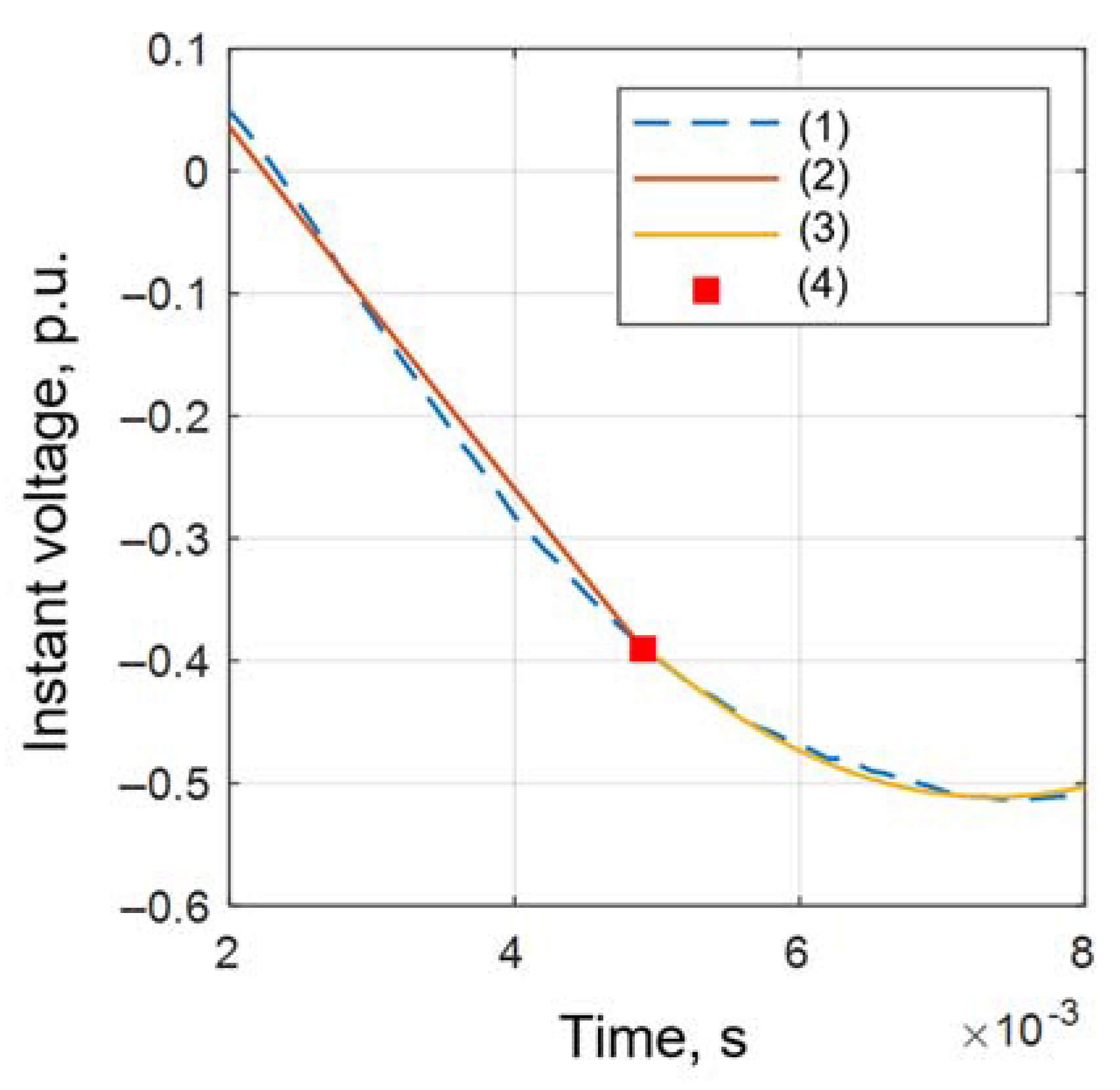
3.4. Comparison of Algorithms Time Delays
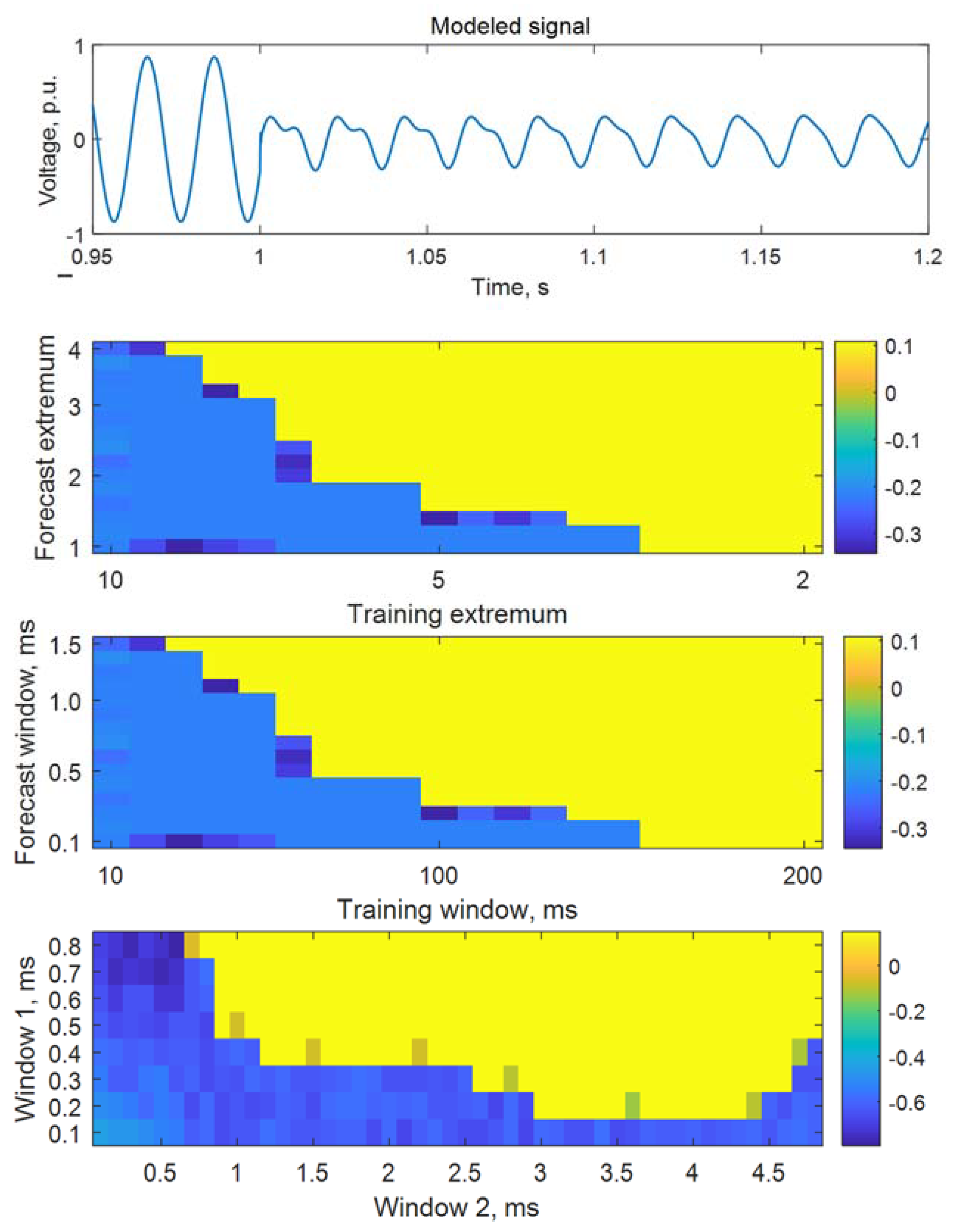
3.5. Method of Algorithm Parameters Selection
- Algorithm 1: retrospective extremum—5 ms, forecast extremum—2 ms;
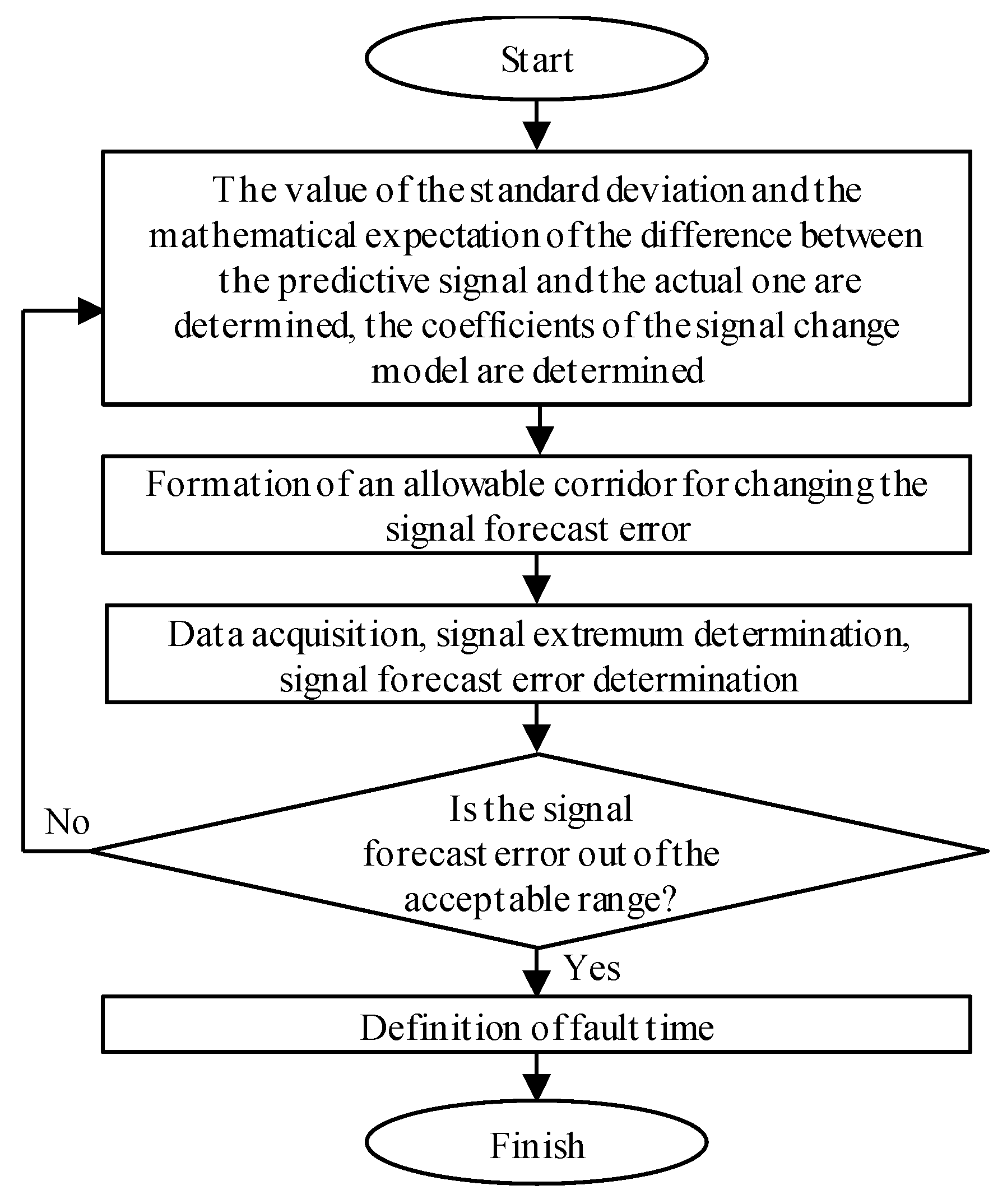
- Algorithm 2: training interval—60 ms, forecast interval—1 ms;
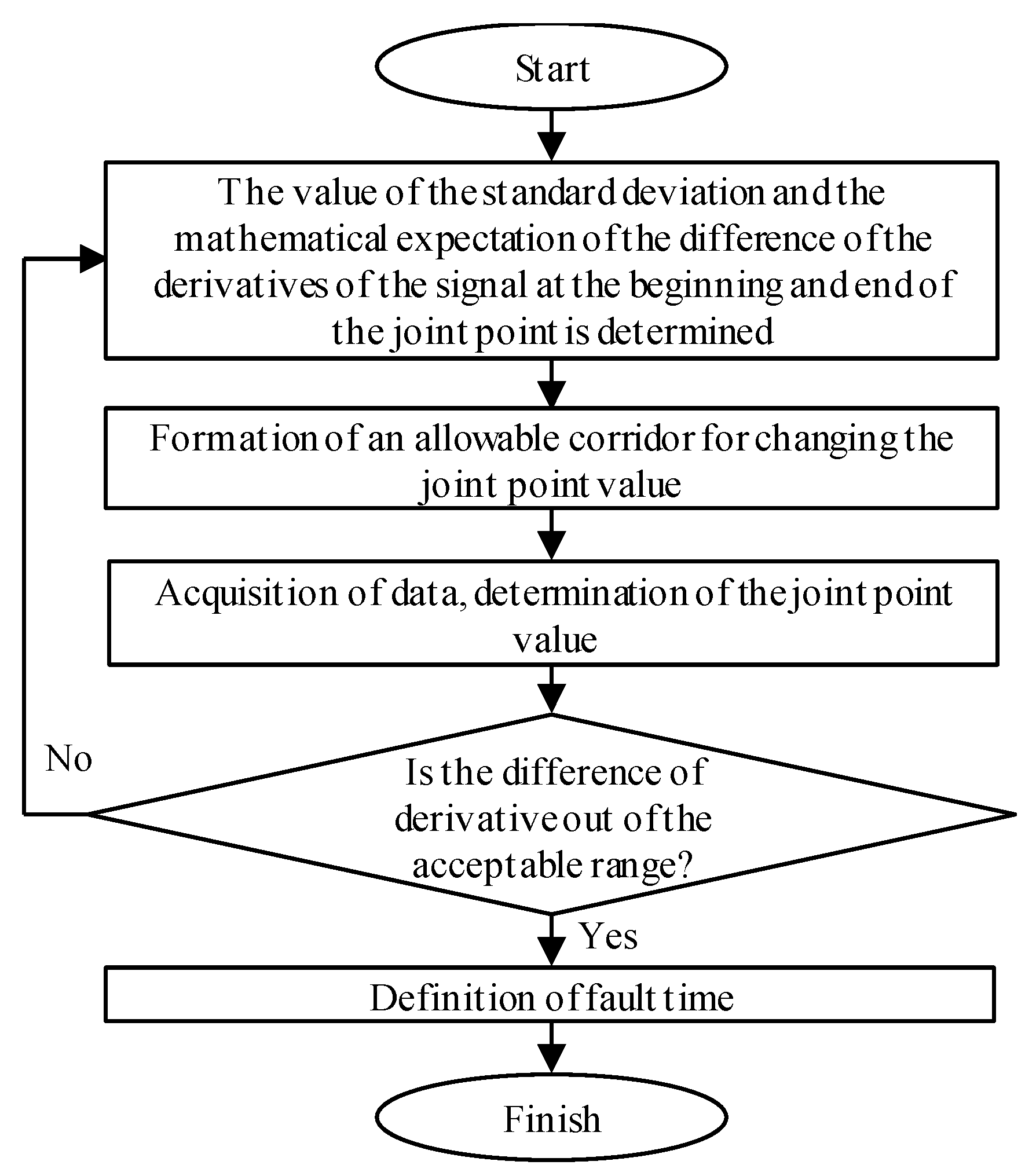
- Algorithm 3: first window—0.5 ms, second window—1.5 ms.
4. Testing the Algorithms of Disturbance Inception Estimation on Modeled and Physical Data
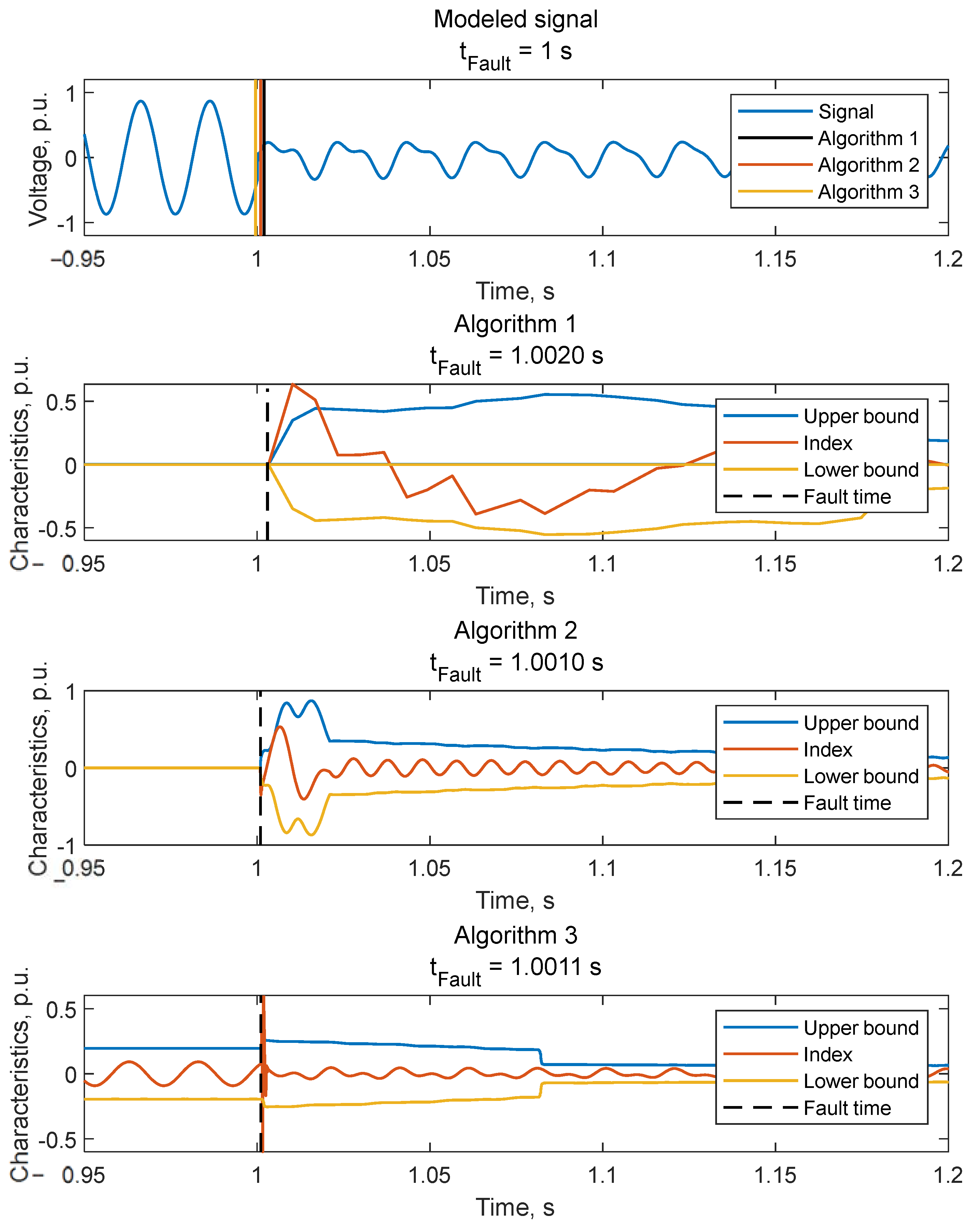
4.1. Modelled Signal
4.2. Physical Signal
4.3. Method of Improving the Accuracy of Suggested Algorithms
5. Comparison of Estimating the Disturbance Inception Time in Power Systems Developed Algorithms with Existing Ones
6. Conclusions
Author Contributions
Funding
Data Availability Statement
Conflicts of Interest
References
- Hatziargyriou, N. Definition and classification of power system stability—Revisited & extended. IEEE Trans. Power Syst. 2021, 36, 3271–3281. [Google Scholar]
- Ernst, D.; Pavella, M. Closed-loop transient stability emergency control. In Proceedings of the 2000 IEEE Power Engineering Society Winter Meeting, Singapore, 23–27 January 2000; Volume 1, pp. 58–62. [Google Scholar]
- Hao, Q.; Zhao, R.; Tong, C. Interharmonics analysis based on interpolating windowed FFT algorithm. IEEE Trans. Power Deliv. 2007, 22, 1064–1069. [Google Scholar]
- Heydt, G.T.; Fjeld, P.S.; Liu, C.C.; Pierce, D.; Tu, L.; Hensley, G. Application of the windowed FFT to electric power quality as-sessment. IEEE Trans. Power Deliv. 1999, 14, 1411–1416. [Google Scholar] [CrossRef] [Scilit]
- Robertson, D.C.; Camps, O.I.; Mayer, J.S.; Gish, W.B. Wavelets and electromagnetic power system transients. IEEE Trans. Power Deliv. 1996, 11, 1050–1058. [Google Scholar] [CrossRef] [Scilit]
- Gu, Y.H.; Bollen, M.H.J. Time-frequency and time-scale domain analysis of voltage disturbances. IEEE Trans. Power Deliv. 2000, 15, 1279–1284. [Google Scholar] [CrossRef] [Scilit]
- Santoso, S.; Grady, W.M.; Powers, E.J.; Lamoree, J.; Bhatt, S.C. Characterization of distribution power quality events with Fourier and wavelet transforms. IEEE Trans. Power Deliv. 2000, 15, 247–254. [Google Scholar] [CrossRef] [Scilit]
- Liu, H.; Hu, H.; Chen, H.; Zhang, L.; Xing, Y. Fast and flexible selective harmonic extraction methods based on the gener-alized discrete fourier transform. IEEE Trans. Power Electron. 2018, 33, 3484–3496. [Google Scholar] [CrossRef] [Scilit]
- Qian, S.; Chen, D. Discrete Gabor transform. IEEE Trans. Signal Process. 1993, 41, 2429–2438. [Google Scholar] [CrossRef] [Scilit]
- Huang, S.; Huang, C.; Hsieh, C. Application of Gabor transform technique to supervise power system transient harmonics. IEEE Proc. Gener. Transm. Distrib. IET. 1996, 143, 461–466. [Google Scholar] [CrossRef] [Scilit]
- Kawady, T.A.; Elkalashy, N.I.; Ibrahim, A.E.; Taalab, A.-M.I. Arcing fault identification using combined Gabor Transform-neural network for transmission lines. Int. J. Electr. Power Energy Syst. 2014, 61, 248–258. [Google Scholar] [CrossRef] [Scilit]
- Cho, S.-H.; Jang, G.; Kwon, S.-H. Time–Frequency analysis of power-quality disturbances via the Gabor—Wigner transform. IEEE Trans. Power Deliv. 2010, 25, 494–499. [Google Scholar]
- Abdelsalam, A.A.; Eldesouky, A.A.; Sallam, A.A. Classification of power system disturbances using linear Kalman filter and fuzzy-expert system. Int. J. Electr. Power Energy Syst. 2012, 43, 688–695. [Google Scholar] [CrossRef] [Scilit]
- Dash, P.K.; Chilukuri, M.V. Hybrid S-transform and Kalman filtering approach for detection and measurement of short duration disturbances in power networks. IEEE Trans. Instrum. Meas. 2004, 53, 588–596. [Google Scholar] [CrossRef] [Scilit]
- Reddy, J.; Dash, P.K.; Samantaray, R.; Moharana, A.K. Fast tracking of power quality disturbance signals using an optimized unscented filter. IEEE Trans. Instrum. Meas. 2009, 58, 3943–3952. [Google Scholar] [CrossRef] [Scilit]
- Biswal, B.; Biswal, M.; Mishra, S.; Jalaja, R. Automatic classification of power quality events using balanced neural tree. IEEE Trans. Ind. Electron. 2014, 61, 521–530. [Google Scholar] [CrossRef] [Scilit]
- Shukla, S.; Mishra, S.; Singh, B. Empirical-mode decomposition with Hilbert transform for power-quality assessment. IEEE Trans. Power Deliv. 2009, 24, 2159–2165. [Google Scholar] [CrossRef] [Scilit]
- Tse, N.C.F.; Chan, J.Y.C.; Lau, W.-H.; Lai, L.L. Hybrid wavelet and Hilbert transform with frequency-shifting decomposition for power quality analysis. IEEE Trans. Instrum. Meas. 2012, 61, 3225–3233. [Google Scholar] [CrossRef] [Scilit]
- Saxena, D.; Singh, S.; Verma, K.; Singh, S.K. HHT-based classification of composite power quality events. Int. J. Energy Sect. Manag. 2014, 8, 146–159. [Google Scholar] [CrossRef] [Scilit]
- Kumar, R.; Singh, B.; Shahani, D.T. Recognition of single-stage and multiple power quality events using Hilbert-Huang trans-form and probabilistic neural network. Electr. Power Compon. Syst. 2015, 43, 607–619. [Google Scholar] [CrossRef] [Scilit]
- Hasan, S.; Muttaqi, K.M.; Sutanto, D. Detection and characterization of time-variant non-stationary voltage sag waveforms using segmented Hilbert Huang transform. IEEE Trans. Ind. Appl. 2020, 56, 4563–4574. [Google Scholar] [CrossRef] [Scilit]
- Manjula, M.; Mishra, S.; Sarma, A.V.R.S. Empirical mode decomposition with Hilbert transform for classification of voltage sag causes using probabilistic neural network. Int. J. Electr. Power Energy Syst. 2013, 44, 597–603. [Google Scholar] [CrossRef] [Scilit]
- Ozgonenel, O.; Yalcin, T.; Guney, I.; Kurt, U. A new classification for power quality events in distribution systems. Electr. Power Syst. Res. 2013, 95, 192–199. [Google Scholar] [CrossRef] [Scilit]
- Sahani, M.; Dash, P.K. FPGA-based online power quality disturbances monitoring using reduced-sample hht and class-specific weighted RVFLN. IEEE Trans. Ind. Inform. 2019, 15, 4614–4623. [Google Scholar] [CrossRef] [Scilit]
- Sahani, M.; Dash, P.K. Automatic power quality events recognition based on hilbert huang transform and extreme learning machine. IEEE Trans. Ind. Inform. 2018, 14, 3849–3858. [Google Scholar] [CrossRef] [Scilit]
- Nath, S.; Sinha, P.; Goswami, S.K. A wavelet based novel method for the detection of harmonic sources in power systems. Int. J. Electr. Power Energy Syst. 2012, 40, 54–61. [Google Scholar] [CrossRef] [Scilit]
- Santoso, S.; Powers, E.J.; Grady, W.M.; Hofmann, P. Power quality assessment via wavelet transform analysis. IEEE Trans. on Power Deliv. 1996, 11, 924–930. [Google Scholar] [CrossRef] [Scilit]
- Pillay, P.; Bhattacharjee, A. Application of wavelets to model short-term power system disturbances. IEEE Trans. Power Syst. 1996, 11, 2031–2037. [Google Scholar] [CrossRef] [Scilit]
- Latran, M.B.; Teke, A. A novel wavelet transform based voltage sag/swell detection algorithm. Int. J. Electr. Power Energy Syst. 2015, 71, 131–139. [Google Scholar] [CrossRef] [Scilit]
- Zhengyou, H.; Shibin, G.; Xiaoqin, C.; Jun, Z.; Zhiqian, B.; Qingquan, Q. Study of a new method for power system transients classification based on wavelet entropy and neural network. Int. J. Electr. Power Energy Syst. 2011, 33, 402–410. [Google Scholar] [CrossRef] [Scilit]
- Liao, Y.; Lee, J.-B. A fuzzy-expert system for classifying power quality disturbances. Int. J. Electr. Power Energy Syst. 2004, 26, 199–205. [Google Scholar] [CrossRef] [Scilit]
- Karimi, M.; Mokhtari, H.; Iravani, M.R. Wavelet based on-line disturbance detection for power quality applications. IEEE Trans. Power Deliv. 2000, 15, 1212–1220. [Google Scholar] [CrossRef] [Scilit]
- Mokhtari, H.; Karimi-Ghartemani, M.; Iravani, M.R. Experimental performance evaluation of a wavelet-based on-line voltage detection method for power quality applications. IEEE Trans. Power Deliv. 2002, 17, 161–172. [Google Scholar] [CrossRef] [Scilit]
- Lin, C.-H.; Wang, C.-H. Adaptive wavelet networks for power-quality detection and discrimination in a power system. IEEE Trans. Power Deliv. 2006, 21, 1106–1113. [Google Scholar] [CrossRef] [Scilit]
- Thirumala, K.; Prasad, M.S.; Jain, T.; Umarikar, A.C. Tunable-Q wavelet transform and dual multiclass SVM for online automatic detection of power quality disturbances. IEEE Trans. Smart Grid 2016, 9, 3018–3028. [Google Scholar] [CrossRef] [Scilit]
- Dash, P.K.; Panigrahi, K.B.; Panda, G. Power quality analysis using S-transform. IEEE Power Eng. Rev. 2002, 22, 406–411. [Google Scholar] [CrossRef] [Scilit]
- Lee, I.W.C.; Dash, P.K. S-transform-based intelligent system for classification of power quality disturbance signals. IEEE Trans. Ind. Electron. 2003, 50, 800–805. [Google Scholar] [CrossRef] [Scilit]
- Behera, H.; Dash, P.; Biswal, B. Power quality time series data mining using S-transform and fuzzy expert system. Appl. Soft Comput. 2010, 10, 945–955. [Google Scholar] [CrossRef] [Scilit]
- Biswal, B.; Behera, H.S.; Bisoi, R.; Dash, P.K. Classification of power quality data using decision tree and chemotactic differential evolution based fuzzy clustering. Swarm Evol. Comput. 2012, 4, 12–24. [Google Scholar] [CrossRef] [Scilit]
- Biswal, M.; Dash, P.K. Measurement and classification of simultaneous power signal patterns with an S-transform variant and fuzzy decision tree. IEEE Trans. Ind. Inform. 2013, 9, 1819–1827. [Google Scholar] [CrossRef] [Scilit]
- Babu, P.R.; Dash, P.K.; Swain, S.K.; Sivanagaraju, S. A new fast discrete S-transform and decision tree for the classification and monitoring of power quality disturbance waveforms. Int. Trans. Electr. Energy Syst. 2014, 24, 1279–1300. [Google Scholar] [CrossRef] [Scilit]
- Singh, M.; Shaik, A.G. Incipient fault detection in stator windings of an induction motor using Stockwell transform and SVM. IEEE Trans. Instrum. Meas. 2020, 69, 9496–9504. [Google Scholar] [CrossRef] [Scilit]
- El-Dine Atta, M.E.; Ibrahim, D.K.; Gilany, M.I. Broken bar faults detection under induction motor starting conditions using the optimized stockwell transform and adaptive time—Frequency filter. IEEE Trans. Instrum. 2021, 70, 1–10. [Google Scholar] [CrossRef] [Scilit]
- Mukherjee, N.; Chattopadhyaya, A.; Chattopadhyay, S.; Sengupta, S. Discrete-wavelet-transform and stock-well-transform-based statistical parameters estimation for fault analysis in grid-connected wind power system. IEEE Syst. J. 2020, 14, 4320–4328. [Google Scholar] [CrossRef] [Scilit]
- Li, D.; Ukil, A.; Satpathi, K.; Yeap, Y.M. Improved S transform-based fault detection method in voltage source converter inter-faced DC system. IEEE Trans. Ind. Electron. 2021, 68, 5024–5035. [Google Scholar] [CrossRef] [Scilit]
- Mahela, O.P.; Sharma, J.; Kumar, B.; Khan, B.; Alhelou, H.H. An algorithm for the protection of distribution feeders using the Stockwell and Hilbert transforms supported features. CSEE J. Power Energy Syst. 2021, 7, 1278–1288. [Google Scholar]
- Pavlovski, M.; Alqudah, M.; Dokic, T.; Hai, A.A.; Kezunovic, M.; Obradovic, Z. Hierarchical convolutional neural networks for event classification on PMU measurements. IEEE Trans. Instrum. Meas. 2021, 70, 1–13. [Google Scholar] [CrossRef] [Scilit]
- Hai, A.A. Transfer learning for event detection from PMU measurements with scarce labels. IEEE Access. 2021, 9, 127420–127432. [Google Scholar] [CrossRef] [Scilit]
- Shi, J.; Foggo, B.; Yu, N. Power system event identification based on deep neural network with information loading. IEEE Trans. Power Syst. 2021, 36, 5622–5632. [Google Scholar] [CrossRef] [Scilit]
- Ahmed, A.; Sajan, K.S.; Srivastava, A.; Wu, Y. Anomaly detection, localization and classification using drifting synchro-phasor data streams. IEEE Trans. Smart Grid 2021, 12, 3570–3580. [Google Scholar] [CrossRef] [Scilit]
- Grando, F.L.; Lazzaretti, A.E.; Moreto, M.; Lopes, H.S. Fault classification in power distribution systems using PMU data and machine learning. In Proceedings of the 20th International Conference on Intelligent System Application to Power Systems, New Delhi, India, 10–19 December 2019; pp. 1–6. [Google Scholar]
- Li, H.; Ma, Z.; Weng, Y. A transfer learning framework for power system event identification. IEEE Trans. Power Syst. 2022. [Google Scholar] [CrossRef] [Scilit]
- Papia, R.; Gunesh, K.; Biplab, K.M. A comprehensive review on soft computing and signal processing techniques in feature extraction and classification of power quality problems. J. Renew. Sustain. Energy 2018, 10, 025102. [Google Scholar]
- Manohar, M. Power quality disturbance detection and classification using signal processing and soft computing techniques: A comprehensive review. Int. Trans. Electr. Energy Syst. 2019, 29, e12008. [Google Scholar]
- Bastos, A.F.; Santoso, S.; Todeschini, G. Comparison of methods for determining inception and recovery points of voltage variation events. In Proceedings of the 2018 IEEE Power & Energy Society General Meeting (PESGM), Portland, Oregon, 5–9 August 2018; pp. 1–5. [Google Scholar] [CrossRef] [Scilit]


| Method | References | Merits | Drawbacks |
|---|---|---|---|
| FT | [3,4,5,6,7,8] | Simple implementation for stationary signals | Inability to consider time dependence of harmonics directly Low sensitivity for frequency deviations |
| GT | [9,10,11,12] | High time-frequency resolution | Can hardly be used for high frequency disturbances |
| KT | [13,14,15] | High signal-to-noise ratio | The decomposition of a signal cannot be provided both in time and frequency domains |
| HHT | [16,17,18,19,20,21,22,23,24,25] | High time-frequency resolution | Useful only for short-term disturbances |
| WT | [26,27,28,29,30,31,32,33,34,35] | High time-frequency resolution | High computational burden Inability to analyze noised signals |
| ST | [36,37,38,39,40,41,42,43,44,45,46] | High time-frequency resolution High accuracy of PQ events recognition | Cannot be applied to analyze harmonics |
| AI | [47,48,49,50,51,52] | Capability to extract complex features High accuracy | Dependence on training data set High computational difficulty |
| Element | Parameters |
|---|---|
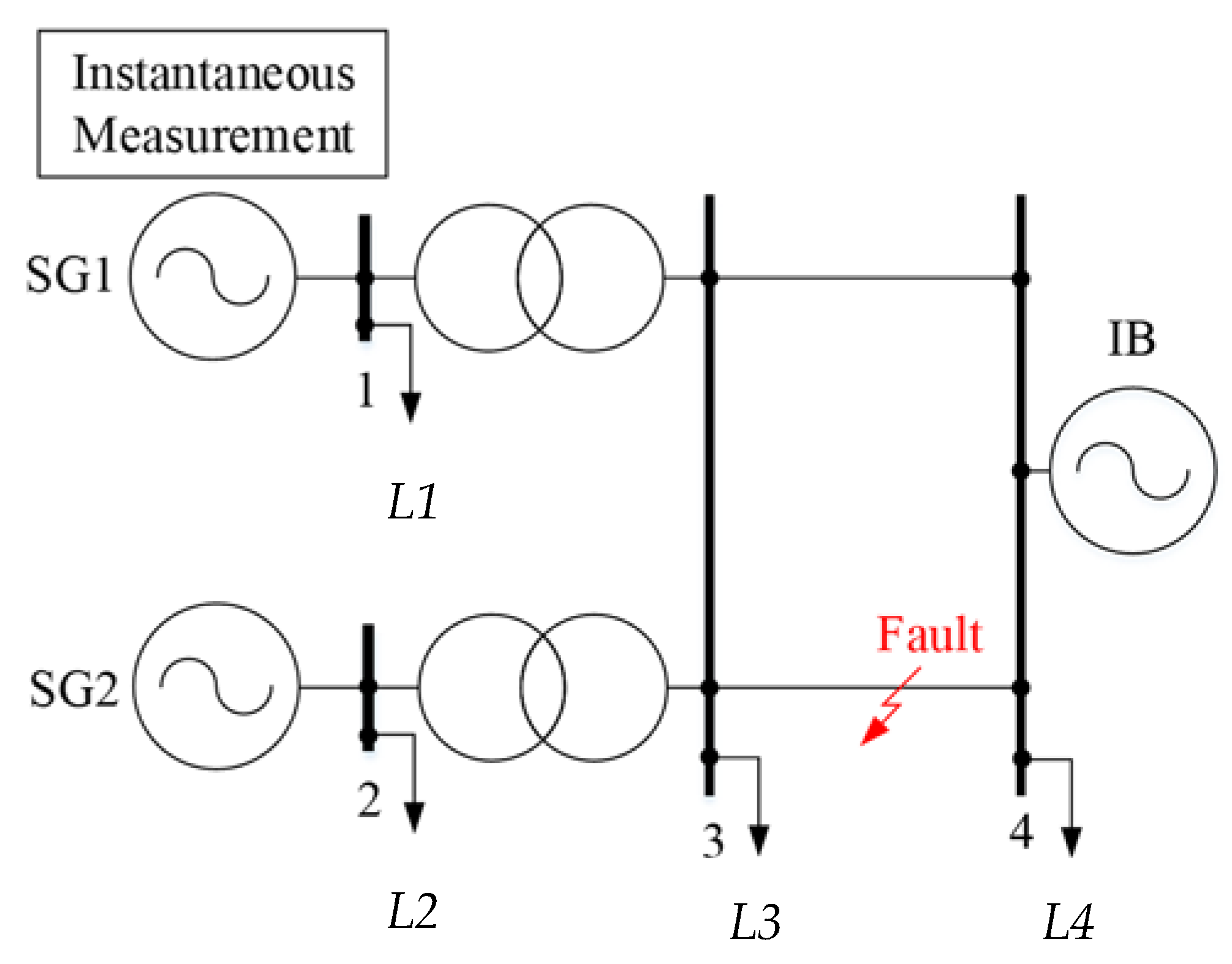
| Synchronous generators | Prat = 300 MW, xd = 610 Ohm, xd′ = 186 Ohm, xd″ = 75 Ohm, TJ = 4 s |
| Load | L1 = L2 = 5 MW, L3 = L4 = 200 MW |
| Transformer | x = 28.3 Ohm, kU = 11.5/330 kV |
| Transmission line | r + jx = 2.75 + j43.23 Ohm, x0 = 108.06 Ohm, b = 444.3 μS |
| Instantaneous Measurement | fADC = 10 kHz |
| Fault | tstart = 10.0 s, tfinish = 10.20 s |
| Infinite bus (IB) | U = 330 kV |
| Parameter | Algorithm 1 | Algorithm 2 | Algorithm 3 |
|---|---|---|---|
| Estimated time of disturbance inception, s | 1.0020 | 1.0010 | 1.0011 |
| Deviation from reference value% | 0.20 | 0.10 | 0.11 |
| Parameter | Algorithm 1 | Algorithm 2 | Algorithm 3 |
|---|---|---|---|
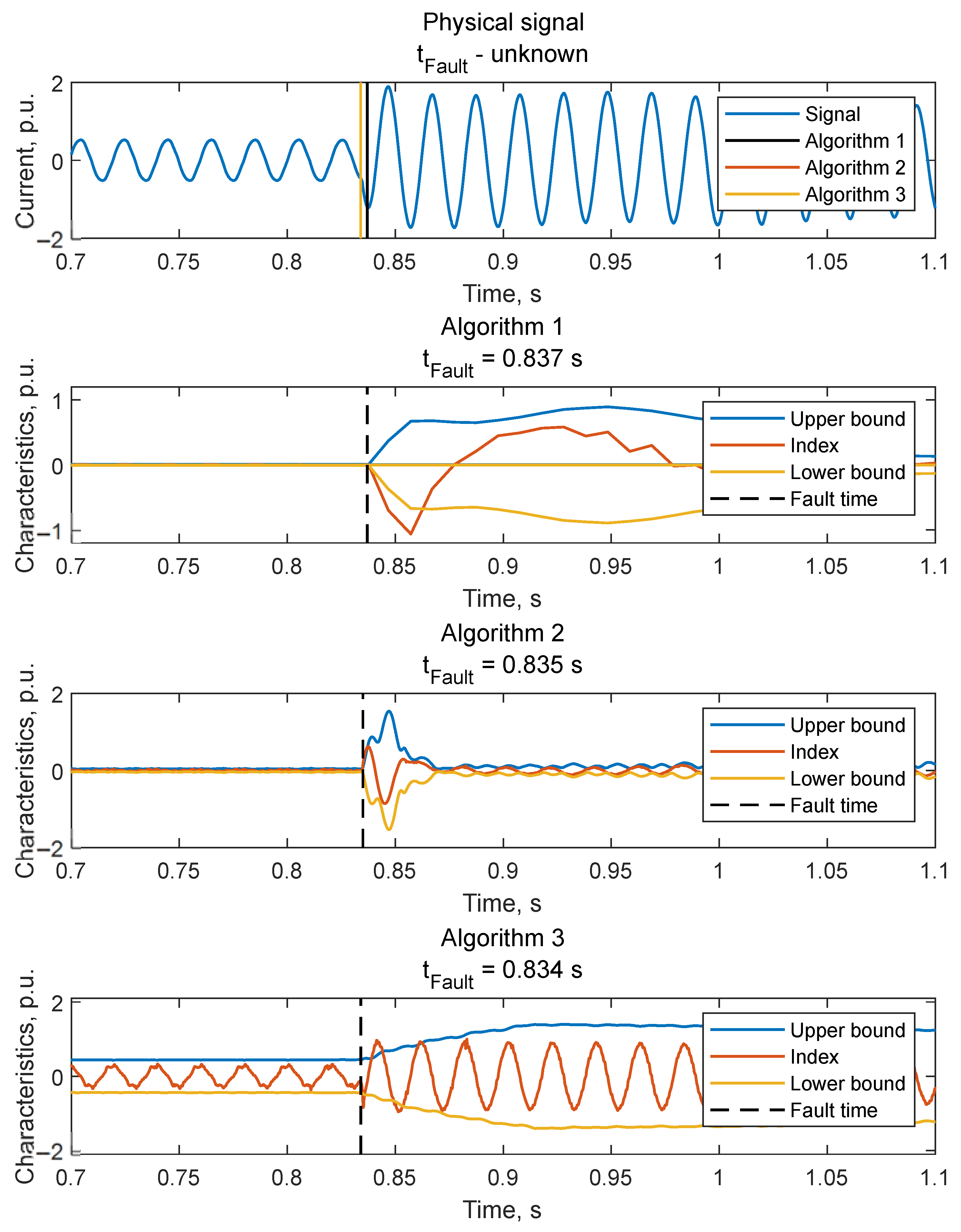
| Estimated time of disturbance inception, s | 0.8374 | 0.8352 | 0.8341 |
| Deviation from reference value% | 0.3836 | 0.1198 | 0.0119 |
| Signal under Consideration | Disturbance Inception Time, s |
|---|---|
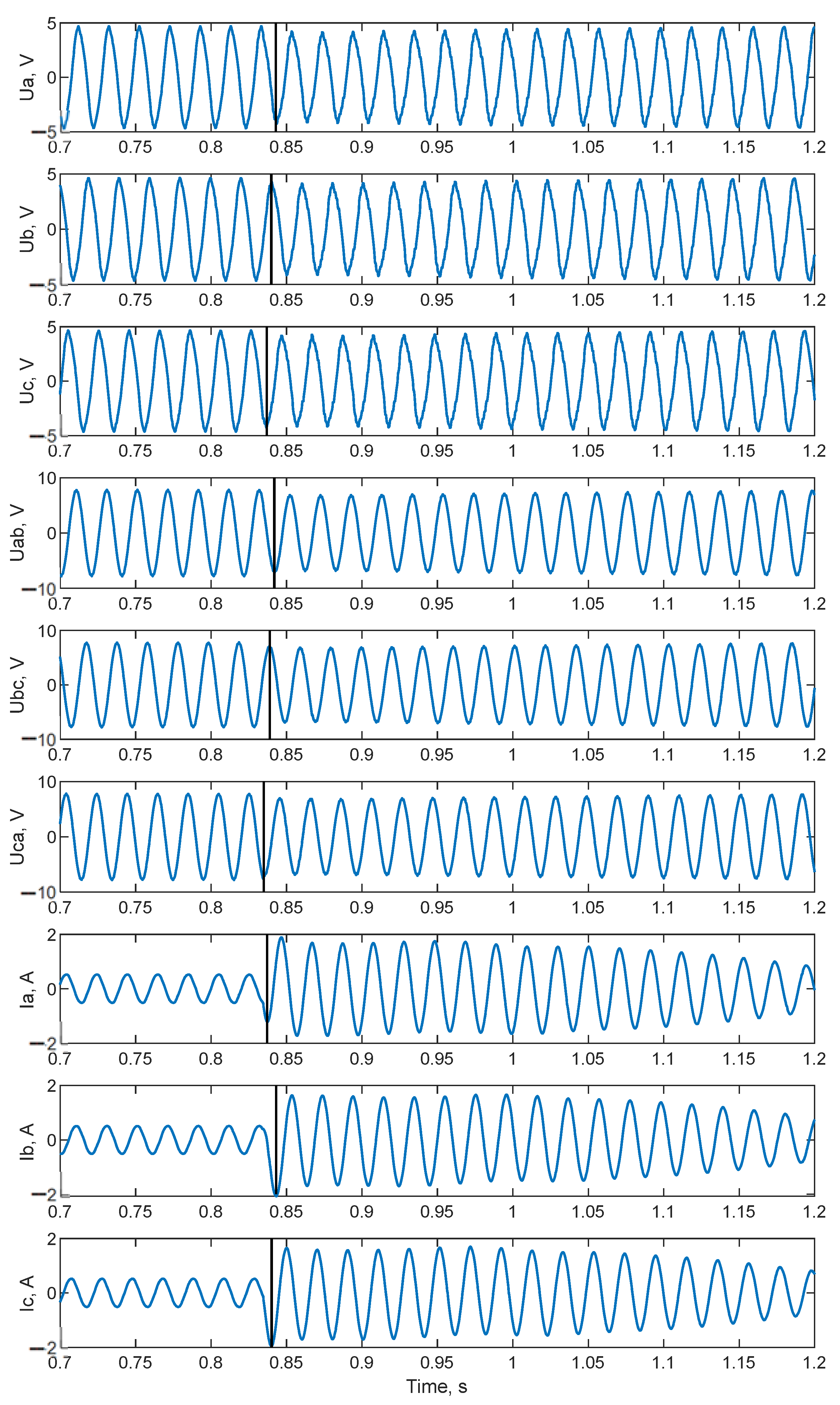
| Ua | 0.843 |
| Ub | 0.840 |
| Uc | 0.837 |
| Uab | 0.842 |
| Ubc | 0.839 |
| Uca | 0.835 |
| Ia | 0.837 |
| Ib | 0.842 |
| Ic | 0.840 |
| Algorithm | Input Data | Accuracy | Delay, ms |
|---|---|---|---|
| Threshold rms voltage | 1-phase, rms | low | 40.0 |
| Waveform Envelope | 1-phase, instantaneous | medium | 10.0 |
| Discrete Wavelet Transform | 1-phase, instantaneous | high | 40.0 |
| Missing Voltage | 1-phase, instantaneous | medium | 20.0 |
| d-q Transformation | 3-phase, instantaneous | low | 20.0 |
| Numerical Matrix | 1-phase, instantaneous | low | 20.0 |
| Peak Detector | 1-phase, instantaneous | low | 20.0 |
| Algorithm 1 | 1-phase, instantaneous | medium | 10.0 |
| Algorithm 2 | 1-phase, instantaneous | high | 1.0 |
| Algorithm 3 | 1-phase, instantaneous | high | 1.5 |
Publisher’s Note: MDPI stays neutral with regard to jurisdictional claims in published maps and institutional affiliations. |
© 2022 by the authors. Licensee MDPI, Basel, Switzerland. This article is an open access article distributed under the terms and conditions of the Creative Commons Attribution (CC BY) license (https://creativecommons.org/licenses/by/4.0/).
Share and Cite
Senyuk, M.; Beryozkina, S.; Gubin, P.; Dmitrieva, A.; Kamalov, F.; Safaraliev, M.; Zicmane, I. Fast Algorithms for Estimating the Disturbance Inception Time in Power Systems Based on Time Series of Instantaneous Values of Current and Voltage with a High Sampling Rate. Mathematics 2022, 10, 3949. https://doi.org/10.3390/math10213949
Senyuk M, Beryozkina S, Gubin P, Dmitrieva A, Kamalov F, Safaraliev M, Zicmane I. Fast Algorithms for Estimating the Disturbance Inception Time in Power Systems Based on Time Series of Instantaneous Values of Current and Voltage with a High Sampling Rate. Mathematics. 2022; 10(21):3949. https://doi.org/10.3390/math10213949
Chicago/Turabian StyleSenyuk, Mihail, Svetlana Beryozkina, Pavel Gubin, Anna Dmitrieva, Firuz Kamalov, Murodbek Safaraliev, and Inga Zicmane. 2022. "Fast Algorithms for Estimating the Disturbance Inception Time in Power Systems Based on Time Series of Instantaneous Values of Current and Voltage with a High Sampling Rate" Mathematics 10, no. 21: 3949. https://doi.org/10.3390/math10213949
APA StyleSenyuk, M., Beryozkina, S., Gubin, P., Dmitrieva, A., Kamalov, F., Safaraliev, M., & Zicmane, I. (2022). Fast Algorithms for Estimating the Disturbance Inception Time in Power Systems Based on Time Series of Instantaneous Values of Current and Voltage with a High Sampling Rate. Mathematics, 10(21), 3949. https://doi.org/10.3390/math10213949