Article

Diffusion-Wave Type Solutions to the Second-Order Evolutionary Equation with Power Nonlinearities


Matrosov Institute for System Dynamics and Control Theory of Siberian Branch of Russian Academy of Sciences, 664033 Irkutsk, Russia
*
Author to whom correspondence should be addressed.
Mathematics 2022, 10(2), 232; https://doi.org/10.3390/math10020232
Submission received: 27 December 2021 / Revised: 11 January 2022 / Accepted: 12 January 2022 / Published: 12 January 2022
(This article belongs to the Special Issue Partial Differential Equations with Applications: Analytical Methods)

Abstract

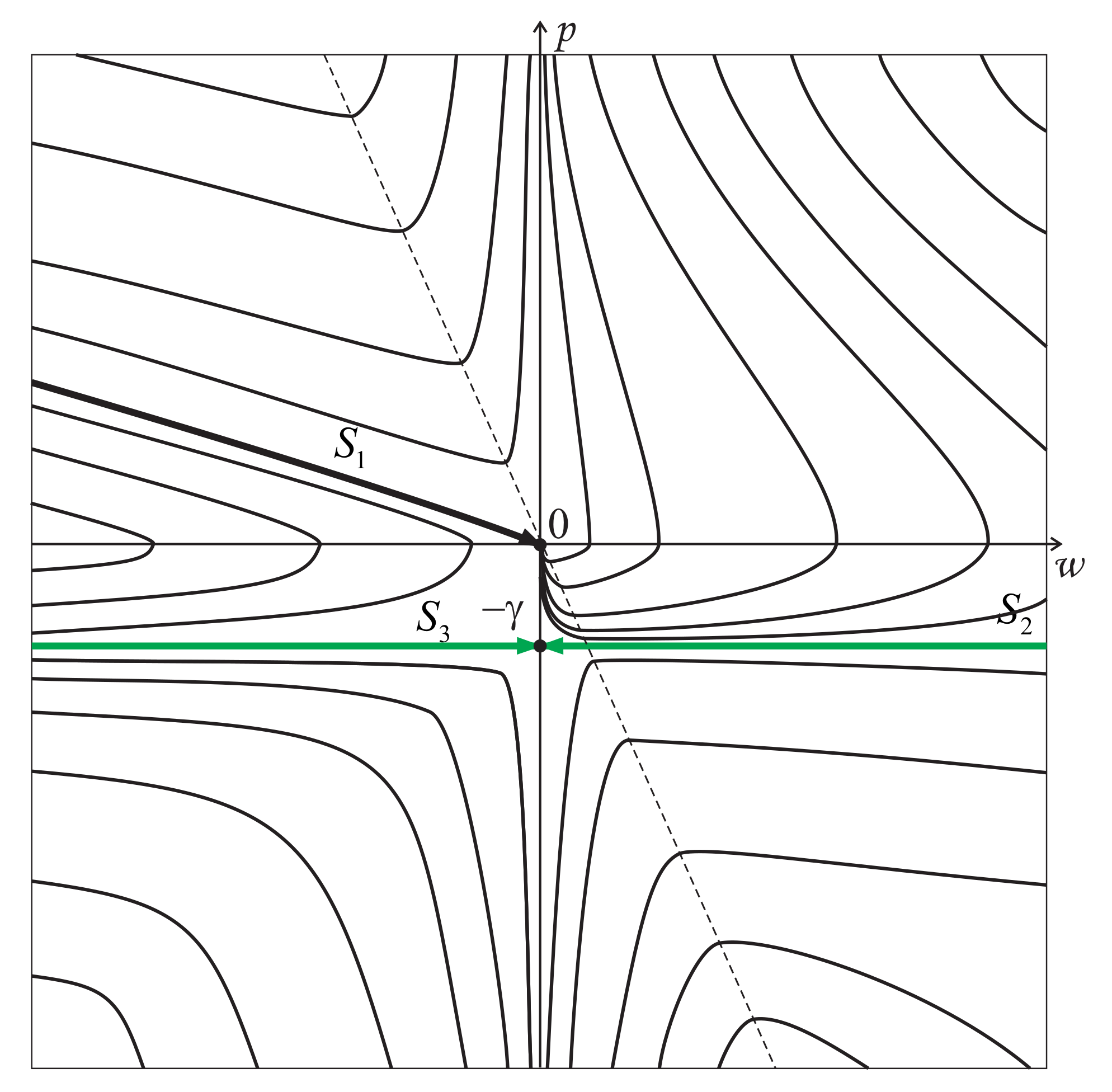
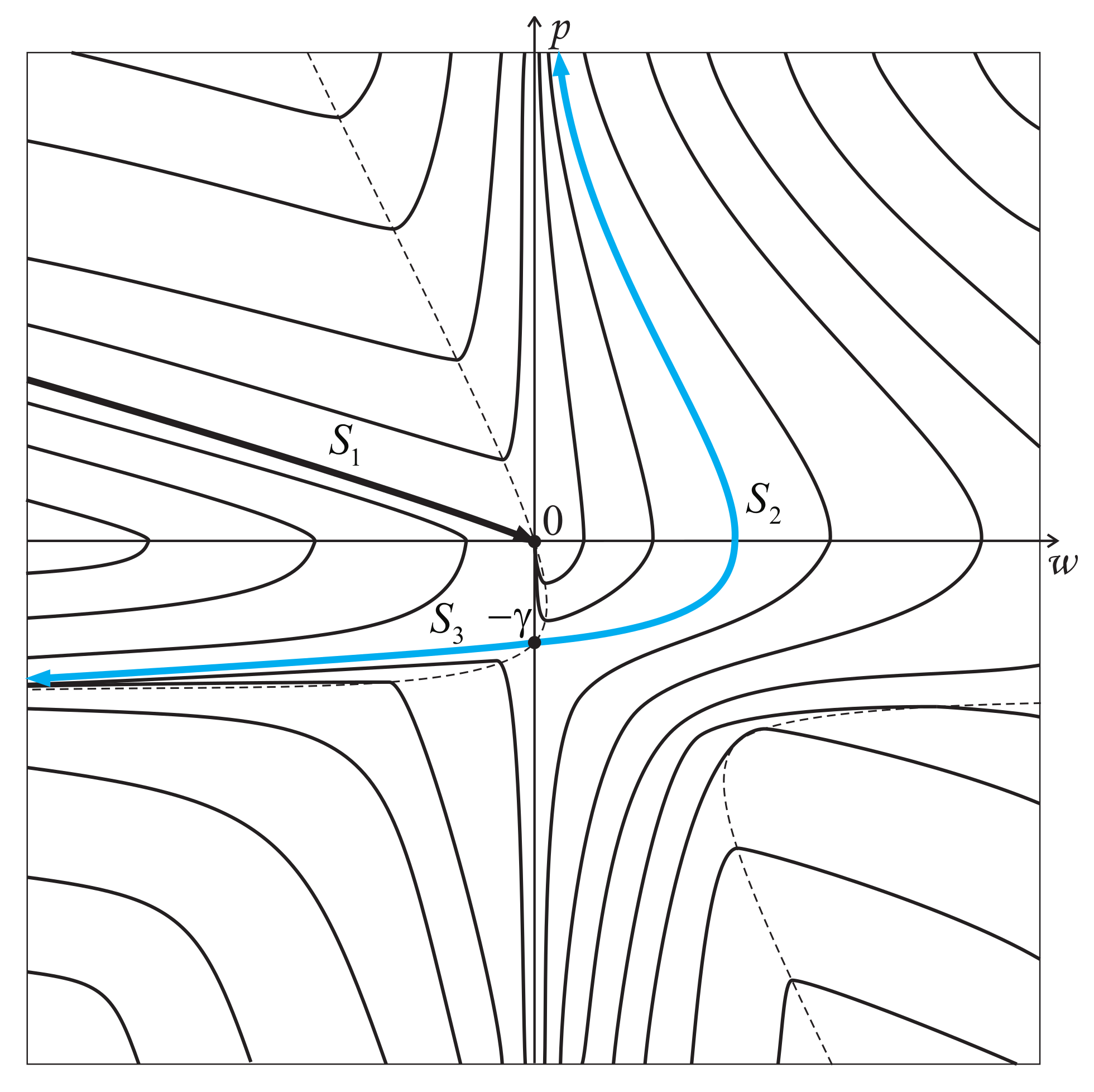
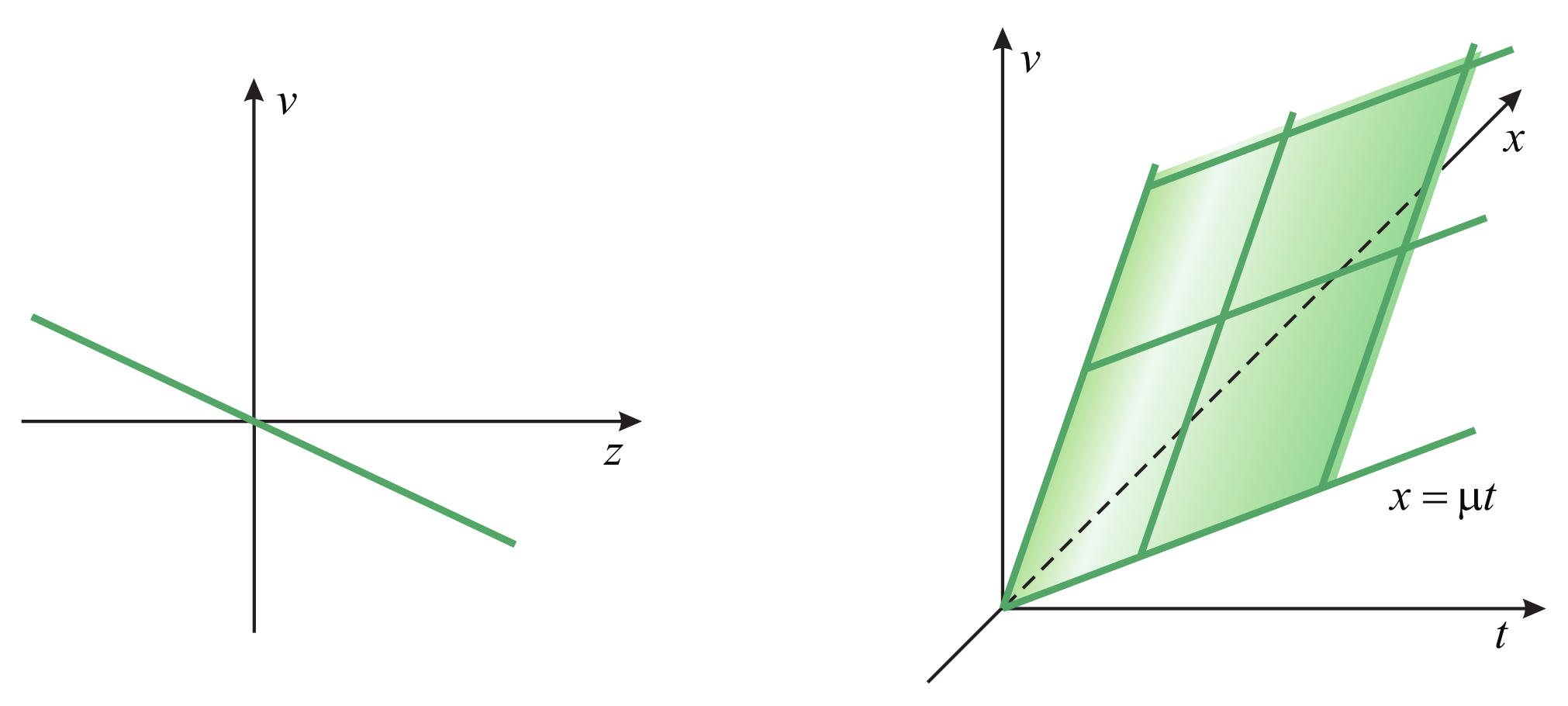
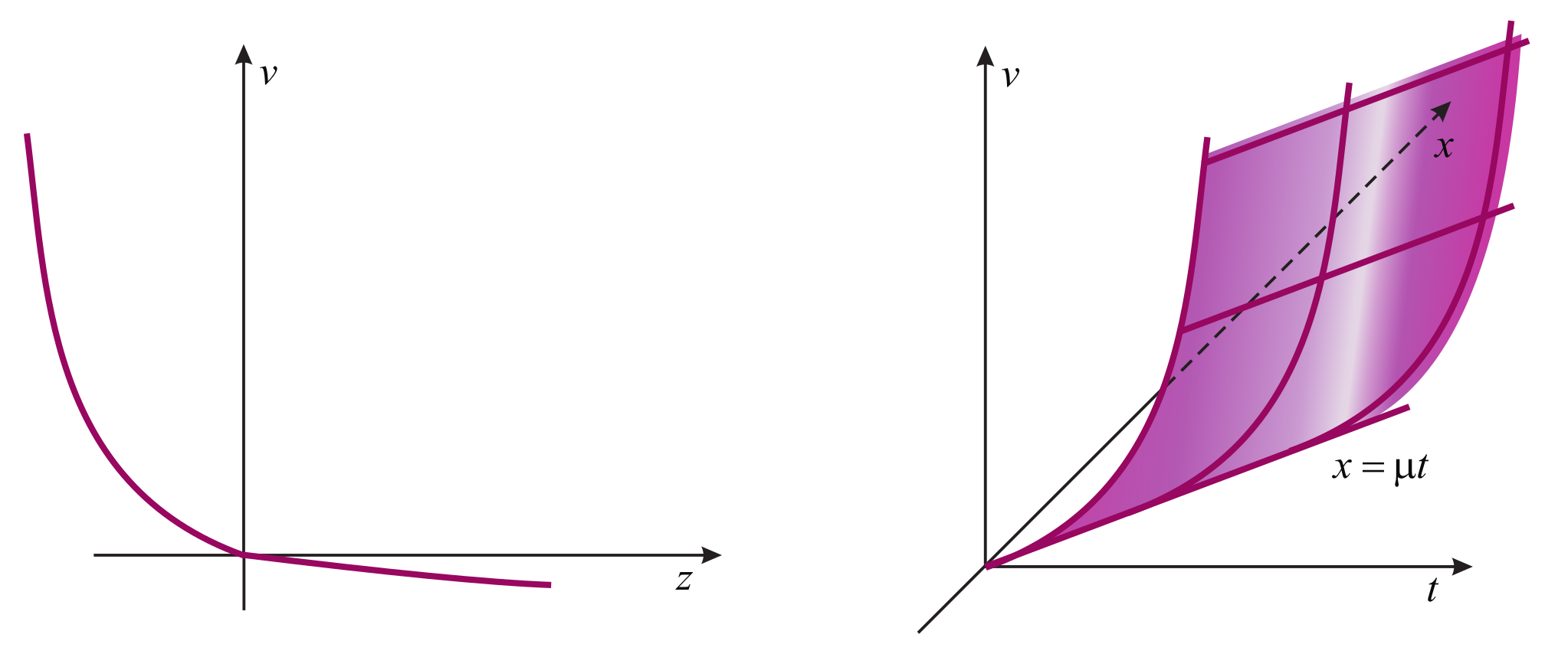
The paper deals with a nonlinear second-order one-dimensional evolutionary equation related to applications and describes various diffusion, filtration, convection, and other processes. The particular cases of this equation are the well-known porous medium equation and its generalizations. We construct solutions that describe perturbations propagating over a zero background with a finite velocity. Such effects are known to be atypical for parabolic equations and appear as a consequence of the degeneration of the equation at the points where the desired function vanishes. Previously, we have constructed it, but here the case of power nonlinearity is considered. It allows for conducting a more detailed analysis. We prove a new theorem for the existence of solutions of this type in the class of piecewise analytical functions, which generalizes and specifies the earlier statements. We find and study exact solutions having the diffusion wave type, the construction of which is reduced to the second-order Cauchy problem for an ordinary differential equation (ODE) that inherits singularities from the original formulation. Statements that ensure the existence of global continuously differentiable solutions are proved for the Cauchy problems. The properties of the constructed solutions are studied by the methods of the qualitative theory of differential equations. Phase portraits are obtained, and quantitative estimates are determined by constructing and analyzing finite difference schemes. The most significant result is that we have shown that all the special cases for incomplete equations take place for the complete equation, and other configurations of diffusion waves do not arise.
Keywords: nonlinear partial differential equation; porous medium equation; diffusion wave; existence theorem; analytical solution; power series; majorant method; exact solution nonlinear partial differential equation; porous medium equation; diffusion wave; existence theorem; analytical solution; power series; majorant method; exact solution