Article

Efficient Reversible Data Hiding Based on Connected Component Construction and Prediction Error Adjustment

1
School of Electronic and Information Engineering, University of Electronic Science and Technology of China, Zhongshan Institute, Zhongshan 528402, China
2
School of Information and Communication Engineering, University of Electronic Science and Technology of China, Chengdu 611731, China
3
Department of Computer Science, Aligarh Muslim University, Aligarh 202002, India
4
School of Communication and Information Engineering, Shanghai University, Shanghai 200444, China
5
Guangdong Provincial Key Laboratory of Information Security Technology, Guangzhou 510006, China
*
Author to whom correspondence should be addressed.
Mathematics 2022, 10(15), 2804; https://doi.org/10.3390/math10152804
Submission received: 11 July 2022 / Revised: 30 July 2022 / Accepted: 4 August 2022 / Published: 7 August 2022

Abstract

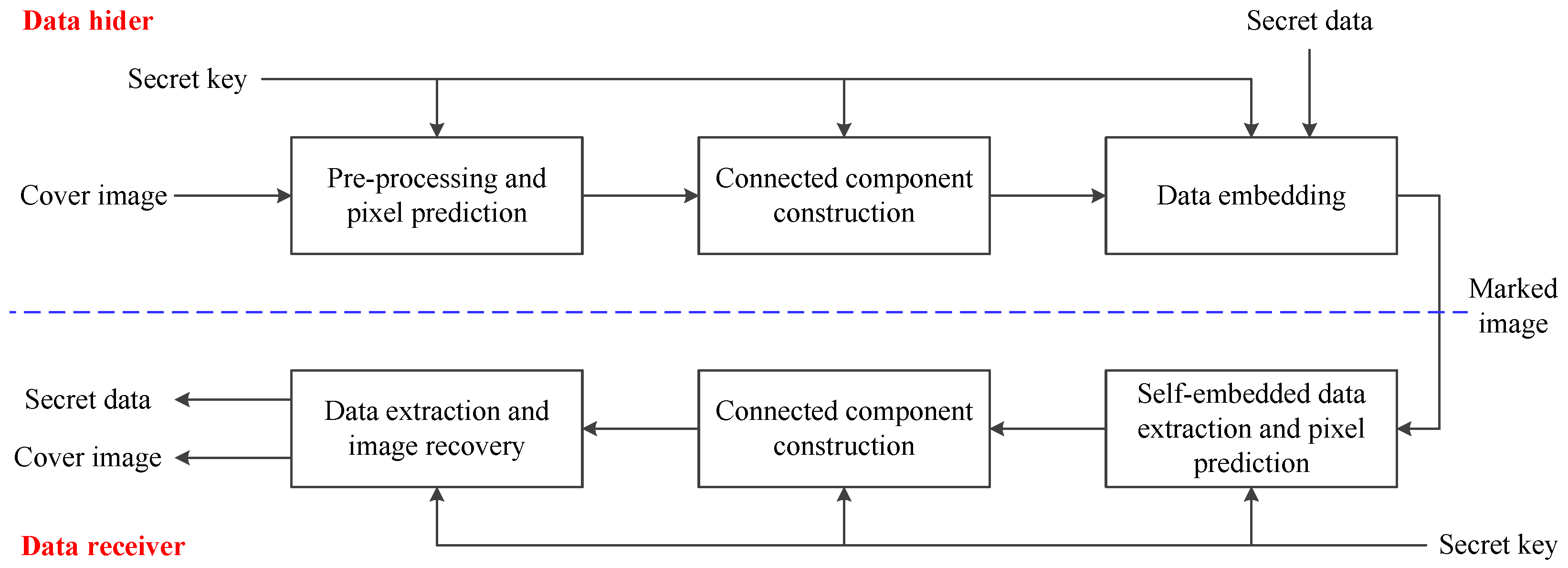
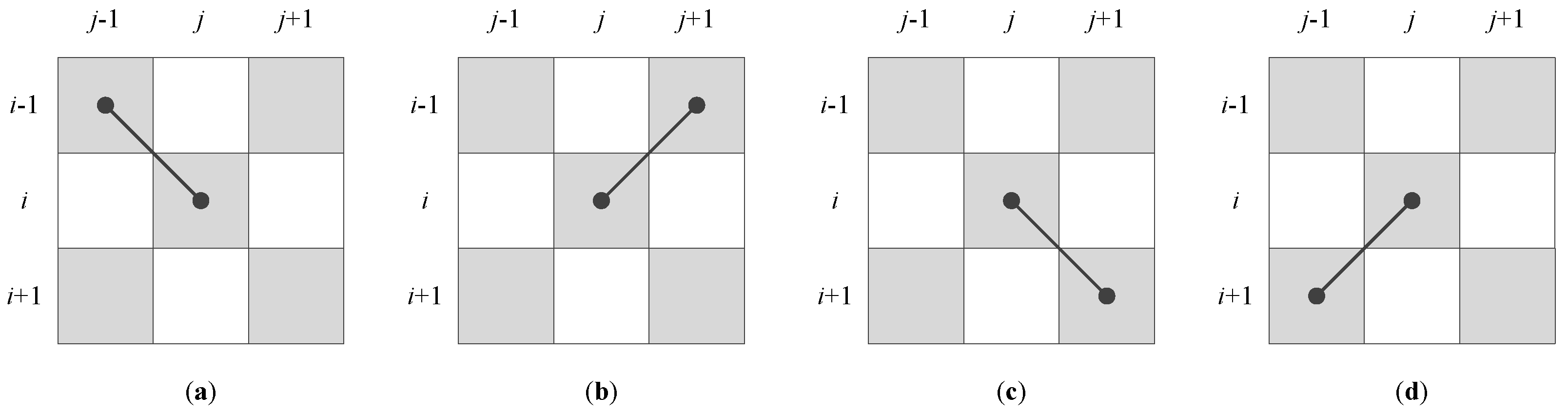
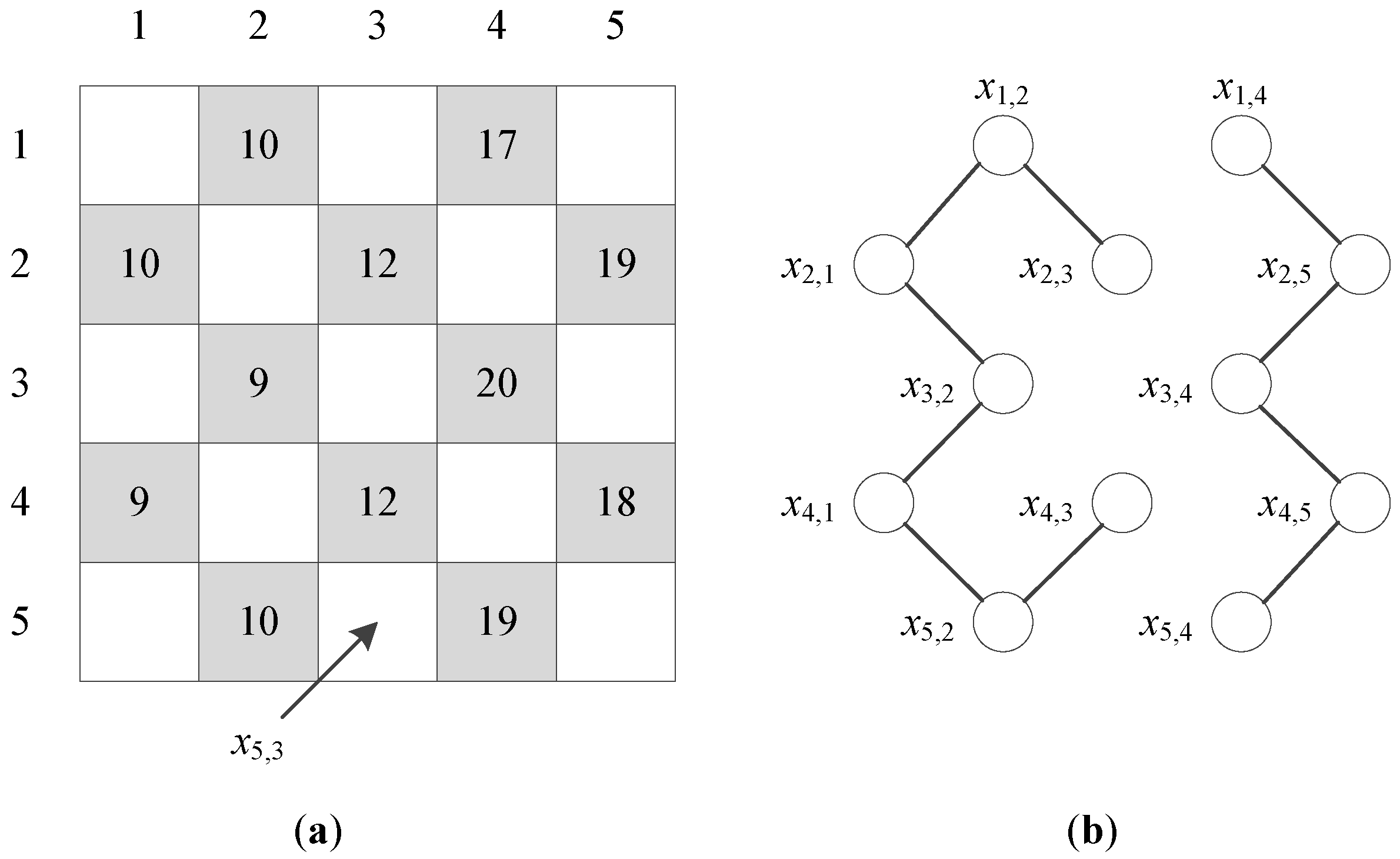
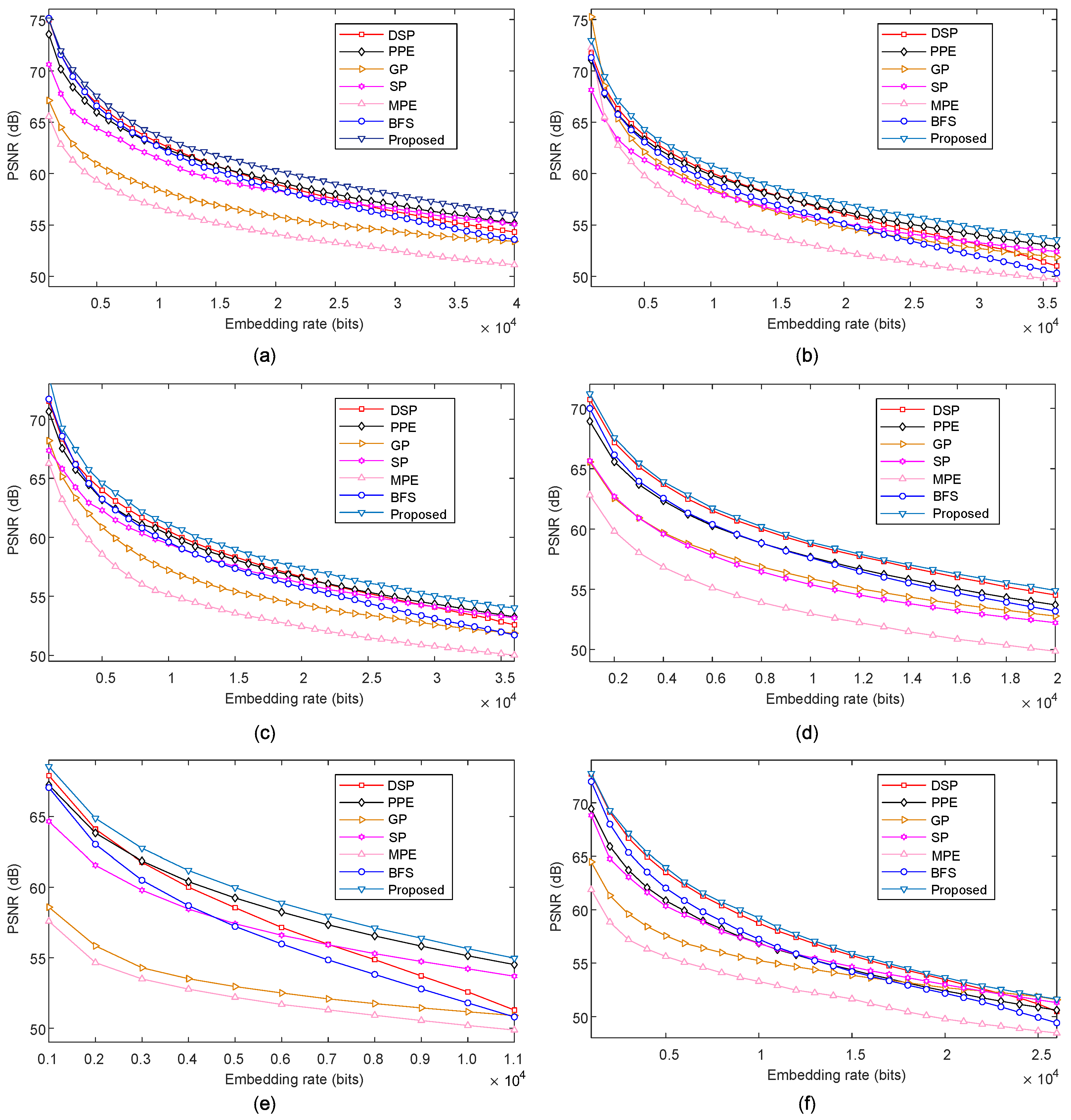
To achieve a good trade-off between the data-embedding payload and the data-embedding distortion, mainstream reversible data hiding (RDH) algorithms perform data embedding on a well-built prediction error histogram. This requires us to design a good predictor to determine the prediction errors of cover elements and find a good strategy to construct an ordered prediction error sequence to be embedded. However, many existing RDH algorithms use a fixed predictor throughout the prediction process, which does not take into account the statistical characteristics of local context. Moreover, during the construction of the prediction error sequence, these algorithms ignore the fact that adjacent cover elements may have the identical priority of data embedding. As a result, there is still room for improving the payload-distortion performance. Motivated by this insight, in this article, we propose a new content prediction and selection strategy for efficient RDH in digital images to provide better payload-distortion performance. The core idea is to construct multiple connected components for a given cover image so that the prediction errors of the cover pixels within a connected component are close to each other. Accordingly, the most suitable connected components can be preferentially used for data embedding. Moreover, the prediction errors of the cover pixels are adaptively adjusted according to their local context, allowing a relatively sharp prediction error histogram to be constructed. Experimental results validate that the proposed method is significantly superior to some advanced works regarding payload-distortion performance, demonstrating the practicality of our method.
Keywords: reversible watermarking; reversible data hiding; graph optimization; prediction error reversible watermarking; reversible data hiding; graph optimization; prediction error