Article

A Hybrid Intuitionistic Fuzzy Group Decision Framework and Its Application in Urban Rail Transit System Selection

1
School of Urban Railway Transportation, Shanghai University of Engineering Science, Shanghai 201620, China
2
School of Management, Shanghai University, Shanghai 200444, China
*
Author to whom correspondence should be addressed.
Mathematics 2022, 10(12), 2133; https://doi.org/10.3390/math10122133
Submission received: 22 May 2022 / Revised: 13 June 2022 / Accepted: 16 June 2022 / Published: 19 June 2022
(This article belongs to the Special Issue Advances in Fuzzy Decision Theory and Applications)

Abstract

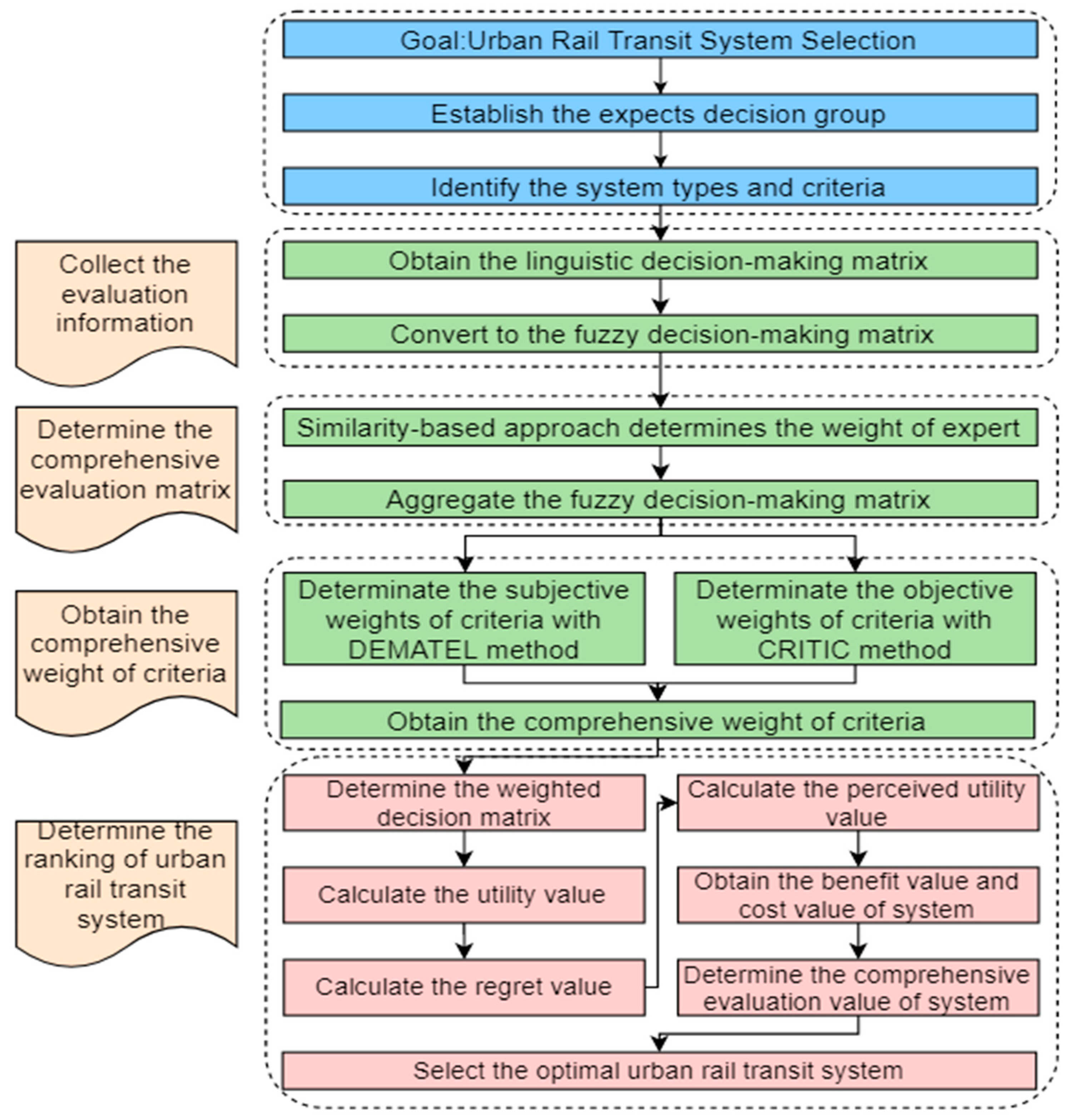
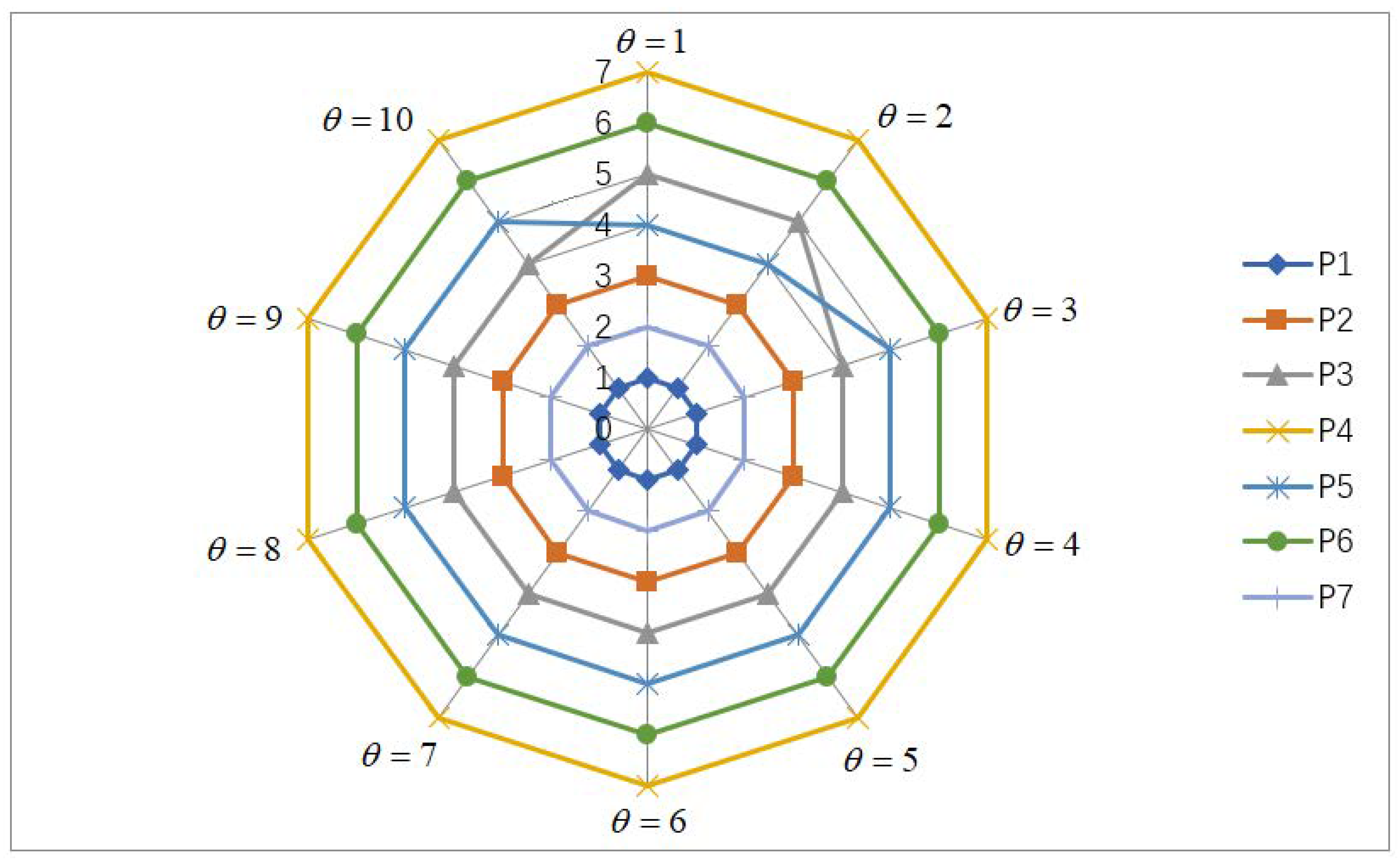
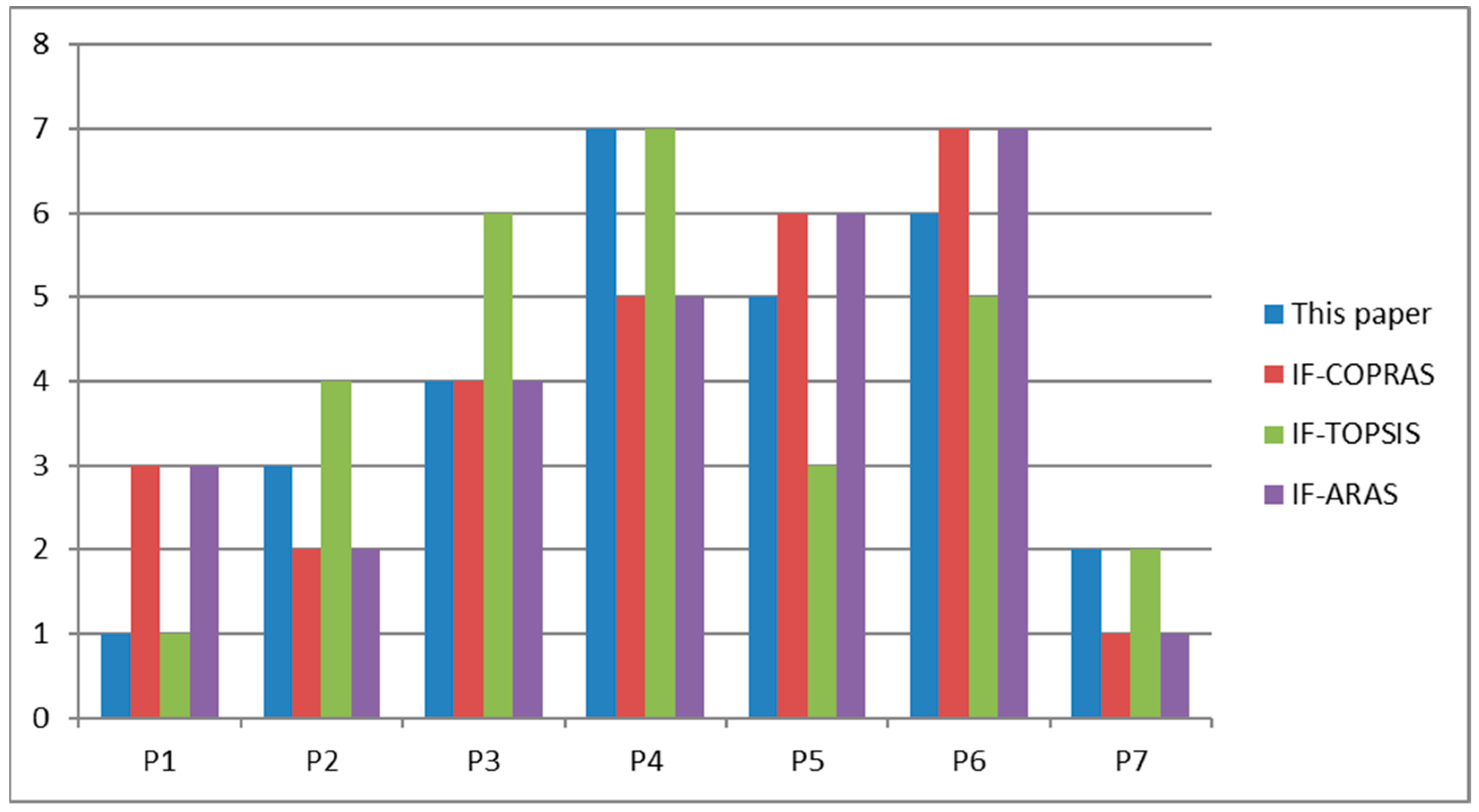
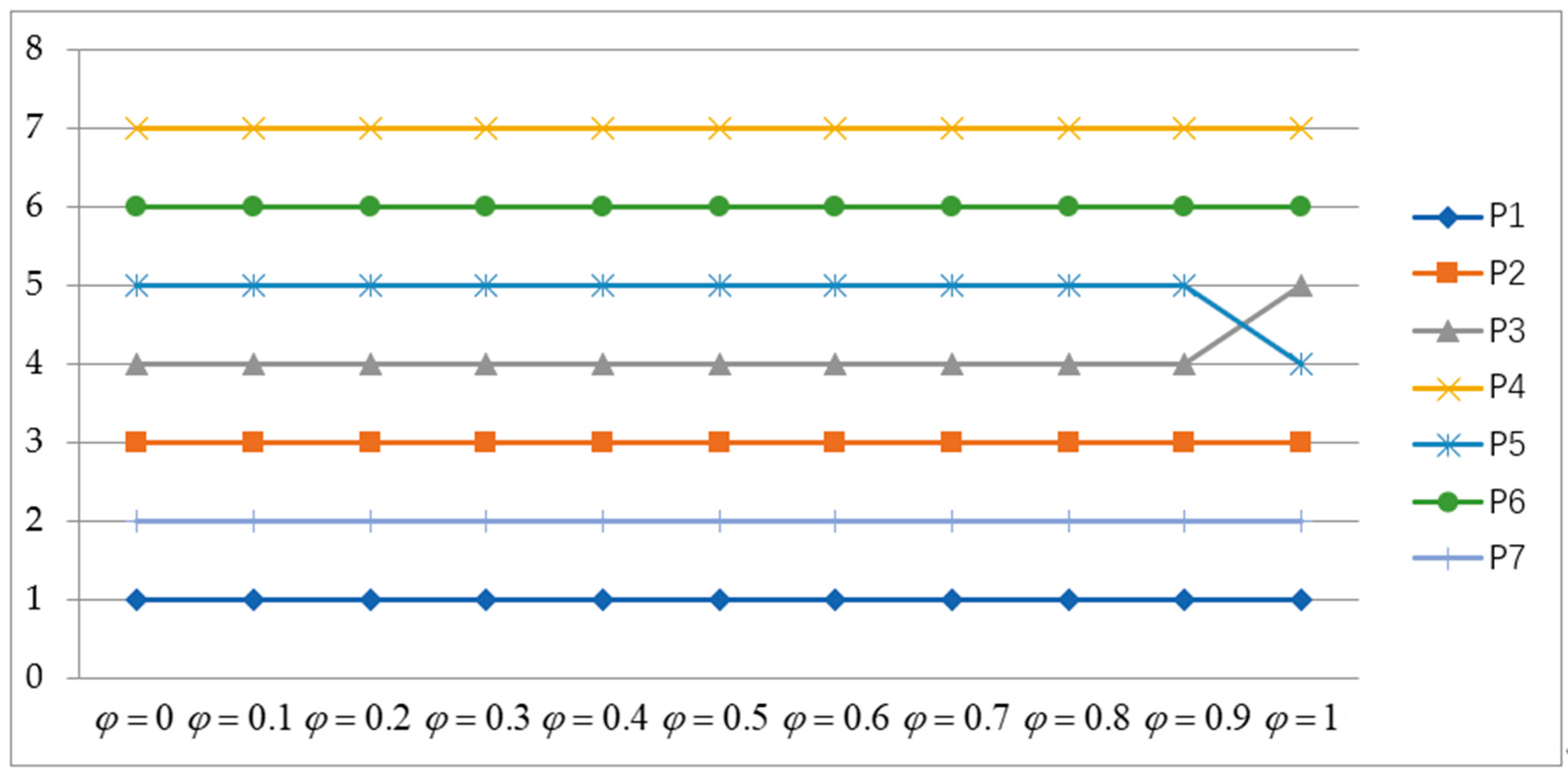
The selection of an urban rail transit system from the perspective of green and low carbon can not only promote the construction of an urban rail transit system but also have a positive impact on urban green development. Considering the uncertainty caused by different conflict criteria and the fuzziness of decision-making experts’ cognition in the selection process of a rail transit system, this paper proposes a hybrid intuitionistic fuzzy MCGDM framework to determine the priority of a rail transit system. To begin with, the weights of experts are determined based on the improved similarity method. Secondly, the subjective weight and objective weight of the criterion are calculated, respectively, according to the DEMATEL and CRITIC methods, and the comprehensive weight is calculated by the linear integration method. Thirdly, considering the regret degree and risk preference of experts, the COPRAS method based on regret theory is propounded to determine the prioritization of urban rail transit system ranking. Finally, urban rail transit system selection of City N is selected for the case study to illustrate the feasibility and effectiveness of the developed method. The results show that a metro system (P1) is the most suitable urban rail transit system for the construction of city N, followed by a municipal railway system (P7). Sensitivity analysis is conducted to illustrate the stability and robustness of the designed decision framework. Comparative analysis is also utilized to validate the efficacy, feasibility and practicability of the propounded methodology.
Keywords: urban rail transit; intuitionistic fuzzy set; regret theory; DEMATEL; CRITIC; COPRAS urban rail transit; intuitionistic fuzzy set; regret theory; DEMATEL; CRITIC; COPRAS