Article

Benefits of Advance Payments of Tax on Profit: Consideration within the Brusov–Filatova–Orekhova (BFO) Theory

1
Department of Mathematics, Financial University under the Government of Russian Federation, 125167 Moscow, Russia
2
Department of Financial and Investment Management, Financial University under the Government of Russian Federation, 125167 Moscow, Russia
3
Deutsche Bank Ltd., 117198 Moscow, Russia
*
Author to whom correspondence should be addressed.
Mathematics 2022, 10(12), 2013; https://doi.org/10.3390/math10122013
Submission received: 24 April 2022 / Revised: 29 May 2022 / Accepted: 8 June 2022 / Published: 11 June 2022
(This article belongs to the Section E5: Financial Mathematics)

Abstract

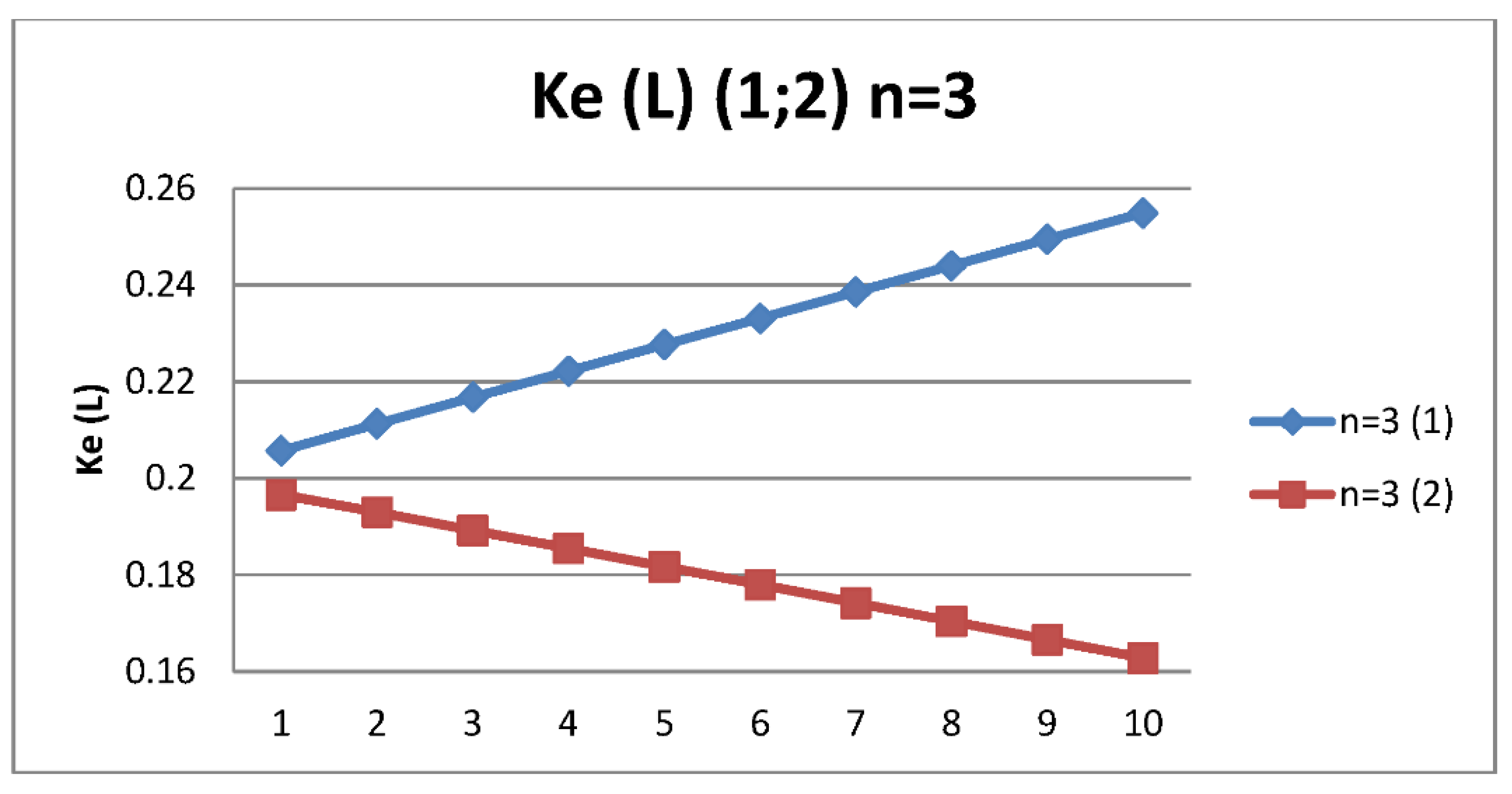
The modern capital cost and capital structure theory—the Brusov–Filatova–Orekhova (BFO) theory and its perpetuity limit, the Modigliani–Miller theory—describe the case of the payments of income tax at the end of the year. However, in practice, companies could make these payments in advance. Recently, the Modigliani–Miller theory has been modified for the case of advanced payments of income tax and has shown that the obtained results are quite different from ones in the “classical” Modigliani–Miller theory. In the current paper, for the first time, we modify the Brusov–Filatova–Orekhova (BFO) theory for the case of advanced payments of income tax and show that the impact of the transition to advance payments is much more significant than in the case of a perpetuity limit (the MM theory) and even leads to a qualitatively new effect in the dependence of equity cost on leverage. An important conclusion drawn in this paper is that the tax shield is very important, and the way it is formed (payments at the end of the year or in advance) leads to very important consequences, changing all the financial indicators of the company, such as the cost of raising capital and company value and radically changing the company’s dividend policy.
Keywords: Generalized Brusov–Filatova–Orekhova (BFO) theory; the Modigliani–Miller theory; advance payments of income tax; equity cost; the weighted average cost of capital; company capitalization; a qualitatively new anomalous effect Generalized Brusov–Filatova–Orekhova (BFO) theory; the Modigliani–Miller theory; advance payments of income tax; equity cost; the weighted average cost of capital; company capitalization; a qualitatively new anomalous effect