
Quantitative Metaproteomic Characterization of Acetic Acid Bacteria Reveals Functional Dynamics During Verdejo Wine Acetification

 , , , ,
  , ,
, ,  , and
, and 
Abstract
1. Introduction
2. Materials and Methods
2.1. Raw Material
2.2. Microorganisms
2.3. Fermentation Conditions
2.4. Sampling
2.5. Analytical Methods
2.6. Metaproteomics
2.6.1. Cell Harvesting and Protein Extraction
2.6.2. LC-MS/MS Analysis
2.6.3. Data Analysis
3. Results and Discussion
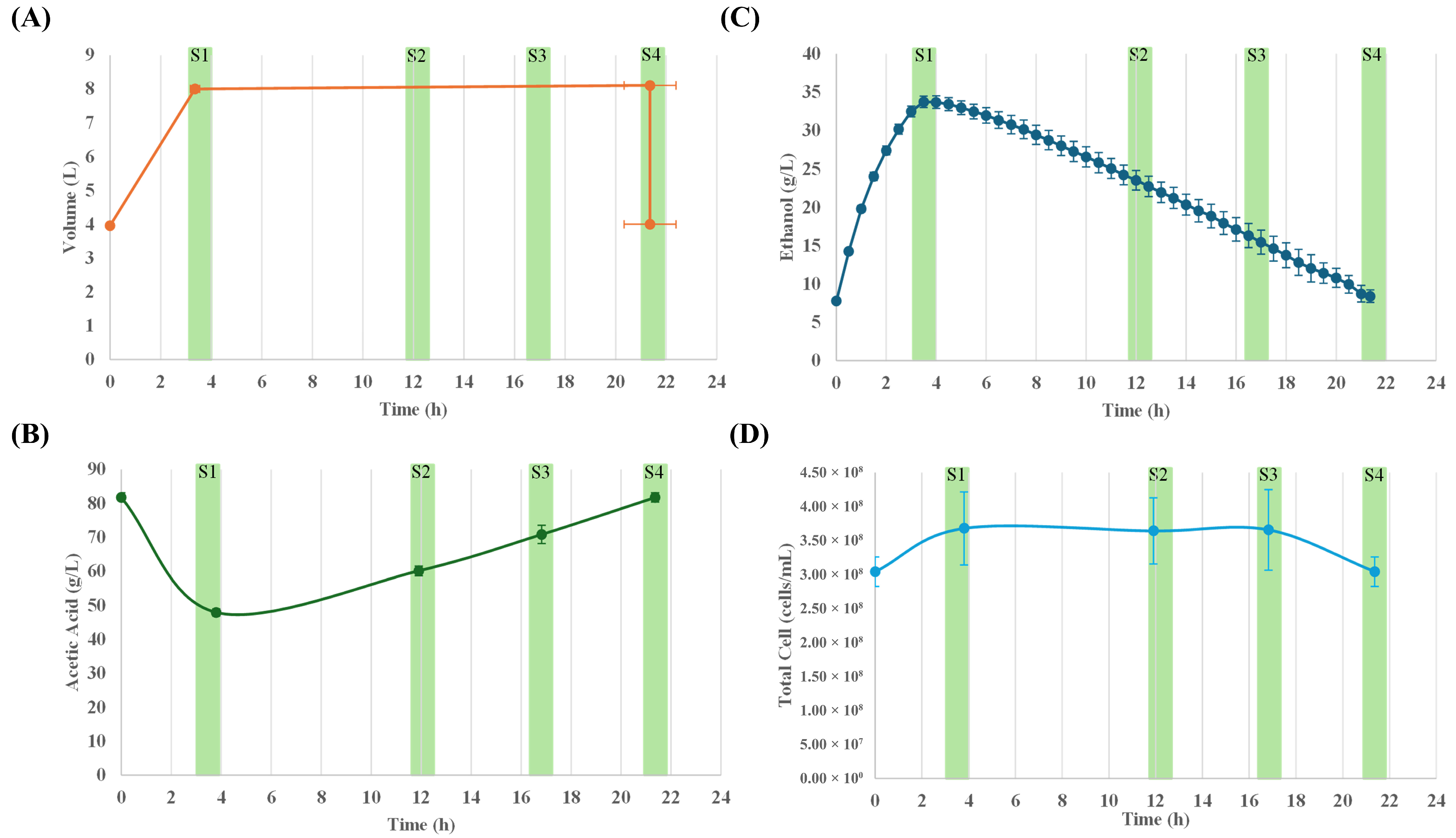
3.1. Description of System Variables
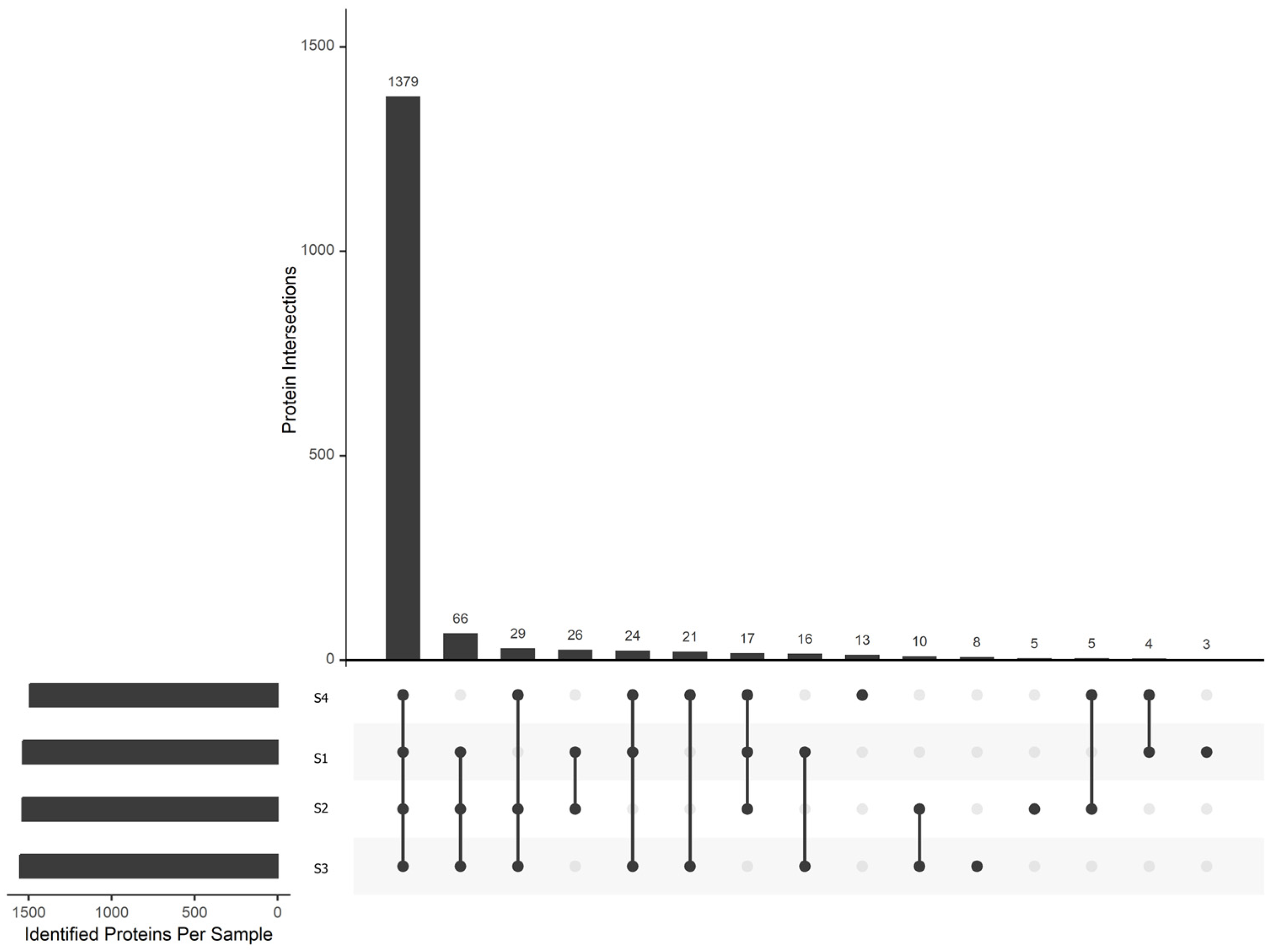
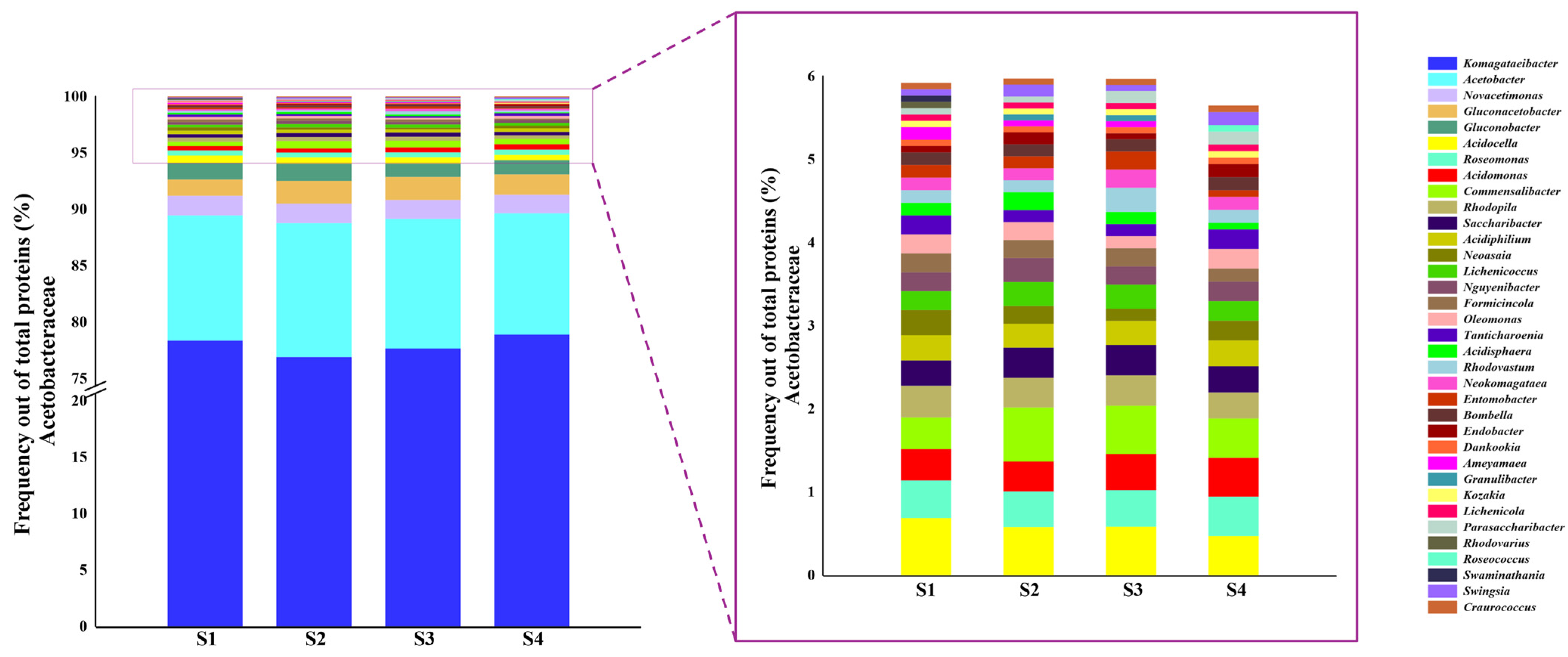
3.2. Qualitative Analysis: Microbial Composition
3.3. Hierarchical Clustering: Grouping of Proteins by Quantification Patterns
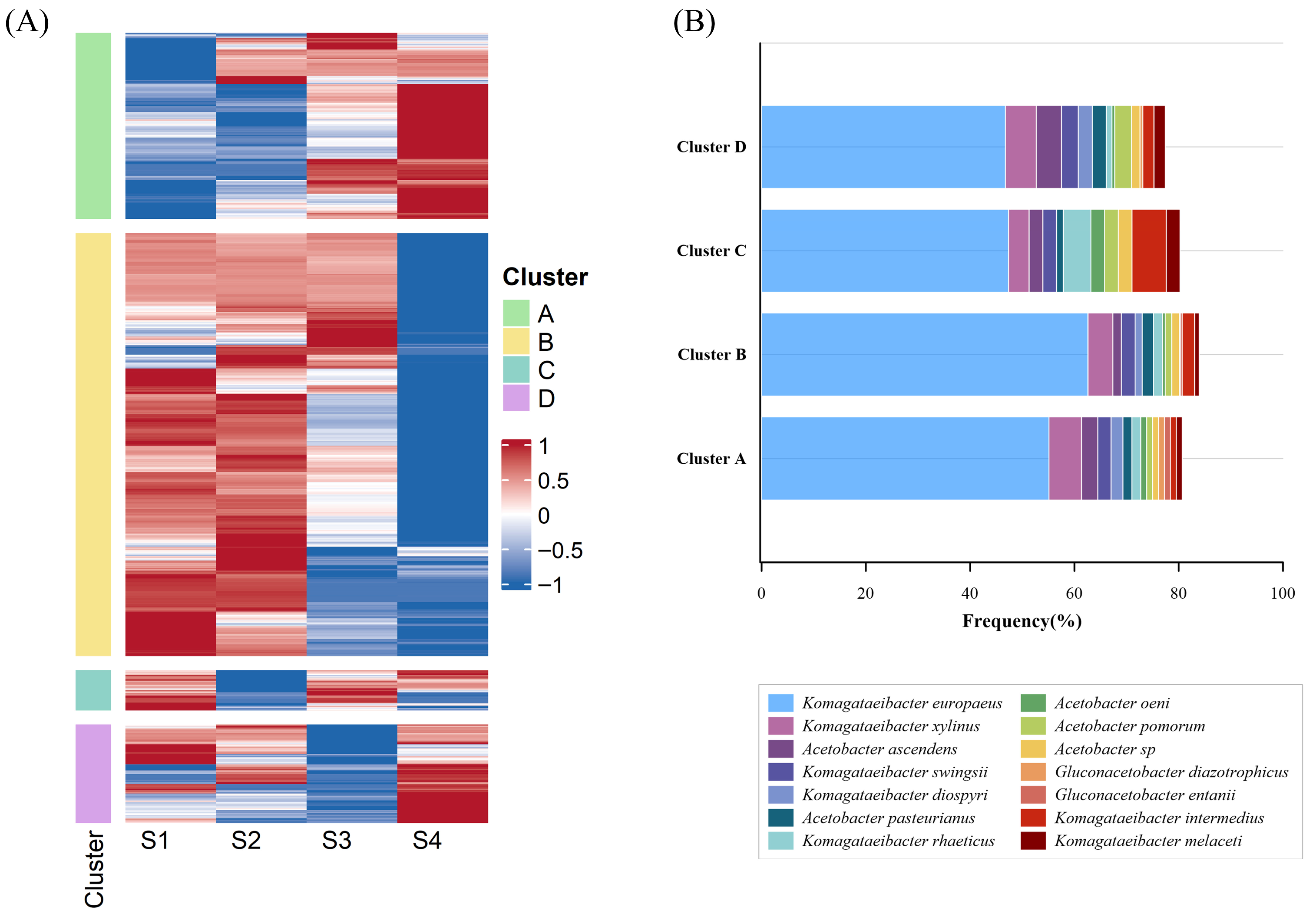
- Cluster A (n = 351): Contains more proteins abundant at the final sampling time (S4), associated with a low ethanol concentration and high acidity values. Here, 73.50% of proteins belonged to Komagataeibacter genus, and the main species were K. europaeus (55.11%), Komagataeibacter xylinus (6.26%), and Acetobacter ascendens (3.12%).
- Cluster B (n = 797): Consists mainly of proteins present in the early moments of the cycle, when there is a high concentration of ethanol, S1 and S2, just after the loading stage is complete. Komagataeibacter was the most abundant genus (76.63%), and the species K. europaeus (62.61%), K. xylinus (4.77%), and Komagataeibacter swingsii (2.63%) dominated this group.
- Cluster C (n = 76): This cluster presented mixed protein profiles (S1-S3-S4). Most proteins belonged to Komagataeibacter genus (77.63%), and for the species the most abundant were K. europaeus (47.77%), Komagataeibacter intermedius (6.58%), Komagataeibacter rhaeticus (5.26%), and K. xylinus (3.95%).
- Cluster D (n = 186): Like Cluster C, this cluster presented mixed protein profiles, with a stronger association with S4. Following the trend of the other clusters, Komagataeibacter was the predominant genus (77.63%). K. europaeus (46.77%), K. xylinus (5.91%), A. ascendens (4.84%), Acetobacter pomorum (3.22%), and K. swingsii (3.22%) were the dominant species.
3.4. Statistical Analysis and Differential Abundance: Significant Proteins
3.5. Associated Functions of Significant Proteins
3.5.1. GO Term Enrichment Analysis
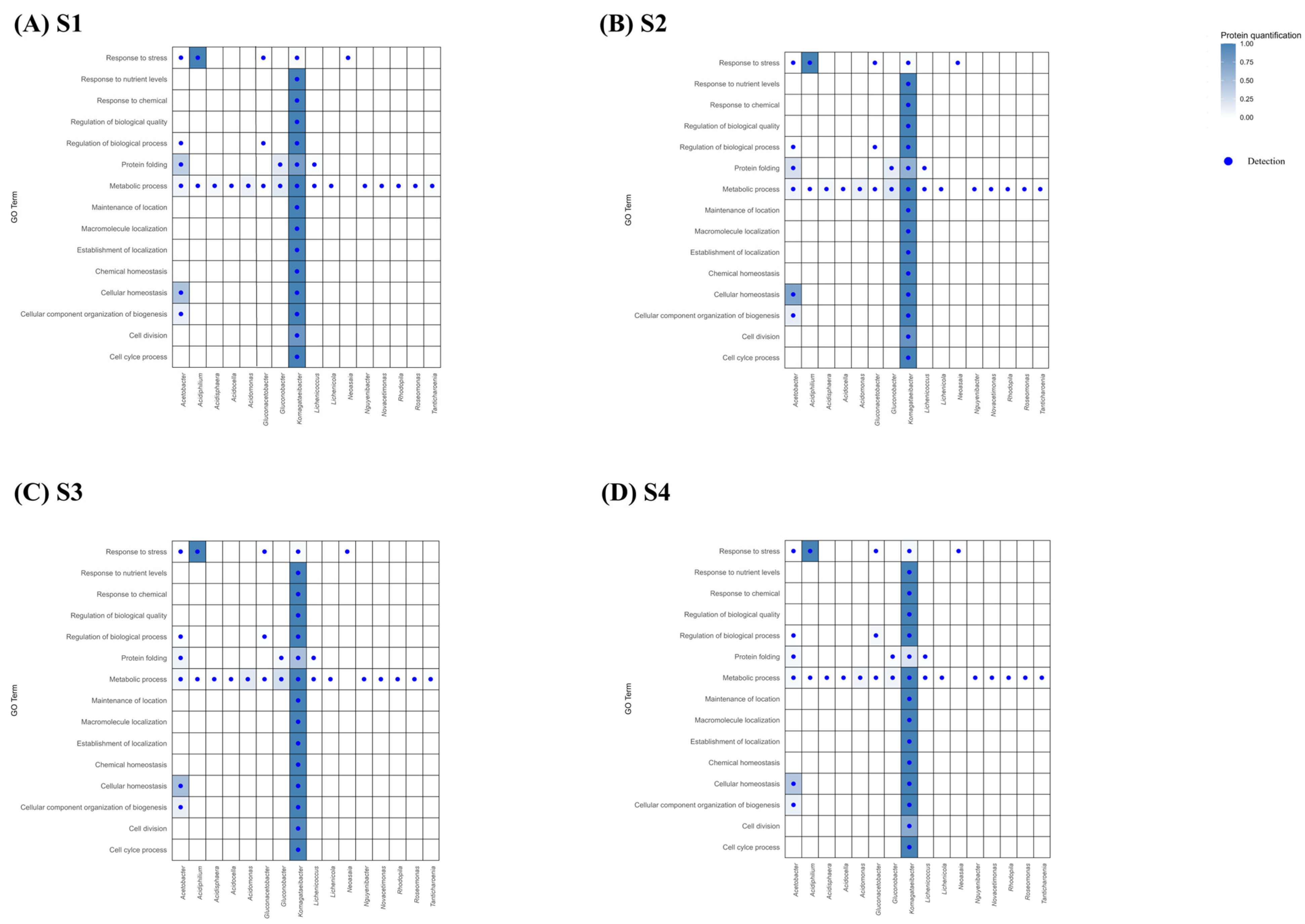
Biological Process
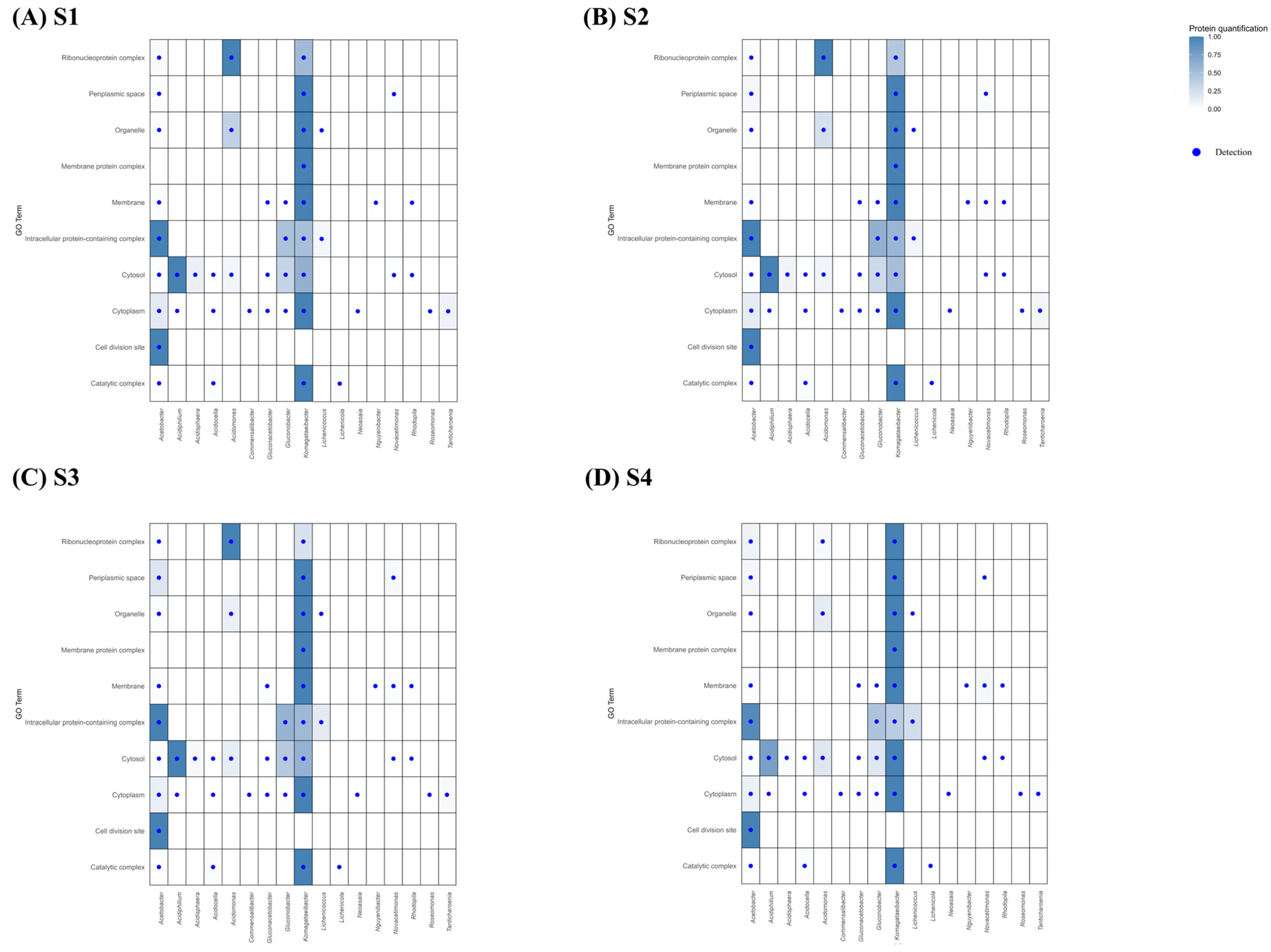
Cellular Component
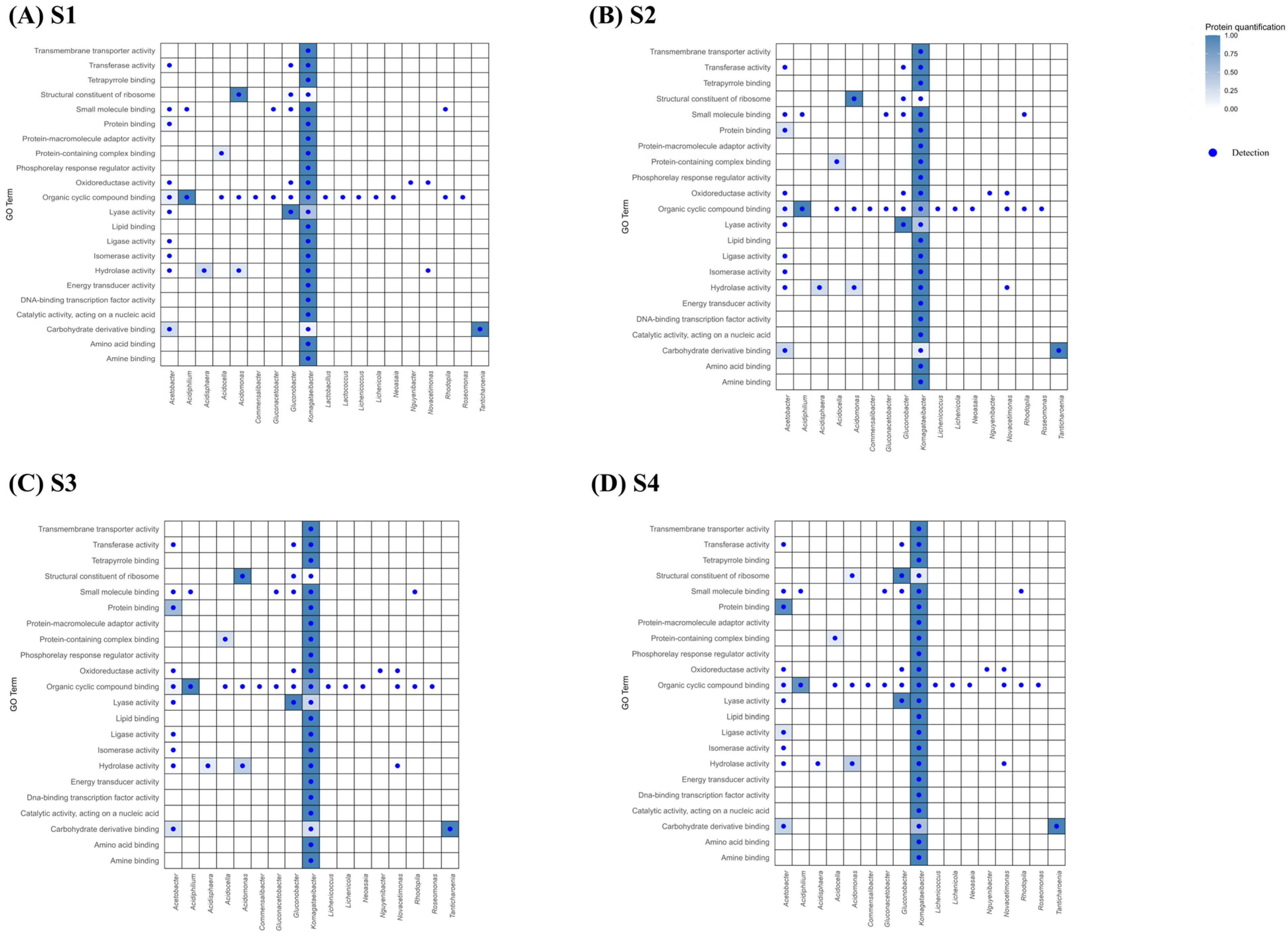
Molecular Function
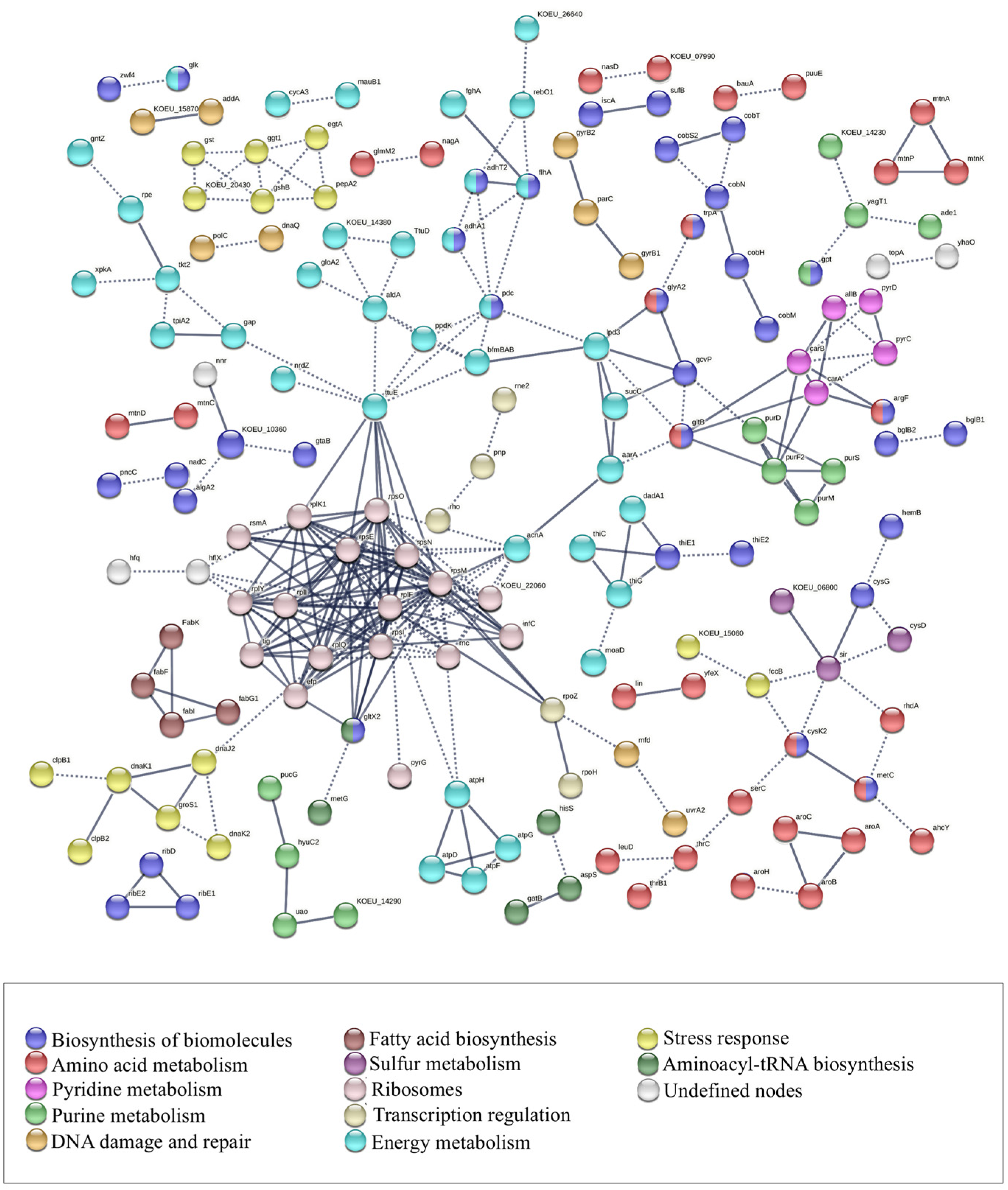
3.6. Analysis of Protein–Protein Interactions
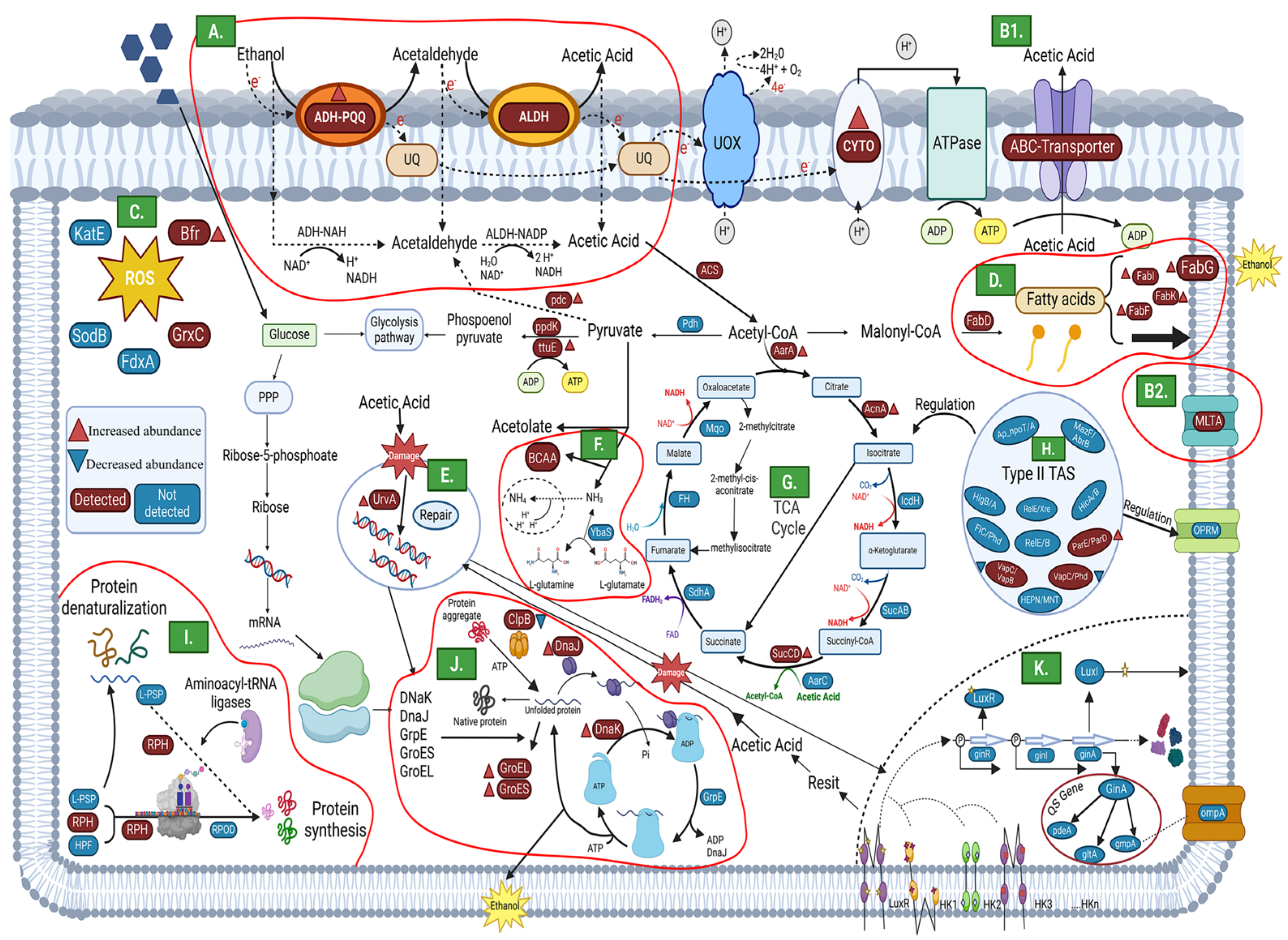
- One group, not interconnected with the rest of the network, located in the upper left corner, involved in glutathione metabolism and oxidative stress response. This group is made up of GTS, GGT1, EGTA, PEPA2, GSHB, and KOEU_20430, key proteins in cellular protection against reactive oxygen species (ROS) (Figure 12C) generated during ethanol oxidation. Under continuous aeration conditions, oxidative reactions can lead to the formation of toxic compounds, as well as the accumulation of ROS within the cytoplasm of AAB, which can affect their viability and cellular functioning. ROS can affect multiple cellular components, causing lipid peroxidation, protein oxidation, and alterations in DNA through genetic modifications, which can ultimately cause severe cellular damage or even cell death [37,40,52].
- A group highly interconnected with the ribosomal protein cluster, located in the lower left corner, composed of proteins from the multichaperone system DnaK-DnaJ-GrpE and Clp (Figure 12J). This connection suggests a strong relationship between stress response and regulation of protein synthesis, which could indicate a strategy of K. europaeus to maintain protein functionality under conditions of high acidity. Heat shock proteins (HSP), known for their role in cell protection, play a key role in ensuring the correct folding of proteins synthesized under unfavorable conditions and preventing their intracellular denaturation [10]. Molecular chaperones have been widely identified within this protection system for their ability to prevent protein denaturation and facilitate refolding in stressful situations [37,53]. The quantification of these chaperones has been found to be significantly increased in different studies carried out under acid stress conditions [4,6,40,54]. The heat shock proteins GroEL and GroES also play an essential role in acetic acid fermentation [37]. It has been demonstrated that over-quantification of the groEL and groES genes in A. pasteurianus NBRC 3283 improves the resistance of the strains to adverse conditions, including high content of acetic acid, ethanol, and high temperatures [55]. This study found that the dnaK-dnaJ-grpE were found to be associated with proteins with increased abundance, which suggests an increase in the activity of these chaperones in response to acid stress. In contrast, it was observed that clpB has a decrease in abundance, which could indicate a lower need for processing protein aggregates under these specific conditions.
3.7. Limitations and Future Perspectives
4. Conclusions
Supplementary Materials
Author Contributions
Funding
Data Availability Statement
Acknowledgments
Conflicts of Interest
References
- Dong, K.; Li, W.; Xu, Q.; Hong, Z.; Zhang, S.; Zhang, B.; Wu, Y.; Zuo, H.; Liu, J.; Yan, Z.; et al. Exploring the Correlation of Metabolites Changes and Microbial Succession in Solid-State Fermentation of Sichuan Sun-Dried Vinegar. BMC Microbiol. 2023, 23, 197. [Google Scholar] [CrossRef] [PubMed]
- Lynch, K.M.; Zannini, E.; Wilkinson, S.; Daenen, L.; Arendt, E.K. Physiology of Acetic Acid Bacteria and Their Role in Vinegar and Fermented Beverages. Compr. Rev. Food Sci. Food Saf. 2019, 18, 587–625. [Google Scholar] [CrossRef]
- Song, J.; Wang, J.; Wang, X.; Zhao, H.; Hu, T.; Feng, Z.; Lei, Z.; Li, W.; Zheng, Y.; Wang, M. Improving the Acetic Acid Fermentation of Acetobacter Pasteurianus by Enhancing the Energy Metabolism. Front. Bioeng. Biotechnol. 2022, 10, 815614. [Google Scholar] [CrossRef] [PubMed]
- Andrés-Barrao, C.; Saad, M.M.; Chappuis, M.-L.; Boffa, M.; Perret, X.; Ortega Pérez, R.; Barja, F. Proteome Analysis of Acetobacter Pasteurianus during Acetic Acid Fermentation. J. Proteom. 2012, 75, 1701–1717. [Google Scholar] [CrossRef]
- Andrés-Barrao, C.; Saad, M.M.; Cabello Ferrete, E.; Bravo, D.; Chappuis, M.-L.; Ortega Pérez, R.; Junier, P.; Perret, X.; Barja, F. Metaproteomics and Ultrastructure Characterization of Komagataeibacter Spp. Involved in High-Acid Spirit Vinegar Production. Food Microbiol. 2016, 55, 112–122. [Google Scholar] [CrossRef]
- Ishikawa, M.; Okamoto-Kainuma, A.; Jochi, T.; Suzuki, I.; Matsui, K.; Kaga, T.; Koizumi, Y. Cloning and Characterization of grpE in Acetobacter Pasteurianus NBRC 3283. J. Biosci. Bioeng. 2010, 109, 25–31. [Google Scholar] [CrossRef] [PubMed]
- Nakano, S.; Fukaya, M.; Horinouchi, S. Putative ABC Transporter Responsible for Acetic Acid Resistance in Acetobacter Aceti. Appl. Environ. Microbiol. 2006, 72, 497–505. [Google Scholar] [CrossRef]
- Trček, J.; Mahnič, A.; Rupnik, M. Diversity of the Microbiota Involved in Wine and Organic Apple Cider Submerged Vinegar Production as Revealed by DHPLC Analysis and Next-Generation Sequencing. Int. J. Food Microbiol. 2016, 223, 57–62. [Google Scholar] [CrossRef]
- Yin, H.; Zhang, R.; Xia, M.; Bai, X.; Mou, J.; Zheng, Y.; Wang, M. Effect of Aspartic Acid and Glutamate on Metabolism and Acid Stress Resistance of Acetobacter Pasteurianus. Microb. Cell Factories 2017, 16, 109. [Google Scholar] [CrossRef]
- Campos-Vázquez, C.; Román-Camacho, J.J.; Consuegra-Rivera, R.; Santos-Dueñas, I.M.; García-García, I.; García-Martínez, T.; Mauricio, J.C. Exploring Microbial Diversity and Functionality in Verdejo Wine Vinegar Fermentation through LC-MS/MS Analysis. LWT 2024, 213, 117054. [Google Scholar] [CrossRef]
- Wu, L.-H.; Lu, Z.-M.; Zhang, X.-J.; Wang, Z.-M.; Yu, Y.-J.; Shi, J.-S.; Xu, Z.-H. Metagenomics Reveals Flavour Metabolic Network of Cereal Vinegar Microbiota. Food Microbiol. 2017, 62, 23–31. [Google Scholar] [CrossRef]
- Sakurai, K.; Arai, H.; Ishii, M.; Igarashi, Y. Transcriptome Response to Different Carbon Sources in Acetobacter Aceti. Microbiology 2011, 157, 899–910. [Google Scholar] [CrossRef]
- Xia, K.; Zang, N.; Zhang, J.; Zhang, H.; Li, Y.; Liu, Y.; Feng, W.; Liang, X. New Insights into the Mechanisms of Acetic Acid Resistance in Acetobacter Pasteurianus Using iTRAQ-Dependent Quantitative Proteomic Analysis. Int. J. Food Microbiol. 2016, 238, 241–251. [Google Scholar] [CrossRef]
- Zhang, Z.; Ma, H.; Yang, Y.; Dai, L.; Chen, K. Protein Profile of Acetobacter Pasteurianus HSZ3-21. Curr. Microbiol. 2015, 70, 724–729. [Google Scholar] [CrossRef]
- Jiang, Y.; Lv, X.; Zhang, C.; Zheng, Y.; Zheng, B.; Duan, X.; Tian, Y. Microbial Dynamics and Flavor Formation during the Traditional Brewing of Monascus Vinegar. Food Res. Int. 2019, 125, 108531. [Google Scholar] [CrossRef] [PubMed]
- Pinu, F.; De Carvalho-Silva, S.; Trovatti Uetanabaro, A.; Villas-Boas, S. Vinegar Metabolomics: An Explorative Study of Commercial Balsamic Vinegars Using Gas Chromatography-Mass Spectrometry. Metabolites 2016, 6, 22. [Google Scholar] [CrossRef]
- Zhu, Y.; Zhang, F.; Zhang, C.; Yang, L.; Fan, G.; Xu, Y.; Sun, B.; Li, X. Dynamic Microbial Succession of Shanxi Aged Vinegar and Its Correlation with Flavor Metabolites during Different Stages of Acetic Acid Fermentation. Sci. Rep. 2018, 8, 8612. [Google Scholar] [CrossRef]
- Babele, P.K.; Kumar, J.; Chaturvedi, V. Proteomic De-Regulation in Cyanobacteria in Response to Abiotic Stresses. Front. Microbiol. 2019, 10, 1315. [Google Scholar] [CrossRef]
- Román-Camacho, J.J.; Mauricio, J.C.; Santos-Dueñas, I.M.; García-Martínez, T.; García-García, I. Unraveling the Role of Acetic Acid Bacteria Comparing Two Acetification Profiles From Natural Raw Materials: A Quantitative Approach in Komagataeibacter Europaeus. Front. Microbiol. 2022, 13, 840119. [Google Scholar] [CrossRef] [PubMed]
- Román-Camacho, J.J.; Mauricio, J.C.; Santos-Dueñas, I.M.; García-Martínez, T.; García-García, I. Functional Metaproteomic Analysis of Alcohol Vinegar Microbiota during an Acetification Process: A Quantitative Proteomic Approach. Food Microbiol. 2021, 98, 103799. [Google Scholar] [CrossRef] [PubMed]
- Román-Camacho, J.J.; Santos-Dueñas, I.M.; García-García, I.; Moreno-García, J.; García-Martínez, T.; Mauricio, J.C. Metaproteomics of Microbiota Involved in Submerged Culture Production of Alcohol Wine Vinegar: A First Approach. Int. J. Food Microbiol. 2020, 333, 108797. [Google Scholar] [CrossRef]
- Rodríguez-Nogales, J.M.; Fernández-Fernández, E.; Vila-Crespo, J. Characterisation and Classification of Spanish Verdejo Young White Wines by Volatile and Sensory Analysis with Chemometric Tools. J. Sci. Food Agric. 2009, 89, 1927–1935. [Google Scholar] [CrossRef]
- Sánchez-Palomo, E.; Gómez García-Carpintero, E.; Alonso-Villegas, R.; González-Viñas, M.A. Characterization of Aroma Compounds of Verdejo White Wines from the La Mancha Region by Odour Activity Values. Flavour Fragr. J. 2010, 25, 456–462. [Google Scholar] [CrossRef]
- Baena-Ruano, S.; Jiménez-Ot, C.; Santos-Dueñas, I.M.; Cantero-Moreno, D.; Barja, F.; García-García, I. Rapid Method for Total, Viable and Non-Viable Acetic Acid Bacteria Determination during Acetification Process. Process Biochem. 2006, 41, 1160–1164. [Google Scholar] [CrossRef]
- García-García, I.; Cantero-Moreno, D.; Jiménez-Ot, C.; Baena-Ruano, S.; Jiménez-Hornero, J.; Santos-Dueñas, I.; Bonilla-Venceslada, J.; Barja, F. Estimating the Mean Acetification Rate via On-Line Monitored Changes in Ethanol during a Semi-Continuous Vinegar Production Cycle. J. Food Eng. 2007, 80, 460–464. [Google Scholar] [CrossRef]
- Bradford, M.M. A Rapid and Sensitive Method for the Quantitation of Microgram Quantities of Protein Utilizing the Principle of Protein-Dye Binding. Anal. Biochem. 1976, 72, 248–254. [Google Scholar] [CrossRef] [PubMed]
- Román-Camacho, J.; Mauricio, J.; Sánchez-León, I.; Santos-Dueñas, I.; Fuentes-Almagro, C.; Amil-Ruiz, F.; García-Martínez, T.; García-García, I. Implementation of a Novel Method for Processing Proteins from Acetic Acid Bacteria via Liquid Chromatography Coupled with Tandem Mass Spectrometry. Molecules 2024, 29, 2548. [Google Scholar] [CrossRef]
- Andres-Barrao, C.; Weber, A.; Chappuis, M.L. Acetic Acid Bacteria Population Dynamics and Natural Imposition of Gluconacetobacter Europaeus during Submerged Vinegar Production. Arch. Sci. 2011, 64, 99–114. [Google Scholar] [CrossRef]
- Hidalgo, C.; Vegas, C.; Mateo, E.; Tesfaye, W.; Cerezo, A.B.; Callejón, R.M.; Poblet, M.; Guillamón, J.M.; Mas, A.; Torija, M.J. Effect of Barrel Design and the Inoculation of Acetobacter Pasteurianus in Wine Vinegar Production. Int. J. Food Microbiol. 2010, 141, 56–62. [Google Scholar] [CrossRef]
- Vegas, C.; González, Á.; Mateo, E.; Mas, A.; Poblet, M.; Torija, M.J. Evaluation of Representativity of the Acetic Acid Bacteria Species Identified by Culture-Dependent Method during a Traditional Wine Vinegar Production. Food Res. Int. 2013, 51, 404–411. [Google Scholar] [CrossRef]
- Gullo, M.; Verzelloni, E.; Canonico, M. Aerobic Submerged Fermentation by Acetic Acid Bacteria for Vinegar Production: Process and Biotechnological Aspects. Process Biochem. 2014, 49, 1571–1579. [Google Scholar] [CrossRef]
- Yamada, Y.; Yukphan, P.; Lan Vu, H.T.; Muramatsu, Y.; Ochaikul, D.; Tanasupawat, S.; Nakagawa, Y. Description of Komagataeibacter Gen. Nov., with Proposals of New Combinations (Acetobacteraceae). J. Gen. Appl. Microbiol. 2012, 58, 397–404. [Google Scholar] [CrossRef] [PubMed]
- Gullo, M.; Giudici, P. Acetic Acid Bacteria in Traditional Balsamic Vinegar: Phenotypic Traits Relevant for Starter Cultures Selection. Int. J. Food Microbiol. 2008, 125, 46–53. [Google Scholar] [CrossRef]
- Nakano, S.; Fukaya, M. Analysis of Proteins Responsive to Acetic Acid in Acetobacter: Molecular Mechanisms Conferring Acetic Acid Resistance in Acetic Acid Bacteria. Int. J. Food Microbiol. 2008, 125, 54–59. [Google Scholar] [CrossRef]
- Qiu, X.; Zhang, Y.; Hong, H. Classification of Acetic Acid Bacteria and Their Acid Resistant Mechanism. AMB Express 2021, 11, 29. [Google Scholar] [CrossRef]
- Yang, H.; He, Y.; Liao, J.; Li, X.; Zhang, J.; Liebl, W.; Chen, F. RNA-Seq Transcriptomic Analysis Reveals Gene Expression Profiles of Acetic Acid Bacteria under High-Acidity Submerged Industrial Fermentation Process. Front. Microbiol. 2022, 13, 956729. [Google Scholar] [CrossRef]
- Román-Camacho, J.J.; Mauricio, J.C.; Santos-Dueñas, I.M.; García-Martínez, T.; García-García, I. Recent Advances in Applying Omic Technologies for Studying Acetic Acid Bacteria in Industrial Vinegar Production: A Comprehensive Review. Biotechnol. J. 2024, 19, 2300566. [Google Scholar] [CrossRef]
- Li, L.; Liu, Z.; Zhang, M.; Meng, D.; Liu, X.; Wang, P.; Li, X.; Jiang, Z.; Zhong, S.; Jiang, C.; et al. Insights into the Metabolism and Evolution of the Genus Acidiphilium, a Typical Acidophile in Acid Mine Drainage. mSystems 2020, 5, e00867-20. [Google Scholar] [CrossRef] [PubMed]
- Zhang, H.; Ye, C.; Xu, N.; Chen, C.; Chen, X.; Yuan, F.; Xu, Y.; Yang, J.; Sun, D. Reconstruction of a Genome-Scale Metabolic Network of Komagataeibacter Nataicola RZS01 for Cellulose Production. Sci. Rep. 2017, 7, 7911. [Google Scholar] [CrossRef] [PubMed]
- Hua, S.; Wang, Y.; Wang, L.; Zhou, Q.; Li, Z.; Liu, P.; Wang, K.; Zhu, Y.; Han, D.; Yu, Y. Regulatory Mechanisms of Acetic Acid, Ethanol and High Temperature Tolerances of Acetic Acid Bacteria during Vinegar Production. Microb. Cell Factories 2024, 23, 324. [Google Scholar] [CrossRef]
- Li, T.; Wang, X.; Li, C.; Fu, Q.; Shi, X.; Wang, B. Investigation of Acid Tolerance Mechanism of Acetobacter Pasteurianus under Different Concentrations of Substrate Acetic Acid Based on 4D Label-Free Proteomic Analysis. Foods 2023, 12, 4471. [Google Scholar] [CrossRef] [PubMed]
- Wang, L.; Hong, H.; Zhang, C.; Huang, Z.; Guo, H. Transcriptome Analysis of Komagataeibacter Europaeus CGMCC 20445 Responses to Different Acidity Levels During Acetic Acid Fermentation. Pol. J. Microbiol. 2021, 70, 305–313. [Google Scholar] [CrossRef]
- Tanakura, Y.; Uekawa, Y.; Shige, Y.; Fukuda, W.; Ikuta, S.; Wu, H.N.; Yasukawa, K.; Yanagihara, I.; Fujiwara, S. Expression of a Recombinant Protein by an Acetic Acid Bacterial Host. J. Biotechnol. 2024, 380, 38–50. [Google Scholar] [CrossRef]
- Román-Camacho, J.J.; García-García, I.; Santos-Dueñas, I.M.; Ehrenreich, A.; Liebl, W.; García-Martínez, T.; Mauricio, J.C. Combining Omics Tools for the Characterization of the Microbiota of Diverse Vinegars Obtained by Submerged Culture: 16S rRNA Amplicon Sequencing and MALDI-TOF MS. Front. Microbiol. 2022, 13, 1055010. [Google Scholar] [CrossRef]
- Loganathan, P.; Sun, W.; He, Z. Optimization and Production of Exopolysaccharides (EPS) and Indole-3-Acetic Acid (IAA) Under Chromium by Halophilic Bacteria Oceanobacillus Oncorhynchi W4. Mol. Biotechnol. 2024, 66, 1727–1737. [Google Scholar] [CrossRef]
- Trček, J.; Mira, N.P.; Jarboe, L.R. Adaptation and Tolerance of Bacteria against Acetic Acid. Appl. Microbiol. Biotechnol. 2015, 99, 6215–6229. [Google Scholar] [CrossRef]
- Fukaya, M.; Takemura, H.; Okumura, H.; Kawamura, Y.; Horinouchi, S.; Beppu, T. Cloning of Genes Responsible for Acetic Acid Resistance in Acetobacter Aceti. J. Bacteriol. 1990, 172, 2096–2104. [Google Scholar] [CrossRef] [PubMed]
- Lasko, D.R.; Schwerdel, C.; Bailey, J.E.; Sauer, U. Acetate-Specific Stress Response in Acetate-Resistant Bacteria: An Analysis of Protein Patterns. Biotechnol. Prog. 1997, 13, 519–523. [Google Scholar] [CrossRef] [PubMed]
- Mullins, E.A.; Francois, J.A.; Kappock, T.J. A Specialized Citric Acid Cycle Requiring Succinyl-Coenzyme A (CoA):Acetate CoA-Transferase (AarC) Confers Acetic Acid Resistance on the Acidophile Acetobacter Aceti. J. Bacteriol. 2008, 190, 4933–4940. [Google Scholar] [CrossRef]
- Santiago, B.; MacGilvray, M.; Faustoferri, R.C.; Quivey, R.G. The Branched-Chain Amino Acid Aminotransferase Encoded by ilvE Is Involved in Acid Tolerance in Streptococcus Mutans. J. Bacteriol. 2012, 194, 2010–2019. [Google Scholar] [CrossRef] [PubMed]
- Yin, L.-Z.; Li, J.-L.; Fang, B.-Z.; Liu, Z.-T.; Wang, P.; Dong, L.; Duan, L.; Luo, X.-Q.; Li, S.-H.; Li, W.-J. Roseomonas Ponticola Sp. Nov., a Novel Bacterium Isolated from Pearl River Estuary. Int. J. Syst. Evol. Microbiol. 2021, 71, 004994. [Google Scholar] [CrossRef]
- Okamoto-Kainuma, A.; Ehata, Y.; Ikeda, M.; Osono, T.; Ishikawa, M.; Kaga, T.; Koizumi, Y. Hydrogen Peroxide Resistance of Acetobacter Pasteurianus NBRC3283 and Its Relationship to Acetic Acid Fermentation. Biosci. Biotechnol. Biochem. 2008, 72, 2526–2534. [Google Scholar] [CrossRef]
- Matzov, D.; Bashan, A.; Yap, M.F.; Yonath, A. Stress Response as Implemented by Hibernating Ribosomes: A Structural Overview. FEBS J. 2019, 286, 3558–3565. [Google Scholar] [CrossRef]
- Ishikawa, M.; Okamoto-Kainuma, A.; Matsui, K.; Takigishi, A.; Kaga, T.; Koizumi, Y. Cloning and Characterization of clpB in Acetobacter Pasteurianus NBRC 3283. J. Biosci. Bioeng. 2010, 110, 69–71. [Google Scholar] [CrossRef]
- Chinnawirotpisan, P.; Theeragool, G.; Limtong, S.; Toyama, H.; Adachi, O.O.; Matsushita, K. Quinoprotein Alcohol Dehydrogenase Is Involved in Catabolic Acetate Production, While NAD-Dependent Alcohol Dehydrogenase in Ethanol Assimilation in Acetobacter Pasteurianus SKU1108. J. Biosci. Bioeng. 2003, 96, 564–571. [Google Scholar] [CrossRef]
- Xu, J.; Guo, L.; Zhao, N.; Meng, X.; Zhang, J.; Wang, T.; Wei, X.; Fan, M. Response Mechanisms to Acid Stress of Acid-Resistant Bacteria and Biotechnological Applications in the Food Industry. Crit. Rev. Biotechnol. 2023, 43, 258–274. [Google Scholar] [CrossRef]
- Zheng, Y.; Chen, X.; Wang, J.; Yin, H.; Wang, L.; Wang, M. Expression of Gene uvrA from Acetobacter Pasteurianus and Its Tolerance to Acetic Acid in Escherichia Coli. In Proceedings of the Advances in Applied Biotechnology; Zhang, T.-C., Nakajima, M., Eds.; Springer: Berlin/Heidelberg, Germany, 2015; pp. 163–169. [Google Scholar]
- Piper, P.; Calderon, C.O.; Hatzixanthis, K.; Mollapour, M. Weak Acid Adaptation: The Stress Response That Confers Yeasts with Resistance to Organic Acid Food Preservatives. Microbiology 2001, 147, 2635–2642. [Google Scholar] [CrossRef]
- Bustamante, P.; Tello, M.; Orellana, O. Toxin-Antitoxin Systems in the Mobile Genome of Acidithiobacillus ferrooxidans. PLoS ONE 2014, 9, e112226. [Google Scholar] [CrossRef][Green Version]
- Kędzierska, B.; Hayes, F. Emerging Roles of Toxin-Antitoxin Modules in Bacterial Pathogenesis. Molecules 2016, 21, 790. [Google Scholar] [CrossRef]
- Xia, K.; Ma, J.; Liang, X. Impacts of Type II Toxin-Antitoxin Systems on Cell Physiology and Environmental Behavior in Acetic Acid Bacteria. Appl. Microbiol. Biotechnol. 2021, 105, 4357–4367. [Google Scholar] [CrossRef]
- Bertini, E.V.; Nieto Peñalver, C.G.; Leguina, A.C.; Irazusta, V.P.; de Figueroa, L.I.C. Gluconacetobacter diazotrophicus PAL5 Possesses an Active Quorum Sensing Regulatory System. Antonie Van Leeuwenhoek 2014, 106, 497–506. [Google Scholar] [CrossRef] [PubMed]
- Nieto-Peñalver, C.G.; Bertini, E.V.; de Figueroa, L.I.C. Identification of N-Acyl Homoserine Lactones Produced by Gluconacetobacter diazotrophicus PAL5 Cultured in Complex and Synthetic Media. Arch. Microbiol. 2012, 194, 615–622. [Google Scholar] [CrossRef] [PubMed]
- Iida, A.; Ohnishi, Y.; Horinouchi, S. Control of Acetic Acid Fermentation by Quorum Sensing via N-Acylhomoserine Lactones in Gluconacetobacter intermedius. J. Bacteriol. 2008, 190, 2546–2555. [Google Scholar] [CrossRef] [PubMed]


Disclaimer/Publisher’s Note: The statements, opinions and data contained in all publications are solely those of the individual author(s) and contributor(s) and not of MDPI and/or the editor(s). MDPI and/or the editor(s) disclaim responsibility for any injury to people or property resulting from any ideas, methods, instructions or products referred to in the content. |
© 2026 by the authors. Licensee MDPI, Basel, Switzerland. This article is an open access article distributed under the terms and conditions of the Creative Commons Attribution (CC BY) license.
Share and Cite
Campos-Vázquez, C.; García-García, J.C.; Carbonero-Pacheco, J.; Román-Camacho, J.J.; Consuegra-Rivera, R.; García-Martínez, T.; García-García, I.; Santos-Dueñas, I.M.; Mauricio, J.C. Quantitative Metaproteomic Characterization of Acetic Acid Bacteria Reveals Functional Dynamics During Verdejo Wine Acetification. Proteomes 2026, 14, 27. https://doi.org/10.3390/proteomes14020027
Campos-Vázquez C, García-García JC, Carbonero-Pacheco J, Román-Camacho JJ, Consuegra-Rivera R, García-Martínez T, García-García I, Santos-Dueñas IM, Mauricio JC. Quantitative Metaproteomic Characterization of Acetic Acid Bacteria Reveals Functional Dynamics During Verdejo Wine Acetification. Proteomes. 2026; 14(2):27. https://doi.org/10.3390/proteomes14020027
Chicago/Turabian StyleCampos-Vázquez, Cristina, Juan C. García-García, Juan Carbonero-Pacheco, Juan J. Román-Camacho, Roger Consuegra-Rivera, Teresa García-Martínez, Isidoro García-García, Inés M. Santos-Dueñas, and Juan Carlos Mauricio. 2026. "Quantitative Metaproteomic Characterization of Acetic Acid Bacteria Reveals Functional Dynamics During Verdejo Wine Acetification" Proteomes 14, no. 2: 27. https://doi.org/10.3390/proteomes14020027
APA StyleCampos-Vázquez, C., García-García, J. C., Carbonero-Pacheco, J., Román-Camacho, J. J., Consuegra-Rivera, R., García-Martínez, T., García-García, I., Santos-Dueñas, I. M., & Mauricio, J. C. (2026). Quantitative Metaproteomic Characterization of Acetic Acid Bacteria Reveals Functional Dynamics During Verdejo Wine Acetification. Proteomes, 14(2), 27. https://doi.org/10.3390/proteomes14020027