
Proteome-Wide Analysis of Functional Phosphosites in the FGFR Family of Proteins: Insights from Large-Scale Phosphoproteomic Analysis
 , and
, and
Abstract
1. Introduction
2. Materials and Methods
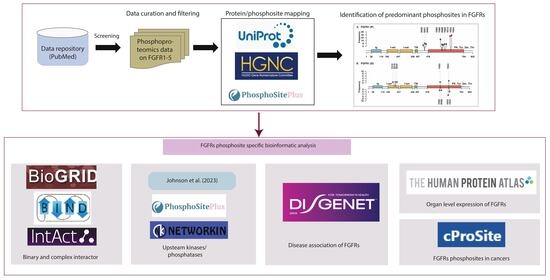
2.1. Phosphoproteomics Data Mining for FGFR1-5 Phosphosites
2.2. Identification of Predominant Phosphosites in FGFR1-5
2.3. Detection of Phosphosites on Other Proteins Co-Modulated with FGFR1-5
2.4. Compilation of Interactors and Upstream Kinases of FGFR3/4
2.5. Functional Characterization of Co-Modulated Proteins
2.6. Data Visualization
3. Results
3.1. Organ-Specific Gene and Protein Expression of FGFR1-5
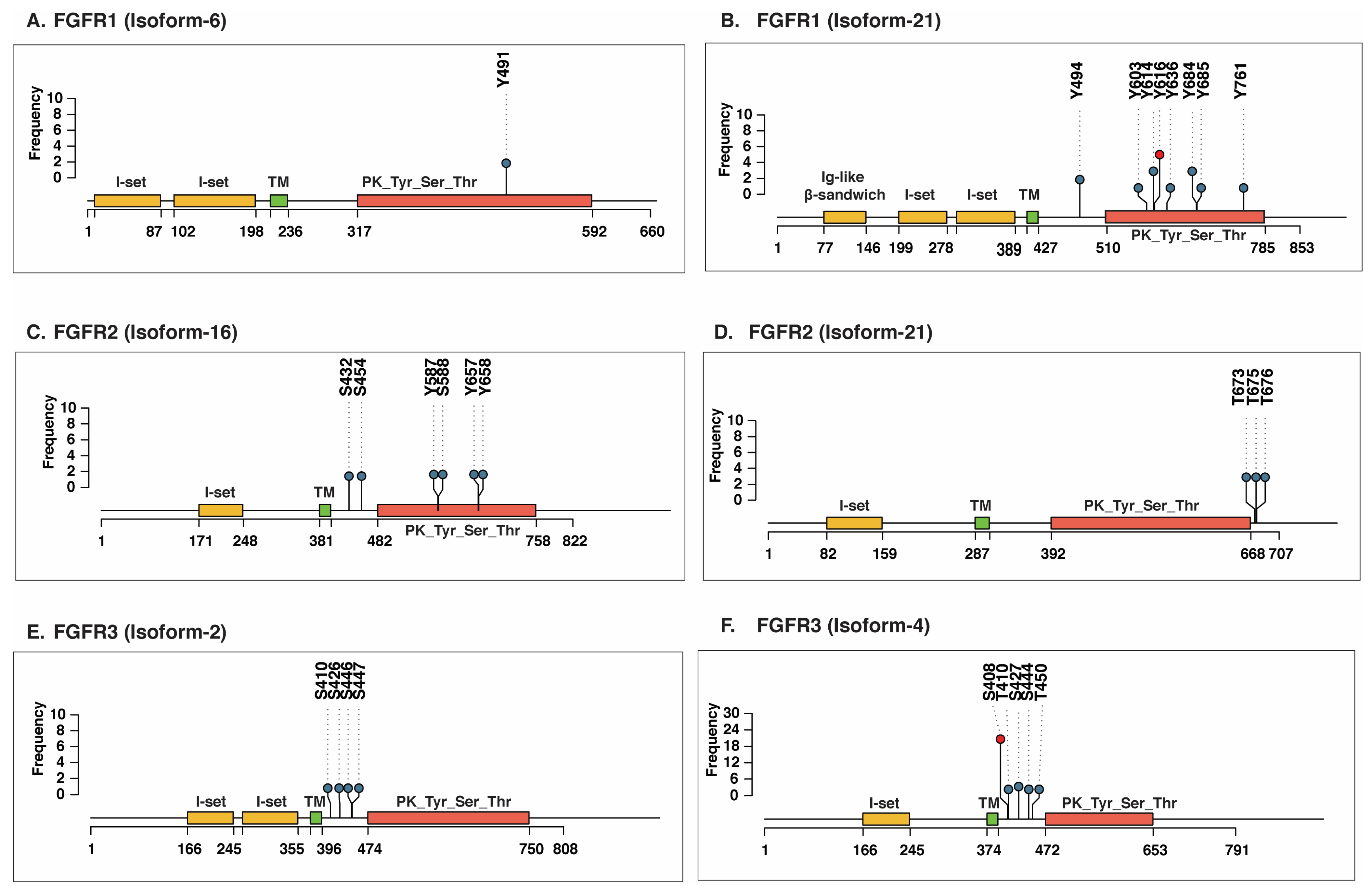
3.2. Integration of Phosphoproteomics Datasets to Identify Predominant Sites in FGFR1-5
3.3. Phosphoproteins Co-Modulated with Predominant Phosphosites in FGFR1-4
3.4. Overlapping PsOPs Co-Modulated with Predominant Sites in FGFR3 and FGFR4
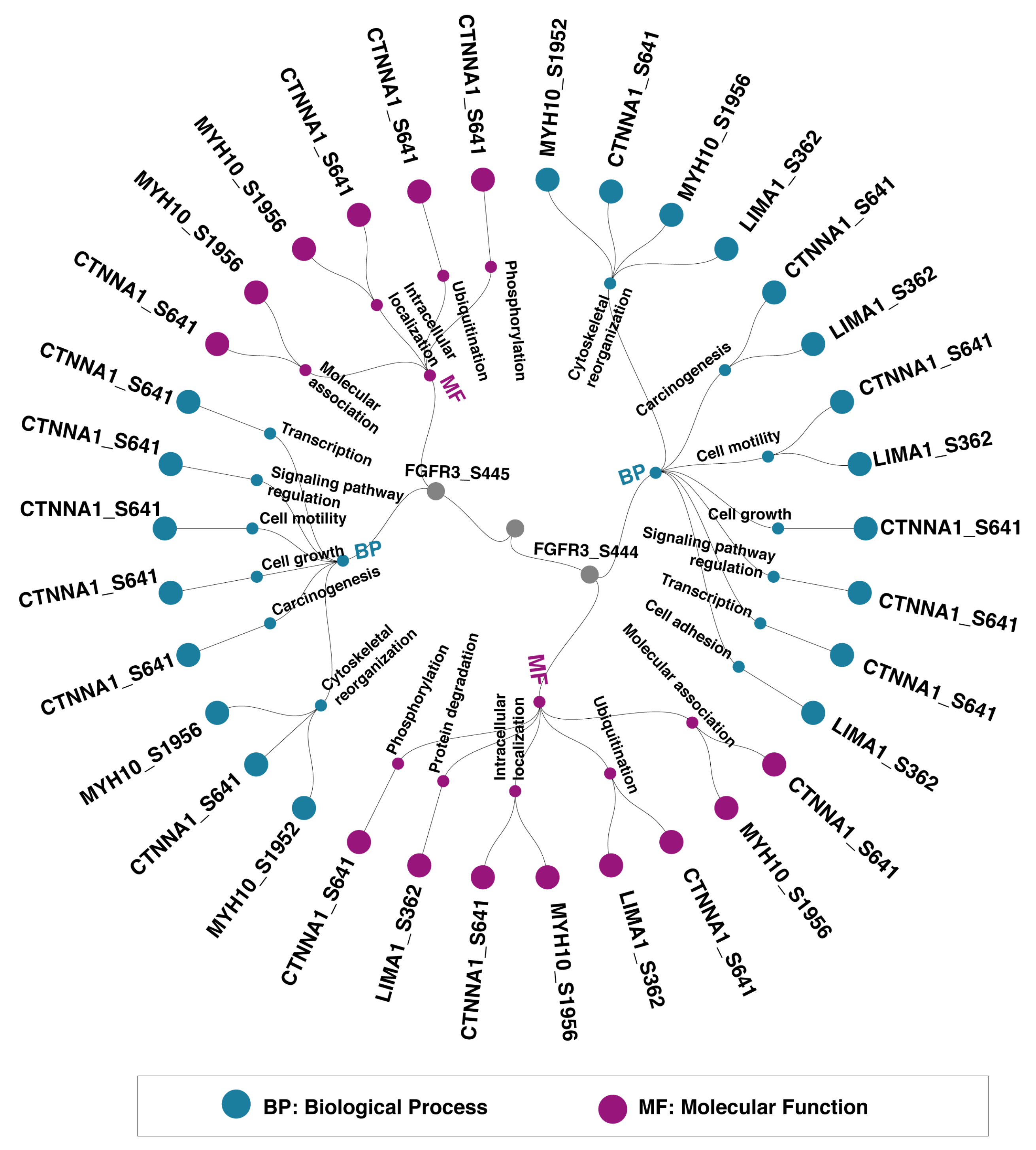
3.5. Functional Categorization of Phosphoproteins Co-Modulated with FGFR3 and FGFR4
3.6. Co-Modulation of FGFR3 and FGFR4 with Binary and Complex Interactors
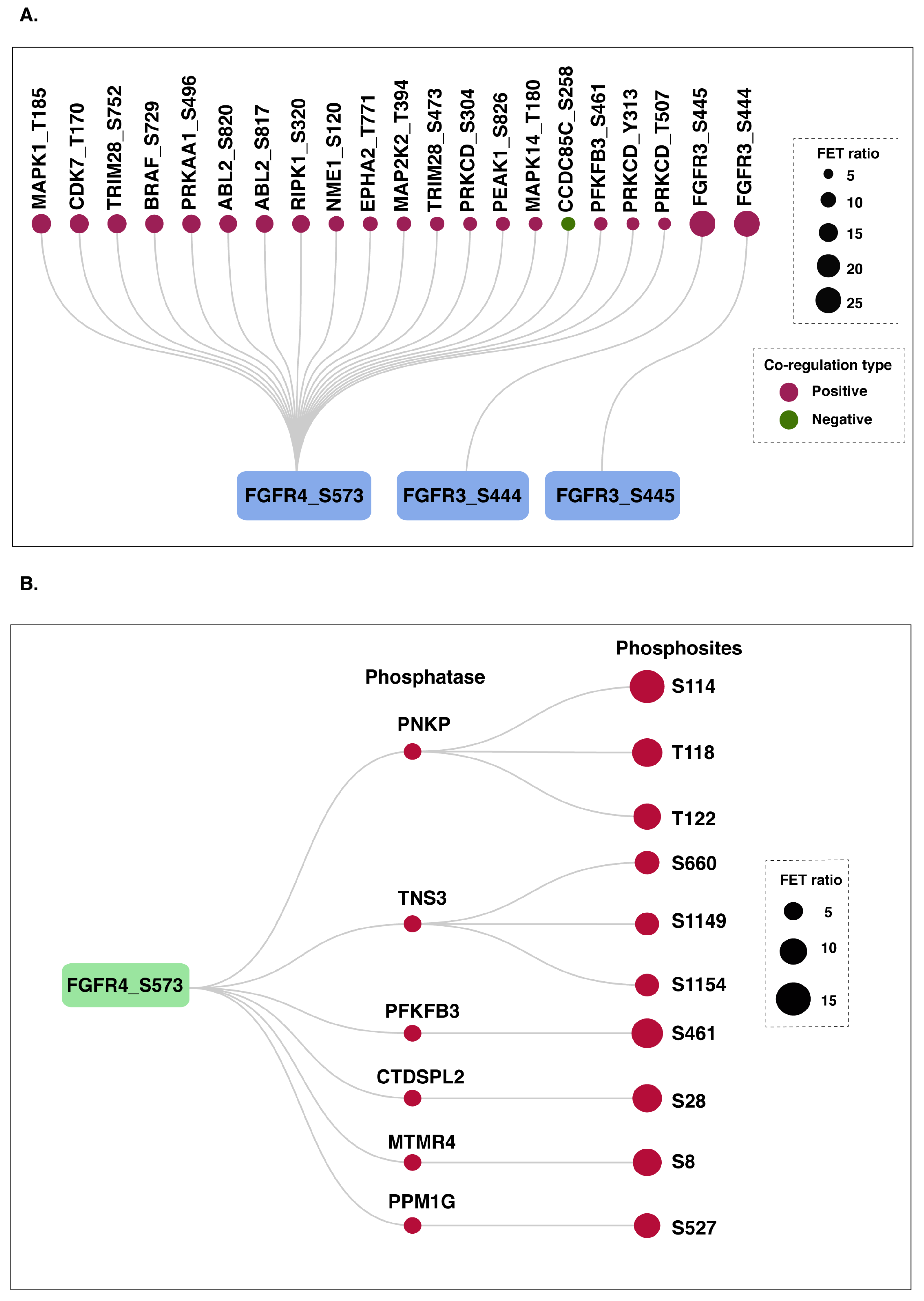
3.7. Potential Upstream Kinases and Phosphatases of FGFR3and FGFR4 Predominant Sites
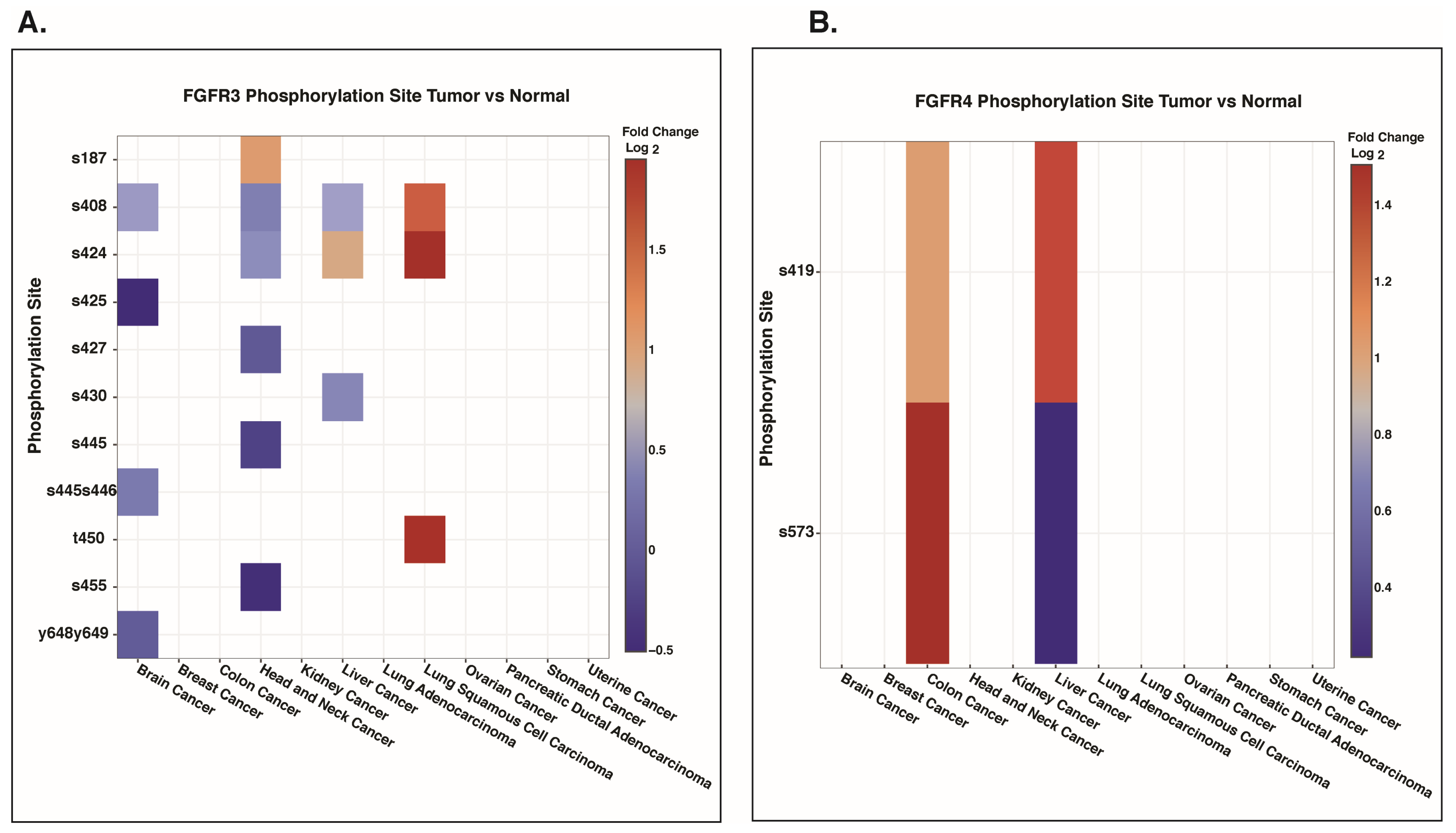
3.8. Differential Abundance of FGFR3 and FGFR4 Phosphosites Across Cancer Types
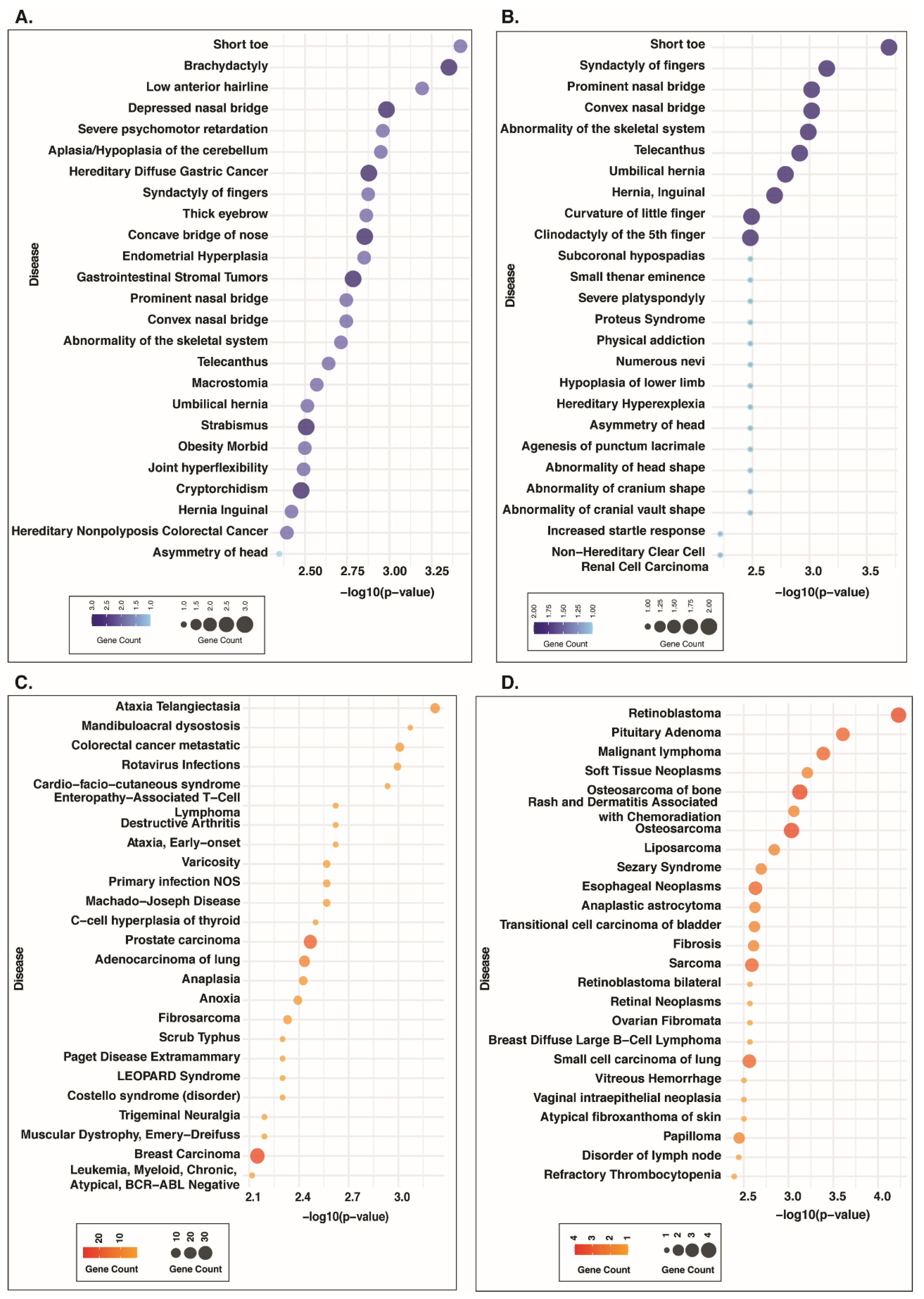
3.9. Disease Associations of Proteins Co-Modulated with FGFR3 and FGFR4
4. Discussion
5. Conclusions
6. Limitations and Future Outlook
Supplementary Materials
Author Contributions
Funding
Data Availability Statement
Acknowledgments
Conflicts of Interest
Abbreviations
| RTKs | Receptor tyrosine kinases |
| FGFRs | Fibroblast growth factor receptors |
| PsOPs | Phosphosites on other proteins |
| SADDAN | Severe achondroplasia with developmental delay and acanthosis nigricans |
References
- Farrell, B.; Breeze, A.L. Structure, activation and dysregulation of fibroblast growth factor receptor kinases: Perspectives for clinical targeting. Biochem. Soc. Trans. 2018, 46, 1753–1770. [Google Scholar] [CrossRef]
- Edirisinghe, O.; Ternier, G.; Alraawi, Z.; Suresh Kumar, T.K. Decoding FGF/FGFR Signaling: Insights into Biological Functions and Disease Relevance. Biomolecules 2024, 14, 1622. [Google Scholar] [CrossRef]
- Yue, S.; Li, Y.; Chen, X.; Wang, J.; Li, M.; Chen, Y.; Wu, D. FGFR-TKI resistance in cancer: Current status and perspectives. J. Hematol. Oncol. 2021, 14, 23. [Google Scholar] [CrossRef]
- Dai, S.; Zhou, Z.; Chen, Z.; Xu, G.; Chen, Y. Fibroblast Growth Factor Receptors (FGFRs): Structures and Small Molecule Inhibitors. Cells 2019, 8, 614. [Google Scholar] [CrossRef]
- Ascione, C.M.; Napolitano, F.; Esposito, D.; Servetto, A.; Belli, S.; Santaniello, A.; Scagliarini, S.; Crocetto, F.; Bianco, R.; Formisano, L. Role of FGFR3 in bladder cancer: Treatment landscape and future challenges. Cancer Treat. Rev. 2023, 115, 102530. [Google Scholar] [CrossRef]
- Goetz, R.; Mohammadi, M. Exploring mechanisms of FGF signalling through the lens of structural biology. Nat. Rev. Mol. Cell Biol. 2013, 14, 166–180. [Google Scholar] [CrossRef] [PubMed]
- Xie, Y.; Su, N.; Yang, J.; Tan, Q.; Huang, S.; Jin, M.; Ni, Z.; Zhang, B.; Zhang, D.; Luo, F.; et al. FGF/FGFR signaling in health and disease. Signal Transduct. Target. Ther. 2020, 5, 181. [Google Scholar] [CrossRef]
- Raju, R.; Palapetta, S.M.; Sandhya, V.K.; Sahu, A.; Alipoor, A.; Balakrishnan, L.; Advani, J.; George, B.; Kini, K.R.; Geetha, N.P.; et al. A Network Map of FGF-1/FGFR Signaling System. J. Signal Transduct. 2014, 2014, 962962. [Google Scholar] [CrossRef]
- Raju, R.; Nanjappa, V.; Balakrishnan, L.; Radhakrishnan, A.; Thomas, J.K.; Sharma, J.; Tian, M.; Palapetta, S.M.; Subbannayya, T.; Sekhar, N.R.; et al. NetSlim: High-confidence curated signaling maps. Database 2011, 2011, bar032. [Google Scholar] [CrossRef] [PubMed]
- Bogatyrova, O.; Mattsson, J.S.M.; Ross, E.M.; Sanderson, M.P.; Backman, M.; Botling, J.; Brunnstrom, H.; Kurppa, P.; La Fleur, L.; Strell, C.; et al. FGFR1 overexpression in non-small cell lung cancer is mediated by genetic and epigenetic mechanisms and is a determinant of FGFR1 inhibitor response. Eur. J. Cancer 2021, 151, 136–149. [Google Scholar] [CrossRef] [PubMed]
- Fan, S.; Chen, Y.; Wang, W.; Xu, W.; Tian, M.; Liu, Y.; Zhou, Y.; Liu, D.; Xia, Q.; Dong, L. Pharmacological and Biological Targeting of FGFR1 in Cancer. Curr. Issues Mol. Biol. 2024, 46, 13131–13150. [Google Scholar] [CrossRef]
- Hu, Y.; Ai, L.S.; Zhou, L.Q. Prognostic value of FGFR1 expression and amplification in patients with HNSCC: A systematic review and meta-analysis. PLoS ONE 2021, 16, e0251202. [Google Scholar] [CrossRef] [PubMed]
- Kim, H.S.; Kim, J.H.; Jang, H.J.; Han, B.; Zang, D.Y. Pathological and Prognostic Impacts of FGFR2 Overexpression in Gastric Cancer: A Meta-Analysis. J. Cancer 2019, 10, 20–27. [Google Scholar] [CrossRef]
- Su, X.; Zhan, P.; Gavine, P.R.; Morgan, S.; Womack, C.; Ni, X.; Shen, D.; Bang, Y.J.; Im, S.A.; Ho Kim, W.; et al. FGFR2 amplification has prognostic significance in gastric cancer: Results from a large international multicentre study. Br. J. Cancer 2014, 110, 967–975. [Google Scholar] [CrossRef]
- Jeske, Y.W.; Ali, S.; Byron, S.A.; Gao, F.; Mannel, R.S.; Ghebre, R.G.; DiSilvestro, P.A.; Lele, S.B.; Pearl, M.L.; Schmidt, A.P.; et al. FGFR2 mutations are associated with poor outcomes in endometrioid endometrial cancer: An NRG Oncology/Gynecologic Oncology Group study. Gynecol. Oncol. 2017, 145, 366–373. [Google Scholar] [CrossRef]
- Rianti, A.M.; Miskad, U.A.; Cangara, M.H.; Wahid, S.; Achmad, D.; Tawali, S. The Role of Fibroblast Growth Factor Receptor 2 as A Prognostic Biomarker in Colorectal Adenocarcinoma. Asian Pac. J. Cancer Prev. 2025, 26, 1335–1341. [Google Scholar] [CrossRef] [PubMed]
- Babina, I.S.; Turner, N.C. Advances and challenges in targeting FGFR signalling in cancer. Nat. Rev. Cancer 2017, 17, 318–332. [Google Scholar] [CrossRef] [PubMed]
- Zhang, P.; Yue, L.; Leng, Q.; Chang, C.; Gan, C.; Ye, T.; Cao, D. Targeting FGFR for cancer therapy. J. Hematol. Oncol. 2024, 17, 39. [Google Scholar] [CrossRef]
- Su, N.; Jin, M.; Chen, L. Role of FGF/FGFR signaling in skeletal development and homeostasis: Learning from mouse models. Bone Res. 2014, 2, 14003. [Google Scholar] [CrossRef]
- Ornitz, D.M.; Marie, P.J. Fibroblast growth factor signaling in skeletal development and disease. Genes Dev. 2015, 29, 1463–1486. [Google Scholar] [CrossRef]
- Furdui, C.M.; Lew, E.D.; Schlessinger, J.; Anderson, K.S. Autophosphorylation of FGFR1 kinase is mediated by a sequential and precisely ordered reaction. Mol. Cell 2006, 21, 711–717. [Google Scholar] [CrossRef] [PubMed]
- Lew, E.D.; Furdui, C.M.; Anderson, K.S.; Schlessinger, J. The precise sequence of FGF receptor autophosphorylation is kinetically driven and is disrupted by oncogenic mutations. Sci. Signal 2009, 2, ra6. [Google Scholar] [CrossRef]
- Wang, F.; McKeehan, K.; Yu, C.; McKeehan, W.L. Fibroblast growth factor receptor 1 phosphotyrosine 766: Molecular target for prevention of progression of prostate tumors to malignancy. Cancer Res. 2002, 62, 1898–1903. [Google Scholar]
- Touat, M.; Ileana, E.; Postel-Vinay, S.; Andre, F.; Soria, J.C. Targeting FGFR Signaling in Cancer. Clin. Cancer Res. 2015, 21, 2684–2694. [Google Scholar] [CrossRef]
- Raja, A.; Park, I.; Haq, F.; Ahn, S.M. FGF19-FGFR4 Signaling in Hepatocellular Carcinoma. Cells 2019, 8, 536. [Google Scholar] [CrossRef]
- Wang, Y.; Liu, D.; Zhang, T.; Xia, L. FGF/FGFR Signaling in Hepatocellular Carcinoma: From Carcinogenesis to Recent Therapeutic Intervention. Cancers 2021, 13, 1360. [Google Scholar] [CrossRef] [PubMed]
- Katoh, M. Cancer genomics and genetics of FGFR2 (Review). Int. J. Oncol. 2008, 33, 233–237. [Google Scholar] [CrossRef]
- Chew, N.J.; Nguyen, E.V.; Su, S.P.; Novy, K.; Chan, H.C.; Nguyen, L.K.; Luu, J.; Simpson, K.J.; Lee, R.S.; Daly, R.J. FGFR3 signaling and function in triple negative breast cancer. Cell Commun. Signal 2020, 18, 13. [Google Scholar] [CrossRef] [PubMed]
- Helsten, T.; Elkin, S.; Arthur, E.; Tomson, B.N.; Carter, J.; Kurzrock, R. The FGFR Landscape in Cancer: Analysis of 4,853 Tumors by Next-Generation Sequencing. Clin. Cancer Res. 2016, 22, 259–267. [Google Scholar] [CrossRef]
- Brady, S.W.; Liu, Y.; Ma, X.; Gout, A.M.; Hagiwara, K.; Zhou, X.; Wang, J.; Macias, M.; Chen, X.; Easton, J.; et al. Pan-neuroblastoma analysis reveals age- and signature-associated driver alterations. Nat. Commun. 2020, 11, 5183. [Google Scholar] [CrossRef]
- Agelopoulos, K.; Richter, G.H.; Schmidt, E.; Dirksen, U.; von Heyking, K.; Moser, B.; Klein, H.U.; Kontny, U.; Dugas, M.; Poos, K.; et al. Deep Sequencing in Conjunction with Expression and Functional Analyses Reveals Activation of FGFR1 in Ewing Sarcoma. Clin. Cancer Res. 2015, 21, 4935–4946. [Google Scholar] [CrossRef]
- Appay, R.; Fina, F.; Barets, D.; Gallardo, C.; Nanni-Metellus, I.; Scavarda, D.; Henaff, D.; Vincent, J.; Grewis, L.; Pourquier, P.; et al. Multiplexed Droplet Digital PCR Assays for the Simultaneous Screening of Major Genetic Alterations in Tumors of the Central Nervous System. Front. Oncol. 2020, 10, 579762. [Google Scholar] [CrossRef] [PubMed]
- Lei, H.; Deng, C.X. Fibroblast Growth Factor Receptor 2 Signaling in Breast Cancer. Int. J. Biol. Sci. 2017, 13, 1163–1171. [Google Scholar] [CrossRef]
- Reintjes, N.; Li, Y.; Becker, A.; Rohmann, E.; Schmutzler, R.; Wollnik, B. Activating somatic FGFR2 mutations in breast cancer. PLoS ONE 2013, 8, e60264. [Google Scholar] [CrossRef] [PubMed][Green Version]
- Ornitz, D.M.; Legeai-Mallet, L. Achondroplasia: Development, pathogenesis, and therapy. Dev. Dyn. 2017, 246, 291–309. [Google Scholar] [CrossRef] [PubMed]
- Vajo, Z.; Francomano, C.A.; Wilkin, D.J. The molecular and genetic basis of fibroblast growth factor receptor 3 disorders: The achondroplasia family of skeletal dysplasias, Muenke craniosynostosis, and Crouzon syndrome with acanthosis nigricans. Endocr. Rev. 2000, 21, 23–39. [Google Scholar] [CrossRef]
- Noe, E.J.; Yoo, H.W.; Kim, K.N.; Lee, S.Y. A case of thanatophoric dysplasia type I with an R248C mutation in the FGFR3 gene. Korean J. Pediatr. 2010, 53, 1022–1025. [Google Scholar] [CrossRef][Green Version]
- Xue, Y.; Sun, A.; Mekikian, P.B.; Martin, J.; Rimoin, D.L.; Lachman, R.S.; Wilcox, W.R. FGFR3 mutation frequency in 324 cases from the International Skeletal Dysplasia Registry. Mol. Genet. Genom. Med. 2014, 2, 497–503. [Google Scholar] [CrossRef]
- Zheng, J.; Zhang, W.; Li, L.; He, Y.; Wei, Y.; Dang, Y.; Nie, S.; Guo, Z. Signaling Pathway and Small-Molecule Drug Discovery of FGFR: A Comprehensive Review. Front. Chem. 2022, 10, 860985. [Google Scholar] [CrossRef]
- Chen, W.; Ding, Z.; Zang, Y.; Liu, X. Characterization of Proteoform Post-Translational Modifications by Top-Down and Bottom-Up Mass Spectrometry in Conjunction with Annotations. J. Proteome Res. 2023, 22, 3178–3189. [Google Scholar] [CrossRef]
- Forgrave, L.M.; Wang, M.; Yang, D.; DeMarco, M.L. Proteoforms and their expanding role in laboratory medicine. Pract. Lab. Med. 2022, 28, e00260. [Google Scholar] [CrossRef]
- Zhan, Z.; Wang, L. Proteoform identification and quantification based on alignment graphs. Bioinformatics 2024, 41, btaf007. [Google Scholar] [CrossRef] [PubMed]
- Priyanka, P.; Gopalakrishnan, A.P.; Nisar, M.; Shivamurthy, P.B.; George, M.; John, L.; Sanjeev, D.; Yandigeri, T.; Thomas, S.D.; Rafi, A.; et al. A global phosphosite-correlated network map of Thousand And One Kinase 1 (TAOK1). Int. J. Biochem. Cell Biol. 2024, 170, 106558. [Google Scholar] [CrossRef]
- Raghu, D.H.; Dcunha, L.; Ahmed, M.; Fahma, A.; Mahin, A.; Gopalakrishnan, A.P.; John, L.; Subair, S.; Shivamurthy, P.B.; Varghese, S.; et al. Unravelling the phosphoregulatory network of protein kinase C-delta (PKC-delta). Biochim. Biophys. Acta Proteins Proteom. 2025, 1873, 141080. [Google Scholar] [CrossRef]
- Del Toro, N.; Shrivastava, A.; Ragueneau, E.; Meldal, B.; Combe, C.; Barrera, E.; Perfetto, L.; How, K.; Ratan, P.; Shirodkar, G.; et al. The IntAct database: Efficient access to fine-grained molecular interaction data. Nucleic Acids Res. 2022, 50, D648–D653. [Google Scholar] [CrossRef]
- Oughtred, R.; Stark, C.; Breitkreutz, B.J.; Rust, J.; Boucher, L.; Chang, C.; Kolas, N.; O’Donnell, L.; Leung, G.; McAdam, R.; et al. The BioGRID interaction database: 2019 update. Nucleic Acids Res. 2019, 47, D529–D541. [Google Scholar] [CrossRef] [PubMed]
- Keshava Prasad, T.S.; Goel, R.; Kandasamy, K.; Keerthikumar, S.; Kumar, S.; Mathivanan, S.; Telikicherla, D.; Raju, R.; Shafreen, B.; Venugopal, A.; et al. Human Protein Reference Database--2009 update. Nucleic Acids Res. 2009, 37, D767–D772. [Google Scholar] [CrossRef]
- Bader, G.D.; Betel, D.; Hogue, C.W. BIND: The Biomolecular Interaction Network Database. Nucleic Acids Res. 2003, 31, 248–250. [Google Scholar] [CrossRef] [PubMed]
- Hornbeck, P.V.; Kornhauser, J.M.; Tkachev, S.; Zhang, B.; Skrzypek, E.; Murray, B.; Latham, V.; Sullivan, M. PhosphoSitePlus: A comprehensive resource for investigating the structure and function of experimentally determined post-translational modifications in man and mouse. Nucleic Acids Res. 2012, 40, D261–D270. [Google Scholar] [CrossRef]
- Dinkel, H.; Chica, C.; Via, A.; Gould, C.M.; Jensen, L.J.; Gibson, T.J.; Diella, F. Phospho.ELM: A database of phosphorylation sites—Update 2011. Nucleic Acids Res. 2011, 39, D261–D267. [Google Scholar] [CrossRef]
- Huang, K.Y.; Wu, H.Y.; Chen, Y.J.; Lu, C.T.; Su, M.G.; Hsieh, Y.C.; Tsai, C.M.; Lin, K.I.; Huang, H.D.; Lee, T.Y.; et al. RegPhos 2.0: An updated resource to explore protein kinase-substrate phosphorylation networks in mammals. Database 2014, 2014, bau034. [Google Scholar] [CrossRef]
- Linding, R.; Jensen, L.J.; Pasculescu, A.; Olhovsky, M.; Colwill, K.; Bork, P.; Yaffe, M.B.; Pawson, T. NetworKIN: A resource for exploring cellular phosphorylation networks. Nucleic Acids Res. 2008, 36, D695–D699. [Google Scholar] [CrossRef]
- Parca, L.; Ariano, B.; Cabibbo, A.; Paoletti, M.; Tamburrini, A.; Palmeri, A.; Ausiello, G.; Helmer-Citterich, M. Kinome-wide identification of phosphorylation networks in eukaryotic proteomes. Bioinformatics 2019, 35, 372–379. [Google Scholar] [CrossRef]
- Mari, T.; Mosbauer, K.; Wyler, E.; Landthaler, M.; Drosten, C.; Selbach, M. In Vitro Kinase-to-Phosphosite Database (iKiP-DB) Predicts Kinase Activity in Phosphoproteomic Datasets. J. Proteome Res. 2022, 21, 1575–1587. [Google Scholar] [CrossRef] [PubMed]
- Johnson, J.L.; Yaron, T.M.; Huntsman, E.M.; Kerelsky, A.; Song, J.; Regev, A.; Lin, T.Y.; Liberatore, K.; Cizin, D.M.; Cohen, B.M.; et al. An atlas of substrate specificities for the human serine/threonine kinome. Nature 2023, 613, 759–766. [Google Scholar] [CrossRef] [PubMed]
- Pinero, J.; Ramirez-Anguita, J.M.; Sauch-Pitarch, J.; Ronzano, F.; Centeno, E.; Sanz, F.; Furlong, L.I. The DisGeNET knowledge platform for disease genomics: 2019 update. Nucleic Acids Res. 2020, 48, D845–D855. [Google Scholar] [CrossRef] [PubMed]
- Ou, J.; Zhu, L.J. trackViewer: A Bioconductor package for interactive and integrative visualization of multi-omics data. Nat. Methods 2019, 16, 453–454. [Google Scholar] [CrossRef]
- Heberle, H.; Meirelles, G.V.; da Silva, F.R.; Telles, G.P.; Minghim, R. InteractiVenn: A web-based tool for the analysis of sets through Venn diagrams. BMC Bioinform. 2015, 16, 169. [Google Scholar] [CrossRef]
- Liu, Q.; Huang, J.; Yan, W.; Liu, Z.; Liu, S.; Fang, W. FGFR families: Biological functions and therapeutic interventions in tumors. MedComm 2023, 4, e367. [Google Scholar] [CrossRef]
- Gopalakrishnan, A.P.; Shivamurthy, P.B.; Ahmed, M.; Ummar, S.; Ramesh, P.; Thomas, S.D.; Mahin, A.; Nisar, M.; Soman, S.; Subbannayya, Y.; et al. Positional distribution and conservation of major phosphorylated sites in the human kinome. Front. Mol. Biosci. 2025, 12, 1557835. [Google Scholar] [CrossRef]
- Teven, C.M.; Farina, E.M.; Rivas, J.; Reid, R.R. Fibroblast growth factor (FGF) signaling in development and skeletal diseases. Genes. Dis. 2014, 1, 199–213. [Google Scholar] [CrossRef]
- Hafner, C.; van Oers, J.M.; Vogt, T.; Landthaler, M.; Stoehr, R.; Blaszyk, H.; Hofstaedter, F.; Zwarthoff, E.C.; Hartmann, A. Mosaicism of activating FGFR3 mutations in human skin causes epidermal nevi. J. Clin. Investig. 2006, 116, 2201–2207. [Google Scholar] [CrossRef] [PubMed]
- Hafner, C.; Hartmann, A.; van Oers, J.M.; Stoehr, R.; Zwarthoff, E.C.; Hofstaedter, F.; Landthaler, M.; Vogt, T. FGFR3 mutations in seborrheic keratoses are already present in flat lesions and associated with age and localization. Mod. Pathol. 2007, 20, 895–903. [Google Scholar] [CrossRef]
- Krook, M.A.; Reeser, J.W.; Ernst, G.; Barker, H.; Wilberding, M.; Li, G.; Chen, H.Z.; Roychowdhury, S. Fibroblast growth factor receptors in cancer: Genetic alterations, diagnostics, therapeutic targets and mechanisms of resistance. Br. J. Cancer 2021, 124, 880–892. [Google Scholar] [CrossRef] [PubMed]
- Du, S.; Zhang, Y.; Xu, J. Current progress in cancer treatment by targeting FGFR signaling. Cancer Biol. Med. 2023, 20, 490–499. [Google Scholar] [CrossRef] [PubMed]
- Saito, A.; Higuchi, I.; Nakagawa, M.; Saito, M.; Uchida, Y.; Inose, M.; Kasai, T.; Niiyama, T.; Fukunaga, H.; Arimura, K.; et al. An overexpression of fibroblast growth factor (FGF) and FGF receptor 4 in a severe clinical phenotype of facioscapulohumeral muscular dystrophy. Muscle Nerve 2000, 23, 490–497. [Google Scholar] [CrossRef]
- Azoury, S.C.; Reddy, S.; Shukla, V.; Deng, C.X. Fibroblast Growth Factor Receptor 2 (FGFR2) Mutation Related Syndromic Craniosynostosis. Int. J. Biol. Sci. 2017, 13, 1479–1488. [Google Scholar] [CrossRef]
- Mohammadi, M.; Dikic, I.; Sorokin, A.; Burgess, W.H.; Jaye, M.; Schlessinger, J. Identification of six novel autophosphorylation sites on fibroblast growth factor receptor 1 and elucidation of their importance in receptor activation and signal transduction. Mol. Cell Biol. 1996, 16, 977–989. [Google Scholar] [CrossRef]
- Zou, L.; Cao, S.; Kang, N.; Huebert, R.C.; Shah, V.H. Fibronectin induces endothelial cell migration through beta1 integrin and Src-dependent phosphorylation of fibroblast growth factor receptor-1 at tyrosines 653/654 and 766. J. Biol. Chem. 2012, 287, 7190–7202. [Google Scholar] [CrossRef]
- Kunii, K.; Davis, L.; Gorenstein, J.; Hatch, H.; Yashiro, M.; Di Bacco, A.; Elbi, C.; Lutterbach, B. FGFR2-amplified gastric cancer cell lines require FGFR2 and Erbb3 signaling for growth and survival. Cancer Res. 2008, 68, 2340–2348. [Google Scholar] [CrossRef]
- Luo, Y.; Yang, C.; Jin, C.; Xie, R.; Wang, F.; McKeehan, W.L. Novel phosphotyrosine targets of FGFR2IIIb signaling. Cell Signal 2009, 21, 1370–1378. [Google Scholar] [CrossRef] [PubMed]
- Sinitcyn, P.; Richards, A.L.; Weatheritt, R.J.; Brademan, D.R.; Marx, H.; Shishkova, E.; Meyer, J.G.; Hebert, A.S.; Westphall, M.S.; Blencowe, B.J.; et al. Global detection of human variants and isoforms by deep proteome sequencing. Nat. Biotechnol. 2023, 41, 1776–1786. [Google Scholar] [CrossRef]
- Cha, J.Y.; Maddileti, S.; Mitin, N.; Harden, T.K.; Der, C.J. Aberrant receptor internalization and enhanced FRS2-dependent signaling contribute to the transforming activity of the fibroblast growth factor receptor 2 IIIb C3 isoform. J. Biol. Chem. 2009, 284, 6227–6240. [Google Scholar] [CrossRef] [PubMed][Green Version]
- Cha, J.Y.; Lambert, Q.T.; Reuther, G.W.; Der, C.J. Involvement of fibroblast growth factor receptor 2 isoform switching in mammary oncogenesis. Mol. Cancer Res. 2008, 6, 435–445. [Google Scholar] [CrossRef]
- Gong, S.G. Isoforms of receptors of fibroblast growth factors. J. Cell Physiol. 2014, 229, 1887–1895. [Google Scholar] [CrossRef] [PubMed]
- Kustatscher, G.; Grabowski, P.; Schrader, T.A.; Passmore, J.B.; Schrader, M.; Rappsilber, J. Co-regulation map of the human proteome enables identification of protein functions. Nat. Biotechnol. 2019, 37, 1361–1371. [Google Scholar] [CrossRef]
- Howell, B.W.; Smith, K.M. Synaptic structural protein dysfunction leads to altered excitation inhibition ratios in models of autism spectrum disorder. Pharmacol. Res. 2019, 139, 207–214. [Google Scholar] [CrossRef]
- Vicente-Manzanares, M.; Ma, X.; Adelstein, R.S.; Horwitz, A.R. Non-muscle myosin II takes centre stage in cell adhesion and migration. Nat. Rev. Mol. Cell Biol. 2009, 10, 778–790. [Google Scholar] [CrossRef]
- Schiffhauer, E.S.; Ren, Y.; Iglesias, V.A.; Kothari, P.; Iglesias, P.A.; Robinson, D.N. Myosin IIB assembly state determines its mechanosensitive dynamics. J. Cell Biol. 2019, 218, 895–908. [Google Scholar] [CrossRef]
- Kim, H.T.; Yin, W.; Jin, Y.J.; Panza, P.; Gunawan, F.; Grohmann, B.; Buettner, C.; Sokol, A.M.; Preussner, J.; Guenther, S.; et al. Myh10 deficiency leads to defective extracellular matrix remodeling and pulmonary disease. Nat. Commun. 2018, 9, 4600. [Google Scholar] [CrossRef]
- Stokes, M.P.; Rush, J.; Macneill, J.; Ren, J.M.; Sprott, K.; Nardone, J.; Yang, V.; Beausoleil, S.A.; Gygi, S.P.; Livingstone, M.; et al. Profiling of UV-induced ATM/ATR signaling pathways. Proc. Natl. Acad. Sci. USA 2007, 104, 19855–19860. [Google Scholar] [CrossRef]
- Saha, A.; Seward, C.H.; Stubbs, L.; Mizzen, C.A. Site-Specific Phosphorylation of Histone H1.4 Is Associated with Transcription Activation. Int. J. Mol. Sci. 2020, 21, 8861. [Google Scholar] [CrossRef]
- Clarke, L.E.; Cook, A.; Mathavarajah, S.; Bera, A.; Salsman, J.; Habib, E.; Van Iderstine, C.; Bydoun, M.; Lewis, S.M.; Dellaire, G. Haploinsufficient tumor suppressor PRP4K is negatively regulated during epithelial-to-mesenchymal transition. FASEB J. 2021, 35, e22001. [Google Scholar] [CrossRef]
- Knudsen, E.S.; Nambiar, R.; Rosario, S.R.; Smiraglia, D.J.; Goodrich, D.W.; Witkiewicz, A.K. Pan-cancer molecular analysis of the RB tumor suppressor pathway. Commun. Biol. 2020, 3, 158. [Google Scholar] [CrossRef] [PubMed]
- Petrosino, M.; Novak, L.; Pasquo, A.; Turina, P.; Capriotti, E.; Minicozzi, V.; Consalvi, V.; Chiaraluce, R. The complex impact of cancer-related missense mutations on the stability and on the biophysical and biochemical properties of MAPK1 and MAPK3 somatic variants. Hum. Genom. 2023, 17, 95. [Google Scholar] [CrossRef]
- Zakrzewska, M.; Haugsten, E.M.; Nadratowska-Wesolowska, B.; Oppelt, A.; Hausott, B.; Jin, Y.; Otlewski, J.; Wesche, J.; Wiedlocha, A. ERK-mediated phosphorylation of fibroblast growth factor receptor 1 on Ser777 inhibits signaling. Sci. Signal 2013, 6, ra11. [Google Scholar] [CrossRef]
- Szybowska, P.; Kostas, M.; Wesche, J.; Wiedlocha, A.; Haugsten, E.M. Cancer Mutations in FGFR2 Prevent a Negative Feedback Loop Mediated by the ERK1/2 Pathway. Cells 2019, 8, 518. [Google Scholar] [CrossRef]
- Sadat, S.M.A.; Paiva, I.M.; Shire, Z.; Sanaee, F.; Morgan, T.D.R.; Paladino, M.; Karimi-Busheri, F.; Mani, R.S.; Martin, G.R.; Jirik, F.R.; et al. A synthetically lethal nanomedicine delivering novel inhibitors of polynucleotide kinase 3′-phosphatase (PNKP) for targeted therapy of PTEN-deficient colorectal cancer. J. Control Release 2021, 334, 335–352. [Google Scholar] [CrossRef] [PubMed]
- Qian, X.; Li, G.; Vass, W.C.; Papageorge, A.; Walker, R.C.; Asnaghi, L.; Steinbach, P.J.; Tosato, G.; Hunter, K.; Lowy, D.R. The Tensin-3 protein, including its SH2 domain, is phosphorylated by Src and contributes to tumorigenesis and metastasis. Cancer Cell 2009, 16, 246–258. [Google Scholar] [CrossRef] [PubMed]
- Kant, S.G.; Cervenkova, I.; Balek, L.; Trantirek, L.; Santen, G.W.; de Vries, M.C.; van Duyvenvoorde, H.A.; van der Wielen, M.J.; Verkerk, A.J.; Uitterlinden, A.G.; et al. A novel variant of FGFR3 causes proportionate short stature. Eur. J. Endocrinol. 2015, 172, 763–770. [Google Scholar] [CrossRef]
- Graham, J.M., Jr.; Braddock, S.R.; Mortier, G.R.; Lachman, R.; Van Dop, C.; Jabs, E.W. Syndrome of coronal craniosynostosis with brachydactyly and carpal/tarsal coalition due to Pro250Arg mutation in FGFR3 gene. Am. J. Med. Genet. 1998, 77, 322–329. [Google Scholar] [CrossRef]
- Tang, S.; Hao, Y.; Yuan, Y.; Liu, R.; Chen, Q. Role of fibroblast growth factor receptor 4 in cancer. Cancer Sci. 2018, 109, 3024–3031. [Google Scholar] [CrossRef] [PubMed]






| Aminoacid Sequence | Phosphosite Position in Isoforms | ||
|---|---|---|---|
| FGFR1 Canonical Isoform | FGFR1 Isoform-6 | FGFR1 Isoform-21 | |
| LVRPSRLS(p)SSGTPML | S450 | _ | _ |
| PSRLSS(p)SGTPMLAGVSEYELPEDPR | S451 | _ | _ |
| PSRLSSS(p)GTPMLAGVSEYELPEDPR | S452 | _ | _ |
| RPPGLEYCYNPS(p)HNPEEQLSSK | S588 | _ | _ |
| RPPGLEY(p)CYNPSHNPEEQLSSK | Y583 | _ | Y614 |
| RPPGLEYCY(p)NPSHNPEEQLSSK | Y585 | _ | Y616 |
| DLVSCAY(p)QVARGMEYLASK | Y605 | _ | Y636 |
| DLVSCAYQVARGMEY(p)LASK | Y613 | _ | _ |
| DIHHIDY(p)YKK | Y653 | Y491 | Y684 |
| DIHHIDYY(p)K | Y654 | _ | Y685 |
| GNLREY(p)LQAR | _ | _ | Y603 |
| MDKPSNCTNELY(p)MMMR | _ | _ | Y761 |
| PSRLSSSGTPMLAGVSEY(p)ELPEDPR | _ | _ | Y494 |
| FGFR2 Canonical Isoform | FGFR2 Isoform-16 | FGFR2 Isoform-21 | |
| VRITTRLS(p)STADTPM | S452 | _ | _ |
| RITTRLSS(p)TADTPML | S453 | S454 | _ |
| KDLSDLVS(p)EMEMMKM | S533 | - | _ |
| RPPGMEYS(p)YDINRVP | S587 | S588 | _ |
| SQPLEQYS(p)PSYPDTR | S780 | _ | _ |
| NTPLVRIT(p)TRLSSTA | T448 | _ | _ |
| ITTRLSST(p)ADTPMLA | T454 | _ | _ |
| IGGY(p)KVR | Y207 * | _ | _ |
| MLAGVSEY(p)ELPEDPK | Y466 | _ | _ |
| RRPPGMEY(p)SYDINRV | Y586 | Y587 | _ |
| PPGMEYSY(p)DINRVPE | Y588 | _ | _ |
| RDINNIDY(p)YKKTTNG | Y656 | Y657 | _ |
| DINNIDYY(p)KKTTNGR | Y657 | Y658 | _ |
| LRRQ—VS(p)AESSSSM | _ | S432 | _ |
| ILT(ph)LTTNEEEK | _ | _ | T673 |
| ILTLT(ph)TNEEEK | _ | _ | T675 |
| ILTLTT(p)NEEEK | _ | _ | T676 |
| FGFR3 Canonical Isoform | FGFR3 Isoform-2 | FGFR3 Isoform-4 | |
| GLGS(p)PTVHK | S408 | S410 | S408 |
| QVS(p)LESNASMSSNTPLVR | S424 | S426 | _ |
| QVSLESNASMS(p)SNTPLVR | S427 * | _ | S427 |
| QVSLESNASMS(p)SNTPLVR | S432 | _ | _ |
| IARLS(p)SGEGPTLANVSELELPADPK | S444 | S446 | S444 |
| IARLSS(p)GEGPTLANVSELELPADPK | S445 | S447 | _ |
| RPPGLDYS(p)FDTCKPPEEQLTFK | S578 | _ | _ |
| KKGLGSPT(p)VHKISR | T410 | _ | T410 |
| IARLSSGEGPT(p)LANVSELELPADPK | T450 | _ | T450 |
| DVHNLDY(p)YKK | Y647 | _ | _ |
| Predominant Sites | PsOPs | Interaction Type |
|---|---|---|
| FGFR3_S444 | FGFR3_S445 | Binary and complex |
| FGFR3_S445 | FGFR3_S444 | Binary and complex |
| STX4_S117 | Complex | |
| FGFR4_S573 | SUGT1_T265 | Binary |
| SUGT1_S11 | Binary | |
| ABL2_S820 | Binary | |
| MAPK1_T185 | Binary | |
| NUP155_S992 | Binary | |
| ABL2_S817 | Binary | |
| EZR_S539 | Binary | |
| EPN2_S173 | Binary | |
| HLA-A_S359 | Binary and complex | |
| SPRY1_S50 | Binary | |
| EPHA2_T771 | Binary and complex | |
| PDLIM2_S206 | Binary | |
| PEAK1_S826 | Binary | |
| MAPK14_T180 | Binary | |
| PLEKHA1_S380 | Binary | |
| TANC1_S132 | Binary | |
| MEPCE_S254 | Complex | |
| HLA-A_S359 | Binary and complex | |
| TEX2_T262 | Complex | |
| EPHA2_T771 | Binary and complex | |
| CCDC85C_S258 | Binary |
Disclaimer/Publisher’s Note: The statements, opinions and data contained in all publications are solely those of the individual author(s) and contributor(s) and not of MDPI and/or the editor(s). MDPI and/or the editor(s) disclaim responsibility for any injury to people or property resulting from any ideas, methods, instructions or products referred to in the content. |
© 2026 by the authors. Licensee MDPI, Basel, Switzerland. This article is an open access article distributed under the terms and conditions of the Creative Commons Attribution (CC BY) license.
Share and Cite
Palollathil, A.; Mahin, A.; Perunelly Gopalakrishnan, A.; Poojari, T.R.; Sambreena, A.; Basthikoppa Shivamurthy, P.; Raju, R. Proteome-Wide Analysis of Functional Phosphosites in the FGFR Family of Proteins: Insights from Large-Scale Phosphoproteomic Analysis. Proteomes 2026, 14, 8. https://doi.org/10.3390/proteomes14010008
Palollathil A, Mahin A, Perunelly Gopalakrishnan A, Poojari TR, Sambreena A, Basthikoppa Shivamurthy P, Raju R. Proteome-Wide Analysis of Functional Phosphosites in the FGFR Family of Proteins: Insights from Large-Scale Phosphoproteomic Analysis. Proteomes. 2026; 14(1):8. https://doi.org/10.3390/proteomes14010008
Chicago/Turabian StylePalollathil, Akhina, Althaf Mahin, Athira Perunelly Gopalakrishnan, Tejaswini R Poojari, Alimath Sambreena, Prathik Basthikoppa Shivamurthy, and Rajesh Raju. 2026. "Proteome-Wide Analysis of Functional Phosphosites in the FGFR Family of Proteins: Insights from Large-Scale Phosphoproteomic Analysis" Proteomes 14, no. 1: 8. https://doi.org/10.3390/proteomes14010008
APA StylePalollathil, A., Mahin, A., Perunelly Gopalakrishnan, A., Poojari, T. R., Sambreena, A., Basthikoppa Shivamurthy, P., & Raju, R. (2026). Proteome-Wide Analysis of Functional Phosphosites in the FGFR Family of Proteins: Insights from Large-Scale Phosphoproteomic Analysis. Proteomes, 14(1), 8. https://doi.org/10.3390/proteomes14010008