
Global Prevalence of Depression Among University Students: A Comprehensive Umbrella Review
 , ,
, ,  and
and
Abstract
1. Introduction
2. Materials and Methods
2.1. Transparency and Openness
2.2. Search Strategy
2.3. Selection Criteria
2.3.1. Assessment of Relevance
- Records were excluded if they were not reported in English.
- Records were excluded if they were neither meta-analyses nor systematic reviews.
- Records were excluded if they did not mention the specific term “depression”.
- Records were deemed relevant if they were reported in English.
- Records were deemed relevant if they were meta-analyses or systematic reviews.
- Records were deemed relevant if they examined the prevalence of clinically diagnosed depression and/or depressive symptoms using at least one of the following assessment approaches:
- A clinician-administered instrument and/or diagnostic interview (e.g., Structured Clinical Interview for DSM-5 [SCID-5]; First et al., 2016).
- A clinician-administered or self-reported inventory (e.g., Hamilton Depression Scale; Hamilton, 1960), regardless of the psychometric validation.
- Records were deemed relevant if they reported depression prevalence as a percentage.
- Records were deemed relevant if they reported depression prevalence among university students, including those at the undergraduate and postgraduate levels. Records that conducted separate analyses for mixed samples of university and non-university students were eligible for inclusion.
2.3.2. Evaluation of Review Quality and Risk of Bias
2.4. Data Extraction
2.5. Data Synthesis
3. Results
3.1. Search Outcome and Eligibility
3.2. Review Characteristics
3.3. Prevalence of Depression
3.4. Subgroup Analyses
3.4.1. Demographic Factors
3.4.2. Method Factors
4. Discussion
4.1. Practical Recommendations for Schools and Relevant Institutions
4.2. Future Directions and Limitations
5. Conclusions
Supplementary Materials
Author Contributions
Funding
Institutional Review Board Statement
Informed Consent Statement
Data Availability Statement
Conflicts of Interest
| 1 | Agreement for Item 4 (“Were the sources and resources used to search for studies adequate?”) was substantially lower than that for the other items. To avoid misinterpretation, the authors discussed which sources constituted grey literature (i.e., Google Scholar and ProQuest Dissertations & Theses Global) and thoroughly re-evaluated conflicting ratings during the resolution phase. |
| 2 | The early and late COVID-19 stages in Y. Li et al. (2021) comprise surveys conducted before or on 1 March and after 1 March 2020. The early, late and post COVID-19 stages in Luo et al. (2021) comprise surveys conducted between 20 January–20 February, 21 February–28 April, and after 29 April 2020. The pre- and post-COVID-19 onset stages in Melo et al. (2025) comprise surveys conducted before or during March and after March 2020. |
| 3 | The prevalence of depression assessed using the 42- and 21-item Depression Anxiety Stress Scales (DASS) was computed based on the depression subscale scores across all the included reviews. One review (Niazi et al., 2025) was ambiguous about this categorisation. |
References
- Adams, K. L., Saunders, K. E., Keown-Stoneman, C. D. G., & Duffy, A. C. (2021). Mental health trajectories in undergraduate students over the first year of university: A longitudinal cohort study. BMJ Open, 11(12), e047393. [Google Scholar] [CrossRef] [Scilit] [PubMed]
- Afifi, M. (2007). Gender differences in mental health. Singapore Medical Journal, 48(5), 385–391. [Google Scholar] [PubMed]
- Akeman, E., Kirlic, N., Clausen, A. N., Cosgrove, K. T., McDermott, T. J., Cromer, L. D., Paulus, M. P., Yeh, H.-W., & Aupperle, R. L. (2020). A pragmatic clinical trial examining the impact of a resilience program on college student mental health. Depression and Anxiety, 37(3), 202–213. [Google Scholar] [CrossRef] [Scilit] [PubMed]
- Akhtar, P., Ma, L., Waqas, A., Naveed, S., Li, Y., Rahman, A., & Wang, Y. (2020). Prevalence of depression among university students in low and middle income countries (LMICs): A systematic review and meta-analysis. Journal of Affective Disorders, 274, 911–919. [Google Scholar] [CrossRef] [Scilit] [PubMed]
- Albert, P. R. (2015). Why is depression more prevalent in women? Journal of Psychiatry & Neuroscience: JPN, 40(4), 219–221. [Google Scholar] [CrossRef] [Scilit] [PubMed]
- AlJaber, M. (2020). The prevalence and associated factors of depression among medical students of Saudi Arabia: A systematic review. Journal of Family Medicine and Primary Care, 9(6), 2608–2614. [Google Scholar] [CrossRef] [Scilit] [PubMed]
- Almansoof, A. S., Masuadi, E., Al-Muallem, A., & Agha, S. (2024). Prevalence of psychological distress among health sciences students: A systematic review and meta-analysis. Quality & Quantity, 58(4), 3747–3768. [Google Scholar] [CrossRef] [Scilit]
- Alzahrani, A., Keyworth, C., Alshahrani, K. M., Alkhelaifi, R., & Johnson, J. (2025). Prevalence of anxiety, depression, and post-traumatic stress disorder among paramedic students: A systematic review and meta-analysis. Social Psychiatry and Psychiatric Epidemiology, 60(3), 563–578. [Google Scholar] [CrossRef] [Scilit] [PubMed]
- American College Health Association. (2022). American College Health Association-National College Health Assessment III: Undergraduate student reference group data report spring 2022. Available online: https://www.acha.org/wp-content/uploads/2024/07/NCHA-III_SPRING_2022_UNDERGRAD_REFERENCE_GROUP_DATA_REPORT.pdf (accessed on 30 July 2026).
- American Psychological Association. (2020, October). Stress in America: A national mental health crisis. Available online: https://www.apa.org/news/press/releases/stress/2020/report-october (accessed on 30 July 2026).
- Anbesaw, T., Zenebe, Y., Necho, M., Gebresellassie, M., Segon, T., Kebede, F., & Bete, T. (2023). Prevalence of depression among students at Ethiopian universities and associated factors: A systematic review and meta-analysis. PLoS ONE, 18(10), e0288597. [Google Scholar] [CrossRef] [Scilit] [PubMed]
- Andrews, B., & Wilding, J. M. (2004). The relation of depression and anxiety to life-stress and achievement in students. British Journal of Psychology, 95(4), 509–521. [Google Scholar] [CrossRef] [Scilit] [PubMed]
- Aromataris, E., Fernandez, R., Godfrey, C. M., Holly, C., Khalil, H., & Tungpunkom, P. (2024). Umbrella reviews. In E. Aromataris, C. Lockwood, K. Porritt, B. Pilla, & Z. Jordan (Eds.), JBI manual for evidence synthesis. JBI. [Google Scholar] [CrossRef] [Scilit]
- Asif, S., Mudassar, A., Shahzad, T. Z., Raouf, M., & Pervaiz, T. (2020). Frequency of depression, anxiety and stress among university students. Pakistan Journal of Medical Sciences, 36(5), 971–976. [Google Scholar] [CrossRef] [Scilit] [PubMed]
- Ayoubi, E., Bashirian, S., Jenabi, E., Barati, M., & Khazaei, S. (2023). Stress, anxiety and depression among medical students during COVID-19 pandemic: A systematic review and meta-analysis. Personalized Medicine in Psychiatry, 41–42, 100108. [Google Scholar] [CrossRef] [Scilit]
- Azmi, F. M., Khan, H. N., & Azmi, A. M. (2022). The impact of virtual learning on students’ educational behavior and pervasiveness of depression among university students due to the COVID-19 pandemic. Globalization and Health, 18(1), 70. [Google Scholar] [CrossRef] [Scilit] [PubMed]
- Badillo-Sánchez, N., Gómez-Salgado, J., Allande-Cussó, R., Yildirim, M., López-López, D., Goniewicz, K., Prieto-Callejero, B., & Fagundo-Rivera, J. (2025). Impact of the COVID-19 pandemic on the mental health of nursing students: A systematic review and meta-analysis. Medicine, 104(2), e40797. [Google Scholar] [CrossRef] [Scilit] [PubMed]
- Barbayannis, G., Bandari, M., Zheng, X., Baquerizo, H., Pecor, K. W., & Ming, X. (2022). Academic stress and mental well-being in college students: Correlations, affected groups, and COVID-19. Frontiers in Psychology, 13, 886344. [Google Scholar] [CrossRef] [Scilit] [PubMed]
- Batra, K., Sharma, M., Batra, R., Singh, T. P., & Schvaneveldt, N. (2021). Assessing the psychological impact of COVID-19 among college students: An evidence of 15 countries. Healthcare, 9(2), 222. [Google Scholar] [CrossRef] [Scilit] [PubMed]
- Belbasis, L., Bellou, V., & Ioannidis, J. P. A. (2022). Conducting umbrella reviews. BMJ Medicine, 1(1), e000071. [Google Scholar] [CrossRef] [Scilit] [PubMed]
- Boggiano, A. K., & Barrett, M. (1991). Gender differences in depression in college students. Sex Roles, 25(11), 595–605. [Google Scholar] [CrossRef] [Scilit]
- Boman, B. (2022). Educational achievement among East Asian schoolchildren 1967–2020: A thematic review of the literature. International Journal of Educational Research Open, 3, 100168. [Google Scholar] [CrossRef] [Scilit]
- Brooke, T., Brown, M., Orr, R., & Gough, S. (2020). Stress and burnout: Exploring postgraduate physiotherapy students’ experiences and coping strategies. BMC Medical Education, 20(1), 433. [Google Scholar] [CrossRef] [Scilit] [PubMed]
- Carlbring, P., Andersson, G., Cuijpers, P., Riper, H., & Hedman-Lagerlöf, E. (2018). Internet-based versus face-to-face cognitive behavior therapy for psychiatric and somatic disorders: An updated systematic review and meta-analysis. Cognitive Behaviour Therapy, 47(1), 1–18. [Google Scholar] [CrossRef] [Scilit] [PubMed]
- Carvalho, P., Huelsduenker, T., & Carson, F. (2022). The impact of the COVID-19 lockdown on European students’ negative emotional symptoms: A systematic review and meta-analysis. Behavioral Sciences, 12(1), 3. [Google Scholar] [CrossRef] [Scilit] [PubMed]
- Catling, J. (2023). The long-term impact of COVID-19 on student mental health. Journal of Health and Social Sciences, 8(4), 295–307. [Google Scholar] [CrossRef]
- Chang, J.-J., Ji, Y., Li, Y.-H., Pan, H.-F., & Su, P.-Y. (2021). Prevalence of anxiety symptom and depressive symptom among college students during COVID-19 pandemic: A meta-analysis. Journal of Affective Disorders, 292, 242–254. [Google Scholar] [CrossRef] [Scilit] [PubMed]
- Chen, T. X., Cheng, C.-Y., Koay, M., Soh, C. B., & Hartanto, A. (2026). The effect of a 14-day digital nudge-based sleep hygiene intervention on behavioural, cognitive, and emotional well-being in college students: An experimental approach. Computers in Human Behavior Reports, 22, 101030. [Google Scholar] [CrossRef] [Scilit]
- Choi, G. J., & Kang, H. (2023). Introduction to umbrella reviews as a useful evidence-based practice. Journal of Lipid and Atherosclerosis, 12(1), 3–11. [Google Scholar] [CrossRef] [Scilit] [PubMed]
- Chowdhary, N., Jotheeswaran, A. T., Nadkarni, A., Hollon, S. D., King, M., Jordans, M. J. D., Rahman, A., Verdeli, H., Araya, R., & Patel, V. (2014). The methods and outcomes of cultural adaptations of psychological treatments for depressive disorders: A systematic review. Psychological Medicine, 44(6), 1131–1146. [Google Scholar] [CrossRef] [Scilit] [PubMed]
- Chung, R. C.-Y., & Walkey, F. H. (1989). Educational and achievement aspirations of New Zealand Chinese and European secondary school students. Youth & Society, 21(2), 139–152. [Google Scholar] [CrossRef] [Scilit]
- Cui, S., Ajayi, B., Kim, E., & Egonu, R. (2022). A systematic review and meta-analysis of depression prevalence amongst Nigerian students pursuing higher education. Journal of Behavioral and Brain Science, 12, 589–598. [Google Scholar] [CrossRef]
- Cuijpers, P., Miguel, C., Ciharova, M., Aalten, P., Batelaan, N., Salemink, E., Spinhoven, P., Struijs, S., de Wit, L., Gentili, C., Ebert, D., Harrer, M., Bruffaerts, R., Kessler, R. C., & Karyotaki, E. (2021). Prevention and treatment of mental health and psychosocial problems in college students: An umbrella review of meta-analyses. Clinical Psychology: Science and Practice, 28(3), 229–244. [Google Scholar] [CrossRef] [Scilit]
- Cuttilan, A. N., Sayampanathan, A. A., & Ho, R. C.-M. (2016). Mental health issues amongst medical students in Asia: A systematic review [2000–2015]. Annals of Translational Medicine, 4(4), 72. [Google Scholar] [CrossRef] [Scilit] [PubMed]
- Demenech, L. M., Oliveira, A. T., Neiva-Silva, L., & Dumith, S. C. (2021). Prevalence of anxiety, depression and suicidal behaviors among Brazilian undergraduate students: A systematic review and meta-analysis. Journal of Affective Disorders, 282, 147–159. [Google Scholar] [CrossRef] [Scilit] [PubMed]
- Deng, J., Zhou, F., Hou, W., Silver, Z., Wong, C. Y., Chang, O., Drakos, A., Zuo, Q. K., & Huang, E. (2021). The prevalence of depressive symptoms, anxiety symptoms and sleep disturbance in higher education students during the COVID-19 pandemic: A systematic review and meta-analysis. Psychiatry Research, 301, 113863. [Google Scholar] [CrossRef] [Scilit] [PubMed]
- Dessauvagie, A. S., Dang, H.-M., Nguyen, T. A. T., & Groen, G. (2022). Mental health of university students in Southeastern Asia: A systematic review. Asia-Pacific Journal of Public Health, 34(2–3), 172–181. [Google Scholar] [CrossRef] [Scilit] [PubMed]
- Dong, L., & Bouey, J. (2020). Public mental health crisis during COVID-19 pandemic, China. Emerging Infectious Diseases, 26(7), 1616–1618. [Google Scholar] [CrossRef] [Scilit] [PubMed]
- Donker, T., Blankers, M., Hedman, E., Ljótsson, B., Petrie, K., & Christensen, H. (2015). Economic evaluations of internet interventions for mental health: A systematic review. Psychological Medicine, 45(16), 3357–3376. [Google Scholar] [CrossRef] [Scilit] [PubMed]
- Duica, C. L., Negoita, S. I., Pleșea-Condratovici, A., Moroianu, L.-A., Ignat, M. D., Nicolcescu, P., Ciubara, A., Robles-Rivera, K., Mititelu-Tartau, L., & Pleșea-Condratovici, C. (2025). Depression in Romanian medical students—A study, systematic review, and meta-analysis. Journal of Clinical Medicine, 14(16), 5853. [Google Scholar] [CrossRef] [Scilit] [PubMed]
- Eisenberg, D., Golberstein, E., & Hunt, J. B. (2009). Mental health and academic success in college. The BE Journal of Economic Analysis & Policy, 9(1), 40. [Google Scholar] [CrossRef] [Scilit]
- Eisenberg, D., Nicklett, E. J., Roeder, K., & Kirz, N. E. (2011). Eating disorder symptoms among college students: Prevalence, persistence, correlates, and treatment-seeking. Journal of American College Health, 59(8), 700–707. [Google Scholar] [CrossRef] [Scilit] [PubMed]
- Esan, O., Esan, A., Folasire, A., & Oluwajulugbe, P. (2019). Mental health and wellbeing of medical students in Nigeria: A systematic review. International Review of Psychiatry, 31(7–8), 661–672. [Google Scholar] [CrossRef] [Scilit] [PubMed]
- Essadek, A., Guenoun, T., Gressier, F., Najdini, M., Cappelletti, M., Frigaux, A., Melchior, M., Musso, M., & Robin, M. (2025). Post-pandemic changes in anxiety and depression symptom networks among socioeconomically disadvantaged young Adults: A repeated cross-sectional study. SSM-Population Health, 31, 101854. [Google Scholar] [CrossRef] [Scilit] [PubMed]
- Eun, Z. K. Y., Koh, C. J., Yang, H., Goh, A. Y. H., Hu, M., Kasturiratna, K. T. A. S., & Hartanto, A. (2026). Brief virtual reality and mixed reality mindfulness breathing exercise for emotional well-being and cognitive functions in university students: Within-Subjects experimental design study. JMIR XR and Spatial Computing, 3, e84239. [Google Scholar] [CrossRef] [Scilit] [PubMed]
- Fentahun, S., Takelle, G. M., Rtbey, G., Andualem, F., Tinsae, T., Nakie, G., Melkam, M., & Tadesse, G. (2024). Prevalence of depression and its associated factors among Ethiopian students: A systematic review and meta-analysis. BMJ Open, 14(6), e076580. [Google Scholar] [CrossRef] [Scilit] [PubMed]
- Fernandes, M. d. S. V., Mendonça, C. R., da Silva, T. M. V., Noll, P. R. e. S., de Abreu, L. C., & Noll, M. (2023). Relationship between depression and quality of life among students: A systematic review and meta-analysis. Scientific Reports, 13(1), 6715. [Google Scholar] [CrossRef] [Scilit] [PubMed]
- First, M. B., Williams, J. B. W., Karg, R. S., & Spitzer, R. L. (2016). Structured clinical interview for DSM-5 disorders: Clinician version (SCID-5-CV). American Psychiatric Association. [Google Scholar]
- Gabriel, F. C., Humes, E. d. C., Wagner, M. B., & Fraguas, R. (2025). Prevalence of depression or depressive symptoms among engineering students: A systematic review and meta-analysis. BMJ Open, 15(11), e100659. [Google Scholar] [CrossRef] [Scilit] [PubMed]
- Gambolò, L., Pireddu, R., D’Angelo, M., Ticozzi, E. M., Bellini, L., Solla, D., Fagoni, N., & Stirparo, G. (2025). Exploring mental health of Italian college students: A systematic review and meta-analysis. Discover Mental Health, 5(1), 91. [Google Scholar] [CrossRef] [Scilit] [PubMed]
- Gao, L., Xie, Y., Jia, C., & Wang, W. (2020). Prevalence of depression among Chinese university students: A systematic review and meta-analysis. Scientific Reports, 10(1), 15897. [Google Scholar] [CrossRef] [Scilit] [PubMed]
- Garlow, S. J., Rosenberg, J., Moore, J. D., Haas, A. P., Koestner, B., Hendin, H., & Nemeroff, C. B. (2008). Depression, desperation, and suicidal ideation in college students: Results from the American Foundation for Suicide Prevention College Screening Project at Emory University. Depression and Anxiety, 25(6), 482–488. [Google Scholar] [CrossRef] [Scilit] [PubMed]
- Giovenco, D., Shook-Sa, B. E., Hutson, B., Buchanan, L., Fisher, E. B., & Pettifor, A. (2022). Social isolation and psychological distress among southern U.S. college students in the era of COVID-19. PLoS ONE, 17(12), e0279485. [Google Scholar] [CrossRef] [Scilit] [PubMed]
- González-Martín, A. M., Aibar-Almazán, A., Rivas-Campo, Y., Castellote-Caballero, Y., & Carcelén-Fraile, M. D. C. (2023). Mindfulness to improve the mental health of university students. A systematic review and meta-analysis. Frontiers in Public Health, 11, 1284632. [Google Scholar] [CrossRef] [Scilit] [PubMed]
- Grossbard, J. R., Lee, C. M., Neighbors, C., & Larimer, M. E. (2009). Body image concerns and contingent self-esteem in male and female college students. Sex Roles, 60(3–4), 198–207. [Google Scholar] [CrossRef] [Scilit] [PubMed]
- Grubic, N., Badovinac, S., & Johri, A. M. (2020). Student mental health in the midst of the COVID-19 pandemic: A call for further research and immediate solutions. International Journal of Social Psychiatry, 66(5), 517–518. [Google Scholar] [CrossRef] [Scilit] [PubMed]
- Guo, S., Kaminga, A. C., & Xiong, J. (2021). Depression and coping styles of college students in China during COVID-19 pandemic: A systemic review and meta-analysis. Frontiers in Public Health, 9, 613321. [Google Scholar] [CrossRef] [Scilit] [PubMed]
- Hamilton, M. (1960). A rating scale for depression. Journal of Neurology, Neurosurgery, and Psychiatry, 23(1), 56–62. [Google Scholar] [CrossRef] [Scilit] [PubMed]
- Hartanto, A., Kasturiratna, K. T. A. S., & Soh, X. C. (2022). Cultivating positivity to achieve a resilient society: A critical narrative review from psychological perspectives. Knowledge, 2(3), 443–451. [Google Scholar] [CrossRef] [Scilit]
- Hartanto, A., Wong, J., Lua, V. Y. Q., Tng, G. Y. Q., Kasturiratna, K. T. A. S., & Majeed, N. M. (2024). A daily diary investigation of the fear of missing out and diminishing daily emotional well-being: The moderating role of cognitive reappraisal. Psychological Reports, 127(3), 1117–1155. [Google Scholar] [CrossRef] [Scilit] [PubMed]
- Hartanto, A., & Yang, H. (2022). Testing theoretical assumptions underlying the relation between anxiety, mind wandering, and task-switching: A diffusion model analysis. Emotion, 22(3), 493–510. [Google Scholar] [CrossRef] [Scilit] [PubMed]
- Heumann, E., Palacio Siebe, A. V., Stock, C., & Heinrichs, K. (2024). Depressive symptoms among higher education students in Germany—A systematic review and meta-analysis. Public Health Reviews, 45, 1606983. [Google Scholar] [CrossRef] [Scilit] [PubMed]
- Hirschfeld, R. M. (2001). The comorbidity of major depression and anxiety disorders: Recognition and management in primary care. Primary Care Companion to the Journal of Clinical Psychiatry, 3(6), 244–254. [Google Scholar] [CrossRef] [Scilit] [PubMed]
- Hjorth, C. F., Bilgrav, L., Frandsen, L. S., Overgaard, C., Torp-Pedersen, C., Nielsen, B., & Bøggild, H. (2016). Mental health and school dropout across educational levels and genders: A 4.8-year follow-up study. BMC Public Health, 16(1), 976. [Google Scholar] [CrossRef] [Scilit] [PubMed]
- Hopewell, S., McDonald, S., Clarke, M., & Egger, M. (2007). Grey literature in meta-analyses of randomized trials of health care interventions. The Cochrane Database of Systematic Reviews, 2007(2), MR000010. [Google Scholar] [CrossRef] [Scilit] [PubMed]
- Hu, M., Koh, P. S., Soh, X. C., Hartanto, A., & Majeed, N. M. (2026). From review to synthesis: A step-by-step methodological guide to systematic reviews and multilevel meta-analyses. Behavior Research Methods, 58(7), 197. [Google Scholar] [CrossRef] [Scilit] [PubMed]
- Ibrahim, A. K., Kelly, S. J., Adams, C. E., & Glazebrook, C. (2013). A systematic review of studies of depression prevalence in university students. Journal of Psychiatric Research, 47(3), 391–400. [Google Scholar] [CrossRef] [Scilit] [PubMed]
- Jaafari, Z., Farhadi, A., Lari, F. A., Mousavi, F. S., Moltafet, H., Dashti, E., & Marzban, M. (2021). Prevalence of depression in Iranian college students: A systematic review and meta-analysis. Iranian Journal of Psychiatry and Behavioral Sciences, 15(1), e101524. [Google Scholar] [CrossRef] [Scilit]
- Jia, Q., Qu, Y., Sun, H., Huo, H., Yin, H., & You, D. (2022). Mental health among medical students during COVID-19: A systematic review and meta-analysis. Frontiers in Psychology, 13, 846789. [Google Scholar] [CrossRef] [Scilit] [PubMed]
- Jiang, C. X., Li, Z. Z., Chen, P., & Chen, L. Z. (2015). Prevalence of depression among college-goers in mainland China: A methodical evaluation and meta-analysis. Medicine, 94(50), e2071. [Google Scholar] [CrossRef] [Scilit] [PubMed]
- Jin, T., Sun, Y., Wang, H., Qiu, F., & Wang, X. (2022). Prevalence of depression among Chinese medical students: A systematic review and meta-analysis. Psychology, Health & Medicine, 27(10), 2212–2228. [Google Scholar] [CrossRef] [Scilit] [PubMed]
- Joanna Briggs Institute. (2017). The Joanna Briggs Institute critical appraisal tools for use in JBI systematic reviews: Checklist for qualitative research. Available online: https://jbi.global/sites/default/files/2019-05/JBI_Critical_Appraisal-Checklist_for_Qualitative_Research2017_0.pdf (accessed on 30 July 2026).
- Kaltenthaler, E., Brazier, J., de Nigris, E., Tumur, I., Ferriter, M., Beverley, C., Parry, G., Rooney, G., & Sutcliffe, P. (2006). Computerised cognitive behaviour therapy for depression and anxiety update: A systematic review and economic evaluation. Health Technology Assessment, 10(33), iii–xi. [Google Scholar] [CrossRef] [Scilit] [PubMed]
- Kaparounaki, C. K., Patsali, M. E., Mousa, D.-P. V., Papadopoulou, E. V. K., Papadopoulou, K. K. K., & Fountoulakis, K. N. (2020). University students’ mental health amidst the COVID-19 quarantine in Greece. Psychiatry Research, 290, 113111. [Google Scholar] [CrossRef] [Scilit] [PubMed]
- Kaur, H., Gupta, V., Garg, A., Sangeeta, & Padhi, B. K. (2024). Prevalence of depression, anxiety, stress and suicide ideation among undergraduate medical students in India: A systematic review and meta-analysis. National Journal of Community Medicine, 15(10), 868–883. [Google Scholar] [CrossRef] [Scilit]
- Kessler, R. C. (2003). Epidemiology of women and depression. Journal of Affective Disorders, 74(1), 5–13. [Google Scholar] [CrossRef] [Scilit] [PubMed]
- Khan, M. N., Akhtar, P., Ijaz, S., & Waqas, A. (2021). Prevalence of depressive symptoms among university students in Pakistan: A systematic review and meta-analysis. Frontiers in Public Health, 8, 603357. [Google Scholar] [CrossRef] [Scilit] [PubMed]
- Kleinschmidt, M., Voltolini Paião, A., Rufino, T., Aragão, Y., da Silva, C., & Aguirre Antúnez, A. E. (2025). Effectiveness of interventions for depression in college students: A systematic review. Psicologia: Teoria e Prática, 27, 1–22. [Google Scholar] [CrossRef] [Scilit]
- Kuehner, C. (2003). Gender differences in unipolar depression: An update of epidemiological findings and possible explanations. Acta Psychiatrica Scandinavica, 108(3), 163–174. [Google Scholar] [CrossRef] [Scilit] [PubMed]
- Kuehner, C. (2017). Why is depression more common among women than among men? The Lancet Psychiatry, 4(2), 146–158. [Google Scholar] [CrossRef] [Scilit] [PubMed]
- Kundakovic, M., & Rocks, D. (2022). Sex hormone fluctuation and increased female risk for depression and anxiety disorders: From clinical evidence to molecular mechanisms. Frontiers in Neuroendocrinology, 66, 101010. [Google Scholar] [CrossRef] [Scilit] [PubMed]
- Kwok, G., & Tam, C. L. (2023). Depression, self-esteem, and lifestyle factors among university students in Singapore and Malaysia. International Journal of Information Systems and Social Change, 14(1), 1–18. [Google Scholar] [CrossRef] [Scilit]
- Lee, J., Solomon, M., Stead, T., Kwon, B., & Ganti, L. (2021). Impact of COVID-19 on the mental health of US college students. BMC Psychology, 9(1), 95. [Google Scholar] [CrossRef] [Scilit] [PubMed]
- Lee, J., & Zhou, M. (2015). The Asian American achievement paradox. Russell Sage Foundation. [Google Scholar]
- Lei, X.-Y., Xiao, L.-M., Liu, Y.-N., & Li, Y.-M. (2016). Prevalence of depression among Chinese university students: A meta-analysis. PLoS ONE, 11(4), e0153454. [Google Scholar] [CrossRef] [Scilit] [PubMed]
- Li, W., Zhao, Z., Chen, D., Peng, Y., & Lu, Z. (2022). Prevalence and associated factors of depression and anxiety symptoms among college students: A systematic review and meta-analysis. Journal of Child Psychology and Psychiatry, 63(11), 1222–1230. [Google Scholar] [CrossRef] [Scilit] [PubMed]
- Li, Y., Wang, A., Wu, Y., Han, N., & Huang, H. (2021). Impact of the COVID-19 pandemic on the mental health of college students: A systematic review and meta-analysis. Frontiers in Psychology, 12, 669119. [Google Scholar] [CrossRef] [Scilit] [PubMed]
- Lim, G. Y., Tam, W. W., Lu, Y., Ho, C. S., Zhang, M. W., & Ho, R. C. (2018). Prevalence of depression in the community from 30 countries between 1994 and 2014. Scientific Reports, 8, 2861. [Google Scholar] [CrossRef] [Scilit] [PubMed]
- Lin, Y.-K., Saragih, I. D., Lin, C.-J., Liu, H.-L., Chen, C.-W., & Yeh, Y.-S. (2024). Global prevalence of anxiety and depression among medical students during the COVID-19 pandemic: A systematic review and meta-analysis. BMC Psychology, 12(1), 338. [Google Scholar] [CrossRef] [Scilit] [PubMed]
- Lin, Z.-Z., Cai, H.-W., Huang, Y.-F., Zhou, L.-L., Yuan, Z.-Y., He, L.-P., & Li, J. (2025). Prevalence of depression among university students in China: A systematic review and meta-analysis. BMC Psychology, 13(1), 373. [Google Scholar] [CrossRef] [Scilit] [PubMed]
- Lipson, S. K., Lattie, E. G., & Eisenberg, D. (2019). Increased rates of mental health service utilization by U.S. college students: 10-year population-level trends (2007–2017). Psychiatric Services, 70(1), 60–63. [Google Scholar] [CrossRef] [Scilit] [PubMed]
- Lipson, S. K., Zhou, S., Abelson, S., Heinze, J., Jirsa, M., Morigney, J., Patterson, A., Singh, M., & Eisenberg, D. (2022). Trends in college student mental health and help-seeking by race/ethnicity: Findings from the national healthy minds study, 2013–2021. Journal of Affective Disorders, 306, 138–147. [Google Scholar] [CrossRef] [Scilit] [PubMed]
- Liu, X. Q., Guo, Y. X., Zhang, W. J., & Gao, W. J. (2022). Influencing factors, prediction and prevention of depression in college students: A literature review. World Journal of Psychiatry, 12(7), 860–873. [Google Scholar] [CrossRef] [Scilit] [PubMed]
- Lowery, S. E., Robinson Kurpius, S. E., Befort, C., Blanks, E. H., Sollenberger, S., Nicpon, M. F., & Huser, L. (2005). Body image, self-esteem, and health-related behaviors among male and female first year college students. Journal of College Student Development, 46(6), 612–623. [Google Scholar] [CrossRef] [Scilit]
- Lua, V. Y. Q., Majeed, N. M., Leung, A. K.-y., & Hartanto, A. (2022). A daily within-person investigation on the link between social expectancies to be busy and emotional wellbeing: The moderating role of emotional complexity acceptance. Cognition and Emotion, 36(4), 773–780. [Google Scholar] [CrossRef] [Scilit] [PubMed]
- Luo, W., Zhong, B.-L., & Chiu, H. F.-K. (2021). Prevalence of depressive symptoms among Chinese university students amid the COVID-19 pandemic: A systematic review and meta-analysis. Epidemiology and Psychiatric Sciences, 30, e31. [Google Scholar] [CrossRef] [Scilit] [PubMed]
- Lyubomirsky, S., Kasri, F., & Zehm, K. (2003). Dysphoric rumination impairs concentration on academic tasks. Cognitive Therapy and Research, 27(3), 309–330. [Google Scholar] [CrossRef] [Scilit]
- Mao, Y., Zhang, N., Liu, J., Zhu, B., He, R., & Wang, X. (2019). A systematic review of depression and anxiety in medical students in China. BMC Medical Education, 19(1), 327. [Google Scholar] [CrossRef] [Scilit] [PubMed]
- McLafferty, M., Brown, N., McHugh, R., Ward, C., Stevenson, A., McBride, L., Brady, J., Bjourson, A. J., O’Neill, S. M., Walsh, C. P., & Murray, E. K. (2021). Depression, anxiety and suicidal behaviour among college students: Comparisons pre-COVID-19 and during the pandemic. Psychiatry Research Communications, 1(2), 100012. [Google Scholar] [CrossRef] [Scilit] [PubMed]
- Mekonnen, C. K., Abate, H. K., Beko, Z. W., Zegeye, A. F., & Azagew, A. W. (2024). Prevalence of depression among medical students in Africa: Systematic review and meta-analysis. PLoS ONE, 19(12), e0312281. [Google Scholar] [CrossRef] [Scilit] [PubMed]
- Melo, V., Balac, R., Marques, M., & Melo, A. (2025). Prevalence of mental health problems among medical students in Brazil: An updated systematic review and metaanalysis of 126 studies. Education for Health, 38, 411–430. [Google Scholar] [CrossRef] [Scilit]
- Meta-Wiki. (n.d.). List of countries by regional classification. Available online: https://meta.wikimedia.org/wiki/List_of_countries_by_regional_classification (accessed on 14 May 2026).
- Mofatteh, M. (2021). Risk factors associated with stress, anxiety, and depression among university undergraduate students. AIMS Public Health, 8(1), 36–65. [Google Scholar] [CrossRef] [Scilit] [PubMed]
- Mohamad, N. E., Sidik, S. M., Akhtari-Zavare, M., & Gani, N. A. (2021). The prevalence risk of anxiety and its associated factors among university students in Malaysia: A national cross-sectional study. BMC Public Health, 21(1), 438. [Google Scholar] [CrossRef] [Scilit] [PubMed]
- Moradi, S., Fateh, M. S., Movahed, E., Mortezagholi, B., Amini, M. J., Salehi, S. A., Hajishah, H., Nowruzi, M., & Shafiee, A. (2024). The prevalence of depression, anxiety, and sleep disorder among dental students: A systematic review and meta-analysis. Journal of Dental Education, 88(7), 900–909. [Google Scholar] [CrossRef] [Scilit] [PubMed]
- Mulyadi, M., Tonapa, S. I., Luneto, S., Lin, W.-T., & Lee, B.-O. (2021). Prevalence of mental health problems and sleep disturbances in nursing students during the COVID-19 pandemic: A systematic review and meta-analysis. Nurse Education in Practice, 57, 103228. [Google Scholar] [CrossRef] [Scilit] [PubMed]
- Muniz, F. W. M. G., Maurique, L. S., Toniazzo, M. P., Silva, C. F., & Casarin, M. (2021). Self-reported depressive symptoms in dental students: Systematic review with meta-analysis. Journal of Dental Education, 85(2), 135–147. [Google Scholar] [CrossRef] [Scilit] [PubMed]
- Murray, K., Rieger, E., & Byrne, D. (2016). The effect of peer stress on body dissatisfaction in female and male young adults. Journal of Experimental Psychopathology, 7(2), 261–276. [Google Scholar] [CrossRef] [Scilit]
- Nakhostin-Ansari, A., Sherafati, A., Aghajani, F., Khonji, M. S., Aghajani, R., & Shahmansouri, N. (2020). Depression and anxiety among Iranian medical students during COVID-19 pandemic. Iranian Journal of Psychiatry, 15(3), 228–235. [Google Scholar] [CrossRef] [Scilit] [PubMed]
- Niazi, Y., Moazzam, M., Asif, M. F., & Farooq, S. M. Y. (2025). Prevalence and epidemiology of depression symptoms among Pakistani students: A systematic review and meta-analysis (2000–2025). Global Mental Health, 13, e6. [Google Scholar] [CrossRef] [Scilit] [PubMed]
- Ofoegbu, T. O., Asogwa, U., Otu, M. S., Ibenegbu, C., Muhammed, A., & Eze, B. (2020). Efficacy of guided internet-assisted intervention on depression reduction among educational technology students of Nigerian universities. Medicine, 99(6), e18774. [Google Scholar] [CrossRef] [Scilit] [PubMed]
- Pacheco, J. P., Giacomin, H. T., Tam, W. W., Ribeiro, T. B., Arab, C., Bezerra, I. M., & Pinasco, G. C. (2017). Mental health problems among medical students in Brazil: A systematic review and meta-analysis. Revista Brasileira de Psiquiatria, 39(4), 369–378. [Google Scholar] [CrossRef] [Scilit] [PubMed]
- Paez, A. (2017). Gray literature: An important resource in systematic reviews. Journal of Evidence-Based Medicine, 10(3), 233–240. [Google Scholar] [CrossRef] [PubMed]
- Page, M. J., McKenzie, J. E., Bossuyt, P. M., Boutron, I., Hoffmann, T. C., Mulrow, C. D., Shamseer, L., Tetzlaff, J. M., Akl, E. A., Brennan, S. E., Chou, R., Glanville, J., Grimshaw, J. M., Hróbjartsson, A., Lalu, M. M., Li, T., Loder, E. W., Mayo-Wilson, E., McDonald, S., … Moher, D. (2021). The PRISMA 2020 statement: An updated guideline for reporting systematic reviews. Journal of Clinical Epidemiology, 134, 178–189. [Google Scholar] [CrossRef] [Scilit] [PubMed]
- Paiva, U., Cortese, S., Flor, M., Moncada-Parra, A., Lecumberri, A., Eudave, L., Magallón, S., García-González, S., Sobrino-Morras, Á., Piqué, I., Mestre-Bach, G., Solmi, M., & Arrondo, G. (2025). Prevalence of mental disorder symptoms among university students: An umbrella review. Neuroscience & Biobehavioral Reviews, 175, 106244. [Google Scholar] [CrossRef] [Scilit] [PubMed]
- Peng, P., Hao, Y., Liu, Y., Chen, S., Wang, Y., Yang, Q., Wang, X., Li, M., Wang, Y., He, L., Wang, Q., Ma, Y., He, H., Zhou, Y., Wu, Q., & Liu, T. (2023). The prevalence and risk factors of mental problems in medical students during COVID-19 pandemic: A systematic review and meta-analysis. Journal of Affective Disorders, 321, 167–181. [Google Scholar] [CrossRef] [Scilit] [PubMed]
- Pietrabissa, G., & Simpson, S. G. (2020). Psychological consequences of social isolation during COVID-19 outbreak. Frontiers in Psychology, 11, 2201. [Google Scholar] [CrossRef] [Scilit] [PubMed]
- Puthran, R., Zhang, M. W. B., Tam, W. W., & Ho, R. C. (2016). Prevalence of depression amongst medical students: A meta-analysis. Medical Education, 50(4), 456–468. [Google Scholar] [CrossRef] [Scilit] [PubMed]
- Quesada-Puga, C., Cañadas, G. R., Gómez-Urquiza, J. L., Aguayo-Estremera, R., Ortega-Campos, E., Romero-Béjar, J. L., & Cañadas-De la Fuente, G. A. (2024). Depression in nursing students during the COVID-19 pandemic: Systematic review and meta-analysis. PLoS ONE, 19(7), e0304900. [Google Scholar] [CrossRef] [Scilit] [PubMed]
- Robichaud, M., Dugas, M. J., & Conway, M. (2003). Gender differences in worry and associated cognitive-behavioral variables. Journal of Anxiety Disorders, 17(5), 501–516. [Google Scholar] [CrossRef] [Scilit] [PubMed]
- Rohrbach, P. J., Dingemans, A. E., Evers, C., van Furth, E. F., Spinhoven, P., Aardoom, J. J., Lähde, I., Clemens, F. C., & van den Akker-van Marle, M. E. (2023). Cost-effectiveness of internet interventions compared with treatment as usual for people with mental disorders: Systematic review and meta-analysis of randomized controlled trials. Journal of Medical Internet Research, 25, e38204. [Google Scholar] [CrossRef] [Scilit] [PubMed]
- Rotenstein, L. S., Ramos, M. A., Torre, M., Segal, J. B., Peluso, M. J., Guille, C., Sen, S., & Mata, D. A. (2016). Prevalence of depression, depressive symptoms, and suicidal ideation among medical students: A systematic review and meta-analysis. JAMA, 316(21), 2214–2236. [Google Scholar] [CrossRef] [Scilit] [PubMed]
- Rousseau, K.-L., Thompson, S., Pileggi, L.-A., Henry, M., & Thomas, K. G. (2021). Trends in the prevalence and severity of depressive symptoms among undergraduate students at a South African university, 2016–2019. South African Journal of Psychology, 51(1), 67–80. [Google Scholar] [CrossRef] [Scilit]
- Santabárbara, J., Olaya, B., Bueno-Notivol, J., Pérez-Moreno, M., Gracia-García, P., Ozamiz-Etxebarria, N., & Idoiaga-Mondragon, N. (2021a). Prevalence of depression among medical students during the COVID-19 pandemic. A systematic review and meta-analysis. Revista Medica de Chile, 149(11), 1579–1588. [Google Scholar] [CrossRef] [Scilit] [PubMed]
- Santabárbara, J., Ozamiz-Etxebarria, N., Idoiaga, N., Olaya, B., & Bueno-Novitol, J. (2021b). Meta-analysis of prevalence of depression in dental students during COVID-19 pandemic. Medicina, 57(11), 1278. [Google Scholar] [CrossRef] [Scilit] [PubMed]
- Santana, E. E. S. d., Neves, L. M., Souza, K. C. d., Mendes, T. B., Rossi, F. E., Silva, A. A. d., Oliveira, R. d., Perilhão, M. S., Roschel, H., & Gil, S. (2023). Physically inactive undergraduate students exhibit more symptoms of anxiety, depression, and poor quality of life than physically active students. International Journal of Environmental Research and Public Health, 20(5), 4494. [Google Scholar] [CrossRef] [Scilit] [PubMed]
- Sarokhani, D., Delpisheh, A., Veisani, Y., Sarokhani, M. T., Manesh, R. E., & Sayehmiri, K. (2013). Prevalence of depression among university students: A systematic review and meta-analysis study. Depression Research and Treatment, 2013, 373857. [Google Scholar] [CrossRef] [Scilit] [PubMed]
- Satinsky, E. N., Kimura, T., Kiang, M. V., Abebe, R., Cunningham, S., Lee, H., Lin, X., Liu, C. H., Rudan, I., Sen, S., Tomlinson, M., Yaver, M., & Tsai, A. C. (2021). Systematic review and meta-analysis of depression, anxiety, and suicidal ideation among Ph.D. students. Scientific Reports, 11(1), 14370. [Google Scholar] [CrossRef] [Scilit] [PubMed]
- Sepulveda, A. R., Carrobles, J. A., & Gandarillas, A. M. (2008). Gender, school and academic year differences among Spanish university students at high-risk for developing an eating disorder: An epidemiologic study. BMC Public Health, 8(1), 102. [Google Scholar] [CrossRef] [Scilit] [PubMed]
- Sheldon, E., Simmonds-Buckley, M., Bone, C., Mascarenhas, T., Chan, N., Wincott, M., Gleeson, H., Sow, K., Hind, D., & Barkham, M. (2021). Prevalence and risk factors for mental health problems in university undergraduate students: A systematic review with meta-analysis. Journal of Affective Disorders, 287, 282–292. [Google Scholar] [CrossRef] [Scilit] [PubMed]
- Spence, S. H., Donovan, C. L., March, S., Gamble, A., Anderson, R. E., Prosser, S., & Kenardy, J. (2011). A randomized controlled trial of online versus clinic-based CBT for adolescent anxiety. Journal of Consulting and Clinical Psychology, 79(5), 629–642. [Google Scholar] [CrossRef] [Scilit] [PubMed]
- Sun, H., Tan, Q., Fan, G., & Tsui, Q. (2014). Different effects of rumination on depression: Key role of hope. International Journal of Mental Health Systems, 8(1), 53. [Google Scholar] [CrossRef] [Scilit] [PubMed]
- Swami, V. (2012). Mental health literacy of depression: Gender differences and attitudinal antecedents in a representative British sample. PLoS ONE, 7(11), e49779. [Google Scholar] [CrossRef] [Scilit] [PubMed]
- Takagishi, Y., Sakata, M., & Kitamura, T. (2013). Influence of rumination and self-efficacy on depression in Japanese undergraduate nursing students. Asian Journal of Social Psychology, 16(3), 163–168. [Google Scholar] [CrossRef] [Scilit]
- Tan, C., Koh, K., & Choy, W. (2016). The education system in Singapore (pp. 129–148). Adam Marszalek Publishing House. [Google Scholar]
- Tan, G. X. D., Soh, X. C., Hartanto, A., Goh, A. Y. H., & Majeed, N. M. (2023). Prevalence of anxiety in college and university students: An umbrella review. Journal of Affective Disorders Reports, 14, 100658. [Google Scholar] [CrossRef] [Scilit]
- Townsend, L., Musci, R., Stuart, E., Heley, K., Beaudry, M. B., Schweizer, B., Ruble, A., Swartz, K., & Wilcox, H. (2019). Gender differences in depression literacy and stigma after a randomized controlled evaluation of a universal depression education program. Journal of Adolescent Health, 64(4), 472–477. [Google Scholar] [CrossRef] [Scilit] [PubMed]
- Turner, A. P., Hammond, C. L., Gilchrist, M., & Barlow, J. H. (2007). Coventry university students’ experience of mental health problems. Counselling Psychology Quarterly, 20(3), 247–252. [Google Scholar] [CrossRef] [Scilit]
- Vidal, C., Owens, J., Sullivan, P., & Lilly, F. (2026). Fifteen-year trends in depression symptoms by sex, race, and financial stress among U.S. college students. Journal of Affective Disorders, 398, 121002. [Google Scholar] [CrossRef] [Scilit] [PubMed]
- Wang, C., Wen, W., Zhang, H., Ni, J., Jiang, J., Cheng, Y., Zhou, M., Ye, L., Feng, Z., Ge, Z., Luo, H., Wang, M., Zhang, X., & Liu, W. (2021). Anxiety, depression, and stress prevalence among college students during the COVID-19 pandemic: A systematic review and meta-analysis. Journal of American College Health, 71(7), 2123–2130. [Google Scholar] [CrossRef] [Scilit] [PubMed]
- Wang, J., Liu, M., Bai, J., Chen, Y., Xia, J., Liang, B., Wei, R., Lin, J., Wu, J., & Xiong, P. (2023). Prevalence of common mental disorders among medical students in China: A systematic review and meta-analysis. Frontiers in Public Health, 11, 1116616. [Google Scholar] [CrossRef] [Scilit] [PubMed]
- Williams, E. D., Tillin, T., Richards, M., Tuson, C., Chaturvedi, N., Hughes, A. D., & Stewart, R. (2015). Depressive symptoms are doubled in older British South Asian and Black Caribbean people compared with Europeans: Associations with excess co-morbidity and socioeconomic disadvantage. Psychological Medicine, 45(9), 1861–1871. [Google Scholar] [CrossRef] [Scilit] [PubMed]
- Wong, J., Yi, P. X., Quek, F. Y. X., Lua, V. Y. Q., Majeed, N. M., & Hartanto, A. (2024). A four-level meta-analytic review of the relationship between social media and well-being: A fresh perspective in the context of COVID-19. Current Psychology, 43, 14972–14986. [Google Scholar] [CrossRef] [Scilit] [PubMed]
- Wyatt, T., & Oswalt, S. B. (2013). Comparing mental health issues among undergraduate and graduate students. American Journal of Health Education, 44(2), 96–107. [Google Scholar] [CrossRef] [Scilit]
- Zatt, W. B., Lo, K., & Tam, W. (2023). Pooled prevalence of depressive symptoms among medical students: An individual participant data meta-analysis. BMC Psychiatry, 23(1), 251. [Google Scholar] [CrossRef] [Scilit] [PubMed]
- Zeng, W., Chen, R., Wang, X., Zhang, Q., & Deng, W. (2019). Prevalence of mental health problems among medical students in China: A meta-analysis. Medicine, 98(18), e15337. [Google Scholar] [CrossRef] [Scilit] [PubMed]
- Zhang, C., Shi, L., Tian, T., Zhou, Z., Peng, X., Shen, Y., Li, Y., & Ou, J. (2022). Associations between academic stress and depressive symptoms mediated by anxiety symptoms and hopelessness among Chinese college students. Psychology Research and Behavior Management, 15, 547–556. [Google Scholar] [CrossRef] [Scilit] [PubMed]
- Zhao, M., Abdul Kadir, N. B., & Abd Razak, M. A. (2024). A systematic review on the prevalence and risk factors of depression among Chinese undergraduate students. E-Bangi: Journal of Social Sciences and Humanities, 21(3), 286–307. [Google Scholar] [CrossRef] [Scilit]
- Zhou, J., Liu, Y., Ma, J., Feng, Z., Hu, J., Hu, J., & Dong, B. (2024). Prevalence of depressive symptoms among children and adolescents in China: A systematic review and meta-analysis. Child and Adolescent Psychiatry and Mental Health, 18(1), 150. [Google Scholar] [CrossRef] [Scilit] [PubMed]
- Zhu, J., Racine, N., Xie, E. B., Park, J., Watt, J., Eirich, R., Dobson, K., & Madigan, S. (2021). Post-secondary student mental health during COVID-19: A meta-analysis. Frontiers in Psychiatry, 12, 777251. [Google Scholar] [CrossRef] [Scilit] [PubMed]
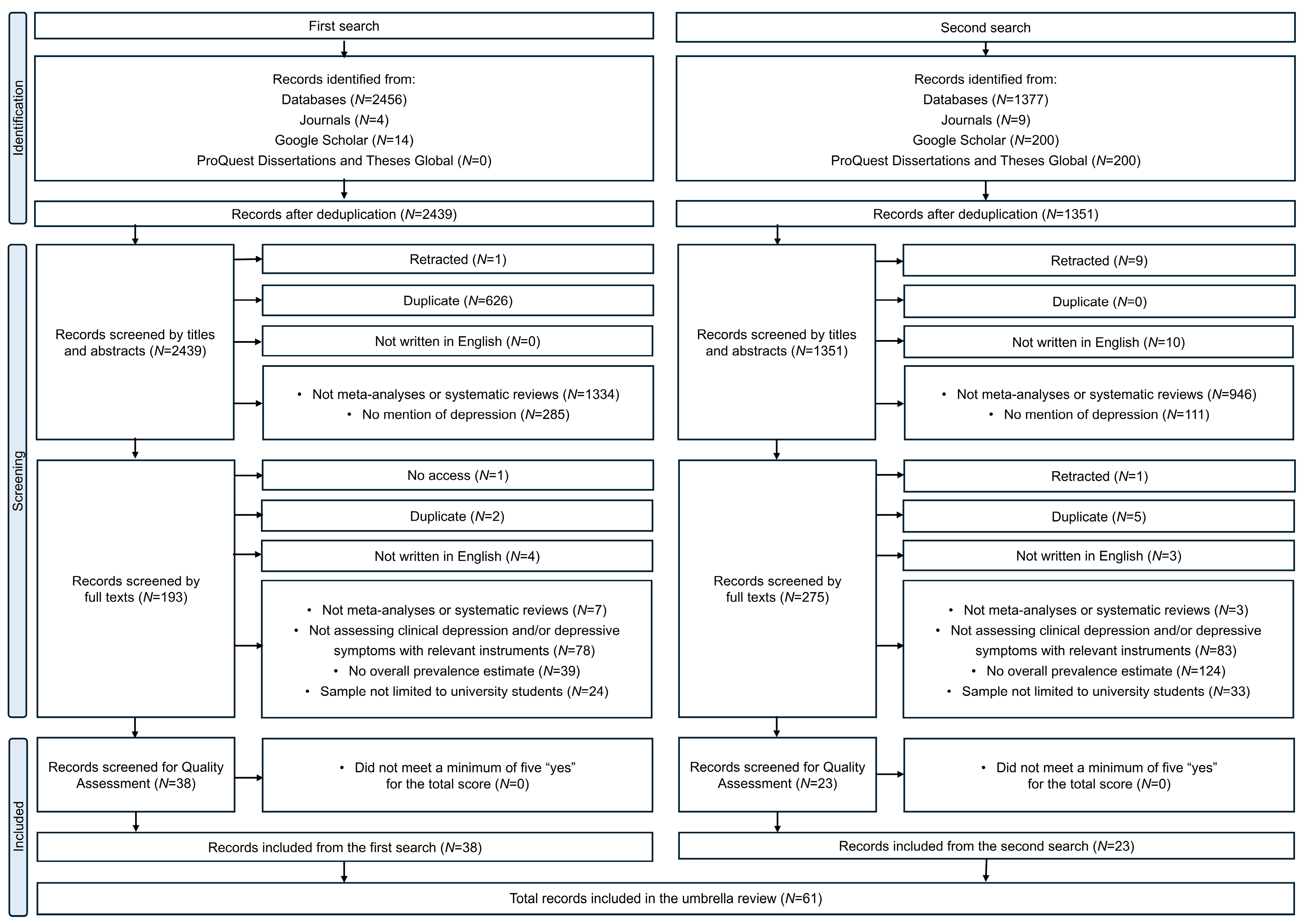
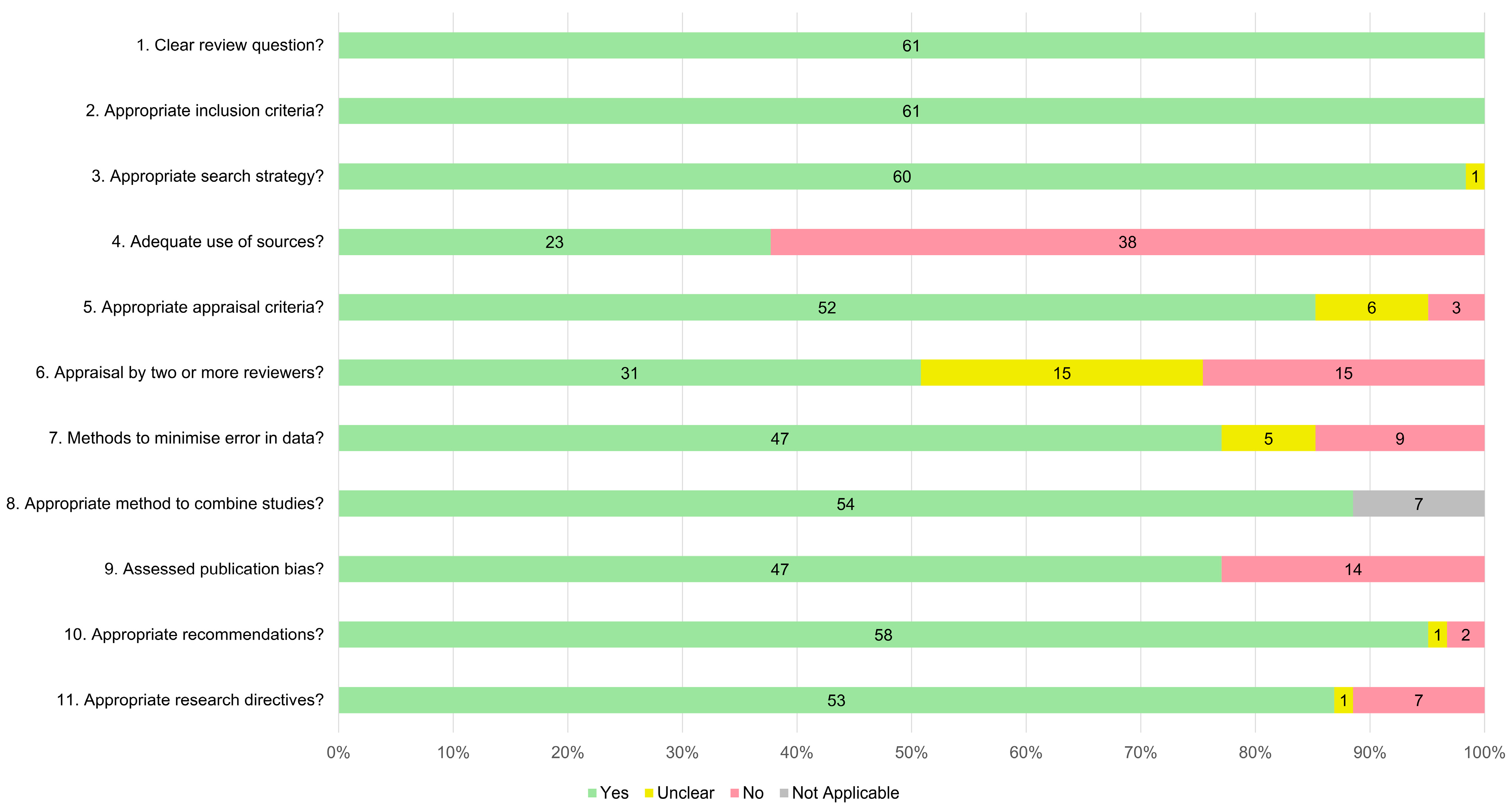
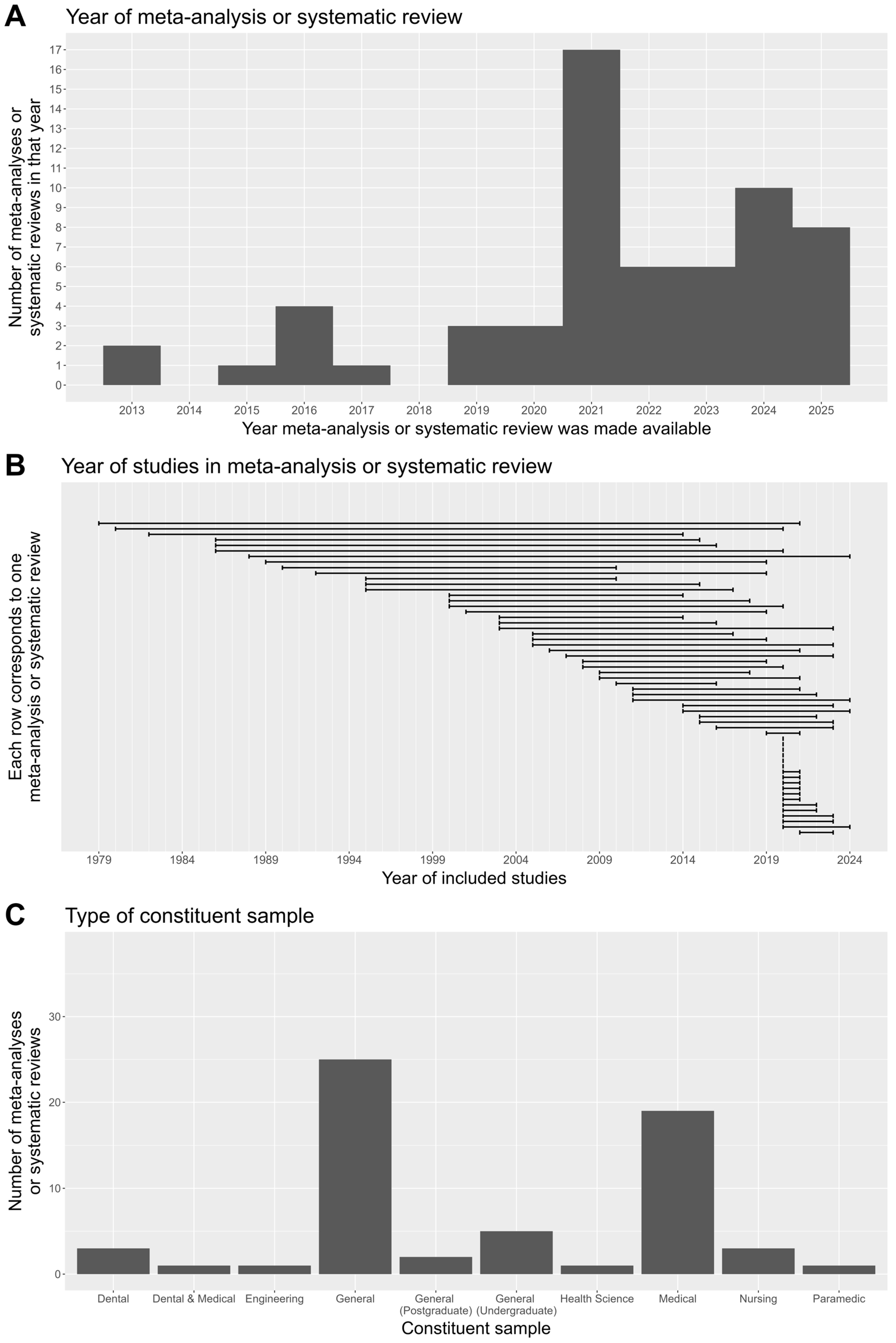
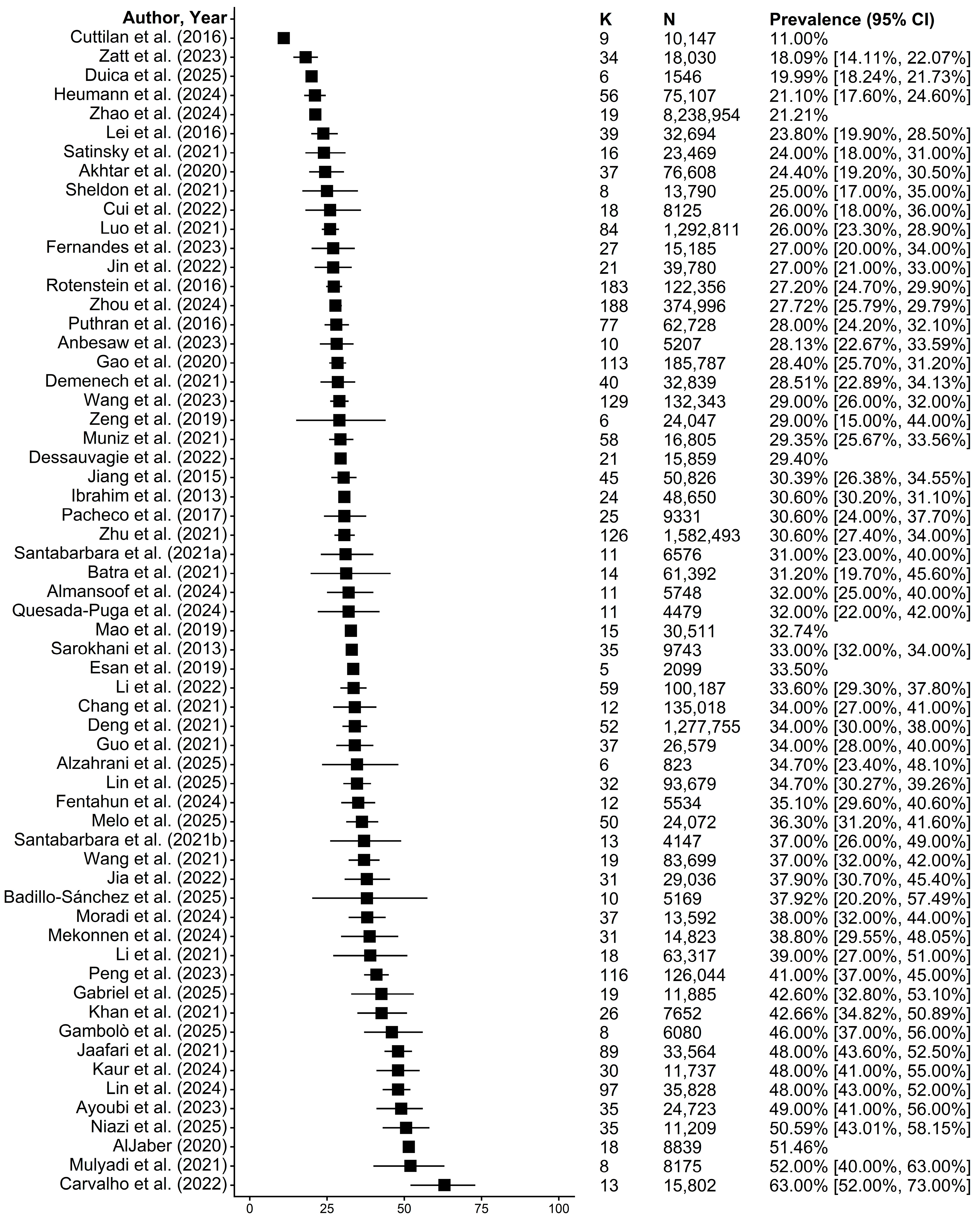



| Author, Year | Subgroups | Number of Studies | Prevalence of Depression, 95% CI |
|---|---|---|---|
| Akhtar et al. (2020) | Medicine | 15 | 22.40% [14.90%, 32.20%] |
| Non-medicine | 22 | 25.80% [18.70%, 34.50%] | |
| Cui et al. (2022) | Health (Dental, Medicine, Pharmacy, Veterinary) | 13 | 23.98% [14.68%, 36.63%] |
| General | 5 | 31.63% [13.08%, 58.72%] | |
| Demenech et al. (2021) | Medicine | 23 | 34.44% [8.10%, 70.00%] |
| Health (Health area, Nursing, Odontology) | 10 | 21.90% [7.34%, 47.70%] | |
| General | 5 | 15.10% [4.61%, 25.70%] | |
| Gao et al. (2020) | Medicine | 6 | 25.70% [17.90%, 33.60%] |
| Non-medicine | 6 | 22.70% [16.70%, 28.60%] | |
| Ibrahim et al. (2013) | Medicine | 12 | 25.60% [23.20%, 26.60%] |
| Non-medicine | 11 | 35.60% [34.90%, 37.80%] | |
| Khan et al. (2021) | Medicine | 17 | 36.90% [27.14%, 47.86%] |
| Non-medicine | 9 | 53.59% [40.71%, 66.00%] | |
| Lei et al. (2016) | Medicine | 11 | 27.50% [19.80%, 38.30%] |
| Non-medicine | 28 | 22.40% [17.90%, 28.10%] | |
| Y. Li et al. (2021) | Medicine | 5 | 24.00% [19.00%, 30.00%] |
| Non-medicine | 2 | 18.00% [6.00%, 31.00%] | |
| W. Li et al. (2022) | Medicine | 10 | 39.40% [29.30%, 49.60%] |
| Non-medicine | 54 | 32.50% [28.00%, 37.00%] | |
| Z.-Z. Lin et al. (2025) | Medicine | 7 | 38.30% [28.30%, 48.50%] |
| Non-medicine | 25 | 33.70% [28.70%, 38.90%] | |
| Luo et al. (2021) | Medicine | 34 | 27.50% [21.00%, 34.60%] |
| Non-medicine | 20 | 27.50% [20.60%, 36.70%] | |
| Niazi et al. (2025) | Medicine | 24 | 48.72% [39.92%, 57.57%] |
| Non-medicine | 5 | 60.33% [49.04%, 71.08%] | |
| Puthran et al. (2016) | Medicine | 6 | 28.70% [15.70%, 46.50%] |
| Non-medicine | 6 | 30.60% [19.30%, 44.90%] | |
| Zhu et al. (2021) | Healthcare | 37 | 29.50% [23.80%, 36.00%] |
| Non-healthcare | 86 | 32.40% [28.40%, 36.60%] |
| Author, Year | Subgroups | Number of Studies | Prevalence of Depression, 95% CI |
|---|---|---|---|
| Heumann et al. (2024) | Before COVID-19 | 41 | 18.00% [14.70%, 21.20%] |
| During COVID-19 | 15 | 30.60% [22.10%, 39.10%] | |
| Y. Li et al. (2021) | Early stage of COVID-19 | 8 | 21.00% [16.00%, 25.00%] |
| Late stage of COVID-19 | 10 | 54.00% [40.00%, 67.00%] | |
| W. Li et al. (2022) | Before COVID-19 | 59 | 33.40% [28.90%, 37.90%] |
| After COVID-19 | 5 | 35.90% [20.20%, 51.70%] | |
| Z.-Z. Lin et al. (2025) | Before COVID-19 | 16 | 35.00% [26.90%, 43.40%] |
| During/After COVID-19 | 13 | 38.70% [33.60%, 44.00%] | |
| Luo et al. (2021) | Early stage of COVID-19 | 32 | 21.80% [18.30%, 25.50%] |
| Late stage of COVID-19 | 34 | 31.00% [24.50%, 38.00%] | |
| Post COVID-19 | 6 | 28.90% [15.70%, 44.20%] | |
| Melo et al. (2025) | Pre COVID-19 Onset | 41 | 34.80% [29.10%, 40.70%] |
| Post COVID-19 Onset | 9 | 43.40% [31.00%, 56.30%] |
| Measure Family | Number of Reviews | Median | Range |
|---|---|---|---|
| AKUADS | 1 | 53.67% | Included in only one review |
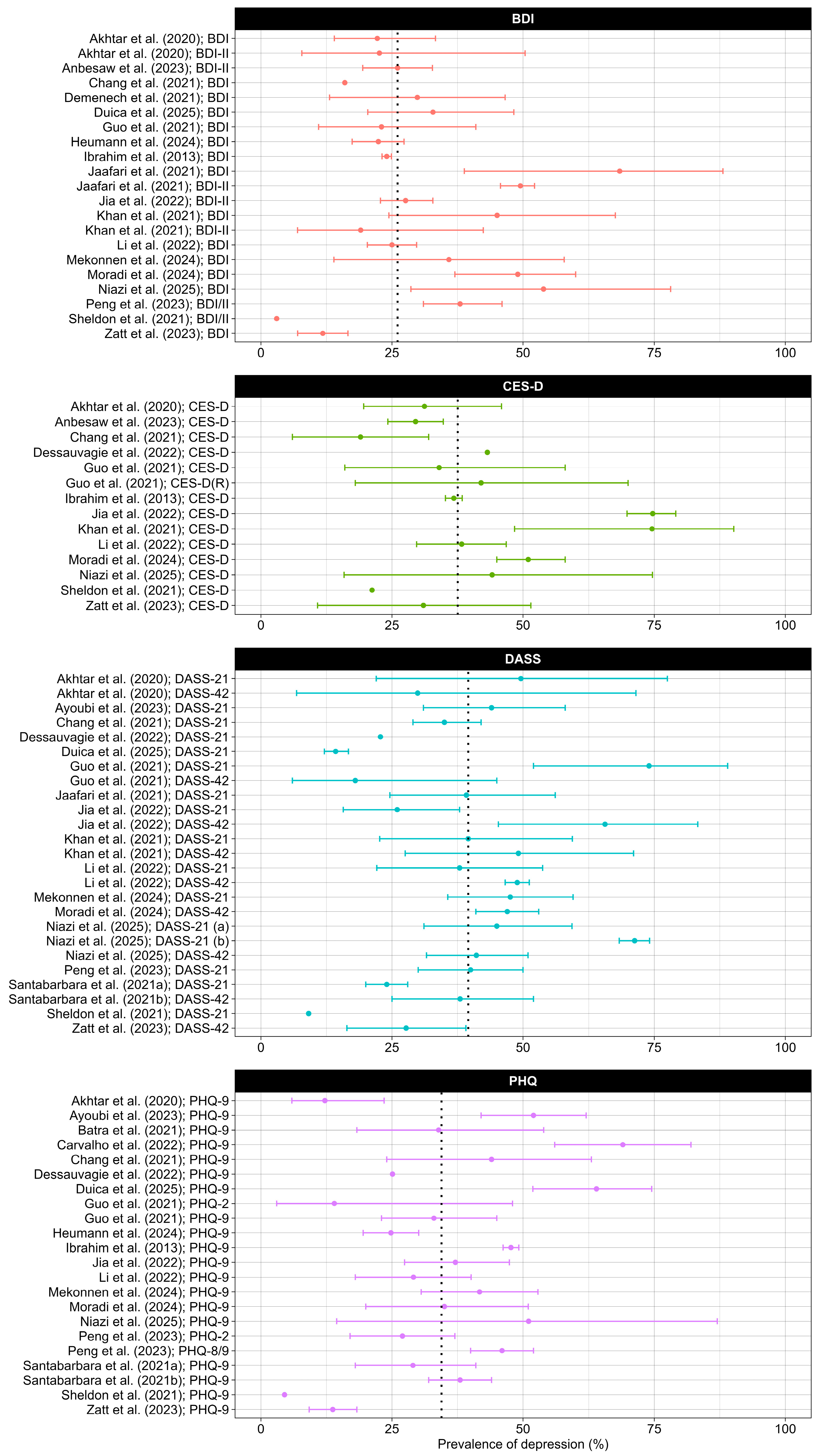
| BDI | 18 | 26.07% | 3.00–68.40% |
| CES-D | 13 | 37.55% | 19.00–74.70% |
| DASS | 18 | 39.55% | 9.10–74.00% |
| GHQ | 3 | 28.00% | 22.30–43.70% |
| HADS | 9 | 33.33% | 16.20–88.00% |
| HAMD | 3 | 37.00% | 19.00–53.00% |
| HRSRS | 1 | 8.40% | Included in only one review |
| ICD-10 | 1 | 23.00% | Included in only one review |
| K10 | 1 | 28.00% | Included in only one review |
| KADS | 1 | 2.90% | Included in only one review |
| PHQ | 20 | 34.45% | 4.50–69.00% |
| PRIME-MD | 1 | 34.00% | Included in only one review |
| QIDS | 1 | 51.50% | Included in only one review |
| RDSI | 1 | 48.00% | Included in only one review |
| SCL-90 | 2 | 27.75% | 7.00–48.50% |
| SRQ-20 | 1 | 28.44% | Included in only one review |
| Zung-SDS | 8 | 29.50% | 13.50–35.80% |
Disclaimer/Publisher’s Note: The statements, opinions and data contained in all publications are solely those of the individual author(s) and contributor(s) and not of MDPI and/or the editor(s). MDPI and/or the editor(s) disclaim responsibility for any injury to people or property resulting from any ideas, methods, instructions or products referred to in the content. |
© 2026 by the authors. Licensee MDPI, Basel, Switzerland. This article is an open access article distributed under the terms and conditions of the Creative Commons Attribution (CC BY) license.
Share and Cite
Sam, G.Y.K.; Soh, X.C.; Balaji, H.; Tan, G.X.D.; Diong, S.F.; Hu, M.; Hartanto, A.; Majeed, N.M. Global Prevalence of Depression Among University Students: A Comprehensive Umbrella Review. Educ. Sci. 2026, 16, 1316. https://doi.org/10.3390/educsci16081316
Sam GYK, Soh XC, Balaji H, Tan GXD, Diong SF, Hu M, Hartanto A, Majeed NM. Global Prevalence of Depression Among University Students: A Comprehensive Umbrella Review. Education Sciences. 2026; 16(8):1316. https://doi.org/10.3390/educsci16081316
Chicago/Turabian StyleSam, Gilda Yun Kai, Xun Ci Soh, Harshitha Balaji, Gabriel X. D. Tan, Shu Fen Diong, Meilan Hu, Andree Hartanto, and Nadyanna M. Majeed. 2026. "Global Prevalence of Depression Among University Students: A Comprehensive Umbrella Review" Education Sciences 16, no. 8: 1316. https://doi.org/10.3390/educsci16081316
APA StyleSam, G. Y. K., Soh, X. C., Balaji, H., Tan, G. X. D., Diong, S. F., Hu, M., Hartanto, A., & Majeed, N. M. (2026). Global Prevalence of Depression Among University Students: A Comprehensive Umbrella Review. Education Sciences, 16(8), 1316. https://doi.org/10.3390/educsci16081316