1. Introduction
Evidence of climate change driven by rising global temperatures has been increasingly observed worldwide, including heatwaves, extreme precipitation and drought, biodiversity loss, and the spread of infectious diseases. The Sixth Assessment Report of the Intergovernmental Panel on Climate Change (
IPCC, 2023) emphasizes the urgent need to limit the global temperature increase to within 1.5 °C, while the Global Risks Report 2024 (
World Economic Forum, 2024) identifies climate change as the most significant global risk over the next decade. As climate change is largely driven by human activities, there is a growing need for education that supports behavioral change and fosters sustainable environmental values and actions (
UNESCO, 2005).
Early childhood is a critical period for forming foundational understandings, values, and practices, making it an important stage for climate change education. Climate change education for young children involves engaging them in understanding climate issues through everyday experiences and supporting their participation in climate-related actions (
Ministry of Education, 2021). However, climate change remains a complex and abstract phenomenon, posing challenges for developmentally appropriate teaching and learning in early childhood contexts.
In addition, climate change education cannot be confined to educational settings alone. Young children’s climate-related practices are more likely to be sustained when learning extends into the home environment, where everyday habits and values are formed. Family engagement, therefore, plays a crucial role in supporting continuous climate action and meaningful learning.
Pre-service early childhood teachers, as future practitioners, are key agents in shaping the quality of climate change education. Their perceptions, values, and practical competencies significantly influence how climate change is translated into pedagogical practice. However, previous studies have reported that although pre-service teachers recognize the importance of environmental education, their willingness to engage in practice remains limited, highlighting the need for experience-based and practice-oriented teacher education approaches (
Akhmetova et al., 2025).
Despite this need, limited research has examined how pre-service early childhood teachers construct their learning through the process of designing climate change education materials that integrate children’s developmental characteristics and family contexts. In response, this study proposes a project on the development of climate change education materials for family engagement.
In particular, this study focuses on how climate literacy, climate sensitivity, and family engagement are interconnected within a cyclical practice of climate change education. Accordingly, the purpose of this study is to examine the learning experiences of pre-service early childhood teachers as they develop climate change education materials for family engagement with a particular attention to the types of learning that emerge throughout this process and focus on their implications for professional development.
1.1. Theoretical Framework
1.1.1. Climate Change Education in Early Childhood
Climate change education in early childhood focuses on supporting young children’s understanding of environmental changes and fostering their engagement in everyday climate-related practices. Recent perspectives emphasize experiential and practice-oriented learning, in which children construct meaning through interaction with their environment rather than through abstract instruction alone (
Davis, 2009;
Ärlemalm-Hagsér, 2013).
Young children’s learning is grounded in sensory, embodied, and experiential engagement (
Dahlberg et al., 2007;
Kolb, 1984). From a socio-cultural perspective, learning emerges through interaction with others and the environment (
Vygotsky, 1978). In this regard, early childhood climate change education should move beyond simplified information delivery toward meaningful engagement with real-world contexts and practices (
Elliott & Davis, 2020).
Furthermore, education for sustainability in early childhood emphasizes children’s agency and participation, encouraging them to see themselves as active contributors to environmental change (
Davis & Elliott, 2014). This suggests that climate change education must be re-contextualized into developmentally appropriate, action-oriented experiences grounded in children’s everyday lives.
1.1.2. Climate Sensitivity and Affective Dimensions of Learning
Recent research in environmental and sustainability education has highlighted the importance of affective and emotional engagement in fostering meaningful learning and action (
Ojala, 2012). Climate sensitivity refers to the capacity to perceive and respond to climate-related issues through empathetic engagement with nature and an understanding of human–environment relationships (
H.-J. Kim et al., 2021).
Previous studies have consistently shown that knowledge alone is insufficient to produce behavioral change; instead, emotions, values, and attitudes play a mediating role between knowledge and action (
Kollmuss & Agyeman, 2002;
Stevenson et al., 2014). In particular, affective engagement has been identified as a key factor in promoting environmental responsibility and action. However, fear-based approaches to environmental issues may lead to disengagement or feelings of helplessness, especially among children (
Ojala, 2012). In contrast, hope-based and emotionally supportive approaches can foster agency, resilience, and motivation for action (
Chawla, 2020). Therefore, climate change education should integrate cognitive understanding with emotional engagement, supporting children’s capacity to care, connect, and act.
1.1.3. Family Engagement in Climate Change Education
Climate change education is not confined to formal educational settings but extends into the home, where children’s everyday practices and values are shaped. The home environment plays a critical role in supporting children’s environmental learning, as parents influence children’s attitudes and behaviors through modeling and shared activities.
A growing body of research on intergenerational learning highlights that environmental knowledge and practices are not only transmitted but also co-constructed within family contexts (
Ballantyne et al., 2001). This perspective emphasizes the reciprocal nature of learning between children and family members, where knowledge flows in multiple directions rather than following a unidirectional model. Furthermore, family engagement has been identified as a critical factor in enhancing children’s environmental awareness and promoting sustained behavioral change over time (
Hoover-Dempsey et al., 2005;
Davis, 2009). Together, these findings underscore the importance of incorporating family-centered approaches into environmental and climate change education.
In early childhood contexts, learning is deeply embedded in daily routines and relationships, making family engagement particularly significant. Collaborative partnerships between educational institutions and families enhance the continuity and effectiveness of environmental education (
Epstein, 2011). Thus, family engagement is a critical component of climate change education, supporting the extension of learning from educational settings into everyday life.
1.1.4. Practice-Based Teacher Education for Climate Change
Teacher education plays a central role in preparing pre-service teachers to address complex and interdisciplinary issues such as climate change. Traditional approaches have emphasized theoretical knowledge; however, contemporary perspectives highlight the importance of practice-based and experience-oriented learning.
Practice-based teacher education enables pre-service teachers to integrate knowledge, skills, and values through authentic and situated experiences (
Korthagen, 2010;
Grossman et al., 2009). Experiential learning theory further emphasizes the role of reflection and action in developing professional competence (
Kolb, 1984). Project-based and inquiry-based learning approaches have also been shown to enhance teachers’ pedagogical knowledge, reflective capacity, and problem-solving skills (
Thomas, 2000;
Darling-Hammond et al., 2017). In the context of sustainability and climate change education, such approaches are particularly important as they require teachers to design meaningful, context-sensitive, and action-oriented learning experiences.
Accordingly, engaging pre-service teachers in designing and producing educational materials provides a valuable opportunity to develop their competencies in climate change education, including pedagogical decision-making, contextual adaptation, and the integration of knowledge and practice.
2. Materials and Methods
2.1. Participants
The participants in this study were 24 second-year undergraduate students enrolled in the Department of Early Childhood Education at K University, located in D city, South Korea. All participants were pre-service teachers who took the course Science Education for Young Children during the second semester of the 2025 academic year.
All participants had completed foundational coursework over three semesters, including Introduction to Early Childhood Education, Child Development, Early Childhood Curriculum, Child Health Education, Art Education for Young Children, and Music Education for Young Children.
2.2. Ethical Considerations
This study was conducted in accordance with the ethical principles for research involving human participants. Because this study was conducted within a regular undergraduate course and involved minimal risk to participants, no formal Institutional Review Board (IRB) review was required under the university’s research ethics guidelines for educational activities. Nevertheless, ethical procedures were carefully followed throughout the research process.
At the beginning of the course, participants were informed about the purpose of this study, the types of data to be collected (e.g., reflective journals, project artifacts, and presentation materials), and the voluntary nature of participation. Written informed consent was obtained from all participants. To minimize the power differential between the researcher and the students, consent for the use of course-related materials for research purposes was confirmed only after the completion of the course and the submission of final grades. Participants were informed that their decision to participate or withdraw from this study would have no influence on their course evaluation or academic standing.
To protect confidentiality, all names of pre-service teachers, children, and family members used in this article are pseudonyms. Any images included in this manuscript were used with participants’ permission. Where individuals were identifiable, explicit written consent for publication was obtained prior to submission.
Because this study examined the educational materials developed by pre-service teachers, several screenshots from project outcomes were included as research data. The image presented in the Results section shows the faces of the pre-service teachers because the image represents a key scene in which the participants, acting as members of the Earth Guardians, directly invite children and families to engage in climate action. The educational intention and communicative role of the participants constituted an important aspect of both the project design and the findings of this study. All individuals appearing in the figure provided explicit written consent for the use and publication of their images for research and academic publication purposes. Participants were informed that the images could appear in scholarly publications and that participation in image publication was voluntary and unrelated to course evaluation.
2.3. Course Design: Developing Climate Change Education Materials for Family Engagement
The activity of developing climate change education materials for family engagement assigned to the participants was conducted over a five-week period within a 15-week course on Science Education for Young Children taught by the researcher. During the first seven weeks of the course, prior to the midterm examination, the researcher provided weekly lectures on the theoretical and practical foundations necessary for implementing science activities in early childhood education. Following the midterm, students participated in a group-based project to enhance pre-service teachers’ scientific literacy in alignment with contemporary trends in science education.
In 2025, reflecting the growing importance of climate change education, the topic of the group project was established as “Developing Climate Change Education Materials for Family Engagement,” with the aim of supporting the implementation of climate change education in early childhood settings.
Climate change education is closely connected to early childhood science education in that it encompasses topics such as weather and climate, ecosystem changes, energy use, resource circulation, and the interrelationships within the environment. However, within early childhood science education, climate change education needs to be restructured in ways that enable young children to perceive changes in nature and the environment through everyday experiences and to recognize that their small actions are connected to broader environmental outcomes. In this regard, the course played a critical role in providing an ample opportunity for pre-service teachers to design climate change education by integrating scientific inquiry, everyday practice, and family engagement.
At the beginning of the semester, during the course orientation, the researcher informed participants that the climate change education project would be conducted over five weeks following the midterm examination. In the first week of the project, lectures were delivered on the concept of climate change education, the severity of climate change issues, the necessity of climate education, and global movements for climate action. In the second week, an in-service teacher was invited to provide a special lecture on practical examples of climate change education implemented in early childhood settings such as energy-saving activities, waste reduction practices, nature-based exploration, and climate-related storytelling, allowing participants to explore authentic themes and pedagogical approaches. In the third week, participants investigated instructional strategies for implementing climate change education, including the use of picture books, campaigns, and community-based approaches.
In the fourth week, based on their prior exploration, each group developed a plan for creating materials that would promote climate change education through family engagement. The feasibility and appropriateness of the plans were reviewed through feedback provided by the researcher, and the materials were subsequently developed through collaborative discussion among group members and the researcher. In the fifth week, each group presented and shared their final products, and a collective discussion was held to examine the characteristics of the materials and to explore effective approaches for implementing climate change education. An overview of the five-week project is presented in
Table 1.
2.4. Data Collection
2.4.1. Reflective Journals and Researcher Notes
The participants completed two reflective journals during the five-week climate change education project. The first journal was written after the second week of the project, following the guest lecture delivered by an in-service teacher. In this journal, participants reflected on their learning as pre-service teachers, particularly in relation to young children’s agency and engagement in climate change education practices implemented in early childhood settings.
The second journal was completed after the conclusion of the five-week project. Participants were asked to reflect on the challenges and learning experiences encountered during the development of family-connected climate change education materials, noteworthy aspects of other groups’ projects, and their aspirations and commitments regarding the implementation of climate change education as future in-service teachers.
In addition, over the five-week project, the researcher maintained detailed notes documenting interactions and exchanges of ideas between the researcher and participants, instructional guidance provided during the project, and observations regarding participants’ processes of internalizing climate change education, as well as the researcher’s reflections and impressions. These documents were systematically compiled in the form of researcher notes.
2.4.2. Outcomes of Family-Connected Climate Change Education Materials
As outcomes of the project, the pre-service teachers submitted the materials developed for distribution to families, as well as PowerPoint presentation slides documenting their project processes. The participants were divided into four groups (n = 24), and each group produced a set of materials. Three groups created video-based materials, while one group developed a brochure. Accordingly, a total of three videos and one brochure were collected as family-connected climate change education materials, along with four sets of PowerPoint presentation slides.
An overview of the content of the family-connected climate change education materials developed by the four groups is presented in
Table 2.
2.5. Data Analysis
This study employed a qualitative, inductive approach to examine how pre-service early childhood teachers constructed their learning throughout the development of climate change education materials for family engagement. Data were analyzed using open coding, through which meanings were identified and generated directly from the data (
Strauss & Corbin, 1998;
Saldaña, 2016).
The analysis proceeded in three stages. First, the researcher repeatedly reviewed the collected data—including reflective journals, research notes, video materials, and brochures—to gain a holistic understanding and identify meaningful segments related to participants’ knowledge, skills, attitudes, and values. Second, these segments were coded using descriptive keywords and grouped into categories based on patterns and similarities. Third, overarching themes were developed to represent the meanings embedded within the data (
Braun & Clarke, 2006).
To enhance the trustworthiness of the analysis, triangulation was employed across multiple data sources (
Denzin, 1978), and member checking was conducted by sharing interpretations with participants (
Lincoln & Guba, 1985). To ensure confidentiality, all participant names were replaced with pseudonyms.
3. Results
3.1. Providing Developmentally Appropriate Climate Change Knowledge for Young Children
The climate change education materials developed by the pre-service early childhood teachers presented a range of climate-related knowledge in ways that were developmentally appropriate for young children. Rather than conveying complex and large-scale environmental issues in abstract terms, the teachers sought to explain climate change phenomena through contexts familiar to children’s everyday lives, including daily situations, storytelling, commemorative days, and singing activities. In keeping with these approaches, they aimed to communicate the meaning of climate actions in forms that were accessible and meaningful to young learners.
For instance, Group 2, which developed a brochure on the topic of air pollution, encountered information indicating that 7 September is designated as Air Day, an international environmental commemorative day proposed by South Korea. This discovery became the starting point for the development of their brochure. Building on this theme, the group designed a family engagement activity in which children could “clean” polluted air—depicted in the picture book Gray Smoke—using a white eraser as a symbolic and participatory tool. The pre-service teachers in Group 2 reported that learning about the international recognition of Air Day originating from South Korea fostered a sense of pride and led to deeper engagement with the topic of air pollution.
Similarly, Group 3, which produced a video under the theme “Protecting Bees and the Earth,” initially focused on marine animals affected by ocean pollution. However, following feedback from the researcher suggesting that young children may have limited direct experience with marine life, the pre-service teachers reconsidered their approach and sought animals and plants that would be more familiar and relatable to children. In this process, one participant, Yeeun, discovered that bees—commonly featured in children’s storybooks—are considered key indicators of ecological health. Sharing this insight with her group members, the team ultimately reframed their project to focus on bees and their connection to climate change, resulting in the development of a more relatable and contextually grounded video.
While thinking about what kind of subject would most effectively appeal to young children, I recalled a documentary that explained how the health of bee populations reflects the overall health of the environment in a given area. After sharing this idea with my group members, we decided to shift our topic from marine animals to bees. In the first part of the video, we chose to present the content in a storytelling format, explaining what kinds of benefits bees provide to us, why they are currently at risk, and what actions we can take to address these issues. In the latter part, we decided to use the children’s song “You Can Do It” by rewriting the lyrics to include practical ways to protect bees and the Earth, and then present it as a song.
(Pre-service teacher Yeeun’s journal, 4 December 2025)
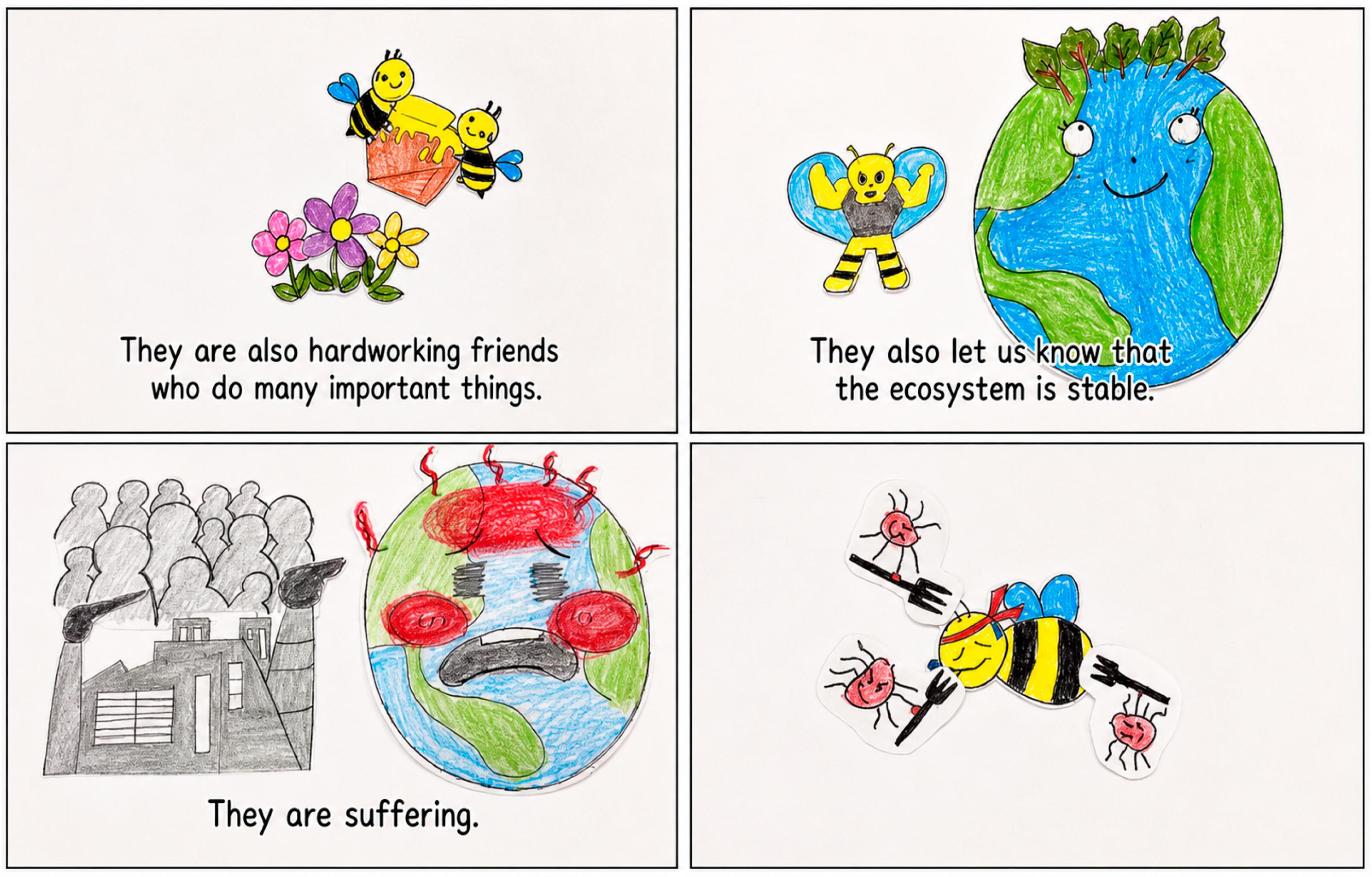
After acquiring everyday knowledge that could be used to explain climate change, the pre-service teachers sought to convey this knowledge within a range and in ways that would be understandable to young children. Group 3, for example, explained the benefits that bees provide in human life and presented the idea that the presence of bees can serve as an indicator of the ecological health of a given area. They further explained that human activities, such as resource exploitation, have increased carbon emissions, leading to rising global temperatures and creating environments that are increasingly inhospitable for bees. An example of this part of the video is presented in
Figure 1.
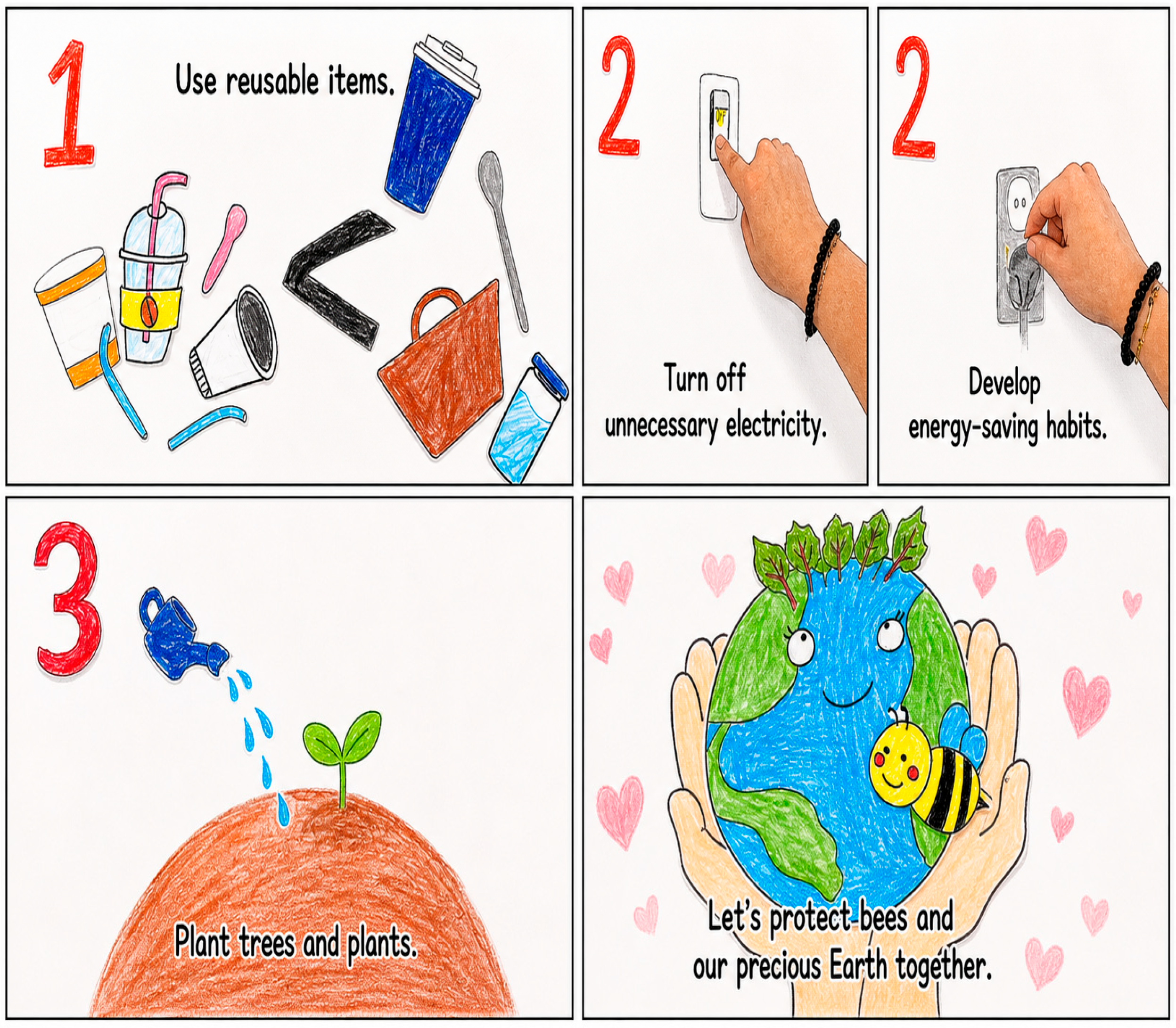
In the latter part of the video, the group introduced three climate actions that children could practice in order to live together with bees in a healthy environment. The video concluded with a participatory activity in which children were invited to sing along to the familiar children’s song
“You Can Do It!”, with the lyrics adapted to include practical actions. The selected actions were as follows: reducing the use of disposable products and using reusable items; turning off unnecessary lights and unplugging unused electrical devices; and planting trees and plants to help create a greener planet. A summary of this part of the video is presented in
Figure 2.
These findings suggest that Group 3 meaningfully designed their materials to ensure that young children not only acquire climate-related knowledge but are also motivated to engage in climate action. By presenting information at a level appropriate to young children and employing persuasive and relatable strategies, the pre-service teachers facilitated the connection between knowledge and action. As previous research has indicated that higher levels of climate change knowledge in young children are associated with greater problem-solving abilities in responding to climate-related issues (
Jung et al., 2018), it is important to provide climate change knowledge in ways that enable young children to understand the reasons and rationale for taking action.
3.2. Employing Creative Pedagogical Strategies to Promote Young Children’s Voluntary Action
The climate change education materials developed by the pre-service early childhood teachers were designed to incorporate creative pedagogical strategies that encourage young children’s voluntary participation and engagement in climate action. The ways in which young children develop conceptual understanding and construct knowledge differ from those of older learners. Rather than relying primarily on verbal explanations or text-based materials, young children tend to construct knowledge and meaning by way of sensory and embodied engagement with the physical properties of their environment (
Malaguzzi, 1998;
Dahlberg et al., 2007;
Kolb, 1984). Contemporary perspectives in early childhood education further emphasize that learning emerges through relational, contextual, and experiential processes, in which children actively engage with materials, others, and their surroundings (
Moss, 2019;
Vygotsky, 1978). Therefore, guiding children to engage with scientific and abstract phenomena such as climate change in ways that are perceptible through their senses can be considered a critical starting point for effective climate change education. Consistent with this regard, the findings indicate that the pre-service teachers employed two creative pedagogical strategies.
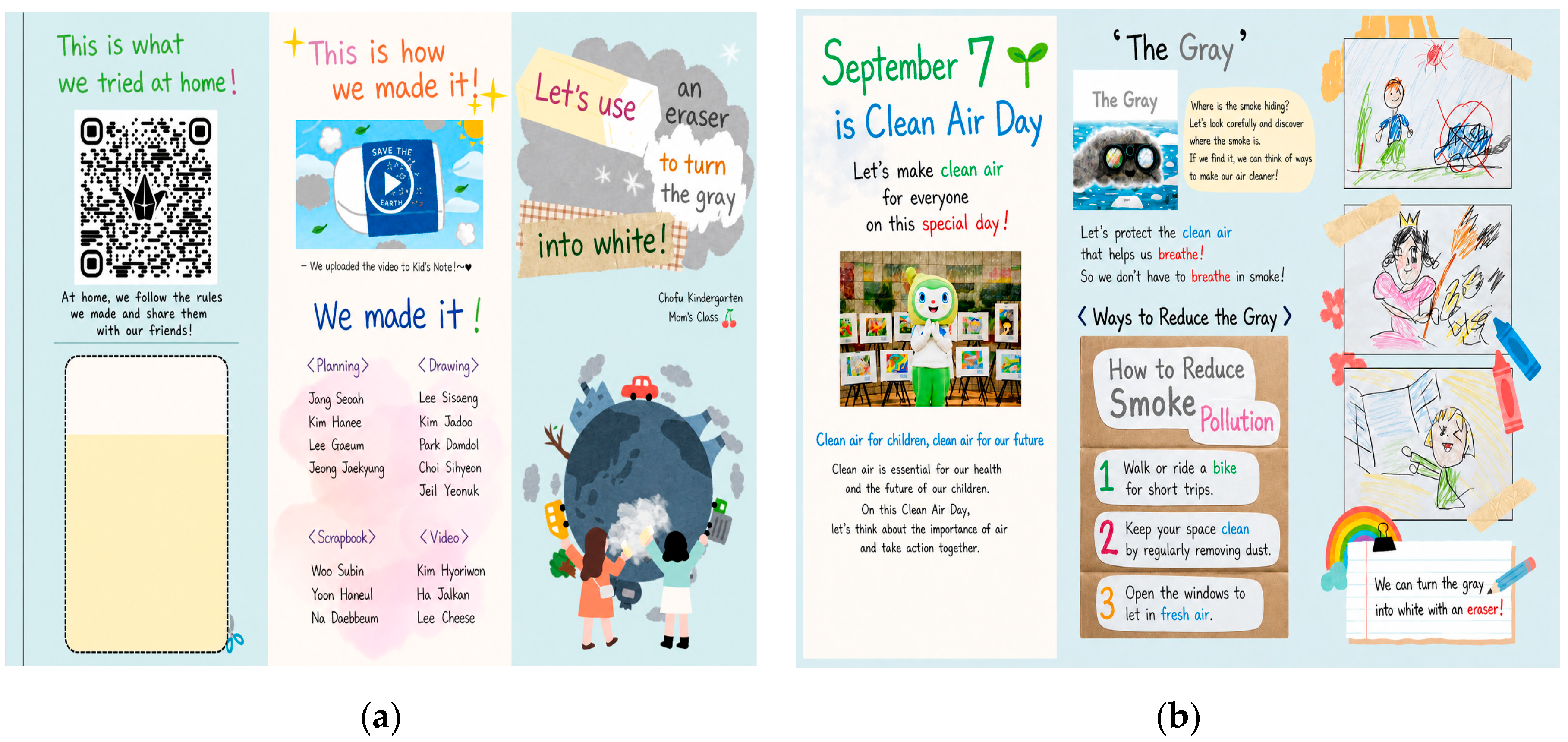
First, the pre-service teachers supported children’s engagement in climate action through sensory-based activities that reflect their developmental characteristics. Group 2 developed a brochure to be distributed to families, which included not only climate change education content but also a cut-out illustration of an eraser to be used in a home-based activity (see
Figure 3). In this activity, children were asked to write down climate actions they had practiced at home with their parents on the eraser illustration. After cutting out the eraser, they attached it to a classroom display titled the “Gray Smoke Board.” By placing their erasers on the board, children could visually observe the gray smoke gradually being covered by white erasers, symbolizing the transformation of polluted air into clean air. By engaging in this process, children came to understand that their climate actions practiced at home can contribute to reducing environmental pollution.
In addition, children come to realize that a single eraser alone cannot eliminate the large cloud of gray smoke; rather, it is only when all classmates’ erasers are collectively added to the board that the gray smoke can gradually disappear. Through this process, children learn that climate change cannot be addressed by the actions of a few individuals, but rather requires the collective efforts of the entire community. The idea for this activity was inspired by the final page of the picture book Finding a Friend: Gray Smoke, in which thick gray smoke is painted over with white paint to depict the transformation into clean air (Pre-service teacher Jung’s journal, 3 December 2025). In other words, the “eraser activity” was designed to produce a visual effect in which the gray smoke on the classroom “Gray Smoke Board” gradually disappears and turns white, resembling clean air, as more erasers are added.
Early childhood is a developmental period in which children construct knowledge and meaning through the use of their senses, consistent with constructivist perspectives on development (
Bruner, 1966;
Piaget, 1952). The “eraser activity” included in the brochure was designed to support children’s construction of knowledge and meaning related to climate change education by engaging both visual and action-based sensory modalities. Following the process of writing down their own climate actions on the eraser illustration, cutting it out, and attaching it to the classroom display, children are able to construct an understanding of climate change knowledge and the meaning of action via visual and embodied engagement. In this sense, the activity can be interpreted as developmentally appropriate, as it allows children to directly manipulate materials and perceive environmental change through multiple sensory channels, reflecting the pre-service teachers’ consideration of children’s developmental characteristics.
Second, the pre-service teachers utilized imagination to support young children’s emotional immersion and to encourage their active and self-directed engagement in climate action. Group 1 developed a video that promotes parental involvement, drawing inspiration from the 2017 DreamWorks animated film The Boss Baby. The video presents a narrative in which three children act as secret agents of the “Earth Guardians,” carrying out missions that involve their parents in climate action. Similar to the fictional organization depicted in The Boss Baby, the “Earth Guardians” exist within a world accessible only to children, beyond the awareness of adults. The narrative also includes implicit rules, such as the need to act discreetly so that adults do not notice, and is based on the premise that fulfilling the missions of the Earth Guardians can help address the climate challenges faced by our world. In doing so, the video invites children into an imaginative world, enhancing their sense of immersion and encouraging them to participate as members of the Earth Guardians in carrying out climate-related missions.
According to
Egan (
2008), learners can become aware of the richness of existence embedded within factual and conceptual knowledge through imaginative engagement. Furthermore, the activation of imagination mobilizes feelings, emotions, and sensibilities toward objects and phenomena, guiding learners to explore meanings that may otherwise remain hidden beneath objective and factual information (
Durand, 1960/1996). In line with this sense, imagination enables young children to form emotional connections with educational content, facilitating deeper understanding, empathy, and engagement (
Greene, 1995/2011). When immersed in imaginative play, children move beyond the acquisition of simple concepts and skills, engaging instead in processes of active interpretation and meaning-making, thereby constructing dynamic and agentic forms of learning about the world and their place within it.
Thus, children who engage with the video are not only introduced to knowledge about the need to reduce carbon emissions and ways to mitigate climate crisis, but also experience emotional engagement and empathy—for example, toward a polar bear that has lost its home due to climate change. Through this emotional and imaginative involvement, children are likely to become immersed in the role of Earth Guardians and actively participate in carrying out “secret missions,” that is, engaging in climate action. Therefore, the imaginative framework of the Earth Guardians employed by the pre-service teachers can be interpreted as an effective pedagogical strategy that enables young children to develop a richer understanding of climate change through emotional engagement and encourages their participation in climate action.
Although the Earth Guardians narrative positioned children as environmental agents, the climate action missions embedded within the video were intentionally designed to be carried out collaboratively with parents and other family members at home. Rather than promoting individual action independent of adults, the imaginative framing served as a motivational strategy that encouraged children to initiate climate-related conversations and practices within their families. In this way, the Earth Guardians narrative functioned as a mechanism for strengthening family engagement in climate action.
Furthermore, the materials developed by Group 1, titled
Earth Guardians, was intended to encourage children’s emotional engagement with climate change education by drawing on their imagination. Similarly, Group 3’s story about a polar bear that has lost its home was designed to foster empathy by presenting climate change as a lived challenge experienced by a living being. In climate change education, early childhood teachers are required to reinterpret complex causes and responses to climate change in ways that are grounded in children’s play and everyday experiences (
S.-G. Kim & Lee, 2026). In addition,
N.-H. Kim and Shin (
2025) emphasize that sensory and emotional experiences in natural environments, such as forests, enhance ecological sensitivity and serve as an affective foundation for action. Taken together, these findings suggest that activities such as the use of imagination to promote emotional immersion, the eraser activity that visually transforms polluted air into clean air, and singing songs with lyrics that incorporate climate actions can be understood as creative and practical strategies that encourage young children’s engagement in climate action.
3.3. Creating Shared Spaces for Collective Action Through the Use of Digital Applications Involving Parents
In family-connected climate change education, sustained engagement in climate action can be expected when not only young children but also parents are included as active participants. While the pre-service teachers employed sensory activities and imagination to engage young children, they utilized various modes of communication and sharing digital systems to persuade and involve parents.
For example, Group 4’s animated video “Save the Arctic” begins with a “climate alert message” being delivered to citizens’ mobile phones. In South Korea, particularly following the experience of COVID-19, emergency alert messages have been widely used to inform the public of natural disasters—such as heavy snowfall, heatwaves, and earthquakes—as well as crises including wildfires, wars, and infectious disease outbreaks, enabling rapid public response. In the video, the familiar notification sound of such emergency alerts is used, evoking a shared social experience among viewers. This is followed by a message stating that “Arctic glaciers are melting, and polar bears have drifted into the seas near our country,” accompanied by action guidelines presented in the form of a climate alert.
According to Chaeeun, a pre-service teacher from Group 4, this idea was developed by adapting the familiar format of emergency alert messages into “climate alert messages” in order to raise parents’ awareness and sense of urgency regarding climate change. Just as people around the world responded quickly to government policies and public safety messages during the COVID-19 pandemic, this approach was intended to encourage parents to recognize the urgency of the climate crisis and to engage in climate action through the use of climate alerts.
Since this project focused on developing materials connected to families rather than targeting only young children, we realized that the message about the climate crisis also needed to be communicated to adults. At this point, we began to ask ourselves, “How can we persuade parents?” As I was thinking about what kind of situation would resonate with them, the idea of an “emergency alert message” suddenly came to mind. When there is an earthquake or a fire in our area, don’t we always receive those alerts on our phones? I started to wonder—what if those messages were turned into “climate alerts” and sent to us instead? Wouldn’t that make adults feel a stronger sense of urgency about the climate crisis?
(Pre-service teacher Chaeeun’s journal, 6 December 2025)
In addition, Groups 1, 2, and 4 utilized the communication-based application Padlet to facilitate parental participation and to support information sharing between home and educational settings. The pre-service teachers presented examples of how to use Padlet in their presentation slides and engaged in role-playing by taking on the roles of both parents and teachers. By posting comments and sharing their experiences of climate change education, they were able to simulate interaction within this platform. Through this process, they became aware of their heightened sense of immersion in climate action practices
After completing all of the videos, we created a Padlet as a follow-up activity connected to the home environment. Our goal was to provide a shared digital space where parents and children could watch the video together, share what they practiced at home, and give feedback to one another. We thought that if teachers, parents, and children could interact and share their practices in this way, climate action would be carried out more smoothly.
We also tried using the Padlet ourselves by pretending that we were both children and parents, and uploaded photos and videos of our own practical activities such as recycling and walking up the stairs. It really felt like we were actually carrying out the actions after watching the video, and I could clearly sense that the level of immersion in the learning experience had increased.
(Pre-service teacher Taeun’s journal, 7 December 2025)
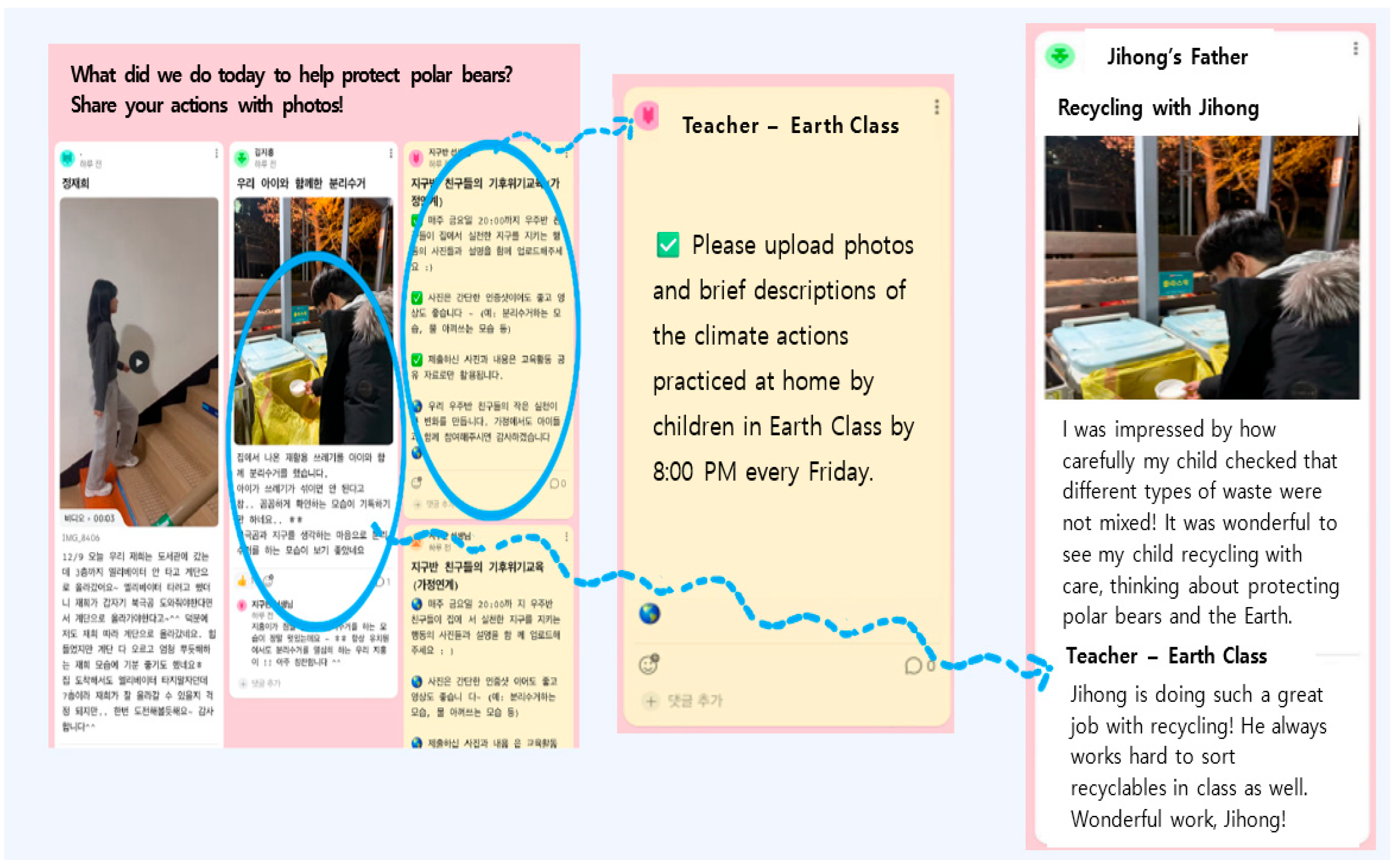
Figure 4 illustrates examples of how climate action practices were shared between families and teachers with the use of the Padlet application. Families uploaded photos and videos documenting their climate actions, while teachers and other families provided encouragement through comments. The pre-service teachers, imagining themselves as parents of young children, shared plausible and engaging episodes that might occur in real family contexts, demonstrating how families could support one another through these interactions.
For instance, Jaehui’s mother shared that when she visited the library with her child, Jaehui insisted that they should walk up to the third floor instead of using the elevator, explaining that doing so would help polar bears find their homes. Although she proudly followed Jaehui’s suggestion and climbed the stairs together, she noted that it became somewhat challenging when Jaehui later suggested walking all the way up to their seventh-floor apartment. Similarly, Jihong’s father wrote that while sorting recyclables together, he was impressed by how carefully Jihong ensured that different types of recyclable materials were properly separated.
In Group 4’s Padlet, even Jihyun’s grandmother contributed a message, writing:
“My granddaughter insisted that I write something here, so I’m leaving this message. Jihyun has been running back and forth between the living room and the other rooms, turning off lights that were left on, and I found her so adorable and lovely. She really wanted me to write this, so here I am! I’m grateful to the kindergarten for creating an activity that even allows a grandmother like me to participate.”
On the presentation day, both the researcher and the pre-service teachers responded with enjoyment and agreement, noting that the grandmother’s comment felt highly authentic and representative of real-life family experiences.
To encourage parental and family participation, the pre-service teachers focused on elements that could capture parents’ attention and engagement, leading them to develop the idea of “climate alert messages” based on the familiar format of emergency alerts. In addition, by utilizing the Padlet application, they created a shared space where families could exchange and reflect on their climate action practices. These findings suggest that by enabling the sharing of actions and reflections within family contexts, the pre-service teachers facilitated a cyclical process of climate action, reinforcing both participation and sustained engagement.
The pre-service teachers recognized that climate change education should not be confined to classroom-based activities conducted solely by the teacher, but rather function as a cyclical practice that extends into the home and returns again to the classroom. By designing activities in which discussions initiated in the classroom are carried out in collaboration with parents at home and subsequently shared with others, they sought to create a space for joint practice between families and educational settings. In environmental education, the home is considered one of the most important contexts in which young children can voluntarily enact the practical knowledge and attitudes acquired in educational institutions (
Oh, 2014). Furthermore, family-connected environmental education can serve as an educational structure that fosters changes not only in children but also in parents’ awareness and practices (
Cho & Kim, 2023). These findings indicate that the pre-service teachers viewed parents not merely as participants, but as co-agents in responding to the climate crisis, and realized that the integration of home and educational contexts is a critical condition for enhancing the practical enactment of climate action.
3.4. Moving Toward Climate Sensitivity to Enhance Young Children’s Climate Literacy
In the process of developing climate change education materials for family-connected learning, the pre-service early childhood teachers came to recognize the importance of fostering young children’s climate literacy by emphasizing climate sensitivity, particularly through approaches grounded in positive emotions. Climate sensitivity can be understood as an integrated capacity that involves empathizing with the social and emotional changes brought about by the climate crisis and internalizing a sense of responsibility and commitment to action in response to these changes (
Nam et al., 2026).
Although young children experience environmental changes in their daily lives—such as sudden fluctuations in temperature or increased levels of fine dust—they may have difficulty understanding these phenomena as consequences of climate change. In this regard, approaches that focus solely on emphasizing the severity of the problem may inadvertently lead to feelings of helplessness among young children (
Chawla, 2020). Instead, the pre-service teachers placed greater emphasis on helping children recognize that small, everyday actions can contribute to positive environmental change, rather than highlighting fear or anxiety associated with climate crisis situations.
In other words, they considered it important for young children to develop an awareness that their own actions can make a meaningful difference in addressing environmental challenges, and to cultivate a disposition toward sustained engagement in such practices. This perspective highlights the need for climate change education to integrate both positive emotional experiences and the development of climate sensitivity.
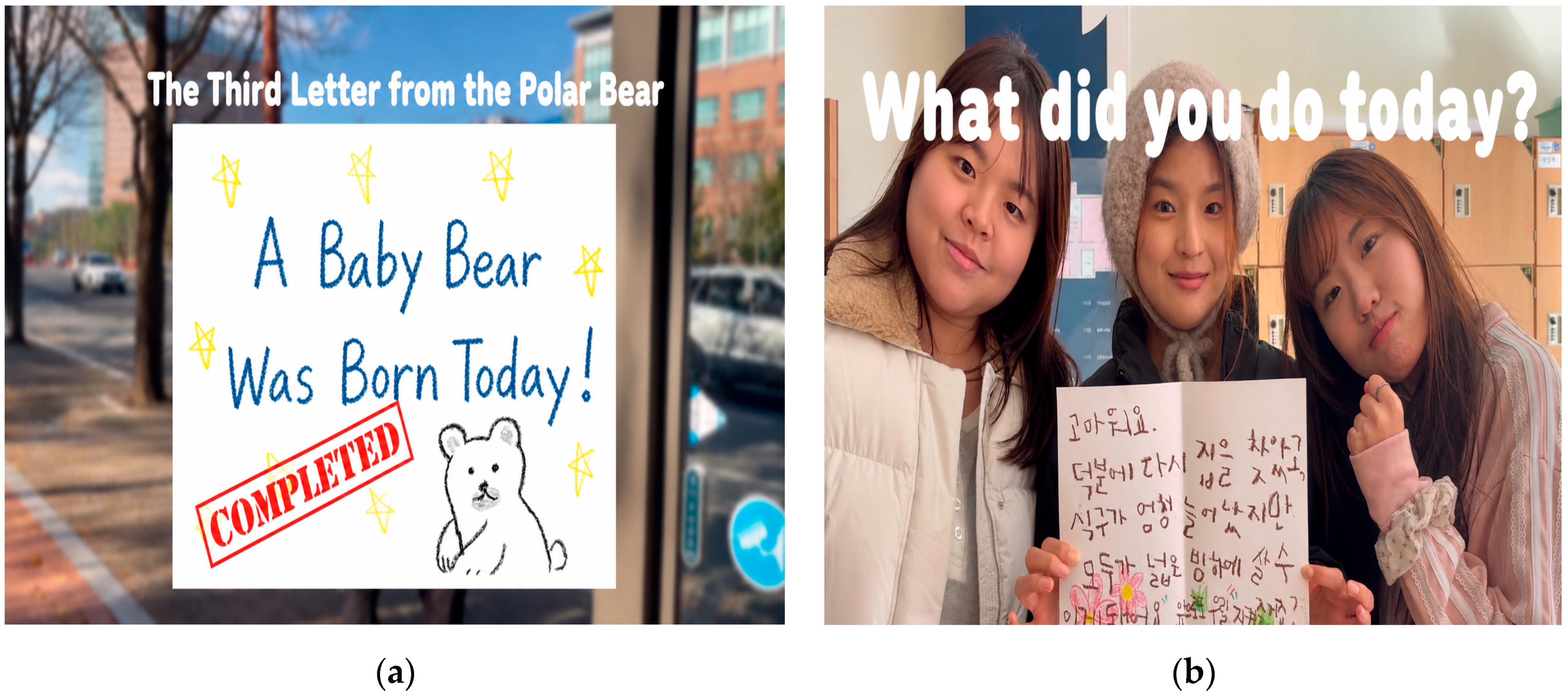
In Group 1’s video “We Are the Earth Guardians,” the positive outcomes of children’s climate actions are conveyed through letters from a polar bear, thereby fostering the development of empathic climate sensitivity among young children. The three Earth Guardians receive letters from the polar bear each time they complete a climate action mission with their parents at home.
For the first mission, which involves saving electricity, the children choose to use the stairs instead of the elevator. In response, they receive a letter stating, “Thank you for listening to my request. Thanks to you, the ice has started to form again!” For the second mission, which focuses on reducing the use of disposable products, Iso and her mother use a reusable shopping bag instead of plastic bags at the market. They then receive another letter from the polar bear saying, “The ocean has become cleaner, and now there is plenty of food!” For the final mission, aimed at reducing carbon emissions, Ahyeon and her father decide to use public transportation instead of driving. As a result, they receive a letter announcing, “A baby polar bear has been born!”
After completing all three missions, the Earth Guardians gather to share the letters they have received from the polar bear. The video concludes with a direct question posed to the children and parents watching:
“What climate action did you take today?” An example of the polar bear’s letters in response to completed missions, along with the scene in which the question is posed to viewers, is presented in
Figure 5.
Group 1’s pre-service teachers presented scenes in which letters arrived from a polar bear each time a mission was completed, conveying updates that the situation in the Arctic had improved. This approach was intended to show that even small actions taken by young children can lead to positive outcomes. In other words, it was designed to highlight the possibility that individual climate actions can produce meaningful and tangible results.
Furthermore, the video concludes with a letter from the polar bear stating, “I’m so happy to have finally found my home and to be living with my family again,” followed by a direct question posed to viewers: “What climate action did you take today?” By doing so, the pre-service teachers intended to encourage both children and parents watching the video to internalize the belief that they, too, can take action and contribute to helping the polar bear. This approach enables learners to recognize the potential for change resulting from their own actions, which is more likely to support the development of positive climate sensitivity.
These findings suggest that, in designing climate change education for young children, the pre-service teachers acknowledged the importance of fostering positive climate literacy and climate sensitivity, emphasizing the possibility of creating a better future through action rather than focusing on fear, concern, or feelings of helplessness associated with severe environmental problems.
3.5. Recognizing Responsibility for Climate Change Education as Pre-Service Early Childhood Teachers
Over the five-week project of developing family-connected climate change education materials, the pre-service early childhood teachers experienced a shift in their perceptions of climate change education. Prior to participating in the project, although they were aware of the importance of climate change education, they were likely to perceive responses to the climate crisis as the responsibility of specific groups, such as scientists or policymakers, rather than something directly connected to their own lives. Initially, as a result, they appeared to experience a sense of distance from the issue. However, through exploring picture books related to environmental education and attending a special lecture delivered by an in-service teacher, they gradually came to realize that climate change is closely intertwined with their everyday lives. They began to reflect not only on the severity of the issue but also on the possibility that education can lead to meaningful action. In particular, learning that the situation may be more accurately described as “climate tropicalization” rather than simply “global warming,” and encountering discussions about the urgent need to limit the rise in the global average temperature within a specific threshold in the near future enabled them to perceive climate change as a more urgent and realistic problem.
Through this process, the pre-service teachers came to view climate change education not merely as the transmission of knowledge, but as an educational practice that can lead to action grounded in empathy and understanding. At the same time, they began to demonstrate emotional engagement with climate issues, responding affectively and attributing personal meaning to the topic.
I’ve often come across statements in the media like “the Earth’s temperature is rising by 00 degrees” or “polar bears are losing their habitats,” but honestly, those words didn’t really resonate with me. However, when I heard the term “global heating” mentioned by the teacher during this special lecture, I could truly feel how serious the climate issue has become. It made me realize that we are no longer in an era of “global warming,” but rather in an era of “global heating”—not just a warming planet, but one that is becoming overheated and almost gasping under extreme heat.
(Chaeeun’s journal, 15 November 2025)
The in-service teacher’s lecture I attended today reignited the fading spark of my interest in climate change education. Among many topics, what stayed with me the most was learning that, due to climate change, male sea turtles are no longer being born. At first, I found myself puzzled, thinking, “What does the absence of male turtles have to do with climate change?” But as soon as I heard the explanation that the sex of turtle hatchlings is determined by temperature, it immediately made sense. At the same time, I could really feel how the balance of life is being disrupted, and that feeling lingered with me long after the lecture ended. It led me to consider that in the future, children might encounter sea turtles only through media, rather than in real life. This thought then extended further, making me wonder whether the effects would spread beyond turtles to other species, gradually leading to the collapse of marine ecosystems. I also found myself reflecting on whether I am truly prepared, as a pre-service teacher, to pass on a livable world to future children.
(Pre-service teacher Jieun’s journal, 14 November 2025)
H. Kim and Kim (
2023) reported that climate change education for young children leads to positive changes in environmental sensitivity and pro-environmental attitudes. This finding suggests that climate change education should be structured in ways that foster both sensitivity and action-oriented dispositions. In particular, one reflection—
“It is important to guide young children so that they can learn about climate change and play a role in spreading its impact” (Pre-service teacher Jungeun’s journal, 4 November 2025)—indicates that the pre-service teachers came to recognize themselves as mediators who connect young children’s climate actions with practices within the home context.
This, in turn, can be interpreted as a process through which pre-service early childhood teachers reconstructed their sense of responsibility for climate crisis education, grounded in emotional empathy, the possibility of action, and the potential for positive influence.
4. Discussion and Conclusions
This study explored the learning experiences of 24 pre-service early childhood teachers as they developed climate change education materials aimed at fostering family engagement. The findings reveal five interconnected themes, which are discussed alongside relevant literature to highlight their implications.
First, this study demonstrates how pre-service teachers were able to translate complex and abstract climate change concepts into developmentally appropriate content for young children. They contextualized global environmental issues through familiar, everyday experiences such as storytelling, animals, and daily routines. This reflects a strong alignment with prior research emphasizing that early childhood education for sustainability must be grounded in children’s lived experiences and cognitive developmental levels (
Davis, 2009;
Elliott & Davis, 2020). By simplifying scientific concepts without losing their core meaning, participants showed emerging pedagogical competence in climate education.
Second, this study found that they actively employed creative and sensory-based pedagogical strategies, including visual media, hands-on activities, and play-based approaches. These methods encouraged voluntary participation and engagement in climate-related practices. Such findings support constructivist learning theories, which argue that knowledge is constructed through active, experiential engagement (
Vygotsky, 1978). In early childhood contexts, where learning is inherently interactive and embodied (
Dahlberg et al., 2007), these approaches are particularly effective in fostering both understanding and motivation.
Third, pre-service teachers emphasized family engagement as an essential extension of learning by designing materials that connected home and educational settings. Tools such as videos, brochures, and digital platforms were used to encourage parent–child interaction and shared environmental practices. This aligns with ecological perspectives on child development (
Bronfenbrenner, 1979), which highlight the interconnected influence of multiple environments on children’s learning. The integration of family engagement also reflects the growing recognition that sustainability education must extend beyond the classroom to have meaningful, long-term impact.
Fourth, the findings highlight the importance of emotional engagement in climate change education. Rather than relying on fear-based messaging, pre-service teachers focused on fostering positive emotions such as empathy, care, and responsibility toward the environment. This approach is consistent with research suggesting that constructive emotional engagement—particularly hope and agency—plays a critical role in promoting pro-environmental attitudes and behaviors (
Ojala, 2012;
Sobel, 2007). By avoiding overwhelming or anxiety-inducing narratives, participants demonstrated an understanding of age-appropriate emotional framing.
Finally, the process of designing climate change educational materials contributed to the development of pre-service teachers’ professional identity and sense of responsibility. Many pre-service teachers shifted from a passive awareness of climate issues to an active recognition of their role as future educators in promoting sustainability. This transformation can be interpreted through the lens of transformative learning theory (
Mezirow, 1997), which emphasizes the role of critical reflection and experience in reshaping perspectives and professional identities.
More importantly, this study demonstrates that climate change education can be understood as a cyclical and collaborative practice linking early childhood settings and families. The pre-service teachers moved beyond positioning children as the sole actors and instead designed learning experiences in which children and parents engage in climate action together, with practices extending from the classroom to the home and returning through shared experiences. The use of tools such as brochures, QR codes, Padlet, and climate alert messages facilitated this cyclical flow of learning.
Overall, these findings support previous studies emphasizing the importance of experience-based teacher education (
Grossman et al., 2009;
Korthagen, 2010). Practice-based and experiential learning approaches are widely recognized as essential for developing teacher competencies, particularly in complex domains such as sustainability education (
Korthagen, 2010). Similarly, project-based learning approaches have been shown to enhance teachers’ pedagogical knowledge, efficacy, and reflective capacity (
Thomas, 2000;
Darling-Hammond et al., 2017). This suggests that climate change education in teacher preparation should move beyond knowledge acquisition toward experience-based and practice-oriented models. In this regard, the project presented in this study may serve as a viable example of such an approach.
In conclusion, this study highlights that developing climate change education materials for family engagement provides a meaningful context for pre-service teachers to construct integrated understandings of climate change education. The findings emphasize the importance of cyclical, collaborative, and sensitivity-based approaches that connect children, families, and educational settings, while also supporting the development of practice-oriented teacher competencies.
Beyond the context of climate change education, the findings suggest broader implications for teacher education. The process of designing educational materials intended for family engagement enabled pre-service teachers to move beyond passive knowledge acquisition and engage in authentic pedagogical decision-making. Through creating videos, brochures, and home-based activities, the participants considered how educational content could be communicated to young children and their families in meaningful and accessible ways. This suggests that family-connected projects may serve as a valuable pedagogical approach for strengthening pre-service teachers’ pedagogical reasoning, creativity, and responsiveness to learners’ everyday contexts.
Furthermore, although this project was situated within a science-related climate change education course, the educational principles identified in this study may be applicable across a wider range of subject areas. The emphasis on family engagement, experiential learning, project-based inquiry, and the creation of learner-centered educational materials is not limited to climate change education. Similar approaches could be employed in areas such as health education, social–emotional learning, citizenship education, sustainability education, and arts education. In this respect, the present study contributes not only to climate change education but also to broader discussions regarding practice-based teacher education and family–school partnerships.
However, although the materials were developed, they were not actually implemented with children and parents in real educational settings. Future research should extend this work by conducting school–university partnership studies that apply such materials in practice and incorporate feedback from in-service teachers, children, and families. Such efforts would help to further examine the practical applicability and educational impact of family-connected climate change education.