1. Introduction
The concept of giftedness has long occupied a central yet contested position within educational research and policy. Although the education of gifted students has been studied for more than a century, there remains little international consensus regarding how giftedness should be defined, how gifted students should be identified, and what forms of educational provision most effectively support their development (
Subotnik et al., 2011;
Dai, 2017).
Over the past several decades, scholarly perspectives on giftedness have evolved considerably. Early research in this field was strongly influenced by psychometric traditions that conceptualized giftedness primarily as exceptional intellectual ability measurable through standardized testing (
Kaufman & Sternberg, 2020). Subsequent theoretical developments expanded this perspective by emphasizing multidimensional models incorporating creativity, motivation, and domain-specific talent development (
Renzulli, 2021;
Gagné, 2020). More recent scholarship has further highlighted the role of educational environments and institutional contexts in shaping opportunities for the development of gifted students (
Ziegler & Phillipson, 2012;
Plucker et al., 2021;
Raoof et al., 2024).
Despite these theoretical advances, the literature on gifted education remains fragmented across disciplinary perspectives (
Nicholas et al., 2024). Psychological research has primarily focused on conceptual models of giftedness and individual differences in ability and talent development, while policy-oriented and comparative education studies have examined the institutional arrangements through which education systems organize educational provision for gifted students (
Greene et al., 2025).
Relatively few studies have systematically integrated these perspectives to examine how theoretical models of giftedness are translated into institutional practices across different educational systems. As a result, the relationship between conceptual frameworks of giftedness and their institutional realization remains insufficiently theorized (
Jung et al., 2022). Our study conceptualizes this gap as a form of “structural lag”, defined as the misalignment between increasingly complex theoretical models of giftedness and the institutional mechanisms through which these models are operationalized in governance structures. Structural lag emerges when educational policies and governance structures fail to fully reflect contemporary multidimensional understandings of giftedness, resulting in partial or constrained implementation of theoretical frameworks.
Addressing this lag is particularly important in light of substantial international variation in how gifted education is organized. Education systems differ considerably in how they conceptualize giftedness, identify gifted students, and design structures intended to support their development. Comparative research suggests that governance structures, policy traditions, and institutional arrangements play a central role in shaping these differences (
Frantz & McClarty, 2016;
Rutigliano & Quarshie, 2021). However, existing comparative studies often focus on individual countries or regions, rather than identifying broader institutional patterns that link conceptual models of giftedness to policy frameworks and educational provision (
Worrell & Erwin, 2011). To overcome these limitations, the article adopts a model-based comparative perspective. Rather than treating national cases as geographically representative units, the study examines institutional models of gifted education that capture recurring configurations of governance, identification practices, and educational provision. Within this framework, different national contexts are analyzed as illustrative cases of broader institutional patterns. These configurations can also be interpreted along a continuum ranging from highly coordinated and centrally governed systems to more flexible and decentralized arrangements.
The analysis focuses on three analytically distinct institutional models of gifted education: centralized models, differentiation models, and decentralized models. These models represent alternative ways in which education systems organize the identification and support of gifted students. Empirically, a range of national education systems are examined as illustrative cases of these configurations, including centralized systems such as Israel and Singapore, differentiation-based systems commonly observed across European contexts, and decentralized systems such as the United States.
The study addresses the following research question:
What are the key institutional models of gifted education, and how do they differ in organizing the relationship between conceptions of giftedness, identification practices, and educational provision across different national contexts?
To address this question, the article adopts a comparative analytical framework that examines how these dimensions are configured across different institutional models of gifted education. This review integrates psychological models of giftedness with comparative analyses of educational policy and institutional governance, linking theories of ability with institutional approaches to talent development. First, it synthesizes contemporary theoretical perspectives on giftedness and talent development. Second, it develops a comparative framework for analyzing institutional models of gifted education across different educational contexts. Third, it demonstrates how different institutional configurations organize the relationship between conceptual models of giftedness and their practical implementation in education systems.
2. Methodology
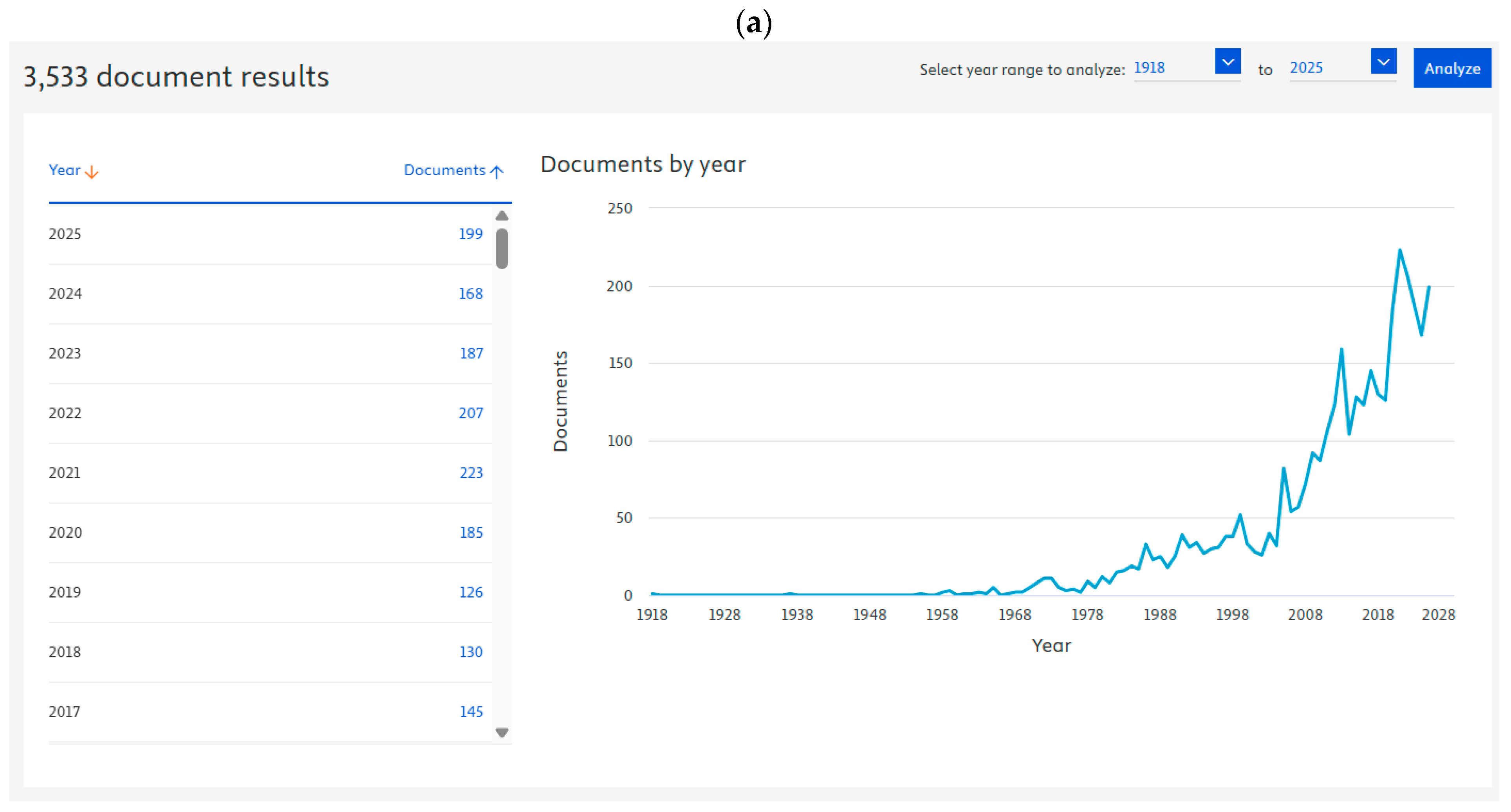
This study is based on a structured, theory-oriented literature review within a configurative research paradigm addressing theoretical perspectives on giftedness and institutional approaches to gifted education. This approach is grounded in an interpretive research tradition, emphasizing the contextual and systemic nature of educational phenomena. The review primarily covers literature published between 2010 and 2025 in order to capture recent developments in the field of gifted education. The rationale for focusing on this fifteen-year period is based on the growing number of publications on giftedness in major international academic databases and scientific search platforms, including Scopus, Web of Science, and PubMed (
Figure 1). The database searches were conducted between January and March 2026 to ensure consistency in indexing and retrieval across major academic databases. This relatively short and clearly defined search period helps minimize potential discrepancies resulting from ongoing updates in database indexing.
We adopt a configurative research paradigm and a corresponding approach to literature review, focusing on the interpretation and synthesis of conceptual frameworks and institutional patterns in gifted education. Such an approach is particularly suited to complex and context-dependent educational phenomena, where different studies reflect diverse theoretical and methodological perspectives. The analysis follows an inductive and theory-oriented logic, aiming to identify recurring patterns and to develop an analytical framework of institutional models of gifted education, rather than to aggregate findings or measure effects.
Recent research has increasingly moved beyond traditional psychometric definitions based primarily on general cognitive ability toward theoretical frameworks emphasizing talent development and the role of educational environments in shaping opportunities for high-level achievement. Earlier foundational works were included where necessary to provide theoretical context for the evolution of these perspectives.
2.1. Source Selection
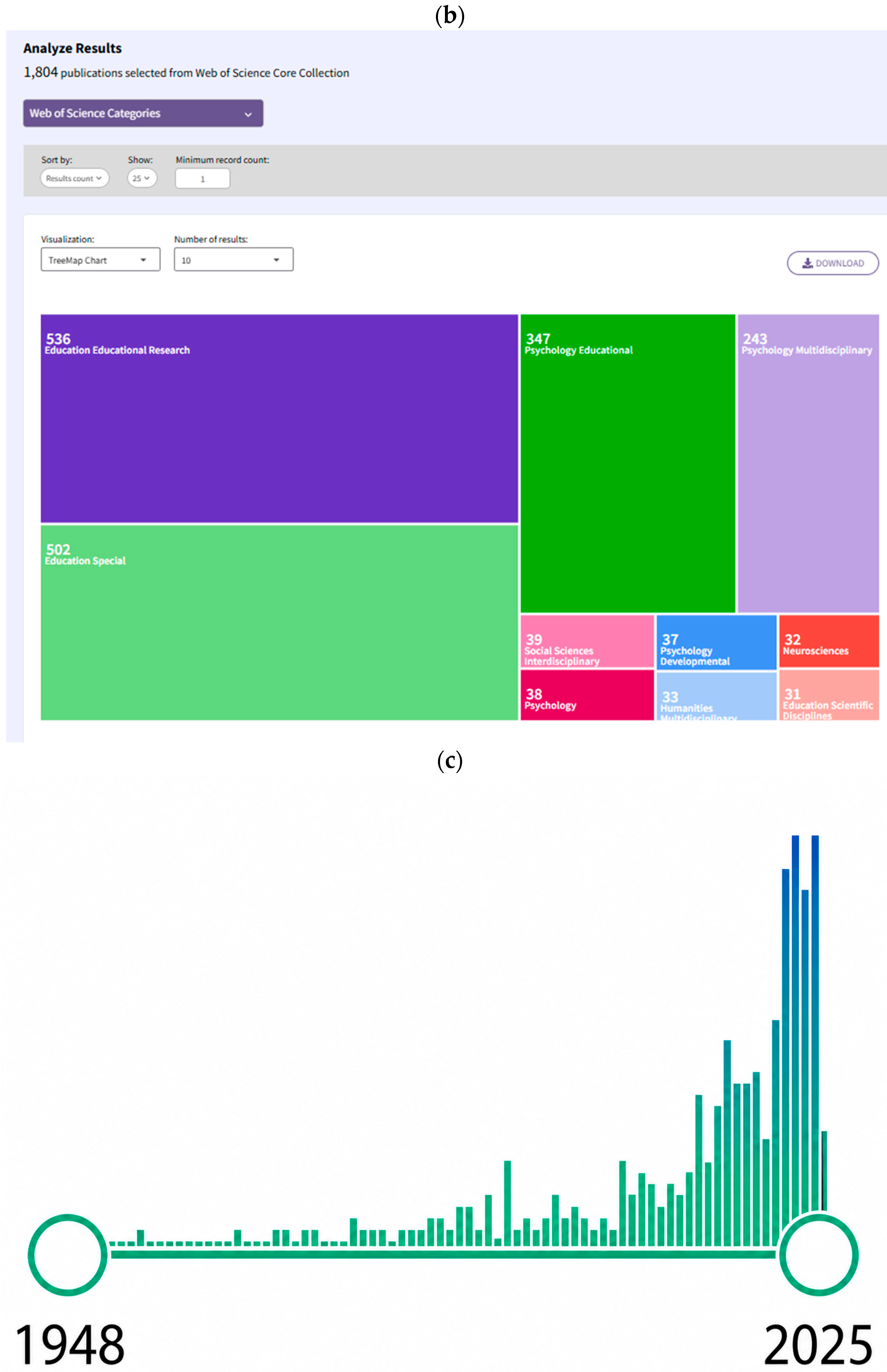
Relevant publications were identified in major academic databases widely used in scientific research, including the Education Resources Information Center (ERIC), Scopus, Google Scholar, and Web of Science. Searches were performed using combinations of keywords such as gifted education, giftedness, talent development, identification of gifted students, and gifted education policy. Additional publications were identified through backward searches of key theoretical and empirical studies in the field. The initial search produced approximately 200 publications addressing different aspects of gifted education. Titles and abstracts were subsequently screened for relevance to the analytical focus of the study. Studies that did not directly address conceptual models of giftedness, identification practices, or institutional policy frameworks related to gifted education were excluded. Following this screening process, 80 publications that most directly addressed the analytical focus of the study were selected for detailed analysis (
Figure 2).
The resulting corpus included peer-reviewed journal articles, scholarly monographs, edited volumes, research reports and institutional and policy documents, such as national education guidelines, ministry regulations, and official frameworks for gifted education. These sources were incorporated to complement the academic literature and to provide insight into how institutional models of gifted education are formally defined and implemented across different national contexts.
2.2. Inclusion Criteria
Studies published between 2010 and 2025 were included in the review if they addressed at least one of the following analytical dimensions:
Theoretical models of giftedness;
Identification of gifted students;
Institutional and policy frameworks shaping gifted education.
Particular attention was given to studies that allowed for the identification of recurring institutional patterns across different national contexts, with the aim of capturing how variations in governance structures, identification approaches, and forms of educational provision are systematically organized within different models of gifted education. These contexts were not selected as isolated cases but as empirical illustrations through which different institutional configurations can be examined. While European systems are analyzed under a broader differentiation model, this categorization necessarily simplifies substantial internal variation. Education systems such as Finland, Germany, and the United Kingdom reflect distinct institutional logics and policy traditions. In this study, they are treated as illustrative cases of a broader configuration in which support for gifted students is embedded within mainstream educational structures rather than institutionalized as a separate policy domain.
2.3. Analytical Strategy
The reviewed literature was examined through thematic synthesis. Rather than summarizing individual studies sequentially, the review identifies recurring theoretical perspectives and institutional patterns. The selected studies were considered across three key dimensions: theoretical conceptualizations of giftedness, approaches to identifying gifted students, and policy frameworks shaping educational provision for gifted students. Within this framework, the study explores how theoretical models of giftedness relate to identification practices and institutional arrangements in different educational systems. This approach enables a systematic comparison of institutional models of gifted education and highlights how they differ in organizing identification practices and educational provision across national contexts.
2.4. Theoretical Perspectives on Giftedness
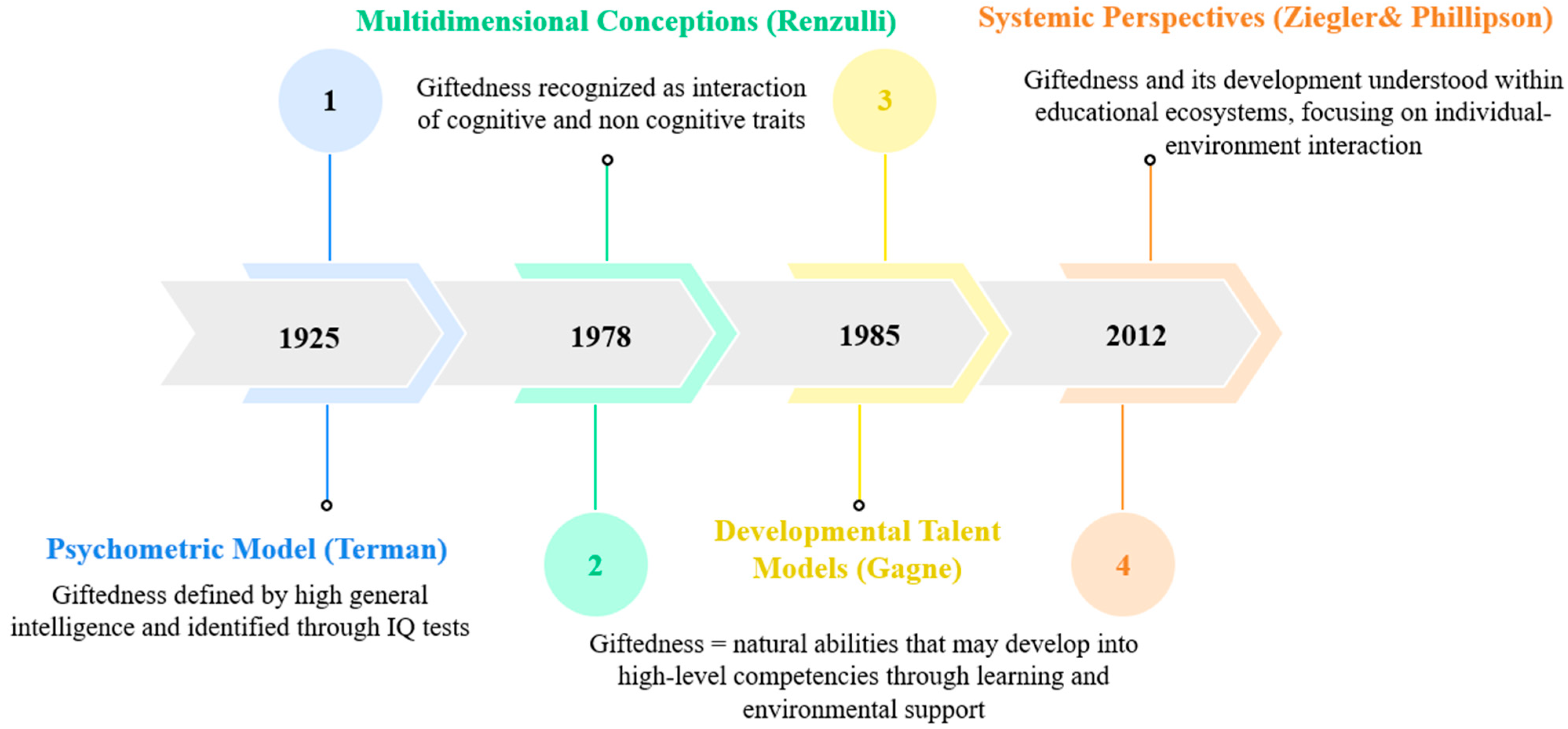
Research on giftedness has developed through several distinct theoretical traditions that not only reflect changing understandings of giftedness, but also shape how gifted students are identified and supported within institutional configurations. Early scientific approaches to giftedness were strongly influenced by psychometric research in the first half of the twentieth century. The pioneering longitudinal studies of
Terman (
1925) conceptualized giftedness primarily as exceptionally high general intelligence measured through standardized testing. This tradition established the foundation for identifying gifted individuals based on cognitive ability and continues to influence educational identification procedures in many education systems.
Beginning in the late twentieth century, scholars increasingly challenged the assumption that high intelligence alone adequately explains exceptional achievement. Researchers such as
Renzulli (
2021) argued that giftedness should be understood as a multidimensional construct that includes not only above-average ability but also creativity and task commitment. Renzulli’s Three-Ring Conception of Giftedness represented an important shift in the field by emphasizing the interaction of cognitive and motivational factors in the emergence of gifted behavior. These theoretical shifts are not only conceptual, but have direct implications for how education systems define, identify, and support gifted students.
A second major theoretical development emerged through developmental models that seek to explain how giftedness integrates into advanced competencies over time. One of the most influential frameworks within this perspective is Gagné’s Differentiated Model of Giftedness and Talent (
Gagné, 2020), which distinguishes between natural abilities and systematically developed talents. According to this model, giftedness refers to innate abilities, while talent represents the outcome of developmental processes through which these abilities are transformed into advanced competencies within specific domains. This distinction has been particularly influential in shaping policy approaches that differentiate between potential and performance in identification practices.
More recent theoretical perspectives have further expanded the conceptualization of giftedness by emphasizing the role of environmental and institutional factors.
Ziegler and Phillipson (
2012), for example, proposed a systemic perspective on gifted education that conceptualizes the development of giftedness and talent as occurring within complex educational ecosystems that include schools, families, and broader social institutions. Within this framework, the development of exceptional performance depends not only on individual abilities but also on access to supportive learning environments and educational opportunities. This perspective foregrounds the role of institutional context as a determining factor in whether gifted potential can be realized. Taken together, these theoretical developments indicate a shift from viewing giftedness as a fixed individual trait toward understanding it as a dynamic process shaped by interactions between individual potential and institutional environments (
Figure 3). Contemporary research therefore increasingly conceptualizes giftedness as a process rather than a static characteristic.
The analysis revealed three major theoretical perspectives: psychometric models of giftedness, developmental models explaining the transformation of abilities into advanced competencies, and systemic approaches emphasizing the role of educational environments. Importantly, these perspectives do not only differ at the conceptual level but also imply distinct approaches to identifying and supporting gifted students within educational systems. Rather than treating these theoretical perspectives as competing explanations, the analysis examines how they are selectively translated into institutional arrangements that structure identification practices and educational provision (
Feiger, 2024). Different models of governance, identification, and educational provision can be understood as reflecting distinct ways of operationalizing these theoretical assumptions in practice. In this sense, the relationship between theories of giftedness and institutional arrangements becomes central to understanding how education systems operationalize giftedness and shape pathways for talent development.
2.5. Psychometric Models of High Ability
Psychometric models represent the earliest systematic attempts to conceptualize giftedness within educational and psychological research (
Embretson, 2012). Rooted in the work of early intelligence researchers such as Spearman and Terman, this tradition conceptualizes giftedness primarily as exceptionally high general cognitive ability measurable through standardized intelligence tests (
Davidson, 2012). Within this framework, intelligence is treated as a relatively stable cognitive characteristic that can be assessed through psychometric instruments and used as a basis for identifying individuals with advanced intellectual potential. For much of the twentieth century, this approach dominated both research on giftedness and educational identification procedures (
Dai, 2018). Despite its historical influence, the psychometric approach has been subject to significant criticism. Scholars have argued that intelligence tests capture only part of the characteristics associated with exceptional performance and may overlook important dimensions such as creativity, motivation, and domain-specific expertise (
Pfeiffer, 2015). Contemporary research therefore increasingly questions whether intelligence measures alone are sufficient for identifying high potential.
Empirical studies further demonstrate that reliance on global intelligence scores may obscure important variations in ability (
Shen et al., 2023). For example, research on gifted students with autism spectrum characteristics indicates that uneven cognitive profiles characterized by strong reasoning abilities alongside weaknesses in processing speed may lead to under-identification when strict IQ thresholds are applied (
Assouline et al., 2012;
Nicpon et al., 2021). Similarly, research on twice-exceptional students, who are both gifted and have learning or developmental differences such as ADHD or dyslexia, shows that high ability may coexist with learning difficulties, complicating identification procedures based solely on standardized testing (
Burger-Veltmeijer et al., 2015;
Foley Nicpon & Assouline, 2020;
McDonnell et al., 2025). These findings have led many scholars to advocate broader approaches to identifying giftedness that incorporate multiple indicators of potential rather than relying exclusively on intelligence-based criteria.
2.6. Developmental Models of Talent Development
Developmental perspectives conceptualize giftedness as a dynamic process through which natural abilities are gradually transformed into advanced competencies (
Snyder & Linnenbrink-Garcia, 2013). Rather than treating giftedness as a fixed cognitive trait, these models emphasize the importance of long-term developmental processes and educational opportunities in shaping the emergence of talent. Gagné’s Differentiated Model of Giftedness and Talent provides one of the most influential theoretical frameworks for understanding these processes. According to this model, natural abilities represent the starting point of talent development, while the transformation of these abilities into domain-specific expertise depends on developmental processes influenced by environmental catalysts such as educational opportunities, mentorship, and social support (
Gagné, 2020). Research on academically talented learners supports this developmental perspective. Longitudinal studies indicate that access to enriched curricula, advanced coursework, and mentorship opportunities plays a critical role in enabling students to develop their abilities over time (
Reis et al., 2022).
Developmental models also emphasize the importance of recognizing variability in students’ ability profiles (
Porath, 2013). Students may demonstrate exceptional strengths in particular domains while simultaneously experiencing challenges in other areas. Research on twice exceptional learners illustrates how such uneven cognitive profiles can complicate traditional identification procedures and require more flexible approaches to assessing potential (
Foley Nicpon & Assouline, 2020).
2.7. Sociocultural and Systemic Perspectives
More recent research has increasingly emphasized the role of sociocultural and institutional contexts in shaping opportunities for talent development (
Olszewski-Kubilius et al., 2023). From this perspective, giftedness cannot be understood solely through individual cognitive characteristics but must also be examined within the educational systems and social environments in which students develop. Systemic approaches conceptualize talent development as the result of interactions between individual potential and environmental conditions.
Ziegler and Phillipson (
2012) argue that talent development occurs within complex educational ecosystems that include schools, families, peer networks, and broader institutional structures.
Comparative research further demonstrates that educational policies and institutional arrangements significantly influence the ways in which giftedness is identified and supported across countries. Differences in identification procedures, program structures, and resource allocation reflect broader variations in educational governance and policy priorities (
Heuser et al., 2017). Studies examining identification practices also indicate that institutional frameworks can influence which students gain access to specialized educational opportunities. In some contexts, procedures for identifying disabilities or special educational needs are more formally structured than those used to recognize advanced ability. As a result, students with complex profiles may receive disability related support while their high abilities remain insufficiently recognized (
Gilman et al., 2013;
Gelbar et al., 2022). These sociocultural perspectives highlight the importance of examining gifted education within its broader institutional and policy context (
Kettler et al., 2015). Integrating psychological theories of ability with analyses of institutional configurations provides a more comprehensive understanding of how different societies conceptualize and support gifted learners.
2.8. Institutional Configurations of Gifted Education Systems
Educational systems differ not only in how they conceptualize giftedness but also in how they institutionalize the identification and education of gifted students. Institutional arrangements determine which students are recognized as gifted, how educational services are organized, and how responsibilities for these services are distributed across governance levels (
Jovanovic & Vukić, 2019). Consequently, gifted education should be understood not merely as a pedagogical issue, but as a policy domain shaped by governance structures, educational traditions, and institutional logics (
Ren, 2024).
Comparative research suggests that these differences are structured through distinct institutional configurations that reflect varying priorities related to excellence, equity, and inclusion (
Nannings et al., 2025;
Frantz & McClarty, 2016). These configurations can be analyzed across several key dimensions, including governance structures, identification practices, conceptual definitions of giftedness, and forms of educational provision. Within this framework, three broad institutional models can be identified: the centralized model, the differentiation model, and the decentralized model. These models should be understood as analytical configurations rather than geographically fixed systems, with national cases serving as empirical illustrations of broader institutional logics.
Conceptually, these models are linked to evolving definitions of giftedness, but they do not simply reflect theoretical change. While earlier approaches relied heavily on psychometric indicators such as intelligence quotient (IQ) (
Bucaille et al., 2023), contemporary scholarship emphasizes multidimensional perspectives incorporating creativity, motivation, and domain-specific potential (
Davidson, 2012). Renzulli’s three-ring model remains particularly influential in framing giftedness as the interaction of ability, creativity, and task commitment (
Renzulli, 2021). However, these theoretical developments are translated into practice through institutional mechanisms that selectively incorporate and operationalize different aspects of giftedness. The three models can therefore also be interpreted along a continuum from highly coordinated and standardized systems to more flexible and locally determined approaches.
2.9. Centralized Model
At one end of this continuum, the centralized model represents the most institutionally coordinated approach to gifted education. In this configuration, national authorities define giftedness, regulate identification procedures, and organize educational provision within a coherent policy framework. As a result, gifted education is clearly institutionalized as a distinct domain, with a high degree of alignment between identification mechanisms and program delivery. Israel provides a well-documented example of this model. Since the 1970s, the Ministry of Education has established a nationwide system for identifying gifted students and providing structured enrichment opportunities (
David, 2016). Identification typically takes place through a standardized multi-stage testing process conducted at the national level (
Keshet-Maor & Rachmel, 2017). Students who meet established criteria gain access to specialized programs.
Educational provision is primarily organized through regional enrichment centers operating under the supervision of the Ministry of Education. Students generally remain in their regular schools while attending enrichment programs on a weekly basis, where they engage with advanced and interdisciplinary curricula (
David, 2014). This structure reflects a coordinated system in which identification and provision are institutionally linked, while maintaining partial integration within mainstream schooling. The model is further reinforced by formal policy frameworks developed by the Israeli Ministry of Education’s Department for Gifted and Outstanding Students, which establishes national standards for identification, curriculum design, and program implementation (
Zorman et al., 2018;
Shani-Zinovich & Zeidner, 2013). These mechanisms ensure a high level of institutional coherence, visibility, and consistency across the system (
Vidergor & Eilam, 2010;
Grinshtain & Miedijensky, 2024).
A comparable centralized logic can be observed in Singapore, where gifted education is closely integrated into national education policy and long-term human capital strategies (
Hairon, 2024). The Gifted Education Programme (GEP), administered by the Ministry of Education, involves systematic identification through standardized national assessments and provides access to specialized curricula within designated schools (
Shek et al., 2022;
Cheung et al., 2022). Unlike the Israeli model, which supplements mainstream schooling through enrichment centers, the Singaporean system embeds gifted education within structured educational trajectories (
Y.-J. Lee & Ho, 2022). Research suggests that this approach is closely aligned with national priorities related to economic competitiveness and knowledge-based development (
Li & Xue, 2025). Similar institutional features are evident in South Korea, where state-supported gifted education programs, particularly in science and technology, are coordinated through national frameworks and specialized institutions (
Woo & Cumming, 2023;
Ren, 2024;
J. Lee & Jeong, 2023). These cases illustrate how centralized governance structures can facilitate the systematic development of talent through clearly defined institutional pathways.
Despite its strengths, the centralized model raises important conceptual and practical challenges. While national coordination enhances consistency and institutional clarity, reliance on standardized testing may narrow the operational definition of giftedness. This creates a potential misalignment between multidimensional theoretical models and the criteria applied in practice (
Sternberg, 2017;
Subotnik et al., 2011). Moreover, strong institutional coordination may limit flexibility in responding to diverse learner profiles, particularly when identification mechanisms prioritize measurable cognitive performance over broader conceptions of talent.
2.10. Differentiation Model
Moving along this continuum, the differentiation model represents an intermediate institutional configuration in which support for gifted students is embedded within mainstream educational structures. Unlike centralized models, gifted education is not institutionalized as a distinct policy domain. Instead, it is addressed through pedagogical and structural differentiation within general education systems (
Kaplan, 2023). Despite its apparent conceptual coherence, this model encompasses a wide range of institutional arrangements reflecting different educational traditions and normative priorities. In continental European systems such as Germany, Austria, and the Netherlands, differentiation is institutionalized through mechanisms of early academic tracking that allocate students to distinct educational pathways (
Er, 2024;
Lassila et al., 2023). On the one hand, these systems enable a high degree of academic specialization and alignment between instruction and student ability (
Dockal, 2015;
Sękowski & Łubianka, 2015). On the other hand, they have been widely criticized for reinforcing social inequality and limiting educational mobility (
Rutigliano & Quarshie, 2021;
Castejón & Zancajo, 2015).
In contrast, Nordic systems, particularly Finland, implement differentiation within comprehensive education while minimizing institutional segregation. In these contexts, differentiation primarily occurs at the level of classroom practice and relies on teacher autonomy and professional judgment to adapt instruction to diverse learner profiles (
Helaskoski, 2022;
European Commission, 2025). However, this model, grounded in the principle of equality, raises a fundamental question regarding equity. In this study, equality refers to the provision of uniform educational opportunities, while equity refers to the differentiated allocation of resources and support based on individual needs (
Veloso & Estevinha, 2013). The provision of uniform learning environments does not necessarily ensure adequate support for gifted students, whose educational needs may exceed the scope of standard differentiation practices. The United Kingdom represents a hybrid configuration in which comprehensive schooling coexists with selective elements such as grammar schools (
Crane, 2025;
House of Commons Library, 2020). This arrangement reflects an institutional attempt to reconcile competing normative principles, equal access and academic selectivity, without fully resolving the tension between them (
McBee et al., 2016). As such, the differentiation model does not constitute a singular institutional solution but rather a spectrum of approaches that vary in their degree of formalization and structural rigidity.
From a normative perspective, this model is strongly rooted in principles of inclusion and equality of opportunity, which explains the reluctance of many European policymakers to establish separate systems for gifted students (
Rutigliano & Quarshie, 2021;
Medina-García et al., 2020). Yet this commitment to inclusion also constitutes the model’s central tension. Efforts to minimize institutional differentiation may result in insufficient recognition of the specific educational needs of gifted students. In this sense, the differentiation model lies at the center of a broader theoretical debate (
Capano & Pritoni, 2020). The key question is whether differentiation within comprehensive systems can effectively promote equity, or whether it functions as a form of implicit selection that obscures structural constraints on access to advanced learning opportunities. Empirical research suggests that the effectiveness of differentiation is highly contingent on local conditions, including teacher expertise, resource allocation, and institutional support, resulting in significant variability in outcomes (
Tirri & Kuusisto, 2013;
Tourón & Freeman, 2018). Thus, the differentiation model combines a normative commitment to inclusion with institutional ambiguity in the provision of support for gifted students. Its primary strength lies in reducing visible forms of segregation, yet this is achieved at the potential cost of limiting opportunities for sustained high-level development.
2.11. Decentralized Model
At the opposite end of this continuum, the decentralized model is characterized by a high degree of institutional autonomy and variability in policy implementation. Responsibility for defining giftedness, identifying students, and organizing educational provision is largely delegated to regional authorities, local institutions, or individual schools. As a result, gifted education is not institutionalized as a unified policy domain but emerges through diverse local practices and policy interpretations. The United States represents the most prominent example of this model. There is no single national definition of giftedness. Instead, states establish their own criteria, often combining cognitive, academic, and non-cognitive indicators (
Brown & Wishney, 2017;
National Association for Gifted Children, 2026). Federal legislation, such as the Jacob K. Javits Gifted and Talented Students Education Act, supports research and targeted initiatives but does not impose uniform national standards (
National Association for Gifted Children, 2026). This creates a multi-layered governance structure in which policy direction exists at the federal level, while implementation remains highly localized (
Connelly, 2010;
Manna, 2013).
Educational provision within this model is typically program-based (
Reid, 2015). Gifted students remain in mainstream classrooms while accessing additional services such as enrichment programs, pull-out instruction, advanced coursework, or acceleration (
Moon & Burns, 2017;
Siegle et al., 2017). However, the availability, quality, and structure of these programs vary considerably across districts, reflecting differences in local resources, institutional priorities, and policy commitment. Comparable patterns can be observed in other decentralized systems, including Australia and Switzerland, where educational authority is distributed across regional levels (
Kronborg, 2018;
Mueller-Oppliger, 2014). In these contexts, the absence of strong central coordination results in significant variation in both identification practices and educational provision, reinforcing the localized nature of gifted education policy. From a policy perspective, the decentralized model prioritizes flexibility, local responsiveness, and innovation (
Mönks et al., 2005). It allows educational systems to adapt to diverse student populations and to experiment with different approaches to talent development. However, this flexibility also constitutes the model’s central limitation. The absence of consistent national frameworks often leads to fragmentation and uneven access to services.
Empirical research highlights substantial disparities in the availability and quality of gifted education programs, particularly affecting students from underrepresented and socioeconomically disadvantaged backgrounds (
Peters & Engerrand, 2016;
Eriksson et al., 2012). In this sense, the decentralized model raises a critical question regarding equity. While it expands opportunities in some contexts, it simultaneously reproduces structural inequalities in others, depending on local capacity and resource distribution. Thus, the decentralized model prioritizes autonomy and adaptability but tends to generate systemic fragmentation and unequal access to educational opportunities for gifted students.
2.12. Comparative Perspective
The institutional differences outlined above can be more clearly understood when examined across a set of key analytical dimensions, including governance structures, the degree of policy institutionalization, conceptual definitions of giftedness, identification systems, and forms of educational provision. These dimensions provide a structured framework for comparing how different education systems organize the identification and support of gifted students. Considered together, the three institutional models reveal systematic variation in how education systems balance competing policy priorities, particularly those related to governance, equity, and differentiation. The decentralized model prioritizes flexibility, local autonomy, and responsiveness to context, yet often results in fragmented provision and unequal access to services. The differentiation model emphasizes inclusion within mainstream education systems, but may struggle to provide sufficiently advanced learning opportunities for highly capable students. The centralized model offers a higher degree of institutional coherence and alignment between policy and provision, but relies more heavily on standardized identification mechanisms, which may constrain broader conceptions of giftedness.
A comparative analysis of these dimensions demonstrates that differences between systems are not merely geographical. Rather, they reflect distinct institutional logics that shape how gifted education is conceptualized, organized, and implemented. In this sense, national education systems can be understood as expressions of broader governance regimes and policy traditions, rather than isolated cases. To synthesize these distinctions,
Table 1 presents a comparative analytical framework of the three institutional models across the key dimensions identified above.
The comparison presented in
Table 1 shows that differences between the models are not driven by individual system features, but by underlying differences in their institutional organization. Each model reflects a distinct configuration of governance that shapes the relationship between identification processes and educational provision for gifted students.
In decentralized systems, variation emerges from institutional autonomy; in differentiation-based systems, it reflects the prioritization of inclusive educational structures; and in centralized systems, it results from coordination at the national level. These differences suggest that institutional arrangements do not merely implement existing conceptions of giftedness, but actively shape how giftedness is defined and operationalized in practice. Thus, institutional models of gifted education can be understood as different forms of mediation between theoretical conceptions of giftedness and their practical realization within education systems. Taken together, these institutional models demonstrate that the organization of gifted education cannot be understood solely through theoretical definitions of ability. Instead, it reflects broader governance structures and policy priorities that shape how education systems balance the goals of academic excellence, talent development, and educational equity.
2.13. Key Challenges in Identifying and Supporting Gifted Learners
The analysis of institutional models of gifted education reveals a set of structural challenges emerging at the intersection of three key dimensions: conceptual definitions of giftedness, identification practices, and institutional policy frameworks. Rather than being specific to individual national contexts, these challenges reflect systematic tensions inherent in how different governance configurations organize the relationship between theory and practice.
A first challenge concerns the alignment between theoretical conceptualizations of giftedness and identification practices. Contemporary scholarship increasingly conceptualizes giftedness as a multidimensional construct encompassing cognitive ability, creativity, motivation, and domain-specific potential (
Subotnik et al., 2011). However, institutional identification systems across all three models continue to rely, to varying degrees, on more narrowly defined and measurable indicators, particularly standardized cognitive assessments and academic achievement measures (
Sternberg, 2017;
Cao et al., 2017;
Margrain & van Bommel, 2023).
The way this tension manifests differs across institutional configurations. In decentralized systems, multi-criteria identification approaches create the potential for broader recognition of diverse forms of giftedness. At the same time, the absence of consistent frameworks leads to substantial variability in how such criteria are applied, resulting in uneven identification outcomes across local contexts (
Plucker & Meyer, 2026). In differentiation-based systems, identification is often embedded within broader educational structures, which may limit the systematic recognition of highly advanced learners. In centralized systems, standardized national procedures ensure consistency, but may constrain the operationalization of multidimensional conceptions of giftedness by prioritizing measurable cognitive performance.
A second challenge concerns the relationship between identification and educational provision. The identification of gifted students does not in itself guarantee access to appropriate learning opportunities. Effective talent development requires sustained exposure to advanced curricula, intellectual challenge, and domain-specific support over time (
Piirto, 2021;
Lohman & Nicpon, 2023). Across institutional models, however, the connection between identification and provision remains uneven. In decentralized systems, provision is typically program-based and depends heavily on local resources and institutional capacity, resulting in significant disparities in access to advanced learning opportunities. In differentiation-based systems, support is embedded within mainstream education, which promotes inclusion but may not consistently provide sufficient challenge for highly advanced students. In centralized systems, stronger alignment between identification and provision is achieved through coordinated national programs, although this alignment is often structured around standardized pathways that may not fully accommodate diverse developmental trajectories.
A third challenge relates to the broader institutional capacity for long-term talent development. Contemporary frameworks emphasize that high-level achievement emerges through sustained interaction between individual potential and supportive learning environments (
Williams et al., 2019;
Peters et al., 2021). This places demands not only on identification systems, but also on the availability of institutional structures that enable continuous development.
Across all three models, institutional capacity is unevenly distributed. Decentralized systems exhibit variability linked to local resource allocation, differentiation-based systems rely heavily on teacher-level implementation, and centralized systems depend on the scope and flexibility of national programs. These differences highlight that talent development is not solely a function of individual ability, but is deeply conditioned by institutional design and policy priorities. What emerges is not simply variation in practice, but a structural reconfiguration of how giftedness itself is operationalized. As theoretical models become more complex, institutional systems selectively incorporate only those elements that can be standardized, measured, and governed. Consequently, different institutional models do not merely organize provision differently; they produce fundamentally different versions of giftedness in practice, each shaped by its own constraints and priorities.
3. Discussion
The analysis developed in this study indicates that the core challenge in contemporary gifted education lies not in the conceptualization of giftedness itself, but in the institutional conditions that shape its translation into educational practice. Although theoretical models have increasingly converged toward multidimensional and developmental understandings of giftedness, institutional systems continue to operate through more constrained, standardized, and historically embedded frameworks. This divergence reflects a persistent structural tension between theoretical advancement and institutional implementation.
Within this framework, differences across education systems are more accurately understood as differences in the operationalization of giftedness rather than in its recognition. Institutional configurations define the pathways through which identification is connected to, or disconnected from, sustained educational opportunities. In doing so, they effectively determine the practical meaning of giftedness within specific policy contexts. Giftedness therefore emerges not only as a psychological construct, but as an institutional outcome shaped by governance structures, policy priorities, and the organization of educational provision.
The comparative analysis demonstrates that institutional models structure the relationship between identification, educational provision, and long-term talent development through distinct governance logics. These configurations do not merely reflect contextual variation, but represent systematically different approaches to organizing educational opportunities over time.
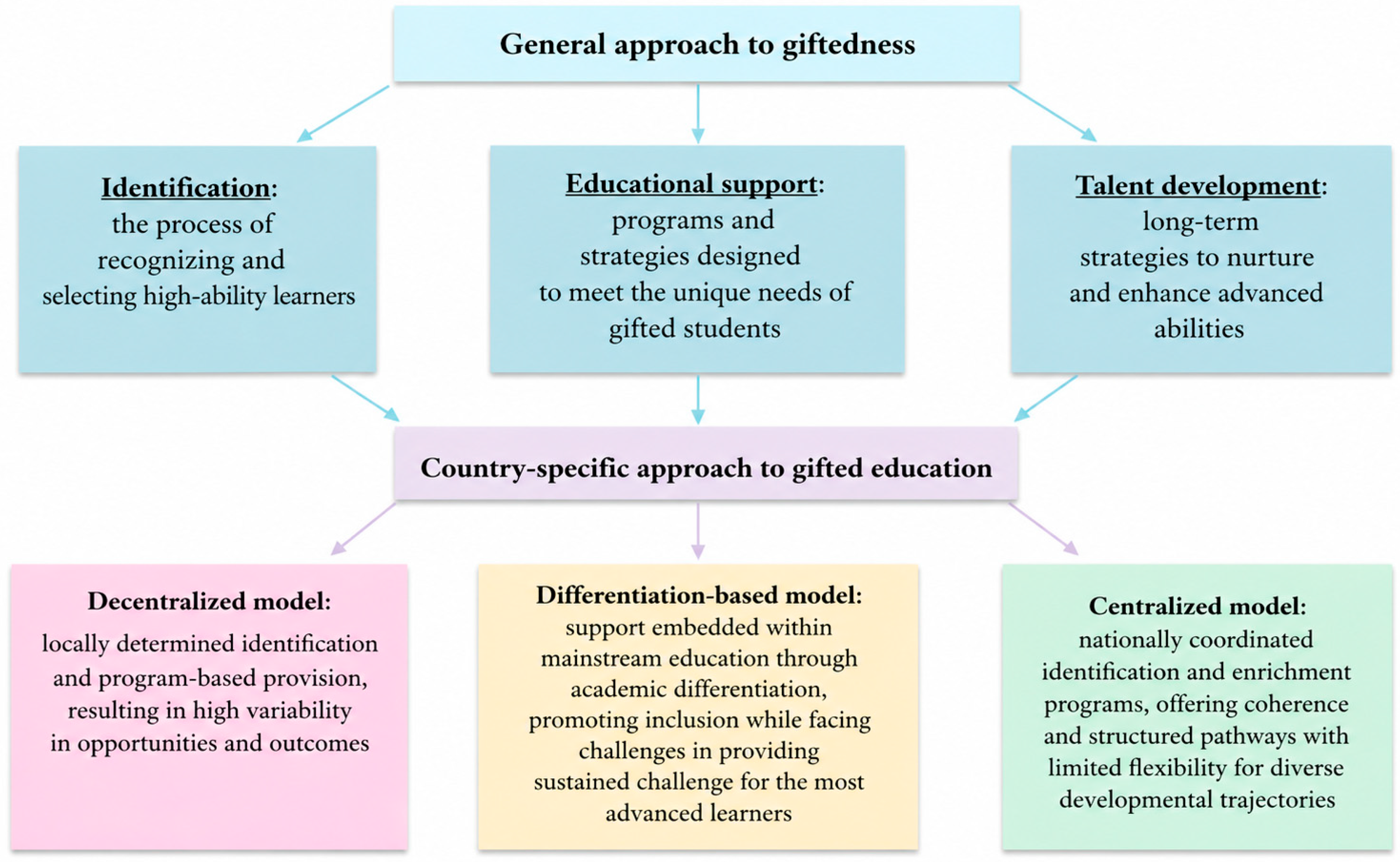
As illustrated in
Figure 4, the key distinction lies in the extent to which identification processes are embedded within coherent institutional pathways capable of sustaining long-term development. The figure can also be interpreted as a conceptual representation of structural lag, capturing how theoretical models of giftedness are translated into institutional arrangements and where misalignment may occur. Rather than focusing solely on the presence of identification mechanisms, the figure emphasizes the importance of how these mechanisms are connected to structured and continuous forms of educational provision. This perspective shifts the analytical focus of the field. While much of the literature continues to prioritize the question of who should be identified as gifted, the findings suggest that the more consequential issue concerns how educational systems organize access to developmental opportunities beyond the point of identification. Identification constitutes only the initial stage of a longer process, the effectiveness of which depends on the alignment between institutional capacity, policy design, and educational provision. Structural lag becomes evident where increasingly multidimensional theoretical understandings of giftedness are only partially reflected in institutional practices. As conceptualizations of giftedness expand to include diverse and dynamic forms of ability, institutional systems tend to incorporate those elements that can be standardized, measured, and administratively regulated. This selective translation not only constrains the practical application of theory but also shapes which forms of talent are recognized and supported.
These findings point to the need for a more integrated analytical framework that connects psychological theories of giftedness with perspectives from comparative education and education policy research. Giftedness does not develop independently of institutional environments; rather, it emerges through structured interactions between individual potential and the opportunities made available through education systems. Understanding these processes requires moving beyond individual-level explanations and examining the systemic conditions that enable or constrain long-term development. From a policy standpoint, gifted education can be understood as a domain characterized by the continuous negotiation of competing objectives, particularly equity and excellence. Institutional models differ in how they balance these objectives, and no configuration fully resolves the tension between them. Approaches that prioritize inclusion may limit opportunities for advanced development, while those oriented toward high-level performance may introduce new forms of inequality. These trade-offs highlight the central role of institutional design in shaping both access to and outcomes of gifted education.
This study is subject to several limitations. The analysis is based exclusively on secondary sources and does not include original empirical data. As such, the findings reflect patterns identified in existing research and policy documentation rather than direct observation of institutional practices. Future research should empirically test the proposed framework by examining how different institutional models operate in practice and how they influence long-term developmental outcomes for gifted students. From a policy perspective, the findings suggest the need to move beyond a primary focus on identification and toward the development of coherent institutional pathways that connect identification with sustained educational provision. This requires the design of flexible policy frameworks capable of accommodating multidimensional conceptions of giftedness while ensuring equitable access to advanced learning opportunities across diverse educational contexts.
4. Conclusions
This article demonstrates that the central challenge in gifted education lies not in the development of new definitions or identification methods, but in the capacity of educational systems to institutionalize existing theoretical frameworks. The problem therefore shifts from conceptualization to institutional design, where the conditions for translating giftedness into educational practice are constructed. The findings call for a reconceptualization of giftedness itself. Rather than being understood solely as an individual attribute, giftedness emerges as an outcome shaped by institutional selection mechanisms and the organization of educational opportunities. In this sense, education systems do not merely support gifted students differently, but actively produce different forms of giftedness depending on how identification and provision are structured. Within this framework, the key question is no longer which theoretical models of giftedness are most valid, but which institutional conditions enable their realization in practice. Differences across systems can therefore be understood as alternative ways of resolving the fundamental tension between the increasing complexity of theoretical models and the constraints of administratively manageable educational structures.
The contribution of the present analysis lies in shifting the analytical focus from isolated elements of gifted education to their interaction within broader institutional configurations. This perspective highlights that the effectiveness of gifted education depends less on the presence of individual components than on the degree of alignment between them and their integration into sustained developmental pathways. From a practical standpoint, these findings point to the need to move beyond fragmented interventions toward the systemic design of educational models capable of supporting continuous talent development across diverse institutional contexts. Future research should therefore focus on identifying the conditions under which institutional systems are able not only to identify, but also to sustain and develop high potential over time.