Article

Differences in Reading Habits Among Higher Education Students in Portugal: A Comparative Analysis


Instituto Superior de Educação e Ciências de Lisboa (ISEC Lisboa), Alameda das Linhas de Torres, 179, 1750-142 Lisboa, Portugal
*
Author to whom correspondence should be addressed.
Educ. Sci. 2026, 16(6), 946; https://doi.org/10.3390/educsci16060946
Submission received: 3 April 2026 / Revised: 30 May 2026 / Accepted: 9 June 2026 / Published: 15 June 2026

Abstract

While reading habits strongly correlate with academic success, empirical data regarding higher education (HE) literacy in Portugal remains scarce, particularly across the private sector. This study addresses this gap through a cross-institutional analysis comparing public and private HEIs alongside the island regions of Madeira and the Azores, challenging the assumption that digital natives universally reject print. A survey was administered to 558 students across 140 study cycles from 33 public and private HEIs, with data evaluated via non-parametric inferential methodologies. The sample displayed high reading appreciation, yielding a mean enjoyment score of 7.54 out of 10 (SD = 2.29) and an annual median of 4 books. Significant demographic variations (p < 0.05) emerged: female and older (23+) students demonstrated a significantly higher love of reading and voluntary book consumption, whereas males and younger cohorts gravitated toward technical texts and digital periodicals. Conversely, groups converged regarding internet usage and the primary structural barrier to literacy: an acute lack of time (67.9%). Crucially, while HEI type did not impact genre or platform choices, public university students reported significantly higher reading enjoyment and read more books annually than their private-sector peers (p < 0.05). These findings underscore that individual literacy is actively moderated by institutional micro-climates, providing administrators with precise empirical targets to design tailored reading initiatives.

1. Introduction

Reading exerts a profound impact on a student’s academic journey (Hicks, 2023), driving not only the acquisition of disciplinary knowledge but facilitating broader academic, social, and personal development (Samuel, 2022). Consequently, the reading habits of higher education (HE) students have long remained a central focus of researchers due to their direct correlation with academic performance, intellectual development, and personal growth (Pires et al., 2016; Balan et al., 2019; Abid et al., 2023; Ali et al., 2023). However, under the combined pressure of rapid technological proliferation, increasing prevalence of digital media, and shifting educational paradigms, the contemporary university student operates within an entirely altered literacy environment (Dontre, 2021). The frequency, duration, and specific types of texts being consumed have undergone radical structural shifts (Cladis, 2020; Furenes et al., 2021; Peras et al., 2023; Abbas et al., 2024). While some studies focus on the role of reading in academic achievement, others highlight the broader implications of reading habits for cognitive and critical thinking skills (Balan et al., 2019; Chuchuca Basantes & Chuchuca Basantes, 2023). Despite this growing body of research, there is a clear need for a more comprehensive analysis of how these habits differ across disciplines, cultural backgrounds, and educational environments (Smith et al., 2021).
To unpack the multi-faceted nature of student literacy, this study is grounded in several key theories from educational psychology, reading comprehension, and media studies. One central framework is Vygotsky’s (1978) Sociocultural Theory, which emphasizes the importance of social interaction and cultural context in learning. Vygotsky (1978) argued that higher cognitive functions, including reading, are developed through social engagement and are deeply embedded in cultural practices. Thus, the cultural background and social context in which students are situated may significantly influence their reading habits and preferences (Abid et al., 2023; Davidovitch & Gerkerova, 2023; Cekiso, 2024). Additionally, the Cognitive Load Theory (Sweller, 1988) offers vital insights into how students process and retain information while reading. According to this theory, the type and complexity of reading material can impact the cognitive load placed on students, potentially affecting their reading engagement and comprehension (Sweller, 1988; Kirschner, 2002; de Jong, 2010; Zeitlhofer et al., 2024). The way that students interact with digital and printed texts might be shaped by these cognitive demands, highlighting the role of the medium in shaping reading habits (Gkintoni et al., 2025). Finally, the Uses and Gratifications Theory (Katz et al., 1973) offers a framework for understanding how individuals actively seek out media (including texts) to fulfill specific needs. This theory suggests that students’ reading habits may be influenced by their personal motivations, such as the desire for academic achievement, relaxation, or social connection (Katz et al., 1973). Understanding the needs that drive reading habits can help to explain the variability in student behavior across different contexts (Abid et al., 2023; Vargas et al., 2024; Zenelaga et al., 2024).
Synthesizing these foundational frameworks, recent studies on reading habits in HE have focused on a variety of factors, including technological impacts, discipline-specific reading practices, and demographic variables (e.g., Chang et al., 2023; Ogunbodede & Sawyerr-George, 2023; Vargas et al., 2024; Altamura et al., 2025). A substantial body of research has examined the rise of digital media and its implications for students’ reading practices (e.g., Bana, 2020; Stiegler-Balfour et al., 2023; Abbas et al., 2024; Wu, 2024). These studies suggest that the shift from print to digital reading has had mixed effects on comprehension and attention span. While digital texts offer greater convenience, they are often associated with more superficial reading, leading to reduced retention and understanding (Silveira, 2021; Liu, 2022; Stiegler-Balfour et al., 2023; Abbas et al., 2024; Spjeldnæs & Karlsen, 2024). Disciplinary differences have also been explored in the context of reading habits. For example, in science and engineering fields, students tend to engage with technical manuals and research articles that require high levels of analytical reading, while humanities students often read longer, more narrative texts that require critical interpretation (Pilotti et al., 2023; Welsen et al., 2023; Spjeldnæs & Karlsen, 2024). These differences reflect the varied expectations of reading across academic disciplines, suggesting that students develop specialized reading habits based on their field of study. Moreover, research has examined how demographic factors—such as age, socioeconomic status, and cultural background—affect reading behaviors. For instance, higher socioeconomic status has been correlated with more frequent reading for pleasure, while students from lower-income backgrounds may be more likely to read for academic purposes (Baker & Scher, 2002; Le et al., 2019; Ibáñez-Alfonso et al., 2021; Yeung et al., 2022). These findings highlight the importance of considering how a student’s background, family environment, prior education, intrinsic motivation, personal preferences, and study workload influence their reading motivations and access to resources.
Despite this rich international landscape, a critical research gap persists when these global findings are applied to specific national HE ecosystems, particularly within Portugal. Some studies have analyzed the reading habits of HE students in recent years, with trends indicating a growing preference for digital formats and a decline in the reading of extensive literary works (Liu, 2005; Mizrachi et al., 2018). In Portugal, the reading habits of HE students have been heavily influenced by digitalization and access to online resources. Digital literacy is an increasingly valued skill in HE, and the ability to locate, evaluate, and use digital information directly affects students’ reading habits. The use of mobile technologies and digital platforms has transformed the way students consume information and academic literature, making reading on mobile devices more common. Indeed, a recent study indicates that considering all types of reading and the respective formats that students reported using, most non-academic reading is done in digital format (72%), while 13% of students read in both formats (paper and digital), and only 15% indicated that they read exclusively in paper format (DGEEC, 2023).
Over the past decade, numerous studies in Portugal have addressed the reading habits of HE students, emphasizing the critical role of reading in academic training and development, yet they leave a clear empirical gap. Silva (2019) explored the impact of digital devices on students’ reading behaviors, highlighting a growing preference for e-books and online materials while noting that many students still favor printed books, particularly for academic reading. Regarding the volume of consumption, Silva (2019) indicated that 50.7% of respondents read up to 5 books per year, while the percentage of readers who read up to 10 books (24.7%) and those who read more than 11 books (24.6%) is very similar. Concurrently, Cruz (2020) examined students’ reading frequency, format preferences, and their correlation with academic success, indicating that frequent reading positively influences academic performance, though no significant advantage was found between digital and print preferences. Most recently, the Directorate-General for Education and Science Statistics (DGEEC, 2023) published the Survey on the Reading Habits of First-Cycle HE students. Despite a limited sample size, the findings showed that over 90% of students engaged in non-academic reading, with online texts—particularly those on social media—being the most frequently accessed (81%), where Instagram emerged as the most popular platform (82%), followed by X (formerly Twitter) and Facebook. Additionally, half of the surveyed students reported reading newspapers, with a clear preference for digital formats (61%) over print (7%). Regarding academic reading, only 29% of students regularly consulted recommended bibliographies, while 23% had never referred to them, citing time constraints and text difficulty as primary obstacles, resulting in fewer than 30% of students utilizing institutional libraries, mainly for studying or completing assignments (DGEEC, 2023).
While these local studies are valuable, a glaring comparative omission remains: the complete lack of structural differentiation based on institutional typologies. Prior literature has treated HE cohorts as monolithic blocks, completely overlooking the profound systemic divides between public universities, polytechnic institutes, and private higher education institutions (HEIs). Public and private HEIs operate under entirely different institutional cultures, enrollment parameters, and student socioeconomic demographics. By failing to contrast these distinct academic micro-climates—while simultaneously excluding isolated geographic territories such as the autonomous island regions of Madeira and the Azores—the existing literature leaves a substantial gap in understanding how institutional structures shape student literacy.
To resolve this empirical gap, this study narrows its logical focus onto the multi-institutional ecosystem of Portuguese HE, evaluating how structural institutional contexts, coupled with demographic variables, govern modern student literacy. Consequently, this investigation is guided by the following central research question: How do the reading habits, format preferences, and perceived literacy barriers of Portuguese HE students vary across different demographic profiles and distinct institutional micro-climates, specifically public, polytechnic, and private HE sectors?
The primary purpose of this study was to explore and analyze the reading habits of HE students in Portugal, focusing on the factors that shape these habits across diverse demographic and educational contexts. To achieve this, the study addressed the following specific, numbered research objectives (RO):
  • RO1: To examine the reading habits of HE students for both academic and leisure purposes.
  • RO2: To evaluate how these reading practices vary according to key student demographics, specifically gender and age.
  • RO3: To analyze variations in reading engagement across different types of HEIs, including public universities, polytechnic institutes, and private institutions.
  • RO4: To identify the primary personal and situational factors that act as drivers or barriers to voluntary student reading.
By addressing these numbered objectives, this study aimed to provide a comprehensive framework to inform the development of effective institutional strategies, thereby enhancing reading engagement and promoting academic success across the Portuguese HEI ecosystem.

2. Methodology

2.1. Research Design

This study employed a quantitative cross-sectional survey design, using a structured questionnaire as the primary data collection instrument. The questionnaire was adapted from a previously validated instrument developed by Centro de Estudios para la Promoción de la Lectura (CEPLI) at the University of Castilla-La Mancha (Yubero et al., 2014). The adaptation process ensured the instrument’s relevance to the study context while maintaining its methodological rigor and validity. This design was considered appropriate as it allows the collection of data at a single point in time, enabling the analysis of reading behaviours and attitudes across different groups of higher education students. The cross-sectional nature of the study provides a snapshot of the phenomenon under investigation without manipulating study variables.

2.2. Data Collection Instruments and Procedures

The primary data collection instrument for this study was a structured questionnaire comprising 19 questions designed to assess the frequency of voluntary reading, the number of books read in the past year, reading motivation, and reading enjoyment (Supplementary Material). The target population consisted of HE students enrolled in institutions across Portugal, including the autonomous island regions of Madeira and the Azores.
To recruit participants, an invitation to participate in the study was disseminated via email to 108 HEIs in Portugal. Of these, 32 institutions agreed to participate. A link to the questionnaire, hosted on Google Forms®, was sent by the participating institutions to their students. A non-probability, institution-mediated convenience sampling strategy was employed. The participating institutions disseminated the questionnaire link to their students, and participation was voluntary, resulting in a self-selected sample. Data collection took place between September 2022 and February 2023.
The ethical requirements inherent to an investigation of this nature were guaranteed. They were included on the first page of the instrument (see Supplementary Material), explaining the purpose and procedures, and ensuring confidentiality and anonymity of the data. All participants explicitly agreed to take part in the study voluntarily. The study complied with the ethical principles of voluntary participation, informed consent, confidentiality, and data protection in accordance with the General Data Protection Regulation (GDPR). Participation was anonymous, and no identifiable information was collected or stored.
A total of 560 responses were collected, of which 558 were deemed valid for analysis. Based on the 2022/2023 enrollment data from the DGEEC, which reported 448,235 students attending HE in Portugal, the sample size of 558 respondents enables the calculation of results with a 95% confidence level and a 4.15% margin of error.

2.3. Data Analysis

Descriptive statistics were computed for all questionnaire items. The Kolmogorov–Smirnov and Levene tests were employed to assess the assumptions of normality and homogeneity of variances, respectively. The choice of parametric or non-parametric tests was based on the results of normality and homogeneity assessments. When assumptions were met, parametric tests (ANOVA) were applied; otherwise, equivalent non-parametric tests (Mann–Whitney and Kruskal–Wallis) were used to ensure robustness of results. The Chi-Square test was utilized to assess associations between categorical variables. All statistical analyses were conducted using SPSS® (version 28), with statistical significance set at p < 0.05.

2.4. Sample Characteristics

The sample comprised 558 students, of which 376 (67.4%) were female, 178 (31.9%) were male, and 4 (0.7%) identified as other. The age distribution was as follows: 149 participants (26.7%) were aged between 17 and 20 years, 148 participants (26.5%) were between 21 and 23 years, and 251 participants (45.0%) were over 23 years old.
Regarding their academic course, 26 participants (4.7%) were enrolled in a Higher Professional Technical Course (HPTC), 419 (75.1%) in a bachelor’s degree, 102 (18.3%) in a master’s degree, 4 (0.7%) in a doctorate, and 7 (1.3%) in a postgraduate course.
In terms of the academic year, 277 participants (49.6%) were in their 1st year, 125 (22.4%) in their 2nd year, 127 (22.8%) in their 3rd year, and 29 (5.2%) in their 4th year.
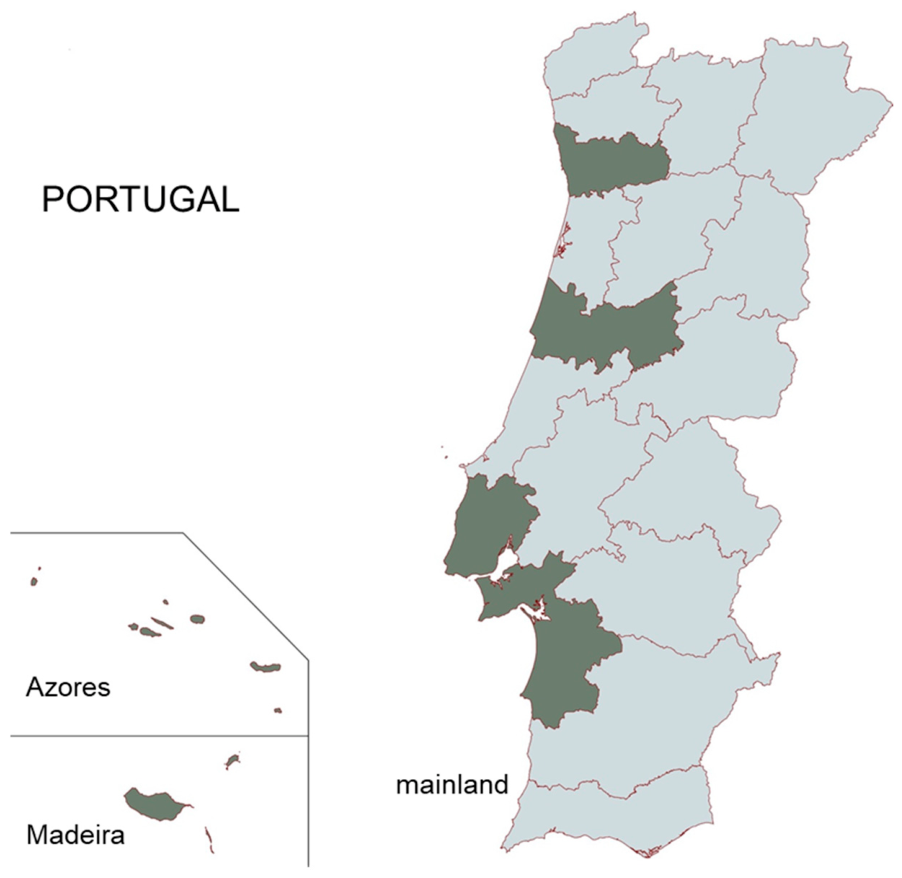
The study involved students from 140 distinct study cycles across 32 HEIs in Portugal, spanning both public and private sectors, including those in Madeira and the Azores. The majority of these HEIs were concentrated in Lisboa (65.6%), followed by Porto (12.5%) and Setúbal (6.2%). Additionally, the districts of Aveiro, Coimbra, and Faro, alongside the autonomous regions of the Azores and Madeira, were each represented by a single institution. Figure 1 illustrates the spatial distribution of these HEIs.
Among the participants, 275 (49.3%) were enrolled in public HEIs, while 280 (50.2%) attended private institutions.

3. Results

3.1. General Reading Habits and Preferences

Data from the first survey question, which measured baseline reading enjoyment on a scale from 1 (no enjoyment) to 10 (high enjoyment), revealed a mean score of 7.54 (SD = 2.29) and a median of 8. This indicates that 50% of the surveyed students reported a reading enjoyment level of 8 or higher (Supplementary Material). Regarding the perceived value of reading, the vast majority of participants regarded the practice as highly important: 71.9% classified it as “very important” and 27.1% as “important”. In contrast, only 1.1% viewed reading as having little or no importance, and a marginal 0.3% reported that they do not read books at all.
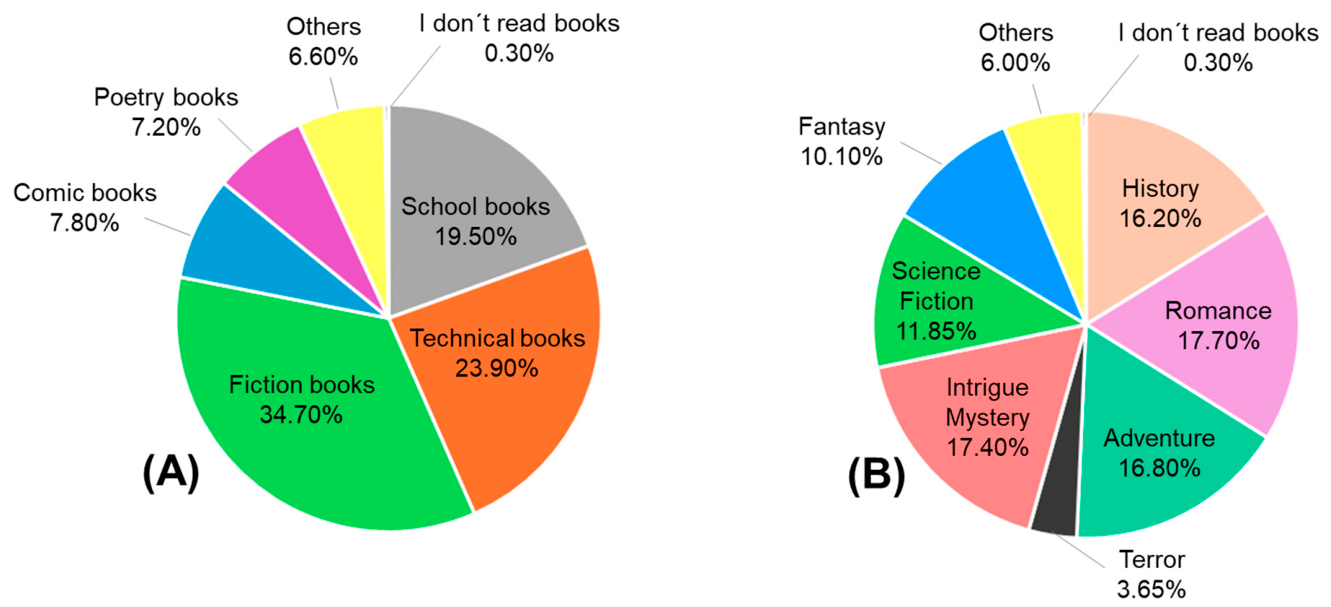
When analyzing the specific types of books consumed, students reported engaging with a wide variety of genres: 223 (19.50%) read school textbooks, 273 (23.90%) read technical literature, 397 (34.70%) read fiction, 89 (7.80%) read comic books, 82 (7.20%) read poetry, and 37 (6.60%) read other categories (Figure 2A). In terms of explicit genre preferences, 251 students (17.70%) expressed a primary interest in romance, 248 (17.0%) in mystery/intrigue, 239 (16.80%) in adventure, 230 (16.20%) in historical books, 169 (11.85%) in science fiction, 143 (10.10%) in fantasy, and 52 (3.65%) in horror, with 86 (6.00%) favoring other genres (Figure 2B).
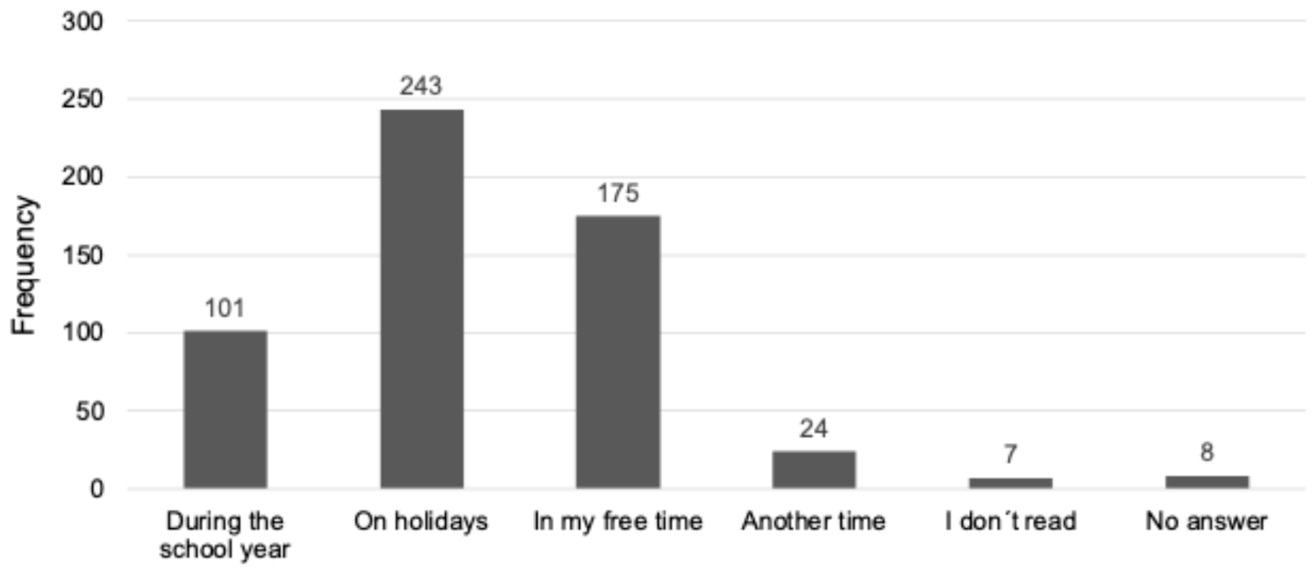
When asked about the periods during which they read the most, nearly half of the students indicated that they read most frequently during holiday periods (43.5%). This was followed by 31.4% who preferred reading during their regular free time, 18.1% during the active academic year, and a minimal 4.3% who reported reading at other specific times of the year (Figure 3).
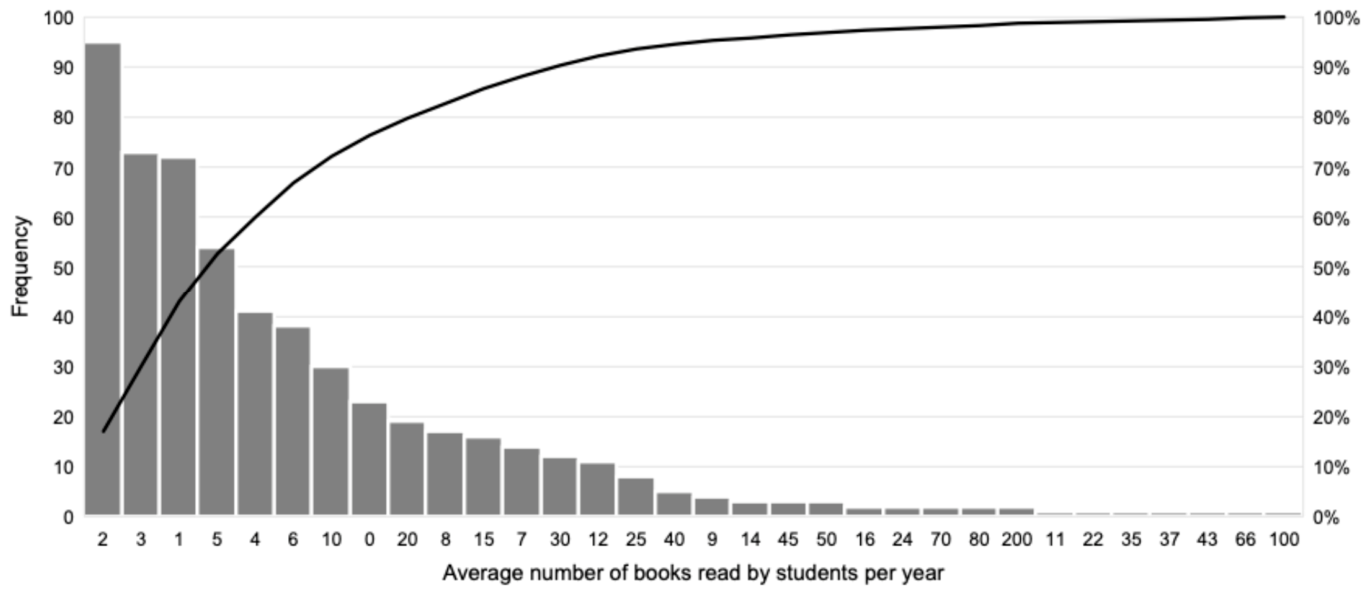
The annual volume of consumption showed an average of 8 books read per student (SD = 16), with a median of 4, demonstrating that 50% of the student population reads four or more books per year (Figure 4). The relatively large standard deviation underscores considerable individual variability within the sample.
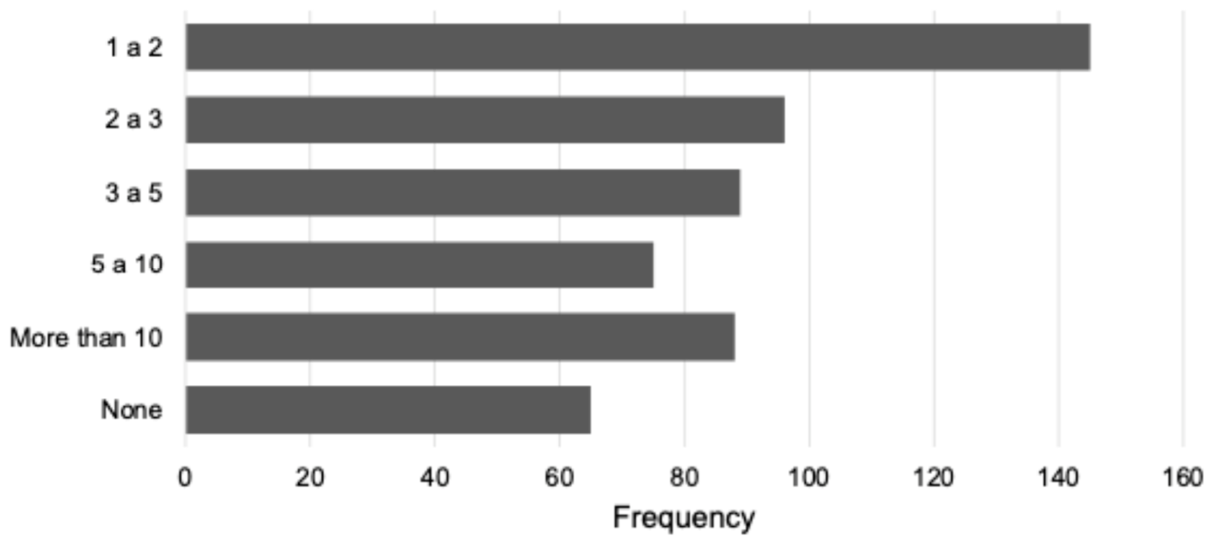
When asked how many books they had voluntarily read in the past year, the most common response was 1 to 2 books (26%), followed by 2 to 3 books (17.2%), 3 to 5 books (15.9%), and more than 10 books (15.8%), while 13.4% reported reading 5 to 10 books (Figure 5). Academic reading compliance varied: when tasked with school-assigned texts, 186 students (33.3%) reported reading the entire book, 317 (56.8%) read only selected portions, and 55 (9.9%) did not read the assigned material at all.
Regarding format preferences, the clear majority of students favored printed books over digital alternatives (Table 1).
Among those who did utilize digital reading formats, computers (57.7%, n = 322) and mobile phones (57.3%, n = 320) were the most frequently used devices, while only 15.4% utilized dedicated e-readers or e-books (Table 2). Social literacy practices were also prevalent: a significant portion of students regularly gave away books (63.1%, n = 352), and 65.9% frequently discussed their reading materials with friends or peers.
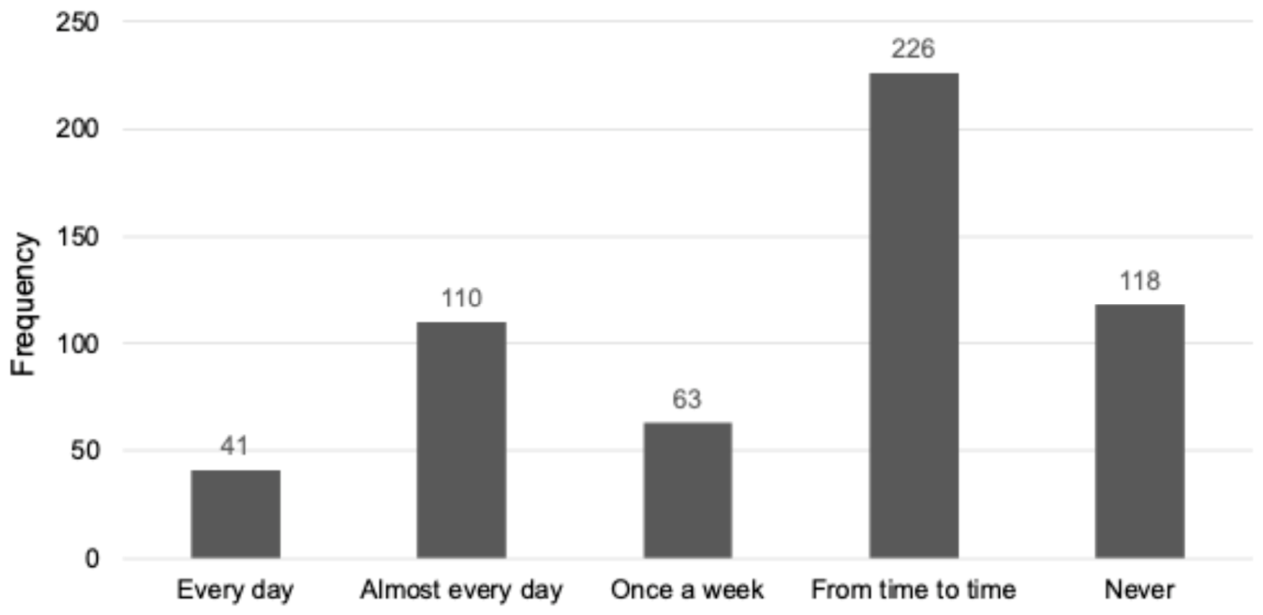
Periodical consumption (magazines and newspapers) was less frequent, with 361 students (64.7%) reporting that they do not buy or read these materials regularly. Overall, only 41 students (7.3%) read periodicals daily, 63 (11.3%) almost daily, 110 (19.7%) weekly, 226 (40.5%) occasionally, and 118 (21.1%) never (Figure 6). Among active periodical readers, national newspapers were heavily preferred (84.8%), followed by international (31%), sports (25.4%), and local publications (19.8%). In terms of medium, print formats were slightly preferred (52.6%) over digital alternatives (47.4%) for periodical reading.

3.2. Reading Habits by Gender and Age

To identify significant differences in reading habits based on demographic variables, the Chi-square test was applied to qualitative responses, while the Mann–Whitney and Kruskal–Wallis tests were utilized for quantitative parameters. Due to a deviation from normality confirmed by the Kolmogorov–Smirnov test, non-parametric tests were maintained, with a significance level of 0.05.
The analysis revealed distinct gender-based variations (Table 3). Male students engaged with digital reading formats significantly more frequently than female students (p ≤ 0.001) and preferred digital formats for periodicals (p ≤ 0.001). Males also purchased and read newspapers and magazines more often than females (p = 0.001).
Conversely, female students demonstrated higher social and voluntary engagement: they were significantly more likely to give away books (p ≤ 0.001), discuss books with friends and colleagues (p ≤ 0.001), and report a higher volume of voluntary book reading (p ≤ 0.001). The Mann–Whitney test confirmed that female students exhibited a significantly greater self-reported love of reading than male students (Table 4) and read a significantly higher number of books annually (Table 5).
Genre preferences also diverged sharply by gender: male students gravitated toward technical, historical, and science fiction texts, whereas female students preferred fiction, romance, and mystery/thriller novels.
Age-related analyses also yielded significant behavioral shifts (Table 6). Younger students placed significantly less importance on reading books compared to their older counterparts (p = 0.001). Older students (aged 23 and above) reported a significantly stronger love of reading (Table 4) and were more likely to give books as gifts (p = 0.001). Regarding periodical consumption, older students read newspapers and magazines more frequently (p = 0.001), displayed a higher overall reading frequency for periodicals (p = 0.001), and preferred print formats, whereas younger students favored digital periodicals (p = 0.001). In terms of digital hardware, younger cohorts predominantly read via mobile phones, while older students favored computers. Age also influenced thematic choices: older students preferred technical, historical, and adventure books, while younger students gravitated toward fiction, romance, and mystery/thrillers (p = 0.001).

3.3. Student Literacy and Reading Habits by HEI Type Reading Habits Across Institution Types

The type of HEI attended exerted a significant influence on student literacy profiles. To determine differences across institutional frameworks (public universities, polytechnic institutes, and private institutions), non-parametric evaluations were executed.
The Kruskal–Wallis test revealed significant differences in student attitudes based on their academic environment. Specifically, students enrolled in public institutions displayed a significantly higher enthusiasm and self-reported passion for reading compared to those studying at private institutions (Table 4). This institutional variation extended to actual behavioral output: students from public HEIs read a significantly higher number of books per year than their peers in private HE frameworks (Table 5).

3.4. Drivers and Barriers to Voluntary Reading

The survey evaluated the specific motivational factors driving reading habits, as well as the personal, situational, or technological barriers that restrict them.
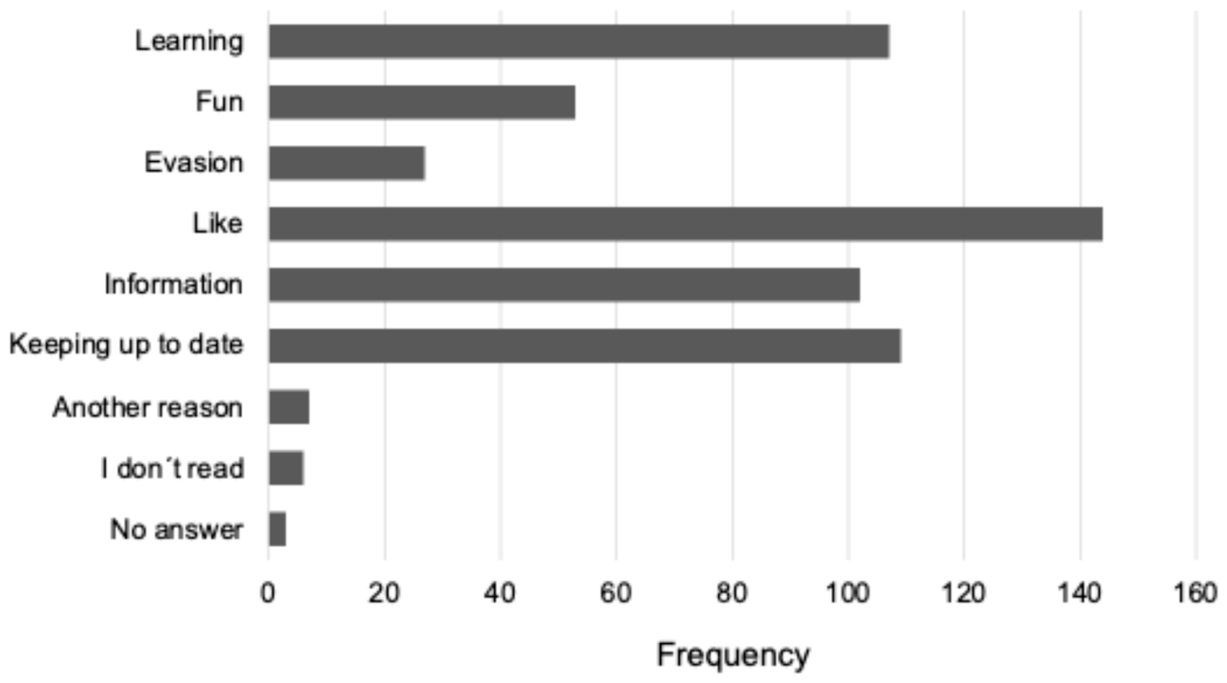
The most common primary driver for reading was intrinsic enjoyment (25.8%), followed by utilitarian and informational motivations: the desire to stay up-to-date (19.5%), to learn new information (19.2%), and to remain informed (18.3%). Purely emotional or hedonic drivers were the least common, with entertainment accounting for 9.5% and personal happiness for 4.8% of responses (Figure 7). Motivation also varied by demographic subsets: for male students, the primary reason for reading was to stay informed, whereas female students were significantly more driven by general enjoyment (p < 0.001; Table 3). Among age groups, younger students primarily read for enjoyment, while older students read to stay informed and acquire new knowledge (p = 0.002; Table 6).
When assessing technological barriers and habits, analysis of internet usage for reading or purchasing books revealed that digital ecosystems often compete with, rather than facilitate, traditional reading. Sixty percent of the students had never used the internet to read books or did so only occasionally (Table 2), and more than 50% reported rarely or never purchasing books online (Table 7). No significant gender (0.06 ≤ p ≤ 0.81) or age (0.05 ≤ p ≤ 0.86) differences were detected regarding the integration of internet usage with reading activities.
Finally, when explicitly asked why they do not read more, structural and environmental barriers emerged as dominant. The vast majority of students (67.9%) cited an acute lack of time as the primary obstacle to reading. Other cited barriers included a general lack of interest (17.2%) and the high financial expense of books (10.4%). While lack of time was the leading constraint across the entire sample, demographic differences were evident within the secondary barriers: a significantly higher percentage of male students (p = 0.004; Table 3) and younger students (p = 0.001; Table 6) explicitly cited a “lack of interest” as the primary reason for their low literacy engagement.

4. Discussion

4.1. General Reading Habits, Formats, and Genre Preferences

The findings of this study validate a fundamentally positive disposition toward reading among Portuguese HE students, evidenced by a high mean enjoyment score of 7.54/10 and the fact that 71.9% deem reading “very important.” This strong appreciation for the intrinsic value of literacy mirrors Southern European trends reported by Yubero et al. (2014), where Spanish university students assigned high value to reading (3.61 on a 5-point scale). It likewise corresponds with Portuguese national data from the General Directorate of Statistics for Education and Science (DGEEC, 2023), confirming that academic cohorts continue to harbor respect for textual culture.
However, an in-depth analysis of our data reveals a critical cognitive dissonance: while students ideologically value reading, their actual behavioral engagement is highly polarized, as evidenced by a substantial standard deviation of 2.29 and an annual median of only four books. This polarization reflects a global phenomenon observed across international HE landscapes (Mizrachi et al., 2018; Aldridge, 2019; Bergdahl et al., 2024; Bergman, 2024), where the idealization of literacy rarely translates into consistent behavioral habits due to a highly saturated cognitive environment. While Yubero et al. (2014) noted that over 90% of students read at least one book annually, our data highlights that a small elite reads extensively, masking a broader student population with minimal voluntary book engagement.
This study reveals a clear hierarchy in genre and format preferences. The preference for fiction (34.7%) aligns with global psychological and literacy studies showing that narrative fiction is uniquely sought out by stressed university populations for emotional regulation, cognitive empathy, and escapism (Mar et al., 2010; Stansfield & Bunce, 2014). This specific rate of engagement is further corroborated by DGEEC (2023) figures, which noted that 43% of Portuguese students express strong enjoyment of novels and romance. Conversely, the secondary preference for technical books (23.9%) reflects a utilitarian, career-driven approach to reading. This reveals a persistent tension between reading for hedonic pleasure versus reading for academic survival—a paradigm widely documented across diverse educational systems (Alsaeedi et al., 2021; Vogrinčič Čepič et al., 2024). The lower engagement with poetry (7.2%) and comic books (7.8%) mirrors observations by Yubero et al. (2014), reinforcing the idea that specialized genres require a level of reading capital typically confined to highly frequent readers.
Curiously, our study reveals that despite the digitalization of HE ecosystems, a powerful and resilient preference for printed books persists. This finding aligns with the international “Reading on Paper v. Screen” meta-analyses (Delgado et al., 2018; Stiegler-Balfour et al., 2023), which consistently demonstrate that print infrastructure fosters superior cognitive mapping, deeper text comprehension, and lower mental fatigue during long-form reading.
Our data shows that while digital devices like computers (57.7%) and mobile phones (57.3%) are ubiquitous, they are rarely used for immersive literacy. Instead, as Silva (2019) observed, students primarily utilize e-books and multi-purpose screens for fragmented, hyper-textual academic tasks, whereas dedicated, distraction-free e-readers are used by only 15.4% of the cohort. This choice reflects global concerns highlighted by the OECD (2021) regarding the rise of shallow digital reading practices.

4.2. Demographic Variations in Reading Behaviors

The significant gender-based differences identified in this study offer critical insights into the sociocultural construction of academic reading habits. The finding that female students exhibit a significantly greater love of reading, higher annual book consumption, and superior social literacy engagement (such as book discussions and gifting) adds strong empirical support to contemporary literacy models (Roemhild & Turner, 2023). Culturally, women are more socialized to view reading as an emotionally enriching, relational experience.
In contrast, male students in our sample viewed reading through a highly utilitarian lens, gravitating toward technical texts, digital periodicals, and informational news tracking. This outcome supports global observations by Chidiac et al. (2022), suggesting that male reading habits are often driven by a functional need for data acquisition rather than open-ended leisure.
Our age-based analysis reveals an important developmental trajectory in student literacy. Younger students in our sample reported lower baseline scores for the importance of reading and were far more susceptible to digital phone distractions. Conversely, older students (23+) placed greater value on books, read more annually, and maintained a preference for print periodicals. In terms of motivation, younger cohorts read primarily for hedonic enjoyment, while older students prioritized pragmatic knowledge acquisition and staying informed.
This behavioral shift echoes Liu’s (2005) developmental reading models, which assert that as individuals mature and transition into professional or postgraduate spheres, their cognitive style shifts from leisure-oriented fiction toward information-heavy, non-fiction reading. As noted by the OECD (2019), the escalating responsibilities of career preparation require older students to intentionally select materials that foster professional advancement and self-improvement, altering their overall interaction with text.

4.3. Reading Habits Across Institution Types

A unique finding of this study is that the institutional framework exerts a distinct influence on student reading habits. Specifically, students enrolled in public HEIs exhibited a significantly greater enthusiasm and a higher volume of annual book consumption compared to their peers in private HEIs. This institutional disparity can be analyzed through the lens of institutional culture and student profiling.
Public universities in Portugal historically maintain rigid, research-heavy academic profiles that demand extensive independent literature engagement outside the classroom. This institutional expectation creates an environment where long-form reading is implicitly normalized.
Conversely, private institutions often cater to a higher proportion of working students or non-traditional learners, whose immediate educational goals may favor hyper-focused, practical, or modular learning materials over extensive textual exploration. This structural divergence underscores that reading habits are not merely individual psychological choices; they are actively shaped by the institutional micro-climates, academic rigor, and library infrastructure of the specific HEIs students attend.

4.4. Analysis of Drivers, Barriers, and Theoretical Contributions

An in-depth analysis of the motivational dynamics reveals that while intrinsic enjoyment remains the premier driver of student reading (25.8%), it is heavily countered by structural barriers. Chief among these is an acute lack of time, reported by 67.9% of the participants. This reality aligns perfectly with academic time-poverty studies worldwide (Andrianatos, 2019; Anwar & Sailuddin, 2022). These studies show that the modern university student operates within an over-extended schedule where high-stakes coursework, part-time labor, and social obligations directly crowd out leisure reading.
This reality explains why nearly half of our sample (43.5%) concentrates their reading activities exclusively during holiday periods—a finding that confirms Silva’s (2019) observation that recreational literacy requires the complete removal of academic stress and mental fatigue to flourish. Furthermore, our findings show that male and younger students are significantly quicker to cite a total “lack of interest” as a secondary barrier (p = 0.004 and p = 0.001, respectively). This indicates that when time is scarce, these specific demographics readily sacrifice reading in favor of more instantly gratifying digital entertainment (Hollister et al., 2022; Pérez-Juárez et al., 2023).

4.5. Theoretical and Practical Implications

From a theoretical standpoint, this research provides a vital contribution to both Self-Determination Theory (SDT) and Cognitive Load Theory (CLT) within HE contexts. Traditional literacy models often operate on the linear assumption that high intrinsic value automatically results in high behavior execution. However, our study challenges this perspective by revealing a pronounced “value–action gap”. We demonstrate that while autonomous motivation—manifested as valuing Reading—is exceptionally high among the student population, external academic controls and environmental stressors act as overriding forces that actively suppress the actual behavior. This finding suggests that future tertiary literacy models must incorporate structural and situational constraints as powerful moderating variables between motivation and action, rather than relying solely on individual attitude as a predictor of behavior.
Furthermore, our results extend CLT by illustrating how digital multitasking directly impacts student cognitive stamina. The pervasive reliance on multi-purpose electronic devices, such as smartphones and laptops, for reading activities exposes students to a continuous stream of notifications and digital friction. Consequently, screen-based reading induces a state of chronic cognitive overload, which systematically shifts student habits away from deep, immersive comprehension and toward fragmented “skimming” behaviors. This dynamic underscores how the choice of reading medium alters the cognitive architecture of text processing in modern academic settings.
On a practical and macro-policy level, these findings demonstrate that individual desire is insufficient to sustain a robust reading culture without institutional scaffolding. In Portugal, the National Reading Plan (Plano Nacional de Leitura) recognizes that structured, public intervention is necessary to build and maintain reading habits across the lifespan, yet a significant policy gap remains at the tertiary educational level. To bridge this divide, HEIs must transition from acting as passive providers of texts to becoming active engineers of literacy environments.
Universities must design and operationalize innovative strategies that lower digital cognitive fatigue, such as embedding interdisciplinary reading projects directly into the curriculum, curating focused digital collections that minimize screen distractions, and organizing low-stakes literary events. By embedding these dynamic, recreational reading initiatives directly into the institutional culture and everyday pedagogy, HEIs can effectively mitigate academic time constraints, counter the rise of digital distractions, and ultimately foster autonomous, critical citizens prepared for the complexities of contemporary society.

5. Conclusions

This study highlights key trends in the reading habits of HE students in Portugal, revealing a complex landscape where positive engagement is heavily contrasted with notable barriers. While the student population generally values reading, actual habits vary significantly based on demographic factors and external constraints. Specifically, the findings indicate that female and older students engage more frequently in voluntary reading, whereas male and younger cohorts report lower levels of voluntary literacy engagement. Furthermore, a pronounced preference for print over digital formats indicates a strong inclination toward traditional reading experiences, a trend that persists despite the pervasive digitalization of the modern educational environment. Concurrently, external constraints such as acute time limitations and digital distractions emerge as the primary obstacles to sustained, voluntary literacy.

5.1. Research Contributions

This study provides several distinct contributions to the existing literature on academic literacy. First, it offers a contemporary empirical baseline of the reading behaviors of Portuguese HE students, filling a geographical and temporal gap in Southern European educational research. Second, by cross-referencing demographic variables with format preferences, this research challenges the assumption that digital-native students universally prefer digital reading, highlighting instead a critical nuance: while students utilize digital tools for rapid information retrieval, they still rely on print for deep, immersive reading. Finally, this work contributes to educational theory by mapping how external socioeconomic stressors (such as academic workload) directly compete with cognitive leisure activities like voluntary reading.

5.2. Practical Implications

The practical implications of these findings are highly relevant for policymakers, academic librarians, and university administrators. HEIs are uniquely positioned to act on this data, moving away from viewing reading as an isolated leisure activity and instead fostering an institutional culture of literacy. To achieve this, HEIs should operationalize the following targeted strategies:
  • Curriculum integration: Academics should embed curated, non-mandatory readings alongside core academic texts. This practice deepens students’ appreciation for broader literature while simultaneously enhancing domain-specific knowledge acquisition and critical thinking skills.
  • Digital reading initiatives: Academic libraries should curate diverse e-book collections and optimize interactive digital reading platforms. This would bridge the gap between students’ technological reliance and the cognitive benefits of traditional, focused reading practices.
  • Demographic-Specific interventions: Student affairs departments can design tailored engagement initiatives—such as male-targeted book clubs, peer-to-peer recommendation networks, and age-appropriate content streams—to enhance inclusivity and boost engagement among historically less active readers.
  • Mitigation of time constraints: Faculty and administrators can collaborate to facilitate structured, low-stakes leisure reading programs and institutional reading challenges. These initiatives help students intentionally carve out dedicated time for literacy within demanding academic schedules.

5.3. Research Limitations

Despite its insights, several limitations must be acknowledged. First, the data relies primarily on self-reported survey responses, which may introduce social desirability bias regarding reading frequency and enjoyment. Second, the cross-sectional design of this study captures a specific snapshot in time, preventing the identification of long-term causal shifts in reading habits as students progress through their degree programs. Lastly, while the sample spans multiple institutions in Portugal, the findings may reflect specific national or cultural contexts, meaning the results should be generalized to other European or global HE landscapes with caution.

5.4. Directions for Further Research

To build upon this study, future research should transition toward longitudinal designs to track how student reading habits evolve from their undergraduate to postgraduate years. Additionally, qualitative methodologies, such as semi-structured interviews or focus groups, would be invaluable to unpack the specific psychological mechanisms behind the explicit preference for print over digital formats. Experimental research could also isolate and test the efficacy of the institutional interventions proposed in this paper (e.g., measuring reading engagement before and after a university-wide reading challenge). Finally, given the rapid integration of artificial intelligence in HE, future studies must explore how AI-driven text summarization tools alter students’ cognitive stamina and long-form reading behaviors across diverse university populations.

Supplementary Materials

The following supporting information can be downloaded at: https://www.mdpi.com/article/10.3390/educsci16060946/s1.

Author Contributions

Conceptualization, A.B. and S.E.; Methodology, A.B.; Validation, A.B. and A.P.O.; Formal analysis, A.B.; Investigation, A.B., A.P.O., S.E. and S.d.A.L.; Writing—Original Draft Preparation, A.B., A.P.O., S.E. and S.d.A.L.; Writing—Review & Editing, A.B., A.P.O., S.E. and S.d.A.L.; Visualization, A.B. and A.P.O.; Supervision, A.P.O. All authors have read and agreed to the published version of the manuscript.

Funding

This research received no external funding.

Institutional Review Board Statement

Ethical approval was received from the institutional ethics review committee. Informed consent was obtained from all subjects involved in the study. The study was conducted according to the guidelines of the Declaration of Helsinki, and it was approved by the Ethics Committee of ISEC Lisboa under code CE/2022/05/01.

Informed Consent Statement

Informed consent was obtained from all subjects involved in the study.

Data Availability Statement

All data generated or analysed during this study are included in this published article (and its Supplementary Information file).

Acknowledgments

We would like to thank all Higher Education Institutions who agreed to take part in this study.

Conflicts of Interest

The authors declare no conflicts of interest.

References

  1. Abbas, S. G., Shaheen, F., & Mahjabeen, A. (2024). Investigating the impact of digital vs. traditional reading habits on comprehension and engagement among middle school students. Educational Administration: Theory and Practice, 30(6), 4664–4672. [Google Scholar] [CrossRef] [Scilit]
  2. Abid, N., Aslam, S., Alghamdi, A. A., & Kumar, T. (2023). Relationships among students’ reading habits, study skills, and academic achievement in English at the secondary level. Frontiers in Psychology, 14, 1020269. [Google Scholar] [CrossRef] [Scilit] [PubMed]
  3. Aldridge, D. (2019). Reading, engagement and higher education. Higher Education Research & Development, 38(1), 38–50. [Google Scholar] [CrossRef] [Scilit]
  4. Ali, I., Raza, M. H., Yasmeen, M., Raza, M. A., & Munawa, N. (2023). Analyzing the impact of student’s reading habits on academic performance. Journal of Learning and Educational Policy, 3(6), 23–33. [Google Scholar] [CrossRef] [Scilit]
  5. Alsaeedi, Z. S., Ngadiran, N. B. M., Kadir, Z. A., Altowayti, W. A. H., & Al-Rahmi, W. M. (2021). Reading habits and attitudes among university students: A review. Journal of Techno Social, 13(1), 44–53. [Google Scholar] [CrossRef] [Scilit]
  6. Altamura, L., Vargas, C., & Salmerón, L. (2025). Do new forms of reading pay off? A meta-analysis on the relationship between leisure digital reading habits and text comprehension. Review of Educational Research, 95(1), 53–88. [Google Scholar] [CrossRef] [Scilit]
  7. Andrianatos, K. (2019). Barriers to reading in higher education: Rethinking reading support. Reading & Writing, 10(1), a241. [Google Scholar] [CrossRef] [Scilit]
  8. Anwar, I. W., & Sailuddin, S. P. (2022). Academic reading difficulties in higher education. Journal of Languages and Language Teaching, 10(2), 309. [Google Scholar] [CrossRef] [Scilit]
  9. Baker, L., & Scher, D. (2002). Beginning readers’ motivation for reading in relation to parental beliefs and home reading experiences. Reading Psychology, 23(4), 239–269. [Google Scholar] [CrossRef] [Scilit]
  10. Balan, S., Katenga, J. E., & Simon, A. (2019). Reading habits and their influence on academic achievement among students at Asia Pacific International University. Abstract Proceedings International Scholars Conference, 7(1), 1490–1516. [Google Scholar] [CrossRef] [Scilit]
  11. Bana, A. (2020). Students’ perception of using the internet to develop reading habits: A case study at the English education department of Universitas Kristen Indonesia. Journal of English Teaching, 6(1), 60–70. [Google Scholar] [CrossRef] [Scilit]
  12. Bergdahl, N., Bond, M., Sjöberg, J., Dougherty, M., & Oxley, E. (2024). Unpacking student engagement in higher education learning analytics: A systematic review. International Journal of Educational Technology in Higher Education, 21, 63. [Google Scholar] [CrossRef] [Scilit]
  13. Bergman, L. (2024). Students’ reading in higher education: Challenges and ways forward. Journal of Adolescent & Adult Literacy, 67, 414–423. Available online: https://www.diva-portal.org/smash/get/diva2:1853457/FULLTEXT01.pdf (accessed on 5 March 2025). [CrossRef] [Scilit]
  14. Cekiso, M. (2024). Exploring factors affecting reading culture of first-year students at a selected institution of higher learning in South Africa. Journal of Intercultural Communication, 24(4), 173–182. [Google Scholar] [CrossRef] [Scilit]
  15. Chang, L., Wang, Y., Liu, J., Feng, Y., & Zhang, X. (2023). Study on factors influencing college students’ digital academic reading behavior. Frontiers in Psychology, 13, 1007247. [Google Scholar] [CrossRef] [Scilit]
  16. Chidiac, M., Ross, C., Marston, H. R., & Freeman, S. (2022). Age and gender perspectives on social media and technology practices during the COVID-19 pandemic. International Journal of Environmental Research and Public Health, 19(21), 13969. [Google Scholar] [CrossRef] [Scilit]
  17. Chuchuca Basantes, F., & Chuchuca Basantes, I. (2023). The reading habit in university education. Revista Iberoamericana De Educación, 7(2), 1–15. [Google Scholar] [CrossRef] [Scilit]
  18. Cladis, A. E. (2020). A shifting paradigm: An evaluation of the pervasive effects of digital technologies on language expression, creativity, critical thinking, political discourse, and interactive processes of human communications. E-Learning and Digital Media, 17(5), 341–364. [Google Scholar] [CrossRef] [Scilit]
  19. Cruz, R. (2020). Hábitos e preferências de leitura de estudantes universitários: A relação com o desempenho em leitura e o desempenho académico [Master’s thesis, Faculdade de Psicologia, Universidade de Lisboa]. Available online: http://hdl.handle.net/10451/45852 (accessed on 25 February 2025).
  20. Davidovitch, N., & Gerkerova, A. (2023). Social factors influencing students’ reading habits. African Educational Research Journal, 11(3), 351–359. [Google Scholar] [CrossRef] [Scilit]
  21. de Jong, T. (2010). Cognitive load theory, educational research, and instructional design: Some food for thought. Instructional Science, 38, 105–134. [Google Scholar] [CrossRef] [Scilit]
  22. Delgado, P., Vargas, C., Ackerman, R., & Salmerón, L. (2018). Don’t throw away your printed books: A meta-analysis on the effects of reading media on reading comprehension. Educational Research Review, 25, 23–38. [Google Scholar] [CrossRef] [Scilit]
  23. DGEEC. (2023). Inquérito aos hábitos de leitura dos estudantes do 1.º ciclo do ensino superior. Direção-Geral de Estatísticas da Educação e Ciência. Available online: https://www.pnl2027.gov.pt/np4/file/3737/IHLES_relat_rio_v18122023.pdf (accessed on 14 March 2025).
  24. Dontre, A. J. (2021). The influence of technology on academic distraction: A review. Human Behavior and Emerging Technologies, 3(3), 347–390. [Google Scholar] [CrossRef] [Scilit]
  25. Furenes, M. I., Kucirkova, N., & Bus, A. G. (2021). A comparison of children’s reading on paper versus screen: A meta-analysis. Review of Educational Research, 91(4), 483–517. [Google Scholar] [CrossRef] [Scilit]
  26. Gkintoni, E., Antonopoulou, H., Sortwell, A., & Halkiopoulos, C. (2025). Challenging cognitive load theory: The role of educational neuroscience and artificial intelligence in redefining learning efficacy. Brain Science, 15(2), 203. [Google Scholar] [CrossRef] [Scilit] [PubMed]
  27. Hicks, T. (2023). The effect of reading habits on academic success. Culminating experience projects. Graduate Research and Creative Practice. Grand Valley State University. Available online: https://scholarworks.gvsu.edu/gradprojects/389 (accessed on 5 March 2025).
  28. Hollister, B., Nair, P., Hill-Lindsay, S., & Chukoskie, L. (2022). Engagement in online learning: Student attitudes and behavior during COVID-19. Frontiers in Education, 7, 851019. [Google Scholar] [CrossRef] [Scilit]
  29. Ibáñez-Alfonso, J. A., Hernández-Cabrera, J. A., Duñabeitia, J. A., Estévez, A., Macizo, P., Bajo, M. T., Fuentes, L. J., & Saldaña, D. (2021). Socioeconomic status, culture, and reading comprehension in immigrant students. Frontiers in Psychology, 12, 752273. [Google Scholar] [CrossRef] [Scilit]
  30. Katz, E., Blumler, J. G., & Gurevitch, M. (1973). Uses and gratifications research. Public Opinion Quarterly, 37(4), 509–523. [Google Scholar] [CrossRef] [Scilit]
  31. Kirschner, P. A. (2002). Cognitive load theory: Implications of cognitive load theory on the design of learning. Learning and Instruction, 12(1), 1–10. [Google Scholar] [CrossRef] [Scilit]
  32. Le, T.-T.-H., Tran, T., Trinh, T.-P.-T., Nguyen, C.-T., Nguyen, T.-P.-T., Vuong, T.-T., Vu, T.-H., Bui, D.-Q., Vuong, H.-M., Hoang, P.-H., Nguyen, M.-H., Ho, M.-T., & Vuong, Q.-H. (2019). Reading habits, socioeconomic conditions, occupational aspiration and academic achievement in Vietnamese junior high school students. Sustainability, 11(18), 5113. [Google Scholar] [CrossRef] [Scilit]
  33. Liu, Z. (2005). Reading behavior in the digital environment: Changes in reading behavior over the past ten years. Journal of Documentation, 61(6), 700–712. [Google Scholar] [CrossRef] [Scilit]
  34. Liu, Z. (2022). Reading in the age of digital distraction. Journal of Documentation, 78(6), 1201–1212. [Google Scholar] [CrossRef] [Scilit]
  35. Mar, R. A., Oatley, K., Djikic, M., & Mullin, J. (2010). Emotion and narrative fiction: Interactive influences before, during, and after reading. Cognition and Emotion, 25(5), 818–833. [Google Scholar] [CrossRef] [Scilit] [PubMed]
  36. Mizrachi, D., Salaz, A. M., Kurbanoglu, S., & Boustany, J. (2018). Academic reading format preferences and behaviors among university students worldwide: A comparative survey analysis. PLoS ONE, 13(5), e0197444. [Google Scholar] [CrossRef] [Scilit] [PubMed]
  37. OECD. (2019). OECD review of higher education, research and innovation: Portugal. OECD Publishing. [Google Scholar] [CrossRef] [Scilit]
  38. OECD. (2021). 21st-Century readers: Developing literacy skills in a digital world. OECD Publishing. [Google Scholar] [CrossRef] [Scilit]
  39. Ogunbodede, K. F., & Sawyerr-George, O. E. (2023). Digital resources and the reading habits of university students in Nigeria. International Journal of Professional Development, Learners and Learning, 5(1), ep2304. [Google Scholar] [CrossRef] [Scilit]
  40. Peras, I., Klemenčič Mirazchiyski, E., Japelj Pavešić, B., & Mekiš Recek, Ž. (2023). Digital versus paper reading: A systematic literature review on contemporary gaps according to gender, socioeconomic status, and rurality. European Journal of Investigation in Health Psychology and Education, 13(10), 1986–2005. [Google Scholar] [CrossRef] [Scilit]
  41. Pérez-Juárez, M. A., González-Ortega, D., & Aguiar-Pérez, J. M. (2023). Digital distractions from the point of view of higher education students. Sustainability, 15(7), 6044. [Google Scholar] [CrossRef] [Scilit]
  42. Pilotti, M., El Alaoui, K., Khan, R., & Abdelsalam, H. (2023). “Do I need to read to do well?”: A post-pandemic case study of the reading habits and academic attainment of STEM and non-STEM students. Discover Education, 2, 34. [Google Scholar] [CrossRef] [Scilit]
  43. Pires, M. N. C., Souza, R., & Balça, Â. (2016). Leitura e formação no Ensino Superior: Problematização sobre a formação de leitores no Brasil e em Portugal. Desenredo. Revista do programa Pós-Graduação em Letras da Universidade de Passo Fundo, 12(2), 335–352. Available online: http://seer.upf.br/index.php/rd/article/view/6418/4060 (accessed on 5 March 2025).
  44. Roemhild, J., & Turner, M. (2023). Reading in uncertain times: Shared reading for eudaimonic wellbeing. M/C Journal, 26(4). [Google Scholar] [CrossRef] [Scilit]
  45. Samuel, A. (2022). Reading culture and its effect on students’ academic performance: A comparative study. International Journal of Educational Researchers, 13(4), 14–27. Available online: https://ijer.inased.org/makale/3400 (accessed on 5 March 2025).
  46. Silva, A. (2019). Impacto dos E-books nos hábitos de leitura dos estudantes portugueses e na indústria editorial [Master’s thesis, Universidade do Porto]. Available online: https://hdl.handle.net/10216/121912 (accessed on 9 March 2025).
  47. Silveira, J. J. X. (2021). Digital media impact on reading. Psychology, 12(7), 1096–1117. [Google Scholar] [CrossRef]
  48. Smith, R., Snow, P., Serry, T., & Hammond, L. (2021). The role of background knowledge in reading comprehension: A critical review. Reading Psychology, 42(3), 214–240. [Google Scholar] [CrossRef] [Scilit]
  49. Spjeldnæs, K., & Karlsen, F. (2024). How digital devices transform literary reading: The impact of e-books, audiobooks and online life on reading habits. New Media & Society, 26(8), 4808–4824. [Google Scholar] [CrossRef] [Scilit]
  50. Stansfield, J., & Bunce, L. (2014). The relationship between empathy and reading fiction: Separate roles for cognitive and affective components. Journal of European Psychology Students, 5(3), 9–18. [Google Scholar] [CrossRef] [Scilit]
  51. Stiegler-Balfour, J. J., Roberts, Z. S., LaChance, A. S., Sahouria, A. M., & Newborough, E. D. (2023). Is reading under print and digital conditions really equivalent? Differences in reading and recall of expository text for higher and lower ability comprehenders. International Journal of Human-Computer Studies, 176, 103036. [Google Scholar] [CrossRef] [Scilit]
  52. Sweller, J. (1988). Cognitive load during problem solving: Effects on learning. Cognitive Science—A multidisciplinary Journal, 12(2), 257–285. [Google Scholar] [CrossRef] [PubMed]
  53. Vargas, C., Altamura, L., Blanco-Gandía, M. C., Gil, L., Mañá, A., Montagud, S., & Salmerón, L. (2024). Print and digital reading habits and comprehension in children with and without special education needs. Research in Developmental Disabilities, 146, 104675. [Google Scholar] [CrossRef] [Scilit]
  54. Vogrinčič Čepič, A., Mascia, T., & Aerila, J. A. (2024). Reading for pleasure: A review of current research. New Zealand Journal of Educational Studies, 59, 49–71. [Google Scholar] [CrossRef] [Scilit]
  55. Vygotsky, L. S. (1978). Mind in society: The development of higher psychological processes. Harvard University Press. [Google Scholar]
  56. Welsen, S., Wanatowski, D., & Zhao, D. (2023). Behavior of science and engineering students to digital reading: Educational disruption and beyond. Education Science, 13, 484. [Google Scholar] [CrossRef] [Scilit]
  57. Wu, X. Y. (2024). Exploring the effects of digital technology on deep learning: A meta-analysis. Education and Information Technologies, 29, 425–458. [Google Scholar] [CrossRef] [Scilit]
  58. Yeung, S. S. S., King, R. B., Nalipay, M. J. N., & Cai, Y. (2022). Exploring the interplay between socioeconomic status and reading achievement: An expectancy-value perspective. Educational Phycology, 92(3), 1196–1214. [Google Scholar] [CrossRef] [Scilit] [PubMed]
  59. Yubero, S., Larrañaga, E., & Pires, N. (2014). Estudo sobre os hábitos de leitura dos estudantes portugueses do ensino superior. Instituto Superior Politécnico de Castelo Branco. Available online: https://core.ac.uk/download/pdf/62721107.pdf (accessed on 6 February 2025).
  60. Zeitlhofer, I., Zumbach, J., & Schweppe, J. (2024). Complexity affects performance, cognitive load, and awareness. Learning and Instruction, 94, 102001. [Google Scholar] [CrossRef] [Scilit]
  61. Zenelaga, B., Miftari, V., & Shehu-Lokaj, A. (2024). New trends in students’ reading habits. Human Research in Rehabilitation, 14(1), 177–192. [Google Scholar] [CrossRef] [Scilit]
Figure 1. Map of Portugal—mainland, Azores and Madeira—highlighting the districts of the HEIs that took part in the questionnaire.
Education 16 00946 g001
Figure 2. (A) Types of books students read; (B) Most interesting book topics for students.
Education 16 00946 g002
Figure 3. Time of year when students are more disposed to read.
Education 16 00946 g003
Figure 4. Average number of books read by students per year.
Education 16 00946 g004
Figure 5. Number of books students read voluntarily.
Education 16 00946 g005
Figure 6. Students’ habits in reading periodicals.
Education 16 00946 g006
Figure 7. Primary reasons students read.
Education 16 00946 g007
Table 1. Frequency of students’ book reading in print versus digital formats.
Frequency of Reading BooksPrint Format (%)Digital Format (%)
Every day or almost every day21.09.9
A few times a week23.515.6
A few times a month23.820.4
A few times a year27.627.2
Never4.126.9
Table 2. Types of digital media utilized by students.
Type of Digital Media Used%
Computer57.7
Mobile phone57.3
E-Reader/E-book15.4
Table 3. Questions where gender differences in reading habits were identified.
QuestionGenderχ2 Statistics
(p-Value)
Male (%)Female (%)
Read in digital format26.412.222.7 (<0.001)
Giving books to colleagues/friends29.870.226.1 (<0.001)
Buy and read magazines/newspapers48.329.518.6 (0.001)
Comment on books they’ve read with friends/colleagues53.471.517.7 (<0.001)
Read periodical56.329.245.4 (<0.001)
Main reason for reading books
 Like reading15.730.638.6 (<0.001)
 Keeping up to date29.215.2
Read more than 5 voluntary books in the last year20.233.119.9 (<0.001)
Lack of interest as the main reason students don’t read more24.713.815.2 (0.004)
Type of books students read the most
 Technical books64.242.3*
 Fiction books46.182.7
Type of book students are most interested in
 History48.937.8*
 Science fiction33.128.7
 Romance8.462.0
 Intrigue/mystery30.350.8
* In these cases, it was not possible to apply the Chi-square test because the question had multiple answers.
Table 4. Identification of significant differences in reading passion based on students’ gender, age, and type of institution.
QuestionGender (Mean Score)Statistical Value
(p-Value)
MaleFemale
How do you rate your love of reading?6.907.81−4.62 (<0.001)
Age (Mean Score)Statistical Value
(p-Value)
17–2021–23>23
7.007.357.9313.40 (0.001)
Type of Institution (Mean Score)Statistical Value
(p-Value)
PublicPrivate
7.897.19−3.41 (<0.001)
Table 5. Identification of significant differences in the number of books read by students based on gender, age, and type of institution.
QuestionGender (Mean Score)Statistical Value
(p-Value)
MaleFemale
How many books do you read in a year?5.079.80−4.09 (<0.001)
Age (Mean Score)Statistical Value
(p-Value)
17–2021–23>23
8.679.217.543.45 (0.178)
Type of Institution (Mean Score)Statistical Value
(p-Value)
PublicPrivate
8.408.00−2.81 (0.005)
Table 6. Questions revealing age-related differences in reading habits.
QuestionAgeχ2 Statistics
(p-Value)
17–23 (%)>23 (%)
Reading is important63.481.727.8 (0.001)
Giving books to colleagues/friends51.577.741.8 (0.001)
Buy and read magazines/newspapers24.649.035.3 (0.001)
Read in digital format25.821.037.2 (0.001)
Read periodicals26.439.449.9 (0.001)
Main reason for reading books
 Like reading20.322.336.5 (0.002)
 Keeping up to date/learning29.749.0
Lack of interest as the main reason students don’t read more25.38.438.1 (0.001)
Type of books students read the most
 Technical books34.166.5*
 Fiction books75.765.7
Type of book students are most interested in
 History33.849.8*
 Adventures40.743.0
 Romance54.333.5
 Intrigue/mystery45.442.1
Digital support for reading books
 Computer50.267.7*
 Mobile phone65.947.8
* In these cases, it was not possible to apply the Chi-square test because the question had multiple answers.
Table 7. Frequency of students’ internet usage.
Frequency of Internet UseSearch for Information (%)Read Books (%)Read Press/Magazines (%)Download Content (%)Buy Books (%)Blogs or Forums (%)
Every day or almost every day59.96.312.930.86.17.2
A few times a week22.912.521.934.99.712.0
A few times a month11.321.125.420.331.722.2
A few times a year4.332.621.58.834.832.4
Never1.627.418.35.217.726.2
Disclaimer/Publisher’s Note: The statements, opinions and data contained in all publications are solely those of the individual author(s) and contributor(s) and not of MDPI and/or the editor(s). MDPI and/or the editor(s) disclaim responsibility for any injury to people or property resulting from any ideas, methods, instructions or products referred to in the content.