1. Introduction
Indigenous peoples continue to sustain diverse knowledge systems, languages, cultural traditions, and relational worldviews despite centuries of colonization, dispossession, and systemic marginalization within formal education systems. Globally, more than 476 million Indigenous people live across over 90 countries, representing distinct histories, governance systems, and place-based epistemologies that continue to shape community life and educational practices (
United Nations, 2022a;
United Nations Development Program—UNDP, 2026). Although Indigenous communities are extraordinarily diverse, many share common experiences of educational exclusion, cultural suppression, and assimilationist schooling policies that have historically devalued Indigenous ways of knowing while privileging Western epistemologies. At the same time, Indigenous communities have sustained intergenerational systems of knowledge, cultural continuity, collective responsibility, and resistance that continue to inform contemporary educational practices and movements for sovereignty and self-determination.
These systems of knowledge are increasingly conceptualized within scholarship as Indigenous and Local Knowledge (ILK), which emphasizes relationality, reciprocity, spirituality, kinship, ecological stewardship, and interconnected understandings of human and nonhuman relationships (
Chilisa, 2020;
McElwee et al., 2020). Indigenous knowledge systems are not merely cultural artifacts or supplemental perspectives to Western educational frameworks; rather, they represent sophisticated epistemological systems grounded in land, community, oral traditions, ceremony, and intergenerational learning. Increasingly, scholars and international organizations recognize ILK as essential for advancing equitable and sustainable educational systems aligned with), which emphasizes inclusive, equitable, and quality education for all learners (
United Nations, 2015). Within Indigenous educational communities, educational equity cannot be separated from cultural continuity, collective well-being, language revitalization, and community-defined understandings of success (
IWGIA, 2025).
At the same time, social–emotional learning (SEL) has emerged as a major educational priority across schools, teacher education programs, and educational policy initiatives worldwide. SEL is commonly defined as the process through which individuals develop competencies related to emotional regulation, empathy, relationship-building, responsible decision-making, and goal-directed behavior (
Weissberg et al., 2015). Research demonstrates that SEL can contribute positively to students’ academic achievement, behavioral outcomes, mental health, and interpersonal development (
Durlak et al., 2011;
Taylor et al., 2017). However, dominant SEL frameworks have largely been developed within Western psychological traditions that emphasize individualism, self-management, and decontextualized notions of emotional competence. As a result, many mainstream SEL approaches inadequately address the historical, cultural, relational, and political realities shaping Indigenous communities and educational experiences. Within Indigenous contexts, social and emotional well-being is understood not as an individualized psychological construct but as a relational, communal, spiritual, and land-based process deeply connected to identity, kinship, ceremony, storytelling, language, collective responsibility, and relationships with land and community (
Fryberg et al., 2020). Indigenous perspectives often conceptualize well-being holistically, emphasizing balance among emotional, spiritual, physical, intellectual, cultural, and relational dimensions of life. Consequently, when SEL frameworks are detached from Indigenous cultural contexts, they risk reproducing colonial assumptions that individualize well-being, obscure structural inequities, and marginalize Indigenous epistemologies.
Notably, Indigenous-centered understandings of SEL emphasize that emotional wellness is inseparable from relationships to land, community, ancestry, and collective flourishing. This emphasis directly addresses reviewer concerns regarding the visibility of land relationships and collective responsibility within the conceptual framing of the study.
In response to these concerns, scholars have increasingly advocated for more justice-oriented and culturally grounded approaches to SEL. Transformative Social and Emotional Learning (TSEL) extends traditional SEL frameworks by centering issues of identity, belonging, agency, power, cultural responsiveness, and social justice (
Jagers et al., 2019,
2025). TSEL emphasizes that social–emotional competencies are inseparable from broader social, historical, and political conditions and that equitable SEL must address issues of marginalization, representation, and systemic oppression. This perspective aligns closely with Indigenous educational priorities, where emotional well-being is inseparable from cultural identity, community relationships, land, sovereignty, healing, and collective flourishing (
Collie, 2017,
2022;
Jagers et al., 2019,
2025) Despite growing recognition of culturally responsive and transformative approaches to SEL, significant gaps remain in both scholarship and educational practice. Educators working within Indigenous communities frequently report limited preparation for implementing SEL in culturally sustaining and historically informed ways (
Castagno & Brayboy, 2008;
Katz & Hughes, 2018;
Northwest Comprehensive Center, 2018). Teacher preparation and professional development programs often provide insufficient engagement with Indigenous epistemologies, sovereignty, intergenerational trauma, land-based pedagogies, and community-defined understandings of wellness and education (
Shahjahan, 2025). As a result, many educators continue to rely on generalized SEL frameworks that inadequately reflect Indigenous worldviews and community realities. This disconnect reveals a critical need for professional development approaches that are relational, community-connected, historically grounded, and culturally sustaining.
This study examines how Indigenous-centered social–emotional learning (SEL) is conceptualized and enacted within Native American educational contexts, with particular attention to the role of teacher professional development as a mediating mechanism between Indigenous and Local Knowledge (ILK) systems and equity-oriented educational practice. To address reviewer concerns regarding clarity of the study objectives, the investigation is guided by the following research questions:
How do Indigenous educators, Elders, and community practitioners conceptualize social–emotional learning within Indigenous knowledge systems?
How do structural, institutional, and policy conditions shape the implementation of Indigenous-centered SEL within Native-serving educational contexts?
How can teacher professional development support culturally sustaining, sovereignty-affirming, healing-centered, and community-responsive SEL practices aligned with SDG 4?
The study contributes to scholarship by developing a findings-informed conceptual model that integrates Indigenous and Local Knowledge (ILK), Transformative Social and Emotional Learning (TSEL), culturally responsive teaching, and Sustainable Development Goal 4 (SDG 4) (
United Nations, 2022b). The study also examines how Indigenous-centered SEL is negotiated within educational systems shaped by colonial histories, accountability pressures, standardization, and institutional inequities. This addition addresses reviewer concerns requesting greater attention to tensions, contradictions, and structural barriers shaping implementation. In doing so, the study extends SEL scholarship by suggesting that Indigenous-centered SEL is fundamentally grounded in identity, belonging, land, healing, relational accountability, and community-defined educational justice. The study also offers practical implications for teacher education, educational leadership, and educational policy by illustrating how Indigenous-centered SEL may support more equitable and culturally sustaining approaches to SDG 4 implementation.
The following literature review synthesizes scholarship related to SEL, Indigenous and Local Knowledge systems, culturally responsive and sustaining pedagogies, teacher professional development, and SDG 4 to establish the conceptual foundation for the study.
2. Literature Review
Social–emotional learning (SEL) is widely recognized as a core component of holistic education because it supports learners’ capacity to understand and manage emotions, build and sustain relationships, demonstrate empathy, set and pursue goals, and make responsible decisions (
CASEL, 2020;
Weissberg et al., 2015). Extensive research over the past two decades demonstrates that SEL is associated with improved academic, behavioral, and social outcomes, highlighting the interdependence of cognitive, emotional, and social development in school contexts (
Durlak et al., 2011;
Jones & Kahn, 2017;
Taylor et al., 2017). These findings have positioned SEL as a foundational element of contemporary educational practice.
However, a growing body of scholarship challenges the assumption that SEL is culturally neutral. Rather, SEL is shaped by cultural, historical, relational, and ecological contexts that influence how emotions, relationships, and development are understood and enacted (
Fryberg et al., 2020;
Schonert-Reichl, 2017). This critique is especially important in Indigenous educational contexts, where social and emotional development is deeply embedded in relationships with land, community, kinship systems, and intergenerational knowledge. From this perspective, well-being is relational, collective, and place-based rather than individual or decontextualized (
Chilisa, 2020;
Wilson, 2020). Indigenous and Local Knowledge (ILK) therefore provides an essential epistemological foundation for rethinking SEL as a culturally situated, relational, and community-embedded process grounded in reciprocity, responsibility, connection to land, and cultural continuity.
Empirical studies further demonstrate that Indigenous students experience stronger identity development, emotional resilience, and relational well-being when educational environments affirm Indigenous languages, histories, and cultural practices (
Fryberg & Eason, 2024;
Fryberg et al., 2020). Practices such as storytelling, Elder engagement, talking circles, restorative justice, land-based learning, and community participation contribute to SEL by strengthening belonging, healing, identity, and collective responsibility. These approaches align with ILK principles that emphasize interdependence, relational accountability, emotional wellness, and cultural continuity. Indigenous approaches to emotional well-being often conceptualize healing through relationships among individuals, communities, ancestors, and the natural world, highlighting the inseparability of emotional wellness, cultural identity, spirituality, land relationships, and communal responsibility. Consequently, Indigenous-centered approaches to SEL challenge dominant educational paradigms that isolate emotional development from historical, cultural, and relational realities.
Despite these contributions, conventional SEL frameworks have been critiqued for reflecting Eurocentric assumptions that prioritize individual self-regulation and universalized competencies while overlooking Indigenous epistemologies of emotion, spirituality, and relational life (
Katz & Hughes, 2018;
Schonert-Reichl, 2017). When implemented without attention to colonial histories, intergenerational trauma, and structural inequities, SEL risks misinterpreting culturally grounded emotional expression or reproducing assimilationist schooling practices (
Brave Heart & DeBruyn, 1998). Emerging scholarship further suggests that culturally disconnected SEL initiatives may unintentionally reinforce deficit-oriented understandings of Indigenous students by individualizing emotional well-being while minimizing the broader structural conditions shaping Indigenous educational experiences. These critiques reinforce the need for educational approaches that recognize historical injustice, collective healing, Indigenous sovereignty, and structural inequity as central dimensions of social and emotional development.
Research on culturally responsive and culturally sustaining pedagogies further highlights the importance of aligning curriculum, instruction, and school relationships with students’ cultural identities and community knowledge systems (
Gay, 2018;
Ladson-Billings, 2021;
Paris & Alim, 2014,
2017). Within Indigenous educational contexts, scholars emphasize that meaningful SEL requires approaches that affirm Indigenous epistemologies, resist assimilationist schooling practices, and sustain Indigenous languages, traditions, and community-defined understandings of well-being. Practices such as storytelling, land-based learning, restorative approaches, and community engagement are increasingly recognized as central to culturally grounded approaches to SEL. At the same time, scholars caution that educational systems often continue to privilege Western epistemologies and institutional structures that marginalize Indigenous knowledge systems and limit community authority in educational decision-making.
Teacher professional development (PD) is consistently identified as a critical factor shaping whether SEL becomes culturally sustaining or merely technical (
Meland & Brion-Meisels, 2024). Research indicates that many educators are underprepared to work with Indigenous learners due to limited understanding of Indigenous histories, governance systems, cultural protocols, land-based pedagogies, and trauma-informed approaches grounded in Indigenous worldviews (
Northwest Comprehensive Center, 2018;
Schonert-Reichl, 2017). Effective professional learning therefore requires sustained engagement with Indigenous communities, Elder knowledge holders, and community-based forms of learning grounded in reciprocity, accountability, and cultural humility (
Violante et al., 2025). Community-engaged professional learning may include cultural mentorship, reflective dialogue, storytelling, and place-based learning that support educators in understanding culture as a source of healing, resilience, collective well-being, and educational justice.
The broader policy context of Education for Sustainable Development (ESD) and Sustainable Development Goal 4 (SDG 4) further reinforces the importance of culturally sustaining educational approaches. SDG 4 calls for inclusive, equitable, and quality education, while ESD emphasizes cultural diversity, sustainability, and long-term collective well-being (
United Nations, 2022a,
2022b;
UNESCO, 2017). Within this framework, Indigenous-centered SEL contributes to global equity goals by fostering belonging, strengthening identity, supporting emotional wellness, and affirming community-defined pathways to educational success. Increasingly, Indigenous knowledge systems are recognized as essential to sustainability, resilience, ecological stewardship, and collective flourishing, linking SEL to broader social justice and sustainability commitments (
Lam et al., 2020;
McElwee et al., 2020).
The literature also identifies significant tensions and contradictions surrounding implementation of Indigenous-centered SEL within schooling systems shaped by accountability pressures, standardized curricula, restrictive policy environments, and colonial educational legacies. Educators may experience institutional resistance regarding the inclusion of spirituality, ceremony, and land-based learning within formal educational settings. This addition directly addresses reviewer concerns requesting stronger engagement with tensions, contradictions, and structural barriers affecting Indigenous-centered SEL implementation.
Jointly, the literature suggests that meaningful SEL in Indigenous educational contexts requires approaches that are culturally grounded, relational, historically informed, and community-responsive. Existing scholarships highlight the importance of Indigenous knowledge systems, culturally sustaining pedagogies, relational accountability, and justice-oriented approaches to well-being while also identifying tensions related to colonial educational structures, standardization, and institutional inequities (
Paris & Alim, 2017). These perspectives inform the integrative framework guiding the present study.
Theoretical Framework
This study is guided by an integrative framework that brings together Indigenous and Local Knowledge (ILK), Transformative Social and Emotional Learning (TSEL), Culturally Responsive Teaching (CRT), and Sustainable Development Goal 4 (SDG 4) to examine how Indigenous-centered SEL is conceptualized and enacted within Native American educational contexts. Rather than functioning as separate perspectives, these frameworks are used together to analyze how social–emotional learning is shaped by relationships among culture, identity, land, community, history, and educational systems.
Within the framework, ILK provides the epistemological grounding by positioning learning and well-being as relational, place-based, and interconnected with community, spirituality, and intergenerational responsibility. TSEL contributes a justice-oriented lens that situates social–emotional development within broader historical, social, and institutional conditions, particularly those connected to colonization, inequity, and identity. CRT functions as the pedagogical dimension of the framework by emphasizing instructional and relational practices that affirm Indigenous identities, knowledge systems, and community experiences. SDG 4 situates the study within broader commitments to educational equity, inclusion, sustainability, and community well-being.
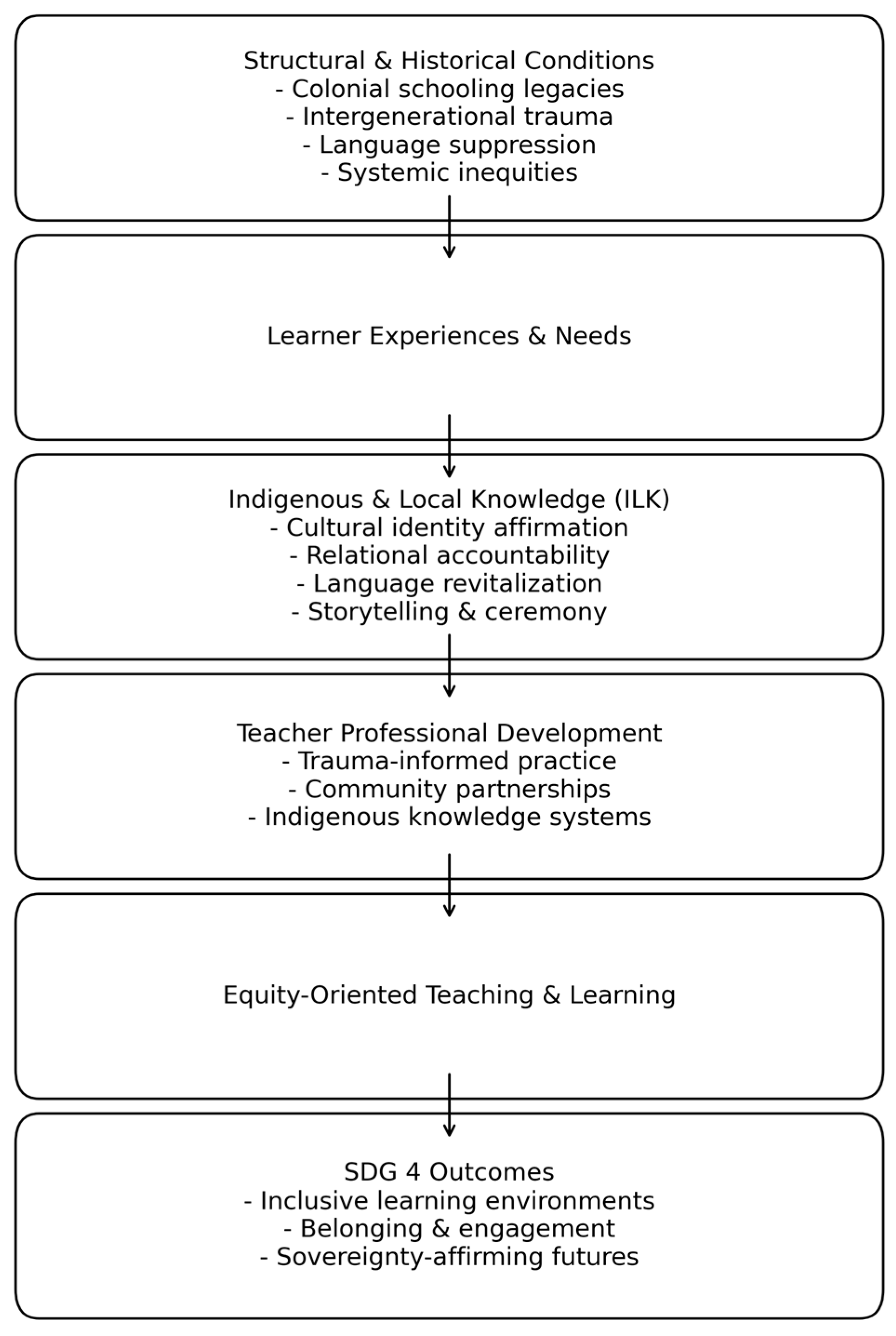
Together, these frameworks support analysis of how Indigenous-centered SEL is enacted through culturally grounded and relational educational practices while also illuminating tensions that emerge within systems shaped by standardization, accountability pressures, and colonial educational legacies. Within this integration, teacher professional development is conceptualized as a mediating mechanism that influences educators’ capacity to engage Indigenous knowledge systems, sustain community partnerships, and implement culturally responsive and healing-centered approaches to SEL.
Guided by this framework, the study examines how educators, Elders, and community practitioners conceptualize SEL, navigate structural tensions, and envision culturally sustaining educational practices aligned with Indigenous well-being and SDG.
4. Findings
The findings presented in this study emerged from two years of collaborative ethnographic engagement with Indigenous educators, Elders, cultural leaders, teachers, and community practitioners. In addition to the formal focus group discussions, the findings were enriched through extended audio-recorded conversations, community meetings, educator reflections, and collaborative dialogues centered on Indigenous education, social–emotional learning (SEL), educational justice, and decolonization. Across these conversations, participants consistently emphasized that Indigenous-centered SEL extends beyond individualized understandings of emotional regulation or behavioral competence. Instead, participants described SEL as fundamentally relational and deeply connected to identity, storytelling, land, collective well-being, healing, community accountability, cultural continuity, and self-determination.
Participants repeatedly linked Indigenous-centered SEL to broader goals associated with SDG 4, particularly equitable access to culturally sustaining education, inclusive learning environments, emotional well-being, community participation, and educational systems that affirm Indigenous identities and knowledge systems. The findings also revealed persistent tensions between Indigenous relational approaches to education and dominant educational structures shaped by standardization, coloniality, accountability mandates, and Eurocentric definitions of academic success.
4.1. Culturally Grounded Understandings of SEL
Participants consistently described SEL as inseparable from Indigenous identity, culture, relationships, spirituality, storytelling, and collective responsibility. Rather than framing SEL as a set of isolated individual competencies, participants conceptualized social–emotional well-being as a relational process rooted in kinship, reciprocity, community engagement, and cultural continuity.
Alina Red Horse explained:
Our children learn who they are through stories, through ceremonies, through the land, and through relationships with family and Elders. That is social–emotional learning for us. It is not separate from culture.
Participants emphasized that storytelling, talking circles, cultural ceremonies, and land-based learning function as mechanisms for emotional development, identity affirmation, and community connection. In one discussion, Sophia White Elk described storytelling as essential because “life is a story,” emphasizing that stories communicate emotional lessons, humor, resilience, and relational values across generations.
Talking circles were repeatedly identified as culturally grounded SEL practices that create emotionally safe and respectful environments where children learn listening, empathy, patience, and emotional expression. Grace Tall Pine described how students may only speak when holding a designated object, such as a speaking stick or toy, reinforcing communal respect and emotional attentiveness.
Participants also connected SEL to cultural pride and identity development. Several emphasized that Indigenous students thrive socially and emotionally when schools actively recognize and celebrate Indigenous identities. Emma Blue Bird discussed organizing a schoolwide Native American celebration involving storytelling from tribal Elders, a mini powwow, Native foods, and presentations on buffalo traditions to strengthen students’ cultural pride and emotional connection to their heritage.
Participants further emphasized that Indigenous-centered SEL is deeply connected to land and collective responsibility. Emotional wellness was described not as an individual achievement but as emerging through reciprocal relationships with family, ancestors, culture, and the natural world. Traditional Indigenous learning systems were described as historically grounded in children learning directly from community members, medicine people, hunters, artisans, and Elders through observation, participation, and relational mentorship rather than rigid institutional structures.
Mia Running Deer reflected:
Self-determination is a big part of education that’s missing right now, and I would love to see that reinstated again.
These findings suggest that Indigenous-centered SEL requires educational models that move beyond individualistic behavioral frameworks toward relational, culturally sustaining, and community-centered understandings of emotional well-being aligned with SDG 4’s emphasis on inclusive and equitable education.
Tensions and Contradictions
Although participants strongly valued culturally grounded SEL, they also described tensions between Indigenous relational approaches and dominant school structures. Several educators expressed concern that mainstream SEL programs remain grounded in Eurocentric assumptions emphasizing individualism, compliance, behavior management, and standardized outcomes.
Chloe Red Cedar explained:
A lot of SEL programs are still built around Western ideas of independence and behavior management. But our communities teach wellness through relationships, reciprocity, and collective care.
Participants also described contradictions between relational Indigenous educational approaches and highly standardized educational systems. Olivia Grey Wolf noted that schools often expect Indigenous children to adapt to rigid institutional structures rather than adapting educational approaches to meet students’ lived realities. This concern emerged through the story of a Native child experiencing severe emotional hardship who cried because library policies prevented him from checking out a book. The educator emphasized that flexibility and relational understanding—not rigid rule enforcement—were necessary to support the child emotionally and academically.
These tensions reveal how dominant educational systems often undermine Indigenous-centered SEL by privileging standardization, efficiency, and behavioral compliance over relational accountability, emotional healing, and cultural responsiveness.
Figure 1 illustrates the integrated conceptual framework guiding this study and demonstrates how Indigenous and Local Knowledge (ILK), Transformative Social and Emotional Learning (TSEL), Culturally Responsive Teaching (CRT), and SDG 4 intersect within Indigenous-centered educational contexts. The figure also reflects the relational and culturally grounded understandings of SEL that emerged across the findings themes.
4.2. Structural Barriers and Equity-Driven Strategies
Participants identified numerous structural barriers limiting the implementation of Indigenous-centered SEL within schools and educational systems. These barriers included standardized testing, inadequate teacher preparation, racism, underfunding, policy restrictions, limited Indigenous representation in curriculum, and the continued marginalization of Indigenous knowledge systems.
Participants repeatedly described how educational systems prioritize accountability metrics over relationships, emotional well-being, and culturally sustaining pedagogies. Marissa Little Hawk explained:
Schools say they care about SEL, but many still prioritize test scores over relationships, culture, and student well-being.
The discussions also highlighted broader systemic inequities affecting Indigenous communities, including historical trauma, educational mistrust, and institutional exclusion. Participants connected these inequities directly to colonial histories and assimilationist educational policies, particularly boarding school legacies and the suppression of Indigenous languages and knowledge systems.
At the same time, participants identified several interconnected equity-driven strategies that support Indigenous-centered SEL and help address the structural barriers described above. These strategies included culturally responsive teacher preparation, Indigenous community partnerships, land-based learning, talking circles and restorative justice practices, the inclusion of Indigenous histories and languages, family engagement initiatives, culturally relevant lesson planning, and sustained professional development grounded in Indigenous epistemologies.
Skylar Two Rivers stressed that educators working with Indigenous students must actively engage with communities outside of classroom spaces. She explained that teachers should attend ceremonies, life events, and community gatherings because “school is not the whole child’s environment.” Similarly, Elena Whitecloud emphasized that culturally responsive professional development must move beyond superficial diversity initiatives and instead support educators in understanding trauma, relational pedagogy, Indigenous sovereignty, community accountability, and culturally sustaining approaches to emotional development.
Several participants also discussed the importance of role models and inclusive school environments, particularly for Indigenous.
Bluebird, Maya Standing Water, Rachel Lone Hill, and Autumn Yellow Bird reinforced the importance of relational accountability, cultural continuity, and community-centered students with disabilities and special needs. Talia Running Bear emphasized that every child deserves emotional acknowledgment, care, and relational affirmation: “Every child deserves a hello. Every child deserves a positive emotional boost.”
Other participants, including Nina Red Feather, Kayla White Buffalo, Sage Morningstar, Lena Tall Pine, Aubrey Soft Rain, Danielle Black Elk, Cheyenne approaches to emotional learning.
Male participants, including Daniel White Elk, Joseph Red Cedar, Nathan Grey Wolf, Michael Iron Cloud, and Thomas Running Deer, similarly emphasized the importance of community trust, culturally sustaining pedagogy, and Indigenous self-determination within educational spaces.
Tensions and Contradictions
Participants described persistent contradictions between Indigenous educational priorities and state-controlled educational systems. Several discussions reflected frustration with external control over Indigenous education, particularly when state mandates undermine Indigenous community priorities, cultural programming, or diversity initiatives. Joseph Red Cedar noted: “We need to do it our way.” At the same time, participants acknowledged the practical reality that Indigenous education often remains financially and politically dependent upon state and federal systems. This created tensions between Indigenous self-determination and institutional dependency.
Participants also described tensions between culturally sustaining educational practices and rigid testing structures. Maya Standing Water explained that Indigenous students frequently receive little meaningful recognition from standardized assessments, contributing to disengagement and emotional disconnection from schooling. These contradictions reveal how educational systems often demand conformity to dominant standards while simultaneously expecting schools to address emotional wellness, inclusion, and equity. Participants suggested that Indigenous-centered SEL requires structural transformation rather than isolated classroom interventions alone.
Despite these challenges, participants identified several equity-driven strategies that can support the implementation of Indigenous-centered SEL and help address the systemic barriers discussed throughout this study. These strategies included:
Culturally responsive teacher preparation;
Indigenous community partnerships;
Land-based learning;
Talking circles and restorative justice practices;
Inclusion of Indigenous histories and languages;
Family engagement initiatives;
Culturally relevant lesson planning;
Sustained professional development grounded in Indigenous epistemologies.
Participants emphasized that these strategies must extend beyond classroom instruction and include meaningful engagement with Indigenous communities. One participant explained that educators should attend ceremonies, life events, and community gatherings because “school is not the whole child’s environment.” Others highlighted the importance of creating caring and inclusive environments that affirm students’ identities and emotional well-being. As one educator stated, “Every child deserves a hello. Every child deserves a positive emotional boost.”
Overall, these strategies reflect participants’ belief that Indigenous-centered SEL is most effective when supported by educational policies and practices that honor Indigenous knowledge systems, strengthen community relationships, and promote culturally sustaining approaches to teaching and learning.
4.3. Culture as Prevention and Healing
A major theme across the findings was the role of culture as prevention, healing, resilience, and emotional restoration. Participants consistently described cultural practices as protective factors that strengthen identity, belonging, emotional stability, and community connection. Aiyana Redbird explained, “Culture is medicine. When students know their songs, stories, language, and ceremonies, they feel grounded and connected.”
Participants repeatedly connected SEL to healing from intergenerational trauma associated with colonization, boarding schools, racism, cultural suppression, violence, and family disruption. Several discussions referenced identity trauma, language trauma, accountability trauma, and historical trauma as ongoing realities affecting Indigenous students and families. Daniel White Elk explained: “We have violence trauma, language trauma, identity trauma, and accountability trauma.”
Participants emphasized that culturally grounded SEL practices help rebuild emotional wellness by restoring connections to family, community, language, land, and spirituality. Restorative justice practices and talking circles were described as especially important because they create spaces where students feel heard, emotionally supported, and valued. For example, Leah Running Deer described a talking circle intervention involving a suicidal student who received immediate emotional support through the circle process. Participants emphasized that these relational interventions often have profound emotional and academic impacts because students feel acknowledged and emotionally safe.
Participants also highlighted the importance of community accountability and collective support systems in addressing trauma. Several discussions emphasized that healing cannot occur solely at the individual level because trauma itself is relational and intergenerational.
Tensions and Contradictions
Although participants described culture as healing, they also acknowledged tensions related to trauma, burnout, and emotional exhaustion within educational systems. Several educators reflected on the increasing emotional strain of teaching and the difficulty of sustaining culturally responsive and emotionally supportive work within under-resourced systems. One participant reflected: “It’s harder and harder to be a teacher to prioritize that as what you can throw your life into, because it throws it right back.” Participants also discussed contradictions between schools’ stated commitments to SEL and the lack of meaningful structural support for teachers, families, and students. Several educators noted that emotional healing work is often expected without adequate staffing, funding, training, or community support. These tensions suggest that Indigenous-centered SEL requires not only culturally grounded practices but also sustainable systems of care for educators, families, and communities themselves.
4.4. Schoolwide Conditions That Sustain Belonging and Identity
Participants emphasized that Indigenous-centered SEL requires broader schoolwide environments that support belonging, visibility, relational trust, and identity affirmation. Students must feel emotionally safe, culturally respected, and socially connected within school spaces.
Participants repeatedly highlighted the importance of inclusive environments where Indigenous students see themselves reflected positively through curriculum, school activities, relationships, and leadership structures. Mia Running Deer noted: “Belonging is not just about being included physically. Students need to feel seen, heard, respected, and connected.”
Schoolwide practices supporting belonging included:
Native celebrations and powwows;
Visible inclusion of Indigenous languages and symbols;
Restorative justice approaches;
Community mentorship;
Culturally responsive counseling;
Inclusion of Elders and community leaders;
Family-centered engagement opportunities.
Participants also stressed the importance of collective community support. One discussion proposed hosting monthly community gatherings in local halls, providing meals and honorariums to families as a way to rebuild trust and strengthen educational engagement.
Participants further emphasized that family disengagement from schools cannot be understood outside of historical trauma. Boarding school histories, cultural suppression, and institutional mistrust continue to shape many families’ relationships with educational systems today.
Tensions and Contradictions
Participants described contradictions between schools’ efforts to promote inclusion and the ongoing experiences of invisibility, racism, and institutional exclusion reported by Indigenous students and educators. Several participants acknowledged that although conditions have improved in some ways, many Indigenous students still experience marginalization within educational spaces.
At the same time, participants expressed cautious optimism and what several referred to as a “pedagogy of hope.” Educators noted increased openness to discussing racism, identity, trauma, and educational injustice compared to previous generations. One participant explained:
“I used to be invisible. Now I am visible.”
These tensions illustrate the coexistence of progress and ongoing inequity within Indigenous educational contexts. Participants acknowledged meaningful improvements while simultaneously emphasizing that educational justice remains incomplete.
4.5. Indigenous-Centered SEL and Alignment with SDG 4
Participants strongly connected Indigenous-centered SEL to broader goals associated with SDG 4, particularly inclusive education, equity, lifelong learning, emotional well-being, and culturally sustaining educational opportunities. Participants emphasized that educational success for Indigenous students cannot be separated from cultural sustainability, emotional wellness, community involvement, and self-determination. Sophia White Elk explained: “Education should help our students succeed without forcing them to leave behind who they are.”
Several discussions highlighted the importance of contextualized education, problem-based learning, self-determination, and informed citizenship as central to Indigenous-centered educational futures. Participants argued that schools should prepare students not only academically but also emotionally, relationally, culturally, and civically.
Participants also emphasized that SDG 4 requires educational systems to recognize Indigenous knowledge systems as legitimate and essential rather than supplemental or symbolic. Community-based educational initiatives, lifelong learning opportunities, and culturally grounded professional development were viewed as necessary for achieving equitable and sustainable education.
Tensions and Contradictions
Participants acknowledged significant tensions between the transformative goals associated with SDG 4 and the realities of existing educational systems. While schools increasingly adopt the language of equity, inclusion, and SEL, participants argued that many systems continue to reproduce colonial structures, emotional harm, and educational inequities.
Several participants called for educational “revolution,” “redefinition,” and “decolonization,” not necessarily through confrontation alone but through fundamentally rethinking the purposes, structures, and priorities of schooling. At the same time, participants expressed hope that change remains possible through collective action, community accountability, relational teaching, and Indigenous self-determination.
In sum, these findings demonstrate that Indigenous-centered SEL represents more than an instructional framework. Rather, it functions as a culturally sustaining, relational, healing-centered, and sovereignty-affirming approach to education aligned with SDG 4’s goals of inclusive, equitable, and quality education for all learners.
Table 1 summarizes the major themes, subthemes, tensions, and implications related to Indigenous-centered SEL and SDG 4 that emerged across the collaborative ethnographic findings.
5. Discussion
This study examined how educators working with Indigenous youth conceptualize and implement culturally grounded social–emotional learning (SEL) within Native-serving educational contexts. The findings indicate that SEL is understood not as a set of individual competencies, as framed in dominant models, but as a relational, culturally embedded, and place-based process grounded in Indigenous knowledge systems, community relationships, collective well-being, land-connected learning, and relational accountability. Interpreted through the integrated framework of Indigenous and Local Knowledge (ILK), Transformative Social and Emotional Learning (TSEL), Culturally Responsive Teaching (CRT), and Education for Sustainable Development (ESD)/SDG 4, the findings demonstrate how SEL becomes meaningful when situated within Indigenous epistemologies of relationality, identity, land, and responsibility. As summarized in
Table 1, participants’ perspectives reflected both the transformative possibilities and the structural tensions associated with implementing Indigenous-centered SEL within contemporary schooling systems.
Across all themes, participants emphasized that social–emotional development is inseparable from cultural identity, relational accountability, historical consciousness, community belonging, and collective responsibility. Ceremonial practices, storytelling, talking circles, kinship systems, restorative justice approaches, and land-based learning were consistently described as foundational to emotional resilience, healing, belonging, and identity formation. These findings align with ILK scholarship that situates well-being within relational networks connecting individuals, community, ancestors, and land.
Within this framework, ILK functions as the epistemological foundation of culturally grounded SEL, shaping how learning, identity, and emotional well-being are understood. TSEL is reflected in participants’ emphasis on belonging, identity affirmation, and collective responsibility, shifting SEL from individual skill acquisition toward relational and justice-oriented development.
At the pedagogical level, CRT emerges as the mechanism through which educators enact these principles in classrooms and school environments. Participants described relational pedagogy, storytelling, land-based learning, community mentorship, cultural celebrations, family engagement, and talking circles as essential practices for supporting Indigenous students’ emotional and academic development. However, participants also identified structural barriers that constrain implementation, including underfunding, standardized accountability systems, staffing shortages, professional burnout, and assimilationist policy structures. These conditions limit the enactment of relational and culturally sustaining SEL practices and reflect persistent tensions between dominant accountability regimes and Indigenous educational priorities.
Essentially, the findings also revealed tensions and contradictions within efforts to implement Indigenous-centered SEL. While participants emphasized healing, belonging, and relationality, they simultaneously described ongoing institutional pressures associated with standardization, rigid curriculum mandates, emotional exhaustion among educators, and limited structural support for culturally sustaining practices. Participants further noted tensions between Indigenous community-defined educational priorities and externally imposed accountability systems, particularly where standardized testing and policy mandates conflict with relational and land-connected approaches to learning.
Despite these constraints, educators described community-driven strategies that support culturally grounded SEL, including Elder engagement, family partnerships, land-based learning, culturally grounded celebrations, restorative justice practices, and locally defined approaches to well-being. These strategies demonstrate that SEL becomes transformative when grounded in Indigenous sovereignty and community-defined knowledge systems.
When viewed through the lens of SDG 4, the findings highlight a persistent gap between global commitments to equity and the lived realities of Indigenous communities. At the same time, they show that culturally grounded SEL mediated through relational teacher professional development offers a pathway for advancing equity, cultural continuity, educational justice, and emotionally sustaining learning environments.
6. Implications
The findings of this study carry several implications for educational practice, teacher preparation, and policy development. Importantly, these implications also extend beyond Native-serving educational contexts in the United States and contribute to broader Global North–Global South discussions about how curriculum, policy, and practice can be transformed to advance SDG 4 through culturally sustaining, community-based, relational, and decolonial approaches to education.
6.1. Implications for Teacher Education
The findings of this study highlight important implications for teacher education and professional development aimed at advancing culturally responsive social and emotional learning (SEL) and supporting the goals of Sustainable Development Goal 4 (SDG 4). Teacher preparation programs should move beyond technical or standardized SEL implementation and instead prepare educators to understand SEL within culturally grounded, relational, and healing-centered frameworks. This requires integrating Indigenous knowledge systems, historical perspectives on colonial schooling, intergenerational trauma, and community-based approaches to well-being into educator preparation.
Such preparation can help educators develop the cultural humility, relational awareness, reflexivity, and historical consciousness necessary to support Indigenous students effectively. The findings also suggest that teacher preparation should include training related to talking circles, restorative justice, land-based learning, family partnerships, and community engagement practices identified by participants as central to Indigenous-centered SEL.
Teacher professional development should also emphasize relational pedagogy, community engagement, and culturally sustaining instructional strategies. Participants in this study emphasized the importance of building trust with families and communities and recognizing the leading role of Elders and cultural mentors in supporting students’ emotional development. Integrating Indigenous and Local Knowledge (ILK), Transformative Social and Emotional Learning (TSEL), and Culturally Responsive Teaching (CRT) within teacher preparation and professional learning can strengthen educators’ capacity to design learning environments that affirm cultural identity, belonging, collective well-being, and emotional safety.
Notably, participants emphasized that culturally responsive professional development must move beyond one-time workshops toward sustained relational engagement with Indigenous communities. This finding aligns closely with the collaborative ethnographic nature of the study, which demonstrated the importance of prolonged community immersion, relational accountability, and reciprocal learning relationships.
These implications are particularly relevant to cross-contextual SDG 4 conversations in both the Global North and Global South, where teacher education increasingly requires approaches that move beyond universalized instructional models and instead respond to local histories, cultural knowledge systems, and community-defined educational priorities.
6.2. Implications for Educational Policy
The findings also highlight the need for policy frameworks that recognize culturally grounded social–emotional learning (SEL) as an essential component of educational equity. Participants’ experiences reveal tensions between accountability systems focused on standardized outcomes and educational practices that prioritize relational learning, cultural continuity, collective responsibility, healing, and community well-being.
Policymakers should therefore consider how accountability systems, funding structures, and curricular frameworks can better support culturally sustaining educational practices. Education policies aligned with the principles of Sustainable Development Goal 4 (SDG 4) should recognize Indigenous knowledge systems as legitimate foundations for teaching and learning rather than as supplementary cultural content.
Participants repeatedly emphasized that Indigenous-centered SEL requires structural flexibility, particularly for students navigating trauma, poverty, family instability, or emotional hardship. Policies grounded exclusively in rigid behavioral or testing frameworks may unintentionally undermine relational approaches to emotional support and educational engagement.
Sustained collaboration with tribal communities, Elders, and cultural knowledge holders is essential for developing SEL initiatives that are locally responsive, culturally sustaining, and equity-oriented. Such partnerships can strengthen both educational equity and cultural continuity while supporting inclusive educational systems.
More broadly, these findings contribute to Global South–Global North policy discussions by suggesting that equitable implementation of SDG 4 requires policy frameworks that move beyond standardized and universalized assumptions about educational quality. Instead, policies must be responsive to local contexts, historically grounded inequities, and community-defined priorities if curriculum, pedagogy, and schooling systems are to support genuinely transformative and sustainable educational futures.
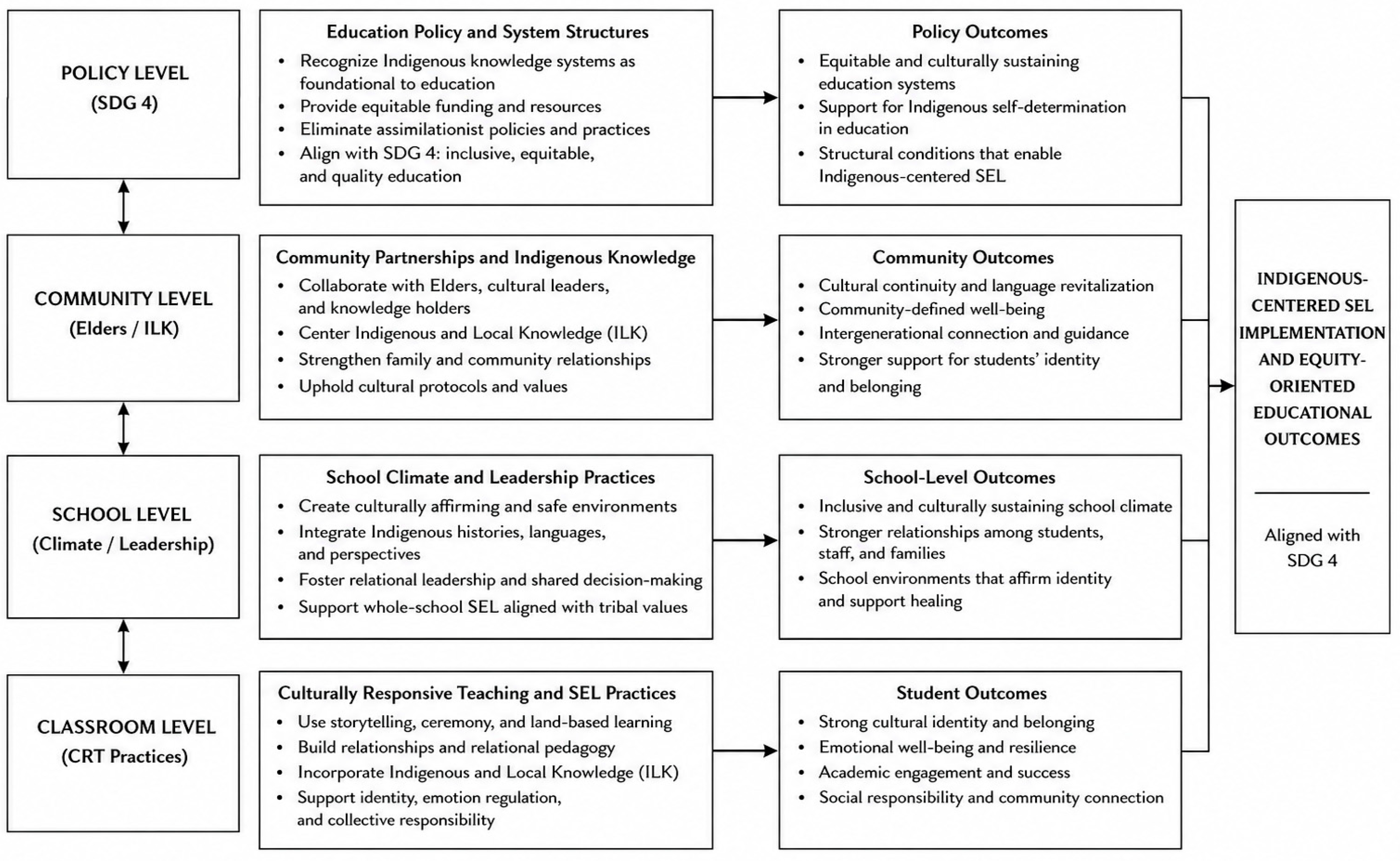
To further illustrate how these findings translate into actionable directions,
Figure 2 presents a multilevel framework for Indigenous-centered SEL implementation. By organizing these implications across multiple levels of the education system, the figure demonstrates how Indigenous-centered SEL can support more equitable, culturally sustaining, healing-centered, and contextually responsive implementation of Sustainable Development Goal 4 (SDG 4).
6.3. Implications for School Leadership and Educational Practice
The findings suggest that culturally grounded SEL requires transformation not only at the classroom level but across the broader institutional culture of schools. Participants emphasized that culturally responsive practice must extend beyond classroom instruction to shape the entire school environment. This includes creating physical and symbolic spaces that honor Indigenous languages, histories, cultural identities, and relational ways of knowing.
School leaders play a critical role in fostering such environments by supporting culturally sustaining curricula, encouraging community partnerships, and providing professional development opportunities that center Indigenous knowledge systems. Participants further emphasized the importance of creating emotionally safe and relationally supportive school cultures where Indigenous students feel visible, valued, and connected.
The findings additionally suggest that school leaders should prioritize restorative and relational approaches to discipline, strengthen family and community engagement, and support culturally grounded schoolwide practices such as talking circles, Native celebrations, mentorship programs, and Elder involvement. By embedding culturally grounded SEL within school culture and leadership practices, educational institutions can create learning environments that support both academic engagement and emotional well-being for Indigenous students.
More broadly, these findings underscore that advancing SDG 4 across diverse settings requires school leadership models that connect curriculum, school climate, emotional well-being, and community engagement in ways that are locally grounded, culturally sustaining, and responsive to historical and structural inequities.
7. Limitations and Directions for Future Research
While this study offers important insights into educators’ perspectives on culturally grounded SEL in Indigenous contexts, several limitations should be acknowledged. First, the study draws on narratives from a relatively small group of educators, Elders, cultural leaders, and community practitioners engaged across multiple collaborative focus group discussions over a two-year period. Although the collaborative ethnographic design and prolonged community engagement strengthened relational depth and contextual understanding, the findings may not represent the full diversity of perspectives across all Indigenous communities or tribal contexts.
Second, the study primarily reflects the perspectives of educators and community practitioners rather than those of students and families directly. Future research could expand these findings by examining how Indigenous students and families experience culturally grounded SEL practices within schools and community settings. In particular, centering the voices and lived experiences of Indigenous students represents an important priority for future research, as their perspectives can provide deeper insight into the ways culturally grounded SEL practices support identity development, well-being, belonging, and educational success.
Third, while the study incorporated reflexive dialogue and relational interpretation consistent with collaborative ethnography, formal member-checking processes with all participants were limited. Future research may further strengthen Indigenous-centered methodological approaches through expanded collaborative analysis and community review processes.
Finally, additional research is needed to explore how culturally grounded SEL initiatives are implemented across different educational contexts, including urban Indigenous schools, rural reservation communities, and cross-cultural educational partnerships. Comparative studies may further illuminate how Indigenous knowledge systems can inform broader educational reforms aimed at promoting equity, cultural sustainability, healing-centered education, and student well-being.
8. Conclusions
This study contributes to ongoing conversations about educational equity by suggesting that Indigenous-centered approaches to social–emotional learning (SEL) can support culturally sustaining, relational, healing-centered, and sovereignty-affirming models of education. The findings show that SEL is most meaningful when grounded in Indigenous and Local Knowledge (ILK), relational accountability, and community-defined understandings of well-being rather than universalized models of individual competency.
Participants emphasized that cultural identity, storytelling traditions, ceremonial practices, talking circles, land-based learning, family engagement, and community relationships are not peripheral to social–emotional development, but foundational to emotional resilience, belonging, healing, and collective well-being among Indigenous youth.
At the same time, the study reveals persistent structural barriers including underfunding, accountability pressures, staffing shortages, professional burnout, and assimilationist policy legacies that constrain the implementation of culturally sustaining SEL within contemporary schooling systems. Viewed through the integrated framework of ILK, Transformative Social and Emotional Learning (TSEL), Culturally Responsive Teaching (CRT), and Education for Sustainable Development/Sustainable Development Goal 4 (ESD/SDG 4), the findings underscore that advancing equitable education requires more than access alone; it also requires transforming the knowledge systems, pedagogies, relational structures, and institutional conditions that shape educational experience.
Crucially, the findings also reveal tensions and contradictions surrounding the implementation of Indigenous-centered SEL. Participants described ongoing negotiation between Indigenous relational approaches to education and dominant systems shaped by standardization, testing pressures, and colonial educational legacies. Despite these tensions, participants emphasized the importance of hope, collective responsibility, community accountability, and Indigenous self-determination in advancing more equitable educational futures.
Although grounded in Native-serving educational contexts in the United States, this study also contributes to broader Global South–Global North conversations central to this Special Issue. By centering Indigenous and Local Knowledge, the study highlights how curriculum, policy, teacher professional development, and school leadership can be reimagined through community-based, culturally sustaining, relational, and decolonial approaches that advance more just, context-responsive, and sustainable educational futures across diverse settings.