Systematic Review

Blended Learning Design in Higher Education: A Systematic Review Through TPACK and AI Role Perspectives (2020–2025)

School of Computing, Eastern Institute of Technology, Hawke’s Bay, Napier 4112, New Zealand
*
Authors to whom correspondence should be addressed.
Educ. Sci. 2026, 16(6), 848; https://doi.org/10.3390/educsci16060848
Submission received: 15 February 2026 / Revised: 14 May 2026 / Accepted: 21 May 2026 / Published: 28 May 2026

Abstract

This systematic literature review (SLR) examines the evolving nature of blended learning (BL) in higher education from 2020 to 2025. While BL is widely promoted for its flexibility, accessibility, and inclusivity, its practical application is uneven. This review integrated findings from 63 peer-reviewed studies obtained from five major academic databases and employed the PRISMA 2020 protocol to ensure methodological transparency and research quality. Findings were analysed using the Technological Pedagogical Content Knowledge (TPACK) model and the AI Roles Framework to assess instructional design and technology integration. This analysis was conducted through a thematic approach to identify recurring patterns and key insights across the literature on BL and the use of emerging technologies such as AI, AR/VR, and learning analytics within BL. The study identifies three main challenges. There is an excessive application of tool-centric models such as TAM and UTAUT. Engagement with educators, administrators, and under-represented learners is limited. Ethical considerations related to the use of AI, AR/VR, and learning analytics are often overlooked. The most common issue is the higher dependence on models such as TAM and UTAUT. The review also shows that many educational applications reproduce similar design patterns and content structures, while insufficiently responding to learner diversity, digital readiness, accessibility needs, self-regulation capacity, and disciplinary context. While these models are helpful, they frequently limit complex teaching and learning environments to simple patterns of user behaviour. It is also clear that voices from teachers, support staff, and less-represented student groups are missing from the discussion. This is considered a serious concern because these technologies are increasingly being used in education. Moving forward, there is a clear need to shift away from rigid, technology-led models toward more adaptive, pedagogy-focused approaches. These findings contribute to a deeper understanding of blended learning as an interconnected educational system. They also offer implications for future research, inclusive digital pedagogy, and policy development in higher education.

1. Introduction

1.1. Research Background

Blended learning has gained recognition as an innovative and impactful educational model by merging in-person instruction with digital platforms. The hybrid nature of blended learning makes it a valuable approach for improving accessibility and engagement (Aravind, 2024). However, its practical outcomes are inconsistent and often vary depending on the learning environment (Bokolo et al., 2022). The integration of LMS, AI, cloud platforms, and analytics tools has significantly improved the functionality of blended learning environments (see Figure 1). Furthermore, technologies such as AR and VR are increasingly used to create more engaging and immersive learning experiences for students (Almeman et al., 2025). Nonetheless, these advances frequently benefit well-resourced institutions disproportionately, raising concerns about digital equity and inclusive access (Sareen & Mandal, 2024). There is also a continuing debate as to whether such technologies genuinely improve learning outcomes or, instead, introduce additional complexity (Bearman et al., 2023). This concern aligns with recent critiques that blended learning technologies can become fragmented when they are not clearly connected to instructional goals, learner needs, and institutional readiness (Bearman et al., 2023; Bokolo et al., 2022; Sareen & Mandal, 2024). When learner differences are not considered, including readiness, motivation, accessibility needs, learning preferences, and self-regulation skills, blended learning may become tool-rich but learner-poor.
Popular pedagogical formats, such as flipped classrooms and hybrid courses, are gaining traction; however, their scalability across diverse educational settings remains uncertain. Furthermore, much of the literature focuses on Western higher education contexts, neglecting the unique challenges faced in under-represented regions or among non-traditional learners. Implementation success is often influenced by factors such as institutional support, staff training, digital competence, and societal attitudes toward online learning (Bokolo et al., 2022). Despite an expanding body of research, a pressing need remains to evaluate global trends in blended learning using a critical, evidence-based, and theoretically grounded approach.
Although recent reviews have examined blended learning adoption, global barriers, and the role of AI in blended learning, the present review makes a different contribution by integrating these strands through a combined instructional design and AI-role perspective. Bokolo et al. (2022) provide a broad account of blended learning adoption and implementation, Sareen and Mandal (2024) examine barriers across Global North and Global South contexts, and Park and Doo (2024) focus specifically on AI in blended learning. However, these reviews do not jointly examine how blended learning design is shaped by the interaction between pedagogical knowledge, technology integration, learner diversity, and the emerging instructional roles of AI. This review addresses that gap by using TPACK and the AI Roles Framework as interpretive lenses to examine whether blended learning technologies are pedagogically coherent, adaptive to learner needs, and institutionally sustainable.
Therefore, the originality of this review lies in re-reading the recent evidence through a combined design-oriented and AI-role lens. This enables the review to identify a specific gap in the literature, the tendency to discuss digital tools, AI, AR/VR, and learning analytics without sufficiently examining whether these technologies support adaptive, learner-sensitive, and pedagogically authentic blended learning. In this sense, the review moves beyond a general mapping of blended learning benefits and barriers toward a focused synthesis of instructional design, technology integration, learner uniqueness, and institutional readiness.

1.2. Research Motivation, Gaps, and Objectives

This study is motivated by the need to systematically evaluate the pedagogical coherence, institutional complexity, and ethical dimensions of blended learning. The main landmark or guiding articles (e.g., Bokolo et al., 2022; Sareen & Mandal, 2024; Park & Doo, 2024) highlight persistent issues, including digital inequity, inadequate training, and the rigid application of theoretical models. A global and inclusive perspective is primarily needed to understand how blended learning functions across diverse settings, particularly under-resourced institutions and marginalised learner populations. To address these challenges, the study identifies the following key research gaps, which build on the contextual and technological issues as follows:
  • Limited theoretical integration, where many studies over-rely on deterministic models such as TAM, UTAUT, or CoI, which offer little insight into pedagogical alignment, learning design, or contextual adaptability. There is insufficient use of adaptive and pedagogically grounded frameworks, such as TPACK and the AI Roles Framework, which reflect the dynamic interplay between teaching, technology, and content.
  • Overemphasis on student perspectives in which research primarily emphasises students’ experiences using cross-sectional designs. The perspectives of educators, institutional leaders, and instructional designers remain insufficiently examined, leading to a limited understanding of systemic facilitators and barriers. Insufficient Pedagogical Framing of Technologies: While AI, AR/VR, and analytics are frequently emphasised, their implementation often lacks instructional coherence. Ethical concerns such as data privacy, algorithmic bias, and transparency are seldom addressed.
  • Digital equity, contextual blind spots and institutional readiness gaps because the blended learning literature remains focused on high-income contexts, while experiences in emerging regions, non-traditional learning communities or low-resource environments are under-represented. Additionally, key organisational factors such as leadership support, change management, digital capacity-building, and organisational culture are often overlooked despite their critical role in sustaining blended learning initiatives.
  • In response to these gaps, this study conducts a systematic literature review of 63 peer-reviewed articles (2020–2025), guided by two key frameworks:
  • The Technological Pedagogical Content Knowledge (TPACK) model (Mishra & Koehler, 2006), which has also been applied in recent blended learning research, including Nantha et al. (2024), to analyse how technology is integrated into pedagogical practice and instructional design.
  • The AI Roles Framework (Park & Doo, 2024), to examine how AI functions as a mediator, assistant, or pedagogical agent in blended settings, while considering ethical and contextual implications.
  • Many blended learning studies focus on technology adoption, satisfaction, or platform use but give less attention to learner uniqueness. Learners differ in digital competence, motivation, accessibility needs, self-regulation capacity, cultural context, and disciplinary expectations. Prior studies have shown that blended learning outcomes depend strongly on instructional design, learner readiness, and contextual support rather than technology use alone (Al-Adwan et al., 2023; Armellini et al., 2021; Islam et al., 2022). Without a clear needs analysis, blended learning risks becoming a rigid delivery model rather than an adaptive learning design.
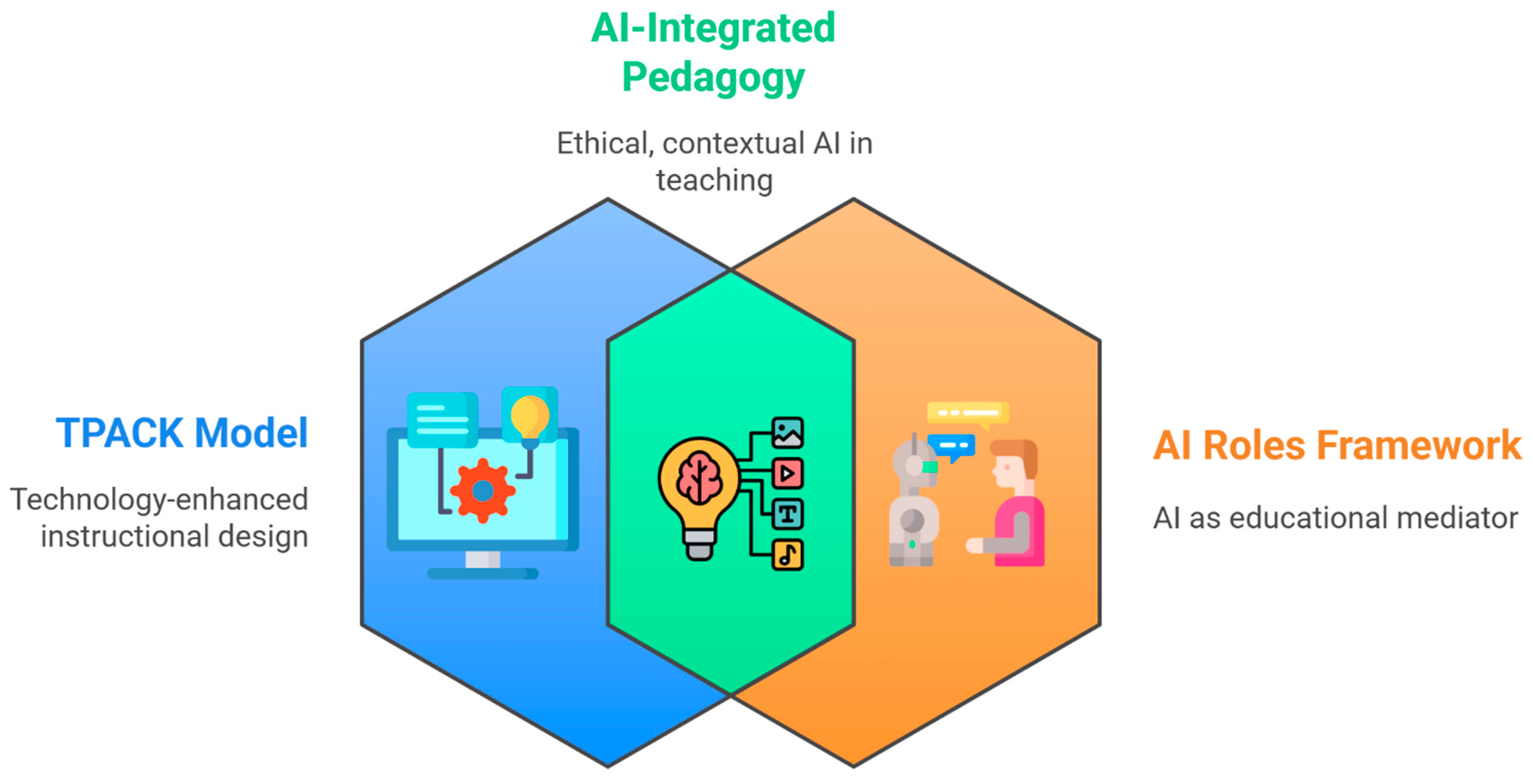
Together, these frameworks facilitate a more complex, adaptive, and inclusive understanding of blended learning. This study contributes to both theoretical advancement and practical innovation by informing future directions in higher education policy, technology integration, and digital inclusion (see Figure 2).
The purpose of this study is to critically examine the existing landscape and future directions of blended learning (BL) in higher education by synthesising recent empirical and conceptual literature via a systematic review. These objectives directly address the identified gaps and lay the foundation for the significance dimensions detailed in the contribution. Thus, the main goals of this study are:
  • Analyse the current practices, benefits, and challenges of blended learning in higher education.
  • Investigate how emerging technologies such as AI, AR, and learning analytics are changing blended learning environments.
  • Identify theoretical, pedagogical, and institutional gaps in existing blended learning research.
  • Present actionable insights for educators, institutions, and institutional leaders on improving blended learning implementation through adaptive, learner-centred, and pedagogically authentic design, consistent with the need for stronger alignment between technology, pedagogy, and learner diversity (Mishra & Koehler, 2006; Nantha et al., 2024).
The following research questions investigate these objectives:
What is the present state of blended learning in higher education in terms of technologies, advantages, and challenges?
How are emerging technologies such as AI, AR, VR, and learning analytics influencing the evolving landscape of blended learning in higher education?
This study’s contributions are guided by the Technological Pedagogical Content Knowledge (TPACK) model (Mishra & Koehler, 2006) and the AI Roles Framework (Park & Doo, 2024). Together, these frameworks provide a comprehensive foundation for evaluating blended learning in higher education. The significance of this study is stated in four dimensions. Theoretical, managerial, social, and pedagogical.
Theoretical contributions-wise, this study examines how blended learning can be further developed by critically analysing widely used models, such as the Technology Acceptance Model (TAM) and the Unified Theory of Acceptance and Use of Technology (UTAUT). Although these frameworks have played a crucial role in shaping research, they often adopt a narrow, user-focused perspective on technology and overlook the impact of teaching goals and learning environments on outcomes. To address these gaps, the study employs the TPACK framework to examine how digital tools are utilised in ways that support both pedagogy and subject content across various educational settings. It also draws on the AI Roles Framework, which identifies AI as a mediator, assistant, or teaching agent. This lens enables a more thoughtful and ethically informed understanding of how AI can support learning. These perspectives better reflect the realities of AI-integrated classrooms, moving beyond the limitations of TAM’s static focus on behavioural intention. Furthermore, this study promotes better correspondence with principles from learning sciences, such as cognitive theory, metacognitive strategies, and self-regulated learning. It reduces the theory-to-practice gap by promoting models that actively guide design and practice.
Beyond its theoretical contributions, this study offers practical value to institutional leaders. This study provides evidence-based guidance for improving the implementation of blended learning. It identifies a critical disconnect between administrative systems and instructional technologies termed dual digitalisation and emphasises the need for strategic alignment across digital infrastructure, leadership, and teaching practice. The findings demonstrate the role of digital leadership, professional development, and structured change management frameworks in fostering faculty readiness and sustainability. The study also recommends the inclusion of long-term cost-effectiveness and the sustainable deployment of blended learning infrastructure, particularly in resource-constrained environments.
This study also addresses the global challenge of digital equity by highlighting that most blended learning research remains predominantly situated within high-income Western contexts. It critiques this imbalance and calls for more context-sensitive research that represents diverse geographical, socio-economic, and learner backgrounds, including non-traditional students. It emphasises culturally responsive design and inclusive innovation that supports education continuity in times of crisis, such as during pandemics or natural disasters.
This study evaluates learner-centred strategies such as flipped learning. These approaches are shown to enhance critical thinking, autonomy, and engagement, predominantly when guided by TPACK-informed instructional design. The research also highlights the need for educators to be digitally pedagogically ready and to employ inclusive teaching methods that adapt to learner diversity. It advocates for the broader application of blended learning, extending beyond STEM into the humanities and professional disciplines, where interpretive and dialogic methods are prevalent.

2. Research Methodology

2.1. Systematic Literature Review Process

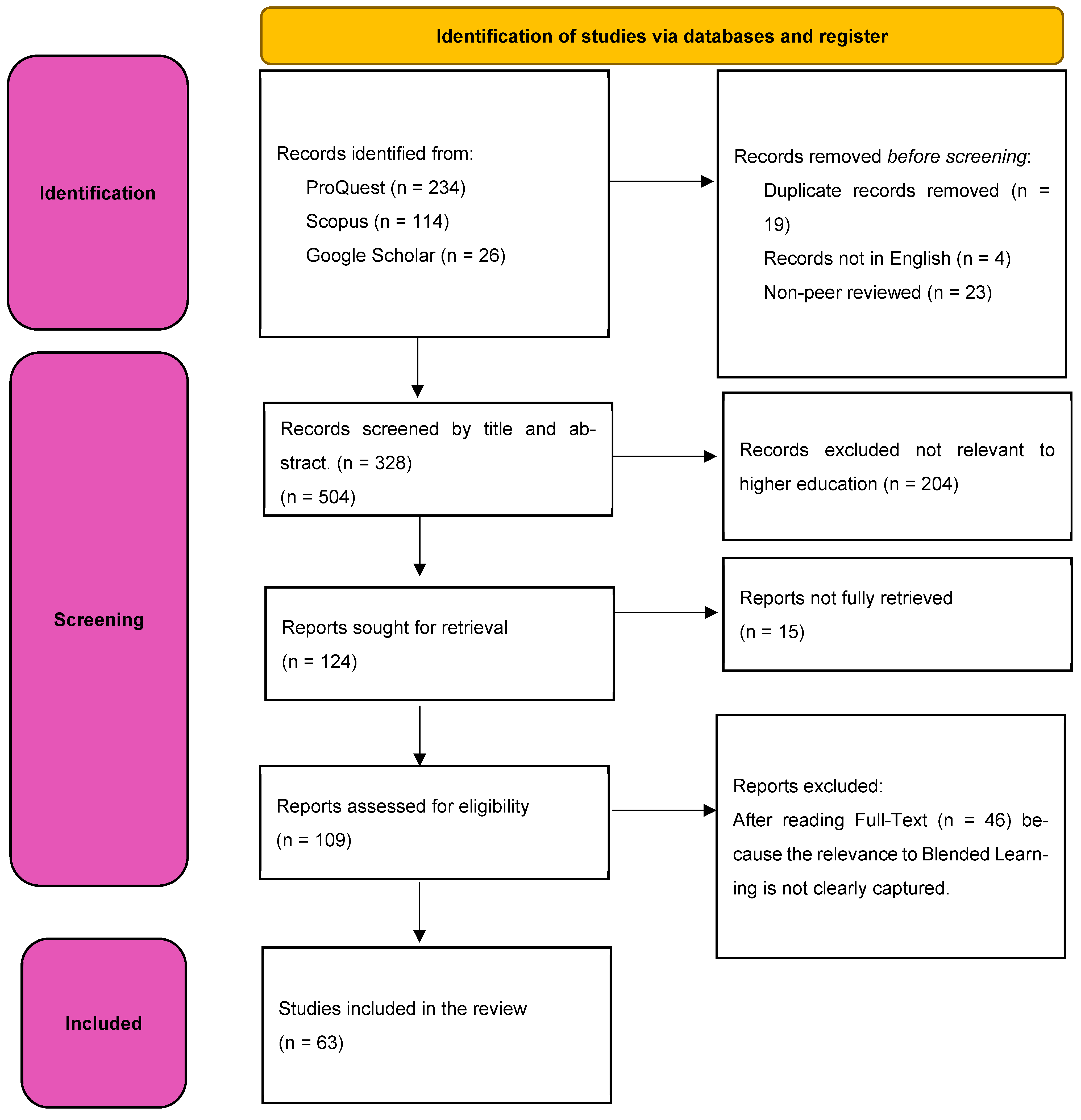
The systematic literature review was chosen due to its ability to interact with complex study areas in an organised way. SLRs follow a repeatable methodology to enhance validity and lower bias (Ashraf et al., 2022). This is particularly helpful when integrating rapidly evolving technologies, such as AI, AR, and VR. SLR is especially suited to address the research questions to explore the existing situation and the future of BL. This study examines recent developments in blended learning by evaluating practical and theoretical research from 2020 to 2025 (Bokolo et al., 2022). It also highlights the impact of global disruptions, such as the COVID-19 pandemic, on the education sector. The approach also allowed for in-depth examination of institutional readiness, digital equity issues, learner experiences and efficiency in educational technologies. This systematic review was reported in accordance with the PRISMA 2020 guidelines (Page et al., 2021). The completed PRISMA flow diagram is presented in Figure 3. Thematic analysis enabled a deeper examination of the literature while preserving its contextual richness. Thus, the SLR not only gathers knowledge but also highlights assumptions and boundaries and guides future policy and practice. Lastly, a review protocol (objectives, eligibility criteria, databases, search strategy, screening, and data extraction plan) was developed prior to screening and applied consistently. The full search strings and screening criteria are provided in Table A1 (Appendix A).

2.1.1. Key Terms

This research uses key terms which are important and commonly found in existing literature. Search terms were chosen by considering both the topic’s meaning and the subjects. Terms such as “Blended Learning”, “Higher Education”, “University”, “College”, “Emerging technology”, “Digital tools”, “Learning Management Systems (LMS)”, “AI in Education”, “AR”,” VR”, “Enhanced Learning”, “Challenges”, “Benefits”,” Future” and “Advantages” were carefully chosen by focussing on the main topic. To represent the dynamic characteristic of BL, the words “emerging technology” and “educational structures” were highlighted. Results were refined using Boolean operators such as “AND” and “OR”, as well as filters like “peer-reviewed”, “English”, and “date range”.

2.1.2. Search Strategy

A broad and focused search strategy was carefully designed. Multiple databases, including ProQuest, Scopus, IEEE Xplore, SpringerLink, and Google Scholar, were searched. Boolean operators and specific search terms were employed to enhance relevance and minimise overlap in the results. These databases were accessed via the Eastern Institute of Technology (EIT)’s online library system. Boolean operators such as “AND” and “OR” were used to refine search outputs. For example, “blended learning” AND “higher education” were combined with terms like “AI,” “AR,” “VR,” or “emerging technologies” to obtain targeted results. Filters were used to narrow down search results. Peer-reviewed scientific journals with full-text access, English language, and publication dates between 2020 and 2025.

2.1.3. Eligibility Criteria (Inclusion and Exclusion)

Clear rules were established to select the research and maintain focus. It ensured the review was focused and closely related to the study topic, as listed in Table 1.

2.1.4. Screening and Selection

The screening process was carried out in two phases. First, the titles and abstracts were checked for relevance. Any unclear or uncertain research was double-checked using the inclusion criteria. This procedure is documented using a PRISMA flow diagram to improve openness (see Figure 3). The screening highlighted that many BL studies had a narrow technological focus. This highlighted the need for more research with multiple stakeholders.
The screening, selection, and data extraction processes were conducted by a single reviewer following a predefined protocol. Titles and abstracts were first screened, followed by full-text assessment of potentially relevant studies. To improve consistency and reduce bias, the inclusion and exclusion criteria were applied iteratively, and ambiguous cases were revisited to ensure alignment with the review scope. Although inter-rater reliability was not applicable due to the single-reviewer design, methodological rigour was supported through structured coding procedures, transparent documentation, and consistent application of the analytical framework.

2.2. Data Analysis Technique

The data analysis was conducted using a thematic analysis approach. The TPACK model was used as an interpretive framework to examine whether the reviewed studies connected technology use with pedagogical strategy and disciplinary content knowledge. The AI Roles Framework was used to analyse how AI was positioned within blended learning environments, including whether it functioned as a mediator, assistant, or pedagogical agent.
After extracting key information from 63 peer-reviewed studies, themes were manually coded and sorted using Microsoft Excel. It was easy to identify common patterns, gaps, and emerging trends using Excel. This approach enabled the classification of findings across pedagogical, technological, institutional, and ethical dimensions. Particular attention was also given to evidence related to learner diversity, needs analysis, adaptive pedagogy, accessibility, and the extent to which digital tools were integrated as meaningful learning supports rather than as isolated technological additions. This analytical focus was informed by TPACK, which emphasises the interaction between technology, pedagogy, and content, and by emerging work on AI roles in blended learning environments (Mishra & Koehler, 2006; Park & Doo, 2024).
The thematic synthesis followed three stages. First, descriptive information was extracted from each study, including publication year, method, technology focus, educational context, stakeholder group, and key findings. Second, open coding was used to identify recurring issues such as learner engagement, institutional readiness, AI-supported feedback, digital equity, and ethical concerns. Third, the codes were reorganised using TPACK and the AI Roles Framework. TPACK guided the interpretation of whether the studies addressed technology knowledge, pedagogical knowledge, content knowledge, or their intersections. The AI Roles Framework guided the classification of AI as a mediator, assistant, or pedagogical agent. This process enabled the review to move beyond thematic aggregation toward analytical synthesis.
For the reasons mentioned above, the TPACK and AI Roles frameworks function as analytical tools rather than conceptual references; the themes identified during the coding process were mapped to the relevant domains of TPACK and the classifications of the AI Roles Framework. This mapping enabled a structured interpretation of how blended learning studies conceptualise the relationship between pedagogy, technology, and artificial intelligence. Table 2 presents this analytical alignment, illustrating how each major theme contributes to understanding the pedagogical integration and functional positioning of digital technologies in blended learning environments.

3. Literature Review Summary

Three studies were initially selected as guiding studies due to their essential theoretical contributions and impact on blended learning research.
The study “Blended Learning Adoption and Implementation in Higher Education” by Bokolo, Kamaludin, Romli, Mat Raffei, Nincarean, Abdullah, and Ming was selected due to its thorough and critical analysis of blended learning adoption from different stakeholder perspectives, its incorporation of key theoretical models, and valuable insights into both current practices and emerging technological trends in higher education. It examines not only the context of BL from 2004 to 2020 but also analyses its changing acceptance among stakeholders, including students, lecturers, and administrators. The review employs a five-phase analytical structure that incorporates strict inclusion/exclusion criteria and quality evaluation, drawing on 94 peer-reviewed publications from central databases, including ScienceDirect, Springer, IEEE, Sage, and Taylor & Francis. Unlike much of the previous material, which tends to isolate either student or lecturer viewpoints, this approach provides a comprehensive overview. Bokolo et al. use a multidimensional approach, highlighting significant systemic interdependence in BL uptake. The study’s findings highlight that technologies such as Moodle, Blackboard, Web 2.0 applications, and video conferencing are frequently utilised. However, their effectiveness varies depending on the context. The author highlights that although BL is recognised for increasing student autonomy, flexibility, and engagement, these benefits are not consistently achieved. The study also emphasises that structural constraints such as insufficient institutional boundaries, varying digital proficiency among teachers, and inadequate administrative support significantly limit scale adoption. The review’s findings highlight the potential for future technologies, such as AI, virtual simulations, and learning analytics, to transform BL ecosystems. However, the authors argue these innovations risk worsening rather than addressing existing inequities without standardised institutional procedures and long-term empirical validation. A significant contribution of the study is its comprehensive overview of key theories that explain the adoption of blended learning. These include TAM, UTAUT, DoI, and the Information System Success Model, each offering unique perspectives on BL’s socio-technical dynamics. Bokolo et al. caution against overly deterministic applications of these models, indicating that cultural, institutional, and infrastructural factors require more contextualised interpretations.
Secondly, the study “Challenges of Blended Learning in Higher Education Across Global North–South” by Sareen and Mandal (2024) was particularly noted, as it provides a critically informed hybrid review that contributes significantly to the study on BL in higher education. By combining systematic and integrative approaches, this study analyses 39 peer-reviewed articles published between 2000 and 2023, providing a comprehensive overview of the current state and evolution of blended learning. The authors construct a comprehensive 16-factor barriers model grounded in the Community of Inquiry (CoI) framework. This approach highlights a wide range of challenges that affect students, instructors, and administrators, including inadequate ICT infrastructure and digital literacy gaps, pedagogical misalignments, and institutional stagnation. A critical insight is that 83% of these barriers emerge in online environments, highlighting the limitations of current BL implementation and its failure to provide flexibility, engagement, and learner autonomy consistently. The study presents a re-conceptualisation of BL through a 12-factor framework, incorporating emerging modalities such as flipped learning, MOOCs, hybrid formats, and the integration of social media tools. This expanded definition is essential to addressing post-pandemic transformation in higher education. What makes this study particularly interesting to this paper is its global lens: it contrasts the infrastructural and design-related issues prevalent in the Global South with psychological and pedagogical constraints found in the Global North. These findings strongly reflect the social significance outlined by emphasising equity, regional disparities, and the imperative for inclusive educational reform.
Thirdly, Park and Doo’s (2024) study “Role of AI in Blended Learning: A Systematic Literature Review” was selected, as it offers an in-depth exploration of artificial intelligence’s role in advancing blended learning environments. They specifically emphasise improving engagement, feedback, and learner autonomy. Drawing on 30 empirical studies published between 2007 and 2023, the authors analyse how AI supports or constrains blended learning practices using Boelens et al.’s (2017) framework on BL challenges and Xu and Ouyang’s (2022) typology of AI roles in education. The study reveals that AI applications help resolve core BL challenges, particularly those related to learner self-regulation, real-time feedback, and asynchronous learning. AI tools such as adaptive tutoring systems and analytics dashboards help personalise instruction and support learner autonomy. However, the study also identifies persisting limitations in integrating AI to bridge the gap between online and offline components of BL, indicating that the current state of AI-enhanced BL remains fragmented and underdeveloped. Furthermore, the study offers a layered understanding of AI’s anticipated impact on blended learning, categorising its functions into three distinct roles. Direct mediators (chatbots and tutoring systems), supplemental aides (feedback generators and analytics tools), and instructional subjects themselves.
Together, these three studies provide a strong theoretical base for the core themes explored in this research. Their theoretical critiques, empirical diversity, and global relevance present the state of BL in higher education and show how technologies like AI and immersive media are reshaping teaching practices. These works also reflect the conceptual and methodological issues, particularly those related to inclusivity, adaptability, and the alignment between theory and practice.
The remaining literature that has been screened and selected is reviewed and synthesised, starting in Sections Theories and Theoretical Models in Previous Research, and analysed in depth throughout Findings.

Theories and Theoretical Models in Previous Research

The theoretical aspect of blended learning research covers teaching practices, technology acceptance, and institutional integration. The Community of Inquiry (CoI) is a key model that defines meaningful learning as the overlap of cognitive, social, and teaching presence (Bokolo et al., 2022). Research has confirmed its usefulness in understanding online and blended learning, particularly in relation to global challenges and instructional design strategies (Sareen & Mandal, 2024; Graham et al., 2023). Alongside CoI, the Technology Acceptance Model (TAM) and the Unified Theory of Acceptance and Use of Technology (UTAUT) are still commonly used to study the adoption of digital tools in blended learning settings (Bokolo et al., 2022; Al-Adwan et al., 2023). Although these models help understand user behaviour, they often need to be adjusted to better align with teaching goals and the challenges of instructional design. New technologies, especially AI, have strengthened the theories in this field. The AI Roles Framework (Xu & Ouyang, 2022) describes AI as a mediator, assistant, or teaching agent, with each role supporting learning through personalisation, feedback, and automation. This framework has been utilised in recent systematic reviews (Park & Doo, 2024), underscoring AI’s growing role in teaching and learning. The Integrated and Distributed Blended Learning Model (Istenic, 2024) advances the discussion by examining how traditional, online, and self-directed learning come together. It emphasises flexibility, inclusivity, and student agency in post-pandemic education. Similarly, Sareen and Mandal’s (2024) Barriers Model, based on the CoI framework, identifies 16 significant challenges ranging from infrastructure issues to lack of engagement, providing a global tool for understanding gaps in implementation. Additionally, the TPACK framework, originally developed by Mishra and Koehler (2006), helps evaluate the integration of technology, teaching methods, and subject knowledge. Recent blended learning studies, including Nantha et al. (2024), demonstrate how TPACK can be operationalised within specific blended learning models rather than serving as a general theory of technology adoption. Its relevance lies in encouraging flexible, learner-focused design that supports both the exploration of theory and the use of technology in education. Together, these models provide a strong framework for analysing the changing landscape of blended learning. These models consolidate findings, facilitate comparisons between studies, and inform planning for future educational approaches. The definition of concepts used in this study is provided in Table A2 (Appendix A).
The findings are presented in the next section as analytical themes rather than as a sequential summary of individual studies. Each theme is interpreted through the dual framework of TPACK and AI Roles to identify not only what the literature reports but also how blended learning is theoretically framed, how technologies are pedagogically justified, and where evidence remains limited or contradictory.

4. Findings

Blended learning has strong potential to enhance higher education by providing increased instructional flexibility, greater learner autonomy, and higher engagement. Well-established institutions have effectively implemented blended learning, whereas many smaller or less-resourced institutions continue to be challenged by limited technology, staff resistance, and unclear policies. The uneven implementation of blended learning is often linked to inadequate infrastructure, insufficient professional development, and unclear strategic guidance. This study identifies the critical themes that can support more inclusive, adaptive, and future-ready adoption of blended learning, especially in contexts marked by institutional unpreparedness and limited inclusivity.
The primary themes emerging from this study are pedagogical design and experience, technology integration and infrastructure, AI and immersive technologies in learning, assessment, feedback, and analysis, as well as challenges and barriers. Recent studies highlight the potential of blended learning to foster pedagogical innovation. Kang and Kim (2021) find that flipped classrooms encourage shifts in teaching strategies. Feng (2023) demonstrates that blended learning fosters flexibility and accommodates diverse student needs.

4.1. Pedagogical Design and Learner Experience

4.1.1. Instructional Design Models

Research-based teaching methods enhance learning outcomes in blended learning settings. The Community of Inquiry (CoI) model helps students learn by encouraging reflection, teamwork, and guided teaching through cognitive, teaching, and social presence (Bokolo et al., 2022). Similarly, the flipped classroom approach supports learner independence by shifting content learning to before class. It uses class time for interactive, higher-level tasks, which leads to measurable improvements in learning outcomes (Kang & Kim, 2021). When combined, these models form a flexible teaching system that can be tailored to various subjects. Instructional designs often integrate models such as CoI, BOPPPS, and flipped learning to enhance student engagement, support metacognitive development, and ensure a coherent flow in teaching (Li et al., 2024). However, there are some challenges in applying these models effectively. Models like CoI have been criticised for limited responsiveness in low-resourced or diverse cultural contexts (Ashraf et al., 2022). This highlights the need for teaching approaches that are more responsive to different contexts (Ashraf et al., 2022). Higher education is shifting from teacher-led methods to learner-centred approaches that emphasise collaboration, inquiry, and reflective practice. The integration of flexible, theory-informed instructional models remains central to building sustainable and inclusive blended learning environments (Tran-Thi-Thanh, 2024).
The findings also indicate that learner uniqueness is not sufficiently addressed in many blended learning designs. Although blended learning is frequently promoted as flexible and inclusive, flexibility alone does not guarantee meaningful adaptation. Learners enter blended environments with different levels of digital confidence, language ability, prior knowledge, motivation, accessibility needs, and self-regulation skills. Previous research suggests that blended learning is most effective when online and face-to-face components are intentionally aligned with learner needs, feedback processes, and active learning strategies (Armellini et al., 2021; Kang & Kim, 2021; Li et al., 2024). Therefore, effective blended learning should begin with learner-needs analysis rather than with the selection of applications or platforms. This supports a shift from standardised tool delivery to adaptive instructional design, where technologies are selected and configured according to learner profiles, learning goals, and contextual constraints.

4.1.2. Student Engagement and Motivation Strategies

Blended learning encourages cognitive, behavioural, and emotional engagement by supporting learner independence, group activities, and tailored feedback. These elements are consistently associated with higher levels of student motivation and satisfaction (Alsalhi et al., 2021). Tools such as formative quizzes, video-based learning, and discussion forums help foster peer connection and promote learner independence. Personalised feedback, particularly when facilitated by AI, provides nuanced insights into performance and supports self-efficacy (Park & Doo, 2024). The flexible structure of blended modalities allows students to regulate their learning pace while maintaining interaction with instructors and peers. This aligns with self-determination theory, which posits that motivation is nurtured through competence, autonomy, and relatedness (De Bruijn-Smolders & Prinsen, 2024). Educator presence, interactive tasks, and socially grounded feedback further reinforce engagement (Armellini et al., 2021). Nonetheless, digital settings must be designed inclusively to avoid isolation and disengagement, especially among marginalised learners (Al-Adwan et al., 2023).

4.1.3. Gamification and Self-Regulated Learning

Gamification enhances learner motivation through mechanisms such as leaderboards, achievements, and progress tracking, gradually fostering intrinsic motivation and autonomy (Mena-Guacas et al., 2025). Particularly effective in STEM contexts, gamified strategies promote conceptual understanding and persistence. Blended models also support self-regulated learning via reflective journals, progress dashboards, and scaffolded tasks, enabling students to set goals, monitor progress, and engage in iterative self-assessment (Lindín et al., 2023). The flipped classroom further promotes self-regulated learning by emphasising pre-class preparation and independent goal-setting (Kang & Kim, 2021). These strategies collectively build learner resilience and autonomy (Islam et al., 2022; Alani et al., 2026). However, their effectiveness depends on meaningful integration into pedagogical frameworks. Superficial use of gamification may divert attention from learning goals (Cao, 2023).
Overall, the literature suggests that pedagogical design remains the strongest predictor of meaningful blended learning. However, many studies still describe engagement strategies without fully explaining how these strategies are adapted to different learner profiles, disciplines, and institutional contexts.

4.2. Technological Integration and Infrastructure

4.2.1. Technology Adoption Models

Digital technologies in blended learning are explored through the Technology Acceptance Model (TAM) and the Unified Theory of Acceptance and Use of Technology (UTAUT). These frameworks show that perceived usefulness and ease of use are essential factors. The influence of those factors in the decision to adopt educational technologies (Davis, 1989; Venkatesh et al., 2003). Peer support and instructor leadership are also crucial factors in promoting the adoption of educational technologies in higher education (Bokolo et al., 2022; Sareen & Mandal, 2024). However, a key limitation of TAM and UTAUT is their focus on technical features. And often neglect the alignment of educational technologies with pedagogical goals (Bokolo et al., 2022). This technology-focused bias limits their ability to explain learning dynamics in complex educational environments. As a result, researchers are placing more emphasis on the development of integrative frameworks. These aim to combine technology acceptance theories with instructional design and learning science principles. Such models provide a more comprehensive understanding of technology adoption processes and their contribution to meaningful learning outcomes.

4.2.2. Dual Digitalisation and Institutional Readiness

Dual digitalisation refers to the parallel transformation of teaching practices and institutional infrastructure. Effective integration of blended learning requires more than adopting tools; it demands alignment between pedagogy and organisational systems (Bygstad et al., 2022). Institutional readiness includes not only access to technology and the internet but also faculty digital literacy, technical support, and transparent governance. Universities that implemented comprehensive strategies such as curriculum reform, IT investment, and staff development were more resilient during the pandemic (Imran et al., 2023). However, many face barriers such as outdated policies, disorganised leadership, and inadequate infrastructure, especially in low-resource contexts (Sareen & Mandal, 2024). Disconnected innovation limits scalability and undermines long-term sustainability (Bygstad et al., 2022; Fernandez et al., 2023).
Another limitation identified across the reviewed literature is the tendency to equate technology availability with innovation. The excessive use of applications can become a liability when tools duplicate similar functions or are adopted without clear pedagogical justification. In such cases, students may experience fragmented learning, cognitive overload, and reduced authenticity. This concern reflects wider critiques of technology-led educational change, where perceived usefulness and ease of use are prioritised over instructional coherence and learner-centred design (Bearman et al., 2023; Bokolo et al., 2022; Davis, 1989; Venkatesh et al., 2003). Technology adoption should, therefore, be evaluated not only by acceptance or usability but also by whether the tool adds distinctive pedagogical value and responds to diverse learner needs.
This indicates a theoretical tension in the literature: technology adoption models explain why users accept tools, but they do not sufficiently explain whether those tools improve pedagogical coherence or learner-centred design.

4.3. AI and Immersive Technologies in Learning

4.3.1. AI as Mediator, Assistant, or Pedagogical Agent

Artificial intelligence is increasingly modifying digital education by assuming multiple pedagogical roles within blended learning environments. Park and Doo (2024) conceptualise AI’s functions as those of a mediator, assistant, and pedagogical agent, each role enabling the system to personalise learning pathways based on student behaviour, engagement, and prior achievement. This is particularly beneficial in large cohorts, where the scalability of individualised feedback is otherwise limited. Tools such as intelligent tutoring systems, conversational chatbots, and adaptive recommender engines facilitate personalisation, streamline feedback delivery, and encourage continuous learner engagement without overburdening instructors. However, many systems operate as ‘black boxes’, raising concerns about transparency, algorithmic bias, and diminished pedagogical agency. When not meaningfully combined with curricular goals and instructional strategies, AI risks functioning as a peripheral add-on rather than as a coherent component of an integrated learning design (Bearman et al., 2023).

4.3.2. Generative AI for Writing and Research Support

Generative AI tools, such as ChatGPT and other generative AI technologies, are increasingly contributing to the enhancement of academic writing in these works, particularly for non-native English speakers, by aiding in grammar, idea development, referencing, and argument construction (Chan & Hu, 2023). While these tools increase efficiency and confidence, excessive use may undermine academic integrity, encourage superficial engagement, and hinder critical thinking and independent reasoning (Bearman et al., 2023). Learners may also bypass essential processes such as source evaluation and synthesis. Institutions are therefore encouraged to include AI literacy into curricula, promoting ethical, reflective, and informed use as part of broader scholarly and metacognitive development (Bearman et al., 2023).

4.3.3. Categories and Applications of AI in Blended Learning

AI applications in blended learning are commonly categorised into four functional domains: assessment, tutoring, learning analytics, and personalisation (Crompton & Burke, 2023). Predictive analytics enable early identification of at-risk students, while AI-powered tutoring systems facilitate dynamic and interactive learning experiences. Adaptive learning platforms further personalise content delivery by modifying difficulty and pacing in response to individual learner performance and engagement patterns (Park & Doo, 2024). These capabilities are particularly impactful in disciplines such as STEM, language acquisition, and vocational training, where structured feedback and instructional scaffolding are critical to learner success. Nevertheless, the pedagogical underpinnings of many AI-driven educational tools remain underdeveloped. Current implementations often prioritise technical functionality over instructional value or inclusivity, leading to fragmented learning experiences (Sareen & Mandal, 2024). To fully utilise the transformative potential of AI in education, its implementation must be anchored in pedagogical coherence, informed by ethical considerations, and aligned with inclusive design principles. This ensures that AI acts as a catalyst for human-centred learning, rather than a mere technological substitute for authentic educational engagement (Bearman et al., 2023).
Similarly, immersive or AI-enhanced technologies should not be assumed to produce immersive learning by default. Their educational value depends on how well they are aligned with learning outcomes, learner characteristics, feedback needs, and ethical safeguards. Recent studies warn that AI and analytics tools can support personalisation, feedback, and learner autonomy, but only when they are embedded within coherent pedagogical design and transparent ethical practice (Bearman et al., 2023; Crompton & Burke, 2023; Park & Doo, 2024). When AI, AR, VR, or analytics tools are implemented without adaptive design principles, they may reproduce standardised content pathways rather than supporting personalised and meaningful learning experiences.
Across the reviewed studies, AI and immersive technologies are often presented as transformative, yet the evidence remains stronger at the level of potential than demonstrated pedagogical impact.

4.4. Assessment, Feedback, and Analytics

4.4.1. AI-Supported Assessment

Assessment is a pivotal component of blended learning, and AI-powered technologies are altering both formative and summative evaluation. These tools automate tasks such as grading, feedback generation, and diagnostic analysis, enabling educators to scale assessments while maintaining consistency (Sembey et al., 2024). By analysing learners’ response histories, intelligent quizzes and grading engines generate immediate, personalised feedback that promotes iterative improvement (Park & Doo, 2024). They also uncover performance patterns, guiding differentiated instruction and refining the curriculum. However, concerns remain regarding bias, assessment validity, and the lack of qualitative depth, particularly in disciplines requiring interpretive or creative judgement. The key challenge is integrating AI in ways that uphold rigour, fairness, and contextual sensitivity, rather than defaulting to speed and standardisation (Bearman et al., 2023).

4.4.2. Real-Time Feedback and Adaptive Tools

Real-time feedback is crucial in blended learning for improving engagement and facilitating timely error correction. Adaptive learning platforms utilise data-driven dashboards to monitor progress, suggest targeted resources, and alert instructors to students at risk (Park & Doo, 2024). These systems dynamically adjust pacing and content difficulty based on individual performance and engagement. In addition to supporting separate instruction, they promote self-regulated learning by helping students set goals, track progress, and reflect on outcomes (Park & Doo, 2024).

4.5. Challenges and Barriers

4.5.1. Faculty Resistance and Policy Gaps

Although blended learning holds substantial pedagogical value, faculty resistance is a significant barrier. Common problems include the complexity of digital platforms, the time needed for curriculum transformation, and a lack of clarity around assessment, ownership, and workload policies (Graham et al., 2023). Additionally, educators often question the pedagogical value of digital technologies when their use appears disconnected from coherent pedagogical frameworks. Institutional policies usually lag behind technological advancements, with few universities offering structured frameworks to support blended teaching as a legitimate academic activity (Bearman et al., 2023; Graham et al., 2023). Blended learning is still perceived as a temporary or emergency solution rather than a sustainable pedagogical model. Addressing these issues requires targeted professional development, mentorship programmes, and policy reforms that legitimise and reward digital teaching practices (McCarthy & Palmer, 2023). Leadership must make an innovative culture built on collaboration, long-term support, and strategic alignment (Bygstad et al., 2022).

4.5.2. Student Motivation and Technological Anxiety

Students often face significant challenges when adapting to blended learning environments. Technological anxiety, caused by low digital literacy, unstable internet access, or limited prior experience, can undermine confidence and motivation, particularly in autonomous and self-paced settings (Razia et al., 2023). Additionally, poorly designed or non-interactive platforms may lead to disengagement or cognitive overload (Esnaashari et al., 2025). Poorly constructed online components can lead to feelings of isolation, especially among under-represented students, thereby deepening digital and motivational disparities (Castellano-Beltran et al., 2025). Course designs must gradually develop students’ digital competence and confidence through positive reinforcement and scaffolded tasks (Armellini et al., 2021). Recurrent issues with self-regulation and the effective use of digital technologies underscore the need for strengthened scaffolding and focused digital literacy instruction (Razia et al., 2023).
The evidence indicates that AI-supported feedback and analytics can strengthen blended learning, but only when these tools are embedded within transparent assessment design and supported by human pedagogical judgement.

4.6. Outcomes and Effectiveness

4.6.1. Academic Performance and Satisfaction

Students benefit from learning at their own pace, revisiting recorded content, and engaging more actively in face-to-face sessions with application and discussion (Kang & Kim, 2021). These environments accommodate diverse learning styles and offer flexibility, particularly for part-time, working, and non-traditional learners (Li et al., 2024; Sareen & Mandal, 2024). Performance improves most when online and offline components are well-aligned; poorly integrated models, by contrast, can confuse learners and impair outcomes (McCarthy & Palmer, 2023). Learner satisfaction is strongly linked to regular feedback, responsive instructor support, and a sense of progress, all enhanced by interactive technologies and analytics (De Bruijn-Smolders & Prinsen, 2024). Students with inadequate digital literacy or poor self-regulation may suffer, emphasising the importance of equity-focused design and tailored support to achieve inclusive success (Islam et al., 2022).

4.6.2. Enhanced Critical Thinking and Student Engagement

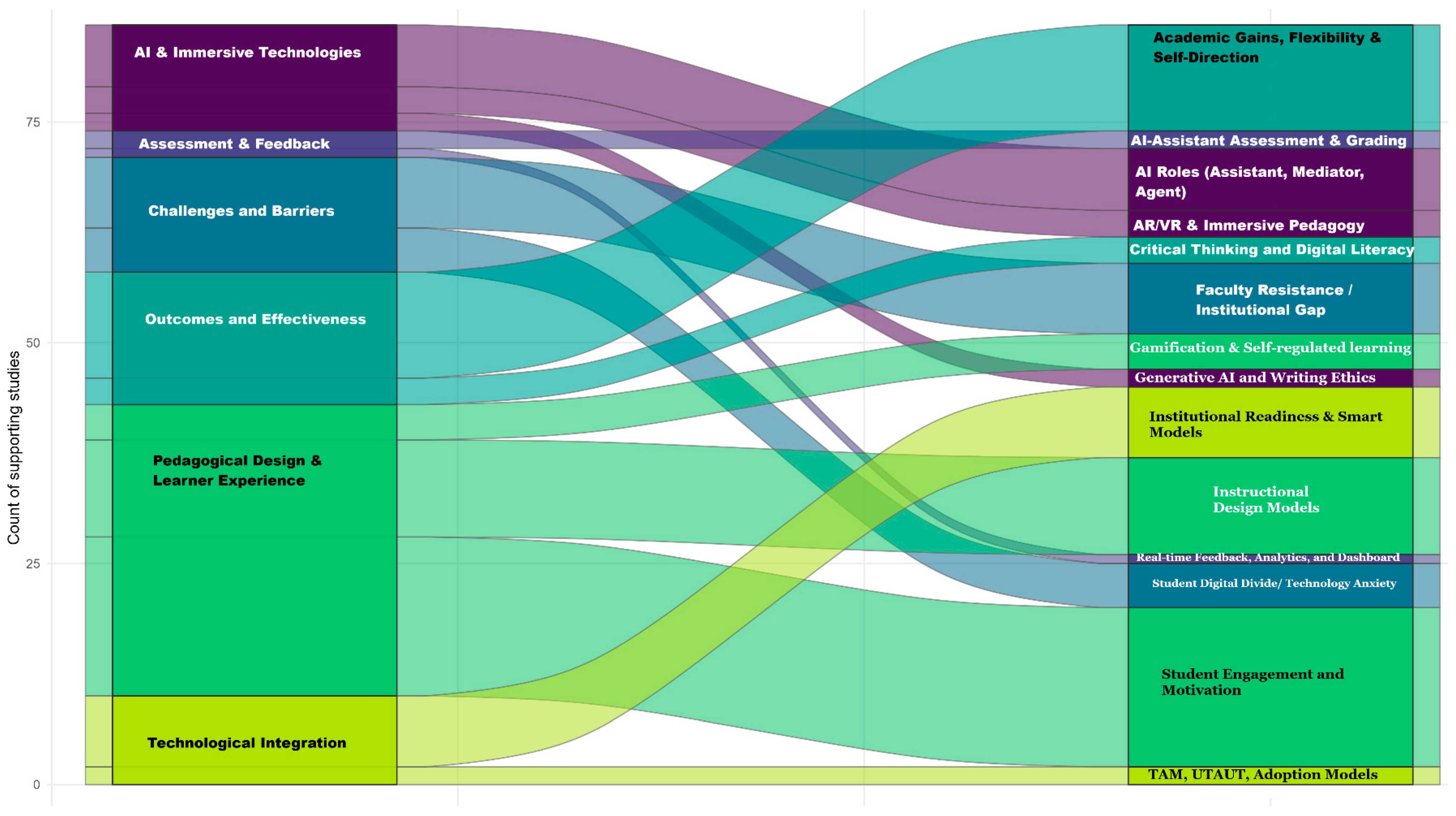
Blended learning encourages critical thinking by integrating active learning strategies with digital tools for analysis, assessment, and metacognition. Techniques such as inquiry-based learning, simulations, and peer feedback encourage reflection and collaborative problem-solving (Glasserman-Morales et al., 2022; Armellini et al., 2021). The CoI framework connects cognitive, social, and teaching presence to support higher-order thinking (Garrison et al., 2000). Constructive arguing and rebuttal encourage the development of higher-order thinking skills and smart decision-making. However, poorly structured or content-heavy modules risk disengagement (Bearman et al., 2023). Effective designs prioritise real-world tasks, reflective practice, and inclusive conversation, allowing students to build academic and life skills, including adaptation and civic reasoning (Chan & Hu, 2023). Collectively, these findings affirm the significance of dimensions emphasising the theoretical imperative for adaptive pedagogical models, managerial alignment through digital leadership, and social commitments to equity and inclusion. They illustrate the dynamic interplay between instructional design, technological innovation, and institutional readiness, while also providing the empirical foundation for the strategic recommendations and future research directions. Figure 4 provides a visual synthesis of the relationships between the identified themes and sub-themes, weighted by the number of supporting studies, providing an overview of how evidence clusters across the review. The width of each flow represents the relative number of supporting studies, allowing us to see where the evidence is most concentrated. The figure shows that pedagogical design and learner experience form the largest evidence cluster, particularly around student engagement, motivation, instructional design models, and self-regulated learning. It also shows that technological integration is closely linked to institutional readiness, adoption models, and digital infrastructure. In contrast, AI and immersive technologies are connected to more specialised sub-themes, including AI roles, AR/VR pedagogies, generative AI, and ethical concerns. The insights we obtained from this are that blended learning research is asymmetrically distributed across all areas; it is strongest in pedagogical and engagement-focused themes, while emerging areas such as AI ethics, immersive learning, and institutional integration remain less well developed.
A more detailed list of main themes, sub-themes and patterns from the reviewed studies is summarised in Table 3.

4.7. Insights of Research Methodologies and Study Characteristics in Blended Learning Literature

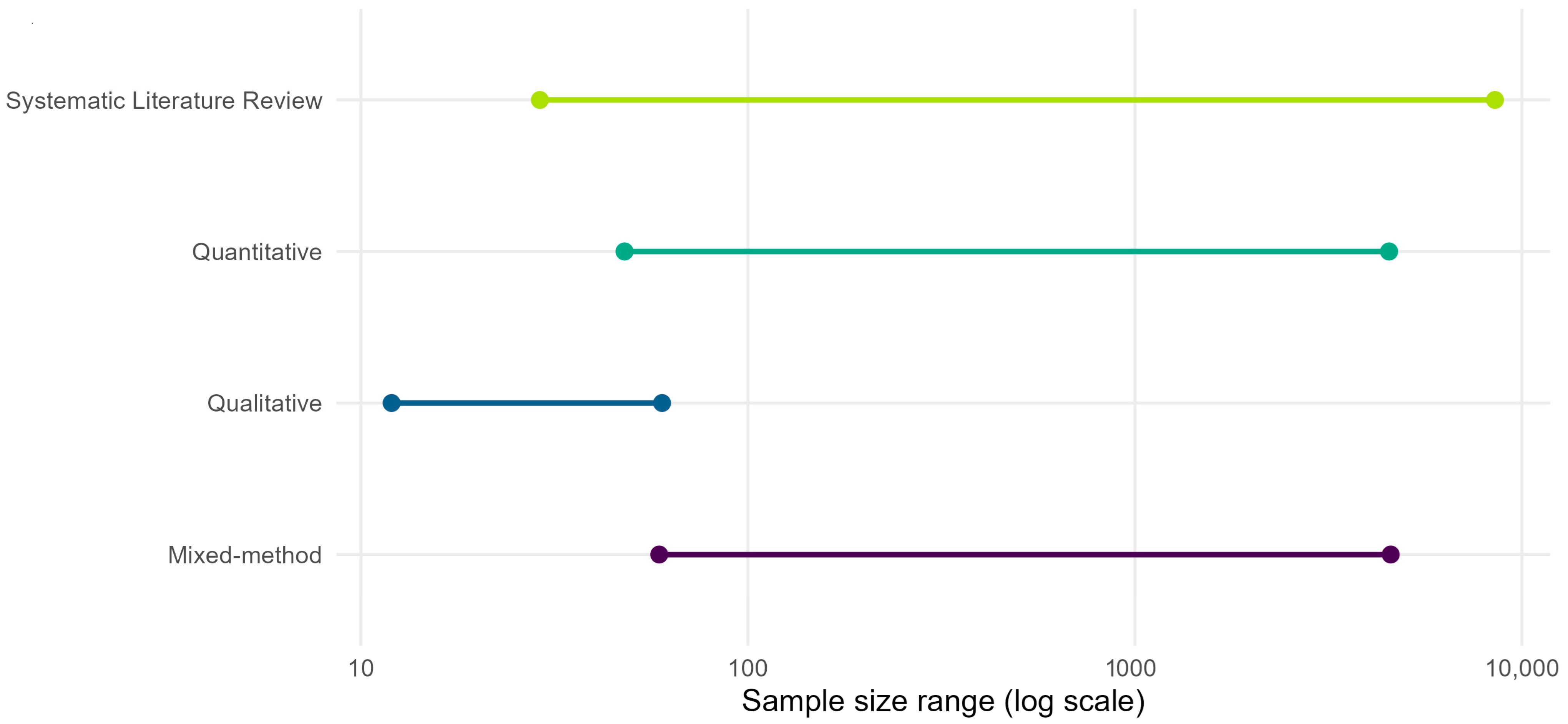
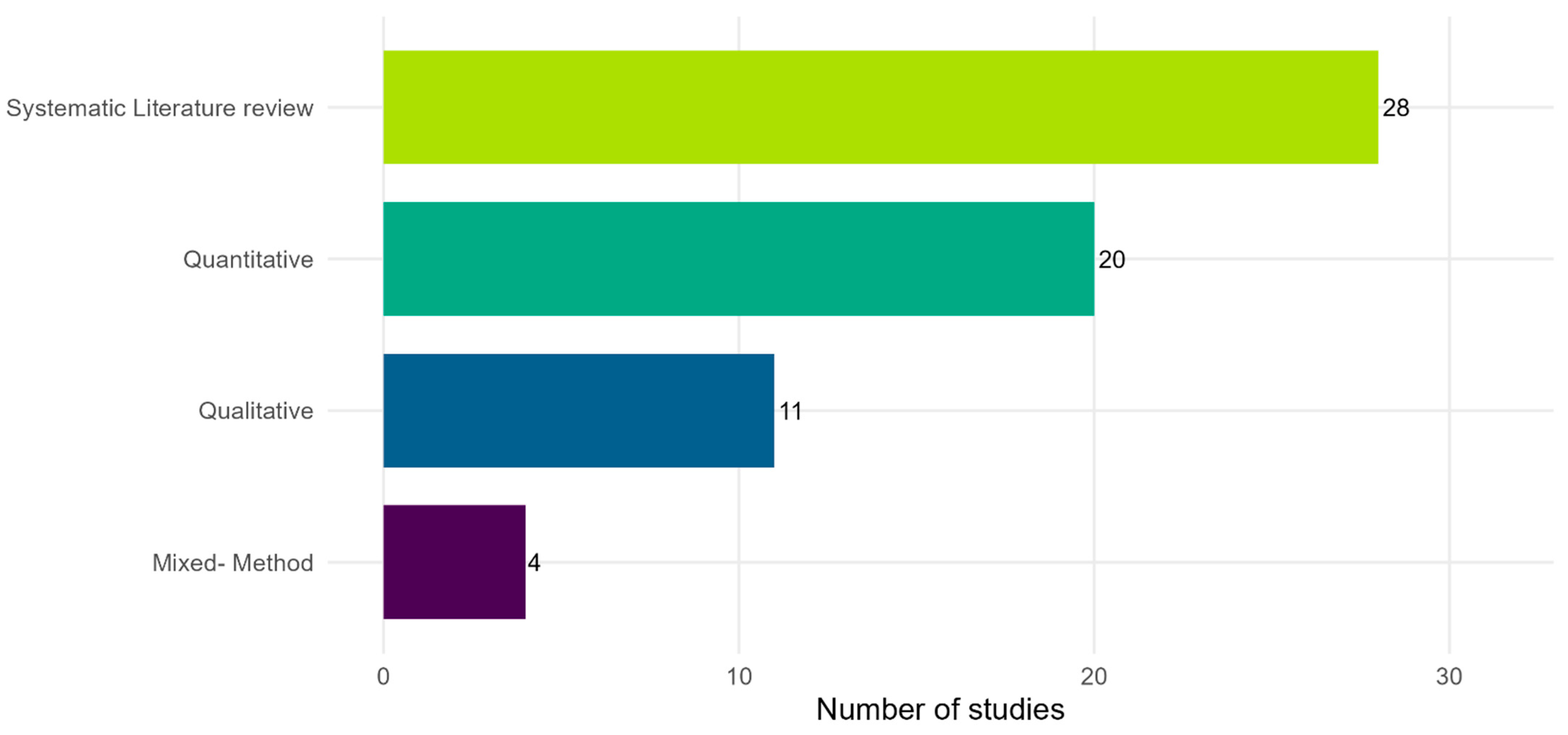
In this study, Figure 5 and Table 4 and Table 5 summarise the distribution of studies by research methodology. Systematic literature reviews were the most prevalent (n = 28), indicating a continuing effort within the field to synthesise existing knowledge and identify gaps. The quantitative research method was followed by 15 studies, suggesting a strong interest in empirically measuring the outcomes of blended learning. Fewer studies adopted qualitative or mixed-method approaches, indicating a relative under-representation of research into deeper learner experiences or contextualised practices. The reviewed studies employed a diverse range of research methods, including different data collection tools, sampling strategies, sample sizes, and analytical techniques. Questionnaires, pre- and post-test evaluations, and academic achievement records are commonly used tools in quantitative research. These were frequently employed with randomised or quasi-experimental designs, allowing for causal inference and statistical generalisation across relatively large sample sizes (48–4537 participants). However, the occasional reliance on purposive sampling within these studies raises concerns about internal validity and selection bias. Mixed-method approaches integrated qualitative techniques (e.g., interviews, focus groups, document analysis) with quantitative surveys and assessments, aiming to provide both statistical trends and contextual depth. While this triangulation increases credibility, it also requires careful integration of data strands, which has been addressed inconsistently in several studies.
Qualitative research emphasises in-depth examination through interviews, observations, and document reviews. These studies typically employed small, purposively or conveniently selected samples (12–60 participants) and utilised thematic, narrative, or discourse analysis. While these approaches allow for broad interpretation, the lack of standardisation and the potential for researcher bias necessitate high reflexivity and transparency. Systematic literature reviews employed structured database searches, predefined inclusion criteria, and qualitative or quantitative synthesis methods (e.g., thematic synthesis, content analysis, meta-analysis) to map existing knowledge. Despite their breadth (29–8521 articles), the quality of synthesis was mainly reliant on adherence to recognised standards such as PRISMA, compliance with which was not always clearly reported. The review revealed varying levels of methodological rigour, with specific issues in sampling justification, data integration, and analytical transparency. These findings underscore the need for more methodological consistency and reflexivity in future blended learning research. In Figure 6, we provide more visualised infographics on sample size by research method.

4.8. Research Gaps in the Previous Literature

Despite increasing interest in blended learning, several research gaps remain that limit its theoretical depth, practical applicability, and inclusive implementation. This section categorises those gaps across four key dimensions.

4.8.1. Technological Integration and Theoretical Gaps

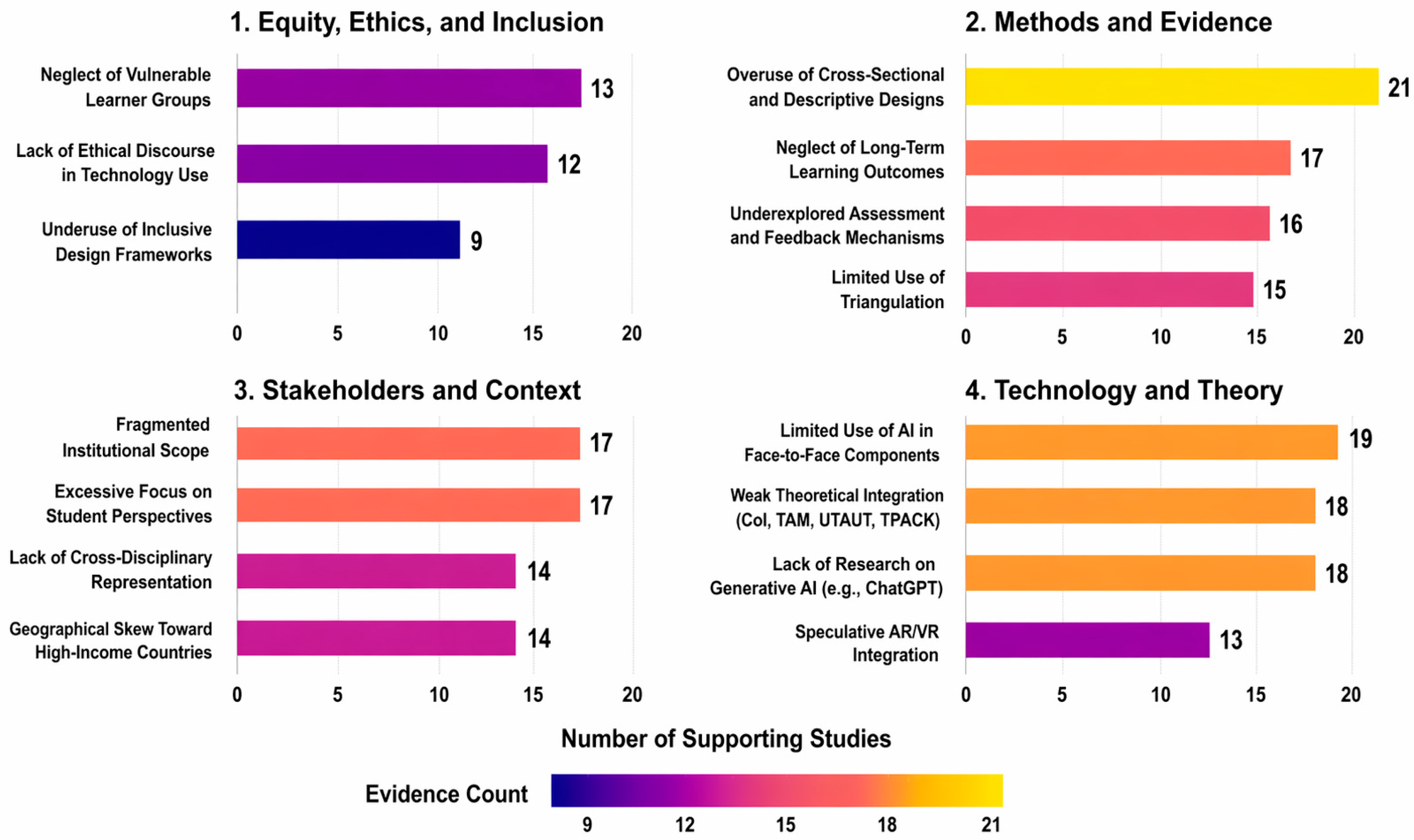
Research indicates limited experiential engagement with emerging technologies, such as AI, generative AI (e.g., ChatGPT), and AR/VR, particularly in face-to-face settings. Most studies address these tools conceptually, without evaluating their impact on classroom practices such as feedback and orchestration. Moreover, while theoretical frameworks like CoI, TAM, and UTAUT are occasionally referenced, they are seldom operationalised to examine how digital tools influence learning dynamics. This lack of theoretical integration affects our understanding of how technologies shape cognitive and collaborative engagement in hybrid environments. A detailed summary of these gaps with supporting evidence is presented in Table 6.

4.8.2. Methodological Narrowness and Evidence Limitations

Most studies in the field are cross-sectional studies, literature reviews, and conceptual analyses. Experimental, longitudinal, and mixed-method designs are underutilised, reducing the ability to assess long-term learning outcomes. In addition, many studies lack cross-validation procedures. And they overlook essential topics such as assessment literacy, self-reflection, and feedback mechanisms. These are vital for understanding student agency and engagement. A detailed summary of these limitations with supporting evidence is provided in Table 7.

4.8.3. Stakeholder, Disciplinary, and Contextual Blind Spots

Most research focuses on student experiences, often excluding the perspectives of educators, administrators, and institutional leaders. This narrow scope overlooks critical issues, including institutional readiness, digital workload management, and leadership. Additionally, there is an overrepresentation of studies in STEM fields, limiting insights into the humanities and social sciences. Research is often fragmented by course or institution and tends to be geographically concentrated in high-income countries, overlooking the challenges faced by low-income countries. A detailed summary of these issues with supporting evidence is provided in Table 8.

4.8.4. Equity, Ethics, and Inclusion Deficiencies

While blended learning is often regarded as a tool for expanding access, few studies assess its effectiveness for marginalised learners, those with disabilities, those with limited digital skills, or those from low socio-economic settings. Inclusive pedagogical models such as Universal Design for Learning (UDL) are rarely applied. Ethical issues, particularly with AI, learning analytics, and immersive technology, remain understudied. These include problems of algorithmic bias, surveillance, data privacy and informed consent. The limited attention to such topics limits transparency, trust, and ethical practice in blended education. A detailed summary of these issues, along with supporting evidence, is provided in Table 9. Collectively, these research gaps emphasise the need for more inclusive, theory-informed, and empirically grounded studies to advance the design, implementation, and evaluation of blended learning in higher education contexts.
Using Figure 7, we illustrate that existing studies are concentrated around technology adoption, student experience, and general implementation challenges, while several important dimensions remain comparatively under-examined. These include longitudinal evidence of learning outcomes, institutional readiness, inclusive design, AI transparency, ethical governance, and the experiences of under-represented learner groups. By visualising these uneven patterns of attention, based on Figure 7, we demonstrate the current maturity of the field and identify where future research is most needed. This supports the central argument of this review, which is that blended learning research needs to move beyond technology-use descriptions toward more sustained, inclusive, ethically informed, and pedagogically grounded investigations.

5. Discussion

The research offers the following theoretical, pedagogical, managerial, and social contributions by addressing equity, ethics, and inclusion in blended learning.

5.1. Theoretical and Managerial Contributions

This research enhances theoretical understanding by examining the limitations of static models, including the Community of Inquiry (CoI), the Technology Acceptance Model (TAM), and the Unified Theory of Acceptance and Use of Technology (UTAUT). It calls for more flexible, context-sensitive applications that consider institutional diversity and technological evolution. To address these gaps, the study adopts two guiding frameworks. The Technological Pedagogical Content Knowledge (TPACK) model (Mishra & Koehler, 2006) assesses the integration of technology into teaching practices, whereas the AI Roles Framework (Park & Doo, 2024) examines the role of AI as a mediator, assistant, or pedagogical agent. These frameworks highlight how new technologies are changing blended learning environments.
From a managerial perspective, the research offers insights into institutional readiness and the alignment of policies within blended learning environments. It highlights the importance of strategic alignment in curriculum planning, technology infrastructure, staff development, and equity-focused policies. The study highlights the issue of “dual digitalisation,” in which administrative and instructional technologies are poorly coordinated. This misalignment can disrupt effective educational delivery. Recommendations include fostering collaboration between academic and IT departments, strengthening leadership support, and investing in sustained professional development. By framing blended learning as a systemic institutional initiative rather than a classroom-level intervention, the study provides guidance on managerial strategies for long-term integration.

5.2. Pedagogical, Practical, and Social Contributions

Pedagogically, this study highlights the importance of learner-centred, adaptive approaches that utilise active learning techniques and personalised technologies. This point is particularly important in the current context of digital abundance, where higher education institutions may adopt multiple platforms and applications without sufficient evidence that these tools address learner uniqueness. Prior research has shown that blended learning quality depends less on the number of technologies used and more on the coherence between pedagogy, learner support, feedback, and institutional readiness (Bokolo et al., 2022; Graham et al., 2023; Sareen & Mandal, 2024). Therefore, blended learning should not be judged by tool quantity but by pedagogical alignment, learner responsiveness, accessibility, and authenticity of learning experience.
It identifies best practices, including flipped classrooms, gamification, real-time feedback, microlearning, and smart tutoring systems. These tools are shown to enhance learner autonomy, motivation, and inclusivity, particularly for students in under-resourced settings. Practically, the study provides a scalable roadmap for implementing blended learning with fidelity, emphasising the risks of over-relying on technology without strong pedagogical foundations. It advocates for ethical and intentional technology integration to ensure that tools augment rather than detract from meaningful learning.
Socially, the study emphasises equity, inclusion, and ethical use of educational technology. It critiques the Western-centric bias in existing literature and calls for more culturally responsive and accessible blended learning models. By addressing the needs of marginalised learners, including those with disabilities, low digital fluency, or from economically disadvantaged backgrounds, the study promotes the adoption of frameworks like Universal Design for Learning (UDL). It also brings attention to underexplored ethical issues, such as data privacy, surveillance, and algorithmic bias in AI-enhanced systems. These insights underscore the need for the development of fair, transparent, and inclusive blended learning policies that cater to a broader and more diverse learner population.

5.3. Limitations of the Study

This study was taking place under several constraints specific to its design and execution, which may affect the scope and interpretation of the findings:
  • Scope of literature selection: Only peer-reviewed journal articles published between 2020 and 2025 were included. This temporal boundary was essential to ensure validity, but it also excluded potentially influential earlier research and grey literature such as practitioner reports, policy briefs, or dissertations. The reliance on open-access databases restricted access to subscription-based journals and grey literature, potentially excluding valuable empirical studies and practitioner insights.
  • Methodological Consistency: This study synthesised literature that primarily employed cross-sectional or conceptual methods. As a result, findings are shaped by these existing methodological choices and may not represent longitudinal effects or causal relationships inherent in blended learning implementations.
  • Stakeholder Representation: The reviewed literature predominantly focuses on student outcomes and perspectives. Insights from educators, institutional leaders, and policymakers were limited, which reduced the study’s ability to provide a comprehensive institutional view.
  • Contextual and Ethical Under-representation: While technologies like AI, AR/VR, and learning analytics are discussed frequently, their ethical dimensions, such as privacy, transparency, and equity, are underexplored in the reviewed literature. Similarly, the influence of regional, cultural, and socio-economic differences is insufficiently analysed.
These limitations highlight areas for future inquiry, such as expanding the range of data sources, incorporating multiple stakeholder views, employing longitudinal or mixed-method designs, and fostering more critical engagement with equity, ethics, and cultural contexts in blended learning research.

5.4. Future Research Directions/Recommendations

Based on our research, we have addressed some significant future research:
  • Strengthen AI Integration in Face-to-Face Contexts: Future research should explore how artificial intelligence can enrich the in-person components of blended learning. This includes AI-driven classroom orchestration, real-time adaptive feedback, and personalised teacher–student interaction. Empirical studies are necessary to assess the pedagogical value, ethical implications, and practical feasibility of these tools, while developing models grounded in robust learning theory.
  • Investigating Generative AI in Educational Practice: Given the increasing use of generative AI tools like ChatGPT, further research is needed to examine their impact on academic integrity, pedagogical design, and learner engagement. Studies should assess how such technologies influence critical thinking, content creation, and student support in blended learning environments.
  • Assess AR/VR with Strong Research Methods: The effectiveness of augmented and virtual reality has not been well tested in research. Future investigations should use experimental and longitudinal designs to determine the impact on pedagogy, accessibility, and educator readiness in BL settings.
  • Utilise Stronger Theories in BL Research: Blended learning studies can be enhanced by integrating well-established models, such as CoI, TPACK, and UDL. It helps to identify the effects of technology on the cognitive, emotional, and social aspects of learning.
  • Engage key stakeholders: Future research should involve input from teachers, curriculum developers, school leaders, and policymakers to provide a clearer picture of the resources required and the practical implementation of blended learning across the education system.
  • Increase research on inclusive learning: More evidence-based studies are needed to discover the impact of blended learning on students with disabilities, low digital literacy, or limited financial resources. Inclusive frameworks like UDL should guide those.
  • Expand Learning Areas and Geographic Scope: Future studies should investigate subjects across the arts, humanities, and social sciences. Higher participation from under-represented regions may require building a more globally inclusive view in blended learning.
  • Study Long-Term and Ethical Issues: Future research should investigate the long-term and ethical implications of blended learning. Especially considering knowledge retention, employability, and behaviour change over time. It should also explore ethical concerns, such as privacy, transparency, and fairness, in algorithms used in BL.
  • Future blended learning design should begin with systematic analysis of learner characteristics, including digital literacy, accessibility needs, motivation, self-regulation capacity, cultural background, and disciplinary expectations. This recommendation aligns with learner-centred and inclusive design principles, where technology selection is guided by pedagogical purpose rather than novelty or availability (Armellini et al., 2021; Mishra & Koehler, 2006; Sareen & Mandal, 2024). Such an approach would help institutions avoid tool duplication and ensure that digital applications serve clear pedagogical and learner-centred purposes.

6. Conclusions

Blended learning in higher education aims to provide flexibility, engagement, and inclusivity. However, this systematic review shows that its adoption is inconsistent across different institutions. Although AI, AR/VR, and learning analytics are widely regarded as valuable educational tools, their value depends on the teaching practice and the responsibility. The review examines widely used models like TAM, UTAUT, and CoI. These models are often utilised uniformly by researchers. The referenced research did not pay much attention to different types of institutions. In contrast, the TPACK and AI Roles Framework provide more flexible approaches. They help to search for findings according to specific institutional and classroom conditions. Most of the research is conducted in technologically advanced institutions. That leads to less applicability in resource-limited or under-represented settings. Additionally, the literature mainly focuses on student perspectives, neglecting the views of instructional designers, institutional leaders, and faculty. Most studies rely on basic theoretical models and short-term studies. This makes it challenging to comprehend long-term effects, complex interactions, and ongoing stakeholder engagement. Moreover, discussions about emerging technologies often rely on assumptions, giving little attention to data ethics, inclusivity, and cognitive development.
This review supports a more coordinated, cross-disciplinary approach with inclusive input from all stakeholders. By answering research questions, the study reveals that blended learning technologies are more diverse. They include tools like learning management systems (LMS), video platforms, mobile apps, and AI-powered tools. However, the use of these tools remains inconsistent and is not always well-aligned with teaching goals (RQ1). While benefits such as flexibility, easier access, and improved student engagement are often mentioned, problems like inadequate infrastructure, insufficient institutional support, and weak instructional design persist. Regarding RQ2, technologies such as AI, AR/VR, and learning analytics are often viewed as the future of blended learning. However, their current use is theoretical. There is little practical testing or ethical evaluation. Collectively, the findings emphasise the need for a pedagogy-centred approach that is ethically grounded, socially responsible, and inclusive to inform future directions in research, educational practice, and policymaking. The future of blended learning depends less on adding more digital tools and more on designing adaptive, authentic, and learner-sensitive environments where technology supports diverse learners in purposeful and meaningful ways. This reinforces the value of moving beyond rigid adoption models toward integrated frameworks such as TPACK, UDL, and AI Roles, which better account for pedagogy, learner diversity, and contextual responsiveness.

Author Contributions

Methodology, D.D., W.N. and E.E.; Software, N.H.S.A.; validation, E.E.; formal analysis, W.N.; investigation, D.D. and W.N.; resources, D.D.; data curation, W.N.; writing—original draft, D.D., N.H.S.A. and W.N.; writing—review and editing, E.E.; visualization, N.H.S.A.; supervision, D.D.; project administration, N.H.S.A.; funding acquisition, D.D. All authors have read and agreed to the published version of the manuscript.

Funding

This research received no external funding.

Institutional Review Board Statement

Not applicable.

Informed Consent Statement

Not applicable.

Data Availability Statement

No new original data were generated in this systematic review.

Conflicts of Interest

The authors declare no conflicts of interest.

Appendix A

Table A1. Database search strategy.
DatabaseFields SearchedSearch String UsedFilters or Limits Applied
ScopusTITLE-ABS-KEY(“blended learning” OR “hybrid learning” OR “mixed mode learning” OR “mixed-mode learning” OR “blended instruction” OR hyflex OR “hyflex learning”) AND (“higher education” OR universit* OR college* OR “tertiary education”) AND (“learning management system*” OR LMS OR “digital tool*” OR “online platform*” OR “educational technolog*” OR technolog* OR “learning analytics” OR “artificial intelligence” OR AI OR “augmented reality” OR AR OR “virtual reality” OR VR OR “emerging technolog*”)English; 2020–2025; peer-reviewed journals.
ProQuest(Search fields used in ProQuest)(“blended learning” OR “hybrid learning” OR “mixed mode learning” OR “mixed-mode learning” OR “blended instruction” OR hyflex OR “hyflex learning”) AND (“higher education” OR universit* OR college* OR “tertiary education”) AND (“learning management system*” OR LMS OR “digital tool*” OR “online platform*” OR “educational technolog*” OR technolog* OR “learning analytics” OR “artificial intelligence” OR AI OR “augmented reality” OR AR OR “virtual reality” OR VR OR “emerging technolog*”)English; 2020–2025; scholarly journals/peer-reviewed.
Table A2. Definition of terminology used in this study.
Terms/ConceptsDefinitionsAuthors
Blended Learning (BL)Blended learning is a pedagogical approach that integrates face-to-face instruction with online learning, incorporating both synchronous and asynchronous elements to enhance flexibility, personalisation, and student engagement.Ali et al. (2023); Aravind (2024); Ashraf et al. (2022); Bokolo et al. (2022); Islam et al. (2022); Istenic (2024); Le et al. (2022); McCarthy and Palmer (2023)
Hybrid TeachingAn instructional approach that strategically combines face-to-face classroom methods with online learning activities, allowing flexibility in time, place, and pace while aiming to optimise student engagement, accessibility, and learning outcomes.X. Wang et al. (2024)
Artificial Intelligence in Education (AIEd)The application of artificial intelligence to customised learning, automate instructional tasks, and improve educational outcomes through data-driven insights and adaptive systems.Dimitriadou and Lanitis (2023); Park and Doo (2024); K. Zhang and Aslan (2021)
Augmented Reality (AR)Technology that overlays digital content onto the physical world to enhance learning with interactive 3D objects.Mirza et al. (2025)
Barriers Model in BLA model that identifies and categorises key barriers to blended learning by considering stakeholder roles and regional differences experienced by students, teachers, and institutions.Sareen and Mandal (2024)
Community of Inquiry (CoI)A theoretical framework for online and blended learning that supports the development of deep and meaningful learning experiences through the interplay of social, cognitive, and teaching presence.Imran et al. (2023); Sareen and Mandal (2024)
Digital Transformation in Higher EducationIntegration of digital tools, policies, and pedagogy to shift institutional operations and educational delivery.Akour and Alenezi (2022)
Dual DigitalizationThe parallel but disconnected development of administrative digital systems and educational technologies within higher education institutions.Bygstad et al. (2022)
Educational TechnologyEducational technology is the use of digital tools and platforms to enhance teaching and learning.Godsk and Møller (2025)
Flipped ClassroomAn instructional strategy where students engage with content before class and use class time for collaborative, application-based learning.Kang and Kim (2021); Li et al. (2024)
Inclusive Education with TechnologyDesign and use of digital tools to provide equitable access and meaningful learning experiences for students of all abilities.Castellano-Beltran et al. (2025)
Learning Analytics (LA)The collection and analysis of data about learners and their contexts to improve learning outcomes and environments.Crompton and Burke (2023); Sembey et al. (2024)
Learning Management System (LMS)A software platform for organising, delivering, and tracking educational content and learner interactions.Ali et al. (2023); Aravind (2024); Ashraf et al. (2022)
Metaverse in EducationAn immersive digital environment using technologies like VR, AR, and blockchain to simulate real-world learning experiences.Al-Adwan et al. (2023)
Smart ClassroomA technology-integrated classroom that supports real-time interaction, automation, and enhanced learning via AI and IoT.Dimitriadou and Lanitis (2023); Alani and Wisker (2026)
Student EngagementThe emotional, cognitive, and behavioural investment in learning activities, shaped by context and technology use.Aravind (2024); Godsk and Møller (2025)
Student-Centred BL ModelA pedagogical model promoting student interaction and collaborative knowledge-building in synchronous and asynchronous modes.Islam et al. (2022)
Team-Based Learning (TBL)A structured form of small-group learning that emphasises student preparation out of class and application of knowledge in class.Kang and Kim (2021)
Technology Acceptance Model (TAM)A theoretical model used to predict user acceptance of technology, focusing on perceived usefulness and ease of use.Al-Adwan et al. (2023)
Theory of Planned Behaviour (TPB)A theory predicting behavioural intention based on attitude, subjective norms, and perceived behavioural control.Hamad et al. (2024)
UTAUT2 ModelAn extended model of technology adoption considering behavioural intention, performance expectancy, and hedonic motivation.Lv and Li (2024)

References

  1. Akour, M., & Alenezi, M. (2022). Higher education future in the era of digital transformation. Education Sciences, 12(11), 784. [Google Scholar] [CrossRef]
  2. Al-Adwan, A. S., Li, N., Al-Adwan, A., Abbasi, G. A., Albelbisi, N. A., & Habibi, A. (2023). Extending the technology acceptance model (TAM) to predict university students’ intentions to use metaverse-based learning platforms. Education and Information Technologies, 28, 15381–15413. [Google Scholar] [CrossRef] [PubMed]
  3. Alani, N. H. S., Awawdeh, L., & Forrest, R. (2026). Augmented reality, virtual reality and gamified learning in early childhood education: A scoping review with a practice-led prototype case. Entertainment Computing, 57, 101103. [Google Scholar] [CrossRef]
  4. Alani, N. H. S., & Wisker, Z. L. (2026). LEADing the way with generative AI towards rejuvenating learning, engagement, adaptation, and design in tertiary education. In M. Lahby, S. E. Schaeffer, Y. Maleh, & V. Paliktzoglou (Eds.), Generative AI in higher education assessment: Theory, practice, and ethical implications (pp. 71–101). Springer Nature Switzerland. [Google Scholar] [CrossRef]
  5. Al-Ansi, A. M., Jaboob, M., Garad, A., & Al-Ansi, A. (2023). Analyzing augmented reality (AR) and virtual reality (VR) recent development in education. Social Sciences & Humanities Open, 8, 100532. [Google Scholar] [CrossRef]
  6. Ali, A., Khan, R. M. I., & Alouraini, A. (2023). A comparative study on the impact of online and blended learning. SAGE Open, 13(1), 21582440231154417. [Google Scholar] [CrossRef]
  7. Almeman, K., EL Ayeb, F., Berrima, M., Issaoui, B., & Morsy, H. (2025). The integration of AI and metaverse in education: A systematic literature review. Applied Sciences, 15(2), 863. [Google Scholar] [CrossRef]
  8. Alsalhi, N. R., Eltahir, M. E., Al-Qatawneh, S., Ouakli, N., Bou Antoun, H., Abdelkader, A. F. I., & Al Jumaili, L. (2021). Blended learning in higher education: A study of its impact on students’ performance. International Journal of Emerging Technologies in Learning (iJET), 16(14), 249–262. [Google Scholar] [CrossRef]
  9. Antonio, R. P. (2022). Effectiveness of blended instructional approach in improving students’ scientific learning outcomes: A meta-analysis. Journal of Higher Education Theory and Practice, 22(5), 221–239. [Google Scholar] [CrossRef]
  10. Aravind, B. S. (2024). Exploring the challenges and opportunities of blended learning in a technology-enabled education environment. Journal of Effective Teaching and Learning Practices, 1(1), 10–19. [Google Scholar] [CrossRef]
  11. Armellini, A., Antunes, V. T., & Howe, R. (2021). Student perspectives on learning experiences in a higher education active blended learning context. TechTrends, 65(3), 433–443. [Google Scholar] [CrossRef]
  12. Ashraf, M. A., Mollah, S., Perveen, S., Shabnam, N., & Nahar, L. (2022). Pedagogical applications, prospects, and challenges of blended learning in Chinese higher education: A systematic review. Frontiers in Psychology, 12, 772322. [Google Scholar] [CrossRef]
  13. Bearman, M., Ryan, J., & Ajjawi, R. (2023). Discourses of artificial intelligence in higher education: A critical literature review. Higher Education, 86(2), 369–385. [Google Scholar] [CrossRef]
  14. Bermejo, B., Juiz, C., Cortes, D., Oskam, J., Moilanen, T., Loijas, J., Govender, P., Hussey, J., Schmidt, A. L., Burbach, R., King, D., O’Connor, C., & Dunlea, D. (2023). AR/VR teaching-learning experiences in higher education institutions (HEI): A systematic literature review. Informatics, 10(2), 45. [Google Scholar] [CrossRef]
  15. Boelens, R., De Wever, B., & Voet, M. (2017). Four key challenges to the design of blended learning: A systematic literature review. Educational Research Review, 22, 1–18. [Google Scholar] [CrossRef]
  16. Bokolo, A., Jr., Kamaludin, A., Romli, A., Mat Raffei, A. F., Eh Phon, D. N. A. L., Abdullah, A., & Ming, G. L. (2022). Blended learning adoption and implementation in higher education: A theoretical and systematic review. Technology, Knowledge and Learning, 27, 531–578. [Google Scholar] [CrossRef]
  17. Bygstad, B., Øvrelid, E., Ludvigsen, S., & Dæhlen, M. (2022). From dual digitalization to digital learning space: Exploring the digital transformation of higher education. Computers & Education, 182, 104463. [Google Scholar] [CrossRef]
  18. Cannaos, C., Onni, G., & Casu, A. (2024). Blended learning: What changes? Sustainability, 16(20), 8988. [Google Scholar] [CrossRef]
  19. Cao, W. (2023). A meta-analysis of effects of blended learning on performance, attitude, achievement, and engagement across different countries. Frontiers in Psychology, 14, 1212056. [Google Scholar] [CrossRef]
  20. Castellano-Beltran, A., Carballo, R., & Morina, A. (2025). Benefits and challenges of inclusive emerging technologies in universities: Analysis of the voice of students. Education and Information Technologies, 30(10), 14539–14559. [Google Scholar] [CrossRef]
  21. Chan, C. K. Y., & Hu, W. (2023). Students’ voices on generative AI: Perceptions, benefits, and challenges in higher education. International Journal of Educational Technology in Higher Education, 20, 43. [Google Scholar] [CrossRef]
  22. Chen, B. H., & Chiou, H.-H. (2014). Learning style, sense of community and learning effectiveness in hybrid learning environment. Interactive Learning Environments, 22(4), 485–496. [Google Scholar] [CrossRef]
  23. Chung, J., McKenzie, S., Schweinsberg, A., & Mundy, M. E. (2022). Correlates of academic performance in online higher education: A systematic review. Frontiers in Education, 7, 820567. [Google Scholar] [CrossRef]
  24. Cinar, O. E., Rafferty, K., Cutting, D., & Wang, H. (2024). AI-powered VR for enhanced learning compared to traditional methods. Electronics, 13(23), 4787. [Google Scholar] [CrossRef]
  25. Crompton, H., & Burke, D. (2023). Artificial intelligence in higher education: The state of the field. International Journal of Educational Technology in Higher Education, 20, 22. [Google Scholar] [CrossRef]
  26. Davis, F. D. (1989). Perceived usefulness, perceived ease of use, and user acceptance of information technology. MIS Quarterly, 13(3), 319–340. [Google Scholar] [CrossRef]
  27. De Bruijn-Smolders, M., & Prinsen, F. R. (2024). Effective student engagement with blended learning: A systematic review. Heliyon, 10, e39439. [Google Scholar] [CrossRef] [PubMed]
  28. Demirer, V., & Sahin, I. (2013). Effect of blended learning environment on transfer of learning: An experimental study. Journal of Computer Assisted Learning, 29(6), 518–529. [Google Scholar] [CrossRef]
  29. Dimitriadou, E., & Lanitis, A. (2023). A critical evaluation, challenges, and future perspectives of using artificial intelligence and emerging technologies in smart classrooms. Smart Learning Environments, 10(1), 12. [Google Scholar] [CrossRef]
  30. Esnaashari, S., Gardner, L., & Rehm, M. (2025). Students’ perceptions of educational tool use in a blended learning environment: An activity theory perspective. Communications of the Association for Information Systems, 56, 128–154. [Google Scholar] [CrossRef]
  31. Feng, K. (2023). Current status and trends of blended learning in higher education. In Z. Zhan, F. P. Chew, & M. T. Anthony (Eds.), Proceedings of the 2022 international conference on science education and art appreciation (SEAA 2022) (pp. 1076–1084). Atlantis Press. [Google Scholar] [CrossRef]
  32. Fernandez, A., Gómez, B., Binjaku, K., & Kajo Meçe, E. (2023). Digital transformation initiatives in higher education institutions: A multivocal literature review. Education and Information Technologies, 28, 12351–12382. [Google Scholar] [CrossRef]
  33. Garrison, D. R., Anderson, T., & Archer, W. (2000). Critical inquiry in a text-based environment: Computer conferencing in higher education. The Internet and Higher Education, 2(2–3), 87–105. [Google Scholar] [CrossRef]
  34. George, B., & Wooden, O. (2023). Managing the strategic transformation of higher education through artificial intelligence. Administrative Sciences, 13(9), 196. [Google Scholar] [CrossRef]
  35. Glasserman-Morales, L. D., Ruiz-Ramírez, J. A., & Rocha Estrada, F. J. (2022). Transforming higher education using WebVR: A case study. IEEE Revista Iberoamericana de Tecnologias del Aprendizaje, 17(3), 230–234. [Google Scholar] [CrossRef]
  36. Godsk, M., & Møller, K. L. (2025). Engaging students in higher education with educational technology. Education and Information Technologies, 30, 2941–2976. [Google Scholar] [CrossRef]
  37. Graham, C. R., Danaa, G., Purevsuren, T., Martínez, A., Spricigo, C. B., Camilotti, B. M., & Batsukh, T. (2023). Digital learning transformation in higher education: International cases of university efforts to evaluate and improve blended teaching readiness. Education Sciences, 13(11), 1143. [Google Scholar] [CrossRef]
  38. Guppy, N., Verpoorten, D., Boud, D., Lin, L., Tai, J., & Bartolic, S. (2022). The post-COVID-19 future of digital learning in higher education: Views from educators, students, and other professionals in six countries. British Journal of Educational Technology, 53(6), 1441–1461. [Google Scholar] [CrossRef]
  39. Hamad, F., Shehata, A., & Al Hosni, N. (2024). Predictors of blended learning adoption in higher education institutions in Oman: Theory of planned behavior. International Journal of Educational Technology in Higher Education, 21(1), 13. [Google Scholar] [CrossRef]
  40. Harper, C. V., McCormick, L. M., & Marron, L. (2024). Face-to-face vs. blended learning in higher education: A quantitative analysis of biological science student outcomes. International Journal of Educational Technology in Higher Education, 21(1), 2. [Google Scholar] [CrossRef]
  41. Huang, M., & Kuang, F. (2024). Effective instructional strategies to enhance Chinese EFL learners’ engagement in a blended learning environment. Theory and Practice in Language Studies, 14(5), 1557–1566. [Google Scholar] [CrossRef]
  42. Huda, N., Mustaji, Arianto, F., & Ayubi, N. (2022). The application of blended learning with a community science technology approach to improve student learning outcomes in higher education. International Journal of Emerging Technologies in Learning (iJET), 17(14), 246–256. [Google Scholar] [CrossRef]
  43. Imran, R., Fatima, A., Salem, I. E., & Allil, K. (2023). Teaching and learning delivery modes in higher education: Looking back to move forward post-COVID-19 era. The International Journal of Management Education, 21, 100805. [Google Scholar] [CrossRef]
  44. Islam, M. K., Sarker, M. F. H., & Islam, M. S. (2022). Promoting student-centred blended learning in higher education: A model. E-Learning and Digital Media, 19(1), 36–54. [Google Scholar] [CrossRef]
  45. Istenic, A. (2024). Blended learning in higher education: The integrated and distributed model and a thematic analysis. Discover Education, 3(1), 165. [Google Scholar] [CrossRef]
  46. Kang, H. Y., & Kim, H. R. (2021). Impact of blended learning on learning outcomes in the public healthcare education course: A review of flipped classroom with team-based learning. BMC Medical Education, 21, 78. [Google Scholar] [CrossRef]
  47. Kovari, A. (2025). A systematic review of AI-powered collaborative learning in higher education: Trends and outcomes from the last decade. Social Sciences & Humanities Open, 11, 101335. [Google Scholar] [CrossRef]
  48. Kuleto, V., Ilic, M., Dumangiu, M., Rankovic, M., Martins, O. M. D., Paun, D., & Mihoreanu, L. (2021). Exploring opportunities and challenges of artificial intelligence and machine learning in higher education institutions. Sustainability, 13(18), 10424. [Google Scholar] [CrossRef]
  49. Le, T. N., Allen, B., & Johnson, N. F. (2022). Blended learning: Barriers and drawbacks for English language lecturers at Vietnamese universities. E-Learning and Digital Media, 19(2), 225–239. [Google Scholar] [CrossRef]
  50. Leahy, S. M., Holland, C., & Ward, F. (2019). The digital frontier: Envisioning future technologies’ impact on the classroom. Futures, 113, 102422. [Google Scholar] [CrossRef]
  51. Li, S., Wei, W., Li, X., Ma, L., Li, Q., Sun, X., & Chen, X. (2024). Impacts of blended learning with BOPPPS model on Chinese medical undergraduate students: A comprehensive systematic review and meta-analysis of 44 studies. BMC Medical Education, 24, 914. [Google Scholar] [CrossRef]
  52. Lindín, C., Engel, A., Gràcia, M., Rivera-Vargas, P., & Rubio, M. J. (2023). Literature review on emerging educational practices mediated by digital technologies in higher education, based on academic papers. SAGE Open, 13(4), 21582440231204677. [Google Scholar] [CrossRef]
  53. Luo, Z., Shao, X., & Wareewanich, T. (2022). Effects of blended, explicit and implicit instruction on EFL learners in English pronunciation class under emerging technology. International Journal of Emerging Technologies in Learning (iJET), 17(17), 232–246. [Google Scholar] [CrossRef]
  54. Lv, N., & Li, Z. (2024). The effects of blended learning environment on college students’ learning effectiveness: Exploring the role of behavioral intentions and self-efficacy through the UTAUT2 model. SAGE Open, 14(2), 21582440241251604. [Google Scholar] [CrossRef]
  55. McCarthy, S., & Palmer, E. (2023). Defining an effective approach to blended learning in higher education: A systematic review. Australasian Journal of Educational Technology, 39(2), 98–114. [Google Scholar] [CrossRef]
  56. McPhee, S. R. (2021). Advocating for blended pedagogy as a shift to more holistic inclusive geography. Journal of Geography in Higher Education, 46(4), 495–506. [Google Scholar] [CrossRef]
  57. Mena-Guacas, A. F., Lopez-Catalán, L., Bernal-Bravo, C., & Ballesteros-Regana, C. (2025). Educational transformation through emerging technologies: Critical review of scientific impact on learning. Education Sciences, 15(3), 368. [Google Scholar] [CrossRef]
  58. Min, W., & Yu, Z. (2023). A systematic review of critical success factors in blended learning. Education Sciences, 13(5), 469. [Google Scholar] [CrossRef]
  59. Minadzi, V. M., & Segbenya, M. (2024). Usefulness and challenges with blended learning during the COVID-19 pandemic in Ghana: The mediating role of human resource factors. Computers in Human Behavior Reports, 16, 100468. [Google Scholar] [CrossRef]
  60. Mirza, T., Dutta, R., Tuli, N., & Mantri, A. (2025). Leveraging augmented reality in education involving new pedagogies with emerging societal relevance. Discover Sustainability, 6, 77. [Google Scholar] [CrossRef]
  61. Mishra, P., & Koehler, M. J. (2006). Technological pedagogical content knowledge: A framework for teacher knowledge. Teachers College Record, 108(6), 1017–1054. [Google Scholar] [CrossRef]
  62. Monteros-Lyerly, J. (2022). Challenges, opportunities, attitude, and implementation of blended learning in basic education in the new normal. International Journal of Advanced Research, 10(9), 233–257. [Google Scholar] [CrossRef]
  63. Nantha, C., Siripongdee, K., Siripongdee, S., Pimdee, P., Kantathanawat, T., & Boonsomchuae, K. (2024). Enhancing ICT literacy and achievement: A TPACK-based blended learning model for Thai Business Administration students. Education Sciences, 14(5), 455. [Google Scholar] [CrossRef]
  64. Page, M. J., McKenzie, J. E., Bossuyt, P. M., Boutron, I., Hoffmann, T. C., Mulrow, C. D., Shamseer, L., Tetzlaff, J. M., Akl, E. A., Brennan, S. E., Chou, R., Glanville, J., Grimshaw, J. M., Hróbjartsson, A., Lalu, M. M., Li, T., Loder, E. W., Mayo-Wilson, E., McDonald, S., … Moher, D. (2021). The PRISMA 2020 statement: An updated guideline for reporting systematic reviews. BMJ, 372, n71. [Google Scholar] [CrossRef]
  65. Park, Y., & Doo, M. Y. (2024). Role of AI in blended learning: A systematic literature review. International Review of Research in Open and Distributed Learning, 25(1), 164–196. [Google Scholar] [CrossRef]
  66. Pepe, M., & McCollum, J. (2023). The impact of using a blended learning choice model method on student performance in higher education during COVID-19. Journal of Education for Business, 98(6), 324–330. [Google Scholar] [CrossRef]
  67. Razia, B., Awwad, B., & Taqi, N. (2023). The relationship between artificial intelligence (AI) and its aspects in higher education. Development and Learning in Organizations: An International Journal, 37(3), 21–23. [Google Scholar] [CrossRef]
  68. Ruano-Borbalan, J.-C. (2025). The transformative impact of artificial intelligence on higher education: A critical reflection on current trends and futures directions. International Journal of Chinese Education, 14(1), 2212585X251319364. [Google Scholar] [CrossRef]
  69. Sareen, S., & Mandal, S. (2024). Challenges of blended learning in higher education across global north-south: A systematic and integrative literature review. Social Sciences & Humanities Open, 10, 101011. [Google Scholar] [CrossRef]
  70. Sembey, R., Hoda, R., & Grundy, J. (2024). Emerging technologies in higher education assessment and feedback practices: A systematic literature review. Journal of Systems and Software, 211, 111988. [Google Scholar] [CrossRef]
  71. Shah, S., Mahboob, U., Junaid, S. M., Siddiqui, S., Jamil, B., & Rehman, S. (2024). Challenges faced by teachers of postgraduate health professions blended learning programs: A qualitative analysis. BMC Medical Education, 24(1), 251. [Google Scholar] [CrossRef]
  72. Tan, X., Cheng, G., & Ling, M. H. (2025). Artificial intelligence in teaching and teacher professional development: A systematic review. Computers and Education: Artificial Intelligence, 8, 100355. [Google Scholar] [CrossRef]
  73. Tran-Thi-Thanh, T. (2024). Language teachers’ adaptability to digital transformation: Online assessment practices in Vietnam higher education. Theory and Practice in Language Studies, 14(7), 1045–1058. [Google Scholar] [CrossRef]
  74. Van der Stap, N., van den Bogaart, T., van Ginkel, S., Rahimi, E., & Versendaal, J. (2024). Towards teaching strategies addressing online learning in blended learning courses for adult-learners. Computers & Education, 219, 105103. [Google Scholar] [CrossRef]
  75. Vavasseur, A., Muscari, F., & Meyrignac, O. (2020). Blended learning of radiology improves medical students’ performance, satisfaction, and engagement. Insights into Imaging, 11, 61. [Google Scholar] [CrossRef] [PubMed]
  76. Venkatesh, V., Morris, M. G., Davis, G. B., & Davis, F. D. (2003). User acceptance of information technology: Toward a unified view. MIS Quarterly, 27(3), 425–478. [Google Scholar] [CrossRef]
  77. Wang, R., & Raman, A. (2025). Systematic literature review on the effects of blended learning in nursing education. Nurse Education in Practice, 82, 104238. [Google Scholar] [CrossRef]
  78. Wang, X., Liu, J., Jia, S., Zhang, Y., Zhang, Y., & Shi, H. (2024). Hybrid teaching after COVID-19: Advantages, challenges, and optimization strategies. BMC Medical Education, 24, 753. [Google Scholar] [CrossRef]
  79. Wong, K. C., Hung, T. M. T., Bayuo, J., & Wong, K. Y. (2023). The development and implementation of a blended video watching and peer learning model for master’s nursing students: A quasi-experimental study. BMC Nursing, 22(1), 62. [Google Scholar] [CrossRef]
  80. Xu, W., & Ouyang, F. (2022). A systematic review of AI role in the educational system based on a proposed conceptual framework. Education and Information Technologies, 27(3), 4195–4223. [Google Scholar] [CrossRef]
  81. Zhang, K., & Aslan, A. B. (2021). AI technologies for education: Recent research & future directions. Computers and Education: Artificial Intelligence, 2, 100025. [Google Scholar] [CrossRef]
  82. Zhang, Z., & Huang, X. (2024). Exploring the impact of the adaptive gamified assessment on learners in blended learning. Education and Information Technologies, 29, 21869–21889. [Google Scholar] [CrossRef]
  83. Zhao, B., & Zhou, J. (2024). Research hotspots and trends in digitalization in higher education: A bibliometric analysis. Heliyon, 10(21), e39806. [Google Scholar] [CrossRef] [PubMed]
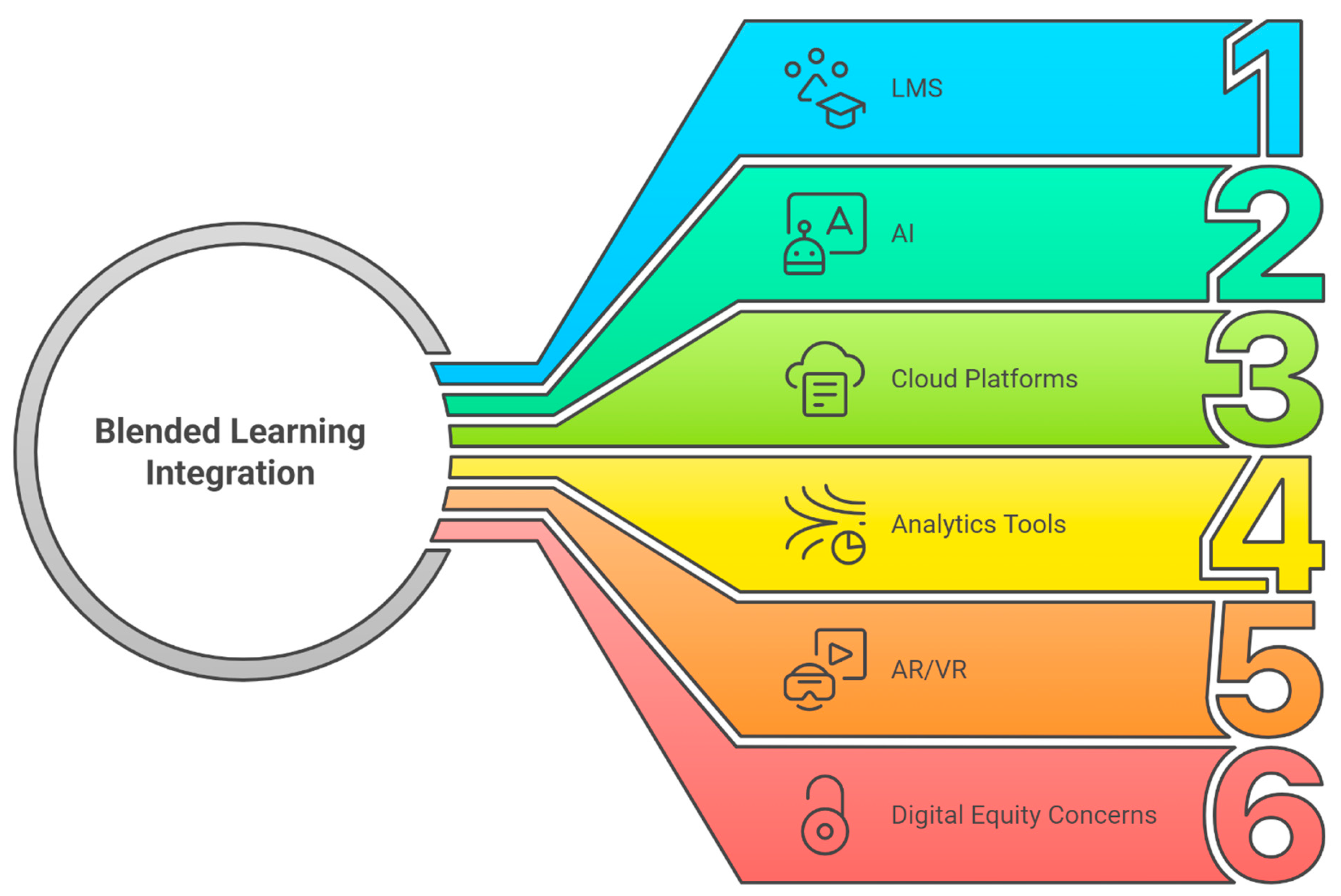
Figure 1. Blended learning integration.
Education 16 00848 g001
Figure 2. Blending Technology, Pedagogy, and AI in Education.
Education 16 00848 g002
Figure 3. PRISMA flow diagram (Page et al., 2021).
Education 16 00848 g003
Figure 4. Themes and sub-themes weighted by number of supporting studies.
Education 16 00848 g004
Figure 5. Research methods represented in the reviewed literature. The chart highlights the predominance of systematic literature reviews, with fewer empirical studies using quantitative, qualitative, or mixed-method approaches.
Education 16 00848 g005
Figure 6. Sample size ranges by research method.
Education 16 00848 g006
Figure 7. Evidence distribution across reported research gaps.
Education 16 00848 g007
Table 1. Search criteria covering both inclusion and exclusion criteria.
CriterionInclusion CriteriaExclusion Criteria
Topic/FocusBlended learning in higher educationStudies not related to blended learning in higher education; studies focused solely on primary or secondary education
Source TypeScholarly journalsGrey literature or sources without academic validation
Document Type/Peer ReviewPeer-reviewedNon-peer-reviewed literature, editorials, or opinion pieces
Research TypeEmpirical or conceptualNon-empirical and non-conceptual studies (such as commentaries, opinion pieces, book reviews, news items).
Publication Date2020–2025Articles published before 2020
LanguageEnglishNon-English publications
Table 2. Analytical mapping of review themes to TPACK domains and AI Roles Framework.
ThemeTPACK ConnectionAI Roles ConnectionSynthesis Insight
Pedagogical design and learner experiencePedagogical knowledge; technological pedagogical knowledgeLimited direct AI roleMost studies discuss engagement, but fewer show how technology is adapted to learner diversity.
Technology integration and infrastructureTechnology knowledge; technological pedagogical knowledgeAI as support infrastructureTechnology is often treated as an adoption rather than as a design integration.
AI and immersive technologiesTechnological knowledge; technological pedagogical content knowledgeAI as mediator, assistant, and agentAI is commonly framed as promising but often lacks pedagogical and ethical operationalisation.
Assessment, feedback, and analyticsTechnological pedagogical knowledgeAI as an assistant and mediatorFeedback tools show strong potential, but evidence is often short-term and tool-centred.
Challenges and barriersContextual extension of TPACKAI risk and governanceInstitutional readiness, equity, and ethics shape whether blended learning can be sustainable.
Outcomes and effectivenessIntegration of pedagogy, technology, and contentIndirect AI rolePositive outcomes depend on alignment, not merely on technology availability.
Table 3. Summary of findings.
ThemeSub-ThemeSupporting Studies
Pedagogical Design & Learner ExperienceInstructional Design ModelsArmellini et al. (2021); Bokolo et al. (2022); Esnaashari et al. (2025); Feng (2023); Harper et al. (2024); Imran et al. (2023); Li et al. (2024); Luo et al. (2022); Razia et al. (2023); Antonio (2022); Sareen and Mandal (2024)
Student Engagement and MotivationAlsalhi et al. (2021); Aravind (2024); Armellini et al. (2021); Cao (2023); Chen and Chiou (2014); De Bruijn-Smolders and Prinsen (2024); Demirer and Sahin (2013); Esnaashari et al. (2025); Harper et al. (2024); Huang and Kuang (2024); Istenic (2024); Luo et al. (2022); McPhee (2021); Park and Doo (2024); Antonio (2022); X. Wang et al. (2024); Wong et al. (2023); K. Zhang and Aslan (2021)
Gamification and Self-Regulated LearningBokolo et al. (2022); Dimitriadou and Lanitis (2023); Antonio (2022); (Z. Zhang & Huang, 2024)
Technological IntegrationTAM, UTAUT, Adoption ModelsBokolo et al. (2022); Istenic (2024)
Institutional Readiness and Smart ModelsAravind (2024); Castellano-Beltran et al. (2025); Dimitriadou and Lanitis (2023); Fernandez et al. (2023); Graham et al. (2023); Kuleto et al. (2021); Le et al. (2022); Sareen and Mandal (2024)
AI and Immersive TechnologiesAI Roles (Assistant, Mediator, Agent)Alani and Wisker (2026); Cinar et al. (2024); Dimitriadou and Lanitis (2023); Mirza et al. (2025); Park and Doo (2024); Ruano-Borbalan (2025); Sembey et al. (2024); Tan et al. (2025)
Generative AI and Writing EthicsPark and Doo (2024); Ruano-Borbalan (2025)
AR/VR and Immersive PedagogiesAl-Ansi et al. (2023); Bermejo et al. (2023); Mirza et al. (2025)
Assessment and FeedbackAI-Enabled Assessment and GradingBokolo et al. (2022); Park and Doo (2024)
Real-Time Feedback, Analytics, DashboardsDimitriadou and Lanitis (2023); Esnaashari et al. (2025)
Challenges and BarriersFaculty Resistance/Institutional GapsAravind (2024); Armellini et al. (2021); De Bruijn-Smolders and Prinsen (2024); Esnaashari et al. (2025); Le et al. (2022); Mirza et al. (2025); Sareen and Mandal (2024); X. Wang et al. (2024)
Student Digital Divide/Tech AnxietyAravind (2024); Mirza et al. (2025); Monteros-Lyerly (2022); Sareen and Mandal (2024); X. Wang et al. (2024)
Outcomes and EffectivenessAcademic Gains, Flexibility, Self-DirectionAli et al. (2023); Alsalhi et al. (2021); Aravind (2024); Armellini et al. (2021); Bokolo et al. (2022); Cao (2023); Chung et al. (2022); Harper et al. (2024); Istenic (2024); Park and Doo (2024); X. Wang et al. (2024); R. Wang and Raman (2025)
Critical Thinking and Digital LiteracyArmellini et al. (2021); Istenic (2024); Sareen and Mandal (2024)
Table 4. Distribution of reviewed studies by research methodology.
Research MethodologyTotal Number of StudiesStudies
Qualitative11Armellini et al. (2021); Bygstad et al. (2022); Cannaos et al. (2024); Castellano-Beltran et al. (2025); Esnaashari et al. (2025); Graham et al. (2023); Istenic (2024); Le et al. (2022); Ruano-Borbalan (2025); Shah et al. (2024); Tran-Thi-Thanh (2024)
Quantitative20Al-Adwan et al. (2023); Ali et al. (2023); Alsalhi et al. (2021); Cao (2023); Chan and Hu (2023); Cinar et al. (2024); Crompton and Burke (2023); Hamad et al. (2024); Harper et al. (2024); Huda et al. (2022); Kang and Kim (2021); Kuleto et al. (2021); Luo et al. (2022); Lv and Li (2024); Minadzi and Segbenya (2024); Pepe and McCollum (2023); Vavasseur et al. (2020); X. Wang et al. (2024); Zhao and Zhou (2024); Nantha et al. (2024)
Systematic Literature Review28Al-Ansi et al. (2023); Almeman et al. (2025); Antonio (2022); Ashraf et al. (2022); Bearman et al. (2023); Bermejo et al. (2023); Bokolo et al. (2022); De Bruijn-Smolders and Prinsen (2024); Dimitriadou and Lanitis (2023); Fernandez et al. (2023); George and Wooden (2023); Godsk and Møller (2025); Guppy et al. (2022); Imran et al. (2023); Kovari (2025); Leahy et al. (2019); Li et al. (2024); Lindín et al. (2023); McCarthy and Palmer (2023); McPhee (2021); Mena-Guacas et al. (2025); Min and Yu (2023); Park and Doo (2024); Sareen and Mandal (2024); Sembey et al. (2024); Tan et al. (2025); R. Wang and Raman (2025); K. Zhang and Aslan (2021)
Mixed-Method4Aravind (2024); Islam et al. (2022); Mirza et al. (2025); Van der Stap et al. (2024)
Table 5. Summary of research methods, data collection, sampling techniques, sample sizes and data analysis methods.
Research MethodData Collection MethodsSampling TechniquesSample Size RangeData Analysis Methods
Quantitative Questionnaire, pre-test and post-test assessments, questionnaire, academic performance recordsPurposive sampling, quasi-experimental design with a matching-only post-test-only control group, randomised experimental design48 to 4537 participantsDescriptive statistics, t-tests, ANOVA, regression analysis, statistical comparison, meta-analysis
Mixed-methodSurveys, semi-structured interviews, interviews, document analysis, questionnaires, focus groups, literature reviews and empirical research, pre/post testsPurposive sampling59 to 4582 participantsDescriptive statistics and thematic analysis, statistical analysis
QualitativeFocus group discussions, interviews, observations, document reviewPurposive sampling, quasi-experimental design, non-randomised sampling, convenience sampling12 to 60 participantsThematic analysis (identifying key categories), narrative and thematic synthesis, discourse analysis
Systematic Literature Review Structured database search, screening and filtering process, extraction of study characteristics, qualitative or quantitative synthesisPurposive sampling29 to 8521 articlesNarrative synthesis, thematic synthesis, content analysis, meta-analysis
Table 6. Technological integration and theoretical framework gaps.
AspectSummary of EvidenceSupporting Studies
Limited Use of AI in Face-to-Face ComponentsMost studies focus on AI conceptually or in online settings. Minimal evidence of AI for classroom feedback, orchestration, or real-time analytics.Almeman et al. (2025); Al-Adwan et al. (2023); Al-Ansi et al. (2023); Alsalhi et al. (2021); Antonio (2022); Aravind (2024); Bearman et al. (2023); Bokolo et al. (2022); Crompton and Burke (2023); Dimitriadou and Lanitis (2023); George and Wooden (2023); Graham et al. (2023); Kovari (2025); Kuleto et al. (2021); Leahy et al. (2019); Park and Doo (2024); Ruano-Borbalan (2025); R. Wang and Raman (2025); K. Zhang and Aslan (2021)
Lack of Research on Generative AI (e.g., ChatGPT)ChatGPT and similar generative AI tools are largely under-represented in most of the examined literature.Almeman et al. (2025); R. Wang and Raman (2025); Al-Adwan et al. (2023); Alsalhi et al. (2021); Antonio (2022); Bearman et al. (2023); Bokolo et al. (2022); Chan and Hu (2023); Crompton and Burke (2023); George and Wooden (2023); Graham et al. (2023); Kovari (2025); Kuleto et al. (2021); Leahy et al. (2019); Park and Doo (2024); Ruano-Borbalan (2025); Tan et al. (2025); K. Zhang and Aslan (2021)
Speculative AR/VR IntegrationAR/VR are discussed aspirationally but lack rigorous empirical validation or instructional integrationAl-Ansi et al. (2023); Almeman et al. (2025); Ashraf et al. (2022); Bermejo et al. (2023); Cinar et al. (2024); Dimitriadou and Lanitis (2023); Leahy et al. (2019); Lindín et al. (2023); Mena-Guacas et al. (2025); Mirza et al. (2025); Ruano-Borbalan (2025); Tan et al. (2025); R. Wang and Raman (2025)
Weak Theoretical Integration (CoI, TAM, UTAUT, TPACK)CoI appear sporadically; UTAUT is rarely operationalised. Studies seldom use frameworks to guide empirical design.Antonio (2022); R. Wang and Raman (2025); Al-Adwan et al. (2023); Alsalhi et al. (2021); Aravind (2024); Ashraf et al. (2022); Bokolo et al. (2022); Crompton and Burke (2023); Esnaashari et al. (2025); Fernandez et al. (2023); Hamad et al. (2024); Graham et al. (2023); Lv and Li (2024); Islam et al. (2022); Kovari (2025); Park and Doo (2024); Tran-Thi-Thanh (2024); K. Zhang and Aslan (2021)
Table 7. Methodological gaps and evidence limitations.
AspectSummary of EvidenceSupporting Studies
Overuse of Cross-Sectional and Descriptive DesignsMost studies adopt cross-sectional or descriptive designs; experimental, longitudinal, and mixed-method studies are rare.Al-Adwan et al. (2023); Alsalhi et al. (2021); Al-Ansi et al. (2023); Antonio (2022); Ashraf et al. (2022); Armellini et al. (2021); Cannaos et al. (2024); Cao (2023); Crompton and Burke (2023); Chan and Hu (2023); Hamad et al. (2024); Harper et al. (2024); Huda et al. (2022); Kuleto et al. (2021); Luo et al. (2022); Li et al. (2024); Tan et al. (2025); Tran-Thi-Thanh (2024); Van der Stap et al. (2024); Vavasseur et al. (2020); X. Wang et al. (2024)
Limited Use of TriangulationFew studies employ multiple data sources or cross-validation procedures, undermining the robustness of findings.R. Wang and Raman (2025); Alsalhi et al. (2021); Antonio (2022); Ashraf et al. (2022); Aravind (2024); De Bruijn-Smolders and Prinsen (2024); Graham et al. (2023); Guppy et al. (2022); Imran et al. (2023); Istenic (2024); Islam et al. (2022); Tan et al. (2025); Tran-Thi-Thanh (2024); Van der Stap et al. (2024); X. Wang et al. (2024)
Neglect of Long-Term Learning OutcomesLimited focus on outcomes like knowledge retention, skills transfer, and behavioural change.Antonio (2022); Almeman et al. (2025); R. Wang and Raman (2025); Ashraf et al. (2022); Bearman et al. (2023); Cao (2023); Crompton and Burke (2023); Harper et al. (2024); Huda et al. (2022); Graham et al. (2023); Kovari (2025); Kang and Kim (2021); Li et al. (2024); Tan et al. (2025); Tran-Thi-Thanh (2024); Van der Stap et al. (2024); X. Wang et al. (2024)
Underexplored Assessment and Feedback MechanismsAssessment literacy, student self-reflection, and feedback loops are minimally discussed.Alsalhi et al. (2021); R. Wang and Raman (2025); Almeman et al. (2025); Aravind (2024); Armellini et al. (2021); Bokolo et al. (2022); De Bruijn-Smolders and Prinsen (2024); Guppy et al. (2022); Graham et al. (2023); Huda et al. (2022); Imran et al. (2023); Islam et al. (2022); Lindín et al. (2023); Tran-Thi-Thanh (2024); Van der Stap et al. (2024); X. Wang et al. (2024)
Table 8. Stakeholder, disciplinary, and contextual gaps.
AspectSummary of EvidenceSupporting Studies
Excessive focus on Student PerspectivesMost studies focus on student satisfaction, performance, or engagement, with limited attention to teacher, policymaker, or administrator viewpoints.Al-Adwan et al. (2023); Al-Ansi et al. (2023); Almeman et al. (2025); Alsalhi et al. (2021); Antonio (2022); Aravind (2024); Armellini et al. (2021); Castellano-Beltran et al. (2025); Chan and Hu (2023); Graham et al. (2023); Guppy et al. (2022); Islam et al. (2022); Kovari (2025); Istenic (2024); Tan et al. (2025); Vavasseur et al. (2020); X. Wang et al. (2024)
Lack of Cross-Disciplinary RepresentationThe majority of research is rooted in STEM; few studies explore blended learning in the arts, humanities, or social sciences.Al-Adwan et al. (2023); Al-Ansi et al. (2023); Ali et al. (2023); Almeman et al. (2025); Alsalhi et al. (2021); Ashraf et al. (2022); Castellano-Beltran et al. (2025); Graham et al. (2023); Le et al. (2022); Leahy et al. (2019); Lindín et al. (2023); Tran-Thi-Thanh (2024); Vavasseur et al. (2020); X. Wang et al. (2024)
Fragmented Institutional ScopeStudies are often confined to a single course or institution without scalable or comparative analysis.Al-Adwan et al. (2023); Al-Ansi et al. (2023); Ali et al. (2023); Almeman et al. (2025); Alsalhi et al. (2021); Aravind (2024); Ashraf et al. (2022); Bygstad et al. (2022); Cannaos et al. (2024); Graham et al. (2023); Imran et al. (2023); Istenic (2024); Lindín et al. (2023); Tan et al. (2025); Tran-Thi-Thanh (2024); R. Wang and Raman (2025); X. Wang et al. (2024)
Geographical Skew Toward High-Income CountriesResearch predominantly focuses on high-income Western contexts with little engagement from unprivileged countries.Al-Ansi et al. (2023); Almeman et al. (2025); Alsalhi et al. (2021); Ashraf et al. (2022); Bokolo et al. (2022); Cao (2023); Guppy et al. (2022); Kovari (2025); Kuleto et al. (2021); Le et al. (2022); Leahy et al. (2019); Tan et al. (2025); R. Wang and Raman (2025); X. Wang et al. (2024)
Table 9. Equity, ethics, and inclusion gaps.
AspectSummary of EvidenceSupporting Studies
Neglect of Vulnerable Learner GroupsFew studies have assessed the impact of blended learning on learners with disabilities, those with low digital literacy, or those from low socio-economic backgrounds.Al-Ansi et al. (2023); Almeman et al. (2025); Antonio (2022); Aravind (2024); Ashraf et al. (2022); Castellano-Beltran et al. (2025); Chan and Hu (2023); Graham et al. (2023); Imran et al. (2023); Le et al. (2022); Lindín et al. (2023); R. Wang and Raman (2025); X. Wang et al. (2024)
Underuse of Inclusive Design FrameworksFrameworks like UDL are rarely applied or discussed substantively.Almeman et al. (2025); Alsalhi et al. (2021); Aravind (2024); Ashraf et al. (2022); Castellano-Beltran et al. (2025); Graham et al. (2023); Islam et al. (2022); Lindín et al. (2023); R. Wang and Raman (2025)
Lack of Ethical Discourse in Technology UseMinimal engagement with ethical issues such as data privacy, surveillance, consent, or AI bias.Al-Ansi et al. (2023); Almeman et al. (2025); Ashraf et al. (2022); Bearman et al. (2023); Chan and Hu (2023); Crompton and Burke (2023); George and Wooden (2023); Kovari (2025); Kuleto et al. (2021); Leahy et al. (2019); Tan et al. (2025); R. Wang and Raman (2025)
Disclaimer/Publisher’s Note: The statements, opinions and data contained in all publications are solely those of the individual author(s) and contributor(s) and not of MDPI and/or the editor(s). MDPI and/or the editor(s) disclaim responsibility for any injury to people or property resulting from any ideas, methods, instructions or products referred to in the content.