Article

Active Learning and Feedback in EFL Teacher Education Through AI-Supported Flipped Classrooms
by
Paola Cabrera-Solano
*,
Luz Castillo-Cuesta
and
Cesar Ochoa-Cueva
Departamento de Educación y Humanidades, Facultad de Ciencias Sociales, Universidad Técnica Particular de Loja, Loja 110107, Ecuador
*
Author to whom correspondence should be addressed.
Educ. Sci. 2026, 16(6), 827; https://doi.org/10.3390/educsci16060827
Submission received: 17 April 2026 / Revised: 8 May 2026 / Accepted: 14 May 2026 / Published: 25 May 2026
(This article belongs to the Section Higher Education)

Abstract

This study examines the integration of generative Artificial Intelligence (AI) tools within a Flipped Classroom model to enhance active learning and feedback processes in an English as a Foreign Language (EFL) teaching program. The participants were 242 pre-service EFL teachers enrolled in upper-level courses at a private university in southern Ecuador. Adopting a mixed-methods, design-based research approach, the study incorporated a diagnostic survey, written reflections, post-intervention survey, and focus groups. These instruments explored students’ prior knowledge, perceptions, and experiences regarding AI-supported learning. Findings showed that AI tools such as ChatGPT, Gemini, and Copilot strengthened students’ linguistic accuracy, writing performance, self-regulation, and understanding of pedagogical concepts. AI-generated feedback complemented teacher feedback by providing immediate and clear guidance, promoting iterative revision and deeper engagement with course content. Participants reported increased autonomy, improved time management, and greater readiness to integrate AI into future teaching practices. The results indicate that AI-supported flipped instruction fosters meaningful learning, enhances feedback quality, and develops both linguistic and pedagogical competencies.

1. Introduction

The rapid expansion of AI in educational contexts has reshaped how teachers and learners interact with content, engage in active learning, and receive feedback. In EFL teacher education, these technological advances are particularly relevant as pre-service teachers must simultaneously develop linguistic, pedagogical, and digital competencies to respond to the demands of contemporary classrooms. Active learning frameworks grounded in constructivist theory emphasize learner autonomy, collaboration, and reflective engagement (Bruner, 1961; Lewis, 1930; Piaget, 1980; Vygotsky, 1962). When supported by well-designed instructional innovations, these approaches promote deeper comprehension and sustained cognitive effort, enabling learners to apply and extend knowledge in meaningful ways (Slavin, 2014; Telore & Damtew, 2023). Within EFL teacher preparation, the integration of active learning methodologies is important because it strengthens analytical, linguistic, and reflective skills that future educators must later model and scaffold in their own teaching.
One of the benefits of integrating AI in the classroom is Feedback, as it plays a central role in active learning by helping students monitor performance, regulate their learning processes, and refine both linguistic accuracy and pedagogical reasoning (Hattie & Timperley, 2007; Liu & Feng, 2023; Nurachman, 2020). Recent studies in teacher education highlight that diverse feedback sources, such as peer, teacher, and technology-mediated, enhance reflective judgment and self-regulation, fostering more informed instructional decision-making (Okumu et al., 2025; Öztürk et al., 2025). In particular, AI-based tools provide immediate, detailed, and iterative feedback, helping pre-service teachers internalize assessment principles while providing new opportunities for revising and improving academic tasks (Navío-Inglés et al., 2025). These developments reinforce the need to examine how AI can complement traditional feedback processes and contribute to the formation of reflective, autonomous, and digitally literate EFL educators.
Parallel to these advances, the Flipped Classroom approach has become an influential model for promoting active learning in EFL education. By shifting content exposure to pre-class activities and dedicating in-class time to interaction, problem-solving, and feedback, flipped pedagogies enhance communicative practice, learner autonomy, and collaborative knowledge construction (Ghufron & Nurdianingsih, 2021; Öztürk & Çakroğlu, 2021; Pongpanich et al., 2025). Evidence shows that flipped learning, when integrated with digital or multimodal resources, supports higher-order thinking, idiomatic competence, and improved speaking and writing performance (Fisher et al., 2024). Recent studies further demonstrate that AI-enhanced flipped models, such as those incorporating speech recognition, adaptive feedback, or chatbot-mediated interactions, improve learners’ fluency, pronunciation, and confidence, while also strengthening their AI literacy and engagement (Hava, 2024; Kusuma et al., 2025; Yavuz et al., 2025). These findings suggest the potential of AI-supported flipped instruction to cultivate both linguistic and technological competencies among pre-service EFL teachers.
Within teacher education programs, AI tools have gained prominence for their capacity to support individualized learning, facilitate reflective practice, and provide real-time scaffolding adjusted to learners’ needs (Holmes et al., 2019; Strielkowski et al., 2025). AI systems can generate personalized recommendations, automate corrective feedback, and support collaborative academic tasks, thereby expanding pedagogical possibilities without replacing teachers’ professional judgment (Ruiz-Rojas et al., 2024; Sağn et al., 2024). For pre-service EFL teachers, these affordances offer opportunities to strengthen their linguistic competence, develop digital literacy, and explore innovative approaches to instructional design. Furthermore, integrating AI within flipped methodologies may produce a synergistic effect: pre-class AI-mediated input can enhance preparedness, while in-class interaction deepens conceptual understanding and pedagogical reasoning (Kusuma et al., 2025; Yavuz et al., 2025).
Despite these promising developments, little empirical evidence exists regarding how AI-supported flipped classrooms influence active learning, feedback processes, and professional perceptions among pre-service EFL teachers, particularly in Latin American higher education contexts. Addressing this gap, the present study examines the integration of generative AI tools within a Flipped Classroom model in an undergraduate EFL teacher-education program. Grounded in constructivist principles and supported by contemporary research on active learning, feedback, and educational AI, this study investigates three guiding questions:
RQ1. 
What are the pre-service EFL teachers’ perceptions regarding the use of AI in a Flipped-Classroom setting?
RQ2. 
What is the impact of the integration of AI tools within a Flipped-Classroom approach to support active learning among pre-service EFL teachers?
RQ3. 
How does the use of AI tools contribute to the quality and effectiveness of feedback on academic tasks in EFL teacher education?

2. Literature Review

2.1. Active Learning and Feedback in EFL Teacher Education

Active learning has gained prominence as an effective approach that contrasts with traditional methods and has been increasingly applied across disciplines, including English as a Foreign Language (EFL) education (Lu & Watanapokakul, 2025). Grounded in the constructivist frameworks proposed by Lewis (1930), Bruner (1961), Vygotsky (1962), Piaget (1980), active learning redirects the instructional emphasis from teacher-led content delivery to learner-centered participation. Active learning is characterized as engaging students in purposeful action paired with reflection to build skills, abilities, and knowledge through their active participation. It requires learners to engage in sustained cognitive effort and apply newly acquired concepts and skills, fostering long-term retention and deeper comprehension (Telore & Damtew, 2023). Slavin (2014) describes active learning as an instructional approach that encompasses multiple methods that require learners to assume responsibility for their own learning. This promotes engagement in higher-order thinking by encouraging students to generate and articulate knowledge, in contrast to traditional passive learning.
In EFL education, feedback constitutes a central component of active learning, as it enables learners to monitor their progress, refine their language use, and engage more deeply with cognitively demanding tasks. Hattie and Timperley (2007), Liu and Feng (2023), and Nurachman (2020) argue that feedback is most effective when it is timely, specific, and dialogic, as such characteristics promote improved accuracy, informed learning decisions, and greater learner autonomy. They emphasize that vague or delayed feedback loses much of its instructional value. In pre-service teacher education, feedback is critical to improve candidates’ instructional and language skills and as a bridge between theoretical knowledge and future evaluative teaching practice (Okumu et al., 2025). Moreover, recent research shows that opportunities to engage with peer and teacher feedback strengthen pre-service teachers’ self-regulation and reflective judgment, which are essential for informed instructional decision-making (Öztürk et al., 2025). Certainly, feedback processes help future teachers internalize assessment principles and develop a clearer understanding of how to provide effective evaluative support to their own learners, particularly when integrated with emerging AI-based tools (Navío-Inglés et al., 2025).

2.2. Flipped Learning in EFL Education

The Flipped Learning approach has emerged as a transformative pedagogical model within education by reversing the traditional sequence of instruction, moving initial content presentation outside the classroom, and reserving face-to-face class time for interaction, application, and feedback (Pongpanich et al., 2025). In EFL contexts, Flipped Classroom is seen as beneficial because when students prepare themselves with pre-class materials, they have greater opportunities for communicative practice, peer collaboration, and individualized feedback during class time, which can enhance language skills and learner autonomy (Ghufron & Nurdianingsih, 2021; Öztürk & Çakroğlu, 2021). Similarly, Fisher et al. (2024) reported that well-designed flipped EFL courses improve idiomatic knowledge, higher-order thinking, and oral and written communication, especially when pre-class multimodal resources are combined with in-class collaborative activities.
On the other hand, the connection between the Flipped Learning approach and artificial intelligence in language education has gained attention lately. In this regard, Kusuma et al. (2025) explained that combining AI-based speech recognition tools with a flipped learning model led to substantial improvements in EFL learners’ fluency, pronunciation, and confidence. They also state that AI-enhanced pre-class practice enables iterative skill refinement and prepares learners for more advanced communicative tasks during in-class time. Moreover, Hava (2024) found consistent positive effects of the flipped classroom on writing, speaking, and overall academic achievement, especially when this approach is grounded in constructivist principles and supported by digital tools such as augmented reality and AI chatbots. Thus, flipped learning enhances student engagement and language performance but also warns about challenges related to access to technology and students’ self-regulation. Complementing this perspective, Yavuz et al. (2025) showed that AI-supported flipped classroom applications improved students’ AI literacy, learning perceptions, and engagement, illustrating the dual benefits of fostering linguistic and technological competencies simultaneously.

2.3. Artificial Intelligence Tools for Teaching and Learning

Artificial intelligence tools have become increasingly influential in transforming teaching and learning processes, particularly by supporting individualized learning, providing responsive feedback, and promoting active engagement (Strielkowski et al., 2025). Within teacher education, AI tools have demonstrated potential to support the development of reflective practice, linguistic accuracy, and metacognitive awareness through real-time, automated feedback and simulation-based learning opportunities, which respond to individual needs (Holmes et al., 2019; Zawacki-Richter et al., 2019). Additionally, AI systems can dynamically adjust instructional content, pacing, and scaffolding, thereby supporting pedagogical personalization that extends beyond what is feasible through traditional instructional models (Alawneh et al., 2024).
Regarding the integration of AI in education, Sağn et al. (2024) assert that AI tools should serve as a support to, rather than a substitute for, teachers’ creativity and critical judgment. Certainly, the availability of tools like chatbots, content-generation systems, and collaborative platforms strengthens student interaction, encourages teamwork on academic tasks, and shares approaches to solving problems (Ruiz-Rojas et al., 2024). Additionally, these technologies support the development and sharing of instructional materials while also fostering essential competencies such as critical thinking and student collaboration. For this reason, rather than replacing educators, AI tools can complement pedagogical practices by expanding opportunities for meaningful learning (Hutson et al., 2024). These affordances enable a more dynamic and personalized developmental process, fostering deeper learning by helping EFL learners monitor their thinking, identify gaps, and apply targeted strategies for improvement.

2.4. Previous Studies

Ling and Jan (2025) conducted a qualitative case study to examine how university English teachers integrate AI chatbots into flipped classroom settings and how such tools influence instruction and student learning. The researchers explored teachers’ experiences, perceived effects on learners, and the challenges encountered when implementing chatbot-mediated pedagogy. Data were collected through eight classroom observations, and semi-structured interviews with six English teachers at a Chinese university, and the analysis followed an inductive–deductive thematic approach guided by the TPACK framework. The findings revealed that teachers used chatbots across a range of pedagogical functions, including vocabulary support, grammar explanation, dialogue generation, and creative language production, and strategically embedded them into both pre-class autonomous learning and in-class collaborative activities. Teachers perceived that chatbot use fostered greater student autonomy, confidence, and engagement while enabling deeper in-class interaction. However, they also identified challenges such as students’ overreliance on chatbot-generated content, confusion caused by inaccurate responses, increased instructional workload, and a shifting sense of teacher role and authority. To address these issues, teachers implemented structured guidance, taught students chatbot-literacy strategies, and reframed their role as facilitators who scaffold critical evaluation of AI outputs. The study highlights the central role of teacher agency in meaningfully integrating AI chatbots into flipped EFL instruction.
Namaziandost (2025) investigated the effects of integrating flipped learning with AI-enhanced instructional tools on EFL learners’ metacognitive awareness, writing development, and levels of foreign language learning boredom. The study employed a quasi-experimental design with pre-test and post-test measures, involving EFL Iranian learners who received instructional materials and AI-supported tasks before class, followed by interactive, problem-solving activities during in-class sessions. Quantitative data were collected through validated metacognitive awareness questionnaires, writing assessments, and a boredom scale, and were analyzed to compare the performance of learners in the experimental flipped-AI condition with that of those receiving traditional instruction. The results showed that the AI-supported flipped model significantly improved learners’ metacognitive regulation, writing accuracy and complexity, and overall writing performance. Additionally, students in the experimental group reported reduced levels of boredom and higher engagement, indicating that the combined approach fostered greater cognitive involvement and motivation. The study demonstrates that the integration of AI tools within a flipped instructional framework can substantially enhance effective and academic outcomes in EFL learning.
A study conducted by Yin and Chew (2025) proposed a conceptual framework that integrates AI-supported flipped classrooms with Self-Regulated Learning (SRL) to address persistent challenges in English listening instruction in Chinese higher education. Grounded in Zimmerman’s SRL model, the framework positions AI tools, such as adaptive diagnostic systems and real-time feedback applications, as catalysts for metacognitive development, while flipped learning restructures instructional sequences to promote active engagement. The authors argue that this dual approach mitigates passive learning, reduces foreign language listening anxiety, and supports differentiated instruction in classrooms with varied proficiency levels. The model functions across three phases (input, process, and output), enabling personalized pre-class preparation, strategy-rich classroom interaction, and long-term development of sustainable learning habits. The study also highlights constraints, including unequal access to digital infrastructure, over-reliance on algorithmic recommendations, and the necessity of teacher guidance to ensure deep learning.
The study conducted by Polamuri et al. (2024) examines how AI tools and frameworks can enhance learner engagement and improve learning outcomes in language classrooms. It highlights AI’s potential to transform traditional instruction through intelligent tutoring systems (ITSs), natural language processing (NLP) tools, adaptive learning platforms, chatbots, automated essay scoring, and real-time feedback systems. The literature review emphasizes that AI’s personalized and interactive capabilities, such as tailored learning paths, instant error correction, and gamified environments, can increase motivation, reduce attrition, and address individual learner differences. The authors proposed a mixed-methods research design involving 300 high school students assigned to AI-supported or traditional instruction groups. Quantitative data (pre/post proficiency tests, engagement metrics, performance analytics) and qualitative data (surveys, interviews, classroom observations) were used to evaluate AI’s impact. The results indicate substantial improvements for the AI group, including higher proficiency gains, increased engagement, more frequent language practice, and greater satisfaction among students and teachers. The study concluded that AI frameworks significantly enhance personalization, efficiency, and active participation in language learning, while noting ethical concerns such as data privacy and algorithmic bias.
In an investigation carried out by Kusuma et al. (2025), the impact of AI tools within a flipped classroom framework to enhance EFL learners’ speaking proficiency was examined. The intervention combined pre-class AI-mediated practice, featuring automated speech recognition, pronunciation scoring, and adaptive feedback, with in-class communicative tasks designed to consolidate oral performance. Quantitative analysis revealed significant post-test improvements for the experimental group across measures of fluency, pronunciation accuracy, coherence, and grammatical precision when compared to a traditionally instructed control group. The authors argue that the AI-supported flipped model optimizes learning by enabling iterative, individualized skill refinement before class, thereby allowing in-class time to be devoted to higher-order communicative tasks. Qualitative data further indicated that learners experienced heightened confidence, reduced anxiety, and increased willingness to speak due to the privacy and immediacy of AI feedback. It is concluded that AI-enhanced flipped designs expand the pedagogical affordances of the traditional flipped model by introducing a dynamic, feedback-driven learning cycle that strengthens oral language development.
Furthermore, Yavuz et al. (2025) conducted a mixed-methods study in higher education to investigate how AI-supported flipped classroom applications influence learners’ academic experiences, perceptions, and AI literacy. The flipped model required students to complete AI-mediated preparatory activities, such as adaptive tutorials, automated feedback modules, and interactive learning analytics dashboards, before attending class. During in-class sessions, students engaged in collaborative tasks that benefited from insights generated by AI systems. Quantitative findings demonstrated statistically significant increases in learners’ AI literacy competencies following the intervention, highlighting the role of AI-flipped environments in developing both linguistic and technological proficiencies. Survey and interview data revealed that students perceived the AI-supported flipped design as more engaging, interactive, and personalized than traditional approaches, citing enhanced motivation, deeper cognitive involvement, and improved self-regulation. However, participants also noted challenges related to the increased time demands of pre-class learning and the need for explicit guidance on interpreting AI-generated feedback. The authors conclude that AI-supported flipped classrooms foster more holistic skill development, linguistic, metacognitive, and technological, making them a promising direction for contemporary EFL teacher education.
Previous research suggests that using AI in flipped classrooms can make learning EFL more effective. It helps students become more independent and engaged, strengthens their language skills, and supports their ability to manage their own learning. At the same time, it shifts the teacher’s role toward guiding students and encouraging critical thinking and self-directed learning. These studies further show positive affective outcomes, such as increased motivation and reduced anxiety, but simultaneously reveal persistent challenges related to overreliance on AI, inaccuracies, workload, equity, and ethical concerns, highlighting the need for structured guidance and AI literacy. Building on these findings, this study aims to take a closer look at how AI-generated support can be meaningfully integrated into flipped EFL classrooms. It also explores ways to use these tools to enhance the feedback process and to provide practical evidence on how AI can be used to promote active learning.

3. Materials and Methods

3.1. Research Design

This study adopted a mixed-methods, design-based research perspective to investigate how generative AI tools can contribute to supporting active learning and feedback in EFL teacher education, within a Flipped Classroom approach. The quantitative phase included a diagnostic and a post-intervention survey, while the qualitative phase involved students’ written reflections and a focus group. The approach focuses on the development and refinement of AI-supported strategies to promote active, student-centered learning and feedback (Freeman et al., 2014; Zainuddin & Halili, 2016). This design is in line with the principle of constructivism, which stresses learner autonomy, interaction, and technological novelty in higher education (Lehtinen et al., 2023).

3.2. Setting and Participants

This study took place at a private university located in the southern region of Ecuador. The sample consisted of 242 pre-service EFL teachers, including 180 women and 62 men. Convenience sampling was employed due to the accessibility and availability of participants, as well as the feasibility of gathering data from students already enrolled in the selected courses. This non-probability sampling method is commonly used in educational research when participants are easily reachable and share relevant characteristics with the target population (Etikan et al., 2016). The students’ proficiency levels ranged from B1 to B2, as established by the Common European Framework of Reference for Languages (CEFR). All participants were enrolled in three online upper-level courses within the Teaching English as a Foreign Language (TEFL) program: Discourse Analysis, Complex Exam, and Semantics and Pragmatics, which are part of the final year of their degree program. These courses integrate linguistic and pedagogical dimensions, fostering both theoretical understanding and practical application. The group included students from various international and national affiliated centers of the university located throughout Ecuador’s coastal, highland, Amazonian, and insular regions. All participants voluntarily agreed to take part in the study by providing their informed consent.

3.3. Data Collection Instruments

An online diagnostic survey was administered to explore students’ prior knowledge, perceptions, and attitudes toward the use of AI in their preparation for future EFL teachers. The instrument consisted of 16 questions organized into four sections, which provided quantitative data. The first section gathered information about participants’ general understanding of AI, while the second focused on their opinions and experiences using AI tools to support active learning. The third section examined perspectives related to feedback, and the final section addressed students’ prior experiences with active learning methodologies that integrate AI. Overall, the questionnaire included 13 five-point Likert-scale items (ranging from Strongly Agree to Disagree Strongly and 3 closed-ended questions).
The second instrument consisted of written reflections, designed to elicit students’ perspectives on integrating AI into their academic tasks. These reflections provided qualitative insights into how students perceived AI as a support tool for active learning, the flipped classroom, and feedback. Participants were invited to write short reflections addressing the following guiding questions:
  • Which suggestions provided by AI did you find most useful for improving your assignments?
  • Was there any feedback from the AI tools that you disagreed with or chose not to implement? Please explain why.
  • In what ways did the use of AI contribute to your understanding and active engagement with the topics studied?
  • What were the main advantages and challenges you experienced when using AI during the writing of your assignments?
A focus group was conducted via the Zoom platform. This technique was based on a questionnaire, which served to obtain in-depth qualitative views into students’ experiences and perceptions regarding the integration of AI in their teacher-training process. The discussion explored several key topics, including participants’ perceptions of AI use in EFL instruction and how AI contributed to promoting active learning during synchronous and asynchronous activities. Additionally, the focus group examined students’ evaluations of the quality of feedback provided by both AI tools and the instructor, as well as their views on how AI integration influenced the quality of their assignments. Participants were also encouraged to reflect on the effectiveness of the course methodology, to identify the main advantages and challenges associated with using AI in academic contexts, and to discuss how these tools fostered critical reflection on their active learning
Finally, a post-intervention online survey was administered to collect participants’ perspectives on their experiences after completing the study. The instrument consisted of 16 items organized into four thematic sections and employed a five-point Likert scale (1 = Strongly Disagree, 5 = Strongly Agree). The first section examined participants’ overall satisfaction with the methodology, while the second focused on their perceptions of AI as a tool for active learning support. The third section examined their views on the feedback received through AI-assisted activities, and the final section assessed the impact of the learning experience. This survey provided quantitative results on how participants evaluated the integration of AI into their learning process and its influence on their professional development as future EFL teachers.

3.4. Validity and Reliability of the Instruments

Before implementation, all data collection instruments were subjected to a piloting and validation process to ensure their suitability for the study. The pilot testing was carried out with a group of students who shared similar characteristics to the target participants, which made it possible to identify and revise any unclear items. This process helped guarantee that the instruments were clear, coherent, and aligned with the research objectives. Subsequently, a validation procedure was conducted to examine the internal consistency and overall reliability of the instruments. The analysis yielded a Cronbach’s alpha coefficient of 0.76, indicating an acceptable level of internal consistency.

3.5. Procedure

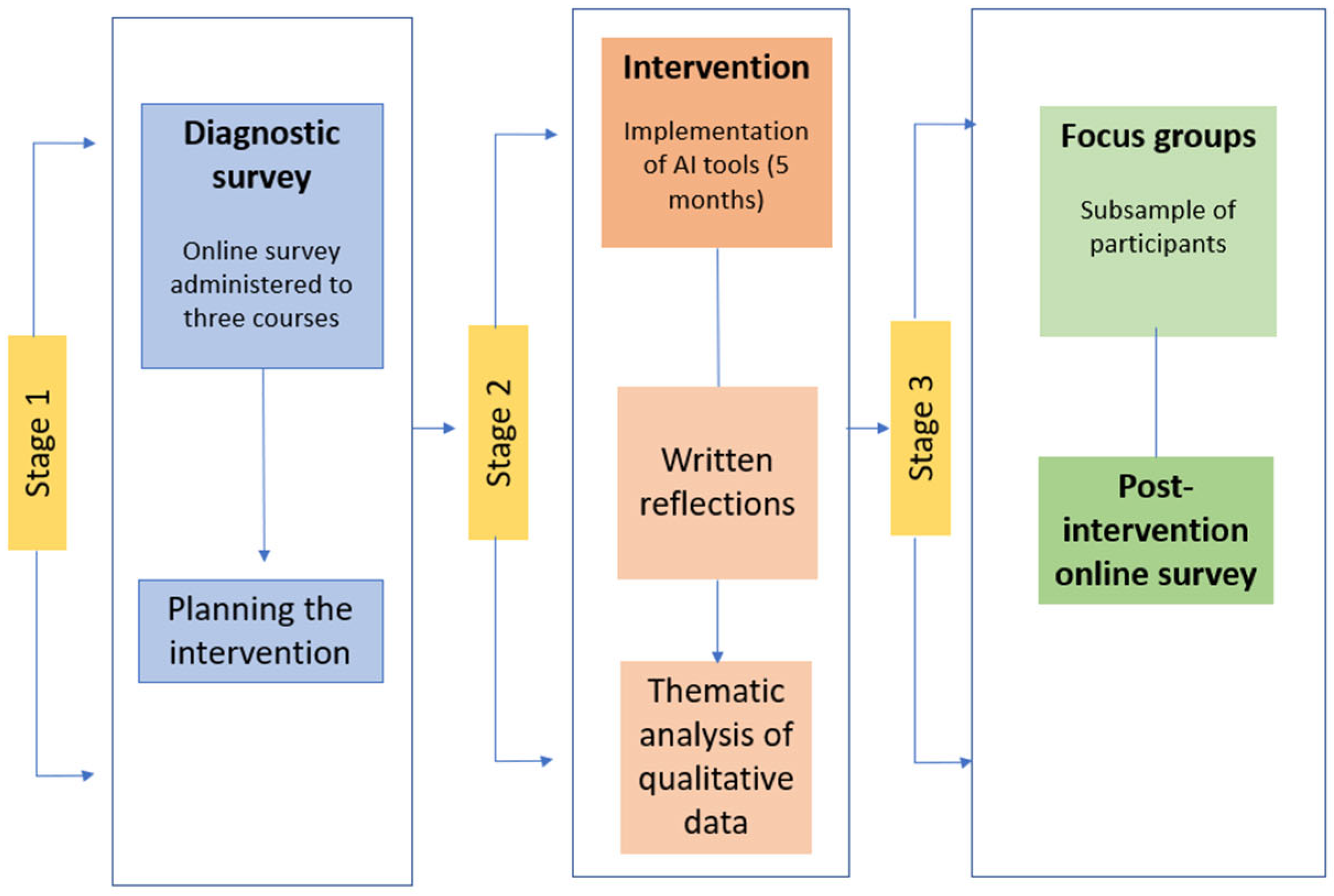
In the initial phase, the online diagnostic survey was administered to the students enrolled in the three courses. Thus, participants offered opinions regarding AI’s potential to provide timely and meaningful feedback. Based on the diagnostic results, a five-month intervention was implemented to explore the impact of using ChatGPT-5.5 from OpenAI, Gemini 3.1 pro, and Copilot pro on students’ learning processes. Throughout this period, participants completed a series of academic essays, submitted through the university’s Canvas platform. Each task required students to review the provided guidelines and rubrics before using AI tools to generate ideas, organize their drafts, and refine their work before final submission. This process was supported by standardized prompts given by the instructors. This ensured that the AI output provided the content required for the task. In addition, the teachers’ guidelines contained instructions on the ethical and responsible use of AI, including the protection of personal data. During synchronous sessions, students had the opportunity to clarify doubts regarding the tasks. Once the assignments were received, instructors assessed them according to the established rubrics and provided feedback. Moreover, students elaborated written reflections describing the benefits and challenges they experienced while incorporating AI into their academic work. These reflections offered qualitative data on how students viewed AI as a support tool in this study. A thematic analysis was conducted following the guidelines proposed by Nowell et al. (2017) to ensure a systematic and trustworthy interpretation of the qualitative data.
A subsample of 20 participants was intentionally selected for carrying out focus group online meetings as part of the qualitative phase. The main purpose of this stage was to deepen and explain the patterns identified in the quantitative findings, following an explanatory sequential mixed-methods design (Creswell & Clark, 2007). The subsample for the focus group was selected from students who voluntarily expressed their willingness to participate. For this purpose, students were asked to register, and the first 20 respondents were included in this activity. Thus, three focus group discussions (6 to 7 students) were conducted for approximately 90 min. The groups were designed to maintain moderate homogeneity, fostering open debate and heterogeneity. In this stage, a post-intervention online survey was also applied to all participants, aiming at gathering information on the implementation of the intervention. These data offered quantitative results that allowed the researchers to determine the impact of the use of AI tools within the flipped classroom approach to support active learning. All the aforementioned stages are synthesized in Figure 1.

4. Results

The diagnostic results revealed that over 70% of students possessed basic knowledge of how generative AI works and had used tools such as ChatGPT or Copilot for academic purposes. Moreover, 82.62% believed that AI could enhance their training as future EFL teachers, which reflects a positive view regarding AI’s educational use. However, only 52.17% felt prepared to implement these tools in synchronous and asynchronous contexts. In relation to active learning methodologies, more than 70% agreed that AI can personalize activities and foster self-directed learning, while 73.91% supported the use of AI within flipped classroom models. Regarding feedback and assessment, 66.30% considered AI feedback useful and immediate; however, only 57.6% rated it as fully effective. Furthermore, 69.6% had previously participated in flipped classroom activities, demonstrating prior exposure to active learning methodologies. Concerning AI tool usage, ChatGPT emerged as the dominant platform (85.9%), followed by Gemini (33.7%) and Copilot (10.9%), whereas 9.8% had never used generative AI tools. Finally, regarding the recommended frequency of use, most students (60.9%) favored occasional integration, while 20.7% preferred weekly and 18.5% daily use.
Once the implementation took place, the post-intervention online survey was conducted. The results are presented in Table 1.
Table 2 summarizes the main themes that emerged from the focus group discussions regarding students’ perceptions of AI use in their learning process.
Table 3 presents the key aspects identified in the written reflections, showing how participants perceived the influence of AI on their learning.

5. Discussion

Concerning the participants’ satisfaction with their overall experience regarding the use of generative AI, the results indicate that a combined 92% of respondents either strongly agreed or agreed that they were satisfied. In comparison, only 7% remained neutral, and 1% expressed strong disagreement. This distribution reflects a predominantly positive perception of AI integration, which indicates that participants viewed technology as a valuable resource. Such findings align with the results gathered from the focus group and written reflections. In this regard, Alshamy et al. (2025) as well as Chan and Hu (2023) demonstrated that students maintain an optimistic view toward the continued incorporation of technology, regarding AI as a supportive tool that meaningfully enhances their learning processes and provides access to knowledge. They also reported that learners view AI tools as advantageous because they offer individualized learning assistance and continuous availability of resources aligned with their specific needs.
As for the course activities, the findings indicate that the majority of participants perceived that they met their expectations regarding the integration of AI into their learning process. Thus, 81% of respondents either strongly agreed or agreed, which suggests that most of them found the use of AI within course tasks to be meaningful and aligned with their learning goals. Meanwhile, 16% expressed a neutral opinion, reflecting partial satisfaction with certain AI-related activities. Only a small proportion of participants reported disagreement or strong disagreement. Overall, these findings were corroborated by the focus group and written reflections, as students believed that AI helped them clarify their doubts during tasks. In addition, learners’ academic performance was enhanced by the tool. This demonstrates a high level of approval toward the pedagogical design and implementation of AI-enhanced learning experiences, which reinforces the idea that when AI tools are thoughtfully integrated, they can effectively support learners’ expectations, motivation, and perceived value of technology in education. In this respect, Alhusaiyan (2025) as well as Yuan and Liu (2025) acknowledge that AI technologies can enhance learner engagement and language proficiency if teachers are actively involved in configuring these tools to ensure their optimal pedagogical impact.
Moreover, the data reveal a strong positive perception among participants regarding the impact of generative AI on their learning. A total of 82% of respondents either strongly agreed or agreed that the use of AI significantly improved their learning. This indicates that most learners perceived clear educational benefits from the implementation of AI. Meanwhile, 13% of the students remained neutral, and a small percentage expressed disagreement or strong disagreement, which might indicate skepticism toward the educational value of AI. Nevertheless, these results highlight that AI was widely viewed as a valuable learning tool that can effectively complement active learning methods when used purposefully. Also, the participants in the focus group perceived that AI tools helped them improve their linguistic skills through revising and correcting their tasks. Additionally, the opinions in the narratives demonstrated that AI facilitated the understanding and application of concepts, as the tool promoted a connection between theory and practice. These insights are consistent with the findings of R. Kim (2025) and Mekheimer (2025), who reported that EFL learners receiving AI assistance demonstrated notable gains in language proficiency, enhanced revision practices, and overall improvement in linguistic skills.
Furthermore, participants held a highly positive view of the Flipped Classroom to foster language and teaching skills. A total of 83% of respondents either strongly agreed or agreed that this approach contributed to their development of language and teaching skills. Meanwhile, 13% maintained a neutral stance, and 4% expressed disagreement. These findings suggest that the Flipped Classroom model effectively supports participants’ active engagement, autonomy, and reflective practice, which are crucial elements to develop communicative and instructional competence in learner-centered educational contexts. Regarding the focus group results, students viewed AI as a helpful tool to provide pedagogical insights into their future teaching practice, as it offered suggestions for creating materials, personalizing activities, and including innovation into the classroom. As for the narratives, learners also recognized the potential of AI for their future pedagogical use. These findings align with those reported by López-Villanueva et al. (2024) and Polamuri et al. (2024), who observed that integrating Flipped Learning with AI enhanced the personalization of activities, supported the creation of instructional materials, and fostered innovation in teaching practice.
The participants also reported that AI effectively supported their active learning across synchronous (chats and video collaborations) and asynchronous (forums, infographics, essays) activities. A total of 77% of participants either strongly agreed or agreed that AI tools facilitated active learning and participation during these activities. Meanwhile, 18% maintained a neutral perspective, and only 5% expressed disagreement, which might be attributed to varying degrees of familiarity with AI tools. These results were confirmed by the opinions of the students in the focus group, who indicated that they could study independently and clarify any doubts at any time during tasks. This suggests that incorporating AI into various stages of instruction was effective in promoting interaction, collaboration, and meaningful content creation, which reinforces its value as a pedagogical aid in real-time and self-paced learning contexts. These results are consistent with those of J. Kim et al. (2025), who found that AI provided learners with immediate explanations, supported independent and self-paced work, and enhanced engagement in asynchronous academic tasks by enabling students to generate, refine, and clarify ideas throughout the learning process.
Regarding perceptions of the use of AI tools in academic tasks, the results show a positive trend. Most participants expressed favorable opinions, with 31% strongly agreeing and 42% agreeing that these tools can be easily integrated into their academic activities. This suggests that students not only recognize the usefulness of AI but also perceive a high degree of feasibility in its practical application within the educational context. Additionally, 22% maintained a neutral position, which might imply that participants had varying degrees of familiarity with AI tools. These views were corroborated in the focus group and narrative findings since the participants valued the immediacy of AI contributions to organizing and structuring their tasks efficiently. In this respect, when students perceive AI tools as easy to use and beneficial for their academic goals, they develop more positive attitudes toward adopting them (Alshamy et al., 2025). Moreover, Fatonah (2025) reported that EFL students hold favorable perceptions of integrating AI tools into their academic tasks, noting that they can be incorporated into their learning activities and contribute to enhancing their overall academic engagement.
The results demonstrate a positive perception among participants regarding the role of AI to support personalized learning. Specifically, 63% of students strongly agreed and 29% agreed, indicating that AI tools effectively enabled them to adapt activities to their individual learning needs. Only 7% remained neutral, which may indicate limited exposure or uncertainty about the degree of customization achieved, while no participants disagreed. This high level of agreement highlights that students perceived AI as a facilitator of differentiated learning, capable of addressing diverse learning styles, paces, and preferences. As for the focus group and narratives, the students asserted that AI supported them by identifying areas for improvement during the learning process. Recent research shows that AI helps students monitor progress and receive tailored guidance, which supports diverse learning needs (Barrera Castro et al., 2025). Al-Othman (2024) and Kurtz et al. (2024) highlight the capacity of generative AI to personalize language learning by adjusting instructional environments to individual student needs.
There were also positive perceptions regarding the use of AI for time management and task organization. In this respect, 72% of students strongly agreed or agreed that using this technology helped them optimize their time management of academic responsibility organization. These results are relevant because they show that students view AI as an innovative resource that facilitates efficient task completion. However, 6% did not perceive these same benefits, while 22% were neutral, which could suggest the presence of factors influencing their perception of AI’s effectiveness. Regarding the opinions provided in the focus group and narratives, students appreciated the promptness with which AI provided responses. In this regard, Kajiwara et al. (2023) provide important insights into how students perceive the role of AI to support their academic work. Their study shows that learners value AI tools for their ability to save time, organize tasks, and provide rapid feedback, which helps them manage academic responsibilities more efficiently.
Concerning feedback, the results reveal a high level of acceptance toward the support provided by AI tools. In total, 81% of students acknowledged that the feedback provided by these tools was clear, practical, and easy to understand. This highlights the effectiveness of AI as an instructional resource that contributes to a better understanding of academic processes. Nevertheless, 13% remained neutral, and 6% disagreed, which reveals the need to analyze potential limitations related to the relevance of AI-generated feedback. These findings were confirmed by the participants in both the focus group and narratives, who highlighted that the feedback provided by AI was fast, clear, and useful. These results align with the findings of Venter et al. (2025), who affirm that AI tools are capable of delivering timely, consistent, and detailed feedback, which enables students to receive guidance more rapidly than through traditional human-feedback processes.
With respect to combined feedback, the results show a broadly favorable perception among students. A total of 81% agreed or strongly agreed that receiving feedback jointly from both AI tools and the instructor significantly contributed to improving their performance in academic activities. These findings confirm a balanced integration between automated feedback and pedagogical guidance, which demonstrates that the complementarity between the two sources enhances the learning process. Meanwhile, 13% maintained a neutral position, and 3% disagreed, which emphasizes the importance of refining the mechanisms of coordination between AI and teachers to ensure an inclusive and effective learning experience. Concerning the students’ perceptions of feedback in the focus group and narratives, they valued the corrections provided by AI and the instructor. They acknowledged that teachers added personalization and emotional support. These results resonate with recent evidence that shows that students’ perceptions of feedback are not shaped solely by its quality, but also by their trust in the feedback provider. In particular, studies have demonstrated that students often rate AI-generated feedback more positively when unaware of its source, yet tend to prefer human feedback once its origin is disclosed (Banihashem et al., 2024; De Araujo et al., 2023).
The results show a highly positive perception of the feedback process, as 68% of participants strongly agreed and 24% agreed that it contributed to improving their academic performance. Only 7% remained neutral, while 1% strongly disagreed, which reveals almost unanimous recognition of feedback as a central component of the learning experience. Overall, these findings indicate that both instructor and AI-generated feedback were perceived as clear, constructive, and effective in promoting progress, self-regulation, and engagement, thereby reinforcing the importance of formative assessment practices that support continuous learning and academic growth. The results of the focus group and narratives confirmed these perceptions since students affirmed that the feedback they received helped them analyze arguments and recognize linguistic or conceptual errors. In this regard, Yildiz Durak and Onan (2025) assert that feedback, delivered through AI-based systems, can significantly enhance the learning experience by making it more timely, personalized, and supportive of self-regulation, motivation, and autonomy.
The results reveal a positive perception regarding the development of teaching skills through the use of AI. A total of 47% of participants strongly agreed, and 44% agreed; this shows that 91% felt their teaching abilities had improved after designing and completing AI-based activities. Only 7% expressed neutrality, while 1% disagreed and 1% strongly disagreed, which represents minimal opposition. These findings suggest that the integration of AI not only enhanced students’ engagement and creativity but also strengthened their pedagogical competencies, particularly in designing, adapting, and reflecting on innovative instructional practices that align with contemporary educational demands. Concerning the results of the focus group and narratives, students perceived that AI input was beneficial as a pedagogical tool since it enhances language teaching and learning. Studies conducted in this field have similarly found that environments augmented by AI can release class time for engaged, learner-focused activities and assist teachers in cultivating the skills necessary to coordinate learning (López-Villanueva et al., 2024; Tan et al., 2025; Yavuz et al., 2025).
Students perceived that AI had a positive impact on their language skills development since 53% of participants strongly agreed and 33% agreed; therefore, students perceived noticeable improvement in their linguistic abilities after completing AI-based activities. Meanwhile, 10% remained neutral, 3% disagreed, and 1% strongly disagreed, which represents a minimal number of participants who dissent. These findings suggest that the integration of AI effectively supports language learning, fostering greater accuracy, fluency, and confidence in English use, as this prompts autonomous practice and reflection. Regarding the students’ views in the focus group and narratives, it was perceived that AI allowed them to revise their writing, organize their ideas, and improve language accuracy. Research by Mekheimer (2025), Shi and Aryadoust (2024), Polakova and Ivenz (2024), as well as Du and Daniel (2024) verifies these views since the use of AI enhances the writing quality, performance, and revision habits of EFL students. However, this varies depending on the system used and the focus of the activity.
Participants’ views with respect to the course’s effectiveness in developing their critical thinking skills when using technological tools are positive because a combined 76% of respondents expressed favorable views. This suggests that the majority of students felt the course contributed meaningfully to their ability to evaluate and use technology critically. Meanwhile, 16% remained neutral, which indicates some uncertainty or ambivalence, while a smaller portion disagreed or strongly disagreed, not perceiving significant gains in this area. These results align with the learners’ focus groups and narratives since AI fostered more profound reflection by promoting critical analysis of ideas. However, some participants expressed concern regarding excessive use of AI, which could reduce creativity. This suggests that the course effectively promoted crucial engagement with technology for most students, potentially encouraging more reflective and informed use of technology in academic or professional contexts. This is consistent with evidence suggesting that AI-supported flipped classrooms promote active engagement, problem-solving, and critical analysis, especially when classroom time is redirected toward higher-order tasks. Simultaneously, the literature warns that if tasks do not require learner-generated ideas and multimodal production, dependence on AI can diminish originality (López-Villanueva et al., 2024; Wang et al., 2025; Yavuz et al., 2025).
The results indicate positive perception regarding students’ preparedness to integrate AI tools into their future teaching practices. Participants strongly agreed (39%) and agreed (40%) with the aspect, which suggests that the course significantly enhanced their confidence in applying AI within educational settings. This high level of agreement reflects a strong sense of readiness and practical understanding among the majority of participants. Meanwhile, 14% of respondents remained neutral, possibly indicating a need for further support or hands-on experience. Only a small minority disagreed or strongly disagreed, which suggests that they felt unprepared to use AI tools in teaching. Concerning the focus group and written reflections, students’ opinions reflect that AI enables pre-service teachers to create instructional materials, adapt activities to learners’ needs, and incorporate innovative approaches. Participants also acknowledged the potential of AI for future teaching instruction. These findings suggest that the course was effective in equipping future educators with the foundational skills needed to integrate AI meaningfully into their pedagogical practices. In this regard, Bautista et al. (2024) and Tan et al. (2025) explain that AI-related competencies improve when AI integration is scaffolded within authentic design tasks; therefore, instructor competence and teaching development are crucial to promote readiness for future professional contexts.
Finally, data reveal an overwhelmingly positive response to the recommendation of implementing similar activities on other teacher training courses. An important 92% of participants expressed support. This high level of endorsement suggests that students found the activities not only valuable but also widely applicable across teacher education programs. Only 7% responded neutrally, and just 1% strongly disagreed. The near-unanimous approval highlights the perceived relevance, effectiveness, and transferability of the activities, which indicates that such approaches could enhance teacher preparation by fostering engagement, practical skill development, and innovation in training environments. Moreover, based on the insights gathered from the focus group and written reflections, learners recognized that the use of AI is beneficial to generate activities, assessments, and examples for the EFL classroom. Bibliometric and qualitative evidence support these findings, which indicate that flipped-learning approaches enhanced with AI can be adapted and scaled in language-learning and teacher-education contexts when institutional factors are taken into account (Dan & Mohamed, 2024; López-Villanueva et al., 2024; Tan et al., 2025).

6. Conclusions

The integration of AI tools within a Flipped Classroom model strengthens active learning by promoting greater autonomy, preparedness, and engagement among pre-service EFL teachers in Latin-American higher education. Students consistently demonstrated more purposeful participation and deeper interaction with course content, which shows that AI-supported flipped instruction creates conditions that lead to sustained, student-centered learning.
AI tools contributed to a more efficient and effective feedback process by providing immediate, transparent, and actionable suggestions. When combined with instructor feedback, AI created a complementary system that enhanced understanding, supported continuous improvement, and increased the quality of students’ academic work. This dual-feedback structure established a reliable mechanism for productive and timely learning support.
The use of AI tools fosters higher levels of cognitive engagement by encouraging EFL students to question, analyze, and refine their understanding of linguistic and pedagogical concepts. Learners developed stronger metacognitive awareness as they used AI to monitor their progress, reflect on errors, and adjust their learning strategies, which confirms that the Flipped Classroom approach promotes deeper intellectual involvement.
AI-generated feedback acted as a scaffold that strengthened students’ linguistic accuracy, revision practices, and comprehension of disciplinary concepts. Through repeated cycles of feedback and refinement, learners demonstrated growth in both their academic writing and their ability to apply theoretical knowledge in EFL instruction.
Pre-service teachers developed favorable and informed perceptions of AI as a pedagogical tool within a Flipped Classroom environment. They viewed AI as supportive, accessible, and beneficial for clarifying content and managing academic tasks, while simultaneously recognizing the importance of maintaining originality and responsible use. Their reflections indicate growing digital literacy and confidence in engaging with emerging technologies.
The intervention enhanced students’ readiness to incorporate AI tools into their future instructional practice. Learners recognized AI’s potential to generate teaching materials, personalize activities, and promote innovative learner-centered approaches. AI support in other teacher-training courses might be useful to prepare future teachers to work with active learning methods in their classrooms.
Integrating AI tools into a Flipped Classroom model can strengthen autonomy, feedback, and linguistic–pedagogical development in EFL teacher education, which suggests that teacher-training programs should include structured AI-supported activities to build digital literacy and classroom readiness. One limitation of this study is the possible social desirability bias associated with the use of convenience sampling, as participants may have tended to provide favorable responses. In addition, the study was limited by its short-term scope and non-experimental design. Therefore, future research should examine the long-term impact of AI integration in flipped learning environments by comparing the effectiveness of different AI tools through pre- and post-test designs. Further studies could also explore the macro cycles of design-based research and analyze whether the benefits observed among EFL pre-service teachers are sustained over time, particularly in Latin American educational contexts.

Author Contributions

Conceptualization, P.C.-S. and L.C.-C.; methodology, C.O.-C. and L.C.-C.; validation, P.C.-S., L.C.-C. and C.O.-C.; formal analysis, P.C.-S. and C.O.-C.; investigation, P.C.-S., L.C.-C. and C.O.-C.; data curation, L.C.-C.; writing—original draft preparation, P.C.-S., L.C.-C. and C.O.-C.; writing—review and editing, L.C.-C. and C.O.-C.; project administration, P.C.-S. All authors have read and agreed to the published version of the manuscript.

Funding

This research was funded by Universidad Tecnica Particular de Loja, grant number POA VIN-56.

Institutional Review Board Statement

The study was conducted in accordance with relevant national guidelines and regulations. It was approved by the Ethics Committee (CEISH-UTPL) of the Universidad Técnica Particular de Loja, Code: 2024-10-INT-EO-RM-005, 9 January 2025.

Informed Consent Statement

Informed consent was obtained from all subjects involved in the study. Prior to data collection, they received a digital consent form explaining the purpose of the research, the voluntary nature of participation, their right to withdraw at any stage, and the assurance of anonymity. As no personally identifiable information or images are included in this publication, separate written consent for publication was not necessary.

Data Availability Statement

The data underlying this study’s findings cannot be made publicly available because of privacy concerns and ethical limitations associated with the interview data.

Acknowledgments

We would like to extend our sincere appreciation to Universidad Técnica Particular de Loja and the EFL Learning, Teaching, and Technology Research Group for the invaluable support and continuous encouragement. During the preparation of this manuscript, the authors used (OpenAI, 2026) for minor editing and language improvement of specific sections under full human supervision at all times. The authors have carefully reviewed and edited the output from these tools and take full responsibility for the content and accuracy of this publication.

Conflicts of Interest

The authors declare no conflicts of interest.

References

  1. Alawneh, Y., Sleema, H., Salman, F., Alshammat, M., Oteer, R., & ALrashidi, N. (2024, April 18–19). Adaptive learning systems: Revolutionizing higher education through AI-driven curricula. 2024 International Conference on Knowledge Engineering and Communication Systems (ICKECS) (Vol. 1, pp. 1–5), Chikkaballapur, India. [Google Scholar]
  2. Alhusaiyan, E. (2025). A systematic review of current trends in artificial intelligence in foreign language learning. Saudi Journal of Language Studies, 5(1), 1–16. [Google Scholar] [CrossRef] [Scilit]
  3. Al-Othman, A. (2024). Using artificial intelligence in English as a foreign language classrooms: Ethical concerns and future prospects. Arab World English Journal, 2024(10), 85–104. [Google Scholar] [CrossRef] [Scilit]
  4. Alshamy, A., Al-Harthi, A., & Abdullah, S. (2025). Perceptions of generative AI tools in higher education: Insights from students and academics at Sultan Qaboos University. Education Sciences, 15(4), 501. [Google Scholar] [CrossRef] [Scilit]
  5. Banihashem, S., Kerman, N., Noroozi, O., Moon, J., & Drachsler, H. (2024). Feedback sources in essay writing: Peer-generated or AI-generated feedback? International Journal of Educational Technology in Higher Education, 21(1), 23. [Google Scholar] [CrossRef] [Scilit]
  6. Barrera Castro, G., Chiappe, A., Ramírez-Montoya, M., & Alcántar Nieblas, C. (2025). Key barriers to personalized learning in times of artificial intelligence: A literature review. Applied Sciences, 15(6), 3103. [Google Scholar] [CrossRef] [Scilit]
  7. Bautista, A., Estrada, C., Jaravata, A., Mangaser, L., Narag, F., Soquila, R., & Asuncion, R. (2024). Preservice teachers’ readiness towards integrating AI-Based tools in education: A TPACK approach. Educational Process: International Journal, 13(3), 40–68. [Google Scholar] [CrossRef] [Scilit]
  8. Bruner, J. (1961). The act of discovery. Harvard Educational Review, 31, 21–32. [Google Scholar]
  9. Chan, C., & Hu, W. (2023). Students’ voices on generative AI: Perceptions, benefits, and challenges in higher education. International Journal of Educational Technology in Higher Education, 20(1), 43. [Google Scholar] [CrossRef] [Scilit]
  10. Creswell, J., & Clark, V. (2007). Mixed methods research. Cambridge University Press. [Google Scholar]
  11. Dan, L., & Mohamed, H. (2024). A bibliometric review of flipped classroom approaches for enhanced students’ language learning. Contemporary Educational Technology, 16(4), ep526. [Google Scholar] [CrossRef] [Scilit]
  12. De Araujo, A., Papadopoulos, P., McKenney, S., & de Jong, T. (2023). Automated coding of student chats, a trans-topic and language approach. Computers and Education: Artificial Intelligence, 4, 100123. [Google Scholar] [CrossRef] [Scilit]
  13. Du, J., & Daniel, B. (2024). Transforming language education: A systematic review of AI-powered chatbots for English as a foreign language speaking practice. Computers and Education: Artificial Intelligence, 6, 100230. [Google Scholar] [CrossRef] [Scilit]
  14. Etikan, I., Musa, S. A., & Alkassim, R. S. (2016). Comparison of convenience sampling and purposive sampling. American Journal of Theoretical and Applied Statistics, 5(1), 1–4. [Google Scholar] [CrossRef] [Scilit]
  15. Fatonah, E. (2025). Perception of EFL students in different degree on using artificial intelligence (AI) as English learning tools. Conference on English Language Teaching, 157–166. [Google Scholar] [CrossRef] [Scilit]
  16. Fisher, R., Tran, Q., & Verezub, E. (2024). Teaching English as a foreign language in higher education using flipped learning/flipped classrooms: A literature review. Innovation in Language Learning and Teaching, 18(4), 332–351. [Google Scholar] [CrossRef] [Scilit]
  17. Freeman, S., Eddy, S., McDonough, M., Smith, M., Okoroafor, N., Jordt, H., & Wenderoth, M. (2014). Active learning increases student performance in science, engineering, and mathematics. Proceedings of the National Academy of Sciences, 111(23), 8410–8415. [Google Scholar] [CrossRef] [Scilit] [PubMed]
  18. Ghufron, M., & Nurdianingsih, F. (2021). Flipped classroom method with computer-assisted language learning (CALL) in EFL writing class. International Journal of Learning, Teaching and Educational Research, 20(1), 120–141. [Google Scholar] [CrossRef] [Scilit]
  19. Hattie, J., & Timperley, H. (2007). The power of feedback. Review of Educational Research, 77(1), 81–112. [Google Scholar] [CrossRef] [Scilit]
  20. Hava, K. (2024). A systematic review of flipped learning in EFL education. Malaysian Online Journal of Educational Technology, 12(4), 175–188. [Google Scholar] [CrossRef] [Scilit]
  21. Holmes, W., Bialik, M., & Fadel, C. (2019). Artificial intelligence in education promises and implications for teaching and learning. Center for Curriculum Redesign. [Google Scholar]
  22. Hutson, J., Plate, D., & Berry, K. (2024). Embracing AI in English composition: Insights and innovations in hybrid pedagogical practices. International Journal of Changes in Education, 1(1), 19–31. [Google Scholar] [CrossRef] [Scilit]
  23. Kajiwara, Y., Matsuoka, A., & Shinbo, F. (2023). Machine learning role playing game: Instructional design of AI education for age-appropriate in K-12 and beyond. Computers and Education: Artificial Intelligence, 5, 100162. [Google Scholar] [CrossRef] [Scilit]
  24. Kim, J., Yu, S., Detrick, R., & Li, N. (2025). Exploring students’ perspectives on generative AI-assisted academic writing. Education and Information Technologies, 30(1), 1265–1300. [Google Scholar] [CrossRef] [Scilit]
  25. Kim, R. (2025). Artificial intelligence in enhancing Korean high school students’ English skills. In Innovation in language learning and teaching: The case of Korea (pp. 97–127). Springer. [Google Scholar] [CrossRef] [Scilit]
  26. Kurtz, G., Amzalag, M., Shaked, N., Zaguri, Y., Kohen-Vacs, D., Gal, E., Zailer, G., & Barak-Medina, E. (2024). Strategies for integrating generative AI into higher education: Navigating challenges and leveraging opportunities. Education Sciences, 14(5), 503. [Google Scholar] [CrossRef] [Scilit]
  27. Kusuma, R., Zahir, R., & Suryadi, S. (2025). Application of AI-based flipped classroom method in improving English speaking skills. International Journal of Language and Ubiquitous Learning, 3(2), 55–64. [Google Scholar]
  28. Lehtinen, A., Kostiainen, E., & Näykki, P. (2023). Co-construction of knowledge and socioemotional interaction in pre-service teachers’ video-based online collaborative learning. Teaching and Teacher Education, 133, 104299. [Google Scholar] [CrossRef] [Scilit]
  29. Lewis, C. (1930). The quest for certainty: A study of the relation of knowledge and action. The Journal of Philosophy, 27(1), 14–25. [Google Scholar] [CrossRef] [Scilit]
  30. Ling, Y., & Jan, J. (2025). Voices from the flip: Teacher perspectives on integrating AI chatbots in flipped English classrooms. Education Sciences, 15(9), 1219. [Google Scholar] [CrossRef] [Scilit]
  31. Liu, H., & Feng, M. (2023). The role of learner engagement with corrective feedback in EFL/ESL classrooms. Frontiers in Psychology, 14, 1118467. [Google Scholar] [CrossRef] [Scilit] [PubMed]
  32. López-Villanueva, D., Santiago, R., & Palau, R. (2024). Flipped learning and artificial intelligence. Electronics, 13(17), 3424. [Google Scholar] [CrossRef] [Scilit]
  33. Lu, B., & Watanapokakul, S. (2025). How active is ‘active’? Overcoming misconceptions and optimizing pedagogical practices of active learning in EFL classrooms. REFLections, 32(1), 595–612. [Google Scholar] [CrossRef] [Scilit]
  34. Mekheimer, M. (2025). Generative AI-assisted feedback and EFL writing: A study on proficiency, revision frequency and writing quality. Discover Education, 4(1), 170. [Google Scholar] [CrossRef] [Scilit]
  35. Namaziandost, E. (2025). Integrating flipped learning in AI-enhanced language learning: Mapping the effects on metacognitive awareness, writing development, and foreign language learning boredom. Computers and Education: Artificial Intelligence, 9, 100446. [Google Scholar] [CrossRef] [Scilit]
  36. Navío-Inglés, M., Guzmán Mora, J., O’Connor-Jiménez, P., & García González, A. (2025). What’s next for feedback in writing instruction? Pre-service teachers’ perceptions of assessment practices and the role of generative AI. Education Sciences, 15(11), 1534. [Google Scholar] [CrossRef] [Scilit]
  37. Nowell, L., Norris, J., White, D., & Moules, N. (2017). Thematic analysis: Striving to meet the trustworthiness criteria. International Journal of Qualitative Methods, 16(1), 1609406917733847. [Google Scholar] [CrossRef] [Scilit]
  38. Nurachman, D. (2020). Effectiveness of blended learning based on constructive feedback in improving rational thinking ability of students. Integrative Science Education and Teaching Activity Journal, 1(1), 34–44. [Google Scholar] [CrossRef] [Scilit]
  39. Okumu, M., Lammert, C., Gokmen, C., & Mule, F. (2025). Mapping the feedback landscape: A systematic review of research on feedback sources, methods, and technologies in preservice teacher education. Frontiers in Education, 10, 1657737. [Google Scholar] [CrossRef] [Scilit]
  40. Öztürk, M., & Çakroğlu, Ü. (2021). Flipped learning design in EFL classrooms: Implementing self-regulated learning strategies to develop language skills. Smart Learning Environments, 8(1), 2. [Google Scholar] [CrossRef] [Scilit]
  41. Öztürk, M., Yüce, E., & Türker, P. (2025). Online peer feedback versus online teacher feedback? Effect of online feedback on students’ self-regulated learning. Technology, Knowledge and Learning, 30(2), 769–787. [Google Scholar] [CrossRef] [Scilit]
  42. Piaget, J. (1980). The psychogenesis of knowledge and its epistemological significance. Language and Learning, 377–384. [Google Scholar]
  43. Polakova, P., & Ivenz, P. (2024). The impact of ChatGPT feedback on the development of EFL students’ writing skills. Cogent Education, 11(1), 2410101. [Google Scholar] [CrossRef] [Scilit]
  44. Polamuri, S., Manikyamba, I., & Viswanath, G. (2024). Artificial intelligence-driven frameworks for fostering active participation and learning in language classrooms. International Journal of Interpreting Enigma Engineers (IJIEE), 1(3), 23–32. [Google Scholar] [CrossRef] [Scilit]
  45. Pongpanich, W., Chomthong, W., Choeykhunthot, A., Tammati, K., Rangkharat, P., & Jantakoon, T. (2025). Exploring flipped classrooms in EFL teaching: A comprehensive systematic review. Higher Education Studies, 15(2), 23–36. [Google Scholar] [CrossRef] [Scilit]
  46. Ruiz-Rojas, L., Salvador-Ullauri, L., & Acosta-Vargas, P. (2024). Collaborative working and critical thinking: Adoption of generative artificial intelligence tools in higher education. Sustainability, 16(13), 5367. [Google Scholar] [CrossRef] [Scilit]
  47. Sağn, F., Özkaya, A., Tengiz, F., Geyik, Ö., & Geyik, C. (2024). Current evaluation and recommendations for the use of artificial intelligence tools in education. Turkish Journal of Biochemistry, 48(6), 620–625. [Google Scholar] [CrossRef] [Scilit]
  48. Shi, H., & Aryadoust, V. (2024). A systematic review of AI-based automated written feedback research. ReCALL, 36(2), 187–209. [Google Scholar] [CrossRef] [Scilit]
  49. Slavin, R. (2014). Cooperative learning and academic achievement: Why does groupwork work? Anales de Psicología, 30(3), 785–791. [Google Scholar] [CrossRef] [Scilit]
  50. Strielkowski, W., Grebennikova, V., Lisovskiy, A., Rakhimova, G., & Vasileva, T. (2025). AI-driven adaptive learning for sustainable educational transformation. Sustainable Development, 33(2), 1921–1947. [Google Scholar] [CrossRef] [Scilit]
  51. Tan, X., Cheng, G., & Ling, M. (2025). Artificial intelligence in teaching and teacher professional development: A systematic review. Computers and Education: Artificial Intelligence, 8, 100355. [Google Scholar] [CrossRef] [Scilit]
  52. Telore, T., & Damtew, A. (2023). Role of the teacher in active learning: EFL teachers’ perceptions, practices and challenges of implementation. Celtic: A Journal of Culture, English Language Teaching, Literature and Linguistics, 10(2), 172–193. [Google Scholar] [CrossRef] [Scilit]
  53. Venter, J., Coetzee, S., & Schmulian, A. (2025). Exploring the use of artificial intelligence (AI) in the delivery of effective feedback. Assessment & Evaluation in Higher Education, 50(4), 516–536. [Google Scholar]
  54. Vygotsky, L. (1962). Thought and language. MIT Press. [Google Scholar]
  55. Wang, Y., Zhang, T., Yao, L., & Seedhouse, P. (2025). A scoping review of empirical studies on generative artificial intelligence in language education. Innovation in Language Learning and Teaching, 1–28. [Google Scholar] [CrossRef] [Scilit]
  56. Yavuz, M., Balat, S., & Kayali, B. (2025). The effects of artificial intelligence supported flipped classroom applications on learning experience, perception, and artificial intelligence literacy in higher education. Open Praxis, 17(2), 286–304. [Google Scholar] [CrossRef] [Scilit]
  57. Yildiz Durak, H., & Onan, A. (2025). A systematic review of AI-based feedback in educational settings. Journal of Computational Social Science, 8(4), 96. [Google Scholar] [CrossRef] [Scilit]
  58. Yin, Z., & Chew, R. (2025). Fostering sustainable learning through AI-supported flipped classrooms: A conceptual framework for enhancing self-regulated learning in Chinese college English listening instruction. Journal of China-ASEAN Studies, 5(2), 45–55. [Google Scholar]
  59. Yuan, L., & Liu, X. (2025). The effect of artificial intelligence tools on EFL learners’ engagement, enjoyment, and motivation. Computers in Human Behavior, 162, 108474. [Google Scholar] [CrossRef] [Scilit]
  60. Zainuddin, Z., & Halili, S. (2016). Flipped classroom research and trends from different fields of study. International Review of Research in Open and Distributed Learning, 17(3), 313–340. [Google Scholar] [CrossRef] [Scilit]
  61. Zawacki-Richter, O., Marín, V., Bond, M., & Gouverneur, F. (2019). Systematic review of research on artificial intelligence applications in higher education—Where are the educators? International Journal of Educational Technology in Higher Education, 16(1), 39. [Google Scholar] [CrossRef] [Scilit]
Figure 1. Methodological process.
Education 16 00827 g001
Table 1. Students’ perceptions.
ScalesStrongly AgreeAgreeNeutralDisagreeStrongly Disagree
Section 1: Overall satisfaction with the intervention
1. I am satisfied with my overall experience regarding the use of generative AI.54.00%38.00%7.00%0.00%1.00%
2. The course activities met my expectations regarding the integration of AI into my learning.36.00%45.00%16.00%1.00%2.00%
3. I believe that the use of generative AI significantly improved my learning.36.00%46.00%13.00%2.00%3.00%
4. I consider the Flipped Classroom methodology helped me develop my language and teaching skills.37.00%46.00%13.00%2.00%2.00%
Section 2: Insights on Generative AI in active learning
5. Generative AI facilitated my active learning in synchronous and asynchronous activities.34.00%43.00%18.00%3.00%2.00%
6. The generative AI tools were easy to use and integrate into my academic work.31.00%42.00%22.00%3.00%2.00%
7. Generative AI helped me customize activities according to my needs.63.00%29.00%7.00%0.00%1.00%
8. Using generative AI allowed me to better manage my time and tasks.43.00%29.00%22.00%3.00%3.00%
Section 3: Perception of Feedback
9. The feedback provided by the AI tools was clear and useful.42.00%39.00%13.00%3.00%3.00%
10. The feedback provided by my teacher complemented that provided by the AI45.00%36.00%13.00%3.00%3.00%
11. The feedback I received helped me improve my performance in the activities.68.00%24.00%7.00%0.00%1.00%
Section 4: Impact on Pedagogical and Linguistic Skills
12. I feel that my teaching skills have improved after developing activities based on generative AI.47.00%44.00%7.00%1.00%1.00%
13. I feel that my language skills have improved after developing activities based on generative AI.53.00%33.00%10.00%3.00%1.00%
14. This course helped me develop critical thinking skills in using technological tools.34.00%42.00%16.00%3.00%5.00%
15. I feel more prepared to integrate AI tools into my future teaching practices.39.00%40.00%14.00%3.00%4.00%
16. I would recommend the implementation of similar activities in other teacher training courses.64.00%28.00%7.00%0.00%1.00%
Table 2. Results of the Focus Group.
CategoryDescriptionRepresentative Evidence
Improvement in writing and linguistic performanceAI helped with revising drafts, correcting grammar, expanding vocabulary, and improving language accuracy.“It helped me organize my ideas, correct errors, and write better.”
Greater learning autonomy and self-regulation.Students could study independently and clarify doubts anytime during asynchronous tasks.“I could ask questions anytime and continue learning on my own.”
Enhanced feedback experience through AI and Teacher complementarityAI provided fast technical feedback; teachers added personalization, clarity, and emotional support“The teacher understands our difficulties; AI gives instant corrections. Together they help us learn better.”
Positive shift in attitude and acceptance toward AIStudents now view AI as a beneficial pedagogical tool that supports creativity and efficiency“I thought AI was only technical, but now I see it is helpful for teaching and learning languages.”
Development of pedagogical skillsAI helped pre-service teachers design materials, personalize activities, and integrate innovation.“I can now design more dynamic and student-centered activities using AI tools.”
Table 3. Results of the Written Reflections.
CategoryDescriptionRepresentative Evidence
Perceived improvement in academic tasksParticipants consistently reported that AI improved their grammar, vocabulary, coherence, and formal structure in their tasks.“AI helped me organize ideas and correct grammar errors, making my tasks more coherent and professional.”
Development of Critical Thinking SkillsAI supported deeper reflection by encouraging self-evaluation, analysis of arguments, and recognition of linguistic or conceptual errors.“AI helped me reflect on my own ideas and identify areas to improve.”
Understanding and Application of ConceptsAI facilitated comprehension of linguistic and pedagogical concepts. It provided examples, definitions, and connections between theory and classroom practice.“AI clarified key concepts and showed how to apply them in EFL teaching.”
Time Efficiency and Access to Instant FeedbackStudents valued the immediacy of AI responses, describing them as a practical and time-saving tool that provided organized and structured information for brainstorming and revision.“AI saved me time by providing organized and immediate feedback.”
Overreliance and Loss of OriginalitySeveral participants alerted that excessive dependence on AI could reduce creativity, limit personal voice, or result in uniformity across students’ work.“If we rely too much on AI, we stop using our own creativity.”
Future Pedagogical UseParticipants recognized AI’s potential for future teaching. They highlighted the benefits of AI to generate activities, assessments, and examples for EFL students.“AI is a great tool to design activities and reading exercises for my future classes.”
Disclaimer/Publisher’s Note: The statements, opinions and data contained in all publications are solely those of the individual author(s) and contributor(s) and not of MDPI and/or the editor(s). MDPI and/or the editor(s) disclaim responsibility for any injury to people or property resulting from any ideas, methods, instructions or products referred to in the content.