1. Introduction
Child well-being in the early years is a foundational condition for later health, learning, and social participation. During early childhood, neurocognitive, socio-emotional, and self-regulatory processes are especially sensitive to contextual influences, and experiences during this period may have effects that extend across the life course (
Pillas et al., 2014;
Taylor et al., 2024). Inequalities in well-being also tend to emerge early and persist over time, reflecting broader social determinants as well as differences in the quality of children’s everyday environments (
Wallerich et al., 2023). Recent evidence from school-aged children also shows that socioeconomic environments are associated with differences in physical activity and sleep-related indicators, reinforcing the relevance of contextual conditions for children’s health and well-being (
Larrinaga-Undabarrena et al., 2023). Identifying modifiable features of educational environments is therefore relevant not only for pedagogical improvement, but also for public health prevention and the reduction in early inequalities.
Early childhood educational settings constitute a particularly important context in this regard. Their broad population reach, the intensity and regularity of children’s daily experience within them, and their status as sites of public regulation, design, and investment make them strategic environments for promoting well-being and mitigating inequalities (
Amissah-Essel et al., 2020;
Berti et al., 2019). International frameworks also recognise safe, inclusive, and health-promoting learning environments as part of educational quality and children’s rights (
Rad et al., 2022;
UNESCO, 2020,
2025).
Pedagogical traditions that foreground the role of space, including the Reggio Emilia approach and more recent developments in educational design, conceptualise the physical environment as an active component of children’s educational experience (
Prins et al., 2022;
Strong-Wilson & Ellis, 2007). In the early years, space shapes opportunities for exploration, play, interaction, autonomy, and self-regulation (
Barrett et al., 2019). Because learning at this stage is strongly mediated through embodied, sensory, and play-based experiences, specific environmental features may influence health, cognition, and socio-emotional and behavioural development (
Adlerstein-Grimberg & Bralic-Echeverría, 2021;
Matthews & Lippman, 2020). Recent work also suggests that children’s socio-emotional functioning in early education is shaped by multilevel ecological conditions, including classroom and school-level factors (
Sloss et al., 2026).
From this perspective, the physical environment can be understood not as a single setting-level attribute, but as a multidimensional condition. Outdoor spaces may afford movement, exploration, social interaction, and contact with natural elements; indoor spatial organisation may shape access to materials, autonomy, functional play, and coexistence; indoor environmental quality may influence comfort, health protection, sensory load, and habitability; and sensory features such as noise, light, crowding, and opportunities for retreat may support or constrain regulation and involvement (
Berti et al., 2019;
Tamblyn et al., 2023;
Taylor et al., 2024;
Wallerich et al., 2023). These dimensions connect the material conditions of educational settings with well-being indicators such as activity, play, participation, interaction, comfort, regulation, and inclusion (
Brunsek et al., 2017).
Despite this regulatory, pedagogical, and health-related relevance, the empirical literature remains fragmented. Existing reviews have made important contributions, but they have generally focused either on specific dimensions of child well-being or on selected environmental domains. For example,
Brunsek et al. (
2017) examined broader conceptualisations of child well-being in early childhood education and care, while
Tamblyn et al. (
2023) specifically reviewed how physical and sensory ECEC environmental factors relate to children’s social and emotional development. More recently,
Taylor et al. (
2024) synthesised evidence on outdoor environmental characteristics associated with physical activity, motor competence, and social interactions in children aged 3–7 years. These reviews are important points of reference; however, the available evidence remains dispersed across environmental domains, outcome definitions, and methodological traditions. In particular, there is still limited integrative synthesis bringing together outdoor spaces, indoor spatial organisation, indoor environmental quality, materials and contaminants, and accessibility-related features in relation to a broader set of physical, social, and socio-emotional indicators of child well-being.
This lack of integration constrains the field in at least two ways. First, it makes it more difficult to accumulate theory across studies and to identify recurring patterns, plausible mechanisms, and contextual conditions through which physical environments may influence children’s well-being. Second, it limits the ability of researchers, practitioners, designers, and policymakers to make evidence-informed decisions about infrastructure, environmental conditions, and spatial organisation in educational settings. A more integrated review is therefore needed not to replace prior syntheses, but to extend them by linking spatial design, environmental quality, and pedagogical use within a broader conceptualisation of child well-being.
The present systematic review addresses this need by synthesising evidence on the relationship between the physical environment of educational settings and child well-being across early childhood and early years educational contexts. In this review, child well-being is conceptualised as a multidimensional construct encompassing physical, social, and socio-emotional components, including health- and activity-related indicators, participation and interaction, and indicators related to involvement, regulation, affect, or belonging (
Brunsek et al., 2017;
Lee-Pang et al., 2026;
Tamblyn et al., 2023;
Wallerich et al., 2023). The review is intended to extend prior work by integrating a wider range of environmental domains and offering a more comprehensive understanding of how spatial, material, and environmental conditions may shape children’s everyday experiences and outcomes.
The primary aim of this systematic review was to synthesise current evidence on the relationship between the physical environment of early childhood educational settings and multidimensional indicators of child well-being. Specifically, the review sought to: (1) identify the environmental domains and features examined across studies; (2) describe how child well-being was operationalised and measured; (3) summarise study designs, methodological quality, and main findings; and (4) identify evidence gaps and research priorities relevant to educational policy, spatial design, and pedagogical practice. Rather than assuming a simple or linear environmental effect, the review examined whether and how more favourable physical environments were associated with child well-being-related indicators under heterogeneous and context-dependent conditions.
By drawing on perspectives from the social determinants of health, ecological theories of development, and pedagogical approaches that recognise the active role of the environment, this review seeks to strengthen the conceptual basis linking the material conditions of educational settings to child well-being. It also aims to provide a more integrated empirical basis for the design, management, and regulation of healthy, accessible, and inclusive educational environments, with potential relevance for improving children’s everyday experiences and reducing inequalities from the earliest stages of education.
2. Materials and Methods
This study was conducted as a systematic review and was prospectively registered in PROSPERO (CRD420251267044) to enhance transparency and methodological traceability. The review was conducted and reported in accordance with the PRISMA 2020 statement (
Page et al., 2021).
The review question was structured using the Population–Exposure–Outcome (PEO) framework, which is appropriate for reviews examining associations across observational and non-randomised evidence. The population comprised children in early childhood and early years educational settings aged 0–6 years. Exposure was defined as the physical environment of educational settings, including environmental conditions (e.g., air quality and ventilation, thermal comfort, lighting, and acoustics), spatial configuration (indoor and outdoor), materials (furniture, equipment, and resources), and accessibility-related or inclusive design features. The outcome of interest was child well-being, conceptualised as a multidimensional construct encompassing physical, social, and socio-emotional dimensions. This included direct child-level indicators, such as health, comfort, participation, regulation, involvement, social interaction, and inclusion, as well as indirect environmental-health or habitability indicators when these were explicitly linked to children’s health protection, comfort, safety, or everyday functioning in educational settings. For synthesis purposes, physical well-being indicators referred to health, comfort, exposure-related risk, physical activity, and motor or play-related activity; social well-being indicators referred to participation, peer proximity, interaction, cooperation, coexistence, and inclusion; and socio-emotional well-being indicators referred to observed well-being, involvement, affect, regulation, belonging, and emotional or behavioural functioning. These categories were not mutually exclusive, as several studies addressed more than one dimension.
Accordingly, the review addressed the following question: How are characteristics of the physical environment of early childhood and early years educational settings associated with multidimensional indicators of child well-being, participation, regulation, or inclusion?
2.1. Search Strategy and Data Collection
The original search was conducted on 15 January 2026 and updated on 14 April 2026. Four bibliographic databases were searched: Web of Science Core Collection, Scopus, ERIC, and APA PsycInfo. Web of Science Core Collection and Scopus were selected for their broad multidisciplinary and international coverage, while ERIC and APA PsycInfo were included to strengthen coverage of education- and psychology-focused literature relevant to early childhood education, child development, and well-being.
The search strategy combined terms related to early childhood/early years education, the physical environment, and child well-being. The search strategy was designed to identify empirical studies examining relationships between physical environmental characteristics and child well-being-related outcomes. Intervention-, programme-, and evaluation-related terms were included to capture studies in which the physical environment was investigated as a designed, modified, evaluated, or pedagogically relevant condition. However, these terms were not used as eligibility criteria; therefore, observational, cross-sectional, qualitative, mixed-methods, environmental monitoring, and non-randomised intervention studies were eligible when they met the predefined Population–Exposure–Outcome criteria.
The search string was developed for Web of Science and adapted to the syntax and indexing structure of each database. The Web of Science Boolean string was:
TS = ((“early childhood education and care” OR “early childhood education” OR “preschool*” OR “pre-school*” OR “kindergarten*” OR “ECEC” OR “ECE”) AND (“physical environment*” OR “built environment*” OR “learning space*” OR “school environment” OR “classroom environment” OR “indoor environment*” OR “outdoor environment*” OR “playground*”) AND (“wellbeing” OR “well-being” OR “health” OR “sense of belonging”) AND (“intervention*” OR “intervention study” OR “program*” OR “program evaluation” OR “evaluat*”)).
Equivalent database-adapted search strings were applied in Scopus, ERIC, and APA PsycInfo, maintaining the same conceptual structure while adjusting field codes, truncation, and controlled vocabulary where appropriate. Eligibility was therefore determined at the screening stage on the basis of the predefined population, exposure, and outcome criteria, rather than on study design alone. This distinction was important because the final evidence base included studies with heterogeneous designs, including intervention studies, observational associations, qualitative studies, and environmental monitoring studies with child well-being-related outcomes.
Search results were limited to peer-reviewed journal articles published between 2016 and 2025, in English or Spanish. This time frame was selected to capture recent evidence relevant to current educational, environmental, and policy debates on learning environments. After applying these predefined search limits, 126 records were retrieved across the four databases: Web of Science Core Collection (n = 35), Scopus (n = 18), ERIC (n = 60), and APA PsycInfo (n = 13).
2.2. Screening
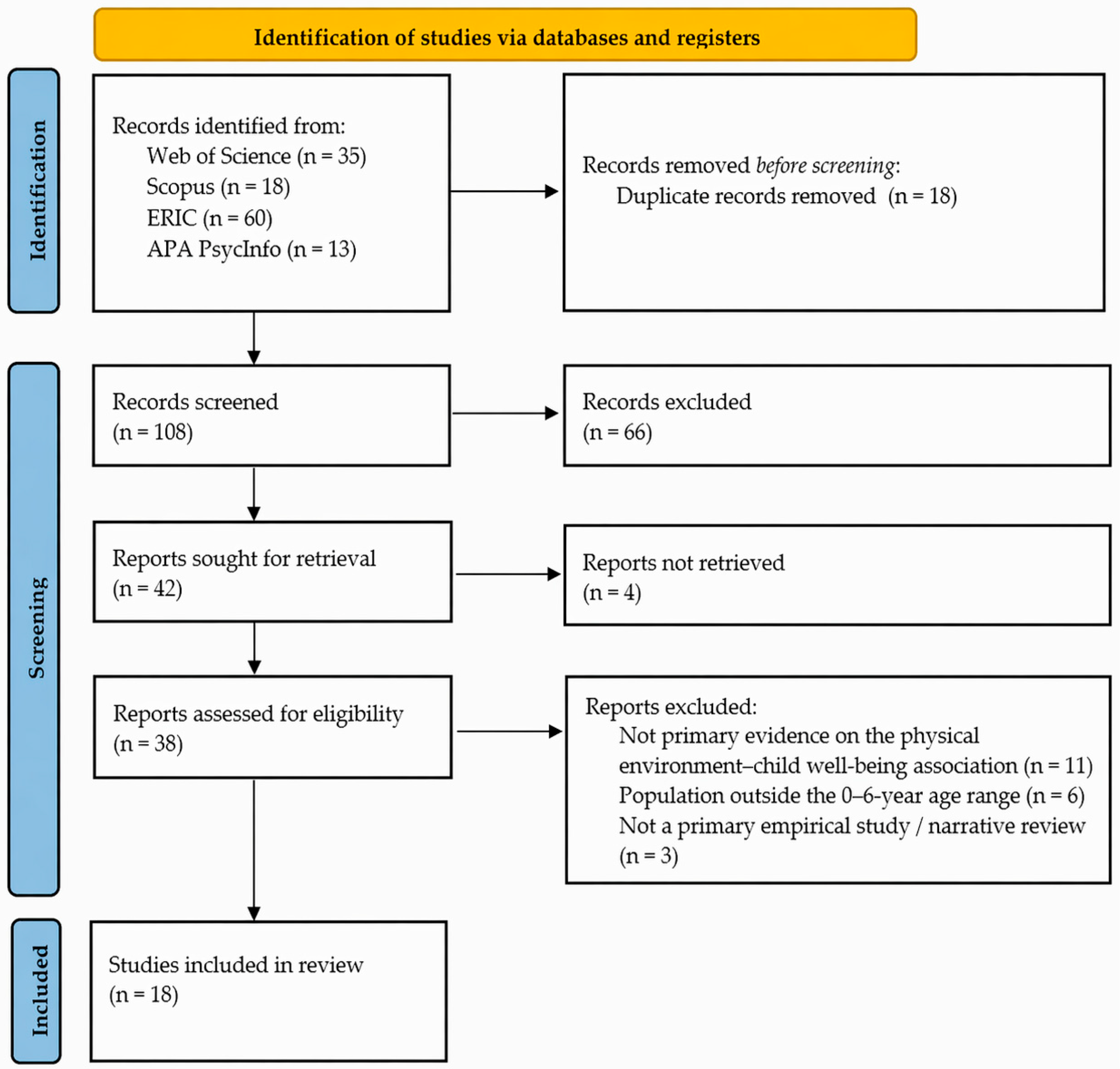
Records were managed in Zotero and imported into Rayyan for screening. Study selection was conducted independently by two reviewers in two stages: (1) title and abstract screening and (2) full-text assessment. Before screening, the reviewers discussed the eligibility criteria and applied them to a small subset of records to ensure a shared understanding of the inclusion and exclusion criteria. During title and abstract screening, each reviewer made an independent inclusion/exclusion decision. Records marked for inclusion by either reviewer, or records for which eligibility was uncertain, were retained for full-text assessment. Disagreements were first resolved through discussion between the two reviewers and, when consensus could not be reached, by consultation with a third reviewer. The study selection process is presented in the PRISMA 2020 flow diagram (
Figure 1). The PRISMA flow diagram also reports the reasons for full-text exclusion, grouped according to the predefined eligibility criteria.
After duplicate removal, 108 records remained for title and abstract screening. Of these, 66 records were excluded, 42 reports were sought for retrieval, 4 reports were not retrieved, and 38 full-text reports were assessed for eligibility. Eligibility criteria were defined a priori. Studies were included when they:
- -
addressed early childhood educational contexts or early years educational contexts, including preschool, kindergarten, and early primary settings when the study focused on physical, sensory, or environmental conditions relevant to young children’s well-being, regulation, participation, or inclusion;
- -
examined characteristics of the physical environment, including environmental conditions, spatial organisation, materials, or environmental modifications;
- -
reported outcomes related to child well-being, including physical, social, socio-emotional, participatory, or regulation-related indicators, or reported environmental-health or habitability indicators directly relevant to children’s health protection, comfort, safety, or everyday functioning in early childhood educational settings;
- -
used empirical quantitative, qualitative, or mixed-method designs.
Studies were excluded when they:
- -
were reviews, theses, reports, or other non-peer-reviewed publications;
- -
focused exclusively on clinical, hospital, or non-educational settings;
- -
did not examine the relationship between the physical environment and child-related well-being outcomes or did not provide environmental-health or habitability indicators relevant to children’s health, comfort, safety, or everyday functioning in educational settings;
- -
fell outside the target age range of 0–6 years, except for early-years classroom studies that explicitly addressed environmental conditions relevant to regulation, participation, or inclusion in the first years of schooling.
Eighteen studies met the inclusion criteria and were included in the review.
2.3. Assessment of Quality
Methodological quality and risk of bias were assessed according to study design.
- -
For studies evaluating environmental modifications through non-randomised studies of interventions, including quasi-experimental studies and natural experiments, risk of bias was assessed using ROBINS-I (
J. A. Sterne et al., 2016).
- -
For analytical observational studies without an intervention component, the relevant JBI critical appraisal checklist was applied according to study design (
Munn et al., 2023).
- -
For qualitative studies, methodological quality was assessed using the JBI checklist for qualitative research (
Lockwood et al., 2015).
- -
For mixed-methods studies, the quantitative and qualitative components were appraised separately using the corresponding tools. The use of RoB 2 (
J. A. C. Sterne et al., 2019) had been planned for randomised trials; however, no randomised trials were identified in the final sample.
Two reviewers independently appraised each study. Disagreements were resolved through discussion and, when necessary, by consultation with a third reviewer. Overall judgements were assigned in accordance with the criteria and interpretive logic of each appraisal tool. Particular attention was given to sources of bias likely to affect confidence in the evidence, including confounding, selection processes, exposure measurement, outcome measurement, and the analytical treatment of clustered data where relevant.
Additional attention was paid to recurrent methodological issues in this field, including poorly specified or non-validated exposure measures, insufficient adjustment for contextual factors such as age, season, socioeconomic conditions, and centre characteristics, and analyses that did not adequately account for the hierarchical structure of the data, such as children nested within classrooms or centres.
2.4. Data Analysis
A structured extraction template was developed to record the main methodological and substantive characteristics of each study: author and year; country and context; educational setting; sample characteristics; environmental domain assessed; well-being dimension(s); instruments and measurement procedures; study design; and main findings.
Data extraction was conducted by one reviewer and independently checked by a second reviewer. Any discrepancies were resolved through discussion and consensus.
Given the heterogeneity of environmental exposures, study designs, outcome definitions, and measurement approaches, meta-analysis was not considered appropriate. Findings were therefore synthesised narratively and organised thematically according to the major domains of the physical environment. To avoid treating heterogeneous forms of evidence as equivalent, the synthesis considered both study design and the degree of proximity between the reported indicators and child well-being. Studies reporting child-level indicators, such as health, comfort, participation, regulation, involvement, social interaction, or inclusion, were interpreted differently from studies reporting primarily environmental-health or habitability indicators, such as ventilation, CO2, temperature, noise, lighting conditions, or contaminant exposure. This distinction was used to avoid treating environmental monitoring studies as equivalent to studies measuring direct child outcomes. To complement the narrative synthesis, a structured descriptive mapping of the predominant pattern of findings was conducted. Each study was classified according to its environmental domain and predominant pattern: favourable/supportive, mixed/differential, indirect environmental-health or habitability evidence, or non-directional/tool-focused evidence. This mapping was intended to improve transparency in the synthesis and should not be interpreted as an inferential quantitative comparison.
3. Results
The results are presented in four sections: (1) methodological profile and quality of the included studies; (2) characteristics of the studies and description of the corpus of evidence; (3) narrative synthesis organised by environmental domain; and (4) implementation considerations reported in the included studies.
3.1. Methodological Profile and Quality of the Included Studies
The methodological quality of the included studies was assessed to support the interpretation of the strength, credibility, and limitations of the evidence. Detailed appraisal results are reported in
Supplementary Materials I (Tables S1–S3). Overall, the evidence base showed a mixed but methodologically constrained profile. All five non-randomised intervention studies were judged to be at serious overall risk of bias using ROBINS-I, mainly due to confounding and selection bias. The most problematic sources of confounding were insufficient adjustment for centre-level characteristics, differences in available resources and baseline environmental quality, and contextual factors such as seasonality and socioeconomic conditions, all of which may plausibly influence both environmental exposure and child well-being outcomes. These limitations reduce confidence in causal interpretation, even when positive effects are reported.
The nine cross-sectional studies were all retained in the review, but several showed important methodological concerns. Most notably, eight of the nine studies showed unclear or insufficiently reliable measurement of environmental exposure, and five of the nine showed unclear or inadequate management of confounding. This represents a critical weakness in the literature, as it suggests that, even when associations are identified, the environmental conditions under study are often not characterised with sufficient precision to support strong or comparable interpretative claims.
The six studies with qualitative components, including qualitative components within mixed-method designs, were generally more coherent in the alignment between objectives, data collection, and interpretation, although recurring concerns remained regarding reflexivity and the limited transparency of some analytic procedures. As a whole, the evidence suggests potentially beneficial associations between more favourable educational environments and child well-being-related outcomes, but the overall certainty remains moderate to low due to recurrent limitations in bias control, exposure measurement, and analytical robustness.
3.2. Characteristics of the Included Studies
This section describes the temporal, geographical, disciplinary, and methodological profile of the included evidence, in order to contextualise how the relationship between the physical environment and child well-being has been examined in early childhood education.
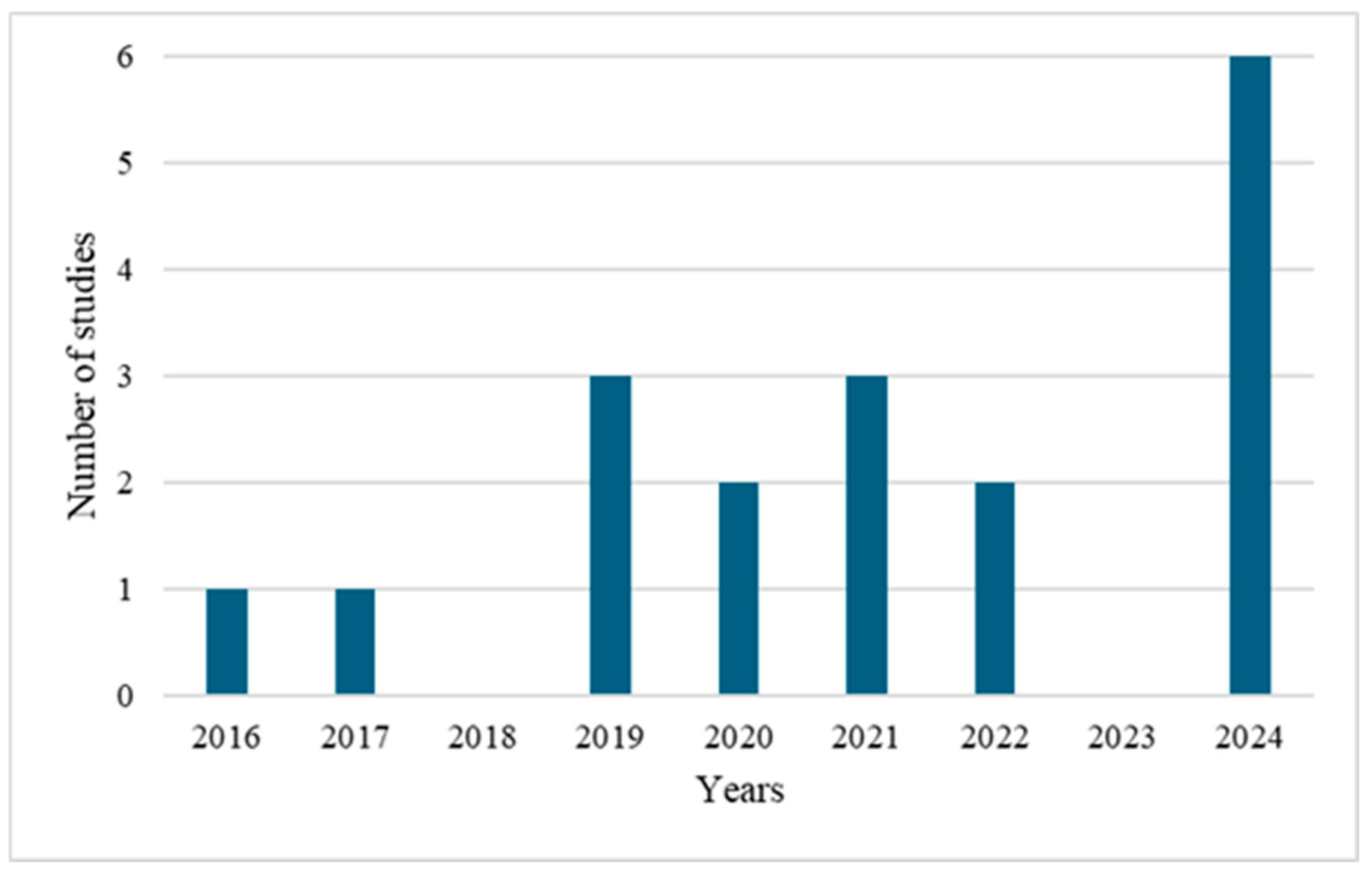
Figure 2 shows the distribution of the included studies by year of publication. Of the 18 studies included, 6/18 (33.3%) were published in 2024. The remaining studies were distributed across 2021 (
n = 3), 2019 (
n = 3), 2022 (
n = 2), 2020 (
n = 2), 2017 (
n = 1), and 2016 (
n = 1).
Geographically, the evidence was concentrated in Europe (14/18; 77.8%), followed by Oceania (3/18; 16.7%) and Africa (1/18; 5.6%). No studies were identified from Asia or the Americas. By country, Norway contributed the largest number of studies (5/18; 27.8%), followed by Portugal and Australia (both 3/18; 16.7%) and Sweden (2/18; 11.1%). The remaining studies were conducted in Finland, Spain, the Netherlands, Greece, and South Africa (1/18; 5.6% each).
The studies appeared in 16 different journals; only Education 3–13 and Education Sciences contributed more than one article (two each). Overall, the publications were distributed across education, early childhood, public health, and environmental journals, which highlights the interdisciplinary character of the field.
Authorship was highly dispersed, with very limited concentration across the corpus. Only one authorship group appeared in three studies, whereas most authorship contributions appeared only once.
In terms of methodological approach, quantitative studies predominated (12/18; 66.7%), followed by qualitative studies (4/18; 22.2%) and mixed-methods studies (2/18; 11.1%). In parallel, environmental exposures were more frequently assessed using objective approaches (13/18; 72.2%) than through perception- or narrative-based approaches (5/18; 27.8%).
Finally, the well-being indicators were heterogeneous and often overlapped across domains. Eleven studies (61.1%) included physical well-being-related indicators, such as physical activity, thermal comfort, exposure-related risk, or other health- and comfort-related measures; 12 (66.7%) addressed socio-emotional well-being or involvement, including observed well-being, involvement, affect, regulation, or perceptions; and 9 (50.0%) included social well-being indicators, such as proximity and interaction, cooperation, participation, coexistence, or social behaviour.
In addition, most studies were based on child-level data (14/18; 77.8%), with highly variable sample sizes ranging from 12 to more than 3600 children (approximate median ≈ 80). The remaining four studies (22.2%) were based on environmental samples at classroom or centre level, such as indoor environmental quality monitoring or dust sampling, or on adult informants.
These categories did not represent equivalent degrees of proximity to child well-being. Whereas some studies measured child-level outcomes, such as observed well-being, involvement, participation, social interaction, or physical activity, others reported indirect environmental-health or habitability indicators, such as CO
2, thermal conditions, ventilation, or chemical exposure. This was particularly relevant for the indoor environmental quality studies, which were interpreted as proximal environmental evidence rather than as direct evidence of socio-emotional well-being.
Table 1 provides a summary of the studies and their main findings.
3.3. Narrative Synthesis by Environmental Domains
The studies were grouped into three broad domains of the physical environment. Most focused on outdoor spaces and the schoolyard (10/18; 55.6%), followed by indoor spaces and the organisation and use of indoor space (5/18; 27.8%). A third group addressed indoor environmental quality, materials, and contaminants (3/18; 16.7%). Within each domain, findings were interpreted according to the type of evidence provided by the studies, distinguishing between qualitative accounts, observational associations, non-randomised intervention or natural experiment evidence, and environmental monitoring evidence. This distinction was used to avoid giving the same inferential weight to studies with different designs, outcome measures, and capacities to support causal interpretation. To complement the narrative synthesis and improve transparency in the interpretation of heterogeneous findings,
Table 2 provides a descriptive evidence map by environmental domain and predominant pattern of findings.
As shown in
Table 2, the evidence base was dominated by mixed or differential findings, particularly in outdoor and indoor spatial studies. This pattern supports a cautious interpretation of the results: although several studies suggest that physical environments may be relevant to children’s participation, interaction, activity, and comfort, the findings remain heterogeneous and do not support strong causal or prescriptive conclusions.
3.3.1. Outdoor Spaces: Schoolyards, Nature and Play Areas
Across the studies on outdoor spaces (n = 10), the schoolyard emerged as a setting with the potential to support play, social interaction, participation, and physical activity. This potential depended not only on design and equipment, including areas and materials, but also on how outdoor space was organised, accessed, and pedagogically mediated.
Evidence from three studies (
n = 3), including descriptive observational, mixed-method, and qualitative designs, suggested that the schoolyard should not function as a single, uniform space, but rather as a constellation of areas with differentiated functions. In direct comparisons of spatial typologies, natural elements tended to be associated with more imaginative and cooperative forms of play, whereas manufactured areas more often concentrated motor activity, supporting the value of integrating both types of settings within the same environment (
Dankiw et al., 2024). This logic of the schoolyard as a set of microenvironments is reinforced by
Saraiva et al. (
2021), who highlighted the usefulness of routes or circuits for continuous movement, together with spaces that enable symbolic play. Outdoor environments should also offer graduated challenges, including opportunities to climb, explore, and experiment, without excessive monitoring, since risky play is valued as part of motor development and depends on the level of challenge afforded by the environment (
Garden & Hirst, 2024).
Three studies (
n = 3), mainly based on cross-sectional observational and natural experiment evidence, indicated that the “quality” of the schoolyard depends on the variety of available resources and on how these resources are distributed. Higher-quality outdoor spaces were associated with more sustained social proximity, less solitary behaviour, and more time spent in small and mixed groups (
Moreira et al., 2022).
Miranda et al. (
2017) further showed that when the design and distribution of resources create competition for space, materials, or attractive places, relational dynamics may deteriorate. In a similar vein,
Ng et al. (
2020) suggested that combining mobile materials with permanent elements, such as natural lawns and fixed sandboxes, may broaden the range of possible activities and interactions.
A further group of four studies (
n = 4), drawing mainly on qualitative and mixed-methods evidence, suggested that outdoor spaces do not operate only through planned design features; they also depend on whether children can appropriate spaces as meaningful opportunities for action. This distinction helps to differentiate between designed affordances, intentionally embedded in the environment through layout, equipment, or specific installations, and emergent affordances, which arise through children’s situated uses, interpretations, and reconfigurations of space. In this sense,
Almers et al. (
2021) provide examples of micro-installations oriented towards biodiversity, such as insect hotels, pallet gardens, or nest boxes, but show that children’s engagement was shaped less by the intended function of these elements than by what they actually allowed children to do. Similarly,
Garden and Hirst (
2024) suggest that children may generate play possibilities beyond those anticipated by adults or designers, especially when the environment includes flexible features, intermediate spaces, and opportunities for exploration. These findings indicate that the value of outdoor space lies not only in its planned affordances, but also in its openness to emergent uses.
In addition, children need to perceive outdoor space as safe and, to some extent, as their own, with room for independent exploration and without excessive adult control (
Garden & Hirst, 2024;
Sivertsen & Moe, 2022). Finally,
van den Berg et al. (
2024) shifted attention to the institutional level, showing that the pedagogical use of outdoor space also depends on implementation conditions and centre culture. In operational terms, these findings point to schoolyards that are not only well designed but also organised and mediated in ways that foster autonomy, participation, and pedagogical use.
3.3.2. Indoor Spaces and Spatial Organisation
In the studies centred on indoor spaces (n = 5), indoor spatial conditions were associated with variations in physical activity, functional play, emotional regulation, belonging, and social interaction.
Three studies (
n = 3), based on quantitative observational and quasi-experimental evidence, indicated that the indoor classroom may support physical activity and functional play when space allows for meaningful movement and is not dominated by furniture that restricts play.
Sando (
2019) emphasised the importance of avoiding spaces dominated by tables and of organising indoor areas flexibly. In the same direction,
Sando and Mehus (
2021) showed that introducing a tumbling space increased children’s indoor functional play.
Määttä et al. (
2019) found that motor rooms and specific elements, such as balancing equipment and trampolines, which promote movement and motor challenges, appeared more favourable than features that induced waiting or passive use.
Two studies (
n = 2), based on qualitative evidence from educator perspectives, broadened the analysis of indoor spaces beyond physical activity.
Tamblyn et al. (
2024) indicated that the physical and sensory environment can support belonging, social interaction, and emotional regulation, while also showing that spatial stimuli may influence behaviour. The study also identified barriers, including design, resources, time, and staffing, and facilitators, such as systematic observation, teamwork, and the availability of resources. Along the same lines,
Du Preez (
2024) presented the SCTQ as a psychoeducational tool to guide more inclusive and sensory-friendly classrooms, underlining the role of educator agency and alignment with equity and inclusion. Taken together, these studies suggest that indoor spaces that promote well-being require not only physical adaptations but also shared criteria and tools for analysing and adapting the sensory environment to diverse needs.
3.3.3. Indoor Environmental Quality
The studies on indoor environmental quality (n = 3) came primarily from environmental monitoring and exposure assessment approaches, rather than from studies measuring direct socio-emotional or behavioural outcomes. Although these studies did not directly assess social or socio-emotional well-being outcomes, they are relevant to the broader framework of this review because they address material conditions that may shape physical comfort, environmental safety, and the everyday habitability of educational spaces.
Barreira et al. (
2024) documented marked variability in classroom temperatures (10–27 °C) and highlighted the influence of building characteristics such as orientation, glazing, and insulation, as well as the operational tension between adequate ventilation and thermal efficiency. In the context of this review, these findings are relevant because they indicate that thermal comfort and air renewal are not merely technical parameters, but part of the environmental conditions that sustain acceptable indoor comfort and daily functioning in early childhood settings.
Similarly,
Kalimeri et al. (
2016) identified very low ventilation rates and potential indoor air quality problems requiring intervention measures, while framing school air quality as relevant to children’s health and school functioning. Although the study focused on pollutant exposure and health risk estimation rather than on direct measures of well-being, it supports the interpretation of ventilation and air quality as core components of environmental habitability in educational settings.
Finally,
Giovanoulis et al. (
2019) examined preschool dust as an indicator of exposure to hazardous chemicals released from consumer goods and building materials present in children’s everyday environment. While the direct implications for multidimensional child well-being remain insufficiently established in this study, the findings reinforce the importance of materials and contaminants as part of the safety- and health-related conditions of indoor educational environments.
Overall, these studies suggest that indoor environmental quality should be understood as part of the material conditions that may support health, comfort, and environmental habitability in early childhood settings. Their relevance within this review lies less in the direct measurement of socio-emotional outcomes and more in showing that ventilation, thermal conditions, and contaminant exposure form part of the background environmental conditions that may enable or constrain children’s health protection, comfort, and everyday educational functioning.
3.4. Implementation Considerations Reported in the Included Studies
This section summarises the practical and policy-related considerations explicitly reported in the included studies. These considerations are presented descriptively, as recommendations or implementation issues identified by the primary studies themselves, and should not be interpreted as practice or policy recommendations derived directly from the present review.
3.4.1. Practical Considerations Reported for the Design and Management of Early Childhood Spaces
Several studies (
n = 5) reported that environmental improvement involves not only adding physical elements but also modifying decision-making processes around the use of space.
Sivertsen and Moe (
2022) pointed to the relevance of children’s participation in planning and everyday micro-decisions, particularly indoors, while
Almers et al. (
2021) emphasised the value of involving children in the design, construction, implementation, and evaluation of schoolyard projects, so that interventions are more closely connected to children’s interests and sense of ownership. This participatory logic was also extended to collaboration with families and the wider educational community (
Dankiw et al., 2024;
Du Preez, 2024;
van den Berg et al., 2024).
Some studies (
n = 2) highlighted the importance of making resources accessible and integrated into everyday routines, rather than limiting them to reserved rooms or occasional activities. Indoors,
Sando and Mehus (
2021) underlined the value of open-access materials and flexible arrangements that support functional play. Outdoors,
van den Berg et al. (
2024) emphasised the need to consider the quality and pedagogical use of outdoor areas when planning programmes.
Two articles (
n = 2) identified practical strategies related to sensory regulation and inclusion, including welcoming areas for self-regulation and transition, noise and overstimulation management, visual supports, sensory resources, flexibility, and continuous review of the environment (
Tamblyn et al., 2024).
Du Preez (
2024) described realistic implementation strategies, such as introducing “one or two strategies at a time”, supported by mobile or handmade resources, visible routines, labelling, varied seating options or alternative surfaces, and spaces designed for relaxation or energy release.
Two additional publications (
n = 2) referred to the adult role in enabling children’s use of space.
Garden and Hirst (
2024) highlighted the importance of materials and spatial arrangements that support creativity, intermediate places, refuges, and exploratory play. This was complemented by
Sando and Sandseter (
2020), who pointed to the value of systematic observation to support children’s participation and social relationships through space.
Other reported considerations concerned ventilation routines, exposure reduction, and material procurement.
Kalimeri et al. (
2016) referred to more frequent ventilation, such as opening windows during breaks, and strategies to reduce exposure during critical periods, while
Barreira et al. (
2024) highlighted the need to balance ventilation and thermal efficiency to avoid high CO
2 levels. In relation to materials,
Giovanoulis et al. (
2019) reported the removal or replacement of potentially harmful items, such as certain plastics and mattresses, as well as the use of chemical-smart procurement guidance when selecting products for early childhood settings.
3.4.2. Policy-Related Considerations Reported in the Included Studies
Seven of the 18 included studies did not report explicit policy-related implications. Among those that did, the reported considerations were grouped into two broad areas: (1) standards, public planning, and monitoring of the physical environment; and (2) participatory governance and intersectoral collaboration.
- -
Standards, planning, and monitoring of the physical and environmental setting (
n = 9). Several studies framed the physical environment as a matter for planning, regulation, or institutional decision-making, rather than only as a matter of classroom-level practice.
Sando (
2019) linked the physical setting to national health-promotion frameworks and suggested treating the physical setting as a regulated component of well-being.
Määttä et al. (
2019) highlighted the relevance of this evidence for technical and municipal services involved in environmental planning.
Miranda et al. (
2017) emphasised that macro decisions (size, design, economic priorities) condition relational dynamics, justifying including the impact of the space in coexistence policies. With a perspective of educational inclusion,
Tamblyn et al. (
2024) and
Du Preez (
2024) underlined the need to translate equality frameworks to implementable strategies (resources, training, scalability) and to explicitly incorporate the sensorial dimension to quality standards. With respect to environmental health,
Kalimeri et al. (
2016) called for more representative indoor air quality audits and related measurements;
Ng et al. (
2020) underlined the interaction between physical, policy, and practical interventions and noted the absence of outdoor weather policies;
Giovanoulis et al. (
2019) provided an argument of preventive investment (future health savings), and
Dankiw et al. (
2024) proposed contextual guides for schoolyards directed to agencies and policymakers.
- -
Participatory governance and intersectoral collaboration (
n = 2). Two studies explicitly called for the establishment of formal mechanisms of collaboration to re-design schoolyards, with the inclusion of the administration, centres, research, and community, and with the participation of children in the process (
Almers et al., 2021;
Moreira et al., 2022).
4. Discussion
The present review suggests that the physical environment of early childhood settings is associated with indicators of physical well-being, especially activity and play, social well-being, including interaction and coexistence, and socio-emotional functioning, particularly regulation and involvement. However, overall confidence in the evidence remains moderate to low. This caution is especially important in light of two structural methodological weaknesses identified in the literature: serious risk of bias in non-randomised intervention studies, mainly due to confounding and participant/centre selection, and weak or insufficiently specified environmental exposure measurement in several cross-sectional studies.
Accordingly, the review suggests a pattern of plausible and recurrent associations, rather than robust causal attribution to isolated environmental components. Even so, a degree of coherence can be observed across quantitative, qualitative, and environmental-health/habitability evidence, as well as through the recurrence of intermediate indicators such as participation, social proximity, and functional play, which provide potentially interpretable pathways linking environmental conditions to child well-being. The most consistently supported findings across methodological approaches concerned the value of diversified and accessible spaces for play and participation, the role of spatial distribution and resource access in shaping social interaction, and the relevance of sensory and environmental conditions for regulation, comfort, and everyday functioning. These patterns were observed across different forms of evidence, although they should still be interpreted as indicative rather than causal. Given the moderate-to-low certainty of the evidence, the interpretations developed below should be understood as cautious and hypothesis-generating rather than as definitive explanatory or prescriptive claims.
A central methodological implication of this review is that environmental exposure measurement remains weak and inconsistent across the field. Broad constructs such as “outdoor quality”, “classroom environment”, “sensory environment”, or “indoor environmental quality” often referred to different features, measurement procedures, and exposure windows across studies. This limits comparability and cumulative interpretation, and reinforces the need for more precise, transparent, and reproducible exposure definitions in future research.
The scope of the systematic corpus should also be interpreted in relation to broader observational literature that was not included in the present synthesis. Studies outside the review corpus have examined naturally occurring associations between environmental conditions and child well-being-related outcomes, including ventilation and sick leave, noise and emotional well-being, preschool outdoor time and physical activity, and outdoor environmental features and play behaviour (
Kolarik et al., 2016;
Werner et al., 2015;
Chen et al., 2020;
Ramsden et al., 2025). These studies are not treated as part of the systematic evidence base or incorporated into the synthesis of included findings. Rather, they contextualise the scope of the review, highlight the possible implications of the search strategy, and support the need for future reviews to capture both intervention-based evidence and observational studies of naturally occurring environmental exposures.
4.1. Space-Practice-Results Interpretive Framework
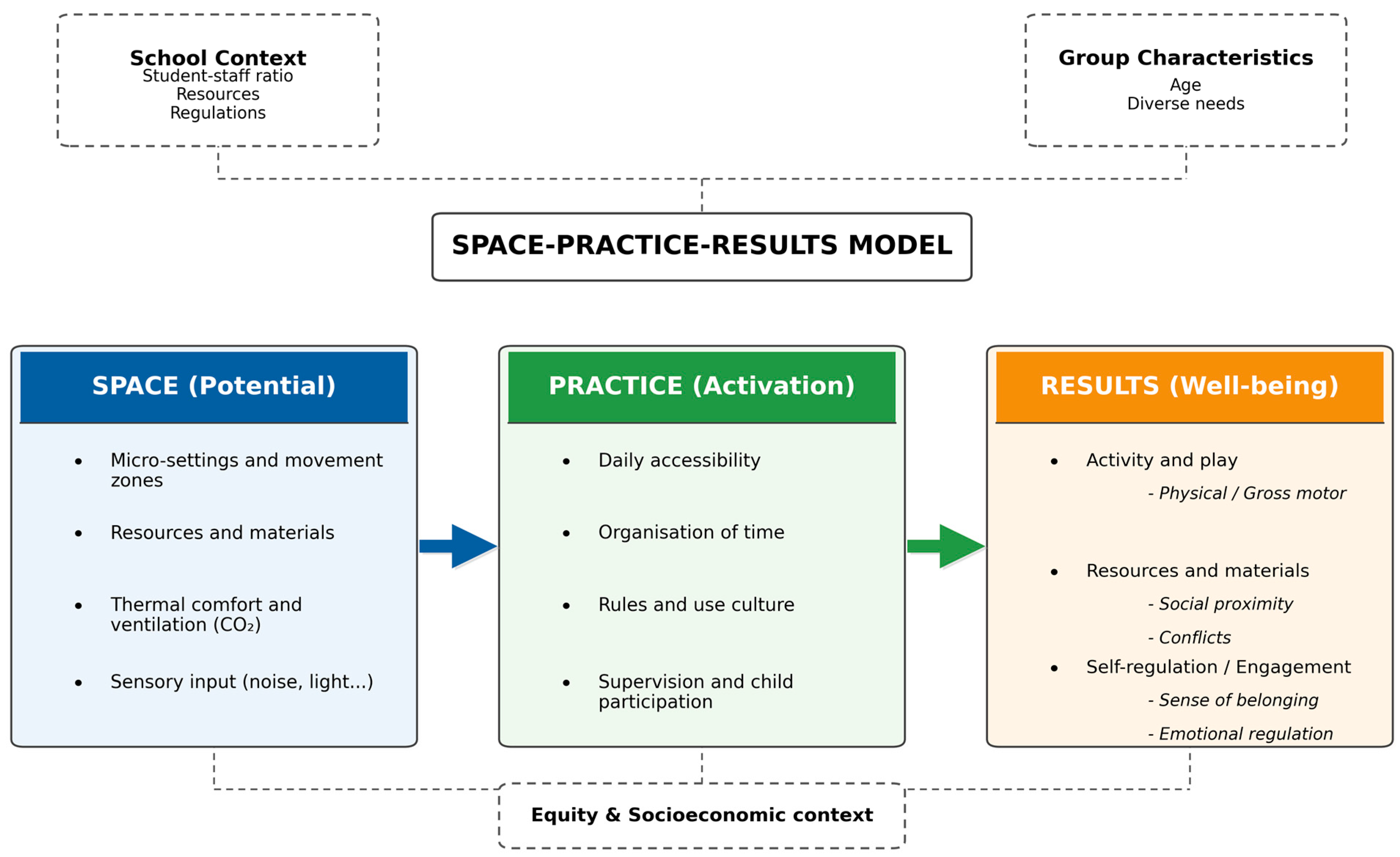
The available evidence suggests that associations between space and well-being do not depend solely on the presence of specific physical elements. Rather, they appear to be shaped by intermediate processes associated with the everyday use of space, including temporal organisation, adult mediation, rules of access, supervision, and centre culture. Given the heterogeneity of the included studies and the moderate-to-low certainty of the evidence, the framework proposed below should not be interpreted as a consolidated explanatory model. Operationally, the framework can be used as a set of guiding questions: what physical, material, accessibility-related, and indoor environmental conditions are present; how these conditions are organised, accessed, supervised, maintained, and pedagogically mediated; and which well-being-related indicators can be observed or monitored. In this sense, it may support reflective assessment, planning, and future research.
Based on this synthesis, the Space–Practice–Results heuristic framework (
Figure 3) distinguishes three levels of analysis.
- -
Space refers to the physical, material, and environmental conditions of the educational setting, including outdoor and indoor spatial configuration, materials and resources, accessibility-related features, and indoor environmental quality.
- -
Practice refers to the pedagogical and organisational processes through which spatial conditions are translated into actual opportunities for action, including access, routines, rules of use, supervision styles, adult mediation, and pedagogical decisions.
- -
Results refers to the well-being-related indicators reported in the literature, including activity and play, relations and coexistence, emotional regulation, involvement, and belonging.
Figure 3 should be understood as a heuristic simplification rather than as a tested or strictly linear explanatory model. In practice, the relationships between these three levels are likely to be recursive: children’s observed outcomes, such as conflict, sustained engagement, dysregulation, or autonomous play, may influence how adults subsequently organise, supervise, and adapt the space. These recursive relationships require further empirical testing and should not be interpreted as established causal mechanisms.
This interpretation is consistent with recent reviews that have highlighted both the relevance and the methodological fragmentation of this field.
Tamblyn et al. (
2023) identified physical and sensory ECEC environmental factors as relevant to children’s social and emotional development, while also noting heterogeneity in exposure definitions and outcome measures.
Taylor et al. (
2024) found that outdoor environmental characteristics may afford physical activity, motor competence, and social interaction, although the evidence remained diverse in design and measurement.
Wallerich et al. (
2023) also emphasised the need to consider environmental conditions as part of broader determinants of child well-being. The present review extends these contributions by bringing together outdoor spaces, indoor spatial organisation, indoor environmental quality, materials, contaminants, and accessibility-related features within a single synthesis focused on multidimensional child well-being.
4.2. Interpretive Patterns Linking Environment and Well-Being
The synthesis suggests four interpretive patterns that may help explain how physical environments relate to child well-being:
- -
First, diversification of opportunities: environments with differentiated areas, materials, and spatial features may broaden children’s repertoire of play and participation by affording diverse forms of activity, interaction, and imaginative play (
Dankiw et al., 2024;
Moreira et al., 2022;
Saraiva et al., 2021;
Sando & Mehus, 2021;
Ng et al., 2020).
- -
Second, social structuring of space: the environment not only enables action but also organises relationships. The distribution of resources and the configuration of access may operate as an “architecture of interaction”. When design provides micro-settings and distributed opportunities, more sustained social proximity and less solitary behaviour tend to be observed (
Miranda et al., 2017;
Moreira et al., 2022;
Sivertsen & Moe, 2022;
Sando & Sandseter, 2020).
- -
Third, sensory-regulatory conditions: some environmental features appear relevant because they shape children’s possibilities for attention, regulation, and involvement in everyday activity. In this sense, noise, lighting conditions, overstimulation, and the availability of calm or retreat spaces may influence how children sustain participation, manage activation, and engage with others and with activities (
Tamblyn et al., 2023;
Du Preez, 2024;
Barreira et al., 2024).
- -
Fourth, environmental health and habitability conditions: thermal comfort, ventilation/CO
2, and materials or contaminants define the broader material conditions of comfort, safety, and indoor environmental quality in educational settings. Their relevance lies primarily in shaping physical comfort, environmental safety, health protection, and habitability. However, in the available literature, their translation into directly observed socio-emotional outcomes remains indirect, unevenly operationalised, and less consistently demonstrated (
Barreira et al., 2024;
Kalimeri et al., 2016;
Giovanoulis et al., 2019).
Taken together, these interpretive patterns offer a cautious way of organising a heterogeneous evidence base. They suggest that the educational environment may be understood not only as a pedagogical setting, but also as part of the material and organisational infrastructure that shapes children’s everyday experiences. In line with holistic and interdisciplinary approaches to health education in early childhood (
Ramos-Pla & Fornons Casol, 2025), dimensions such as air quality, comfort, spatial accessibility, and material conditions may contribute to healthier and more habitable educational settings. From an inclusion perspective, spatial and environmental adaptations may also help reduce barriers to participation for diverse learners, although this implication requires further empirical validation. Overall, these patterns point to the potential value of considering spatial quality, environmental health, and pedagogical use together, without implying that the current evidence is sufficient to establish strong causal or policy claims.
4.3. Implications for Practice, Policy, and Future Research
The findings suggest several cautious implications for practice and policy. First, early childhood settings may benefit from functional assessment of the environment, including patterns of access, use, congestion, underused areas, participation barriers, and rules of use. Such assessment can help connect spatial decisions with the specific needs and constraints of each setting.
Second, spatial management may be supported by simple and systematic decision-making tools, such as observation guidelines, use agreements, and mediation protocols. These tools may help educators reflect on supervision, norms, resource allocation, and the inclusion of children’s voices in bounded and age-appropriate decisions.
Third, intermediate indicators, such as participation, involvement, social proximity, and conflict, may help educators monitor how spaces function in practice. These indicators should not be treated as definitive measures of well-being, but they can support iterative adjustments and identify when further support or redesign may be needed.
Fourth, at the policy level, the findings point to the potential value of developing minimum criteria for spatial and environmental conditions that enable movement, play, sensory regulation, accessibility, and indoor environmental quality. These criteria should not impose a single spatial model but could guide investment and reduce inequalities between centres. However, they would require expert consensus, pilot testing, and contextual validation before being translated into regulatory standards.
Finally, sustaining environmental improvements is likely to require institutional capacity and intersectoral alignment, including coordination time, teacher training, assessment tools, technical–pedagogical support, operation and maintenance protocols, and careful procurement or replacement of materials. Treating the environment as an object for learning and shared responsibility may also reinforce environmental literacy, participation, and coherence with educational objectives (
Fornons Casol & Ramos-Pla, 2025;
Ramos-Pla et al., 2025).
4.4. Limitations and Future Research Directions
This review has several limitations that should be acknowledged. First, the heterogeneity in the definitions and operationalisations of both the physical environment and child well-being required the use of broad analytical domains and a narrative synthesis, reducing comparability across studies and limiting the precision of the conclusions. Second, quality appraisal depended on the level of detail provided in the original reports, and some methodological judgements may therefore have been constrained by incomplete reporting. In addition, all non-randomised intervention studies showed a serious overall risk of bias, mainly due to confounding and participant/centre selection, which limits causal interpretation.
Third, the evidence base was geographically concentrated, with most studies conducted in European contexts and no studies identified from Asia or the Americas. This limits generalisability and cultural transferability, particularly to education systems with different governance structures, pedagogical traditions, infrastructure standards, and resource constraints. What counts as a favourable physical environment may vary according to climatic conditions, such as heat, humidity, cold, ventilation needs, and outdoor use; educational system characteristics, such as staff–child ratios, curricular expectations, inspection frameworks, and infrastructure investment; and socioeconomic inequalities between centres and territories. Therefore, recommendations derived mainly from European evidence should not be assumed to transfer directly to contexts with different climate exposures, material conditions, maintenance capacity, or access to technical support.
Fourth, although the search strategy included both multidisciplinary databases and field-specific databases in education and psychology, namely Web of Science Core Collection, Scopus, ERIC, and APA PsycInfo, the Boolean string also incorporated intervention-, programme-, and evaluation-related terms. These terms were included to capture studies in which the physical environment was examined as a designed, modified, evaluated, or pedagogically relevant condition, and they were not intended to restrict eligibility to formal intervention studies. Nevertheless, this choice may have reduced the sensitivity of the search for observational studies examining associations between physical environmental features and child well-being-related outcomes without using intervention- or programme-oriented terminology. The findings should therefore be interpreted as reflecting the evidence identified through this specific search strategy rather than as an exhaustive representation of all observational research on physical environments and child well-being in early childhood education settings.
Fifth, the review was restricted to peer-reviewed journal articles published in English or Spanish between 2016 and 2025, and did not include grey literature, policy reports, professional guidance documents, or unpublished studies. This strengthened the focus on recent peer-reviewed empirical evidence, but may have reduced coverage of practice-oriented evidence in a field where environmental design, school infrastructure, and early childhood practice are often discussed in technical, institutional, or policy documents. Publication bias therefore cannot be ruled out.
Future research should address these methodological weaknesses by treating environmental exposure measurement as a central design issue. Studies should define the environmental domain assessed, the unit of analysis, the measurement procedure, and the timing and duration of exposure more precisely. Stronger alignment is also needed between exposure and outcome measures, particularly when linking indoor environmental quality indicators with child well-being. Future studies should distinguish clearly between direct child well-being outcomes and indirect environmental-health or habitability indicators, and should report exposure metrics in ways that allow comparison and replication across settings. Longitudinal, mixed-method, natural experiment, and multilevel designs would be especially valuable for examining how environmental conditions, pedagogical practices, and child outcomes interact over time. Future systematic reviews should also use broader and more sensitive search strategies to better capture observational and longitudinal studies of naturally occurring environmental exposures in early childhood education settings.
In summary, stronger recommendations will require more rigorous designs, more comparable measures, and a more integrated understanding of space as a potential educational, social, and environmental condition in early childhood settings.
5. Conclusions
In early childhood settings, the physical environment appears to be a structural component of children’s educational experience, with implications for participation, social interaction, comfort, regulation, and well-being. This review suggests that the quality of space is not defined by the presence of isolated features, but by their functional value: the extent to which the environment enables multiple forms of engagement, supports equitable patterns of interaction, and sustains sensory and environmental habitability conditions that are conducive to self-regulation and learning.
Despite consistent trends suggesting beneficial associations, the current evidence base remains limited by methodological heterogeneity, serious risk of bias in non-randomised intervention studies, and imprecision in the measurement of environmental exposure in several cross-sectional studies. These limitations constrain the strength of causal inferences and require the findings to be interpreted as indicative rather than definitive. This caution is particularly important for indoor environmental quality studies, where the evidence mainly concerned environmental-health or habitability indicators rather than direct socio-emotional or behavioural outcomes.
From an applied perspective, the findings have implications for educational planning, teacher education, and public health policy. For educational planning, they support the need to consider spatial organisation, accessibility, outdoor provision, sensory conditions, and indoor environmental quality as interconnected dimensions of early childhood infrastructure, rather than as separate technical or pedagogical issues. For teacher education, the findings point to the importance of preparing educators to observe, interpret, and adapt the physical environment in relation to children’s participation, interaction, comfort, and regulation. For public health policy, the review highlights the relevance of ventilation, thermal comfort, contaminant exposure, and material conditions as part of a preventive approach to healthy and equitable early childhood settings.
At the policy level, the review points to the potential value of developing minimum verifiable criteria and stronger institutional capacity, so that the quality of educational environments does not depend excessively on unequal resources across centres and territories. However, such criteria should be understood as directions for further development and validation, rather than as definitive standards directly established by the current evidence base. This is particularly relevant in early childhood education, where everyday environmental conditions can either expand or restrict children’s opportunities for play, participation, comfort, and social interaction.
At the same time, transferable recommendations remain constrained by the current evidence base. Future research should prioritise longitudinal and experimental designs incorporating clearly defined, reproducible environmental exposure measures and multilevel analytical approaches to better capture the complexity of interactions between physical environments and child well-being. Further cumulative research is needed, including more robust study designs, reproducible exposure metrics, transparent reporting of measurement procedures, and a minimum set of comparable outcomes that better integrate building conditions, pedagogy, and environmental health. Strengthening this evidence base is essential before stronger practice or policy recommendations can be made, and before provisional criteria for spatial and environmental quality are translated into broader regulatory or institutional frameworks.