Article

Sustainable AI Integration in Teacher Education: From Personalised Learning to Signature Pedagogies

by
Othman Abu Khurma
1,*,
Nagla Ali
1,
Hanan Shaher Almarashdi
2,
Patricia Fidalgo
1,
Khaleel AlArabi
3 and
Huda Ahmad Alkhalaileh
4
1
Pedagogy, Technology and Teacher Education Division, Emirates College for Advanced Education, Abu Dhabi P.O. Box 12662, United Arab Emirates
2
Curriculum and Instruction, College of Education, Yarmouk University, Irbid P.O. Box 566, Jordan
3
Curriculum and Instruction, College of Education, Al Ain University, Al Ain P.O. Box 64141, United Arab Emirates
4
Department of Professional Development, Sharjah Education Academy, Sharjah P.O. Box 61485, United Arab Emirates
*
Author to whom correspondence should be addressed.
Educ. Sci. 2026, 16(5), 786; https://doi.org/10.3390/educsci16050786
Submission received: 5 January 2026 / Revised: 11 May 2026 / Accepted: 12 May 2026 / Published: 16 May 2026
(This article belongs to the Special Issue The Use of AI in ESL/EFL Education: Challenges and Opportunities)

Abstract

This qualitative review of the literature explores current conversations about the impact of Artificial Intelligence (AI) on teacher education in general and pre-service teachers in particular. Recent advances in AI are beginning to influence teacher education, where curricula, practicum, and school field experience now incorporate AI in curriculum-based instruction and as a context for teaching digital literacy, not as an isolated tool. Researchers regularly situate these shifts alongside broader educational practices and policy. There is also substantial literature dealing with pressing ethical and practical questions such as data privacy and algorithmic bias, equitable access to technology, and the challenges experienced by under-resourced schools. Together, these studies indicate that teachers are redefining and reconfiguring both their own teaching and teacher education, enabled by AI in new, more flexible and responsive ways. Within this shifting paradigm, pre-service and in-service teachers are not conceived as mere end-users but as reflective practitioners who take up such tools, critically question their ramifications, and, sometimes, lead the way in utilizing AI in educational practice, including mainly pedagogical practices. To explain the shared components identified in the present review, this paper offers a post hoc conceptual synthesis of eight recurring dimensions of sustainable AI integration in teacher education.

1. Introduction

Although applications of artificial intelligence (AI) are rapidly reshaping everything from healthcare to commerce, its promise in education is especially transformative. AI has been identified as a tool that teachers and educators can adopt quickly and effectively. For instance, the literature discusses AI’s potential to reduce workload and to mitigate exhaustion (Hashem et al., 2024). Current research studies AI in teacher education and professional development as an enabling factor for pre-service teachers to develop digital competence, form, reform, and feed teacher practices, and increase opportunities for future learning (Ramnarain et al., 2024; Holmes et al., 2019). According to the literature, AI-powered technologies promise customizable solutions to the rising difficulties and complexities in global education, including teacher shortages, contextualised teacher preparation programs, accessibility concerns, and Professional Development (PD) restrictions. These technologies include intelligent tutoring systems, learning analytics, assessment and evaluation, teacher mentoring programs, and adaptive learning environments (Lan, 2024; Zawacki-Richter et al., 2019; Luckin & Holmes, 2016; Emara et al., 2023). Rather than presenting a ready-made model of sustainable AI-based teacher education, policy guidance such as that of UNESCO (2021) provides broader principles for responsible, ethical, and human-centred AI use in education. Building on these principles, this review examines how the teacher education literature conceptualises sustainability in relation to pedagogical purpose, professional learning, ethical governance, equity, and the preservation of core human teaching values such as responsibility, accountability, empathy, fairness, transparency, creativity, and evidence-informed judgment.
The dynamic learning contexts are portrayed as subject to multiple technological intrusions, in which teachers are required to make sense of an exploding array of digital teaching and learning tools (Luckin & Holmes, 2016; Holmes et al., 2019). Immediate feedback and differentiated instruction that address individual learning needs, and collaborative learning are among the affordances most frequently discussed in relation to AI-enhanced teacher training (Henze et al., 2022; Chen et al., 2020).
The literature further describes AI-based systems as being used in various ways to support teacher PD, particularly through recommendation features that propose personalised interventions to support teachers’ ongoing learning and growth (Blonder & Feldman-Maggor, 2024; Rienties et al., 2018). In addition, despite its advantages and applications in teachers’ professional growth, the use of AI in teachers’ education still experiences resistance in its acceptance due to its limitations, such as ethical concerns, privacy, and the digital divide between teachers and students (Dieterle et al., 2024; Akgun & Greenhow, 2022).
Based on these concerns, the paper analyses the ongoing debates about the educational roles assigned to AI systems, the relevant ethical considerations, and how these can be incorporated into sustainable models balancing technological efficacy and essential human teaching qualities (ACM, 2007). To investigate how teachers’ intentional use of AI tools is documented in the literature, especially regarding how these practices influence and transform curriculum design in teacher education programs, the study reviews previous research (Chiu & Chai, 2020).
To support curriculum development in teacher education while guaranteeing alignment with formal curriculum requirements, the paper also examines how current research describes teachers’ use of AI systems (Chiu & Chai, 2020). The paper further explores how earlier research explains the role teachers play in shaping curriculum when they use AI systems effectively and pedagogically (Wouters et al., 2008).
In the United Arab Emirates (UAE), education is a central priority in the country’s national development plans. The UAE’s National Artificial Intelligence Strategy 2031 and UAE Vision 2071 support the incorporation of AI into teacher education. Starting in the 2025–2026 school year, these strategies heavily emphasise training teachers to use AI and make it a core subject at all school levels, from kindergarten through grade 12 (Rohan, 2025). This literature review explores how teacher education is discussed and positioned within this changing policy and technological context, placing it within the larger national shift towards smart education. Furthermore, only a small number of studies in the UAE-focused literature seem to address digital competence in a thorough manner, especially when it comes to leadership, governance, and the cultural significance of educational policies (Abu Khurma et al., 2023; Massouti et al., 2025). To better understand how international perspectives on AI in teacher education can influence local practices, this review situates global research trends within the UAE context. By doing this, the paper demonstrates how, while being mindful of the local context, insights from the worldwide literature may encourage innovation in the multicultural educational environment of the UAE. This paper aims to contribute to filling the gap between innovation, governance and core teaching values in the Emirati context through an overarching framework that aligns technological innovations to the central human values that support effective teaching (responsibility, accountability, empathy, professionalism, creativity and the use of evidence) as well as address the opportunities for a balanced application of such initiatives in the UAE educational context.
Nevertheless, despite the increasing interest in AI in educational environments, much of the current literature may continue to focus on efficiency in operation or in applications, rather than on comprehensive frameworks. Relatively few studies have critically examined how AI is positioned in the literature as supporting teachers in developing distinctive or “signature pedagogies” across different stages of their professional formation. While prior research has addressed digital competence and personalisation benefits, less attention has been given in the literature to how AI is positioned as a catalyst for pedagogical identity formation and long-term PD. In this review, AI is not being considered as a monolithic technology but a heterogeneous range of socio-technical systems that are educationally meaningful depending on pedagogical purpose, governance model, and ethical use. This review is intended to address a gap by integrating the ways in which the literature conceptualises the AI–pedagogy–human values–sustainability relationship, based on evidence from around the world, and a limited number of contextually relevant discussions relevant to the UAE.
As such, this review distils the conceptualisation of AI in teacher education, focusing on pedagogy, professional identity, ethics, and sustainability, and emphasising progressing beyond instrumental discourses of AI uptake. Eight dimensions of sustainable integration of AI are developed in the conceptual model, which is relevant to practice and policy in the UAE. In this paper, the term sustainable AI integration does not refer to a pre-existing UNESCO model of teacher education; rather, it refers to a synthesis of recurring principles in the reviewed literature, including long-term professional capacity, ethical and inclusive implementation, pedagogical coherence, institutional readiness, and responsible governance.

1.1. Background and Justification

In recent studies, the use of AI for educational purposes is on the rise. Researchers and educators believe AI can enhance student learning, foster metacognition, enhance teachers’ pedagogy, and aid in building overall school improvement goals (Luckin & Holmes, 2016; Holmes et al., 2019). Researchers look for optimal pedagogical practices that also incorporate the proper use of AI, design strategies, assessments, pedagogical models, or trials to assess if they provide an opportunity for innovation. Meanwhile, lawmakers attempt to develop an AI governance structure that regulates AI in learning institutions to address fairness, the protection of privacy, and equity in technology.
According to literature, some of the most important advantages of these AI systems include functions like personalising teaching, automating administrative tasks that reduce teacher burnout (Hashem et al., 2024), and enabling teachers to be effective instructional designers. AI tools, including machine learning and predictive analytics tools (such as using (Python 3.11) to analyse relationships between educational variables), are frequently characterised in the literature as offering benefits for teacher education, especially in research-informed practice and PD contexts (Almutairi et al., 2025; Chen et al., 2020; Zawacki-Richter et al., 2019). Therefore, several elements are identified in prior research as driving the shift toward AI-enhanced teacher education: the demanding nature of the teaching profession that requires up-to-date digital literacy, the need for resilient teacher training programs that face ongoing global challenges, and the growing focus on data-driven education (Lan, 2024; Rienties et al., 2018; Tomaskinova & Tomaskin, 2024).
As AI applications become more intelligent, their influence on teacher education programs is increasingly discussed in the literature. AI tools can be helpful in increasing the adaptability features in the learning management systems, assessing and evaluating quantitative and qualitative student-collected data, and being used to inform PD that fits teachers’ learning needs (Meng et al., 2022; Khosravi et al., 2022). Still, the literature consistently raises questions about how AI should be used in teacher preparation, especially regarding data privacy, algorithmic bias, and the possible degradation of fundamental teaching abilities (Blonder, 2024; Akgun & Greenhow, 2022; Holmes et al., 2019). These issues draw attention to the need to create sustainable AI models that can be adopted and contextualised whenever applicable and prioritise ethical issues while using AI’s ability to improve education. Prioritising ethical issues is an essential aspect here, as the more the learning is automated, the more there is a need for values to filter the desired behaviours that are aimed to instil in students. Accordingly, this review synthesises existing scholarship to examine how sustainable and responsible AI integration is conceptualised in teacher education research, rather than proposing or evaluating a single empirical intervention.

1.2. Research Issue and Significance

Some initiatives are beginning to use AI for mentoring new teachers and creating scenarios for reflective practice, but integration is not consistent. Adoption barriers reported in the literature included poor digital competence of teachers, fragmented and decontextualised solutions, lack of compatibility with the philosophy of education, concerns regarding data privacy and ethical use of AI, limitations of governance, and risks of overdependence on ICT in education (Dieterle et al., 2024; Holmes et al., 2019; Luckin & Holmes, 2016). There is also a need to ensure that AI-enhanced teacher education remains inclusive and meets the diverse needs of teachers and learners. Currently, the introduction of AI is frequently dictated by commercial subscription models, which restrict access and disadvantage the most vulnerable through economic-based exclusivity (Henze et al., 2022; Spector, 2014).
This paper provides a qualitative synthesis of the literature on pedagogical, ethical, and practical considerations and how these influence teacher preparation globally, with particular emphasis on the implications for the UAE. It will also contribute to sustainable teacher education models at scale by mobilising effective pedagogy and practitioner accounts while confronting ethical dilemmas around the use of AI in classrooms (Williamson & Eynon, 2020). Rather than primary empirical work, this review gathers separate findings and points towards feasible models for the long-term adoption of AI in teacher development.
This review contributes to the current discussion on teacher education in AI-mediated environments by synthesising theoretical and empirical work on pedagogy, teacher identity, digital competence, ethics, and sustainability. Instead of viewing AI as a neutral technical intervention, the review considers how prior work conceptualizes AI in relation to (professional) judgement, pedagogical agency, institutional governance, and longer-term capacity building. This emphasis is especially pertinent in policy-driven contexts, such as the UAE, where it is argued that teacher education systems need to consider national aspirations for AI integration whilst remaining mindful of ethical responsibility and human-centred educational values.
Attention to the UAE case in this paper is justified by the country’s unique coupling of technology and future-oriented educational visions. The UAE is one of the distinguished leading countries in the world when it comes to AI adoption (Microsoft AI Economy Institute, 2025), and it has already formulated an AI national strategy, which is aligned with its vision for 2071. Due to this, the education sector should be the first sector to benefit from AI applications to conform to the value system of the culture and human values of the nation. Yet another justification for focusing on the UAE is its strong education system, which complements global AI frameworks.

1.3. Study Questions

The following research questions direct this work:
  • How are pedagogical applications of AI in teacher education described in existing literature?
  • How does the literature characterise teacher readiness, digital competence, and perceptions of AI adoption in teacher education?
  • What ethical, privacy, and bias-related issues associated with AI use in teacher education are discussed in the literature?
  • How does the literature conceptualise sustainable and long-term models for AI integration in teacher education?

2. Literature Review

This part presents a review of the literature organized around certain themes, rather than providing simple definitions of the key terms in the title. The focus is on understanding how the integration of AI is portrayed as transforming teacher education through the design of curriculum, tailoring pedagogies, teacher professional identity, decision-making in pedagogy, digital competence, ethical responsibility, and continued professional growth. The review is structured into five levels, which are related to one another: AI and education, AI and teacher training, AI and sustainability, issues in AI-mediated teacher education, and a theoretical model for AI acceptance. In the entirety of these strands, the focus lies in how previous scholarship accounts for the implications of AI integration in education for pre-service and in-service teachers, rather than technology per se as isolated tools.
Many studies have provided evidence of AI’s ability to enhance and transform content, as well as to create a variety of ways to provide learning materials. Therefore, the literature suggests that the potential of these AI tools may not be beneficial for all or in all circumstances. Several researchers have indicated that using AI to support and provide teaching resources requires a purposeful and pedagogy-aligned approach. This alignment helps ensure that AI tools are being used to genuinely enhance learning, rather than merely automating the delivery of content. Authors have indicated that if educators intentionally use AI-supported teaching tools, they will provide classroom management, student engagement, and reflective teaching practices for novice educators looking to enhance their teaching performance.
Teacher preparation could be more collaborative and co-learning-oriented by utilising AI more effectively. Building on such concepts and more general views of learning with and from AI, the subsequent section, therefore, provides an overview of some of the key notions of AI in the context of education and teacher education. It does not make any attempts to summarise linked specific study results, but examines how research to date conceptualises and understands the role of AI in teaching practices, professional (life) cycles, and long-term viability of teaching. These underlying perspectives form the conceptual background for Section 6, where the reviewed studies are examined in light of the guiding questions of this review. AI is consistently positioned in this body of work as a pedagogical mediation tool, with its effects mediated through intentionality of design and teacher agency, rather than as a replacement for pedagogy or functioning independently of pedagogy.

2.1. AI in Education: Synopsis

Progressively, AI is entering education, challenging traditional teaching and learning practices. From intelligent tutoring systems, automated grading and adaptive learning platforms to virtual reality-based instructional tools, the range of applications of artificial intelligence in education includes intelligent tutoring systems that analyse the student performance data and provide personalised instruction experiences suited to the needs of individual students, thus aiding personal learning (Meng et al., 2022).
One of the main ways AI improves access in education is through speech recognition, text-to-speech applications, and automated content summarising (Dieterle et al., 2024). Prior studies suggest that teachers have begun to benefit from AI-driven tools to help their students with disabilities engage in learning settings more effectively compared to previous contexts in which schools relied on a limited number of qualified special needs experts (Myrie et al., 2024). These tools encourage inclusiveness by covering and addressing different learning needs and providing other ways for students to interact with instructional materials (Blonder, 2024).
Moreover, AI is often discussed as helping teachers by automating routine administrative tasks, including data management, attendance tracking, and grading, as well as supporting technical required skills, such as lesson planning, assessment, evaluation, and providing constructive feedback, which allows them to focus more on instruction and student engagement (Sanusi et al., 2024). On the other hand, AI-driven analytics is commonly framed as enabling teachers to identify areas of student learning deficiency and to support their plans and decisions regarding targeted interventions to improve academic outcomes (Ramnarain et al., 2024). These developments are described in the literature as some persistent conflicts between increased access and dependency, automation and the growth of metacognitive abilities, and inclusion and standardisation. These conflicts highlight the significance of pedagogically intentional AI integration (Lan, 2024).
Despite these challenges, the impact of AI on education continues to expand as educational organisations select AI-driven products to improve teaching quality and enrich the student learning experience, while keeping the most important metacognitive and autonomy abilities students should demonstrate to be able to learn successfully. Such potential compromise of essential skills needed for students advocates for more responsible integration of AI to guarantee that ethical issues and human supervision remain the top priorities of AI use (Dai et al., 2023). In other words, if AI integration is necessary, it should be appropriately used in collaboration with teachers to enhance students’ critical thinking, rather than working on their behalf, which is a primary purpose of teacher education programs.
The literature also shows how national and regional contexts impact the adoption of AI in education at the policy level and classroom practices. Countries like Finland have developed comprehensive approaches to raise awareness of digital literacy and digital culture, among other aspects, through ‘Elements of AI,’ a national online learning project that educates its communities on the basics of AI. Singapore provides structured education packages to enhance teachers’ and students’ understanding of AI. UAE context: The UAE faces particularities, including an abundance of public and private schools and linguistic diversity (approximately 90% of students in private schools follow more than 17 different curricula) (Lake, 2023, August 7). An empirical investigation carried out in the UAE by Massouti et al. (2025) investigated 20 novice teachers in teacher education programs on the infusion, a forced structural integration, of AI in the curriculum, bringing to light common challenges in the literature, such as a deficit of explicit policy and providing financial support to facilitate and close the educational divides in the UAE. For the most part, these national cases are instructive not only as examples of AI adoption but also because they show how teacher education systems situate AI within broader conceptualizations of professional preparation, governance, and curriculum reform.
For teacher education, these developments indicate that AI integration is not limited to the introduction of new digital tools. It changes what future teachers need to know, how they are prepared to make instructional decisions, and how they learn to evaluate the pedagogical, ethical, and contextual appropriateness of technology. The reviewed literature, therefore, positions AI as a force that can expand access to resources, personalise learning, and support feedback, but also as a development that requires teacher education programs to strengthen professional judgement, digital competence, and ethical reasoning.

2.2. The Role of AI in Teacher Development

The context of this study helps analyse how the literature describes how AI is reshaping in-service professional identities and ‘formulating’ it in the case of pre-service teachers, as well as supporting the development of pedagogical skills both in initial preparation and later in ongoing PD. AI-powered teacher development programs offer tailored learning experiences that cater to the specific needs and competencies of each teacher (Lan, 2024). It is possible for teachers to avail themselves of immediate feedback, virtual simulations, and data-driven guidance through AI platforms to enhance their teaching strategies (Meng et al., 2023).
For pre-service teachers, the literature portrays AI as an environment that supports the development of pedagogical identity, reflective practice, and the safe trial of teaching methods. By providing adaptive learning modules that adjust materials based on teachers’ knowledge and experience, AI improves teacher preparation. These numerous and diverse educational platforms, websites, and tools—as well as their complementary materials—help teachers stay up to date with the latest educational trends and technological developments, facilitating continuous PD. There have been attempts to show some of these possibilities through illustrations connected to content transformation with AI and providing learning resources through various modalities. For instance, there is an AI solution that can, within a short time, transform a 400-page book into Q&A videos that are engaging and effective for learning activities (Ojo, 2023; Panday-Shukla, 2024). Instead of using these solutions as helpful, there has been a focus on their need to be used appropriately to ensure that there is alignment with their purpose to enhance learning. By enabling management of a classroom and engagement of learners, AI solutions for training help novice teachers enhance reflective practice and performance (Blonder, 2024).
Collaborative learning and training environments are also enhanced by the presence of AI in teacher preparation programs. Teachers can participate in meaningful conversations, share best practices, and learn from global education experts through AI-powered chatbots, virtual learning assistants, and discussion forums (Zhang et al., 2023). These collaborative affordances are frequently discussed as contributing to the co-construction of pedagogical knowledge, particularly when combined with reflective practice.
Notwithstanding these listed benefits, the literature also reports several concerns around job displacement narratives, ethical ambiguity, and disparate teacher preparedness to integrate AI. As Lan (2024) notes, structured preparation and supportive guidance throughout the teaching experience are critical for teacher development. Additionally, there needs to be a pedagogical rationale linking technology to the learning objectives being taught for technology to have any positive effect on teaching.
In earlier studies, the focus of research was on understanding how individualised learning is implemented using behaviourist theory in controlled settings, including programmed instruction and computer-based learning systems (Slavin, 2006; Ormrod, 2012). Some more contemporary research has identified that personalised learning carries this tradition further by involving the individual more actively within learning activity design according to their interests, needs, and motivations (Hughey, 2020). The literature on teacher preparation refers to AI in this context, facilitating this more personalised tradition by organising customised learning experiences tailored to teachers’ perceived needs (Abu Khurma et al., 2024; Almarashdi et al., 2024).
In contrast, AI is more frequently portrayed for in-service as facilitating practice management, continuous mentoring, and data-driven PD. In this way, it is claimed that AI tools analyse learning and teaching data to suggest individualised development paths and offer adaptive feedback for ongoing enhancement. To ensure teacher preparation designs adapt to different levels of professional experience and the real-world demands of classroom instruction, it is essential to capture this distinction between pre- and in-service use.
As Dai et al. (2023) emphasise, AI supports evaluating teacher preparation and performance and offering real-time feedback, interactive learning techniques to co-create, co-design, co-plan and co-generate tailored improvement plans, whether fit for pre-service or in-service teachers, considering the differences between novice and experienced teachers’ needs. Some of these AI-driven services are adaptive learning systems that allow teachers to ask questions to get instant answers and to practice diverse classroom management techniques and pedagogies in virtual environments through scenario-based simulations (Sanusi et al., 2024; Blonder, 2024).
AI systems are Natural Language Processing (NLP) systems able to analyse teacher–student interactions and suggest possible improvements in classroom engagement (Zhang et al., 2023). The overall literature portrays AI as contributing to more flexible, scalable, and personalised pathways for teacher development that support ongoing professional learning while maintaining instructional quality (Ramnarain et al., 2024; Hashem et al., 2024; Gurl et al., 2024).
Taken together, the literature suggests that AI affects teacher development in at least three ways. First, it expands the forms of feedback, simulation, and adaptive support available to teachers. Second, it shifts teachers’ roles from users of technology to designers and evaluators of AI-supported learning experiences. Third, it necessitates that teacher education programs equip future teachers, particularly pre-service teachers, with the ability to discern when AI contributes to pedagogical enhancement and when professional judgment, relational understanding, and contextual knowledge should be prioritized. These implications for sustainable teacher education relate the use of AI to a longer-term professional agency rather than short-term technological efficiency.

2.3. The Role of AI in Education Sustainability

In education, sustainability is understood as the long-term enhancement of learning outcomes, access, and efficiency, as well as the resilience of education systems to maintain fairness, professional agency, critical thinking, and moral accountability (Olsson et al., 2022). In teacher education, sustainability is therefore understood as the preparation of teachers who can adapt to AI-mediated environments while maintaining pedagogical judgement, inclusive practice, and human-centred professional values. Studies suggest that AI could enable more sustainable education systems by offering scalable solutions to persistent problems. In teacher education, what counts as sustainable is conceptualised as more than system efficiency or environmental responsibility. Sustainable teachers are pedagogically flexible, ethically responsible, and professionally resilient in AI-mediated contexts. Such issues include teacher shortages, professional burnout, excessive workload, and systemic inequities (Dai et al., 2023).
In this context, teacher education is being elevated as increasingly crucial in equipping teachers to confront such (and other) manifestations of student disengagement and drop-out. Studies have shown that AI-based personal learning environments (PLEs) can fulfil this need by allowing students to learn at their own pace with personalised guidance that increases confidence and improves learning outcomes (Shiao et al., 2023).
This is sustainable in the most general sense. From this perspective, it is not only about being operationally efficient, but also about how one impacts the environment and whether one is being ethical with technology. As the use of AI-based educational applications becomes increasingly prevalent in the education and training sector, it has been suggested that it is essential for educators, at least both pre-service and post-service teachers, to understand the effect these applications have on energy and material use, and for teachers to maintain a balanced view between educational innovation and environmental conservation. In the context of teacher education, this means that curricular and institutional decisions should be informed by responsible choices and justifications (pedagogical) for the adoption of AI tools, instead of uncritical adoption.
The development of online content on diverse subjects, along with associated evaluations in teacher education, can provide vast opportunities to reduce the use of print materials across subjects. This has been supported by Nilsen et al. (2020). Such contributions are discussed alongside concerns raised in the literature regarding the environmental impacts (Sanusi et al., 2024), especially that large language coding programs consume significant amounts of energy during training and operation. The reviewed studies on the addressed AI applications for LMSs and numerous intelligent tutoring systems, as well as predictive analytics and machine learning support tools, depict these as aiding in the analysis of complex statistical relations, which estimate human behaviour in learning and offer predictions, or function as a system for notification when designing educational reform. This variety testifies that AI for teacher education is no longer used for administrative relief but rather as a cognitive and pedagogical tool that facilitates teacher professionalisation through lesson planning, assessment, and teacher reflection. This transition from administrative assistance to thinking and teaching mediation is a key step in sustainability, where AI is framed as a sustainable provider of professionalisation support to teachers rather than a tool for enhancing efficiency.
Sustainable access to AI tools may support the lifelong learning of both educators and learners, helping them become better-informed decision-makers regarding their evolution and equipping them with tools for continuous PD (Zhang et al., 2023). In a similar fashion, when utilised properly, AI enables teachers to improve their teaching and assessment methods, thereby leading to higher levels of self-regulation and greater metacognitive knowledge of the profession. In turn, this facilitates the continuous improvement and sustainability of high-quality teaching practice (Ramnarain et al., 2024). Simultaneously, studies caution that expanding implementation will necessitate addressing issues such as digital divides, the cost of AI tools, threats to academic integrity, and persistent data security concerns.
Access, ethical protections, and academic integrity are interrelated and must coexist to support a sustainable approach to AI integration in teacher preparation, rather than being treated as separate issues to be addressed. If a meaningful, long-lasting immersion is to take place, equal access to technology and ethical safeguards to protect individuals’ privacy and ensure academic integrity are required, and such policies should be implemented, as the literature recommends (Lan, 2024). The way in which these sustainability features are realised in the studies included in the review is investigated in Section 6.

2.4. Issues and Challenges in AI-Driven Teacher Education

The literature identifies multiple challenges to integrating AI into teacher education. Ethical issues, data privacy, and academic integrity were presented in Section 1. Off-the-shelf technological solutions may also deepen the divide between well-resourced and under-resourced schools of education (Lan, 2024).
A closely related issue concerns the security and privacy of data. AI-enabled analytics require vast amounts of personal, sensitive data on students and teachers. Reports claim there is a substantial risk of data leakage if security policies are not strictly enforced. Even more troubling is that they can encode and perpetuate biases present in the data they are trained on (or are designed to optimise via proxies), producing discriminatory outcomes and exacerbating educational inequality rather than mitigating it (Dai et al., 2023). Scholars suggest that to keep AI in education unbiased, algorithms must be transparent, and human participation should be maintained in algorithmic decisions.
Additionally, the digital divide limits the adoption of AI. Availability of AI tools and reliable, high-speed Internet varies by geography, income, and nationality, which could deepen inequities in access to teacher PD (Zhang et al., 2023). This divide can also have a disproportionate impact on teachers in low-income regions, who require the best in digital infrastructure, affordable devices, and focused PD (Blonder, 2024).
In education, the most basic problem is how to ensure that AI is used to aid teaching focused on humans, rather than supplanting it (Sanusi et al., 2024). AI is effective at customizing learning experiences for learners and simplifying teachers’ administrative work, but it lacks qualities humans possess, such as emotional intelligence, empathy, and critical thinking. In this regard, teacher training must be focused on preparing teachers who can intelligently engage with AI as a support, as opposed to a replacement for their professional judgement (Ramnarain et al., 2024; Fatima, 2025). This knowledge implies a need to continue exploring the impact of AI-enabled pre-service teacher education on teaching practices and students’ learning.
In summary, the literature indicates that effective integration of AI into teacher education relies on three key pillars: robust ethical policy frameworks, digitally inclusive teacher education strategies, and teacher education models that harness human and technological strengths to navigate both the promises and perils of AI (Lan, 2024), sustaining human-centred teacher education in AI-mediated systems.

2.5. Theoretical Foundations Explaining the Adoption of AI in Teacher Education

In relation to AI and teacher education, the literature points to an increasing demand to shift away from fixed conceptualisations of teaching towards more dynamic understandings that focus on teachers’ professional identities. In this strand of scholarship, the concept of “pedagogical identity,” a composite term combining the words “pedagogy” and “identity,” has been employed to refer to the increasing alignment between teachers’ pedagogical practices and their personal, cultural and professional identities. In contrast to “distinctive pedagogies,” which often emphasise disciplinary standards and replicable practices (Shulman, 2005), pedagogical identity is discussed as foregrounding individual agency, contextual responsiveness, and reflective practice of teachers as they construct their pedagogical model in AI-enabled learning environments.
Based on sociocultural theories of teacher identity (Beauchamp & Thomas, 2009) and principles of critical pedagogy (Freire, 1970), pedagogical identity is framed in the literature as a conceptual tool that recognises the fluid, negotiated, and situated nature of the pedagogical process. Prior studies suggest that AI tools may shape and reshape teachers’ perceptions of themselves based on their level of competence and effectiveness. For example, once they feel they have developed their skills in the teaching profession, the literature describes how they are motivated to build an educational identity that reflects their values, grounded in the belief that addressing students’ needs is the essence of their main employment. Thus, the concept of sustainability in education is being reframed to encompass the development of individuals capable of self-adapting and continuously innovating in digital learning environments (Beauchamp & Thomas, 2009; Engen, 2019).
The integration of AI into teacher education has been interpreted through several established theoretical frameworks. These conceptual frameworks help explain the relationships among teacher identity, motivation (intrinsic and extrinsic), and the adoption of AI. In this case, the self-determination theory (SDT) emphasises the need for both intrinsic and extrinsic motivations for AI adoption (Meng et al., 2022), such as internal desires to reduce workload and burnout, as discussed by Hashem et al. (2024), and developing distinctive and effective strategies that serve their PD needs for career development. External motivations are also discussed in the literature. These motivations are sometimes requirements made by ministries of education and institutions to integrate AI into curriculum activities, as recently announced in the UAE, when the Prime Minister declared the integration of AI as a teaching subject in the school system at all levels (Rohan, 2025). Other integrations’ efforts are also expected to be included as a requirement in the annual teacher evaluation and appraisal system.
Furthermore, the Technological Pedagogical Content Knowledge (TPACK) framework (Blonder, 2024) provides insights into how teachers can integrate AI with content knowledge and pedagogy. According to the TPACK framework, effective AI integration requires a balanced understanding of technology, pedagogy, and subject matter expertise (Sanusi et al., 2024). However, some studies question linear assumptions embedded in this framework, suggesting that fully proficient knowledge of pedagogy is no longer an important requirement for AI integration. According to research in this area, AI has the potential to enable educators to employ previously difficult teaching methods due to practical limitations or conventional instructional methods. For example, the use of inquiry-based teaching methods in early childhood education environments has historically been perceived as too challenging; however, tools powered by AI are now providing educators with access to these instructional methods (Abu Khurma & El Zein, 2024; Naveed et al., 2024). Using AI in the manner described above will lead a teacher to develop their own teaching method that is considered a “signature pedagogy”, through continuous evaluation and collaboration with AI. In addition, these signature pedagogies create an opportunity for teachers to build a personalised identity for themselves as educators, enabling them to improve and broaden the application of their individual teaching strategies over time.
However, all these efforts are linked to teachers’ expectations regarding performance, as well as the effort needed to implement AI in their classrooms, and the environmental factors. These factors can either facilitate or inhibit a teacher’s adoption of AI and are intricately related to each teacher’s willingness to use AI (Zhang et al., 2023). Finally, the Unified Theory of Acceptance and Use of Technology (UTAUT) is frequently used in the literature to provide a useful perspective on the adoption of AI in teacher education, addressing its relevance to teachers’ career development needs. This may be more relevant to in-service rather than pre-service teachers.
Based on theoretical perspectives such as Self-Determination Theory (SDT), Technological Pedagogical Content Knowledge (TPACK), and UTAUT, the reviewed literature supports the claim that the interaction among individual motivation, pedagogical knowledge, and professional identity with institutional and technological contexts determines teachers’ decisions to adopt AI. The theoretical integration is more than the naming of theoretical concepts; it is the building of theoretical edifices. It is at the stage of adoption that people and technology interact dynamically. This conceptual underpinning resulted in the following conceptual model, described in the next section.

3. Methodology

3.1. Research Plans and PRISMA Framework

The review was guided by four research questions and followed a qualitative systematic literature review design informed by the PRISMA 2020 framework (Page et al., 2021). The review did not test hypotheses or collect primary empirical data. Instead, PRISMA was used to document the identification, screening, eligibility assessment, and inclusion of relevant literature, while thematic synthesis was used to analyse how AI integration in teacher education is conceptualised across the included studies (Thomas & Harden, 2008; Braun & Clarke, 2006). The methodological process consisted of six stages: database searching, duplicate removal, title and abstract screening, full-text eligibility assessment, data extraction, and thematic synthesis.
The review was performed following the 4 previously established stages of the PRISMA process: identification, screening, eligibility and inclusion. A preliminary search was performed in major academic databases Scopus, Web of Science, IEEE Xplore and Google Scholar to collect a vast preliminary corpus. The remaining full-text articles were evaluated for eligibility according to predefined inclusion criteria following the exclusion of duplicates and obviously irrelevant records. Ultimately, only studies that met all these criteria were included in the final review (Dai et al., 2023; Tahiru, 2021).

3.2. Approach of Data Collection

To extract relevant information, a rigorous search was performed among several important databases: the Scopus-indexed proceedings of conferences, the peer-reviewed journal articles, and relevant reports published by institutions in the years 2019–2025. The search criteria represent core concepts in AI in teacher education and teacher education provision, digital learning, the pedagogical innovation educational paradigm, and models of sustainable education (Blonder, 2024).
A literature search was conducted across online databases to capture a comprehensive body of work and reflect various views in the discipline. To ensure research quality and relevance to the topic, the focus was on studies published in well-established journals or presented at well-known conferences. Inclusion and exclusion criteria were carefully considered and applied to narrowly define the review’s focus. Policy briefs, institutional reports, and other grey literature were included to capture context. Moreover, to specifically locate additional research pertinent to this study, the text included backward and forward citations to identify in-text citations (Sanusi et al., 2024).
The diagram of the systematic selection process is shown in Figure 1 using the PRISMA flow diagram protocol, which comprises the four primary stages. In the Identification stage, a total of 425 records were obtained: 421 were collected through database searching using the most authentic research channels, including Web of Science, Scopus, IEEE Xplore, and Google Scholar, and 4 were obtained through supplementary manual searching or reference tracing. In the Screening stage, the 45 duplicate records are eliminated, retaining 380 for the title and abstract screening stage. Of these, 325 were eliminated during the selection process due to the absence of AI-related applications or empirical focus, retaining 55 records for the subsequent stage. In the Eligibility stage, the full text of the 55 selected records was inspected, retaining just 32 studies due to the reasons of plan non-compliance, use of outdated information, or irrelevant contexts, which are documented as per the guidelines for systematic review reporting using the PRISMA flow diagram protocol and are used due to emerging issues that arose during the screening stage. In the final inclusion stage, 22 studies were included in this review. The studies were selected for their methodological quality, clarity of reporting, and focus on AI applications in teacher education. Special consideration was given to studies that employed systematic designs and documented their procedures, a practice consistent with recommended standards for the conduct of evidence synthesis to ensure that findings can be considered reliable and trustworthy (VanderWeele et al., 2018). These numbers are provided for transparency in the screening process and are not intended to imply the comprehensiveness or representativeness of the statistics.
The selected studies were published from 2019 to 2025 and address the topics of this review, including AI-enabled teaching pedagogies, digital competencies of teachers, professional perspectives, ethics, and practical application solutions. The period for this review was chosen purposively, as it followed a period of rapid growth in educational AI and was characterized by reported pervasive changes in teaching practice and teacher education. Cumulatively, these studies provide a concentrated and current evidence base from which to consider teacher education discourse and practice in an AI age. Conceptual and theoretical articles published before 2019 were retained if they presented foundational models or analytical tools vital to understanding empirical findings on the application of AI in teacher education.

3.3. Exclusion and Inclusion Criteria

The inclusion criteria were established to ensure that studies were current, rigorous, and relevant to the topic. Articles from 2019 to 2025 were considered to consider the most recent advances and were retrieved from trustworthy sources such as peer-reviewed journals indexed in well-known databases, accepted proceedings of recognized international conferences, or institutional reports. Furthermore, each study needed to explicitly address the application of artificial intelligence within the context of teacher preparation and PD. However, during the scanning and filtering phases, these inclusion criteria directed the review to prioritise empirical research, as many of these resources seemed to be conceptual papers dealing in many cases with secondary data that focused on correlational relationships rather than designs allowing stronger causal interpretation. Theoretical and conceptual analyses were retained when they directly contributed to the delineation of pedagogical models, ethical positioning, or sustainability constructs applicable to teacher education. Regarding the subject topics, the inclusion criteria were applied to research on sustainable education models, digital competencies, and AI-driven pedagogical approaches. Conversely, exclusion criteria ruled out studies irrelevant to AI in education, non-English publications without translated versions, opinion pieces or non-peer-reviewed articles, and those lacking methodological rigour, particularly those without an empirical research design. Redundant or duplicate studies were also excluded. Applying these exclusion criteria ensured the final dataset consisted of methodologically sound and thematically relevant research contributions.

3.4. Database Selection

The central databases utilized were Scopus, for the multidisciplinary level, which accounted for a very significant share of the peer-reviewed journals, ranging between AI applications related to the education as well as the human sciences; Web of Science for general literature related to educational technology as well as pedagogical innovations: and IEEE Xplore, which enabled the exploration of the technical/engineering aspect of studies related to AI-based instruments. Scopus, Web of Science, and IEEE Xplore have been employed for the detailed process for selecting journals, the use of journal multi-metrics for classifying journals, significant coverage of peer-reviewed journals, as well as global recognition for studies related to ranking the quality of studies among institutions (Falagas et al., 2008; Mongeon & Paul-Hus, 2016; IEEE, 2024). Google Scholar was used as a supplementary resource for verification. Google Scholar confirmation for search results provided additional strength for the verification process of search results, indicating the need to concentrate specifically upon Scopus-indexed conference papers, as well as Scopus-indexed institutional or informal citations. Instead of acting as the principal database, Google Scholar helped verify search parameters related to the search for overlooked studies, as the search parameters pertaining not only to the Scopus database but utilized other appropriate sets of reliable databases, providing more strength related to the coverage of the literature for this search, as well as providing added strength allowed for the search parameters to result in a more profound exploration associated with the integration of AI into the content related to teacher education (Dai et al., 2023).

3.5. Keyword Search Strategy

The approach to conducting a search was designed to provide maximal access to pertinent research. These searches included “AI in Teacher Education”; “AI in Teacher preparation” ‘AI-driven Pedagogical Strategies’; ‘Sustainable AI in Education’; ‘AI in Pre-service Teacher Education’; ‘AI in In-service Teacher Education’ ‘AI in Pre-service and In-service Teacher Training’; ‘AI in Pre-service and In-service Teacher Education’; ‘Ethical AI in Education’; ‘AI and Teacher Preparation’. By using these keywords in filters, especially in the context of research databases, the aim of conducting accurate and comprehensive research has been achieved (Page et al., 2021).

3.6. Selection and Screening Procedure

The screening process took place in two distinct stages. Firstly, titles and abstracts were screened to exclude clearly irrelevant studies, and then the full texts of those that complied with the criteria were assessed (Sanusi et al., 2024). Following this, the remaining articles were independently assessed by at least 2 authors after duplicates were removed. This action proved to be challenging in maintaining uniformity and avoiding sources of bias. Disagreements in opinion were resolved through consensus to determine the final number of studies included in the review.

3.7. Information Extraction and Study Analysis

A standardized data extraction sheet was developed before the analysis. The authors extracted the following information from each included study: author and year; country or context; study aim; research design; participant group or sample; AI tool or application; teacher education focus; key findings; reported challenges; and relevance to the four research questions. This meant that the same kinds of information were gathered from each study and systematically compared. This structure is shown in a typology matrix based on four key dimensions:
  • Study design, setting, and participants.
  • Pedagogical uses of AI within teacher education.
  • Ethical, policy, and governance considerations raised.
  • Digital competence and teacher preparedness.
The structured nature of this approach facilitated a systematic examination and synthesis of the varied research.
A thematic analysis was undertaken collaboratively by several members of the research team. This is not an empirical result; it is a report on “how” rather than “what”, covering trends, challenges, and recommendations for education of teachers in AI use. Three overarching perspectives, pedagogical approaches, privacy concerns, and computer literacy, were adopted to cluster the findings on emerging themes in the literature (Zhang et al., 2023; Dai et al., 2023). Based on a pedagogical lens, by making use of this method, each investigation included in this study was classified according to three criteria: its pedagogical aspect, for instance, instructional design (ID) and PD; its concentration on enhancing teachers’ instructing proficiencies; and whether or not it included ethical concerns, policy matters, or governance frameworks. These dimensions are directly aligned with the four research questions, enabling systematic comparison across studies while preserving the descriptive nature of the review. In this way, the approach facilitated the synthesis step by providing a rubric for grouping and comparing studies based on the review questions. Thus, the approach served as an analytical tool for the organisation of evidence instead of an evaluation rubric. These framework factors were operationalised throughout the literature review process. This was achieved through directing the coding and classification of the literature studies included within the classification matrix based on the underlying fundamental focus on teaching, ethics, and competence. Information extraction was conducted through coding the literature studies independently based on these factors. This facilitated coding the literature studies based on multiple factors when the literature reported overlapping factors.

3.8. Thematic Synthesis Procedure

Thematic synthesis was conducted in three stages. First, all extracted findings were coded deductively according to the four research questions: pedagogical applications of AI, teacher readiness and digital competence, ethical/privacy/bias issues, and sustainable long-term integration. Second, within each category, inductive subcodes were created to represent patterns that repeatedly emerged across the studies; examples included adaptive feedback, AI literacy, technostress, algorithmic bias, infrastructure limitations, and governance. The third step was to compare coded findings across studies to identify themes rather than stand-alone findings. A theme was retained only when it was found across multiple studies or provided a conceptually important explanation of AI use in preservice teacher education. This procedure strengthened the connection between the PRISMA-guided selection process, the thematic analysis, and the answers to the research questions.

4. Synthesis of Findings from the Systematic Literature Review

Section 4 extends the integrative process described in Section 2 by identifying and highlighting themes that emerge regarding teaching, ethics, and professional (in)competence. Rather than restating each argument of each study, this section synthesises patterns across the reviewed literature, including indicators and thematic foci at the study level. These indicators serve to detect the location, manner, and degree to which essential pedagogical, ethical, and professional components of AI in teacher education converge across studies, thus contributing to a descriptive synthesis of recurring themes, emphases, and reported patterns within the field.
The results below (Table 1) are organised according to the thematic synthesis procedure described in Section 3.8. Table 1 summarises the included studies, while Section 4.1, Section 4.2, Section 4.3 and Section 4.4 show how patterns across the literature address each research question. Study examples are used only to illustrate themes that emerged through coding and comparison.

4.1. Results for RQ1: Pedagogical Applications of AI in Teacher Education as Reported in the Literature

The thematic synthesis for RQ1 identified three recurring patterns in how AI applications are described in teacher education: adaptive personalisation, AI-supported instructional design, and reflective or inquiry-oriented professional learning. For example, Albadarneh et al. (2024) reported a strong reliance on chat-based and question-based learning models, which, as described in the study, reflect teachers’ engagement with interactive AI approaches that adapt to users’ levels and skills. Adaptive learning tools also appeared in two studies (Zeinz, 2019; Salas-Pilco et al., 2022), where AI-supported systems were reported to improve learning efficiency indicators (approximately 32%) and were described as supporting opportunities for teacher feedback and reflective practice. Quasi-experimental evidence from Eltahir and Babiker (2024) reported differences between AI-supported and non-AI-supported environments, in relation to learner engagement and critical thinking indicators.
These studies, together with van den Berg and du Plessis (2023), illustrate how the literature frames AI-based curricula as adaptable to diverse learner needs, including students with disabilities, while maintaining a focus on pedagogical effectiveness, as reported by the study authors. Comparative results for the AI and control groups are reported in Eltahir and Babiker (2024). In contrast, van den Berg and du Plessis (2023) highlight the significance of the critical teacher in the differentiated lesson plan. Together, these articles inform RQ1 as they are about how pedagogical personalization and flexibility to instruction are characterised in the literature rather than how they lead to standardised instructional effects. A pattern consistent across the studies reviewed in Table 1 is that AI is positioned as an adaptive pedagogical scaffold that supports personalisation, feedback, and inquiry processes, rather than as a replacement for instructional decisions or teacher professional judgement. These teaching models are repeatedly described in the studies under review, with recurring mentions of adaptive learning, inquiry-based pedagogy, AI literacy, and ethics.
Therefore, the thematic answer to RQ1 is that AI is most conceptualised as a pedagogical scaffold that supports personalisation, feedback, inquiry, and curriculum design. However, its value is repeatedly framed as dependent on teacher agency and pedagogical judgement. The theme across the literature is not that AI produces uniform instructional improvement, but that it creates new conditions in which teachers must design, adapt, evaluate, and justify AI-supported learning experiences.

4.2. Teacher Readiness, Digital Competence, and Perceptions of AI Adoption Reported in the Literature

The thematic synthesis for RQ2 identified four recurring dimensions of teacher readiness for AI adoption: perceived usefulness, self-efficacy, AI literacy, and access to professional development. The studies involve both pre- and in-service teachers and explore predictors of acceptance of AI, as well as readiness and digital competence. Considerable diversity in preparedness is reported in these investigations, along with predictors of AI acceptance.
Several studies have shown that perceived usefulness significantly affects, and in some cases even influences, adoption decisions (Zhang et al., 2023). Other AI educational programs described in a few articles, e.g., that of Fachrurrozie et al. (2025) and that of Sanusi et al. (2024), have also disclosed performance expectancy and IT competence as determinants of engagement with AI solutions such as Canva and ChatGPT. Although an increasing number of K-12 teachers are reporting the use of ChatGPT (Picciano, 2024), readiness gaps continue to be documented in the literature reviewed. Delcker et al. (2024) found that only 46% of teachers were confident they could integrate AI, and Velander et al. (2024) revealed that 56% of teachers are untrained in AI. Teachers also expressed concerns about overreliance on AI to think on behalf of learners, plagiarism issues, and the impact of AI on users’ critical thinking (Celik et al., 2022). The studies summarised in Table 1 reveal a consistent pattern of results, in which adoption of AI is most strongly related to perceived usefulness, self-efficacy, and the availability of relevant PD, with ongoing preparedness disparities and anxiety characterising the populations of both in-service and pre-service teachers. Therefore, the thematic answer to RQ2 is that teacher readiness is not presented in the literature as a single technical competence. It is a complex construct encompassing confidence, perceived usefulness, ethical awareness, the availability of training, and support from the institution. In both the pre- and in-service teaching contexts, gaps in preparedness and anxiety continue to be the foremost obstacles to substantive AI integration.

4.3. Results for RQ3: Ethical, Privacy, and Bias-Related Issues Associated with AI in Teacher Education as Reported in the Reviewed Studies

The thematic synthesis for RQ3 revealed three categories of ethical and governance issues that were consistently present in the studies: algorithmic bias, data privacy and security, and overdependence on AI-generated outputs. In this line of research, cost, flexibility, and algorithmic bias have been identified as recurring (Albadarneh et al., 2024). Teachers noted concerns about plagiarism and the misuse of generative AI tools (2024). Blonder and Feldman-Maggor (2024) found that 72% of reviewed AI-produced STEM products portrayed Western-centric knowledge systems.
Teachers’ uncertainty regarding data protection, misinformation, and context-inappropriate outputs was also reported in MacDowell et al. (2024). In addition, reviews of AI literacy frameworks (Sperling et al., 2024) indicated that most studies conceptualize AI literacy primarily as a technical skill, often giving limited attention to ethical dimensions. Qualitative and philosophical analyses that complement these (Ghamrawi et al., 2023; Guilherme, 2019) also articulate worries about autonomy, which is the ultimate goal for Emirati learners within whichever qualification they are enrolled in, identified by the UAE national qualification framework (Saad, 2024), and also worries about reliance on AI and uneven levels of readiness among teachers.
Thus, the theme-based result for RQ3 was that ethical, privacy, and bias-related problems are not side concerns or problems of a single platform. And these are systemic factors, not adjustable ones, that determine whether it is possible to say that the integration of AI in teacher education is responsible, inclusive, and sustainable. The reviewed literature canonically frames human supervision, transparency, focused contextualization, and institutional direction as protective measures necessary to guard against.

4.4. Results for RQ4: Conceptualisations of Sustainable and Long-Term AI Integration Models in Teacher Education

The thematic synthesis for RQ4 revealed four prerequisites for a sustainable AI integration in teacher education: coherent governance, ongoing PD, scalable infrastructure, and matching between AI-enabled competences and human teaching values. An ethnographic study by Dai et al. (2023) describes the significance of curricula transformation and the immediate cultivation of AI literacy in a high-tech environment. Kim (2023) and the conceptual work of Moorhouse & Kohnke (2024) contend that sustainable AI curriculum examples are characterized by moving away from simple AI use towards partnership paradigms that allow for co-creation and co-design of pedagogy. Yet, sustainability is frequently portrayed as undermined by insufficient infrastructure (Mohammadi, 2024). In these studies, sustainable long-term engagement is articulated in terms of coherent governance structures, sustained PD, and the integration of AI-enabled competencies with human teaching capabilities. Hence, the thematic response to RQ4 is that sustainable AI integration is constructed as less a function of tool sophistication and more a function of system coherence. Long-term integration relies on the coordination of professional learning, ethical governance, infrastructure, teacher agency, and pedagogical purpose.

5. Discussion

The findings indicate that AI is discussed in the teacher education literature as both an opportunity and a source of risk. On the one hand, AI is associated with personalisation, adaptive feedback, curriculum innovation, reflective practice, and scalable professional learning. On the other hand, the same literature repeatedly warns that AI integration may deepen inequity, increase dependence on automated outputs, weaken professional judgement, and reproduce bias if ethical and governance structures are weak. The discussion, therefore, interprets the findings as a balanced synthesis of pedagogical affordances, professional readiness requirements, and sustainability conditions.
In relation to RQ1, the findings indicate that pedagogies are most frequently described in relation to project-based and inquiry-based learning. Regarding RQ2, the findings point to increasingly significant problems, notably a lack of strong digital literacy and ethical education training, which impedes the application of AI. For RQ3, ethical questions regarding data protection and bias are repeatedly discussed in relation to governance frameworks. And finally, for RQ4, the results support an integration that combines technology competencies with human values grounded in empathy, creativity, and ethics.

5.1. Discussion of RQ1: AI-Integrated Pedagogical Approaches

Given that the current research focuses on curriculum integration related to AI and teaching identity, the reviewed studies describe shifts in how teachers work in their practice. Modifications to curriculum development, assessment approaches, and the facilitation of design processes through AI tools are noted. In MacDowell et al.’s (2024) study, teachers developed chatbots to deliver ethical talks within a value framework. Subsequently, they produced teaching modules to demonstrate the collective nature of AI and the teacher. In practice, this opportunity for teachers to customise and personalise AI tools is seen as well. MacDowell et al. (2024) demonstrate how teachers have adapted AI-enhanced activities to best align with the unique cultures of their classrooms and the ways their students think. In one instance, teachers took the technical AI concept of feature extraction and translated it into the familiar ‘Guess Who?’ game, making the abstract notion immediately accessible. This illustrates a pattern in which teachers can draw on their professional expertise in collaboration with AI to create more relevant learning experiences (Dai et al., 2023). This change also transforms the teacher’s role from a mere implementer to a true curriculum designer. A larger-scale example comes from a project in which 28 first- and second-grade elementary school teachers worked closely together to develop an entire 10-unit AI curriculum. They articulated learning goals, activities, assessments, and resources, and then adapted the unit for grades 4–6 based on classroom experience. Throughout this process, they participated in PD workshops led by AI experts and university researchers, blending their pedagogical expertise with new technical knowledge (Dai et al., 2023). Teachers also used AI to practice inquiry-based learning in STEM subjects in virtual labs, which fostered open-ended collaborative learning (Chiu & Chai, 2020; Lan, 2024).
Teachers now engage directly in curriculum innovation by applying AI principles; they can tailor a long list of instructional strategies into their signature pedagogies. This reflects a reported shift in teaching and learning through the application of AI. Before the use of AI, teachers would have utilised a few teaching approaches that they were confident in. However, in using AI, tutors report feeling more empowered to redefine, rethink, and restructure teaching approaches into “signature pedagogies”.
Chiu and Chai (2020) proposed a five-stage AI curriculum design model: preparation, including planning and designing the overall outline; content/product design; process/praxis design; implementation; and renewal. All these stages are described as being reshaped by AI tools. Teachers used design-thinking frameworks to create context-sensitive learning experiences, such as adapting AI ethics modules to resonate with students’ real-life dilemmas related to the value-based ecosystem they belong to (Chiu & Chai, 2020; Dai et al., 2023). Another important dimension lies in the co-creation of learning materials using multimedia, such as AI-based podcasts, infographics, simulations, and interactive resources. A number of these tools are grounded in learning theories, such as Mayer & Moreno (1998) multimedia learning theory, to help ease complex AI concepts and make them more understandable for learners (Chiu & Chai, 2020). Teachers, therefore, are described as moving to transition from local learning case studies to global connections, enabling them to be exposed to localised and customised learning experiences and to serve internationally, thereby enhancing conceptual clarity and cultural sensitivity. This sustained, reflective planning process allowed teachers to feel more assured and confident in their teaching. Fostering a sense of autonomy is a central objective in contemporary teacher education. There is a newfound emphasis on moving beyond information transmission to developing the higher-order thinking and professional autonomy that characterise a self-directed practitioner (Saad, 2024). This objective is well anchored in established psychological theories, including self-determination theory, which posits that competence, connection, and autonomy are core factors in motivation and growth (Lan, 2024). This outlook calls for a more naturalised way of using AI. Instead of being a top-down mandate, technology innovations should reach teachers in ways that allow them to own the ideas and integrate them into their emerging teaching practice. And that is particularly true for those about to become teachers, those who are still forming their professional identity: dreary tools should be enabling, not imposing. Such shifts in pedagogy, including the emergence of “signature pedagogies,” depend on institutional mediation, instructional leadership, and clear ethical and curricular directions, rather than simply on the availability of AI tools. Together, these studies indicate that the literature frames AI integration as associated with sustainable teacher education, not by introducing new pedagogies per se, but by repositioning teachers as adaptive curriculum designers whose professional identity is shaped through reflective, inquiry-based practice over time.

5.2. Discussion of RQ2: Teacher Readiness, Digital Competence, and Adoption

The reviewed studies describe AI as advancing knowledge and enabling practical applications in classrooms. Many teachers reported that AI-enhanced PD led to changes in their perceptions as teachers, affecting either the pace or the depth of development of their teaching professional identity. Consequently, a discrepancy emerged between teachers’ educational values, acquired through experience, and the instability of AI. Teachers like “Max” in Lan’s (2024) study found group-based curriculum design projects to be more aligned with their identities, reflecting how identity-based motivations drive the success of AI integration. PD also included co-authorship of open-access textbooks, in which teachers created real AI learning materials with iterative peer and chatbot feedback (MacDowell et al., 2024). In another example, teachers from BRICS countries used an AI-Assisted Adaptive Learning Environment (IA2LE) to access data-driven feedback on their teaching, adapt content to diverse learning needs, and improve engagement (Mohammadi, 2024).
However, studies emphasised that the human-centred roles of guidance and empathy, and the person who can foster student curiosity, are always human teachers, while presenting AI as an assistant, analyst, or simulator (Lan, 2024; Blonder, 2024). Accordingly, the literature discusses the importance of balancing the collaboration between humans and AI to co-create knowledge and co-design authentic learning experiences (Chiu & Chai, 2020; Dai et al., 2023).

5.3. Discussion of RQ3: Ethical, Privacy, and Bias Considerations in AI Integration

Despite the positive influence of AI on teachers’ learning, the results revealed that trust gaps, ethical concerns, and even misconceptions stem from excessive trust in AI responses. According to a study from Velander et al. (2024), for example, only 46% of teachers felt confident using AI in the classroom, and many interpreted AI capabilities as conscious. This underscores the need for comprehensive AI literacy programs that balance technical support with an ethical understanding of smart tools (Sperling et al., 2024; Nazaretsky et al., 2022).
In relation to ethical and sustainable AI integration in teacher education, the literature underlines the fact that several questions regarding the ethics of AI use and implementation are recurrently highlighted. For example, the lack of equal access to technological resources, the problem of the digital divide, and the presence of possible biases within the AI implementation due to human-designed algorithms have been emphasised in the existing literature (Guilherme, 2019; Blonder and Feldman-Maggor, 2024; Ghamrawi et al., 2023; Moorhouse & Kohnke, 2024; van den Berg and du Plessis, 2023). Moreover, the existing literature raises questions regarding intellectual properties, specifically regarding the original resources created by the teachers and used within the AI systems, and how they could sometimes later be repackaged and distributed to other individuals.

5.4. Discussion of RQ4: Sustainable AI Integration Framework in Teacher Education

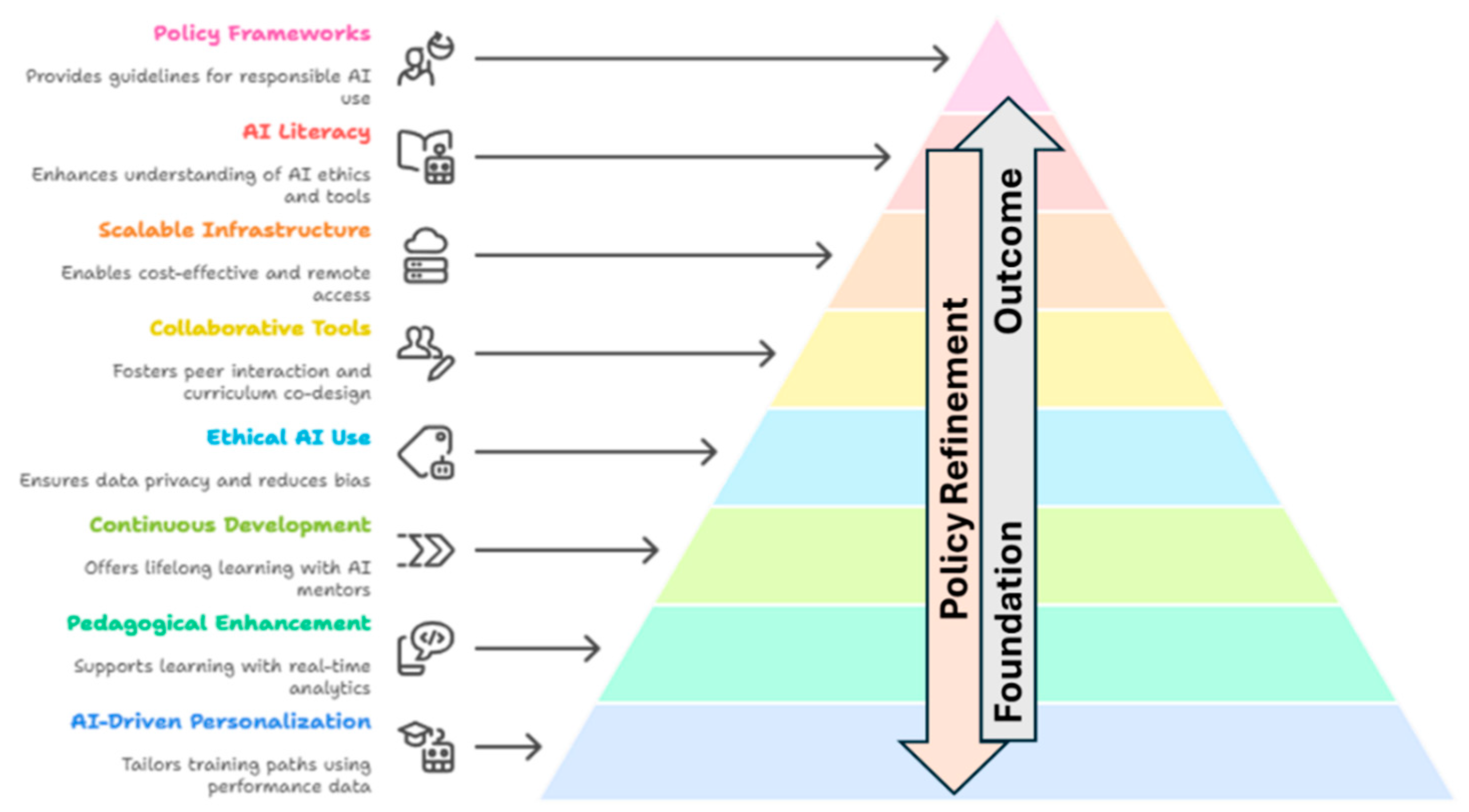
This section offers a post hoc integrative synthesis of recurring dimensions of AI integration in teacher education, derived from the reviewed literature, rather than proposing or empirically testing a model of teaching with AI by synthesising patterns that emerged across the reviewed studies.
As presented in Table 2, eight recurring elements described across the reviewed literature are synthesised here as a post hoc conceptual framework for understanding sustainable AI integration in teacher education. The framework is not presented as an empirically tested model, but as an organising synthesis derived from the reviewed studies. According to Merino-Campos (2025), teachers’ interaction with these AI tools may, over time, be associated with increased confidence and knowledge. On the one hand, these tools are described as supporting inquiry-based and project-based learning, with teachers receiving timely feedback, simulations, and practical insights that are discussed as opportunities to try out ideas, reflect on what works, and improve their teaching practice. Furthermore, the literature discusses these dimensions as supporting ongoing lifelong learning, just-in-time access enabled by AI mentors, gamified experiences, simulated learning scenarios, case studies, and individual progress tracking. On the other hand, the literature discusses these dimensions as potentially benefiting from the increasing adoption of AI-assisted collaboration platforms that facilitate mutual support and collaboration among educators. These platforms may provide environments where educators can exchange ideas, share their class challenges, and collaborate on curriculum material development. For instance, platforms such as ChatGPT can provide educators with opportunities to collaborate on joint projects that can be easily edited and modified to support the training of innovative educators in institutions of higher learning (Gasaymeh et al., 2025). The reviewed studies describe collaborative knowledge creation through collaboration between teachers, not only among themselves, but with AI as well, in well-thought-out ways. As a result of collaboration between teachers and AI systems, learning materials are often developed and adapted to meet practical classroom needs. The literature discusses these dimensions as more cost-effective and sustainable PD methods, relevant for teachers in rural and under-resourced schools. Some solutions to this problem discussed in the literature include online platforms that offer training at minimal cost and mobile training units that include basic tools. At the same time, teacher motivation and values alignment are discussed in the literature in relation to adopting innovative pedagogies that link with their personal values and beliefs about teaching. For instance, simulations and collaborative learning, such as virtual labs in science offered through tools like PhET, allow teachers to conduct experiments when resources are unavailable or limited (Rayan et al., 2023). For these new strategies to be truly fair, ethical, and sustainable, they depend on strong policy backing and transparent governance to guide teachers and institutions. The literature review establishes that coherence in pedagogical design, professional capability, and system governance can be linked to teacher education systems that are reflective and responsive to the accountability implications of integrating AI in an ethical manner.
To demonstrate how its components are arranged in relation to one another, Figure 2 presents this synthesised framework as a pyramid. Higher-level dimensions pertaining to ethics, cooperation, and policy are enabled by the lower levels, which represent the technical and pedagogical underpinnings discussed in the literature. Rather than a tested or validated model, Figure 2 presents as a visual synthesis derived from the reviewed literature. These dimensions are shown in the figure as being connected, with feedback and cross-level alignment.
In sum, the findings across RQ1–RQ4 indicate that teacher education AI-enabled pedagogical affordances (RQ1) are dependent on teachers’ preparedness, competence, and agency beliefs (RQ2), and are additionally constrained by ethical, privacy, and policy issues (RQ3). Research consistently indicates that inquiry-based, transformative, and metacognitive teaching approaches facilitated by AI only come to fruition when educators have adequate levels of AI literacy and professional confidence to apply pedagogical judgment rather than procedural automation. Meanwhile, ethical concerns regarding bias, data governance, and responsibility act as systemic factors that influence whether and how such pedagogical practices may continue. As a result, sustainability (RQ4) is not characterised as an output of technological development, but rather as an emergent systemic characteristic of the alignment of pedagogical design, professional capacity, and institutional governance. This integrated view highlights that sustained AI use in preservice teacher education requires systemic change across practice, professional learning, and the policy context, rather than isolated technology adoption. It is also important to note that studies with a sustainability lens tend to position pre-service teachers within models of curriculum reform and long-term capacity building, and in-service teachers as objects of ongoing PD, institutional support, and system-level scalability.

5.5. Implications and Recommendations

The provision of quality education is widely recognised as important and is increasingly discussed in the literature as having the potential to contribute to PD in terms of planning, implementation, evaluation, and diffusion, with links to innovation, equity, and scale maintenance. This study explores the potential applications of AI in teacher education to investigate the extent to which these technologies may escape the “one-size-fits-all” model of pedagogy. Since instructional tasks are tied to an educator’s current expertise level, AI has been identified in multiple studies as having the capacity to support the facilitation of skill development in a more real-time and personalised way. This shift away from one-size-fits-all PD to differentiated assistance is discussed as enabling educators to develop what might be called their own signature pedagogies, evidence-based teaching strategies shaped by a personal knowledge of craft, nuance, and context. When learned or mastered by the teacher, these procedures have been associated in the literature with greater student participation, motivation, and a more profound learning aligned with higher-order cognition. Ultimately, this process is reported to contribute not only to student outcomes but also to teacher satisfaction, as educators see their learners develop critical skills, solve complex problems, analyse data, and draw evidence-based conclusions. These instructional strategies are supported by AI tools that help with lesson planning, aligned activities and formative assessment creation, as well as adaptive feedback and data-supported instructional modification (Lan, 2024; Dai et al., 2023). For example, if we take the inquiry-based teaching strategy, which is frequently discussed as an effective pedagogy (Antonio & Prudente, 2023) because of its significant impact on achieving higher-order thinking skills, Gholam (2019) addressed the difficulty teachers faced in using this strategy due to the time required to implement it and the complexity of the thinking skills involved, such as hypothesis-forming skills, information gathering, analysis skills, and deriving scientific summaries based on evidence. These difficulties were reported as limiting aspiring teachers, especially student teachers (Gholam, 2019), in their uptake of such strategies. However, after teachers reported using AI tools like ChatGPT to design and implement lesson plans using this strategy, reported outcomes included reduced instructional barriers and increased confidence in sustained pedagogical use. In these accounts, inquiry-based teaching is described as becoming a distinctive feature, or a “signature pedagogy,” for some teachers, who use it consistently and refine it each time, through iterative human-AI dialogue and collaboration.
The findings of the studies reviewed are associated with supportive leadership, a consistent policy framework, and ongoing PD and are not a consequence of a standalone implementation of AI.
In addition, AI-assisted training has been reported to complement traditional teaching approaches that teachers were already using confidently before AI-assisted tools were employed. These involve creating of activities that connect to broader topics rather than traditional approaches. AI technology has been identified in the literature as helping address some of the limitations of traditional teacher training programs and is discussed in relation to teaching efficiency and facilitating continuous teacher PD. Moreover, AI technology is frequently discussed as an inexpensive way to improve education, particularly in hard-to-teach or remote areas, allowing teachers to access valuable training opportunities (Blonder, 2024; Ramnarain et al., 2024).
Ethical issues in AI bias, privacy, and security (Dai et al., 2023) are still important and very relevant across the reviewed studies, including in underserved areas or in low-income countries, as the digital divide is discussed as widening the inequalities of limited access to AI-based teacher preparation programs (Lan, 2024). This acceptance has been found to be contingent on educators’ knowledge of AI systems and professional practice implications (Blonder, 2024). Addressing the issues, the literature notes that collaboration and collective action have been identified as necessary among stakeholders, and discusses the use of AI as a tool that complements and does not diminish the teacher’s role, and as functioning as a mediator that provides the connection between the teaching practice and the educational achievement (Ramnarain et al., 2024).
The literature frequently proposes that there must be a collaborative effort to incorporate AI in teacher training programs, whether for pre-service or in-service teachers. The best way to achieve this is frequently described as having feedback and decision-making moving in both directions. Responsible advancement is thus informed by a small number of emergent principles in the literature. Clear policy is frequently discussed as relevant to addressing pressing ethical issues, particularly those related to data privacy and algorithmic fairness (Lan, 2024). To this end, significant investment in digital infrastructure is consistently identified as necessary to bridge existing gaps in access and to provide fairer learning environments for all students (Dai et al., 2023). Teacher PD that supports AI literacy is also highlighted as necessary so that teachers are equipped not just with knowledge of the tools of AI but also in how they can be responsibly used as pedagogy (Blonder, 2024). Finally, several studies discuss a hybrid teaching model as a viable and balanced approach. This approach smoothly and considerately integrates traditional, human-based teaching with modern, AI-based methodology. In becoming actual anchors for teaching practice and for human work, technology neither eliminates nor undermines the human heart of the profession (Ramnarain et al., 2024).

5.6. Future Research Directions

AI is increasingly appearing in teacher education literature as a means of educating teachers, rather than just as a topic for them to teach. Several studies have pointed out that it can facilitate more personalised learning pathways and grant educators’ space to try out innovative teaching strategies. There are more studies about using AI to automate some of the work that contributes to teachers’ burnout, unlocking time for PD, reflective practice, and deeper teaching. This change could help to relieve work-related stress and burnout (Hashem et al., 2024). These types of applications are discussed as emerging, but the question is: what may be the long-term effects of AI on teacher education? It remains to be seen whether teacher education supported by AI tools is associated with lasting benefits in terms of teaching quality, student outcomes, and teachers’ metacognitive skills (Lan, 2024; Dai et al., 2023). There is also a persistent worry that the uncritical use of AI tools could limit, rather than encourage, students’ critical thinking.
Teacher AI literacy, however, is a distinct but important concern. AI can support lesson planning, write assessments, and delivering stimulating content, but how much an educator gains from that is mainly dependent on their ability to understand and make use of the tools in their classroom context (Blonder, 2024). Hence, it is argued by many scholars that the focus of teacher education must be to develop digital competence and AI-related pedagogy as well as reliable approaches to assessing how this knowledge is translated into practice (Ramnarain et al., 2024). Concerns over ethics, data privacy, algorithmic bias, over-automation, and accountability are also cited repeatedly. Educators like Lan (2024) emphasise that these challenges must be addressed to responsibly integrate AI into education.
In a broader sense, experts are urging the development of clear guidelines to promote the fair and inclusive application of AI in teacher education. They stress that comparative research that considers cultural, institutional and policy differences among education systems is required rather than assuming that one model will fit all contexts (Dai et al., 2023; Ramnarain et al., 2024). At present, the research landscape is still constrained by the paucity of longitudinal data and by methodologies which fail to take adequate consideration of equity and contextual diversity (Lan, 2024; Blonder, 2024).
These directions are particularly relevant in policy-driven contexts such as the UAE, where the literature identified studies showed that integrating these educational reforms in line with the National Artificial Intelligence Strategy (which is endorsed by the Emirates Institute for Technology Innovation and Mohamed bin Zayed University of Artificial Intelligence) can be considered as a positive approach to fostering educational governance and bridging the digital divide (Kapur, 2025).

6. Conclusions

This review examined how AI integration in teacher education is conceptualised across the selected literature. The synthesis shows that AI is most often discussed as a pedagogical scaffold that can support personalisation, feedback, inquiry, curriculum design, and professional learning. However, the reviewed literature also indicates that these benefits are conditional. They depend on teachers’ AI literacy, pedagogical judgement, institutional support, ethical safeguards, and governance arrangements that address data privacy, bias, equity, and accountability.
Effective teacher education is still framed around timeless pedagogical ideas, such as reflective practice, active learning, and professional collaboration, according to the reviewed studies. The summary of results from Section 4 and Section 5 shows that rather than taking the place of these principles, digital tools are most frequently discussed as supporting them. The literature consistently links advancements in this field to concerted initiatives involving curriculum design, institutional leadership, and governance structures that influence how AI is perceived and implemented in real-world settings.
Therefore, the literature does not portray the introduction of AI in teacher education as a purely technical modification. Instead, it is examined as part of a broader reconfiguration of teaching practice that integrates professional identity formation, ethical awareness, and digital competence. Rather than improving results, the reviewed evidence indicates associations with improved reflective practice and pedagogical decision-making when these elements are aligned.
Overall, the results show that the literature discusses data-informed approaches to PD as providing opportunities for more individualised learning and for encouraging reflection on classroom practice through experimentation and teamwork. However, the review consistently demonstrates that these opportunities are realised only when concerns about privacy, ethics, and the digital divide are viewed as structural conditions rather than external obstacles. In this way, ethics, equity, and data governance serve as fundamental factors that determine sustainability and determine whether AI-supported practices can be sustained in an ethical manner over time.
In conclusion, the review does not claim to empirically validate a new model. Instead, it offers a post hoc conceptual synthesis of recurring dimensions identified across the reviewed literature. The main conclusion is that sustainable AI integration in teacher education requires alignment among pedagogical design, teacher professional capacity, ethical governance, infrastructure, and policy coherence. Without this alignment, AI risks remaining a fragmented technological intervention. With it, AI may support more reflective, adaptive, and human-centred teacher education.

Author Contributions

Conceptualization, O.A.K., N.A., H.S.A., P.F. and K.A.; Methodology, O.A.K., H.S.A., P.F. and K.A.; Formal Analysis, O.A.K. and P.F.; Resources, H.S.A. and H.A.A.; Writing—Original Draft, O.A.K., N.A., P.F., K.A. and H.A.A.; Writing—Review and Editing, O.A.K., N.A., H.S.A., P.F., K.A. and H.A.A.; Supervision, O.A.K. All authors have read and agreed to the published version of the manuscript.

Funding

This research received no external funding.

Institutional Review Board Statement

Not applicable as the study used secondary source of data (Literature review).

Informed Consent Statement

Not applicable. This study is a literature review and did not involve human participants or data collection requiring ethics approval.

Data Availability Statement

The data analysed in this review are derived from previously published literature. All sources and datasets are cited; no new datasets were generated.

Conflicts of Interest

The authors declare no conflicts of interest.

References

  1. Abu Khurma, O., Albahti, F., Ali, N., & Bustanji, A. (2024). AI ChatGPT and student engagement: Unraveling dimensions through PRISMA analysis for enhanced learning experiences. Contemporary Educational Technology, 16(2), ep503. [Google Scholar] [CrossRef] [Scilit]
  2. Abu Khurma, O., Ali, N., & Hashem, R. (2023). Critical reflections on ChatGPT in UAE education: Navigating equity and governance for safe and effective use. International Journal of Emerging Technologies in Learning (IJET), 18(14), 188–199. [Google Scholar] [CrossRef] [Scilit]
  3. Abu Khurma, O., & El Zein, F. (2024). Inquiry skills teaching and its relationship with UAE secondary school students’ critical thinking: Systematic review of science teachers’ perspectives. Eurasia Journal of Mathematics Science and Technology Education, 20(2), em2397. [Google Scholar] [CrossRef] [Scilit]
  4. Akgun, S., & Greenhow, C. (2022). AI in education: Addressing ethical challenges in K-12 settings. AI and Ethics, 2(3), 431–440. [Google Scholar] [CrossRef] [Scilit]
  5. Albadarneh, A. M., Daradkah, A. M., Telfah, E. A., Haggag, H. M., Ghawanmeh, F. F., Al-Shunnaq, Y. A., Tawalbeh, M. S., Mahmoud, A. M. A., Shahine, K., & Daradkah, H. S. (2024). Integrating AI-powered large language models in English as a foreign language (EFL) teacher education programs. Pakistan Journal of Life and Social Sciences, 22(1), 3006–3015. [Google Scholar] [CrossRef] [Scilit]
  6. Almarashdi, H. S., Jarrah, A. M., Abu Khurma, O., & Gningue, S. M. (2024). Unveiling the potential: A systematic review of ChatGPT in transforming mathematics teaching and learning. Eurasia Journal of Mathematics, Science and Technology Education, 20(12), em2555. [Google Scholar] [CrossRef] [Scilit] [PubMed]
  7. Almutairi, Y. M. N., Al-Saad, A. F., Elmelegy, R. I., Bakr, A. A. H., Abdallah, M. A. E., & Almotairi, K. M. N. (2025). Systematic literature review of fourth industrial revolution on higher education: Implications for higher education sustainability. International Journal of Instruction, 18(2), 285–308. [Google Scholar] [CrossRef] [Scilit]
  8. Antonio, R., & Prudente, M. S. (2023). Effects of inquiry-based approaches on students’ higher-order thinking skills in science: A meta-analysis. International Journal of Education in Mathematics, Science and Technology, 12(1), 251–281. [Google Scholar] [CrossRef] [Scilit]
  9. Association for Computing Machinery. (2007). ACM code of ethics and professional conduct. Available online: https://www.acm.org/code-of-ethics (accessed on 14 December 2025).
  10. Beauchamp, C., & Thomas, L. (2009). Understanding teacher identity: An overview of issues in the literature and implications for teacher education. Cambridge Journal of Education, 39(2), 175–189. [Google Scholar] [CrossRef] [Scilit]
  11. Blonder, R. (2024). AI in science teacher education: Personalized feedback and professional development. Springer. [Google Scholar]
  12. Blonder, R., & Feldman-Maggor, Y. (2024). AI for chemistry teaching: Responsible AI and ethical considerations. Chemistry Teacher International, 6(4), 385–395. [Google Scholar] [CrossRef] [Scilit]
  13. Braun, V., & Clarke, V. (2006). Using thematic analysis in psychology. Qualitative Research in Psychology, 3(2), 77–101. [Google Scholar] [CrossRef] [Scilit]
  14. Celik, I., Dindar, M., Muukkonen, H., & Järvelä, S. (2022). The promises and challenges of artificial intelligence for teachers: A systematic review of research. TechTrends, 66(4), 616–630. [Google Scholar] [CrossRef] [Scilit]
  15. Chen, X., Xie, H., Zou, D., & Hwang, G. J. (2020). Application and theory gaps during the rise of AI in education. Computers and Education: AI, 1, 100002. [Google Scholar] [CrossRef] [Scilit]
  16. Chiu, T. K. F., & Chai, C. S. (2020). Sustainable curriculum design for artificial intelligence education: A self-determination theory perspective. Sustainability, 12(14), 5568. [Google Scholar] [CrossRef] [Scilit]
  17. Dai, Y., Liu, A., Qin, J., Guo, Y., Jong, M. S.-Y., Chai, C.-S., & Lin, Z. (2023). Collaborative construction of AI curriculum in primary schools. Journal of Engineering Education, 112(1), 23–42. [Google Scholar] [CrossRef] [Scilit]
  18. Delcker, J., Heil, J., & Ifenthaler, D. (2024). Evidence-based development of an instrument for the assessment of teachers’ self-perceptions of their AI competence. Educational Technology Research and Development, 73(1), 115–133. [Google Scholar] [CrossRef] [Scilit]
  19. Dieterle, E., Dede, C., & Walker, M. (2024). The cyclical ethical effects of using AI in education. AI & Society, 39(2), 633–643. [Google Scholar] [CrossRef] [Scilit]
  20. Eltahir, M. E., & Babiker, F. M. E. (2024). The influence of AI tools on student performance in e-learning environments: Case study. Electronic Journal of e-Learning, 22(9), 91–110. [Google Scholar] [CrossRef] [Scilit]
  21. Emara, N., Ali, N., & Abu Khurma, O. (2023). Adaptive learning framework (Alef) in UAE public schools from the parents’ perspective. Social Sciences, 12(5), 297. [Google Scholar] [CrossRef] [Scilit]
  22. Engen, B. K. (2019). Understanding social and cultural aspects of teachers’ digital competencies. Comunicar: Media Education Research Journal, 27(61), 9–18. [Google Scholar] [CrossRef] [Scilit]
  23. Fachrurrozie, F., Nurkhin, A., Santoso, J. T. B., Mukhibad, H., & Wolor, C. W. (2025). Exploring the use of AI in Indonesian accounting classes. Cogent Education, 12(1), 2448053. [Google Scholar] [CrossRef] [Scilit]
  24. Falagas, M. E., Pitsouni, E. I., Malietzis, G. A., & Pappas, G. (2008). Comparison of PubMed, Scopus, web of science, and Google Scholar: Strengths and weaknesses. The FASEB Journal, 22(2), 338–342. [Google Scholar] [CrossRef] [Scilit]
  25. Fatima, K. (2025). The role of AI in teacher professional development: Implications for AI literacy and training. Journal of AI in Education: Innovations, Opportunities, Challenges, and Future Directions, 2(1), 29–37. [Google Scholar]
  26. Freire, P. (1970). Pedagogy of the oppressed. Continuum. [Google Scholar]
  27. Gasaymeh, A., Abu Qbeita, A., AlMohtadi, R., & Beirat, M. (2025). Exploring education students’ use of ChatGPT for academic and personal purposes: Insights from a developing country context. Frontiers in Education, 10, 1580310. [Google Scholar] [CrossRef] [Scilit]
  28. Ghamrawi, N., Shal, T., & Ghamrawi, N. A. R. (2023). Exploring the impact of AI on teacher leadership: Regressing or expanding? Education and Information Technologies, 29, 8415–8433. [Google Scholar] [CrossRef] [Scilit]
  29. Gholam, A. P. (2019). Inquiry-based learning: Student teachers’ challenges and perceptions. Journal of Inquiry and Action in Education, 10(2), 6. [Google Scholar]
  30. Guilherme, A. (2019). AI and education: The importance of teacher and student relations. AI & Society, 34(1), 47–54. [Google Scholar] [CrossRef] [Scilit]
  31. Gurl, T. J., Markinson, M. P., & Artzt, A. F. (2024). Using ChatGPT as a lesson planning assistant with preservice secondary mathematics teachers. Digital Experiences in Mathematics Education, 11(1), 114–139. [Google Scholar] [CrossRef] [Scilit]
  32. Hashem, R., Ali, N., Zein, F. E., Fidalgo, P., & Khurma, O. A. (2024). AI to the rescue: Exploring the potential of ChatGPT as a teacher ally for workload relief and burnout prevention. Research and Practice in Technology Enhanced Learning, 19(23), 23. [Google Scholar] [CrossRef] [Scilit]
  33. Henze, J., Schatz, C., Malik, S., & Bresges, A. (2022). How might we raise interest in robotics, coding, AI, STEAM and sustainable development in university and on-the-job teacher training? Frontiers in Education, 7, 872637. [Google Scholar] [CrossRef] [Scilit]
  34. Holmes, W., Bialik, M., & Fadel, C. (2019). AI in education promises and implications for teaching and learning. Center for Curriculum Redesign. [Google Scholar]
  35. Howorth, S. K., Marino, M. T., Flanagan, S., Cuba, M. J., & Lemke, C. (2024). Integrating emerging technologies to enhance special education teacher preparation. Journal of Research in Innovative Teaching & Learning. [Google Scholar] [CrossRef] [Scilit]
  36. Hughey, J. (2020). Individual personalized learning. Educational Considerations, 46(2), 10. [Google Scholar] [CrossRef] [Scilit]
  37. IEEE. (2024). IEEE Xplore digital library. IEEE.org. Available online: https://ieeexplore.ieee.org/Xplore/home.jsp (accessed on 3 January 2026).
  38. Kapur, M. (2025, August 19). Embedding AI in education: UAE’s path to strategy 2031 [Review of embedding AI in education: UAE’s path to strategy 2031]. Observer Research Foundation Middle East. Available online: https://orfme.org/research/ai-education-uae/?utm_source=chatgpt.com (accessed on 14 December 2025).
  39. Khosravi, H., Shum, S. B., Chen, G., Conati, C., Tsai, Y. S., Kay, J., Knight, S., Martinez-Maldonado, R., Sadiq, S., & Gašević, D. (2022). Explainable AI in education. Computers and Education: AI, 3, 100074. [Google Scholar] [CrossRef] [Scilit]
  40. Kim, J. (2023). Leading teachers’ perspective on teacher-AI collaboration in education. Education and Information Technologies, 29(7), 8693–8724. [Google Scholar] [CrossRef] [Scilit]
  41. Lake, R. (2023). Shockwaves & innovations: How nations worldwide are dealing with AI in education. National Institute of Education (NIE). Available online: https://www.the74million.org/article/shockwaves-innovations-how-nations-worldwide-are-dealing-with-ai-in-education/ (accessed on 11 January 2026).
  42. Lan, Y. (2024). Through tensions to identity-based motivations: Exploring teacher professional identity in AI-enhanced teacher training. Teaching and Teacher Education, 151, 104736. [Google Scholar] [CrossRef] [Scilit]
  43. Luckin, R., & Holmes, W. (2016). Intelligence unleashed: An argument for AI in education. UCL Knowledge Lab. [Google Scholar]
  44. MacDowell, P., Moskalyk, K., Korchinski, K., & Morrison, D. (2024). Preparing educators to teach and create with generative AI. Canadian Journal of Learning and Technology, 50(4), 1–23. [Google Scholar] [CrossRef] [Scilit]
  45. Massouti, A., Shaya, N. M., & Baroudi, S. (2025). Insights of pre-service teachers in the UAE on Ai-infused K-12 classrooms: Implications for policy and curricula in teacher education. SSRN. [Google Scholar] [CrossRef] [Scilit]
  46. Mayer, R. E., & Moreno, R. (1998). A cognitive theory of multimedia learning: Implications for design principles. Journal of Educational Psychology, 91(2), 358–368. [Google Scholar]
  47. Meng, N., Dhimolea, T. K., & Ali, Z. (2022). AI-enhanced education: Teaching and learning reimagined. In Bridging human intelligence and AI (pp. 107–124). Springer International Publishing. [Google Scholar]
  48. Meng, N., Dhimolea, T. K., & Liu, Z. (2023). Preservice teachers’ perceptions of AI in education: A Q methodology study. Education and Information Technologies, 28(8), 10647–10668. [Google Scholar] [CrossRef] [Scilit]
  49. Merino-Campos, C. (2025). The impact of artificial intelligence on personalized learning in higher education: A systematic review. Trends in Higher Education, 4(2), 17. [Google Scholar] [CrossRef] [Scilit]
  50. Microsoft AI Economy Institute. (2025). Global AI adoption report 2025. Microsoft. Available online: https://www.microsoft.com/en-us/corporate-responsibility/topics/ai-economy-institute/reports/global-ai-adoption-2025/ (accessed on 3 January 2026).
  51. Mohammadi, M. (2024). Advancing an integrative AI-assisted adaptive learning environment for teacher education: Case of the BRICS countries. Education and Self Development, 19(4), 82–95. [Google Scholar] [CrossRef] [Scilit]
  52. Mongeon, P., & Paul-Hus, A. (2016). The journal coverage of web of science and Scopus: A comparative analysis. Scientometrics, 106(1), 213–228. [Google Scholar] [CrossRef] [Scilit]
  53. Moorhouse, B. L., & Kohnke, L. (2024). The effects of generative AI on initial language teacher education: The perceptions of teacher educators. System, 122, 103290. [Google Scholar] [CrossRef] [Scilit]
  54. Myrie, D. N., Dowd, N. T., & Latiker, M. D. (2024). Addressing the shortage of special education teachers of color: Implications for teacher education programs and K-12 systems. Social Sciences, 13(11), 622. [Google Scholar] [CrossRef] [Scilit]
  55. Naveed, F. N., Anwer, M., Massey, A. R., Mussawar, B., Javeid, U., & Aftab, M. A. (2024). Investigating the benefits and challenges of implementing inquiry-based learning approaches in early childhood education. Social Science Review Archives, 2(2), 1174–1182. [Google Scholar] [CrossRef] [Scilit]
  56. Nazaretsky, T., Ariely, M., Cukurova, M., & Alexandron, G. (2022). Teachers’ trust in AI-powered educational technology and a professional development program to improve it. British Journal of Educational Technology, 53(4), 914–931. [Google Scholar] [CrossRef] [Scilit]
  57. Nilsen, A. G., Almås, A. G., & Gram, H. (2020). Producing Digital Learning Resources (DLR) for teacher training. Designs for Learning, 12(1), 71–80. [Google Scholar] [CrossRef] [Scilit]
  58. Ojo, O. A. (2023). Promoting artificial intelligence education in K–12 through pre-service teachers’ development [Master’s thesis, University of Eastern Finland]. [Google Scholar]
  59. Olsson, D., Gericke, N., & Boeve-de Pauw, J. (2022). The effectiveness of education for sustainable development revisited—A longitudinal study on secondary students’ action competence for sustainability. Environmental Education Research, 28(3), 405–429. [Google Scholar] [CrossRef] [Scilit]
  60. Ormrod, J. E. (2012). Human learning (6th ed.). Pearson. [Google Scholar]
  61. Page, M. J., McKenzie, J. E., Bossuyt, P. M., Boutron, I., Hoffmann, T. C., Mulrow, C. D., Shamseer, L., Tetzlaff, J. M., Akl, E. A., Brennan, S. E., Chou, R., Glanville, J., Grimshaw, J. M., Hróbjartsson, A., Lalu, M. M., Li, T., Loder, E. W., Mayo-Wilson, E., McDonald, S., & McGuinness, L. A. (2021). The PRISMA 2020 statement: An updated guideline for reporting systematic reviews. British Medical Journal, 372(71), n71. [Google Scholar] [CrossRef] [Scilit]
  62. Panday-Shukla, P. (2024). Google NotebookLM: Creating engaging language lessons. The FLTMAG. [Google Scholar] [CrossRef] [Scilit]
  63. Picciano, A. G. (2024). Graduate teacher education students use and evaluate ChatGPT as an essay-writing tool. Online Learning Journal, 28(2), n2. [Google Scholar] [CrossRef] [Scilit]
  64. Ramnarain, U., Ogegbo, A. A., Penn, M., Ojetunde, S., & Mdlalose, N. (2024). Pre-service science teachers’ intention to use generative AI in inquiry-based teaching. Journal of Science Education and Technology, 34(6), 1272–1285. [Google Scholar] [CrossRef] [Scilit]
  65. Rayan, B., Daher, W., Diab, H., & Issa, N. (2023). Integrating PhET simulations into elementary science education: A qualitative analysis. Education Sciences, 13(9), 884. [Google Scholar] [CrossRef] [Scilit]
  66. Rienties, B., Herodotou, C., Olney, T., Schencks, M., & Boroowa, A. (2018). Making sense of learning analytics dashboards: A technology acceptance perspective of 95 teachers. International Review of Research in Open and Distributed Learning, 19(5). [Google Scholar] [CrossRef] [Scilit]
  67. Rohan. (2025, August 8). AI to become core subject in UAE schools from kindergarten. Contena Group. Available online: https://centena.com/blogs/ai-to-become-core-subject-in-uae-schools-from-kindergarten?utm_source=chatgpt.com (accessed on 3 January 2026).
  68. Saad, M. (2024). UAE’s new qualification framework—A guide to understanding. IQE Academy. Available online: https://iqeacademy.com/uae-new-qualification-framework/ (accessed on 14 December 2025).
  69. Salas-Pilco, S. Z., Xiao, K., & Hu, X. (2022). Artificial intelligence and learning analytics in teacher education: A systematic review. Education Sciences, 12(8), 569. [Google Scholar] [CrossRef] [Scilit]
  70. Sanusi, I. T., Ayanwale, M. A., & Tolorunleke, A. E. (2024). Investigating pre-service teachers’ AI perception from the perspective of planned behavior theory. Computers and Education: AI, 6, 100202. [Google Scholar] [CrossRef] [Scilit]
  71. Shiao, Y.-T., Chen, C.-H., Wu, K., Chen, B.-L., Chou, Y.-H., & Wu, T.-N. (2023). Reducing dropout rate through a deep learning model for sustainable education: Long-term tracking of learning outcomes of an undergraduate cohort from 2018 to 2021. Smart Learning Environments, 10(1), 55. [Google Scholar] [CrossRef] [Scilit]
  72. Shulman, L. S. (2005). Signature pedagogies in the professions. Daedalus, 134(3), 52–59. [Google Scholar] [CrossRef] [Scilit]
  73. Slavin, R. E. (2006). Educational psychology: Theory and practice (8th ed.). Pearson. [Google Scholar]
  74. Spector, J. M. (2014). Conceptualizing the emerging field of smart learning environments. Smart Learning Environments, 1, 2. [Google Scholar] [CrossRef] [Scilit]
  75. Sperling, K., Stenberg, C.-J., McGrath, C., Åkerfeldt, A., Heintz, F., & Stenliden, L. (2024). In search of AI (AI) literacy in teacher education: A scoping review. Computers and Education Open, 6, 100169. [Google Scholar] [CrossRef] [Scilit]
  76. Tahiru, F. (2021). AI in education: A systematic literature review. Journal of Cases on Information Technology (JCIT), 23(1), 20. [Google Scholar] [CrossRef] [Scilit]
  77. Thomas, J., & Harden, A. (2008). Methods for the thematic synthesis of qualitative research in systematic reviews. BMC Medical Research Methodology, 8, 45. [Google Scholar] [CrossRef] [Scilit]
  78. Tomaskinova, J., & Tomaskin, J. (2024). Unlocking the future of education: Empowering educators with AI by overcoming professional development challenges. In Iceri2024 Proceedings (pp. 10633–10642). IATED. [Google Scholar]
  79. UNESCO. (2021). AI and education: Guidance for policy-makers. UNESCO. [Google Scholar]
  80. van den Berg, G., & du Plessis, E. (2023). ChatGPT and generative AI: Possibilities for its contribution to lesson planning, critical thinking and openness in teacher education. Education Sciences, 13(10), 998. [Google Scholar] [CrossRef] [Scilit]
  81. VanderWeele, T. J., Mathur, M. B., & Chen, Y. (2018). Outcome-wide longitudinal designs for causal inference: A new template for empirical studies. arXiv, arXiv:1810.10164. [Google Scholar] [CrossRef] [Scilit]
  82. Velander, J., Taiye, M. A., Otero, N., & Milrad, M. (2024). AI in K-12 education: Eliciting and reflecting on Swedish teachers’ understanding of AI and its implications for teaching & learning. Education and Information Technologies, 29(4), 4085–4105. [Google Scholar] [CrossRef] [Scilit]
  83. Williamson, B., & Eynon, R. (2020). Historical threads, missing links, and future directions in AI in education. Learning, Media and Technology, 45(3), 223–235. [Google Scholar] [CrossRef] [Scilit]
  84. Wouters, P., van der Spek, E. D., & van Oostendorp, H. (2008). Current practices in serious game research: A review from a learning outcomes perspective. In T. Connolly, M. Stansfield, & L. Boyle (Eds.), Games-based learning advancements for multi-sensory human computer interfaces: Techniques and effective practices (pp. 232–250). IGI Global. [Google Scholar]
  85. Zawacki-Richter, O., Marín, V. I., Bond, M., & Gouverneur, F. (2019). Systematic review of research on AI applications in higher education—Where are the educators? International Journal of Educational Technology in Higher Education, 16(1), 39. [Google Scholar] [CrossRef] [Scilit]
  86. Zeinz, H. (2019). Digitalization and AI as challenges and chances for future teaching and teacher education: A reflection. International Journal of Learning, Teaching and Educational Research, 1(2–3), 427–442. [Google Scholar] [CrossRef] [Scilit]
  87. Zhang, C., Schießl, J., Plößl, L., Hofmann, F., & Gläser-Zikuda, M. (2023). Acceptance of AI among pre-service teachers: A multigroup analysis. International Journal of Educational Technology in Higher Education, 20(1), 49. [Google Scholar] [CrossRef] [Scilit]
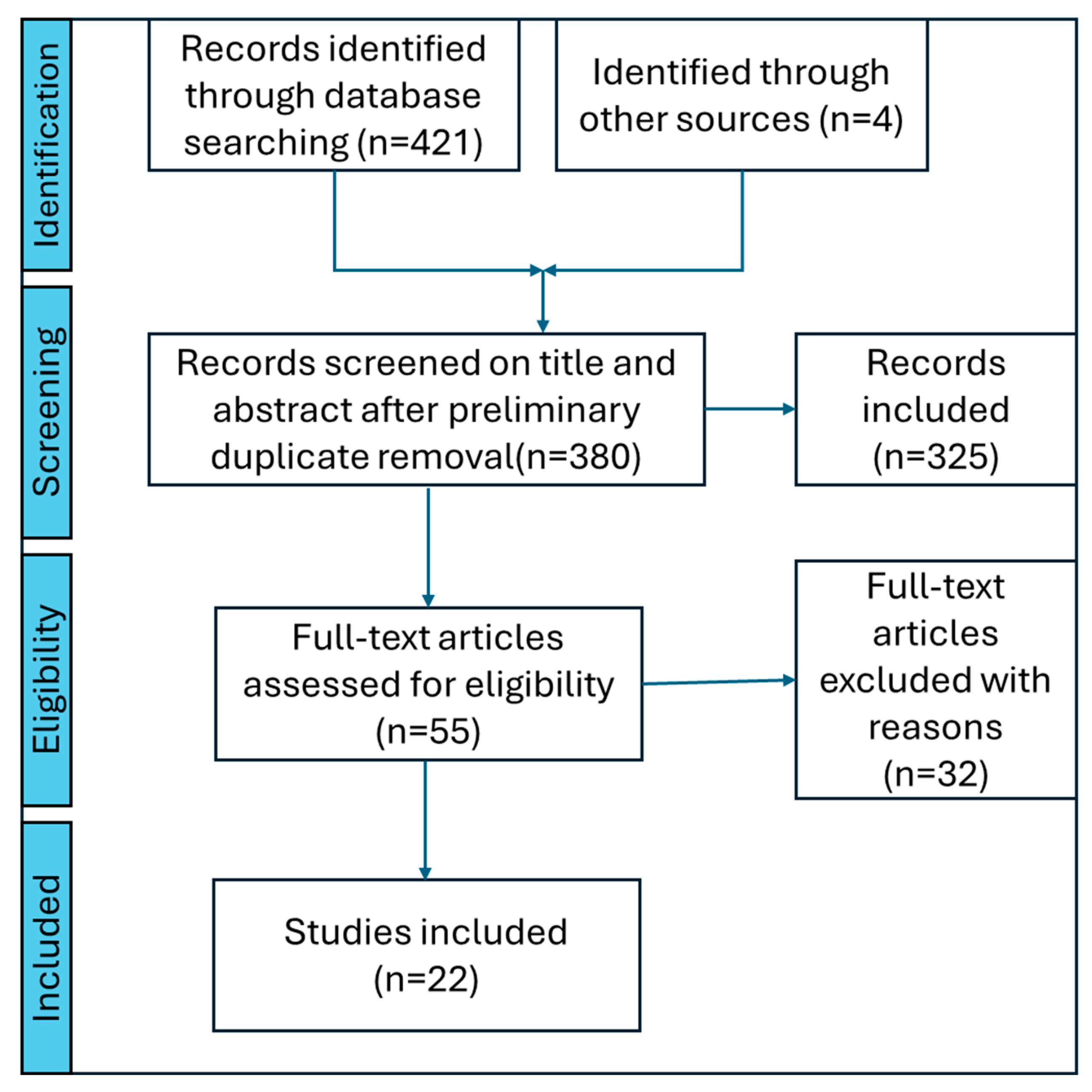
Figure 1. The four-phase PRISMA method of the research design.
Education 16 00786 g001
Figure 2. Synthesized AI-Driven Teacher Education Framework: A Post Hoc Conceptual Synthesis. The pyramid illustrates recurring dimensions identified across the reviewed literature. It should be interpreted as a visual synthesis of themes rather than as a statistically tested or validated model.
Education 16 00786 g002
Table 1. Summary of Key Studies on AI in Teacher Education: Research Design, AI Tool Focus, Key Findings, and Challenge Categories.
StudyResearch DesignSample SizeAI Tool FocusKey FindingsChallenge Keywords/Category
Albadarneh et al. (2024)Descriptive analytical540Large Language Models (LLMs)Chat models (M = 2.73, SD = 0.754) and questioning models (M = 2.70, SD = 0.726) most used. Technical LLMs are the least used. Strong positive correlation among AI tools (r = 0.340 to 0.795).Ethical: bias; Institutional: cost; Technical: adaptability.
Picciano (2024)Qualitative research, Focus group discussion15ChatGPT-4o51% of K-12 teachers use ChatGPT; 40% use it weekly. Higher-performing students are more likely to use AI. Concerns: plagiarism, critical thinking.Ethical: plagiarism; Pedagogical: over-reliance; Cognitive: critical thinking.
Zhang et al. (2023)Structural Equation Modeling (SEM), TAM3452General AI acceptancePerceived usefulness (Î2 = 0.501, p < 0.001) and perceived ease of use (Î2 = 0.297, p < 0.001) significantly influenced AI adoption—gender differences in AI anxiety.Affective: AI anxiety; Equity: gender differences.
Fachrurrozie et al. (2025)Quantitative, SEM230Canva, ChatGPT, Claude AIPerformance expectancy (Î2 = 0.667, p < 0.001) and competence in IT (Î2 = 0.456, p = 0.001) significantly influenced AI adoption. Canva is the most used AI tool.Ethical: dependency; Institutional: infrastructure; Pedagogical: responsible use.
Zeinz (2019)Critical evaluation, secondary data analysisMPFS 2016 survey dataAdaptive learning, AI-assisted search98% of students use digital devices, 84% engage in online searches. AI enhances learning efficiency by 32%.Equity: digital divide; Access: marginalised groups.
Sanusi et al. (2024)SEM, TPB framework796General AI educationBasic AI knowledge (Î2 = 0.345, p < 0.001) and self-efficacy (Î2 = 0.387, p < 0.001) are strong predictors of AI learning intention.Affective: AI anxiety; Competence: self-efficacy; Motivation: self-transcendent goals.
Delcker et al. (2024)CFA, AI competence assessment480AICO_eduAI competence varies by age and teaching experience. Only 46% confident in integrating AI into teaching.Competence: AI literacy gaps; Professional development: training needs.
Velander et al. (2024)Qualitative, Content analysis37General AI literacyOverall, 56% lack formal AI training, while 72% associate AI with human-like consciousness.Policy: guidance gaps; Conceptual: AI misconceptions; Competence: lack of training.
Sperling et al. (2024)Scoping review34AI literacy frameworks45% of studies used qualitative methods, 20% quantitative. AI literacy is viewed more as a technical skill than an ethical domain.Research gap: limited classroom studies; Ethical: underdeveloped AI literacy.
Eltahir and Babiker (2024)Quasi-experimental110AI-powered Moodle toolsAI group outperformed the control (M = 18.32 vs. M = 15.31, p < 0.001): higher engagement and critical thinking.Implementation: barriers to integration; Institutional: support needs.
Mohammadi (2024)Qualitative, Expert Interviews36AI-assisted adaptive learningAI increased teacher training efficiency by 32%. Lack of infrastructure (p < 0.05) and digital policies (p < 0.01).Institutional: infrastructure; Policy: digital governance.
MacDowell et al. (2024)Self-study research35Generative AI82% found AI instructional activities useful, 73% improved confidence.Ethical: misinformation; Pedagogical: responsible design; Academic integrity: source quality.
Blonder and Feldman-Maggor (2024)Qualitative, Ethical analysisUNESCO & European Commission dataGenerative AI in STEM72% of AI-generated content reflects Western-centric knowledge.Ethical: bias; Epistemic: Western-centric knowledge; Accuracy: misinformation.
Howorth et al. (2024)Case study80General AI integration26% increase in faculty AI literacy, 35% increase in preservice teacher confidence.Professional development: faculty training; Competence: digital literacy gaps.
Dai et al. (2023)Ethnographic study23AI curriculum design80% of teachers had bachelor’s degrees in CS. AI training is needed for a structured curriculum.Curriculum: structured AI literacy; Competence: teacher preparation.
Salas-Pilco et al. (2022)Systematic literature review using PRISMA30 empirical studies from 16 countries.Machine learning, NLP, chatbots, AI-based simulations, and augmented realityAI in teacher education can improve teacher behaviour analysis, reflection, feedback, digital competence, and predictive assessment.Ethical: privacy; Competence: digital skills; Implementation: uneven adoption.
Moorhouse and Kohnke (2024)Qualitative exploratory study using semi-structured interviews.13 English language teacher educators from 4 Hong Kong universities.Generative AI tools (mainly ChatGPT) and their impact on teacher education curriculum, instruction, and assessment.AI will significantly affect ILTE: curriculum must be updated for AI literacy. The instruction should model and integrate AI. Assessments need redesign to prevent misuse, and teachers lack confidence and need training.Competence: low AI confidence; Ethical: student misuse; Policy: institutional guidance.
Kim (2023)Qualitative study using in-depth interviews with expert teachers.20 leading Chinese teachers in AI in Education.Teacher–AI collaboration, AI with TPACK skills, data-driven AI systems, IoT-enhanced classrooms.Teachers believe that TAC can boost the learning of the subject matter topics by combining AI’s data analysis with teachers’ guidance. They see it evolving from early dependence on AI to active use, and finally to a true partnership that supports problem-based learning.Competence: data literacy; Infrastructure: AI readiness; Pedagogical: weak AI pedagogy.
Guilherme (2019)Philosophical analysis supported by a thought-based experiment to examine AI’s impact on teacher–student relations.There is no sample; it is a conceptual and literature-basedFocuses on AI systems (tutoring tools) and AI (human-like cognition)AI can assist learning tasks, but cannot replace human teachers because it lacks empathy, emotion, and I–Thou relational depthRelational: weakened human interaction; Ethical: technologization of education.
van den Berg and du Plessis (2023)Qualitative exploratory case study using content analysis of ChatGPT-generated lesson materialsNAFocus on ChatGPT for lesson planning, critical thinking, and open educational resources.ChatGPT can efficiently generate lesson plans, worksheets and presentations, improve access and support teacher creativity, if it is used critically.Accuracy: incorrect outputs; Context: inappropriate content; Ethical: bias.
Ghamrawi et al. (2023)Qualitative phenomenological study using semi-structured interviews to explore teachers’ lived experiences with AI.13 teachers from five Arab countries, all with at least one year of AI use.General AI tools are used in K-12 teaching, analytics, automation, adaptive platforms, and AI-supported teaching.Teachers had two perspectives: first, AI can regress leadership by reducing autonomy. Second, AI expands leadership by freeing time, enabling mentoring, and strengthening data-driven decisions.Professional agency: reduced autonomy; Pedagogical: over-reliance; Competence: uneven readiness.
Celik et al. (2022)Systematic review of 44 empirical studies on teachers’ use of AIThe review analysed 44 studies involving in-service and pre-service teachers.Machine learning (ANNs, decision trees), automated assessment, monitoring systems, adaptive feedback tools.AI supports teachers in planning, monitoring, intervention, assessment, and reducing workload while enhancing instructional decision-making.Technical: reliability; Technical: adaptability; Competence: teacher AI skills.
Note: Challenge keywords were grouped into broad categories to support thematic comparison across studies: ethical, technical, pedagogical, competence-related, institutional, policy, equity, affective, relational, and research-gap categories. This classification was used to strengthen the thematic synthesis and avoid conflating different types of implementation challenges.
Table 2. Synthesised Dimensions of Sustainable AI Integration in Teacher Education Identified Across the Reviewed Literature (post hoc synthesis).
ComponentFunction
1. AI-Driven PersonalizationIs described as tailoring teacher training paths using performance data and adaptive learning.
2. Pedagogical EnhancementIs described as supporting inquiry-, problem-, and project-based learning with real-time analytics and simulations.
3. Continuous Professional DevelopmentIs discussed as offering on-demand, lifelong learning with AI mentors, gamified feedback, and progress tracking.
4. Ethical and Inclusive AI UseIs discussed in relation to data privacy, bias reduction, and responsible AI integration.
5. Collaborative Learning ToolsIs described as fostering peer interaction, discussion forums, and curriculum co-design.
6. Scalable InfrastructureIs discussed as enabling cost-effective, eco-friendly, and remote access to training.
7. AI Literacy and Teacher IdentityIs discussed as strengthening the understanding of AI ethics, tools, and alignment with teacher identity.
8. Policy and Governance FrameworksIs discussed as providing guidelines for responsible use, equity, and institutional readiness.
Disclaimer/Publisher’s Note: The statements, opinions and data contained in all publications are solely those of the individual author(s) and contributor(s) and not of MDPI and/or the editor(s). MDPI and/or the editor(s) disclaim responsibility for any injury to people or property resulting from any ideas, methods, instructions or products referred to in the content.