1. Introduction
Educational attainment is a cornerstone of social mobility, social inclusion, equity, and community well-being. In this review, educational attainment refers to progression through the education system, including high school completion, access to postsecondary education, and degree attainment, as well as broader indicators of academic success and opportunity. Yet the relationship between education and life chances for Black populations in Canada is marked by a persistent aspiration–attainment gap. Black students consistently report very high educational aspirations, often comparable to or exceeding those of their peers (
James & Turner, 2017;
Dei et al., 1997,
Smith et al., 2005). In 2016, for example, 93.9% of Black youth aged 15 to 25 expressed a desire to obtain a university degree, compared with 82.4% of their non-Black counterparts; however, only 59.9% believed they would actually achieve this goal, versus 78.8% among non-Black youth (
Statistics Canada, 2016,
2020;
Turcotte, 2020). By 2021, 32.4% of Black adults aged 25 to 64 held a bachelor’s degree or higher, aligning closely with the Canadian average of 32.9%. This aggregate figure masks important intergenerational differences: degree attainment is substantially higher among the Canadian-born children of recent African immigrants (46.3%), yet only 15.8% of Black individuals in the third generation or more have completed university (
Statistics Canada, 2023). At the same time, Black Canadians experience the highest rate of overqualification among Canadian-educated racialized groups, with about 16% working in jobs requiring only a high school diploma or less, a pattern that is remarkably stable across first-, second-, and third-generation Black populations (
Statistics Canada, 2023). Taken together, these findings indicate that gains in educational attainment do not necessarily translate into equitable labour market outcomes, highlighting how structural and institutional inequities extend beyond schooling into broader social systems. This disconnect underscores the need to examine not only educational access and outcomes, but also how systemic processes within education contribute to longer-term inequities.
These macro-level patterns are mirrored in the day-to-day schooling experiences of Black children and youth. While many Black students enter school with strong aspirations and familial expectations for academic success, their trajectories unfold within educational environments shaped by deficit thinking, anti-Black racism, and cultural erasure (
Holtz et al., 2023;
James & Turner, 2017). These patterns are not isolated outcomes but reflect institutional practices and policy environments that systematically shape educational trajectories. These dynamics undermine school belonging and well-being and help explain why, despite high aspirations and comparable or even higher educational attainment in some subgroups, Black children and youth continue to encounter barriers to equitable educational and life outcomes.
Recent demographic trends underscore both the urgency and the national relevance of these issues. The Black population in Canada has more than doubled in size since 1996, reaching approximately 1.5 million individuals by 2021 and accounting for 4.3% of the total population and 16.1% of the racialized population (
Domey & Patsiurko, 2024;
Statistics Canada, 2022). Projections indicate that, if current trends continue, the Black population will reach about 3.0 million by 2041, becoming the second-largest racialized group after South Asians (
Domey & Patsiurko, 2024;
Statistics Canada, 2022). This population is distinctly young: children and youth aged 0 to 25 represent 41.9% of Black people in Canada, and 647,940 Black children and youth constitute nearly one fifth of all racialized children and youth and 6.4% of the total child and youth population (
Domey & Patsiurko, 2024;
Statistics Canada, 2022). Importantly, this population is relatively young, with children and youth aged 0 to 25 representing 41.9% of Black people in Canada, and nearly three quarters (72.8%) under the age of 45. This demographic profile highlights the critical role of Canadian education systems in shaping both current and future equity outcomes for Black communities (
Domey & Patsiurko, 2024).
Despite a growing body of research documenting these inequities, the evidence base remains fragmented, with limited synthesis of how systemic barriers, institutional practices, and enabling supports interact across contexts and subgroups. There is also insufficient attention to how intersectional factors such as gender, migration history, and socioeconomic position shape educational experiences and outcomes in integrated ways. Against this backdrop, the present scoping review seeks to identify and synthesize empirical research on the educational experiences of Black children and youth in Canada, with particular attention to how systemic barriers, cultural and community resources, family and individual aspirations, and resilience interact to shape educational trajectories and outcomes. Specifically, this review examines: (a) how schooling processes and structures support or constrain access, participation, and academic success for Black learners; (b) how these processes vary across provinces, time periods, and subgroups (for example, by gender, migration history, and socioeconomic position); and (c) what interventions and policy directions have been proposed or evaluated in the literature. By bringing together a large and diverse body of literature, this review seeks to move beyond descriptive accounts toward a more integrated understanding of patterns, gaps, and implications for policy and practice. In doing so, it contributes to ongoing efforts to identify actionable pathways for addressing systemic inequities within Canadian education systems.
This review identifies key gaps in the evidence base, including regional blind spots, limited disaggregation by gender and migration background, and insufficient attention to mental health and well-being. Addressing these gaps is essential for advancing scholarship and informing evidence-based interventions and accountability within education systems. Doing so is critical for Canada to meet its commitments to educational equity and ensure that all children and youth have access to high-quality, culturally affirming education. The insights generated are intended to inform researchers, educators, community organizations, and policy makers working to dismantle systemic barriers and support the success of Black children and youth.
2. Intersectional Theoretical Framework
This review is guided by an intersectional theoretical framework that foregrounds how multiple, overlapping systems of power shape the educational experiences of Black children and youth in Canada. Originating in Black feminist legal scholarship, intersectionality, as articulated by Kimberle Crenshaw (
Crenshaw, 1989), highlights how axes of identity and social location such as race, gender, class, immigration status, language, disability, and age intersect to produce experiences that cannot be fully understood through single-category or additive models. In the Canadian educational context, this means that the schooling experiences of, for example, a Canadian-born Black girl, a recently arrived Francophone African refugee boy, and a third-generation Black youth from a low-income urban neighbourhood are structured by both shared racialization and distinct configurations of gender, migration history, socioeconomic position, and language.
An intersectional lens is particularly important for this topic because it directs attention to how institutional practices and policies, such as academic streaming, disciplinary procedures, special education placement, and curriculum design, interact with broader structures of anti-Black racism, settler colonialism, and class inequality to produce patterned educational advantages and disadvantages. For instance, Black immigrant youth may simultaneously benefit from strong familial expectations around schooling and confront language barriers, trauma, or non-recognition of prior schooling (
Dei et al., 1997). Black girls may be celebrated as “resilient” while experiencing adultification, hypersexualization, and gendered surveillance in ways that differ from Black boys (
Akuoko-Barfi et al., 2023;
Morris, 2007). Intersectionality thus compels us to move beyond generalized accounts of “Black students” and to attend to differentiated experiences within Black communities.
In addition to intersectionality, this review draws on critical race theory (CRT) and related traditions that conceptualize racism as ordinary, institutionalized, and embedded in law, policy, and everyday practice rather than aberrational or merely attitudinal (
Dei et al., 1997,
2000). While intersectionality highlights how multiple axes of identity interact, CRT provides a structural lens for examining how these intersections are produced and sustained through institutional arrangements. Bringing intersectionality and CRT into dialogue allows for a more comprehensive analysis of both lived experiences and systemic processes. Specifically, intersectionality guides the identification of how overlapping identities shape educational experiences across studies, while CRT informs the interpretation of how institutional practices such as streaming, discipline, and curriculum reproduce racial hierarchies. Together, these frameworks enable the analysis to move beyond description toward an examination of the mechanisms through which inequities are produced and maintained. We draw on this combined framework in our synthesis by asking how race interacts with gender, class, migration, language, and region to shape the opportunities, constraints, and outcomes documented in the included studies, and by foregrounding the voices and knowledges of Black children, youth, families, and communities where these are present in the literature. This approach also supports the identification of patterns, tensions, and gaps across studies, as well as their implications for policy and practice. Overall, this integrated theoretical approach aligns with the review’s aim to generate a more analytically robust and policy-relevant understanding of educational inequities, while also identifying potential pathways for systemic change and accountability in Canadian education systems.
3. Methods
This scoping review followed the methodological framework proposed by
Arksey and O’Malley (
2005), which outlines a systematic five-step process. The steps include formulating the research question, identifying and selecting pertinent studies, systematically organizing the data, and synthesizing and presenting the findings.
3.1. Protocol
The study employed a comprehensive search to examine the experiences of Black children and youth in Canada. During the review process, the focus was refined to specifically examine educational experiences, allowing for a more targeted synthesis of patterns, barriers, and supports identified in the literature.
3.2. Eligibility Criteria
The eligibility criteria for this study were carefully designed to ensure the inclusion of relevant and high-quality research. First, only peer-reviewed empirical studies employing quantitative, qualitative, or mixed-method designs were considered. Second, the research had to focus specifically on Black children and youth in Canada. Third, the geographical scope was restricted to studies conducted within Canada. Fourth, eligibility was limited to research published in English or French in peer-reviewed journals. Finally, no date restrictions were applied in order to capture both historical and contemporary perspectives.
Studies were excluded if they focused solely on adults (over age 30), were unrelated to educational experiences, or were conducted outside Canada. Additionally, non-peer-reviewed sources were excluded. While reviews were excluded from the primary analysis, they were retained for contextual reference where relevant. These criteria ensured alignment with the study objectives.
3.3. Information Sources
Building on the guidance provided by
Bramer et al. (
2017) regarding the importance of utilizing multiple databases for comprehensive literature reviews, we conducted a thorough search across a wide range of sources. This approach ensured coverage of diverse fields such as education, health, social sciences, psychology, and community studies. The database search, conducted on 20 May 2024, included records from the inception of each database to capture a complete historical perspective. The databases reviewed were Ovid MEDLINE, Embase, APA PsycINFO, Web of Science, Scopus, Academic Search Complete, and SocINDEX. These databases were selected to capture interdisciplinary perspectives on educational inequities, systemic discrimination, and resilience among Black children and youth.
3.4. Search Strategy
The search strategy was carefully developed through collaborative discussions between the research team’s content experts and a librarian. This approach ensured that the search terms were comprehensive and aligned with the study’s objectives. The strategy, which is detailed in
Supplementary File S1, was designed to be adaptable across multiple databases. It was structured around three primary components: geographical focus (Canada and its provinces), target population (Black children and youths of African and Caribbean descent, encompassing individuals from historic Black communities in Canada as well as the global African diaspora, including regions such as the Caribbean, South America, North America, Europe, Asia, and Africa), and age group (children and youth under the age of 30).
To enhance the precision and breadth of the search, controlled vocabulary terms such as Medical Subject Headings (MeSH) were utilized where applicable. Additional sensitivity was achieved by incorporating concepts into the search string as keywords with truncation (*) and “explode” (exp) functions. Boolean operators (AND, OR) were employed to connect subject headings and keywords effectively, ensuring a comprehensive retrieval of relevant studies.
3.5. Selection of Sources of Evidence
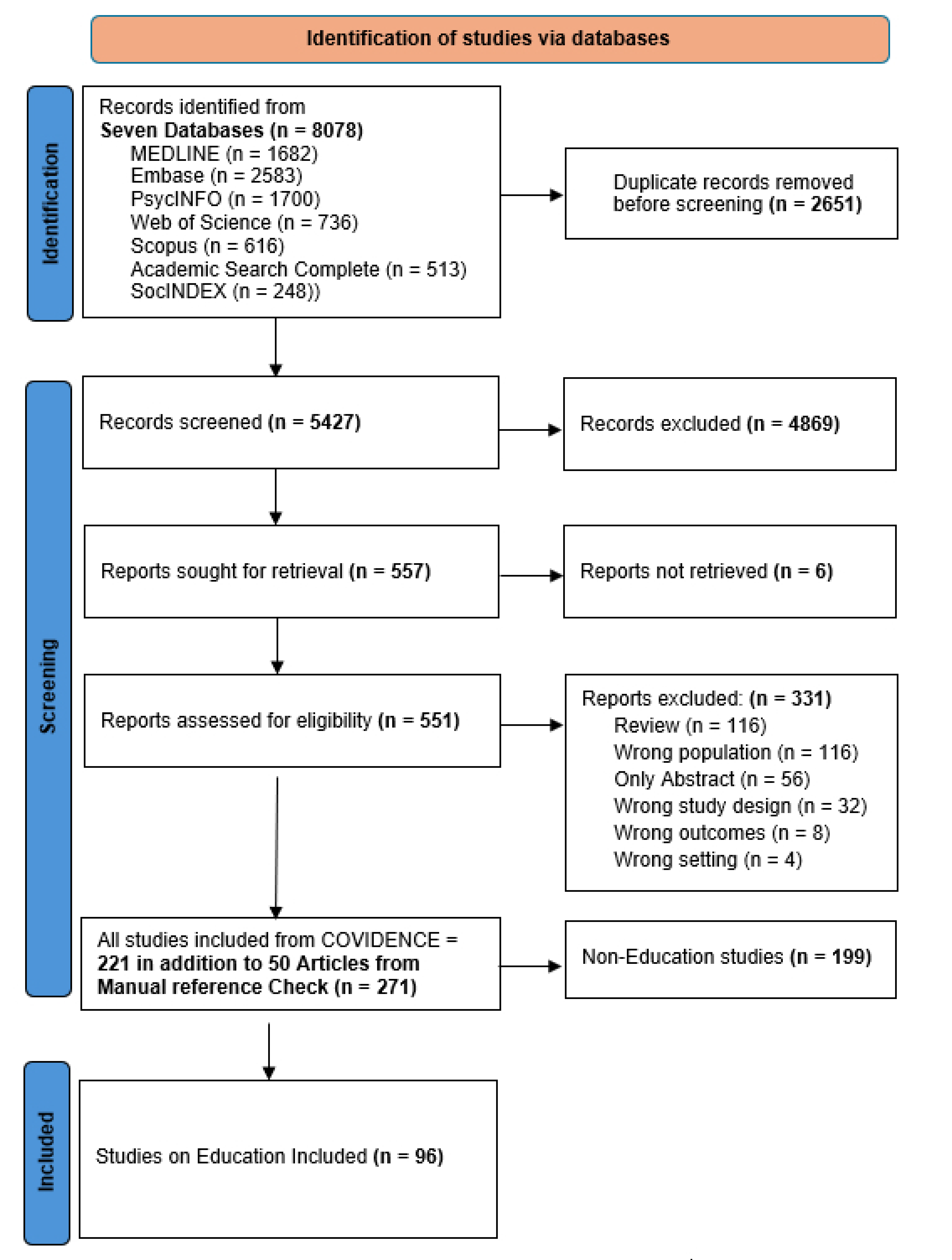
The selection process for sources of evidence involved exporting all retrieved citations from the databases into Covidence, a web-based tool designed to manage systematic review workflows efficiently. This software facilitated both the title and abstract screening as well as the full-text review. Trained research assistants carried out the screening process, with pilot screenings conducted at each stage to ensure consistency and agreement among reviewers before beginning the main screening. Covidence assigned articles randomly to two independent reviewers for evaluation, with a third reviewer resolving any discrepancies that arose. To supplement the database search, additional relevant articles were identified through manual reference checks of the included studies. This multi-layered approach ensured a thorough and systematic selection of evidence. See
Figure 1 for the flow chart of article selection.
3.6. Data Charting/Extraction Process
The data charting and extraction process involved organizing the selected articles according to their thematic focus prior to beginning the extraction phase. For articles related to education, two trained research assistants systematically extracted the relevant data and entered it into a Microsoft Excel spreadsheet. To ensure the reliability and accuracy of this process, the extracted data underwent a thorough review by a senior member of the research team. Additionally, a pilot data extraction was conducted on a subset of articles to establish inter-reviewer consistency and refine the approach before applying it to the full set of eligible studies.
3.7. Data Items
Key details were systematically extracted from each selected article to facilitate a comprehensive analysis. The information included the authors, title, year of publication, and geographical location of the study, such as the province in which it was conducted. Study-specific details captured included the research design, sources of data (e.g., Black children and youth, parents, or service providers), and sample size. Additionally, the age range and gender distribution of the children and youth participants, along with their country or region of origin, were documented. The research objectives or guiding questions, methods of data collection (e.g., interviews, surveys, or focus groups), and key findings were also carefully noted. Furthermore, the articles were examined for policy and practice implications, as well as recommendations for future research, to ensure a well-rounded understanding of the educational experiences of Black children and youth in Canada.
3.8. Synthesis of Results
A two-stage synthesis was conducted. First, a bibliometric analysis using descriptive statistics summarized study characteristics (e.g., year, region, design, and participant demographics).
Second, a thematic narrative synthesis was conducted following
Braun and Clarke (
2021). Thematic analysis proceeded through a multi-step process. Initially, open coding was conducted on a subset of studies to identify recurring concepts related to barriers, experiences, and supports. These initial codes were then discussed and refined collaboratively by the research team to develop a preliminary coding framework.
The refined coding framework was applied to the full dataset, with codes iteratively revised as new patterns emerged. To enhance rigor, coding decisions were discussed among team members, and discrepancies were resolved through consensus. This iterative process ensured consistency, reflexivity, and transparency in theme development.
Twelve interrelated thematic categories were generated, capturing systemic barriers, lived experiences, and strategies for inclusion. Rather than representing discrete categories, these themes were interpreted as interconnected dimensions of educational inequities, reflecting the complexity of Black children and youth’s educational trajectories across contexts. The intersectionality framework guided both coding and interpretation. Specifically, it informed attention to how overlapping identities (e.g., race, gender, migration status, and socioeconomic position) shaped patterns observed across studies. For example, the analysis considered how gendered racism affected Black girls or how refugee status and language barriers amplified exclusion. Critical race perspectives further informed interpretation by situating these patterns within broader systems of institutionalized racism, enabling an analysis of how educational structures reproduce inequities. In line with the scoping review methodology, no formal quality appraisal was conducted (
Munn et al., 2018). However, systematic procedures for data extraction, coding, and synthesis were employed to ensure analytical rigor and transparency.
4. Results
This scoping review analyzed 96 studies examining the educational experiences of Black children and youth in Canada. Across the included studies, three key patterns emerged: a predominance of qualitative research focused on lived experiences, a strong concentration of studies in specific provinces, and a consistent emphasis on systemic barriers alongside resilience and community-based supports.
The research methods were diverse, including qualitative, quantitative, and mixed-methods approaches. Qualitative studies constituted the majority (55 studies; 57.29%), providing in-depth insights into lived experiences through interviews, focus groups, and narrative methods (e.g.,
Akuoko-Barfi et al., 2023;
Mason et al., 2022;
Woodgate & Busolo, 2018). Quantitative studies accounted for 37 studies (38.54%), using surveys and statistical analyses to examine systemic disparities in educational outcomes (e.g.,
Abada et al., 2009;
Kamanzi, 2021;
Robson et al., 2018). Mixed-methods studies were limited (4 studies; 4.17%) (e.g.,
Jani et al., 2022;
Makani et al., 2024). This distribution reflects a strong emphasis on experiential accounts, with fewer studies employing longitudinal or integrative designs to assess outcomes over time.
Geographically, the literature was heavily concentrated in a few regions. Ontario (38 studies; 39.58%) and Québec (33 studies; 34.38%) dominated the evidence base, with many studies focusing on urban centres such as Toronto and Montréal where systemic racism, academic streaming, and community support structures were frequently examined (e.g.,
James & Turner, 2017;
Magnan et al., 2019;
Briggs, 2018). Nova Scotia (7 studies; 7.29%) contributed important insights into African Nova Scotian communities (e.g.,
Waldron et al., 2023), while national studies (8 studies; 8.33%) provided broader perspectives using large datasets (e.g.,
Abada et al., 2009). Other provinces, including Alberta, British Columbia, and Manitoba, were less represented. This uneven distribution highlights a concentration of evidence in central and urban contexts, with limited research in other regions.
In terms of language, 78 studies (81.25%) were published in English and 18 (18.75%) in French, reflecting Canada’s bilingual context and the presence of Black francophone communities (e.g.,
Jacquet et al., 2023;
Potvin & Leclercq, 2014). The smaller proportion of French-language studies suggests potential underrepresentation of francophone experiences.
Table 1 summarizes study characteristics, including geographic scope, publication timeline, study design, data sources, and gender representation. Overall, the evidence base is characterized by a predominance of single-province studies, youth-focused data sources, and binary gender reporting, with limited inclusion of diverse gender identities and multi-source perspectives. These patterns highlight both strengths in capturing youth voices and limitations in broader representation.
Across studies, the educational experiences of Black children and youth were shaped by a consistent interplay of systemic barriers and enabling supports. Key barriers included systemic discrimination, racial stereotyping, academic streaming, and disproportionate disciplinary practices (
Akuoko-Barfi et al., 2023;
Briggs, 2018;
Ruck & Wortley, 2002), as well as socioeconomic constraints and limited access to culturally relevant curricula (
Kamanzi, 2023;
Mason et al., 2022;
Codjoe, 2001). Institutional factors such as the underrepresentation of Black educators and inequitable school policies further reinforced these challenges (
Simmons & Plaza, 1998;
James & Turner, 2017).
At the same time, studies consistently identified protective and enabling factors, including strong family expectations, community support, mentorship, and culturally grounded networks (
A. Livingstone et al., 2014;
Nyika, 2022;
Wilson-Forsberg et al., 2020). These supports contributed to resilience among Black youth navigating educational systems.
Despite high aspirations and strong support systems, Black students frequently encountered structural constraints that limited educational opportunities and outcomes. A notable pattern across studies was the coexistence of high aspirations and systemic barriers (
Abada et al., 2009;
Krahn & Taylor, 2005), illustrating a persistent gap between educational goals and achievable outcomes. Many Black youth demonstrated resilience by navigating these challenges through community networks, mentorship, and alternative pathways (
Woodgate & Busolo, 2018;
Wilson-Forsberg et al., 2020). However, the literature consistently emphasized that individual resilience alone is insufficient to overcome systemic inequities (
Kamanzi, 2023;
Briggs, 2018).
Taken together, these findings highlight a central tension within the literature: while Black children and youth exhibit strong agency and resilience, their educational trajectories remain shaped by structural and institutional conditions that constrain equitable outcomes. This underscores the need for systemic reforms that address root causes rather than relying on individual-level adaptation.
The educational experiences of Black immigrant children and youth in Canada are shaped by a dynamic interplay of enabling and constraining factors. While high aspirations and strong family and cultural support are consistently reported, these strengths often coexist with systemic barriers that limit equitable outcomes. A central pattern across studies is the tension between aspiration and structural constraint. Although family support and cultural expectations provide motivation, they are frequently undermined by systemic discrimination, socioeconomic challenges, and low teacher expectations (
Abada et al., 2009;
Abada & Tenkorang, 2009). This indicates that individual and community assets alone are insufficient in the absence of equitable institutional conditions.
Black students commonly encounter racial stereotyping, academic streaming, and limited access to culturally relevant curricula, which constrain educational pathways (
Lafortune & Balde, 2012). These are not isolated challenges but reflect institutional practices that shape access to opportunity. The underrepresentation of Black educators and inequitable school policies further limit students’ academic success and sense of belonging (
Simmons & Plaza, 1998;
James & Turner, 2017). Importantly, these inequities are embedded within broader educational systems rather than being individual-level issues. Consistent with CRT, they are reproduced through routine institutional practices, while an intersectional lens highlights how gender, migration status, and socioeconomic position shape differentiated experiences. Although many Black youth demonstrate resilience through alternative pathways and community support (
A. Livingstone et al., 2014;
Wilson-Forsberg et al., 2020), this resilience should be understood as an adaptation to inequitable conditions rather than evidence of system effectiveness. Community networks often function as compensatory supports in response to institutional gaps. Overemphasizing resilience risks shifting responsibility away from education systems and onto students and families. The findings therefore point to the need for systemic reforms that address root causes of inequity. This includes implementing accountability mechanisms such as monitoring streaming and disciplinary disparities, and strengthening the recruitment and retention of Black educators. Overall, while Black children and youth demonstrate strong agency and aspiration, their educational trajectories remain shaped by structural conditions that require sustained institutional change.
4.1. Educational Barriers, Experiences, and Resilience of Black Immigrant Children and Youth in Canada
Across studies, the educational experiences of Black immigrant youth are shaped by the interaction of systemic barriers, cultural expectations, and resilience. Systemic discrimination, socioeconomic constraints, and low teacher expectations are consistently associated with lower educational attainment (
Abada et al., 2009), while structural factors such as parental underemployment and limited social capital further constrain upward mobility despite high aspirations (
Abada & Tenkorang, 2009;
Dinovitzer et al., 2003). Racial stereotyping, particularly of Black male students, contributes to academic streaming that restricts postsecondary opportunities (
Briggs, 2018). Eurocentric curricula and exclusionary disciplinary practices are also frequently reported, contributing to disengagement through heightened surveillance and persistent low expectations (
Akuoko-Barfi et al., 2023). Together, these findings indicate that multiple institutional factors shape educational trajectories.
Curriculum inclusivity remains limited due to insufficient training in multicultural and culturally responsive pedagogies and the lack of diverse perspectives in learning materials (
Niyubahwe & Mukamurera, 2024;
Potvin & Leclercq, 2014). The underrepresentation of Black educators is also widely reported, limiting access to mentorship and culturally relevant role models (
Simmons & Plaza, 1998). In Québec, additional barriers such as racial segregation, grade repetition, and exclusion from advanced programs are documented (
Kamanzi, 2023). These structural patterns are reflected in disparities in postsecondary transitions, with lower university progression rates among Black students compared to Euro-Canadian peers (
Collins & Magnan, 2018;
Kamanzi, 2021). Socioeconomic constraints further influence educational experiences. Limited financial resources restrict access to academic supports, while parental education and income are associated with educational outcomes (
McAndrew et al., 2008). Across studies, these factors operate cumulatively, reinforcing disadvantage.
Despite these challenges, many Black immigrant youth demonstrate resilience through alternative pathways such as technical education, entrepreneurship, and support from community and ethnic networks (
A. Livingstone et al., 2014;
Wilson-Forsberg et al., 2020;
Zaami, 2020). Newcomer programs and community-based supports are also identified as important resources that facilitate adaptation and academic persistence (
Woodgate & Busolo, 2018). These findings highlight the coexistence of barriers and supports within students’ educational experiences.
4.2. Systemic Discrimination and Educational Isolation of Black Children and Youth
Across studies, systemic discrimination is consistently identified as a central factor shaping the educational experiences of Black children and youth, contributing to patterns of marginalization and educational isolation. Discriminatory practices—including harsher disciplinary measures, racial profiling, and implicit bias—are frequently reported as undermining students’ sense of belonging and engagement (
Akuoko-Barfi et al., 2023;
Briggs, 2018;
Stirling-Cameron et al., 2023;
King et al., 2017;
Lavergne et al., 2008,
Patte et al., 2021,
Ruck & Wortley, 2002).
Unequal resource allocation and the persistence of Eurocentric curricula further contribute to exclusionary educational environments (
Antwi-boasiako et al., 2016;
Magnan et al., 2019). These structural conditions are often reflected in school-level practices that disproportionately affect Black students. For example, Black students, particularly those of Caribbean descent, are overrepresented in special education placements, often as a result of systemic biases in referral and assessment processes (
Collins, 2024). Experiences of racial bullying, exclusion, and punitive disciplinary policies are also widely documented, with implications for academic engagement and well-being (
Larochette et al., 2010;
Sibblis et al., 2022). In Québec, Haitian and Caribbean students report school environments characterized by exclusion, systemic whiteness, and harsher disciplinary practices, contributing to disengagement (
Briggs, 2018;
Desruisseaux et al., 2002). Even high-achieving Black students are reported to encounter marginalization through persistent low expectations and racialized stereotypes (
George, 2023;
Gordon & Zinga, 2012;
James, 2012).
Black educators working within predominantly White institutions also report experiencing microaggressions and resistance to anti-racist initiatives, while simultaneously employing culturally relevant pedagogies to support Black students (
Howard, 2014). At the postsecondary level, racialized students in Montréal report similar patterns of marginalization affecting their sense of belonging and confidence (
Magnan et al., 2024).
Linguistic and cultural biases further shape educational experiences, particularly for immigrant and refugee students. West African refugee children in rural British Columbia and Haitian students in francophone school systems report misplacement, exclusion from advanced programs, and challenges related to language and cultural adaptation (
Atangana-Abe & Ka, 2016;
Usman, 2012). Implicit biases are also associated with placement in lower academic tracks and experiences of microaggressions that affect motivation and participation (
Lafortune & Kanouté, 2019;
Niyubahwe & Mukamurera, 2024;
Valade & Magnan, 2023). Collectively, these findings demonstrate consistent institutional patterns contributing to educational exclusion across contexts.
4.3. Placement in Special Education
Across studies, the overrepresentation of Black children and youth in special education is consistently reported as a significant pattern within Canadian education systems (
James & Turner, 2017;
McAndrew et al., 2008). These placements are often described as shaped by referral and assessment processes that lack transparency and inclusivity from the perspectives of Black students and their families (
Collins, 2024;
Edwards et al., 2025). Black students and their families frequently report limited access to information about placement procedures and restricted opportunities to participate in decision-making processes that affect educational trajectories. Referrals are often based on informal or anecdotal observations rather than standardized or evidence-based criteria, contributing to perceptions of bias and exclusion (
Collins, 2024).
Even when formal assessments are conducted, they are frequently described as culturally misaligned. Assessment processes are often carried out by professionals who are predominantly White and may lack training in working with ethno-racially diverse populations. As a result, assessment tools and practices may not adequately reflect the cultural, linguistic, and lived experiences of Black students, contributing to feelings of misrecognition and marginalization. Across studies, these patterns are associated with experiences of alienation and reduced educational engagement among Black students placed in special education. These findings suggest that placement processes are not neutral but embedded within broader institutional inequities.
4.4. Socioeconomic Barriers and Educational Equity
Across studies, socioeconomic constraints are consistently identified as a key factor shaping the educational experiences and outcomes of Black immigrant youth in Canada. Limited financial resources restrict access to textbooks, technology, and extracurricular opportunities, with implications for academic engagement and career trajectories (
Kamanzi, 2023;
Mason et al., 2022). In some cases, youth take on employment responsibilities to support their families, which can reduce study time and contribute to fatigue and lower academic performance (
Mulatris & Liboy, 2010;
Worswick, 2004).
Socioeconomic status is closely associated with academic outcomes, with lower-income Black students experiencing reduced access to educational supports and opportunities (
Caldas et al., 2009). Studies also highlight the role of family structure and economic vulnerability, particularly among single-parent households, in shaping access to educational and career pathways (
Mulatris & Liboy, 2010). Financial stress is further linked to mental health challenges, while gendered expectations may place additional pressures on Black girls to balance academic and family responsibilities (
Goitom, 2018;
Salami et al., 2022a,
2022b;
C. Brown et al., 2014). Socioeconomic segregation also affects access to well-resourced schools, contributing to disparities in educational opportunities (
Jones & Shen, 2014;
Mason et al., 2022). Regional patterns are evident, with lower graduation rates reported among Black youth in Québec and Ontario, alongside gender differences in outcomes, with Black female students often outperforming males (
A. M. Livingstone & Weinfeld, 2017). Employment-related pressures are particularly noted among Caribbean Black youth, where balancing work and school affects academic progression and postsecondary access (
Mulatris & Liboy, 2010;
Worswick, 2004).
Postsecondary transitions are similarly shaped by socioeconomic factors. Lower rates of university enrollment among Black students have been associated with socioeconomic status, academic streaming, and parental education, although some studies report improvements over time in relation to equity-focused policies (
Kamanzi & Collins, 2018;
Robson et al., 2018). Across studies, these findings highlight the cumulative influence of socioeconomic conditions on educational pathways and outcomes. Overall, the evidence indicates that socioeconomic barriers intersect with other structural factors to shape disparities in access, participation, and educational attainment among Black children and youth.
4.5. Challenges in Canadian Schools
Across studies, Black immigrant and minority students in Canada face multiple, interconnected challenges within school environments that affect both academic outcomes and well-being. Language barriers, systemic racism, and cultural disconnects are frequently reported, particularly among African immigrant and refugee students who navigate unfamiliar curricula and limited cultural representation (
Fleuret, 2014;
Fleuret & Montésinos-Gelet, 2011;
Nyika, 2022;
Schroeter & James, 2015).
Academic streaming, racial segregation, and lowered expectations further restrict access to advanced coursework and postsecondary opportunities (
Kamanzi, 2023;
Mason et al., 2022). Financial constraints also limit participation in extracurricular activities, tutoring, and access to learning resources, contributing to disparities in engagement and achievement (
Wilson-Forsberg et al., 2020;
Worswick, 2004). These findings highlight how multiple school-level and structural factors shape students’ educational experiences. Gendered patterns are also evident across studies. Black girls experience intersecting racial and gender biases, including adultification and heightened surveillance, which affect their educational experiences and well-being (
Akuoko-Barfi et al., 2023;
Litchmore, 2021). The lack of Black educators contributes to feelings of isolation and limits access to culturally affirming mentorship. Systemic challenges such as racialized expectations, chronic stress, and under-resourced schools further contribute to inequities (
Briggs, 2018;
Desruisseaux et al., 2002;
Gilbert-Blanchard et al., 2022;
Goitom, 2018).
Societal and cultural pressures also shape experiences. Expectations related to family roles and cultural norms may create additional demands for some students, influencing how they balance academic responsibilities and personal obligations (
Goitom, 2018;
Salami et al., 2022b). Across studies, these pressures are often reported alongside structural barriers, highlighting the complexity of students’ educational experiences. Overall, the literature indicates that challenges faced by Black students in Canadian schools are multi-layered, reflecting the interaction of institutional practices, socioeconomic conditions, and cultural dynamics.
4.6. Migration, Intersectionality, and Educational Inequities
Across studies, migration-related factors are consistently identified as shaping the educational experiences of Black immigrant youth through their interaction with race, socioeconomic status, and institutional contexts. Disruptions associated with migration, including displacement, language barriers, and unfamiliar curricula, are frequently reported as affecting school integration and contributing to academic gaps and psychological distress (
Ayoub & Zhou, 2016,
Mason et al., 2022;
Wilkinson, 2002;
Woodgate & Busolo, 2018,
2021). Parental unfamiliarity with the Canadian education system is also associated with challenges in navigating school processes, including placement decisions and access to support services (
Clarke, 2011;
Hynie et al., 2013;
Ibrahim, 1999). These factors are often linked to increased risks of misplacement, including placement in lower academic tracks or special education settings.
Systemic racism and socioeconomic conditions further shape these experiences. Economic instability and limited social capital are associated with reduced school readiness and academic achievement (
Jones & Shen, 2014). Racial biases contribute to disproportionate disciplinary actions and exclusion from advanced academic pathways (
Nyika, 2022;
Schroeter & James, 2015). Across studies, these factors are reported as interacting rather than operating independently, highlighting the layered nature of educational inequities.
Gendered and migration-related differences are also evident. Black girls are reported to experience compounded challenges, including racialized and gendered expectations, alongside financial and social pressures (
Goddard-Durant et al., 2023;
Wilson & Flicker, 2017). Afro-Caribbean families are also described as experiencing heightened scrutiny within educational and child welfare systems (
Clarke, 2012).
Migration-related trauma and family disruption further affect educational experiences. Haitian students who migrated following the 2010 earthquake are reported to experience trauma-related learning difficulties (
Lafortune, 2014a,
2014b), while family separation is associated with socio-emotional challenges that affect academic engagement (
Lafortune et al., 2020). Experiences of “othering” are also reported, particularly in minority francophone contexts, where school diversity and teacher preparedness influence integration (
Jacquet et al., 2008;
Jacquet et al., 2023). Variation in educational outcomes is also observed across migration histories and backgrounds. For example, students of North African origin are reported to benefit from higher levels of parental engagement, while Caribbean-origin students are more likely to encounter structural barriers affecting educational attainment (
Potvin & Leclercq, 2014;
Tardif-Grenier et al., 2017). Overall, the findings indicate that migration-related experiences intersect with institutional and socioeconomic factors to shape diverse and uneven educational trajectories among Black children and youth in Canada.
4.7. Impact of Curriculum (Under)Representation
Across studies, curriculum content and representation are consistently identified as key factors influencing the engagement and educational experiences of Black children and youth. Eurocentric curricula and the limited inclusion of Black histories, perspectives, and contributions are frequently associated with disengagement and feelings of marginalization (
Codjoe, 2001;
A. Livingstone et al., 2014;
Mason et al., 2022). The absence of culturally relevant content is reported to signal a lack of recognition and value for Black identities within educational spaces. In contrast, inclusive and Africentric curricula are associated with increased engagement, stronger identity affirmation, and improved connections to learning (
Daniel, 2023;
A. Davis, 2022). Programs incorporating culturally relevant materials and experiences are also linked to more meaningful student participation (
Jani et al., 2022).
Access to culturally relevant resources, including Black educators, role models, and culturally familiar practices, is similarly identified as important for fostering a sense of belonging (
Nyika, 2022). Across studies, these elements are described as contributing to more inclusive and supportive learning environments. Overall, the findings indicate that curriculum representation plays a significant role in shaping both educational engagement and identity development among Black students.
4.8. Secured Spaces and Their Influence on Racial Identity
Across studies, secured spaces are consistently identified as important environments supporting the racial identity development and well-being of Black children and youth, particularly within predominantly White educational contexts. These spaces provide opportunities for students to engage with peers, mentors, and educators in ways that affirm identity and mitigate experiences of racism and marginalization (
Daniel, 2023;
A. Livingstone et al., 2014).
The concept of “racial oases” is used to describe environments where Black students engage in positive identity formation, process experiences of racialization, and build resilience (
Daniel, 2023). These spaces are often characterized by the presence of Black mentors, culturally relevant practices, and opportunities for community building. Cultural expression within secured spaces also plays a significant role. For example, African youth in Franco-Ontarian schools use cultural forms such as language and music to assert identity and navigate dominant cultural expectations (
Ibrahim, 1999). Similarly, spaces that affirm linguistic and cultural identities are associated with reduced feelings of alienation and increased belonging among Haitian and Caribbean youth (
Akuoko-Barfi et al., 2023;
A. Livingstone et al., 2014).
Across studies, the absence of such spaces is associated with disengagement, isolation, and poorer educational experiences. Institutional constraints, including limited funding and the marginalization of Black faculty and initiatives, are also reported as affecting the availability and sustainability of these environments (
Daniel, 2023). Overall, the findings indicate that secured spaces play a significant role in supporting identity development, sense of belonging, and educational engagement among Black students.
4.9. Culture, Community, and Educational Equity
Across studies, cultural, familial, and community factors are consistently identified as shaping the educational experiences and outcomes of Black children and youth in Canada. Experiences of racial discrimination, stereotyping, and exclusion are frequently reported as contributing to disengagement, lower academic performance, and mental health challenges (
Akuoko-Barfi et al., 2023;
Husbands et al., 2022;
Salami et al., 2022a,
2022b). Negative teacher expectations and biased disciplinary practices are also associated with reduced trust in educational institutions (
Ruck & Wortley, 2002).
Family and cultural dynamics play a central role in shaping educational experiences. Black and immigrant families often emphasize education as a pathway to social mobility, with parental involvement supporting academic aspirations and persistence (
Goitom, 2018;
Tardif-Grenier et al., 2011). However, challenges such as language barriers and unfamiliarity with the education system may limit parents’ ability to advocate effectively for their children (
Mason et al., 2022;
Worswick, 2004). Across studies, these dynamics are often reported as contributing to both support and constraint within students’ educational trajectories.
Community networks are also identified as important sources of support. Culturally specific organizations provide mentorship, counseling, and academic resources that foster belonging and engagement (
Daniel, 2023;
Doherty & Taylor 2007;
A. Livingstone et al., 2014). Peer mentorship and community-based initiatives are similarly associated with increased trust, validation, and academic support (
Christensen & Weinfeld, 1993;
Mason et al., 2022). These networks are frequently described as mitigating the effects of systemic barriers.
Parental education and social capital are also associated with educational outcomes, with higher parental education linked to increased likelihood of university participation (
Abada et al., 2009). At the same time, mismatches between parental expectations and educational realities may create stress, while also contributing to resilience among youth (
Wilson-Forsberg et al., 2020).
Cultural capital, including strong connections to cultural identity and community, is also reported as supporting resilience and academic engagement. Students with stronger cultural ties are often described as better able to navigate systemic barriers (
Thiessen, 2009), while culturally relevant curricula and support systems are associated with improved alignment between students’ identities and educational environments (
Francis & Yan, 2016;
Tardif-Grenier et al., 2011). Overall, the findings indicate that culture, family, and community function as key contextual factors that both support and shape educational experiences, often interacting with broader structural conditions.
4.10. Educational Equity and Well-Being for Black Children and Youth in Canada
Across studies, the educational experiences of Black children and youth are closely linked to mental health, well-being, and access to culturally relevant supports. Systemic and structural barriers within education systems are frequently associated with disparities in access to health education, mental health services, and inclusive learning environments.
Access to health education, including HIV and sexual health education, is reported as limited due to systemic inequities, cultural stigma, and a lack of targeted programming (
A. N. Davis et al., 2013;
Khalil et al., 2021). Cultural and identity-related challenges, as well as language barriers, further affect access to information and services among African immigrant and refugee youth (
Francis & Yan, 2016;
Ibrahim, 1999). Across studies, these factors are associated with reduced engagement with formal health education and support systems.
School environments are identified as central to shaping both access and experiences. Eurocentric curricula are frequently described as excluding culturally relevant content, limiting opportunities to address issues related to identity, health, and community (
Mason et al., 2022). Studies also highlight the importance of culturally tailored and inclusive approaches to health education, particularly for marginalized subgroups, including young Black sexual minority youth (
Lee-Foon et al., 2021).
Mental health outcomes are similarly shaped by school environments. Experiences of racial microaggressions, exclusion, and systemic discrimination are associated with increased stress, reduced self-esteem, and diminished well-being among Black students (
Cénat et al., 2018;
Garner et al., 1980;
Salami et al., 2021;
Salami et al., 2022a,
2022b). Mistrust in healthcare systems and stigma within communities are also reported as barriers to accessing mental health services (
Waldron et al., 2023).
Institutional factors, including the underrepresentation of Black educators and the presence of discriminatory practices such as racial bullying and academic streaming, are also linked to reduced engagement and well-being (
Goddard-Durant et al., 2023;
A. Livingstone et al., 2014). Across studies, these conditions are associated with challenges in both academic participation and emotional well-being.
Overall, the findings indicate that educational equity and well-being are interconnected, with systemic, cultural, and institutional factors shaping both learning outcomes and mental health among Black children and youth.
4.11. The Role of Mentorship
The studies highlighted the critical role of mentorship in supporting immigrant and refugee youth within Canadian schools. Mentorship helps address challenges such as language barriers, systemic racism, and negative stereotypes while fostering a sense of belonging and resilience (
Mason et al., 2022;
Msofe, 2021;
Nyika, 2022). Tailored programs led by culturally aware mentors enhance academic engagement and well-being, as seen with African Nova Scotian Student Support Workers (
Nyika, 2022). For second-generation Caribbean Black male youths, mentorship combats low expectations and promotes academic achievement through positive role modeling (
Briggs, 2018). Collectively, these findings emphasize the need for culturally responsive mentorship programs to provide academic and social guidance, helping youth navigate systemic barriers and achieve success.
4.12. Gender Disparities in Educational Outcomes
Across studies, gender differences influenced academic persistence and success rates among Haitian and Black immigrant students. Female students demonstrated higher levels of perseverance and organizational skills, whereas male students were more likely to disengage due to socioeconomic pressures, racial profiling, and socialization patterns that prioritized employment over education (
Lafortune & Kanouté, 2019). These disparities necessitated targeted interventions to support Black male students in higher education pathways (
Lafortune & Kanouté, 2007).
5. Discussion
This scoping review synthesizes a large and diverse body of literature on the educational experiences of Black children and youth in Canada and reveals a consistent and defining pattern: the coexistence of high aspirations and resilience alongside persistent systemic and structural barriers. Rather than isolated challenges, these findings point to an enduring aspiration–constraint dynamic in which strong individual and community assets are systematically limited by institutional conditions.
Black immigrant youth face intersecting challenges shaped by migration, racial discrimination, and socioeconomic constraints. However, the synthesis presented here advances existing literature by demonstrating that these factors do not operate independently but interact across institutional contexts to structure educational trajectories. Systemic inequities, including low teacher expectations, racial stereotyping, and academic streaming, continue to restrict access to postsecondary pathways (
Abada et al., 2009;
Briggs, 2018). While many students demonstrate resilience through community support and alternative pathways (
A. Livingstone et al., 2014;
Wilson-Forsberg et al., 2020), these responses are better understood as adaptations to inequitable conditions rather than indicators of system effectiveness.
From a theoretical perspective, these findings reinforce the importance of integrating intersectionality and CRT. Intersectionality illuminates how educational experiences vary across gender, migration status, and socioeconomic position, while CRT situates these variations within systems of institutionalized racism embedded in schooling practices. Together, these frameworks highlight how routine institutional processes such as discipline, streaming, and curriculum design reproduce inequities across contexts.
A key contribution of this review is the identification of institutional practices as central mechanisms through which inequities are produced and sustained. Disproportionate disciplinary actions, overrepresentation in special education, and exclusion from enriched academic pathways are consistently reported across provinces. These patterns indicate that inequities are embedded within policy and practice rather than arising from individual-level factors.
Socioeconomic constraints further compound these inequities. Many Black youth navigate financial pressures, including the need to contribute to household income, which affects academic engagement (
Mulatris & Liboy, 2010;
Worswick, 2004). Importantly, these socioeconomic factors intersect with racialized school practices, amplifying disadvantage and shaping access to resources, opportunities, and postsecondary transitions.
Gendered patterns also emerge as a critical dimension of inequality. Black girls often demonstrate strong academic persistence yet navigate adultification, heightened surveillance, and gendered expectations, while Black boys are more likely to be streamed into lower academic tracks and subject to disciplinary scrutiny (
Akuoko-Barfi et al., 2023;
Litchmore, 2021). These findings underscore the need to move beyond aggregate analyses of “Black students” to account for differentiated experiences within Black populations.
Migration-related factors introduce additional layers of complexity. Language barriers, disrupted schooling, and trauma-related experiences shape integration and academic outcomes (
Mason et al., 2022;
Woodgate & Busolo, 2018). The interaction of migration status with race and class produces distinct educational pathways, particularly for refugee and recently arrived youth.
The review also highlights the importance of culturally relevant curricula and representation. The persistence of Eurocentric curricula contributes to disengagement and marginalization, while Africentric and culturally responsive approaches are associated with increased engagement and identity affirmation (
Codjoe, 2001;
Jani et al., 2022). These findings suggest that curriculum is not neutral but plays a central role in shaping belonging and participation.
Similarly, secured spaces or “racial oases” are identified as important environments that support identity development and resilience (
Daniel, 2023). However, their limited availability and reliance on external or underfunded initiatives indicate that such supports are not yet systematically embedded within education systems.
Community networks also play a critical role, providing mentorship, cultural resources, and academic support (
Daniel, 2023;
A. Livingstone et al., 2014). While these networks mitigate some of the effects of systemic barriers, their prominence in the literature highlights gaps in institutional support structures.
The findings further demonstrate the close relationship between educational experiences and mental health. Experiences of racism, exclusion, and marginalization are associated with stress, reduced self-esteem, and disengagement (
Salami et al., 2022a;
Waldron et al., 2023). This underscores the need to conceptualize educational equity and student well-being as interconnected rather than separate domains.
5.1. Intersectional Patterns Across Gender, Migration, and Class
Applying an intersectional lens to the literature reveals that race does not operate in isolation (
N. E. Brown, 2014). For example, Black girls often appear statistically “successful” in terms of grades and persistence, yet qualitative studies document how they navigate adultification, sexual harassment, and the expectation to be emotionally invulnerable, all while carrying significant caregiving and economic responsibilities in their families. In contrast, Black boys, particularly Caribbean-origin youth in Ontario and Haitian-origin youth in Québec, are more likely to be streamed into lower academic tracks, over-surveilled, and labeled as “at risk”, which increases the risk of disengagement and early school leaving. Migration status and class further shape these trajectories: recently arrived African refugee youth encounter language barriers and trauma-related learning difficulties that are distinct from those of Canadian-born Black youth; at the same time, youth from lower-income and single-parent households face compounded constraints in accessing tutoring, technology, and extracurricular opportunities that are often prerequisites for competitive postsecondary pathways. These patterns underscore that interventions designed only around “race” risk reproducing inequalities unless they explicitly address how gender, migration history, and socioeconomic position structure the educational experiences of Black children and youth.
5.2. Gaps in the Literature and Recommendations for Future Research and Policy
Despite a growing body of literature on the educational experiences of Black youth in Canada, several critical gaps remain. First, while many studies highlight systemic barriers such as academic streaming, racial discrimination, and lack of culturally responsive pedagogy, few employ longitudinal methodologies to assess how these factors affect educational trajectories over time (
Abada et al., 2009;
Kamanzi, 2021). This limits our understanding of how early experiences of marginalization influence long-term academic and career outcomes. Second, there is a lack of intersectional research that examines how race interacts with other social determinants such as gender, immigration status, and socioeconomic position to shape educational attainment (
Abada & Tenkorang, 2009;
Akuoko-Barfi et al., 2023). For example, while Caribbean Black male youth face unique challenges related to racial stereotyping and low teacher expectations, the compounded impact of immigration and class is underexplored (
Akuoko-Barfi et al., 2023). Third, although several studies recommended interventions such as mentorship programs, racial “oases,” and culturally relevant curricula, few evaluated the effectiveness or sustainability of these approaches across different contexts (
Daniel, 2023;
Ibrahim, 1999). Lastly, although some literature calls for participatory research that centres youth voices and community perspectives (
Jones & Shen, 2014), such approaches remain underutilized. Future research should prioritize longitudinal, participatory, and intersectional designs that evaluate specific interventions and policies over time, with a particular focus on regionally diverse contexts and underrepresented subgroups within Black populations. Policymakers must also implement accountability measures to assess the impact of equity-focused educational reforms and ensure they are meaningfully informed by Black students and communities.
5.3. Limitations
This review has several limitations that should be considered when interpreting the findings. First, although we followed a systematic and transparent process, we restricted inclusion to studies published in English and French, which may have excluded relevant work produced in African languages or Caribbean Creoles and may underrepresent the perspectives of families and communities with limited proficiency in these languages.
Second, the evidence base is heavily concentrated in Ontario and Québec, with relatively few studies from the prairie provinces, the territories, or smaller urban and rural centres. As a result, the findings primarily reflect experiences in large metropolitan contexts and may not fully capture regional variations across Canada.
Third, although we aimed to consider historical context, the majority of included studies were published after 2000. This limits our ability to draw conclusions about long-term trends over time and suggests that earlier educational experiences of Black communities in Canada are less well represented in the evidence base.
Finally, although we incorporated a light-touch assessment of methodological quality, we did not exclude studies on this basis. Consequently, the synthesis includes evidence derived from studies of varying methodological rigor. While we have indicated where findings are supported primarily by cross-sectional or small-sample qualitative studies, these should be interpreted with appropriate caution. Future research combining scoping approaches with more rigorous quality appraisal or meta-synthesis would strengthen the evidence base, particularly in evaluating the effectiveness of specific interventions.
5.4. Implications for Policy and Practice
The findings point to several concrete and actionable directions for policy and practice in the Canadian context. First, provincial ministries of education and school boards should systematically monitor streaming, suspension, and special education placement by race, gender, and migration background, and link these data to accountability mechanisms. This can be operationalized through the integration of race-disaggregated data into existing student information systems, routine equity audits at the school board level, and public reporting of disparities tied to school improvement plans and leadership performance frameworks. Studies from Ontario and Québec show that Black students are overrepresented in non-academic tracks and special education, even after controlling for achievement, indicating the need for system-level monitoring and enforcement rather than isolated school-based initiatives.
Second, evidence from Africentric and culturally responsive programs suggests that curriculum reform must move beyond tokenistic inclusion to sustained integration of Black histories, literatures, and ways of knowing across subject areas. In practice, this requires curriculum review cycles, dedicated funding for resource development, and ongoing professional learning for educators to implement culturally responsive pedagogies consistently across grade levels.
Third, multiple studies highlight the benefits of Black teacher and staff representation and of dedicated roles such as African Nova Scotian student support workers. To achieve this, provinces should review teacher recruitment, certification, and hiring policies, including targeted recruitment pipelines, mentorship programs for Black educators, and retention strategies that address workplace climate and advancement barriers. These approaches can help ensure that identity-affirming support roles are not isolated initiatives but are embedded within institutional structures.
Finally, the intersection of education and mental health implies that anti-racism efforts cannot be limited to curriculum and classroom practice. School-based mental health services, including those delivered through partnerships with Black-led community organizations, need to explicitly recognize and address the impacts of anti-Black racism, migration-related trauma, and gendered expectations on Black children and youth. Effective implementation includes integrating culturally responsive mental health supports within schools, training service providers, and establishing referral pathways that connect students to community-based services.
Across these areas, accountability is critical. This includes the use of measurable indicators such as reductions in disproportionate disciplinary actions, increased representation of Black students in academic pathways, improved student well-being, and enhanced postsecondary transitions. Interventions should be evaluated rigorously, with attention to which models are most effective for different subgroups, to support evidence-informed scaling and sustained system change.
6. Conclusions
This scoping review underscores the persistent and multifaceted barriers affecting the educational experiences of Black children and youth in Canada. The findings highlight how systemic, institutional, and socioeconomic factors interact to shape unequal educational trajectories, despite the presence of strong aspirations and resilience among Black students.
Addressing these inequities requires a sustained commitment to systemic reform, including curriculum diversification, anti-racist policies, increased financial and academic support, and culturally responsive mental health services. Crucially, these efforts must move beyond isolated initiatives toward coordinated, system-level approaches that embed equity and accountability within educational structures.
Schools and policymakers must take proactive steps to dismantle exclusionary practices, ensuring that Black students have equitable access to resources, opportunities, and supportive learning environments. This includes recognizing the diverse and intersectional experiences of Black children and youth and responding with targeted, evidence-informed strategies.
Ultimately, advancing educational equity in Canada requires not only acknowledging disparities but also implementing sustained, measurable actions that transform the systems in which they are produced. A truly equitable education system is one that actively works to create inclusive, supportive, and just learning environments in which Black children and youth can thrive academically and personally.




 ,
,