1. Introduction
The ability to recognise programming keywords is a foundational skill for novice programmers, yet the cognitive effort required to identify and classify these terms may vary based on students’ linguistic backgrounds and the nature of the keywords themselves. This study explores the cognitive load experienced by students when identifying keywords in Python v3.13 code (
Sweller, 1988,
2010), with particular attention to whether keywords that re-purpose common English words (such as class, if, and else) present different challenges than keywords that use truncated or constructed terms (such as def, elif, and __init__) (
B. Becker, 2019;
Munasinghe et al., 2021). By investigating the role of cognitive load during programming instruction, this research seeks to inform pedagogical strategies that better support diverse learners in introductory programming courses.
Programming relies on precise syntax and keywords that dictate the behaviour of code, making accurate identification crucial for comprehension and problem-solving. For students learning to program, this task involves not only recognising which words function as keywords but also understanding their syntactic role—a dual cognitive demand. Students with English as an Additional Language (EAL) may face an additional layer of complexity, as they must simultaneously navigate language processing and conceptual understanding. However, given the limited research on how linguistic background intersects with keyword recognition, this study takes an exploratory approach to examining potential differences between EAL and English as a native language (ENL) students.
This research was conducted over a six-week intensive programming course, equivalent to CS0-CS1 level instruction, where students progressed from basic sequence and selection structures through to functions, classes, and object-oriented programming concepts. Students completed keyword identification tasks at Week 1 (early exposure to programming concepts) and Week 6 (after sustained practice and instruction), allowing an examination of how cognitive load changes with increased familiarity and experience (
Kalyuga et al., 2003;
Klepsch et al., 2017). The tasks required students to identify keywords within Python code samples and classify each keyword as either a re-purposed English word or a new/constructed programming term, while timing data captured the speed and efficiency of their responses.
By examining how cognitive load evolves across the learning period, and preliminarily exploring whether linguistic background influences this progression, this study provides educators with insights to guide curriculum design and instructional approaches tailored to diverse student populations in introductory programming contexts.
The remainder of this paper is structured as follows.
Section 2 reviews Cognitive Load Theory, the linguistic characteristics of programming keywords, and documented challenges for EAL students in computing education.
Section 3 outlines the research design, participants, instruments, and analysis approach.
Section 4 presents the results, organised by research question, and
Section 5 discusses the findings in relation to theory and practice before presenting concluding remarks.
3. Methodology
The preceding literature review established a theoretical and empirical foundation for the current study. Cognitive Load Theory and schema theory together predict that linguistic background should influence the cognitive demands of keyword recognition, yet no prior study has empirically tested this using validated instruments distinguishing between intrinsic, extraneous, and germane load. The current study addresses this gap through a systematic empirical investigation. Using the validated
Klepsch et al. (
2017) cognitive load instrument, this research examined students’ self-reported cognitive load when completing keyword recognition and classification tasks at two time points—Week 1 (early exposure) and Week 6 (following sustained instruction)—of an intensive introductory programming course. Multiple measures (identification accuracy, classification accuracy, response timing, and cognitive load sub-scales) enabled a comprehensive examination of performance and cognitive effort, with an exploratory comparison between EAL and ENL students where sample sizes permitted.
3.1. Research Design Overview
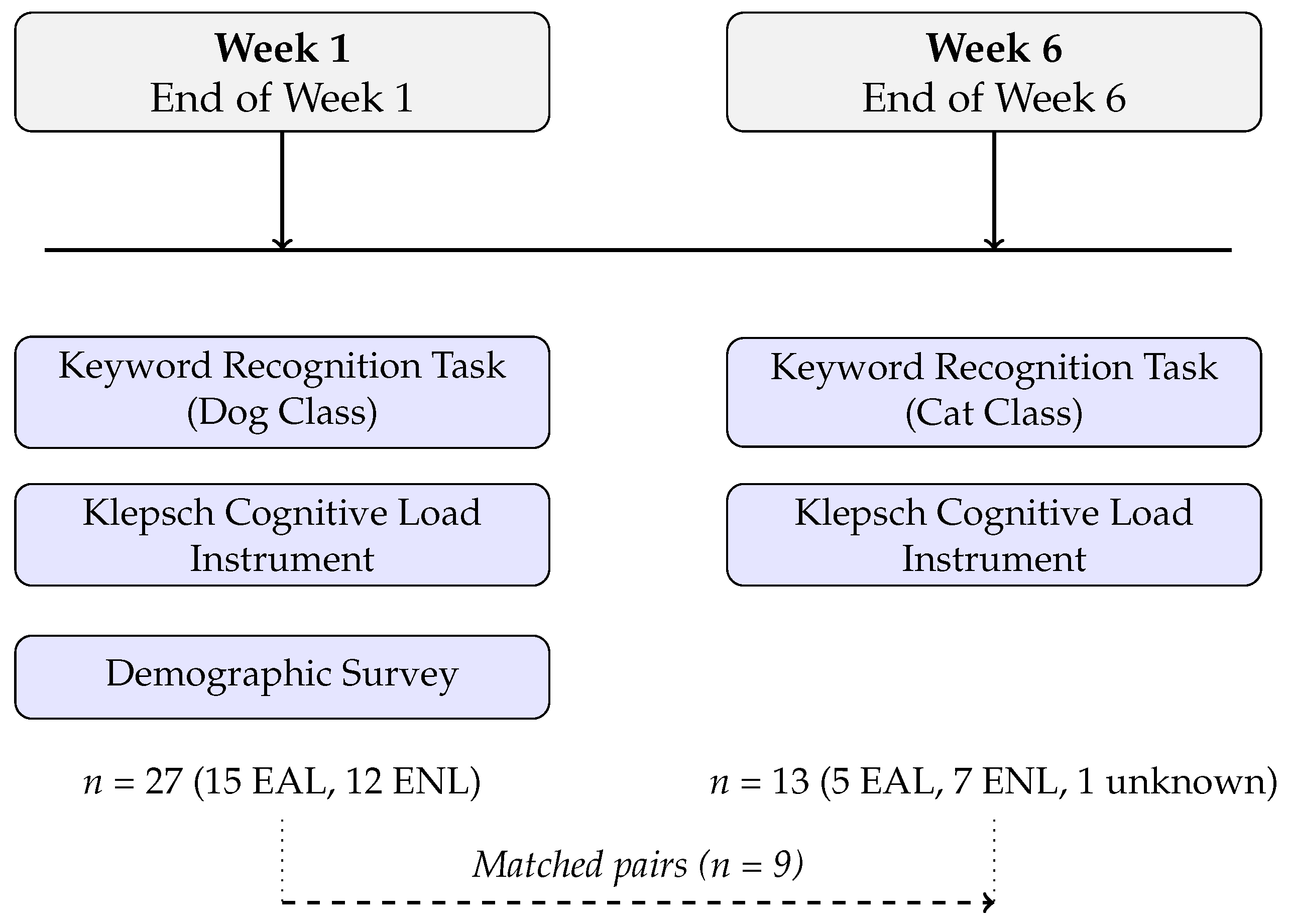
Figure 1 presents an overview of the study design, illustrating the two-time-point structure and the measures collected at each point.
3.2. Research Questions
This study investigated the cognitive load experienced by students when identifying programming keywords in Python code, with an exploratory examination of whether linguistic background (English as an Additional Language versus English as a Native Language) influences this cognitive effort. Specifically, the research addressed:
- RQ1
How does cognitive load (intrinsic, germane, and extraneous) change from Week 1 to Week 6 of an intensive introductory programming course?
- RQ2
Does keyword type (repurposed English words versus constructed/truncated programming terms) differentially affect identification accuracy and classification performance?
- RQ3
Do timing measures (speed of keyword identification) correlate with reported cognitive load?
- RQ4
Preliminary exploration: Do EAL and ENL students differ in reported cognitive load (intrinsic, extraneous, and germane) and keyword identification accuracy?
3.3. Research Design and Participants
All students enrolled in an undergraduate intensive six-week introductory programming course (equivalent to CS0–CS1 level) at an Australian regional university in the second half of 2025 were invited to participate in this research. The course covered fundamental programming concepts, including sequence, selection, loops, functions, methods, classes, and object-oriented programming principles. Students were introduced to the concept of programming keywords during their first week of instruction.
Participants included both domestic Australian students and students from international locations, representing diverse linguistic backgrounds (EAL and ENL). Of 77 students in the course, a total of 42 students initiated the first survey; however, only 27 students completed sufficient portions to be included in the analysis (15 EAL students, 12 ENL students). For the second survey administered at the end of Week 6, 15 students completed the questionnaire (5 EAL, 7 ENL, 3 with unknown language background). Due to the small matched sample size, particularly for EAL students in the Week 6 survey, primary analyses focus on the full cohort with an exploratory examination of language background effects where sample sizes permit.
Participation was voluntary and anonymous, with students using a self-generated identification code to enable matched-pair comparisons across time points while maintaining anonymity.
3.4. Instruments and Measures
3.4.1. Validity and Reliability
The cognitive load instrument used in this study is the validated scale developed by
Klepsch et al. (
2017), which has demonstrated reliability and validity across multiple educational contexts. Rather than recalculating psychometric properties for the current small sample, we rely on the established validity and reliability of this instrument, as reported in the original development and validation studies.
The keyword recognition task was developed specifically for this study and thus required its own validity evidence. Face validity was established through a structured practice phase in which participants completed an identical task on a simpler code sample with immediate corrective feedback, ensuring that all participants understood the task requirements before the timed assessment began. Task equivalence across time points was addressed through the use of structurally identical code samples (a Dog class at Week 1 and a Cat class at Week 6), controlling for code familiarity whilst maintaining identical keyword distributions and task demands.
Construct validity was examined through pilot testing with four computing academics, all experienced Python programmers, prior to deployment. This pilot revealed a theoretically meaningful pattern: the one staff member who spoke English as an additional language failed to recognise some keywords and made errors in keyword type classification, whilst the three ENL staff members did not exhibit these errors. This result, occurring with expert programmers whose programming knowledge was equivalent, suggested that the task was sensitive to language-background effects independent of programming expertise, providing preliminary evidence that the task measured what it was designed to measure.
3.4.2. Participant Background Questions
The Week 1 survey collected demographic information and English language proficiency data. The participants reported their age group, gender, and whether English was the language they spoke most as a child. The students who indicated that English was not their native language provided additional information, including: the languages spoken at home, their years speaking English, and their methods of English language acquisition (e.g., living in an English-speaking country, compulsory school learning, parental influence, self-study, preparatory programmes).
Participants generated a unique identification code that used elements of their personal information (middle name initials, birth month, street name prefix) to enable matching between Week 1 and Week 6 responses whilst preserving anonymity.
3.4.3. The Keyword Recognition Task
The keyword recognition task required participants to identify Python keywords within code samples and classify each keyword as either:
Re-purposed English words: keywords that use common English vocabulary (e.g., class, if, else, for, in, return, self).
Constructed/truncated programming terms: keywords created specifically for programming purposes, including truncated English words and novel constructions (e.g., def, elif, __init__).
Practice component: Before the timed assessment, the participants completed a practice activity using a simple comparison function (def number_compare) that demonstrated the keyword identification and classification process. This practice included feedback showing correct answers, ensuring students understood the task requirements.
Timed assessment: Following the practice, the participants completed the keyword recognition task on a more complex code sample featuring object-oriented programming. Week 1 used a Dog class implementation; Week 6 used an identical structure with a Cat class to control for code familiarity whilst maintaining task equivalence.
The code samples contained multiple instances of the same keywords (e.g., def appeared three times, and self appeared multiple times) and included both keyword types. The interactive interface recorded the following.
Accuracy Measures: Which words were clicked as keywords (correct identifications, missed keywords, false identifications of non-keywords). Identification accuracy was calculated as the proportion of all 23 keyword instances correctly identified, where each instance (including duplicate occurrences of the same keyword) was treated as a separate item in the denominator. Missing a duplicate instance of an already-identified keyword was, therefore, penalised equally to missing a unique keyword, reflecting the expectation that systematic processing would extend to all occurrences;
Classification Accuracy: Whether identified keywords were correctly classified as repurposed or constructed;
Timing Data: Time to first click, time to last click, time to page submission, and total number of clicks.
This design allowed for a nuanced analysis of performance errors, distinguishing between: (a) the failure to identify keywords, (b) the incorrect classification of correctly identified keywords, and (c) the misidentification of non-keywords as keywords.
3.4.4. Cognitive Load Measures
Immediately following the keyword recognition task, participants completed eight items from the validated Cognitive Load Scale developed by
Klepsch et al. (
2017). This instrument measures three dimensions of cognitive load using 7-point Likert scales (1 = Strongly Disagree; 7 = Strongly Agree):
Intrinsic Load (IL): cognitive demand inherent to the task (2 items):
- –
“For this task, many things had to be kept in mind simultaneously”
- –
“This task was very complex”
Germane Load (GL): productive cognitive effort directed toward learning (3 items):
- –
“I made an effort, not only to understand several details but to understand the code”
- –
“My point while doing the task was to understand everything correctly”
- –
“The task consisted of elements supporting my understanding of the task”
Extraneous Load (EL): cognitive effort from task design or presentation (3 items):
- –
“During this task it was exhausting to find the important information”
- –
“The design of this task was very inconvenient for answering the questions”
- –
“During this task it was difficult to recognise and link the crucial information”
Sub-scale scores were calculated by averaging the relevant items, with higher scores indicating a greater cognitive load in each dimension.
3.5. Data Analysis
3.5.1. Data Preparation
Participant responses from both surveys were downloaded from
Qualtrics (
2025) into Excel spreadsheets and combined using the identification codes to create matched pairs for students who completed both surveys. Data were cleaned to remove incomplete responses and verify identification code consistency.
3.5.2. Statistical Approach
Given the exploratory nature of the study and small sample sizes, particularly for between-group comparisons, the analysis focused on descriptive patterns and effect sizes. Paired-sample analyses examined changes in cognitive load, keyword identification accuracy, and timing measures from Week 1 to Week 6 for matched students. Exploratory comparisons between EAL and ENL students were conducted when sample sizes permitted, with an emphasis on effect size estimation, rather than significance testing, due to power limitations. Appropriate parametric (paired
t-tests) and non-parametric tests (Wilcoxon signed-rank test, Mann–Whitney
U test) were selected based on distributional assumptions and sample characteristics, with alpha set to 0.05. Cohen’s
d is reported throughout as a standardised effect size estimate to aid practical interpretation and comparison across measures. Whilst Cohen’s
d formally assumes normally distributed data, its use alongside non-parametric tests is an accepted practice in small-sample educational research where effect size communication is prioritised alongside inferential caution (
Lakens, 2013). All analyses were conducted in Microsoft Excel, with non-parametric tests (Wilcoxon signed-rank and Mann–Whitney
U) performed using the Real Statistics Using Excel add-in (
Zaiontz, 2024), a freely available and widely used resource for non-parametric analysis that extends Excel’s native statistical functions.
3.6. Ethical Considerations
This research received ethics approval from the <Removed for Review> Human Research Ethics Committee (approval number 2025/108). All participation was voluntary, and students could withdraw at any time without consequence. Anonymity was preserved through the use of self-generated identification codes, and no personally identifying information was collected. Students who experienced distress were directed to university counselling services.
3.7. GenAI Use
The authors used Claude.ai (Anthropic) to assist with drafting and editing portions of the manuscript text. In particular, Claude.ai was used for improving language, grammar, and style. The authors did not use Claude.ai as a co-author, to generate original content, or to interpret research findings.
3.8. Expected Results
This study was designed to test the hypothesis that EAL students will have reduced performance (accuracy and time taken) and increased mental effort when reading and processing Python keywords to determine if they are re-purposed English words, compared to ENL students. It was further expected that EAL students would not increase in performance of identification of repurposed English words over the course of a Term, compared to the ENL students.
5. Discussion
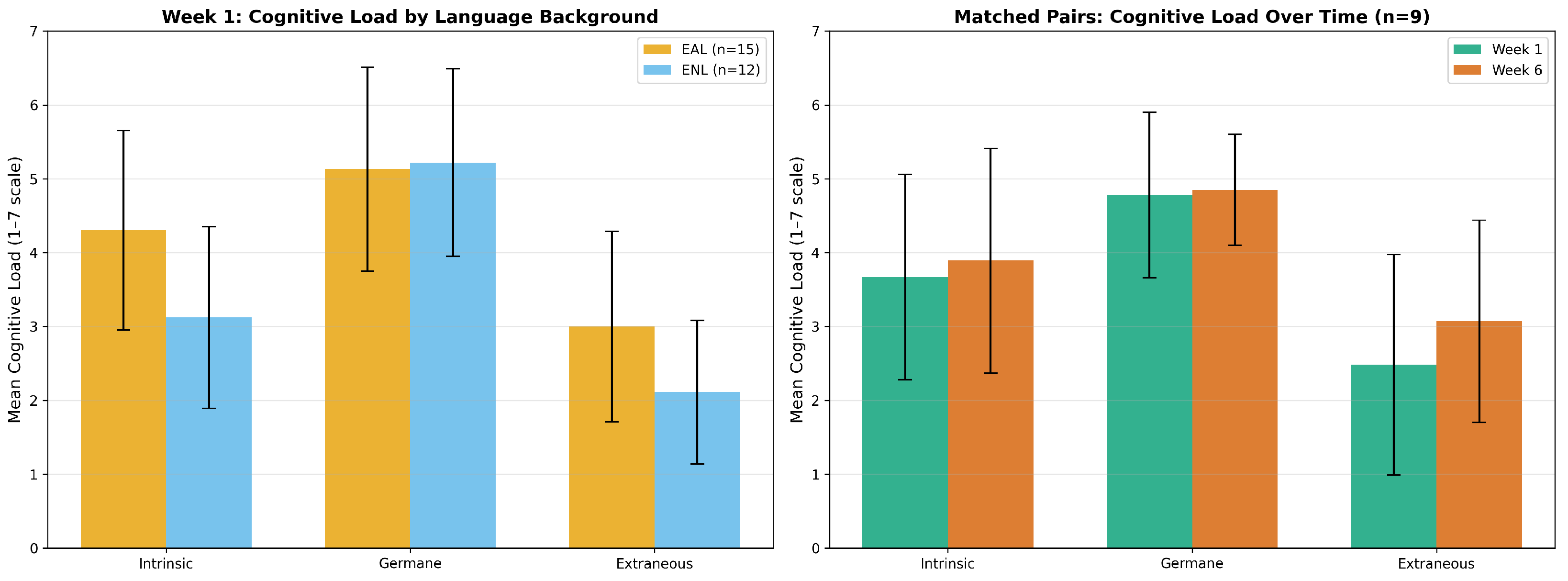
This study examined cognitive load and keyword recognition accuracy amongst novice programming students during an intensive six-week Python course, with particular attention to differences between English as an additional language (EAL) versus English as a native language (ENL) learners. Contrary to expectations of progressive improvement and reduced cognitive load, our results revealed remarkable stability in keyword recognition performance alongside an unexpected increase in extraneous cognitive load. EAL students reported significantly higher intrinsic cognitive load and showed marginally lower keyword identification accuracy, suggesting that linguistic background creates additional barriers beyond general novice difficulties. These patterns challenge assumptions about how novices develop keyword recognition skills and how cognitive load evolves with programming experience.
5.1. The Paradox of Increasing Extraneous Load (RQ1)
Perhaps the most striking finding is that extraneous cognitive load significantly increased, rather than decreasing, from Week 1 to Week 6 (large effect,
d = 0.99), contradicting standard Cognitive Load Theory predictions. In CLT, extraneous cognitive load specifically refers to cognitive effort imposed by factors
external to the learning content itself—most commonly, poor instructional design, suboptimal interface presentation, or task format demands (
Chandler & Sweller, 1992;
Sweller, 1988). Crucially, extraneous load is considered reducible through better design, unlike intrinsic load, which is inherent to the material. The observed increase, therefore, warrants a careful consideration of what, specifically, was driving the elevated burden at Week 6.
Several distinct sources of extraneous load are plausible and worth distinguishing. First, the assessment format itself, an interactive clickable interface with no explicit systematic strategy cue, may have become more cognitively burdensome as students grew more aware of the complexity they were navigating. At Week 1, novices may have approached the task without fully grasping its demands; by Week 6, greater familiarity exposed the difficulty of exhaustive, systematic scanning. Second, learner fatigue in the intensive course context represents a plausible contributor: compressed learning timelines reduce opportunities for consolidation, and sustained cognitive effort across multiple weeks can generate commission errors and elevated subjective load independent of task design (
Tamminen et al., 2025). Third, response strategy changes may have played a role; the shift toward more liberal clicking at Week 6 (mean clicks increasing from 35.41 to 48.62) would itself generate more decision-making demands, increasing the subjective sense of task burden without reflecting any change in instructional design. Finally, heightened metacognitive awareness may have increased: students who were initially too overwhelmed to perceive complexity may have rated load lower at Week 1 precisely because they were not genuinely engaging with the task’s demands.
It is important to note a methodological constraint on interpreting the EL items. Research on cognitive load measurement with interactive learning media has demonstrated that subjective load ratings can diverge from objective performance measures, particularly when learners adopt varying engagement strategies (
Skulmowski & Rey, 2020). The
Klepsch et al. (
2017) items for extraneous load (e.g., “During this task it was exhausting to find the important information”) could plausibly capture fatigue and strategy-based effort as much as design-imposed burden, meaning the observed increase should be interpreted as a signal of increased subjective difficulty, rather than a definitive indicator of poor task design.
Clicking behaviour patterns provide supporting evidence for the metacognitive awareness interpretation. Week 1 showed relatively high precision (86.05%), suggesting selective clicking, whilst Week 6 precision dropped (73.22%) as clicks increased—consistent with deeper engagement with uncertainty, rather than confident guessing. Language background may moderate these trajectories: ENL students, with more automatic English processing might show different patterns than EAL students still managing both language processing and programming concepts concurrently. Future research with larger samples and process-tracing methods (such as think-aloud protocols or eye-tracking) could disentangle these contributing sources.
5.2. Persistent Difficulties with Keyword Recognition (RQ1, RQ2)
Keyword identification and classification accuracy showed no significant improvement from Week 1 to Week 6 (both
p = 1.000), with students correctly identifying approximately 40–50% of keywords at both time points despite daily exposure to Python keywords. From a schema theory perspective (
Sweller, 1988), we would expect students to progressively build mental representations enabling increasingly automatic recognition. The persistence of low accuracy is consistent with the possibility that keyword recognition schemas develop more slowly than six weeks of intensive instruction provides, although this interpretation must be tempered by the small matched sample (
n = 9) and limited statistical power. It is equally plausible that task context effects or response strategy shifts account for the apparent stasis and that longer-term studies with larger samples would reveal a gradual improvement not detectable here.
Several factors may contribute to these difficulties. First, re-purposed English keywords create the potential for semantic interference, through which everyday meanings compete with programming-specific meanings during processing (
Cunnings & Fujita, 2024). Students encountering
class must inhibit the everyday meaning to access the programming meaning, requiring executive control and working memory resources. Importantly, this inhibition demand is asymmetric: research on native and non-native language comprehension demonstrates that semantic interference effects are stronger and more persistent for non-native speakers, who rely more heavily on memory retrieval processes, rather than automatic lexical access (
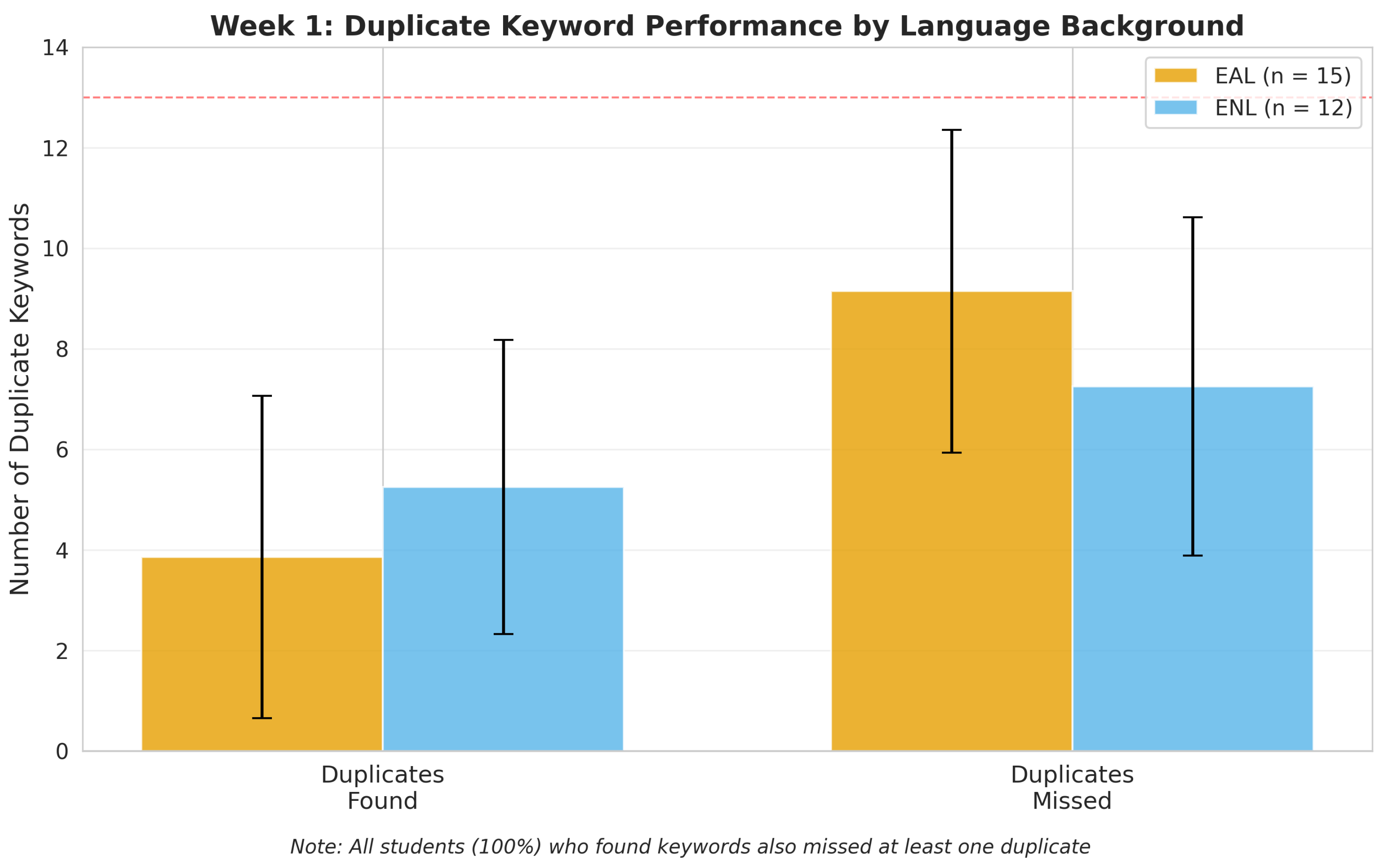
Cunnings & Fujita, 2024). This provides a psycholinguistic basis for the observed EAL performance disadvantage that extends beyond general language proficiency. Second, keywords appear embedded within complex syntactic structures where meaning depends on context, making recognition cognitively distinct from understanding function. Third, the finding that 100% of students who identified keywords also missed duplicate instances may suggest fundamental attention and working memory constraints that prevent systematic, exhaustive processing.
The declining precision alongside stable accuracy provides additional insight: students clicked more items at Week 6 (48.62 versus 35.41) with reduced discrimination (73.22% versus 86.05% precision). The increase in false positives (3.80% to 16.96%) suggests that students adopted more indiscriminate clicking —possibly from uncertainty or desperation—rather than developing more accurate knowledge. These findings suggest that explicit, sustained attention to keywords may be necessary throughout novice instruction, rather than assuming incidental acquisition through programming practice.
5.3. The Constructed Versus Repurposed Keyword Paradox (RQ2)
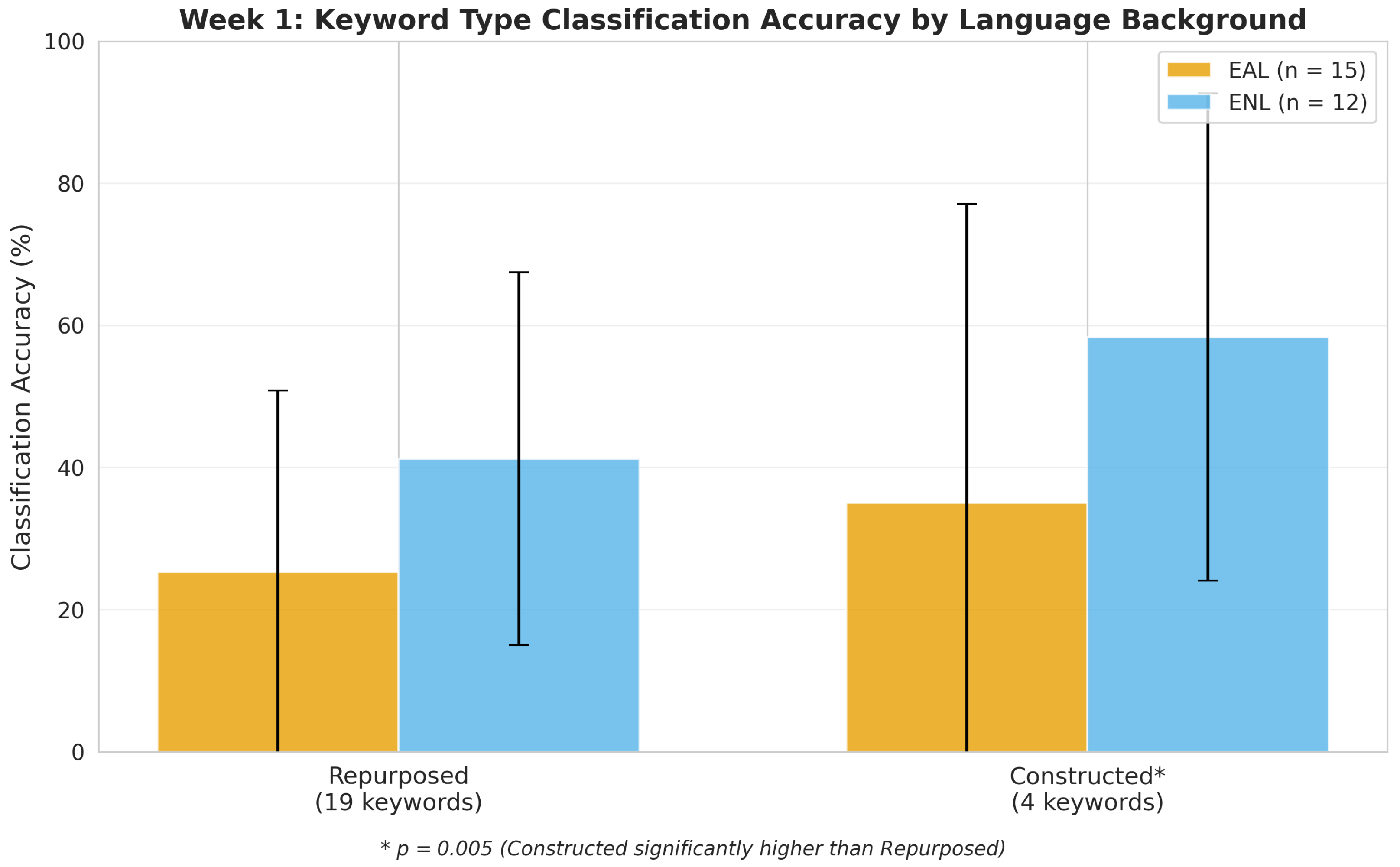
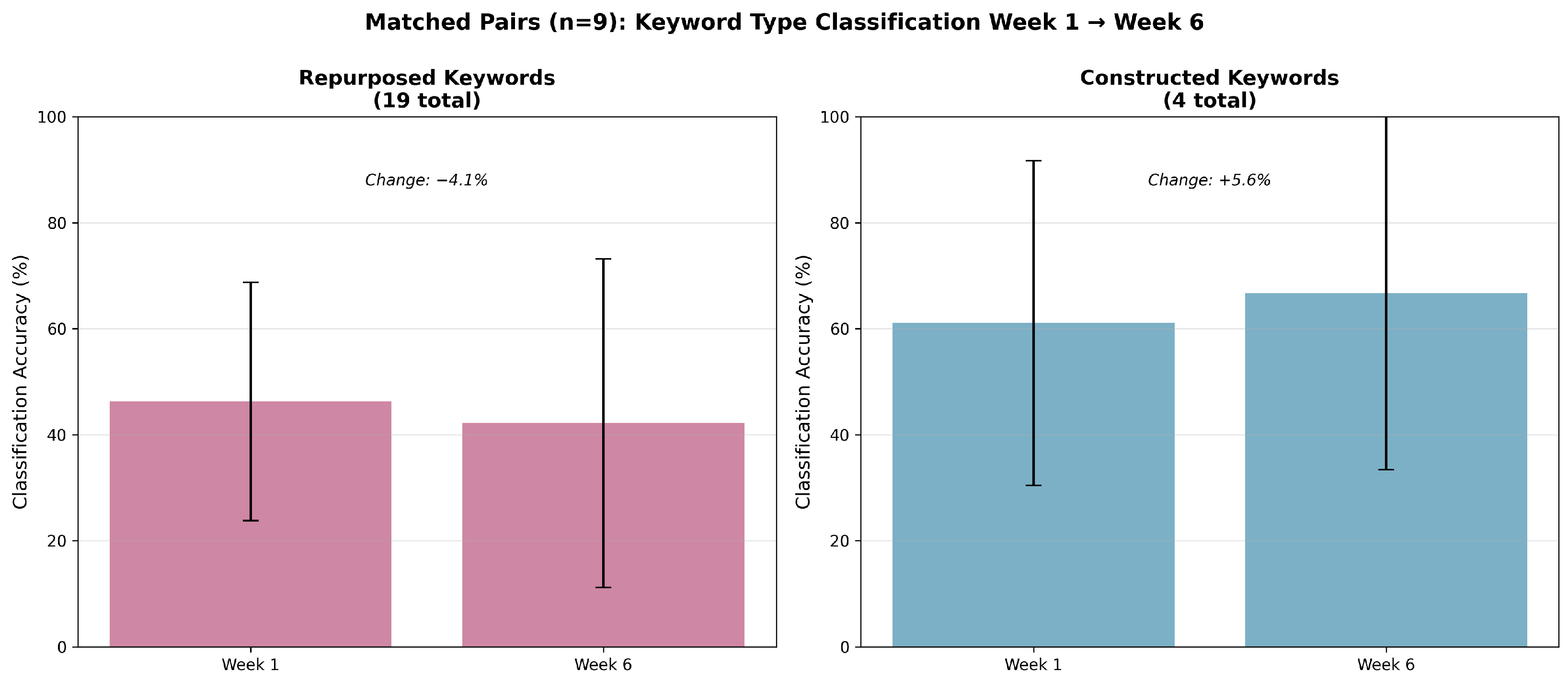
Students classified constructed keywords (e.g., def, __init__) significantly more accurately than repurposed English keywords (p = 0.005, d = 0.61) at both time points. However, this finding must be interpreted cautiously due to unequal set sizes: only 4 constructed versus 19 repurposed keywords. Smaller sets impose lower memory demands and reduce confusion, making it impossible to determine whether the accuracy advantage reflects genuine differences in keyword processing or simply advantages of learning a smaller set. Future research with balanced sets is necessary to disentangle these explanations.
Nevertheless, if the effect reflects keyword characteristics, several mechanisms might contribute. Constructed keywords possess orthographic distinctiveness (e.g., double underscores in __init__) that aids recognition and memory. More importantly, repurposed keywords may create semantic interference, as students must inhibit well-established everyday meanings. The pattern of larger ENL advantages for constructed over repurposed keywords (17.11 versus 9.74 percentage points for EAL, although non-significant) hints that stronger everyday English associations might paradoxically increase interference, challenging assumptions about linguistic advantage in programming. Regardless of the mechanism, the pattern suggests that English proficiency may not provide unqualified advantages if repurposed keywords create semantic interference.
5.4. Time, Behavioural Measures, and Language Differences (RQ3, RQ4)
The absence of significant correlations between task completion time and self-reported cognitive load (all p > 0.33) reveals dissociation between objective and subjective measures, likely reflecting individual differences in processing speed, strategic choices, and the non-linear relationship between time and load. Some students work quickly despite a high load, whilst others invest time in careful, low-load processing.
Critically, temporal patterns differed by language background. Although the overall sample showed an increase in completion time (67.16 to 89.89 s), this increase was driven entirely by EAL students. The ENL students’ times remained essentially stable (68.20 to 69.08 s). This differential pattern suggests fundamentally different trajectories: at Week 1, EAL students’ brief times may have reflected incomplete engagement or confusion about task requirements, whilst at Week 6, an improved conceptual understanding led to more careful deliberation requiring extended language processing time. This pattern underscores that EAL students navigate qualitatively different cognitive demands with temporal costs that accumulate across programming activities.
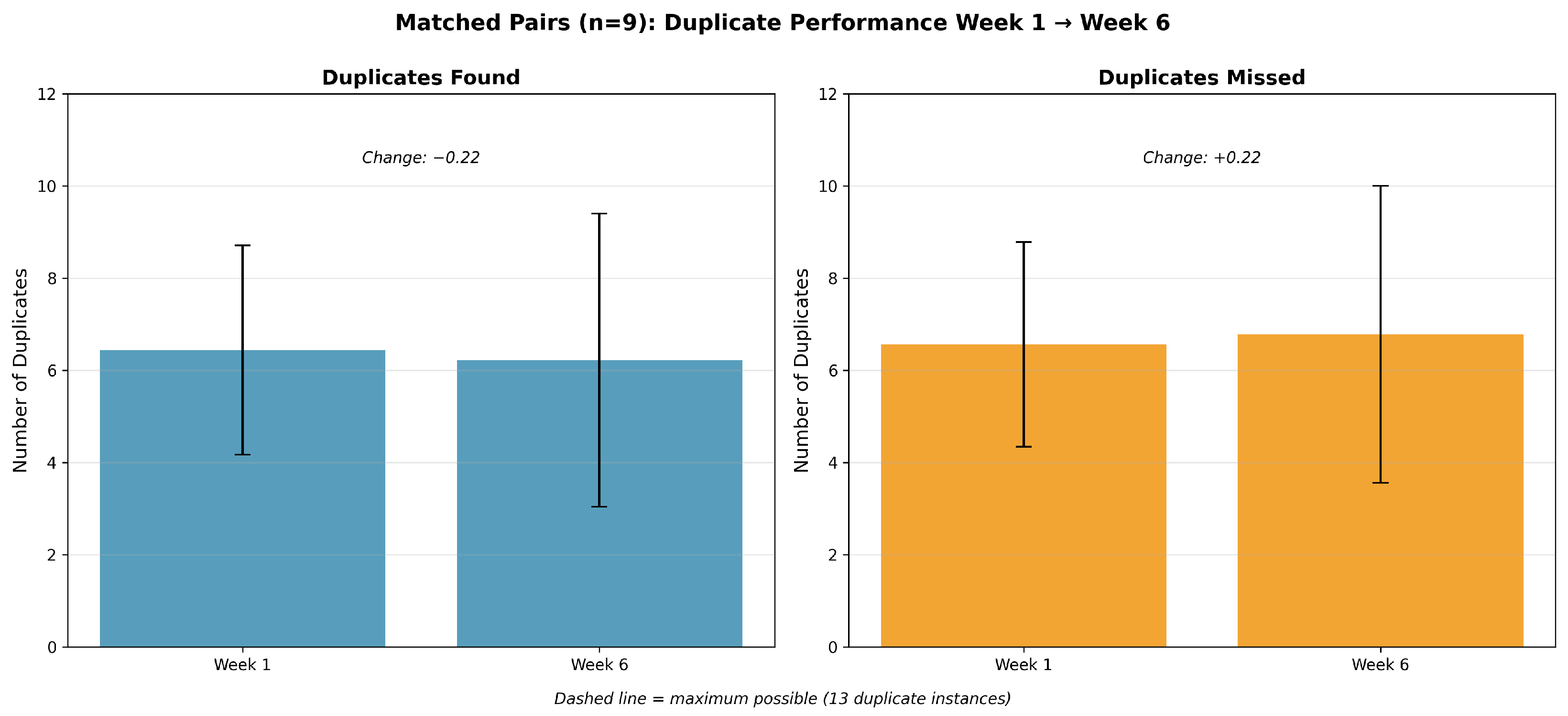
The behavioural measure of missed duplicates provided compelling evidence of cognitive load through task performance itself. The finding that 100% of students who identified keywords also missed duplicate instances suggests universal incomplete processing that persisted from Week 1 to Week 6 (p = 1.000). When students identify if in one location but fail to identify it elsewhere, this pattern reveals attention lapses and working memory limitations that directly reflect cognitive strain. The universality and persistence of this pattern underscore the substantial cognitive demands that keyword recognition imposed throughout the course.
5.5. Educational Equity Implications (RQ4)
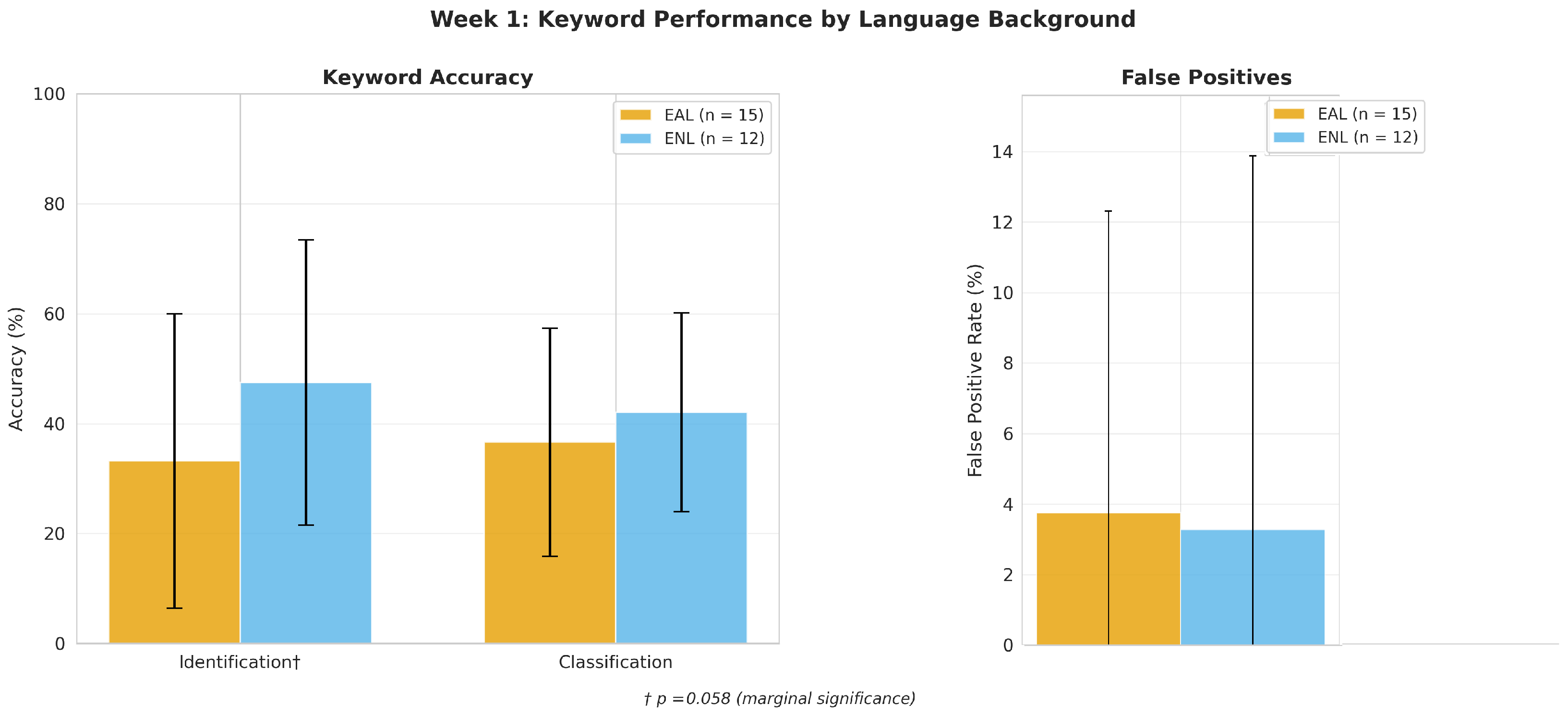
EAL students reported a significantly higher intrinsic cognitive load (p = 0.030, d = 0.91) and marginally lower keyword identification accuracy (p = 0.058, d = −0.54), documenting empirical evidence of linguistic barriers that persisted despite sufficient English proficiency for university admission. The higher intrinsic load suggests that understanding keyword meanings and functions was more difficult when processing in an additional language, while the 14.23 percentage point difference in identification accuracy represents a substantively meaningful performance gap that could compound across complex programming tasks.
Stable ENL completion times versus increased EAL times reveal additional dimensions of linguistic barriers: EAL students face temporal costs that extend beyond those experienced by ENL students, potentially affecting everything from assignment completion to examination performance. These findings align with broader evidence that language proficiency in the medium of instruction is a strong predictor of academic outcomes and that EAL students consistently face performance gaps even when controlling for prior achievement (
Cho & Bridgeman, 2012;
Moore & Waters, 2020;
Schudde et al., 2023). Critically, the barriers documented here persisted despite the sufficient English proficiency for university admission, consistent with the finding of
Prather et al. (
2025) that even EAL students using GenAI tools to support their Python learning were frustrated by the English-based nature of programming keywords and terminology.
Despite these barriers, the EAL students in this sample successfully progressed through the computing programme, suggesting resilience that, nevertheless, comes at costs to learning efficiency, confidence, and wellbeing (
Raj et al., 2019). The field’s efforts to broaden participation in computing must extend beyond traditional diversity dimensions to explicitly address how English-based programming languages create systematic disadvantages for the substantial and growing population of students learning to program in an additional language (
B. Becker, 2019;
Diethelm & Goschler, 2014). Support structures should include extended time accommodations, explicit instruction on keywords, rather than assuming obviousness, multilingual keyword reference materials, and institutional recognition that EAL students may require more processing time without indicating lesser ability or computational aptitude.
5.6. Limitations
The most consequential limitation of this study is sample attrition. Of 77 enrolled students, 42 initiated the Week 1 survey, 27 completed it sufficiently for inclusion, and only 13 completed the Week 6 survey; yielding just 9 matched pairs for longitudinal analysis. This attrition trajectory (77 → 27 → 9) severely constrains inferential strength: the matched sample is insufficient to detect all but large effects, and language-specific longitudinal analyses (EAL n = 3, ENL n = 6) are exploratory in the strictest sense. All longitudinal findings should be interpreted accordingly, as suggestive patterns, rather than generalisable conclusions. Cross-sectional comparisons at Week 1 (n = 27) are better powered but remain limited for subgroup analyses.
A fundamental limitation of the binary EAL/ENL classification used in this study warrants explicit discussion. Treating language background as a dichotomy collapses substantial within-group diversity: EAL students in this sample ranged from those with less than one year of English experience to those with more than five years, spoke a variety of home languages (predominantly Nepali), and had acquired English through different pathways (formal schooling, immersion, self-study). This heterogeneity means the EAL group likely includes individuals whose English proficiency and processing automaticity differ dramatically—with some approaching ENL-level fluency and others still effortfully decoding English text in real time. As a consequence, effect sizes for EAL versus ENL comparisons may simultaneously underestimate the true impact of language background on less proficient students whilst obscuring meaningful variation within the EAL group itself.
Future research should employ continuous or multi-level proficiency measures, rather than a binary classification. Promising options include standardised English proficiency scores (e.g., IELTS or TOEFL band scores), self-rated proficiency on validated scales, or behavioural measures of processing automaticity. These would allow the testing of whether proficiency level moderates keyword recognition and cognitive load in a graded fashion—a theoretically richer question than whether EAL and ENL groups differ on average. Investigating whether different first language backgrounds (e.g., languages with shared Latin roots versus non-alphabetic languages such as Nepali or Chinese) moderate outcomes would provide further insight into the specific linguistic mechanisms involved.
To assess whether the two ambiguous EAL cases (students who reported English as their home language and had spoken English for over five years, yet self-identified as EAL) influenced the primary findings, a sensitivity analysis was conducted that excluded these students (n = 13 EAL vs. n = 12 ENL). The key Week 1 EAL versus ENL comparisons were re-run using Mann–Whitney U tests. The intrinsic load difference remained significant and strengthened slightly (M = 4.42 vs. 3.12, U = 120.00, p = 0.023, d = 1.01). The identification accuracy difference, which had been marginal in the full sample (p = 0.058), reached clear significance in the sensitivity analysis (M = 26.76% vs. 48.19%, U = 34.50, p = 0.018, d = −0.81). These results indicate that the two borderline cases were attenuating, rather than inflating, the observed EAL effects and that the primary findings are robust to their inclusion or exclusion.
The accuracy-based metrics used in this study carry an important limitation that requires acknowledgement, alongside the clicking strategy analysis. The open-ended interactive task format permitted response strategies that could inflate raw identification counts without reflecting genuine discriminative keyword knowledge. As documented in the Results, students clicked substantially more items at Week 6 (mean 48.62 versus 35.41) with a corresponding drop in precision (73.22% versus 86.05%), raising the possibility that apparent accuracy gains in the cross-sectional sample partly reflect a shift in response criterion, rather than improved keyword knowledge. This is consistent with signal detection theory, which distinguishes between a participant’s discriminability (genuine ability to distinguish keywords from non-keywords) and their response criterion (willingness to click any given item). Standard accuracy metrics conflate these two components, making it difficult to determine whether students who identified more keywords at Week 6 genuinely knew more, or simply adopted a more liberal threshold for clicking. Precision analysis partially addresses this, but future designs would benefit from forced-choice formats, confidence ratings, or explicit signal detection analyses that model discriminability and response criterion separately.
The analysis of clicking strategies revealed an important insight into task design. Some students adopted extremely liberal strategies (>100 clicks), and individual cases highlighted the complexity of interpretation. An ENL student demonstrated a perfect Week 1 performance but clicked on most items at Week 6, suggesting task misunderstanding. Additionally, some students selected non-keywords that were English words, possibly misunderstanding the task as “identify English words”, rather than “identify Python keywords.” This confusion highlights the need for students to learn the distinction between “English word” and ”Python keyword,” which may not be immediately obvious to novices.
The unequal numbers of re-purposed (19) versus constructed (4) keywords create a fundamental confound that prevents definitive conclusions about keyword type effects. The open-ended clicking task allowed liberal response strategies that complicated interpretation, although precision analysis addresses this partially. Sample size limitations, particularly at Week 6 (13 students, 3 EAL), reduced statistical power. Language classification based on self-report may not fully capture linguistic complexity, and retrospectively assessed cognitive load may not accurately reflect moment-to-moment experiences. The single-institution intensive course context limits generalisability, and the Week 1 versus Week 6 code contexts (dogs versus cats), whilst structurally identical, might have differentially affected difficulty.
5.7. Theoretical and Practical Implications
These findings challenge Cognitive Load Theory assumptions about smooth, progressive schema development, suggesting that novice learning may involve periods of increased subjective difficulty as students become aware of complexities that were initially overlooked, or as intensive instruction creates cumulative fatigue. The persistent keyword recognition difficulties after 18 h of face to face instruction supplemented by videos and self-study materials, suggests that schemas for fundamental elements form more slowly than instructional timelines assume, with implications for expert–novice gap theories. The potential for semantic interference from re-purposed keywords points to an un-theorised aspect: how existing linguistic knowledge might interfere with, rather than support, programming-specific meaning acquisition.
Practically, educators cannot assume that students will acquire keyword knowledge incidentally; explicit, sustained attention throughout introductory courses appears necessary. Several concrete strategies emerge from these findings.
Keyword scaffolding and dedicated instruction: Rather than treating keywords as implicit vocabulary absorbed through exposure, introductory courses should include dedicated keyword recognition activities: keyword sorting tasks (matching keywords to their functions), cloze-style exercises in which students complete code with missing keywords, and annotated code reading with explicit keyword highlighting. Keywords should be introduced explicitly at each conceptual milestone and revisited as new ones are added, rather than assuming prior keywords are consolidated.
Reduced keyword density in early examples: Code samples used in teaching should minimise the number of distinct keywords appearing simultaneously for novice programmers. Worked examples for early concept instruction might deliberately restrict the keyword set, gradually expanding density as students consolidate prior vocabulary. This directly addresses intrinsic load management by limiting the number of novel elements requiring simultaneous processing (
Sweller, 2010).
Systematic code-reading strategy instruction: The universal pattern of missed duplicates (100% of students at both time points) suggests that novices do not naturally develop systematic scanning habits. Explicit instruction in structured code-reading approaches—such as reading line-by-line, colour-coding all instances of a given keyword, or using a keyword checklist—may help students overcome the working memory limitations that prevent exhaustive processing.
Multilingual keyword resources: For EAL students, multilingual reference materials providing translations or plain-language explanations of English-derived keywords in students’ home languages would reduce the dual burden of language processing and concept acquisition. Keyword glossaries paired with annotated code examples in simplified English, or in students’ native languages where feasible, can reduce the extraneous load imposed by unfamiliar vocabulary without compromising engagement with programming concepts (
Prather et al., 2025).
Extended time accommodations: The temporal costs documented for EAL students—increased task duration at Week 6 without a corresponding accuracy advantage—suggests that EAL learners may require more processing time for programming tasks without this need indicating less ability. Formal extended time accommodations in programming assessments, analogous to those already provided in other language-intensive disciplines, are warranted and should be framed as recognition of additional cognitive demands, rather than remediation.
Intensive course monitoring: The significant increase in extraneous load across the six-week course signals that the accumulated cognitive burden in intensive programming formats is substantial. Educators should build explicit consolidation periods, consider whether the compressed format allows adequate time for keyword schemas to form, and use brief mid-course keyword recognition checks to identify students falling behind in this foundational skill before difficulties compound.
At the curriculum level, introductory programming should include explicit keyword recognition objectives with adequate time and resources. Six weeks of intensive instruction, at least in the current format, appears insufficient for robust schema development, with implications for curriculum pacing. Assessment design should favour formats that demand discriminative knowledge, rather than permitting liberal response strategies.
5.8. Future Research Directions
Studies employing balanced sets of re-purposed and constructed keywords are needed to test the semantic interference hypothesis independently of set size effects. Longitudinal research extending beyond six weeks would clarify whether difficulties represent persistent barriers or slower-than-expected development. Alternative measurement approaches (eye-tracking, think-aloud protocols, forced-choice formats) could address current task limitations. Intervention research comparing instructional approaches could identify effective methods for improving keyword recognition. Cross-linguistic research that compares learning in native versus additional languages would strengthen the evidence on linguistic barriers. Finally, research on broader schema development aspects would contextualise these keyword-specific findings within overall programming expertise development. A theoretically motivated extension concerns whether semantic interference operates asymmetrically across keyword sub-types: if re-purposed keywords with strong, well-consolidated everyday meanings (e.g.,
class,
return) generate greater interference for ENL students, whose associations are more automatic and entrenched, this could produce a subset of items where EAL students outperform ENL students, analogous to interference effects documented in other domains where prior knowledge impedes relearning (
Cunnings & Fujita, 2024). Identifying such a third keyword category would require designs that isolate individual items, measure association strength, and include sample sizes sufficient to detect crossover effects.
6. Conclusions
This study set out to examine how novice programmers develop keyword recognition skills during intensive instruction and whether language background affects this development. The findings paint a sobering picture: after six weeks of intensive Python instruction—representing approximately 18 h of direct teaching plus substantial additional practice—students showed no measurable improvement in their ability to identify or classify Python keywords. This persistent difficulty occurred despite daily exposure to keywords in lectures, readings, exercises, and programming assignments, suggesting that keyword recognition schemas develop far more slowly than instructional timelines typically assume.
The theoretical contribution of this work lies in raising questions about assumptions regarding how quickly novices develop fundamental programming knowledge. With the important caveat that the matched sample was small (n = 9) and the statistical power was limited, the observed pattern is consistent with schema development for even basic elements like keywords requiring considerably more time and deliberate practice than six weeks provides. Whether this reflects a genuine developmental plateau, slower-than-expected schema formation, or simply the constraints of a small intensive sample remains an open question for larger longitudinal studies to address. The cognitive demands of keyword recognition showed no sign of diminishing across the study period, whatever the underlying cause. The increase in extraneous cognitive load over time, whether reflecting cumulative fatigue or evolving meta-cognitive awareness, further complicates simplistic narratives about progressive skill development in intensive learning contexts.
The educational equity implications are equally significant. EAL students faced measurably higher cognitive load and lower identification accuracy throughout the course, with temporal costs that extended beyond those experienced by ENL students. These barriers persisted despite English proficiency sufficient for university admission, documenting that linguistic diversity creates obstacles to programming comprehension that computing education must address explicitly. The field’s efforts to broaden participation in computing must extend beyond traditional diversity dimensions to consider how English-based programming languages create systematic disadvantages for the substantial population of students learning to program in a language other than English.
Practically, these findings argue for a fundamental reconsideration of how keyword knowledge is addressed in introductory programming instruction. Educators cannot assume that keyword recognition develops automatically through programming practice; rather, explicit, sustained attention to keywords throughout introductory courses appears necessary. For EAL students, targeted support that acknowledges linguistic barriers while maintaining high expectations is essential—not as remediation for deficits, but as recognition that English-based programming languages impose additional, measurable cognitive costs on multilingual learners.
The persistent universal pattern of incomplete duplicate processing—affecting every student at both time points—suggests that the cognitive demands of systematic code reading exceed novices’ available attentional and working memory resources. This finding implies that code-reading strategies require explicit instruction and scaffolding, rather than assuming students will develop effective approaches independently.
Looking forward, this research opens important questions about programming language design, instructional approaches, and temporal expectations for novice learning. If six weeks of intensive instruction proves insufficient for keyword recognition mastery, how should computing curricula be structured to provide adequate time and support? If re-purposed English keywords create semantic interference (though our findings remain confounded by set size), what implications follow for language design decisions? How can computing education better serve the growing population of multilingual students without compromising learning outcomes?
These questions demand empirical investigation, rather than assumptions. Keywords, often dismissed as trivial or obvious, represent a more substantial challenge for novice programmers than the field has recognised—a hidden burden that shapes learning trajectories and affects students differentially based on linguistic background. Addressing this challenge requires taking keyword knowledge seriously as a learning objective deserving explicit instructional attention, adequate time, and equitable support structures. Only then can computing education fulfil its promise of broad, inclusive access to programming knowledge.