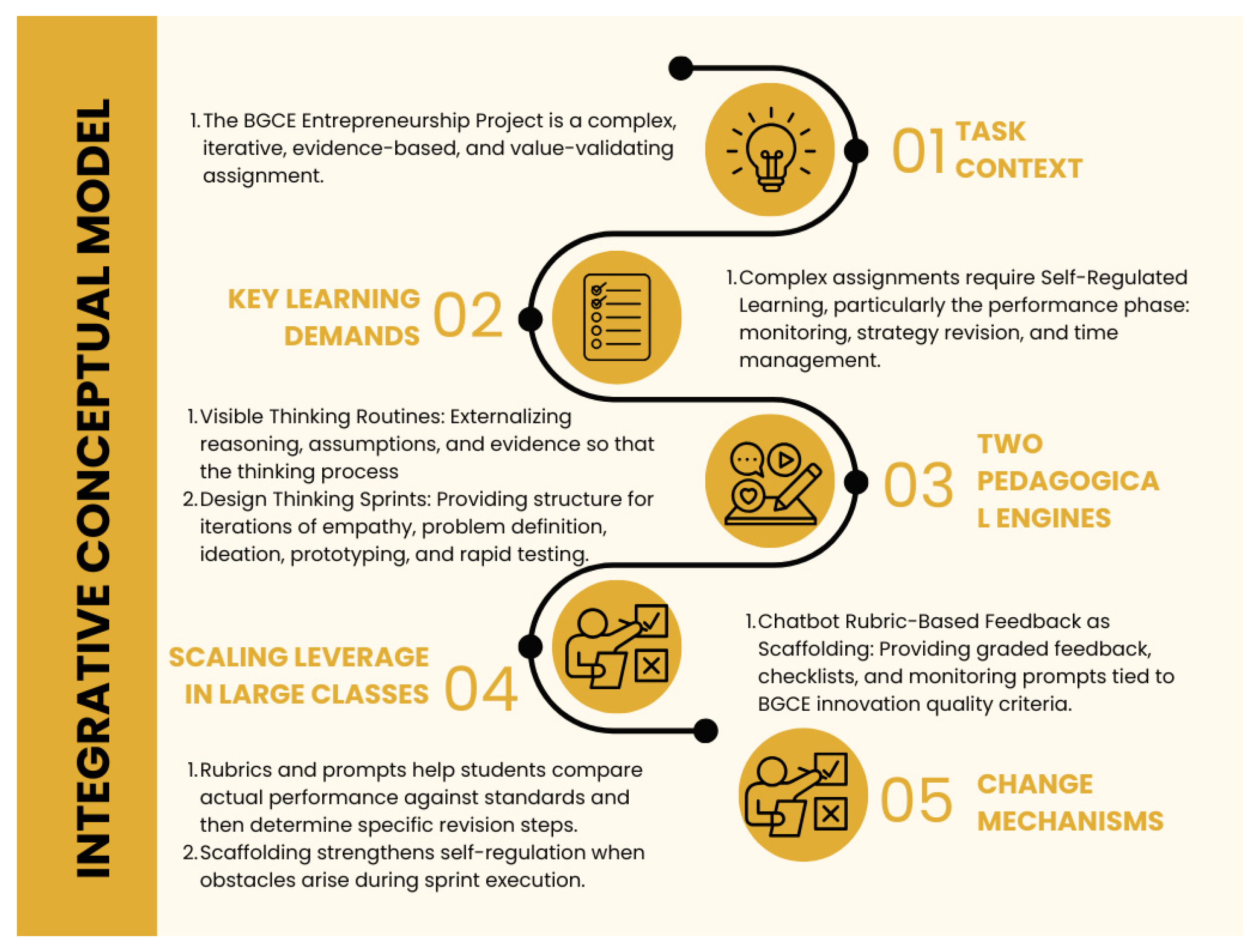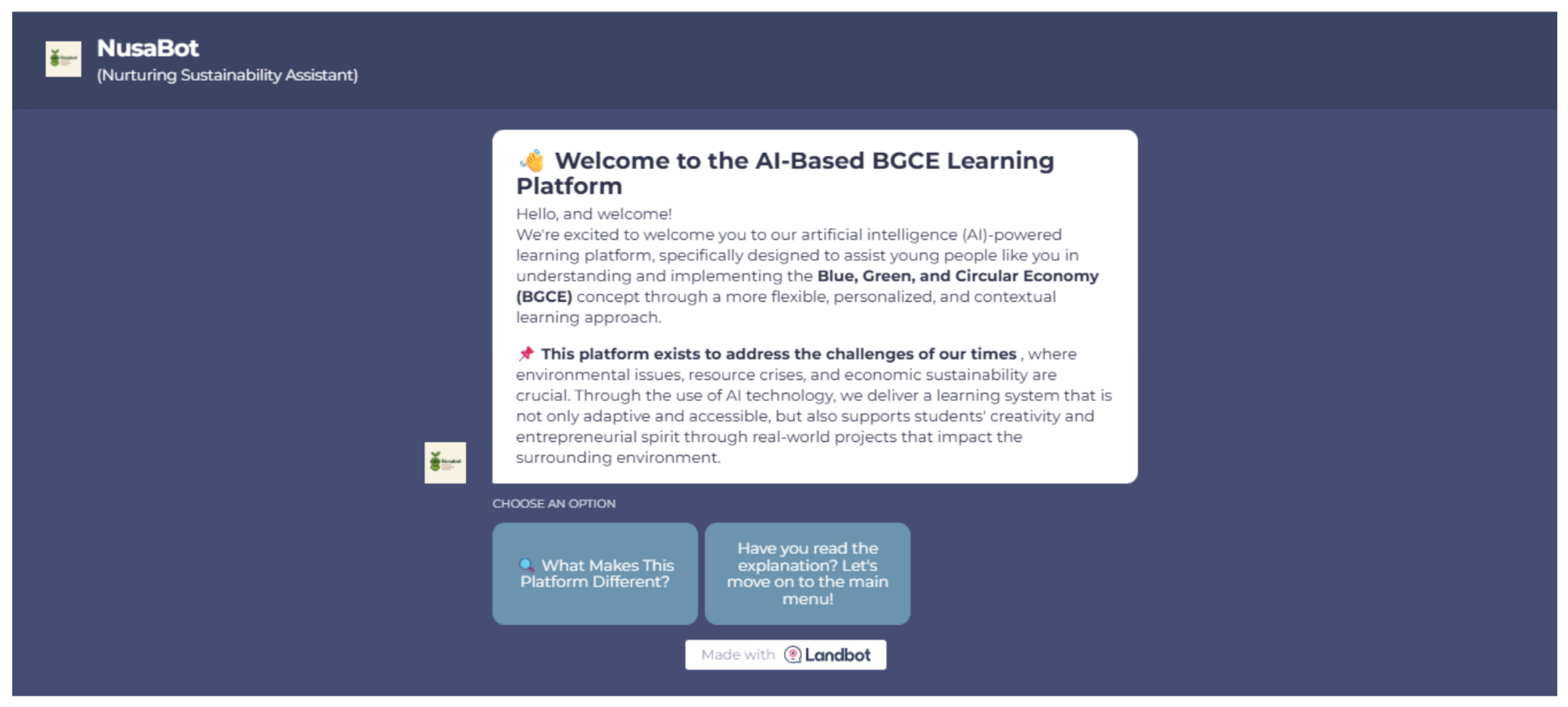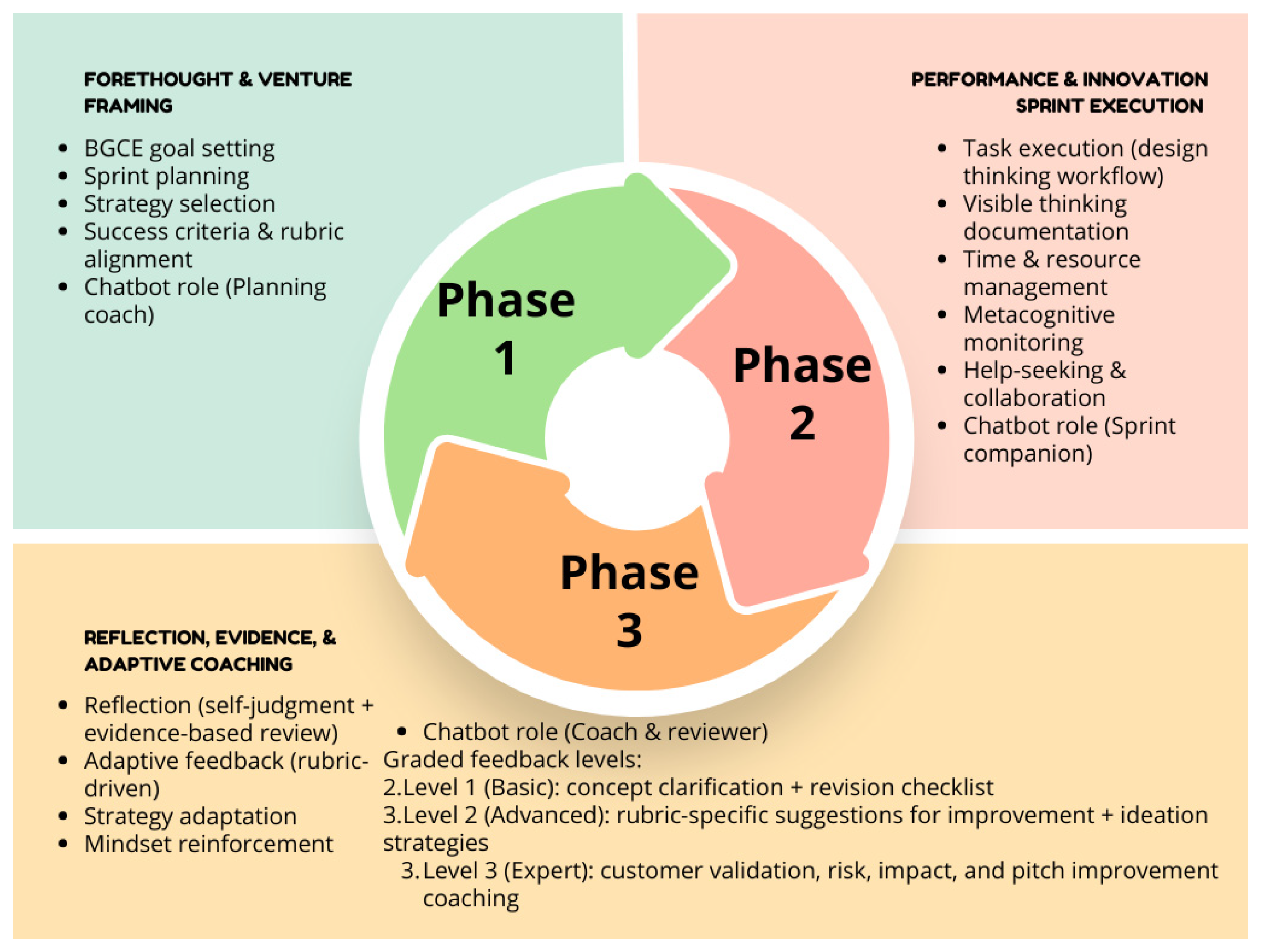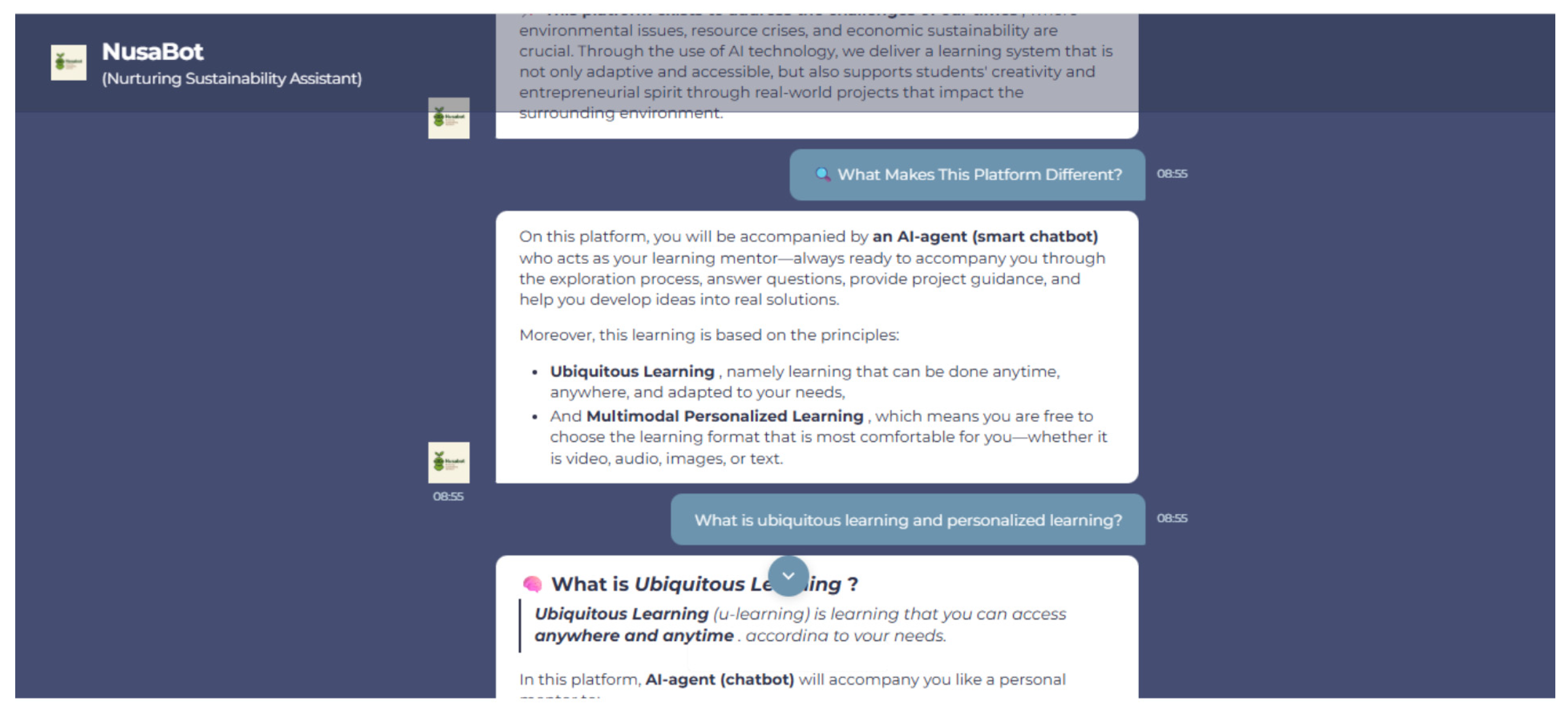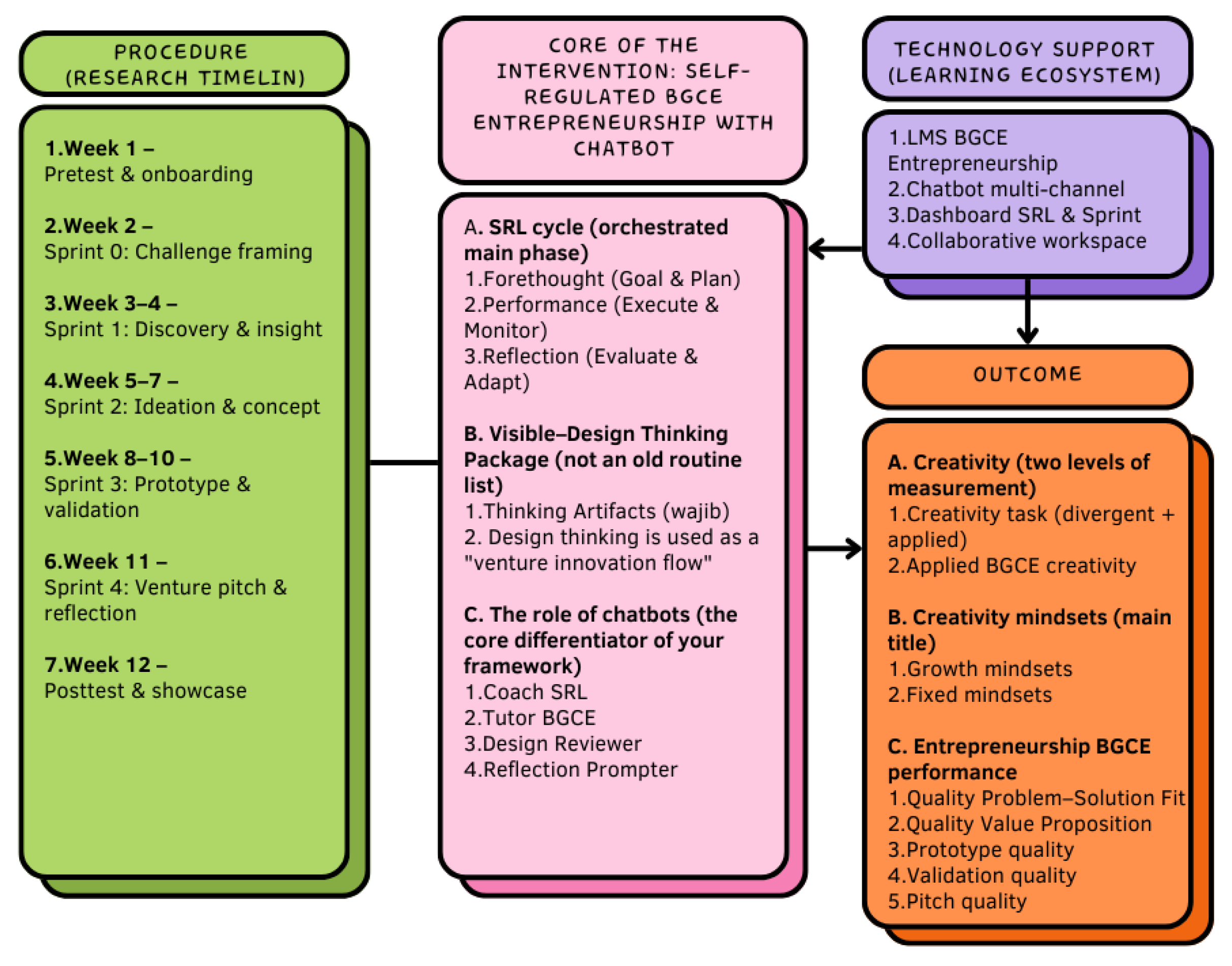
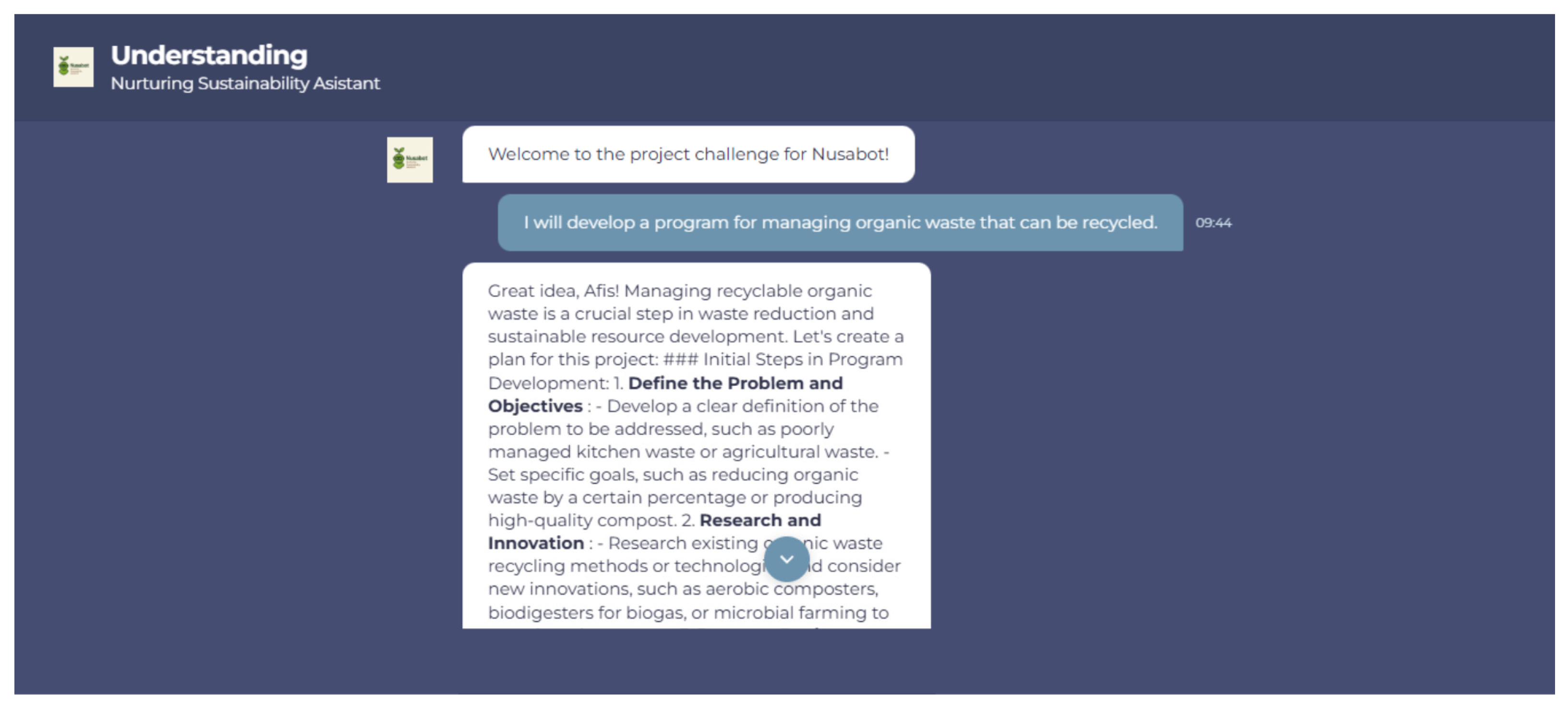
Chatbot for Self-Regulated BGCE Learning: Effects of Visible-Design Thinking Integration on Creativity and Growth Mindsets in Entrepreneurship
Abstract
1. Introduction
2. Theoretical Framework
2.1. Dimension of Creativity and Creative Mindset in BGCE Solution Development
2.2. Integrated Approach to Visible Thinking and Design Thinking in BGCE Entrepreneurship Class
2.3. Feedback-Based Chatbots in Learning
2.4. Chatbot-Assisted Self-Regulated Learning Feedback Learning System
3. Method
3.1. Participants
3.2. Instruments
3.2.1. Creativity Task
3.2.2. Creativity Mindset Inventory (CMI)/Growth Mindset Scale
3.2.3. Self-Regulated Learning and Reflection
3.3. Experimental Design and Procedures
3.4. Data Analyses
4. Results
4.1. Baseline Equivalence
4.2. Creativity Outcomes of the CS-MBTV Intervention
4.3. Creativity Mindset Outcomes of the CS-MBTV Intervention
4.4. Self-Reflection on Changes
5. Discussion
5.1. The Impact of Learning Interventions on Enhancing Student Creativity in the Context of BGCE
5.2. The Influence of Learning Interventions on Improving Students’ Creative Growth Mindset
5.3. Instructional Effects of Decreasing Creative Fixed Mindsets
5.4. Implications for BGCE Entrepreneurship Education
5.5. AI Safety and Hallucination Mitigation
6. Conclusions
7. Limitations and Implications
Supplementary Materials
Author Contributions
Funding
Institutional Review Board Statement
Informed Consent Statement
Data Availability Statement
Acknowledgments
Conflicts of Interest
Appendix A. Reflection Instruments and Examples of Anonymous Quotes
Appendix A.1. Prompt Reflection: “I Used to Think… Now I Think”
- I used to think… (explain the perspective before the BGCE project starts).
- Now I think… (describe the change in perspective after undergoing an innovation sprint, rubric feedback, and prototype revision).
- What changed and why? (mention evidence of experience, feedback, simple data, or important events during the implementation phase).
- Next step (write a strategy improvement plan for the next sprint, including monitoring, revision, and time management).
Appendix A.2. Categories of Themes and Operational Definitions
- Redefinition of creativity in BGCE: Changing the definition of creativity from “unique idea” to “valued, proven, and impactful solutions with sustainability impact”.
- Changes in SRL habits: Changes in planning, monitoring, self-evaluation, strategy adaptation, and time management during sprints.
- Creative confidence and the courage to try: Increased courage to experiment, tolerance for failure, and persistence of revision.
- Sustainability impact awareness: Increased attention to blue, green, circular values; trade-offs; and proof of impact through simple indicators.
Appendix A.3. Quotes per Theme (Anonymous)
- E12: “I used to think that creativity was enough to make different ideas. Now I think new ideas are not necessarily creative if there is no evidence of benefits and impacts. When asked to show simple data and circularity reasons, I became aware that creativity must be accounted for.”
- E27: “I used to think of creativity as talent. Now I see creativity as the process of creating solutions that are feasible, useful, and environmentally friendly. I only understood after we revised the prototype because the user feedback was not appropriate.”
- E05: “We used to work on projects that were close to the deadline. Now we make weekly targets, check progress, and divide tasks. The checklist from the chatbot allows us to monitor regularly, so we do not get lost during revisions.”
- E41: “I used to just focus on finishing. Now I assess the quality using a rubric and check again whether the impact claim has evidence. After reflection, I can determine clear improvement steps for the next sprint.”
- E18: “I used to be afraid of making a mistake and finally choosing the idea of safety. Now I am more courageous about trying alternatives and not immediately giving up when I fail a test. We repeated the prototype several times because it was geared towards focusing on revisions rather than blaming ourselves.”
- E33: “In the past, when I was criticized, I felt inadequate. Now I see the criticism as an opportunity for improvement. I became more confident because with each revision, there was a little progress that could be seen.”
- E09: “I used to not think about environmental impact in detail. Now I distinguish between green and circular, and I check whether our solution reduces waste or saves resources.”
- E56: “I used to only focus on products that could be sold. Now I also think about the social and environmental consequences. When asked to write down impact indicators, I realized that data and validation were needed, not assumptions.”
Appendix A.4. Overview of the Prevalence of Themes (Table Format)

| Theme | Brief Definition | n (Number of Students) | % of Total (N = 120) |
|---|---|---|---|
| Redefinition of creativity in BGCE | Creativity is understood as a value, feasible, and impact-proof solution | 84 | 70.0% |
| Changes in SRL habits | Planning, monitoring, strategy revision, and time management during sprints | 72 | 60.0% |
| Creative confidence and the courage to try | Dare to experiment, tolerance fails, persistence of revision | 68 | 56.7% |
| Sustainability impact awareness | Blue, green, circular value; trade-off; simple impact indicators | 90 | 75.0% |
References
- Anjum, T., Farrukh, M., Heidler, P., & Tautiva, J. A. D. (2021). Entrepreneurial intention: Creativity, entrepreneurship, and university support. Journal of Open Innovation: Technology, Market, and Complexity, 7(1), 11. [Google Scholar] [CrossRef]
- Ayanwale, M. A., & Ndlovu, M. (2024). Investigating factors of students’ behavioral intentions to adopt chatbot technologies in higher education: Perspective from expanded diffusion theory of innovation. Computers in Human Behavior Reports, 14, 100396. [Google Scholar] [CrossRef]
- Basuki, A., Pahlevi, A. S., & Gunawan, A. (2023). Commercialization of the study sustainability learning chatbot through digital education teaching factory based on profit sharing. In Proceedings of the BISTIC business innovation sustainability and technology international conference (BISTIC 2022) (pp. 3–13). Springer Nature. [Google Scholar] [CrossRef]
- Bez, S., Burkart, F., Tomasik, M. J., & Merk, S. (2025). How do teachers process technology-based formative assessment results in their daily practice ? Results from process mining of think-aloud data. Learning and Instruction, 97, 102100. [Google Scholar] [CrossRef]
- Chan, S. L., Lecturer, S., Tai, J., Fung, C., Lecturer, S., Wong, S., Academic, A. H., Chi, C., Cheng, W., Jung, J., Lee, J., Choi, R., Fellow, P., Wan, W. H., Lecturer, A., Withrow, H., Po, R., Poon, W., Lam, C. F., & Chung, H. (2025). Educational technology enhanced interprofessional E-learning for engaging cross-institutional and cross-border healthcare students: A mixed-methods study. International Journal of Nursing Studies Advances, 9, 100404. [Google Scholar] [CrossRef]
- Cortés-Cediel, M. E., Segura-Tinoco, A., Cantador, I., & Rodríguez Bolívar, M. P. (2023). Trends and challenges of e-government chatbots: Advances in exploring open government data and citizen participation content. Government Information Quarterly, 40(4), 101877. [Google Scholar] [CrossRef]
- Cuevas-Cerveró, A., Colmenero-Ruiz, M. J., & Martínez-Ávila, D. (2023). Critical information literacy as a form of information activism. Journal of Academic Librarianship, 49(6), 102786. [Google Scholar] [CrossRef]
- Dai, X. (2024). A study on mindful agency’s influence on college students’ engagement with online teaching: The mediating roles of e-learning self-efficacy and self-regulation. Acta Psychologica, 243, 104146. [Google Scholar] [CrossRef]
- Daryanes, F., Ririen, D., Fikri, K., & Sayuti, I. (2023). Improving students’ critical thinking through the learning strategy “students as researchers”: Research based learning. Jurnal Penelitian Pendidikan IPA, 9(5), 2374–2382. [Google Scholar] [CrossRef]
- Deitte, L. A., & Omary, R. A. (2019). The power of design thinking in medical education. Academic Radiology, 26(10), 1417–1420. [Google Scholar] [CrossRef] [PubMed]
- Doss, K., & Bloom, L. (2023). Mindset and the desire for feedback during creative tasks. Journal of Creativity, 33(1), 100047. [Google Scholar] [CrossRef]
- Farrokhnia, M., Noroozi, O., Baggen, Y., & Biemans, H. (2025). Improving hybrid brainstorming outcomes with computer-supported scaffolds: Prompts and cognitive group awareness. Computers & Education, 227, 105229. [Google Scholar]
- Fleischer, T., Moser, S., Deibl, I., Strahl, A., Maier, S., & Zumbach, J. (2023). Digital sequential scaffolding during experimentation in chemistry education—Scrutinizing influences and effects on learning. Education Sciences, 13(8), 811. [Google Scholar] [CrossRef]
- Foster, M. K. (2021). Design thinking: A creative approach to problem solving. Management Teaching Review, 6(2), 123–140. [Google Scholar] [CrossRef]
- Gan, B., Menkhoff, T., & Smith, R. (2015). Enhancing students’ learning process through interactive digital media: New opportunities for collaborative learning. Computers in Human Behavior, 51, 652–663. [Google Scholar] [CrossRef]
- García-Porta, N., Vaughan, M., Rendo-González, S., Gómez-Varela, A. I., O’Donnell, A., de-Moura, J., Novo-Bujan, J., & Ortega-Hortas, M. (2024). Are artificial intelligence chatbots a reliable source of information about contact lenses? Contact Lens and Anterior Eye, 47(2), 102130. [Google Scholar] [CrossRef] [PubMed]
- Han, H., & Park, D. (2025). Unlocking creative potential: The role of creative mindset on creativity. Thinking Skills and Creativity, 58, 101953. [Google Scholar] [CrossRef]
- Hao, C., & Zhang, F. (2026). Understanding self-regulated grammar learning with LLM chatbot support: An epistemic network analysis of grammar learning strategy patterns. System, 136, 103879. [Google Scholar] [CrossRef]
- Held, T., & Mejeh, M. (2024). Students’ motivational trajectories in vocational education: Effects of a self-regulated learning environment. Heliyon, 10(8), e29526. [Google Scholar] [CrossRef]
- Hunhevicz, J. J., & Hall, D. M. (2020). Do you need a blockchain in construction? Use case categories and decision framework for DLT design options. Advanced Engineering Informatics, 45, 101094. [Google Scholar] [CrossRef]
- Ibrahim, F., Telle, N., Yorck, P., & Christoph, J. (2025). The construction and validation of the AI mindset scale (AIMS). Computers in Human Behavior: Artificial Humans, 6, 100220. [Google Scholar] [CrossRef]
- Jos, E., Esteve-faubel, R. P., & Botella-quirant, M. T. (2025). Fostering soft skills through collaborative music projects in the initial education stage of primary teachers. Social Sciences & Humanities Open, 12, 101681. [Google Scholar] [CrossRef]
- Kabigting, F. J., Jr., Donaldson, S., & Nakamura, J. (2025). Improving employee self-rated creativity using paradoxical strengths regulation: A mediated path analysis among personality traits, paradox mindset, and employee self-rated creativity. Journal of Creativity, 35(2), 100101. [Google Scholar] [CrossRef]
- Karlsson, P. S., Shafti, F., & Duffy, K. (2025). The house of the business school: A pragmatic approach to conceptualising learning community. International Journal of Management Education, 23(2), 101141. [Google Scholar] [CrossRef]
- Kim, A., & Su, Y. (2024). How implementing an AI chatbot impacts Korean as a foreign language learners’ willingness to communicate in Korean. System, 122, 103256. [Google Scholar] [CrossRef]
- Kong, J., Xu, X., Xu, J., Han, G., & Xue, Y. (2025). Development of a growth mindset assessment scale for nursing students based on the growth mindset model: A mixed-method study. Nurse Education in Practice, 82, 104232. [Google Scholar] [CrossRef]
- Krskova, H., & Breyer, Y. A. (2023). The influence of growth mindset, discipline, flow and creativity on innovation: Introducing the MDFC model of innovation. Heliyon, 9(3), e13884. [Google Scholar] [CrossRef]
- Lee, A. A., Totonchi, D. A., Priniski, S. J., Lee, M., Perez, T., & Linnenbrink-garcia, L. (2024). Do performance goals and fixed mindset explicate the relations between stereotype threat and achievement? Examining differences between racially marginalized and White students in STEM. Learning and Individual Differences, 115, 102525. [Google Scholar] [CrossRef]
- Lee, M. T., Kachen, S., Krishen, A. S., & Raschke, R. L. (2025). Creativity ambidexterity and sustainable business: Taking advantage of creative thinking techniques. Technological Forecasting and Social Change, 213, 123993. [Google Scholar] [CrossRef]
- Lee, P., Hung, J., Liau, P., & Tsai, C. (2026). A dual mediation model linking design thinking mindset to creative problem-solving skills through creative self-efficacy and critical thinking disposition. Thinking Skills and Creativity, 60, 102055. [Google Scholar] [CrossRef]
- Li, H., Zhang, Y., Chen, M., Zhao, T., & Jou, M. (2026). Creative personal identity in the age of generative AI: A social-cognitive pathway of AI literacy, self-efficacy, and mindset. Computers in Human Behavior, 175, 108838. [Google Scholar] [CrossRef]
- Li, Z., & Li, Q. (2025). The effects of school climate on students’ creativity: The mediating role of growth mindset and self-efficacy. Thinking Skills and Creativity, 57, 101851. [Google Scholar] [CrossRef]
- Liang, Z., Qian, K., Wu, L., Li, M., Zhu, Y., Liu, D., Gu, X., & Zheng, Y. (2026). Teachers’ creativity-fostering behaviors and students’ creativity: Parallel serial mediation via growth mindset, fear of evaluation, and creative self-efficacy. Thinking Skills and Creativity, 60, 102104. [Google Scholar] [CrossRef]
- Loza, S. (2025). “Did you have some kind of blow to the head?”: Spanish heritage language learners, language ideologies and oral corrective feedback. Linguistics and Education, 85, 101380. [Google Scholar] [CrossRef]
- Makransky, G., & Mayer, R. E. (2022). Benefits of taking a virtual field trip in immersive virtual reality: Evidence for the immersion principle in multimedia learning. Educational Psychology Review, 34(3), 1771–1798. [Google Scholar] [CrossRef]
- Medina, M. S. (2017). Making students’ thinking visible during active learning. American Journal of Pharmaceutical Education, 81(3), 41. [Google Scholar] [CrossRef]
- Micheli, P., Wilner, S. J. S., Bhatti, S. H., Mura, M., & Beverland, M. B. (2019). Doing design thinking: Conceptual review, synthesis, and research agenda. Journal of Product Innovation Management, 36(2), 124–148. [Google Scholar] [CrossRef]
- Narendorf, S. C., Khan, U., Munson, M. R., & Klodnick, V. V. (2025). Transition symptom management careers: Historical patterns of mental health symptoms and service use among young adults experiencing a psychiatric crisis. Social Science & Medicine, 366, 117657. [Google Scholar] [CrossRef]
- Noraset, T., Supratak, A., Ragkhitwetsagul, C., Worathong, N., & Tuarob, S. (2026). Evaluating lab assistant chatbot on student learning and behaviors in a programming short course. Computers and Education: Artificial Intelligence, 10, 100527. [Google Scholar] [CrossRef]
- Pakseresht, A., Kermani, A., & Decker-lange, C. (2025). Towards a sustainable and circular blue bioeconomy: A scoping review. Technological Forecasting & Social Change, 216, 124157. [Google Scholar] [CrossRef]
- Pande, M., & Bharathi, S. V. (2020). Theoretical foundations of design thinking—A constructivism learning approach to design thinking. Thinking Skills and Creativity, 36, 100637. [Google Scholar] [CrossRef]
- Peeters, M. J., & Vaidya, V. A. (2016). A mixed-methods analysis in assessing students’ professional development by applying an assessment for learning approach. American Journal of Pharmaceutical Education, 80(5), 77. [Google Scholar] [CrossRef] [PubMed]
- Peperkorn, C., & Wegner, C. (2026). Measurement of divergent thinking in biological contexts: Development, pilot testing, and validation of a test instrument for use in school. Thinking Skills and Creativity, 59, 102010. [Google Scholar] [CrossRef]
- Ren, W., Li, J., Pi, Z., Guo, J., & Li, X. (2026). How do high-performers and low-performers differently engage in collaborative creative problem solving with a conversational GenAI chatbot? Thinking Skills and Creativity, 60, 102134. [Google Scholar] [CrossRef]
- Roth, T., Conradty, C., & Bogner, F. X. (2022). The relevance of school self-concept and creativity for CLIL outreach learning. Studies in Educational Evaluation, 73, 101153. [Google Scholar] [CrossRef]
- Rücker, C. R., & Becker-Genschow, S. (2025). Enhancing enthusiasm for STEM education with AI: Domain-specific chatbot as personalized learning assistant. Computers and Education Open, 9, 100315. [Google Scholar] [CrossRef]
- Sanabria-Z, J., & Olivo, P. G. (2024). AI platform model on 4IR megatrend challenges: Complex thinking by active and transformational learning. Interactive Technology and Smart Education, 21(4), 571–587. [Google Scholar] [CrossRef]
- Schiele, T., Edelsbrunner, P., Mues, A., Birtwistle, E., Wirth, A., & Niklas, F. (2025). The effectiveness of game-based literacy app learning in preschool children from diverse backgrounds. Learning and Individual Differences, 117, 102579. [Google Scholar] [CrossRef]
- Schwiering, P., & Heyder, A. (2026). Experimental evidence on the effects of preservice teachers’ growth and fixed mindsets on teaching self-efficacy and anticipated. Learning and Instruction, 102, 102266. [Google Scholar] [CrossRef]
- Sevimli-Celik, S., & Güvelioglu, E. (2026). From comfort zone to growth zone: Experiential projects as catalysts for creativity in pre-service teachers. Thinking Skills and Creativity, 59, 101994. [Google Scholar] [CrossRef]
- Sigmundsson, H., & Haga, M. (2024). Growth mindset scale: Aspects of reliability and validity of a new 8-item scale assessing growth mindset. New Ideas in Psychology, 75, 101111. [Google Scholar] [CrossRef]
- Smutny, P., & Schreiberova, P. (2020). Chatbots for learning: A review of educational chatbots for the Facebook Messenger. Computers and Education, 151, 103862. [Google Scholar] [CrossRef]
- Soyoof, A., Lee, B., Rassaei, E., Kao, C., & Van Ha, X. (2026). From teachers to chatbots: Scaffolded corrective feedback and student trust in online L2 English classrooms. Computers and Education: Artificial Intelligence, 10, 100530. [Google Scholar] [CrossRef]
- Su, L., Wei, J., & Chuang, H. (2026). Fostering divergent thinking through a growth creative mindset: The mediating roles of multicultural attitudes and openness to experience. Thinking Skills and Creativity, 60(70), 102129. [Google Scholar] [CrossRef]
- Tam, W., Huynh, T., Tang, A., Luong, S., Khatri, Y., & Zhou, W. (2023). Nursing education in the age of artificial intelligence powered Chatbots (AI-Chatbots): Are we ready yet? Nurse Education Today, 129, 105917. [Google Scholar] [CrossRef] [PubMed]
- Teixeira, J. C. C., Bernardi, F. A., Rijo, R. P. C. L., & Alves, D. (2021). Proposal for a health information management model based on Lean thinking. Procedia Computer Science, 181, 1097–1104. [Google Scholar] [CrossRef]
- Thompson, L., & Schonthal, D. (2020). The social psychology of design thinking. California Management Review, 62(2), 84–99. [Google Scholar] [CrossRef]
- Tise, J. C., Hernandez, P. R., & Wesley Schultz, P. (2023). Mentoring underrepresented students for success: Self-regulated learning strategies as a critical link between mentor support and educational attainment. Contemporary Educational Psychology, 75, 102233. [Google Scholar] [CrossRef]
- Tran-Duong, Q. H., & Do-Hung, D. (2025). The mediating role of student growth mindset between teacher feedback, peer collaboration, and creative thinking dispositions. Studies in Educational Evaluation, 87, 101526. [Google Scholar] [CrossRef]
- Verganti, R., Vendraminelli, L., & Iansiti, M. (2020). Innovation and design in the age of artificial intelligence. Journal of Product Innovation Management, 37(3), 212–227. [Google Scholar] [CrossRef]
- Warren, F., Mason-apps, E., Hoskins, S., Azmi, Z., & Boyce, J. (2018). The role of implicit theories, age, and gender in the creative performance of children and adults. Thinking Skills and Creativity, 28, 98–109. [Google Scholar] [CrossRef]
- White, I., Gallagher, F., & Tiernan, P. (2026). ‘Now I understand what being creative looks like’: Preservice-teachers’ experiences of a module on creativity in education. Thinking Skills and Creativity, 60, 102113. [Google Scholar] [CrossRef]
- Wong, J., Baars, M., Davis, D., Van Der Zee, T., Houben, G. J., & Paas, F. (2019). Supporting self-regulated learning in online learning environments and MOOCs: A systematic review. International Journal of Human-Computer Interaction, 35(4–5), 356–373. [Google Scholar] [CrossRef]
- Xia, N., Hany, S., Huang, Y., & Niu, R. (2025). The effectiveness of CPS + SCAMPER teaching mode and strategies on student creativity. Thinking Skills and Creativity, 56, 101758. [Google Scholar] [CrossRef]
- Yao, Y., Zhu, X., Xiao, L., & Lu, Q. (2025). Secondary school English teachers’ application of artificial intelligence-guided chatbot in the provision of feedback on student writing: An activity theory perspective. Journal of Second Language Writing, 67, 101179. [Google Scholar] [CrossRef]
- Yu, J., Kim, H., Zheng, X., Li, Z., & Zhu, X. (2024). Effects of scaffolding and inner speech on learning motivation, flexible thinking and academic achievement in the technology-enhanced learning environment. Learning and Motivation, 86, 101982. [Google Scholar] [CrossRef]
- Zeng, C. (2025). The role of growth mindset, self-efficacy, and environmental support in ICT practices for creative thinking development. International Journal of Educational Research, 132(5), 102631. [Google Scholar] [CrossRef]
- Zhang, C., Xie, Y., Bai, H., Yu, B., Li, W., & Gao, Y. (2021). A survey on federated learning. Knowledge-Based Systems, 216, 106775. [Google Scholar] [CrossRef]
- Zhou, Y., Li, P., Wang, Y., & Sun, Z. (2025). The double-edged sword effect of fixed creative mindset on creativity: Investigating when and how it facilitates or hinders creativity. Acta Psychologica, 258, 105139. [Google Scholar] [CrossRef]
- Zimmerman, B. J. (2000). Self-efficacy: An essential motive to learn. Contemporary Educational Psychology, 25(1), 82–91. [Google Scholar] [CrossRef]
- Zimmerman, D. W., & Williams, R. H. (2016). Gain scores in research can be highly reliable. Journal of Educational Measurement, 19(2), 149–154. [Google Scholar] [CrossRef]




| Aspects | Description |
|---|---|
| Platform/access channel | LMS/Website |
| Student input | Sprint progress summary, prompt answers, links/artifact uploads |
| Output chatbot | Prompt monitoring, checklist, sprint, feedback rubric 3-level |
| Schedule of use | Weeks 1–11 (checkpoint per sprint/weekly) |
| Recorded data | Timestamp, number of interactions, artifact revisions, duration |
| Rules of use | Verify-before-use, prohibition of composing data, focus scaffolding process |
| Collected outputs | BGCE artifacts, reflections, usage logs (fidelity) |
| Indicator | Operational Definition | Summary of Statistics |
|---|---|---|
| Turns per student | Total student messages + chatbot responses during the intervention | Median (IQR) = 84 (55–118); Mean ± SD = 92.6 ± 41.3 |
| Active sessions per student | The number of days differs, with a minimum of 1 interaction | Median (IQR) = 18 (12–26); Mean ± SD = 19.4 ± 8.7 |
| Active week per student | Number of weeks (out of 11) with at least 1 interaction | Median (IQR) = 8 (6–10); Mean ± SD = 8.1 ± 2.4 |
| Proportion of consistency of use | Activity categories by active week | High (≥9 weeks) = 37.1%; Moderate (5–8 weeks) = 50.0%; Low (≤4 weeks) = 12.9% |
| Response to prompts | Proportion of prompts that get a student response within 48 h | Median (IQR) = 78% (65–90%); Mean ± SD = 76.4% ± 15.2% |
| Response latency | Time from prompt sent to first re-sponge | Median (IQR) = 6.8 jam (2.4–18.5) |
| Artifact revision | Number of revision iterations (version/edit uploads) on BGCE artifacts | Median (IQR) = 5 (3–7); Mean ± SD = 5.2 ± 2.1 |
| Completion rate | Weekly checkpoint/task completion percentage | Mean ± SD = 86.3% ± 12.4%; ≥80% = 74.2% |
| Group | n | Pretest (M ± SD) | Posttest (M ± SD) | Gain (M ± SD) |
|---|---|---|---|---|
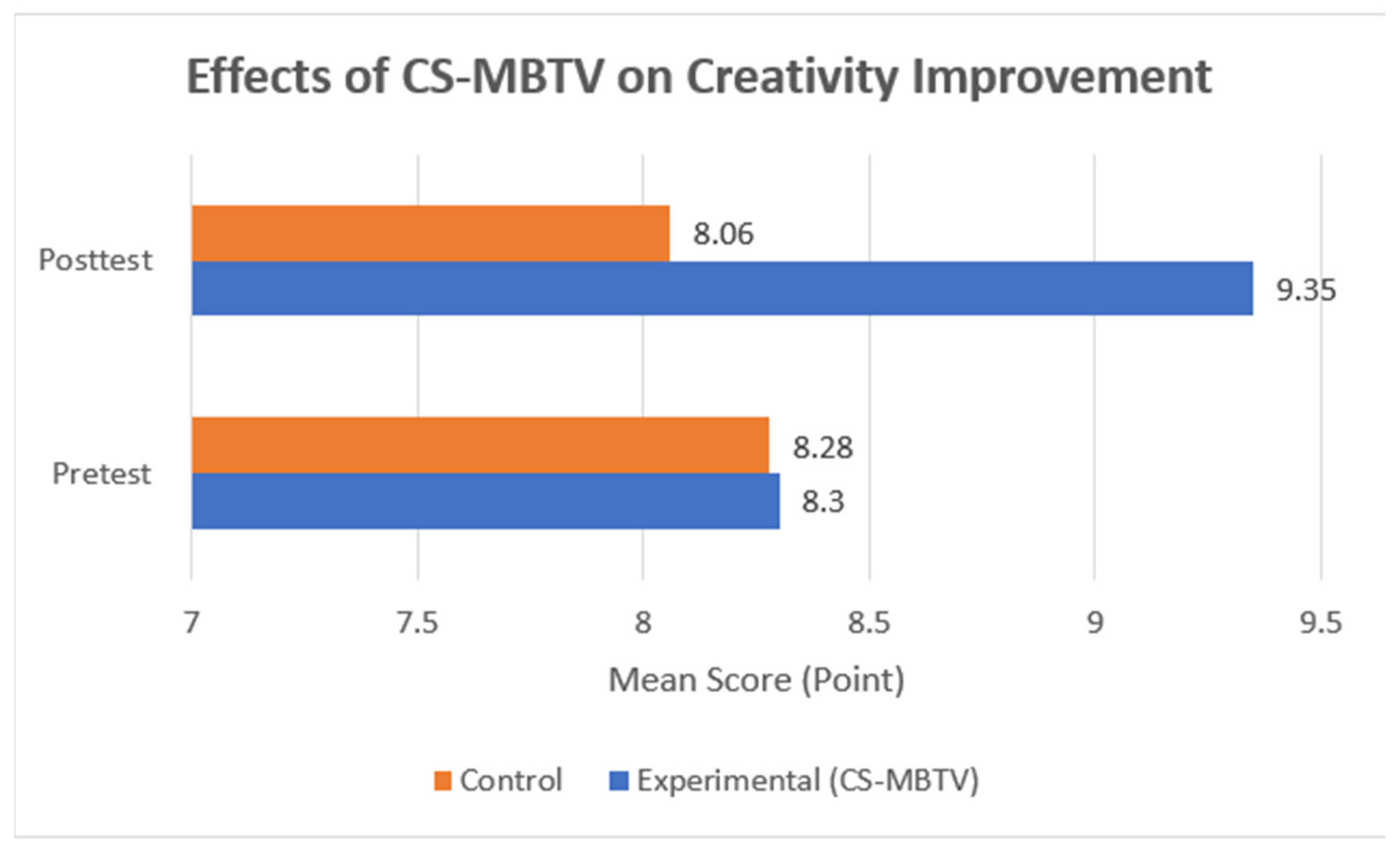
| Experimental (CS-MBTV) | 62 | 8.30 ± 0.97 | 9.35 ± 1.18 | 1.05 ± 0.68 |
| Control | 58 | 8.28 ± 0.82 | 8.06 ± 1.03 | −0.22 ± 0.64 |
| Comparison | Mean Gain (E) | Mean Gain (C) | Mean Diff (E − C) | t (df) | p | 95% CI of Diff | Hedges’ g |
|---|---|---|---|---|---|---|---|
| Experimental vs. Control | 1.05 | −0.22 | 1.27 | 10.50 (118) | <0.001 | [1.03, 1.51] | 1.91 |
| Dimensions (CMI) | Group | n | Pretest (M ± SD) | Posttest (M ± SD) | Gain (M ± SD) |
|---|---|---|---|---|---|
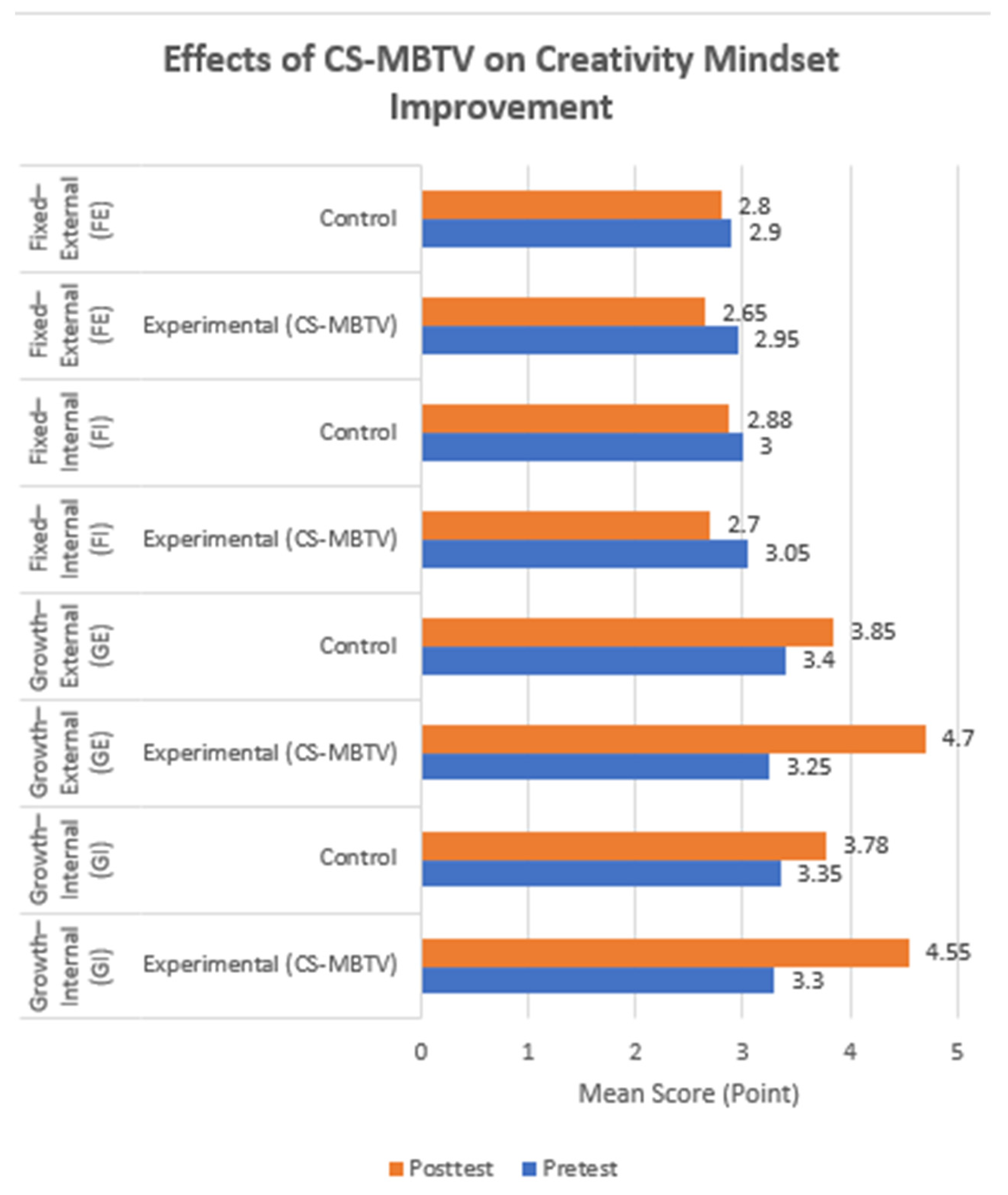
| Growth–Internal (GI) | Experimental (CS-MBTV) | 62 | 3.30 ± 0.78 | 4.55 ± 0.84 | 1.25 ± 0.70 |
| Control | 58 | 3.35 ± 0.74 | 3.78 ± 0.81 | 0.43 ± 0.66 | |
| Growth–External (GE) | Experimental (CS-MBTV) | 62 | 3.25 ± 0.80 | 4.70 ± 0.86 | 1.45 ± 0.76 |
| Control | 58 | 3.40 ± 0.77 | 3.85 ± 0.83 | 0.45 ± 0.70 | |
| Fixed–Internal (FI) | Experimental (CS-MBTV) | 62 | 3.05 ± 0.72 | 2.70 ± 0.74 | −0.35 ± 0.58 |
| Control | 58 | 3.00 ± 0.69 | 2.88 ± 0.70 | −0.12 ± 0.55 | |
| Fixed–External (FE) | Experimental (CS-MBTV) | 62 | 2.95 ± 0.71 | 2.65 ± 0.72 | −0.30 ± 0.56 |
| Control | 58 | 2.90 ± 0.68 | 2.80 ± 0.69 | −0.10 ± 0.52 |
| Dimensions | Mean Gain (E) | Mean Gain (C) | Diff (E − C) | t(118) | p | Hedges’ g | Dimensions |
|---|---|---|---|---|---|---|---|
| GI | 1.25 | 0.43 | 0.82 | 6.57 | <0.001 | 1.20 | GI |
| GE | 1.45 | 0.45 | 1.00 | 7.63 | <0.001 | 1.39 | GE |
| FI | −0.35 | −0.12 | −0.23 | −1.71 | 0.090 | 0.31 | FI |
| FE | −0.30 | −0.10 | −0.20 | −1.55 | 0.124 | 0.28 | FE |
Disclaimer/Publisher’s Note: The statements, opinions and data contained in all publications are solely those of the individual author(s) and contributor(s) and not of MDPI and/or the editor(s). MDPI and/or the editor(s) disclaim responsibility for any injury to people or property resulting from any ideas, methods, instructions or products referred to in the content. |
© 2026 by the authors. Licensee MDPI, Basel, Switzerland. This article is an open access article distributed under the terms and conditions of the Creative Commons Attribution (CC BY) license.
Share and Cite
Wulandari, D.; Istiqomah, N.; Ediyanto; Fajarianto, O. Chatbot for Self-Regulated BGCE Learning: Effects of Visible-Design Thinking Integration on Creativity and Growth Mindsets in Entrepreneurship. Educ. Sci. 2026, 16, 582. https://doi.org/10.3390/educsci16040582
Wulandari D, Istiqomah N, Ediyanto, Fajarianto O. Chatbot for Self-Regulated BGCE Learning: Effects of Visible-Design Thinking Integration on Creativity and Growth Mindsets in Entrepreneurship. Education Sciences. 2026; 16(4):582. https://doi.org/10.3390/educsci16040582
Chicago/Turabian StyleWulandari, Dwi, Ni’matul Istiqomah, Ediyanto, and Otto Fajarianto. 2026. "Chatbot for Self-Regulated BGCE Learning: Effects of Visible-Design Thinking Integration on Creativity and Growth Mindsets in Entrepreneurship" Education Sciences 16, no. 4: 582. https://doi.org/10.3390/educsci16040582
APA StyleWulandari, D., Istiqomah, N., Ediyanto, & Fajarianto, O. (2026). Chatbot for Self-Regulated BGCE Learning: Effects of Visible-Design Thinking Integration on Creativity and Growth Mindsets in Entrepreneurship. Education Sciences, 16(4), 582. https://doi.org/10.3390/educsci16040582