Article

Differences in the Civic Identity of Youth—On the Way to Sustainable Development of Security and Peace


1
Liepaja Academy, Riga Technical University, LV 3401 Riga, Latvia
2
Faculty of Engineering Economics and Management, Riga Technical University, LV 1048 Riga, Latvia
3
Faculty of Computer Science, Information Technology and Energy, Riga Technical University, LV 1048 Riga, Latvia
*
Author to whom correspondence should be addressed.
Educ. Sci. 2026, 16(3), 443; https://doi.org/10.3390/educsci16030443
Submission received: 9 December 2025 / Revised: 24 February 2026 / Accepted: 12 March 2026 / Published: 16 March 2026
(This article belongs to the Section Education and Psychology)

Abstract

This study investigates civic identity among young people in Latvia within a multidimensional framework that includes subjective, ethical, and political aspects. The empirical research is based on a survey of 9th–12th grade students enrolled in general education schools in a selected city, including schools where instruction is in the state language and schools where instruction is in a minority language. The questionnaire, rooted in a multidimensional concept of civic identity, measured subjective, ethical, and political dimensions through categorical items and a four-point Likert scale. Chi-square tests showed significant differences between school types across various dimensions of civic identity. Self-identification as a Latvian patriot and respect for the country differed significantly across all grades, with moderate to large effects. Perceived personal relevance to the country also varied significantly in some grades, with the strongest differences seen in grade 10. Willingness to defend the country had significant links to school type, especially in upper secondary grades. These findings highlight the variety of civic self-perceptions in a linguistically diverse educational setting and emphasise the importance of schools as spaces where civic identity is expressed and negotiated. The results add to debates in civic education and may help develop competency-based teaching methods suitable for diverse cultural contexts.

1. Introduction

The decline in youth political engagement, low civic education scores, and limited understanding of democratic values among Latvian students (Spridzāne, 2024) underline the need to pay more attention to quality civic education and the competencies of youth. Civic competence, which is developed in the context of civic education, involves cultivating young people’s civic knowledge, skills, and attitudes, which manifests itself as an individual civic position that shapes future civic identity (Jurs et al., 2022). It is essential to link all cornerstones of civic competence in and outside the educational process. Data from Čekse et al.’s (2023) study clearly show a trend that students with higher learning achievements in civic education are orientated towards national growth, security, and social cohesion, which reflects the link between the quality of education and the quality of life in society.
Despite differences in civic identity between young people of different nationalities, all young people need quality civic education and an understanding of sustainability issues. Bell (2016) stresses the importance of fostering responsible citizenship among young people that will enable them to live sustainable lifestyles. Civic education of young people’s civic identity includes essential preconditions for quality education as defined by UNESCO, namely, that students understand fundamental human rights as a global good for society through their potential for civic engagement (UNESCO, 2023). United Nations Sustainable Development Goal—SDG 4 is related to inclusive and equitable quality education with Target 4.7: Education for sustainable development and global citizenship. This target determines the necessity of ensuring that all learners acquire the knowledge and skills needed to promote sustainable development through education for human rights, promotion of a culture of peace and non-violence, global citizenship, and appreciation of cultural diversity (United Nations, 2025). Citizenship education as an educational framework promotes the development of civic identity. In this context, quality civic education and a similar understanding and attitude towards national values among students of different nationalities are important. The socialization factor, the understanding of one’s role in society, the sense of belonging, and the civic engagement factor are essential in promoting a sustainable, democratic environment and building a civic society. Civic identity actualizes people’s experiences, views, beliefs, emotions, and civic engagement, as well as their rights and responsibilities as citizens (Essien, 2020). Bodo (2016) concludes that most researchers have not yet found a common ground for analysing the problems of minority civil society, so theoretical research and sociological surveys are needed.
Latvia has historically been a country with a high percentage of a Russian-speaking population (Khalimzoda & Siitonen, 2024). During the Soviet Union period, the share of the Russian population increased significantly (Volkov, 2023). At this time, a targeted policy of Russification was implemented. It involved the relocation of Russian speakers to Latvia (Cheskin, 2012), and the share of the Russian population increased to 34% in 1989. In 1991, Latvia regained independence, and at the beginning of 2025, there were 64% Latvians and 23% Russians (Official Statistics Portal, 2025) in Latvia. The Russian-speaking population includes not only Russians but also other nationalities, for example, Belarusians or Ukrainians, and it means that the share of the Russian-speaking population in Latvia is approximately 30% of the total population. Societies with a large share of the biggest minority face many problems, especially those related to security, peace, citizenship, language, and education policy. Until the 1990s, there were two separate school systems in Latvia in terms of content, language, and duration of instruction. They were called Latvian schools and Russian schools, which contributed to the societal segregation of ethnic Latvians and Russians (S. Burr, 2025).
The language issue was closely linked to political loyalty and the question of citizenship (Veisbergs, 2018). After regaining independence, the transition to education only in Latvian began very gradually. On 25 October 2022, amendments to the “Law on Education” came into force in Latvia, which set out the criteria and procedures for the sequential transition to the Latvian (state) language in minority-language schools at the pre-primary and primary levels of general education. The amendments provide that from 1 September 2025, pre-school and general education in Latvia will be conducted only in Latvian (LR Saeima, 2022). The transition to Latvian-language education is linked not only to the challenges of national language proficiency but also to issues of sense of belonging and civic identity for the successful integration of young people into a Latvian environment. Petrovska (2023) concluded that the formation of civic identity is complicated in those countries that have recently gained independence. This is also the case for Latvia—the long history of being part of the Soviet Union can still cause various deformations of civic identity. In a multi-community society, such as Latvia, this is not a straightforward and self-evident issue in the context of civic identity development.
Recognizing the relevance of this issue and based on the existing diversity in society and emphasizing the long-term impact of young people on the future development of the country, the following hypothesis is proposed:
H1. 
Students attending Latvian-language and minority-language schools differ in their self-assessments across the subjective, ethical, and political dimensions of civic identity.
This study adopts a cross-sectional, comparative, and exploratory research design to examine selected dimensions of civic identity among young people in Latvia. Drawing on a multidimensional conceptualisation of civic identity encompassing subjective, ethical, and political components, the research focuses on students enrolled in Latvian-language and minority-language schools.
Given the distinct socio-institutional and linguistic contexts in which these schools operate, differences in students’ civic self-assessments may be expected. Rather than aiming at broad generalisation, the analysis seeks to identify patterns and contrasts that contribute to understanding civic identity formation in a culturally and linguistically diverse educational environment.

2. Materials and Methods

2.1. Literature Review

Identity formation is a dynamic process and changes over time (Crow et al., 2017). According to Erik Erikson’s eight stages of development, an identity crisis happens as a part of normal development (Woolfolk, 2019). During the fifth stage, in adolescence, a person must choose between identity and identity confusion. This stage features an identity crisis, which is a normal and necessary part of development, and individuals who successfully overcome this crisis emerge with a strong sense of identity. Identity formation in adolescence is characterized by both systematic maturation and considerable stability, which stems from several social environmental factors, with family and school making a significant contribution (Branje et al., 2021).
In culturally diverse societies, identity development is influenced not only by personal maturation but also by socio-cultural frameworks that provide young people with a sense of belonging and security (Boruta, 2018). Young individuals may experience pressures to conform to group norms and behavioural expectations, particularly in contexts of cultural plurality (Schwartz et al., 2011). These factors are especially relevant when examining civic identity within linguistically differentiated educational systems.
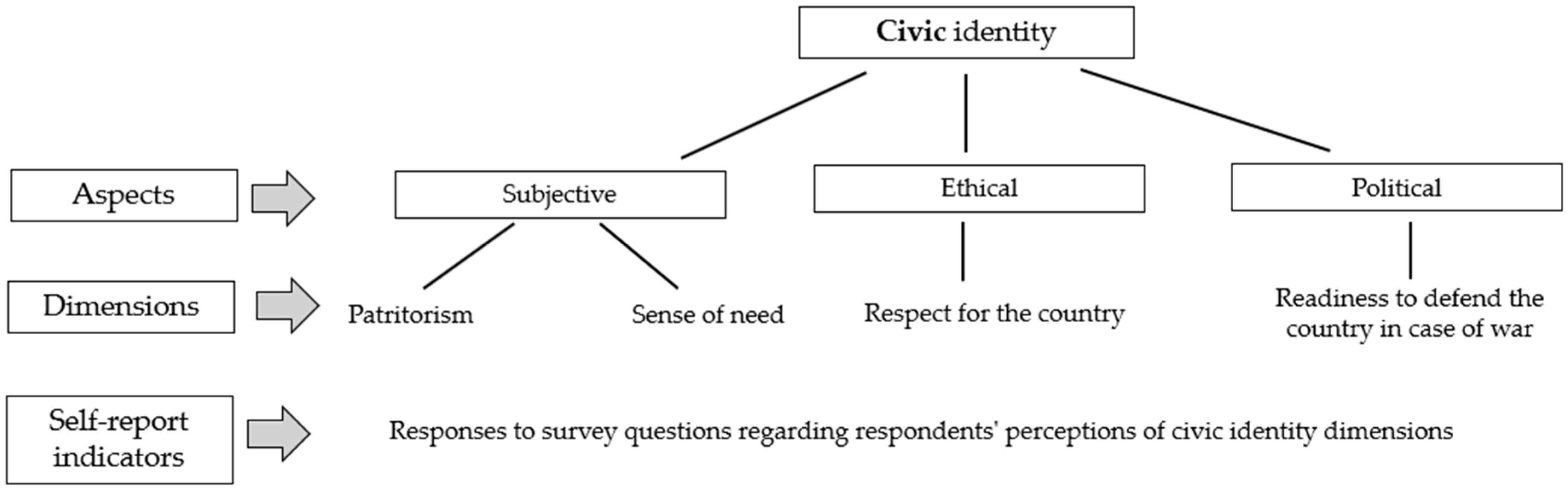
In this study, civic identity is conceptualised as a multidimensional construct comprising subjective, ethical, and political dimensions (Hart et al., 2011). Each aspect of civic identity includes various dimensions (Han & Dawson, 2025; Schulz, 2024; Hart et al., 2011):
(1)
Subjective aspect dimensions include a sense of belonging to the state, self-identification as a member of the nation, emotional attachment (pride, loyalty, solidarity), trust in institutions, etc.
(2)
Ethical aspect dimensions include commitment to democratic principles, respect for human rights, respect for the country, tolerance toward diversity, responsibility toward others, etc.
(3)
Political aspect dimensions include political participation, civic activism, readiness to defend the country in the case of war, etc.
While civic identity is complex and may be analysed at various levels, the present study focuses on selected self-assessment indicators reflecting these core dimensions (see Figure 1). Given the exploratory and comparative nature of the research, the empirical analysis is based on dimension-specific indicators rather than a comprehensive psychometric scale.
This approach allows for the identification of group differences and trends while acknowledging the limitations of conclusions drawn from indicator-level analysis.
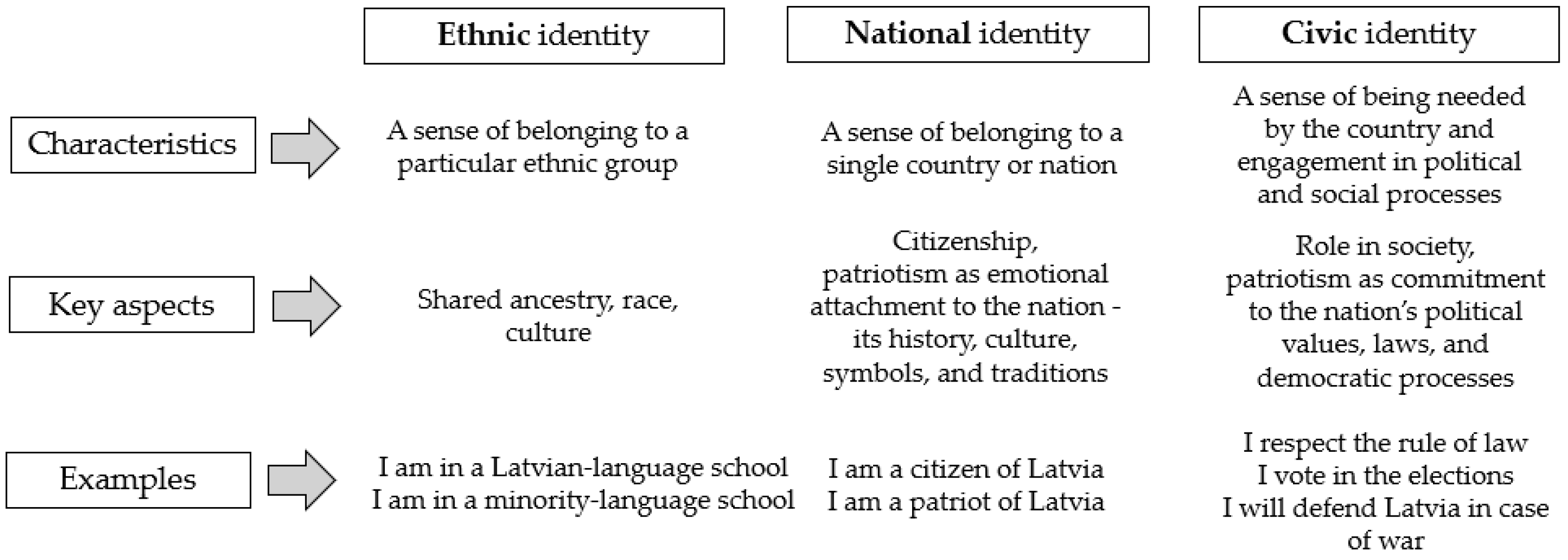
In the Latvian context, where a significant Russian-speaking minority resides, discussions of civic identity intersect with questions of ethnic and national identity formation. Their short characterisation is given in Figure 2.
Ethnic identity refers to an individual’s sense of belonging to a particular ethnic or cultural group and typically begins to develop in childhood, becoming more consolidated during late adolescence and early adulthood (Lara, 2018; Halevy & Gross, 2022). For adolescents who belong to ethnic minority groups, ethnic identity often constitutes a salient component of overall identity development. While family provides an important primary context for the transmission of cultural narratives and values, schools represent a central institutional space in which identity processes continue to be shaped during adolescence (Wantchekon & Umana-Taylor, 2024).
National and civic identities are conceptually related yet analytically distinguishable. National identity generally refers to individuals’ sense of belonging to a nation-state and identification with shared collective symbols, history, and narratives (Priwati & Sanitioso, 2024). Civic identity, by contrast, emphasises participation, responsibility, and engagement within the political and social structures of a society (Viola, 2020). Within the literature, patriotism is frequently associated with national identity (Huddy, 2023; Korostelina et al., 2025), while other scholars consider patriotism to function as a component of, or precursor to, civic identity and civic engagement (Mukhtarova & Pazylbek, 2020; Marzęcki, 2019; Hu et al., 2024).
Hart et al. (2011) conceptualise civic identity as comprising subjective, ethical, and political dimensions. From a sociological perspective, identity formation may also be understood through the lens of reflexivity, where individuals negotiate their positions within broader social structures (Kim, 2023). In this view, civic identity is shaped through interaction with the surrounding social environment, including institutional contexts such as schools. These environments provide frameworks within which civic orientations, values, and behavioural patterns are interpreted, expressed, and reinforced during adolescence.
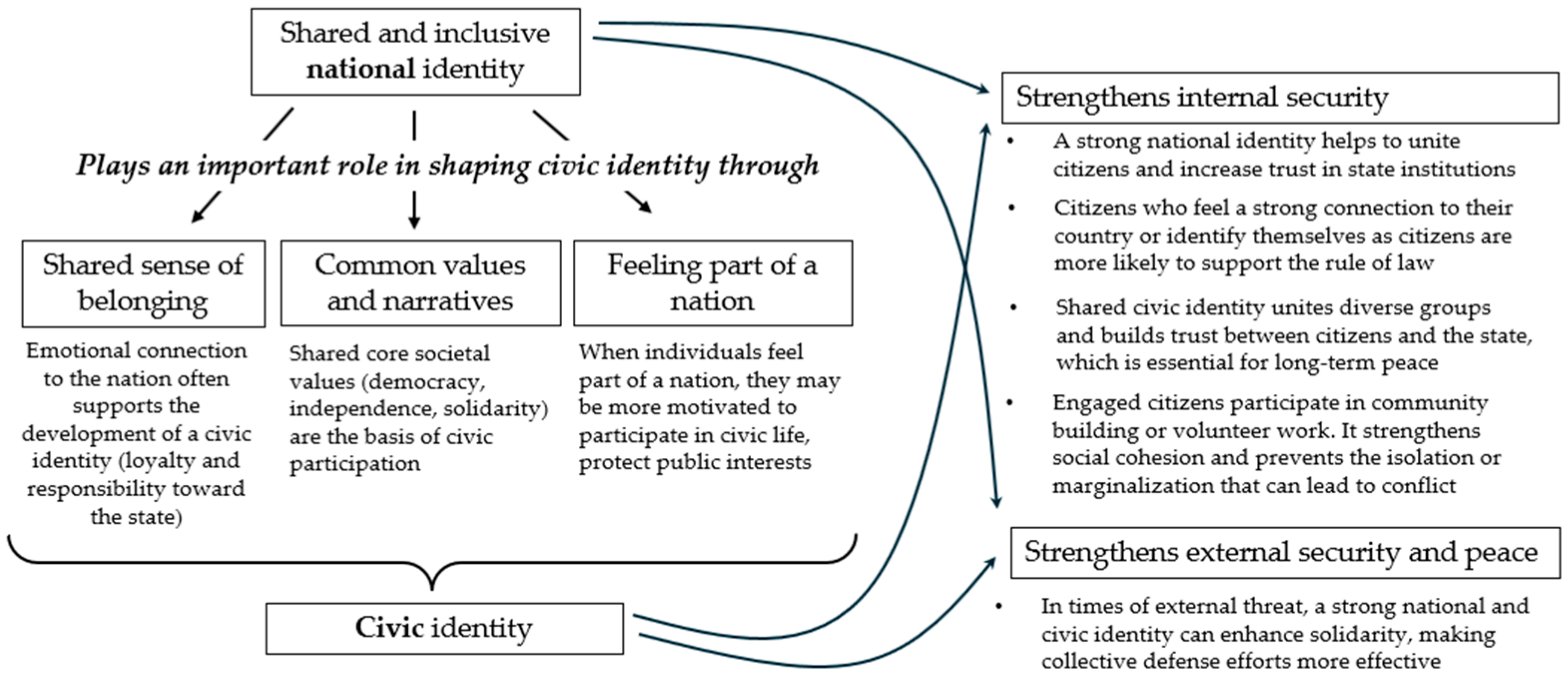
Previous research suggests that national and civic identities are interrelated, particularly in contexts where shared collective narratives influence civic orientations (see Figure 3 for a conceptual representation).
Research has examined the relationship between national and civic identity in the formation of youth political and cultural orientations. Zharovska (2022) conceptualises national identity as a component contributing to the development of civic-orientated youth culture. Empirical studies associate stronger national identification with higher levels of social trust, shared values, and perceived belonging (Medin et al., 2024). These elements may, in turn, support the development of civic identity and civic engagement. Civic identity has been linked to patterns in civic behaviour that contribute to democratic participation and institutional stability (Nic Craith & Taylor, 2024).
At the same time, scholarly discussions emphasise that variations in identity orientations among different youth groups may influence political attitudes and behavioural tendencies (Mader & Schoen, 2023). National identity provides a symbolic and normative framework through which political positions are interpreted, particularly during periods of societal uncertainty (Szynowski & Gil, 2025). However, research cautions against deterministic interpretations. The presence of multiple ethnic or cultural identities within a society does not automatically generate conflict; rather, broader political, social, economic, and historical conditions shape intergroup dynamics (Van Assche, 2019).
Within this context, civic education has been identified as an important institutional mechanism through which shared civic values, tolerance, and participatory orientations may be fostered (Subkhan et al., 2022). Survey-based research highlights the role of formal schooling in strengthening civic awareness and engagement. For example, Jonāne et al. (2022) emphasise the contribution of civic education to political awareness among Latvian youth, while Nusubalieva et al. (2023) demonstrate how educational environments, alongside media and policy contexts, influence civic identity development among university students in Kyrgyzstan.
Building on these theoretical and empirical insights, the present study examines whether civic self-assessments differ among students attending Latvian-language and minority-language schools within a shared national educational system.

2.2. Methodology

2.2.1. Research Design and Instrument

The study employed a cross-sectional, comparative survey design to examine differences in selected dimensions of civic identity between two independent groups of students: those attending Latvian-language schools and those attending minority-language schools.
Survey methodology was chosen as an appropriate tool for collecting self-reported data on attitudes and orientations within a relatively large student population (Babbie, 1990). The questionnaire (Table 1) was structured according to the conceptual basis of civic identity self-assessment (described in Figure 1) in order to reflect the subjective, ethical, and political dimensions of the respondents.
As summarised in Table 1, the instrument included
  • General demographic questions (age, gender, grade, school instruction language);
  • Categorical questions addressing subjective and ethical dimensions of civic identity (yes; no; I haven’t thought about it; difficult to answer);
  • One four-point Likert-scale item (strongly agree; agree; disagree; strongly disagree) reflecting a political dimension.
The selected items were designed to capture students’ civic self-assessments as dimension-specific indicators rather than as a comprehensive psychometric scale.

2.2.2. Sampling and Data Collection

The empirical study was conducted in all general education schools located in one Latvian city. Six schools had provided instruction in the Latvian language since grade 1. Three schools had transitioned to Latvian as the language of instruction one year prior to data collection, previously operating primarily in Russian. For analytical purposes, these schools were categorised as minority-language schools.
Participants were recruited through a non-probability, voluntary response sampling strategy. Schools were included based on availability and willingness to participate within the designated data collection period. Data were collected over two weeks with an online survey.
To assess sample adequacy, the required minimum sample size was estimated using Raosoft’s sample size calculator, based on the total population of grade 9–12 students in the selected city, assuming a 95% confidence level, a 5% margin of error, and a 50% response distribution. The recommended minimum was 377 students.
The final sample consisted of 436 respondents (approximately 26% of the city’s grade 9–12 student population), thereby exceeding the calculated minimum sample size required for the planned statistical analyses.
Of these, 294 students attended Latvian-language schools (24% of the enrolled students in those schools) and 142 attended minority-language schools (26% of enrolled students in those schools). The average age of respondents was 17 years; 64% were female (n = 278) and 36% male (n = 158). Descriptive characteristics of the sample are presented in Table 2.
Although the sample includes a substantial proportion of eligible students within the selected city, it does not constitute a nationally representative sample. Findings should therefore be interpreted as contextual rather than generalisable to all Latvian youth.

3. Results

3.1. The Subjective Aspect of Civic Identity

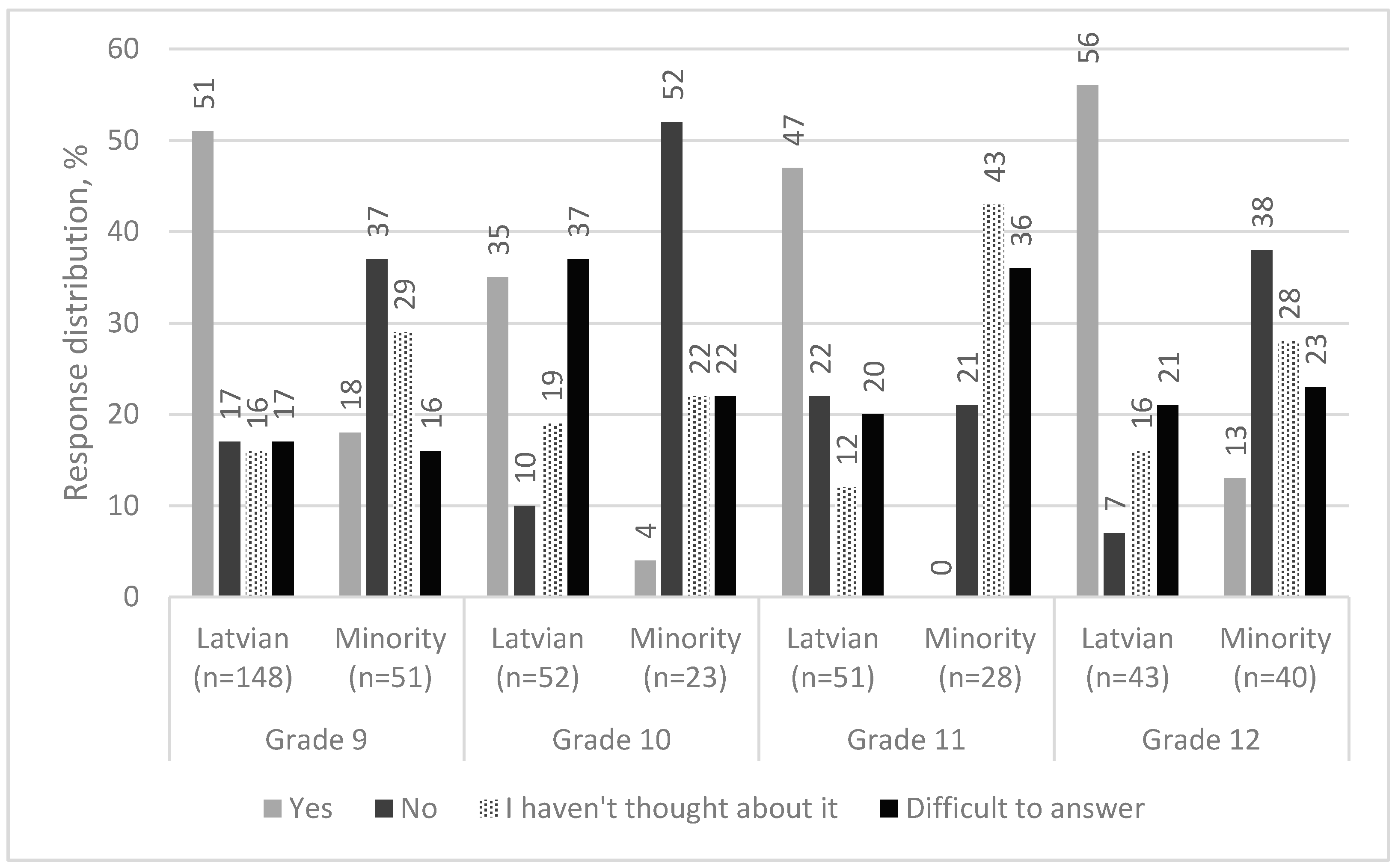
To examine the subjective dimension of civic identity, at first, students were asked whether they considered themselves Latvian patriots (Q1). The distribution of responses by school language and grade level is presented in Figure 4.
Across the total sample, notable differences were observed between students attending Latvian-language and minority-language schools. Among Latvian-language school students, 47% (139 out of 294) identified themselves as Latvian patriots, whereas 9% (14 out of 142) of students in minority-language schools provided the same response.
Differences were evident across all grade levels. In grade 11, for example, 47% of Latvian-language students identified as patriots, whereas none of the respondents from minority-language schools selected this response. In contrast, the proportion of students indicating that they did not consider themselves patriots was consistently higher in minority-language schools than in Latvian-language schools. Descriptive characteristics of the sample are presented in Table 3.
Chi-square tests were conducted separately for each grade level. Statistically significant differences between school instruction language were found in grades 9–12 (all p < 0.001). Effect sizes ranged from medium (grade 9: Cramér’s V = 0.32) to large (grades 10 and 12: V = 0.51), with grade 11 showing a medium-to-large association (V = 0.47). These results indicate that the relationship between school instruction language and self-assessed patriotism is not only statistically significant but also substantively meaningful.
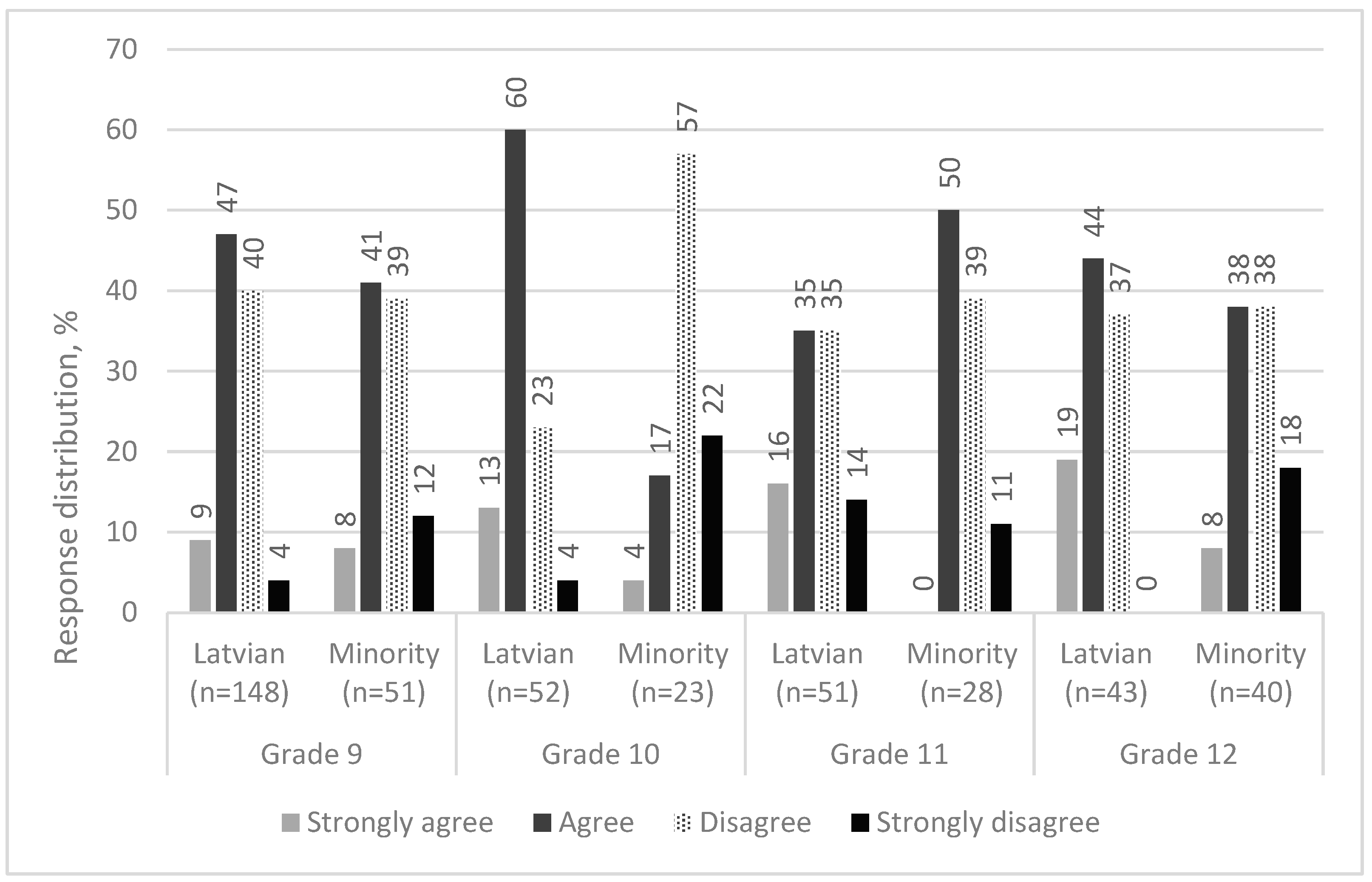
The second item assessing the subjective dimension of civic identity (Q2) measured students’ agreement with the statement “I feel my country needs me.” The distribution of responses by school instruction language and grade level is presented in Figure 5.
Across the total sample, 51% of respondents selected either “agree” or “strongly agree”. Positive responses were more frequent among Latvian-language school students (60%) than among minority-language school students (42%).
Chi-square analyses revealed statistically significant differences between school instruction language in grades 10 and 12 but not in grades 9 and 11 (Table 4).
In grade 10, a significant association was observed, χ2(3, n = 75) = 18.16, p < 0.001, with a medium-to-large effect size (Cramér’s V = 0.49). In grade 12, the association was also statistically significant, χ2(3, n = 83) = 9.68, p = 0.022, with a medium effect size (V = 0.34).
No statistically significant differences were identified in grade 9 (p = 0.251, V = 0.14) or grade 11 (p = 0.135, V = 0.27).
Across the total sample, the association between school instruction language and perceived national necessity was statistically significant, χ2(3, n = 436) = 10.74, p = 0.013; however, the overall effect size was small (V = 0.16).
The grade 10 difference was primarily characterised by a higher concentration of “agree” responses among Latvian-language school students and a comparatively higher proportion of “disagree” responses among minority-language school students, resulting in the largest observed effect size within this dimension.
The subjective dimension of civic identity was assessed through two indicators: self-identification as a Latvian patriot (Q1) and agreement with the statement “I feel my country needs me” (Q2). Taken together, the two indicators suggest a consistent pattern within the subjective dimension of civic identity. Students attending Latvian-language schools were more likely to report both patriotic self-identification and a sense of personal relevance to the state. However, the magnitude and statistical strength of differences varied by grade, with the strongest contrasts observed in grade 10 and consistent cross-grade differences in patriotism.
These results indicate that while school instruction language is associated with subjective civic self-perceptions, the strength of this association differs across specific indicators and developmental stages.

3.2. The Ethical Aspect of Civic Identity

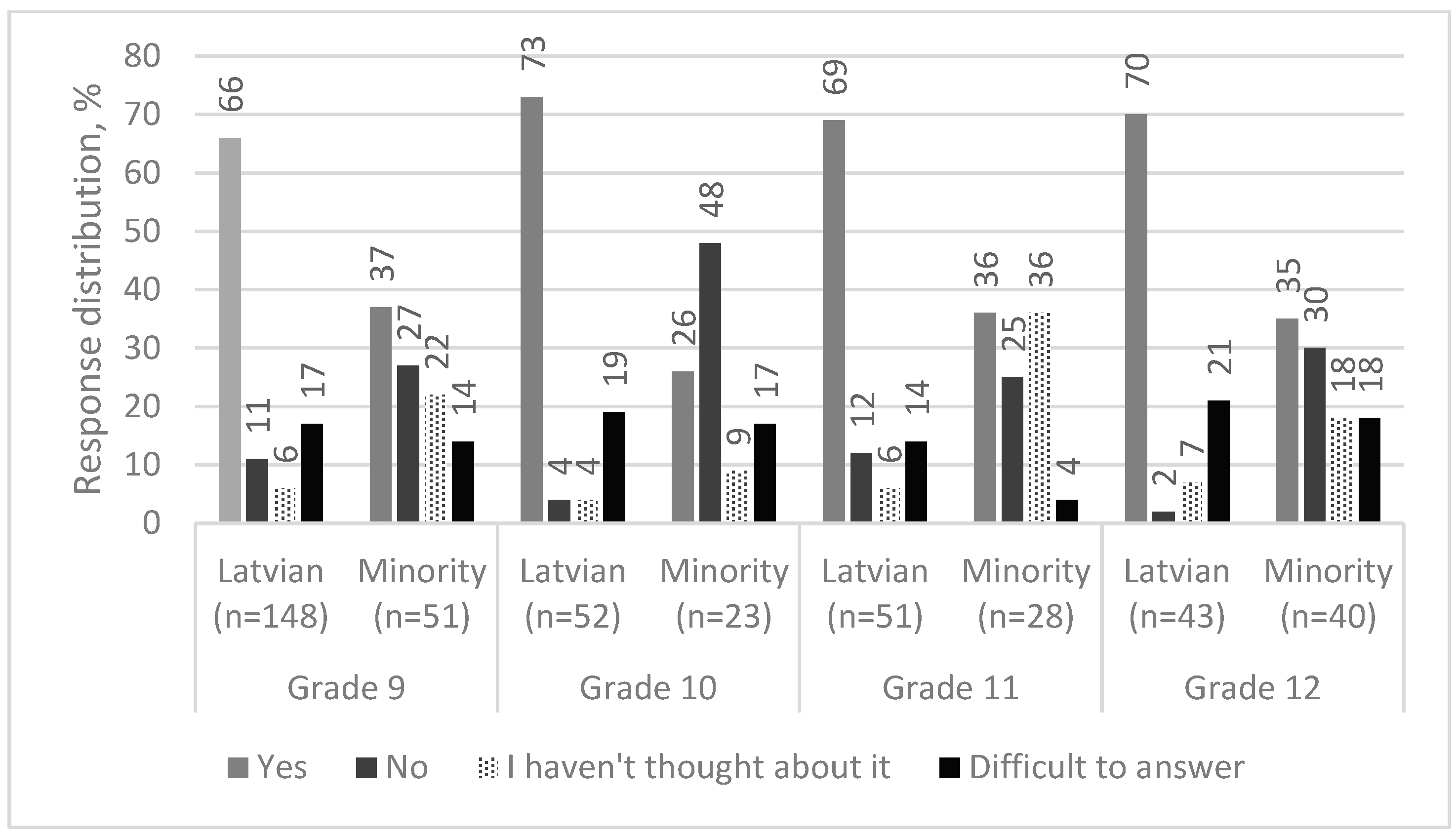
The ethical dimension of civic identity was assessed through a single categorical item (Q3): “Do you feel respect for your country?” The distribution of responses by school language and grade level is presented in Figure 6.
Across the total sample, 69% of students attending Latvian-language schools reported that they feel respect for their country (204 out of 294 respondents), compared to 33% (48 out of 142) of students attending minority-language schools.
Differences between school instruction language were observed across all grade levels. The largest proportional contrast was identified in grade 10, where 73% of Latvian-language school students reported feeling respect for their country, compared to 26% among minority-language school students. Conversely, the proportion of students indicating that they do not feel respect for their country was consistently higher in minority-language schools than in Latvian-language schools. Descriptive characteristics of the sample are presented in Table 5.
Chi-square analyses revealed statistically significant associations between school language and reported respect for the country in all grade groups (grades 9–12; all p < 0.001). Effect sizes ranged from medium (grade 9: Cramér’s V = 0.32) to large (grade 10: V = 0.57). In grades 11 and 12, effect sizes (0.46 and 0.45, respectively) indicated medium associations approaching the threshold for a large effect.
Across both school instruction languages, a slight downward trend in reported respect was observed from grade 9 onward; however, the magnitude of differences between school groups remained statistically significant at each grade level.

3.3. The Political Aspect of Civic Identity

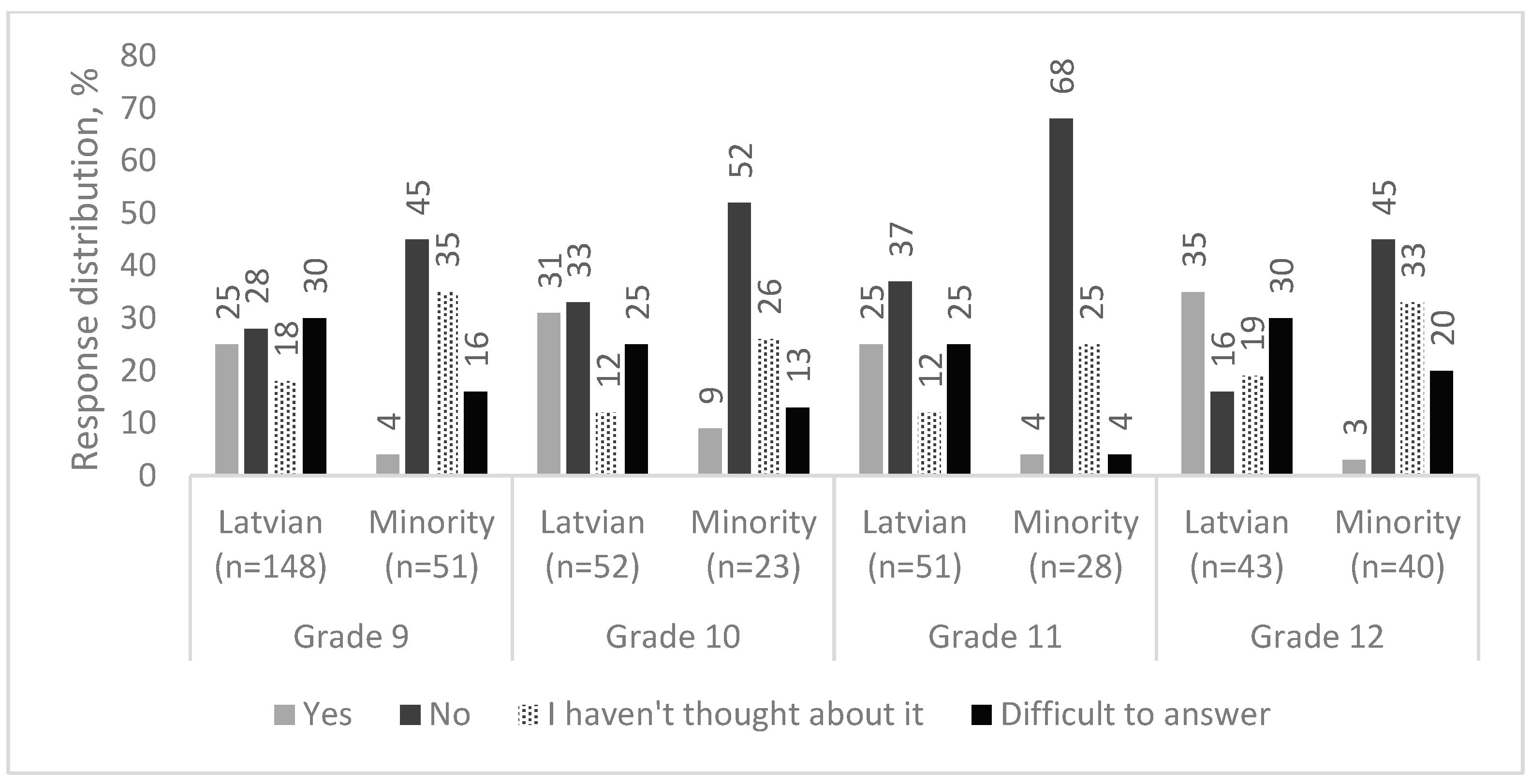
The political dimension of civic identity was assessed using a categorical item (Q4): “Are you ready to defend Latvia in case of war?” The distribution of responses by school language and grade level is presented in Figure 7.
Across the total sample, 51% of students attending Latvian-language schools (150 out of 294 respondents) reported that they would be ready to defend Latvia in the case of war. In contrast, only 5% (7 out of 142 respondents) of students attending minority-language schools selected this response.
Differences between school groups were observed across grade levels. The largest proportional contrast was identified in grade 12, where 35% of Latvian-language school students reported readiness to defend the country, compared to 3% of minority-language school students. The proportion of students indicating that they would not defend the country was consistently higher in minority-language schools than in Latvian-language schools. Descriptive characteristics of the sample are presented in Table 6.
Chi-square analyses revealed statistically significant associations between school language and reported readiness to defend the country across grade levels. Effect sizes indicated substantial differences between groups, with the strongest contrasts observed in the upper grades. Descriptively, readiness to defend the country increased from grade 9 to grade 12 among Latvian-language school students, whereas an opposite tendency was observed among minority-language school students.

4. Discussion

The theoretical literature suggests that shared dimensions of national and civic identity may contribute to social cohesion, democratic participation, and long-term stability in diverse societies (Zharovska, 2022; Medin et al., 2024; Nic Craith & Taylor, 2024). The present findings do not directly measure these broader outcomes; however, they reveal group-level differences in selected civic self-assessments that may be relevant in understanding how civic identity is perceived in different educational contexts. In post-Soviet countries, the formation of national identity for young people is difficult, as there is still a large part of the Russian-speaking population (Pettai, 2021) who are more associated with their ethnic origin, culture, and belonging to another nation. It is also difficult to form shared national and civic identities across the entire population in multi-national countries when a foreign country promotes distorted historical narratives to discredit a state (Bērziņa et al., 2023). Such differences in the formation of national and civic identity may be the reason why young people from minority populations do not feel a sense of belonging to their country, are not patriots of their country, and are not ready to defend their country in the case of war.
On the other hand, studies in Ukraine show that Euromaidan protests and Russian aggression impact Ukrainian national identity, and it has become more salient (Kulyk, 2016). Wilson (2024) revealed that in Ukraine, the baseline of support for a consolidated national identity has moved ever higher. At the same time, civic and ethnic elements in national identity increasingly coincide. But these conclusions apply mainly to the core nation, not to minorities.
Various studies prove that there are differences in civic identity between the majority and minority populations. The study by Devos et al. (2020) shows that belonging to a majority or minority group moderates the relations between conceptions of national identity (civic vs. ethnic), and majority and minority group members have different attitudes and understanding of the political decisions of the government. Minority members’ civic identity, which overlaps with their national identity, is often different from that of the majority (Nguyen, 2023). Our study also shows that there is still a gap between the perception of the civic identity of Latvian-language and minority-language school youth in Latvia.
The results of the empirical research in our study confirm significant statistical differences in the subjective self-assessment of patriotism of Latvian-language and minority-language school youth. Latvian-language school students have a higher patriotism score than minority-language school youth. Similar results were obtained by other researchers; for example, Nair and Sinasamy (2017) carried out a survey in secondary schools in Malaysia and concluded that there was a significant difference in students’ mean score on patriotism according to race. The Malay students’ mean score for patriotism was significantly higher compared with the Indian and Chinese students. Sheppard et al. (2023) also concluded that nationalism is closely related to patriotism, and there are differences in nationalism between the ethnic majority and minority groups.
Similarly, the results of the empirical research confirm significant statistical differences between Latvian-language school and minority-language school youth in self-assessment of sense of need, respect for their country, and readiness to defend Latvia in case of war.
Beyond identifying group differences within each dimension separately, the findings suggest a patterned configuration across subjective, ethical, and political aspects of civic identity. Students attending Latvian-language schools demonstrate consistently higher levels across all three dimensions, whereas minority-language school students show comparatively lower levels across these indicators. This consistency indicates that the dimensions may not operate independently but rather function as interrelated components of a broader civic identity structure.
From a developmental perspective, the strengthening of differences in upper secondary grades may reflect processes of identity consolidation described by Erikson and subsequent identity development research (Branje et al., 2021). As adolescents move toward late adolescence, civic self-definitions may become more coherent and aligned across emotional (subjective), value-based (ethical), and action-orientated (political) domains. In this sense, readiness to defend the country (political dimension) may be interpreted not as an isolated attitude but as an outcome embedded within a broader configuration of belonging and value orientation.
Thus, while the present study does not model causal relationships between dimensions, the observed cross-dimensional consistency suggests that civic identity in linguistically differentiated school contexts may develop as a structured and mutually reinforcing set of orientations rather than as discrete indicators.
To promote the formation of a shared civic identity, high-quality civic education is of great importance (Subkhan et al., 2022; Jonāne et al., 2022). Understanding the need for quality education that ensures the continuous development of the human personality, as well as being aware of the high expectations of society and the educational policies implemented by the state, the question of a balanced implementation of educational content in the implementation of innovation, national policy initiatives and the implementation of the UNESCO Sustainable Development Goals (UNESCO, 2023) is a matter of debate. Among others, the UN General Assembly Economic and Social Council in its report points out that, unfortunately, global progress in education has not been fast enough (United Nations General Assembly, 2024); mainly, the COVID-19 pandemic and the geopolitical situation of the world have significantly hampered global progress in education. Understanding the existing differences between different ethnic groups allows for a holistic approach to the pedagogical process within the constructivist paradigm (V. Burr, 2024), based on a systemic view of the personality including physical, social–emotional, cognitive, and metacognitive processes and spiritual values.
Although some studies show that not all teaching quality aspects are equally important in young people’s political sophistication (Alscher et al., 2022), there are studies that show the strategic role of civic education in preparing smart, responsible, and civilized citizens (Rafzan et al., 2022). A study by Gómez and Suárez (2023) showed that students’ attitudes towards political participation had a notable connection to civic knowledge outcomes. But it is necessary to remember that young people’s understanding and position regarding civic identity stem not only from educational institutions and teachers’ competencies but also from socialization, where the family is the foundation, and only then do the educational institution, the environment, and peers play an important role. Of course, nowadays, we also need to be aware of the influence of the digital environment and social networks, where, for example, influencers can often serve as an authority for young people—the construction of civic identity depends on various social and cultural factors, and it can differ between different youth groups.

5. Limitations and Future Research

5.1. The Limitations of This Research

(1)
Time allocated for completing the survey—students in grades 9–12 had to complete the survey within two weeks, which reduced the total number of respondents.
(2)
Geographical limitation—empirical research was conducted in one specific country (Latvia), in one specific city. The study is based on a non-probability sample taken in schools in one Latvian city. Although the participation rate in the selected schools was significant, the results of the study cannot be considered representative of the whole country. Therefore, the results reflect trends in the institutional context of the participating countries rather than generalizable conclusions about all young people in Latvia or minority groups.
(3)
Cultural and historical context—historically (after the Soviet occupation), a bicultural society has developed in Latvia, where linguistic characteristics polarize society.
(4)
Subjective opinion—respondents’ attitudes are measured on a Likert scale, allowing students to answer questions directly and unambiguously, including the possibility for respondents to provide answers even in cases of doubt. The result is a subjective self-assessment of civic identity. The study is based on data provided by the respondents themselves. The students’ answers may have been influenced by social desirability, context sensitivity, or momentary attitudes, especially given the normative nature of questions related to patriotism, loyalty, and willingness to defend one’s country. Although anonymity was ensured, the subjectivity of the respondents’ answers cannot be completely ruled out.
(5)
The principle of grouping respondents—respondents do not accurately reflect their ethnic affiliation but are divided according to the language of instruction, based on the assumption that a numerically significant proportion of students in minority schools do not belong to the Latvian ethnic community.
(6)
Multidimensional nature of civic identity—civic identity was operationalized using selected simple self-assessment indicators that correspond to subjective, ethical, and political aspects. Although this approach is suitable for comparative research, it does not allow for the assessment of internal consistency (e.g., Cronbach’s alpha) or the modelling of civic identity as a multidimensional latent construct. Therefore, the results should be interpreted as dimension-specific indicators rather than comprehensive psychometric measures of civic identity.
(7)
There is limited statistical power for subgroup cross-tabulation analyses.
Although additional descriptive cross-tabulation analyses (e.g., chi-square tests of gender and patriotism within each school type) could provide further analytical insight, the sample size in several subgroups was insufficient to ensure statistically reliable results. In particular, some gender-by-grade subgroups in minority-language schools were very small (for example, across three minority-language schools, only seven boys participated in all grade 10 classes combined, with responses evenly distributed across categories). Such small cell counts would violate the assumptions of the chi-square test (minimum expected frequency requirements) and substantially reduce statistical power and interpretability. For this reason, gender-disaggregated analyses within each school type were not conducted in the present study. Future research should include larger and more balanced subgroup samples to enable multi-level cross-tabulation and more robust inferential comparisons.

5.2. Future Research

The study is important and necessary in order to initiate long-term research on existing diversity in the context of civic identity in existing ethnic communities; thus, the results of the existing empirical study represent a prerequisite for further research, and the results obtained provide an initial understanding of whether there are differences between young people of different ethnic backgrounds. The results of the study highlight the need for further research to find a more effective approach, including a pedagogical one. From the perspective of a competence-based curriculum, the observed differences in the subjective, ethical, and political dimensions of civic identity emphasize the importance of school as a structured environment for the development of civic competence. Civic competence goes beyond factual knowledge about democratic systems and includes reflective self-identification, value orientation, and readiness for responsible participation.
The learning process needs to activate teaching methods that promote dialogue, critical reflection, and inclusive discussions about belonging to the country, fostering young people’s patriotism and sense of belonging, while embracing the existing cultural diversity in classrooms. Instead of assuming that students have a unified civic position, competency-based civic education should create space for discussing identity, encouraging students to formulate, question, and contextualize their position in a democratic society. In the context of multilingual education, this may include discussion-based pedagogy, collaborative projects, and perspective-taking activities that strengthen mutual understanding while reinforcing democratic principles. Such approaches can support the development of civic identity in schools as an ongoing process rather than a predetermined outcome.

6. Conclusions

The empirical research confirms the study’s hypothesis that there are differences in civic self-assessment between students who attend Latvian-language schools and students who attend minority-language schools.
Being aware of the long-standing (since the restoration of Latvia’s independence in 1991) self-division of Latvian society by ethnicity and ethnic beliefs, effectively creating a multi-community society, which may also possibly be a result of ill-considered integration policies, the effective and proactive socialization of ethnic minority youth in society (in and outside educational institutions) to promote and strengthen the civic identity of ethnic minority youth in their country has become topical.
Differences observed between Latvian-language schools and minority-language schools reflect a complex combination of historical, linguistic, social, and educational factors discussed in previous research. However, since such contextual variables were not directly measured in this study, these interpretations remain tentative. The findings should therefore be understood as descriptive of variation in civic self-perception rather than as evidence of specific causal mechanisms.
The results of the study are a resource for both education and integration policy makers in Latvia and beyond, including countries that are implementing or planning to implement a transition to state language education. In a broader context, when considering the formation of young people’s civic identity, it is very important to pay special attention to the development of young people’s civic competence in the education process (both in and outside the classroom) in order to promote, among other things, the successful integration of young people from other ethnic groups into society, reducing the likelihood of radicalization and risks to public safety that may be associated with a reduced sense of belonging to one’s country. Future research employing longitudinal or multi-level designs would allow for a more precise examination of the mechanisms shaping civic identity in pluralistic contexts.

Author Contributions

Conceptualization, P.J. and I.S.; methodology, formal analysis, investigation and resources, I.V. and I.J.; software and validation and data curation, E.L.-H., I.V. and I.K.; writing—original draft preparation, P.J. and I.S.; writing—review and editing, I.V., G.Z., I.J., E.L.-H., I.V. and I.K.; project administration, and funding acquisition, P.J. and G.Z. All authors have read and agreed to the published version of the manuscript.

Funding

The study is conducted with the support of the European Union Recovery and Resilience Mechanism under the Research and Development Grant No RTU-PA-2024/1-0040 “NextGen Civic Engagement: Shaping Sustainable Urban Futures” within the project No 5.2.1.1.1.i.0/2/24/I/CFLA/003 “Implementation of consolidation and management changes at Riga Technical University, Liepaja University, Rezekne Academy of Technologies and Latvian Maritime Academy and Liepaja Maritime College for excellence in higher education, science and innovation”.

Institutional Review Board Statement

The Project Study was conducted in accordance with the Declaration of Helsinki and was performed according to Riga Technical University Ethical research guidelines using anonymised data collection methods. The project was approved by the Riga Technical University Ethical commission on 30 March 2025, No. 04000-10.2.3-e/14.

Informed Consent Statement

Informed consent was obtained from all subjects involved in the study. Data were collected with an anonymised approach.

Data Availability Statement

Research data can be provided upon request.

Acknowledgments

Correspondence concerning this article should be addressed to Pavels Jurs, Liepaja Academy of Riga Technical University, Liela str. 14, Liepaja, LV-3401, Latvia. Email: pavels.jurs@rtu.lv.

Conflicts of Interest

The authors declare no conflicts of interest.

References

  1. Alscher, P., Ludewig, U., & McElvany, N. (2022). Civic education, teaching quality and students’ willingness to participate in political and civic life: Political interest and knowledge as mediators. Journal of Youth and Adolescence, 51(10), 1886–1900. [Google Scholar] [CrossRef] [PubMed]
  2. Babbie, E. R. (1990). Survey research methods. Wadsworth Pub. Co. [Google Scholar]
  3. Bell, D. V. J. (2016). Twenty-first century education: Transformative education for sustainability and responsible citizenship. Journal of Teacher Education for Sustainability, 18(1), 48–56. [Google Scholar] [CrossRef]
  4. Bērziņa, I., Krūmiņš, G., Siliņš, J., & Andžāns, M. (2023). History perceptions and national identity among Latvian youth: Entrapped between narratives of Latvia and Russia? Nations and Nationalism, 29(2), 700–717. [Google Scholar] [CrossRef]
  5. Bodo, B. (2016). Minority civil society. Acta Universitatis Sapientiae, European and Regional Studies, 10(1), 51–64. [Google Scholar] [CrossRef]
  6. Boruta, A. S. (2018). Young people’s identity capital and social participation in the life of the local community. Polish Journal of Educational Studies, 1, 81–91. [Google Scholar] [CrossRef]
  7. Branje, S., de Moor, E. L., Spitzer, J., & Becht, A. I. (2021). Dynamics of identity development in adolescence: A decade in review. Journal of Adolescent Research, 31, 908–927. [Google Scholar] [CrossRef]
  8. Burr, S. (2025). Hands off Russian schools: How do online media portray the linguistic landscape of protests against minority education reform in Latvia? Journalism and Media, 6(2), 84. [Google Scholar] [CrossRef]
  9. Burr, V. (2024). Social constructionism (4th ed., p. 286). Routledge. [Google Scholar] [CrossRef]
  10. Cheskin, A. (2012). Exploring Russian-speaking identity from below: The case of Latvia. Journal of Baltic Studies, 44(3), 287–312. [Google Scholar] [CrossRef]
  11. Crow, G., Day, C., & Møller, J. (2017). Framing research on school principals’ identities. International Journal of Leadership in Education, 20(3), 265–277. [Google Scholar] [CrossRef]
  12. Čekse, I., Kiris, K., Alksnis, R., Geske, A., & Kampmane, K. (2023). Jaunais atskaites punkts pilsoniskajā izglītībā Latvijā. Starptautiskā pilsoniskās izglītības pētījuma IEA ICCS 2022 pirmie starptautiskie un Latvijas rezultāti (p. 83). Latvijas Univeristātes Izglītības Pētniecības Institūts. Available online: https://www.ipi.lu.lv/fileadmin/user_upload/lu_portal/projekti/ipi/ICCS2022_pirmo_rezultatu_zinojums_2023_Cekse_Kiris_Alksnis_Geske_Kampmane_web.pdf (accessed on 5 December 2025).
  13. Devos, T., Vogeeswaran, K., Milojev, P., & Sibley, C. G. (2020). Conceptions of national identity and opposition to bicultural policies in New Zealand: A comparison of majority and minority perspectives. International Journal of Intercultural Relations, 78, 33–42. [Google Scholar] [CrossRef]
  14. Essien, E. D. (2020). Ethical implications of identity politics for good governance in 21st century Nigeria. In Political identity and democratic citizenship in turbulent times (pp. 129–155). IGI Global. [Google Scholar] [CrossRef]
  15. Gómez, R. L., & Suárez, A. M. (2023). Pedagogical practices and civic knowledge and engagement in Latin America: Multilevel analysis using ICCS data. Heliyon, 9(11), e21319. [Google Scholar] [CrossRef] [PubMed]
  16. Halevy, G., & Gross, Z. (2022). Ethnic identity formation among students in post-high-school religious gap-year programs in Israel. Journal of Ethnic and Cultural Studies, 9(2), 81–95. [Google Scholar] [CrossRef]
  17. Han, H., & Dawson, K. J. (2025). Civic identity consisting of moral and political identity among young adults. Personality and Individual Differences, 233, 112895. [Google Scholar] [CrossRef]
  18. Hart, D., Richardson, C., & Wilkenfeld, B. (2011). Civic identity. In S. J. Schwartz, K. Luyckx, & V. L. Vignoles (Eds.), Handbook of identity theory and research. Springer. [Google Scholar] [CrossRef]
  19. Hu, Y., Zhang, H., Zhang, W., Li, Q., & Cui, G. (2024). The influence of gratitude on patriotism among college students: A cross-sectional and longitudinal study. Frontiers in Psychology, 15, 1278238. [Google Scholar] [CrossRef] [PubMed]
  20. Huddy, L. (2023). National identity, patriotism, and nationalism. In L. Huddy, D. O. Sears, J. S. Levy, & J. Jerit (Eds.), The Oxford handbook of political psychology. Oxford University Press. [Google Scholar] [CrossRef]
  21. Jonāne, L., Iliško, D., Fjodorova, I., & Antoņeviča, l. (2022). Involvement in the democratic life in europe: A study on views and vision of youth in Latvia. Discourse and Communication for Sustainable Education, 13(1), 154–165. [Google Scholar] [CrossRef]
  22. Jurs, P., Samuseviča, A., Bethere, D., Ročāne, M., & Striguna, S. (2022). The ecosystem of the citizenship education concept for building civic competence. Journal of Positive School Psychology, 6(10), 285–295. [Google Scholar]
  23. Khalimzoda, I., & Siitonen, M. (2024). Language and acculturation: The case of Russian speakers in Latvia and Finland. Nordic Journal of Migration Research, 14(3), 1–23. [Google Scholar] [CrossRef]
  24. Kim, C. Y. (2023). Towards a model for analyzing adolescents’ reflexivity: Reflectiveness, criticality and boundedness. Children & Society, 37(4), 1171–1186. [Google Scholar] [CrossRef]
  25. Korostelina, K. V., Zakharchenko, A., Rohalov, O., Molotsiian, V., Fursenko, M., Zakharchenko, O., & Bakhtiarova, K. (2025). Dynamics of national identity narratives in Ukraine. National Identities, 28(1), 1–25. [Google Scholar] [CrossRef]
  26. Kulyk, V. (2016). National identity in Ukraine: Impact of Euromaidan and the war. Europe-Asia Studies, 68(4), 588–608. [Google Scholar] [CrossRef]
  27. Lara, L. (2018). Ethnic identities of immigrant and native adolescents: Development and relationship to life satisfaction. Psicologia: Reflexão e Crítica, 31, 19. [Google Scholar] [CrossRef] [PubMed]
  28. LR Saeima. (2022). Grozījumi izglītības likumā. Available online: https://likumi.lv/ta/id/336247-grozijumi-izglitibas-likuma (accessed on 8 December 2025).
  29. Mader, M., & Schoen, H. (2023). Stability of national-identity content: Level, predictors, and implications. Political Psychology, 44(4), 871–891. [Google Scholar] [CrossRef]
  30. Marzęcki, R. (2019). Constructive emotions? Patriotism as a predictor of civic activity in Poland. Italian Political Science Review, 50(1), 33–51. [Google Scholar] [CrossRef]
  31. Medin, E., Svensson, Y., & Jutengren, G. (2024). “I am maybe half-and-half Swedish. 50-50.”—Young adolescents’ national identity negotiation in a diverse school setting. Scandinavian Journal of Educational Research, 69(2), 409–421. [Google Scholar] [CrossRef]
  32. Mukhtarova, S., & Pazylbek, B. (2020). Patriotism as a condition of the formation of a person’s civic identity. Bulletin of the Karaganda University. Bulletin of the Karaganda University Pedagogy Series, 99(3), 25–32. [Google Scholar] [CrossRef]
  33. Nair, S. M., & Sinasamy, R. P. (2017). Patriotism among secondary school students and its relationship with their interests towards learning history. Asian Journal of Education and Training, 3(2), 110–117. [Google Scholar] [CrossRef][Green Version]
  34. Nguyen, T. T. T. (2023). Particularity in commonality: Sense of ethnic and citizenship identities among minority youth in Vietnam. Identities, 31(2), 161–180. [Google Scholar] [CrossRef]
  35. Nic Craith, I., & Taylor, L. K. (2024). A rapid evidence assessment of European identity among children, adolescents and young adults. Youth, 4(3), 1112–1133. [Google Scholar] [CrossRef]
  36. Nusubalieva, E., Beishenova, A., Ashymbaeva, T., Sartbekova, N., & Dogdurbek, N. (2023). Civic identity of youth as an important element of modern sociocultural transformation of society. Social & Legal Studios, 6(4), 145–154. [Google Scholar] [CrossRef]
  37. Official Statistics Portal. (2025). Latvia. Statistics in brief 2025. Available online: https://stat.gov.lv/en/statistics-themes/economy/national-accounts/publications-and-infographics/21280-latvia-statistics?themeCode=IR (accessed on 8 December 2025).
  38. Petrovska, I. (2023). Typology of civic identity. Current Issues in Personality Psychology, 11(2), 150–161. [Google Scholar] [CrossRef]
  39. Pettai, V. (2021). National identity and re-identity in post-Soviet Estonia. Journal of Baltic Studies, 52(3), 425–436. [Google Scholar] [CrossRef]
  40. Priwati, A. R., & Sanitioso, R. B. (2024). Exploring national identity and collective memory across cultures: Comparison of Indonesia and France. Frontiers in Political Science, 6, 1233210. [Google Scholar] [CrossRef]
  41. Rafzan, R., Budimansyah, D., Rahmat, R., Fitriasari, S., Arzam, A., & Sulman, F. (2022). Civic engagement and higher education develop student in civic education through based project citizen model learning. In Proceedings of the 1st international conference on maritime education, ICOME 2021, 3–5 November 2021, Tanjungpinang, Riau Islands, Indonesia. European Alliance for Innovation. [Google Scholar] [CrossRef]
  42. Schulz, W. (2024). Young people’s trust in institutions, civic knowledge and their dispositions toward civic engagement. Large-Scale Assessments in Education, 12, 23. [Google Scholar] [CrossRef]
  43. Schwartz, S. J., Luyckx, K., & Vignoles, V. L. (Eds.). (2011). Handbook of identity theory and research. Springer Science + Business Media. [Google Scholar] [CrossRef]
  44. Sheppard, H., Bizumic, B., & Narumi Iino, N. (2023). A reconceptualization of nationalism: Intragroup and intergroup nationalism in ethnic majority and minority groups. Current Research in Ecological and Social Psychology, 4, 100126. [Google Scholar] [CrossRef]
  45. Spridzāne, K. (2024). Perception of democracy in education during Latvia’s independence restoration, 1988–1995. In L. Daniela (Ed.), Human, technologies and quality of education, proceedings of scientific papers (pp. 226–242). University of Latvia. [Google Scholar] [CrossRef]
  46. Subkhan, M., Yatno, N., Pudjiastuti, S. R., Kurniati, P., & Rumiati, S. (2022). Mitigating conflicts in society with an understanding of civic education. Journal of Humanities and Social Studies, 6(1), 11–18. [Google Scholar] [CrossRef]
  47. Szynowski, R., & Gil, P. (2025). Rooted in identity, aimed at security: Polish politics towards Ukraine and its ontological security foundation. European Journal of International Security, 1–21. [Google Scholar] [CrossRef]
  48. UNESCO. (2023). Education for sustainable development goals: Learning objectives UNESCO. Available online: https://www.unesco.org/en/articles/education-sustainable-development-goals-learning-objectives (accessed on 8 December 2025).
  49. United Nations. (2025). The 17 goals. Available online: https://sdgs.un.org/goals (accessed on 8 December 2025).
  50. United Nations General Assembly. (2024). Progress towards the sustainable development goals. Report of the secretary-general. Available online: https://unstats.un.org/sdgs/files/report/2024/SG-SDG-Progress-Report-2024-advanced-unedited-version.pdf (accessed on 8 December 2025).
  51. Van Assche, J. (2019). Ethnic diversity, ideological climates, and intergroup relations: A person × context approach. Psycholica Belgica, 59(1), 33–49. [Google Scholar] [CrossRef] [PubMed]
  52. Veisbergs, A. (2018). Language planning in Latvia as a struggle for national sovereignty. In E. Andrews (Ed.), Language planning in the post-communist era. Palgrave Macmillan. [Google Scholar] [CrossRef]
  53. Viola, J. K. (2020). Young people’s civic identity in the digital age. Palgrave Macmillan. [Google Scholar] [CrossRef]
  54. Volkov, V. (2023). Ethnic self-categorization of the Russian-speaking population in Latvia. In S. G. Barnabas (Ed.), Indigenous and minority populations—Perspectives from scholars and writers across the world. IntechOpen. [Google Scholar] [CrossRef]
  55. Wantchekon, K. A., & Umana-Taylor, A. J. (2024). Targeting ethnic-racial identity development and academic engagement in tandem through curriculum. Journal of School Psychology, 103, 101292. [Google Scholar] [CrossRef]
  56. Wilson, A. (2024). Ukraine at war: Baseline identity and social construction. Nations and Nationalism, 30(1), 8–17. [Google Scholar] [CrossRef]
  57. Woolfolk, A. (2019). Educational psychology (14th ed.). Pearson. [Google Scholar]
  58. Zharovska, O. (2022). National identity as a component of the civil students’ youth culture. Collection of Scientific Papers of Uman State Pedagogical University, 2, 182–190. [Google Scholar] [CrossRef]
Figure 1. The conceptual framework for civic identity self-assessment.
Education 16 00443 g001
Figure 2. Short characteristics of ethnic, national, and civic identities.
Education 16 00443 g002
Figure 3. Relationships between national and civic identity and their impact on security and peace in the country.
Education 16 00443 g003
Figure 4. Distribution of responses to the item “Do you consider yourself a Latvian patriot?” by school instruction language and grade level.
Education 16 00443 g004
Figure 5. Distribution of responses to the item “I feel my country needs me” by school language and grade level.
Education 16 00443 g005
Figure 6. Distribution of responses to the item “Do you feel respect for your country?” by school language.
Education 16 00443 g006
Figure 7. Distribution of responses to the item “Are you ready to defend Latvia in case of war?” by school language and grade level.
Education 16 00443 g007
Table 1. Summary of questionnaire.
General information
Statistical questions (age, gender, grade, school)
Dimensions of civic identity
SubjectiveEthicalPolitical
Q1. Do you consider yourself a Latvian patriot?Q3. Do you feel respect for your country?Q4. Are you ready to defend Latvia in case of war?
Q2. I feel my country needs me
Q1, Q3, Q4 are structured categorical questions (yes; no; I haven’t thought about it; difficult to answer)
Q2 Four-point Likert-scale item (strongly agree; agree; disagree; strongly disagree)
Table 2. Characteristics of respondents.
Average age17
Gender278 (64%) girls, 158 (36%) boys
Schools9 (6 Latvian-language schools and 3 minority-language schools)
Latvian-language school294 respondents or 24% of the total number of students in grades 9–12
Minority-language schools142 respondents or 26% of the total number of students in grades 9–12
Table 3. Differences in responses to the item “Do you consider yourself a Latvian patriot?” (df = 3).
Grade χ2pCramér’s VEffect Size
920.77<0.0010.32Medium
1019.65<0.0010.51Large
1117.65<0.0010.47Medium
1221.26<0.0010.51Large
Table 4. Differences in responses to the item “I feel my country needs me” (df = 3).
Grade χ2pCramér’s VEffect Size
94.100.2510.14Small
1018.16<0.0010.49Medium (approaching large)
115.570.1350.27Small (approaching medium)
129.680.0220.34Medium
Total10.740.0130.16Small
Table 5. Differences in responses to the item “Do you feel respect for your country?” by school language (df = 3).
Gradeχ2pCramér’s VEffect Size
920.70<0.0010.32Medium
1024.53<0.0010.57Large
1116.98<0.0010.46Medium
1216.89<0.0010.45Medium
Table 6. Differences in responses to the item “Are you ready to defend Latvia in case of war?” (df = 3).
Gradeχ2pCramér’s VEffect Size
920.42<0.0010.32Medium
107.980.04640.33Medium
1115.240.00160.44Medium
1219.39<0.0010.48Medium (approaching large)
Disclaimer/Publisher’s Note: The statements, opinions and data contained in all publications are solely those of the individual author(s) and contributor(s) and not of MDPI and/or the editor(s). MDPI and/or the editor(s) disclaim responsibility for any injury to people or property resulting from any ideas, methods, instructions or products referred to in the content.