Artistic, Digital, and Pedagogical Competence in Language Teacher Education: Generating Educational Videos and Innovative Teaching Practices


Abstract
1. Introduction
1.1. Digital, Artistic, and Pedagogical Competences
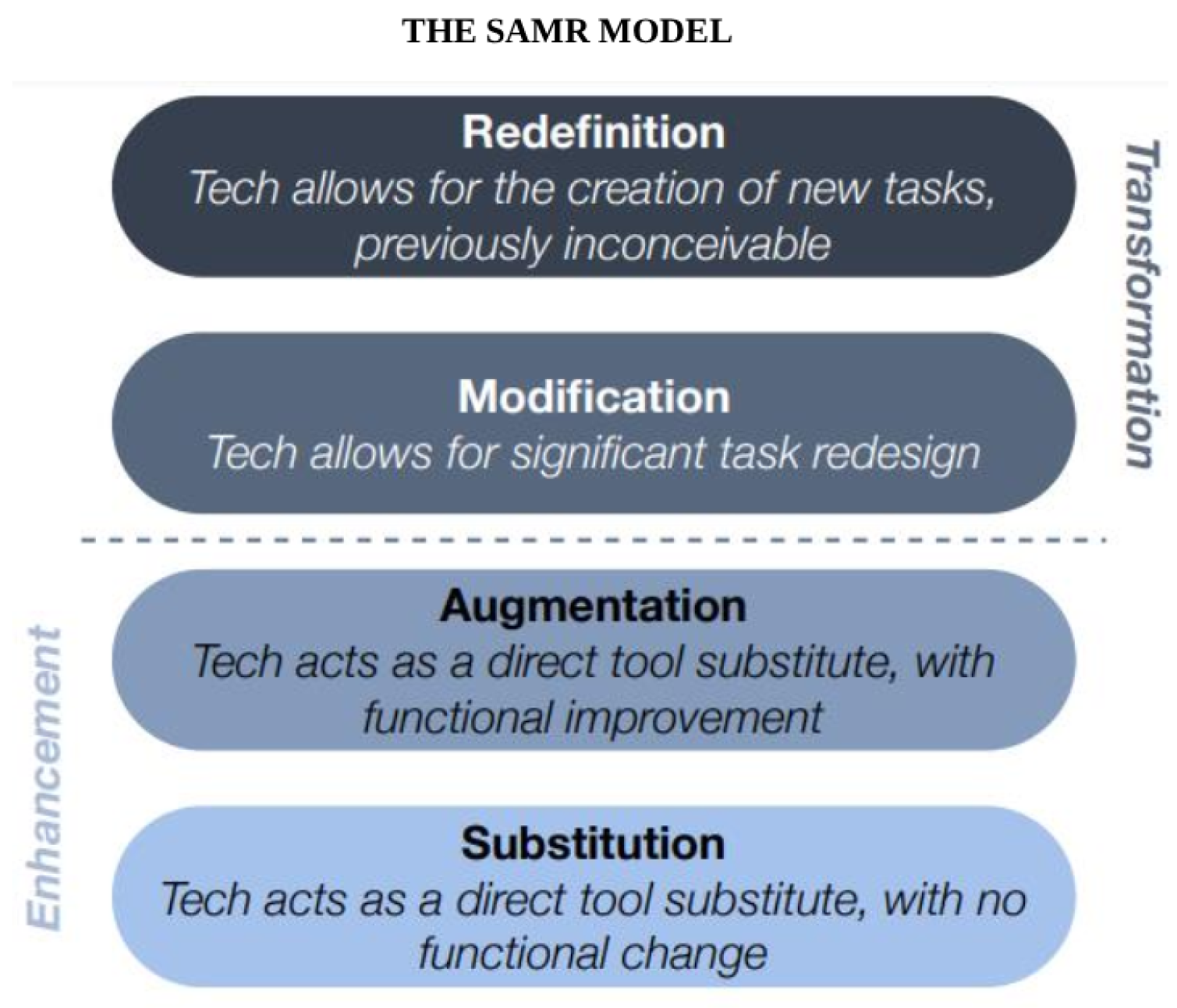
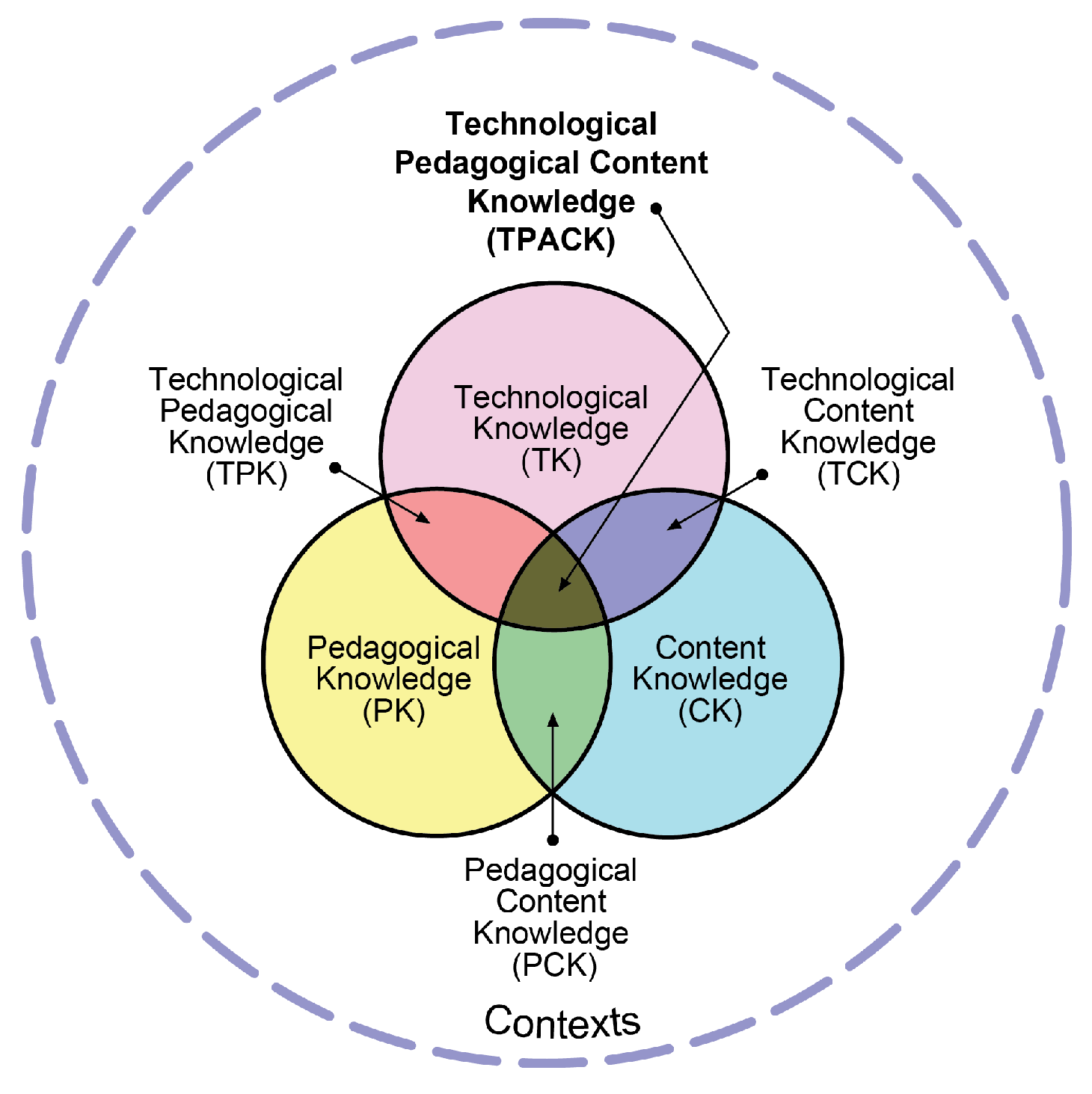
1.2. Technology and Teaching Integration Models
1.3. Innovative Learning Proposal: Artistic, Digital and Pedagogical Strategies in Language Teacher Education
1.4. Objectives
2. Materials and Methods
2.1. Participants
2.2. Instrument
2.3. Procedure
2.4. Data Analysis
3. Results
3.1. Qualitative Analysis
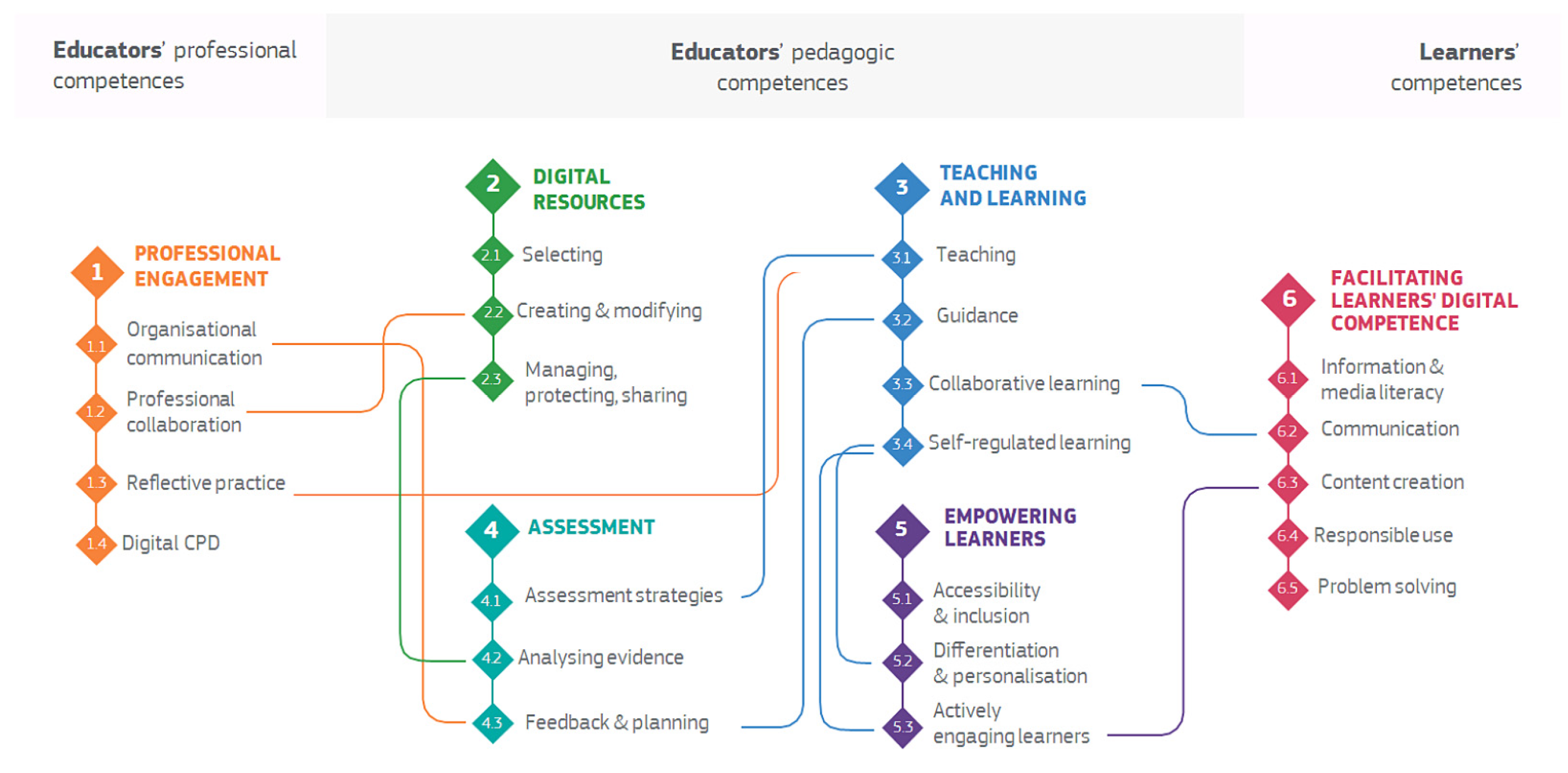
- Area 1: Professional Engagement
- 1.1.
- Organisational communication: By adopting collaborative methods, the proposal seeks to improve communication practices with students, families and external organisations. It focuses on developing shared strategies for planning and coordination that enhance the overall flow of information.
- 1.2.
- Professional Collaboration: Digital tools are integrated within the proposal to promote joint work among educators, encouraging the co-construction of knowledge, the exchange of professional experiences and the collective development of innovative teaching practices.
- 1.3.
- Reflective Practice: By incorporating a tailored questionnaire, the proposal creates opportunities for participants to engage in critical reflection, evaluate their digital teaching approaches and enhance their own pedagogical practices.
- 1.4.
- Digital Continuous Professional Development: The proposal integrates digital materials to support the ongoing professional learning of pre-service teachers.
- Area 2: Digital Resources
- 2.1.
- Creating and modifying digital content: As part of its approach, openly licensed and approved digital resources are adapted and repurposed, while new educational materials are developed collaboratively. Care is taken to ensure that their design and intended use reflect specific learning objectives, the educational context, chosen pedagogical methods and the characteristics of the learner group.
- 2.2.
- Managing, protecting and sharing digital resources: Digital content is organised and made accessible to students, families and fellow educators. Sensitive information is handled securely, with strict adherence to privacy and copyright requirements. It further encourages the adoption and creation of openly licensed educational materials, emphasising correct attribution and promoting open educational practices.
- Area 3: Teaching and Learning
- 3.1.
- Teaching: Digital tools and resources are integrated into teaching to improve the impact of instructional activities. It includes careful coordination of technology-enhanced sessions and supports the exploration and adoption of innovative formats and pedagogical strategies.
- 3.2.
- Guidance: The proposal integrates digital technologies and services to improve interaction with learners during classes and in other learning contexts. It supports personalised guidance that is timely and targeted and promotes the development of new and creative ways to offer adequate learner support.
- 3.3.
- Collaborative learning: By embedding digital technologies into learning activities, the approach aims to facilitate meaningful student interaction and collective problem-solving. It promotes the use of these tools in group tasks to strengthen communication, encourage shared understanding and support the joint construction of knowledge.
- 3.4.
- Self-regulated learning: Supporting learners’ capacity for self-regulated learning is a key aspect of the approach, with digital technologies integrated to help them plan, monitor and reflect on their progress. It also facilitates the documentation of learning evidence, the exchange of ideas and the development of creative solutions.
- Area 4: Assessment
- 4.1.
- Assessment strategies: While it does not incorporate digital technologies for formative or summative assessment, the approach broadens the range of assessment formats and ensures they are well-suited to diverse learning needs.
- 4.2.
- Analysing evidence: The approach involves working with learner-produced videos through processes of selection, critical analysis and interpretation to support and inform teaching practice.
- 4.3.
- Feedback and Planning: Although it does not employ digital technologies to deliver immediate, targeted feedback, the approach focuses on adapting teaching strategies to offer personalised support informed by digital evidence. It also helps learners and families interpret this evidence effectively for educational decision-making.
- Area 5: Empowering Learners
- 5.1.
- Accessibility and inclusion: The approach enhances accessibility for learners with hearing impairments by offering videos that include subtitles in multiple languages, making resources and activities more inclusive. Nevertheless, only a limited number of these videos provide audio descriptions to support learners with visual disabilities.
- 5.2.
- Differentiation and personalisation: By integrating digital technologies, the proposal supports differentiated learning by enabling students to progress at their own pace and level while pursuing personalised pathways and goals.
- 5.3.
- Actively engaging learners: The approach utilizes digital technologies to foster active and creative student engagement with subject matter. It also supports teaching strategies that build transversal skills, critical thinking and creative expression. In addition, it encourages learning in real-world contexts with hands-on activities, scientific inquiry and complex problem-solving.
- Area 6: Facilitating Learners’ Digital Competence
- 6.1.
- Information and media literacy: While the approach includes learning activities, it does not incorporate formal assignments or assessments. Students are expected to search for information and resources in digital environments, organising, processing and interpreting this material. They also compare and evaluate the credibility and reliability of information and its sources with a critical perspective.
- 6.2.
- Digital communication and collaboration: The approach offers learning activities but excludes assignments or assessments that aim to develop the practical and responsible use of digital technologies for communication, collaboration and civic engagement.
- 6.3.
- Digital content creation: Learners are expected to express themselves digitally and modify or create content in various formats; however, there is no explicit instruction on applying copyright or licensing requirements or on acknowledging licensed content appropriately. The approach includes learning activities; however, it lacks assignments and formal assessments.
- 6.4.
- Responsible use: While the proposal addresses risk management and promotes the safe and responsible use of digital technologies, it lacks specific measures to support students’ physical, psychological and social well-being during their engagement with these tools.
- 6.5.
- Digital problem solving: The proposal offers learning activities but omits assignments or assessments that help students address technical challenges and transfer their technological knowledge creatively to unfamiliar situations.
3.2. Questionnaire Results
4. Discussion and Conclusions
Author Contributions
Funding
Institutional Review Board Statement
Informed Consent Statement
Data Availability Statement
Acknowledgments
Conflicts of Interest
References
- Admiraal, W., van Vugt, F., Kranenburg, F., Koster, B., Smit, B., Weijers, S., & Lockhorst, D. (2017). Preparing pre-service teachers to integrate technology into K–12 instruction: Evaluation of a technology-infused approach. Technology, Pedagogy & Education, 26(1), 105–120. [Google Scholar] [CrossRef]
- Agudo, S., Ruíz, B., & García-Sampedro, M. (2021). Working women and digital competence in the Spanish labor context. IEEE Revista Iberoamericana de Tecnologías del Aprendizaje, 16(1), 61–69. [Google Scholar] [CrossRef]
- Akturk, A. O., & Ozturk, H. S. (2019). Teachers’ TPACK levels and students’ self-efficacy as predictors of students’ academic achievement. International Journal of Research in Education and Science, 5(1), 283–294. [Google Scholar]
- Almerich, G., Suárez-Rodríguez, J., Díaz-García, I., & Cebrián-Cifuentes, S. (2020). 21st-century competences: The relation of ICT competences with higher-order thinking capacities and teamwork competences in university students. Journal of Computer Assisted Learning, 36(4), 468–479. [Google Scholar] [CrossRef]
- Aroca, F. J. (2021). La gestión del tiempo durante el confinamiento: El caso del alumnado universitario. Studia Humanitatis Journal, 1(1), 1–19. [Google Scholar] [CrossRef]
- Atun, H., & Usta, E. (2019). The effects of programming education planned with the TPACK framework on learning outcomes. Participatory Educational Research, 6(2), 26–36. [Google Scholar] [CrossRef]
- Aziz, A. A., Aziz, A. A. A., Norwahi, N. A., Nordin, N. A., Zaini, N., Shaidin, S., & Azhar, S. B. H. J. (2022). TPACK readiness among English-language lecturers for open distance learning (ODL) adoption in a Malaysian public university. Proceedings, 82(1), 12. [Google Scholar] [CrossRef]
- Álvarez-Díaz, K., Márquez-Díaz, J. R., & González-Falcón, I. G. (2023). El espacio escolar como generador de oportunidades educativas. Un estudio de caso en una escuela infantil. Profesorado, Revista de Currículum y Formación del Profesorado, 27(2), 171–193. [Google Scholar] [CrossRef]
- Bajardi, A. (2016). Aportaciones de las disciplinas artísticas al desarrollo de competencias socioemocionales y a la configuración de la identidad. Opción, 32(13), 53–72. [Google Scholar]
- Cabero-Almenara, J., Romero-Tena, R., & Palacios-Rodríguez, A. (2020). Evaluation of teacher digital competence frameworks through expert judgement: The use of the expert competence coefficient. Journal of New Approaches in Educational Research (NAER), 9, 275–293. [Google Scholar] [CrossRef]
- Caena, F., & Redecker, C. (2019). Aligning teacher competence frameworks to 21st century challenges: The case for the European digital competence framework for educators (DigCompEdu). European Journal of Education, 54(3), 356–369. [Google Scholar] [CrossRef]
- Carpenter, J. P., Mosquera-Gende, I., & Marcelo-Martínez, P. (2025). Multiplatform ecosystems of professional learning: The case of the CharlasEducativas. Journal of New Approaches in Educational Research, 14(1), 6. [Google Scholar] [CrossRef]
- Carson, O. M., Laird, E. A., Reid, B. B., Deeny, P. G., & McGarvey, H. E. (2018). Enhancing teamwork using a creativity-focussed learning intervention for undergraduate nursing students—A pilot study. Nurse Education in Practice, 30, 20–26. [Google Scholar] [CrossRef]
- Castañeda, L., Esteve, F., & Adell, J. (2018). ¿Por qué es necesario repensar la competencia docente para el mundo digital? RED Revista de Educación a Distancia, 56(6), 1–20. [Google Scholar] [CrossRef]
- Cáceres-Nakiche, K., Carcausto-Calla, W., Yabar, S. R., & Lino, R. M. (2024). The SAMR model in education classrooms: Effects on teaching practice, facilities, and challenges. Journal of Higher Education Theory and Practice, 24(2), 160–172. [Google Scholar] [CrossRef]
- Chen, Y. H., & Jang, S. J. (2019). Exploring the relationship between self-regulation and TPACK of taiwanese secondary in-service teachers. Journal of Educational Computing Research, 57(4), 978–1002. [Google Scholar] [CrossRef]
- Chirinos, M. P., Olivera, N. A. G., & Cerra, D. C. (2020). En tiempos de coronavirus: Las TIC S son una buena alternativa para la educación remota. Boletín Redipe, 9(8), 158–165. [Google Scholar] [CrossRef]
- Chiu, T., Falloon, G., Song, Y., Wong, V., Zhao, L., & Ismailov, I. (2024). A self-determination theory approach to teacher digital competence development. Computers & Education, 214, 105017. [Google Scholar] [CrossRef]
- Concha-Huarcaya, M. A., Alva-Olivos, M. A., Sosa-Aparicio, L. A., & Carbonell-García, C. E. (2024). Impacto de la educación artística en el desarrollo cognitivo y emocional de los estudiantes. Epistem Koinonia, 7(14), 122–132. [Google Scholar] [CrossRef]
- Creswell, J. W. (2024). My 35 years in mixed methods research. Journal of Mixed Methods Research, 18(3), 203–215. [Google Scholar] [CrossRef]
- Curran, V., Simmons, K., Matthews, L., Fleet, L., Gustafson, D. L., Fairbridge, N. A., & Xu, X. (2020). YouTube as an educational resource in medical education: A scoping review. Medical Science Educator, 30(4), 1775–1782. [Google Scholar] [CrossRef]
- Del Valle-Ramón, D., García-Valcárcel Muñoz-Repiso, A., & Basilotta Gómez-Pablos, V. (2020). Project-based learning through the YouTube platform for teaching mathematics in primary education. Education in the Knowledge Society, 21(16), 1–9. [Google Scholar] [CrossRef]
- Diz-Otero, M., Portela-Pino, I., Domínguez-Lloria, S., & Pino-Juste, M. (2023). Digital competence in secondary education teachers during the COVID-19 pandemic: A comparative analysis. Education + Training, 65(2), 181–192. [Google Scholar] [CrossRef]
- Epps, B. S., Luo, T., & Muljana, P. S. (2021). Lights, camera, activity! A systematic review of research on learner-generated videos. Journal of Information Technology Education Research, 20, 405–427. [Google Scholar] [CrossRef]
- Falloon, G. (2020). From digital literacy to digital competence: The teacher digital competency (TDC) framework. Educational Technology Research and Development, 68(5), 2449–2472. [Google Scholar] [CrossRef]
- Fernández-Cruz, F. J., & Rodríguez-Legendre, F. (2022). Diseño y validación de un instrumento para evaluar el perfil competencial innovador del docente universitario. REICE, Revista Iberoamericana sobre Calidad, Eficacia y Cambio en Educación, 21(1), 21–46. [Google Scholar] [CrossRef]
- Flores-Lueg, C., & Roig, R. (2016). Percepción de estudiantes de Pedagogía sobre el desarrollo de su competencia digital a lo largo de su proceso formativo. Estudios Pedagógicos (Valdivia), 42(3), 129–148. [Google Scholar] [CrossRef]
- Flores-Tena, M. J., Ortega-Navas, M. C., & Sousa-Reis, C. (2021). El uso de las TIC digitales por parte del personal docente y su adecuación a los modelos vigentes. Educare, 25, 300–320. [Google Scholar] [CrossRef]
- Fyfield, M. (2021). YouTube in the secondary classroom: How teachers use instructional videos in mainstream classrooms. Technology, Pedagogy and Education, 31(2), 185–197. [Google Scholar] [CrossRef]
- García, A. D., & Trigueros, I. M. G. (2021). La adquisición de la competencia digital del profesorado en formación: Autopercepción y retos para el siglo XXI. In Redes de investigación e innovación en docencia universitaria (R. Satorre, Coord.; pp. 457–467). Instituto de Ciencias de la Educación. Universidad de Alicante. [Google Scholar]
- García-Esteban, E. (2022). Proyecto de educación plástica y visual para la formación del futuro profesorado: “Mujeres artistas espadñolas. Marionetas de papel”. Pulso. Revista de Educación, 45, 101–121. [Google Scholar] [CrossRef]
- García-Sampedro, M., Agudo, S., & Torralba, A. (2024a). Pre-service teachers’ skills development through educational video generation. European Journal of Teacher Education, 1–19. [Google Scholar] [CrossRef]
- García-Sampedro, M., & González-Rúa, M. A. (2025). Multilingual educational video production in university teacher education. E-methodology, 12(12), 173–184. [Google Scholar] [CrossRef]
- García-Sampedro, M., Miranda, M., & Peña-Suárez, E. (2024b). Diseño de recursos audiovisuales como herramienta para el desarrollo de competencias digitales docentes. Bordón. Revista de Pedagogía, 76(2), 107–126. [Google Scholar] [CrossRef]
- García-Sampedro, M., Rodríguez-Olay, L., & Peña-Suárez, E. (2023). ICT tools implementation in post-pandemic schools in Spain: Language teachers’ perceptions. Revista de Investigación Educativa, 42(1), 223–239. [Google Scholar] [CrossRef]
- Giráldez, A. (2007). La competencia cultural y artística. Alianza Editorial. [Google Scholar]
- Hawley, R., & Allen, C. (2018). Student-generated video creation for assessment: Can it transform assessment within higher education? International Journal for Transformative Research, 5(1), 1–11. [Google Scholar] [CrossRef]
- Hernández-Sampieri, R., & Mendoza-Torres, C. P. (2018). Metodología de la investigación: Las rutas cuantitativa, cualitativa y mixta. McGraw-Hill Interamericana Editores S.A. de C.V. [Google Scholar]
- Hosie, P., Schibeci, R., & Backhaus, A. (2005). A framework and checklists for evaluating online learning in higher education. Assessment & Evaluation in Higher Education, 30(5), 539–553. [Google Scholar] [CrossRef]
- Kumpulainen, K., Kajamaa, A., Leskinen, J., Byman, J., & Renlund, J. (2020). Mapping digital competence: Students’ maker literacies in a school’s makerspace. Frontiers in Education, 5, 69. [Google Scholar] [CrossRef]
- Laakso, N. L., Korhonen, T. S., & Hakkarainen, K. P. (2021). Developing students’ digital competences through collaborative game design. Computers & Education, 174, 104308. [Google Scholar] [CrossRef]
- Lozano, A. L., Moreno, M. J. G., & Piquera, C. C. (2020). YouTube como recurso didáctico en la universidad. Edmetic, 9(2), 159–180. [Google Scholar] [CrossRef]
- López, A. L. (2016). Youtubers. Nueva lógica comercial y narrativa en la producción de contenidos para la web. Letra. Imagen. Sonido, 15(5), 225–241. [Google Scholar]
- Martín-Párraga, L., Llorente-Cejudo, M. d. C., & Barroso-Osuna, J. (2023). La competencia digital docente. Estudio documental mediante la cartografía conceptual. Bordón: Revista de Pedagogía, 75(4), 53–74. [Google Scholar] [CrossRef]
- Meneses, E., & Valencia, E. (2023). El impacto de la educación artística en el desarrollo integral de los estudiantes. Bastcorp International Journal, 2(2), 15–24. [Google Scholar] [CrossRef]
- Mishra, P. (2019). Considering contextual knowledge The TPACK diagram gets an upgrade. Journal of Digital Learning in Teacher Education, 35, 76–78. [Google Scholar] [CrossRef]
- Mishra, P., & Koehler, M. J. (2006). Technological pedagogical content knowledge: A framework for teacher knowledge. Teachers College Record, 108(6), 1017–1054. [Google Scholar] [CrossRef]
- Paulauskaite-Taraseviciene, A., Lagzdinyte-Budnike, I., Gaiziuniene, L., Sukacke, V., & Daniuseviciute-Brazaite, L. (2022). Assessing education for sustainable development in engineering study programs: A case of AI ecosystem creation. Sustainability, 14(3), 1702. [Google Scholar] [CrossRef]
- Pereira, J., Echeazarra, L., Sanz-Santamaría, S., & Gutiérrez, J. (2014). Student-generated online videos to develop cross-curricular and curricular competencies in nursing studies. Computers in Human Behavior, 31, 580–590. [Google Scholar] [CrossRef]
- Pérez-Norambuena, S., Godoy, R. A. A., Valderrama, F. P., & Álvarez, O. A. (2022). La escuela como espacio para convertirse en profesor: Experiencias de docentes de educación física en formación. Retos: Nuevas Tendencias en Educación Física, Deporte y Recreación, 43, 27–35. [Google Scholar] [CrossRef]
- Puentedura, R. R. (2010, December 8). SAMR and TPCK: A hands-on approach to classroom practice. Available online: http://www.hippasus.com/rrpweblog/archives/000049.html (accessed on 16 May 2025).
- Ramírez-Montoya, M. S., & Lugo-Ocando, J. (2020). Revisión sistemática de métodos mixtos en el marco de la innovación educativa. Comunicar, 65(XXVIII), 9–20. [Google Scholar] [CrossRef]
- Redecker, C. (2017). European framework for the digital competence of educators: DigCompEdu. Publications Office of the European Union. Available online: https://publications.jrc.ec.europa.eu/repository/handle/JRC107466 (accessed on 11 May 2025).
- Redecker, C., & Punie, Y. (2020). Marco europeo para la competencia digital de los educadores. DigCompEdu. Instituto Nacional de Tecnologías Educativas y de Formación del Profesorado (INTEF). [Google Scholar]
- Roselló, L. A., Rodicio, C. I. F., & Suarez, D. C. R. (2023). Diferencias en las percepciones del alumnado universitario sobre apoyos docentes según metodología, grado de estudios y edad. Revista Electrónica Interuniversitaria de Formación del Profesorado, 26(2), 193–205. [Google Scholar] [CrossRef]
- Rotary, M., & Shonfeld, M. (2025). Cultivating 21st-century skills in multicultural digital learning environments: Lessons from the TEC multiple collaborations project. In Society for information technology & teacher education international conference (pp. 2915–2925). Association for the Advancement of Computing in Education (AACE). [Google Scholar]
- Rubio, M. J., & Berlanga, V. (2012). Cómo aplicar las pruebas paramétricas bivariadas t de student y ANOVA en SPSS. Caso práctico. REIRE. Revista d’Innovació i Recerca en Educació, 5(2), 83–100. [Google Scholar]
- Sailer, M., Murböck, J., & Fischer, F. (2021). Digital learning in schools: What does it take beyond digital technology? Teaching and Teacher Education, 103, 103346. [Google Scholar] [CrossRef]
- Seva-Larrosa, P., Marco-Lajara, B., Úbeda-García, M., García-Lillo, F., Rienda, L., Zaragoza Sáez, P. D. C., & Martínez-Falcó, J. (2021). Conocimiento y percepción de los alumnos en el ámbito universitario sobre los Objetivos de Desarrollo Sostenible (ODS). In Redes de investigación e innovación en docencia universitaria (R. Satorre, Coord.; pp. 161–174). Instituto de Ciencias de la Educación, Universidad de Alicante. [Google Scholar]
- Shrestha, N. (2021). Factor analysis as a tool for survey analysis. American Journal of Applied Mathematics and Statistics, 9, 4–11. [Google Scholar] [CrossRef]
- Spante, M., Hashemi, S. S., Lundin, M., & Algers, A. (2018). Digital competence and digital literacy in higher education research: Systematic review of concept use. Cogent Education, 5(1), 1519143. [Google Scholar] [CrossRef]
- Tajiev, J. (2023). Development of professional competences of future technology teachers by improving the educational and methodological support of folk crafts and artistic design. Science and Innovation, 2(4), 315–322. [Google Scholar] [CrossRef]
- Teshabayeva, Z. S. (2021). Professional training of future preschool teachers in the field of contextual learning technologies. Academic Research in Educational Sciences, 2(2), 1360–1367. [Google Scholar]
- Tominc, P., & Rožman, M. (2023). Artificial intelligence and business studies: Study cycle differences regarding the perceptions of the key future competences. Education Sciences, 13(6), 580. [Google Scholar] [CrossRef]
- Torralba-Burrial, A., & García-Sampedro, M. (2022). Key factors to implement a multilingual and cross-curricular YouTube—Based portal as an online teacher training resource. In J. M. Exteve Faubel, & A. Fernández Sogorb (Eds.), Transformando la educación a través del conocimiento (pp. 1276–1287). Editorial Octaedro. [Google Scholar]
- Trigueros, I., & Aldecoa, C. (2021). The digital gender gap in teacher education: The TPACK framework for the 21st century. European Journal of Investigation in Health Psychology and Education, 11(4), 1333–1349. [Google Scholar] [CrossRef]
- Tursunovich, S. E. (2023). Actual issues of teaching pragmatic competences to English language learners in Uzbekistan. Miasto Przyszłości, 31, 148–152. [Google Scholar]
- UNESCO. (2020). Guía para el desarrollo de políticas docentes. UNESCO. Available online: https://cutt.ly/9n8etLK (accessed on 23 April 2025).
- Willermark, S. (2018). Technological pedagogical and content knowledge: A review of empirical studies published from 2011 to 2016. Journal of Educational Computing Research, 56(3), 315–343. [Google Scholar] [CrossRef]
- Zhang, D., Zhou, L., Briggs, R. O., & Nunamaker, J. F. (2006). Instructional video in e-learning: Assessing the impact of interactive video on learning effectiveness. Information & Management, 43(1), 15–27. [Google Scholar] [CrossRef]
- Zhao, Y., Llorente, A. M. P., & Gómez, M. C. S. (2021a). Digital competence in higher education research: A systematic literature review. Computers & Education, 168, 104212. [Google Scholar]
- Zhao, Y., Sánchez, M. C., Pinto, A. M., & Zhao, L. (2021b). Digital competence in higher education: Students’ perception and personal factors. Sustainability, 13(21), 12184. [Google Scholar] [CrossRef]



| Master’s Students | % | Undergraduate Students | % | |
|---|---|---|---|---|
| Men | 15 | 25.42% | 62 | 15.23% |
| Women | 44 | 74.58% | 345 | 84.77% |
| Total | 59 | 407 |
| Blocks | Number of Items | Response Type |
|---|---|---|
| Artistic Competence | 8 | Likert scale, where 1 is the lowest score and 5 is the highest |
| Digital Competence | 8 | |
| Pedagogical Usefulness | 8 | |
| Satisfaction | 8 |
| M | SD | Skewness | Kurtosis | Range | |
|---|---|---|---|---|---|
| Stat. | Stat. | Stat. | Stat. | ||
| 1. | 4.14 | 0.891 | −1.042 | 1.195 | 4 |
| 2. | 4.27 | 0.891 | −1.230 | 1.335 | 4 |
| 3. | 4.31 | 0.904 | −1.500 | 2.301 | 4 |
| 4. | 4.15 | 0.969 | −1.254 | 1.411 | 4 |
| 5. | 4.16 | 0.941 | −1.171 | 1.197 | 4 |
| 6. | 4.16 | 0.924 | −1.031 | 0.716 | 4 |
| 7. | 4.20 | 0.932 | −1.217 | 1.344 | 4 |
| 8. | 4.12 | 0.958 | −1.020 | 0.660 | 4 |
| 9. | 4.18 | 0.967 | −1.041 | 0.495 | 4 |
| 10. | 3.96 | 1.054 | −0.938 | 0.454 | 4 |
| 11. | 4.03 | 1.069 | −1.044 | 0.599 | 4 |
| 12. | 4.23 | 0.977 | −1.275 | 1.144 | 4 |
| 13. | 4.11 | 1.012 | −1.063 | 0.608 | 4 |
| 14. | 3.27 | 1.374 | −0.306 | −1.107 | 4 |
| 15. | 4.11 | 0.971 | −1.122 | 1.078 | 4 |
| 16. | 3.91 | 1.093 | −0.897 | 0.215 | 4 |
| 17. | 4.12 | 0.882 | −1.015 | 0.956 | 4 |
| 18. | 4.11 | 0.914 | −1.038 | 1.033 | 4 |
| 19. | 3.86 | 1.127 | −0.724 | −0.258 | 4 |
| 20. | 4.10 | 0.919 | −0.939 | 0.591 | 4 |
| 21. | 4.11 | 0.939 | −0.944 | 0.460 | 4 |
| 22. | 3.85 | 1.041 | −0.727 | 0.005 | 4 |
| 23. | 3.71 | 1.148 | −0.672 | −0.287 | 4 |
| 24. | 4.24 | 0.888 | −1.244 | 1.576 | 4 |
| 25. | 4.16 | 0.041 | 0.885 | −1.132 | 4 |
| 26. | 3.98 | 0.047 | 1.026 | −0.986 | 4 |
| 27. | 4.06 | 0.048 | 1.031 | −1.029 | 4 |
| 28. | 4.35 | 0.039 | 0.838 | −1.318 | 4 |
| 29. | 4.42 | 0.038 | 0.815 | −1.446 | 4 |
| 30. | 4.31 | 0.046 | 0.997 | −1.531 | 4 |
| 31. | 3.96 | 0.051 | 1.104 | −0.942 | 4 |
| 32. | 3.91 | 0.049 | 1.071 | −0.805 | 4 |
| Mean | SD | ||
|---|---|---|---|
| 1. | Master | 4.15 | 0.887 |
| Undergraduate | 4.14 | 0.893 | |
| 2. | Master | 4.44 | 0.836 |
| Undergraduate | 4.24 | 0.897 | |
| 3. | Master | 4.44 | 0.794 |
| Undergraduate | 4.29 | 0.919 | |
| 4. | Master | 4.27 | 0.980 |
| Undergraduate | 4.13 | 0.968 | |
| 5. | Master | 4.19 | 0.919 |
| Undergraduate | 4.16 | 0.945 | |
| 6. | Master | 4.14 | 0.937 |
| Undergraduate | 4.16 | 0.923 | |
| 7. | Master | 4.42 | 0.814 |
| Undergraduate | 4.17 | 0.944 | |
| 8. | Master | 4.20 | 0.906 |
| Undergraduate | 4.11 | 0.965 | |
| 9. | Master | 4.10 | 0.029 |
| Undergraduate | 4.19 | 0.959 | |
| 10. | Master | 3.90 | 1.155 |
| Undergraduate | 3.97 | 1.039 | |
| 11. | Master | 4.08 | 1.164 |
| Undergraduate | 4.03 | 1.056 | |
| 12. | Master | 4.36 | 1.030 |
| Undergraduate | 4.21 | 0.969 | |
| 13. | Master | 4.12 | 1.052 |
| Undergraduate | 4.10 | 1.007 | |
| 14. | Master | 2.81 | 1.444 |
| Undergraduate | 3.34 | 1.353 | |
| 15. | Master | 4.08 | 1.022 |
| Undergraduate | 4.11 | 0.965 | |
| 16. | Master | 3.81 | 1.196 |
| Undergraduate | 3.93 | 1.078 | |
| 17. | Master | 4.00 | 0.891 |
| Undergraduate | 4.14 | 0.881 | |
| 18. | Master | 4.08 | 0.877 |
| Undergraduate | 4.12 | 0.920 | |
| 19. | Master | 3.68 | 1.319 |
| Undergraduate | 3.88 | 1.096 | |
| 20. | Master | 4.00 | 0.928 |
| Undergraduate | 4.12 | 0.918 | |
| 21. | Master | 3.93 | 1.096 |
| Undergraduate | 4.14 | 0.913 | |
| 22. | Master | 3.73 | 1.080 |
| Undergraduate | 3.87 | 1.036 | |
| 23. | Master | 3.53 | 1.120 |
| Undergraduate | 3.73 | 1.150 | |
| 24. | Master | 4.27 | 0.997 |
| Undergraduate | 4.23 | 0.872 | |
| 25. | Master | 4.34 | 0.779 |
| Undergraduate | 4.13 | 0.899 | |
| 26. | Master | 4.03 | 1.017 |
| Undergraduate | 3.97 | 1.032 | |
| 27. | Master | 4.08 | 1.005 |
| Undergraduate | 4.06 | 1.039 | |
| 28. | Master | 4.36 | 0.804 |
| Undergraduate | 4.34 | 0.845 | |
| 29. | Master | 4.51 | 0.751 |
| Undergraduate | 4.41 | 0.825 | |
| 30. | Master | 4.46 | 1.023 |
| Undergraduate | 4.29 | 0.994 | |
| 31. | Master | 3.95 | 1.136 |
| Undergraduate | 3.96 | 1.104 | |
| 32. | Master | 3.98 | 1.075 |
| Undergraduate | 3.90 | 1.072 |
| Levene’s Test for Equality of Variances | t-Test for Equality of Means | |||||||||
|---|---|---|---|---|---|---|---|---|---|---|
| F | Sig. | t | df | Sig. (2-Tailed) | Mean Difference | Standard Error Difference | Confidence Interval of the Difference (95%) | |||
| Lower | Upper | |||||||||
| 1. | EVa | 0.002 | 0.966 | 0.140 | 464 | 0.889 | 0.017 | 0.124 | −0.227 | 0.262 |
| EVna | 0.141 | 76.052 | 0.888 | 0.017 | 0.124 | −0.229 | 0.264 | |||
| 2. | EVa | 1.046 | 0.307 | 1.593 | 464 | 0.112 | 0.197 | 0.124 | −0.046 | 0.441 |
| EVna | 1.679 | 78.675 | 0.097 | 0.197 | 0.118 | −0.037 | 0.431 | |||
| 3. | EVa | 1.570 | 0.211 | 1.158 | 464 | 0.247 | 0.146 | 0.126 | −0.102 | 0.393 |
| EVna | 1.291 | 82.267 | 0.200 | 0.146 | 0.113 | −0.079 | 0.370 | |||
| 4. | EVa | 0.125 | 0.724 | 1.044 | 464 | 0.297 | 0.141 | 0.135 | −0.124 | 0.406 |
| EVna | 1.035 | 75.349 | 0.304 | 0.141 | 0.136 | −0.130 | 0.412 | |||
| 5. | EVa | 0.073 | 0.786 | 0.204 | 464 | 0.839 | 0.027 | 0.131 | −0.231 | 0.285 |
| EVna | 0.208 | 76.903 | 0.836 | 0.027 | 0.128 | −0.229 | 0.283 | |||
| 6. | EVa | 0.007 | 0.934 | −0.225 | 464 | 0.822 | −0.029 | 0.129 | −0.282 | 0.224 |
| EVna | −0.223 | 75.259 | 0.824 | −0.029 | 0.130 | −0.289 | 0.230 | |||
| 7. | EVa | 1.167 | 0.281 | 1.945 | 464 | 0.052 | 0.252 | 0.129 | −0.003 | 0.506 |
| EVna | 2.174 | 82.401 | 0.033 | 0.252 | 0.116 | 0.021 | 0.482 | |||
| 8. | EVa | 0.106 | 0.745 | 0.732 | 464 | 0.464 | 0.098 | 0.133 | −0.165 | 0.360 |
| EVna | 0.768 | 78.387 | 0.445 | 0.098 | 0.127 | −0.156 | 0.351 | |||
| 9. | EVa | 0.293 | 0.589 | −0.667 | 464 | 0.505 | −0.090 | 0.135 | −0.355 | 0.175 |
| EVna | −0.633 | 73.350 | 0.529 | −0.090 | 0.142 | −0.373 | 0.193 | |||
| 10. | EVa | 2.795 | 0.095 | −0.475 | 464 | 0.635 | −0.070 | 0.147 | −0.358 | 0.219 |
| EVna | −0.439 | 72.271 | 0.662 | −0.070 | 0.159 | −0.387 | 0.247 | |||
| 11. | EVa | 1.472 | 0.226 | 0.387 | 464 | 0.699 | 0.058 | 0.149 | −0.235 | 0.351 |
| EVna | 0.360 | 72.518 | 0.720 | 0.058 | 0.160 | −0.262 | 0.377 | |||
| 12. | EVa | 0.107 | 0.744 | 1.081 | 464 | 0.280 | 0.147 | 0.136 | −0.120 | 0.415 |
| EVna | 1.033 | 73.668 | 0.305 | 0.147 | 0.142 | −0.137 | 0.431 | |||
| 13. | EVa | 0.251 | 0.616 | 0.110 | 464 | 0.913 | 0.015 | 0.141 | −0.262 | 0.293 |
| EVna | 0.106 | 74.248 | 0.916 | 0.015 | 0.146 | −0.275 | 0.306 | |||
| 14. | EVa | 1.066 | 0.302 | −2.752 | 464 | 0.006 | −0.523 | 0.190 | −0.897 | −0.150 |
| EVna | −2.620 | 73.523 | 0.011 | −0.523 | 0.200 | −0.921 | −0.125 | |||
| 15. | EVa | 0.621 | 0.431 | −0.191 | 464 | 0.849 | −0.026 | 0.135 | −0.292 | 0.240 |
| EVna | −0.183 | 73.784 | 0.856 | −0.026 | 0.141 | −0.308 | 0.256 | |||
| 16. | EVa | 3.475 | 0.063 | −0.740 | 464 | 0.460 | −0.113 | 0.152 | −0.412 | 0.187 |
| EVna | −0.685 | 72.325 | 0.496 | −0.113 | 0.165 | −0.441 | 0.215 | |||
| 17. | EVa | 2.932 | 0.088 | −1.140 | 464 | 0.255 | −0.140 | 0.123 | −0.382 | 0.101 |
| EVna | −1.130 | 75.401 | 0.262 | −0.140 | 0.124 | −0.387 | 0.107 | |||
| 18. | EVa | 2.262 | 0.133 | −0.241 | 464 | 0.809 | −0.031 | 0.127 | −0.281 | 0.220 |
| EVna | −0.250 | 77.710 | 0.803 | −0.031 | 0.123 | −0.275 | 0.214 | |||
| 19. | EVa | 5.851 | 0.016 | −1.317 | 464 | 0.189 | −0.207 | 0.157 | −0.515 | 0.102 |
| EVna | −1.147 | 70.091 | 0.255 | −0.207 | 0.180 | −0.566 | 0.153 | |||
| 20. | EVa | 1.967 | 0.161 | −0.921 | 464 | 0.358 | −0.118 | 0.128 | −0.370 | 0.134 |
| EVna | −0.913 | 75.397 | 0.364 | −0.118 | 0.129 | −0.375 | 0.139 | |||
| 21. | EVa | 2.050 | 0.153 | −1.572 | 464 | 0.117 | −0.205 | 0.131 | −0.462 | 0.051 |
| EVna | −1.372 | 70.139 | 0.175 | −0.205 | 0.150 | −0.504 | 0.093 | |||
| 22. | EVa | 0.158 | 0.691 | −0.989 | 464 | 0.323 | −0.143 | 0.145 | −0.428 | 0.142 |
| EVna | −0.958 | 74.298 | 0.341 | −0.143 | 0.150 | −0.442 | 0.155 | |||
| 23. | EVa | 0.394 | 0.530 | −1.310 | 464 | 0.191 | −0.209 | 0.160 | −0.523 | 0.105 |
| EVna | −1.337 | 76.854 | 0.185 | −0.209 | 0.157 | −0.521 | 0.102 | |||
| 24. | EVa | 0.695 | 0.405 | 0.305 | 464 | 0.760 | 0.038 | 0.124 | −0.206 | 0.281 |
| EVna | 0.276 | 71.454 | 0.783 | 0.038 | 0.137 | −0.235 | 0.311 | |||
| 25. | EVa | 0.982 | 0.322 | 1.694 | 464 | 0.091 | 0.209 | 0.123 | −0.033 | 0.451 |
| EVna | 1.884 | 82.100 | 0.063 | 0.209 | 0.111 | −0.012 | 0.429 | |||
| 26. | EVa | 1.454 | 0.229 | 0.424 | 464 | 0.671 | 0.061 | 0.144 | −0.221 | 0.343 |
| EVna | 0.429 | 76.397 | 0.669 | 0.061 | 0.142 | −0.222 | 0.343 | |||
| 27. | EVa | 0.588 | 0.443 | 0.179 | 464 | 0.858 | 0.026 | 0.144 | −0.258 | 0.309 |
| EVna | 0.183 | 77.116 | 0.855 | 0.026 | 0.141 | −0.254 | 0.306 | |||
| 28. | EVa | 0.540 | 0.463 | 0.102 | 464 | 0.919 | 0.012 | 0.117 | −0.218 | 0.242 |
| EVna | 0.106 | 77.754 | 0.916 | 0.012 | 0.113 | −0.213 | 0.236 | |||
| 29. | EVa | 1.512 | 0.219 | 0.885 | 464 | 0.377 | 0.101 | 0.114 | −0.123 | 0.324 |
| EVna | 0.949 | 79.692 | 0.346 | 0.101 | 0.106 | −0.110 | 0.312 | |||
| 30. | EVa | 0.446 | 0.505 | 1.224 | 464 | 0.222 | 0.170 | 0.139 | −0.103 | 0.443 |
| EVna | 1.199 | 74.788 | 0.234 | 0.170 | 0.142 | −0.113 | 0.453 | |||
| 31. | EVa | 0.035 | 0.852 | −0.091 | 464 | 0.928 | −0.014 | 0.154 | −0.317 | 0.289 |
| EVna | −0.089 | 74.755 | 0.930 | −0.014 | 0.158 | −0.328 | 0.300 | |||
| 32. | EVa | 0.351 | 0.554 | 0.561 | 464 | 0.575 | 0.084 | 0.149 | −0.210 | 0.377 |
| EVna | 0.560 | 75.727 | 0.577 | 0.084 | 0.150 | −0.214 | 0.382 | |||
Disclaimer/Publisher’s Note: The statements, opinions and data contained in all publications are solely those of the individual author(s) and contributor(s) and not of MDPI and/or the editor(s). MDPI and/or the editor(s) disclaim responsibility for any injury to people or property resulting from any ideas, methods, instructions or products referred to in the content. |
© 2026 by the authors. Licensee MDPI, Basel, Switzerland. This article is an open access article distributed under the terms and conditions of the Creative Commons Attribution (CC BY) license.
Share and Cite
García-Sampedro, M.; Rodríguez-Olay, L.; González-Rúa, M.A. Artistic, Digital, and Pedagogical Competence in Language Teacher Education: Generating Educational Videos and Innovative Teaching Practices. Educ. Sci. 2026, 16, 434. https://doi.org/10.3390/educsci16030434
García-Sampedro M, Rodríguez-Olay L, González-Rúa MA. Artistic, Digital, and Pedagogical Competence in Language Teacher Education: Generating Educational Videos and Innovative Teaching Practices. Education Sciences. 2026; 16(3):434. https://doi.org/10.3390/educsci16030434
Chicago/Turabian StyleGarcía-Sampedro, Marta, Lucía Rodríguez-Olay, and María Amparo González-Rúa. 2026. "Artistic, Digital, and Pedagogical Competence in Language Teacher Education: Generating Educational Videos and Innovative Teaching Practices" Education Sciences 16, no. 3: 434. https://doi.org/10.3390/educsci16030434
APA StyleGarcía-Sampedro, M., Rodríguez-Olay, L., & González-Rúa, M. A. (2026). Artistic, Digital, and Pedagogical Competence in Language Teacher Education: Generating Educational Videos and Innovative Teaching Practices. Education Sciences, 16(3), 434. https://doi.org/10.3390/educsci16030434