Review

Toward Responsible Integration: A Review of Applications, Capabilities, and Perceptions of Generative AI in Higher Education

Educational Policy and Leadership Studies Department, College of Education, University of Iowa, Iowa City, IA 52242, USA
*
Author to whom correspondence should be addressed.
Educ. Sci. 2026, 16(2), 323; https://doi.org/10.3390/educsci16020323
Submission received: 28 January 2026 / Revised: 14 February 2026 / Accepted: 15 February 2026 / Published: 17 February 2026

Abstract

Generative AI (GenAI) has attracted a surge of attention from higher education constituents after OpenAI released ChatGPT in November 2022. While numerous articles discuss applications and perceptions of GenAI in higher education, no comprehensive review has considered commonalities and differences among various educational stakeholder groups and contexts. In this review, we synthesize the applications, capabilities, and perceptions of GenAI in higher education to provide stakeholders (i.e., students, instructors, researchers, staff, and administrators) with insights into this topic to facilitate GenAI integration in higher education. We reviewed 50 relevant empirical articles published from January 2023 to April 2025 on GenAI in higher education. Our findings demonstrate how GenAI has already been applied and present its potential for implementation across teaching and learning, research, and student affairs in higher education. Among various stakeholders in higher education, students hold a more open and positive attitude toward this rising technology, while instructors and researchers hold mixed attitudes toward GenAI usage, and administrators tend to hold an open but cautious attitude toward GenAI implementation. Addressing common stakeholder concerns and needs, we outline institutional strategies for responsible GenAI integration, including launching GenAI learning hubs, formalizing license agreements, redefining academic originality, and implementing pilot programs.

1. Introduction

Generative AI (GenAI) is a subset of artificial intelligence that can generate new content, such as texts, images, and videos, based on users’ prompts (Cao et al., 2023; Luo, 2024b; Rasul et al., 2024). It has attracted a surge of global attention in industries and daily lives after OpenAI released ChatGPT in November 2022 (Choe et al., 2025; Na et al., 2025). In higher education (HE), GenAI’s influence has been significant (Mulford, 2025). A recent global survey across 15 countries reported that 80% of undergraduate students have used GenAI, and 50% of students expressed a desire for AI tools that are specifically designed for educational purposes (Chegg, 2025). Another global survey across 28 countries reported that 61% of faculty have used GenAI in their teaching (Digital Education Council, 2025). In addition, over 93% of faculty and administrators across more than 330 institutions in North America plan to expand their AI use for work-related purposes within the following two years, and 80% of administrators are willing to integrate AI in HE to enhance institutional efficiency and productivity (Ellucian, 2024). As GenAI is becoming embedded in academic and professional life, understanding its role within HE has become an increasingly urgent area of inquiry.
Existing studies related to GenAI in HE have often discussed GenAI usage and the perceptions toward it. Exploring GenAI usage brings more possibilities in practice to support pedagogical innovation, research processes, and student learning experiences (Andersen et al., 2025; Baek et al., 2024; Schei et al., 2024). Investigating different stakeholders’ perceptions of GenAI usage is helpful in the identification of benefits and concerns of using GenAI, which suggests strategies for better serving stakeholders with GenAI or bridging potential gaps in GenAI usage (Baek et al., 2024). A thorough understanding of GenAI usage and perceptions is essential for promoting responsible and effective GenAI integration in HE to better serve students, instructors, staff, researchers, and institutions.
Existing studies offer various perspectives on the usage and perceptions of GenAI in HE. However, to date, for GenAI usage, there is no comprehensive review summarizing the various GenAI applications and capabilities within different HE contexts, such as teaching and learning, student affairs, and research. For the perceptions of GenAI usage, existing reviews typically examine only a single stakeholder group, such as students (Dube et al., 2024), instructors (Nikolic et al., 2024), or researchers (Agbo et al., 2025). However, no review has yet conducted comparative analyses to explore the commonalities and differences in perceptions across multiple groups and for multiple purposes, which could lead to a fragmented understanding of GenAI. Therefore, this review aims to synthesize the usage and perceptions of GenAI in HE. It provides stakeholders (i.e., students, instructors, researchers, staff, and administrators) with comprehensive knowledge and understanding of the state of the literature on GenAI integration into HE. Three questions guided this review:
  • How is GenAI currently used in different HE contexts?
  • What are GenAI’s capabilities in different HE contexts?
  • What commonalities and differences exist among stakeholders (i.e., students, instructors, researchers, staff, and administrators) in their perceptions of GenAI usage?

2. Definition, Rationale, and Method

This review relies almost exclusively on empirical studies, because they are data-driven and practical, making their findings more persuasive. Studies without empirical data, such as commentary or opinion-oriented articles, are excluded. In one thematic area for which no empirical studies were available, relevant university documents (e.g., institutional webpages, reports, or announcements) were used to provide contextual information. This review applies a broad definition of instructors, including professors who are tenured or in the tenure track, teaching fellows, lecturers, and other academic staff in teaching-focused roles, since authors in different countries or regions define instructors differently. In addition, some people certainly serve as both instructors and researchers within their HE professional roles. In this review, the role of instructors emphasizes teaching-related contexts, whereas the role of researchers refers to research-related contexts. Thus, even if individuals hold overlapping roles, the distinction in this review reflects the specific context in which GenAI is being discussed.
GenAI’s current usage is defined as the actual practice of using GenAI as a tool in different HE contexts. This information is collected and summarized only from stakeholder participants’ self-reported data in the literature. GenAI’s capabilities are primarily examined from experimental, comparative, or evaluative studies through their effectiveness and performance. Stakeholders’ perceptions toward GenAI usage are mostly collected and summarized from stakeholder participants’ self-reports in the literature; the article authors’ interpretive perspectives are not classified as stakeholder perceptions to avoid conflating the authors’ viewpoints with participants’ perceptions. Responsible integration refers to the adoption of GenAI in ways that align with ethical principles, institutional contexts, and stakeholder concerns and needs. It involves recognizing potential risks (e.g., academic misconduct and inequity), promoting appropriate use, and developing institutional policies and practices that shape how GenAI is implemented in HE settings. The analyses of applications, capabilities, and stakeholder perceptions in this review provide the foundation for responsible integration, while the proposed institutional strategies represent structured responses to the issues, concerns, and needs identified throughout the review.
Additionally, given the lack of existing empirical studies on student affairs staff’s perceptions toward GenAI use in HE, this review undertakes a comparative analysis of the remaining four stakeholders’ perceptions of GenAI use, examining their commonalities and differences. By doing so, we seek to understand how these diverse stakeholders view the responsible use of GenAI, which includes their perceptions of (un)ethical and (in)appropriate behaviors.
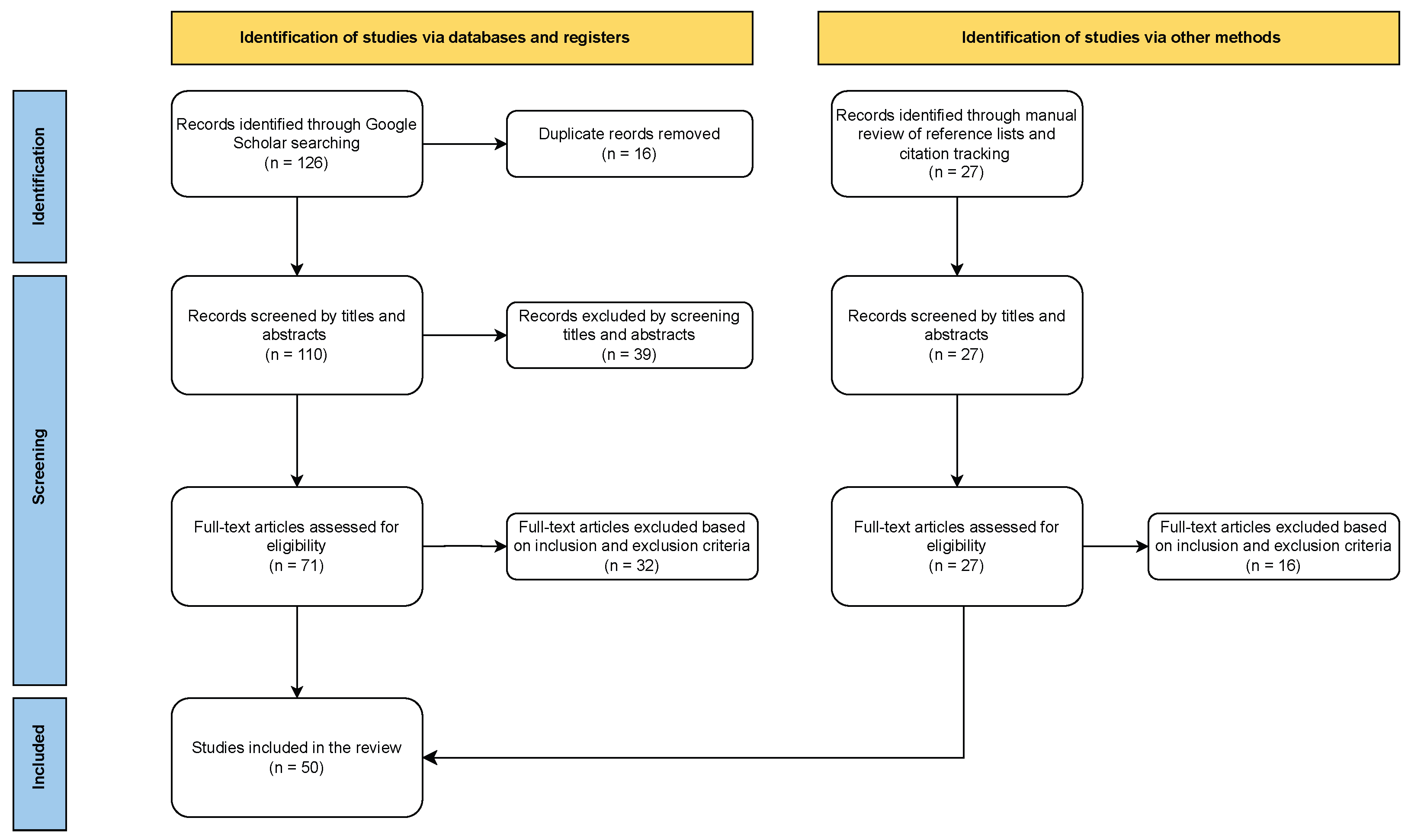
To identify the relevant literature, a structured search was conducted in Google Scholar, which also indexed relevant preprints hosted on platforms such as ArXiv and OSF. Previous research has shown that Google Scholar provides near-complete coverage of studies indexed in major bibliographic databases, including Web of Science and Scopus (Martín-Martín et al., 2018), and that Google Scholar contained all of the 738 studies included in a variety of systematic reviews (Gehanno et al., 2013). These findings support the use of Google Scholar as a primary search source when a structured protocol is applied. Search strings were developed based on the review’s guiding questions and included phrases were “GenAI use in higher education”, “perceptions toward GenAI (in higher education)”, “GenAI’s potential in higher education”, “students’ use of GenAI”, “GenAI’s usage in college”, “(specific stakeholders’) perceptions of GenAI”, and “GenAI policies in higher education”. Supplementary searches included a manual review of reference lists and citation tracking to identify additional relevant studies; this approach could help identify any studies that were somehow not available within Google Scholar. These literature searches were conducted between January 2025 and May 2025, focusing on studies published after late 2022, since the launch of ChatGPT raised the public awareness of GenAI. Titles and abstracts were screened to determine the relevance of each paper to the review’s focus. Inclusion and exclusion criteria are shown in Table 1. A flow diagram summarizing the search and screening process is provided in Figure 1.
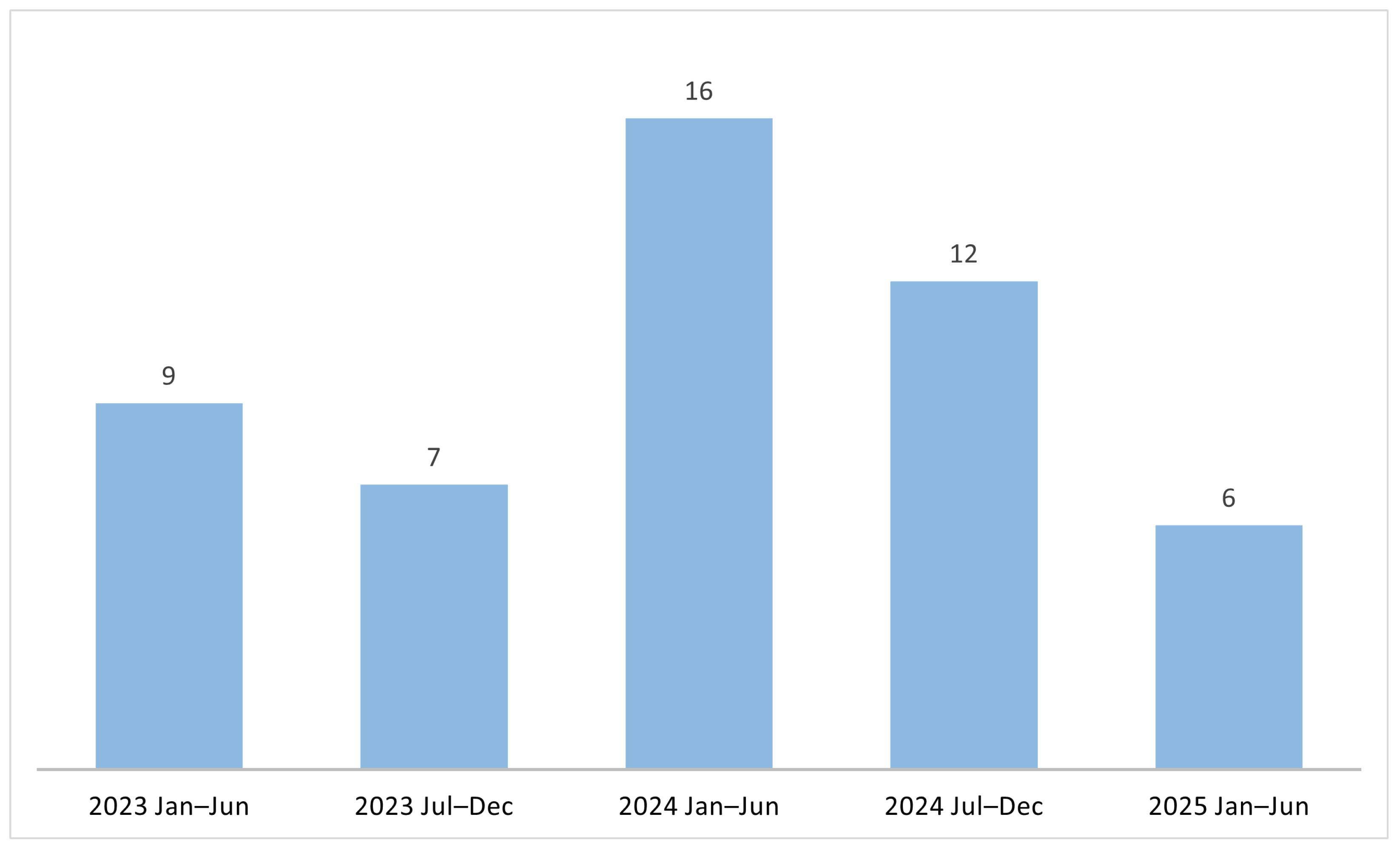
Of the 50 empirical studies reviewed in this study, 16 were published in 2023, 28 in 2024, and six in early 2025 (see Figure 2). Across the reviewed studies, ChatGPT or GPT-based models are relatively frequently referenced, particularly in research examining GenAI’s capabilities in HE. This pattern aligns with the broader GenAI landscape of 2023 and 2024, during which OpenAI’s models and tools were among the most widely visited and used (Liu & Wang, 2026). Meanwhile, a substantial portion of application- and perception-focused studies in this review refer more broadly to “generative AI” as a category without limiting the discussion to a specific GenAI tool. It is worth noting that the reviewed studies span a period of rapid technological evolution (2023–2025), during which the capabilities of GenAI technology and users’ familiarity with GenAI developed quickly. Given that the publication year does not strictly reflect data collection timing and GenAI adoption varies within and across countries, this review focuses primarily on context and stakeholder-based analysis, while acknowledging the dynamic evolution of the field.

3. Current GenAI Usage in Different HE Contexts

3.1. Teaching and Learning Context

3.1.1. Students’ GenAI Use

There are three main functions that students seek in GenAI: language-related support, self-learning support, and academic performance support. Students who sought language-related support employed GenAI (e.g., Grammarly) for enhancing or editing their writing; some students also used GenAI to translate course materials into their native languages to better understanding the course content (Freeman, 2025; Gasaymeh et al., 2025; Johnston et al., 2024; Luo, 2024b; Sousa & Cardoso, 2025; K. D. Wang et al., 2025). To obtain self-learning support, students applied GenAI (e.g., ChatGPT, Gemini, or Copilot) to explore certain topics and obtain a clearer and more accurate understanding based on alternative explanations; to summarize or take notes on textbooks, articles, or other complex reading materials; and to generate extracurricular practice questions (Almassaad et al., 2024; Freeman, 2025; Johnston et al., 2024; K. D. Wang et al., 2025). With GenAI, students received diverse support in their academic performance. Students used GenAI to (1) brainstorm ideas and structure thoughts for course assignments; (2) help structure or create outlines of essays, reports, or presentations; (3) generate attractive visualizations for projects; (4) assist with data analysis; and (5) scaffold computer programing (Freeman, 2025; Gasaymeh et al., 2025; Johnston et al., 2024; Sousa & Cardoso, 2025; K. D. Wang et al., 2025). Additionally, to avoid potential mistaken accusations in the assessment process (e.g., by Turnitin), some students employed open-source AI detection technologies to verify their work before submitting (Luo, 2024b).
However, not all of the students’ self-reported use is proper. A study by K. D. Wang et al. (2025) reflected students’ misconduct, such as cheating and plagiarism. In the study, a small but notable proportion of students self-reported that they used GenAI for drafting written projects and helping with exams.

3.1.2. Instructors’ GenAI Use

Instructors’ application of GenAI relates to pedagogy, course design, and assessment. With respect to teaching pedagogy, instructors used GenAI to gather new information and diverse perspectives, deepening their knowledge and understanding of teaching topics. Meanwhile, they used GenAI to brainstorm and summarize ideas, which informed their pedagogical practices and guided the overall organization of the curriculum (Chan & Tsi, 2024; Firaina & Sulisworo, 2023). Regarding specific course design, some instructors attempted to collaborate with GenAI to make their course content more engaging and attractive (Chan & Tsi, 2024). Faculty in the Chan and Tsi (2024) study shared that they used GenAI to generate major-related scenarios, engaging students to solve real-world problems that might arise in their discipline areas. Instructors also used GenAI to create topic-related questions for class interactive games, such as Kahoot (Chan & Tsi, 2024). Except for the above applications, instructors attempted to design new assessment methods and assessment tasks with GenAI, and the most common innovation was to evaluate GenAI capabilities for completing their assignments (Chan & Tsi, 2024; Lee et al., 2024). Faculty interviewees in the Lee et al. (2024) study shared that they allowed students to complete assignments with ChatGPT or provided students with a draft of assignment answers generated by ChatGPT, and then they required students to evaluate the AI-generated answers and share critiques. After the evaluation, students needed to create their final assignment answers based on the AI-generated draft and their own critiques (Lee et al., 2024). Some other instructors also used GenAI to provide students with assignment feedback as a supplement to human feedback in assessment (Lyu et al., 2025; Smolansky et al., 2023).

3.2. Research Context

Researchers in HE used GenAI in the whole process of academic research: idea generation, literature synthesis, methodology design, data collection, data analysis, and writing or reporting (Andersen et al., 2025; Nicholas et al., 2024; Salman et al., 2024). Researchers mostly preferred to apply GenAI as an editor in the writing or reporting stage to obtain language-related support, such as editing or polishing their research proposals and articles (Andersen et al., 2025; Salman et al., 2024). They also frequently used GenAI in the literature synthesis stage to help themselves summarize the existing literature, extract key information, and generate or check citations and references (Andersen et al., 2025; Nicholas et al., 2024; Salman et al., 2024).
Compared to the above two stages, researchers use GenAI less in the other research stages (Andersen et al., 2025). The followings are concrete applications: in the idea generation, researchers used GenAI to help identify research gaps or propose new hypotheses; in methodology design, researchers applied GenAI to create specific study designs (e.g., experiments); in data collection, researchers employed GenAI to draft interview or survey questions, transcribe recordings, or generate collected data sets; and in data analysis, researchers harnessed GenAI to support their software coding, statistical data analysis, or result visualization (Andersen et al., 2025; Nicholas et al., 2024).

3.3. Student Affairs Context

To date, little is known about the use of GenAI among student affairs practitioners based on empirical studies. However, a review of the official websites of several universities across different countries reveals one primary GenAI application in the student affairs context: the GenAI chatbot. According to the websites of the University of California, Berkeley (2025), the Pennsylvania State University (2024), and the University of Edinburgh (2024), GenAI chatbots can offer an around-the-clock online consulting service in diverse student affairs functional areas, which helps to enhance students’ college experience and allows staff to handle more complex and personalized interactions.
Currently, GenAI chatbots have been primarily used in financial aid, admissions, registration, and enrollment. Through this technology, students could interact with the chatbot to ask questions about billing, payment, scholarship, degree planning, admission process, transcript, dates or deadlines, and more (Pennsylvania State University, 2024; Stanford University, n.d.; University of California, Berkeley, 2025; University of Edinburgh, 2024; University of Georgia, n.d.). Some universities also provide GenAI chatbots to answer questions about recreational sports, IT support, library services, or general student on-campus needs (Tsinghua University, 2025; University of Auckland, n.d.; University of California, Berkeley, 2025; University of Edinburgh, 2024). In addition to general question-and-answer functions, some universities’ chatbots provide extra features. For example, the chatbots of Stanford University (n.d.) and University of California, Berkeley (2025) support multilingual languages (e.g., Spanish and Chinese), conversation transcription download, and content erasure for protecting privacy.

4. GenAI’s Capabilities in Different HE Contexts

4.1. Learning Context

Existing studies primarily reflect the potential use of GenAI as a learning tool, particularly for students in the STEM and social science disciplines. Yilmaz and Karaoglan Yilmaz (2023) investigated the effect of using GenAI tools in programming education with an experimental design. They recruited 45 computer science students who enrolled in an institutional-level programming course and randomly assigned them to experimental and control groups. Both groups completed a pretest and posttest to evaluate their computational thinking skills, programming self-efficacy, and learning motivation. During the five-week experiment, the experimental group students were allowed to use ChatGPT in their laboratory assignments, while the control group students did not have this support. The findings revealed that two groups of students scored similarly on the three pretest measures, whereas the experimental group students scored significantly higher on all three posttest measures than the control group.
Gilson et al. (2023) and Kung et al. (2023) examined ChatGPT as a supplemental support for students’ learning in medical education in the very early stage after the launch of ChatGPT. Both studies conducted performance evaluations to assess the effectiveness of ChatGPT in completing the United States Medical Licensing Examination (USMLE). Authors from both studies required ChatGPT to answer questions that they collected from the open-access question bank of USMLE and then compared ChatGPT’s responses with the corresponding reference answers. Gilson et al. (2023) claimed that ChatGPT performed comparably to the third-year medical student on USMLE-style questions, and Kung et al. (2023) indicated that ChatGPT achieved or was near the passing level on these questions without any specialized training. Both studies identified ChatGPT’s reasoning competence, solid comprehension of the question contexts, and clear explanations of responses. Although ChatGPT’s exam performance was insufficient to prove its genuine medical competence, both Gilson et al. (2023) and Kung et al. (2023) emphasized that its reasoning coherence and explanatory ability suggest educational potential, particularly in supporting students’ reasoning and thinking processes and understanding of medical concepts and diagnoses.
Saini et al. (2024) explored the potential of GenAI to provide feedback in education through a comparative evaluation. For three consecutive academic semesters, 295 students in education coursework evaluated peer and AI-generated feedback on their course assignments. Survey results showed that peer review was rated slightly higher than AI review in terms of feedback quality and usefulness. Peer review was valued for its contextual, multifaceted, and personalized insights, but was sometimes perceived as subjective or unclear. In contrast, GenAI review provided clear, objective, and immediate feedback, but sometimes lacked personalization or contextual nuances. Therefore, Saini et al. (2024) suggest applying GenAI reviews as an auxiliary to peer reviews to enhance students’ learning outcomes.
However, existing studies also exhibit GenAI’s potential for use in academic misconduct. Chaudhry et al. (2023) tested the AI-generated responses with AI detectors. They assigned three popular AI detectors (i.e., Turnitin, GPTZero, and Copyleaks) to independently assess the academic integrity of one ChatGPT-completed course assignment response. The AI response passed the test from all three detectors: Turnitin determined all answers as 0% plagiarism, and GPTZero and Copyleaks only flagged one question answer as AI-generated. This result supports the authors’ concerns about the reliability of AI detectors and the potential for users to engage in undetected academic misconduct.

4.2. Teaching Context

Existing studies reveal that GenAI has potential as an auxiliary teaching tool for instructors, especially in giving feedback and preparing the course design. W. Dai et al. (2023), Escalante et al. (2023), and Popovici (2024) have demonstrated GenAI’s capability for providing valid feedback across various educational tasks. Escalante et al. (2023), as very early research in 2023, focused on AI-generated feedback in writing and English language learning. A total of 48 university students were assigned to either an experimental group (i.e., with AI-generated feedback) or a control group (i.e., with human feedback) after a writing pretest. Then, they solely received preassigned feedback on writing assignments for six weeks and took a posttest. The results revealed that there were no significant differences between the two groups at pretest and posttest for writing proficiency, and both groups of students made similar progress in their academic writing over the six-week experiment. Therefore, Escalante et al. (2023) recommend a hybrid feedback approach that saves time and effort for instructors while maintaining the high quality of linguistic feedback for students.
W. Dai et al. (2023) concentrated on GenAI’s feedback performance in textual assignments. They requested ChatGPT and human instructors to review the same 103 students’ project reports and compared their feedback quality. The findings indicated that most AI-generated feedback scored higher for its readability than human reviews, with clearer and more consistent feedback. Moreover, like human instructors, ChatGPT not only provided feedback on project accuracy and completeness but also on strategies or approaches students used in projects. W. Dai et al. (2023) argue that GenAI can be an assistant, helping students revise work-in-progress and develop learning skills while completing assignments, and further note that human oversight is needed to ensure accurate and reliable feedback.
Popovici (2024) indicated the capability of GenAI in code review for computer science students. The researcher assigned ChatGPT to review the code segments of 67 homework assignment reports from students enrolled in a programming course. The findings indicated that approximately 85% of ChatGPT’s code reviews were correct, with 77% of all reviews being both accurate and accompanied by clear and reasoned explanations, while about 8% of all reviews contained some valid points but also errors. With this relatively high code-review accuracy, Popovici (2024) suggested that ChatGPT can play a role as a preliminary code reviewer, providing initial feedback before human review to save instructors’ time and energy.
In addition, Tupper et al. (2023) explored GenAI’s efficacy in designing and planning courses. Researchers asked ChatGPT to prepare two field course designs. One ChatGPT prompt was deliberately vague without a specified subject or location, whereas the other specified both. The results demonstrated that ChatGPT was capable of both designing an original course without detailed instructions and meeting predefined curricular requirements, suggesting its potential to enhance instructors’ efficiency in course design.

4.3. Research Context

Existing studies have considered potential GenAI usage in the research context for conducting qualitative research coding and drafting research proposals with suggested references. Lockwood (2024) and Zhang et al. (2024) have explored GenAI’s qualitative coding capability through comparative analysis. Lockwood (2024) compared novice qualitative researchers and GPT-4 in analyzing the same text data. The results showed that (1) human researchers and GPT-4 identified some common broad themes from the text; (2) human coding was full of details and contextual nuances, while AI coding was more structured and organized but lacked a deep understanding of context and rich interpretation; and (3) human coding was time-consuming (over three hours for 135 codes), while AI coding was time-saving (seven minutes for 101 codes). Zhang et al. (2024) developed QualiGPT, a qualitative analysis software underpinned by GPT-3. QualiGPT possessed a flexible prompt generation design and purpose-focused workflow, enabling users to code and analyze qualitative data efficiently. They compared human researchers and QualiGPT in analyzing both simulated and real datasets. The results showed that GenAI coding was moderately consistent with human coding in inductive coding and substantially consistent in deductive coding. Moreover, the coding speed of QualiGPT significantly surpassed manual coding. Combining the suggestions of Lockwood (2024) and Zhang et al. (2024), GenAI can potentially be used as an auxiliary tool for rapid coding while retaining human reviews for results verification. It can also be used as a collaborative AI researcher, conducting independent coding and bringing new insights into the analysis process.
Athaluri et al. (2023) explored the reliability of references generated by ChatGPT through an analytical design. The authors requested ChatGPT to generate 50 research proposals for 50 prepared research topics and verified the authenticity and validity of the AI-generated references. The findings demonstrated that 109 references (out of 178 references) possessed valid digital object identifiers (DOI) and were retrievable on Google. Of the remaining 69 references, 41 were accessible via Google but without DOIs, and 28 lacked both DOIs and internet searchability. Athaluri et al. (2023) acknowledged the potential of GenAI in proposal writing and reference generation for research. Meanwhile, due to the AI hallucination (i.e., AI creates non-existent information), they cautioned researchers not to over-rely on GenAI but to implement human oversight.

4.4. Student Affairs Context

Existing studies reveal that GenAI technology can be potentially applied in academic advising and career services as an AI agent under the student affairs context in HE. To explore the potential of GenAI in academic advising, Aguila et al. (2024) and Lekan and Pardos (2024) have evaluated the accuracy and effectiveness of GenAI in question answering and academic recommendations. Aguila et al. (2024) fine-tuned a large language model (LLM), Llama 2, using an institution-specific dataset of 182 student questions and the corresponding official answers as training data to help Llama 2 conduct academic advising tasks. Then, these researchers used another 78 question–answer pairs as testing data to evaluate the performance of the fine-tuned model. This study found that the fine-tuned Llama 2 can provide relevant and accurate answers to academic advising, achieving over 85% semantic accuracy (i.e., the degree to which the meaning of the Llama 2-generated responses aligns with the reference answers). Lekan and Pardos (2024) employed an expert-based evaluation to assess the performance of GPT-4 in the academic advising process, particularly major selection, in which 25 expert academic advisors reviewed and rated the AI-generated recommendations and answers to students’ specific questions related to major selection. Advisors affirmed the high quality of GenAI responses in its major recommendations and explanations (Mean = 4.0 out of 5) and question answering (Mean = 3.8 out of 5) with high rates. These results exemplify the impressive capability of GenAI in processing information and outputting valid responses in academic advising. Therefore, Aguila et al. (2024) and Lekan and Pardos (2024) suggest integrating GenAI technology into academic advising as a supportive assistant to enhance students’ academic advising experience with immediate and helpful responses and reduce advisors’ workload with higher efficiency.
Abdelhamid et al. (2025) conducted a user-based performance evaluation of their chatbot, Advisely (embedded GPT-4 model), to assess GenAI’s capabilities in an authentic academic advising scenario. The authors built their university’s knowledge base on Advisely and invited 47 first-year students from their university to interact with it for 30 min. In the post-interaction survey, most students reported the satisfactory accuracy and helpfulness of Advisely with high rates. Although students noticed some robotic and less nuanced responses, they recognized the chatbot’s easy-to-use and high-quality performance for providing quick and content-pertinent responses. Abdelhamid et al. (2025) encourage the application of Advisely to facilitate academic advising with tailored support and improved accessibility.
Regarding career services, Chang et al. (2024) have explored the effectiveness of Google Gemini’s integration into myIDP, a commonly used web-based platform for the Individual Development Plan (IDP) for career planning and development tool in STEM, as an AI mentor. A total of 18 recruited students reported that the AI mentor enhanced their mentoring experience with immediate responses and up-to-date career information. It also increased students’ confidence and ownership in career development and facilitated their communication preparation with human mentors (e.g., the AI mentor could help students formulate questions to bring to their human mentors). Considering GenAI’s inherent limitations, Chang et al. (2024) suggest a hybrid human–AI mentoring that uses AI for general and foundational information sharing as well as immediate assistance, while human experts introduce detailed or nuanced information and provide more personalized support. See Appendix A for a summary of all the studies discussed in this section.

5. Stakeholders’ Perceptions of GenAI Usage

5.1. Students’ Perceptions

Existing studies reveal that students generally have a positive attitude and high readiness toward incorporating GenAI into their learning experience, with greater endorsement of GenAI’s positive features (e.g., improving learning outcomes) than negative aspects (e.g., potential misuse) in questionnaire responses (Chan & Hu, 2023; Chan & Tsi, 2024; Liu et al., 2024; Shoufan, 2023; Zafar et al., 2024).

5.1.1. Students’ Perceived Benefits

The most obvious benefit students perceived was immediate and personalized learning support through GenAI (Chan & Hu, 2023; Chan & Tsi, 2024; Fuller & Barnes, 2024; Liu et al., 2024). Students strongly perceived the usefulness of GenAI tools, because they were available around the clock, allowing them to ask questions or gain information immediately when they could not find anyone else with whom to discuss (Chan & Hu, 2023; Fuller & Barnes, 2024). Moreover, students benefited from GenAI’s personalized feedback tailored to their specific needs, such as asking ChatGPT to provide the best assignment solution for self-review after completing an assignment (Chan & Hu, 2023).
Many students, particularly non-English speakers, regarded GenAI as a language assistant that facilitated the development of their language skills (Chan & Hu, 2023; Chan & Tsi, 2024; Liu et al., 2024). Some students self-reported that GenAI offered them richer grammatical and lexical knowledge, along with understandable feedback, which enhanced their writing proficiency (Chan & Hu, 2023; Chan & Tsi, 2024). Several students mentioned that ChatGPT could help them efficiently summarize the main points of papers, making it easier for them to understand the readings, thereby improving their reading comprehension (Liu et al., 2024).
From some students’ perspectives, GenAI supported them in fostering their critical thinking and creativity through assistance in brainstorming, elaboration, and explanation (Chan & Hu, 2023; Chan & Tsi, 2024; Habib et al., 2024; Liu et al., 2024; Shoufan, 2023; Zafar et al., 2024). Specifically, students shared that GenAI aided their brainstorming by enriching their ideas with unique insights that they might not be able to come up with on their own and by broadening their scope through diverse responses (Chan & Tsi, 2024; Habib et al., 2024). Moreover, students noted that GenAI provided them with clear, understandable, and well-structured elaborations and explanations for various concepts or topics, which fostered the foundation of their creativity and critiques (Habib et al., 2024; Liu et al., 2024; Shoufan, 2023).
Other notable perceived benefits include students’ overall positive user experience in learning, which can be grouped into user-friendly interaction and emotional encouragement. Students reported engaging in easy-to-use, time-saving, human-like conversations with GenAI (Chan & Hu, 2023; Liu et al., 2024; Shoufan, 2023). The emotional benefits that students reported included feeling comfortable and interested while using GenAI for learning, as well as boosting their confidence and motivation to learn (Liu et al., 2024; Shoufan, 2023).

5.1.2. Students’ Perceived Concerns

Students’ perceived concerns about using GenAI in HE consist of academic-, ethical-, and societal-impact concerns. For the academic-impact concerns, many students worried about their overreliance on GenAI as an outsourced thinking agent, leading to less motivation to learn or less effort in learning, and then eventually hindering their intellectual and skill development, such as critical thinking, creativity, and teamwork (Baek et al., 2024; Chan & Hu, 2023; Fuller & Barnes, 2024; Habib et al., 2024; Liu et al., 2024; Zafar et al., 2024). Students were also concerned about their learning due to GenAI’s sometimes inaccurate output, such as factually incorrect information, irrelevant content, a deficiency of conceptual nuance or contextual details, fabricated information, and biased responses (Baek et al., 2024; Chan & Hu, 2023; Fuller & Barnes, 2024; Liu et al., 2024; Shoufan, 2023; Zafar et al., 2024). Another academic-impact concern pertains to student–faculty trust in GenAI use (Luo, 2024b). For instance, some students expressed significant anxiety that teachers would distrust their declaration of appropriate GenAI use, and some others worried that their faculty would trust the AI detectors (e.g., Turnitin) more than their explanations when mistaken accusations happened (Luo, 2024b).
Students’ ethical-impact concerns relate to academic integrity, data privacy, and equality of access. For academic integrity, students expressed anxiety not only about unintentional plagiarism and associated consequences, but also about the unfairness if their peers deliberately engaged in academic misconduct using GenAI and remained undetected (Baek et al., 2024; Luo, 2024b). Students, especially those in non-STEM fields, also raised concerns about data privacy, as they worried that their private data could be stored or shared by GenAI software without their acknowledgment (Baek et al., 2024; Chan & Hu, 2023; Liu et al., 2024; Shoufan, 2023). For the equality of GenAI access, some students considered using GenAI as a privilege, because not all students could access it, for example, due to regional policy restrictions or internet unavailability (Baek et al., 2024; Liu et al., 2024). This would lead to inequality in learning for students who were unable to access GenAI, falling behind those who had easy access (Liu et al., 2024). In terms of societal-impact concerns, students shared their apprehension about the devaluation of postsecondary education and job replacements due to the rapid development of GenAI (Chan & Hu, 2023; Fuller & Barnes, 2024).

5.1.3. Students’ Perceived Needs

To improve their learning, students expressed their need to gain sufficient GenAI background knowledge to benefit from it (Shoufan, 2023). Meanwhile, they shared the learning expectations of instructors. Students expected (1) instructors with AI literacy to share with them GenAI knowledge and explain GenAI complexities in diverse cases, (2) instructors to be capable of identifying GenAI misuse from students’ assignments, (3) instructors to be role models of GenAI ethical use and adhere consistently to the same GenAI usage rules they set for students, and (4) instructors to create new assessment designs with the consideration of GenAI integration in learning (Luo, 2024b).

5.2. Instructors’ Perceptions

Existing studies indicate a mixed attitude toward GenAI integration in teaching and learning among instructors: either more positive or more negative (Cabellos et al., 2024; Johnson, 2024; Lee et al., 2024). Several factors influenced the instructors’ attitudes toward GenAI, including the instructors’ interest in GenAI use, use frequency, pedagogical beliefs, race or ethnicity, tenure status, and disciplinary background (Cabellos et al., 2024; Johnson, 2024; Petricini et al., 2023).
Existing studies also exhibit an inconsistent perception of the faculty’s familiarity with GenAI. Some instructors were confident about their GenAI knowledge and skills, havingreceiving relevant professional training, while some others believed they had high familiarity with GenAI, despite having limited experience with its use (Lee et al., 2024; Petricini et al., 2023).

5.2.1. Instructors’ Perceived Benefits

Instructors’ perceived benefits of using GenAI in HE can be categorized into two groups: benefits for the faculty themselves and benefits for students. Instructors generally identified three sets of benefits for themselves. First, they believed that GenAI was useful for their class preparation; it could assist them in creating more interesting and engaging teaching materials, preparing engaging class activities tailored to students’ abilities and interests, proofreading materials, or evaluating rubric design (Cabellos et al., 2024; Chan & Tsi, 2024; Johnson, 2024; Lee et al., 2024). Second, several instructors noticed that GenAI could benefit them in assessment, particularly for providing feedback (Guo & Wang, 2024). These instructors shared that GenAI tools had a high capability for assessing students’ written assignments, providing flexible comments without predetermined templates, and specific and encouraging feedback for students’ learning motivation (Guo & Wang, 2024). These instructors felt that GenAI should be used as an auxiliary tool for their feedback, helping teachers identify the missing pieces while assessing students’ assignments (Guo & Wang, 2024). Third, many instructors perceived GenAI as a tool to improve their time and energy efficiency for routine tasks (e.g., replying to students’ emails), thereby partially lessening their burden from their heavy workload (Chan & Tsi, 2024; Firaina & Sulisworo, 2023; Guo & Wang, 2024; Lee et al., 2024).
The instructors’ perceived benefits for students are mainly related to students’ learning and development. A large number of instructors believed that GenAI was a good learning tool for students. Specifically, it could provide students with immediate and personalized feedback, help students improve writing proficiency, enrich knowledge reserves with clear explanations, cultivate thinking ability, and enhance digital capabilities that would be crucial in the job market (Chan & Lee, 2023; Chan & Tsi, 2024; Lee et al., 2024).

5.2.2. Instructors’ Perceived Concerns

The instructors’ perceived concerns toward GenAI usage in HE are separated into three branches: concerns about instructors, students, and general GenAI techniques. While discussing perceived GenAI concerns about the faculty, instructors mentioned that GenAI could challenge the assessment authenticity (Chan & Lee, 2023; Johnson, 2024; Lee et al., 2024). Instructors reported that students’ potential use of GenAI to complete assignments or tests led to difficulty for instructors assessing students’ authentic knowledge mastery and learning. They also perceived that the existing AI detectors (e.g., Turnitin) were ineffective for tracking AI use in students’ assignments and could become outdated quickly due to rapid technological progress (Lee et al., 2024). Additionally, some instructors worried that the intervention of GenAI in HE would replace certain aspects of their roles as instructors and undermine their value in teaching (Chan & Lee, 2023; Johnson, 2024; Lee et al., 2024).
When discussing how GenAI might negatively impact students, instructors focused on the students’ intellectual improvement and skill development, misconduct, and inequity among them. Referring to students’ intellectual improvement and skill development, instructors first worried about students’ overreliance on GenAI during their learning process, which could hinder students’ learning performance in areas such as motivation and autonomy of learning, critical thinking, creativity, and focus (Chan & Lee, 2023; Chan & Tsi, 2024; Johnson, 2024; Lee et al., 2024). Several instructors further expressed concern that the GenAI use might lead to a discrepancy between students’ demonstrated competence and their genuine learning (Lee et al., 2024). Second, many instructors were concerned that using GenAI would limit students’ opportunities to interact with their peers while completing coursework, negatively affecting their skills development in speaking and teamwork (Chan & Lee, 2023; Johnson, 2024). Furthermore, some instructors suspected that current students were able to identify the accuracy and validity of AI-generated information with enough associated knowledge (Chan & Lee, 2023; Chan & Tsi, 2024). Apart from the above, instructors expressed concern that the use of GenAI might lead to both unintentional (e.g., using AI-generated information that comes from unknown sources) and intentional (e.g., using GenAI to complete assignments without approval) misconduct among students during the learning process (Chan & Lee, 2023; Chan & Tsi, 2024; Petricini et al., 2023). Also, several instructors identified a potential inequity issue that students who were unable to access GenAI or were hesitant to engage with it might fall behind their peers in learning, compared to those who could access it and were ready to try new technologies (Lee et al., 2024).
The concerns about the GenAI system itself that the instructors perceived included data privacy and security, transparency of the GenAI system, copyright, ownership, and authenticity of work (Chan & Lee, 2023; Lee et al., 2024). Their concerns about the accuracy of GenAI outputs related to issues such as irrelevant information, factually incorrect information, and other errors (Firaina & Sulisworo, 2023; Guo & Wang, 2024).

5.2.3. Instructors’ Perceived Needs

Given the current development of GenAI, instructors’ perceived needs are not only based on their own needs but also on the needs of students. Instructors required clear instructions and professional training, such as how to use GenAI appropriately and how GenAI could support teaching (Johnson, 2024; Lee et al., 2024; Petricini et al., 2023). They also needed institutional policies to address potential risks that might result from the integration of GenAI in teaching and learning (Chan & Lee, 2023). Meanwhile, instructors emphasized that college students needed to develop their AI literacy skills, including being trained on how to use GenAI ethically and professionally, to be more competitive and prepared for the future workplace (Chan & Tsi, 2024).

5.3. Researchers’ Perceptions

The literature has reported mixed perceptions of familiarity with GenAI tools, with some researchers perceiving a high level of familiarity and others reporting only moderate familiarity (Abdullah & Zaid, 2023; Marshall & Naff, 2024). Meanwhile, some researchers expressed a high readiness to integrate GenAI into their research process, while others doubted its benefits and did not recommend GenAI use in research (Abdullah & Zaid, 2023; Marshall & Naff, 2024; Salman et al., 2024; Watermeyer et al., 2024).

5.3.1. Researchers’ Perceived Benefits

The first researchers’ perceived benefit was that GenAI could function as a research process accelerator, boosting their publications and productivity (Abdullah & Zaid, 2023; Nicholas et al., 2024; Watermeyer et al., 2024). Researchers perceived that GenAI could support them in generating or brainstorming ideas, extracting or summarizing useful information from the literature, speeding up data analysis, and facilitating drafting and reviewing manuscripts (Abdullah & Zaid, 2023; Nicholas et al., 2024). In qualitative research, researchers perceived benefits in data analysis, including saving time from routine tasks (e.g., transcription), providing preliminary coding of larger datasets, finding data patterns that researchers missed, and bolstering coding consistency across the data (Marshall & Naff, 2024).
Some researchers believed GenAI helped them relieve their work burden from menial tasks, allowing them to pursue what they identified as meaningful or valuable research work (Watermeyer et al., 2024). Then, several researchers recognized the benefits of GenAI for their academic communication. A body of early-career researchers shared that throughout their academic networking, GenAI could provide engaging replies or suggestive texts to make communications smooth and sustained. For non-English-speaking researchers, GenAI could deliver authentic translations or wording modifications to make the conversation content more accessible for both parties (Nicholas et al., 2024).

5.3.2. Researchers’ Perceived Concerns

Researchers’ perceived concerns about using GenAI are divided into two categories: concerns about the researchers themselves and concerns about the research. For concerns related to the researchers themselves, many researchers worried about the overreliance on GenAI, making them become lazy in thinking or developing adequate research skills, thus leading to a decline in their research capabilities (Abdullah & Zaid, 2023; Marshall & Naff, 2024; Salman et al., 2024). Second, multiple researchers expressed their apprehension that once part of their work was outsourced by GenAI, they would be assigned new tasks that might further overwhelm them with increased research pressure; for example, they might be expected to produce more output in even less time (Watermeyer et al., 2024).
Researchers’ concerns about GenAI’s impact on overall research include low-quality publications, compatibility with specific research fields, and ethical issues. During the discussion of low-quality publications, early-career researchers noted that the overall quality of research was likely to decline if less experienced or lower-quality researchers gained the ability to produce more research output with GenAI’s scaffolding (Nicholas et al., 2024). Moreover, other researchers emphasized that it would also result in low-quality publications if one fell into the trap of publication competition by solely considering output quantity and overlooking research regulations and ethics (Nicholas et al., 2024; Watermeyer et al., 2024). Furthermore, researchers posited that GenAI’s intrinsic functional limits also led to low-quality publications, such as the sharing of inaccurate information, misinterpretation of complex topics, oversimplified textual analysis, a lack of scientific rigor, inadequate review, or without editorial oversight (Andersen et al., 2025; Marshall & Naff, 2024; Nicholas et al., 2024; Salman et al., 2024).
Researchers pointed out the lack of compatibility of using GenAI in their specific research field (Abdullah & Zaid, 2023; Marshall & Naff, 2024). Some of them underlined that qualitative research was a human-centered and person-focused research methodology that relied on qualitative researchers’ own perspectives to understand and interpret phenomena arising from the collected data. Therefore, applying GenAI to conduct data analysis is opposed to the entire qualitative paradigm with a loss of human elements (Marshall & Naff, 2024).
Regarding ethical issues, many researchers voiced concerns about access inequalities, such that researchers with access to GenAI tools could accelerate their research process and produce more outputs than their peers who did not utilize GenAI (Nicholas et al., 2024). Other concerns among researchers included data breaches, inauthenticity of work, copyright infringement, and plagiarism (Abdullah & Zaid, 2023; Andersen et al., 2025; Nicholas et al., 2024).

5.3.3. Researchers’ Perceived Needs

Researchers suggested it was necessary to (1) provide training and resources to facilitate researchers’ effective and ethical use of GenAI and (2) to modify evaluation criteria in research that focuses more on the quality rather than quantity of publications to ensure research integrity (Abdullah & Zaid, 2023; Nicholas et al., 2024).

5.4. Administrators’ Perceptions

Due to the limited empirical studies exploring administrators’ perceptions of GenAI usage, the current review examined studies of institutional GenAI policies and guidelines to represent administrators’ perceptions. These policies can serve as a formal expression of administrators’ intentions, thereby reflecting their attitudes, values, and decision-making directions.
Existing studies indicate that institutional-level policies reflect administrators’ general open but cautious attitude to GenAI integration in HE. According to recent evidence, none of the top 100 U.S. universities had completely banned GenAI tools; however, the use of GenAI was allowed with conditions (H. Wang et al., 2024). Approximately 63% of the 116 R1 universities in the U.S have encouraged the use of GenAI in teaching and learning, with many institutions providing detailed guidance and sample syllabi to support its appropriate implementation (McDonald et al., 2024). Among the top 500 universities globally, 132 universities implemented GenAI policies. Nearly 70% of these universities permitted GenAI use, more than twice the number that banned it. Moreover, many universities that prohibited GenAI use allowed instructors to determine the extent to which it could be used in their courses and assessments (Xiao et al., 2023). One noteworthy situation was that administrators’ attitudes toward GenAI usage were dynamic, from more hesitation or prohibition in late 2022 and early 2023 to more acceptance after mid-2023 (Cheng & Yim, 2024; Driessens & Pischetola, 2024).

5.4.1. Administrators’ Perceived Benefits

Existing university policies imply that administrators’ perceived benefits of GenAI usage in HE are predominantly associated with teaching and learning. The wording in these policies suggests that administrators regard GenAI as a useful tool for students’ self-learning (Y. Dai et al., 2024). Many universities’ guidance recommends that students use GenAI tools to facilitate brainstorming or drafting, access language support (e.g., proofreading), explore certain concepts (e.g., explaining concepts and clarifying confusion), and receive immediate feedback (Y. Dai et al., 2024; McDonald et al., 2024).
Furthermore, the policies frame GenAI as advantageous in the teaching process, particularly in terms of class design and planning, assessment, and tailored learning for students (Y. Dai et al., 2024; McDonald et al., 2024). Some universities’ guidance encourages instructors to apply GenAI for assisting in generating teaching materials (e.g., PowerPoint slides and class handouts) and in constructing lesson plans, such as creating more engaging class activities and generating examples related to class content (Y. Dai et al., 2024; McDonald et al., 2024). For assessment, universities’ guidelines suggest instructors’ utilization of GenAI in facilitating the design of traditional assessment methods, such as quizzes and projects (McDonald et al., 2024). A few universities’ policies recommend the utilization of GenAI in teaching to achieve tailored learning for students. For instance, the University of Hawaii mentions that “AI algorithms can analyze student preferences, past performance, and learning patterns to recommend relevant resources, supplementary materials, or additional learning opportunities” (McDonald et al., 2024, p. 13).
In addition, the guidelines of some universities also express administrators’ encouragement for researchers to engage with GenAI critically, regarding it as an assistant in their research work rather than relying on it as the primary means of producing research (Y. Dai et al., 2024).

5.4.2. Administrators’ Perceived Concerns

The existing policies suggest that, under the teaching and learning context, administrators have apprehensions about academic misconduct or plagiarism, ineffective AI detection, and data privacy leakage (Y. Dai et al., 2024; Driessens & Pischetola, 2024; H. Wang et al., 2024). Specifically, many universities implement rules to ensure academic integrity, requiring students to consult with instructors to obtain permission before using GenAI and to declare their GenAI use in assignments (Y. Dai et al., 2024). Asking GenAI to complete assignments (e.g., an exam) or directly submitting a GenAI response in assignments is regarded as misconduct (Y. Dai et al., 2024; Driessens & Pischetola, 2024). Referring to detecting AI-generated content in student assignments, some universities are using guidelines to caution instructors that AI detection tools are unreliable (McDonald et al., 2024). McDonald et al. (2024) quote Carnegie Mellon University: “Although companies such as Turnitin are beginning to offer AI detection services, none have been established as accurate” (p. 12). Moreover, numerous universities express in their policies and guidelines that users’ private information may be retained for the training of AI models; students and instructors need to avoid disclosing any confidential information when utilizing GenAI tools (Y. Dai et al., 2024; Driessens & Pischetola, 2024; McDonald et al., 2024; H. Wang et al., 2024).
Institutional policies reveal administrators’ concerns in the research context, particularly data privacy and protection, authenticity, originality, and copyright (Y. Dai et al., 2024; McDonald et al., 2024). Universities’ policies prohibit researchers from entering proprietary data, personal information, or confidential information into GenAI platforms without consent, and they emphasize the importance of producing research ethically and appropriately (Y. Dai et al., 2024; McDonald et al., 2024). For instance, McDonald et al. (2024) quote the University of Central Florida: “cautious, if not outright paranoid, about privacy, legality, ethics, and many related concerns, when thinking about exposing your primary research to any AI platform” (p. 18).
Existing policies demonstrate administrators’ concerns about GenAI’s inherent limitations, particularly its inaccuracy and bias, as well as equality issues (Driessens & Pischetola, 2024; McDonald et al., 2024; H. Wang et al., 2024). Guidance from various universities advises on-campus stakeholders to exercise caution when using AI-generated responses, because they can produce misleading information, fabricated information, content that lacks in-depth knowledge in specific academic fields, unreliable references, and biased responses (Driessens & Pischetola, 2024; H. Wang et al., 2024). Moreover, a range of universities, such as the University of Nevada and Carnegie Mellon University, remind instructors that access to GenAI is unequal; not all students have access to these tools, and some choose not to use them (McDonald et al., 2024).

5.4.3. Administrators’ Perceived Needs

According to Y. Dai et al. (2024) and H. Wang et al. (2024), existing institutional policies and guidelines always include the policy framework (i.e., fundamental statement, usage guidelines, dos and don’ts) and practical support (i.e., GenAI knowledge sharing, GenAI learning resources sharing, template of GenAI use). This mainly represents administrators’ perceived needs for HE stakeholders, particularly students, faculty, and researchers, to acquire and develop AI literacy, including general GenAI knowledge, pros and cons of GenAI, critical thinking, and appropriate use (Y. Dai et al., 2024). See Appendix B for a summary of all studies discussed in this section.

6. Discussion of Commonalities and Differences Among Stakeholders

6.1. Commonalities

Across the literature, the perceived benefits identified by students, instructors, researchers, and administrators converge on several aspects. One prominent alignment is that all four groups of stakeholders agree on the usefulness of GenAI in language support, such as enhancing writing proficiency, facilitating drafting, proofreading, or providing translation (Chan & Hu, 2023; Y. Dai et al., 2024; Lee et al., 2024; Liu et al., 2024; Nicholas et al., 2024). A further consensus among the four groups of stakeholders is that GenAI aids in brainstorming and thinking, particularly in the contexts of teaching and learning and of research (Abdullah & Zaid, 2023; Chan & Lee, 2023; Chan & Tsi, 2024; Y. Dai et al., 2024; Habib et al., 2024). They all likewise concur that GenAI is an efficient tool, helping save time and energy in completing tasks (Firaina & Sulisworo, 2023; Lee et al., 2024; Liu et al., 2024; Marshall & Naff, 2024).
Beyond the areas of unanimous agreement, stakeholders also align on several other aspects. Students, instructors, and administrators believe that GenAI is a beneficial learning tool for students, because it can provide immediate and personalized feedback, as well as offer clear explanations of content that students do not understand (Chan & Hu, 2023; Chan & Tsi, 2024; Y. Dai et al., 2024; Fuller & Barnes, 2024). Instructors and administrators agree that GenAI can better assist teachers in their class preparation (e.g., planning engaging activities) and assessment (e.g., creating assessment methods; Cabellos et al., 2024; Chan & Tsi, 2024; Y. Dai et al., 2024; Guo & Wang, 2024; Johnson, 2024). In both student assignment evaluation and the research process, instructors and researchers treat GenAI as a checking or reviewing tool, catching any omissions they may not be able to identify on their own (Guo & Wang, 2024; Marshall & Naff, 2024).
Across the literature, the perceived concerns identified by students, instructors, researchers, and administrators are mainly centered on three areas. All four groups of stakeholders worry about GenAI’s inherent limitations, particularly potential data privacy leakage and inaccuracy of AI-generated responses (Abdullah & Zaid, 2023; Baek et al., 2024; Guo & Wang, 2024; Lee et al., 2024; McDonald et al., 2024; Shoufan, 2023). These stakeholders also find common ground on access inequality: not all stakeholders have equal access to GenAI tools that support their learning or research (Lee et al., 2024; Liu et al., 2024; McDonald et al., 2024; Nicholas et al., 2024). Another consensus among the four groups of stakeholders is their apprehension about academic or research misconduct, such as plagiarism (Chan & Tsi, 2024; Y. Dai et al., 2024; Luo, 2024b; Nicholas et al., 2024).
Besides the perceived concerns that receive full consensus, stakeholders converge on several additional aspects. Students, instructors, and researchers are concerned about overreliance on GenAI, which may hinder one’s critical thinking, creativity, autonomy, and other learning or research capabilities (Abdullah & Zaid, 2023; Chan & Hu, 2023; Chan & Lee, 2023; Marshall & Naff, 2024). While referring to the use of AI-generated information in research or teaching and learning contexts, instructors, researchers, and administrators express their anxieties about copyright, ownership, or authenticity of their work (Chan & Lee, 2023; Y. Dai et al., 2024; Lee et al., 2024; Nicholas et al., 2024; Salman et al., 2024). Additionally, students and instructors report that the educational value (e.g., the teacher’s role in teaching) of HE may be weakened with GenAI’s integration in teaching and learning (Chan & Hu, 2023; Lee et al., 2024).
Across the literature, students, instructors, researchers, and administrators consistently emphasize the need to develop GenAI literacy through clear instructions, guidelines, or targeted training, aimed at fostering relevant background knowledge and promoting the responsible use of GenAI in academic and professional practice (Abdullah & Zaid, 2023; Chan & Lee, 2023; Chan & Tsi, 2024; Y. Dai et al., 2024; Johnson, 2024; Lee et al., 2024; Luo, 2024b; Nicholas et al., 2024; Petricini et al., 2023; H. Wang et al., 2024).

6.2. Differences

The four groups of stakeholders’ perspectives on GenAI usage in HE vary in their overall attitude (e.g., readiness). Students hold a more positive and open attitude, embracing GenAI in HE, while instructors and researchers keep a mixed attitude, hesitating to decide whether the use of GenAI is more an opportunity or more a threat in HE; administrators hold an open but cautious attitude toward GenAI integration into HE (Abdullah & Zaid, 2023; Cabellos et al., 2024; Chan & Hu, 2023; Marshall & Naff, 2024; Petricini et al., 2023; Xiao et al., 2023; Zafar et al., 2024). Furthermore, only administrators’ overall attitude demonstrates a distinctly dynamic change over time, shifting gradually from waiting or more banning to more embracing of GenAI; however, the other three stakeholder groups do not show this notable fluctuation (Cheng & Yim, 2024; Driessens & Pischetola, 2024).
While discussing perceived benefits, students and researchers primarily concentrate on benefits tightly relevant to themselves, whereas instructors consider both self-related and student-related benefits (Chan & Tsi, 2024; Guo & Wang, 2024; Liu et al., 2024; Watermeyer et al., 2024). The policies created by administrators reflect a comprehensive perspective regarding perceived benefits, considering the advantages of integrating GenAI in different HE contexts for students, instructors, and researchers (Y. Dai et al., 2024; McDonald et al., 2024).
While discussing perceived concerns, researchers limit their focus to the disadvantages of using GenAI in the research context, which is still closely related to their own interests (Marshall & Naff, 2024; Nicholas et al., 2024; Salman et al., 2024). This may reflect the scope of the questions asked in existing studies rather than researchers’ own preferences, since many of them would also be considered instructors in a teaching context. Students and instructors not only express their worries about the negative impact of GenAI on themselves, but also express other concerns about using GenAI in teaching and learning contexts, such as the trust between students and faculty in academic assessments (Baek et al., 2024; Chan & Lee, 2023; Fuller & Barnes, 2024; Johnson, 2024). Again, administrators seem to provide a holistic perspective on perceived concerns through institutional policies, presenting the potential of GenAI to hinder the performance of students, instructors, and researchers in HE (Y. Dai et al., 2024; Driessens & Pischetola, 2024; H. Wang et al., 2024). See Appendix C for a list of commonalities and differences among stakeholders’ perceptions.

7. Limitations and Future Research Recommendations

This review primarily explored and synthesized the applications, capabilities, and perceptions of GenAI across various HE contexts and stakeholder groups, but it did not aim to provide a detailed temporal analysis of development between 2023 and 2025. Given the rapid evolution of GenAI technology during this period, emerging capabilities and features of GenAI could bring inspiring practical innovations and new insights into GenAI’s integration in HE. Efforts to provide this type of synthesis across studies would be complicated by the fact that data collection and publication timelines may not align, and the evolution and incorporation of GenAI may vary considerably within and across countries. Therefore, future research employing longitudinal designs would be quite valuable to explore the changes in GenAI applications and stakeholders’ perceptions of GenAI. In addition, although this review included studies conducted in various countries, it did not undertake a comparative cross-national analysis. Because GenAI integration varies across national contexts, future research could provide important insights by systematically comparing patterns of integration and governance across countries, with attention toward the factors that may influence these dynamics.

8. Conclusions and Implications for Institutional Practice

In this study, we reviewed 50 empirical articles on GenAI in HE. Across teaching and learning, research, and student affairs contexts, the literature documented current applications and potential capabilities of GenAI. The vast majority of reviewed studies reported appropriate practice of GenAI, with only a limited number reflecting instances of academic misconduct. Regarding the perceptions of GenAI among stakeholder groups in HE, we found that students often hold a more open and positive attitude toward GenAI, while instructors and researchers hold mixed attitudes, and administrators tend to hold open but cautious attitudes. Based on the findings from this review, it appears to be feasible for GenAI to be used by various HE constituents in a manner that will provide benefits while addressing some of the associated concerns. The following implications for institutions can be considered to facilitate responsible GenAI integration into HE.
To respond to stakeholders’ concerns and needs in a comprehensive manner, institutions may consider launching a dedicated GenAI learning hub to improve stakeholders’ AI literacy skills. This learning hub aims to support stakeholders in acquiring GenAI knowledge, utilizing GenAI appropriately, and safeguarding their interests while using GenAI. This learning hub’s possible sections may include fundamental knowledge of GenAI (with content tailored for various stakeholders), regular topic-based GenAI training (e.g., prompt engineering: a skill of designing or refining prompts to guide GenAI models toward outputting high-quality and purpose-aligned contents), learning about resources linked to external platforms (e.g., Coursera), and an interactive discussion forum for on-campus stakeholders.
To protect stakeholders’ data privacy and ensure confidentiality, it is recommended that institutions may sign a license agreement with reputed AI vendors to allow stakeholders with institutional accounts to use GenAI tools (e.g., Microsoft Copilot). Under this license agreement, data will not be used for training future GenAI models, will not be leaked, and will not be used for any inappropriate purpose (Driessens & Pischetola, 2024). Moreover, having GenAI tools as an add-on to existing institutional software (e.g., Microsoft 365) can provide all institutional stakeholders with equitable access to GenAI technology, thereby reducing the current disparities among stakeholders.
In terms of institutional GenAI policy, institutions should include a clear description in their code of conduct about which uses of GenAI are permitted and which are prohibited. This will guide stakeholders to understand their rights and responsibilities, as well as create a sense of security and reassurance when using GenAI. Considering the concerns about plagiarism in the digital age, it may be beneficial for institutions to redefine the concept of originality as well. The traditional definition of originality stresses independent and self-generated work without external assistance, expecting a clear distinction between stakeholders’ original thoughts and external resources (Luo, 2024a). Yet, as GenAI becomes deeply integrated into common digital platforms, such as Google Search with its default AI mode, it is increasingly impractical to assume that stakeholders in HE can fully abstain from GenAI usage. Moreover, when stakeholders use GenAI to explore, brainstorm, refine, or structure their thoughts, the line between human and GenAI authorship becomes blurry. As Luo (2024a, 2024b) pointed out, with the continued advancement of GenAI, human creativity and problem-solving will become intertwined with GenAI, as humans will continue to add their own thoughts and modifications when utilizing GenAI. Building on this (Luo, 2024a) argument, this study further suggests that, at the institutional level, the core of redefining originality in the digital age lies in shifting the focus from whether individuals use GenAI to how individuals use GenAI. In practice, stakeholders, particularly students, could be encouraged to share a GenAI-use reflective statement that explains how they employed GenAI and what reflections they have on this process. This not only demonstrates transparency and intellectual engagement in academic assignments but also provides evidence of stakeholders’ active thinking, evaluation, and decisions rather than simply following GenAI outputs. Based on the above, plagiarism, particularly unintentional plagiarism, may be improved.
Finally, despite the absence of student affairs practitioners’ perspectives on GenAI usage, institutions can still take measures to integrate GenAI into student affairs. Institutions may run one or more pilot programs in selected functional areas (e.g., International Programs). This piloting can help institutions collect feedback from stakeholders (e.g., students and staff) to evaluate the effectiveness of GenAI assistance and assess resource utilization (e.g., human resources, budget, or technology) for future adjustments.

Author Contributions

Conceptualization, Y.Q. and N.A.B.; methodology, Y.Q.; formal analysis, Y.Q.; investigation, Y.Q.; data curation, Y.Q.; writing—original draft preparation, Y.Q.; visualization, Y.Q.; writing—review and editing, Y.Q. and N.A.B.; supervision, N.A.B. All authors have read and agreed to the published version of the manuscript.

Funding

This research received no external funding.

Institutional Review Board Statement

Not applicable.

Informed Consent Statement

Not applicable.

Data Availability Statement

No new data were created or analyzed in this study. Data sharing is not applicable to this article.

Conflicts of Interest

The authors declare no conflicts of interest.

Appendix A

Table A1. Studies in “GenAI’s Capabilities in Different HE Contexts”.
ContextsStudiesUse FieldCapabilities SummaryGenAI Model/Software
Learning(Chaudhry et al., 2023)Academic plagiarismA tool to complete the course assignmentsChatGPT
(Gilson et al., 2023)Medical educationSupplement for learning: provide answers for professional questions with explanations, personalized responsesChatGPT
(Kung et al., 2023)Medical educationSupplement for learning: share explanations and provide new perspectivesChatGPT
(Saini et al., 2024)EducationSupplement for peer review (provide objective, clear, and immediate feedback)NA
(Yilmaz & Karaoglan Yilmaz, 2023)Programming educationLearning tool for (enhancing) computational thinking skills, programming self-efficacy, and learning motivationChatGPT
Teaching(W. Dai et al., 2023)Assessment, feedbackAuxiliary tool for textual assignments reviews (feedback on accuracy, completeness, and strategies or approaches with human oversightGPT-4
(Escalante et al., 2023)Assessment, feedbackAuxiliary tool for writing and linguistic reviews with human oversightChatGPT
(Popovici, 2024)Assessment, feedbackAuxiliary tool for code reviews (with valid and clear explanations) with human oversightChatGPT
(Tupper et al., 2023)Class preparationAuxiliary tool for course designs (preparing original or pre-existing course plan) with human instructions or guidanceChatGPT
Research(Athaluri et al., 2023)General research reportingProposal writing and reference generationChatGPT
(Lockwood, 2024)Qualitative researchAuxiliary tool to combine rapid coding with human expertise and insightsGPT-4
(Zhang et al., 2024)Qualitative researchAuxiliary tool for rapid coding and collaborative AI researcher for independent codingGPT-3
Student
Affairs
(Abdelhamid et al., 2025)Academic advisingProvide quick and content-pertinent responsesGPT-4
(Aguila et al., 2024)Academic advisingBring students immediate response and reduce advisors’ workloadFine-tuned Llama 2
(Chang et al., 2024)Career servicesProvide immediate responses and up-to-date information and bridge the mentorship between students and human mentorsGemini
(Lekan & Pardos, 2024)Academic advisingProvide major recommendations and Q&A for the major selectionGPT-4

Appendix B

Table A2. Studies in “Stakeholders’ Perceptions of GenAI Usage”.
StudiesResearch MethodsCountry of ParticipantsNumber of ParticipantsData Collection
Students’ Perceptions
(Baek et al., 2024)SurveyNA1001 college studentsProlific online questionnaire
(Chan & Tsi, 2024)SurveyChina (Hong Kong and mainland China), Australia, United Kingdom/Ireland. Other regions: North America, East Asia, and Not specified399 undergraduates and graduates; 184 teachersOnline questionnaire
(Chan & Hu, 2023)SurveyChina (Hong Kong)399 undergraduates and graduatesOnline questionnaire
(Zafar et al., 2024)SurveyNA354 college studentsQuestionnaire
(Liu et al., 2024)MixedChina (Hong Kong and mainland China)232 undergraduates and 243 graduatesQualtrics questionnaire and semi-structured interview
(Habib et al., 2024)MixedNA100 undergraduatesAlternative Use Test and reflections
(Shoufan, 2023)MixedNA56 senior studentsOne open-ended question (Stage 1) and questionnaire (Stage 2)
(Fuller & Barnes, 2024)Mixed-method Case StudyNA11 graduatesOnline questionnaire and semi-structured focus group interview
Students’ Perceptions
(Luo, 2024b)InterviewNA11 undergraduates and graduatesZoom interviews (with concept mapping) and follow-up interviews
Instructors’ Perceptions
(Cabellos et al., 2024)SurveyNA321 Spain university teachers (public and private universities)Questionnaire
(Petricini et al., 2023)SurveyNA276 faculty and 380 students, at a public university in the eastern United StatesOnline questionnaire
(Chan & Lee, 2023)SurveyChina (Hong Kong and mainland China), Australia, United Kingdom/Ireland. Other regions: North America, East Asia, and Not specified184 teachers; 399 undergraduates and graduatesQuestionnaire
(Chan & Tsi, 2024)SurveyChina (Hong Kong and mainland China), Australia, United Kingdom/Ireland. Other regions: North America, East Asia, and Not specified184 teachers; 399 undergraduates and graduatesOnline questionnaire
(Johnson, 2024)SurveyNA124 Leeds Beckett University teachersMicrosoft Forms questionnaire
(Lee et al., 2024)SurveyNA30 University of Adelaide facultyQualtrics questionnaire
(Guo & Wang, 2024)MixedChina5 Chinese university teachersTextual documents (e.g., student essay and teacher feedback) & questionnaire
(Firaina & Sulisworo, 2023)InterviewNA5 Indonesian university lecturers(No detailed information about interviews)
Researchers’ Perceptions
(Andersen et al., 2025)SurveyDenmark2534 researchersOnline questionnaire
(Watermeyer et al., 2024)SurveyUnited Kingdom284 academicsQualtrics questionnaire
(Salman et al., 2024)SurveyKingdom of Bahrain173 researchersGoogle Form questionnaire
(Marshall & Naff, 2024)SurveyNA101 researchersQualtrics questionnaire
(Abdullah & Zaid, 2023)Qualitative Case StudyNA33 social science researchersOnline survey and semi-structured interview
(Nicholas et al., 2024)InterviewChina, Malaysia, Poland, Portugal, Spain, United Kingdom, and United States91 early-career researchersSemi-structured, free-flowing interview
Administrators’ Perceptions (Policies)
(Xiao et al., 2023)Content AnalysisNANAAI polices and guidelines of the top 500 universities (2022 QS ranking)
(McDonald et al., 2024)Content AnalysisNANAAI policies and guidelines of 116 R1 U.S. universities (Carnegie classification)
(H. Wang et al., 2024)Content AnalysisNANAAI polices and guidelines of the top 100 U.S. universities (2024 U.S. News ranking)
(Y. Dai et al., 2024)Content AnalysisNANAAI policies and guidelines of 30 Asia universities in the top 60 (2024 QS ranking)
(Cheng & Yim, 2024)Content AnalysisNANA31 new articles for 8 Hong Kong universities’ AI policies
(Driessens & Pischetola, 2024)Content AnalysisNANAAI policies and guidelines of 8 Danish universities

Appendix C

Table A3. Commonalities and differences among stakeholders’ perceptions of GenAI usage in HE.
PerceptionsSIRA
BenefitsLanguage support: writing proficiency, reading comprehension, proofreading, refining, or translationYYYY
Brainstorming and thinking supportYYYY
Time-saving and energy/effort-savingYYYY
(To students) Providing immediate and personalized feedback, and clear explanationsYY Y
(To instructors) Facilitating class preparation and assessment Y Y
Checking/reviewing for any omissions YY
Good user experiences: easy-to-use, human-like conversation, and learning confidence and motivation boostingY
(To students) Expanding horizons and enhancing digital capability Y
Research accelerator for more publications and higher productivity Y
Academic communication support Y
(To instructors) Supporting tailored learning for students Y
ConcernsData privacy leakage and GenAI inaccuracyYYYY
GenAI access inequalityYYYY
Academic or research misconduct (e.g., plagiarism)YYYY
Overreliance on GenAI: hindering critical thinking, creativity, autonomy, and capabilitiesYYY
Issues related to copyright, ownership, or authenticity YYY
Devaluation of postsecondary educationYY
Student-faculty trust issues in the academic assessmentY
Job replacementY
(To instructors) Challenge assessment accuracy for students’ learning Y
(To students) Lack of peer interaction Y
Concerns(To students) Limited AI literacy skills Y
Transparency of the GenAI system Y
More research workload Y
Low-quality research publications Y
Incompatibility in specific research fields Y
AI-detector inefficiency and unreliability Y
NeedsDevelop GenAI literacy skillsYYYY
In this table, “S”, “I”, “R”, and “A” represent “Students”, “Instructors”, “Researchers”, and “Administrators”, respectively. “Y” means “Yes”, indicating that a certain stakeholder group has mentioned certain perceptions.

References

  1. Abdelhamid, S., Bangura, J., & Shah, S. (2025, March 20–21). Advisely: AI-powered academic advising using large language models (LLMs). New Perspectives in Science Education 14th Edition—International Conference, Florence, Italy. Available online: https://conference.pixel-online.net/library_scheda.php?id_abs=7058 (accessed on 31 May 2025).
  2. Abdullah, Z., & Zaid, N. M. (2023). Perception of generative artificial intelligence in higher education research. Innovative Teaching and Learning Journal, 7(2), 84–95. [Google Scholar] [CrossRef]
  3. Agbo, F. J., Olivia, C., Oguibe, G., Sanusi, I. T., & Sani, G. (2025). Computing education using generative artificial intelligence tools: A systematic literature review. Computers and Education Open, 9, 100266. [Google Scholar] [CrossRef]
  4. Aguila, A., Ngoc, N. T., Nguyen, N. A. D., Huynh, K. T., Mai, A., Le, T. D., & Tuyen, N. T. V. (2024). Large language model in higher education: Leveraging Llama2 for effective academic advising. In Proceedings of the 2024 international conference on advanced technologies for communications (ATC), Ho Chi Minh City, Vietnam, October 17–19 (pp. 590–595). IEEE. [Google Scholar] [CrossRef]
  5. Almassaad, A., Alajlan, H., & Alebaikan, R. (2024). Student perceptions of generative artificial intelligence: Investigating utilization, benefits, and challenges in higher education. Systems, 12(10), 385. [Google Scholar] [CrossRef]
  6. Andersen, J. P., Degn, L., Fishberg, R., Graversen, E. K., Horbach, S. P., Schmidt, E. K., Schneider, J. W., & Sørensen, M. P. (2025). Generative Artificial Intelligence (GenAI) in the research process—A survey of researchers’ practices and perceptions. Technology in Society, 81, 102813. [Google Scholar] [CrossRef]
  7. Athaluri, S. A., Manthena, S. V., Kesapragada, V. K. M., Yarlagadda, V., Dave, T., & Duddumpudi, R. T. S. (2023). Exploring the boundaries of reality: Investigating the phenomenon of artificial intelligence hallucination in scientific writing through ChatGPT references. Cureus, 15(4), e37432. [Google Scholar] [CrossRef] [PubMed]
  8. Baek, C., Tate, T., & Warschauer, M. (2024). “ChatGPT seems too good to be true”: College students’ use and perceptions of generative AI. Computers and Education: Artificial Intelligence, 7, 100294. [Google Scholar] [CrossRef]
  9. Cabellos, B., De Aldama, C., & Pozo, J. I. (2024). University teachers’ beliefs about the use of generative artificial intelligence for teaching and learning. Frontiers in Psychology, 15, 1468900. [Google Scholar] [CrossRef]
  10. Cao, Y., Li, S., Liu, Y., Yan, Z., Dai, Y., Yu, P. S., & Sun, L. (2023). A comprehensive survey of AI-generated content (AIGC): A history of generative AI from GAN to ChatGPT. arXiv. [Google Scholar] [CrossRef]
  11. Chan, C. K. Y., & Hu, W. (2023). Students’ voices on generative AI: Perceptions, benefits, and challenges in higher education. International Journal of Educational Technology in Higher Education, 20, 43. [Google Scholar] [CrossRef]
  12. Chan, C. K. Y., & Lee, K. K. (2023). The AI generation gap: Are Gen Z students more interested in adopting generative AI such as ChatGPT in teaching and learning than their Gen X and millennial generation teachers? Smart Learning Environments, 10, 60. [Google Scholar] [CrossRef]
  13. Chan, C. K. Y., & Tsi, L. H. (2024). Will generative AI replace teachers in higher education? A study of teacher and student perceptions. Studies in Educational Evaluation, 83, 101395. [Google Scholar] [CrossRef]
  14. Chang, C. N., Hui, J., Justus-Smith, C., & Wang, T. W. (2024). Navigating STEM careers with AI mentors: A new IDP journey. Frontiers in Artificial Intelligence, 7, 1461137. [Google Scholar] [CrossRef]
  15. Chaudhry, I. S., Sarwary, S. A. M., El Refae, G. A., & Chabchoub, H. (2023). Time to revisit existing students’ performance evaluation approach in higher education sector in a new era of ChatGPT—A case study. Cogent Education, 10(1), 2210461. [Google Scholar] [CrossRef]
  16. Chegg. (2025, January 28). Chegg global student survey 2025: 80% of undergraduates worldwide have used GenAI to support their studies—But accuracy a top concern. Chegg Investor Relations. Available online: https://investor.chegg.com/Press-Releases/press-release-details/2025/Chegg-Global-Student-Survey-2025-80-of-Undergraduates-Worldwide-Have-Used-GenAI-to-Support-their-Studies--But-Accuracy-a-Top-Concern/default.aspx (accessed on 3 October 2025).
  17. Cheng, M. W. T., & Yim, I. H. Y. (2024). Examining the use of ChatGPT in public universities in Hong Kong: A case study of restricted access areas. Discover Education, 3, 1. [Google Scholar] [CrossRef]
  18. Choe, C., Khalsa, G. K., Li, J., & Huang, Y. (2025). The state of generative AI 2025 [PDF]. Available online: https://www.paloaltonetworks.com/resources/research/state-of-genai-2025 (accessed on 3 October 2025).
  19. Dai, W., Lin, J., Jin, H., Li, T., Tsai, Y. S., Gašević, D., & Chen, G. (2023). Can large language models provide feedback to students? A case study on ChatGPT. In Proceedings of the 2023 IEEE international conference on advanced learning technologies (ICALT), Orem, UT, USA, July 10–13 (pp. 323–325). IEEE. [Google Scholar] [CrossRef]
  20. Dai, Y., Lai, S., Lim, C. P., & Liu, A. (2024). University policies on generative AI in Asia: Promising practices, gaps, and future directions. Journal of Asian Public Policy, 18(2), 260–281. [Google Scholar] [CrossRef]
  21. Digital Education Council. (2025, January 28). What faculty want: Key results from the global AI faculty survey 2025. Available online: https://www.digitaleducationcouncil.com/post/what-faculty-want-key-results-from-the-global-ai-faculty-survey-2025 (accessed on 3 October 2025).
  22. Driessens, O., & Pischetola, M. (2024). Danish university policies on generative AI: Problems, assumptions and sustainability blind spots. MedieKultur: Journal of Media and Communication Research, 40(76), 31–52. [Google Scholar] [CrossRef]
  23. Dube, S., Dube, S., Ndlovu, B. M., Maguraushe, K., Malungana, L., Kiwa, F. J., & Muduva, M. (2024). Students’ perceptions of ChatGPT in education: A rapid systematic literature review. In K. Arai (Ed.), Intelligent computing: SAI 2024 (Lecture Notes in Networks and Systems, Vol. 1019, pp. 258–279). Springer. [Google Scholar] [CrossRef]
  24. Ellucian. (2024, October 22). Ellucian’s AI survey of higher education professionals reveals surge in AI adoption despite concerns around privacy and bias. Available online: https://www.ellucian.com/newsroom/ellucians-ai-survey-higher-education-professionals-reveals-surge-ai-adoption-despite (accessed on 3 October 2025).
  25. Escalante, J., Pack, A., & Barrett, A. (2023). AI-generated feedback on writing: Insights into efficacy and ENL student preference. International Journal of Educational Technology in Higher Education, 20, 57. [Google Scholar] [CrossRef]
  26. Firaina, R., & Sulisworo, D. (2023). Exploring the usage of ChatGPT in higher education: Frequency and impact on productivity. Buletin Edukasi Indonesia, 2(01), 39–46. [Google Scholar] [CrossRef]
  27. Freeman, J. (2025, February). Student generative AI survey 2025 (HEPI Policy Note No. 61). Higher Education Policy Institute. Available online: https://www.hepi.ac.uk/2025/02/26/student-generative-ai-survey-2025/ (accessed on 16 May 2025).
  28. Fuller, M., & Barnes, N. (2024). The impact of ChatGPT on teaching and learning in higher education: Exploring the dual perspectives of participants who were students and teachers. New Directions for Higher Education, 2024(207), 31–46. [Google Scholar] [CrossRef]
  29. Gasaymeh, A., Abu Qbeita, A., AlMohtadi, R., & Beirat, M. (2025). Exploring education students’ use of ChatGPT for academic and personal purposes: Insights from a developing country context. Frontiers in Education, 10, 1580310. [Google Scholar] [CrossRef]
  30. Gehanno, J. F., Rollin, L., & Darmoni, S. (2013). Is the coverage of Google Scholar enough to be used alone for systematic reviews? BMC Medical Informatics and Decision Making, 13, 7. [Google Scholar] [CrossRef]
  31. Gilson, A., Safranek, C. W., Huang, T., Socrates, V., Chi, L., Taylor, R. A., & Chartash, D. (2023). How does ChatGPT perform on the United States Medical Licensing Examination (USMLE)? The implications of large language models for medical education and knowledge assessment. JMIR Medical Education, 9, e45312. [Google Scholar] [CrossRef]
  32. Guo, K., & Wang, D. (2024). To resist it or to embrace it? Examining ChatGPT’s potential to support teacher feedback in EFL writing. Education and Information Technologies, 29, 8435–8463. [Google Scholar] [CrossRef]
  33. Habib, S., Vogel, T., Anli, X., & Thorne, E. (2024). How does generative artificial intelligence impact student creativity? Journal of Creativity, 34(1), 100072. [Google Scholar] [CrossRef]
  34. Johnson, D. (2024). Exploring academic perspectives: A survey-based study on the impact of artificial intelligence in education. OSF Preprints. [Google Scholar] [CrossRef]
  35. Johnston, H., Wells, R. F., Shanks, E. M., Boey, T., & Parsons, B. N. (2024). Student perspectives on the use of generative artificial intelligence technologies in higher education. International Journal for Educational Integrity, 20, 2. [Google Scholar] [CrossRef]
  36. Kung, T. H., Cheatham, M., Medenilla, A., Sillos, C., De Leon, L., Elepaño, C., Madriaga, M., Aggabao, R., Diaz-Candido, G., Maningo, J., & Tseng, V. (2023). Performance of ChatGPT on USMLE: Potential for AI-assisted medical education using large language models. PLoS Digital Health, 2(2), e0000198. [Google Scholar] [CrossRef]
  37. Lee, D., Arnold, M., Srivastava, A., Plastow, K., Strelan, P., Ploeckl, F., Lekkas, D., & Palmer, E. (2024). The impact of generative AI on higher education learning and teaching: A study of educators’ perspectives. Computers and Education: Artificial Intelligence, 6, 100221. [Google Scholar] [CrossRef]
  38. Lekan, K., & Pardos, Z. A. (2024). AI-augmented advising: A comparative study of GPT-4 and advisor-based major recommendations. In Proceedings of the 2024 AAAI conference on artificial intelligence (Vol. 257, pp. 85–96). Proceedings of Machine Learning Research. ML Research Press. Available online: https://proceedings.mlr.press/v257/lekan24a.html (accessed on 31 May 2025).
  39. Liu, Y., Park, J., & McMinn, S. (2024). Using generative artificial intelligence/ChatGPT for academic communication: Students’ perspectives. International Journal of Applied Linguistics, 34(4), 1437–1461. [Google Scholar] [CrossRef]
  40. Liu, Y., & Wang, H. (2026). Who on earth is using generative AI? World Development, 199, 107260. [Google Scholar] [CrossRef]
  41. Lockwood, A. (2024). Human vs. machine: A comparative analysis of qualitative coding by humans and ChatGPT-4. OSF Preprints. [Google Scholar] [CrossRef]
  42. Luo, J. (2024a). A critical review of GenAI policies in higher education assessment: A call to reconsider the “originality” of students’ work. Assessment & Evaluation in Higher Education, 49(5), 651–664. [Google Scholar] [CrossRef]
  43. Luo, J. (2024b). How does GenAI affect trust in teacher–student relationships? Insights from students’ assessment experiences. Teaching in Higher Education, 30(4), 991–1006. [Google Scholar] [CrossRef]
  44. Lyu, W., Zhang, S., Chung, T., Sun, Y., & Zhang, Y. (2025). Understanding the practices, perceptions, and (dis)trust of generative AI among instructors: A mixed-methods study in U.S. higher education. Computers and Education: Artificial Intelligence, 8, 100383. [Google Scholar] [CrossRef]
  45. Marshall, D. T., & Naff, D. B. (2024). The ethics of using artificial intelligence in qualitative research. Journal of Empirical Research on Human Research Ethics, 19(3), 92–102. [Google Scholar] [CrossRef]
  46. Martín-Martín, A., Orduna-Malea, E., Thelwall, M., & López-Cózar, E. D. (2018). Google Scholar, Web of Science, and Scopus: A systematic comparison of citations in 252 subject categories. Journal of Informetrics, 12(4), 1160–1177. [Google Scholar] [CrossRef]
  47. McDonald, N., Johri, A., Ali, A., & Hingle, A. (2024). Generative artificial intelligence in higher education: Evidence from an analysis of institutional policies and guidelines. arXiv. [Google Scholar] [CrossRef]
  48. Mulford, D. (2025, March 6). AI in higher education: A meta summary of recent surveys of students and faculty. Campbell Academic Technology Services. Available online: https://sites.campbell.edu/academictechnology/2025/03/06/ai-in-higher-education-a-summary-of-recent-surveys-of-students-and-faculty (accessed on 3 October 2025).
  49. Na, H., Staudt Willet, K. B., Shi, H., Hur, J., He, D., & Kim, C. (2025). Initial discussions of ChatGPT in education-related subreddits. Journal of Research on Technology in Education, 57(5), 953–971. [Google Scholar] [CrossRef]
  50. Nicholas, D., Swigon, M., Clark, D., Abrizah, A., Revez, J., Herman, E., Bravo, B. R., Xu, J., & Watkinson, A. (2024). The impact of generative AI on the scholarly communications of early-career researchers: An international, multi-disciplinary study. Learned Publishing, 37(4), e1628. [Google Scholar] [CrossRef]
  51. Nikolic, S., Wentworth, I., Sheridan, L., Moss, S., Duursma, E., Jones, R. A., Ros, M., & Middleton, R. (2024). A systematic literature review of attitudes, intentions and behaviours of teaching academics pertaining to AI and generative AI (GenAI) in higher education: An analysis of GenAI adoption using the UTAUT framework. Australasian Journal of Educational Technology, 40(6), 56–75. [Google Scholar] [CrossRef]
  52. Pennsylvania State University. (2024, January 23). Penn State launches AI-powered chatbot to assist students around the clock. Available online: https://www.psu.edu/news/academics/story/penn-state-launches-ai-powered-chatbot-assist-students-around-clock (accessed on 16 May 2025).
  53. Petricini, T., Wu, C., & Zipf, S. T. (2023). Perceptions about generative AI and ChatGPT use by faculty and college students. OSF Preprints. [Google Scholar] [CrossRef]
  54. Popovici, M. D. (2024). ChatGPT in the classroom: Exploring its potential and limitations in a functional programming course. International Journal of Human–Computer Interaction, 40(22), 7743–7754. [Google Scholar] [CrossRef]
  55. Rasul, T., Nair, S., Kalendra, D., Balaji, M. S., de Oliveira Santini, F., Ladeira, W. J., Rather, R. A., Yasin, N., Rodriguez, R. V., Kokkalis, P., Murad, M. W., & Hossain, M. U. (2024). Enhancing academic integrity among students in the GenAI era: A holistic framework. The International Journal of Management Education, 22(3), 1–13. [Google Scholar] [CrossRef]
  56. Saini, A. K., Cope, B., Kalantzis, M., & Zapata, G. C. (2024). The future of feedback: Integrating peer and generative AI reviews to support student work. OSF Preprints. [Google Scholar] [CrossRef]
  57. Salman, H., Aliif, M., Ibrahim, R., & Mahmood, J. (2024). Technology readiness for generative AI among academic researchers. In Proceedings of the 2024 international conference on innovation and intelligence for informatics, computing, and technologies (3ICT), Virtual, November 17–19 (pp. 329–336). IEEE. [Google Scholar] [CrossRef]
  58. Schei, O. M., Møgelvang, A., & Ludvigsen, K. (2024). Perceptions and use of AI chatbots among students in higher education: A scoping review of empirical studies. Education Sciences, 14(8), 922. [Google Scholar] [CrossRef]
  59. Shoufan, A. (2023). Exploring students’ perceptions of ChatGPT: Thematic analysis and follow-up survey. IEEE Access, 11, 38805–38818. [Google Scholar] [CrossRef]
  60. Smolansky, A., Cram, A., Raduescu, C., Zeivots, S., Huber, E., & Kizilcec, R. F. (2023). Educator and student perspectives on the impact of generative AI on assessments in higher education. In Proceedings of the tenth ACM conference on learning @ scale, Copenhagen, Denmark, July 20–22 (pp. 378–382). Association for Computing Machinery. [Google Scholar] [CrossRef]
  61. Sousa, A. E., & Cardoso, P. (2025). Use of generative AI by higher education students. Electronics, 14(7), 1258. [Google Scholar] [CrossRef]
  62. Stanford University. (n.d.). Cardy the tree chatbot. Financial Aid. Available online: https://financialaid.stanford.edu/cardy/ (accessed on 16 May 2025).
  63. Tsinghua University. (2025, February 26). Tsinghua University library AI service new experience. News & Events. Available online: https://lib.tsinghua.edu.cn/en/info/1021/1416.htm (accessed on 16 May 2025).
  64. Tupper, M., Hendy, I. W., & Shipway, J. R. (2023). Field courses for dummies: Can ChatGPT design a higher education field course? OSF Preprints. [Google Scholar] [CrossRef]
  65. University of Auckland. (n.d.). AI assistants at the university. Available online: https://www.auckland.ac.nz/en/privacy/ai-assistants-university.html (accessed on 16 May 2025).
  66. University of California, Berkeley. (2025). Chatbot. UC Berkeley Cal Student Central. Available online: https://studentcentral.berkeley.edu/chatbot/ (accessed on 16 May 2025).
  67. University of Edinburgh. (2024, May 10). An insight into our new service, the AskedHelp chatbot service. EDiNA. Available online: https://web.archive.org/web/20250114192156/https://edina.ac.uk/blog/edhelp-launch-april2024/ (accessed on 16 May 2025).
  68. University of Georgia. (n.d.). Introducing archie, OSFA’s virtual advisor. Office of Student Financial Aid. Available online: https://osfa.uga.edu/announcement/introducing-archie-osfas-virtual-advisor/ (accessed on 16 May 2025).
  69. Wang, H., Dang, A., Wu, Z., & Mac, S. (2024). Generative AI in higher education: Seeing ChatGPT through universities’ policies, resources, and guidelines. Computers and Education: Artificial Intelligence, 7, 100326. [Google Scholar] [CrossRef]
  70. Wang, K. D., Wu, Z., Tufts, L. N., Wieman, C., Salehi, S., & Haber, N. (2025). Scaffold or crutch? Examining college students’ use and views of generative AI tools for STEM education. In Proceedings of the 2025 IEEE global engineering education conference (EDUCON), London, UK, April 22–25 (pp. 1–10). IEEE. [Google Scholar] [CrossRef]
  71. Watermeyer, R., Phipps, L., Lanclos, D., & Knight, C. (2024). Generative AI and the automating of academia. Postdigital Science and Education, 6(2), 446–466. [Google Scholar] [CrossRef]
  72. Xiao, P., Chen, Y., & Bao, W. (2023). Waiting, banning, and embracing: An empirical analysis of adapting policies for Generative AI in higher education. arXiv. [Google Scholar] [CrossRef]
  73. Yilmaz, R., & Karaoglan Yilmaz, F. G. (2023). The effect of generative artificial intelligence (AI)-based tool use on students’ computational thinking skills, programming self-efficacy and motivation. Computers and Education: Artificial Intelligence, 4, 100147. [Google Scholar] [CrossRef]
  74. Zafar, S., Shaheen, F., & Rehan, J. (2024). Use of ChatGPT and generative AI in higher education: Opportunities, obstacles and impact on student performance. iRASD Journal of Educational Research, 5(1), 1–12. [Google Scholar] [CrossRef]
  75. Zhang, H., Wu, C., Xie, J., Rubino, F., Graver, S., Kim, C., Carroll, J. M., & Cai, J. (2024). When qualitative research meets large language model: Exploring the potential of QualiGPT as a tool for qualitative coding. arXiv. [Google Scholar] [CrossRef]
Figure 1. Flow diagram of the literature search and screening process.
Education 16 00323 g001
Figure 2. Number of reviewed articles from 2023 to 2025.
Education 16 00323 g002
Table 1. Inclusion and exclusion criteria.
InclusionExclusion
Study TypeEmpirical studiesNon-empirical studies
Publication TypePeer-reviewed journal articles,
conference papers/proceedings,
preprints
Other types of publications:
books, reviews, grey literature
Publication DateStudies published from
January 2023 to April 2025
Studies outside the period
LanguageEnglishNon-English
Disclaimer/Publisher’s Note: The statements, opinions and data contained in all publications are solely those of the individual author(s) and contributor(s) and not of MDPI and/or the editor(s). MDPI and/or the editor(s) disclaim responsibility for any injury to people or property resulting from any ideas, methods, instructions or products referred to in the content.