Toward Responsible Integration: A Review of Applications, Capabilities, and Perceptions of Generative AI in Higher Education

Abstract
1. Introduction
- How is GenAI currently used in different HE contexts?
- What are GenAI’s capabilities in different HE contexts?
- What commonalities and differences exist among stakeholders (i.e., students, instructors, researchers, staff, and administrators) in their perceptions of GenAI usage?
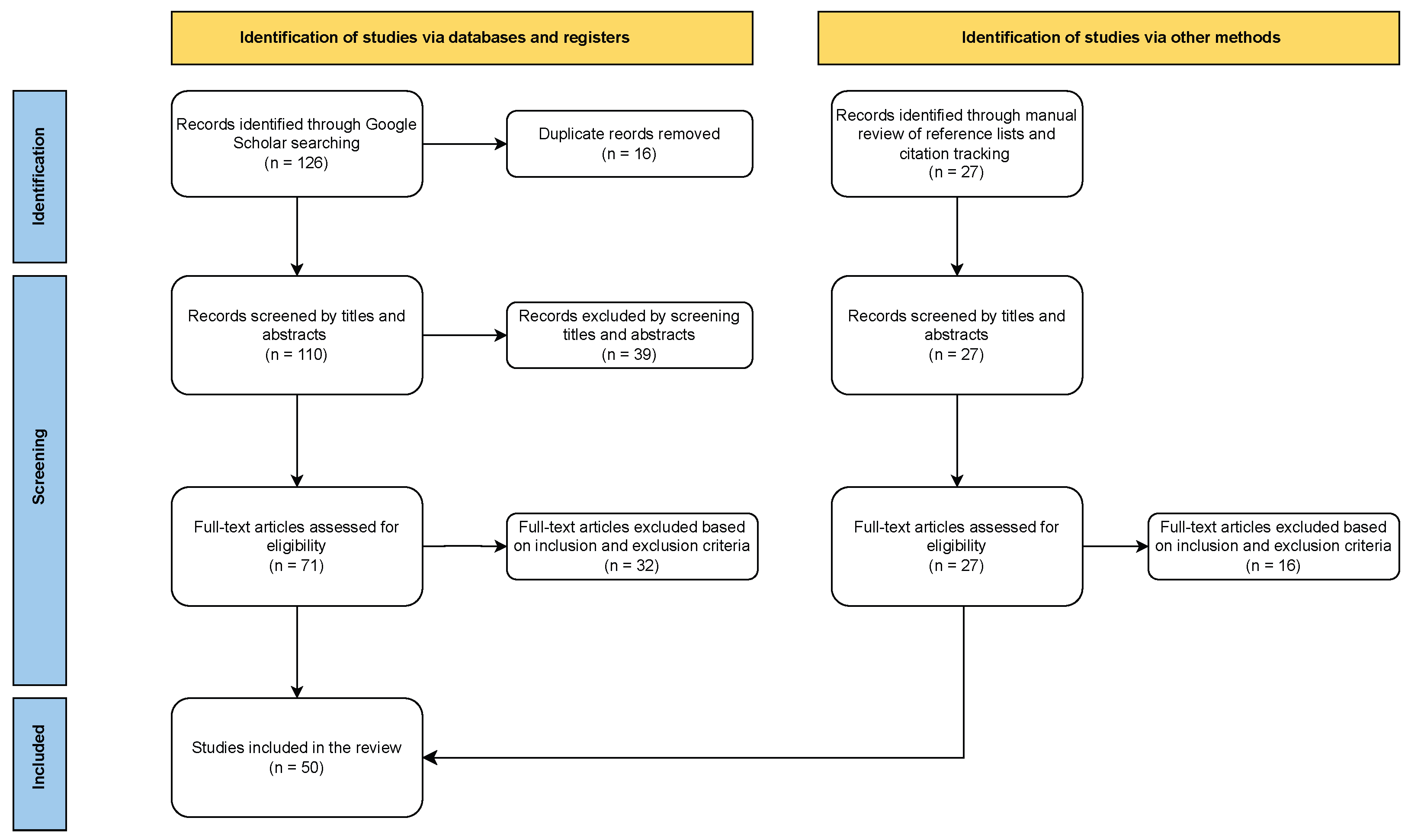
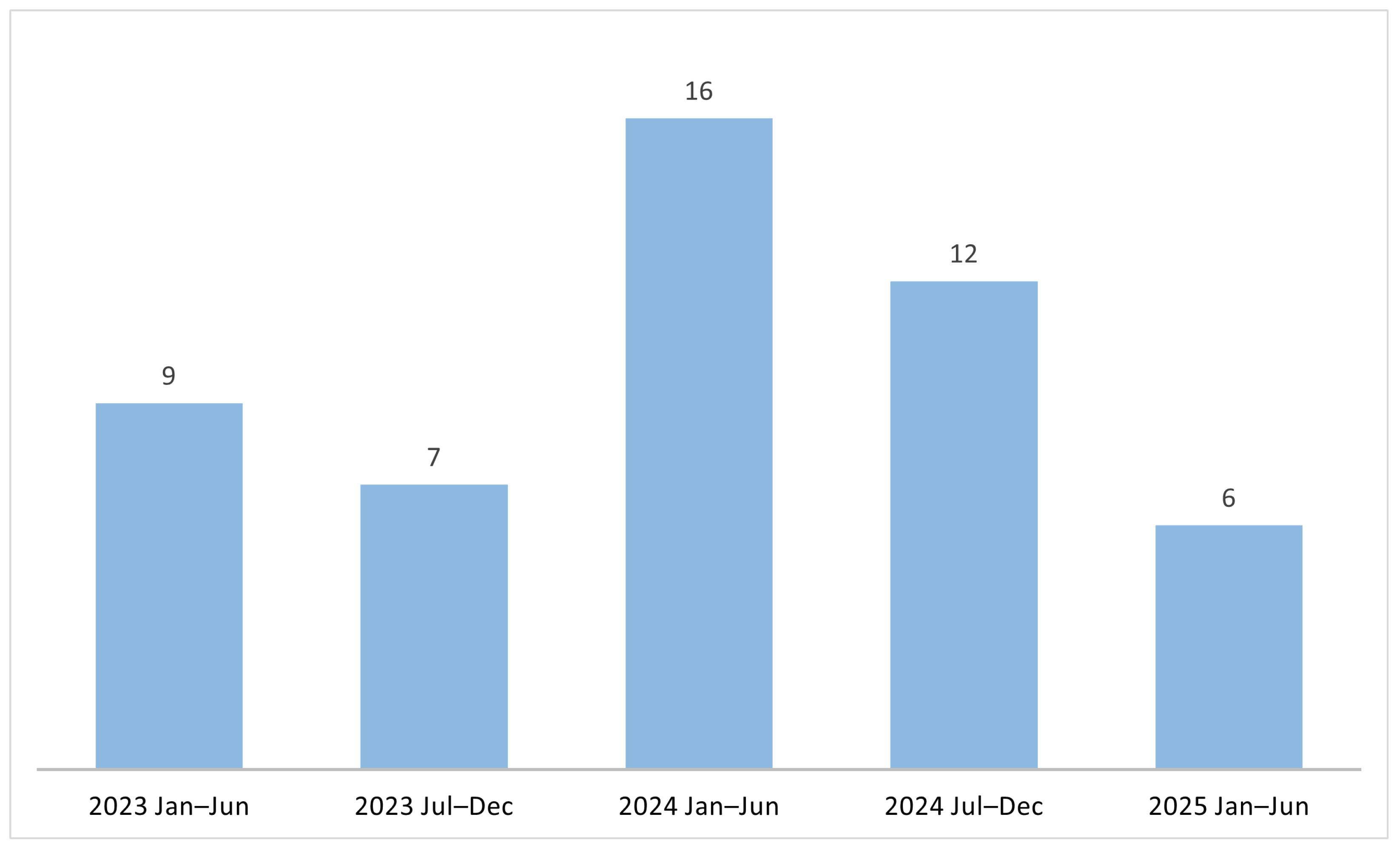
2. Definition, Rationale, and Method
3. Current GenAI Usage in Different HE Contexts
3.1. Teaching and Learning Context
3.1.1. Students’ GenAI Use
3.1.2. Instructors’ GenAI Use
3.2. Research Context
3.3. Student Affairs Context
4. GenAI’s Capabilities in Different HE Contexts
4.1. Learning Context
4.2. Teaching Context
4.3. Research Context
4.4. Student Affairs Context
5. Stakeholders’ Perceptions of GenAI Usage
5.1. Students’ Perceptions
5.1.1. Students’ Perceived Benefits
5.1.2. Students’ Perceived Concerns
5.1.3. Students’ Perceived Needs
5.2. Instructors’ Perceptions
5.2.1. Instructors’ Perceived Benefits
5.2.2. Instructors’ Perceived Concerns
5.2.3. Instructors’ Perceived Needs
5.3. Researchers’ Perceptions
5.3.1. Researchers’ Perceived Benefits
5.3.2. Researchers’ Perceived Concerns
5.3.3. Researchers’ Perceived Needs
5.4. Administrators’ Perceptions
5.4.1. Administrators’ Perceived Benefits
5.4.2. Administrators’ Perceived Concerns
5.4.3. Administrators’ Perceived Needs
6. Discussion of Commonalities and Differences Among Stakeholders
6.1. Commonalities
6.2. Differences
7. Limitations and Future Research Recommendations
8. Conclusions and Implications for Institutional Practice
Author Contributions
Funding
Institutional Review Board Statement
Informed Consent Statement
Data Availability Statement
Conflicts of Interest
Appendix A

| Contexts | Studies | Use Field | Capabilities Summary | GenAI Model/Software |
|---|---|---|---|---|
| Learning | (Chaudhry et al., 2023) | Academic plagiarism | A tool to complete the course assignments | ChatGPT |
| (Gilson et al., 2023) | Medical education | Supplement for learning: provide answers for professional questions with explanations, personalized responses | ChatGPT | |
| (Kung et al., 2023) | Medical education | Supplement for learning: share explanations and provide new perspectives | ChatGPT | |
| (Saini et al., 2024) | Education | Supplement for peer review (provide objective, clear, and immediate feedback) | NA | |
| (Yilmaz & Karaoglan Yilmaz, 2023) | Programming education | Learning tool for (enhancing) computational thinking skills, programming self-efficacy, and learning motivation | ChatGPT | |
| Teaching | (W. Dai et al., 2023) | Assessment, feedback | Auxiliary tool for textual assignments reviews (feedback on accuracy, completeness, and strategies or approaches with human oversight | GPT-4 |
| (Escalante et al., 2023) | Assessment, feedback | Auxiliary tool for writing and linguistic reviews with human oversight | ChatGPT | |
| (Popovici, 2024) | Assessment, feedback | Auxiliary tool for code reviews (with valid and clear explanations) with human oversight | ChatGPT | |
| (Tupper et al., 2023) | Class preparation | Auxiliary tool for course designs (preparing original or pre-existing course plan) with human instructions or guidance | ChatGPT | |
| Research | (Athaluri et al., 2023) | General research reporting | Proposal writing and reference generation | ChatGPT |
| (Lockwood, 2024) | Qualitative research | Auxiliary tool to combine rapid coding with human expertise and insights | GPT-4 | |
| (Zhang et al., 2024) | Qualitative research | Auxiliary tool for rapid coding and collaborative AI researcher for independent coding | GPT-3 | |
| Student Affairs | (Abdelhamid et al., 2025) | Academic advising | Provide quick and content-pertinent responses | GPT-4 |
| (Aguila et al., 2024) | Academic advising | Bring students immediate response and reduce advisors’ workload | Fine-tuned Llama 2 | |
| (Chang et al., 2024) | Career services | Provide immediate responses and up-to-date information and bridge the mentorship between students and human mentors | Gemini | |
| (Lekan & Pardos, 2024) | Academic advising | Provide major recommendations and Q&A for the major selection | GPT-4 |
Appendix B
| Studies | Research Methods | Country of Participants | Number of Participants | Data Collection |
|---|---|---|---|---|
| Students’ Perceptions | ||||
| (Baek et al., 2024) | Survey | NA | 1001 college students | Prolific online questionnaire |
| (Chan & Tsi, 2024) | Survey | China (Hong Kong and mainland China), Australia, United Kingdom/Ireland. Other regions: North America, East Asia, and Not specified | 399 undergraduates and graduates; 184 teachers | Online questionnaire |
| (Chan & Hu, 2023) | Survey | China (Hong Kong) | 399 undergraduates and graduates | Online questionnaire |
| (Zafar et al., 2024) | Survey | NA | 354 college students | Questionnaire |
| (Liu et al., 2024) | Mixed | China (Hong Kong and mainland China) | 232 undergraduates and 243 graduates | Qualtrics questionnaire and semi-structured interview |
| (Habib et al., 2024) | Mixed | NA | 100 undergraduates | Alternative Use Test and reflections |
| (Shoufan, 2023) | Mixed | NA | 56 senior students | One open-ended question (Stage 1) and questionnaire (Stage 2) |
| (Fuller & Barnes, 2024) | Mixed-method Case Study | NA | 11 graduates | Online questionnaire and semi-structured focus group interview |
| Students’ Perceptions | ||||
| (Luo, 2024b) | Interview | NA | 11 undergraduates and graduates | Zoom interviews (with concept mapping) and follow-up interviews |
| Instructors’ Perceptions | ||||
| (Cabellos et al., 2024) | Survey | NA | 321 Spain university teachers (public and private universities) | Questionnaire |
| (Petricini et al., 2023) | Survey | NA | 276 faculty and 380 students, at a public university in the eastern United States | Online questionnaire |
| (Chan & Lee, 2023) | Survey | China (Hong Kong and mainland China), Australia, United Kingdom/Ireland. Other regions: North America, East Asia, and Not specified | 184 teachers; 399 undergraduates and graduates | Questionnaire |
| (Chan & Tsi, 2024) | Survey | China (Hong Kong and mainland China), Australia, United Kingdom/Ireland. Other regions: North America, East Asia, and Not specified | 184 teachers; 399 undergraduates and graduates | Online questionnaire |
| (Johnson, 2024) | Survey | NA | 124 Leeds Beckett University teachers | Microsoft Forms questionnaire |
| (Lee et al., 2024) | Survey | NA | 30 University of Adelaide faculty | Qualtrics questionnaire |
| (Guo & Wang, 2024) | Mixed | China | 5 Chinese university teachers | Textual documents (e.g., student essay and teacher feedback) & questionnaire |
| (Firaina & Sulisworo, 2023) | Interview | NA | 5 Indonesian university lecturers | (No detailed information about interviews) |
| Researchers’ Perceptions | ||||
| (Andersen et al., 2025) | Survey | Denmark | 2534 researchers | Online questionnaire |
| (Watermeyer et al., 2024) | Survey | United Kingdom | 284 academics | Qualtrics questionnaire |
| (Salman et al., 2024) | Survey | Kingdom of Bahrain | 173 researchers | Google Form questionnaire |
| (Marshall & Naff, 2024) | Survey | NA | 101 researchers | Qualtrics questionnaire |
| (Abdullah & Zaid, 2023) | Qualitative Case Study | NA | 33 social science researchers | Online survey and semi-structured interview |
| (Nicholas et al., 2024) | Interview | China, Malaysia, Poland, Portugal, Spain, United Kingdom, and United States | 91 early-career researchers | Semi-structured, free-flowing interview |
| Administrators’ Perceptions (Policies) | ||||
| (Xiao et al., 2023) | Content Analysis | NA | NA | AI polices and guidelines of the top 500 universities (2022 QS ranking) |
| (McDonald et al., 2024) | Content Analysis | NA | NA | AI policies and guidelines of 116 R1 U.S. universities (Carnegie classification) |
| (H. Wang et al., 2024) | Content Analysis | NA | NA | AI polices and guidelines of the top 100 U.S. universities (2024 U.S. News ranking) |
| (Y. Dai et al., 2024) | Content Analysis | NA | NA | AI policies and guidelines of 30 Asia universities in the top 60 (2024 QS ranking) |
| (Cheng & Yim, 2024) | Content Analysis | NA | NA | 31 new articles for 8 Hong Kong universities’ AI policies |
| (Driessens & Pischetola, 2024) | Content Analysis | NA | NA | AI policies and guidelines of 8 Danish universities |
Appendix C
| Perceptions | S | I | R | A | |
|---|---|---|---|---|---|
| Benefits | Language support: writing proficiency, reading comprehension, proofreading, refining, or translation | Y | Y | Y | Y |
| Brainstorming and thinking support | Y | Y | Y | Y | |
| Time-saving and energy/effort-saving | Y | Y | Y | Y | |
| (To students) Providing immediate and personalized feedback, and clear explanations | Y | Y | Y | ||
| (To instructors) Facilitating class preparation and assessment | Y | Y | |||
| Checking/reviewing for any omissions | Y | Y | |||
| Good user experiences: easy-to-use, human-like conversation, and learning confidence and motivation boosting | Y | ||||
| (To students) Expanding horizons and enhancing digital capability | Y | ||||
| Research accelerator for more publications and higher productivity | Y | ||||
| Academic communication support | Y | ||||
| (To instructors) Supporting tailored learning for students | Y | ||||
| Concerns | Data privacy leakage and GenAI inaccuracy | Y | Y | Y | Y |
| GenAI access inequality | Y | Y | Y | Y | |
| Academic or research misconduct (e.g., plagiarism) | Y | Y | Y | Y | |
| Overreliance on GenAI: hindering critical thinking, creativity, autonomy, and capabilities | Y | Y | Y | ||
| Issues related to copyright, ownership, or authenticity | Y | Y | Y | ||
| Devaluation of postsecondary education | Y | Y | |||
| Student-faculty trust issues in the academic assessment | Y | ||||
| Job replacement | Y | ||||
| (To instructors) Challenge assessment accuracy for students’ learning | Y | ||||
| (To students) Lack of peer interaction | Y | ||||
| Concerns | (To students) Limited AI literacy skills | Y | |||
| Transparency of the GenAI system | Y | ||||
| More research workload | Y | ||||
| Low-quality research publications | Y | ||||
| Incompatibility in specific research fields | Y | ||||
| AI-detector inefficiency and unreliability | Y | ||||
| Needs | Develop GenAI literacy skills | Y | Y | Y | Y |
References
- Abdelhamid, S., Bangura, J., & Shah, S. (2025, March 20–21). Advisely: AI-powered academic advising using large language models (LLMs). New Perspectives in Science Education 14th Edition—International Conference, Florence, Italy. Available online: https://conference.pixel-online.net/library_scheda.php?id_abs=7058 (accessed on 31 May 2025).
- Abdullah, Z., & Zaid, N. M. (2023). Perception of generative artificial intelligence in higher education research. Innovative Teaching and Learning Journal, 7(2), 84–95. [Google Scholar] [CrossRef]
- Agbo, F. J., Olivia, C., Oguibe, G., Sanusi, I. T., & Sani, G. (2025). Computing education using generative artificial intelligence tools: A systematic literature review. Computers and Education Open, 9, 100266. [Google Scholar] [CrossRef]
- Aguila, A., Ngoc, N. T., Nguyen, N. A. D., Huynh, K. T., Mai, A., Le, T. D., & Tuyen, N. T. V. (2024). Large language model in higher education: Leveraging Llama2 for effective academic advising. In Proceedings of the 2024 international conference on advanced technologies for communications (ATC), Ho Chi Minh City, Vietnam, October 17–19 (pp. 590–595). IEEE. [Google Scholar] [CrossRef]
- Almassaad, A., Alajlan, H., & Alebaikan, R. (2024). Student perceptions of generative artificial intelligence: Investigating utilization, benefits, and challenges in higher education. Systems, 12(10), 385. [Google Scholar] [CrossRef]
- Andersen, J. P., Degn, L., Fishberg, R., Graversen, E. K., Horbach, S. P., Schmidt, E. K., Schneider, J. W., & Sørensen, M. P. (2025). Generative Artificial Intelligence (GenAI) in the research process—A survey of researchers’ practices and perceptions. Technology in Society, 81, 102813. [Google Scholar] [CrossRef]
- Athaluri, S. A., Manthena, S. V., Kesapragada, V. K. M., Yarlagadda, V., Dave, T., & Duddumpudi, R. T. S. (2023). Exploring the boundaries of reality: Investigating the phenomenon of artificial intelligence hallucination in scientific writing through ChatGPT references. Cureus, 15(4), e37432. [Google Scholar] [CrossRef] [PubMed]
- Baek, C., Tate, T., & Warschauer, M. (2024). “ChatGPT seems too good to be true”: College students’ use and perceptions of generative AI. Computers and Education: Artificial Intelligence, 7, 100294. [Google Scholar] [CrossRef]
- Cabellos, B., De Aldama, C., & Pozo, J. I. (2024). University teachers’ beliefs about the use of generative artificial intelligence for teaching and learning. Frontiers in Psychology, 15, 1468900. [Google Scholar] [CrossRef]
- Cao, Y., Li, S., Liu, Y., Yan, Z., Dai, Y., Yu, P. S., & Sun, L. (2023). A comprehensive survey of AI-generated content (AIGC): A history of generative AI from GAN to ChatGPT. arXiv. [Google Scholar] [CrossRef]
- Chan, C. K. Y., & Hu, W. (2023). Students’ voices on generative AI: Perceptions, benefits, and challenges in higher education. International Journal of Educational Technology in Higher Education, 20, 43. [Google Scholar] [CrossRef]
- Chan, C. K. Y., & Lee, K. K. (2023). The AI generation gap: Are Gen Z students more interested in adopting generative AI such as ChatGPT in teaching and learning than their Gen X and millennial generation teachers? Smart Learning Environments, 10, 60. [Google Scholar] [CrossRef]
- Chan, C. K. Y., & Tsi, L. H. (2024). Will generative AI replace teachers in higher education? A study of teacher and student perceptions. Studies in Educational Evaluation, 83, 101395. [Google Scholar] [CrossRef]
- Chang, C. N., Hui, J., Justus-Smith, C., & Wang, T. W. (2024). Navigating STEM careers with AI mentors: A new IDP journey. Frontiers in Artificial Intelligence, 7, 1461137. [Google Scholar] [CrossRef]
- Chaudhry, I. S., Sarwary, S. A. M., El Refae, G. A., & Chabchoub, H. (2023). Time to revisit existing students’ performance evaluation approach in higher education sector in a new era of ChatGPT—A case study. Cogent Education, 10(1), 2210461. [Google Scholar] [CrossRef]
- Chegg. (2025, January 28). Chegg global student survey 2025: 80% of undergraduates worldwide have used GenAI to support their studies—But accuracy a top concern. Chegg Investor Relations. Available online: https://investor.chegg.com/Press-Releases/press-release-details/2025/Chegg-Global-Student-Survey-2025-80-of-Undergraduates-Worldwide-Have-Used-GenAI-to-Support-their-Studies--But-Accuracy-a-Top-Concern/default.aspx (accessed on 3 October 2025).
- Cheng, M. W. T., & Yim, I. H. Y. (2024). Examining the use of ChatGPT in public universities in Hong Kong: A case study of restricted access areas. Discover Education, 3, 1. [Google Scholar] [CrossRef]
- Choe, C., Khalsa, G. K., Li, J., & Huang, Y. (2025). The state of generative AI 2025 [PDF]. Available online: https://www.paloaltonetworks.com/resources/research/state-of-genai-2025 (accessed on 3 October 2025).
- Dai, W., Lin, J., Jin, H., Li, T., Tsai, Y. S., Gašević, D., & Chen, G. (2023). Can large language models provide feedback to students? A case study on ChatGPT. In Proceedings of the 2023 IEEE international conference on advanced learning technologies (ICALT), Orem, UT, USA, July 10–13 (pp. 323–325). IEEE. [Google Scholar] [CrossRef]
- Dai, Y., Lai, S., Lim, C. P., & Liu, A. (2024). University policies on generative AI in Asia: Promising practices, gaps, and future directions. Journal of Asian Public Policy, 18(2), 260–281. [Google Scholar] [CrossRef]
- Digital Education Council. (2025, January 28). What faculty want: Key results from the global AI faculty survey 2025. Available online: https://www.digitaleducationcouncil.com/post/what-faculty-want-key-results-from-the-global-ai-faculty-survey-2025 (accessed on 3 October 2025).
- Driessens, O., & Pischetola, M. (2024). Danish university policies on generative AI: Problems, assumptions and sustainability blind spots. MedieKultur: Journal of Media and Communication Research, 40(76), 31–52. [Google Scholar] [CrossRef]
- Dube, S., Dube, S., Ndlovu, B. M., Maguraushe, K., Malungana, L., Kiwa, F. J., & Muduva, M. (2024). Students’ perceptions of ChatGPT in education: A rapid systematic literature review. In K. Arai (Ed.), Intelligent computing: SAI 2024 (Lecture Notes in Networks and Systems, Vol. 1019, pp. 258–279). Springer. [Google Scholar] [CrossRef]
- Ellucian. (2024, October 22). Ellucian’s AI survey of higher education professionals reveals surge in AI adoption despite concerns around privacy and bias. Available online: https://www.ellucian.com/newsroom/ellucians-ai-survey-higher-education-professionals-reveals-surge-ai-adoption-despite (accessed on 3 October 2025).
- Escalante, J., Pack, A., & Barrett, A. (2023). AI-generated feedback on writing: Insights into efficacy and ENL student preference. International Journal of Educational Technology in Higher Education, 20, 57. [Google Scholar] [CrossRef]
- Firaina, R., & Sulisworo, D. (2023). Exploring the usage of ChatGPT in higher education: Frequency and impact on productivity. Buletin Edukasi Indonesia, 2(01), 39–46. [Google Scholar] [CrossRef]
- Freeman, J. (2025, February). Student generative AI survey 2025 (HEPI Policy Note No. 61). Higher Education Policy Institute. Available online: https://www.hepi.ac.uk/2025/02/26/student-generative-ai-survey-2025/ (accessed on 16 May 2025).
- Fuller, M., & Barnes, N. (2024). The impact of ChatGPT on teaching and learning in higher education: Exploring the dual perspectives of participants who were students and teachers. New Directions for Higher Education, 2024(207), 31–46. [Google Scholar] [CrossRef]
- Gasaymeh, A., Abu Qbeita, A., AlMohtadi, R., & Beirat, M. (2025). Exploring education students’ use of ChatGPT for academic and personal purposes: Insights from a developing country context. Frontiers in Education, 10, 1580310. [Google Scholar] [CrossRef]
- Gehanno, J. F., Rollin, L., & Darmoni, S. (2013). Is the coverage of Google Scholar enough to be used alone for systematic reviews? BMC Medical Informatics and Decision Making, 13, 7. [Google Scholar] [CrossRef]
- Gilson, A., Safranek, C. W., Huang, T., Socrates, V., Chi, L., Taylor, R. A., & Chartash, D. (2023). How does ChatGPT perform on the United States Medical Licensing Examination (USMLE)? The implications of large language models for medical education and knowledge assessment. JMIR Medical Education, 9, e45312. [Google Scholar] [CrossRef]
- Guo, K., & Wang, D. (2024). To resist it or to embrace it? Examining ChatGPT’s potential to support teacher feedback in EFL writing. Education and Information Technologies, 29, 8435–8463. [Google Scholar] [CrossRef]
- Habib, S., Vogel, T., Anli, X., & Thorne, E. (2024). How does generative artificial intelligence impact student creativity? Journal of Creativity, 34(1), 100072. [Google Scholar] [CrossRef]
- Johnson, D. (2024). Exploring academic perspectives: A survey-based study on the impact of artificial intelligence in education. OSF Preprints. [Google Scholar] [CrossRef]
- Johnston, H., Wells, R. F., Shanks, E. M., Boey, T., & Parsons, B. N. (2024). Student perspectives on the use of generative artificial intelligence technologies in higher education. International Journal for Educational Integrity, 20, 2. [Google Scholar] [CrossRef]
- Kung, T. H., Cheatham, M., Medenilla, A., Sillos, C., De Leon, L., Elepaño, C., Madriaga, M., Aggabao, R., Diaz-Candido, G., Maningo, J., & Tseng, V. (2023). Performance of ChatGPT on USMLE: Potential for AI-assisted medical education using large language models. PLoS Digital Health, 2(2), e0000198. [Google Scholar] [CrossRef]
- Lee, D., Arnold, M., Srivastava, A., Plastow, K., Strelan, P., Ploeckl, F., Lekkas, D., & Palmer, E. (2024). The impact of generative AI on higher education learning and teaching: A study of educators’ perspectives. Computers and Education: Artificial Intelligence, 6, 100221. [Google Scholar] [CrossRef]
- Lekan, K., & Pardos, Z. A. (2024). AI-augmented advising: A comparative study of GPT-4 and advisor-based major recommendations. In Proceedings of the 2024 AAAI conference on artificial intelligence (Vol. 257, pp. 85–96). Proceedings of Machine Learning Research. ML Research Press. Available online: https://proceedings.mlr.press/v257/lekan24a.html (accessed on 31 May 2025).
- Liu, Y., Park, J., & McMinn, S. (2024). Using generative artificial intelligence/ChatGPT for academic communication: Students’ perspectives. International Journal of Applied Linguistics, 34(4), 1437–1461. [Google Scholar] [CrossRef]
- Liu, Y., & Wang, H. (2026). Who on earth is using generative AI? World Development, 199, 107260. [Google Scholar] [CrossRef]
- Lockwood, A. (2024). Human vs. machine: A comparative analysis of qualitative coding by humans and ChatGPT-4. OSF Preprints. [Google Scholar] [CrossRef]
- Luo, J. (2024a). A critical review of GenAI policies in higher education assessment: A call to reconsider the “originality” of students’ work. Assessment & Evaluation in Higher Education, 49(5), 651–664. [Google Scholar] [CrossRef]
- Luo, J. (2024b). How does GenAI affect trust in teacher–student relationships? Insights from students’ assessment experiences. Teaching in Higher Education, 30(4), 991–1006. [Google Scholar] [CrossRef]
- Lyu, W., Zhang, S., Chung, T., Sun, Y., & Zhang, Y. (2025). Understanding the practices, perceptions, and (dis)trust of generative AI among instructors: A mixed-methods study in U.S. higher education. Computers and Education: Artificial Intelligence, 8, 100383. [Google Scholar] [CrossRef]
- Marshall, D. T., & Naff, D. B. (2024). The ethics of using artificial intelligence in qualitative research. Journal of Empirical Research on Human Research Ethics, 19(3), 92–102. [Google Scholar] [CrossRef]
- Martín-Martín, A., Orduna-Malea, E., Thelwall, M., & López-Cózar, E. D. (2018). Google Scholar, Web of Science, and Scopus: A systematic comparison of citations in 252 subject categories. Journal of Informetrics, 12(4), 1160–1177. [Google Scholar] [CrossRef]
- McDonald, N., Johri, A., Ali, A., & Hingle, A. (2024). Generative artificial intelligence in higher education: Evidence from an analysis of institutional policies and guidelines. arXiv. [Google Scholar] [CrossRef]
- Mulford, D. (2025, March 6). AI in higher education: A meta summary of recent surveys of students and faculty. Campbell Academic Technology Services. Available online: https://sites.campbell.edu/academictechnology/2025/03/06/ai-in-higher-education-a-summary-of-recent-surveys-of-students-and-faculty (accessed on 3 October 2025).
- Na, H., Staudt Willet, K. B., Shi, H., Hur, J., He, D., & Kim, C. (2025). Initial discussions of ChatGPT in education-related subreddits. Journal of Research on Technology in Education, 57(5), 953–971. [Google Scholar] [CrossRef]
- Nicholas, D., Swigon, M., Clark, D., Abrizah, A., Revez, J., Herman, E., Bravo, B. R., Xu, J., & Watkinson, A. (2024). The impact of generative AI on the scholarly communications of early-career researchers: An international, multi-disciplinary study. Learned Publishing, 37(4), e1628. [Google Scholar] [CrossRef]
- Nikolic, S., Wentworth, I., Sheridan, L., Moss, S., Duursma, E., Jones, R. A., Ros, M., & Middleton, R. (2024). A systematic literature review of attitudes, intentions and behaviours of teaching academics pertaining to AI and generative AI (GenAI) in higher education: An analysis of GenAI adoption using the UTAUT framework. Australasian Journal of Educational Technology, 40(6), 56–75. [Google Scholar] [CrossRef]
- Pennsylvania State University. (2024, January 23). Penn State launches AI-powered chatbot to assist students around the clock. Available online: https://www.psu.edu/news/academics/story/penn-state-launches-ai-powered-chatbot-assist-students-around-clock (accessed on 16 May 2025).
- Petricini, T., Wu, C., & Zipf, S. T. (2023). Perceptions about generative AI and ChatGPT use by faculty and college students. OSF Preprints. [Google Scholar] [CrossRef]
- Popovici, M. D. (2024). ChatGPT in the classroom: Exploring its potential and limitations in a functional programming course. International Journal of Human–Computer Interaction, 40(22), 7743–7754. [Google Scholar] [CrossRef]
- Rasul, T., Nair, S., Kalendra, D., Balaji, M. S., de Oliveira Santini, F., Ladeira, W. J., Rather, R. A., Yasin, N., Rodriguez, R. V., Kokkalis, P., Murad, M. W., & Hossain, M. U. (2024). Enhancing academic integrity among students in the GenAI era: A holistic framework. The International Journal of Management Education, 22(3), 1–13. [Google Scholar] [CrossRef]
- Saini, A. K., Cope, B., Kalantzis, M., & Zapata, G. C. (2024). The future of feedback: Integrating peer and generative AI reviews to support student work. OSF Preprints. [Google Scholar] [CrossRef]
- Salman, H., Aliif, M., Ibrahim, R., & Mahmood, J. (2024). Technology readiness for generative AI among academic researchers. In Proceedings of the 2024 international conference on innovation and intelligence for informatics, computing, and technologies (3ICT), Virtual, November 17–19 (pp. 329–336). IEEE. [Google Scholar] [CrossRef]
- Schei, O. M., Møgelvang, A., & Ludvigsen, K. (2024). Perceptions and use of AI chatbots among students in higher education: A scoping review of empirical studies. Education Sciences, 14(8), 922. [Google Scholar] [CrossRef]
- Shoufan, A. (2023). Exploring students’ perceptions of ChatGPT: Thematic analysis and follow-up survey. IEEE Access, 11, 38805–38818. [Google Scholar] [CrossRef]
- Smolansky, A., Cram, A., Raduescu, C., Zeivots, S., Huber, E., & Kizilcec, R. F. (2023). Educator and student perspectives on the impact of generative AI on assessments in higher education. In Proceedings of the tenth ACM conference on learning @ scale, Copenhagen, Denmark, July 20–22 (pp. 378–382). Association for Computing Machinery. [Google Scholar] [CrossRef]
- Sousa, A. E., & Cardoso, P. (2025). Use of generative AI by higher education students. Electronics, 14(7), 1258. [Google Scholar] [CrossRef]
- Stanford University. (n.d.). Cardy the tree chatbot. Financial Aid. Available online: https://financialaid.stanford.edu/cardy/ (accessed on 16 May 2025).
- Tsinghua University. (2025, February 26). Tsinghua University library AI service new experience. News & Events. Available online: https://lib.tsinghua.edu.cn/en/info/1021/1416.htm (accessed on 16 May 2025).
- Tupper, M., Hendy, I. W., & Shipway, J. R. (2023). Field courses for dummies: Can ChatGPT design a higher education field course? OSF Preprints. [Google Scholar] [CrossRef]
- University of Auckland. (n.d.). AI assistants at the university. Available online: https://www.auckland.ac.nz/en/privacy/ai-assistants-university.html (accessed on 16 May 2025).
- University of California, Berkeley. (2025). Chatbot. UC Berkeley Cal Student Central. Available online: https://studentcentral.berkeley.edu/chatbot/ (accessed on 16 May 2025).
- University of Edinburgh. (2024, May 10). An insight into our new service, the AskedHelp chatbot service. EDiNA. Available online: https://web.archive.org/web/20250114192156/https://edina.ac.uk/blog/edhelp-launch-april2024/ (accessed on 16 May 2025).
- University of Georgia. (n.d.). Introducing archie, OSFA’s virtual advisor. Office of Student Financial Aid. Available online: https://osfa.uga.edu/announcement/introducing-archie-osfas-virtual-advisor/ (accessed on 16 May 2025).
- Wang, H., Dang, A., Wu, Z., & Mac, S. (2024). Generative AI in higher education: Seeing ChatGPT through universities’ policies, resources, and guidelines. Computers and Education: Artificial Intelligence, 7, 100326. [Google Scholar] [CrossRef]
- Wang, K. D., Wu, Z., Tufts, L. N., Wieman, C., Salehi, S., & Haber, N. (2025). Scaffold or crutch? Examining college students’ use and views of generative AI tools for STEM education. In Proceedings of the 2025 IEEE global engineering education conference (EDUCON), London, UK, April 22–25 (pp. 1–10). IEEE. [Google Scholar] [CrossRef]
- Watermeyer, R., Phipps, L., Lanclos, D., & Knight, C. (2024). Generative AI and the automating of academia. Postdigital Science and Education, 6(2), 446–466. [Google Scholar] [CrossRef]
- Xiao, P., Chen, Y., & Bao, W. (2023). Waiting, banning, and embracing: An empirical analysis of adapting policies for Generative AI in higher education. arXiv. [Google Scholar] [CrossRef]
- Yilmaz, R., & Karaoglan Yilmaz, F. G. (2023). The effect of generative artificial intelligence (AI)-based tool use on students’ computational thinking skills, programming self-efficacy and motivation. Computers and Education: Artificial Intelligence, 4, 100147. [Google Scholar] [CrossRef]
- Zafar, S., Shaheen, F., & Rehan, J. (2024). Use of ChatGPT and generative AI in higher education: Opportunities, obstacles and impact on student performance. iRASD Journal of Educational Research, 5(1), 1–12. [Google Scholar] [CrossRef]
- Zhang, H., Wu, C., Xie, J., Rubino, F., Graver, S., Kim, C., Carroll, J. M., & Cai, J. (2024). When qualitative research meets large language model: Exploring the potential of QualiGPT as a tool for qualitative coding. arXiv. [Google Scholar] [CrossRef]


| Inclusion | Exclusion | |
|---|---|---|
| Study Type | Empirical studies | Non-empirical studies |
| Publication Type | Peer-reviewed journal articles, conference papers/proceedings, preprints | Other types of publications: books, reviews, grey literature |
| Publication Date | Studies published from January 2023 to April 2025 | Studies outside the period |
| Language | English | Non-English |
Disclaimer/Publisher’s Note: The statements, opinions and data contained in all publications are solely those of the individual author(s) and contributor(s) and not of MDPI and/or the editor(s). MDPI and/or the editor(s) disclaim responsibility for any injury to people or property resulting from any ideas, methods, instructions or products referred to in the content. |
© 2026 by the authors. Licensee MDPI, Basel, Switzerland. This article is an open access article distributed under the terms and conditions of the Creative Commons Attribution (CC BY) license.
Share and Cite
Qian, Y.; Bowman, N.A. Toward Responsible Integration: A Review of Applications, Capabilities, and Perceptions of Generative AI in Higher Education. Educ. Sci. 2026, 16, 323. https://doi.org/10.3390/educsci16020323
Qian Y, Bowman NA. Toward Responsible Integration: A Review of Applications, Capabilities, and Perceptions of Generative AI in Higher Education. Education Sciences. 2026; 16(2):323. https://doi.org/10.3390/educsci16020323
Chicago/Turabian StyleQian, Ying, and Nicholas A. Bowman. 2026. "Toward Responsible Integration: A Review of Applications, Capabilities, and Perceptions of Generative AI in Higher Education" Education Sciences 16, no. 2: 323. https://doi.org/10.3390/educsci16020323
APA StyleQian, Y., & Bowman, N. A. (2026). Toward Responsible Integration: A Review of Applications, Capabilities, and Perceptions of Generative AI in Higher Education. Education Sciences, 16(2), 323. https://doi.org/10.3390/educsci16020323