1. Introduction
Kazakhstan is a multilingual country located in Central Asia, where Kazakh functions as the state language and Russian retains the status of an official language widely used in education, administration, and everyday communication. In recent decades, English has become a global lingua franca (
Seidlhofer, 2005) associated with international academic mobility, access to global scientific discourse, and professional competitiveness. In Kazakhstan, English occupies the status of a compulsory foreign language within the higher education system and is regarded as an essential component of higher education policy and a prerequisite for academic progression, including admission to postgraduate programs. The privileged status of English is demonstrated in the State Mandatory Standard of Higher and Postgraduate Education (
SMSHPE, 2022). In accordance with it, students are able to communicate in oral and written forms in an FL. Moreover, despite the implementation of the program “Trilingual Education”, which mostly aimed at enhancing Kazakh students’ English language communicative skills, it remains largely confined to classroom instruction and is rarely used as a medium of everyday or academic interaction. This discrepancy between formal language policy and actual communicative practice is reflected in international proficiency indicators. According to the EF English Proficiency Index (
EF EPI, n.d.), Kazakhstan ranked 103rd out of 116 countries worldwide in 2024, which indicates a low level of English language proficiency among the population. These findings highlight the persistent challenge of developing effective communicative skills in contexts where exposure to authentic language use is limited.
An additional contextual factor influencing English language learning in Kazakhstan is the ongoing transition from the Cyrillic to the Latin alphabet. Although this reform aims to strengthen integration into the global educational and informational space, it may create additional cognitive and orthographic challenges for learners who simultaneously operate across different writing systems, potentially affecting reading fluency and language processing in a foreign language.
One of the pedagogical solutions to this challenge is the creation of a foreign language learning environment (FLLE) that simulates real-life communication and supports active language use. Creating such an environment is particularly relevant in contexts where English is studied as an FL and opportunities for natural interaction are limited.
FLLEs can be understood as pedagogically designed systems in which communicative development depends on how classroom interaction, instructional materials, and digital tools are organized to support active language use. Accordingly, communicative competence in this study is defined as learners’ ability to engage in meaningful speaking tasks and sustain interaction rather than merely demonstrate grammatical knowledge.
The present study adopts a communicative competence framework grounded in the interactionist and communicative traditions of language learning, which emphasize meaning-focused interaction, strategic language use, and contextual appropriateness as central outcomes of foreign language education. From this perspective, the learning environment is not a neutral backdrop for instruction but an active pedagogical construct that shapes the quantity and quality of communicative opportunities available to learners.
Building on existing models of foreign language learning environments, this study conceptualizes the FLLE as an integrated system comprising four interrelated components: pedagogical resources, physical learning space, motivational strategies, and ICT integration. While previous research has often examined these elements in isolation, the present research is guided by the assumption that communicative competence development is most effectively supported when these components function as a coherent whole rather than as independent variables.
The relevance of this research is particularly pronounced in the Kazakhstani higher education context, where English is taught predominantly as a foreign language and opportunities for authentic communicative practice remain limited despite strong policy-level support. Unlike ESL settings, exposure to English in Kazakhstan is largely confined to formal instructional environments, which restricts sustained interaction and contributes to a gap between curricular objectives and actual communicative outcomes.
Unlike ESL contexts, where exposure to English occurs naturally through everyday interaction, English in Kazakhstan is predominantly confined to formal instructional settings. This limitation significantly reduces learners’ opportunities for sustained communicative practice and contributes to a persistent gap between curricular objectives and actual communicative outcomes.
Within this educational and sociolinguistic context, the deliberate construction of a foreign language learning environment that simulates authentic communication becomes not merely a methodological option but a pedagogical necessity. Accordingly, the present study empirically examines how specific, modifiable components of an FLLE can compensate for limited natural exposure and foster the development of foreign language communicative competence in Kazakhstani higher education.
Previous research often addresses learners’ attitudes, while the structural and methodological components that directly influence communicative competence are less explored. Moreover, recent technological advances, particularly in ICT and AI-based tools, offer new opportunities for creating immersive and interactive learning environments that could strengthen language acquisition outcomes.
Therefore, with the aforementioned gaps in mind, this study aims to investigate the effectiveness of the modified components of an FLLE including pedagogical resources, physical environment, motivational strategies and ICT integration in fostering students’ communicative competence. It seeks to determine how these components can be optimized to enhance English language proficiency in higher education settings. The findings are expected to contribute to both theoretical understanding and practical application of an FLLE design for non-native learning contexts.
2. Literature Review
The concept of a foreign language learning environment (FLLE) is commonly interpreted in educational research as a multidimensional construct encompassing pedagogical, psychological, social, and technological conditions that support language acquisition. Early theoretical perspectives emphasized the interaction between the learner and the surrounding environment as a determining factor of educational outcomes (
Lewin, 1936;
Murray, 1938;
Walberg, 1981). Within foreign language pedagogy, this interaction was later reconceptualized as a purposefully constructed instructional space designed to compensate for the lack of natural language immersion (
Lyakhovitsky, 1981). Contemporary studies describe the FLLE as an artificially modeled environment that integrates instructional materials, communicative practices, and contextual conditions to promote active language use and communicative competence development in non-native settings (
Kiatkheeree, 2018;
Poplavskyi et al., 2021).
Foreign language communicative competence is typically understood as a multidimensional ability to use language appropriately and effectively in real communicative situations, rather than as the mastery of grammatical forms alone. The widely cited framework of communicative competence proposed by
Canale and Swain (
1980) emphasizes that successful communication requires not only linguistic accuracy but also pragmatic and strategic resources that allow learners to maintain interaction and overcome communication breakdowns. In line with this view, communicative language teaching highlights the role of interaction and meaning-focused tasks as key conditions for competence development (
Richards, 2001;
Nunan, 1991).
Krashen (
1984) argued that a structured artificial environment created in the classroom may be more conducive to language acquisition than unstructured exposure to native settings, as it allows intentional design of input, interaction, and affective factors. However, in many EFL contexts, genuine communicative practice is limited because classroom interaction is often constrained and does not fully replicate real-life unpredictability. Therefore, a purposefully constructed FLLE can be seen as a pedagogical mechanism that increases learners’ exposure to meaningful input, interaction, and communicative tasks, thereby supporting the development of communicative competence in non-native settings (
Poplavskyi et al., 2021).
Although the structure of a foreign language learning environment can be conceptualized in various ways, existing research demonstrates considerable variation in how its components are classified and prioritized. Some models emphasize socio-cultural and interpersonal dimensions, while others focus on instructional, physical, motivational, or technological factors shaping language learning conditions (
Zandvliet, 1999;
Kiatkheeree, 2018). In the present study, the FLLE is conceptualized through four interrelated components: pedagogical resources, physical learning environment, motivational strategies, and ICT integration. This selection is based on the premise that these components represent the most directly modifiable pedagogical variables within higher education settings and can be purposefully designed and adjusted by institutions and instructors. Social interaction, learner characteristics, and teacher–student relations are not excluded from the model; rather, they are embedded within the pedagogical and motivational dimensions of the environment, as they are enacted through communicative tasks, instructional practices, and classroom interaction. Such an approach allows for a focused yet comprehensive analysis of FLLE components that have a direct impact on communicative competence development and can be empirically examined in an institutional context.
2.1. Pedagogical Resources
Pedagogical resources are considered the core component of FLLE, as they define the instructional framework, materials, and methods that shape language learning.
Richards (
2001) highlights the significance of teaching materials and textbooks as the primary sources of language content and methodological guidance, emphasizing that they should be adapted to specific educational conditions, and be updated all the time to be contextually relevant to enhance students’ engagement. This view aligns with
Alhamami and Ahmad (
2018), who found that outdated textbooks and textbooks that were compiled by European authors reduce motivation and hinder oral performance as they fail to reflect local cultural realities.
Regarding teaching methods and instructional design,
Barr and Gillespie (
2003) stress that communicative strategies and pedagogical design directly influence interaction quality and learning outcomes. Similarly,
Sağlam and Salı (
2013) point out that methodological choices and the structure of the classroom activities play a decisive role in building an effective FLLE.
Chaiyasat and Intakaew (
2023) further demonstrate that implementing communicative teaching techniques in university classrooms significantly increases participation and reduces students’ silence, providing their effectiveness for communicative competence development.
The curriculum works in tandem with teaching methods, ensuring that communicative objectives and authentic tasks are systematically embedded in classroom practice.
Shaalan (
2023) confirms that curriculum design and classroom organization remain among the leading determinants of language learning effectiveness in higher education, highlighting the strong interdependence between the structure of instructional programs and student engagement.
Macalister and Nation (
2019) conceptualize language curriculum design as a coherent system in which communicative goals, instructional content, classroom tasks, and assessment are aligned to ensure that language learning is grounded in meaningful use rather than isolated skill practice.
From a communicative competence perspective, pedagogical resources are particularly influential, as they determine the extent to which learners are engaged in meaning-focused interaction, spontaneous language use, and task-based communication rather than mechanical practice.
2.2. Physical Environment
The physical environment constitutes another essential component of the FLLE, as it provides the spatial and material conditions for communicative learning. A growing body of research indicates that a well-organized and adequately equipped classroom enhances both engagement and performance.
Hanaysha et al. (
2023) and
Kiatkheeree (
2018) found that thoughtfully designed learning spaces promote collaboration and positively influence student’s academic outcomes. Additional support was seen in prior studies of
Ahmad et al. (
2017) and
Softa (
2011), which point out that comfortable, flexible, and supportive environments sustain motivation and concentration during communicative tasks.
Likewise, several studies link classroom design directly with learners’ willingness to communicate and participate.
Hosseini et al. (
2022),
Aomr et al. (
2020) and
Nja et al. (
2023) observe that an inviting, interactive setting reduces anxiety and encourages active involvement in speech-based activities.
2.3. Motivational Strategies
Motivation in foreign language teaching is increasingly viewed not as a purely psychological trait but as a function of the environment in which learning occurs. As
Dörnyei (
2001),
Oxford and Shearin (
1994),
Hosseini et al. (
2022) argue, motivation is sustained when learners experience emotional safety, autonomy, and meaningful engagement. Within the FLLE framework, motivational strategies therefore operate through pedagogical, social and technological mechanisms that collectively reinforce learners’ willingness to participate in communicative activity. Classroom motivation can be maintained through authentic, interaction-oriented tasks (
Guilloteaux & Dörnyei, 2008;
Lamb, 2017) and empathetic teacher communication that emphasizes encouragement over error correction (
Chambers, 1999). These strategies reduce anxiety and enhance learners’ self-efficacy, allowing them to view language use as a tool for expression rather than evaluation.
Modern research increasingly considers foreign language learning as a process in which cognitive, motivational and affective factors form a single system. In this context, the concept of Positive L2 Self and the language mindset is of particular importance. Thus,
Yang et al. (
2024), based on structural modeling, show that self-sustained learning, the language mindset, and intercultural communication skills are in an interdependent relationship and mediate the formation of a positive image of “I am an L2 speaker.” Their results confirm that sustainable foreign language development is impossible without internal motivation and the student’s ability to self-regulate, especially in an EFL environment where contact with language is limited by formal educational frameworks.
Beyond instructional interaction, motivation is strongly reinforced through social and technological extensions of the learning environment. Studies show that peer collaboration and informal communication settings increase students’ willingness to speak (
Toboula, 2021;
Liana et al., 2024), and persist in language use (
Malu & Smedley, 2016,
Handayani et al., 2023). English language clubs and extracurricular sessions replicate real-world communicative situations, providing opportunities for spontaneous language use in low-pressure conditions. Furthermore, technology-enhanced communication significantly amplifies motivation by creating access to authentic interlocutors.
Karimova and Zhumataeva (
2020) report that students demonstrate greater interest in English when classes incorporate audiovisual materials, supplementary ICT resources, and opportunities for online interaction with foreigners, noting that such formats significantly strengthen their interest and confidence in speaking. Thus, motivational strategies within FLLE are not limited to isolated interventions but emerge from the strategic integration of communicative tasks, supportive teacher behaviors, peer interaction, and ICT-mediated engagement.
By sustaining learners’ willingness to communicate and reducing anxiety, motivational strategies create favorable conditions for the development of communicative competence, enabling students to use language more confidently and spontaneously.
2.4. ICT Integration
In the present study, information and communication technologies (ICT) tools are defined as digital and AI-based resources used to support and extend communicative language practice beyond traditional classroom interaction. These tools include audiovisual platforms, online communication forums, and conversational AI applications.
While technology has widely been recognized as a motivational catalyst within the FLLE, its role extends far beyond affective stimulation. ICT tools operate not only as enhancers of students’ engagement but as an independent structural component of the language environment. In contexts where natural language exposure is limited, digital platforms and AI-based applications often become the primary medium through which learners immediately access authentic materials and experience authentic communication (
Erbaggio, 2012;
Mohammed, 2021;
Mandarsari, 2023).
Kupchyk and Litvinchuk (
2021) and
Alghmadi (
2024) further demonstrate that ICT resources stimulate sustained engagement by allowing students to personalize their practice, regulate their progress, and participate in communicative tasks.
A similar perspective is articulated by
Zhumatayeva et al. (
2024), who argue that traditional instructional methods often lack the immersive and interactive qualities required for the development of real-world communicative skills. These limitations underscore the need for pedagogical tools and approaches capable of providing more realistic, interactive, and meaningful language practice. Such conditions can be effectively simulated through well-designed AI-based learning environments, in which the learning process is organized as an interactive exchange and learners’ communicative competence is developed with the support of intelligent technologies. Moreover, AI-powered chatbots, virtual assistants, and conversational systems can improve students’ speaking skills, lead to participation in interviews, and conducting discussions (
Zhumatayeva et al., 2024).
This position aligns with earlier research by
Tazhitova et al. (
2025), who emphasize the importance of digitally mediated interaction and dialogic learning in fostering communicative competence in foreign language education. Findings of
Tazhitova et al. (
2025) highlight that communication-oriented digital tools can approximate authentic interaction by enabling sustained dialog, contextual responsiveness, and learner-centered engagement—principles that are conceptually extended in contemporary AI-driven language learning environments.
In this regard, conversational AI tools, particularly automated dialog-generating models such as ChatGPT, represent a new frontier in addressing the communicative gap in language education. Acting as interactive agents, these tools are capable of engaging learners in contextually relevant dialog, providing immediate feedback, modeling target-language responses, and adapting interaction to the learner’s proficiency level.
The reviewed literature indicates that effectiveness of an FLLE depends not on isolated interventions but on the combined influence of its pedagogical, physical, motivational and technological components. Although each domain contributes to language exposure and communicative engagement, their impact is maximized when they are implemented as an interconnected system. However, most existing studies analyze these elements separately, with limited research examining their interaction within a unified framework, particularly in non-English-speaking higher education contexts. This gap is especially evident in Central Asia, where English proficiency is prioritized yet communicative outcomes remain insufficient. Accordingly, the present study investigates the joint effect of pedagogical resources, classroom conditions, motivational strategies, and ICT integration on the development of communicative competence, aiming to provide an empirically grounded model of FLLE enhancement in Kazakhstani university settings.
3. Materials and Methods
3.1. Research Design
The study employed a quasi-experimental research design with control and experimental groups to evaluate the effectiveness of modified FLLE components on the development of foreign language communicative competence. The methodology combined comparative analysis, synthesis of theoretical and methodological literature, pedagogical intervention, and statistical evaluation. Quantitative data processing was performed using the IBM SPSS Statistics (Version 26), and the Mann–Whitney U test was applied to confirm baseline equivalence between the groups. Following the intervention, the post-test results were compared in order to observe performance shifts between the groups.
3.2. Participants
The research was carried out on the basis of Pavlodar Pedagogical University named after Alkey Margulan. A total of 69 third-year undergraduate students majoring in the specialty “Foreign languages: two foreign languages” took part in the experiment. Of the total sample (N = 69), five participants (7.2%) were male, and 64 participants (92.8%) were female. The experimental group (EG) consisted of 35 students, while the control group (CG) included 34 students.
All participants had studied English as a foreign in secondary school. In addition to English, most students had experience learning Russian and Kazakh, which are compulsory languages of instruction in the national education system. Thus, participants entered the university with a multilingual educational background shaped by the Kazakhstani school curriculum.
The participants were selected based on intact academic groups, which ensured comparable instructional conditions for both the experimental and control groups. The participants’ English proficiency at the beginning of the research corresponded approximately to the B1–B2 levels of the Common European Framework of Reference for Languages (CEFR).
All participants voluntarily took part in the study and provided informed consent. The research procedures complied with institutional ethical standards and ensured anonymity and confidentiality of participants’ data.
3.3. Intervention Structure
The intervention targeted four main FLLE components: pedagogical resources, physical environment, motivational strategies, and ICT integration. The CG received a standard instruction, while the experimental group (EG) experienced modifications across all four domains through the practice of speaking and writing course.
The curriculum was adapted using Backward Design principles, which emphasize planning instruction by first identifying intended learning outcomes, then determining appropriate assessment methods, and finally designing instructional activities aligned with these goals. This approach ensures coherence between learning objectives, assessment, and classroom practice, particularly in communicative language teaching contexts where performance-based outcomes are prioritized (
Wiggins & McTighe, 2005). It was successfully implemented into the educational process.
Additionally, a new textbook “Communicative English” with authentic texts and task-based activities was developed and put into practice. The instruction in the EG classroom followed a Communicative Language Teaching (CLT) approach.
The EG classroom was redesigned into an interactive FLLE-based space equipped with movable chairs, interactive boards, laptops, headphones, speakers to promote collaboration and student mobility.
A weekly English Club provided low-pressure speaking sessions with movies, music, debates, and occasional native speaker participation to foster intrinsic motivation and confidence.
Digital tools such as audiovisual platforms, messaging forums, and AI-driven technology as ChatGPT (GPT-4 model, OpenAI) were integrated to simulate authentic communication and extend interaction beyond classroom hours. In the experimental group, ChatGPT was systematically used as a speaking partner in simulated dialogs, as a speaking evaluator in reflective monologs, and a moderator in interactive debates. In other words, conversational AI functioned as an interactive agent, enabling students to engage in contextually relevant communication beyond limited classroom interaction, while the instructor acted primarily as a facilitator.
3.4. Procedure
The experiment was divided into 4 stages.
Stage I (an exploratory stage) consisted of selecting participants, studying the educational program, syllabuses, teaching materials, thematic plan of the “English Club”, classrooms, and the equipment used in classes were studied in detail. Based on the analysis of this data, changes were made to the educational program, a textbook was compiled for classroom work to improve Foreign Language Communicative Competence (FLCC). In addition to that, an improved design of the classroom, diagnostic tests and speaking assignments were prepared for the participants of the experiment.
Stage II (an ascertaining stage) determined the initial level of students’ training in the field of the FLCC. As a diagnostic tool for identifying the basic level of learners’ training and speaking assignments (task-based dialogs, role-plays) for evaluating the communicative skills of the participants the research group chose a test containing complex multi-level questions. The maximum score for the test was 70 points and 30 for the speaking assignments, totaling 100. The diagnostic test was administered in written form. The speaking section was checked by experienced teachers of the department.
Stage III (a formative stage). A 15-week training course for students in both groups. During this stage, students attended English classes for 3 academic hours per week. Outside the classroom, learners were additionally exposed to English through freely accessible Internet resources, online content, social media, and extracurricular activities, including English Club sessions. The instruction in EG included modifications described earlier. The training of the students in CG was organized with no adjustments.
Stage IV (a control stage) assessed the level of training achieved by the students. The final assessment also consisted of 2 parts: a test and speaking tasks.
3.5. Instruments and Assessment
The research used three instrumental tools: a diagnostic test and a final test to assess students’ results, and a speaking performance evaluation rubric.
4. Results
The main purpose of the ascertaining part of the experiment was to determine the initial level of students by means of conducting a diagnostic test and speaking tasks. The maximum score for the test was 100 points (70 points for the test and 30 for speaking). The average number of points scored by all students from control and experimental groups for the preliminary test was defined according to the arithmetic mean (simple) formula. A simple arithmetic mean is an average number, in which the total volume of a given feature in a data set is equally distributed among all units included in this set.
The results of the preliminary test on formation of FLCC of experimental and control groups are presented in
Table 1.
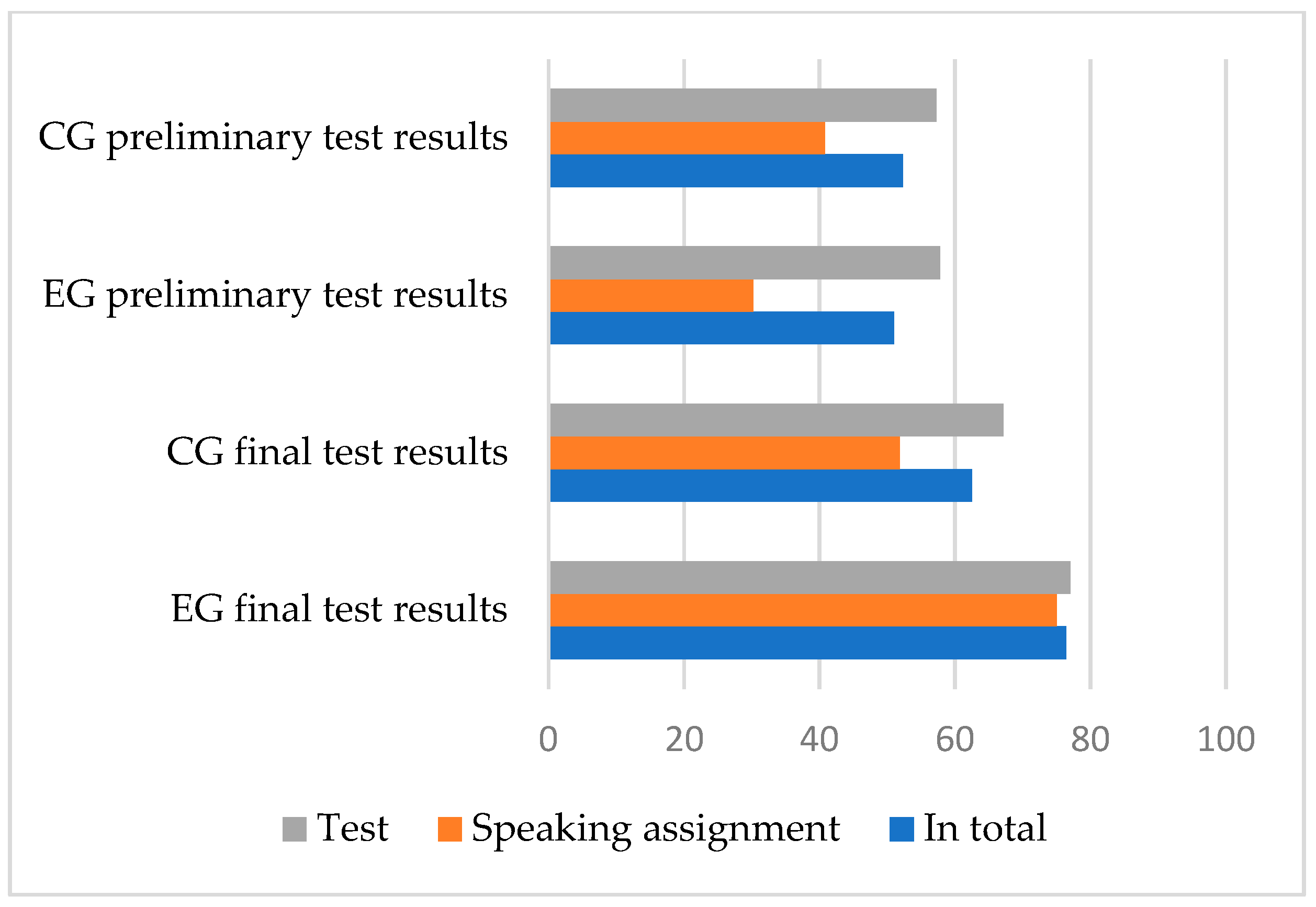
Comparing the CG and EG results at Stage II has showed that while the students’ levels are almost identical, there is a 10% discrepancy in the number of right responses for the speaking part, suggesting that EG students have particular difficulty with oral competency. Nevertheless, the overall average number of correct answers (52.3 for CG and 51 for EG) also confirms the fact that the initial values for the main indicators in both groups were comparable, which indicates the homogeneity of the samples and equality of the starting positions of the groups.
The results of the preliminary cut on the ascertaining stage of the experiment of both experimental and control groups have shown only 51.6% of correct answers, which lead to the conclusion that the FLCC has not been formed and the necessity of implementing a FLLE with modified components is conditioned.
As presented in
Table 1, the initial levels of foreign language communicative competence in the control and experimental groups were comparable. The overall average scores obtained by students in both groups indicate similar starting positions prior to the formative intervention.
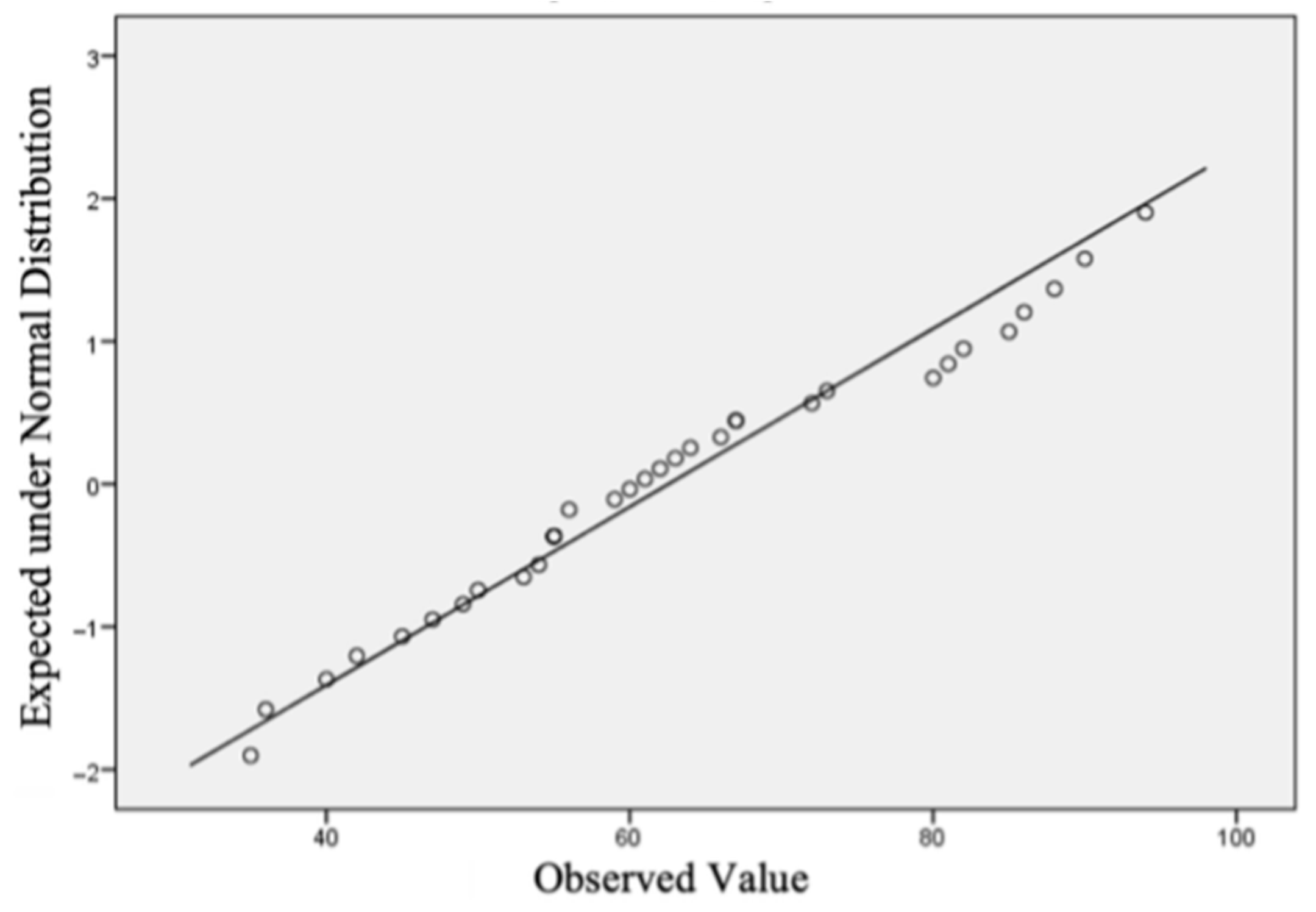
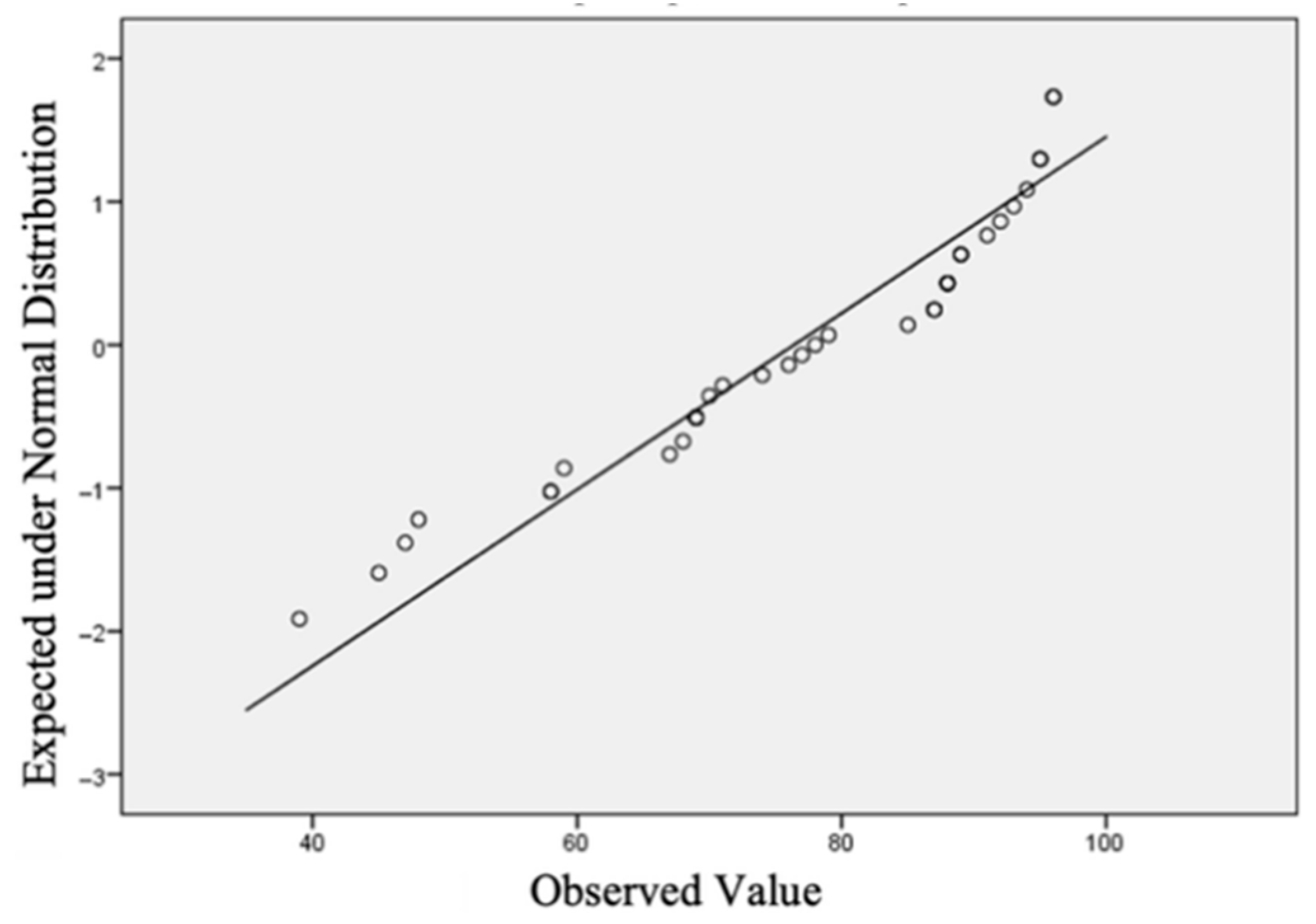
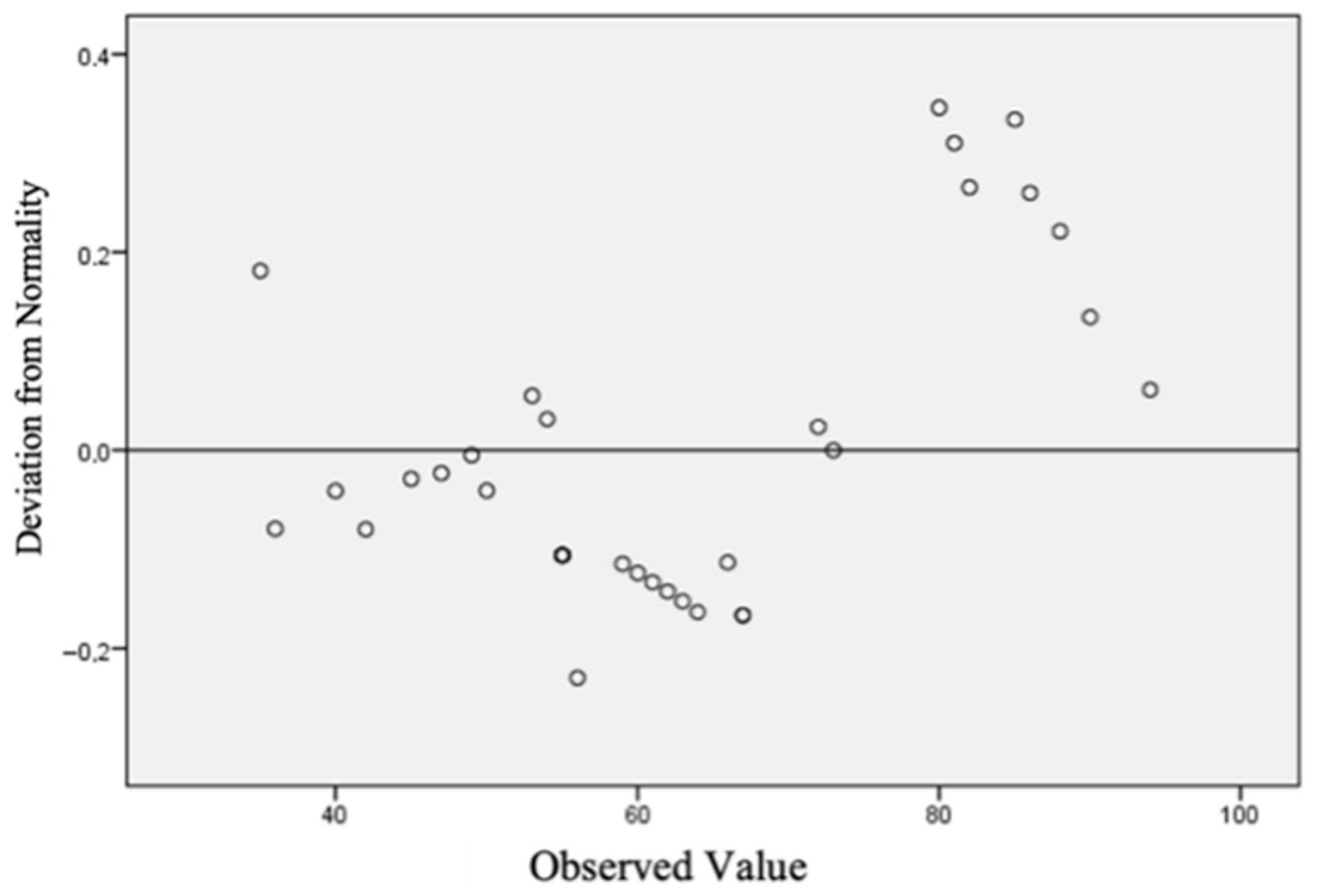
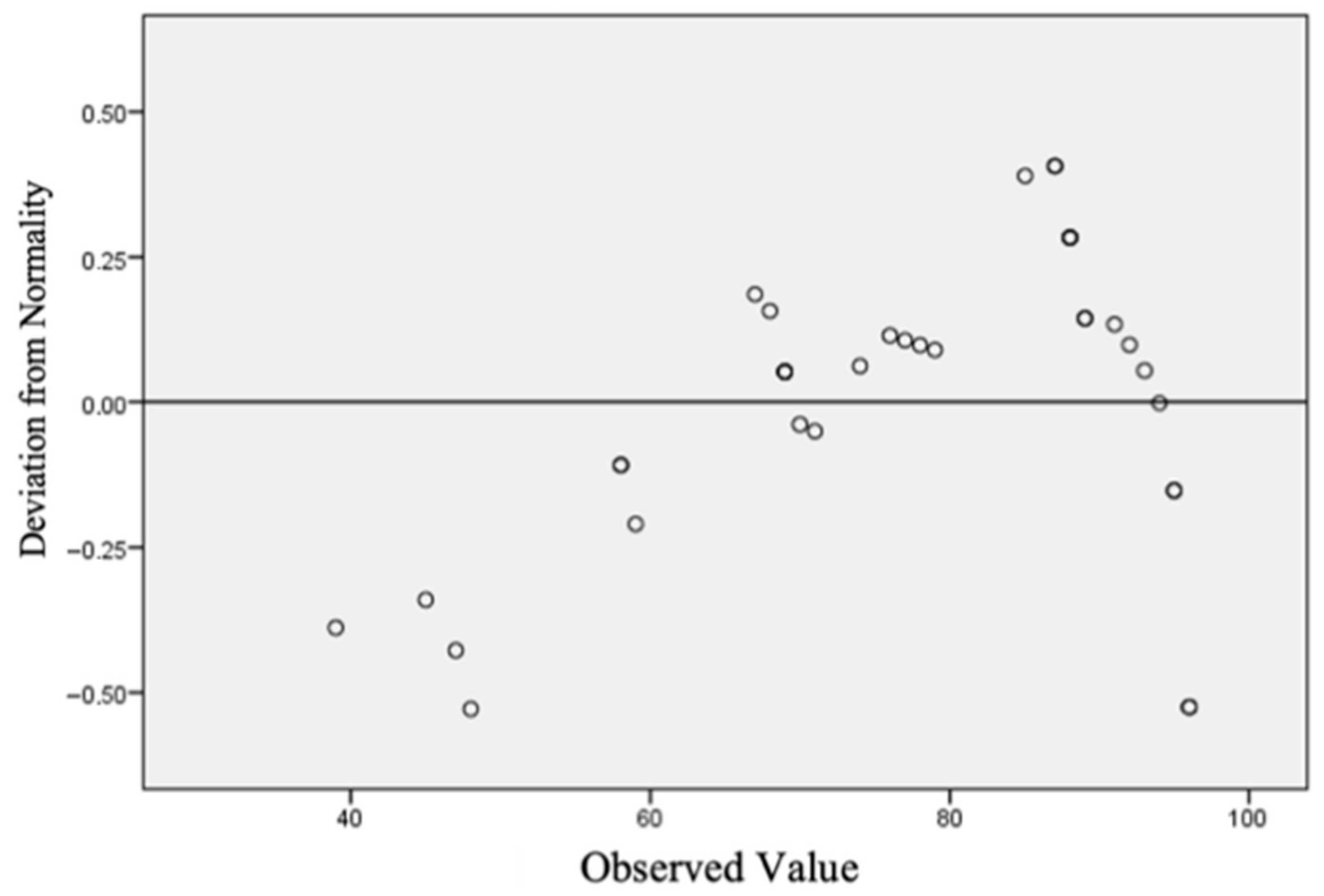
To statistically verify the equivalence of the groups at the pre-test stage, a Mann–Whitney U-test was conducted. As the data did not meet the assumption of normal distribution, as illustrated by the Q–Q plots (
Figure 1,
Figure 2,
Figure 3 and
Figure 4), a non-parametric statistical approach was applied. The analysis revealed no statistically significant difference between the experimental and control groups in terms of total communicative competence scores (U = 591.50, Z = −0.04,
p = 0.966). This result confirms the homogeneity of the samples and indicates that the groups were equivalent at the initial stage of the experiment.
Figure 1,
Figure 2,
Figure 3 and
Figure 4. Q–Q plots illustrating the distribution of total communicative competence scores at the pre-test and post-test stages for the control and experimental groups.
Following the 15-week formative stage, a final assessment was administered to evaluate changes in students’ foreign language communicative competence. The post-test replicated the structure of the pre-test, thereby ensuring the comparability of results across the two measurement points. The aim of the control stage was to assess the students’ academic progress in English using the same arithmetic mean formula. The results are given in
Table 2.
Descriptive statistics indicated that both the control and experimental groups demonstrated improvement in overall communicative competence by the end of the instructional period. Notably, the experimental group achieved higher post-test mean scores than the control group.
In addition to statistical significance, the magnitude and educational relevance of the observed effect warrant consideration. The statistically significant Mann–Whitney U test result (U = 311.00, Z = −3.41, p = 0.001) indicates not only a reliable difference between the groups but also a meaningful impact of the instructional intervention on students’ foreign language communicative competence.
The direction and strength of the effect suggest that the experimental instructional approach contributed substantially to learners’ communicative development beyond what could be attributed to general instructional progress or maturation effects observed in the control group. From a pedagogical perspective, the higher post-test performance of the experimental group reflects enhanced integration of linguistic, pragmatic, and interactional skills, which are central to communicative competence in foreign language learning.
Importantly, the observed gains demonstrate practical significance, as they indicate improvements that are likely to be noticeable in real communicative contexts rather than merely in test performance. This supports the instructional model’s effectiveness in fostering transferable communicative abilities and underscores its potential applicability in foreign language pedagogy at the tertiary level.
A comparative overview of changes in foreign language communicative competence across the ascertaining and control stages of the experiment is presented in
Figure 5.
At the end of Stage IV of the experiment, the final data for the CG were obtained, as presented in
Table 2. Average percentage of correct answers on the test increased from 57.2% to 67.1%, while performance on the speaking task rose from 40.8% to 51.8%. Overall, the total number of correct answers increased by 10.2%, indicating a moderate improvement in the CG outcomes.
However, the EG demonstrated substantially higher results across all measured parameters. A particularly pronounced difference was observed at the control stage of the experiment. In terms of the average percentage of correct answers on the test, the EG outperformed the CG by 9.9%. An even larger disparity was found in speaking performance, with a 23.2% difference between the two groups.
These findings support the conclusion that the development of both receptive and productive language skills was considerably more effectively facilitated by the foreign language learning environment implemented in the EG. Of particular importance is the more than twofold increase in speaking indicators, which provides quantitative evidence of a marked improvement in the communicative skills of EG students and directly corresponds to the primary objective of the study. In addition, EG students achieved 13.9% more points in the average total number of correct answers, further indicating a strong effect of the experimental intervention.
The comparison of preliminary and final test results (
Figure 1) revealed a markedly different dynamic between the two groups. While the control group demonstrated only a moderate overall increase in correct responses (10.2%), the experimental group showed a substantially higher improvement (25.4%) across both receptive and productive components, confirming the effectiveness of the foreign language learning environment implemented in the experimental condition.
Given that the study involved two independent samples, it was necessary to examine whether the observed differences were statistically significant. Preliminary analysis indicated deviations from normality in the data distribution for both groups, as illustrated in
Figure 2,
Figure 3,
Figure 4 and
Figure 5. Consequently, a non-parametric statistical procedure was required.
To verify statistically significant differences between the experimental and control groups at the ascertaining and control stages of the experiment, the Mann–Whitney U test was employed. This test is appropriate for comparing two independent samples when the assumption of normality is violated and allows for assessing differences in the level of foreign language communicative competence between groups.
The following hypotheses were formulated:
H0. The experimental group does not exceed the control group in the level of FLCC formation.
H1. The experimental group exceeds the control group in the level of FLCC formation.
The statistically significant difference between the 2 groups in terms of FLCC formation was tested using the value of asymptotic significance (two-sided), which means, if p > 0.05, then the hypothesis H0 is accepted. If p ≤ 0.05, then hypothesis H1 is accepted (hypothesis H0 is rejected).
The criterion statistics indicate that the level of asymptotic significance for the overall score at the ascertaining stage was 0.966 (
p > 0.05). The results of the Mann-Whitney U test at the ascertaining stage of the experiment are presented in
Table 3. Accordingly, the null hypothesis (H
0) was accepted, confirming with a 95% level of confidence that the experimental group did not exceed the control group in terms of FLCC prior to the intervention. This result verifies the initial equivalence of the two groups and ensures the validity of subsequent comparisons.
Criterion statistics show that the asymptotic significance is as follows:
Following the completion of the control stage, the data revealed substantial changes in the level of FLCC development among students in the experimental group. Although positive dynamics were also observed in the control group, these improvements were primarily limited to the average level. The most pronounced increase was recorded in the speaking component within the experimental group, which directly corresponded to the primary objective of the study.
Overall, the results obtained at the control stage demonstrate a clear advantage of the experimental group. The marked growth in productive speech activity (speaking) provides empirical support for the effectiveness and pedagogical feasibility of the implemented FLLE.
5. Discussion
A comprehensive analysis of the factors contributing to the relatively low level of English language communicative competence in Kazakhstani higher education institutions indicates that communicative outcomes in non-native contexts are strongly mediated by environmental conditions rather than by instructional content alone. In settings where exposure to English is largely confined to formal classroom instruction, the deliberate construction of a supportive foreign language learning environment becomes a critical pedagogical mechanism for fostering meaningful language use.
The statistically significant differences observed between the experimental and control groups at the post-test stage provide empirical evidence for the effectiveness of the modified foreign language learning environment implemented in this research. Given the absence of significant differences at the pre-test stage, the post-intervention outcomes may be attributed to the instructional conditions introduced during the formative phase rather than to initial disparities in learners’ proficiency. These findings suggest that communicative competence development emerged from the coordinated interaction of multiple FLLE components rather than from isolated methodological interventions. In particular, the integrated modification of pedagogical resources, classroom organization, motivational support, and ICT-enhanced interaction contributed to more favorable communicative outcomes, especially in speaking performance.
These results are consistent with prior research emphasizing the role of integrated learning environments in fostering learner engagement and communicative confidence. At the same time, the present study extends the existing literature by demonstrating that such integration can be effectively operationalized within a higher education context characterized by limited natural exposure to English, such as that of Kazakhstan. The findings therefore reinforce the value of a holistic environmental approach, in which communicative competence development is shaped by the alignment of instructional, spatial, motivational, and technological dimensions.
Particular emphasis should be placed on pedagogical resources when designing an effective FLLE. The statistical results demonstrate that students’ academic performance is strongly influenced by updated teaching materials as well as by instructional strategies and tactics that prioritize interaction-oriented language use. The relationship between these variables is further supported by previous research. In this regard, the present findings are consistent with those reported by
Sağlam and Salı (
2013), who showed that students frequently prioritize teaching aids and instructional approaches when responding to learning environment questionnaires.
The results also support the assumption that the physical learning environment directly affects academic performance. Even minor modifications in spatial organization and flexibility—such as arranging seating in a face-to-face format rather than positioning students back-to-back—were found to enhance learners’ willingness to communicate. This observation is corroborated by earlier studies (
Tafani, 2003;
Softa, 2011;
Ahmad et al., 2017), which reported that face-to-face interaction positively influences student engagement and participation in communicative tasks.
Furthermore, the organization of English-speaking clubs and the integration of ICT in university classrooms were found to exert a substantial influence on student motivation and sustained communicative engagement. Similar components have been documented in previous research (
Bourina & Dunaeva, 2019), which characterizes ICT as a virtually unlimited resource for the development of communicative competence, particularly in contexts where opportunities for authentic language interaction are otherwise restricted.
6. Conclusions
The present study aimed to examine whether a foreign language learning environment structured around four interdependent components—pedagogical resources, physical learning space, motivational strategies, and ICT integration—could facilitate the development of FLCC among university students. The findings confirm that communicative progress was achieved not through isolated methodological adjustments, but through the coordinated implementation of these components as an integrated pedagogical system. When interaction-oriented materials were combined with flexible classroom design, reinforced through extracurricular speaking activities, and extended via digital communication and AI-based tools, students demonstrated more active, confident, and autonomous language use.
These outcomes indicate that communicative competence in non-native contexts can be effectively fostered without reliance on natural immersion, provided that the learning environment is intentionally designed to promote interaction. Accordingly, universities aiming to improve language learning outcomes should prioritize curriculum relevance, classroom redesign, ICT accessibility, and structured peer interaction as interconnected elements of pedagogical planning.
Although the intervention was conducted within a single institutional setting, the FLLE model developed in this study offers a scalable framework applicable to both EFL and ESL instruction in comparable educational contexts. Overall, the findings underscore the pedagogical value of adopting an FLLE-based approach as a central strategy for enhancing communicative competence development.