Article

Phoneme Automaticity: A Test of the Phonemic Proficiency Hypothesis

by
David D. Paige
1 and
William H. Rupley
2,*
1
Department of Curriculum & Instruction, Northern Illinois University, DeKalb, IL 60115, USA
2
Teaching, Learning, and Culture, Advanced Literacy Studies, Texas A&M University, College Station, TX 77845, USA
*
Author to whom correspondence should be addressed.
Educ. Sci. 2026, 16(2), 286; https://doi.org/10.3390/educsci16020286
Submission received: 25 October 2025 / Revised: 20 January 2026 / Accepted: 26 January 2026 / Published: 10 February 2026
(This article belongs to the Special Issue Advances in Evidence-Based Literacy Instructional Practices)

Abstract

Readers use letter-sound knowledge and blending skills to consciously decode unfamiliar words, gradually building a large inventory of recognizable words. The storage of these words in long-term memory depends on forming connections between phonological sounds and their written forms, which results in a highly accurate and automatic recall of word pronunciations. For words to be read instantly, these phoneme-grapheme connections need to operate automatically, allowing for rapid, effortless recognition. In this study, we examine the connections between rapid access to phonemic sounds, spelling ability, and word reading among first- and second-grade students. Using a quantitative, correlational design, we examined first- and second-grade students’ performance on timed phoneme substitution, spelling, and sight-word reading and tested predictive relations using ordinary least squares regression. The results show that rapid skill in substituting phonemes directly predicts both automatic word reading and spelling. This finding highlights the importance of developing quick phonemic manipulation skills, which are essential for achieving fluent, precise word reading.

1. Phoneme Automaticity

Learning to read words involves the mapping of orthographic, phonological, and semantic information, which becomes automatically accessed through practice (Seidenberg, 2005). In this paper, orthographic mapping refers to the process by which readers permanently store written words through forming stable phoneme–grapheme connections (Ehri, 2005, 2014). Phonological awareness is awareness of spoken language units ranging from words and syllables to onset–rime, whereas phonemic awareness is the ability to identify and manipulate individual phonemes, the smallest units of sound in speech. Graphemes are the printed letters or letter combinations that represent phonemes. Automaticity refers to rapid, largely unconscious processing that requires minimal attentional effort (LaBerge & Samuels, 1974). Orthographic mapping theory explains how words are stored when phonemes become bonded to their constituent graphemes (Ehri, 2005, 2014). However, research suggests that phonemic awareness and word reading share a reciprocal relationship, rather than a unidirectional one (Perfetti, 1991; Castles & Coltheart, 2004). This study explores which phonemic awareness skills best predict automatic word reading and whether the instant phoneme substitution skill provides additional predictive power.
Automaticity theory notes that for word identification to be automatic, all contributing sub-processes must be automatic (Rawson & Middleton, 2009). Automaticity develops as children repeatedly link phonemes and graphemes during decoding and spelling. With practice, these links become rapid and require less conscious attention, allowing words to be recognized more efficiently. Once these processes consolidate, words can be identified instantly, freeing cognitive resources for comprehension. (Ehri, 2005; Kilpatrick, 2015). The extent to which a word is read automatically reflects the efficiency of its orthographic mapping (Perfetti, 2007). This bonding efficiency can be estimated through the assessment of the reader’s automatic access to phonemes and letter sounds. As such, rapid or instant response to phoneme substitution tasks reveals bonding efficiency due to orthographic mapping that is essential to automatic word reading. We focus on first- and second-grade readers because it is at this developmental reading level that orthographic mapping and rapid phoneme access are consolidating and can be reliably measured. To explore this further, there are two areas of interest in this study. First, we analyze phonemic awareness skills to identify those most associated with automatic word reading. Next, we investigate whether the ability to instantly perform phoneme tasks is related to word-reading automaticity.

1.1. Phonic Decoding to Mapping

The self-teaching hypothesis (Share, 1995, 1999, 2004) proposes that a code-oriented process occurs to determine unfamiliar words, and this process is responsible for developing the orthographic lexicon. The hypothesis argues that each successful decoding attempt provides an opportunity for the reader to acquire word-specific orthographic knowledge. Over time, these self-generated decoding episodes accumulate, building the orthographic lexicon and supporting the shift from effortful decoding to automatic word recognition. The process of determining word pronunciation includes phonic decoding, which is termed phonological recoding. Contextual guessing and phonological recoding using graphophonemic correspondences (GPC) are mechanisms that readers use to build an orthographic lexicon. To this, Goswami (1986) and Ehri (2005) add analogizing (e.g., once cat has been learned, sat can be more easily learned). Of these mechanisms, it is the conscious process of phonic decoding that is essential in building a lexicon of thousands of words that are recognized on sight (Caravolas et al., 2001; Robbins et al., 2010; Treiman et al., 2019). While familiar words are quickly recognized using the orthographic memory of those words, the reader uses phonological recoding to pronounce unfamiliar words (Jorm & Share, 1983).
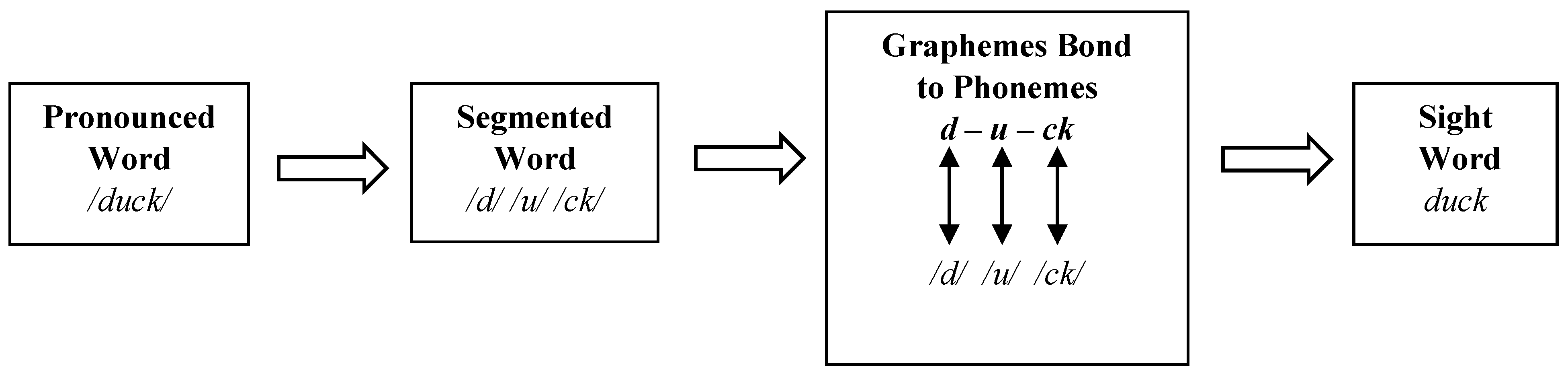
Figure 1 summarizes the conscious phonological recoding steps a reader uses when encountering a new word, while Figure 2 illustrates how repeated successful encounters support the formation of durable phoneme–grapheme bonds that underlie automatic recognition. As shown in Figure 1, reading an unfamiliar word begins with a pre-phonemically analyzed word (i.e., the phonemes are analyzed by way of their graphemes). At this point, the reader has matched each letter or letter combination to its constituent sound using their phoneme analysis skill. These sounds are then blended into a potential word pronunciation. Upon being pronounced, the word is matched to a known word in the reader’s lexical vocabulary, which results in a confirmed word pronunciation (Gonzalez-Frey & Ehri, 2020). While the self-teaching phonological recoding process explains how word pronunciation is generated, it does not explain how words become encoded into long-term memory.
As shown in Figure 2, the orthographic mapping process begins with the pronounced word. After one or more exposures, letters and phonemes within the segmented pronunciation become merged to result in a high-quality lexical representation stored in long-term memory. For many readers, several successful encounters reading the given word helps encode the word’s orthographic sequence into long-term memory that is foundational to fast and accurate word recognition, which no longer requires attention to phonic decoding (Brooks, 1977; Cunningham, 2006; Hogaboam & Perfetti, 1978; Jorm & Share, 1983; LaBerge & Samuels, 1974; Logan, 1988; Manis, 1985; Reitsma, 1983; Share, 1999, 2004; Share & Shalev, 2004).
This study addresses a critical gap in the existing evidence base. While decades of research have established phonemic awareness as a strong predictor of reading, less is known about which specific phonemic skills best support the development of automatic word reading, particularly when response speed is considered. Prior studies have examined Phoneme Mmanipulation tasks broadly, but few have systematically investigated the role of instantaneous phoneme substitution in relation to orthographic mapping and automaticity. Furthermore, spelling has often been studied as an outcome of reading development rather than as a predictive indicator of the size and stability of the orthographic lexicon. By examining both spelling and response speed in phoneme substitution tasks, this study expands upon earlier work on orthographic mapping (Ehri, 2005, 2014) and PA automaticity (Perfetti, 2007; Kilpatrick, 2015) with a novel methodological approach. In doing so, it contributes both theoretically, by refining our understanding of phonemic proficiency, and practically by identifying assessment practices that may better predict children’s reading trajectories.

1.2. Phonemic Proficiency Hypothesis

Kilpatrick (2020) notes that through orthographic mapping, the bonding of GPCs (i.e., the relationships between letters and phonemes in print) is necessary for their subsequent unitization to occur, resulting in an instantly pronounced word. Consistent with automaticity theory, for a process to be automatic, all contributing sub-processes must also be automatic (Rawson & Middleton, 2009). The orthographic mapping theory maintains that word pronunciation is stored by linking phonemes to their corresponding graphemes. In this paper, we treat orthographic mapping as the broader mechanism of long-term word storage, and phonemic proficiency as a specific, speed-based component that may help explain individual differences in how efficiently mapping occurs.
Kilpatrick explains that if a word’s pronunciation is automatic, the bonded, GPSs hypothesized by orthographic mapping must also be automatic. Phonemic proficiency is defined by Kilpatrick (2020) as instant and unconscious access to phonemes and their graphemic constituents comprising the sound structure of spoken language. Kilpatrick’s (2015, 2020) phonemic proficiency hypothesis argues that while letter-sound knowledge and phonemic awareness may be sufficient for phonic decoding of a word, efficient orthographic mapping requires both letter-sound proficiency and phonemic proficiency. One of the questions in this study is how to determine when a student likely possesses phonemic proficiency.
Interestingly, while Ehri frequently refers to the automatic retrieval of words from long-term memory because of orthographic mapping, she has not extensively discussed the role of automaticity in forming precise grapheme–phoneme connections during the encoding of words into memory. Miles and Ehri (2019) mention the concept of “phonemic proficiency” (pp. 66–67), which refers to the reader’s ability to quickly and accurately access the individual sounds within spoken words as a skill that plays a critical role in orthographic mapping. This aligns with Kilpatrick’s (2015) assertion that skilled readers have “quick access” (p. 363) to phonemes, enabling efficient word recognition.
In her later work, Ehri (2020) describes how phoneme–grapheme connections, once firmly established in lexical memory, can be activated “spontaneously” (p. 547) upon encountering their corresponding printed representation. This suggests that once orthographic mapping has occurred, word recognition becomes an automatic process that does not require conscious effort. Additionally, Roembke et al. (2019) propose that automaticity operates at multiple stages within the word reading process, including the grapheme–phoneme correspondence (GPC) connections central to orthographic mapping, as originally hypothesized by Perfetti (2007). Collectively, these insights highlight the importance of automaticity in the development of efficient and fluent reading.

1.3. Phonological and Phonemic Awareness

Phonological awareness is a hierarchical construct encompassing awareness of larger language units such as words, syllables, and onset–rime, progressing toward phonemic awareness, the ability to isolate and manipulate individual phonemes (Anthony & Francis, 2005; Treiman & Zukosky, 2005). Unlike oral language, phonemic awareness does not emerge naturally but requires explicit instruction within an alphabetic writing system (Castles & Coltheart, 2004; Foorman & Torgesen, 2001; National Reading Panel, 2000).
A large body of longitudinal and experimental evidence demonstrates that phonemic awareness is both predictive of and causally related to reading acquisition (Bradley & Bryant, 1983; Ehri et al., 2001; Lundberg et al., 1988; Wagner et al., 1997). Intervention studies further confirm its role, showing that explicit phonemic awareness instruction enhances decoding, word recognition, and overall reading achievement (Blachman et al., 2004; Hulme et al., 2012). As children learn to manipulate phonemes with increasing precision, they become better able to form and retrieve grapheme–phoneme correspondences during decoding and spelling, which is foundational to the development of automatic word identification.

1.4. Orthographic Mapping and Automaticity

Orthographic mapping explains how phoneme–grapheme connections become permanently stored in memory, allowing words to be recognized automatically (Ehri, 2005, 2014). Automaticity theory (LaBerge & Samuels, 1974) and the lexical quality hypothesis (Perfetti, 2007) propose that fluent reading depends on rapid, unconscious retrieval of these representations. Research suggests that the degree of automaticity in phonemic processing determines the efficiency of orthographic mapping (Kilpatrick, 2015, 2020). Thus, measuring not only accuracy but also speed of phonemic responses may provide a more precise indicator of a child’s developing proficiency.

1.5. Phoneme Manipulation and Response Time

Among phonemic awareness tasks, Phoneme Manipulation (isolation, deletion, and substitution) consistently shows stronger associations with reading achievement than blending or segmentation (Catts et al., 2001; Muter et al., 2004; Perfetti et al., 1987). This may be because manipulation tasks require the integration of multiple subskills. However, most studies have relied on untimed measures, leaving open the question of whether the speed of phoneme manipulation better reflects automatic access to phoneme–grapheme connections. A small number of studies outside English orthographies suggest that timed phoneme tasks are uniquely predictive of reading fluency (Vaessen & Blomert, 2010; Pourcin et al., 2016). In English, preliminary work suggests similar effects, but empirical evidence remains limited (Ashby et al., 2013; Kitz & Tarver, 1989). This represents a notable gap in the literature.

1.6. Phoneme Substitution as an Index of Phonemic Proficiency

Phoneme substitution is widely regarded as cognitively demanding because it requires the coordinated execution of multiple component processes. To successfully substitute a phoneme, the reader must (a) segment the spoken word into its constituent phonemes, (b) suppress the original phoneme, (c) retrieve the target phoneme, and (d) recombine the revised phoneme sequence into a coherent spoken form. Unlike blending or segmentation alone, substitution therefore requires both precise phonemic representations and efficient access to those representations in working memory (Catts et al., 2001; Muter et al., 2004; Perfetti et al., 1987).
From the perspective of orthographic mapping, this coordination is theoretically sound. Orthographic mapping depends on the reader’s ability to access and manipulate phonemes accurately and efficiently so that stable phoneme–grapheme bonds can be formed and stored in long-term memory (Ehri, 2005, 2014). Phoneme substitution mirrors the same analytic and combinatory processes required during both decoding and spelling, particularly when readers must adjust phonological representations in response to changing graphemic input. Therefore, substitution tasks may provide a more reliable approximation of the phonemic operations that support orthographic learning than do simpler awareness tasks.
Critically, phoneme substitution also places strong demands on response efficiency. Kilpatrick’s (2015, 2020) phonemic proficiency hypothesis emphasizes that it is not merely accurate phonemic awareness, but rapid and largely unconscious access to phonemes that supports efficient orthographic mapping. When substitution responses are produced automatically, they indicate that phonemic representations are both well specified and readily retrievable. In contrast, delayed but correct responses may reflect conscious, effortful processing that is less compatible with the automaticity required for fluent word recognition (LaBerge & Samuels, 1974; Rawson & Middleton, 2009).
Although many studies have demonstrated that Phoneme Mmanipulation tasks are strong predictors of reading achievement, most have relied on untimed accuracy-based measures, making it difficult to disaggregate phonemic knowledge from phonemic automaticity (Anthony & Francis, 2005; Melby-Lervåg et al., 2012). Timed substitution tasks offer a means of addressing this limitation by indexing the speed at which phonemes can be accessed and reorganized. Emerging evidence suggests that response time on phonemic manipulation tasks is uniquely related to reading fluency and word recognition, particularly in transparent orthographies (Vaessen & Blomert, 2010) and in studies emphasizing automaticity in phonological processing (Roembke et al., 2019).
Within this framework, phoneme substitution serves not only as a measure of phonemic awareness but also as an indicator of phonemic proficiency. Instantaneous substitution responses may reflect the degree to which phoneme representations are consolidated and available for rapid integration with graphemes during reading and spelling. Accordingly, examining both accuracy and response speed on substitution tasks provides a theoretically grounded method for evaluating the role of phonemic automaticity in the development of automatic word reading.

1.7. Spelling as a Predictor of Reading

Although reading and spelling both rely on phoneme–grapheme knowledge, spelling is often more demanding because it requires generating orthographic sequences from memory rather than recognizing them (Treiman, 2017). Research indicates that spelling captures fine-grained knowledge of orthographic patterns and is closely related to reading proficiency (Ehri & Wilce, 1987; Ouellette & Sénéchal, 2017; Treiman et al., 2019). Recent longitudinal studies further demonstrate that spelling ability predicts word reading beyond phonemic awareness and letter-sound knowledge (McNeill et al., 2023). From an automaticity perspective, accurate spelling reflects the strength and accessibility of stored orthographic representations, making it a sensitive indicator of lexical quality.

1.8. Present Study

Across decoding, spelling, and sight-word reading, the efficiency of orthographic mapping appears to depend not only on accurate phonemic awareness but also on rapid access to phonemes during manipulation tasks. Despite this well-documented role of phonemic awareness and spelling in reading development, few studies have examined how instantaneous phoneme substitution—responses given automatically and without delay—relates to automatic word reading. Moreover, spelling has rarely been studied as a predictor within the automaticity framework. By analyzing both timed phoneme substitution and spelling in first- and second-grade students, this study addresses these gaps and provides new insights into the role of phonemic proficiency in orthographic mapping and fluent word recognition.
The following questions guide our inquiry:
RQ1: Which phonemic awareness tasks significantly predict automatic word reading in first- and second-grade students?
RQ2: Does response time on phonemic awareness tasks significantly predict automatic word reading in first- and second-grade students?
RQ3: How do spelling and phoneme skills contribute to sight-word reading?
Based on the phonemic proficiency hypothesis (Kilpatrick, 2015, 2020), we hypothesize that instant phoneme substitution and spelling will predict significant variance in automatic word reading, while non-instant phoneme substitution skill will not. Together, these lines of evidence suggest that timed phoneme substitution and spelling may provide a clearer window into early orthographic mapping than untimed phonemic tasks alone. We therefore test whether instantaneous phoneme substitution adds unique predictive power for automatic sight-word reading beyond other phonemic awareness components and spelling.

2. Method

Guided by the Science of Reading and cognitive models emphasizing the role of phoneme–grapheme integration in early literacy, we selected measures that capture both accuracy and speed in phonemic manipulation and examine how these skills relate to automatic word reading and spelling outcomes.

2.1. Participants

The purpose of this study was to test whether instantaneous phoneme substitution and spelling predict automatic sight-word reading in first- and second-grade students and to evaluate whether response speed adds explanatory value beyond accuracy-based phonemic awareness measures. The study was conducted across three elementary schools in a suburban Midwest school district. The district reported student ethnicity as 33.9% White, 30.2% Hispanic/Latino, 27.8% Black, 6.4% multiracial, 1.1% Asian American, and 0.67% identifying as other ethnicities, including Native American and Pacific Islander.
In the district, 63.0% of students qualified for free or reduced-price lunch, 16.1% were English Language Learners (ELL), and 16.0% had an Individualized Education Program (IEP), aligning with the state average. Students with IEPs were included in the study as they participated in core instruction.
Participants included students who returned informed consent and were available for assessment, resulting in a sample of N = 161 (38.2%). The sample comprised n = 79 (49.1%) first graders and n = 82 (50.9%) second graders. The gender distribution included n = 88 males (54.7%) and n = 73 females (45.3).

2.2. Measures

To answer the research questions, students were assessed on the following measures at the beginning and end of the school year.

2.3. Phonemic Awareness

The Weschler Individual Achievement Test-Fourth Edition (WIAT-4; Breaux, 2020) is an assessment that measures the academic achievement of students in prekindergarten through adulthood. For this study, the Phonemic Proficiency subtest of the WIAT-4 was administered to all students. The subtest uses four sections to assess phonological and phonemic awareness skills that include: (1) elision of syllables and initial sounds (9 items; elision1), (2) elision of final and medial sounds (9 items; elision2), (3) substitution of sounds (12 items; substitution), and (4) sound reversals (8 items). Because our analyses relied on section-level scores rather than normative composites, excluding reversals allowed us to focus on developmentally appropriate items without compromising the interpretability of the substitution and elision constructs in these grade levels. We also note that while exclusion of reversal items would affect the total test scores, normative data were not used in this study.
To administer the subtest, the student is given a verbal prompt to respond orally. Responses to prompts are scored as instant if the correct answer is provided within a two-second silent count (one-one thousand, two-one thousand per WIAT-4 instructions). Responses are recorded as correct if the answer occurs following the two-second prompt, and as incorrect if a wrong answer is given. For each prompt, two points are awarded for an instant response and correct response, one point for a correct but non-instant response, and zero points for an incorrect response. This makes the range 0–18 on both the elision of syllables and initial sounds and elision of final and medial sounds subtests, and 0–24 on the sound substitution subtest. Administration takes about five to ten minutes per student, and each section is discontinued when the student scores a “0” on three consecutive items. The WIAT-4 norms are based on a 2018 sample of 2100 preK-12 students stratified by grade, age, sex, ethnicity, and geographic region in accordance with demographics provided by the U.S. Bureau of the Census. Each grade level consists of a sample of 150 students gathered in the fall and spring of the school year. Test-retest reliability is reported as r = 0.83 for the phonemic proficiency subtest for students in the first- and second grade.

2.4. Word Reading

The Test of Word Reading Efficiency-2 (TOWRE-2; Torgesen et al., 2012) is a standardized, timed assessment of the student’s ability to quickly read context-free words and nonsense words. The TOWRE-2 uses two sub-tests that measure sight- and pseudo-word reading. In this study, only the subtest assessing real words (Sight Word Reading Efficiency; SWE) was administered, as our interest is in regular word reading. When completing the SWE subtest, the student has 45 s to read a list of increasingly complex words while the test administrator records incorrectly read words. The maximum possible score for the SWE is 108, and the score is the number of correctly read words. Test-retest reliability coefficients for the assessed age group reported by the test authors are r = 0.92.

2.5. Spelling

The Developmental Spelling Assessment (DSA; Ganske, 2014) was used to measure spelling ability. The DSA consists of a 20-word inventory representing four developmental spelling stages. The first five words assess the letter-naming (alphabetic) stage, words six through ten assess the within-word stage, words eleven through fifteen evaluate the syllable juncture stage, and words sixteen through twenty assess the derivational constancy stage.
The DSA is a group-administered, paper-and-pencil assessment conducted by classroom teachers. Administration involves reading each target word aloud, using it in a sentence, and repeating the word before students write their responses. The test continues until all words are given or is discontinued after a student misspells three consecutive words. Administration takes approximately eight minutes for the grade levels in this study. Scores reflect the number of words spelled correctly.
Reliability coefficients for the four spelling stages, as reported by Ganske (2014), range from r = 0.86 to 0.89, with correlations for the full inventory ranging from 0.97 to 0.99. The DSA was administered by trained district teachers, and scoring was completed by the researchers. Teachers participated in training sessions covering test administration procedures.
To ensure fidelity, the first author observed and evaluated eight teachers (four from first grade and four from second grade) using a researcher-designed rubric. The rubric assessed (1) word and sentence presentation, (2) pacing between items, (3) student response accuracy on the provided sheets, and (4) monitoring of test discontinuation. Teachers were rated as outstanding, acceptable, or not acceptable in each category. Across the four categories, 96.9% of ratings (31 of 32) were outstanding, while 3.1% (1 of 32) were acceptable, indicating a high level of administration fidelity.
The WIAT-4 and TOWRE-2 assessments were administered by a trained district and university-based team under the first author’s guidance. The team included five members: the first researcher, a literacy coach, a literacy specialist, and two university instructors.
Training followed a two-step process. The first session (75 min) introduced the rationale for both assessments and demonstrated administration. Assessors received a researcher-designed rubric outlining critical steps. After modeling, assessors practiced administering the assessments to each other while the researcher observed, answered questions, and provided feedback.
In the second phase, each assessor administered both assessments to four students while being evaluated using an implementation rubric. Feedback was provided in real-time. Rubric results confirmed that assessments were administered with high fidelity.
To assess interrater reliability in the study, the first researcher randomly chose seven of the students assessed by each of the four assessment administrators to re-test on both the WIAT-4 and TOWRE-2 (a total of n = 28). A one-way random intraclass correlation (ICC) was used as the scores originated from multiple raters. The ICC for the WIAT-4 and TOWRE-2 assessments was 0.92 and 0.98, respectively, indicating very high interrater reliability.

2.6. Procedure

Students were assessed across the middle of September and early October and again in May of the school year. The DSA was group administered by teachers while students were individually assessed on the WIAT-4 and the SWE subtest of the TOWRE-2 in a quiet room by a member of the assessment team. Assessments were counterbalanced to avoid bias in test administration. We next present descriptive statistics and regression analyses aligned with each research question.

3. Results

In this study, we use ordinary least squares regression to determine the variance in automatic word reading explained by spelling and phonemic awareness. Before beginning the analysis, the assumptions necessary for regression analysis were checked. All variables exhibited a normal distribution, and no multicollinearity was found, as tolerance and variance inflation factor (VIF) statistics were all within acceptable ranges. To assess linearity and heteroscedasticity, the standardized residuals were plotted against the standardized predictor values for the outcome variables (fall and spring word reading), with a small deviation appearing in the fall plot. We proceeded by trimming 11 outlier cases (those > 3.0 standard deviations), which resulted in an acceptable plot. Removing extreme cases reduced distortion of regression estimates and improved linearity assumptions, increasing confidence that observed effects reflect typical relations among phoneme substitution, spelling, and sight-word reading in the sample. To determine sampling adequacy for multiple regression, a priori power analysis was conducted using G*Power 3.1.9.7 (Faul et al., 2007, 2009). We estimated a conservative effect size of 0.15, a significance level of 0.05, and a power level = 0.80 for five predictor variables. Results showed a minimum sample size of N = 92 would provide adequate statistical power, which was far less than our study sample of N = 161.

3.1. Research Question 1

The first research question asks which phonological awareness tasks, measured in the fall, predict automatic word reading in first- and second-grade readers. We labeled the phonological awareness variables as elision1 (isolation of syllables and initial sounds), elision2 (isolation of final and medial sounds), and substitution (sound substitution at the initial, medial, and final position, including initial consonant blends). Table 1 shows thatthe strongest bivariate correlations are between measures of spelling, phoneme substitution, and sight-word reading, as well as elision2 and substitution.
In Table 2, we show the means and standard deviations for automatic sight-word reading, spelling, elision1, elision2, and substitution by grade and time of year. For sight-word reading, we also show percentile attainment. On all means of the measured variables, second grade exceeds first grade.
To determine which fall variables predict spring automatic word reading, we used stepwise regression to isolate the effects of spelling, elision1, elision2, and substitution as predictors of automatic word reading. In our initial analysis, results in Table 3 reveal spelling to be a significant predictor of automatic word reading, F(1,159) = 114.43, p < 0.001, R2 = 0.42. We next entered spelling and elision1, which were both significant predictors of automatic word reading, F(2,158) = 65.78, p < 0.001 R2 = 0.45. In the third model, we added elision2 to spelling and elision1, with all three being significant predictors of automatic word reading, F(3,157) = 48.04, p < 0.001, R2 = 0.47. In our last equation, we added substitution to spelling, elision1, and elision2 with results showing that elision1 and elision2 were no longer significant predictors (p = 0.07 and 0.102, respectively), while spelling and substitution remained significant predictors of automatic word reading, F(4,156) = 38.20, p < 0.001, R2 = 0.48. We then ran a final model where we simultaneously entered spelling and substitution as predictors of automatic word reading, which resulted in a statistically significant model, F(2,158) = 71.06, p < 0.001, R2 = 0.47, with standardized beta coefficients equal to 0.47 (p < 0.001) and 0.29 (p < 0.001) for spelling and substitution, respectively.
These analyses reveal that fall phonemic awareness tasks—especially the phoneme substitution measure—are significant predictors of spring automatic word reading. In the final model, both spelling and phoneme substitution emerged as key contributors, underscoring the critical role of early phonemic skills in developing reading proficiency. In sum, fall spelling and phoneme substitution emerged as the most informative early predictors of spring sight-word efficiency, suggesting that complex manipulation skills and orthographic knowledge jointly support early automatic word reading.

3.2. Research Question Two

For clarity, Elision1 targets deleting syllables/initial sounds, whereas Elision2 targets deleting medial/final sounds, reflecting increasing phonemic complexity across the WIAT-4 subtest structure. With results showing that elision1 and elision2 were not significant predictors of automatic word reading, we next asked if a reader’s response time to phonemic manipulation tasks predicted automatic word reading in first- and second-grade readers. To explore this question, we used spring measures to predict spring results. Our rationale was that measures collected in spring rather than in fall would provide all participants with maximum time to develop phonemic awareness skills. We began by dummy coding all instant and non-instant-but-correct responses as a “1”. We then summed instant and non-instant answers by students, with the mean results shown in Table 4 and bivariate correlations for the full study sample shown in Table 5. To determine if the instant and non-instant means were statistically different from each other by grade, we conducted an analysis of variance (ANOVA) with grade as the between-subject factor on both variables. Results revealed no statistically significant between-grade differences for both instant substitution responses, F(1,159) = 0.326, p = 0.569, and non-instant, correct substitution responses, F(1,159) = 0.329, p = 0.567.
When reviewing the correlations in Table 5, it is notable that non-instant substitution has no statistically significant correlation with spelling and sight-word reading, while the correlation between instant and non-instant substitution is negative and non-significant. To determine the extent to which spring, non-instant, and instant phoneme substitution skills predict spring automatic sight-word reading, we regressed both variables, along with spring spelling, onto sight-word reading. Results in Table 6 reveal that instant phoneme substitution is a statistically significant predictor of automatic word reading, while non-instant phoneme substitution predicts no significant variance, F(3,157) = 76.00, p < 0.001, R2 = 0.58. Standardized beta coefficients were equal to 0.62 (p < 0.001) and 0.26 (p < 0.001), respectively, for spelling and instant phoneme substitution. To determine differences by grade, we regressed spelling, non-instant substitution, and instant substitution onto sight-word reading. Results for first grade revealed a statistically significant model, F(3,75) = 45.63, p < 0.001, R2 = 0.63, with standardized beta coefficients equal to 0.66 (p < 0.001) for spelling and 0.26 (p = 0.001) for instant substitution. Non-instant substitution predicted no significant variance in automatic word reading (p = 0.919). Second-grade also resulted in a statistically significant model, F(3,78) = 28.37, p < 0.001, R2 = 0.50, with standardized beta coefficients equal to 0.55 (p < 0.001) and 0.27 (p = 0.003) for spelling and instant responses, respectively. Again, non-instant substitution was a non-significant predictor of automatic word reading (p = 0.238).
In our last model, we regressed spring spelling and instant phoneme substitution responses onto spring automatic sight-word reading, with results shown in Table 7. The statistically significant model, F(2,158) = 113.56, p < 0.001, R2 = 0.59, revealed standardized beta coefficients equal to 0.63 (p < 0.001) and 0.25 (p < 0.001), respectively, for spelling and instant phoneme substitution. Results for first grade were also statistically significant, F(2,76) = 69.34, p < 0.001, R2 = 0.64, with standardized beta coefficients equal to 0.66 (p < 0.001) and 0.26 (p < 0.001) for spelling and instant phoneme substitution, respectively. Second-grade results showed a statistically significant model, F(2,79) = 41.63, p < 0.001, R2 = 0.50, with standardized beta coefficients equal to 0.57 (p < 0.001) and 0.26 (p = 0.005), respectively.
In summary, the analyses reveal that for research question number two, only instant phoneme substitution responses significantly predict spring automatic word reading. This underscores the importance of rapid phonemic processing in developing reading automaticity, while non-instant responses contribute no significant variance.

4. Discussion

As outlined in the literature review, phoneme substitution was operationalized as an index of phonemic proficiency, specifically it isthe efficiency at which that phonemes can be accessed, suppressed, and recombined by the student. Within an automaticity and orthographic mapping framework, instant substitution responses are interpreted as reflecting rapid phoneme retrieval that supports automatic word recognition. This study sought to better understand which phonemic awareness skills best predict automatic word reading in first- and second-grade students. Using the Phonemic Proficiency subtest from the WIAT-4, findings indicated that elision of syllables and initial sounds (Elision1) and elision of final and medial sounds (Elision2) initially accounted for significant variance in automatic word reading. However, when phoneme substitution was introduced in the regression model, both elision variables were no longer significant predictors. Since phoneme substitution requires isolating, deleting, and replacing phonemes, it appears to absorb the cognitive demands of elision tasks, making them less predictive of automatic word reading. This finding is consistent with prior research showing that phoneme substitution is more strongly associated with reading achievement (Catts et al., 2001; Hulme et al., 2002; Muter et al., 2004).
Another important finding was the relationship between spelling and phoneme substitution in predicting automatic word reading. Fall spelling and phoneme substitution significantly predicted spring automatic word reading, with standardized beta coefficients of 0.47 (spelling) and 0.29 (substitution) across the full sample. However, looking at first and second grade separately, some patterns emerged. For first graders, spelling increased in predictive strength from fall (β = 0.45) to spring (β = 0.66), while phoneme substitution decreased (β = 0.35 to β = 0.26). In contrast, for second graders, spelling remained stable (β = 0.52), while phoneme substitution increased (β = 0.23 to β = 0.37). This suggests that in our sample of students, spelling may play a stronger role in first grade, while phoneme substitution may become more important in second grade. This shift may reflect how orthographic mapping develops over time, with early phonemic awareness skills transitioning into a greater reliance on spelling knowledge for word reading (Ehri, 2005; McNeill et al., 2023).
These findings also extend the automaticity framework. If orthographic mapping is fundamentally an automatic process that frees cognitive resources for higher-level comprehension (LaBerge & Samuels, 1974; Perfetti, 2007), then spelling can be seen as a window into the automaticity of grapheme-phoneme connections. Unlike reading tasks, where letters are already supplied, spelling requires the reader to retrieve and reproduce orthographic patterns from memory. This process reveals the strength and automaticity of stored word representations. Thus, the strong predictive role of spelling observed in this study is not simply a byproduct of general literacy ability; it directly reflects the degree to which orthographic mapping has occurred and the efficiency with which phoneme–grapheme bonds are accessed during word retrieval.

4.1. Phonemic Proficiency and Response Time

This study provides supportive evidence for Kilpatrick’s (2015, 2020) Phonemic Proficiency Hypothesis, which argues that rapid and automatic access to phonemes is essential for orthographic mapping and fluent word reading. Our findings showed that instant phoneme substitution (responses within two seconds) was a significant predictor of automatic word reading (β = 0.26, p < 0.001), while non-instant but correct phoneme substitution was not predictive. This suggests that while phonemic awareness is important, rapid phoneme retrieval may be essential to word-reading automaticity. While more research is needed, these results suggest that assessing automatic phonemic awareness skills may indicate the extent to which a student possesses the phonemic awareness necessary to efficiently map graphophonic correspondences. As such, our results align with research showing that timed phonemic awareness measures are better indicators of word reading than are those that are untimed (Roembke et al., 2019; Vaessen & Blomert, 2010).

4.2. Spelling as a Predictor of Automatic Word Reading

The credible role of spelling as a strong measure of automatic word reading is advanced by our findings. Across all analyses, spelling was the most robust predictor of reading fluency, with standardized beta coefficients consistently greater than those for phoneme substitution. This aligns with prior research suggesting that spelling provides insight into the size and stability of a child’s orthographic lexicon (Devonshire & Fluck, 2010Ehri & Wilce, 1987; McNeill et al., 2023). Additionally, the relationship between spelling and automatic phoneme substitution highlights how phonological skills integrate with orthographic knowledge, reinforcing the importance of systematic phonics instruction in early literacy development.
This developmental shift has important implications for understanding the trajectory of reading acquisition. In first grade, when students are still consolidating their grasp of letter–sound correspondences, spelling may serve as the most sensitive indicator of orthographic growth because it requires deliberate recall and encoding of grapheme–phoneme patterns. By second grade, however, many children have established a foundational lexicon of sight words and are transitioning toward greater fluency. At this stage, the ability to rapidly manipulate phonemes may become a stronger predictor of automatic word reading, reflecting the increasing role of phonemic proficiency in supporting fluent decoding and lexical retrieval. This pattern aligns with theories of reading development that emphasize progression from effortful decoding to more efficient, automatic word recognition (Ehri, 2014; Kilpatrick, 2020). Practically, the findings suggest that educators may need to emphasize spelling-based assessments and interventions in first grade, while shifting toward timed Phoneme Manipulation tasks in second grade to capture and support students’ developmental needs more effectively.

4.3. Limitations and Future Directions

While these findings provide valuable insight into phonemic proficiency and automatic word reading, there are limitations. Future studies might consider increasing the diversity and number of test items to improve the robustness of the findings. Moreover, continuous measurement of response times, rather than binary categorizations, could provide more detailed insights into the relationship between response speed and reading ability. A randomized controlled trial testing timed phoneme substitution interventions could provide further clarity on the link between phonemic proficiency and automatic word recognition. Additionally, research examining the role of real-time phonemic awareness assessments in intervention strategies could provide more insights into best instructional practices.

5. Conclusions

By isolating instant versus non-instant phoneme substitution, this study extends prior orthographic mapping and automaticity research by providing empirical support for the timing-sensitive claims embedded in the phonemic proficiency hypothesis. Further, the significance of automatic-instant phonemic substitution in predicting automatic word reading advances the credibility of Kilpatrick’s phonemic proficiency hypothesis. Our findings indicate that both spelling and phoneme substitution significantly contribute to word reading, with their relative impacts varying across grade levels. Notably, it is the speed of phoneme substitution responses, not merely their accuracy, that is most predictive of reading automaticity. These results deepen our understanding of phonemic proficiency and its critical role in early reading development, with important implications for reading instruction, assessment, and intervention. Future research should further explore strategies to optimize phonemic automatic proficiency in educational settings and investigate how incorporating timed Phoneme Manipulation tasks into early literacy curricula might enhance reading fluency outcomes.
For educators, these findings suggest that incorporating brief, timed phoneme-substitution tasks alongside spelling measures may help identify students who are developing automatic word recognition and those who may need targeted support. This may be particularly valuable in diverse classrooms, including multilingual learners, where disentangling language comprehension from word-level automaticity can guide more precise Tier 1 and Tier 2 decisions. For practitioners and policymakers, the results support assessment systems that attend to both accuracy and speed in foundational skills to better predict early reading trajectories.

Author Contributions

Conceptualization, W.H.R. and D.D.P.; methodology D.D.P. and W.H.R.; formal analysis D.D.P. and W.H.R.; writing, reviewing, and editing W.H.R. and D.D.P. All authors have read and agreed to the published version of the manuscript.

Funding

This research received no external funding.

Institutional Review Board Statement

The study was reviewed and approved by Northern Illinois University’s Office of Research Compliance, Integrity, and Safety (Protocol HS23-0013) and the DeKalb Community School District 428, approval date 22 August 2022.

Informed Consent Statement

Informed consent was obtained from all subjects involved in the study.

Data Availability Statement

The data presented in this study are available on request from the authors. The data are not publicly available due to restrictions.

Acknowledgments

Thanks to David Kilpatrick for his review and helpful suggestions on this paper.

Conflicts of Interest

We have no known conflict of interest to disclose.

References

  1. Anthony, J. L., & Francis, D. J. (2005). Development of phonological awareness. Current Directions in Psychological Science, 14(5), 255–259. [Google Scholar] [CrossRef]
  2. Ashby, J., Dix, H., Bontrager, M., Dey, R., & Archer, A. (2013). Phonemic awareness contributes to text reading fluency: Evidence from eye movements. School Psychology Review, 42(2), 157–170. [Google Scholar] [CrossRef]
  3. Blachman, B. A., Schatschneider, C., Fletcher, J. M., Francis, D. J., Clonan, S. M., Shaywitz, B. A., & Shaywitz, S. E. (2004). Effects of intensive reading remediation for second and third graders. Journal of Educational Psychology, 96(3), 444–461. [Google Scholar] [CrossRef]
  4. Bradley, L., & Bryant, P. E. (1983). Categorizing sounds and learning to read—A causal connection. Nature, 301(5899), 419–421. [Google Scholar] [CrossRef]
  5. Breaux, K. C. (2020). Wechsler individual achievement test (4th ed.): Technical and interpretive manual. NCS Pearson. [Google Scholar]
  6. Brooks, L. R. (1977). Visual pattern in fluent word identification. In A. S. Reber, & D. L. Scarborough (Eds.), Toward a psychology of reading: The proceedings of the CUNY conference (pp. 143–181). Erlbaum. [Google Scholar]
  7. Caravolas, M., Hulme, C., & Snowling, M. J. (2001). The foundations of spelling ability: Evidence from a 3-year longitudinal study. Journal of Memory and Language, 45(4), 751–774. [Google Scholar] [CrossRef]
  8. Castles, A., & Coltheart, M. (2004). Is there a causal link from phonological awareness to success in learning to read? Cognition, 91(1), 77–111. [Google Scholar] [CrossRef]
  9. Catts, H. W., Fey, M. E., Zhang, X., & Tomblin, J. B. (2001). Estimating the risk of future reading difficulties in kindergarten children: A research-based model and its clinical implementation. Language, Speech, and Hearing Services in Schools, 32(1), 38–50. [Google Scholar] [CrossRef]
  10. Cunningham, A. E. (2006). Accounting for children’s orthographic learning while reading text: Do children self-teach? Journal of Experimental Child Psychology, 95(1), 56–77. [Google Scholar] [CrossRef]
  11. Devonshire, V., & Fluck, M. (2010). Spelling development: Fine-tuning strategy-use and capitalising on the connections between words. Learning and Instruction, 20(5), 361–371. [Google Scholar] [CrossRef]
  12. Ehri, L. C. (2005). Learning to read words: Theory, findings, and issues. Scientific Studies of Reading, 9(2), 167–188. [Google Scholar] [CrossRef]
  13. Ehri, L. C. (2014). Orthographic mapping in the acquisition of sight word reading, spelling memory, and vocabulary learning. Scientific Studies of Reading, 18(1), 5–21. [Google Scholar] [CrossRef]
  14. Ehri, L. C. (2020). The science of learning to read words: A case for systematic phonics instruction. Reading Research Quarterly, 55(S1), S45–S60. [Google Scholar] [CrossRef]
  15. Ehri, L. C., Nunes, S. R., Stahl, S. A., & Willows, D. M. (2001). Systematic phonics instruction helps students learn to read: Evidence from the National Reading Panel’s meta-analysis. Review of Educational Research, 71(3), 393–447. [Google Scholar] [CrossRef]
  16. Ehri, L. C., & Wilce, L. S. (1987). Does learning to spell help beginners learn to read words? Reading Research Quarterly, 22(1), 47–65. [Google Scholar] [CrossRef]
  17. Faul, F., Erdfelder, E., Buchner, A., & Lang, A.-G. (2009). Statistical power analyses using G*Power 3.1: Tests for correlation and regression analyses. Behavior Research Methods, 41(4), 1149–1160. [Google Scholar] [CrossRef] [PubMed]
  18. Faul, F., Erdfelder, E., Lang, A.-G., & Buchner, A. (2007). G*Power 3: A flexible statistical power analysis program for the social, behavioral, and biomedical sciences. Behavior Research Methods, 39(2), 175–191. [Google Scholar] [CrossRef]
  19. Foorman, B. R., & Torgesen, J. (2001). Critical elements of classroom and small-group instruction promote reading success. Learning Disabilities Research & Practice, 16(4), 203–212. [Google Scholar]
  20. Ganske, K. (2014). Word journeys: Assessment-guided phonics, spelling, and vocabulary instruction (2nd ed.). Guilford Press. [Google Scholar]
  21. Gonzalez-Frey, S. M., & Ehri, L. C. (2020). Connected phonation is more effective than segmented phonation for teaching beginning readers to decode unfamiliar words. Scientific Studies of Reading, 25(3), 272–285. [Google Scholar] [CrossRef]
  22. Goswami, U. (1986). Children’s use of analogy in learning to read: A developmental study. Journal of Experimental Child Psychology, 42(1), 73–83. [Google Scholar] [CrossRef]
  23. Hogaboam, T. W., & Perfetti, C. A. (1978). Reading skill and the role of verbal experience. Journal of Educational Psychology, 70, 717–729. [Google Scholar] [CrossRef]
  24. Hulme, C., Bowyer-Crane, C., Carroll, J. M., Duff, F. J., & Snowling, M. J. (2012). The causal role of phonemic awareness and letter-sound knowledge in learning to read: Combining intervention studies with mediation analysis. Psychological Science, 23(6), 572–577. [Google Scholar] [CrossRef]
  25. Hulme, C., Hatcher, P. J., Nation, K., Brown, A., Adams, J., & Stuart, G. (2002). Phoneme awareness is a better predictor of early reading skill than onset–rime awareness. Journal of Experimental Child Psychology, 82(1), 2–28. [Google Scholar] [CrossRef] [PubMed]
  26. Jorm, A. F., & Share, D. L. (1983). An invited article: Phonological recoding and reading acquisition. Applied Psycholinguistics, 4(2), 103–147. [Google Scholar] [CrossRef]
  27. Kilpatrick, D. A. (2015). Essentials of assessing, preventing, and overcoming reading difficulties. Wiley. [Google Scholar]
  28. Kilpatrick, D. A. (2020). Equipped for reading success: A comprehensive, step-by-step program for developing phonemic awareness and fluent word recognition. Casey & Kirsch Publishers. [Google Scholar]
  29. Kitz, W. R., & Tarver, S. G. (1989). Comparison of dyslexic and nondyslexic adults on decoding and phonemic awareness tasks. Annals of Dyslexia, 39(1), 196–205. [Google Scholar] [CrossRef] [PubMed]
  30. LaBerge, D., & Samuels, S. J. (1974). Toward a theory of automatic information processing in reading. Cognitive Psychology, 6(2), 293–323. [Google Scholar] [CrossRef]
  31. Logan, G. D. (1988). Toward an instance theory of automatization. Psychological Review, 95(4), 492–527. [Google Scholar] [CrossRef]
  32. Lundberg, I., Frost, J., & Petersen, O. P. (1988). Effects of an extensive program for stimulating phonological awareness in preschool children. Reading Research Quarterly, 23(3), 263–284. [Google Scholar] [CrossRef]
  33. Manis, F. R. (1985). Acquisition of word identification skills in normal and disabled readers. Journal of Educational Psychology, 77(1), 78–90. [Google Scholar] [CrossRef]
  34. McNeill, B. C., Gillon, G., & Gath, M. (2023). The relationship between early spelling and decoding. Language, Speech, and Hearing Services in Schools, 54(3), 981–995. [Google Scholar] [CrossRef]
  35. Melby-Lervåg, M., Lyster, S.-A. H., & Hulme, C. (2012). Phonological skills and their role in learning to read: A meta-analytic review. Psychological Bulletin, 138(2), 322–352. [Google Scholar] [CrossRef]
  36. Miles, K. P., & Ehri, L. C. (2019). Orthographic mapping facilitates sight word memory and vocabulary learning. In D. A. Kilpatrick, R. M. Joshi, & R. K. Wagner (Eds.), Reading development and difficulties: Bridging the gap between research and practice (pp. 63–82). Springer. [Google Scholar]
  37. Muter, V., Hulme, C., Snowling, M. J., & Stevenson, J. (2004). Phonemes, rimes, vocabulary, and grammatical skills as foundations of early reading development: Evidence from a longitudinal study. Developmental Psychology, 40(5), 665–681. [Google Scholar] [CrossRef] [PubMed]
  38. National Reading Panel. (2000). Teaching children to read: An evidence-based assessment of the scientific research literature on reading and its implications for reading instruction. National Reading Panel. [Google Scholar]
  39. Ouellette, G., & Sénéchal, M. (2017). Invented spelling in kindergarten as a predictor of reading and spelling in grade 1: A new pathway to literacy, or just the same road, less known? Developmental Psychology, 53(1), 77–88. [Google Scholar] [CrossRef] [PubMed]
  40. Perfetti, C. A. (1991). Representations and awareness in the acquisition of reading competence. In L. Rieben, & C. A. Perfetti (Eds.), Learning to read: Basic research and its implications (pp. 33–44). Erlbaum. [Google Scholar]
  41. Perfetti, C. A. (2007). Reading ability: Lexical quality to comprehension. Scientific Studies of Reading, 11, 357–383. [Google Scholar] [CrossRef]
  42. Perfetti, C. A., Beck, I. L., Bell, L. C., & Hughes, C. (1987). Phonemic knowledge and learning to read are reciprocal: A longitudinal study of first grade children. Merrill-Palmer Quarterly, 33(3), 283–319. [Google Scholar]
  43. Pourcin, L., Sprenger-Charolles, L., El Ahmadi, A., & Colé, P. (2016). Reading and related skills in Grades 6, 7, 8 and 9: French normative data from EVALEC. European Review of Applied Psychology, 66(1), 23–37. [Google Scholar] [CrossRef]
  44. Rawson, K. A., & Middleton, E. L. (2009). Memory-based processing as a mechanism of automaticity in text comprehension. Journal of Experimental Psychology: Learning, Memory, and Cognition, 35(2), 353–370. [Google Scholar] [CrossRef]
  45. Reitsma, P. (1983). Printed word learning in beginning readers. Journal of Experimental Child Psychology, 36(2), 321–339. [Google Scholar] [CrossRef]
  46. Robbins, K. P., Hosp, J. L., Hosp, M. K., & Flynn, L. J. (2010). Assessing specific grapho-phonemic skills in elementary students. Assessment for Effective Intervention, 36(1), 21–34. [Google Scholar] [CrossRef]
  47. Roembke, T. C., Hazeltine, E., Reed, D. K., & McMurray, B. (2019). Automaticity of word recognition is a unique predictor of reading fluency in middle-school students. Journal of Educational Psychology, 111(2), 314–330. [Google Scholar] [CrossRef]
  48. Seidenberg, M. S. (2005). Connectionist models of word reading. Current Directions in Psychological Science, 14(5), 238–242. [Google Scholar] [CrossRef]
  49. Share, D. L. (1995). Phonological recoding and self-teaching: Sine qua non of reading acquisition. Cognition, 55, 151–218. [Google Scholar] [CrossRef] [PubMed]
  50. Share, D. L. (1999). Phonological recoding and orthographic learning: A direct test of the self-teaching hypothesis. Journal of Experimental Child Psychology, 72(2), 95–129. [Google Scholar] [CrossRef] [PubMed]
  51. Share, D. L. (2004). Orthographic learning at a glance: On the time course and developmental onset of self-teaching. Journal of Experimental Child Psychology, 87(4), 267–298. [Google Scholar] [CrossRef] [PubMed]
  52. Share, D. L., & Shalev, C. (2004). Self-teaching in normal and disabled readers. Reading and Writing, 17, 769–800. [Google Scholar] [CrossRef]
  53. Torgesen, J. K., Wagner, R. K., & Rashotte, C. A. (2012). Test of word reading efficiency–Second edition (TOWRE-2). Pro-Ed. [Google Scholar]
  54. Treiman, R. (2017). Learning to spell words: Findings, theories, and issues. Scientific Studies of Reading, 21(4), 265–276. [Google Scholar] [CrossRef]
  55. Treiman, R., Hulslander, J., Olson, R. K., Willcutt, E. G., Byrne, B., & Kessler, B. (2019). The unique role of early spelling in the prediction of later literacy performance. Scientific Studies of Reading, 23(5), 437–444. [Google Scholar] [CrossRef]
  56. Treiman, R., & Zukosky, A. (2005). Levels of phonological awareness. In S. A. Brady, & D. P. Shankweiler (Eds.), Phonological processes in literacy: A tribute to Isabelle Y. Liberman (pp. 67–84). Erlbaum. [Google Scholar]
  57. Vaessen, A., & Blomert, L. (2010). Long-term cognitive dynamics of fluent reading development. Journal of Experimental Child Psychology, 105, 213–231. [Google Scholar] [CrossRef]
  58. Wagner, R. K., Torgesen, J. K., Rashotte, C. A., Hecht, S. A., Barker, T. A., Burgess, S. R., Donahue, J., & Garon, T. (1997). Changing relations between phonological processing abilities and word-level reading as children develop from beginning to skilled readers: A 5-year longitudinal study. Developmental Psychology, 33(3), 468–479. [Google Scholar] [CrossRef]
Figure 1. The Phonic Decoding Process (Conscious to Reader).
Education 16 00286 g001
Figure 2. Orthographic Mapping Process (Unconscious to Reader).
Education 16 00286 g002
Table 1. Fall Bivariate Correlations Among the Measured Variables.
VariableSpellingElision1Elision2SubstitutionSight-Word Reading
Spelling-
Elision10.464-
Elision20.4630.391-
Substitution0.5980.5360.587-
Sight-word reading0.7580.4810.4710.629-
Means (sd)2.05 (2.22)12.32 (5.08)5.18 (4.79)5.42 (5.23)20.84 (20.62)
Range0–200–180–180–240–108
Notes. All correlations are significant at p < 0.01. Elision1 = WIAT-4 elision of syllables and initial sounds; Elision2 = WIAT-4 elision of medial and ending sounds; Substitution = WIAT-4 substitution of sounds.
Table 2. Means and Standard Deviations for Sight-Word Reading, Phonemic Awareness Measures and Spelling by Grade and Time-of-Year.
All StudentsFirst GradeSecond Grade
VariableFall
Mean (sd)
Spring
Mean (sd)
Fall
Mean (sd)
(%ile)
Spring
Mean (sd)
(%ile)
Fall
Mean (sd)
(%ile)
Spring
Mean (sd)
(%ile)
Sight-Word Reading
Percentile
20.84 (20.62)37.33 (19.70)12.86 (15.16)
(13th)
32.57 (18.54)
(30th)
28.52 (22.28)
(8th)
41.91 (19.79)
(13th)
Spelling2.05 (2.22)4.55 (2.68)1.13 (1.37)3.72 (2.25)2.94 (2.50)5.34 (2.83)
Elision112.21 (5.08)15.55 (4.22)10.68 (5.43)14.34 (4.22)13.67 (4.27)16.81 (4.31)
Elision25.18 (4.79)7.51 (4.93)3.77 (4.36)5.13 (4.58)6.54 (4.83)9.98 (5.18)
Substitution5.42 (5.23)10.05 (5.25)3.68 (4.33)9.71 (4.83)7.09 (5.51)10.38 (4.73)
Note. N = 161; first grade n = 82; second grade n = 79.
Table 3. Final Regression Model for Fall Predictors of Spring Sight-Word Reading for All Students.
ModelVariableβStd.
Error
Standardized
Beta
tpR2R2
1Constant25.541.62 15.77<0.001
Spelling5.750.540.6510.70<0.001 0.42 ***
2Constant17.243.02 5.71<0.001
Spelling4.870.590.558.26<0.001
Elision10.830.260.213.220.0020.030.45 ***
3Constant16.502.97 5.55<0.001
Spelling4.290.670.486.97<0.001
Elision10.670.260.172.590.010
Elision20.740.270.182.700.0080.020.47 ***
4Constant17.362.96 5.86<0.001
Spelling3.760.650.425.75<0.001
Elision10.490.270.131.830.070
Elision20.480.290.121.650.102
Substitution0.700.310.192.230.0270.010.48 ***
FinalConstant22.771.69 13.47<0.001
Spelling4.190.640.476.55<0.001
Substitution1.100.270.294.06<0.001 0.47 ***
Note. *** p < 0.001. Spelling = developmental spelling assessment; Elision1 = elision of syllables and initial sounds; Elision2 = elision of medial and final sounds; Substitution = substitution of sounds. N = 161.
Table 4. Means and Standard Deviations for Instant and Non-Instant Answers by Grade.
All StudentsFirst GradeSecond Grade
VariableMean (sd)Mean (sd)Mean (sd)
Instant response4.35 (3.06)4.23 (2.82)4.46 (2.40)
Non-instant, correct response2.46 (3.13)2.32 (2.85)2.59 (3.27)
Table 5. Bivariate Correlations for Spring Measures.
VariableSpellingSight-Word
Reading
Instant SubstitutionNon-Instant
Substitution
Spelling-
Sight word reading0.733 **-
Instant Substitution0.424 **0.518 **-
Non-Instant Substitution0.0390.051−0.090-
Mean4.55 (2.68)37.37 (19.70)4.35 (2.61)2.46 (3.06)
Range0–134–750–110–14
Note. ** p < 0.01. N = 161.
Table 6. Regression Results for Instant and Non-Instant Predictors of Sight-Word Reading by Grade.
GradeVariableBStandard
Error
Standardized
Beta
tpR2
All StudentsConstant7.272.40 3.030.003
Spelling4.570.420.6211.00<0.001
Non-instant responses0.320.330.050.9750.331
Instant responses1.960.430.264.58<0.0010.58 ***
FirstConstant5.092.95 1.730.088
Spelling5.410.630.668.58<0.001
Non-Instant responses0.050.450.0070.1020.919
Instant responses1.710.500.263.400.0010.63 ***
SecondConstant9.833.97 2.480.016
Spelling3.890.620.556.28<0.001
Non-instant responses0.570.480.091.120.238
Instant responses2.230.730.273.070.0030.50 ***
Note. *** p < 0.001.
Table 7. Regression Results for Spring Spelling and Instant Substitution Predicting Sight-Word Reading by Grade.
GradeVariableBStandard
Error
Standardized
Beta
tpR2
All StudentsConstant8.112.24 3.63<0.001
Spelling4.600.410.6311.12<0.001
Instant responses1.910.420.254.50<0.0010.59 ***
FirstConstant5.222.68 1.950.06
Spelling5.410.630.668.64<0.001
Instant responses1.710.500.263.42<0.0010.64 ***
SecondConstant11.383.76 3.030.003
Spelling3.960.610.576.47<0.001
Instant responses2.100.720.262.92<0.0050.50 ***
Note. *** p < 0.001.
Disclaimer/Publisher’s Note: The statements, opinions and data contained in all publications are solely those of the individual author(s) and contributor(s) and not of MDPI and/or the editor(s). MDPI and/or the editor(s) disclaim responsibility for any injury to people or property resulting from any ideas, methods, instructions or products referred to in the content.