Article

Equity Leadership in K–12 Online Communities Under Democratic Duress
Virginia Tech, School of Education, Blacksburg, VA 24061, USA
Educ. Sci. 2026, 16(2), 257; https://doi.org/10.3390/educsci16020257
Submission received: 7 December 2025 / Revised: 18 January 2026 / Accepted: 4 February 2026 / Published: 6 February 2026

Abstract

To understand virtual leaders’ work at the intersection of equity and community, virtual school leadership (VSL) was examined with relevance to preparation and research. Research questions were: How is VSL described in extant literature? How is VSL applicable to leaders’ preparation and development? An integrative review approach was applied to online learning and virtual leadership linked to community and equity concepts. Document analysis was used to qualitatively code 34 (of 132) studies. Despite the demand for cyber schooling, some US preservice programs may lack training on leading equitably and collaboratively in virtual environments. Five findings address what virtual school leaders (aspire to) do in their jobs. Community and equity were leadership orientations as well as concerns discerned from perceptions of virtual schooling. Online public education is ensnared in global democratic backsliding for 82 countries, yet VSL remains underexplored in research. This literature review/conceptual work introduces Equity and Community in K–12 Online Leadership, an original conceptual framework informed by professional standards, virtual learning theories, and factors central to leadership. A critique of findings, along with recommendations for leadership preparation and practice, responds to the call for better preparing preservice leaders for the demands of K–12 online learning.

1. Introduction

Equity-oriented virtual school leadership (VSL) is “relatively new, with a still-emerging research base” (Stephenson et al., 2021, p. 4), making it timely to explore its potential, especially for equity and community. To better understand virtual leaders’ work at the intersection of equity and community, I examine VSL with relevance to leadership preparation and research, raising essential questions for the field. Shaping this purpose were two guiding questions: How is VSL described in extant literature? (RQ1) How is VSL applicable to leaders’ preparation and development? (RQ2) As educational leadership faculty, my analysis for this literature review/conceptual work contextualizes community- and equity-oriented leadership in online learning environments. A corresponding idea in research is that virtual leaders build online course communities that cultivate equity and community to support student success (Borup & Archambault, 2022; National Standards for Quality Online Learning, 2025; Tate & Warschauer, 2022).
In educational leadership research, VSL and school trends are being studied, but only sporadically despite the continued expansion of online learning across K–12 and higher education (Azukas, 2022; Barbour et al., 2018; Ceballos & Bixler, 2024; Derrington & Partin, 2023; Gustafson & Haque, 2020; LaFrance & Beck, 2014; Mann et al., 2011; McLeod & Richardson, 2018; Mullen & Eadens, 2026; Mullen & Warnick, 2025; Partin & Derrington, 2023; Richardson et al., 2015; Stephenson et al., 2021). The evaluation of virtual principals’ work (Rice & Skelcher, 2018) and support role of school districts (Stephenson et al., 2021) fall outside the scope of my inquiry, along with assessment of online learning providers and implications for democracy.
I raise urgent and important issues related to equity, access, and community in online education. The topic of equity-oriented VSL is challenging given today’s global conditions (e.g., political polarization, economic instability, technological inequities, persistent social disparities, remotely delivered education), all of which make it harder for school leaders to promote equity in their settings. Many face significant constraints, including limited authority and resources, and lack of district, community, or governmental support. Such factors reduce their ability to fully implement equity-focused practices in virtual or blended learning environments. The broad theoretical foundation I offer could inform the preparation of VSLs across delivery models. Consideration of geopolitical contexts draws attention to how these forces influence programmatic guardrails and shape how far institutions feel able or willing to advance social justice and inclusion. This geopolitical analysis provides a through-line among theory, political context, and practice. The discussion itself surfaces tensions that leaders navigate in practice, making it meaningful and applicable to the field.

2. Geopolitical Context

An onslaught of pre- and post-pandemic crises has triggered a geopolitics of education that scholars are actively conceptualizing (Carothers & Press, 2022; Koliba, 2025; Reis-Andersson, 2024). Public health emergencies, civic life ignited by racist police abuse, economic instability with record unemployment and worker dislocation, and executive orders challenged as unconstitutional harm to education and democracy internationally (Lewkowicz et al., 2022; Ringe & Rennó, 2023). Fueling an educational crisis, powerful elites have subjugated diversity, equity, and inclusion (DEI) programming and policy (Duarte & Fernández, 2025; Shah et al., 2023) and further privatized K–12 public education (Koliba, 2025; Reis-Andersson, 2024). “Democratic backsliding”—the undermining of democracy’s foundations reported for 82 countries in 2023 by the International IDEA (2024)—has been deemed a hallmark of present-day global politics (Carothers & Press, 2022) and education (Anthony & Miller, 2022).
Rising authoritarian leadership has been linked with the erosion of civil liberties and electoral processes (International IDEA, 2024). Human rights violations, increasingly normalized, have deeply affected democratic institutions in the United States (US) (Carothers & Press, 2022; Koliba, 2025). In a wave of politically divisive legislation and rhetoric, Trump’s Presidential Action (2025) swiftly eliminated federal funding tied to gender and equity ideology, diminishing LGBTQ+ protections (Duarte & Fernández, 2025; Weymouth-German & Mullen, 2025). The largest mass detention and deportation of immigrants in American history since the 2025 inauguration (American Immigration Council, 2025) is yet another indicator of decline. Invalidation of policy protecting schools from immigration enforcement actions is seen by opponents as endangering safety, potentially affecting millions of students and families (Pearson, 2025). In a culture of intimidation, US public administrators who uphold democratic principles face authoritarian threats (Koliba, 2025).
Relevant to leadership preparation programs and online learning, a geopolitical analysis promotes understanding of how global power dynamics, sociopolitical tensions, and disparities influence the contexts in which leaders operate. Virtual school leaders are responsible for intentionally building curricula, pedagogies, and digital learning structures that prepare teachers and students to navigate complexity. I also contend that a geopolitical analysis promotes social justice goals by equipping these leaders to confront global power structures that drive inequity and create learning spaces where all can belong and thrive. Global political forces shape local educational inequities, which is why virtual leaders’ practices must be responsive. In essence, the work of equity-centered leadership involves connecting theory (geopolitical analysis) to context (global inequities affecting virtual learners) to practice (equitable digital strategies), enabling leaders to make online instructional settings safe, accessible, culturally sustaining, and socially just.

3. Virtual School Context

Attacks on democratic ideals are profoundly changing the world in ways that validate LaFrance and Beck’s (2014) call for better preparing preservice leaders for the demands of K–12 online learning. Here I examine perspectives applicable to leadership preparation, specifically preparedness for leading online in a polycrisis rooted in my equity–community praxis framework for educational leadership. Computer-mediated instruction, a necessity during the pandemic, may now be a matter of safety and urgency, given rampant workforce reductions, civil unrest, and growing hostility (Lewkowicz et al., 2022; Ringe & Rennó, 2023). The growing need for virtual leadership in schools requires greater attention from leadership preparation programs and school districts (Stephenson et al., 2021).
Public school administrators greatly impact online learning, thus leadership preparation and in-service professional development should respond to their distinct needs, challenges, and contexts (Derrington & Partin, 2023; Richardson et al., 2015), especially during disruptive times (Anthony & Miller, 2022). A marker of crisis, DEI program elimination by executive order early in 2025 directed the U.S. Department of Education (2025) to comply, which pressured educational institutions to dilute their diversity plans (Koliba, 2025). Under the strain of anti-DEI bans, certain K–12 virtual leaders perceive their jobs and programs as vulnerable (anonymous virtual principal, personal communication, 9 April 2025).
As the pandemic made clear, not every principal is ready to lead online (Mullen & Warnick, 2025), which explains why an understanding of virtual leadership is so essential (Richardson et al., 2015). Online education has long been an issue for educational leadership and US principal preparation programs; thus VSL has a solid history predating the pandemic (Derrington & Partin, 2023; LaFrance & Beck, 2014; Partin & Derrington, 2023). Despite exponential growth in K–12 online learning in China, India, the United Kingdom, and the US (Azukas, 2022; Johnson et al., 2023), VSL preparation may still be wanting in some university-based programs. Knowledge of effective leadership in online education is expected of quality preservice programs (Richardson et al., 2015), upon which robust principal pipelines depend (Stephenson et al., 2021). Moreover, upskilling leaders in digital learning and equity is a crucial strategy for educating underrepresented, low-income, and rural youth (Azukas, 2022; Richardson et al., 2015; Tate & Warschauer, 2022).
To be clear, distance education is not a silver bullet for fair or safe education or access and accessibility in online learning. In 2024, K–12 online schools had a record number of complaints alleging discrimination based on disability, race, nationality, and sex (Office for Civil Rights, U.S. Department of Education, 2024). Online schooling inequities affect millions of US students—the virtual school sector evidences weaker academic performance results overall than traditional public schools and addresses developmental needs less readily than in-person learning (Azukas, 2022; Tate & Warschauer, 2022). Resources, rigor, routines, and relationships challenge online instructional quality, as found for 23 countries (including the US) from a 2020 survey of 74,000 stakeholders—10% of K–12 students cited problems with technology access yet 95% described teachers as helpful (Elgart, 2021). To guide the design of quality online learning in K–12, Borup and Archambault (2022) created a course model (Content, Activities, Facilitation, and Evaluation) that presents community as important, but equity is not encompassed.
Leader development that is grounded in an ethic of community (Garrison, 2017) and equity (Jackson & Moraguez, 2025; Lopez et al., in press; Mullen, 2017, 2024; Stephenson et al., 2021) warrants special consideration. Collaborative and equitable leadership in distance education may pose a significant learning curve for some preparation programs, despite the popularity of technology-mediated instruction for many school districts globally (Azukas, 2022; Borup et al., 2020; Johnson et al., 2023; Kumi-Yeboah et al., 2018; Partin & Derrington, 2023; Reis-Andersson, 2024; Ringe & Rennó, 2023; Rothstein & Haar, 2020). However, this is not to imply that equity-oriented pedagogies are somehow lacking in leadership faculty’s work or how they perceive their role in developing aspiring principals. In two studies of equity-oriented principal preparation (Jackson & Moraguez, 2025; Mullen, 2017), virtual leading and schooling were not under discussion. Community building in the development of critical consciousness was demonstrated through immersive pedagogies (e.g., field-bridging activities) that connect equity with advocacy in K–12 schools. Thus, while online modalities may be used to promote equity and community in courses, VSL is not necessarily explicated in the preparation experience.
In 2014, LaFrance and Beck found that 159 educational leadership programs surveyed by them were missing virtual components, namely online (field) experiences. Although inferring that some faculty viewed online learning experiences as lacking authenticity and disconnected from reality, they acknowledged that quality innovative programs in leadership preparation and practice exist. These include a standards-aligned, Virginia program that offered 320 h of authentic problems (school safety, etc.) via immersive simulation (Mann et al., 2011). Current demonstrations highlight digital and AI-mediated learning in virtual leadership preparation (e.g., Mullen & Eadens, 2026), including a Florida mixed-reality simulation that engaged preservice leaders with avatar-based coaching scenarios (Ceballos & Bixler, 2024).
During the pandemic, full-time virtual schools in 35 states rose from 477 to 726. Enrollments dropped with the return to buildings, yet virtual school growth continued for smaller districts. One-quarter of American school systems adopted supplemental online courses in their physical schools (Molnar, 2023). In 2022–2023, 5 more states (40 overall) had full-time virtual schools, an upswing in online learning in the nation. Key actors behind this national trend include educational providers and institutions that grant diplomas, administer state assessments, manage special education services, offer counseling, and report data (Digital Learning Collaborative, 2024; Rice & Skelcher, 2018). State virtual schools (SVSs) and state virtual programs (SVPs) supplement in-person courses with virtual offerings. Designed to support local districts, SVSs are not diploma-issuing and students access services from their schools. SVSs and SVPs are dominant providers of online instruction (sponsored by state departments of education, nonprofit organizations, or a separate government body). Providers deliver courses that are not otherwise obtainable, promising stakeholders digital access (Barbour et al., 2018).

4. An Equity–Community Praxis Leadership Framework

Equity-centered, community-minded praxis offers framing for educational leadership theory, practice, and preparation. Intensifying the politicization of education, a “barrage of norm-transgressing events” compels examination of online learning’s potential for “bringing a measure of ‘democratic anchorage’” to public schooling (Koliba, 2025, p. 118). Market-driven forces in K–12 and educational leadership (Reis-Andersson, 2024), including virtual field experiences, further underscore the need to innovate broadly and publicly in preservice preparation (Mullen & Eadens, 2026).
Richardson et al. (2015) urged leadership programs, policy, and research to respond to K–12 virtual leaders’ needs and challenges in blended/online spaces. Paradoxically, associated reservations in some leadership preparation programs (LaFrance & Beck, 2014; Richardson et al., 2015) may be influencing the legitimacy of alternative delivery methods. Faculty play a unique role in preparing generations of school leaders to lead equitable, community-minded education in online learning environments (Anthony & Miller, 2022). A critical lens informed by antiracism and cultural relevance (Duarte & Fernández, 2025; Grooms et al., 2024; Lopez et al., in press; Shah et al., 2023; Tanner & Welton, 2021) is needed for imprinting VSL’s equity orientation.
Since the early 2000s, virtual leaders have been tasked with instructional quality assurance in online learning through teacher professional learning, pedagogy, and research (Derrington & Partin, 2023; Gustafson & Haque, 2020; LaFrance & Beck, 2014; Richardson et al., 2015). VSL responsibilities include equity and access in learner-centric communities (Digital Learning Collaborative, 2024; Rice & Skelcher, 2018; Tate & Warschauer, 2022). An equity orientation systemically secures data, chooses resources, and engages communities so that less affluent stakeholders are heard, communication is transparent, and participation is facilitated (Mullen, 2024; Mullen & Warnick, 2025; Stephenson et al., 2021).
In online schools/programs, principals are expected to address impediments to equitable learning, isolation, and attrition (Barbour et al., 2018; Kumi-Yeboah et al., 2018; Partin & Derrington, 2023; Russell, 2020; Stephenson et al., 2021). Hands-on professional learning through virtual field experiences (Gustafson & Haque, 2020; Mann et al., 2011; Richardson et al., 2015) enhances preparation programs’ connection with K–12 online education (LaFrance & Beck, 2014; Mullen & Eadens, 2026). Support of this very integration is the purview of districts (Stephenson et al., 2021), responsible for tailoring technology implementation to school needs (Hashim & Kearney, 2025). Like preparation programs, district accountability includes virtual leader development in accordance with professional standards and values (Derrington & Partin, 2023; McLeod & Richardson, 2018; Partin & Derrington, 2023).
While I examine equity and community in K–12 online leadership, Grooms et al. (2024) applied an equity lens to leadership preparation, specifically school improvement. Their study and my own present equity as fundamental to school leaders’ practices. Extending this idea to community, I note that “high-quality, equitable learning with technology” (Stephenson et al., 2021, p. 4) characterizes equity and community in support of “democratic schooling” (Rigby & Tredway, 2015). Equity in online settings fosters belonging and success regardless of a learner’s background/identity/situation (National Standards for Quality Online Learning, 2025; Tate & Warschauer, 2022). Community, seen through the Community of Inquiry (CoI) framework, involves collaboratively engaged, meaningful learning via the teaching/cognitive/social presences (Garrison, 2017). Engagement, as conveyed by Borup et al.’s (2020) Academic Communities of Engagement (ACE) framework, explains that students in online/blended learning courses participate through affective, behavioral, and cognitive engagement; they reach optimal engagement when both their course and personal communities support them to develop and persist academically. Principals/directors overseeing an online program or school are a virtual leader (Mullen & Warnick, 2025).
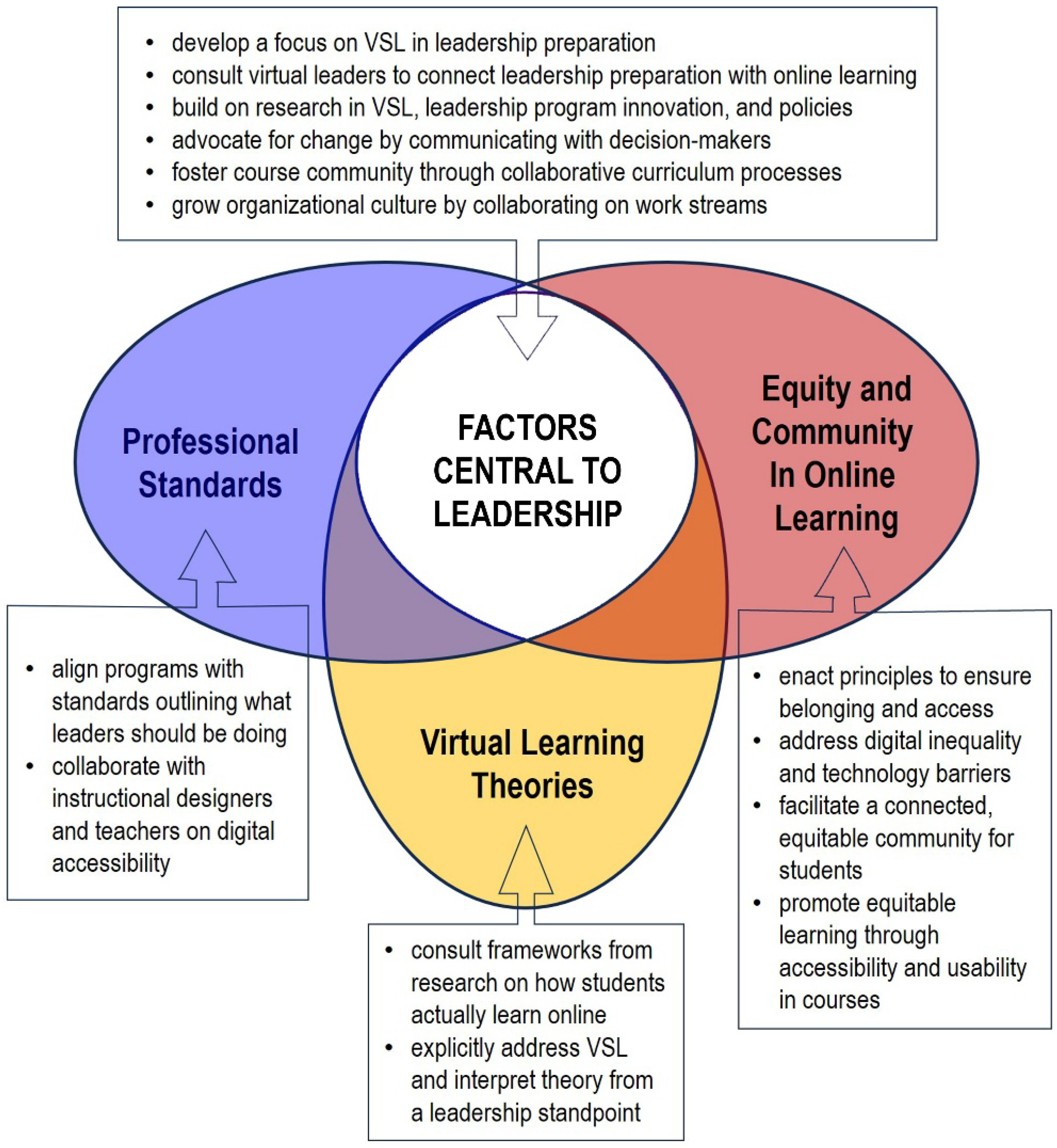
As my equity–community praxis leadership framework—Equity and Community in K–12 Online Leadership—depicts, leadership is central to professional standards (what leaders should do), virtual learning theories (how students actually learn online), and equity and community in online learning (how to ensure belonging and access) (Figure 1). VSL is at the core of these three domains, which continuously shape one another. Leaders in online and hybrid environments must draw simultaneously from standards, theories, and equity/community-informed frameworks. As such, they use professional standards to ensure ethical, high-quality instruction and apply learning theories to design online environments that promote development and engagement. Importantly, they center equity and community to create online spaces that are accessible, inclusive, and culturally responsive, enabling all students to succeed (Mullen & Eadens, 2026; Mullen & Warnick, 2025).

4.1. Professional Standards

Equity and community in online learning reflect standards and values for the educational leadership field (Grooms et al., 2024; Jackson & Moraguez, 2025; National Standards for Quality Online Learning, 2025; Tate & Warschauer, 2022). My approach to VSL was informed by the Professional Standards for Education Leaders (PSEL; standards 3 and 5), which encourage principals to cope with the risks involved in creating supportive communities for students (National Policy Board for Educational Administration, 2015). Districts have also been advised to use the PSEL standards to align virtual learning with their leader standards/goals (Stephenson et al., 2021). The NSQOL similarly recognizes the role of community in online teaching, which corresponds with Borup et al.’s (2020) ACE framework. NSQOL standard C (engagement and belonging) upholds learning environments as equitable (Digital Learning Collaborative, 2024).

4.2. Virtual Learning Theories

K–12 distance education and digital learning are understudied (Lokey-Vega et al., 2018). Applications of Garrison’s (2017) CoI theory for university online courses are gradually materializing for schools (e.g., Sanders & Lokey-Vega, 2020). ACE, a CoI adaptation, theorizes that the ability of online youth to engage cognitively, affectively, and behaviorally requires collaborative learning (Borup et al., 2020). Teacher and family support boosts student engagement (Kumi-Yeboah et al., 2018; Tuiloma et al., 2022), but VSL is glaringly omitted from CoI and ACE.
In CoI environments, three presences are germane to leadership preparedness for guiding learner-centered online education. Social presence is entwined with interaction and collaborative culture in virtual spaces (Derrington & Partin, 2023; Kumi-Yeboah et al., 2018). Teaching presence cultivates a sense of community/belonging/safety critical to social presence (Akcaoglu & Akcaoglu, 2022). Methods, activities, and peer collaboration establish cognitive presence (Tuiloma et al., 2022). The presences build synergy: activities foster confidence, knowledge, and skills (Russell, 2020), and routines acclimate youth to learning online (Borup et al., 2020). Teaching presence boosts cognitive presence and engagement in online courses, making live instruction the preferred mode of learning (Mullen & Warnick, 2025). Teacher visibility promotes social and cognitive presence in CoI learning spaces (Garrison, 2017; Rothstein & Haar, 2020).
ACE presents teachers as communicating with students and families, and communities as supportive (Borup et al., 2020). Different instructional functions (content design, etc.) enable monitoring and motivation of online participation.
Although effective VSL underpins all elements of online engagement, virtual learning theories and frameworks guiding online learning have not adequately addressed the leader’s role, revealing a gap the field must address. Thus, while teachers and families are acknowledged as key contributors to student engagement in ACE and CoI, VSL is largely missing, even though leaders influence every “presence” and course community. Yet VSL is reflected in how leaders set expectations for interaction (social presence), provide supports for effective instruction (teaching presence), and ensure access and tools that facilitate inquiry and participation (cognitive presence).

4.3. Factors Central to Leadership

As I have asserted, leadership is a critical but undertheorized influence in theories of K–12 virtual schooling. Virtual school leaders deserve recognition for mobilizing the policies, curriculum standards, assessments, instruction, and community partnerships that help teachers and students succeed in online learning. All such factors influence leader practices and, importantly, their ability to influence (Table 1).

5. Method

An integrative review method was selected as the most appropriate among literature analysis types to explore virtual leadership in online learning connected with community and equity. Toronto and Remington (2020) explained this review type as making connections among complex concepts and relationships in scholarship that satisfy research standards. Additionally, it allows for the inclusion and synthesis of diverse types of evidence, aiming to generate new perspectives or frameworks. Specifically, I followed Whittemore and Knafl’s (2005) five-stage framework for enhancing rigor in an integrative review: “problem identification, literature search, data evaluation, data analysis, and presentation” (p. 549). To broaden understanding of the phenomenon under study, literature representing diverse perspectives, theories, concepts, and methodological considerations was reviewed, and themes were systematically extracted.The goal was to contribute to knowledge in the educational leadership field and engage in theory development while informing preparation and practice. Document analysis (Dalglish et al., 2020) and axial coding (Simmons, 2017) were applied to select studies, supported by researcher note-taking. To clarify, I did not choose a systematic review because it follows a highly structured, replicable process focused on answering a narrowly defined question. Still other literature review methods—such as scoping reviews, which map bodies of literature—differ in purpose, rigor, and evidence.
Part of a larger project on VSL, I coded 34 studies as data for this review of extant research, which did not require ethical approval. Initiated in 2021 after most US schools had closed in March 2020 due to the COVID-19 pandemic, the process of selecting and analyzing sources concluded in 2025. This review analysis included literature published before 2020 and the coded sources spanned 2011 to 2025. Mullen and Warnick’s (2025) VSL study with 14 interviewed virtual school leaders was integrated in the current analysis but not coded as a salient source (see Thematic Analysis of Literature). The interviews occurred in 2023 on the heels of the pandemic (most US schools had reopened fully in the 2021–2022 school year), with approval from my university’s Institutional Review Board on 20 April 2023 (protocol #23–462).

5.1. Literature Search and Document Analysis

Strategies used to identify and code relevant sources are in Table 2.
My conceptual model (Figure 1) guided the development of search criteria and the selection of databases, journals, and inclusion/exclusion criteria. To identify factors central to VSL, I focused on professional standards, virtual learning theories, and equity and community in online learning. Selected texts were coded and analyzed using Dalglish et al.’s (2020) READ approach (ready materials, extract data, analyze data, distil). The selections were derived from studies on leadership preparation, research, and implications that informed my study. Twenty deductive codes (e.g., equity = EQUI) were based on my guiding questions, search terms, and results, and 43 inductive codes (e.g., visibility = VISI) emerged through open coding.
On a literature review table, I organized select sources to identify relationships around various concepts: community, equity, leadership/VSL, learning, presences, standards, and theory (Simmons, 2017). Then I generated separate tables for community and equity, using other terms (e.g., leadership) as filters for this level of analysis about what virtual leaders (aspire to) do in their jobs. Axial coding (Simmons, 2017) produced connections in color-coded data. Cross-analyzing data segments (on a combined table) allowed culture to emerge as culturally inclusive community and equity as equitable learning environment—two overarching themes in this study.

5.2. Analysis, Limitations, and Trustworthiness

As previously noted, my Equity and Community in K–12 Online Leadership framework and textual analysis were shaped by standards, theories, and factors applicable to VSL. This interpretive process was iterative, involving screening by scholar–practitioners. I refined search terms, scanned for relevance, and updated searches to ensure timeliness and importance. To situate issues specific to the US, I integrated contemporary global crises and online learning trends.
A key limitation of this review was its dependence on extant research for analysis, leading to a paucity of evidence regarding the effectiveness of preparation programs in equipping leaders for K–12 online environments. Little consideration given to assessment, a substantial constraint in distance education, impacted the current study.
Qualitative procedures were employed for selecting and coding documents. National Standards for Quality Online Learning’s (2025) revised standards were included with recent data/trends. From 2021 to July 2025, peer review involved two educational leadership faculty, two virtual school directors, a superintendent of instruction, and three doctoral cohorts. Four tables resulted: (a) literature review with impactful sources, (b) community/leadership, (c) equity/leadership, and (d) community/leadership and equity/leadership combined. Subsequent reviews, yielding feedback on these tables, led to improvements and a rationale for each source selection. To illustrate from a topmost source in my inquiry, LaFrance and Beck’s (2014) reference point for equity was ELCC/ISLLC, reasoning that equity and access in online settings are ethical responsibilities of school leaders. Community was understood as collaboration by leaders or others in the interest of student-driven online communities with diverse needs. Leadership denoted online leading and preparation in quality programs through which skills (instruction, technology, marketing, culture, etc.) should be developed for leading virtually.
My review approach (integrative) fulfilled quality criteria by (a) incorporating theoretical and diverse scholarship and (b) meeting research standards for thoroughness and transparency (Toronto & Remington, 2020). Member checking was satisfied through an expert team that judged my interpretations to be authentic; virtual leaders independently endorsed the findings.

6. Thematic Analysis of Literature

A synthesis of community and equity concepts in research on VSL (RQ1) follows.

6.1. Foster Course Community Through Collaborative Curriculum Processes

Professionalism influences online course community and program quality (Mullen & Warnick, 2025). Concerning course community, K–12 virtual leaders collaborate with a curriculum team, although limited staffing or undiversified applicants can hamper equity and community. In SVPs, curriculum specialists manage the course development process from outlines using standards applicable to content and resources. Content development, rigorous and labor-intensive, relies on instructional design partnership (Barbour et al., 2018; Russell, 2020). Teams manage internal and Quality Matters (Quality Matters, 2019) reviews for course certification following design principles (Bigatel & Edel-Malizia, 2018; Gacs et al., 2020). Alignment to state and/or national standards establishes virtual principals’ credibility with local schools that enroll students in online courses and/or programs (Molnar, 2023; Rice & Skelcher, 2018).
For course development projects, virtual curriculum specialists collaborate with instructional designers and teachers on digital accessibility. In Mullen and Warnick’s (2025) study, 14 SVP leaders’ work with experts entailed planning course modules, creating standards-aligned content, and determining blueprints for course changes. Principals supported teacher professionalism around course community, program quality, and student success. Teachers’ content expertise served course design at times, whereas specialists produced additional resources and adapted instruction for learner needs, adjusting pacing.
To foster academic community, students’ cultures are considered in the design of inclusive online content (National Standards for Quality Online Learning, 2025). Curriculum, lessons, and pedagogies harness learner diversity and backgrounds as assets (Anthony & Miller, 2022; Kumi-Yeboah et al., 2018; Rothstein & Haar, 2020). Information about state-specific communities further enhances content relevancy; in one such SVP, a teacher developed content with Indigenous leaders (Mullen & Warnick, 2025).
These processes resonate with my literature-informed framework (Figure 1), in particular professional standards that guide the role of community in online teaching and leaders’ support of learning and community. Moreover, factors central to leadership in this thematic depiction reinforce the role of leaders in influencing curriculum/instruction, policy, and partnership, and the role of factors in influencing leader practices, particularly standards, policy, and curriculum/assessment.

6.2. Facilitate a Connected Community for Students

Limited engagement in asynchronous courses can hinder learning (Molnar, 2023), necessitating synchronous sessions for advanced subjects. Course community depends on opportunities to interact and collaborate, which deepen cognitive and social presence (Garrison, 2017); thus, CoI benefits accrue when attendance is required (Mullen & Warnick, 2025).
Accordingly, instructors build teaching and social presence in online learning environments using such strategies as communication, course facilitation, direct instruction, personalized feedback, and interaction (Akcaoglu & Akcaoglu, 2022). They cultivate visibility through synchronous instruction and videos by being on camera (Rothstein & Haar, 2020). Interviews with virtual leaders indicated that student agency over learning supports social presence in course communities and that teacher discretion encompasses learner preferences as well as unwanted bias and negative behavior (Mullen & Warnick, 2025).
Virtual learning theories (CoI and ACE), which are integral to my Equity and Community in K–12 Online Leadership framework (Figure 1), are evidenced in this theme. Connected online learning communities, which leaders and their teachers cultivate, rely on multiple strategies for facilitating the presences. A primary goal is to ensure students’ engagement in courses and ownership of learning.

6.3. Develop Organizational Culture by Collaborating on Work Streams

Leadership modeling promotes positive work culture and community, advancing NSQOL program standards for equity and access. Role modeling starts with administration and forming viable relationships with teams. To influence program culture, leadership teams collaborate across instruction, outreach, support, technology, and curriculum (Mullen & Warnick, 2025).
Teacher and specialist partnerships aim to enrich collegial presence (Sanders & Lokey-Vega, 2020) and grow expertise in online instruction (Philipsen et al., 2019). Professional learning communities and trainings connect staff through a learning management system (LMS) to collaborate on instructional strategies, content-specific challenges, social-emotional learning supports, or data analysis. Periodic in-person gatherings and cross-departmental activity strengthen workplace community. Leadership, team performance management, and professional learning address course community and CoI experiences (Philipsen et al., 2019).
The interviewed virtual leaders in Mullen and Warnick (2025) described in-person work experiences for distributing leadership, creating community, strengthening connections, inspiring teamwork, and improving courses. Specifically, they reported having connected with teachers through departmental structure and open-door policy, instructional coaching, parent concerns, course schedules, and enrollment management. Leader presence was modeled through principals’ work with curriculum teams on internal and QM reviews for course certification, standards-aligned modules, and blueprints for future iterations of courses. Collaboratively, they made determinations about access to/interaction with content, as in the case of an SVP’s partnership with a deafblind school.
These details of organizational culture illustrate all aspects of Figure 1: professional standards, factors that leaders influence and that they in turn influence, and virtual learning theories. The latter is tackled from the perspective of adult training and enrichment whereby strong workplace cultures are built that enable leadership teams to create positive course communities and experiences for students.

6.4. Promote Equitable Learning Through Accessibility and Usability in Courses

Access to/engagement with online courses, a basic expectation (Bigatel & Edel-Malizia, 2018; Gacs et al., 2020), is embedded within NSQOL standards for accessibility and usability in instruction. Common practices are (a) following NSQOL and QM standards and the Universal Design for Learning (UDL) Guidelines (CAST, Inc., 2018) to create courses, (b) producing alternate versions of assessments, (c) modeling interactive practice, (d) ensuring course consistency and clear navigation in LMSs (Bigatel & Edel-Malizia, 2018), (e) chunking content to aid understanding, and (f) partnering with physical schools (Borup et al., 2020).
Nevertheless, accessibility and usability in deaf–blindness student populations can present difficulty. When assistive technologies (e.g., screen readers) in physical schools malfunction academic progress can halt, thus virtual teams tackle such problems onsite (Mullen & Warnick, 2025). Accounting for needs in online spaces, rising numbers of students with disabilities and illnesses necessitate courses designed with equity and access in mind (Johnson et al., 2023). Basic accessibility tools and support should be built into all courses (e.g., alt-text on images) using interactive design tools (CourseArc, etc.) and follow the UDL guidelines to assist students with content, knowledge demonstration, and engagement (Gacs et al., 2020; National Standards for Quality Online Learning, 2025). Alternative assessments in courses also support accommodations and modifications. In one scenario, every course had both a main and modified version. Online students had options for demonstrating content knowledge. Self-check activities walked them through advanced math problems, and interactives incorporating gamification promoted interest in content. Automated feedback scaffolded learning and low-risk scenarios to assess knowledge (Mullen & Warnick, 2025).
Virtual leaders’ partnerships with local schools support accessibility and individual needs (Borup et al., 2020). Online learning in physical schools has benefitted from the problem-solving of virtual specialists. In another situation described by Mullen and Warnick (2025) involving visual impairment, an SVP team adjusted student devices and eased braille translation.
As connected with Figure 1, virtual leaders and their teams follow the current standards for equitable learning in the design, development, and implementation of virtual courses. Complexities in online spaces necessitate critical thinking and creative adaptation on the part of the developers of online instruction and delivery. Researchers recognize that equity, access, problem-solving, and partnership with onsite schools are among the key elements that enable all learners to gain from virtual instruction.

6.5. Address Digital Inequality and Technology Barriers

Connectivity inequity persists in rural areas (Tate & Warschauer, 2022), undermining attempts at inclusion. Device limitations and school firewalls also impact full participation in online courses (Anthony & Miller, 2022; Digital Learning Collaborative, 2024; Gan & Sun, 2021). Student-issued devices sometimes require individualized solutions, compounding technology monitoring. Unfortunately, confusion with course technology and accessing content on devices can initiate attrition (Barbour et al., 2018). Amid staffing deficits, virtual programs rely on school-based services geared around local policies and learner needs with accommodation, technology, organization, time management, and progress (Borup et al., 2020). To virtual principals, facilitator effectiveness was the most influential variable for ensuring equitable and inclusive learning in their online program (Mullen & Warnick, 2025). Structural dependency on staff at a physical school to work with a virtual program is subject to communication issues that can burden partnerships (anonymous state-level virtual instructor, personal communication, 1 March 2025).
Support structures (e.g., orientation) introduce students to teachers and online platforms. Supplemental resources scaffold learning and strengthen content knowledge, but resources alone may not overcome inequity in virtual models (Anthony & Miller, 2022; Tate & Warschauer, 2022). For one thing, digital inequities pressure learners to improvise (find workarounds), acquire “technical assets” (locate equipment), and cultivate “social assets” (seek help) (Gan & Sun, 2021). For another thing, motivation and self-discipline; prior knowledge in a content area; basic technical, organizational, and self-regulatory skills; and English proficiency are critical to online learning (Molnar, 2023; Russell, 2020).
Digital inequality and technology barriers have a significant impact on leaders’ work, which they and their teams respond to in various ways. For example, all students are given access to the tools and resources needed to succeed in their online learning environment where they are taught how to use technology and coping strategies; also, diverse perspectives and backgrounds are brought to bear in course design and content. About Figure 1, these ideas are reflected in factors central to leadership that remain pressing concerns, as emphasized in the current literature, including virtual learning theories.

7. Discussion and Implications

This section describes my findings both visually and descriptively. The graphical representation of my original conceptual model is aligned with the main findings in a concise form (Figure 2).
In summary form, the findings from this review were:
  • Despite the demand for cyber schooling, some US preservice programs may lack training on leading equitably and collaboratively in virtual environments.
  • Five specific findings address what virtual school leaders (aspire to) do in their jobs: (a) foster course community through collaborative curriculum processes, (b) facilitate a connected community for students, (c) develop organizational culture by collaborating on work streams, (d) promote equitable learning through accessibility and usability in courses, and (e) address digital inequality and technology barriers.
  • Community and equity constituted both leadership orientations and concerns discerned from perceptions of virtual schooling.
About RQ1’s findings, community and equity were primary orientations as well as concerns for VSL in online contexts. The sources I coded/analyzed (Table 2) suggested distinguishing factors that influence virtual principals’ work and that they themselves influence (Table 1). Such orientations, while crucial, do not necessarily embody leadership that advances equity orientations and values for educating communities of learners. Equity/community ideas in studies of VSL and online learning were too general at times. Hence, collaborative and equitable leadership in politically fraught education systems is a direction for applicable research.
Concrete actions for propelling equity-centered, community-driven online schooling could enrich leadership preparation and research. Gan and Sun’s (2021) analysis of survey data from 206 (mainly) undergraduates has implications for equity and community. As confirmed, equity-minded practices include resource mobilization, dependable internet services, and digital skills enhancement. To Tate and Warschauer (2022), these must fully support students with disabilities, of color, and in poverty. Community practices integrate cultural diversity, class norms, and personal tutoring, attentive to what matters to underrepresented communities (Gan & Sun, 2021). Like leaders of racial justice in physical districts (Shah et al., 2023), virtual leaders would define their intent from the start with equity goals, operationalize equity actions, benchmark their efforts against other equity leaders, and adapt as needed (Johnson et al., 2023).
In a whirlwind of changing norms and policies, school leaders may need guidance on modeling intentional communication, inclusive language, and respectful forums (Anthony & Miller, 2022; Rice & Skelcher, 2018; Tate & Warschauer, 2022), perhaps especially in online spaces where equity and community goals can be challenging. Such initiatives support open dialog about antiracist practice (Tanner & Welton, 2021), enact racial identity development models (Capper, 2015), build alliances “across difference” (Shah et al., 2023), and dignify human beings in safe spaces (Jackson & Moraguez, 2025). Encountering democratic backsliding at work, virtual leaders will likely be navigating mounting conflicts in the face of threats to vulnerable student groups and equitable online learning (Anthony & Miller, 2022). Vigorous protections rely on their capacity to mobilize assets and persevere through cutbacks and political targeting as strong, resistive leaders (Grooms et al., 2024; Shah et al., 2023).
Addressing RQ2, my recommendations for VSL preparation and practice within contexts that normalize inequity in education include:
  • Design new content in leadership preparation that addresses equity and community in online learning and virtual school leader needs, expectations, and dilemmas.
  • Consult with virtual leaders to better connect leadership preparation with online learning and leading priorities.
  • Build on research in VSL, leadership program innovation, and related trends and policies.
  • Advocate for change by communicating with decision-makers about issues and solutions.
Public education is rapidly changing. Pressures on democratic schooling are intense (Shah et al., 2023) and online learning options keep proliferating (Johnson et al., 2023). Yet technology’s influence on equity and community is underexplored. Studies of school leaders’ “equity of access” often omit “meaningful use of technology” while, conversely, research on technology modeling tends to bypass equity considerations (Stephenson et al., 2021, p. 48). How might K–12 leaders leverage technologies to better cultivate equity- and community-minded approaches to education in online spaces? To further this direction, how might leadership standards be used more effectively in university programs to facilitate quality programming and clinical experiences (Darling-Hammond et al., 2022) that clearly support VSL development, in addition to the digital expertise of faculty (Mullen & Eadens, 2026)?

8. Conclusions

Through this review, I aimed to expand understanding of VSL at the intersection of equity and community and consider how virtual leadership is evolving. Community-building and equity in online spaces are complex yet fundamentally important endeavors (e.g., Gan & Sun, 2021; Mullen & Warnick, 2025). Although equity and community are crucial elements of VSL, they still need to be developed into full-fledged leadership priorities, based on my interpretation of the coded studies.
This analysis of equity and community in online learning environments with examples of virtual leadership preparation and practice comes at an opportune time. Grounded in the notion that VSL is accountable for equitable and community-based learning, I revealed that virtual leadership is a key consideration of distance education in the era of artificial intelligence. Structured, ideologically driven support of community and equity in inclusive online/blended learning environments undergirds this enterprise. Research is warranted in a polycrisis on programs and practices that (a) prepare K–12 leaders for equity work with online communities of learners in accordance with competencies, values, standards, trends, and technologies (Mann et al., 2011) and (b) guide “equity-centered virtual leadership” (Stephenson et al., 2021, p. 9) and inclusive community-building (National Standards for Quality Online Learning, 2025).
Quality leadership preparation is indispensable for developing principals’ critical awareness and readiness to use inclusive practices that support diverse students (Darling-Hammond et al., 2022). Faculty ideally create space for deliberation on policy changes and needs specific to learner-centric, justice-focused school leadership practice. Online leadership capability can benefit from (a) a flourishing mindset that champions equity and inclusion (Grooms et al., 2024) and (b) strategic responses to escalating attacks on educational institutions (Duarte & Fernández, 2025). Global threats to public education are a “wicked problem” (Nguyen et al., 2012) that require centering equity to strengthen community resilience and support K–12 online learning during democratic instability.Even amid ongoing uncertainty and antidemocratic pressures, preparing leaders to work equitably and collaboratively in stressed systems with online learning options may encourage more educators to pursue and remain in school leadership roles.

Funding

This research received no external funding.

Institutional Review Board Statement

Not applicable.

Data Availability Statement

The raw data supporting the conclusions of this article will be made available by the author on request.

Acknowledgments

The author is grateful to the educational leadership faculty and cohorts and virtual school leaders who reviewed the content at different stages. Anonymous peer reviewers provided constructive, specific feedback, which improved the original manuscript.

Conflicts of Interest

The author declares no conflicts of interest.

References

  1. Akcaoglu, M., & Akcaoglu, M. (2022). Understanding the relationship among self-efficacy, utility value, and the Community of Inquiry framework in preservice teacher education. The International Review of Research in Open and Distributed Learning, 23(2), 86–106. [Google Scholar] [CrossRef]
  2. American Immigration Council. (2025). Mass deportation. Available online: https://www.americanimmigrationcouncil.org/research/mass-deportation (accessed on 6 November 2025).
  3. Anthony, A., & Miller, D. (2022). Leading equitable distance education during times of crisis. Education and Urban Society, 56(1), 121–138. [Google Scholar] [CrossRef]
  4. Azukas, M. (2022). Leading remotely: Competencies required for virtual leadership. TechTrends, 66(2), 327–337. [Google Scholar] [CrossRef]
  5. Barbour, M., Adelstein, D., & Morrison, J. (2018). Still forgotten teachers in K–12 online learning: Examining the perceptions of teachers who develop K–12 online courses. In R. Sharma (Ed.), Innovative applications of online pedagogy and course design (pp. 88–107). IGI Global. [Google Scholar]
  6. Bigatel, P., & Edel-Malizia, S. (2018). Using the “indicators of engaged learning online” framework to evaluate online course quality. Techtrends, 62(1), 58–70. [Google Scholar] [CrossRef]
  7. Borup, J., & Archambault, L. (2022). Designing online learning for children and youth. In O. Zawacki-Richter, & I. Jung (Eds.), Handbook of open, distance, and digital education (pp. 1287–1308). Springer. [Google Scholar]
  8. Borup, J., Graham, C., West, R., Archambault, L., & Spring, K. (2020). Academic communities of engagement: An expansive lens for examining support structures in blended and online learning. Educational Technology Research and Development, 68(2), 807–832. [Google Scholar] [CrossRef]
  9. Capper, C. (2015). The 20th-year anniversary of critical race theory in education: Implications for leading to eliminate racism. Educational Administration Quarterly, 51(5), 791–833. [Google Scholar] [CrossRef]
  10. Carothers, T., & Press, B. (2022). Understanding and responding to global democratic backsliding. Available online: https://carnegie-production-assets.s3.amazonaws.com/static/files/Carothers_Press_Democratic_Backsliding_v3_1.pdf (accessed on 9 October 2025).
  11. CAST, Inc. (2018). Universal design for learning guidelines version 2.2. Available online: http://udlguidelines.cast.org (accessed on 6 January 2025).
  12. Ceballos, M., & Bixler, K. (2024). Advancing instructional leadership: Instructional coaching skills development through mixed reality experiences. Journal of Educational Supervision, 7(1), 45–65. [Google Scholar] [CrossRef]
  13. Dalglish, S., Khalid, H., & McMahon, S. (2020). Document analysis in health policy research: The READ approach. Health Policy and Planning, 35(10), 1424–1431. [Google Scholar] [CrossRef] [PubMed]
  14. Darling-Hammond, L., Wechsler, M., Levin, S., Leung-Gagne, M., & Tozer, S. (2022). Developing effective principals: What kind of learning matters? Available online: https://learningpolicyinstitute.org/media/3698/download?inline&file=Developing_Effective_Principals_REPORT.pdf (accessed on 6 February 2025).
  15. Derrington, M., & Partin, J. (2023). Principal leadership in K–12 public virtual schools: More than a response to COVID-19. Journal of Educational Supervision, 6(1), 85–100. [Google Scholar] [CrossRef]
  16. Digital Learning Collaborative. (2024). Snapshot 2024: The post-pandemic digital learning landscape emerges. Available online: https://www.digitallearningcollab.com/snapshot-2024 (accessed on 15 January 2025).
  17. Duarte, B., & Fernández, É. (2025). Exposing the color-evasive/tolerance framing tactics of educational actors amidst anti-CRT/LGBTQ + rhetoric and policy. Educational Administration Quarterly, 61(4), 586–625. [Google Scholar] [CrossRef]
  18. Elgart, M. (2021). Learning upended: How Americans experienced the shift to remote instruction. Phi Delta Kappan, 102(5), 48–51. [Google Scholar] [CrossRef]
  19. Gacs, A., Goertler, S., & Spasova, S. (2020). Planned online language education versus crisis-prompted online language teaching: Lessons for the future. Foreign Language Annals, 53(2), 380–392. [Google Scholar] [CrossRef]
  20. Gan, I., & Sun, R. (2021). Digital barriers and individual coping behaviors in distance education during COVID-19. International Journal of Knowledge Management, 18(1), 1–15. [Google Scholar] [CrossRef]
  21. Garrison, D. (2017). E-learning in the 21st century: A community of Inquiry framework for research and practice (3rd ed.). Routledge. [Google Scholar]
  22. Grooms, A. A., White, T., Peters, A. L., Childs, J., Farrell, C., Martinez, E., Resnick, A., Arce-Trigatti, P., & Duran, S. (2024). Equity as a crucial component of leadership preparation and practice. The Clearing House, 97(1), 8–15. [Google Scholar] [CrossRef]
  23. Gustafson, D., & Haque, M. D. (2020). Uncovering the challenges and leadership practices of virtual school principals. Online Journal of Distance Learning Administration, 23(4), 1–21. [Google Scholar]
  24. Hashim, A., & Kearney, C. (2025). Policy framing, social networks, and teacher perspectives in a technology rollout. Educational Administration Quarterly, 61(1), 37–70. [Google Scholar] [CrossRef]
  25. International IDEA. (2024). The global state of democracy 2024. Available online: https://www.idea.int/gsod/2024/chapters/global-trends (accessed on 15 November 2025).
  26. Jackson, M., & Moraguez, D. (2025). Developing aspiring principals’ critical consciousness using equity-oriented pedagogies. Journal of Educational Administration, 63(5), 396–410. [Google Scholar] [CrossRef]
  27. Johnson, C., Walton, J., Strickler, L., & Elliott, J. (2023). Online teaching in K–12 education in the United States: A systematic review. Review of Educational Research, 93(3), 353–411. [Google Scholar] [CrossRef]
  28. Koliba, C. (2025). Democratic accountability standards and the education of public administrators: A call to action. Journal of Public Affairs Education, 31(2), 117–124. [Google Scholar] [CrossRef]
  29. Kumi-Yeboah, A., Dogbey, J., & Yuan, G. (2018). Exploring factors that promote online learning experiences and academic self-concept of minority high school students. Journal of Research on Technology in Education, 50(1), 1–17. [Google Scholar] [CrossRef]
  30. LaFrance, J., & Beck, D. (2014). Mapping the terrain: Educational leadership field experiences in K–12 virtual schools. Educational Administration Quarterly, 50(1), 160–189. [Google Scholar] [CrossRef]
  31. Lewkowicz, J., Woźniak, M., & Wrzesiński, M. (2022). COVID-19 and erosion of democracy. Economic Modelling, 106, 105682. [Google Scholar] [CrossRef]
  32. Lokey-Vega, A., Jorrín-Abellán, I., & Pourreau, L. (2018). Theoretical perspectives in K–12 online learning. In K. Kennedy, & R. Ferdig (Eds.), Handbook of research on K–12 online and blended learning (2nd ed., pp. 65–90). Carnegie Mellon University. [Google Scholar]
  33. Lopez, A. E., Tuters, S., Hossain, F. R., & Chan, Y. (Eds.). (in press). Leadership for whom and for what purpose: Exploring critical leadership praxis in changing times. Emerald Publishing.
  34. Mann, D., Reardon, R., Becker, J., Shakeshaft, C., & Bacon, N. (2011). Immersive, interactive, web-enabled computer simulation as a trigger for learning: The next generation of problem-based learning in educational leadership. Journal of Research on Leadership Education, 6(5), 272–287. [Google Scholar] [CrossRef]
  35. McLeod, S., & Richardson, J. (2018). School administrators and K–12 online and blended learning. In K. Kennedy, & R. Ferdig (Eds.), Handbook of research on K–12 online and blended learning (2nd ed., pp. 391–402). Carnegie Mellon University. [Google Scholar]
  36. Molnar, A. (Ed.). (2023). Virtual schools in the U.S. 2023. Available online: https://nepc.colorado.edu/sites/default/files/publications/Complete%202023%20Virtual%20Schools_0.pdf (accessed on 5 January 2025).
  37. Mullen, C. A. (2017). What’s ethics got to do with it? Pedagogical support for ethical student learning in a principal preparation program. Journal of Research on Leadership Education, 12(3), 239–272. [Google Scholar] [CrossRef]
  38. Mullen, C. A. (2024). Speaking of allyship—it’s time to leap together in educational leadership. (UCEA presidential address). UCEA Review, 65(1), 13–21. [Google Scholar]
  39. Mullen, C. A., & Eadens, D. W. (Eds.). (2026). Improving your college courses: A guide for engaging in digital learning. Myers Education Press. [Google Scholar]
  40. Mullen, C. A., & Warnick, S. K. (2025). Community and equity in state-level virtual schools from a leadership perspective. American Journal of Distance Education, 39(4), 404–425. [Google Scholar] [CrossRef]
  41. National Policy Board for Educational Administration. (2015). Professional standards for educational leaders. Available online: https://www.npbea.org/wp-content/uploads/2017/06/Professional-Standards-for-Educational-Leaders_2015.pdf (accessed on 9 January 2025).
  42. National Standards for Quality Online Learning. (2025). Virtual learning leadership alliance, quality matters, and digital learning collaborative. Available online: https://nsqol.org/the-standards/standards-downloads (accessed on 1 November 2025).
  43. Nguyen, T., Scribner, S., & Crow, G. (2012). Tangled narratives and wicked problems: A complex case of positioning and politics in a diverse school community. Journal of Cases in Educational Leadership, 15(4), 49–64. [Google Scholar] [CrossRef]
  44. Office for Civil Rights, U.S. Department of Education. (2024). 2024 fiscal year annual report. Available online: https://www.ed.gov/media/document/ocr-report-president-and-secretary-of-education-2024-109012.pdf (accessed on 3 January 2025).
  45. Partin, J., & Derrington, M. (2023). Virtual high schools: Principal leadership in an underexplored context. Journal of Cases in Educational Leadership, 26(3), 3–15. [Google Scholar] [CrossRef]
  46. Pearson, L. (2025). Factsheet: Trump’s rescission of protected areas policies undermines safety for all. Available online: https://www.nilc.org/resources/factsheet-trumps-rescission-of-protected-areas-policies-undermines-safety-for-all (accessed on 3 November 2025).
  47. Philipsen, B., Tondeur, J., Pareja Roblin, N., Vanslambrouck, S., & Zhu, C. (2019). Improving teacher professional development for online and blended learning: A systematic meta-aggregative review. Educational Technology Research and Development, 67(5), 1145–1174. [Google Scholar] [CrossRef]
  48. Presidential Action. (2025). Ending radical indoctrination in K–12 schooling. Available online: https://www.whitehouse.gov/presidential-actions/2025/01/ending-radical-indoctrination-in-k-12-schooling (accessed on 1 November 2025).
  49. Quality Matters. (2019). Course design rubric standards (5th ed.). Quality Matters. Available online: https://www.qualitymatters.org/qa-resources/rubric-standards/k-12-secondary-rubric (accessed on 15 January 2025).
  50. Reis-Andersson, J. (2024). Leading the digitalization in K–12 education at the municipality level. Cogent Education, 11(1), 1–17. [Google Scholar] [CrossRef]
  51. Rice, K., & Skelcher, S. (2018). History of policies in K–12 online and blended learning. In K. Kennedy, & R. Ferdig (Eds.), Handbook of research on K–12 online and blended learning (2nd ed., pp. 41–64). Carnegie Mellon University. [Google Scholar]
  52. Richardson, J., LaFrance, J., & Beck, D. (2015). Challenges of virtual school leadership. American Journal of Distance Education, 29(1), 18–29. [Google Scholar] [CrossRef]
  53. Rigby, J., & Tredway, L. (2015). Actions matter: How school leaders enact equity principles. In M. Khalifa, N. Witherspoon Arnold, A. Osanloo, & C. Grant (Eds.), Handbook of urban educational leadership (pp. 329–347). Rowman & Littlefield. [Google Scholar]
  54. Ringe, N., & Rennó, L. (2023). Populists and the pandemic: How populists around the world responded to COVID-19. Routledge. [Google Scholar]
  55. Rothstein, A., & Haar, M. (2020). Best practices for encouraging student participation in both face-to-face and virtual environments. Journal of Allied Health, 49(4), 161–165. [Google Scholar]
  56. Russell, V. (2020). Language anxiety and the online learner. Foreign Language Annals, 53(2), 338–352. [Google Scholar] [CrossRef]
  57. Sanders, K., & Lokey-Vega, A. (2020). K–12 community of inquiry: A case study of the applicability of the Community of Inquiry framework in the K–12 online learning environment. Journal of Online Learning Research, 6(1), 35–56. [Google Scholar]
  58. Shah, V., Aoudeh, N., Cuglievan-Mindreau, G., & Flessa, J. (2023). Tempering applied critical leadership: The im/possibilities of leading for racial justice in school districts. Educational Administration Quarterly, 59(1), 179–217. [Google Scholar] [CrossRef]
  59. Simmons, N. (2017). Axial coding. In M. Allen (Ed.), The Sage encyclopedia of communication research methods (pp. 80–82). Sage. [Google Scholar]
  60. Stephenson, S. P., Hardy, A., Seylar, J., Wayman, J., Peters, V., Bellin, M., & Roschelle, J. (2021). Principal leadership in a virtual environment. Available online: https://wallacefoundation.org/sites/default/files/2023-09/Principal-Leadership-in-a-Virtual-Environment.pdf (accessed on 18 January 2025).
  61. Tanner, M., & Welton, A. (2021). Using anti-racism to challenge whiteness in educational leadership. In C. A. Mullen (Ed.), Handbook of social justice interventions in education (pp. 395–414). Springer. [Google Scholar]
  62. Tate, T., & Warschauer, M. (2022). Equity in online learning. Educational Psychologist, 57(3), 192–206. [Google Scholar] [CrossRef]
  63. Toronto, C., & Remington, R. (2020). A step-by-step guide to conducting an integrative review. Springer. [Google Scholar]
  64. Tuiloma, S., Graham, C., Arias, A., & Caecedo, D. (2022). Providing institutional support for academic engagement in online and blended learning programs. Education Sciences, 12(10), 641–661. [Google Scholar] [CrossRef]
  65. U.S. Department of Education. (2025, January 23). U.S. Department of Education takes action to eliminate DEI. Available online: https://www.ed.gov/about/news/press-release/us-department-of-education-takes-action-eliminate-dei (accessed on 30 January 2025).
  66. Weymouth-German, J. C., & Mullen, C. A. (2025). Trans student controversy in education policy: Constraints and possibilities. Leading & Managing, 31(1), 1–20. [Google Scholar]
  67. Whittemore, R., & Knafl, K. (2005). The integrative review: Updated methodology. Journal of Advanced Nursing, 52(5), 546–553. [Google Scholar] [CrossRef]
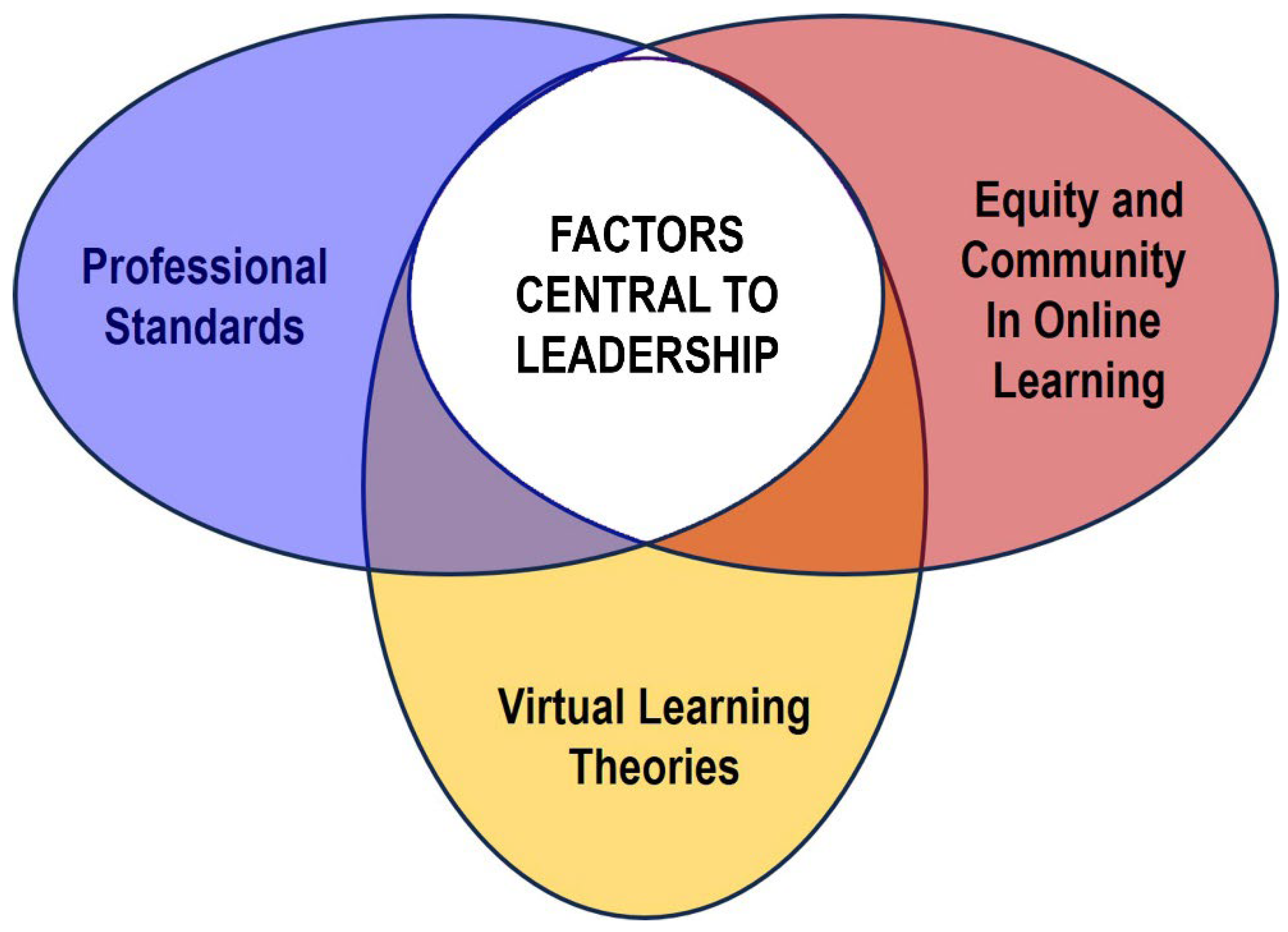
Figure 1. Factors Central to Virtual School Leadership (Source: Mullen).
Education 16 00257 g001
Figure 2. Findings-Aligned Factors Central to Virtual School Leadership (Source: Mullen).
Education 16 00257 g002
Table 1. Factors Shaping Virtual Leaders’ Practices/Factors They Influence (Source: Mullen & Warnick, 2025; slightly adapted).
FactorsExplanationsStudies
FACTORS INFLUENCING LEADERS
National and professional standards of qualityOnline programs use the NSQOL for operations, teaching, professional learning, and courses, as well as the QM standards for online course design. The PSEL standards guide support of learning.Gacs et al. (2020); Molnar (2023); National Policy Board for Educational Administration (2015); National Standards for Quality Online Learning (2025)
State policyVirtual leaders interpret state education policy in program instruction, operations, and reporting.Molnar (2023); Rice and Skelcher (2018)
State curriculum standards and assessmentsStandards are followed when designing program curriculum and preparing students for mandated assessments.Molnar (2023); Rice and Skelcher (2018)
FACTORS LEADERS INFLUENCE
Program instruction and curriculumOnline leaders collaborate with teachers on curriculum and instruction. Program instruction, curriculum, and course community are core leadership responsibilities.Borup and Archambault (2022); McLeod and Richardson (2018); Molnar (2023)
Program policyThrough school improvement and policy, leaders impact student success. They consider state policy requirements when creating program policy.Gustafson and Haque (2020); McLeod and Richardson (2018)
Local school partnershipsState-level virtual leaders partner with schools to connect their online programs; districts and universities collaborate.Digital Learning Collaborative (2024); Mann et al. (2011)
Table 2. Methods for Locating and Coding Sources (Source: Mullen).
DATABASES
EBSCOhost, Google Scholar, and journals (educational leadership and distance education), 2021–2025
INCLUSION CRITERIA
  • Virtual learning theories, K–12 online education and VSL studies, current standards
  • Leadership preparation and critical studies in educational leadership
  • Topical academic reviews (Johnson et al., 2023; Philipsen et al., 2019)
  • Global trends in education that situate the US
KEYWORDS
ACE and CoI theory, community, equity, K–12 online learning, leadership preparation, NSQOL, PSEL, VSL
SELECTION BREADTH
  • 1568 library holdings for “online learning AND K–12” and “school AND equity AND community”
  • 132 abstracts containing the highest yield for VSL, leader preparation, and/or trends
  • Refined analysis of 34 sources: 30 research studies, 2 professional standards, and 2 virtual learning theories
STUDIES CODED
Akcaoglu and Akcaoglu (2022); Anthony and Miller (2022); Azukas (2022); Bigatel and Edel-Malizia (2018); Borup et al. (2020); Barbour et al. (2018); Borup and Archambault (2022); Darling-Hammond et al. (2022); Derrington and Partin (2023); Digital Learning Collaborative (2024); Gacs et al. (2020); Gan and Sun (2021); Garrison (2017); Gustafson and Haque (2020); Jackson and Moraguez (2025); Johnson et al. (2023); Kumi-Yeboah et al. (2018); LaFrance and Beck (2014); Lokey-Vega et al. (2018); Mann et al. (2011); McLeod and Richardson (2018); Molnar (2023); National Policy Board for Educational Administration (2015); National Standards for Quality Online Learning (2025); Partin and Derrington (2023); Philipsen et al. (2019); Reis-Andersson (2024); Rice and Skelcher (2018); Richardson et al. (2015); Rothstein and Haar (2020); Russell (2020); Sanders and Lokey-Vega (2020); Tate and Warschauer (2022); Tuiloma et al. (2022)
Disclaimer/Publisher’s Note: The statements, opinions and data contained in all publications are solely those of the individual author(s) and contributor(s) and not of MDPI and/or the editor(s). MDPI and/or the editor(s) disclaim responsibility for any injury to people or property resulting from any ideas, methods, instructions or products referred to in the content.