


Abstract
Digital escape rooms are increasingly used as active learning tools in higher education, yet evidence from preclinical biomedical subjects and comparisons across academic years remains limited. This study examined students’ perceptions of digital escape rooms implemented in four compulsory Biology courses: Cell Biology (Year 1), Histology (Year 2), General Immunology (Year 3) and Immunopathology (Year 4). A cross-sectional mixed-methods design was applied. Students completed an 11-item Likert-scale questionnaire assessing educational impact, interactivity, motivation and overall perception, together with one open-ended question. A total of 123 students participated. All dimensions received positive ratings, but differences emerged between courses. Histology obtained the highest scores across dimensions, Cell Biology the lowest, and the Immunology courses intermediate values. Significant differences were mainly observed between Histology and the other courses, and between Cell Biology and advanced subjects. Correlations between dimensions were moderate to strong (r = 0.54–0.67). Qualitative analysis identified five themes: deep but topic-specific learning, creativity and interactivity as motivational drivers, high workload relative to assessment weight, technical issues requiring clearer guidance, and variable group dynamics. Overall, digital escape rooms perceived usefulness depended on disciplinary alignment, academic level and workload. Structured scaffolding is essential for integration into biomedical curricula.
1. Introduction
Teaching biomedical subjects such as Cell Biology, Histology and Immunology presents persistent challenges linked to conceptual complexity, extensive specialised terminology, and the need to integrate visual representations with functional processes. Several studies have reported that students experience difficulties when interpreting microscopic structures, recognising tissue patterns or understanding immunological mechanisms, especially when instruction relies on traditional, lecture-based methodologies (Bouali et al., 2022; Fernández Fernández & Jiménez Tejada, 2019; García et al., 2019; Mohammedsaleh, 2024). Although first-year undergraduates typically enter higher education with generally positive motivational profiles and an internal locus of control, they often remain cautious about their ability to meet academic demands, which can hinder the translation of this potential into fully autonomous learning during the early stages of undergraduate study (Fazey & Fazey, 2001).
In response to these challenges, the educational innovation literature consistently highlights the need to promote active learning methodologies that foster deeper learning through participation, interaction and autonomous problem-solving (Brull et al., 2017; Buckley & Doyle, 2016). Among these approaches, gamification has gained notable prominence owing to its capacity to alter motivational states and enhance students’ cognitive engagement using game-design elements such as clearly defined goals, immediate feedback, progression and challenge (Deterding et al., 2011). According to established theoretical models, these elements influence learning indirectly by activating motivational and self-regulatory processes rather than acting directly on learning outcomes (Abu Samah et al., 2022; Landers, 2015).
Within this broader landscape, educational escape rooms (EERs) have emerged as one of the most widespread gamified strategies in higher education. The literature describes EERs as immersive experiences based on sequential challenges requiring the application of knowledge, collaborative work and problem-solving under time pressure. These dynamics activate cognitive, affective and behavioural dimensions of student engagement simultaneously (Veldkamp et al., 2020). Empirical research has also investigated students’ gameful experience in digital escape rooms, finding that such activities can enhance engagement and positive perceptions of learning in university contexts (Antón-Solanas et al., 2022; Grande-de-Prado et al., 2025), particularly when task design is well aligned with instructional objectives and learners’ cognitive readiness. Reviews show increasing use of EERs in health, in Science, Technology, Engineering, and Mathematics (STEM) education and social sciences, with consistent gains in motivation, participation and perceived value (Makri et al., 2021; Quek et al., 2024; Rodríguez-Rivera et al., 2025). Recent studies in health professions education also describe positive effects on motivation, satisfaction and self-confidence (Atasever et al., 2025; Barner et al., 2025; Beger et al., 2025). The expansion of virtual learning after SARS-CoV-2 pandemic has further enabled their adaptation to hybrid and fully online contexts (Christopoulos & Sprangers, 2021; Manzano-León et al., 2021; Nieto-Escámez & Roldán-Tapia, 2021; Kaul et al., 2021; Rincón-Flores & Santos-Guevara, 2021; Lyons et al., 2023; Quek et al., 2024).
The growing interest in digital EERs relates to their ability to integrate narrative, interactivity and immediate feedback into autonomous learning. Systematic reviews indicate that engagement increases when activities incorporate elements aligned with instructional goals—such as clinical cases, conceptual puzzles or simulations (Makri et al., 2021; Nowbuth & Parmar, 2024). Usability, clear navigation and coherence between tasks and content also shape learners’ experience (Rahim & Chuah, 2024). Moreover, collaborative designs enhance pedagogical value by promoting shared reasoning, communication and group cohesion (Aronson et al., 2025).
Nevertheless, and despite this growing interest, the reviews consistently identify notable limitations in the available literature. Most studies are concentrated in clinically oriented health programmes, while preclinical biomedical subjects—such as Cell Biology, Histology or Immunology—remain under-represented. Moreover, much of the existing evidence derives from descriptive research based on student perceptions, with limited comparative studies across different years or academic levels within the same degree programme. This gap is particularly relevant in biomedical contexts, where cognitive demands and learner autonomy evolve substantially throughout the curriculum.
Additionally, students’ responses to active learning approaches are not uniform, but depend on factors such as academic maturity, accumulated disciplinary experience, familiarity with digital environments and perceptions of the relevance of the content to their learning trajectory (Christopoulos & Sprangers, 2021). Consequently, it is necessary to examine not only the general acceptance of digital escape rooms, but also variations in students’ perceptions according to their academic level. This comparative perspective is especially pertinent in biomedical degrees, where competencies, conceptual demands and levels of learner autonomy change substantially from early to advanced stages.
In this context, the present study examines students’ perceptions of digital escape rooms specifically designed to reinforce content in Cell Biology (first year), Histology (second year), General Immunology (third year), and Applied Immunology and Immunopathology (fourth year) within a Biology degree.
In this context, the present study examines students’ perceptions of digital escape rooms specifically designed to reinforce content in Cell Biology (first year), Histology (second year), General Immunology (third year), and Applied Immunology and Immunopathology (fourth year) within a Biology degree. Using a validated Likert-scale questionnaire measuring educational impact, interactivity, motivation, and overall perception, the study compares responses across academic years to explore differences associated with disciplinary content and level of study. Accordingly, the study addresses two closely related research questions: first, whether students’ perceptions of the educational impact, interactivity, motivation, and overall value of digital escape rooms differ across preclinical biomedical courses and academic levels within the same degree programme; and second, which pedagogical and organisational factors students themselves identify as facilitating or constraining the perceived educational value of this methodology, in order to clarify under which conditions and at which stages of the curriculum digital escape rooms are perceived as most pedagogically effective.
2. Materials and Methods
2.1. Study Design
A cross-sectional observational study with a mixed quantitative–qualitative approach was conducted to examine students’ perceptions of digital escape rooms implemented in four compulsory courses of the Biology degree at the University of Alicante: Cell Biology (1st year), Histology (2nd year), General Immunology (3rd year) and Applied Immunology and Immunopathology (4th year). The same activity structure and the same evaluation instrument were used in all courses, which allowed direct comparison across academic levels.
2.2. Context and Participants
The study was carried out at the University of Alicante within regular teaching activities. All students enrolled in the four courses during the implementation year were invited to participate voluntarily and anonymously after completing the escape-room activity. Only questionnaires (Table S1) with all 11 closed items completed were included in the analysis. The final sample consisted of 123 students, of whom 62 were enrolled in Cell Biology, 9 in Histology, 14 in General Immunology and 38 in Applied Immunology and Immunopathology.
2.3. Educational Intervention: Digital Escape Rooms
Digital escape rooms were integrated into each course as an active learning activity aimed at reinforcing key disciplinary content. Teaching staff identified a set of core topics aligned with the official syllabus, and students formed small groups of three to five members. Each group selected one topic and designed a digital escape room that included a coherent sequence of content-based challenges. These challenges combined theoretical questions, problem-solving tasks and, in the case of Histology and Immunology, visual materials such as histological images, diagrams or simplified clinical cases.
PowerPoint was the main authoring tools used to create the escape rooms, although other equivalent platforms were permitted provided they enabled sequential navigation and interactive resolution of tasks. Groups had several weeks, integrated into the course schedule, to design, implement and refine their escape rooms. During this period, instructors provided guidance on conceptual accuracy, clarity of instructions and appropriateness of difficulty. Once completed, the escape rooms were presented in class and, after validation by the teaching staff, were uploaded to our institutional website (https://web.ua.es/es/inmunocel; accessed on 29 January 2026) as resources for content review and examples of gamified learning. Participation in the evaluation questionnaire was voluntary and had no impact on final grades.
2.4. Evaluation Instrument
Students’ perceptions of the activity were assessed using an 11-item questionnaire with a five-point Likert scale (1 = strongly disagree/very difficult; 5 = strongly agree/very easy), structured into four conceptual dimensions. Educational Impact comprised items P1, P2 and P3, which assessed the perceived usefulness of the activity for understanding and consolidating course content and applying theoretical knowledge in practice. Interactivity comprised items P4, P5 and P6, which evaluated active engagement, integration between theory and practice and the role of the digital format in supporting learning. Motivation comprised items P7 and P8, which explored the extent to which the activity increased interest in the subject and was perceived as innovative compared with traditional methods. General Perception comprised items P9, P10 and P11, which addressed perceived difficulty in designing the escape room, willingness to recommend the methodology and perceived suitability of its stable integration into the curriculum.
In addition to the closed items, the questionnaire included a final open-ended question in which students were asked to describe the strengths of the activity and aspects that could be improved, providing concrete examples based on their experience. The full questionnaire, including the wording of all items, their allocation to dimensions and the Likert anchors, is provided in Table S1.
2.5. Data Collection
The questionnaire was administered in paper format immediately after the escape-room sessions in each course. Instructors explained the objective of the questionnaire, guaranteed anonymity and emphasised that participation was voluntary. Data were exported to a spreadsheet, checked for completeness and then prepared for statistical analysis.
2.6. Quantitative Analysis
The quantitative analysis focused on the four dimensions derived from the questionnaire. For each student, scores for Educational Impact, Interactivity, Motivation and General Perception were computed as the arithmetic mean of the corresponding items. Descriptive statistics (mean and standard deviation) were calculated for each dimension and course, and these summaries are presented in the main text and Supplementary Tables.
Given the ordinal nature of the Likert scale and the observed departures from normality, comparisons between courses were performed using the Kruskal–Wallis test for k independent groups. When the global test indicated statistically significant differences, pairwise post hoc comparisons were carried out using Dunn’s multiple comparisons test with Bonferroni adjustment. The adjusted significance level for the six pairwise comparisons possible between four courses was α = 0.05/6 = 0.0083. All nonparametric tests and descriptive analyses were conducted using GraphPad Prism 10 (GraphPad Software, San Diego, CA, USA).
The internal consistency of the questionnaire was evaluated using Cronbach’s alpha (Tavakol & Dennick, 2011). This coefficient was calculated with SPSS v17 (IBM Corp., Armonk, NY, USA) for the four aggregated dimensions, always using the complete sample (n = 123) to obtain stable reliability estimates that did not depend on course-specific subsamples. To examine internal coherence, Spearman’s rank correlation coefficients were computed both between dimensions and between individual items, also using the full dataset (n = 123). Complete reliability outputs and correlation matrices are reported in Section 3 and in the Supplementary Materials. Unless otherwise stated, the significance threshold was set at α = 0.05.
2.7. Qualitative Analysis
The qualitative analysis of the open-ended responses was conducted using the inductive thematic analysis framework described by Braun and Clarke (2006). All responses were transcribed verbatim and initially reviewed to achieve familiarisation with the data through repeated readings. Inductive coding was then performed without predefined categories, identifying meaningful units related to learning, motivation, workload, technical issues and group dynamics. In subsequent stages, codes were grouped into candidate themes, which were iteratively refined by comparing them with the raw data to ensure internal coherence and clear differentiation between themes. Each theme was then defined and named, and an analytic narrative was developed to integrate the qualitative findings into Section 3. Representative quotations were selected to illustrate each theme clearly and concisely.
This process is summarised in Table 1 that links the phases of familiarisation, coding, theme development, review, definition and reporting with the corresponding analytic actions and illustrative examples, providing an audit trail of the qualitative analysis. Coding and theme refinement were discussed among researchers to improve interpretative consistency and minimise individual bias.
Table 1.
Methodological traceability of the thematic analysis.
3. Results
3.1. Reliability of the Instrument and Overall Trends
Quantitative and qualitative data from the questionnaire and open-ended responses were analysed to examine students’ perceptions of the activity. The questionnaire demonstrated adequate reliability, with a Cronbach’s alpha of 0.87 for the 11 items and 0.88 for the four aggregated dimensions, confirming the internal consistency of the instrument (Table 2).
Table 2.
Reliability Analysis of the Questionnaire.
3.2. Differences Across Courses in Perceived Educational Value
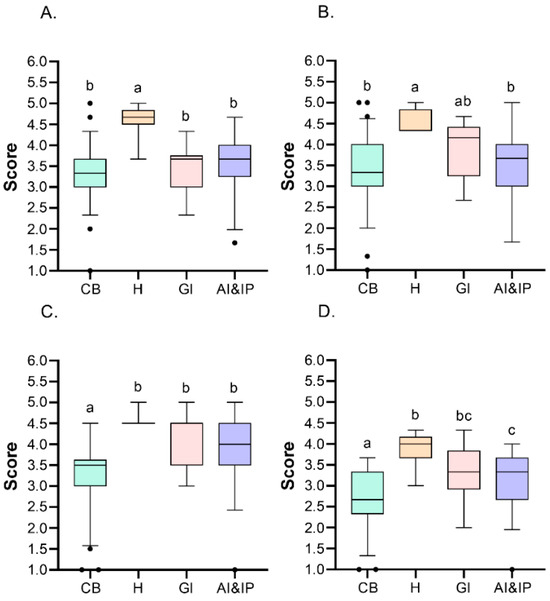
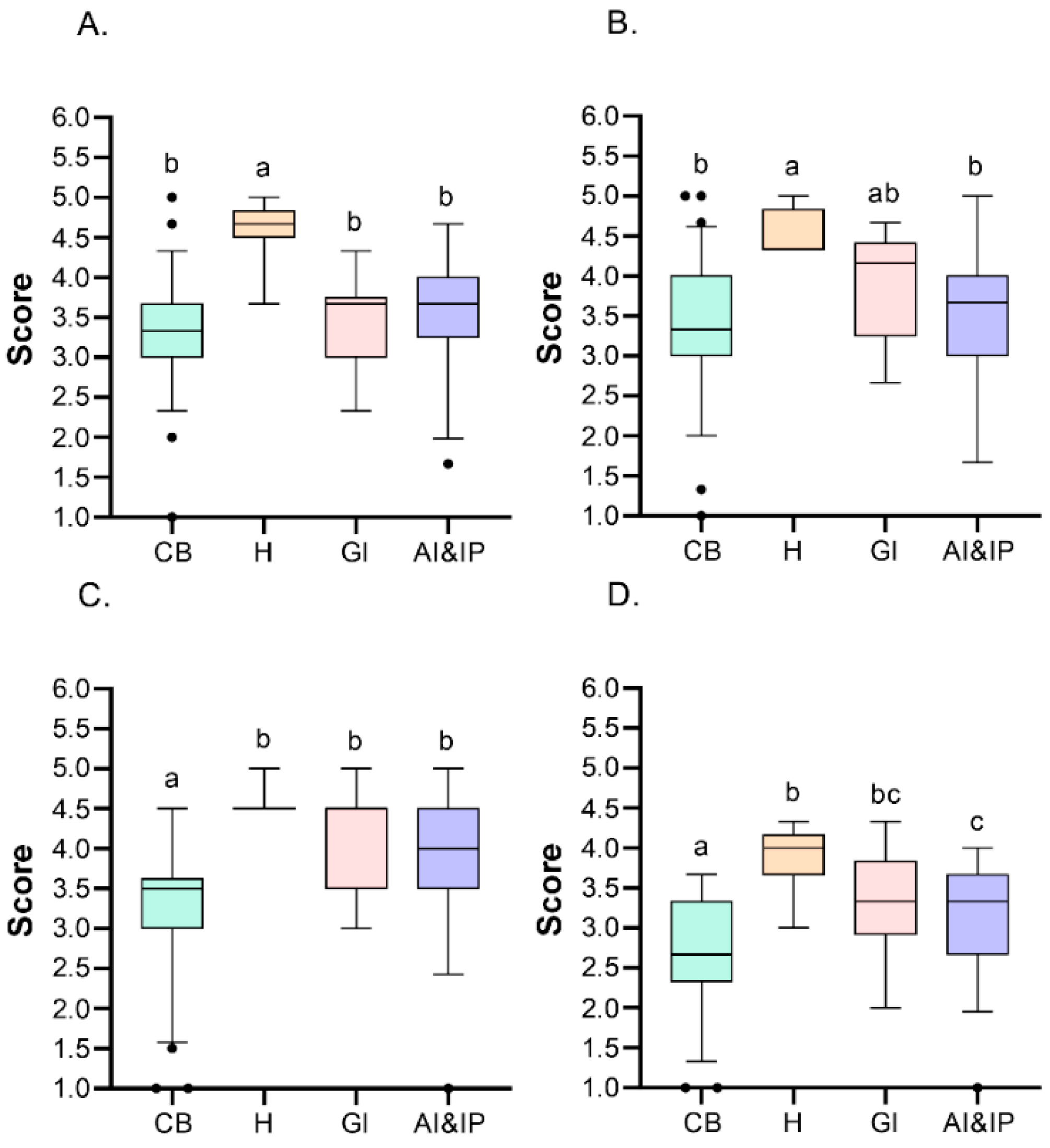
All dimensions showed positive mean scores, with variation across courses (Table 3). For Educational Impact, Cell Biology recorded the lowest mean, Histology the highest, and the two Immunology courses intermediate values. Statistical contrasts indicated significant differences between Histology and the other courses, while no differences were observed between the two Immunology courses (Figure 1, Tables S2 and S3).
Table 3.
Mean Scores and Standard deviation of Educational Impact, Interactivity, Motivation, and General Perception by Course.
Figure 1.
Boxplots showing students’ scores for the four evaluated dimensions across courses: (A) Educational Impact, (B) Interactivity, (C) Motivation, and (D) General Perception. CB = Cell Biology; H = Histology; GI = General Immunology; AI & IP = Applied Immunology and Immunopathology. Different letters above the boxes indicate statistically significant differences between courses within each dimension (Dunn’s test with Bonferroni correction, α = 0.0083). Boxes represent the interquartile range, horizontal lines the median, whiskers the minimum and maximum non-outlier values, and dots the outliers. Scores range from 1 to 5, with higher scores indicating more positive perceptions.
In Interactivity, Histology again obtained the highest scores and Cell Biology the lowest, with General Immunology and Applied Immunology and Immunopathology positioned between them. Post hoc comparisons identified differences between Histology and Cell Biology and between Histology and Applied Immunology and Immunopathology. No differences were detected between the two Immunology courses (Table S4).
3.3. Motivation, General Perception, and Relationships Between Dimensions
For Motivation, Cell Biology showed the lowest scores, whereas Histology, General Immunology, and Applied Immunology and Immunopathology displayed similarly high values. Statistical analysis confirmed differences between Cell Biology and each of the other three courses, with no differences among the latter (Figure 1).
The pattern for General Perception paralleled that of Motivation. Cell Biology obtained the lowest mean, the Immunology courses showed moderate levels, and Histology reached the highest scores. Significant differences were found between Cell Biology and all other courses, and between Histology and Immunopathology, while the two Immunology courses did not differ (Figure 1).
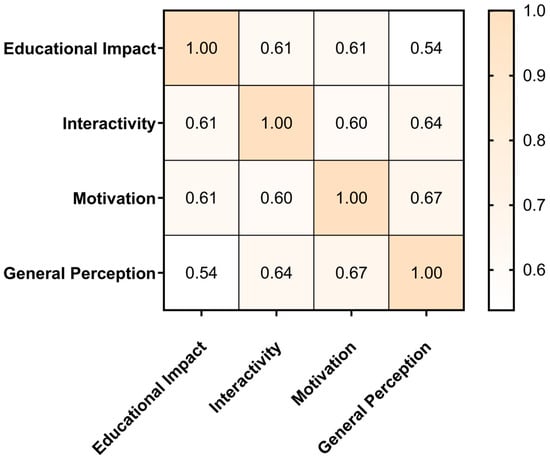
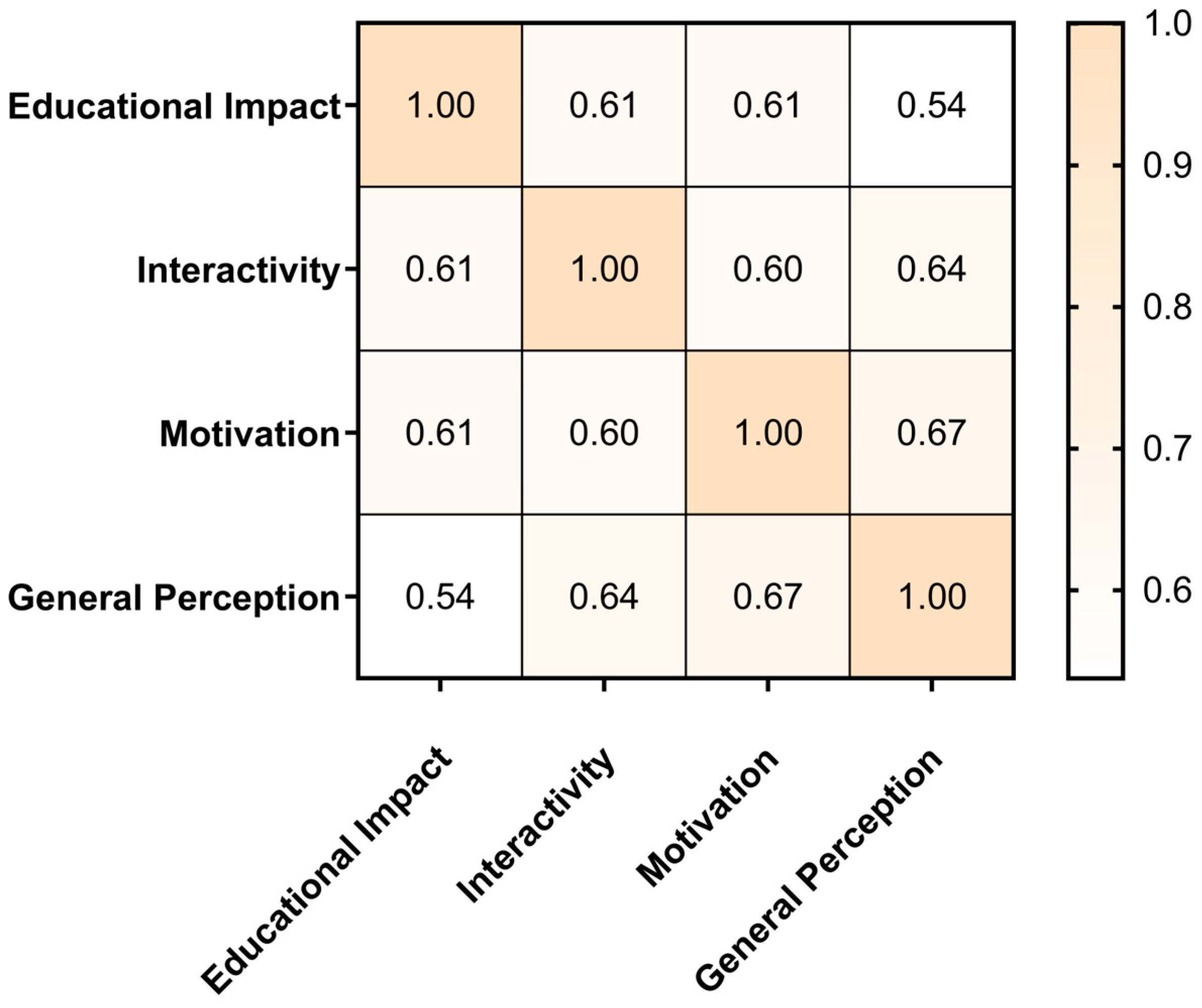
The Spearman correlation matrix (Figure 2, Table S4) showed positive and statistically significant associations between all dimensions, with coefficients ranging from 0.54 to 0.67. All correlations were highly significant (p < 1 × 10⁻¹⁰). Higher scores in one dimension were consistently associated with higher scores in the others. The strongest association was observed between Motivation and General Perception (r = 0.67), followed by Interactivity and General Perception (r = 0.64).
Figure 2.
Spearman correlation matrix for the four evaluated dimensions: Educational Impact, Interactivity, Motivation, and General Perception. Values within each cell represent Spearman’s rank correlation coefficients (r). All associations were positive and statistically significant (p < 1 × 10⁻¹⁰). Colours reflect the magnitude of the correlation according to the scale displayed on the right, with warmer colours indicating stronger associations.
3.4. Students’ Perspectives on Learning, Workload, and Collaboration
The qualitative analysis identified five central themes describing student’s experiences (Table 4). The first theme comprised references to deep learning focused on the content assigned to each group. The second captured students’ mentions of creativity and interactivity as elements that enhanced their engagement. The third gathered comments on workload demands and their relation to assessment weighting. The fourth integrated observations related to technical challenges and the need for clearer guidance on digital tool use. The fifth theme included references to teamwork, highlighting both its value and variability in individual participation. Each theme was illustrated with representative quotations.
Table 4.
Thematic synthesis of students’ open-ended responses.
4. Discussion
The findings of this study show that digital escape rooms are generally well received by students across all academic years of a Biology degree, although the strength and nature of this reception vary notably between courses. Overall, quantitative results indicate positive evaluations for Educational Impact, Interactivity, Motivation and General Perception, supported by strong internal consistency and coherent inter-dimensions correlations (Gliem & Gliem, 2003). These outcomes align with previous research reporting that escape rooms enhance engagement, promote active participation and increase perceived learning in higher education (Makri et al., 2021; Nowbuth & Parmar, 2024; Veldkamp et al., 2020). Recent meta-analytic evidence from experimental studies further suggests that educational escape rooms can support knowledge gains and attitudinal outcomes across domains, while underscoring the importance of contextual and instructional design factors (Kim et al., 2024). Although some studies have reported improvements in measured learning outcomes associated with digital escape rooms (e.g., Teng & Tan, 2025), the findings of the present study should be interpreted strictly in terms of students’ perceptions of educational value rather than as direct evidence of learning gains.
Among the most notable findings are the consistently high evaluations obtained in Histology. This outcome is plausible given the strongly visual and image-based nature of the discipline, which aligns well with puzzle-driven, image-dependent escape-room designs that emphasize visual reasoning, pattern recognition, and higher-order problem solving. This interpretation should be understood as inferential and grounded in the visual and disciplinary characteristics of Histology rather than as a direct comparison of instructional design conditions. In addition, prior research indicates that students’ engagement with digitally mediated and gamified learning environments is closely related to their digital maturity, motivation for formal digital learning, and personal innovativeness, rather than to academic level alone (Awdziej et al., 2023). Upper-year cohorts may therefore benefit from greater exposure to digital learning activities, enhancing competence and confidence in managing complex, technology-enhanced tasks.
In contrast, Cell Biology—implemented in the first year—showed the lowest scores in all dimensions. This result is consistent with evidence that early-year students face greater cognitive load, have yet to consolidate self-regulated learning strategies, and tend to perceive complex, open-ended tasks as demanding or overwhelming (Young et al., 2014). These constraints may limit their perceived learning benefits and reduce motivation, particularly when activities require transforming theoretical content into puzzles or narrative sequences. The two Immunology courses, despite being in different academic years, yielded comparable intermediate results. Their content lends itself naturally to case-based reasoning and applied problem-solving, which may explain the generally positive but not exceptional evaluations.
Motivation displayed one of the clearest patterns, with Cell Biology scoring significantly lower than all other courses, whereas Histology and both Immunology subjects showed uniformly high levels. The strong association between Motivation and General Perception supports theoretical models of gamification that emphasise how motivational processes mediate the relationship between game elements and learning outcomes (Deterding et al., 2011; Landers, 2015; Rivera & Garden, 2021). Within this framework, the observed differences across courses may reflect variations in how well escape-room dynamics are aligned with students’ cognitive readiness and prior learning experiences. In line with evidence from the educational escape room literature, affective engagement appears to be sensitive to the calibration of task difficulty, puzzle structure, and instructional scaffolding, as misalignment can result in frustration and diminished motivation.
Accordingly, the results should be understood as reflecting students’ perceived educational value and engagement, rather than as evidence of direct effects on learning outcomes.
Qualitative results provide essential context for interpreting these patterns. Students across all courses acknowledged the pedagogical value of the activity yet frequently pointed to the substantial workload involved in designing a full digital escape room. This perception is consistent with prior systematic reviews indicating that the design of educational escape rooms is inherently time-consuming and resource-intensive, particularly when digital components are involved (Makri et al., 2021). From a pedagogical perspective, when students are involved in constructing such activities, this level of effort may lead to a misalignment between the workload required and the weight assigned to the activity within the assessment framework. These issues could be particularly salient among first-year students, who reported difficulties managing the cognitive demands of the task alongside other coursework, a challenge consistent with evidence showing that novice learners are more susceptible to cognitive overload when engaging with complex learning activities (Young et al., 2014). Technical difficulties, particularly related to the use of platforms such as Genially, together with the need for clearer instructions, emerged as recurrent issues in our implementation. These findings gain relevance considering prior research indicating that perceived ease of use and navigational clarity are critical determinants of engagement and effectiveness in digital escape rooms (Krouska et al., 2025). Students additionally reported issues with group coordination, in line with observations from cooperative learning studies indicating that uneven participation can compromise the perceived value of collaborative work (Aronson et al., 2025).
These findings suggest several considerations for implementing digital escape rooms in biomedical subjects. Ensuring alignment between activity design and the cognitive demands of each discipline appears essential, as shown by the superior performance in Histology and the positive reception in Immunology. These findings are consistent with broader evidence indicating that integrating gamified escape rooms with immersive technologies such as virtual reality can support problem solving, teamwork and learner engagement in complex scenarios, while underscoring the importance of careful instructional design (Rafi et al., 2025).
First-year students seem to benefit from enhanced scaffolding—structured templates, worked examples or guided tasks—to reduce cognitive load during the transition to university-level coursework, consistent with recent scoping reviews showing that escape rooms foster teamwork, communication and professional competencies when aligned with clear learning objectives and adequate instructional support (Park et al., 2025).
Workload management also emerges as critical: adjusting assessment weight, simplifying design requirements or clarifying task distribution may prevent perceptions of disproportionate effort, echoing prior findings that student-created digital escape rooms are time-intensive and demanding (Makri et al., 2021). At the same time, technical and pedagogical support should be systematised through short training sessions, written guides and explicit design criteria, given the central role of usability (Krouska et al., 2025). Finally, difficulties in group coordination reinforce evidence that individual accountability and balanced participation are key to maintaining the perceived value of teamwork (Aronson et al., 2025).
From an instructional design perspective, these findings have several practical implications for the use of digital escape rooms in biomedical education. In early undergraduate courses, particularly in the first year, structured scaffolding such as guided templates, example challenges, or staged design tasks appears necessary to reduce cognitive load and support novice learners. Across all academic levels, careful alignment between the workload required to design a digital escape room and its weight within the assessment framework is essential to avoid perceptions of disproportionate effort. In addition, providing concise technical guidance and brief training sessions prior to implementation may help mitigate usability issues associated with digital platforms. Finally, incorporating mechanisms to promote balanced participation, such as clear role assignment or individual accountability within groups, may enhance the perceived value of collaborative work.
This study presents several limitations. The analysis is based on students’ perceptions rather than objective measures of learning outcomes, which restricts conclusions regarding performance or knowledge retention. The small sample size in Histology warrants cautious interpretation of statistical contrasts. This imbalance may have reduced statistical power and limits the generalisability of between-course comparisons, and results involving this group should therefore be interpreted with particular caution. Additionally, the fact that the escape rooms were designed by students may have contributed to increased workload and technical challenges, an issue that aligns with prior literature highlighting the time- and resource-intensive nature of escape room design (Makri et al., 2021).
Despite these limitations, the study contributes new evidence to the underexplored area of escape-room implementation in preclinical biomedical subjects. Digital escape rooms constitute a valued pedagogical tool when the design aligns with disciplinary characteristics and students have sufficient academic maturity to engage with active methodologies. Although students recognise strong motivational and learning benefits, workload, technical complexity and group dynamics can moderate the overall experience. Tailored scaffolding and support for each academic level appear essential to maximise the educational potential of this methodology within the biomedical curricula.
5. Conclusions
This study shows that digital escape rooms are a well-accepted teaching strategy that students perceive as pedagogically useful in preclinical biomedical education. Students reported positive perceptions across all evaluated dimensions, although responses varied by academic level: Histology achieved the highest evaluations, the two Immunology courses intermediate values, and Cell Biology the lowest. These differences suggest that the perceived effectiveness of the activity depends on its alignment with disciplinary characteristics and on students’ academic maturity.
Qualitative findings highlighted clear benefits in engagement and topic-specific learning, while also pointing to workload demands, technical challenges and uneven group participation as moderating factors. When supported by appropriate scaffolding, clear guidance and a manageable workload, digital escape rooms can be effectively integrated into biomedical curricula. Adapting their design to the needs and experience of each academic level is essential to maximise their educational value.
Supplementary Materials
The following supporting information can be downloaded at: https://www.mdpi.com/article/10.3390/educsci16020254/s1, Table S1: Evaluation Survey: Impact of Escape Rooms on University Learning; Table S2: Kruskal–Wallis Tests for the Four Dimensions; Table S3: Dunn Post Hoc Tests with Bonferroni Correction; Table S4: Spearman Correlation Matrix for the Four Dimensions (r and p-values); Figure S1. Example of a digital escape room on the immunopathology of Wegener’s granulomatosis. Only sample slides presenting the proposed exercises are shown; the interactive version can be accessed via the web.
Author Contributions
Conceptualization, R.C., Y.S. and M.G.; methodology, R.C., Y.S. and M.G.; validation, R.C., Y.S. and M.G.; formal analysis, R.C., A.N.-S. and S.P.-G.; investigation, R.C., A.N.-S., S.P.-G. and P.M.-P.; resources, P.M.-P., Y.S. and M.G.; data curation, R.C., A.N.-S. and S.P.-G.; writing—original draft preparation, R.C., A.N.-S., S.P.-G., P.M.-P., Y.S. and M.G.; writing—review and editing, R.C., A.N.-S., S.P.-G., P.M.-P., Y.S. and M.G.; visualization, R.C., A.N.-S., S.P.-G., P.M.-P., Y.S. and M.G.; supervision, P.M.-P. and Y.S.; project administration, R.C., Y.S. and M.G.; funding acquisition, R.C. and S.P.-G. All authors have read and agreed to the published version of the manuscript.
Funding
This work has been supported by a grant from the University Teaching Research Networks Program of the Institute of Education Sciences of the University of Alicante (call for proposals 2024). Ref.: 6280 and the APC was funded by Raúl Cobo and Sandra Pascual-García.
Institutional Review Board Statement
Ethical review and approval were waived according to the Regulation of the Research Ethics Committee of the University of Alicante (CEI-UA; BOUA, 31 March 2022), as the study involved voluntary and anonymous participation of university students through an online educational questionnaire, with no collection of personal, sensitive, or identifiable data. Data processing complied with the EU General Data Protection Regulation (Regulation (EU) 2016/679) and the Spanish Organic Law 3/2018 on data protection and digital rights (LOPDGDD), applying principles of data minimisation and anonymisation. The study was conducted in accordance with recognised principles of good research practice and research integrity, including the ALLEA European Code of Conduct for Research Integrity.
Informed Consent Statement
Informed consent was implied by voluntary completion of the anonymous online questionnaire. Participants were informed about the purpose of the study, the voluntary nature of participation, and the absence of any impact on academic assessment.
Data Availability Statement
The data analysed during the current study are available from the corresponding author upon reasonable request.
Acknowledgments
We wish to thank Nuria Martínez Masanet and Vanessa Pinilla for her technical assistance.
Conflicts of Interest
The authors declare no conflicts of interest.
Abbreviations
The following abbreviations are used in this manuscript:
| AI&IP | Applied immunology and immunopathology |
| CB | Cell Biology |
| EERs | Educational escape rooms |
| GI | General Immunology |
| H | Histology |
| STEM | Science, Technology, Engineering, and Mathematics |
References
- Abu Samah, L., Ismail, A., & Hasan, M. K. (2022). The effectiveness of gamification for students’ engagement in technical and vocational education and training. International Journal of Advanced Computer Science and Applications, 13(9), 173–180. [Google Scholar] [CrossRef] [Scilit]
- Antón-Solanas, I., Rodríguez-Roca, B., Urcola-Pardo, F., Anguas-Gracia, A., Satústegui-Dordá, P. J., Echániz-Serrano, E., & Subirón-Valera, A. B. (2022). An evaluation of undergraduate student nurses’ gameful experience whilst playing a digital escape room as part of a first-year module: A cross-sectional study. Nurse Education Today, 118, 105527. [Google Scholar] [CrossRef] [Scilit]
- Aronson, S., Ikuma, L., & Nahmens, I. (2025). Using digital/virtual escape rooms to measure team performance and cohesion of isolated multicultural teams. International Journal of Industrial Ergonomics, 105, 103671. [Google Scholar] [CrossRef] [Scilit]
- Atasever, I., Calik, A., & Duran, E. T. (2025). The digital escape room developed for nursing students: GestDia. BMC Medical Education, 25, 981. [Google Scholar] [CrossRef] [Scilit] [PubMed]
- Awdziej, M., Jaciow, M., Lipowski, M., Tkaczyk, J., & Wolny, R. (2023). Students’ digital maturity and its implications for sustainable behavior. Sustainability, 15(9), 7269. [Google Scholar] [CrossRef] [Scilit]
- Barner, J., Edwards, T., & Smith, R. (2025). Enhancing critical thinking through a virtual unfolding maternity escape room activity. Teaching and Learning in Nursing, 20, e74–e77. [Google Scholar] [CrossRef] [Scilit]
- Beger, A. W., Hannan, S., Patel, R., & Sweeney, E. M. (2025). Virtual escape rooms in anatomy education: Case studies from two institutions. Advances in Physiology Education, 49(3), 621–635. [Google Scholar] [CrossRef] [Scilit]
- Bouali, R., Zaki, M., Agorram, B., Benjelloun, N., Alami, A., & Maskour, L. (2022). University students’ knowledge and misconceptions about cell structure and functions. European Journal of Education Studies, 9(10), 121–138. [Google Scholar] [CrossRef] [Scilit]
- Braun, V., & Clarke, V. (2006). Using thematic analysis in psychology. Qualitative Research in Psychology, 3(2), 77–101. [Google Scholar] [CrossRef] [Scilit]
- Brull, S., Finlayson, S., Kostelec, T., MacDonald, R., & Krenzischeck, D. (2017). Using gamification to improve productivity and increase knowledge retention during orientation. JONA: The Journal of Nursing Administration, 47(9), 448–453. [Google Scholar] [CrossRef] [Scilit]
- Buckley, P., & Doyle, E. (2016). Gamification and student motivation. Interactive Learning Environments, 24(6), 1162–1175. [Google Scholar] [CrossRef] [Scilit]
- Christopoulos, A., & Sprangers, P. (2021). Integration of educational technology during the COVID-19 pandemic: An analysis of teacher and student receptions. Cogent Education, 8(1), 1964690. [Google Scholar] [CrossRef] [Scilit]
- Deterding, S., Dixon, D., Khaled, R., & Nacke, L. (2011, September 28). From game design elements to gamefulness: Defining “gamification” [Conference paper]. MindTrek ’11: Academic MindTrek 2011, Tampere, Finland. [Google Scholar] [CrossRef] [Scilit]
- Fazey, D. M. A., & Fazey, J. A. (2001). The potential for autonomy in learning: Perceptions of competence, motivation and locus of control in first-year undergraduate students. Studies in Higher Education, 26(3), 345–361. [Google Scholar] [CrossRef] [Scilit]
- Fernández Fernández, M. M., & Jiménez Tejada, M. P. (2019). Difficulties learning about the cell: Expectations versus reality. Journal of Biological Education, 53(3), 333–347. [Google Scholar] [CrossRef] [Scilit]
- García, M., Victory, N., Navarro-Sempere, A., & Segovia, Y. (2019). Students’ views on difficulties in learning histology. Anatomical Sciences Education, 12(5), 541–549. [Google Scholar] [CrossRef] [Scilit] [PubMed]
- Gliem, J. A., & Gliem, R. R. (2003, October 8–10). Calculating, interpreting, and reporting Cronbach’s alpha reliability coefficient for Likert-type scales. Midwest Research-to-Practice Conference in Adult, Continuing, and Community Education (pp. 82–88), Columbus, OH, USA. Available online: https://scholarworks.indianapolis.iu.edu/items/63734e75-1604-45b6-aed8-40dddd7036ee (accessed on 2 February 2026).
- Grande-de-Prado, M., Abella-García, V., Baelo-Álvarez, R., & García-Martín, S. (2025). Pre-service teachers’ perceptions of educational escape rooms. Journal of Technology and Science Education, 15(2), 543–556. [Google Scholar] [CrossRef] [Scilit]
- Kaul, V., Morris, A., Chae, J. M., Town, J., & Kelly, W. F. (2021). Delivering a novel medical education “escape room” at a national scientific conference: First live, then pivoting to remote learning because of COVID-19. Chest, 160(4), 1424–1432. [Google Scholar] [CrossRef] [Scilit] [PubMed]
- Kim, T., Na, J., Zhang, S., & Bai, Y. (2024). Escape rooms for education: A meta-analysis. International Journal of Instruction, 17(4), 219–232. [Google Scholar] [CrossRef] [Scilit]
- Krouska, A., Troussas, C., Mylonas, P., & Sgouropoulou, C. (2025). Exploring the acceptance and impact of a digital escape room game for environmental education using structural equation modeling. Information, 16(7), 528. [Google Scholar] [CrossRef] [Scilit]
- Landers, R. N. (2015). Developing a theory of gamified learning: Linking serious games and gamification of learning. Simulation & Gaming, 45(6), 752–768. [Google Scholar] [CrossRef] [Scilit]
- Lyons, R., Sweeney, E. M., & Lynch, C. (2023). Applied gamification using virtual escape rooms: Case studies in entrepreneurial and anatomy classes. Irish Journal of Technology Enhanced Learning, 7(1), 36–47. [Google Scholar] [CrossRef] [Scilit]
- Makri, A., Vlachopoulos, D., & Martina, R. A. (2021). Digital escape rooms as innovative pedagogical tools in education: A systematic literature review. Sustainability, 13(8), 4587. [Google Scholar] [CrossRef] [Scilit]
- Manzano-León, A., Aguilar-Parra, J. M., Rodríguez-Ferrer, J. M., Trigueros, R., Collado-Soler, R., Méndez-Aguado, C., García-Hernández, M. J., & Molina-Alonso, L. (2021). Online escape room during COVID-19: A qualitative study of social education degree students’ experiences. Education Sciences, 11(8), 426. [Google Scholar] [CrossRef] [Scilit]
- Mohammedsaleh, Z. M. (2024). The impact of various factors on the difficulties in learning and teaching strategies for histology. International Journal of Morphology, 42(3), 741–748. [Google Scholar] [CrossRef] [Scilit]
- Nieto-Escámez, F. A., & Roldán-Tapia, M. D. (2021). Gamification as online teaching strategy during COVID-19: A mini-review. Frontiers in Psychology, 12, 648552. [Google Scholar] [CrossRef] [Scilit]
- Nowbuth, R., & Parmar, D. (2024). Escaping the ordinary: A review of escape rooms in medical and veterinary education. BMC Medical Education, 24, 6512. [Google Scholar] [CrossRef] [Scilit] [PubMed]
- Park, G. L., Hegazy, S. A., Sepe, J., Swigart, J., Burnette, M., Beltran, J., & Hernandez, C. (2025). Fostering competencies: A scoping review of escape rooms in medical education. Medical Science Educator, 35, 1111–1121. [Google Scholar] [CrossRef] [Scilit] [PubMed]
- Quek, L. H., Tan, A. J. Q., Sim, M. J. J., Ignacio, J., Harder, N., Lamb, A., Chua, W. L., Lau, S. T., & Liaw, S. Y. (2024). Educational escape rooms for healthcare students: A systematic review. Nurse Education Today, 132, 106004. [Google Scholar] [CrossRef] [Scilit]
- Rafi, A., Habibi, A., & Kalantarion, M. (2025). Traditional medical education under siege: The revolutionary integration of virtual reality and gamification in medical escape rooms. BMC Medical Education, 25, 898. [Google Scholar] [CrossRef] [Scilit] [PubMed]
- Rahim, A. S. A., & Chuah, K. (2024). Design and implementation of interactive, remote online escape rooms in medicinal chemistry. Electronic Journal of e-Learning, 22(4), 30–42. [Google Scholar] [CrossRef] [Scilit]
- Rincón-Flores, E. G., & Santos-Guevara, B. N. (2021). Gamification during COVID-19: Promoting active learning and motivation in higher education. Australasian Journal of Educational Technology, 37(4), 100–115. [Google Scholar] [CrossRef] [Scilit]
- Rivera, E. S., & Garden, C. L. P. (2021). Gamification for student engagement: A framework. Journal of Further and Higher Education, 45(7), 999–1012. [Google Scholar] [CrossRef] [Scilit]
- Rodríguez-Rivera, P., Rodríguez-Ferrer, J. M., & Manzano-León, A. (2025). Designing digital escape rooms with generative AI in university contexts: A qualitative study. Multimodal Technologies and Interaction, 9(3), 20. [Google Scholar] [CrossRef] [Scilit]
- Tavakol, M., & Dennick, R. (2011). Making sense of Cronbach’s alpha. International Journal of Medical Education, 2, 53–55. [Google Scholar] [CrossRef] [Scilit] [PubMed]
- Teng, W. C. C., & Tan, G. L. C. (2025). Who says statistics classes are boring? How a virtual escape room enhances statistics learning. Computers & Education, 224, 105171. [Google Scholar] [CrossRef] [Scilit]
- Veldkamp, A., van de Grint, L., Knippels, M.-C. P. J., & van Joolingen, W. R. (2020). Escape education: A systematic review on escape rooms in education. Educational Research Review, 31, 100364. [Google Scholar] [CrossRef] [Scilit]
- Young, J. Q., van Merrienboer, J., Durning, S., & ten Cate, O. (2014). Cognitive load theory: Implications for medical education (AMEE guide No. 86). Medical Teacher, 36(5), 371–384. [Google Scholar] [CrossRef] [Scilit]

Disclaimer/Publisher’s Note: The statements, opinions and data contained in all publications are solely those of the individual author(s) and contributor(s) and not of MDPI and/or the editor(s). MDPI and/or the editor(s) disclaim responsibility for any injury to people or property resulting from any ideas, methods, instructions or products referred to in the content. |
© 2026 by the authors. Licensee MDPI, Basel, Switzerland. This article is an open access article distributed under the terms and conditions of the Creative Commons Attribution (CC BY) license.