Article

Insights into School Well-Being: Development and Validation of the Appwel Measurement Instrument in Flemish Secondary Education

1
School of Educational Studies, Hasselt University, 3500 Hasselt, Belgium
2
Expertise Centre for Educational Innovation, PXL University of Applied Sciences and Arts, 3500 Hasselt, Belgium
3
Smart Organisations, Research & Expertise, University Colleges Leuven-Limburg, 3590 Diepenbeek, Belgium
*
Author to whom correspondence should be addressed.
Educ. Sci. 2026, 16(2), 207; https://doi.org/10.3390/educsci16020207
Submission received: 19 November 2025 / Revised: 27 January 2026 / Accepted: 28 January 2026 / Published: 29 January 2026
(This article belongs to the Special Issue School Well-Being in the Digital Era)

Abstract

In contemporary education, schools are increasingly expected to foster students’ subjective well-being alongside academic achievement, as both are recognized as mutually reinforcing conditions for learning, success, and long-term outcomes. This study presents Appwel, a scalable instrument assessing pupils’ self-reported school experiences. It contains 21 statements rated on a 5-point Likert scale. Appwel was developed through a sequential three-phase process. First a Delphi study (N = 40) identified key concepts, which informed questionnaire development. Second, an exploratory factor analysis in a large, voluntary sample of Flemish secondary school students (N = 44,870) examined the underlying structure. Third, a confirmatory factor analysis in an independent student sample (N = 56,624) provided initial evidence of validity and reliability for a four-factor model with satisfactory fit and internal consistency across gender and grade. The final structure comprised class climate and engagement, peer relationships, academic self-concept, and authenticity and support, offering a practically applicable framework for monitoring students’ school well-being. Grounded in internationally established models of school well-being, Appwel is context-specific to the adolescent school setting; however, its theoretically informed format allows for careful adaptation and future examination of its applicability across different educational, cultural, and longitudinal contexts.

1. Introduction

1.1. The Construct of School Well-Being

Historically, well-being has been conceptualized as “the absence of illness” (Crisp, 2008) or “welfare,” describing human health and functioning from both social and psychological angles (Allardt, 1989). The terminology surrounding well-being remains inconsistent, with terms such as “happiness,” “quality of life,” and “well-being” frequently used interchangeably in both academic and public discourse (Veenhoven, 2007).
To address this challenge, researchers have proposed more differentiated conceptual frameworks that distinguish between objective and subjective well-being (Nieboer et al., 2005).
As a result, research on well-being encompasses a wide range of definitions that vary in both scope and level of specificity (Wentzel, 2024).
In the present study, school well-being is defined following Nieboer et al. (2005) as students’ subjective feelings and perceptions regarding their school experiences.
This broad definition serves as an appropriate conceptual starting point for two central reasons. First, it explicitly foregrounds students’ subjective perspectives, which aligns with the self-report nature of the instrument. Second, it clearly delimits the construct to the school context, thereby avoiding conceptual overlap with more general mental health or life satisfaction frameworks.
Objective well-being refers to externally measurable conditions, such as physical health, financial security, or housing, while subjective well-being focuses on individuals’ internal perceptions, emotions, and evaluations. The present study adopts a subjective perspective, focusing specifically on pupils’ self-reported feelings and perceptions with regard to their school experiences.
Building on the subjective-objective distinction, Ryan and Deci (2001) further differentiate well-being into hedonic well-being, centered on the pursuit of pleasure and life satisfaction, and eudaimonic well-being, which focuses on meaning, autonomy, and self-realization. Incorporating both dimensions allows for a more holistic representation of student experience within a school setting.
This study aligns with this dual approach by addressing both affective responses to school, and more enduring constructs such as self-concept and belonging.

1.2. Educational Relevance

According to Kanonire et al. (2020), increasing attention is being paid to students’ subjective well-being in schools, positioning it as a priority comparable to academic results and 21st-century skills.
Schools are not only seen as sites for academic instruction but also as pivotal contexts for the implementation of preventive and intervention strategies to support mental health and holistic development (Collins et al., 2011; World Health Organization, 2014).
In educational research, the concept of school well-being has evolved in tandem with broader developments in school effectiveness research. Traditionally, schools have emphasized measurable academic outcomes, often at the expense of less tangible dimensions such as engagement and emotional well-being.
However, accumulating evidence highlights the central role of student well-being in fostering academic and personal development. Numerous studies have demonstrated positive associations between school well-being and academic achievement, ambition, learning motivation, and social-emotional competencies (Burton et al., 2006; Hargreaves & Shirley, 2018; Laevers et al., 2003; Lv et al., 2016; Taylor et al., 2017; Van Damme et al., 2001).
This association between school well-being and broader educational outcomes is also supported by Javornik and Mirazchiyski (2023), who report strong links between student well-being and school effectiveness.
Parallel to these findings, school quality research has progressed from narrow models of output-based accountability toward holistic approaches that prioritize school climate, student agency, and psychosocial safety (Konu & Rimpelä, 2002; Wentzel, 2024).
Beyond the school context, school well-being contributes positively to adolescents’ physical and psychological health and is associated with long-term indicators such as job performance and income levels in adulthood (Diener et al., 2017; Hascher, 2012; Kanonire et al., 2020).
Rather than competing priorities, academic excellence and school well-being are now seen as mutually reinforcing aims (Kanonire et al., 2020).
Reflecting this trend, educational policy has increasingly recognized the importance of student well-being. For instance, the OECD’s Program for International Student Assessment (PISA) 2018 introduced a comprehensive well-being framework as part of its global assessment of 15-year-olds (OECD, 2019). This framework captures both cognitive and non-cognitive outcomes by assessing life satisfaction, positive and negative affect, and meaning in life, thereby elevating the role of emotional and psychological well-being in educational systems worldwide.
Thus, in contemporary education, schools are increasingly expected to foster students’ subjective well-being alongside academic achievement, as both are recognized as mutually reinforcing conditions for learning, success, and long-term outcomes (Engels et al., 2000; Laevers et al., 2016; Van Damme et al., 2001; Hascher & Edlinger, 2009; Kiuru et al., 2020).
Consequently, the systematic measurement of school well-being is increasingly important for informing educational practice and policy. It not only documents students’ lived experiences, but also informs targeted educational practices and policies aimed at promoting both academic success and psychological flourishing (Jiang et al., 2025).

1.3. Prior Models and Instruments

Academic interest in student well-being revives theoretical discussions, particularly regarding its operationalization in school settings.
The development of instruments to measure school well-being has drawn on various theoretical models. Allardt’s (1989) classical model of welfare—structured around the dimensions of “having,” “loving,” and “being”—laid the groundwork for more educationally focused frameworks. Huebner’s (1991) life satisfaction model evaluates adolescent well-being across multiple life domains, including school, but without a school-specific theoretical focus.
Unlike previous models, the school well-being model developed by Konu et al. (2002) directly targets the school setting, identifying four domains: school conditions, social relationships, means for self-fulfillment, and health status. This model offers a clear structure that balances contextual and individual aspects, and is directly applicable within school settings.
More recently, the EPOCH framework (Kern et al., 2016), rooted in positive psychology and comprising five dimensions—engagement, perseverance, optimism, connectedness, and happiness—has gained traction as a multidimensional model for adolescent well-being. Its school-specific adaptation, the EPOCH-G-S model, demonstrated strong factorial and convergent validity in a secondary school sample in Austria (Buerger et al., 2023).
Echoing this need, studies such as those by Hascher (2010), Tobia et al. (2018), and Collie and Hascher (2024) have consistently advocated for tools that account for the complex interplay between emotional, social, and academic experiences in students’ lives.
In the Flemish context, the instruments by Engels et al. (2000) and De Lee and De Volder (2009) are notable. Both instruments have made meaningful contributions to the conceptual foundations of school well-being research in the Flemish context. Elements of their conceptual reasoning have informed the development of the present instrument, which builds upon these foundations while aiming to provide a more concise and scalable tool for use in large-scale school monitoring practices.
Despite substantial theoretical contributions and empirical foundations of existing models and measurement instruments, there remains a need for brief and scalable tools that translate these frameworks into measures that are directly applicable in daily school practice, particularly within the context of Flemish secondary education.

1.4. Appwel

The Appwel instrument is highly context-specific, reflecting recent research that underscores the importance of focusing on adolescent well-being within the school setting.
Studies increasingly recognize schools as vital contexts for fostering psychological and emotional development, particularly in light of rising concerns about adolescent mental health (Gregory et al., 2018; Currie et al., 2012). As primary social settings in adolescents’ daily lives, schools offer unique opportunities for the early identification of well-being needs and for the implementation of supportive measures (Soutter, 2011; X. Chen et al., 2019; Tobia et al., 2018; Collie & Hascher, 2024).
In response to these challenges, this study focuses on Appwel, a multidimensional instrument intended to assess subjective school well-being in secondary education.
The structure of Appwel draws conceptually from Konu et al.’s model and integrates insights from international instruments. The developed instrument incorporates elements of both hedonic and eudaimonic well-being. It was developed with particular attention paid to measurement quality and large-scale applicability within schools.
The primary aim is to develop an instrument assessing students’ subjective school well-being in Flemish secondary education and to provide initial evidence on its psychometric properties, including reliability and construct validity. To this end, an exploratory factor analysis was conducted as a preparatory step to inform the measurement model, followed by a confirmatory factor analysis as the core analytic approach, including the evaluation of a second-order factor structure. In addition, subscale reliability was estimated using Cronbach’s alpha and McDonald’s omega, measurement invariance was tested across gender and grade, and between-school variance was examined using intraclass correlation coefficients and, where theoretically justified, multilevel modeling. The present study focuses on subsequent research questions:
  • To what extent does the Appwel questionnaire demonstrate cognitive validity, ensuring that items are comprehensible and interpreted as intended by students?
  • To what extent does a confirmatory factor analysis support the construct validity of the Appwel questionnaire, including the factor structure and the conceptualization of a higher-order factor representing general school well-being?
  • To what extent do the Appwel subscales demonstrate internal consistency, as assessed by Cronbach’s alpha and McDonald’s omega?
  • To what extent do the Appwel subscales exhibit internal convergent and discriminant validity, reflecting distinct but related dimensions of school well-being?
  • To what extent is the factor structure of Appwel invariant across gender and grade levels, and how much variance is attributable to differences between schools?

2. Methods

The following Section 2 is organized chronologically, following the three sequential phases of the study. Each phase is described in detail, covering the procedures, participants, and analyses relevant to that stage. To maintain focus and clarity, the results section exclusively reports the outcomes related to the psychometric evaluation of the Appwel questionnaire, including its validity and reliability, as aligned with the study’s research questions.

2.1. Research Context

This research was situated in the Flemish secondary education system, serving adolescents aged 12 to 18.
Secondary education in Flanders is compulsory until age 18 and is organised in three consecutive two-year degrees, each governed by centrally defined attainment targets applicable across all accredited schools. Recent educational reforms have explicitly embedded pupils’ mental well-being as a policy objective within these attainment targets across all degrees.
The system encompasses multiple educational tracks and pathways, ranging from academically oriented programmes to vocational and labour market–oriented routes, reflecting substantial diversity in students’ educational trajectories.
Educational quality is monitored by a central inspectorate, whose evaluation framework explicitly includes attention to students’ mental well-being at school.

2.2. Design

The present study followed a sequential three-phase process. In the first preparatory phase, a Delphi study (N = 40) was conducted to identify key concepts of school well-being. In the second phase, these concepts informed the development of questionnaire items based on both the Delphi results and a review of relevant literature and existing instruments. The resulting questionnaire was administered to a large sample of secondary school students (N = 44,870) and examined using an exploratory factor analysis as an initial, exploratory step preceding confirmatory analyses (Luts et al., 2023).
In the third phase, addressing the main research question, the resulting factor structure was evaluated in an independent student sample (N = 56,624) through cognitive testing, confirmatory factor analysis and reliability analysis.

2.3. Phase 1: Item Development

Given the broad and multifaceted nature of the concept of ‘school well-being’, a Delphi study was conducted to refine the conceptual underpinnings of the instrument through the use of expert consensus.
School well-being was defined as “students’ feelings and perceptions about their school experiences”, reflecting a form of subjective well-being (Nieboer et al., 2005).
The Delphi method was chosen to systematically and anonymously collect and synthesize the views of a heterogeneous group of experts (Green, 2014).

2.3.1. Participants

A purposive sampling strategy was applied to select the participants. Participants were selected based on the researchers’ professional network and their recognized expertise, and were invited via email to participate in the Delphi study. Between the first and second rounds, the number of participants decreased from 40 to 24 because some experts did not respond to follow-up emails. Such attrition is common in Delphi studies (Green, 2014).

2.3.2. Procedure and Outcome

The Delphi study was conducted in two rounds (N1 = 40, N2 = 24) using the online survey platform LimeSurvey. It involved both academic experts with a background in educational sciences and practitioners in the field of secondary education from schools participating since the start of the process, with the aim of co-creating the survey instrument. The initial exploratory email explained the expectations for participation. Those who responded positively received the first online survey. In the first round, participants ranked a list of components derived from the literature and previously developed instruments (e.g., Buerger et al., 2023; Konu et al., 2002; Engels et al., 2004), which were grouped into person- and context-related dimensions (Hascher, 2012; Hoferichter et al., 2020; Laevers et al., 2016). Participants were also given the opportunity to suggest additional concepts. The initial list included relationships between students (Konu & Rimpelä, 2002), satisfaction with learning content (Konu & Rimpelä, 2002; Vettenburg et al., 2009), relationships with teachers (Konu & Rimpelä, 2002; Vettenburg et al., 2009), positive experiences at school and general school satisfaction (Kanonire et al., 2020; Hascher, 2010; Vettenburg et al., 2009), sense of competence (Hascher, 2010), emotional state, attribution style, and autonomy (Deci & Ryan, 2013), and stress experience (Bowling, 1991; McDowell & Newell, 1996). Following anonymized feedback, the second round, based on the suggestions, included three new components (school engagement, availability of pupil counsellors, relationship with the school director) and ‘attribution style’ was revised as ‘coping strategies’.
In both rounds, participants’ rankings were collected and summarized. Suggested additional components were integrated into the second round, and participants re-ranked the revised list.
The four most highly prioritized components—peer relationships, teacher relationships, sense of competence, and emotional state—closely matched the domains of existing instruments such as Konu et al.’s (2002) model and guided the item development of the present study.

2.4. Phase 2: Exploring Factor Structure

2.4.1. Participants

The exploratory factor analysis (N = 44,870) was based on data collected from students from grade seven to twelve between September 2020 and November 2021. All secondary schools in Flanders could participate and were informed via e-mail, online newsletters and social media. Each participant completed the questionnaire once. Informed consent was obtained from students and/or their legal guardians, following applicable legal and ethical guidelines. Schools used standardized, age-appropriate materials to inform students and parents. Given the voluntary participation, the sample is potentially influenced by self-selection bias, as individuals with particular characteristics or motivations may have been more likely to participate.

2.4.2. Procedure

Given that the procedural steps for the EFA and CFA were identical, they are presented together here.
Schools participated voluntarily and registered via the project website or email, followed by an intake meeting or collective training session about GDPR-compliance, implementation logistics, and data collection protocols in detail (GDPR, European Union, 2016). Then schools signed a cooperation agreement outlining the legal provisions of the collaboration, followed by access to the student counsellors’ dashboard.
The questionnaire was administered digitally via the secured Appwel website during school hours using any internet-connected digital device, and was supported by a standardized protocol and a dedicated helpdesk. Schools informed students and legal guardians using uniform, age-appropriate communication materials. Informed consent was obtained from pupils and/or their legal guardians prior to participation. To enhance accessibility, the digital interface included audio in Dutch and automatic translations into the pupils’ home languages using DeepL software (web version). This approach allowed multilingual students to hear the questions in their mother tongue and read them in the language of instruction, as reflecting on well-being is more comfortable in one’s native language.
Upon logging in, students could complete the questionnaire, review their profile information, and consult a built-in FAQ.

2.4.3. Measures

The following section describes the instrument used to measure pupils’ school well-being. The questionnaire used in this study was Appwel, a scalable instrument designed to assess pupils’ self-reported school well-being in Flemish secondary education. The questionnaire is intended for use in academic research examining patterns and correlates of adolescents’ school well-being, as well as for application within schools to support structured, data-informed guidance of pupils by student counselors and teachers. At the school level, Appwel generates aggregated information that can be used to inform school-level decision-making related to the educational and psychosocial school environment.
The typical time required for students to complete the questionnaire thoroughly depends on several factors, including the student’s language proficiency and the context in which the instrument is administered. On average, students required approximately 10 to 15 min to complete the questionnaire. Participants were allowed to pause and resume completion if necessary.
All items were evaluated using a 5-point Likert scale, ranging from ‘strongly disagree’ to ‘strongly agree’ (‘strongly disagree’, ‘disagree’, ‘neutral’, ‘agree’, ‘strongly agree’). For the purposes of statistical analyses, responses were coded on a −2 to 2 scale. In applied school settings, responses were subsequently transformed to a 0–20 metric, in accordance with conventional scoring practices in secondary education, with category scores of 0, 5, 10, 15, and 20 corresponding to the respective response options. Negatively worded items were reverse-scored to ensure that higher scores consistently reflect higher levels of well-being. This approach facilitates intuitive interpretation of the results for teachers and student counsellors. This transformation is used only for applied feedback in schools; it does not affect psychometric analyses.
For descriptive and practical purposes, item scores were averaged within each factor to obtain factor-level scores, which were subsequently combined into an overall composite score. Missing data were not present, as the digital administration system did not allow students to submit the questionnaire with unanswered items. The digital questionnaire allowed students to review and revise their responses prior to final submission. After submission, responses were fixed and stored for analysis. Cognitive testing and additional psychometric evaluation of the instrument are also described in the subsequent sections.

2.4.4. Data-Analysis

Based on the prioritized components from the Delphi study, questionnaire items were developed.
An exploratory factor analysis (EFA) (N = 44,870) was conducted as a preliminary, exploratory step to examine the underlying dimensionality of the Appwel questionnaire. The purpose of this analysis was solely to inform the subsequent confirmatory factor analysis. A promax oblique rotation was used to allow for correlations between latent factors (Osborne, 2014; Brown, 2009). Factor retention was guided by the Kaiser criterion, the scree plot, and the 40-30-20 rule. This rule requires a minimum difference of 0.20 between the highest and second-highest factor loadings to avoid cross-loadings, with primary loadings of at least 0.40 and secondary loadings not exceeding 0.30 (Howard, 2015).
In addition to eigenvalues greater than one and scree plot inspection, a parallel analysis was conducted by comparing observed eigenvalues with the 95th percentile eigenvalues from randomly generated data to determine the number of factors to retain (Horn, 1965).
The sample size provided an adequate sample-to-variable ratio in accordance with established criteria for multivariate analysis (Osborne, 2014; Courvoisier et al., 2011; Austin & Steyerberg, 2015).

2.4.5. Factor Structure

Four factors were retained based on both statistical indicators and theoretical interpretability (Appendix A, Table A4):
Classroom climate and engagement reflects the central role of pupil-teacher interactions in terms of both class climate and student engagement (Brandisauskiene et al., 2021; Noble & McGrath, 2015). The critical influence of teacher behavior on pupils’ learning and well-being further supports the importance of this factor (Hattie, 2003; Collie & Hascher, 2024).
Peer relationships support findings on the importance of the sense of belonging for well-being (Weyns et al., 2021).
Academic self-concept captures students’ self-perceived academic competence (Konu & Rimpelä, 2002).
Authenticity and support refer to pupils’ subjective experience of emotional safety that enables authentic self-expression at school, which is fostered through perceived peer acceptance and access to supportive peer relationships (Hascher, 2012; Wentzel, 2024).
These empirically derived factors formed the basis for the subsequent analyses.

2.5. Phase 3: Confirmatory Phase

2.5.1. Participants

The confirmatory phase included an independent sample of 56,624 included secondary school students aged approximately 11 to 201 years. Participation was voluntary, with informed consent obtained from students and/or legal guardians.
The demographic distribution of the sample with respect to province, educational network, and gender closely resembles that of the Flemish population of secondary school students, supporting sufficient representativeness (see Appendix A, Table A3). Furthermore, the large sample size enhances the generalizability of the findings.
Descriptive statistics are reported in Appendix A (Table A1 and Table A2). Variables include personal (pupil ID, gender, birthdate) and contextual data (grade, class ID, school ID, province, degree of urbanization, educational network).
The study was approved by the Social and Societal Ethics Committee (SMEC) of Hasselt University (REC/SMEC/JA/189-129)

2.5.2. Procedure

The data collection procedure for the CFA was identical to that applied in the EFA phase. Data were collected during September to December of the 2023–2024 academic year.

2.5.3. Measures

The confirmatory factor analysis tested the four-factor structure identified in the exploratory factor analysis, with all item–factor relations specified a priori.
The confirmatory factor analysis was conducted using data from the Appwel questionnaire consisting of 21 positively and negatively worded items distributed across four factors. The first factor, class climate and engagement, comprises 11 items reflecting pupils’ perceptions of classroom interactions and engagement (e.g., “My teachers are open to my opinion”; “I find what I learn at school useful for later”). The second factor, authenticity and support, includes four items capturing pupils’ experiences of authenticity and perceived support within the school context. (e.g., “I can be myself at school”; “I have enough friends at school”). The third factor, peer relationships, consists of three items addressing social interactions among pupils (e.g., “I am currently being bullied at school”; “A pupil in my class overpowers the rest of the class”). The fourth factor, academic self-concept, comprises three items assessing students’ perceived academic competence (e.g., “When I have to do a test or assignment, I feel like I can do it”; “My classmates do better than me”).

2.5.4. Data-Analysis

Cognitive Validity
Following the selection of the questionnaire items, cognitive validity was assessed through individual cognitive testing with sixteen first-grade pupils (aged 11–13) from general and vocational tracks. This limited sample was chosen for practical feasibility, while focusing on the youngest students ensured inclusion of those with the least formal schooling and, consequently, the lowest expected language skills within the target population. Additionally, multilingual students and students from vocational tracks were deliberately included to ensure that the perspectives of those with potentially the lowest language comprehension were captured.
Using printed questionnaires, items were read aloud by the researcher while pupils followed along on a printed copy of the questionnaire. After each item, participants commented on comprehensibility, interpretability, and ease of response. Subtle modifications were made based on this feedback.
Construct Validity
Confirmatory factor analyses (CFAs) were conducted to test the four-factor structure identified in the EFA. The maximum likelihood estimation with the robust standard errors method was used in Mplus. The choice of MLR was justified by the large sample size and the symmetric 5-point Likert response format, which included a neutral midpoint (Bollen & Barb, 1981). Each item was constrained to load on a single latent factor, with inter-factor correlations permitted (Table 1, model 1).
Afterwards, the measurement model was expanded to include a higher-order factor (Table 1, model 11), examining whether the four first-order factors of school well-being could be subsumed under a higher-order latent factor representing general school well-being (Kanonire et al., 2020).
Prior to conducting the confirmatory factor analysis, the variance attributable to between-school differences was assessed using intraclass correlation coefficients (ICCs) to determine whether a multilevel modeling (Table 1, model 12) approach was warranted.
In addition, multiple group confirmatory factor analysis (MG-CFA) was performed to assess the robustness of the factor structure across gender and grade level. Measurement invariance was evaluated sequentially at the configural, metric, and scalar levels to examine whether the construct was measured equivalently across these groups. Due to non-identification issues, measurement invariance was tested in MG-CFA models without the higher-order factor (Table 1, model 2 to model 5). Subsequently, the model including the higher-order factor was tested separately for each group (Table 1, model 6 to model 10).
Model fit was evaluated using conventional fit indices: the comparative fit index (CFI), Tucker–Lewis index (TLI), root mean square error of approximation (RMSEA), and standardized root mean square residual (SRMR), with conventional thresholds indicating acceptable model fit set at CFI and TLI > 0.90, and RMSEA and SRMR < 0.08 (Hu & Bentler, 1999; Steiger, 2006). All analyses were performed in R (version 4.4.2) and Mplus (version 8.11). These fit statistics are widely used to determine how well the hypothesized model corresponds with the observed data, with CFA imposing stricter constraints than exploratory factor analysis by requiring items to load exclusively on their designated factor.
Internal convergent validity at the first-order factor level was assessed using standardized factor loadings and composite reliability (CR) from the correlated four-factor CFA model (Fornell & Larcker, 1981). Internal discriminant validity was evaluated using factor correlations and the heterotrait–monotrait ratio (HTMT), with values below 0.85 considered indicative of adequate discriminant validity (Fornell & Larcker, 1981).
Internal Consistency
Internal consistency was assessed using Cronbach’s alpha (α) and McDonald’s omega (ω). Alpha estimates inter-item correlation, with values >0.60 considered to be acceptable (Cronbach, 1951; Taber, 2017). As α assumes equal factor loadings (tau-equivalence)—often violated in practice—ω was also calculated as a more flexible alternative that allows varying item loadings (Fornell & Larcker, 1981). Reliability was evaluated per scale using both coefficients.

3. Results

The primary aim of this study is to develop an instrument for assessing students’ subjective school well-being in Flemish secondary education. The Section 3 focuses on the psychometric evaluation of the Appwel questionnaire, in line with the study’s research questions. Specifically, we report findings on cognitive validity, internal consistency, construct validity, and related reliability indices.

3.1. Cognitive Validity

Certain abstract concepts—such as “passion”, “being taken seriously”, and “opinion” were not consistently understood by pupils across both educational tracks. To enhance comprehensibility, these terms were supplemented with concise explanatory paraphrases in square brackets. Negatively worded items, particularly those involving double negation, caused confusion. Items with a single, clearly formulated negation were more readily comprehended. Consequently, double-negation items were either reworded or removed in subsequent iterations of the questionnaire.

3.2. Internal Consistency

All subscales demonstrated satisfactory internal consistency. Specifically class climate and engagement yielded high reliability (α = 0.89; ω = 0.90). Authenticity and support also yielded acceptable coefficients (α = 0.72; ω = 0.78) while the peer relationships (α = 0.67; ω = 0.71) and academic self-concept scales produced slightly lower coefficients (α = 0.66; ω = 0.67).

3.3. Construct Validity

The exploratory factor analysis identified four factors—classroom climate and engagement, peer relationships, academic self-concept, and authenticity and support. The Kaiser criterion, scree plot, 40-30-20 rule, and parallel analysis (Appendix A, Table A4) all supported a four-factor solution. These four factors formed the empirical basis for the subsequent confirmatory factor analysis.
The intraclass correlation coefficients (ICCs), which assess the proportion of variance attributable to differences between schools, were low, ranging from 0.013 to 0.091. Based on these results, a single-level confirmatory factor analysis (CFA) was deemed appropriate. In addition, a multilevel CFA was conducted as a sensitivity analysis (Table 1, model 12). Fit indices for the multilevel CFA were CFI = 0.912, TLI = 0.906, RMSEA = 0.033, SRMR within = 0.051, SRMR between = 0.538.
For the multiple-group analyses across grades, the change in CFI between the configural and metric models was −0.002, and between the metric and scalar models was −0.019. RMSEA values were 0.000 and 0.003, respectively, and SRMR values were 0.003 and 0.003. For the multiple-group analyses across gender, the change in CFI between the configural and metric models was 0.000, and between the metric and scalar models was −0.013. RMSEA values were −0.001 and 0.003, respectively, and SRMR values were 0.000 and 0.001.
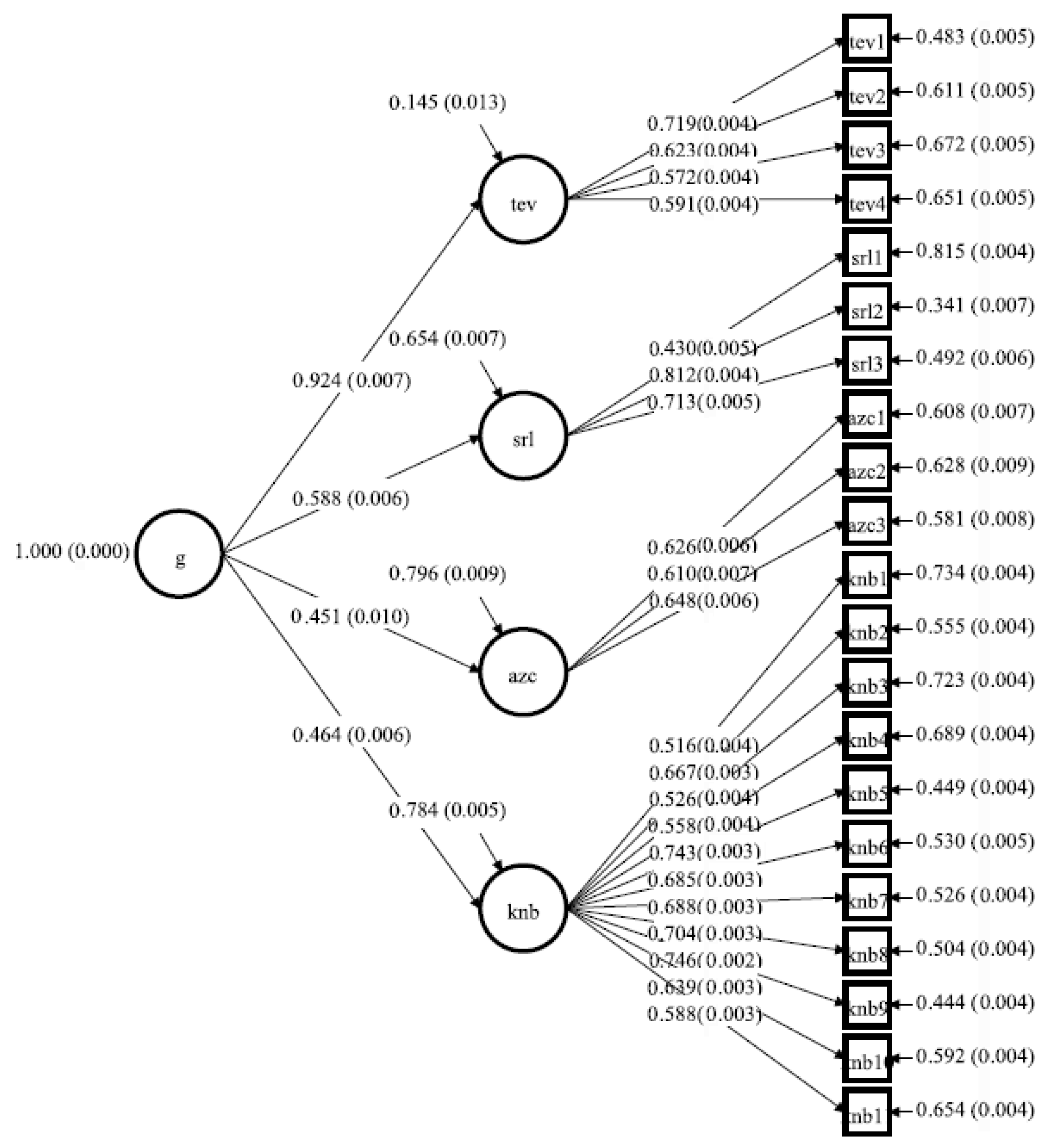
The correlated four-factor model demonstrated fit indices: CFI = 0.927, TLI = 0.916, RMSEA = 0.045, SRMR = 0.045. The higher-order factor model demonstrated fit indices: CFI = 0.926, TLI = 0.916, RMSEA = 0.045, SRMR = 0.049.
Convergent validity at the first-order factor level was assessed using standardized factor loadings and composite reliability (CR). Standardized factor loadings ranged from 0.50 to 0.88 across the four first-order factors. CR values ranged from 0.66 to 0.88.
Discriminant validity was evaluated using factor correlations and the heterotrait–monotrait ratio (HTMT). HTMT values ranged from 0.28 to 0.72, all below the recommended threshold of 0.85.

4. Discussion

Appwel conceptualizes school well-being as a multidimensional construct. It is operationalized through a theoretically grounded and empirically validated four-factor model comprising class climate and engagement, peer relationships, academic self-concept and authenticity and support. Together, these factors capture both personal and contextual influences on students’ subjective school well-being (Hascher, 2012; Konu et al., 2002; Kern et al., 2016).
The model aligns with established theoretical frameworks. Class climate and engagement and peer relationships correspond to the “social relationships” domain in Konu and Rimpelä’s (2002) school well-being model, while academic self-concept reflects the domain of “means for self-fulfillment”. The dimension of authenticity and support captures pupils’ opportunities for authentic self-expression within socially supportive contexts. This interpretation is consistent with self-determination theory, which conceptualizes authenticity as contingent upon psychological safety, and perceived support (Deci & Ryan, 2013), and aligns with the “loving” dimension in Konu and Rimpelä’s framework, where social connectedness and support are central. Collectively, the four factors integrate both hedonic and eudaimonic components of school well-being (Deci & Ryan, 2013; Kanonire et al., 2020).
In the initial, preparatory exploratory factor analysis, two items belonging to the authenticity and support factor showed secondary loadings on the peer relationships factor. However, these cross-loadings remained within acceptable limits according to the 40-30-20 criterion (Howard, 2015), and the confirmatory factor analysis consistently supported their placement within the authenticity and support factor. Conceptually, these cross-loadings are theoretically meaningful rather than problematic. Both factors are relationally grounded, yet they capture distinct aspects of students’ school experiences. Whereas ‘peer relationships’ focuses on the perceived quality and dynamics of peer interactions, ‘authenticity and support’ reflects a relationally embedded form of authenticity, in which students experience emotional safety and support as conditions for authentic self-expression within the school context. The limited cross-loadings therefore reflect the theoretically expected interdependence between relational and self-expressive dimensions of school well-being, rather than indicating a lack of discriminant validity.
Building on this conceptual alignment, subsequent analyses evaluated the psychometric and methodological robustness of the proposed factor structure. The current study employed a model-based approach to develop a theoretically grounded and context-sensitive instrument. While this design enabled the selection of relevant school-specific variables, it complicates direct comparisons with other tools based on different models. To address this, the recommendations of Collie and Hascher (2024) were followed. These authors highlight three essential criteria for measuring school well-being: theoretical coherence, contextual specificity, and methodological transparency. Appwel aligns with these principles by combining positively and negatively worded items, focusing strictly on the school context, and avoiding conceptual overlap with general mental health constructs.
Intraclass correlation coefficients indicated that the proportion of variance attributable to differences between schools was low, ranging from 0.013 to 0.091, reflecting limited between-school variance. Based on these results, a single-level confirmatory factor analysis (CFA) was deemed appropriate. In addition, a multilevel CFA was conducted as a sensitivity analysis to examine the potential impact of between-school variance (Table 1, model 12). Despite the limited between-school variance observed, the multilevel model serves as a robustness check, confirming that the factor structure is stable despite minimal between-school variance. Fit indices CFI, TLI, RMSEA, and SRMR were acceptable at the within level, whereas SRMR at the between level was high (F. F. Chen, 2007).
The higher-order factor adequately captures the shared variance among the four first-order factors. Across gender and grade subgroups, ΔCFI values exceeded the conventional cutoff of −0.01 in some comparisons; however, RMSEA and SRMR remained within acceptable thresholds, and the very large sample size supported the robustness of measurement invariance (F. F. Chen, 2007). The single-level model with a higher-order factor structure (see Figure 1; Table 1, Model 11), tested on the full sample rather than within subgroups, demonstrated good fit to the data (CFI = 0.926, TLI = 0.916, RMSEA = 0.045, SRMR = 0.049), indicating that school well-being can be conceptualized as both a multidimensional and a unified construct.
Consequently, a methodological implication emerges: Appwel’s primary utility lies in within-school interpretation, while between-school differences should be interpreted cautiously.
Regarding internal convergent validity, Average Variance Extracted (AVE) was not reported, as several items showed moderate but theoretically relevant standardized loadings, resulting in relatively low AVE values despite adequate reliability estimates (composite reliability, Cronbach’s α, and McDonald’s ω) and good overall model fit. Given that AVE is a conservative measure strongly influenced by moderate loadings, convergent validity was primarily evaluated using standardized item loadings, reliability estimates, and the substantive coverage of the constructs.
CR values ranged from 0.66 to 0.88, and all HTMT ratios were below the recommended threshold of 0.85. These findings suggest that, despite conservative AVE estimates, the Appwel instrument reliably captures the four first-order dimensions of school well-being and adequately differentiates between them.
Additionally, due to computational constraints, a combined multigroup analysis including both gender and grade level could not be performed.
Despite this, the separate analyses provide valuable initial evidence for each group. Future research may integrate these subgroups to better understand potential interaction effects and the measurement invariance testing could extend measurement to additional educational or contextual groupings, to further evaluate the generalizability of Appwel across diverse settings.
Through a sequential three-phase process, a Delphi study (N = 40) identified key concepts, which informed questionnaire development and exploratory factor analysis in a large, voluntary sample of Flemish secondary school students (N = 44,870) examining the underlying structure, and subsequently, confirmatory factor analysis in an independent student sample (N = 56,624) provided initial support for the four-factor structure and acceptable internal consistency across gender and grade. Together, results from the exploratory and confirmatory factor analyses, together with acceptable internal consistency estimates, provide initial and promising evidence regarding the psychometric properties of the proposed model, while acknowledging that further external validation is needed to consolidate its broader use.
Despite its wide reach, voluntary participation introduces self-selection bias at multiple levels (school, parent, pupil). However, while the large sample size and the alignment with national benchmarks supports generalizability, results may be influenced by the characteristics of the participating schools and pupils.
Conversely, the voluntary and free participation of schools and pupils suggests that the motivation and honesty of participants will be greater and more sustainable than if they were required to participate in such a survey.
Another limitation is the exclusive focus on students’ self-assessment. This reliance on students’ self-assessments may have influenced the results, as responses reflect personal perceptions rather than objectively measured indicators of school well-being.
Inclusion of teacher ratings (e.g., via observation scales) and parent perspectives could provide a more comprehensive view (X. Chen et al., 2019).
Furthermore, external convergent and discriminant validity were not assessed, meaning that the relationships between Appwel scores and other established measures of school well-being or related constructs remain untested.
While GDPR regulations limited the use of individual-level background characteristics such as SES of migration background in the present study (Hoferichter et al., 2020), these constraints do not preclude future convergent or criterion-related validation efforts. Future research could relate Appwel scores to aggregated school-level indicators or non-sensitive student-level outcomes, such as retention and acceleration patterns or school-level socio-economic disadvantage indicators, to strengthen external validity while ensuring data protection requirements.
Although Appwel is embedded in a strong conceptual framework (e.g., Konu & Rimpelä, 2002; Kanonire et al., 2020; Kern et al., 2016) and captures macro (school quality), meso (positive classroom climate and teachers’ support), and micro-level (student learning) aspects of school well-being (Hascher, 2012), it does not include items on general health or school services. This exclusion was necessary due to a lack of specificity within the school context and incompatibility with the Flemish educational system. In Flanders, schools are not mandated to address issues beyond the school setting (e.g., eating disorders, depression). Rather, their role is primarily signal-based.
Consequently, including such items would have raised ethical and legal issues. Nevertheless, this choice allows for a focused assessment of school-related well-being, and future research may extend the model to additional dimensions.
While this exclusion limits the scope of the instrument in contexts where these broader factors are relevant, it ensures specificity to the school environment and the intended practical application.
In educational systems where health or service-related factors are central, future adaptations could integrate these dimensions while retaining the core focus on school-specific well-being.
Such adaptations would necessitate a new factor analysis to examine potential shifts in item loadings and to ensure the structural validity of the expanded instrument.
Grounded in internationally established models of school well-being, Appwel is context-specific to the adolescent school setting, but its theoretically informed format allows careful adaptation and examination across different educational, cultural, and longitudinal contexts. Focusing on pupils’ perceptions, anchoring in a validated theoretical model and applicability within school policy provide guidance for similar developments internationally. Future research might explore the transferability of the identified factor structure to other contexts, possibly requiring minor adaptations to item content while retaining the core dimensions.
Furthermore, Appwel exemplifies how a context-specific tool can be embedded within daily school practice, supporting data-informed approaches to student well-being that extend beyond the Flemish context.
Finally, future research should examine Appwel’s longitudinal stability by assessing consistency across multiple measurement points throughout school years.

5. Conclusions

Overall, Appwel demonstrates preliminary support for its validity and reliability, while simultaneously offering strong practical applicability in school settings, reflecting a convergence of theoretical foundations and promising statistical and methodological results.
The instrument can facilitate the identification of challenges to school well-being and support the implementation of the school well-being policies, allowing teaching teams to act on class-level concerns, and student counselors to provide tailored support for individual pupils.
Longitudinal application may enable schools to monitor pupil trajectories and adjust strategies over time.
Beyond practical application, Appwel advances theoretical insight by offering a statistically promising, context-sensitive operationalization of school well-being, effectively bridging conceptual models and students’ lived school experiences.
Appwel is a scalable instrument assessing pupils’ self-reported school experiences through 21 positively and negatively worded statements rated on a 5-point Likert scale.
School well-being has been shown to predict various life outcomes, including health, academic achievement, and socioeconomic status (Diener et al., 2017; Diener & Ryan, 2009), underscoring its relevance as a research priority.
Appwel was deliberately designed as a free and accessible tool, co-created with educational practitioners to ensure both theoretical rigor and practical applicability. Its development prioritized usability, democratic availability, minimizing administrative workload while maximizing interpretability of results.
Schools report that the instrument enables earlier identification of at-risk students and more targeted counselling. For example, some students identified via Appwel had already been monitored by staff, whereas others only disclosed difficulties through the digital tool, illustrating its potential as both a confirmatory and signaling mechanism (Kanonire et al., 2020).
While researchers can provide an ideal timeline and protocol, Appwel’s implementation respects the autonomy of individual schools in communicating with students, parents, and teachers, allowing them to adapt procedures to their local context while still benefiting from the instrument’s standardized guidance and interpretability.
Although research on school well-being has expanded, few studies integrate its conceptualization, predictors, and measurement within a unified pedagogical model. A transferable, theory-driven framework could improve international comparability and inform cross-cultural educational policy.
Taken together, these results suggest that Appwel offers a context-sensitive and theoretically grounded approach to monitoring school well-being, which may support informed decision-making in educational practice and provide a basis for further research and refinement.

Author Contributions

Conceptualization, H.L.; Methodology, H.L., S.S. and K.S.; Software, H.L.; Validation, H.L. and S.S.; Formal analysis, H.L. and S.S.; Investigation, H.L.; Resources, H.L.; Data curation, H.L. and S.S.; Writing—original draft, H.L. and S.S.; Writing—review & editing, H.L., S.S. and K.S.; Visualization, H.L. and S.S.; Supervision, S.S. and K.S.; Project administration, H.L.; Funding acquisition, H.L. All authors have read and agreed to the published version of the manuscript.

Funding

This research was funded by the Flemish Government (Grant number: VR 2022 0807 VV DOC. 0066/2). The authors declare that there are no financial or non-financial competing interests related to the content of this article.

Institutional Review Board Statement

The study was conducted in accordance with the Declaration of Helsinki, and approved by the Ethics Committee of UHasselt the Social and Societal Ethics Committee (SMEC) of Hasselt University (REC/SMEC/JA/189-129, 16 September 2019).

Informed Consent Statement

Informed consent was obtained from all subjects involved in the study.

Data Availability Statement

The data that support the findings of this study are openly available in GitHub https://doi.org/10.5281/zenodo.15858696, reference number 15858696.

Acknowledgments

The author(s) acknowledge the use of ChatGPT (GPT-4) for assistance with language refinement and literature classification during the preparation of this manuscript.

Conflicts of Interest

The authors declare no conflicts of interest.

Abbreviations

The following abbreviations are used in this manuscript:
ANTAntwerp
ASCAcademic Self-Concept
AUTAuthenticity
AVEAverage Variance Extracted
αCronbach’s alpha
BRUBrussels
CCEClass Climate and Engagement
CECommunity Education
CFAConfirmatory Factor Analysis
CFIComparative Fit Index
CRComposite Reliability
EFAExploratory Factor Analysis
EFLEast Flanders
FAQFrequently Asked Questions
FLBFlemish Brabant
GDPRGeneral Data Protection Regulation
HTMTHeterotrait-Monotrait Ratio
IDIdentification number
ICCIntraclass Correlation Coefficient
LIMLimburg
MG-CFAMulti-Group Confirmatory Factor Analysis
OECDOrganization for Economic Co-operation and Development
ωMcDonald’s omega
RECResearch Ethics Committee
RMSEARoot Mean Square Error of Approximation
SRMRStandardized Root Mean Square Residual
SRPSocial Relationships Peer
SFESubsidized Formal Education
SMECSocial and Societal Ethics Committee
SNCESubsidized Non-Community Education
SESSocioeconomic Status
TLITucker–Lewis Index
WFLWest Flanders
WHOWorld Health Organization

Appendix A

Table A1. Descriptives of the Categorical Variables.
VariableCategoryFrequencyPercentage
Educational networkSNCE41,96074.10
Educational networkCE10,14217.91
Educational networkSFE45227.99
Educational trajectory−310.00
−2150.03
−17341.30
043,99177.69
110,30518.20
214372.54
31300.23
4110.02
Birth year2003670.12
20047381.30
200522043.89
2006651611.51
2007781313.80
2008876515.48
2009962316.99
201011,17919.74
2011956216.89
20121520.27
201350.01
GenderM26,18146.24
F30,44353.76
Grade122,64840.00
218,75733.13
315,21926.88
ProvinceANT15,82427.95
EFL11,73120.72
WFL10,65718.82
LIM969817.13
FLB715512.64
BRU15592.75
Academic Year111,29919.95
211,34920.04
310,07817.80
4867915.33
5818514.46
6601610.62
710181.80
Table A2. Descriptives of the Continuous Variables.
VariableMean ScoreStandard Deviation
aut_5023.860.95
aut_5074.350.87
cce_5083.401.05
srp_5113.761.18
cce_5123.540.98
srp_5184.310.97
aut_5203.101.12
cce_5233.850.95
cce_5243.740.95
cce_5283.621.00
cce_5293.151.06
cce_5323.580.85
cce_5333.930.86
cce_5343.640.95
cce_5393.710.91
asc_5403.030.93
srp_5414.600.81
cce_5443.280.98
aut_5454.001.03
asc_5463.510.95
asc_5523.251.06
Table A3. Comparison Sample with Population.
CategorySubcategory#Pupils Sample%Pupils Sample#Pupils Population%Pupils Population
ProvinceANT15,82427.95130,71427.72
ProvinceFLB715512.6469,11714.66
ProvinceBRU15592.7520,1594.28
ProvinceWFL10,65718.8280,78417.13
ProvinceEFL11,73120.72109,18523.16
ProvinceLIM969817.1361,55513.05
Educational networkCommunity education10,14217.91100,56921.33
Educational networkSubsidised formal education45227.9934,5307.32
Educational networkSubsidised non-community education41,96074.10336,41571.35
GenderM26,18146.24241,79450.96
GenderF30,44353.76232,72049.04
Table A4. Parallel Analysis.
ComponentEig_ObservedEig_Thresh95Pass
15.814141.042951
22.334611.035971
31.555841.030491
41.234171.026061
50.815161.022390
60.783721.018870
70.744011.015340
80.704561.011970
90.679431.008660
100.661151.005540
110.632381.002430
120.609950.999400
130.590330.996410
140.575100.993440
150.543190.990380
160.512690.987070
170.487140.983900
180.456530.980490
190.438880.976840
200.426380.972940
210.400670.968100
PA suggested #
factors/components
(sequential rule)
4
Table A5. Four factor Model after EFA.
ItemClass Climate and EngagementAuthenticity and SupportSocial Relationships PupilsAcademic Self-Concept
My teachers are open to my opinion.0.720.140.110.04
My teachers are friendly to me.0.710.020.140.04
My teachers explain the subject matter well.0.690.120.040.11
My teachers are attentive to students with problems.0.650.110.150.08
I get answers to the questions I ask in class.0.640.170.050.04
My teachers take me seriously.0.630.060.180.07
My teachers encourage me when I do something well in class.0.590.170.020.02
My teachers make clear agreements with me.0.560.17−0.030.05
My teachers use interesting teaching tools (e.g., worksheet, video, PowerPoint).0.54−0.010.120.04
I find what I learn at school useful for later.0.520.09−0.010.01
I have the impression that my teachers are teaching without passion.0.480.15−0.060.08
I can be myself at school.0.200.590.230.11
I show how I feel.0.190.570.070.14
I have enough friends at school.0.060.550.250.03
I can go to my friends when I have problems.0.140.530.190.03
I am currently being laughed at by my fellow pupils.0.080.240.720.07
I am currently being bullied at school.0.030.210.670.07
A pupil in my class overpowers the rest of the class.0.110.120.410.03
I process learning material slower than others in my class group.0.030.020.100.68
My classmates do better than me.0.030.090.040.67
When I have to do a test or assignment, I feel like I can do it.0.290.280.030.48

Note

1
The age threshold was determined based on the assumption that students may experience up to a two-year delay or acceleration in their educational trajectory. Such cases are relatively rare in secondary education (Statistisch Jaarboek van het Vlaams Onderwijs 2023–2024, n.d.). As a result, responses from students aged 20 or older were excluded from the dataset.

References

  1. Allardt, E. (1989). An updated indicator system: Having, loving, being. University of Helsinki. [Google Scholar]
  2. Austin, P. C., & Steyerberg, E. W. (2015). The number of subjects per variable required in linear regression analyses. Journal of Clinical Epidemiology, 68(6), 627–636. [Google Scholar] [CrossRef]
  3. Bollen, K. A., & Barb, K. H. (1981). Pearson’s R and coarsely categorized measures. American Sociological Review, 46(2), 232–239. [Google Scholar] [CrossRef]
  4. Bowling, A. (1991). Measuring health: A review of quality of life measurement scales. Open University Press. [Google Scholar] [CrossRef]
  5. Brandisauskiene, A., Cesnaviciene, J., Bruzgeleviciene, R., & Nedzinskaite-Maciuniene, R. (2021). Connections between teachers’ motivational behaviour and school student engagement. Electronic Journal of Research in Educational Psychology, 19(53), 165–184. [Google Scholar] [CrossRef]
  6. Brown, J. D. (2009). Choosing the right type of rotation in PCA and EFA. Shiken: JALT Testing & Evaluation SIG Newsletter, 13(3), 20–25. [Google Scholar]
  7. Buerger, S., Holzer, J., Yanagida, T., Schober, B., & Spiel, C. (2023). Measuring adolescents’ well-being in schools: The adaptation and translation of the EPOCH measure of adolescent well-being—A validation study. School Mental Health, 15(2), 611–626. [Google Scholar] [CrossRef]
  8. Burton, K. D., Lydon, J. E., D’Alessandro, D. U., & Koestner, R. (2006). The differential effects of intrinsic and identified motivation on well-being and performance: Prospective, experimental, and implicit approaches to self-determination theory. Journal of Personality and Social Psychology, 91(4), 750–762. [Google Scholar] [CrossRef]
  9. Chen, F. F. (2007). Sensitivity of goodness of fit indexes to lack of measurement invariance. Structural Equation Modeling: A Multidisciplinary Journal, 14(3), 464–504. [Google Scholar] [CrossRef]
  10. Chen, X., Tian, L., & Huebner, E. S. (2019). Bidirectional relations between subjective well-being in school and prosocial behavior among elementary school-aged children: A longitudinal study. Child & Youth Care Forum, 49(1), 77–95. [Google Scholar] [CrossRef]
  11. Collie, R. J., & Hascher, T. (2024). Student well-being: Advancing knowledge of the construct and the role of learning and teaching factors. Learning and Instruction, 94, 102002. [Google Scholar] [CrossRef]
  12. Collins, P. Y., Patel, V., Joestl, S. S., March, D., Insel, T. R., & Daar, A. S. (2011). Grand challenges in global mental health. Nature, 475(7354), 27–30. [Google Scholar] [CrossRef]
  13. Courvoisier, D. S., Combescure, C., Agoritsas, T., Gayet-Ageron, A., & Perneger, T. V. (2011). Performance of logistic regression modeling: Beyond the number of events per variable, the role of data structure. Journal of Clinical Epidemiology, 64(9), 993–1000. [Google Scholar] [CrossRef]
  14. Crisp, R. (2008). Well-being. In E. N. Zalta (Ed.), The Stanford encyclopedia of philosophy. Available online: https://plato.stanford.edu (accessed on 27 January 2026).
  15. Cronbach, L. J. (1951). Coefficient alpha and the internal structure of tests. Psychometrika, 16(3), 297–334. [Google Scholar] [CrossRef]
  16. Currie, C., Zanotti, C., Morgan, A., Currie, D., de Looze, M., Roberts, C., & Barnekow, V. (2012). Social determinants of health and well-being among young people: Health behaviour in school-aged children (HBSC) study: International report from the 2009/2010 survey. World Health Organization. [Google Scholar]
  17. Deci, E. L., & Ryan, R. M. (2013). The importance of autonomy for development and well-being. In J. J. Kanfer, R. W. Larson, & E. E. Deci (Eds.), Self-regulation and autonomy: Social and developmental dimensions of human conduct (pp. 19–46). Cambridge University Press. [Google Scholar] [CrossRef]
  18. De Lee, I., & De Volder, L. (2009). Bevraging van het welbevinden bij leerlingen in het basisonderwijs. De ontwikkeling van een bevragingsinstrument voor de onderwijsinspectie [Doctoral dissertation, Universiteit Antwerpen]. [Google Scholar]
  19. Diener, E., Heintzelman, S. J., Kushlev, K., Tay, L., Wirtz, D., Lutes, L. D., & Oishi, S. (2017). Findings all psychologists should know from the new science on subjective well-being. Canadian Psychology/Psychologie Canadienne, 58(2), 87–104. [Google Scholar] [CrossRef]
  20. Diener, E., & Ryan, K. (2009). Subjective well-being: A general overview. South African Journal of Psychology, 39(4), 391–406. [Google Scholar] [CrossRef]
  21. Engels, N., Aelterman, A., Deconinck, E., Schepens, A., & Van Petegem, K. (2000). Het welbevinden in de schoolsituatie bij leerlingen secundair onderwijs: De ontwikkeling van een bevragingsinstrument. OBPWO-project 98.06. Vrije Universiteit Brussel. [Google Scholar]
  22. Engels, N., Aelterman, A., Van Petegem, K., Schepens, A., & Deconinck, E. (2004). Graag naar school. Een meetinstrument voor het welbevinden van leerlingen secundair onderwijs. VUB Press. [Google Scholar]
  23. European Union. (2016). Regulation (EU) 2016/679 of the European parliament and of the council of 27 April 2016 on the protection of natural persons with regard to the processing of personal data and on the free movement of such data (general data protection regulation). Official Journal of the European Union, L119, 1–88. Available online: https://eur-lex.europa.eu/legal-content/EN/TXT/?uri=CELEX%3A32016R0679 (accessed on 27 January 2026).
  24. Fornell, C., & Larcker, D. F. (1981). Evaluating structural equation models with unobservable variables and measurement error. Journal of Marketing Research, 18(1), 39–50. [Google Scholar] [CrossRef]
  25. Green, R. A. (2014). The Delphi technique in educational research. SAGE Open, 4(2), 2158244014529773. [Google Scholar] [CrossRef]
  26. Gregory, T., Engelhardt, D., Lewkowicz, A., Luddy, S., Guhn, M., Gadermann, A., Schonert-Reichl, K., & Brinkman, S. (2018). Validity of the middle years development instrument for population monitoring of student wellbeing in Australian school children. Child Indicators Research, 12(3), 873–899. [Google Scholar] [CrossRef]
  27. Hargreaves, A., & Shirley, D. (2018). Well-being in schools: Three forces that will uplift your students in a volatile world. Association for Supervision & Curriculum Development. ProQuest Ebook Central. [Google Scholar]
  28. Hascher, T. (2010). Wellbeing. In P. Peterson, E. Baker, & B. McGaw (Eds.), International encyclopedia of education (3rd ed., Vol. 6, pp. 732–738). Elsevier. [Google Scholar]
  29. Hascher, T. (2012). Well-being and learning in school (pp. 3453–3456). Springer. [Google Scholar] [CrossRef]
  30. Hascher, T., & Edlinger, H. (2009). Positive emotionen und wohlbefinden in der schule–ein überblick über forschungszugänge und erkenntnisse. Psychologie in Erziehung und Unterricht, 56, 105–122. [Google Scholar]
  31. Hattie, J. (2003, October 9–12). Teachers make a difference: What is the research evidence? Australian Council for Educational Research Annual Conference on Building Teacher Quality, Melbourne, Australia. [Google Scholar]
  32. Hoferichter, F., Hirvonen, R., & Kiuru, N. (2020). The development of school well-being in secondary school: High academic buoyancy and supportive class- and school climate as buffers. Learning and Instruction, 71, 101377. [Google Scholar] [CrossRef]
  33. Horn, J. L. (1965). A rationale and test for the number of factors in factor analysis. Psychometrika, 30, 179–185. [Google Scholar] [CrossRef]
  34. Howard, M. C. (2015). A review of exploratory factor analysis decisions and overview of current practices: What we are doing and how can we improve? International Journal of Human-Computer Interaction, 32(1), 51–62. [Google Scholar] [CrossRef]
  35. Hu, L.-T., & Bentler, P. M. (1999). Cutoff criteria for fit indexes in covariance structure analysis: Conventional criteria versus new alternatives. Structural Equation Modeling, 6(1), 1–55. [Google Scholar] [CrossRef]
  36. Huebner, E. S. (1991). Correlates of life satisfaction in children. School Psychology Quarterly, 6, 103–111. [Google Scholar] [CrossRef]
  37. Javornik, Š., & Mirazchiyski, E. K. (2023). Factors contributing to school effectiveness: A systematic literature review. European Journal of Investigation in Health Psychology and Education, 13(10), 2095–2111. [Google Scholar] [CrossRef]
  38. Jiang, W., Saito, E., Zhang, H., & Waterhouse, P. (2025). Conceptualizing student wellbeing in secondary education: A qualitative systematic literature review. International Journal of Adolescence and Youth, 30(1), 2488474. [Google Scholar] [CrossRef]
  39. Kanonire, T., Federiakin, D. A., & Uglanova, I. L. (2020). Multicomponent framework for students’ subjective well-being in elementary school. School Psychology, 35(5), 321–331. [Google Scholar] [CrossRef]
  40. Kern, M. L., Benson, L., Steinberg, E. A., & Steinberg, L. (2016). The EPOCH measure of adolescent well-being. Psychological Assessment, 28(5), 586–597. [Google Scholar] [CrossRef]
  41. Kiuru, N., Wang, M. T., Salmela-Aro, K., Kannas, L., Ahonen, T., & Hirvonen, R. (2020). Associations between adolescents’ interpersonal relationships, school well-being, and academic achievement during educational transitions. Journal of Youth and Adolescence, 49, 1057–1072. [Google Scholar] [CrossRef]
  42. Konu, A., Alanen, E., Lintonen, T., & Rimpelä, M. (2002). Factor structure of the School Well-being Model. Health Education Research, 17(6), 732–742. [Google Scholar] [CrossRef]
  43. Konu, A., & Rimpelä, M. (2002). Well-being in schools: A conceptual model. Health Promotion International, 17(1), 79–87. [Google Scholar] [CrossRef]
  44. Laevers, F., Buyse, E., Daems, M., Declercq, B., & Snoeck, G. (2016, October). Welbevinden en betrokkenheid als toetsstenen voor kwaliteit in de kinderopvang: Implicaties voor het monitoren van kwaliteit (Kennisdossier BKK2016003). Expertise Centrum Ervaringsgericht Onderwijs (CEGO). Available online: https://expertisecentrum.cego.be/wp-content/uploads/2018/11/Kennisdossier_BKK2016003_LR_DEF.pdf (accessed on 27 January 2026).
  45. Laevers, F., Daems, M., Declercq, B., Goudeseune, I., Laureijssen, J., Vandeplas, C., & Verstevens, K. (2003). Wat vind ik van mijn school? Centrum voor Ervaringsgericht Onderwijs. [Google Scholar]
  46. Luts, H., Hamal, L., & Nuyts, E. (2023). Validatie data appwel (Onderzoeksrapport). Universiteit Hasselt. Available online: https://documentserver.uhasselt.be/ (accessed on 27 January 2026).
  47. Lv, B., Zhou, H., Guo, X., Liu, C., Liu, Z., & Luo, L. (2016). The relationship between academic achievement and emotional well-being of elementary school children in China: The moderating role of parent-school communication. Frontiers in Psychology, 7, 948. [Google Scholar] [CrossRef]
  48. McDowell, I., & Newell, C. (1996). Measuring health: A guide to rating scales and questionnaires (2nd ed.). Oxford University Press. [Google Scholar]
  49. Nieboer, A., Lindenberg, S., Boomsma, A., & van Bruggen, A. C. (2005). Dimensions of well-being and their measurement: The SPF-IL scale. Springer. [Google Scholar] [CrossRef]
  50. Noble, T., & McGrath, H. (2015). PROSPER: A new framework for positive education. Psychology of Well-Being: Theory, Research and Practice, 5(1), 2. [Google Scholar] [CrossRef]
  51. OECD. (2019). PISA 2018 results (Volume III): What school life means for students’ lives. OECD Publishing. [Google Scholar] [CrossRef]
  52. Osborne, J. W. (2014). Best practices in exploratory factor analysis. Createspace Independent Publishing Platform. [Google Scholar]
  53. Ryan, R. M., & Deci, E. L. (2001). On happiness and human potentials: A review of research on hedonic and eudaimonic well-being. Annual Review of Psychology, 52, 141–166. [Google Scholar] [CrossRef] [PubMed]
  54. Soutter, A. K. (2011). What can we learn about wellbeing in school? Journal of Student Wellbeing, 5(1), 1–21. [Google Scholar] [CrossRef]
  55. Statistisch jaarboek van het Vlaams onderwijs 2023–2024. (n.d.). Available online: https://onderwijs.vlaanderen.be/nl/onderwijsstatistieken/statistisch-jaarboek/statistisch-jaarboek-van-het-vlaams-onderwijs-2023-2024 (accessed on 27 January 2026).
  56. Steiger, J. H. (2006). Understanding the limitations of global fit assessment in structural equation modeling. Personality and Individual Differences, 42(5), 893–898. [Google Scholar] [CrossRef]
  57. Taber, K. S. (2017). The use of Cronbach’s alpha when developing and reporting research instruments in science education. Research in Science Education, 48(6), 1273–1296. [Google Scholar] [CrossRef]
  58. Taylor, R. D., Oberle, E., Durlak, J. A., & Weissberg, R. P. (2017). Promoting positive youth development through school-based social and emotional learning interventions: A meta-analysis of follow-up effects. Child Development, 88(4), 1156–1171. [Google Scholar] [CrossRef]
  59. Tobia, V., Greco, A., Steca, P., & Marzocchi, G. M. (2018). Children’s wellbeing at school: A multi-dimensional and multi-informant approach. Journal of Happiness Studies, 20, 841–861. [Google Scholar] [CrossRef]
  60. Van Damme, J., Meyer, J., De Troy, A., & Mertens, W. (2001). Succesvol middelbaar onderwijs? Een antwoord van het LOSO-project. Acco. [Google Scholar]
  61. Veenhoven, R. (2007). Subjective measures of well-being. In M. McGillivray, & A. Shorrocks (Eds.), Human well-being: Concept and measurement (pp. 214–239). Palgrave Macmillan. [Google Scholar]
  62. Vettenburg, N., Vyverman, V., & Brondeel, R. (2009). Het schoolwelbevinden in het secundair onderwijs: Diversiteit in beïnvloedende factoren. In N. Vettenburg, J. Deklerck, & J. Siongers (Eds.), Jongeren binnenstebuiten. Thema’s uit het jongerenleven onderzocht (pp. 51–76). Acco. [Google Scholar]
  63. Wentzel, K. (2024). Student well-being: In search of definitions, measures, and research designs. Learning and Instruction, 94, 101990. [Google Scholar] [CrossRef]
  64. Weyns, T., Colpin, H., & Verschueren, K. (2021). The role of school-based relationships for school well-being: How different are high- and average-ability students? British Journal of Educational Psychology, 91(4), 1127–1145. [Google Scholar] [CrossRef]
  65. World Health Organization. (2014). Health for the world’s adolescents: A second chance in the second decade. Available online: https://www.who.int/publications/i/item/WHO-FWC-MCA-14.05 (accessed on 27 January 2026).
Figure 1. Measurement Model of the Single-Level CFA Four Factor Solution with a Higher-Order Factor.
Education 16 00207 g001
Table 1. Fit Indices of Confirmatory Factor Analysis.
ModelMulti-LevelHigher Order G FactorStudentsMultiple GroupNCFITLIRMSEASRMR
Within
SRMR
Between
1NoNoAllNo56,6240.9270.9160.0450.045.
2Grade: Δ configural vs. metric56,624−0.0020.0020.0000.003.
3Grade: Δ metric vs. scalar56,624−0.019−0.0120.0030.003.
4Gender: Δ configural vs. metric56,6240.0000.003−0.0010.000.
5Gender: Δ metric vs. scalar56,624−0.013−0.0100.0030.001.
6YesGrade 1No22,6480.9310.9220.0420.047.
7Grade 218,7570.9190.9080.0470.050.
8Grade 315,2190.9120.9000.0480.051.
9Male26,1810.9200.9100.0460.054.
10Female30,4430.9280.9180.0450.048.
11All56,6240.9260.9160.0450.049.
12Yes56,6240.9120.9060.0330.0510.573
Disclaimer/Publisher’s Note: The statements, opinions and data contained in all publications are solely those of the individual author(s) and contributor(s) and not of MDPI and/or the editor(s). MDPI and/or the editor(s) disclaim responsibility for any injury to people or property resulting from any ideas, methods, instructions or products referred to in the content.