Article

ICT Infrastructure in Early Childhood and Primary Education Centers: Availability and Types According to the Perception of Preservice Teachers on Internship


by
Lucia Yuste
1,
Azahara Casanova-Piston
1,2 and
Noelia Martinez-Hervas
1,*
1
Faculty of Teacher Training and Education Sciencies, Catholic University of Valencia, 46001 Valencia, Spain
2
Didáctica e Innovación, International University of La Rioja, 137, 26006 Logroño, Spain
*
Author to whom correspondence should be addressed.
Educ. Sci. 2026, 16(2), 205; https://doi.org/10.3390/educsci16020205
Submission received: 19 December 2025 / Revised: 22 January 2026 / Accepted: 26 January 2026 / Published: 29 January 2026
(This article belongs to the Section Technology Enhanced Education)

Abstract

This study analyzes the ICT infrastructure in teaching practice centers from the perspective of students enrolled in early childhood and primary education degree programs at a Spanish university during the 2024–2025 academic year. A quantitative, cross-sectional design was employed. A questionnaire was distributed to all first- to fourth-year students via the university platform, with a sample of 556 participants. The data collection instrument consisted of an ad hoc adaptation and extension of the validated EdSocEval_V2 questionnaire, ensuring factorial validity. It was used to examine the availability of technological resources for communication and digital management, together with personal and contextual variables to support data classification. Results indicate high availability of basic digital resources, including projectors, Wi-Fi, interactive whiteboards, printers, alongside limited access to robotics, digital tablets, and classrooms of the future. High homogeneity was observed in communication and digital management resources, such as websites, virtual learning environments and corporate email. MANOVA analyses revealed that students perceive ICT infrastructure to be more integrated at higher levels of primary education, with no significant differences based on school ownership. Binary logistic regressions showed that school ownership predicts the availability of certain ICT resources, with private schools exhibiting lower network presence.

1. Introduction

The phenomenon of globalization has created a more diverse and interconnected world. In fact, communication technology is improving every day and continuously diversifying, allowing for exponential growth in knowledge and access to it through increasingly sophisticated technologies (Gutiérrez-Castillo et al., 2025). This is a distinctive feature of 21st-century societies, in which people have virtually unlimited access to cultural and informational resources. As a result, there is an urgent need to acquire the specific skills that enable individuals to work and function in a more complex world (Tight, 2021). Thus, Information and Communication Technologies (ICT) encompass different spheres of life, and digital competence is conceived as a fundamental element for social integration (Sampedro Requena, 2016).
In response to this demand, education systems began to reorient the training process to enable students to perform more effectively in a dynamic world of work, given that technology has had an impact on all economic and social sectors (Espina-Romero et al., 2024), including education (OEI, 2023; Sahni et al., 2025; Cabero-Almenara, 2010). Indeed, this need for the digitization of education systems and, therefore, for digitally capable educational centers to carry out a quality teaching–learning process, was already evident in the education disruption caused by the COVID-19 pandemic (Pokhrel & Chhetri, 2021). Consequently, the use of digital technologies in formal education is considered to have a dual function: on the one hand, to improve the teaching–learning process and, on the other, to equip students with the digital skills necessary to function in today’s world.

1.1. Theoretical Basis

The digitization of education systems is a priority at the national and international levels due to multiple factors that benefit society (Carayannis & Morawska-Jancelewicz, 2022). Nowadays, it is unthinkable to conceive of an educational center without the presence of ICT. In fact, in response to educational challenges, the European Commission has promoted a digital action plan (European Commission, 2025) with the aim of establishing a more efficient and inclusive use of ICT in education and the acquisition of digital competence (Castaño Muñoz et al., 2021). Thus, integrating Information and Communication Technologies (ICT) into education is a cornerstone for the transformation of learning processes (Wang et al., 2024) to have a significant impact on improving quality and equity in access to knowledge (Zamani & Vannini, 2025).
This will require not only improving the digital competence of students and teachers (González-Medina et al., 2025) but also focusing actions on the educational center as an enabling and dynamic agent (De la Cueva Constante et al., 2022). This implies that schools will have to adapt to be competitive in what they offer and guarantee students the best means and resources.
Various national and international programs and policies have focused their efforts on highlighting effective development of such infrastructure globally (United Nations, 2025) and in school environments (European Schoolnet, 2017; UNESCO, 2024) to facilitate the acquisition of digital skills among students, adapted to the demands of today’s information and communication society (Castaño Muñoz et al., 2021; UNICEF, 2025). On the one hand, in Europe, European Regional Development Fund (ERDF) funds are intended, among other things, to improve the digitization of studies within a new framework for regional cohesion development (Ministerio de Hacienda. Gobierno de España, n.d.). In fact, European countries such as Denmark, Estonia, Italy and Ireland recognize that digital competence is part of the basic skills of teachers today and have long been committed to the adaptation and assimilation of resources and infrastructure in schools, considering them a high priority for their development (European Schoolnet, 2017). On the other hand, in Spain, several educational organic laws such as LOCE, LOE, LOMCE and the Avanza ICT plan, already sought to integrate ICT into education, an aspect that culminated in the LOMLOE by emphasizing digital competence as an essential cross-cutting theme in the curriculum (LOMLOE, 2020).
However, there are major differences in education systems in terms of how to define, establish, and regulate teachers’ digital competence (European Commission, 2023).
So then, the integration of technologies and changes and innovation in education are part of a slow process, where teacher training and attitudes towards technologies play a very important role (Serdenia et al., 2025) and require a change in the teaching role (Cabrera Puche & Jiménez Becerra, 2025), but this is not the only factor to be considered in the digitization process. That is why, at present, we can see that various plans have been promoted to improve the technological infrastructure in various communities (INTEF, 2022), starting with digital plans for schools in which, through a SWOT analysis, evidence of existing and necessary infrastructure is recorded to modernize, expand, and update the equipment available in non-university educational centers (European Commission, 2022). Furthermore, if schools lack a digital policy plan and a shared vision of why and how ICT should be integrated, there is a possibility of missing the opportunity to support ICT teaching and learning in educational centers (Costa et al., 2021; Howard et al., 2020). Therefore, ICT infrastructure may be the first barrier to its proper use in the teaching–learning process, as is the case in developing countries (Nyagowa et al., 2014; UNESCO, 2024). Teachers, as well as students, need easy access, time, and opportunities to develop digital competence (Ramírez-Galindo & Bernal-Ballén, 2023; Lomos et al., 2023). Consequently, both digital learning materials and technology, as well as human factors, are necessary for innovation in education (Díaz Fouz et al., 2025).

1.2. Justification for the Study

As stated in Royal Decree 592/2014, of 11 July, regulating external academic internships for university students, the purpose of internships is to allow students to apply and complement the knowledge acquired in their academic training, thus promoting the acquisition of skills that prepare them for professional activities, facilitate their employability, and foster their entrepreneurial skills (RD 592/2014). That is why the University of origin includes specific training in current and emerging information and communication technologies and their educational functionality in the practical component of each course in the teaching degrees. Furthermore, with the emergence of Artificial Intelligence, this type of technology-related training has been greatly enhanced (De la Iglesia Gamboa, 2024).
In this scenario of teaching internships in educational centers, this study is particularly relevant as it addresses an analysis of ICT infrastructures in early childhood and primary education centers, complementing the perceptions of active teachers (Stupurienė et al., 2024) and official statistical data (Ministerio de Ciencia, 2025). This approach is a valuable diagnostic tool because it gathers the perceptions of student teachers on the adequacy and suitability of resources and identifies shortcomings to promote opportunities for improvement, given that the curriculum for students on these teaching degrees includes skills related to digitization, also known as digital skills, the development of which requires technologically advanced environments. It should be noted that students at the University of origin have a solid, up-to-date education adapted to the levels of teaching on ICT (Information and Communication Technologies), TAL (Technologies for Learning and Knowledge), such as TEP (Technologies for Empowerment and Participation) and TRIC (Technologies for Relationship, Information, and Communication) (Sánchez-Jiménez et al., 2025). Their perspective and perception of classroom technology infrastructure must therefore be considered when conducting a realistic analysis of the digital capacity of educational institutions (Domínguez Alfonso et al., 2018). But referring to that digital capacity, it includes not only basic connectivity and projection infrastructure, such as Wi-Fi, sound equipment, projectors, and the like. Nowadays, educational centers need to be equipped with innovation or digital mobility resources, such as tablets, robotics kits or the classroom of the future, and organizational or digital management infrastructure, like website, corporated mail, virtual campus environment, etc.
Therefore, the point for this study arises from the following research question: What is the perception and assessment of student teachers regarding the ICT infrastructure available in educational centers? This analysis will have a positive impact on the detection of current shortcomings, both in terms of tools and training and competitive needs, not only for centers and teaching teams, but also for student teachers.

1.3. Study’s Significance

The contribution of this study lies in the fact that it considers the perspective of student teachers when analyzing the technological infrastructure of educational centers after their Practicum. For this reason, a study was conducted using exploratory factor analysis of an existing instrument.

1.4. Purpose of the Study

The main objective of this study is to analyze the availability of ICT infrastructure in early childhood and primary education centers in Valencia (Spain) according to the perception of student teachers during their teaching internship, as well as to examine the differences based on contextual variables related to the educational center. The specific objectives are: (1) to describe the availability of material technological resources and digital communication and management in educational centers, (2) to analyze the internal structure of the questionnaire on material technological resources to verify the adequacy of its factorial model, (3) to explore differences in the availability of ICT infrastructure according to contextual variables of the school’s ownership, region, stage, and year of teaching practice, and (4) to determine the influence of contextual variables of the school on the presence of communication and digital management resources. Given the descriptive and diagnostic nature of the study, as well as the limited previous empirical evidence that would allow for the formulation of solid directional hypotheses on the availability of ICT infrastructure based on the contextual variables analyzed, this research adopts a fundamentally exploratory approach. Consequently, the study aims to identify patterns, differences, and possible associations, rather than to test confirmatory hypotheses formulated a priori. This approach provides an appropriate framework for analyzing complex and heterogeneous educational contexts and allows for the generation of empirical evidence that can serve as a basis for future confirmatory research. In accordance with the exploratory nature of the study, the research was guided by the following research questions:
RQ1. 
What is the level of availability of material technological resources and digital communication and management resources in early childhood and primary education practice centers, according to student teachers’ perceptions?
RQ2. 
What is the underlying factor structure of the Material Technological Resources Questionnaire when applied to student teachers during their teaching internships?
RQ3. 
Are there differences in the availability of ICT infrastructure according to contextual characteristics of the educational centers, such as school ownership, geographic region, educational stage, and internship course?
RQ4. 
To what extent do contextual variables of the educational center (school ownership and region) predict the presence of digital communication and management resources?

2. Materials and Methods

2.1. Participants

The participants consisted of 556 student teachers enrolled in early childhood and primary education programs at the Faculty of Education. The questionnaire was distributed to all first-to fourth-year students via the university platform, constituting a total population approach. The final sample included 75.2% women (n = 418) and 24.8% men (n = 138), with an average age of 21.70 years (SD = 4.12; range = 18–43 years). Regarding degree enrollment, 58.3% (n = 324) pursued a single degree (Early Childhood Education: 14.9%, n = 83; Primary Education: 43.3%, n = 241), while 41.7% (n = 232) were enrolled in a double degree program (Early Childhood Education and Primary Education: 37.9%, n = 211; Primary Education and Physical Activity and Sports Sciences: 3.8%, n = 21). In terms of academic year, 30.8% (n = 171) were in their first year, 22.1% (n = 123) in their second year, 25.9% (n = 144) in their third year, and 21.2% (n = 118) in their fourth year.
In terms of the type of institution where the internship was carried out, 48.9% (n = 272) did their internship in public institutions, 45.3% (n = 252) in state-subsidized private institutions, and 5.8% (n = 32) in private institutions. Regarding the stage and year of the internship, 49.8% (n = 277) carried it out in early childhood education (1st: 17.1%, n = 95; 2nd: 13.1%, n = 73; 3rd: 19.6%, n = 109) and 50.2% (n = 279) in primary education (1st: 11.5%, n = 64; 2nd: 9.7%, n = 54; 3rd: 7.4%, n = 41; 4th: 8.5%, n = 47; 5th: 7.9%, n = 44; 6th: 5.2%, n = 29). In terms of the regions or geographical areas of the educational practice centers, 1.8% (n = 10) were in Castellón, northern area, 23.2% (n = 129) in Valencia, northern area and metropolitan area, 26.7% (n = 158) in inland Valencia, 41% in Valencia, southern area and 2.7% in Alicante, central and southern area.

2.2. Measures

2.2.1. Material Technological Resources

A partial adaptation of the EdSocEval_V2 Questionnaire (A. M. Pérez et al., 2022) was used to analyze the availability of Material Technological Resources (ICT) in educational centers according to the perception of student teachers. This instrument was originally designed and validated to assess the use, training and evaluation of ICT among social educators, that is professional working in social education contexts, such as community-based educational, social intervention and non-formal education settings, and distinct from schoolteachers. For the purposes of the present study, the questionnaire was adapted for application to student teachers, maintaining conceptual consistency with the original version. The complete questionnaire consists of 74 items distributed across five blocks: (1) personal data and professional profile, (2) technological resources in the workplace, (3) use of ICT, (4) training and professional development in ICT, and (5) assessment of ICT. In its original validation, exploratory factor analysis revealed eight factors that explained 60.2% of the total variance, with a high level of internal consistency (α = 0.89) for the total scale in a total sample of 504 social educators.
For the present study, 18 items from block 2, Technological resources in the workplace (α = 0.928), were selected to analyze preservice teachers’ perceptions of the availability of technological resources in classrooms during their teaching internship. Minimal adjustments were made to the wording of some items to adapt them to the university context. Specifically, the adaptation process involved a systematic review of the selected items to replace references to professional practice in social education contexts with equivalent references to teaching practice and educational centers associated with university internships. Terminology referring to “social intervention settings” or the “workplace” was reformulated as “school practice centers” or “classroom contexts”, ensuring that the meaning, scope, and intent of each item remained unchanged. No additional items were introduced or removed beyond the selection of block 2, and both the response format and the scale of the original instrument were preserved. Responses were recorded using a 5-point Likert scale, ranging from 1 (not available) to 5 (fully available). The adapted version showed adequate internal consistency (α = 0.81) in a sample of 556 preservice teachers in Early Childhood Education and Primary Education (1st to 4th year).

2.2.2. Digital Communication and Management Resources

Five items with a dichotomous response format (yes/no) were included from block 2, Technological Resources in the Workplace, of the EdSocEval_V2 Questionnaire (A. M. Pérez et al., 2022) to create an independent variable called Digital Communication and Management Resources. The items are as follows: (1) Website; (2) Corporate email; (3) Profiles on one or more social networks; (4) Virtual learning environment (virtual campus); and (5) WhatsApp, Telegram, or other instant messaging and communication mechanism with families. This variable was not subjected to factorial validity analysis, as its purpose was to collect the availability of certain digital resources and subsequently use them in descriptive, contingency, and binary regression analyses.

2.2.3. Personal and Contextual Variables

An ad hoc questionnaire was designed to collect information on those personal and contextual variables considered relevant to the study. It asked questions that helped to profile the sample and allowed for classifications to be made. The variables evaluated were as follows: (1) gender; (2) age; (3) degree; (4) student year; (5) stage and specific year of internship; (7) ownership; and (8) region or geographical location of the educational center.

2.3. Procedure

A total of 556 student teachers participated voluntarily, anonymously, and confidentially, in accordance with Organic Law 3/2018 on the Protection of Personal Data and Guarantee of Digital Rights. Data collection took place at the beginning of the second semester, after the completion of the external practicum for the Practicum course, which comprises four modules of varying duration and levels of responsibility and teaching performance: Practicum I (1st year, 100 h/4 weeks), Practicum II (2nd year, 100 h/4 weeks), Practicum III (3rd year, 125 h/5 weeks), and Practicum IV (4th year, 350 h/14 weeks). The measurement instruments were administered individually and at a single point in time, online via the institutional e-learning platform, during the classroom training sessions in the second semester. Participants completed the questionnaire, which included items on the availability of material technological resources and digital communication and management during their teaching internship in schools. The students’ informed consent was requested, and the research objectives and specific instructions for completion were explained in detail, emphasizing the voluntary nature of participation and the possibility of withdrawing from the study at any time.

2.4. Data Analysis

First, the descriptive statistics of the selected items from Block 2 (Technological resources in the workplace) of the EdSocEval_V2 questionnaire were examined to assess the distribution of responses and univariate normality. The asymmetry and kurtosis values were within the acceptable range (±2) for ordinal data in large samples (Curran et al., 1996; Darren & Mallery, 2024) indicating a reasonably normal distribution and the absence of serious deviations from normality, thus allowing the use of parametric analyses.
An exploratory factor analysis (EFA) was performed on the 18 items of the Material Technological Resources Questionnaire, using the maximum likelihood method and Oblimin rotation with Kaiser normalization, given that a possible correlation between factors was assumed. The number of factors to extract was determined using a combination of empirical criteria: the Kaiser criterion (eigenvalues > 1), a scree plot, and parallel analysis. The internal reliability of each factor was estimated using Cronbach’s alpha. Although a Confirmatory Factor Analysis (CFA) was not conducted in the present study, this decision is justified by the adaptation of only a subset of items (18 items from block 2), which limits the applicability of a full confirmatory analysis. Future studies may perform a CFA to further validate the factor structure of the instrument in preservice.
Thirdly, the effects of ownership, the course of teaching internship, and the region or geographical location of the educational center on the factors in the questionnaire were examined using two-way multivariate analysis of variance (MANOVA). Compliance with the assumptions of multivariate normality, homogeneity of variances (Levene), and covariances (Box’s M) was previously verified. Finally, for items with a dichotomous response format (yes/no) on communication and digital management resources, binary logistic regressions were applied, considering the presence and/or absence of each resource as a dependent variable and the ownership and region of the educational center as predictors.

3. Results

Table 1 below details the results of the descriptive analyses of the 18 items selected from block 2 of the EdSocEval_V2 questionnaire.
Descriptive analyses showed that the means ranged from 1.64 to 4.30, indicating a heterogeneous distribution of technological resources in educational centers. The most common resources were projectors (M = 4.30), Wi-Fi connections (M = 4.27), sound equipment (M = 4.26), printers (M = 3.99), and interactive whiteboards (M = 3.96), reflecting good basic connectivity and projection infrastructure. In contrast, innovation or digital mobility resources showed average or low values, especially tablets (M = 1.85–2.67), television (M = 1.94), robotics kits (M = 1.74), and the classroom of the future (M = 1.64). The high standard deviations (between 1.2 and 1.8) suggest considerable variability among educational centers, possibly associated with contextual factors such as ownership, financial resources, or geographic location, which could be analyzed in future studies.
Analysis of the five dichotomous items (yes/no) related to technological resources for communication and digital management shows that there is homogeneity in some traditional resources and variability in those that have been incorporated more recently. Most schools have a website (95.1%, n = 529) and corporate email (98%, n = 545), indicating almost universal use of these media. In contrast, the presence of social media profiles (71.6%, n = 398) and virtual learning environments (76.8%, n = 427) varies among educational centers, highlighting differences in the implementation of digital tools. Similarly, 81.1% (n= 451) of schools use instant messaging to communicate with families, which also reflects a certain degree of heterogeneity in its adoption.
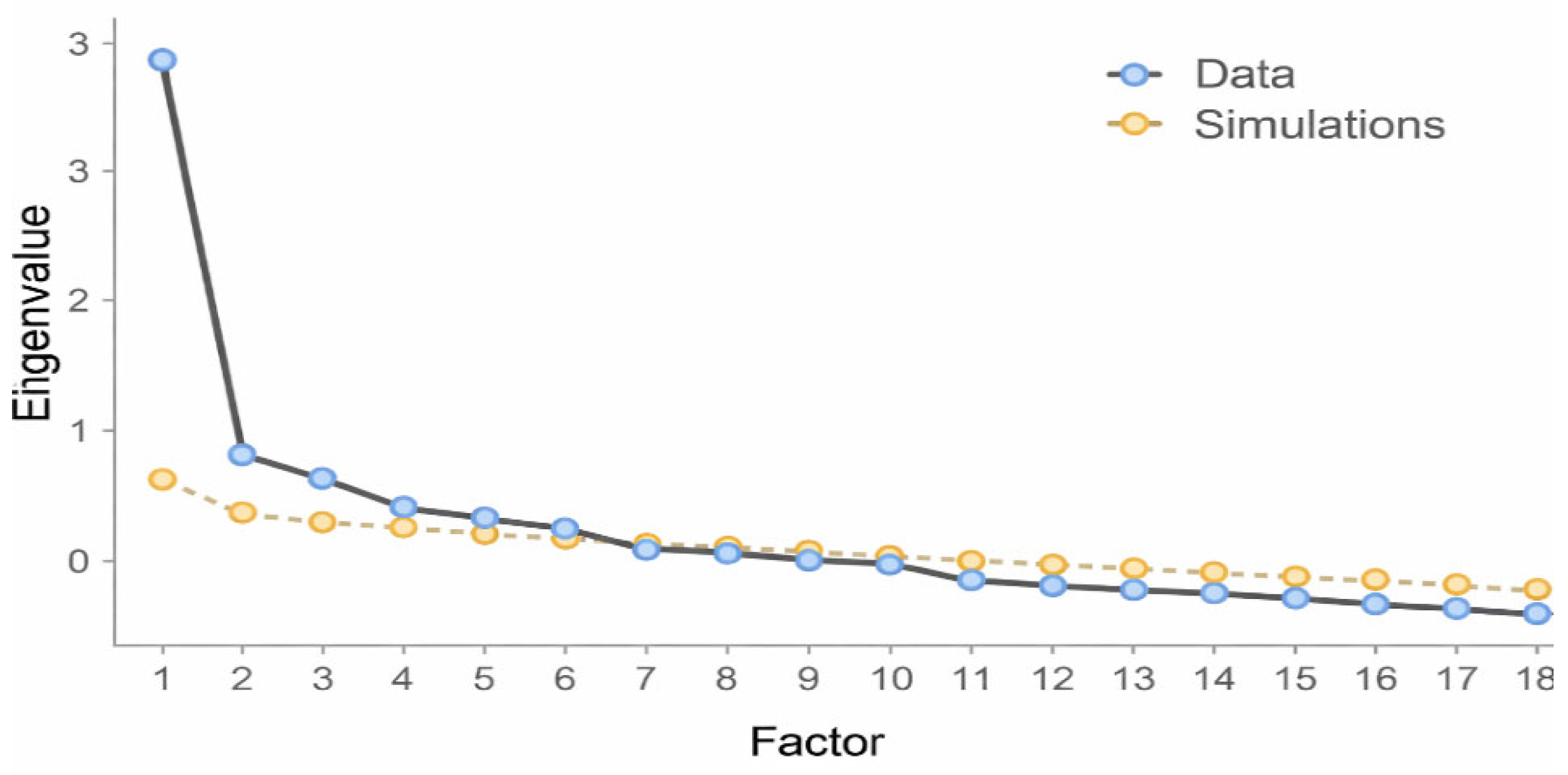
Secondly, to identify the underlying structure of the 18 items that assessed the availability of material technological resources in educational centers, an exploratory factor analysis (EFA) was performed using the maximum likelihood method and Oblimin rotation with Kaiser normalization. The Kaiser–Meyer–Olkin (KMO) sample adequacy was 0.81, indicating excellent data adequacy. Bartlett’s sphericity test was significant, χ2 (153) = 2054.22, p < 0.001, confirming that the correlations between items were adequate for applying factor analysis (Batista-Foguet et al., 2004; E. R. Pérez & Medrano, 2010). The number of factors to be extracted was determined by combining empirical and theoretical criteria. First, Kaiser’s criterion (eigenvalues > 1) suggested the extraction of six factors. This solution was subsequently confirmed by the sedimentation plot and parallel analysis (see Figure 1). As shown in the figure, the first six empirical eigenvalues exceeded the eigenvalues obtained from random matrices, and the sedimentation graph showed a clear inflection point starting from the sixth factor. Taken together, these results support the adequacy of a six-dimensional factor solution, also considering the conceptual coherence of the items and the magnitude of their factor loadings, which together explain 40.44% of the total variance.
Table 2 shows the variance explained by each of the factors, Cronbach’s alpha (α), and their main items.
This factor solution showed an interpretable structure consistent with the multidimensional nature of the construct evaluated. However, some factors had Cronbach’s alpha values close to the minimum acceptable threshold (α ≈ 0.60), which can be considered adequate in the context of an exploratory study. It should be noted that several of these factors are composed of a limited number of items and cover heterogeneous, albeit conceptually related, technological resources, which may have limited internal consistency estimates. Therefore, these factors should be interpreted with caution, especially regarding their reliability. Table 3 shows the communalities and principal factor loadings for each item.
The communalities ranged from 0.20 to 0.93, indicating that most items shared a moderate to high proportion of common variance. The items Printer (0.93) and Laptop (0.59) had the highest communalities. Some items showed low or cross loadings, so it is recommended that their inclusion be assessed based on the conceptual consistency of the factor. Although the elimination of certain items slightly improved some indices (e.g., explained variance), the original version was retained to preserve theoretical integrity and comparability with previous studies. Exploratory factor analysis revealed a clear six-factor structure, consistent with the expected theoretical organization. Each dimension groups different types of technological resources present in educational centers (see Table 3). This structure shows a conceptual differentiation between traditional, digital, and emerging technologies, providing evidence of factorial validity for the instrument.
Second, two-way MANOVAs were performed solely for the purpose of examining theoretically relevant interactions. The results of the first MANOVA (school ownership x internship course) indicated that the interaction between the independent variables was not statistically significant (Λ = 0.83, F (90, 2959.01) = 1.13, p = 0.19, η2p = 0.03). However, the main effects of the internship course (Λ = 0.85, F (48, 2587.28) = 1.79, p = 0.001, η2p = 0.03) but not those of tenure (Λ = 0.97, F (12, 1050) = 1.19, p = 0.28, η2p = 0.01). In relation to the effects of the specific internship course, factor 2, mobile devices in the classroom and school (F (8, 530) = 3.78, p < 0.001, η2p = 0.05) was the only one that reached statistical significance (p < 0.05). Bonferroni post hoc comparisons revealed that students who did their internships in 5th grade obtained significantly higher scores than students in 2nd grade (4 years old) (Mean Difference = 1.36; d = 1.05) and 1st grade (3 years old) (Mean Difference = 1.24; d = 0.91). Students who were doing their teaching internships in 6th grade of primary school obtained significantly higher scores than students in 2nd grade of preschool (4 years old) (Mean Difference = 1.24; d = 1.17), 1st grade of preschool (3 years old) (Mean difference = 1.12; d = 1.02) and 3rd year of preschool (5 years old) (Mean difference = 0.98; d = 0.90). These results indicate that the scores obtained in terms of availability of technological resources referring to mobile devices in the classroom and school increase progressively in each of the grades, being significantly higher in the third cycle of primary education (5th and 6th grades).
The results of the second MANOVA (tenure x region) indicated that the interaction between the independent variables was not statistically significant (Λ = 0.76, F (120, 2960.73) = 1.21, p = 0.07, η2p = 0.05). However, the main effects of school tenure (Λ = 0.95, F (12, 1022) = 2.02, p = 0.02, η2p = 0.02) and the region or geographical location of the school (Λ = 0.78, F (102, 2920.16) = 1.29, p = 0.03, η2p = 0.04). In relation to the effects of ownership, factor 4, teaching computer equipment (F (2, 516) = 3.27, p = 0.04, η2p = 0.01) and factor 6, emerging and innovative devices (F (2, 516) = 4.04, p = 0.02, η2p = 0.02) reached statistical significance (p < 0.05). Levene’s test indicated that the assumption of homogeneity of variances was not met only in factor 4, and a Welch ANOVA was applied (F (2, 86.56) = 2.40, p = 0.09). In relation to school ownership, Bonferroni post hoc comparisons showed no statistically significant differences for any of the variables (p > 0.05), indicating that the effect observed in factor 6 does not translate into significant differences between groups. However, unadjusted pairwise comparisons showed a tendency for state-subsidized schools to score higher on this factor compared to public schools (Mean Diff. = 0.54; d = 0.12), although this difference did not reach statistical significance. These results suggest that, although MANOVA identifies an overall effect on the availability of emerging and innovative devices (robotics kits, future classrooms, mobile phones, and televisions) between state-subsidized and public schools, the differences are small and not statistically robust.
In relation to regional effects, only factor 6, emerging and innovative devices (F (17, 516) = 1.88 p = 0.02, η2p = 0.06) reached statistical significance (p < 0.05). The results of the Bonferroni post hoc analysis also showed no statistically significant differences for any of the variables (p > 0.05), indicating that the effect observed in factor 6 does not translate into significant differences between regions. However, unadjusted pairwise comparisons showed a tendency for schools located in Alicante’s area to score higher in the availability of emerging and innovative devices than schools located in Valencia, northern area (Mean Difference = 2.5; d = 0.01), although this difference did not reach statistical significance. These results suggest that, although the MANOVA identifies an overall effect on the availability of emerging and innovative devices (robotics kits, future classrooms, mobile phones, and televisions) between schools located in the Alicante area and Valencia, northern area, the differences are small and not statistically robust. These results indicate that, although some MANOVA effects reached statistical significance, their partial eta squared values (η2p) are generally small. For example, the main effects of the internship course (η2p = 0.03), school tenure (η2p = 0.02), region (η2p = 0.04), and emerging and innovative devices (η2p = 0.01–0.06) fall within the range considered small according to conventional benchmarks (Cohen, 1988). This suggests that, despite statistical significance, the practical impact of the observed differences is limited and should be interpreted with caution.
Finally, independent binary logistic regressions were performed for each of the five digital communication and management resources, introducing school ownership and region as predictor variables. The results showed that only ownership significantly predicted the availability of some of these resources (p < 0.05 in all cases), while region did not show statistically significant effects in any of the models. The model with the greatest explanatory power was that corresponding to the presence of a profile on one or more social networks, which was statistically significant, χ2(19) = 187.94, p < 0.001, and explained approximately 41.2% of the variance (Nagelkerke’s R2). The Hosmer–Lemeshow test indicated a good fit of the model (χ2(7) = 5.86, p = 0.56), and the correct classification reached 76.8% of cases. Of the two variables included, only ownership was significant (χ2(2) = 98.61, p < 0.001). Private centers were significantly less likely to have a social media profile than public centers (B = −2.53, SE = 0.65, Wald = 15.27, p < 0.001, OR = 0.08, 95% CI [0.02, 0.28]). No significant differences were found between private and state-subsidized schools (p = 0.23). The second model with the highest predictive power corresponded to the availability of instant messaging and communication with families, which was also significant, χ2(19) = 54.66, p < 0.001, and explained approximately 15.1% of the variance (Nagelkerke’s R2). The Hosmer–Lemeshow test confirmed a good fit (χ2(7) = 6.81, p = 0.45), and the model correctly classified 81.3% of cases. Of the variables included, only ownership was significant (χ2(2) = 9.39, p = 0.01). In this case, private centers were significantly less likely to have instant messaging or direct communication systems with families compared to subsidized centers (B = −1.36, SE = 0.67, Wald = 4.09, p = 0.04, OR = 0.26, 95% CI [0.07, 0.96]). No significant differences were found between private and public centers (p = 0.29). Finally, the model relating to the availability of an institutional website was also significant, χ2(19) = 33.93, p = 0.02, explaining approximately 18.4% of the variance (Nagelkerke’s R2). The Hosmer–Lemeshow test showed an adequate fit (χ2(7) = 2.60, p = 0.92), and the correct classification was 95.1%. Of the variables included, only ownership was significant (χ2(2) = 10.16, p = 0.01). Private centers were significantly more likely to have an institutional website than subsidized centers (B = 2.87, SE = 1.25, Wald = 5.27, p = 0.02, OR = 17.66, 95% CI [1.52, 205.10]). No significant differences were found between private and public schools (p = 0.60). Overall, these results highlight the differential role of school ownership (public, state-subsidized and private) as a factor associated with the availability of digital communication and management resources, while the region or geographic location did not show a significant influence in any of the cases.

4. Discussion

The results confirm the factorial validity of the adapted version of the questionnaire on the availability of technological resources in early childhood and primary education centers in Valencia (Spain), from the perspective of student teachers. Exploratory factor analysis identified a stable structure of six factors, distinguishing between traditional technologies (printing, basic computing) and emerging technologies (robotics, mobile devices, or interactive audiovisual devices), reflecting the digital transition of educational centers. Internal consistency was satisfactory (total α = 0.81; subscales = 0.60–0.80), supporting the reliability and empirical validity of the instrument (Knekta et al., 2019; Slaney, 2017). These results are consistent with previous research conducted in other subject areas and with diverse samples, in which stable factor structures and adequate levels of internal consistency have been identified in instruments designed to assess the availability and use of technological resources in educational contexts (Calderón-Cisneros et al., 2018; Guzmán et al., 2025; Laudadío & Mazzitelli, 2018; Palacios-Rodríguez et al., 2022; Serra et al., 2025). From a theoretical perspective, the structure obtained is consistent with current models of technological integration and highlights the need to train student teachers in the use of both traditional and innovative equipment (Ally, 2019; Cabero-Almenara, 2010). The descriptive analysis of the items showed a heterogeneous technological endowment, with high availability of basic resources (Wi-Fi, projectors, digital whiteboards) and a lower presence of emerging technologies (tablets, robotics, classrooms of the future). This pattern, common in the Spanish (Castaño Muñoz et al., 2021; Secretaría General Técnica, 2025) and European (European Schoolnet, 2017) contexts, suggests that school digitization continues to focus on conventional infrastructure. The variability observed between schools, points to the influence of factors such as ownership, educational stage, and geographical location of the school (OEI, 2023), with possible repercussions on equity and digital training opportunities for student teachers. Consequently, there is a need to move towards a more equitable, accessible and up-to-date technological provision that favors the development of teachers’ digital competences more focused on use and assessment in accordance with the DigCompEdu framework (INTEF, 2022; Redecker, 2017). On the other hand, the results on differences in the availability of technological resources according to school ownership, internship course, and geographical location show that the school context influences, albeit moderately, opportunities for access to and use of educational technology during teaching internships. No significant effects were found in the interaction between ownership and course, indicating that technological differences do not depend on the type of school according to educational level despite figures that do support it (OCDE, 2020; Hatlevik & Christophersen, 2013). However, the internship course did show main effects: students in Primary Education reported greater technological availability than those in Early Childhood Education, consistent with research pointing to a more systematic integration of ICT at levels above Early Childhood and Primary Education (Ruíz-Brenes & Hernández Rivero, 2018). These differences reflect the different pedagogical uses of ICT at different educational stages: exploratory and playful in preschool, acting more as enhancers, in line with other studies (González-Medina et al., 2025 and instrumental and autonomous in primary school but not really aligned with the curriculum (Jacinto Leiva & Gaona Valdera, 2025; Tondeur et al., 2017). No significant effects were found in the interaction between tenure and region, although there were modest main effects: state-subsidized schools showed a greater presence of emerging technologies (e.g., robotics, classrooms of the future), possibly due to their greater autonomy or investment capacity. Geographical differences were minimal, with a slight advantage for schools in Alicante over those in Valencia, which should be analyzed to determine whether it is related to local education investment policies. Overall, the results point to a certain homogenization in basic technological resources among Spanish schools, although inequalities persist in the incorporation of innovative and emerging technologies, depending on institutional initiative and digital management policies (Díaz Fouz et al., 2025; OEI, 2023; Ministerio de Hacienda. Gobierno de España, n.d.).
The results of the binary logistic regressions show that school ownership is a key explanatory factor in the availability of digital communication and management resources, which reinforce the attentive and necessary digital equity advocated by various international organizations especially in developing countries (UNESCO, 2024), while geographical location had no significant effect in this study. This confirms that differences between public, state-subsidized, and private schools continue to influence, unevenly, the adoption of institutional digital tools. The most explanatory model was that relating to social media presence, which was significantly lower in private schools, suggesting that public schools use social media more as a means of communication and dissemination, while private schools prefer more formal channels, such as institutional websites. This could contrast with studies from other regions that suggest the opposite, although they refer to higher levels of education (Álvarez Álvarez & Puerto Carrizosa, 2022). Similarly, private schools also showed less use of instant messaging and communication platforms with families compared to state-subsidized schools, which could be due to differences in their communication policies. In contrast, private schools stood out for being more likely to have an institutional website, consistent with a strategy focused on educational marketing and institutional visibility.
Overall, the findings indicate that school ownership affects not only material technological resources but also digital communication and management resources, while regional inequalities are minimal. From an educational perspective, there is a clear need to train future teachers in institutional and communicative digital skills, as demonstrated and incorporated by this institution since the introduction of the Bologna Process, which is committed to including in the practicum experiences in diverse contexts that foster a critical understanding of the different models of technological infrastructures, digital management, and their impact on educational equity.

5. Conclusions

The findings on analyzing the ICT infrastructure available in formal educational centers from the perspective of student teachers who are doing their internships allow us to draw conclusions that are aligned with the objectives set out.
On the one hand, it has been found that the results of the descriptive analyses show a heterogeneous distribution of technological resources, although basic resources (Wi-Fi connection, projectors, interactive whiteboards, printers, and computer equipment) are widely available. However, the high standard deviations suggest significant variability among schools regarding innovative devices or digital mobility. On the other hand, it has been shown that there is a high degree of homogeneity in standardized tools such as the center’s website or corporate email, which are owned by a large majority of centers. Other resources such as social media, VLEs, show more uneven implementation. However, there is a certain degree of heterogeneity in the use of instant messaging tools. This suggests that institutional digital transformation is still neither comprehensive nor uniform.
Concerning the internal structure of the questionnaire on material technological resources to verify the adequacy of its factorial model, the CFA (using maximum likelihood estimation and Oblimin rotation with Kaiser normalization) confirmed a valid, reliable, and interpretable structure composed of six factors determined by empirical and theoretical criteria, suggested by Kaiser’s criterion, and confirmed by sedimentation plots and parallel analyses seen in the results: printing and scanning equipment, mobile devices in the classroom and school, digital storage systems, teaching computer equipment, audiovisual and interactive technology, and emerging devices. This configuration supports the multidimensionality of the “ICT infrastructure” construct, differentiating between traditional ICT and emerging ICT. The overall reliability and reliability by factor were satisfactory. This supports the use of the adapted instrument in future research on the perception of infrastructure in similar educational contexts.
About exploring the differences in the availability of ICT infrastructure according to contextual variables of the educational center (ownership, region, stage, and year of practice), it was found that MANOVA analyses revealed a perception of greater integration of infrastructure at higher stages. In addition, it identifies an overall effect of “ownership by region” in the availability of emerging and innovative devices, but without statistical significance or robustness. However, Bonferroni post hoc comparisons detected a tendency for subsidized centers to have more innovative technologies in certain parts of the region.
Finally, to determine the influence of contextual variables in the educational center on the presence of communication resources, the independent binary logistic regressions of each of the five digital communication and management resources, taking into account the region and the ownership of the center as variables, showed that the ownership of the center is a significant predictor of the availability of certain institutional ICT resources, but not the region. It was also observed that private schools have a lower presence on social media and in digital communication (messaging) with families, but they have, to a greater extent, a school website, compared to state-subsidized and public schools, suggesting that decisions on digital management and integration would be determined more by the orientation of the school’s organization and management than by its geographical location.
However, it should be clarified that the study is based on student teachers’ perceptions of the availability of ICT infrastructure in their internships school, rather than on objective institutional audits. Nevertheless, students have direct and sustained exposure to technological resources in their own school environment and at the training center, which makes their reports a valid source of information on observable technological resources. The items included in the adapted instrument refer to concrete and identifiable resources, reducing the risk of subjective bias. Future research could triangulate these findings with data from teachers, school administrators, or direct observations of educational centers. This may introduce biases in the respondents’ memory, interpretation, or personal expectations.
Although the sample comes from a single university in the Valencia region and the researchers are aware of the limitations of generalizing the findings, the process is interesting for replication and subsequent cohesion for expansion and comparison of results between regions or countries.
Also noteworthy is the limitation posed by the overrepresentation of certain regions and districts (Valencia area) and the scarce presence of others (Castellón and Alicante, etc.). This hinders a robust analysis. Another factor to consider is the low representation of private centers, which also limits the statistical power to detect significant differences in ownership.
Thus, there are many possible future lines of research, such as interregional or international comparative studies, comparisons with national statistical data from the Ministry of Education, validation of the factorial structure of the questionnaire in other autonomous communities or European countries, or comparison of technology provision policies according to the perceptions of student teachers and their alignment with the DigCompEdu framework as theoretical educational policies. Future research could analyze the relationship between the perception of technological provision, the reality of statistics on its use during the teaching training period, and digital self-efficacy after its use, as well as the transfer of technological learning to teaching internship. It might also be worth exploring how contextual conditions influence the digital beliefs and competencies of student teachers. In addition, consideration could be given to extending the validation of the questionnaire to samples from different autonomous communities or countries to test the factorial stability and cultural comparability of the instrument and explore the role of institutional policies in the adoption of emerging technologies. It would also be advisable to incorporate mixed or longitudinal designs that allow for examining the evolution of school digitization and its impact on teacher training, as well as evaluating the effectiveness of teaching internship in digitally diverse contexts to promote technological equity and teacher digital competence throughout initial teacher training programs.
Another attractive line of research could be to combine mixed methods (quantitative and qualitative on effective use and perceived availability). This would allow us to contrast actual use with declared availability to explore pedagogical avenues and organizational, cultural, and economic barriers to integration. To this end, data from the autonomous communities should be made public, as is the case in the Canary Islands (Instituto Estadístico de Canarias, 2025).
It would also be interesting to conduct longitudinal analyses of the impact of the Practicum on teachers’ digital competence, such as the self-efficacy, attitudes, and competence of future teachers, before, during, and after the Practicum to clarify how the context influences initial training, thus aligning it with current European educational policies (SELFIE questionnaire, SWOT analysis, etc.) which are currently only available to inservice teachers.
Finally, this study could be considered a starting point for the design and validation of a school digital equity index in which, based on findings such as those shown here, indicators are constructed that also take into consideration the perceptions of technologically literate student teachers, adding value and another perspective to evaluations of technological infrastructures in public policies. These final considerations can enrich research on education and ICT, offer concrete guidelines for curriculum design in initial teacher training, and provide broader perspectives for digital equity in the national or international education system.

Author Contributions

Conceptualization, A.C.-P. and N.M.-H.; Methodology, L.Y. and A.C.-P.; Software, L.Y.; Validation, L.Y.; Formal analysis, L.Y.; Investigation, L.Y., A.C.-P. and N.M.-H.; Resources, L.Y., A.C.-P. and N.M.-H.; Writing—original draft, L.Y., A.C.-P. and N.M.-H.; Writing—review & editing, A.C.-P. and N.M.-H.; Visualization, L.Y.; Supervision, A.C.-P. and N.M.-H.; Project administration, A.C.-P. and N.M.-H. All authors have read and agreed to the published version of the manuscript.

Funding

This research received no external funding.

Institutional Review Board Statement

The study was conducted in accordance with the Declaration of Helsinki and approved by the Institutional Review Board of Catholic University of Valencia on 6 February 2025 (UCV/2023-2024/123).

Informed Consent Statement

Informed consent was obtained from all subjects involved in the study.

Data Availability Statement

The original contributions presented in this study are included in the article. Further inquiries can be directed to the corresponding author.

Acknowledgments

We would like to thank the UCV, who has funded this article and our students, without whom this research would not have been possible.

Conflicts of Interest

The authors declare no conflicts of interest.

References

  1. Ally, M. (2019). Competency profile of the digital and online teacher in future education. International Review of Research in Open and Distributed Learning, 20(2), 302–318. [Google Scholar] [CrossRef]
  2. Álvarez Álvarez, C., & Puerto Carrizosa, M. J. d. (2022). Análisis comparativo de las redes sociales de centros públicos y privados/concertados de Secundaria en Cantabria. Edutec: Revista Electrónica de Tecnología Educativa, 82, 349–365. Available online: https://dialnet.unirioja.es/servlet/articulo?codigo=8734509&info=resumen&idioma=SPA (accessed on 18 January 2026). [CrossRef]
  3. Batista-Foguet, J. M., Coenders, G., & Alonso, J. (2004). Análisis factorial confirmatorio. Su utilidad en la validación de cuestionarios relacionados con la salud. Medicina Clínica, 122, 21–27. Available online: https://www.elsevier.es/es-revista-medicina-clinica-2-pdf-13057542 (accessed on 18 January 2026). [CrossRef]
  4. Cabero-Almenara, J. (2010). Los retos de la integración de las TICs en los procesos educativos. Límites y posibilidades. Perspectiva Educacional, 49, 32–61. [Google Scholar] [CrossRef]
  5. Cabrera Puche, O. J., & Jiménez Becerra, I. (2025). Reconfiguration of the university teacher’s role in the technological era: A systematic review. Revista de Gestao Social e Ambiental, 19(6), 1–20. [Google Scholar] [CrossRef]
  6. Calderón-Cisneros, J., Ortiz-Chimbo, K. M., & Alcívar-Trejo, C. (2018). Análisis factorial exploratorio como método multivariante para validación de datos académicos en plataformas virtuales. Revista Lasallista de Investigación, 15(2), 10–19. Available online: http://www.scielo.org.co/scielo.php?script=sci_arttext&pid=S1794-44492018000200010 (accessed on 20 January 2026). [CrossRef]
  7. Carayannis, E. G., & Morawska-Jancelewicz, J. (2022). The futures of Europe: Society 5.0 and industry 5.0 as driving forces of future universities. Journal of the Knowledge Economy, 13(4), 3445–3471. [Google Scholar] [CrossRef]
  8. Castaño Muñoz, J., Weikert Garcia, L., & Herrero Rámila, C. (2021). Analysing the digital capacity of Spanish schools using SELFIE: An early diagnosis for a better response to COVID and beyond. Publications Office. Available online: https://data.europa.eu/doi/10.2760/947402 (accessed on 19 January 2026).
  9. Cohen, J. (1988). Statistical power analysis for the behavioral sciences (2nd ed.). Lawrence Erlbaum Associates. [Google Scholar]
  10. Costa, P., Castaño-Muñoz, J., & Kampylis, P. (2021). Capturing schools’ digital capacity: Psychometric analyses of the SELFIE self-reflection tool. Computers & Education, 162, 104080. [Google Scholar] [CrossRef]
  11. Curran, P. J., West, S. G., & Finch, J. F. (1996). Psychological methods: The robustness of test statistics to nonnormality and specification error in confirmatory factor analysis. Psychological Methods, 1, 16–29. [Google Scholar] [CrossRef]
  12. Darren, G., & Mallery, P. (2024). IBM SPSS statistics 29 step by step: A simple guide and reference: Eighteenth edition (pp. 1–426). Taylor & Francis. [Google Scholar]
  13. De la Cueva Constante, R. R., Morales Raza, L. M., Tipán Simbaña, N. E., & Rodríguez Torres, A. F. (2022). El cambio e innovación en los centros educativos. Dominio de las Ciencias, 8(4), 842–872. Available online: https://www.dominiodelasciencias.com/ojs/index.php/es/article/view/3231 (accessed on 21 January 2026).
  14. De la Iglesia Gamboa, E. (2024). ¿Cómo implementar la IA en educación de manera ética? In Inteligencia artificial y educación:contruyendo puentes (pp. 99–112). A. Arroyo Sagasta (Coord.) (Ed.). Editorial Graó. [Google Scholar]
  15. Díaz Fouz, T., Martínez Valle, A., & Leal Martínez, J. J. (2025). Liderazgo distribuido en la educación en América Latina: Argentina. GEM Report UNESCO. [Google Scholar] [CrossRef]
  16. Domínguez Alfonso, R., Hernández Mendo, A., & Chica Merino, E. (2018). Construcción y validación de un cuestionario para la evaluación del uso de las TIC en los centros educativos de secundaria. Digital Education Review, 1–26. Available online: https://raco.cat/index.php/DER/article/view/348317/439480 (accessed on 15 October 2025).
  17. Espina-Romero, L., Ríos Parra, D., Noroño-Sánchez, J. G., Rojas-Cangahuala, G., Cervera Cajo, L. E., & Velásquez-Tapullima, P. A. (2024). Navigating digital transformation: Current trends in digital competencies for open innovation in organizations. Sustainability, 16(5), 2119. [Google Scholar] [CrossRef]
  18. European Commission. (2022). Digital capacity of schools—The joint research centre: EU science hub. Available online: https://joint-research-centre.ec.europa.eu/projects-and-activities/education-and-training/digital-transformation-education/digital-capacity-schools_en (accessed on 8 November 2025).
  19. European Commission. (2023). 2030 digital decade. Based of annex VII of the RRF regulation. Furthermore, a qualitative assessment of the data took place to allow for an estimation of the possible contribution of RRF measures to the digital decade targets and the remaining part is also supporting the general objectives of the digital decade. Available online: https://digital-strategy.ec.europa.eu/en/library/2023-report-state-digital-decade (accessed on 6 December 2025).
  20. European Commission. (2025, November 18). Plan de Acción de Educación digital: Contexto estratégico—European education area. Available online: https://education.ec.europa.eu/es/focus-topics/digital-education/plan (accessed on 17 January 2026).
  21. European Schoolnet. (2017). Country reports. European Schoolnet. Available online: http://www.eun.org/resources/country-reports (accessed on 17 January 2026).
  22. González-Medina, I., Gavín-Chocano, Ó., Pérez-Navío, E., & Maldonado Berea, G. A. (2025). Trajectories of digital teaching competence: A multidimensional PLS-SEM study in university contexts. Information, 16(5), 373. [Google Scholar] [CrossRef]
  23. Gutiérrez-Castillo, J. J., Romero-Tena, R., & León-Garrido, A. (2025). Beneficios de la Inteligencia Artificial en el aprendizaje de los estudiantes universitarios: Una revisión sistemática. Edutec, Revista Electrónica de Tecnología Educativa, 91, 185–206. [Google Scholar] [CrossRef]
  24. Guzmán, D. S., Medina, J. N., Wilvir, I. I., Murillo, G., & Merchán, V. L. (2025). La procrastinación y el aprendizaje autorregulado en docentes: Un análisis factorial exploratorio del cuestionario. Estudios y Perspectivas Revista Científica y Académica, 5(2), 1094–1107. [Google Scholar] [CrossRef]
  25. Hatlevik, O. E., & Christophersen, K. A. (2013). Digital competence at the beginning of upper secondary school: Identifying factors explaining digital inclusion. Computers & Education, 63, 240–247. [Google Scholar] [CrossRef]
  26. Howard, S. K., Tondeur, J., Siddiq, F., & Scherer, R. (2020). Ready, set, go! profiling teachers readiness for online teaching in secondary education. Technology, Pedagogy and Education, 30, 141–158. Available online: https://www.scirp.org/reference/referencespapers?referenceid=3900506 (accessed on 18 September 2025). [CrossRef]
  27. Instituto Estadístico de Canarias. (2025). Canarias datos abiertos—Todos los datos abiertos generados en canarias. Available online: https://datos.canarias.es/portal/ (accessed on 17 October 2025).
  28. INTEF. (2022, November 24). Plan de digitalización y competencias digitales del sistema educativo (Plan #DigEdu)—INTEF. Available online: https://intef.es/Noticias/plan-de-digitalizacion-y-competencias-digitales-del-sistema-educativo-plan-digedu/ (accessed on 8 November 2025).
  29. Jacinto Leiva, Y., & Gaona Valdera, G. (2025). Aplicativos educativos digitales en la educación primaria: Revisión de beneficios y limitaciones. Aula Virtual, 6(13), 1807–1824. [Google Scholar] [CrossRef]
  30. Knekta, E., Runyon, C., & Eddy, S. (2019). One size doesn’t fit all: Using factor analysis to gather validity evidence when using surveys in your research. CBE—Life Sciences Education, 18(1), rm1. [Google Scholar] [CrossRef] [PubMed]
  31. Laudadío, J., & Mazzitelli, C. (2018). Adaptación y validación del cuestionario sobre interacción docente en educación superior. Interdisciplinaria, 35(1), 135–170. [Google Scholar]
  32. Ley Orgánica 3/2020, de 29 de diciembre, Por La Que Se Modifica La Ley Orgánica 2/2006, de 3 de Mayo, de Educación (LOMLOE). (2020). Boletín oficial del estado, núm.340, de 30 de diciembre de 2020. Available online: https://www.boe.es/buscar/act.php?id=BOE-A-2020-17264 (accessed on 18 September 2025).
  33. Lomos, C., Luyten, J. W., & Tieck, S. (2023). Implementing ICT in classroom practice: What else matters besides the ICT infrastructure? Large-Scale Assessments in Education, 11(1), 1–28. [Google Scholar] [CrossRef]
  34. Ministerio de Ciencia, Innovación y Universidades. [MCII]. (2025). Datos y cifras del sistema universitario Español. Available online: https://www.ciencia.gob.es/InfoGeneralPortal/detalle-publicacion/MICIU/Datos-y-cifras-del-Sistema-Universitario-Espanol0.html (accessed on 20 January 2026).
  35. Ministerio de Hacienda. Gobierno de España. (n.d.). Fondo Europeo de desarrollo regional: Fondos Europeos. Available online: https://fondoseuropeos.gob.es/es-es/fondosprogramas/paginas/feder.aspx (accessed on 20 January 2026).
  36. Nyagowa, H. O., Ocholla, D. N., & Mutula, S. M. (2014). The influence of infrastructure, training, content and communication on the success of NEPAD’S pilot e-Schools in Kenya. Information Development, 30(3), 235–246. [Google Scholar] [CrossRef]
  37. OCDE. (2020). Gasto privado en educación. Available online: https://www.oecd.org/en/data/indicators/private-spending-on-education.html (accessed on 24 October 2025).
  38. OEI. (2023). Informe GEM y ProFuturo (2023): Reporte del evento. Aprendizaje y transformación digital en Iberoamérica. Consulta de alto nivel del Informe GEM 2023 sobre tecnología y educación de la Unesco Aprendizaje y transformación digital en Iberoamérica. Available online: https://oei.int/wp-content/uploads/2023/02/aprendizaje-transfomacion-digital-iberoamerica-informe-gem-oei-profuturo.pdf (accessed on 28 September 2025).
  39. Palacios-Rodríguez, A., Llorente-Cejudo, C., Lucas, M., & Bem-haja, P. (2022). Macroevaluación de la competencia digital docente en España y Portugal. RIED—Revista Iberoamericana de Educación a Distancia, 28(1), 177–196. [Google Scholar]
  40. Pérez, A. M., Lezcano-Barbero, F., Casado-Muñoz, R., Zabaleta-González, R., Pérez, A. M., Lezcano-Barbero, F., Casado-Muñoz, R., & Zabaleta-González, R. (2022). Validación del cuestionario EdSocEval_V2: Utilización, formación y valoración de las TIC en Educación Social. TECHNO REVIEW: International Technology, Science and Society Review/Revista Internacional de Tecnología, Ciencia y Sociedad, 11(2). [Google Scholar] [CrossRef]
  41. Pérez, E. R., & Medrano, L. A. (2010). Análisis factorial exploratorio: Bases conceptuales y metodológicas. Revista Argentina de Ciencias del Comportamiento (RACC), 2(1), 58–66. Available online: https://dialnet.unirioja.es/servlet/articulo?codigo=3161108&info=resumen&idioma=ENG (accessed on 26 September 2025). [CrossRef]
  42. Pokhrel, S., & Chhetri, R. (2021). A literature review on impact of COVID-19 pandemic on teaching and learning. Higher Education for the Future, 8(1), 133–141. [Google Scholar] [CrossRef]
  43. Ramírez-Galindo, F., & Bernal-Ballén, A. (2023). El desarrollo profesional docente para el fortalecimiento de la competencia digital en prácticas pedagógicas en educación básica: Una revisión sistemática. Revista Boletín Redipe, 12(2), 100–114. [Google Scholar] [CrossRef]
  44. Redecker, C. (2017). European framework for the digital competence of educators: DigCompEdu. Joint Research Centre (JRC) Science for Policy Report. Available online: https://publications.jrc.ec.europa.eu/repository/handle/JRC107466 (accessed on 16 January 2026).
  45. Ruíz-Brenes, M. C., & Hernández Rivero, V. M. (2018). La incorporación y uso de las TIC en Educación Infantil. Un estudio sobre la infraestructura, la metodología didáctica y la formación del profesorado en Andalucía. Pixel-Bit. Revista de Medios y Educación, 52, 81–96. [Google Scholar] [CrossRef]
  46. Sahni, S., Verma, S., & Kaurav, R. P. S. (2025). Understanding digital transformation challenges for online learning and teaching in higher education institutions: A review and research framework. Benchmarking: An International Journal, 32(5), 1487–1521. [Google Scholar] [CrossRef]
  47. Sampedro Requena, B. E. (2016). Las TIC y la educación social en el siglo XXI. EDMETIC, 5(1), 8–24. Available online: https://dialnet.unirioja.es/servlet/articulo?codigo=5521464&info=resumen&idioma=SPA (accessed on 8 September 2025). [CrossRef]
  48. Sánchez-Jiménez, M., Vergara, D., Barrientos-Fernández, A., & Nieto-Sobrino, M. (2025). Análisis del conocimiento de las Tic, Tac, Tep y Tric en el profesorado universitario. Revista Eduweb, 19(1), 21–39. [Google Scholar] [CrossRef]
  49. Secretaría General Técnica. (2025). Las Cifras de la Educación en España. Estadísticas e indicadores. Available online: https://www.libreria.educacion.gob.es/libro/las-cifras-de-la-educacion-en-espana-estadisticas-e-indicadores-edicion-2025_185979/ (accessed on 18 January 2026).
  50. Serdenia, J. R. C., Hiedie Dumagay, A., Balasa, K. A., Capacio, E. A., & Lauzon, L. D. S. (2025). Attitude, acceptability, and perceived effectiveness of artificial intelligence in education: A quantitative cross-sectional study among future teachers. LatIA, 3, 313. [Google Scholar] [CrossRef]
  51. Serra, L., Alves, J. M., & Pinheiro, G. (2025). Development and validation of a scale to measure students’ feelings about school: An exploratory and confirmatory factor analysis approach. American Journal of Education and Learning, 10(2), 190–206. [Google Scholar] [CrossRef]
  52. Slaney, K. (2017). Recent Accounts of (Construct) Validity. In Validating psychological constructs: Historical, Philosophical, and Practical Dimensions (pp. 111–140). Palgrave Macmillan. [Google Scholar]
  53. Stupurienė, G., Lucas, M., & Bem-Haja, P. (2024). Teachers’ perceptions of the barriers and drivers for the integration of Informatics in primary education. Computers & Education, 208, 104939. [Google Scholar] [CrossRef]
  54. Tight, M. (2021). Twenty-first century skills: Meaning, usage and value. European Journal of Higher Education, 11(2), 160–174. [Google Scholar] [CrossRef]
  55. Tondeur, J., Pareja Roblin, N., van Braak, J., Voogt, J., & Prestridge, S. (2017). Preparing beginning teachers for technology integration in education: Ready for take-off? Technology Pedagogy and Education, 26(2), 157–177. [Google Scholar] [CrossRef]
  56. UNESCO. (2024). Informe de Seguimiento de La Educación En El Mundo, 2023: Tecnología En La Educación: ¿una Herramienta En Los Términos de Quién? UNESCO. [Google Scholar] [CrossRef]
  57. UNICEF. (2025, November 11). El impacto de la tecnología en la infancia y la adolescencia. Available online: https://www.unicef.es/noticia/nuevo-informe-sobre-el-impacto-de-la-tecnologia-en-la-infancia-y-la-adolescencia (accessed on 21 January 2026).
  58. United Nations. (2025). Technology and innovation report 2025. Available online: https://unctad.org/es/publication/informe-sobre-tecnologia-e-innovacion-2025 (accessed on 21 January 2026).
  59. Wang, C., Chen, X., Yu, T., Liu, Y., & Jing, Y. (2024). Education reform and change driven by digital technology: A bibliometric study from a global perspective. Humanities and Social Sciences Communications, 11(1), 256. [Google Scholar] [CrossRef]
  60. Zamani, E. D., & Vannini, S. (2025). Narrativas de políticas digitales: ¿Abordan grandes desafíos o exacerban las desigualdades digitales? Tecnologías de La Información Para El Desarrollo, 31(4), 1771–1790. [Google Scholar] [CrossRef]
Figure 1. Sedimentation chart and parallel analysis for determining the number of factors. Note. The blue dots represent the empirical eigenvalues obtained from the data, while the yellow dots correspond to the eigenvalues generated by random simulations. According to the parallel analysis criterion, those factors whose empirical eigenvalues exceed the simulated eigenvalues are retained, which in this study supports the retention of six factors.
Education 16 00205 g001
Table 1. Descriptive analyses of the 18 items in Block 2.
Item
(N = 556)
MSDRangeAsymmetryKurtosis
Item 1. Desktop 3.071.821–5−0.11−1.82
Item 2. Laptop 2.440.681–5−0.66−0.25
Item 3. Wireless internet connection (wifi)4.271.231–5−1.671.60
Item 4. Printer3.991.491–5−1.16−0.23
Item 5. Scanner3.341.741–5−0.37−1.62
Item 6. Hard drive/USB3.131.781–5−0.15−1.77
Item 7. Cloud storage at the school3.311.771–5−0.34−1.68
Item 8. Projector4.301.411–5−1.701.18
Item 9. Teacher’s digital tablet2.531.801–50.48−1.62
Item 10. Digital tablets in the classroom1.851.531–51.420.20
Item 11. Digital tablets at the school (transportable cart and/or computer room)2.671.851–50.32−1.78
Item 12. Television1.941.561–51.25−0.23
Item 13. Sound equipment4.261.231–5−1.601.38
Item 14. Interactive whiteboard 3.961.631–5−1.10−0.61
Item 15. Interactive monitor (wall-mounted)2.831.841–50.17−1.82
Item 16. School mobile phone2.991.861–5−0.00−1.87
Item 17. Robotics kits1.741.401–51.600.89
Item 18. Classroom of the future1.641.381–51.851.62
Note. M = mean; SD = standard deviation; Range (Minimum–Maximum). Asymmetry and kurtosis values between −1 and +1 are considered indicative of normality; those between −2 and +2 are acceptable for assuming an approximately normal distribution.
Table 2. Explained variance and Cronbach’s alpha for each factor.
FactorCronbach’s α%VarianceItems
1 0.8014.95%Printer (Item 4); scanner (Item 5)
2 0.6211.49%Teacher’s digital tablet (Item 9); digital tablets in the classroom (Item 10); digital tablets at the school (Item 11)
30.654.82%Hard drive/USB (Item 6); cloud storage at the school (Item 7)
40.703.78%Desktop (Item 1); laptop (Item 2)
50.603.30%Projector (Item 8); sound equipment (Item 13); interactive whiteboard (Item 14), Wifi (Item 3); interactive monitor (Item 15)
60.662.20%Robotics kits (Item 17); classroom of the future (Item 18); school mobile phone (Item 16); Television (Item 12)
Note. Factor 1: Printing and scanning equipment; Factor 2: Mobile devices in the classroom and school; Factor 3: Digital storage systems; Factor 4: Teaching computer equipment; Factor 5: Audiovisual and interactive technology; Factor 6: Emerging and innovative devices.
Table 3. Commonalities and principal factor loadings of items by factor (Oblimin rotation).
ItemF 1F 2F 3F 4F 5F 6h2
Printer1.01 0.93
Scanner0.67 0.54
Digital Tablet at the school 0.73 0.31
Digital Tablet in the classroom 0.47 0.54
Teacher’s digital tablet 0.46 0.36
Cloud storage at the school 0.75 0.57
Hard drive/USB 0.59 0.43
Laptop 0.66 0.59
Desktop 0.41 0.29 **
Interactive whiteboard 0.54 0.28 **
Sound equipment 0.44 0.34
Projector 0.43 0.24 **
Wifi 0.36 * 0.28 **
Interactive monitor 0.35 * 0.27 **
Classroom of the future 0.610.47
Robotics kits 0.480.39
Television 0.39 *0.20 **
School mobile phone 0.28 *0.25 **
Note. Extraction method: Maximum likelihood. Rotation method: Oblimin with Kaiser normalization. Factor retention was determined using convergent criteria, including the Kaiser criterion (eigenvalues > 1), scree plot inspection, and parallel analysis. Factor 1: Printing and scanning equipment; Factor 2: Mobile devices in the classroom and school; Factor 3: Digital storage systems; Factor 4: Teaching computer equipment; Factor 5: Audiovisual and interactive technology; Factor 6: Emerging and innovative devices. h2 = item communality. * Saturations < 0.40. ** h2 < 30.
Disclaimer/Publisher’s Note: The statements, opinions and data contained in all publications are solely those of the individual author(s) and contributor(s) and not of MDPI and/or the editor(s). MDPI and/or the editor(s) disclaim responsibility for any injury to people or property resulting from any ideas, methods, instructions or products referred to in the content.