
Article

An Exploration of the Self-Efficacy of Secondary School Pre- and In-Service Teachers to Teach Sustainable Food Literacy


1
School of Education and Professional Studies, Griffith University, Brisbane 4222, Australia
2
Griffith Institute for Educational Research, Griffith University, Brisbane 4222, Australia
3
Arts, Education and Law Group, Griffith University, Brisbane 4222, Australia
*
Author to whom correspondence should be addressed.
Educ. Sci. 2026, 16(10), 1653; https://doi.org/10.3390/educsci16101653
Submission received: 28 July 2026 / Revised: 27 September 2026 / Accepted: 1 October 2026 / Published: 7 October 2026

Abstract

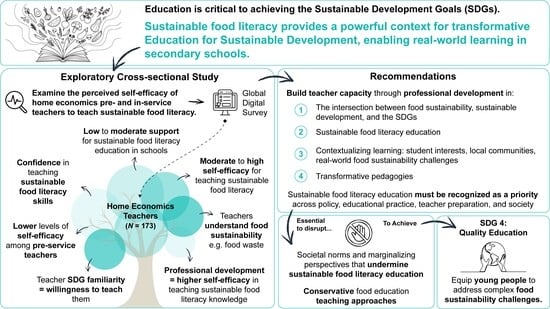
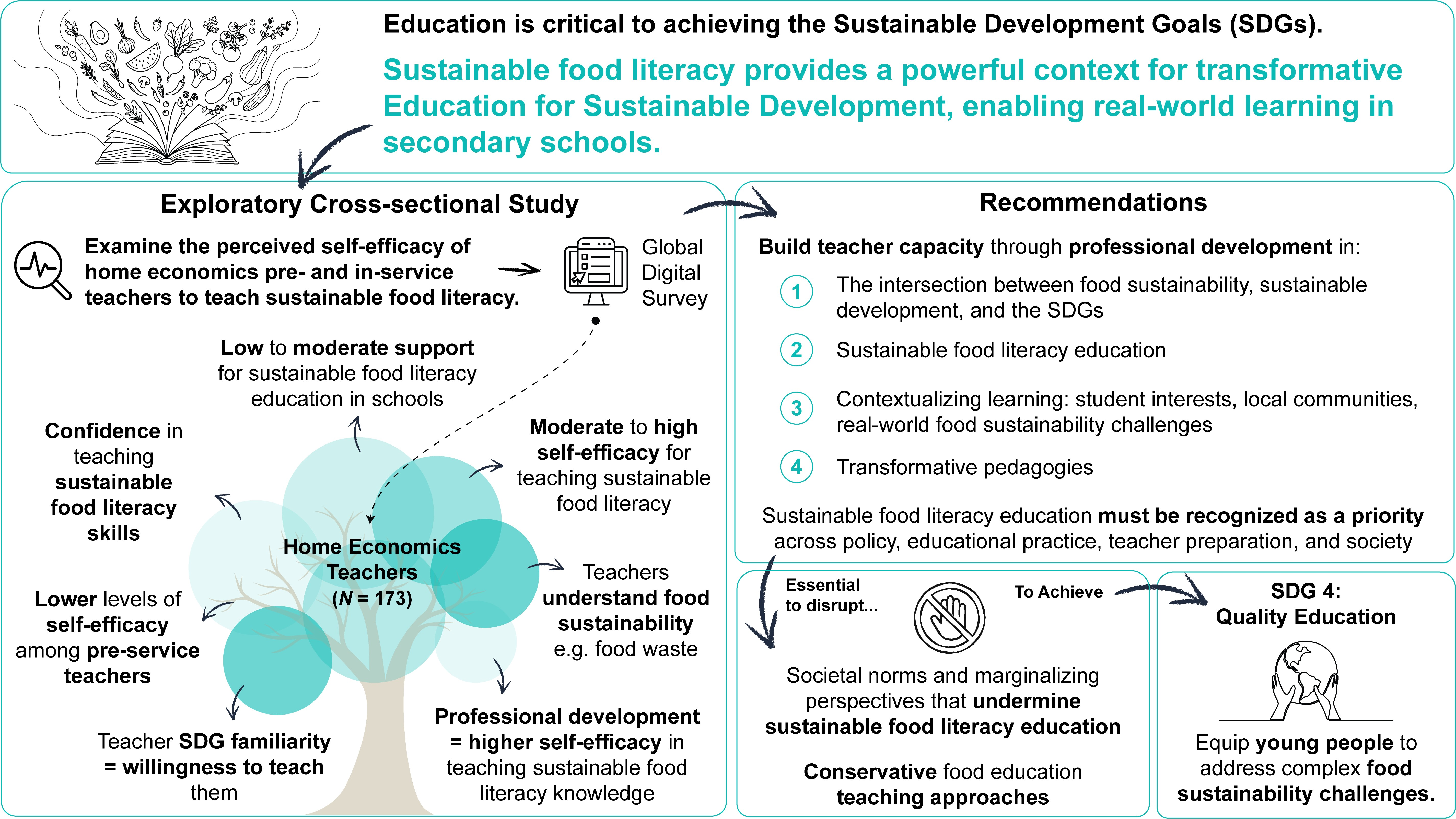
Education is critical to achieving the Sustainable Development Goals (SDGs). Sustainable food literacy provides a powerful context for transformative Education for Sustainable Development, enabling real-world learning in secondary schools. This exploratory cross-sectional study used the Norwegian Teacher Self-Efficacy Scale to examine the perceived self-efficacy of home economics pre- and in-service teachers (N = 173) to teach sustainable food literacy, administered via a global digital survey. Through content analysis and parametric and non-parametric descriptive and inferential statistical analyses, the study reveals that teachers’ familiarity with the SDGs intersects with their willingness to integrate them into teaching. Self-efficacy for teaching sustainable food literacy was generally moderate to high, with lower levels among pre-service teachers. Teachers were also more confident teaching sustainable food literacy skills than attitudes, values, and beliefs. Respondents who had participated in food-sustainability-focused professional development reported significantly higher self-efficacy in teaching sustainable food literacy knowledge. Five recommendations for meaningful food sustainability professional development and advocacy are presented, targeting policy and school leadership support, along with stronger preparation pathways for pre-service teachers. These strategies are essential to disrupting societal norms and marginalizing perspectives that undermine sustainable food literacy education, alongside conservative teaching approaches, to equip young people to address complex food sustainability challenges.

Graphical Abstract

1. Introduction

United Nations Sustainable Development Goal (UN SDG) 4: Quality Education, Target 4.7 aims to equip learners with the knowledge and skills essential for addressing sustainable development concerns. This can be achieved through Education for Sustainable Development (ESD), supported by educational policy, curricula, and initial teacher education (UN, 2015). Quality education contextualized to food sustainability challenges is critical to this work, as these challenges have been linked to all 17 SDGs (UN, 2021, 2024). For these reasons, the Organization for Economic Co-operation and Development (OECD) identifies food challenges as a critical contemporary educational focus, emphasizing that knowledge and skill development in this area is essential to overcoming challenges to human and planetary health (OECD, 2025). This makes ESD-aligned sustainable food literacy education a relevant and powerful contextualization to support progress toward SDG achievement (McManus et al., 2026).
This introduction first outlines the key premises of ESD. Sustainable food literacy education is then aligned with ESD, highlighting its value as a contextualization. Following this, the concept of teacher self-efficacy is examined and linked to ESD, as an important factor influencing ESD Priority Action Area 3: Building Educator Capacity. Once this theoretical basis is established, the study’s aims and research questions are presented.

1.1. Education for Sustainable Development

Education is essential to empowering youth to support the achievement of the SDGs by 2030 (UN, 2015). Accordingly, ESD for 2030 was developed to guide contributions to achieving SDG 4 (UNESCO, 2020). ESD traverses the cognitive (knowledge and understanding), behavioral (skills and action), and socio-emotional (values, attitudes, empathy, compassion, and motivation) domains of learning. It leverages these domains to enhance SDG awareness through critical, contextualized learning. This is achieved through transformative education, which disrupts societal norms and conservative educational practices, motivating students to become agents of change in addressing sustainability challenges (UNESCO, 2020).
To realize this aspiration, ESD encompasses five priority action areas: (1) advancing policy, (2) transforming learning environments, (3) building capacities of educators, (4) empowering and mobilizing youth, and (5) accelerating local-level actions (UNESCO, 2020). This study aligns with Priority Action Area 3: Building Capacities of Educators. Capable educators are essential to quality ESD, as their role is to support students across the dimensions of learning by applying effective pedagogical approaches to achieve transformative education. Building educator capacity should begin during initial teacher education programs and through ongoing professional development and must address all 17 SDGs, essential learning content, and appropriate transformative pedagogies for application (UNESCO, 2020). The learning content and transformative approach to ESD examined in this study are relevant to sustainable food literacy education.

1.2. Sustainable Food Literacy Education

To achieve the aspiration of individuals acting sustainably to achieve the SDGs by 2030, educational systems and educators require transformation. This includes rethinking learning outcomes, content, and pedagogy to make evidence-based decisions about how to prepare students to face sustainability challenges (UNESCO, 2020). McManus et al. (2026) used this as a stimulus to conceptualize sustainable food literacy education, using ESD as the guiding framework for contemporary, future-relevant, transformative education.
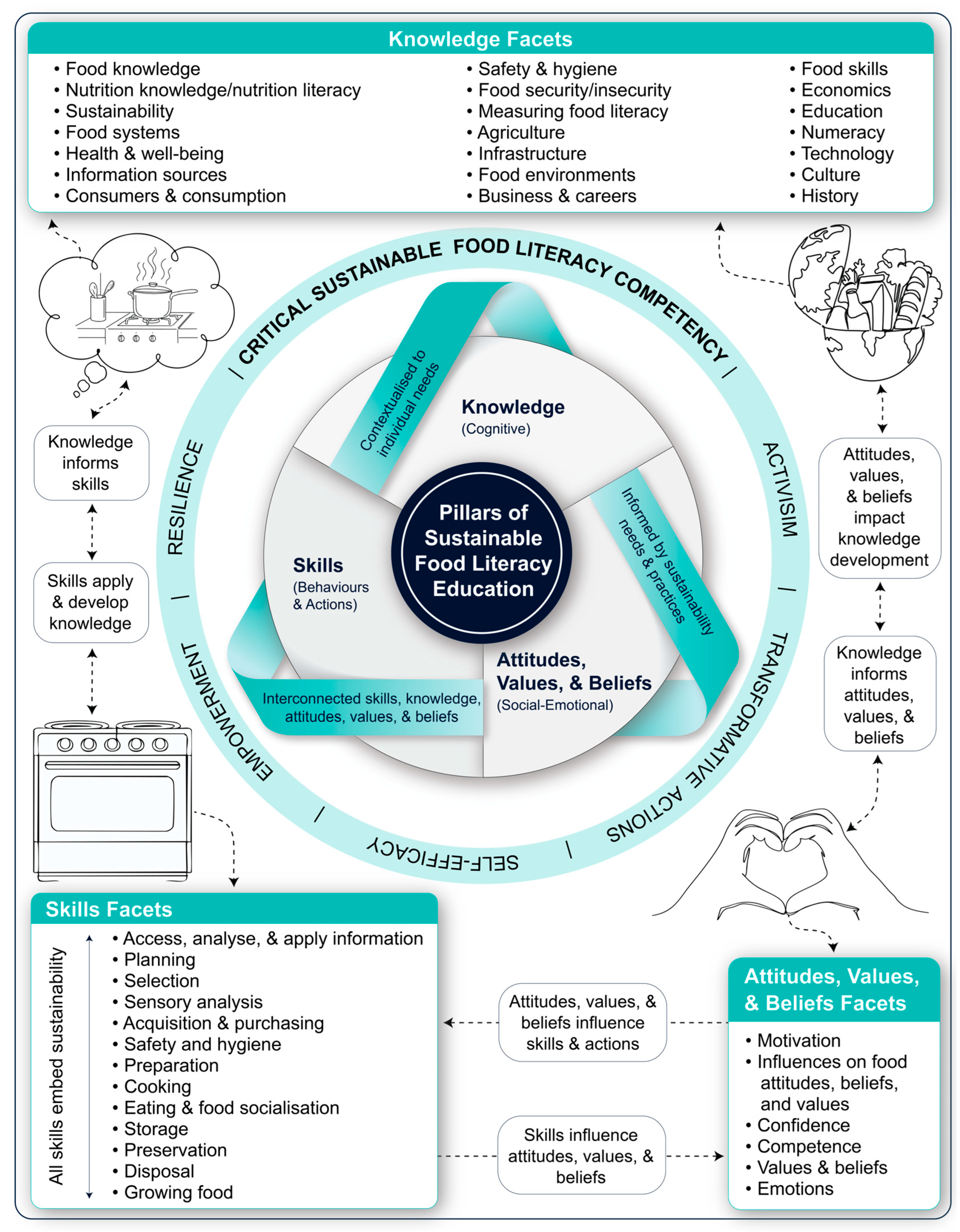
Sustainable food literacy encompasses the knowledge, skills, attitudes, values, and beliefs (AVBs) required for individuals to interact critically and sustainably with food (McManus et al., 2026). The conceptualization of sustainable food literacy education by McManus et al. (2026) highlights the food literacy educational nexus (McManus et al., 2024a; McManus & Pendergast, 2025), which argues that a critical level of sustainable food literacy competency can be achieved only when all three pillars of knowledge, skills, and AVBs are integrated into a holistic educational program. Each of these intersecting pillars aligns with the domains of ESD (cognitive, behavioral and action, and social-emotional) (McManus et al., 2026; UNESCO, 2020) (see Figure 1).
Sustainable food literacy is a multifaceted concept that reflects its complexity. As shown in Figure 1, each pillar encompasses multiple intersecting facets. Additionally, the three critical assertions wrapping the center of the model underpin the pillars, indicating the need to contextualize education to individual needs, develop the pillars in concert, and focus education on sustainability needs and practices. When these principles are effectively applied, they guide quality, transformative education that fosters critical sustainable food literacy competency. This approach is essential for developing self-efficacy in sustainable food literacy knowledge, skills, and AVBs (McManus et al., 2026).

1.3. Teacher Self-Efficacy

Self-efficacy theory is part of the longstanding social-cognitive theoretical domain. According to Bandura (1986a),
…perceived self-efficacy is defined as people’s judgements of their capabilities to organize and execute courses of action required to attain designated types of performance
(Bandura, 1986a, p. 391)
This definition may be simplified to state that self-efficacy is an individual’s belief in their capabilities. Extending Bandura’s (1986a) definition, Dellinger et al. (2008) define teacher self-efficacy as a “teacher’s individual beliefs in their capabilities to perform specific teaching tasks at a specified level of quality in a specified situation” (p. 752).
When an individual perceives themselves as ineffective, they approach a situation cautiously, sometimes with fear, and may avoid it entirely (Bandura, 1986b). This has implications for how teachers perform in the classroom. Low teacher self-efficacy can reduce motivation, teaching effort, goal-setting behaviors, and resilience when faced with challenges (Tschannen-Moran & Hoy, 2007). This may influence student outcomes, including achievement, motivation, and self-efficacy in the subject being studied (Tschannen-Moran & Hoy, 2007; Tschannen-Moran & Johnson, 2011). Teachers with low self-efficacy may also experience low job satisfaction and burnout (de Smul et al., 2018). Without identifying the challenges to teacher self-efficacy, a cycle of low self-efficacy in teaching can perpetuate, affecting the quality of teaching practice and, in turn, student outcomes (Tschannen-Moran & Hoy, 2007).
Bandura (1977, 1997) outlined four sources of self-efficacy to explain how people develop beliefs about their capabilities and potential for success in specific tasks or situations. The first is performance accomplishments, the most influential source of self-efficacy. This source explains how individuals gain self-efficacy when they achieve success with certain tasks. Each time they succeed, their confidence grows. Conversely, failures can have the opposite effect. The second source is vicarious experience; that is, individuals learn by observing others successfully model tasks. This indicates to the individual that they also have the potential to be successful in completing the task. The third is verbal persuasion, where individuals receive encouragement, mentoring, and supportive feedback that develops self-efficacy through positive reinforcement from others. The fourth source is emotional arousal, which refers to the influence of emotions and feelings on individual self-efficacy.
These four sources of self-efficacy (Bandura, 1977, 1997) were applied by Tschannen-Moran and McMaster (2009) to the implementation of new teaching strategies introduced during teacher professional development. They found that professional development that embedded active learning was most effective, that is, by providing new knowledge and opportunities to implement it through practice. Thus, performance accomplishments were identified as the most successful professional development strategy. The study also found that when professional development embraced all four sources of self-efficacy (performance accomplishments, vicarious experiences, verbal persuasion, and emotional arousal), it was more effective at enhancing teacher self-efficacy, increasing the implementation of new information, and sustaining the change in practice. Therefore, developing teacher self-efficacy is central to professional growth.
Compared with the domains of ESD (UNESCO, 2020) and the food literacy educational nexus at the core of the sustainable food literacy education model (McManus et al., 2024a, 2026; McManus & Pendergast, 2025; UNESCO, 2020), these four sources of self-efficacy align with the cognitive (knowledge), behavioral (skills), and social-emotional (AVBs) domains of these educational models. This alignment underscores the need for holistic teacher professional development to build self-efficacy for transformative sustainable food literacy education. To determine the pillars and facets of sustainable food literacy that require holistic professional development for teachers, and thus address ESD Priority Action Area 3: Building Capacities of Educators (UNESCO, 2020), understanding teachers’ self-efficacy to teach this specialized contextualization is crucial.

1.4. Study Significance, Aim, and Research Questions

International research on the perceptions of self-efficacy in teaching sustainable food literacy is limited, with most studies focusing on general food and nutrition and home economics education in Australia. Nanayakkara et al. (2021) found that, when teaching secondary food and nutrition, Australian teachers were more confident teaching food and nutrition information and food preparation than food systems. Teachers also reported higher self-efficacy for general teaching duties than for engaging and motivating students. Just over half were confident in teaching food politics (58%), and 60% were confident in teaching about food security. They also found that experienced teachers reported higher self-efficacy than less-experienced colleagues.
Ronto et al. (2016) reported that Australian home economics teachers self-identified as very confident in teaching food storage, preparation techniques, equipment use, cooking nutritious meals on a budget, sourcing and selection, label interpretation, and accessing and understanding food information. Additionally, Pendergast et al.’s (2022b) systematic review found that when teaching out-of-field, home economics teachers can experience reduced self-efficacy, particularly when food and nutrition was absent in their initial teacher education program. This reportedly reduced classroom confidence, self-competence, self-esteem, and motivation. Teacher professional development was identified as essential to address this concern. Pendergast et al. (2025) also found that Australian teachers’ confidence and competence in teaching home economics subjects, including food education, were higher when teaching in-field. Collectively, these studies reiterate that in-field, experienced teachers report higher self-efficacy in teaching food and nutrition topics, including food literacy, than out-of-field teachers. They also indicate that food skills education is the pillar in which they feel most confident and competent to teach.
This study aimed to explore the perceived self-efficacy of pre- and in-service teachers of sustainable food literacy for students in Years 7–10 (ages 11–16) in secondary schools. In addition, it aimed to inform professional development strategies that build educators’ capacity to teach sustainable food literacy by identifying areas requiring capacity building. This aligns with UNESCO recommendations for a comprehensive assessment and acknowledges that ESD research is essential for tracking trends and key issues in priority action areas and for generating learning opportunities through the dissemination of outcomes (UNESCO, 2020). This supports SDG 4: Quality Education (UN, 2015) and aligns with ESD Priority Action Area 3 (Building Capacities of Educators) (UNESCO, 2020). This study directly aligns with these needs and recommendations.
To achieve this aim, the study investigated pre- and in-service teachers’ perceived self-efficacy for each pillar and facet of sustainable food literacy (see Figure 1) while accounting for teaching contexts and demographic characteristics. It also examined teachers’ understanding of school-based support for teaching the SDGs. The following questions guided this study:
  • How familiar are pre-service and in-service Years 7–10 food education teachers with the SDGs?
  • How much support are Years 7–10 food education teachers receiving at school level to teach sustainable food literacy education?
  • What is the perceived self-efficacy of pre-service and in-service Years 7–10 food education teachers when teaching each pillar and facet of sustainable food literacy?
  • What capacity-building strategies would support pre-service and in-service food education teachers in enhancing self-efficacy for teaching sustainable food literacy?

2. Materials and Methods

2.1. Methodology: Exploratory Cross-Sectional Study

This study employed a cross-sectional survey design to examine the perceived self-efficacy of home economics pre-service and in-service teachers to teach sustainable food literacy at a single point in time (Wang & Cheng, 2020). Drawing on Creswell and Creswell (2022), the study examined participants’ perceptions of self-efficacy across demographic groups, including years of teaching experience, age, and participation in professional development. This approach enables a description of teachers’ perceptions of self-efficacy and an examination of these specific demographic variables to identify group differences and relationships that can guide professional development planning. Accordingly, this study adopted an exploratory approach to establish an initial understanding of teachers’ perceived self-efficacy in teaching sustainable food literacy, as this phenomenon has yet to be researched, thereby enabling the identification of patterns to inform future research (Creswell & Creswell, 2022).
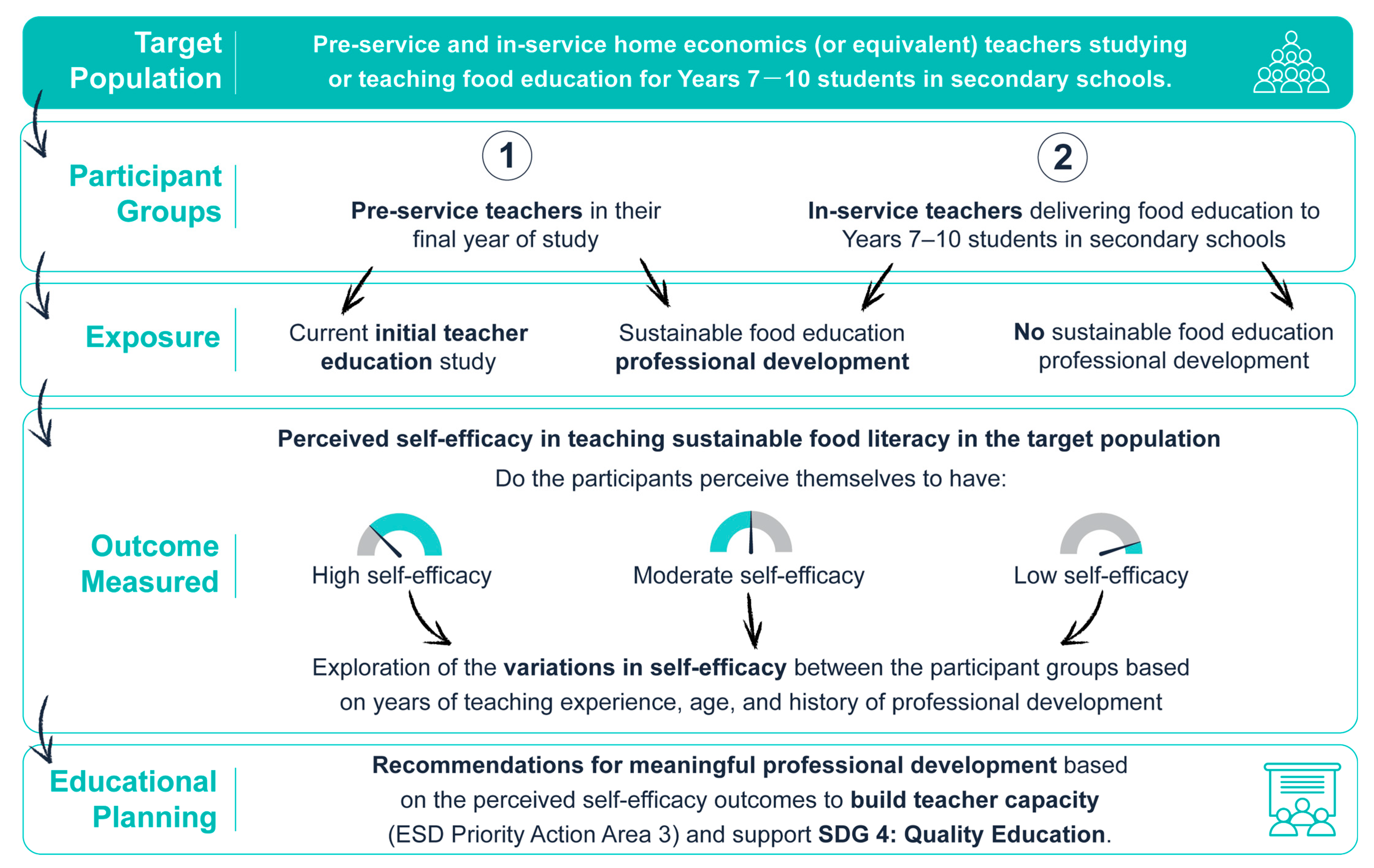
Cross-sectional studies can be designed around outcomes and exposures to determine the prevalence of a specific attribute at a specific point in time (Wang & Cheng, 2020) and are beneficial for planning (Setia, 2016). This notion has been applied to this study in the context of educational professional development planning. Figure 2 outlines the target population, participants, exposures, measured outcomes, and the educational planning based on the study outcomes.

2.2. Ethical Considerations

This research received ethics approval from the Griffith University Human Ethics Committee (HREC/2026/0374) on 16 April 2026. All collected data were anonymous, with no identifying details recorded. Participants were required to provide informed consent before entering the survey and were informed that they could exit at any time without penalty.

2.3. Study Participants

The target population comprised pre-service teacher students in their final year of study (preparing to teach) and in-service teachers actively teaching food education to Years 7–10 students (ages 11–16) at the time of the study. School-based food education is predominantly taught by home economics teachers. Across the world, this subject is also known as design and technologies, food technologies (Australian Curriculum, Assessment and Reporting Authority, 2026), home and consumer studies (Lindblom et al., 2016), family and consumer sciences, and human ecology, among others (Pendergast, 2001). Therefore, the term home economics in this study encompasses all pre- and in-service teachers of food education.

2.4. Participant Recruitment

Participants were recruited through multiple avenues using nonprobability purposive and snowball sampling methods to intentionally include the participants described above (L. Cohen et al., 2018). Two streams of participant recruitment were engaged: (1) Australian recruitment and (2) international recruitment. The purposive recruitment of pre-service teachers in Australia was undertaken by first identifying Australian higher education institutions that offer initial teacher education in the design and technologies learning area. The executive leadership staff managing these courses, 20 in total, were contacted via email to request their support in distributing the survey link to their students. Many leaders reported that the number of pre-service teachers studying this specialization was low, with some institutions reporting only one or two students in this cohort. Additionally, four institutions indicated that they no longer offered this specialization, leaving 16 courses for recruitment. To purposively recruit Australian in-service teachers, the peak home economics bodies and external food sustainability program providers were contacted to seek recruitment support. Snowball sampling was achieved through participants sharing the survey link and QR code within their professional networks.
To purposively recruit international pre- and in-service home economics teachers, 38 international professional home economics associations and academics were contacted via email to request their support in disseminating the recruitment materials within their professional networks. This included initial teacher education institutions, secondary schools, members of professional associations, and colleagues. Additional ethics approval was completed on a site-by-site basis. Snowball sampling was achieved through international contacts sharing the recruitment materials within their professional networks. Purposive and snowballing techniques of achieving participants in the study mean that there are limitations in the way the results, discussion and limitations have been framed, and the generalisability of the findings is limited to the cohort of respondents. In this way, this study provides a particular lens to the research questions under investigation.
Ethics-approved recruitment materials were provided for all recruitment avenues (see Section I of the Supplementary File and the information sheet and consent form in Section II). These materials were shared with pre-service and in-service teachers via email, social media, learning management software, and presentations, in accordance with each recruitment avenue’s organizational policies.
The recruitment phase revealed contextual factors likely to affect participant recruitment. Many university educators reported that pre-service teacher engagement in research has historically been low across many countries, and some were reluctant to involve their students in research because of high workloads, time constraints, and assessment requirements. In Australia, the timing of the survey administration unexpectedly coincided with three other food-related surveys targeting the same demographic. This pattern was echoed in other countries, as some professional associations noted the high volume of requests they receive to distribute survey links to their members. Therefore, despite the extensive recruitment strategy, participation in this study faced uncontrollable limitations.

2.5. The Survey Instrument

The survey instrument was delivered via the secure web-based platform LimeSurvey. Prior to launch, the survey was pilot-tested by three experts in the field, and minor adjustments were made to improve readability. The survey began with ethics-approved study information provided to all prospective participants, informing them that the survey was anonymous and that they could exit at any time. This was followed by an opportunity to provide voluntary digital consent after all study information was reviewed (see Supplementary File Section II).
To ensure the correct participant demographic completed the survey, a gatekeeping question was used at the commencement of the survey. For the Australian survey, the gatekeeping question was the following: “Are you a teacher currently teaching, or a pre-service teacher in your final year of study, learning the Secondary School Years 7–10 Design and Technologies curriculum in Australia?” The International survey gatekeeping question was the following: “Are you a teacher currently teaching, or a pre-service teacher in your final year of study, learning secondary school (adolescents between 11–16 years of age) Home Economics, Family and Consumer Sciences, or equivalent, including food education?” If participants selected yes to these questions, they could enter the survey; if they selected no, the survey ended.
The survey consisted of four sections and 44 questions (42 quantitative and 2 qualitative). Table 1 provides an overview of the survey instrument, and each section of the results will present the survey questions in full. In brief, section one of the survey collected data on teacher engagement in professional development programs on food sustainability. It also asked respondents to demonstrate their understanding of sustainable food literacy.
To investigate pre- and in-service teacher self-efficacy in teaching sustainable food literacy, a pre-validated self-efficacy scale was minimally adapted for this study. The original wording, structure, order and scale were preserved in their original form. The Norwegian Teacher Self-Efficacy Scale (NTSES), developed by Skaalvik and Skaalvik (2007), is a multidimensional instrument that reflects teachers’ work. It comprises six sections, each requesting responses on 7-point Likert scale scored as follows: 1, not certain at all; 3, quite uncertain; 5, quite certain; and 7, absolutely certain. It includes six subscales: teaching instruction, adapting instruction to individual student needs, motivating students, cooperating with colleagues and parents, maintaining discipline, and coping with challenges and change. The adaptation involved adding each pillar and facet to one question only in the teaching instruction section (you can explain subject matter so that most students understand the basic principles) to assess teacher self-efficacy in teaching each. This study utilised expert review as a validation technique to establish content validity of the added item, which in this case was derived from a previous international systematic review (see McManus et al., 2026). Content validity refers to the extent to which the items measure the construct of interest (Haynes et al., 1995). The panel of experts used for this task reviewed the items for relevance, clarity and alignment. Expert review is a recognised approach for establishing evidence of content validity, especially when adapting an existing validated instrument to a new contextual domain, as is the circumstance in this study (Polit & Beck, 2006).
The survey’s general questions were measured using 5-point Likert scales (Joshi et al., 2015). Questions assessing respondents’ familiarity with the SDGs were based on scales used in brand and organizational familiarity studies. Brand theory considers the extent to which there exists a distinctive identity, assets and recognition (Keller, 2013) and familiarity that can indicate knowledge and influence behavioral intentions, such as consumption (Tam, 2008), and can also reduce uncertainty and increase trust in an organization (Gefen, 2000; Ha & Perks, 2005). In this study, the SDGs were considered a “brand” whose familiarity the survey aimed to assess. The remaining questions in this section used the commonly applied five-point Likert scale responses (strongly disagree, disagree, neither agree nor disagree, agree, strongly agree) (Joshi et al., 2015) to investigate perspectives on sustainable food literacy education (see Table 1).
Section four of the survey collected demographic data to enable statistical analysis based on respondent characteristics. This included age, gender, highest level of qualification, whether they were an in-field or out-of-field teacher, country of employment, and the type of school they were employed at. To distinguish between pre-service and in-service teachers, years of teaching experience were recorded, including a pre-service teacher category.
During the participant recruitment phase, colleagues from Japan indicated that participation would increase if the survey were translated into Japanese. The research team collaborated with four Japanese academics to ensure accurate translation and maintain validity. Accordingly, three versions of the survey were distributed: an Australian version recognizing the Australian Curriculum subject design and technologies, an international version recognizing international names for home economics (as listed above), and a Japanese version. Section III of the Supplementary File contains the full Australian, International, and Japanese surveys.

2.6. Data Collection

To align with geolocational university and school schedules, the data were collected via the digital survey platform Lime Survey v. 6.12.0 (LimeSurvey, 2026) across three overlapping timeframes. The Australian survey was active from 21 April to 26 May 2026. The international survey ran from 16 May to 12 July 2026, and the Japanese survey was launched on 8 June and closed on 12 July 2026.

2.7. Data Analysis

Once all survey data collection was complete, the responses were extracted from Lime Survey and saved as a Microsoft Excel .xlsx file (v. 16.111) (Microsoft Corporation, 2026). The data were screened for completeness by cross-referencing them with the survey system. Following this, the data were cleaned by translating any free text in languages other than English using the free online version of DeepL Translator (v. July 2026) (DeepL, 2026). These translations were cross-referenced with Google Translate (v. July 2026) (Google, 2026) to confirm accuracy. Following this, data cleaning involved removing empty rows from the data file and ensuring that no duplicate responses were present.
The data were then coded numerically to convert the Likert scale responses to numerical values between 1 and 7 for the self-efficacy data and between 1 and 5 for all other scale questions. The demographic data were also coded accordingly. After coding, all quantitative data were cleaned again to remove any blank spaces. The dataset was then organized for quantitative and qualitative analysis by separating each data type from the master dataset into separate Microsoft Excel files.
Quantitative data analysis comprised both descriptive and inferential statistical techniques. Descriptive statistics, including frequencies, percentages, means, and standard deviations, summarized demographic characteristics and survey responses. Inferential analyses were selected based on data characteristics and the research questions. Given relatively small sample sizes and uneven distributions across several demographic groups, nonparametric procedures were predominantly used to analyze Likert-scale data. These analyses included Spearman’s Rho, Mann–Whitney U tests, and Kruskal–Wallis H tests, with mean ranks reported where appropriate. For multi-item constructs, grand mean scores were calculated to enable parametric analyses, including paired-samples and independent-samples t-tests. Bonferroni corrections were applied where necessary to account for multiple comparisons. Effect sizes were reported using Cohen’s d, ε2 for Kruskal–Wallis H tests and r for Mann–Whitney U tests. Cohen’s d was interpreted according to J. Cohen’s (1988) guidelines for small (d = 0.20), medium (d = 0.50), and large (d = 0.80) effects. ε2 and r were interpreted according to Peres’ (2026) guidelines of small = 0.1, medium = 0.3, and large = 0.5 effects. Statistical significance was set at p < 0.05 for all analyses.
Qualitative data analysis began with an examination of the free-text responses using Voyant Tools (Version July 2026), a web-based text analysis platform that supports the visualization and interpretation of qualitative data (Voyant Tools, 2026). Before analysis, the dataset was cleaned to improve consistency and accuracy. Similar terms and phrases were standardized under a common label; for example, “food waste reduction”, “reducing food waste”, and “reduce food waste” were recoded as “reducing food waste”, while “local food” and “local foods” were standardized as “local food”. The Cirrus visualization tool was used to generate a word cloud showing term frequency across participant responses. In the visualization, more frequent terms were displayed centrally and in larger, bolder text. Settings were configured to display all identified keywords, providing a comprehensive representation of participant responses (Voyant Tools, 2026).
Content analysis (Krippendorff, 2022) was also used to analyze the free-text survey responses, following Krippendorff’s six steps: unitizing, sampling, coding, reducing, inferring, and narrating. Keywords and concepts in the free text were systematically grouped into broader categories concurrently by two researchers without disagreement, and frequencies were calculated to identify the most prominent themes. The outcomes were then visualized to present the results, which demonstrate trends and patterns in the analysis and indicate the key characteristics of the participant responses (Vaismoradi et al., 2013).
Following the analyses, the data were integrated and interpreted to answer the research questions. This approach was selected to enable qualitative contextualization of quantitative results (Creswell & Creswell, 2022). The results of these analyses are now presented.

3. Results

The following section will first report on the study demographics. This is followed by descriptive and inferential data analysis organized according to the four research questions.

3.1. Demographics

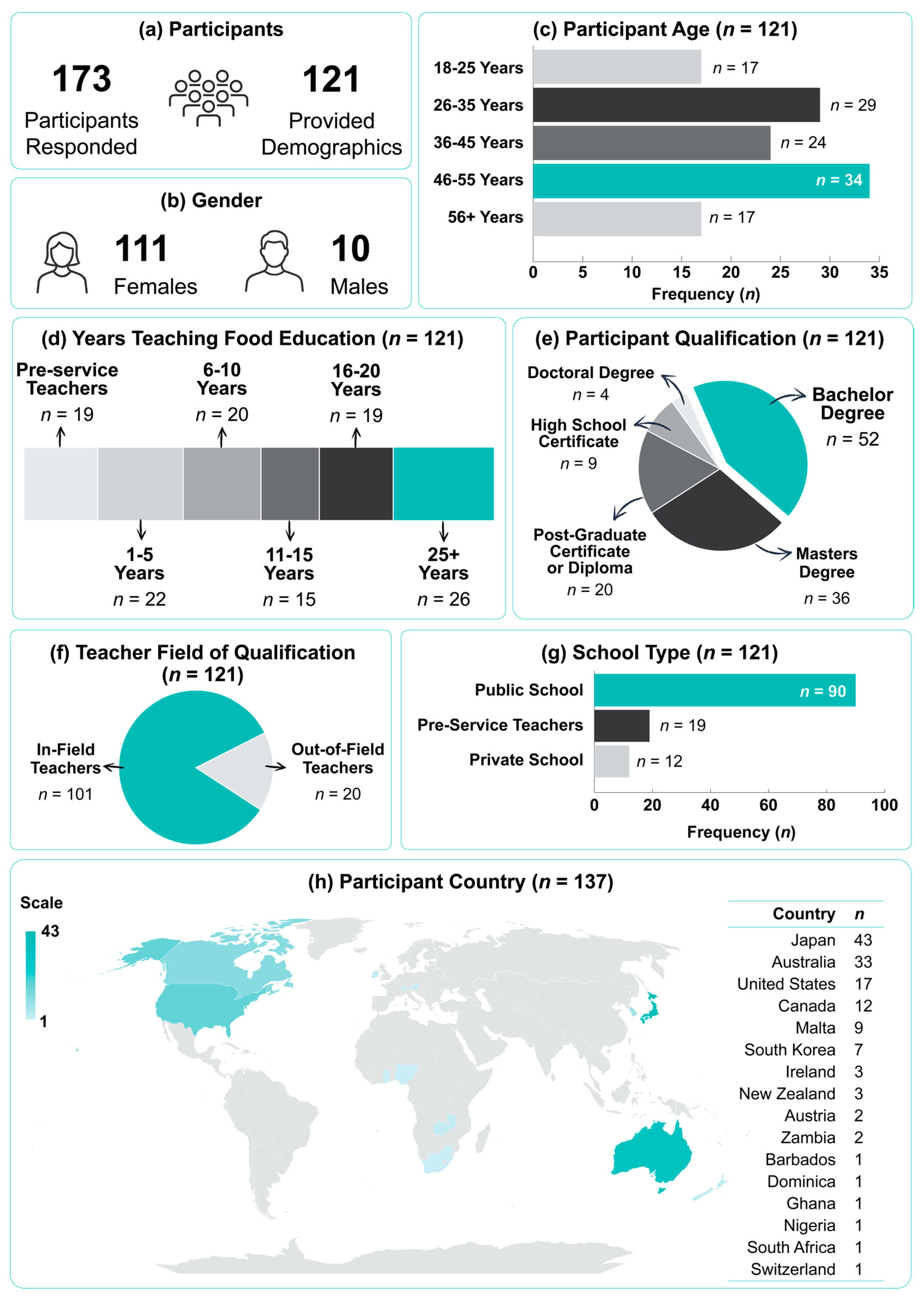
Overall, 173 participants completed the survey; 121 provided all demographic information, and 137 reported their country of employment. Not all participants responded to each survey question; therefore, the number of respondents (n) varies by question and is reported accordingly alongside each result. Demographic analysis of the reported data indicated that respondents were predominantly female (92%), were over age 36 (62%), and held Bachelor’s degrees (43%), and half had been teaching food education for more than 11 years (50%). In-field teachers accounted for 85% of respondents, and 74% taught in public schools. Pre-service teachers made up 16% (n = 19) of respondents. The majority of respondents were located in Japan (31%), Australia (24%), and the United States of America (12%) (see Figure 3).
The demographic profile of participants influenced both the analytical approach and the interpretation of the findings. Given unequal group sizes and the distributional characteristics of the data, non-parametric statistical analyses were deemed most appropriate. Where necessary, relevant statistical corrections were applied to address these limitations and ensure the robustness of the findings. Accordingly, the results reported in this chapter are based on a data-driven analytical strategy aligned with the underlying characteristics of the data. It should also be noted that the following results cannot be generalized beyond the study cohort, as the sample is not representative. Therefore, the following results apply directly to the respondents of this study. Despite this, the following outcomes can provide exploratory insight to guide future research and inform sustainable food literacy educational practice. The results are now presented, with teachers’ familiarity with the SDGs addressed first.

3.2. SDG Familiarity (RQ1)

To investigate familiarity with the SDGs, respondents were asked the following: “How familiar are you with the 17 United Nations Sustainable Development Goals?” Responses were recorded on a 5-point Likert scale, ranging from 1 (not familiar at all) to 5 (very familiar). Overall, teachers (n = 129) reported moderate familiarity with the SDGs (M = 3.17, SD = 1.28). A Kruskal–Wallis H test (n = 121) was conducted to examine variations in familiarity with the SDGs by age group. There was no statistically significant difference in scores across the age categories (H(4) = 0.51, p = 0.972). A Kruskal–Wallis H test (n = 121) was also conducted to examine variations in familiarity with the SDGs by years of teaching experience. There was no statistically significant difference in scores across the teaching experience categories (H(5) = 10.38, p = 0.065). This suggests that teaching experience was not associated with familiarity with the SDGs.
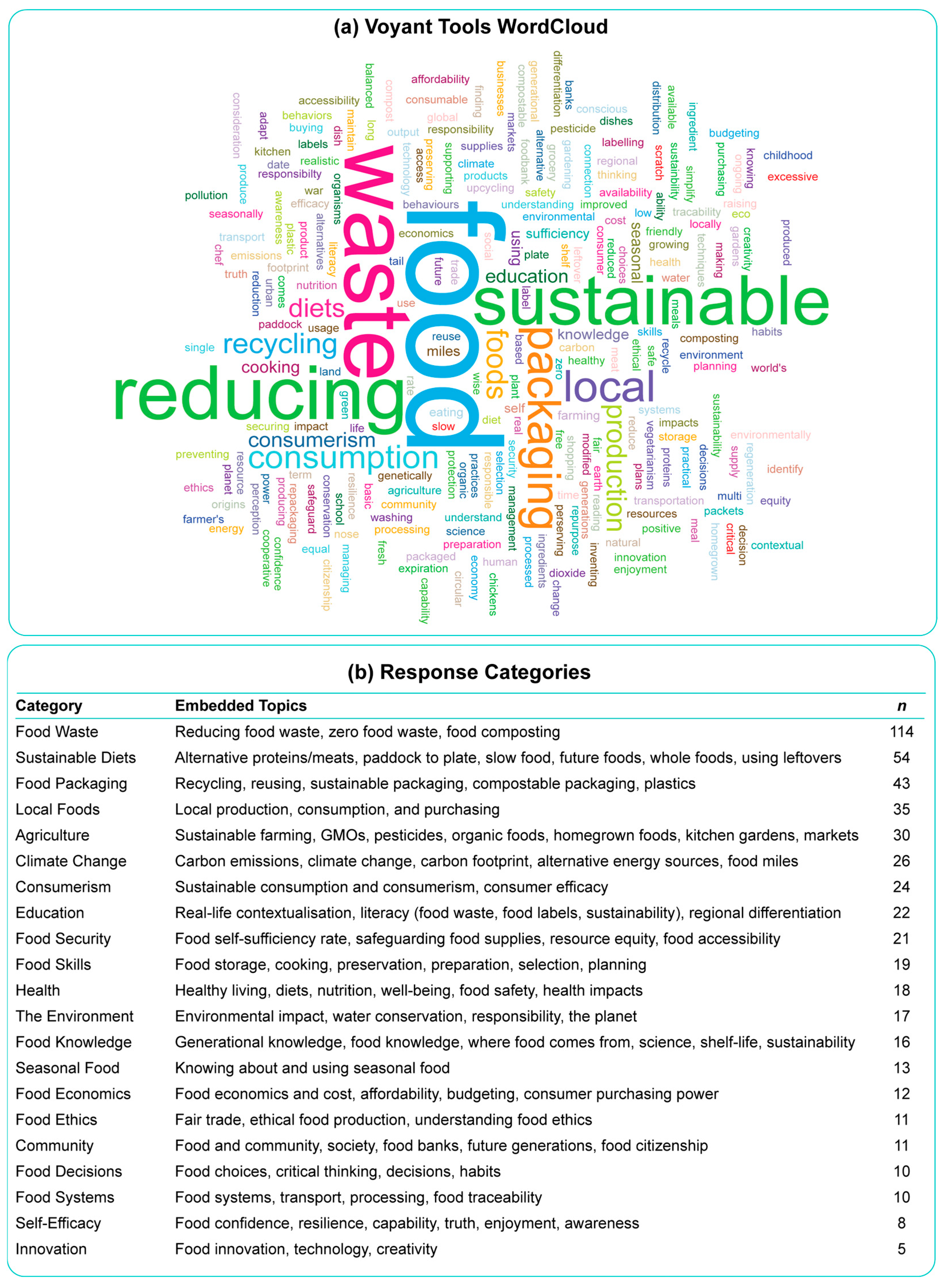
To further explore familiarity with sustainability, respondents were asked what three words or phrases come to mind when you think of sustainable food literacy. Overall, 173 participants responded to the question, yielding 519 responses. Each response was categorized alongside similar terms, resulting in 21 categories. Figure 4a presents the WordCloud of all responses generated using Voyant Tools, and Figure 4b illustrates each detected category. The most frequent word was “waste” (n = 121), predominantly used in relation to reducing food-related waste (n = 114). References to sustainable diets were the second most frequent response (n = 54), followed by food packaging (n = 43), which appeared in contexts related to recycling, reusing, reducing, compostable, and sustainability. Local food production, consumption, and purchasing also appeared in many responses (n = 35), as did references to sustainable agriculture (n = 30). Notably, words and phrases mentioning sustainable development and the SDGs were largely absent, and food technology was mentioned minimally.
Respondent familiarity with the SDGs was also assessed using the following prompt: “I explicitly teach (pre-service teachers: I intend to teach) the United Nations Sustainable Development Goals (SDGs) to my students”. Responses were recorded on a 5-point Likert scale, ranging from 1 (strongly disagree) to 5 (strongly agree). Overall, respondents (n = 129) reported a moderate likelihood of explicitly teaching the SDGs to students (M = 3.29, SD = 1.11). A Kruskal–Wallis H test (n = 121) was conducted to examine whether willingness to explicitly teach the SDGs varied by age group. There was no statistically significant difference in scores across age groups (H(4) = 0.58, p = 0.965).
A Kruskal–Wallis H test (n = 121) revealed a significant difference in willingness to explicitly teach the SDGs across six teaching-experience groups (H(5) = 14.58, p = 0.012, ε2 = 0.08 (medium effect)). Examination of mean ranks indicated that those with 21 or more years (mean rank = 75.42) and 16–20 years of teaching experience (mean rank = 70.00) reported the highest willingness to teach the SDGs, whereas those with 11–15 years of experience (mean rank = 41.70) reported the lowest willingness. Additionally, respondent pre-service teachers were more likely to explicitly teach the SDGs (mean rank = 66.53) than those with 1–5 years of teaching experience (mean rank = 53.17) and those with 6–10 years of teaching experience (mean rank = 50.88). Post hoc pairwise comparisons using Bonferroni-adjusted significance levels indicated that the only significant difference was between teachers with 11–15 years and those with 21 or more years of teaching experience (p = 0.030, r = 0.28 (small-to-medium effect)). The results indicate that very experienced teachers are more likely to explicitly teach the SDGs than less experienced teachers, particularly those in mid-career.
A Spearman’s rank-order correlation was conducted to examine the relationship between teachers’ familiarity with the SDGs and their likelihood of explicitly teaching them to students. The analysis revealed a strong, positive, and statistically significant correlation between the two variables (rs = 0.718, p < 0.001, n = 129). This finding indicates that respondents who reported greater familiarity with the SDGs were also more likely to report explicitly teaching the SDGs in their educational practice.

3.3. Support for Sustainable Food Literacy Education (RQ2)

To investigate RQ2 (How much support are Years 7–10 food education teachers receiving at the school level to teach sustainable food education?), respondents were given the following prompt: “My teaching environment (pre-service teachers: learning environment) is supportive of sustainable food literacy education.” Respondents rated their responses on a 5-point Likert scale ranging from 1 (strongly disagree) to 5 (strongly agree) to gauge perceived support for teaching (or learning) about food sustainability. Overall, respondents (n = 129) reported low-to-moderate perceived support (M = 2.70, SD = 1.3). To examine whether perceptions of school support differed across years of teaching experience, a Kruskal–Wallis H test was conducted. No statistically significant outcome was identified (H(4) = 6.38, p = 0.172). The same examination was undertaken using teacher age as the independent variable, and again no statistically significant outcomes were identified (H(5) = 2.26, p = 0.812). These outcomes indicate that support for sustainable food literacy education in schools is low to moderate, with older, more experienced teachers no more likely to receive support than young, early-career teachers.
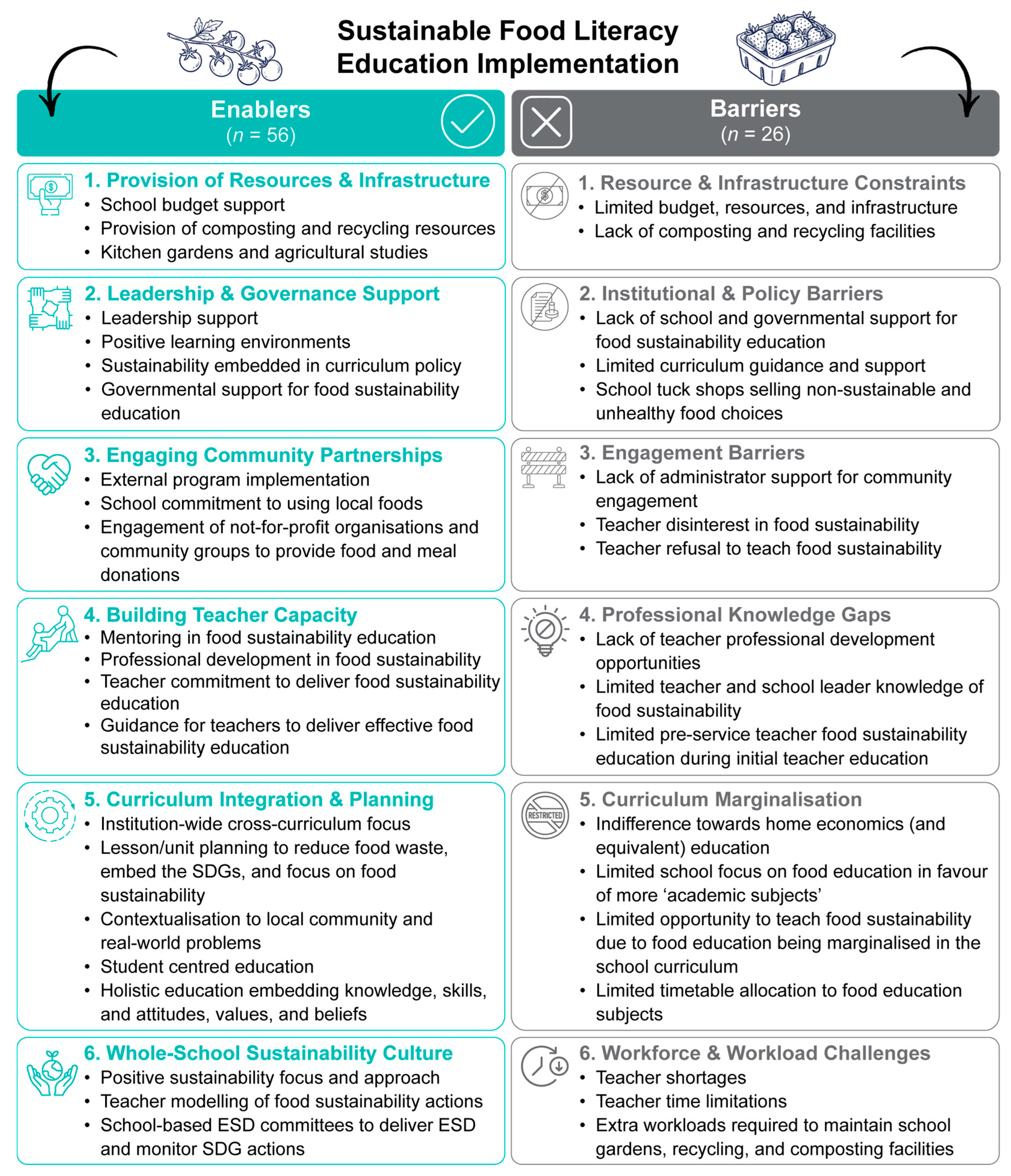
To contextualize these results, respondents were invited to provide a short free-text response explaining their rating. The comments (n = 76) were clearly divided into those from teachers who receive support and those who receive limited support. This division informed the analytical approach, which involved deductive categorization of the responses based on teachers’ perceptions of the level of support provided. The results presented in Figure 5 highlight the school-based actions that support (enablers) and limit (barriers) sustainable food literacy education.

3.4. Perceived Self-Efficacy for Teaching Sustainable Food Literacy (RQ3)

To investigate pre- and in-service teacher self-efficacy in teaching sustainable food literacy and address RQ3, the six sections of the NTSES (Skaalvik & Skaalvik, 2007) were utilized. Responses were measured on a 7-point Likert scale (1, not certain at all; 3, quite uncertain; 5, quite certain; 7, absolutely certain). The following results are reported according to the six sections of this scale, as outlined in the methodology, commencing with Instruction.

3.4.1. Instruction

Four survey prompts investigated teacher self-efficacy in instruction. For prompt one (“when teaching students about the knowledge, skills, and attitudes, values, and beliefs associated with food sustainability, you can explain central themes in your subjects so that even low-achieving students understand”), respondents reported moderate-to-high self-efficacy (M = 5.27, SD = 1.25, 95% CI [5.27, 5.68], n = 121). For Prompt two, (“when teaching students about the knowledge, skills, attitudes, values, and beliefs associated with food sustainability, you can provide good guidance and instruction to all students regardless of their level of ability”), respondents also reported moderate-to-high self-efficacy (M = 5.22, SD = 1.29, 95% CI [5.22, 5.64], n = 121).
The outcome for prompt three (“when teaching students about the knowledge, skills, and attitudes, values, and beliefs associated with food sustainability, you can answer students’ questions so that they understand difficult problems”) was similar, with respondents also reporting moderate-to-high self-efficacy (M = 5.31, SD = 1.08, 95% CI [5.31, 5.72], n = 121). A Kruskal–Wallis H test indicated that there were no statistically significant differences across years of teaching experience for prompt one (H(5) = 2.20, p = 0.761), prompt two (H(5) = 1.78, p = 0.879), or prompt three (H(5) = 2.57, p = 0.766).
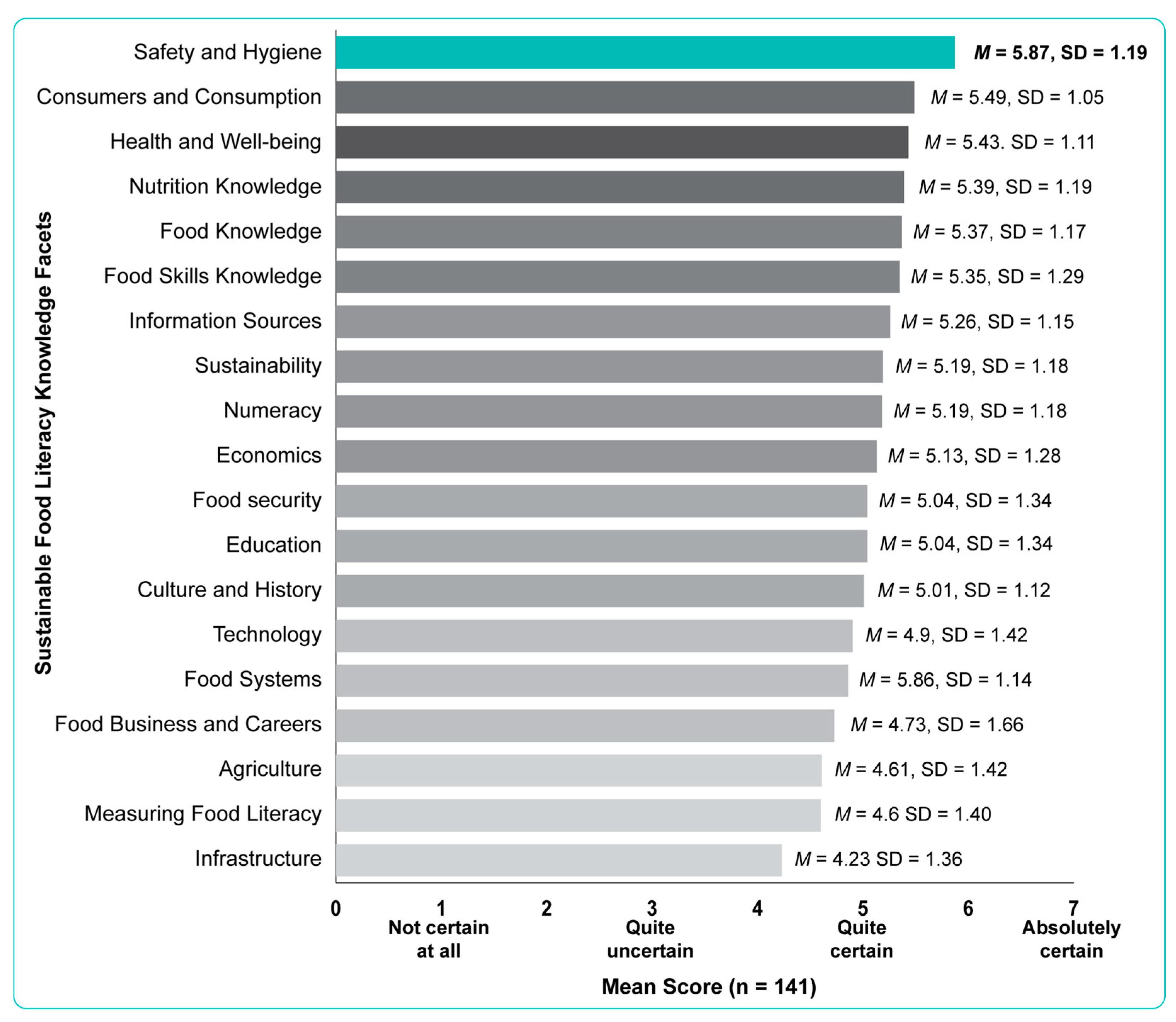
To investigate self-efficacy in teaching subject matter, respondents were given the following prompt: “When teaching students about the knowledge, skills, and attitudes, values, and beliefs associated with food sustainability, you can explain subject matter so that most students understand the basic principles” (prompt four) (see Figure 1). Mean self-efficacy scores for each facet were calculated. Respondents reported the highest self-efficacy within the knowledge pillar for teaching theory topics on safety and hygiene, consumers and consumption, health and well-being, nutrition, and food knowledge. They reported lower self-efficacy for teaching theory topics, including infrastructure, measuring food literacy, agriculture, and food business and careers (see Figure 6).
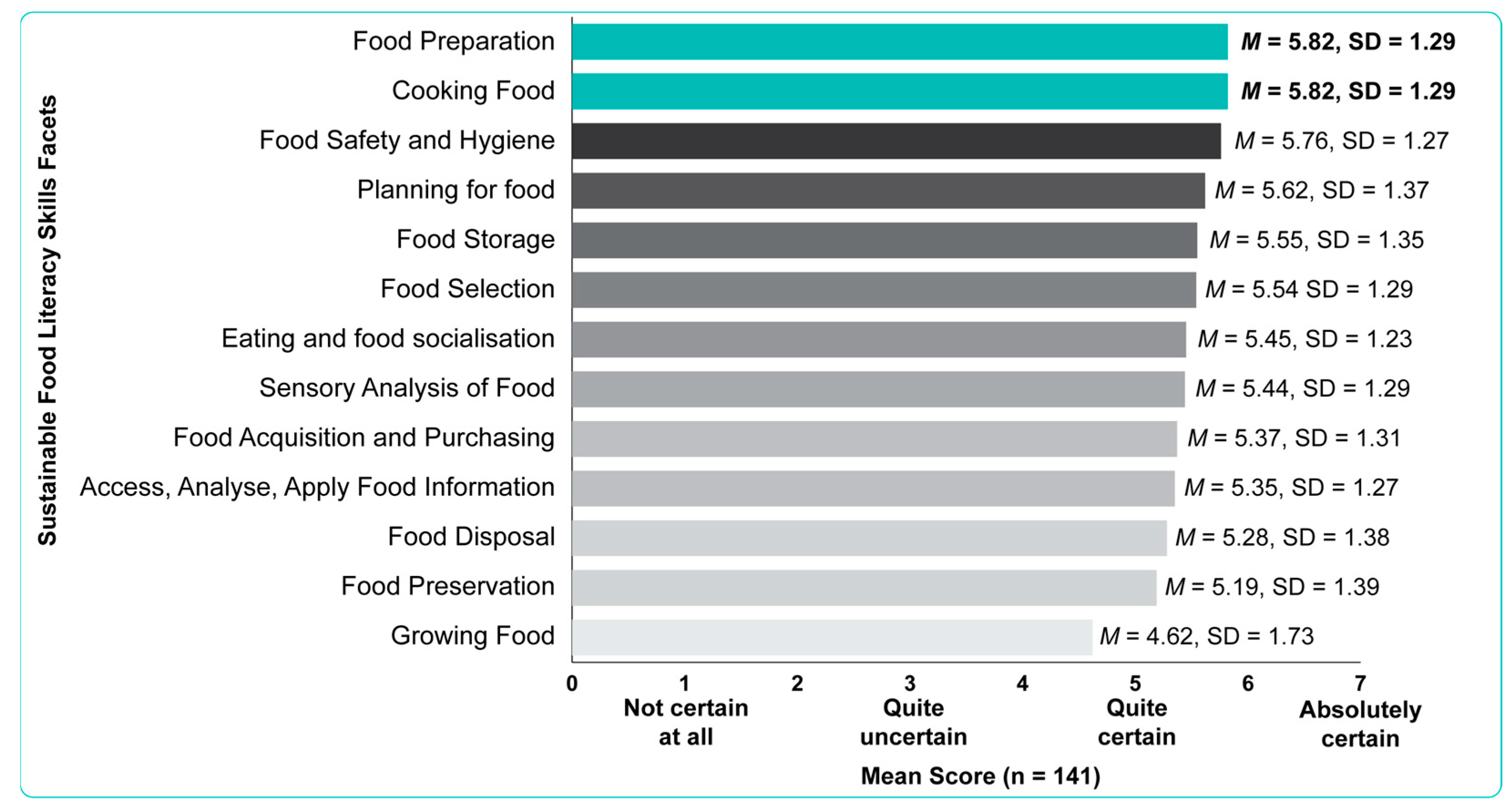
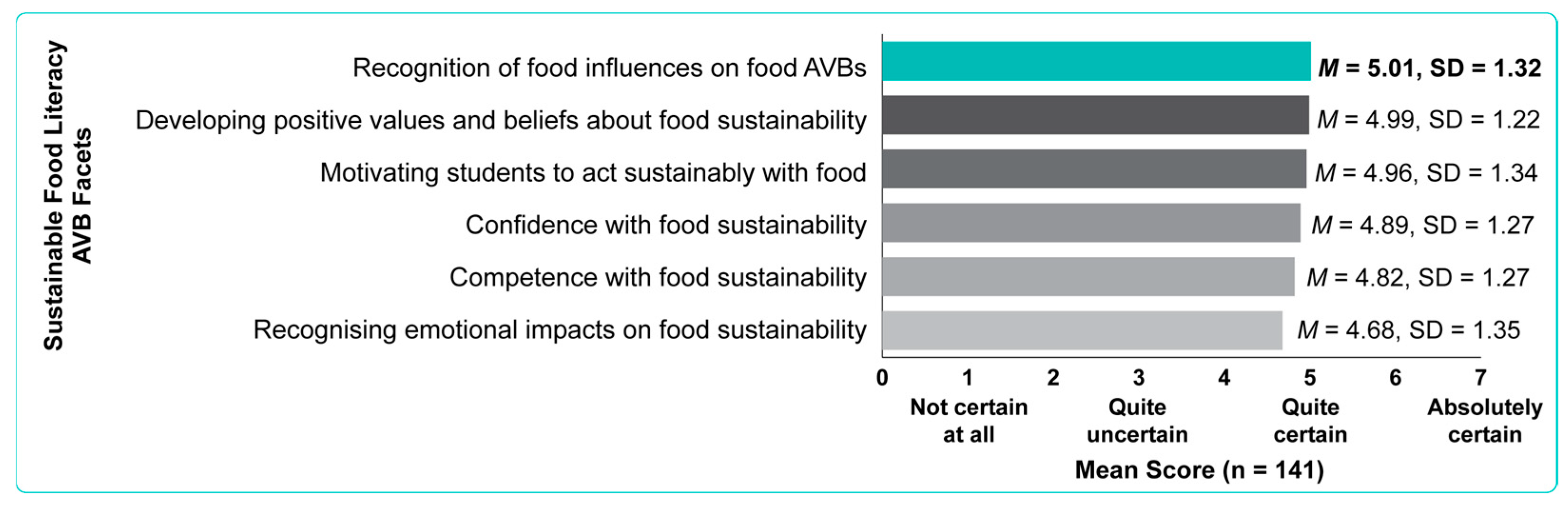
Regarding the skills pillar, respondents reported the highest self-efficacy in teaching practical skills, including food preparation, cooking, food safety and hygiene, and meal planning. In contrast, they reported lower self-efficacy in teaching practical skills for accessing, analyzing, and applying food information; food disposal and preservation; and growing food (see Figure 7). When analyzing mean scores for the AVBs pillar, teachers reported higher self-efficacy in teaching students to recognize the influences of food values and beliefs, alongside lower self-efficacy in developing students’ confidence and competence (self-efficacy) with food sustainability and in recognizing the emotional influences of food sustainability (see Figure 8).
To identify the sustainable food literacy pillar in which respondents report the greatest self-efficacy in teaching, grand means across the knowledge, skills, and AVBs pillars were calculated (see Table 2). Three paired-samples t-tests with Bonferroni correction (α = 0.017) were then conducted to compare participants’ mean scores across the pillars. Participants (n = 134) rated their self-efficacy in teaching skills (M = 5.54, SD = 1.27) significantly higher than their self-efficacy in teaching knowledge (M = 5.18, SD = 1.02), with t(133) = −5.01, p < 0.001, and d = −0.43 (small effect). Self-efficacy for the knowledge pillar (n = 122) was significantly higher than for the AVBs pillar (M = 4.96, SD = 1.36), with t(121) = 2.80, p = 0.006, and d = 0.25 (small effect). Additionally, self-efficacy for the skills pillar (n = 122) was significantly higher than for AVBs, with t(121) = 6.23, p < 0.001, and d = 0.56 (medium effect; see Table 2). Therefore, these results indicate that respondents have significantly higher self-efficacy when teaching the sustainable food literacy skills pillar, followed by knowledge, and significantly lower self-efficacy when teaching AVBs.
A Kruskal–Wallis H test was also conducted to assess whether reported self-efficacy scores for teaching each sustainable food literacy pillar differed across early-, mid-, and late-career teachers (n = 121). The analysis revealed statistically significant differences among the teaching-experience groups for the knowledge (H(5) = 12.028, p = 0.034, ε2 = 0.06 (medium effect)) and skills pillars (H(5) = 14.710, p = 0.012, ε2 = 0.08 (medium effect)), but not for the AVBs pillar (p = 0.462). Post hoc pairwise comparisons using Bonferroni-adjusted significance levels indicated that preservice teachers reported significantly lower scores than teachers with 1–5 years of experience for the knowledge pillar (p = 0.05, r = 0.27 (small to medium effect)) and the skills pillar (p = 0.008, r = 0.31 (medium effect)). No other pairwise comparisons were statistically significant. Table 3 reports the mean rank for each teaching experience category within each pillar, highlighting the lower self-reported self-efficacy scores of preservice teachers compared with more experienced teachers.
Mann–Whitney U tests were conducted to compare self-efficacy for teaching sustainable food literacy between in-field (n = 101) and out-of-field (n = 20) teachers. No statistically significant differences were found between the two groups for knowledge (U = 1004.50, p = 0.969), skills (U = 843.50, p = 0.245), or AVBs (U = 1008.00, p = 0.989). Although out-of-field teachers reported a higher mean rank for skills (69.33) than in-field teachers (59.35), this difference was not statistically significant. Similarly, mean ranks for knowledge (in-field: 60.95; out-of-field: 61.28) and AVBs (in-field: 60.98; out-of-field: 61.10) were nearly identical across the two groups. These findings suggest that teaching in-field or out-of-field was not associated with differences in sustainable food literacy knowledge, skills, or AVBs.

3.4.2. Adapting Education to Individual Student Needs

To examine self-efficacy when adapting education to student needs, the four prompts were expressed follows: “When teaching students about food sustainability and contextualizing or adapting the curriculum to their needs or interests, you can: (1) organize schoolwork to adapt instruction and assignments to individual needs; (2) provide realistic challenge for all students even in mixed ability classes; (3) adapt instruction to the needs of low-ability students while you also attend to the needs of other students in class; and, (4) organize classroom work so that both low- and high-ability students work with tasks that are adapted to their abilities.”
The grand mean across responses to all four prompts was calculated to assess overall self-efficacy in adapting instruction to individual student needs. Respondents (n = 134) reported moderate self-efficacy in undertaking this task (M = 4.91, SD = 1.28). A Mann–Whitney U test revealed a statistically significant difference in self-efficacy for adapting instruction to student needs between pre-service and in-service teachers (U = 634.0, p = 0.008, r = 0.24 (small effect). In-service teachers had a higher mean rank (64.72, n = 101) than pre-service teachers (42.20, n = 20), indicating greater perceived self-efficacy.

3.4.3. Motivating Students

To examine teacher self-efficacy when motivating students to learn, the four prompts were expressed as follows: “When teaching students about food sustainability and trying to motivate them to positively engage with and see value in the topic, I can: (1) Get all students in class to work hard with their schoolwork; (2) Wake the desire to learn even among the lowest-achieving students; (3) Get students to do their best even when working with difficult problems; and, (4) Motivate students who show low interest in schoolwork”.
The grand mean across responses to all four prompts was calculated to assess overall teacher self-efficacy in motivating students to learn. Respondents (n = 132) reported moderate self-efficacy in undertaking this task (M = 4.55, SD = 1.16). A Mann–Whitney U test revealed a statistically significant difference in self-efficacy for motivating students to learn between pre-service and in-service teachers (U = 685.5, p = 0.023, r = 0.21 (small effect). In-service teachers had a higher mean rank (64.21, n = 101) than pre-service teachers (44.78, n = 20), indicating greater perceived self-efficacy. Therefore, this outcome indicates that more experienced in-service teacher respondents have greater self-efficacy in motivating and engaging students in learning than pre-service teacher respondents.

3.4.4. Maintaining Discipline

To investigate teacher self-efficacy in maintaining discipline in practical skills and theoretical knowledge classes, the prompt was as follows: “When teaching students about food sustainability in practical lessons, I feel that I can (1) Maintain discipline in any school class or group of students; (2) Control even the most aggressive students; (3) Get students with behavioral problems to follow classroom rules; and 4) Get all students to behave politely and respect the teachers.” The same prompts were repeated for theory lessons. To determine whether teachers have greater self-efficacy in maintaining discipline in theory or practical lessons, the grand means across the four prompts were calculated (see Table 4).
A paired-samples t-test was conducted to compare self-efficacy for maintaining discipline in practical and theory lessons (n = 130). Participants rated their self-efficacy for maintaining discipline in practical lessons (M = 4.72, SD = 1.19) significantly higher than that for maintaining discipline in theory lessons (M = 4.23, SD = 1.36), with t(129) = −9.97, p < 0.001, and d = −0.56 (medium effect) (see Table 4). A strong positive correlation was observed between self-efficacy for maintaining discipline in practical and that for maintaining discipline in theory lessons (r = 0.91, p < 0.001). These results indicate that respondents have higher self-efficacy for maintaining discipline in practical lessons than in theory lessons and that higher self-efficacy for practical lessons is associated with higher self-efficacy for discipline management in theory lessons.
A Mann–Whitney U test showed statistically significant differences in self-efficacy for maintaining classroom discipline across both theory (U = 632.50, p = 0.008, r = 0.25 (small to medium effect) and practical (U = 611.50, p = 0.005, r = 0.24 (small effect) lessons. In-service teachers (n = 101) reported higher mean ranks than pre-service teachers (n = 20) in both theory (64.95 vs. 41.08) and practical (64.74 vs. 42.13) contexts. These results indicate that in-service teachers perceive themselves as more capable of maintaining classroom discipline than pre-service teachers, regardless of the teaching setting.

3.4.5. Cooperating and Communicating with Colleagues and Parents

To examine self-efficacy in collaborating with colleagues, the two prompts were expressed as follows: “Considering the following prompts, when teaching students about food sustainability and communicating this to colleagues, I feel that I can: (1) Find adequate solutions to conflicts of interest with other teachers; and (2) Cooperate effectively and constructively with other teachers, for example, in teaching teams.” The grand mean across responses to both prompts was calculated to assess overall teacher self-efficacy in communicating with colleagues. Respondents (n = 130) reported moderate-to-high self-efficacy in undertaking this task (M = 5.23, SD = 1.18). A Mann–Whitney U test revealed a statistically significant difference in self-efficacy for communicating with colleagues between pre-service and in-service teachers (U = 536.0, p = <0.001, r = 0.30 (medium effect)). In-service teachers had a higher mean rank (65.69, n = 101) than pre-service teachers (37.30, n = 20), indicating greater perceived self-efficacy.
Self-efficacy in cooperating and communicating with parents was also examined. Two prompts were expressed as follows: “Considering the following prompts, when teaching students about food sustainability and communicating this to parents, I feel that I can: (1) Cooperate well with most parents; and (2) Collaborate constructively with parents of students with behavioral problems.” The grand mean across responses to both prompts was calculated to assess overall self-efficacy in communicating with parents. Respondents (n = 130) reported moderate-to-high self-efficacy in undertaking this task (M = 5.09, SD = 1.25). A Mann–Whitney U test revealed a statistically significant difference in self-efficacy for communicating with colleagues between pre-service and in-service teachers (U = 559.5, p = 0.001, r = 0.29 (small-to-medium effect)). In-service teachers had a higher mean rank (65.46, n = 101) than pre-service teachers (38.48, n = 20), indicating greater perceived self-efficacy.
Taken together, these results indicate that in-service teacher respondents have higher self-efficacy for communicating and cooperating with colleagues and parents than pre-service teacher respondents.

3.4.6. Coping with Change and Challenges

To examine self-efficacy when coping with workplace change, the four prompts were expressed as follows: “When teaching students about food sustainability and I had to adapt my lessons to new ideas, I feel that I could: (1) Successfully use any instructional method that the school decides to use; (2) Manage instruction regardless of how it is organized (group composition, mixed-age groups, etc.); (3) Manage instruction even if the curriculum is changed; and (4) Teach well even if you are told to use instructional methods that would not be your choice.”
The grand mean across responses to all four prompts was calculated to assess overall self-efficacy for coping with change and challenges. Respondents (n = 129) reported moderate self-efficacy in undertaking this task (M = 4.89, SD = 1.14). A Mann–Whitney U test revealed a statistically significant difference in self-efficacy for coping with change and challenges between pre-service and in-service teachers (U = 501.0, p = <0.001, r = 0.32 (medium effect)). In-service teachers had a higher mean rank (66.04, n = 101) than pre-service teachers (35.55, n = 20), indicating greater perceived self-efficacy. This outcome indicates that pre-service teachers find it more challenging to cope with workplace change than more experienced in-service teachers do.

3.5. Professional Development for Sustainable Food Literacy Education (RQ4)

To assess respondents’ professional development needs, participants were first asked whether they had previously engaged in professional development focused on food sustainability. Of the 173 respondents, 68 reported having undertaken professional development in this area, while 105 reported no prior participation.
To examine whether participation in food sustainability professional development was associated with self-efficacy in teaching sustainable food literacy, a series of independent-samples t-tests compared respondents who had participated in professional development (n = 60) with those who had not (n = 80). Statistically significant differences were observed for teaching both sustainable food literacy knowledge and AVBs. Respondents who had participated in professional development reported significantly higher self-efficacy in teaching sustainable food literacy knowledge (M = 5.37, SD = 0.95) than those who had not (M = 4.90, SD = 0.96, t(128.25) = 2.93, two-sided p = 0.004, d = 0.50 (medium effect)). Similarly, respondents who had participated in professional development reported significantly higher self-efficacy in teaching AVBs (M = 5.28, SD = 1.22) than those who had not (M = 4.61, SD = 1.04, t(114.82) = 3.43, two-sided p < 0.001, d = 0.60 (medium effect)).
No statistically significant difference was observed in teaching sustainable food literacy skills. However, respondents who had participated in professional development reported slightly higher self-efficacy (M = 5.63, SD = 1.05) than those who had not (M = 5.31, SD = 1.16, t(133.29) = 1.67, two-sided p = 0.098, d = 0.28 (small effect)). Collectively, these findings suggest that participation in food sustainability professional development is associated with higher self-efficacy in teaching sustainable food literacy knowledge and AVBs, with moderate effect sizes for both knowledge (d = 0.50) and AVBs (d = 0.60). However, professional development does not appear to significantly influence perceived sustainable food literacy skills, with a small effect size (d = 0.28).
To further investigate participants’ prior experiences with sustainability education, respondents were asked to indicate their agreement with the statement: “I learned (pre-service teachers: I am currently learning) about food sustainability in my initial teacher education program.” Responses were measured on a 5-point Likert scale from 1 (strongly disagree) to 5 (strongly agree). Participants (n = 129) reported relatively low to neutral levels of agreement (M = 2.70, SD = 1.30), indicating that food sustainability education was not widely embedded in their initial teacher education experiences. To examine whether exposure to food sustainability education in initial teacher education varied by years of teaching experience, a Kruskal–Wallis H test was conducted. The results were not statistically significant (H(4) = 6.75, p = 0.240). This finding indicates that perceptions of learning about food sustainability during initial teacher education were broadly consistent across teaching experience groups, suggesting little evidence that food sustainability has become more prominently embedded in initial teacher education programs over time.
To assess the value respondents placed on professional learning in sustainable food literacy education, participants were asked to indicate their level of agreement with the following statement: “Learning about effective, sustainable food literacy education is important to me.” Responses were recorded on a 5-point Likert scale, ranging from 1 (strongly disagree) to 5 (strongly agree). Respondents (n = 124) expressed strong support for professional learning in this area (M = 4.30, SD = 0.70), indicating that most participants considered further learning about sustainable food literacy education important. A Kruskal–Wallis H test was conducted to examine differences in the perceived importance of professional development for sustainable food literacy across teaching experience groups. No statistically significant differences were found (H(4) = 6.75, p = 0.240). This result indicates that professional learning in sustainable food literacy is valued equally by respondents, regardless of teaching experience.
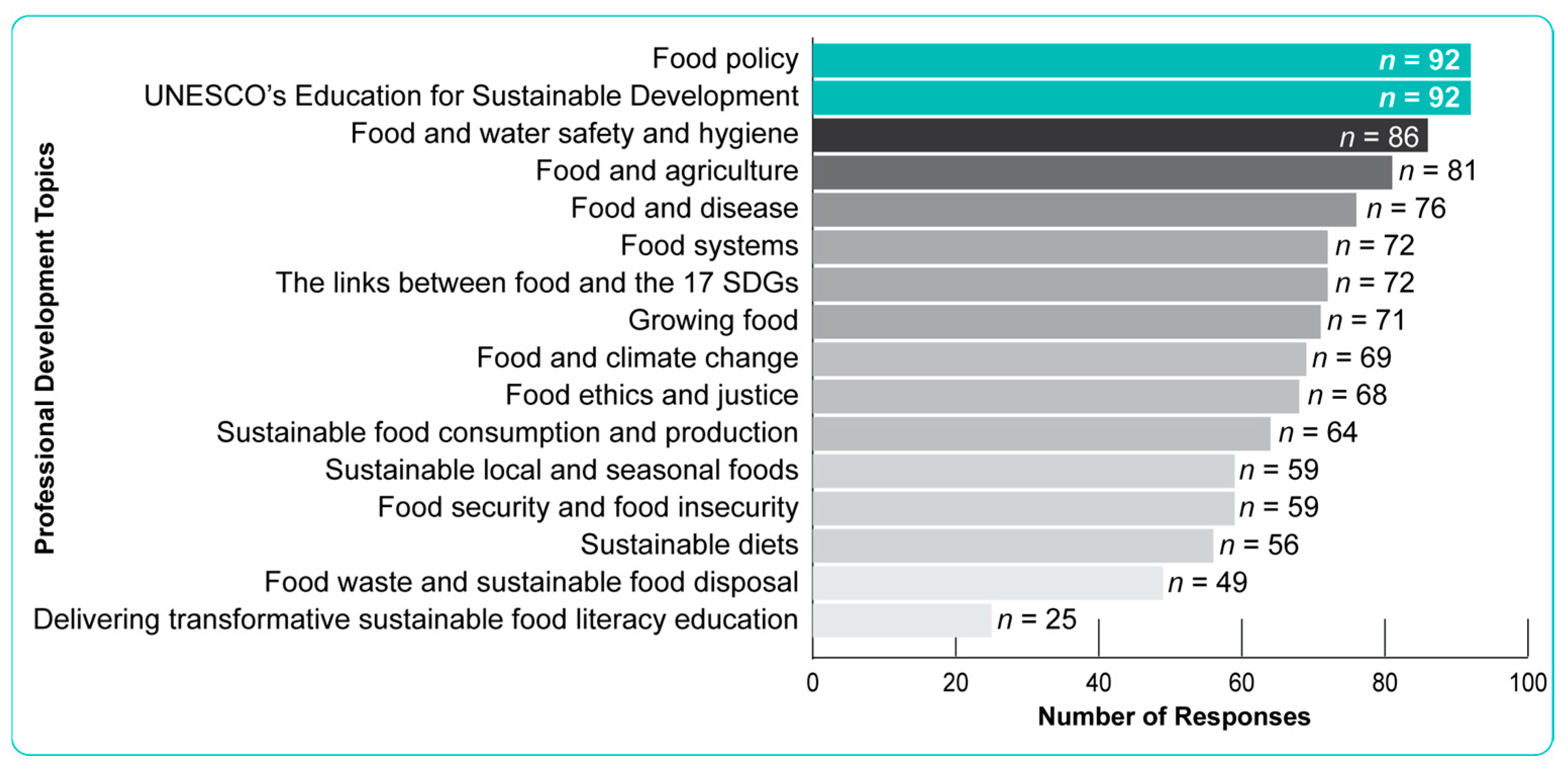
Respondents were then asked to identify the food sustainability topics they were most interested in learning more about by selecting all applicable options. As shown in Figure 9, the topics of greatest interest were food policy, ESD, food and water safety and hygiene, and food and agriculture. Although interest in ESD was high, respondents were comparatively less interested in learning how to implement transformative ESD. Interest in professional learning on food waste and disposal, sustainable diets, and food security was also low.

4. Discussion

This study aimed to explore the self-efficacy of pre- and in-service teachers who teach sustainable food literacy to students in Years 7 to 10 (ages 11–16) in secondary schools. It also sought to inform professional development strategies to build educators’ capacity to teach sustainable food literacy, supporting SDG 4: Quality Education (UN, 2015) and ESD Priority Action Area 3: Building Capacities of Educators (UNESCO, 2020). The research questions guiding this study were:
  • How familiar are pre-service and in-service Years 7–10 food education teachers with the SDGs?
  • How much support are Years 7–10 food education teachers receiving at school level to teach sustainable food literacy education?
  • What is the perceived self-efficacy of pre-service and in-service Years 7–10 food education teachers when teaching each pillar and facet of sustainable food literacy?
  • What capacity-building strategies would support pre-service and in-service food education teachers in enhancing self-efficacy for teaching sustainable food literacy?
Each research question will be addressed in turn through the integration and interpretation of the results. This will include discussions of the implications of this research for policy, practice, and society, as well as gaps that future research can address. Five recommendations for meaningful professional development and advocacy are presented. The familiarity of food education teachers with the SDGs is first discussed.

4.1. Familiarity of Food Education Teachers with the SDGs (RQ1)

The findings reveal that respondent teachers reported moderate familiarity with the SDGs and limited knowledge of them, along with a moderate likelihood of teaching the SDGs. Spearman’s rank-order correlation confirmed this pattern, showing a strong, positive, and statistically significant correlation between the two variables (rs = 0.718, p < 0.001). This indicates that familiarity with the SDGs is closely associated with teachers’ willingness or intention to explicitly incorporate the SDGs into their teaching.
In the free-text responses (Figure 4), participants reported sound knowledge of food sustainability topics but less understanding of how these topics connect to the SDGs and sustainable development. Although these responses were not explicitly linked to the SDGs, it was clear that each category in Figure 4b could be. For example, “food waste” was the most frequent response when participants described sustainable food literacy. With adequate knowledge of the SDGs, teachers could link this concept to SDG 12, Target 12.3, which aims to halve food waste by 2030 (UN, 2015). Additionally, links to SDG 3: Good Health and Well-being can be made through teacher knowledge of sustainable diets and health; to SDG 13: Climate Action through knowledge of carbon emissions and food miles; and to SDG 15: Life on Land in relation to agriculture.
Collectively, these findings indicate that although respondents understand key food sustainability concepts, there is an opportunity to strengthen their capacity to connect this knowledge to the SDGs and make these links explicit in teaching practice. As such, enhancing teachers’ understanding of SDG-aligned food sustainability education should be a priority for professional learning in the food education field.
Recommendation 1. 
Teacher professional development at the intersection of food sustainability, sustainable development, and the SDGs is required. Professional learning should build on teachers’ existing understanding of food sustainability while strengthening their capacity to connect this knowledge to the SDGs and to explicitly embed these links in teaching and learning programs.

4.2. Support (or Not) for Sustainable Food Literacy Education (RQ2)

Respondents reported that support for sustainable food literacy education in schools is low to moderate. This aligns with broader research spanning more than two decades on home economics in schools, in which the subject has been marginalized and devalued in school curricula and, in some cases, removed (McManus et al., 2023; Pendergast, 2003, 2006). McManus et al. (2024b) found that marginalization, including limited timetabling for the subject, insufficient time to deliver meaningful practical skill development, and poor resourcing and budget allocation, directly affects the delivery of food literacy education in secondary schools. The study also noted that home economics teachers perceive the status and priority of the subject by administration teams in Australian schools is low, as they do not regard the content as important compared with so-called ‘academic subjects’. Therefore, it was concluded that home economics education is not privileged in Australian schools.
The barriers to implementing effective sustainable food literacy (see Figure 5) align with those identified in prior research. Respondents in this study reported challenges, including resource and infrastructure constraints, institutional and policy barriers, engagement barriers, professional knowledge gaps, curriculum marginalization, and workforce and workload challenges. Notably, within the category of workforce and workload challenges, teacher shortages were identified, consistent with prior research (McManus et al., 2022; Pendergast et al., 2022a, 2022b, 2025), which reports an increasing rate of out-of-field teaching in the subject, bringing its own set of challenges to effective home economics education, including the food literacy focus. This will be discussed further in relation to teacher self-efficacy.
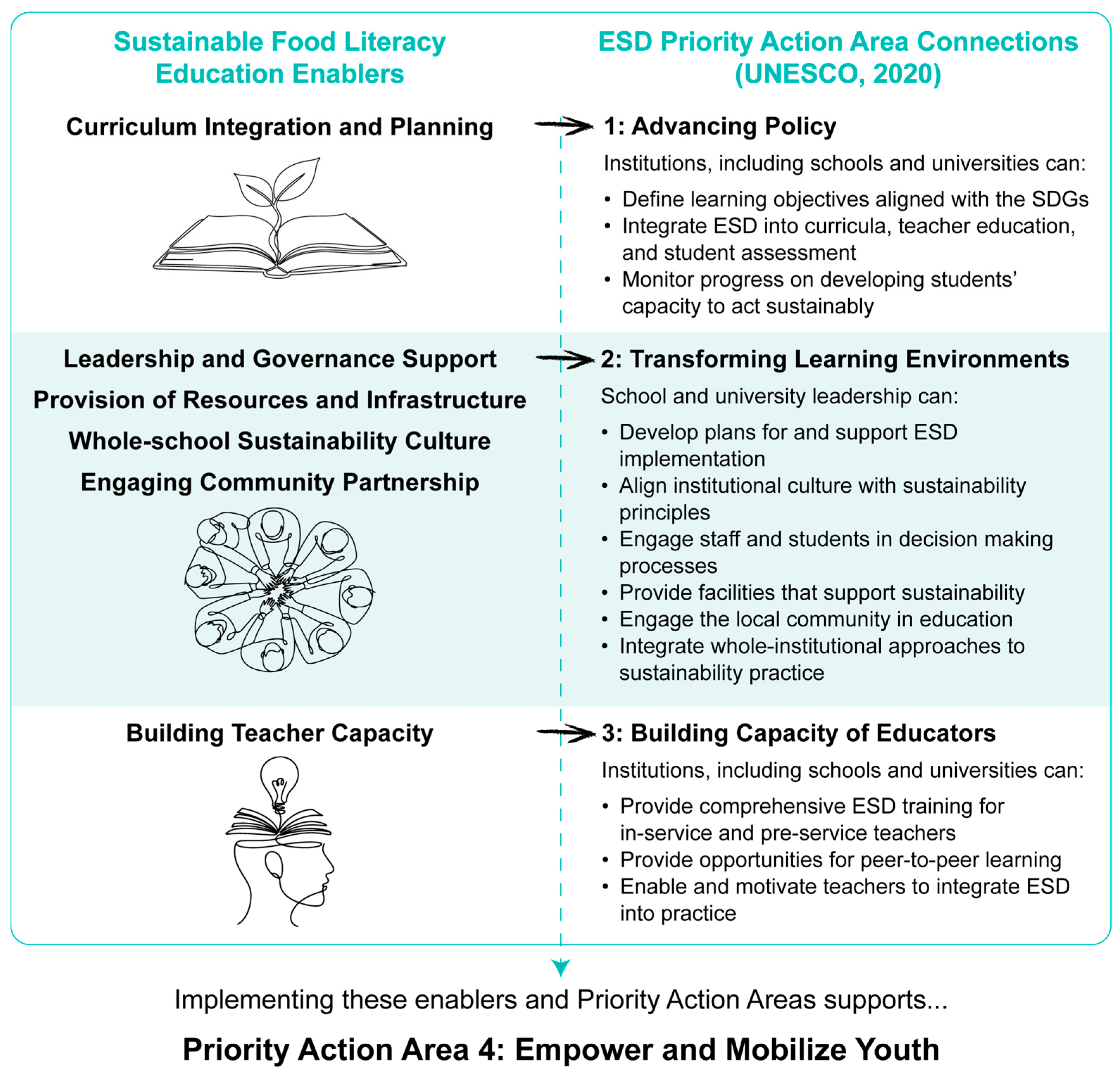
Participants identified several key enablers. When mapped to the ESD Priority Action Areas, these enablers align with key elements of Priority Action Areas 1, 2, and 3, including supportive policy frameworks, whole-school approaches, and teacher professional learning (see Figure 10). These findings offer valuable insights into the conditions required for successful implementation of sustainable food literacy education and provide a pathway for schools, school leaders, and home economics teachers to deliver meaningful learning experiences that empower students to contribute to sustainable food futures.
Recommendation 2. 
Achieving SDG 4: Quality Education requires sustainable food literacy education, delivered through home-economics-related subjects, to be recognized as a priority across policy, educational practice, teacher preparation, and society. Addressing complex food sustainability challenges requires educational transformation and ongoing advocacy, guided by supportive policy, to elevate the importance of sustainable food literacy in schools and communities.

4.3. Perceived Self-Efficacy of Food Education Teachers to Teach Sustainable Food Literacy (RQ3)

In this research, the reported overall self-efficacy for teaching sustainable food literacy was moderate to high. Teacher self-efficacy was highest for teaching food literacy skills, a core component of home economics education essential for applying sustainable food literacy knowledge (McManus et al., 2026). This finding aligns with the work by Ronto et al. (2016), who also identified higher self-efficacy among home economics teachers for teaching food literacy skills. Although teachers perceived their self-efficacy to be lowest for teaching sustainable food literacy AVBs, they may have been unaware that the effective development of sustainable food literacy skills and knowledge, in turn, influences the development of AVBs.
This co-development arises because the pillars and facets of food literacy are interconnected, influencing and interacting with one another (Perry et al., 2017; Vidgen & Gallegos, 2014). As McManus et al. (2026) explain, the pillars of sustainable food literacy do not operate in isolation. Therefore, individuals require knowledge and skills to develop confidence and competence in sustainable food literacy. Consavage Stanley et al. (2022) also note that, for individuals to apply food literacy skills, basic knowledge is required. Therefore, the respondents of this study may be more influential on student AVBs than they perceive themselves to be.
This theory may also be applied to teachers: professional development that builds concurrent knowledge and skills will, in turn, enhance teacher capacity and self-efficacy in sustainable food literacy education, thereby strengthening teacher AVBs. Additionally, professional development can be bolstered by applying the four sources of self-efficacy (performance accomplishments, vicarious experiences, verbal persuasion, and emotional arousal) as outlined by Bandura (1977, 1997) and confirmed by Tschannen-Moran and McMaster (2009) in professional development programs. As mentioned, these four sources align conceptually with the pillars of sustainable food literacy (McManus et al., 2026) and the domains of ESD (UNESCO, 2020). As such, this holistic strategy has the potential to enhance teacher self-efficacy in sustainable food literacy, increase the implementation of new information, and sustain changes in practice.
Teacher self-efficacy ratings for teaching the facets of sustainable food literacy offer valuable insights for designing professional development programs. Figure 6, Figure 7 and Figure 8 reveal that respondents have moderate self-efficacy in knowledge of food infrastructure, agriculture, and food systems. The skill of growing food was rated similarly, as were the skills of assisting students in developing self-efficacy in sustainable food literacy and in recognizing emotional impacts on food interactions. These topics provide insights into potential teacher professional development needs, which can be further tailored according to contextual needs to identify key areas requiring capacity building.
Recommendation 3. 
Targeted professional development in sustainable food literacy education is essential to advance SDG 4: Quality Education. Strengthening pre- and in-service teachers’ knowledge, skills, and attitudes, values, and beliefs can enhance self-efficacy and support the delivery of transformative learning experiences that benefit students and contribute to more sustainable societies.
Although out-of-field teachers made up a small share of the study sample (20%), an interesting finding emerged, indicating the need for further investigation. To clarify, out-of-field teachers are qualified teachers who teach in areas they did not specialize in during initial teacher education (Du Plessis, 2015). As noted briefly above, worldwide teacher workforce shortages in home economics subjects have driven the prevalence of out-of-field teaching (Pendergast et al., 2022a, 2022b, 2025). This has raised concerns about teaching quality, classroom safety, and student outcomes (Pendergast et al., 2022a, 2022b). In this study, out-of-field respondents perceived their self-efficacy in teaching the sustainable food literacy pillars to be similar to or higher than that of in-field teachers, particularly for the skills pillar. This outcome shows similarities to other studies where there is an overinflation of perceived self-efficacy due to a lack of insight about the field.
Pendergast et al. (2025) found that out-of-field home economics teachers often perceived themselves as effective as their in-field counterparts, drawing confidence from personal experience with food and cooking and a passion for the subject. In contrast, in-field teachers reported that many out-of-field teachers had limited home economics knowledge and skills, which constrained their capacity to deliver high-quality learning experiences. Similarly, McManus et al. (2022) identified gaps in out-of-field teachers’ food literacy knowledge, particularly their ability to connect food literacy with sustainability concepts. Taken together with the present study’s findings, these results suggest that out-of-field teachers may perceive themselves as effective, or even more effective, than in-field teachers, despite evidence of narrower disciplinary knowledge and skill sets. This apparent discrepancy between perceived capability and subject-specific expertise warrants further investigation. Future research using representative samples is needed to better understand variations in self-efficacy among in-field and out-of-field teachers delivering sustainable food literacy education.
Respondents reported moderate self-efficacy in both adapting instruction to individual needs and motivating students in sustainable food literacy education. These findings are important, as contextualizing learning to students’ needs, interests, local communities, and real-world food sustainability challenges is a key component of transformative educational practice (McManus et al., 2025, 2026). Contextualized learning enhances the relevance and meaningfulness of educational experiences, enabling learners to engage more effectively with information applicable to their lives (Vidgen & Gallegos, 2014; Cullen et al., 2015). However, moderate confidence in adapting instruction may limit teachers’ capacity to motivate students and communicate the value of sustainable food literacy. This aligns with a core principle of ESD (UNESCO, 2020), which emphasizes connecting learning to lived experiences and real-world issues to foster student agency for sustainability. Similarly, Self-Determination Theory highlights the importance of meaningful connections and relevance in promoting intrinsic motivation, engagement, and sustained learning (Deci & Ryan, 1985).
Recommendation 4. 
Teacher capacity to contextualize learning around students’ interests, local communities, and real-world food sustainability challenges is critical to fostering motivation and engagement. Professional development programs should explicitly build these capabilities so that teachers can deliver transformative sustainable food literacy education and empower students to actively contribute to sustainable food futures.
This study found that respondents reported higher self-efficacy for maintaining discipline in practical lessons than in theory-based lessons. This pattern may reflect the engaging nature of experiential learning, which has been shown to enhance student motivation and participation (Kong, 2021). Vargas et al. (2025) argued that when students are positioned at the center of learning, they become active participants rather than passive recipients, promoting positive behavioral outcomes. Similarly, Sullivan et al. (2025) and Lukas and Cunningham-Sabo (2011) found that students perceive cooking activities as enjoyable and engaging, particularly when learning alongside peers. In contrast, students may disengage during theory-heavy food literacy lessons (McManus et al., 2023). Pendergast et al. (2025) also reported that in-field home economics teachers demonstrate higher self-efficacy in classroom management and student engagement when teaching within their area of expertise. Collectively, these findings suggest that classroom management may be more effective in practical food education lessons because students are actively engaged, enjoy the learning experience, and are central to the learning process.
Though a relatively small sample, the perceived self-efficacy of pre-service teachers in this study was consistently lower than that of in-service teachers across all domains examined. This outcome aligns with the findings of Nanayakkara et al. (2021), who identified that experienced Australian food and nutrition teachers had a higher self-efficacy in teaching the subject than beginning teachers. This finding is not unexpected, given that pre-service teachers are still in teacher preparation and have comparatively limited professional and classroom experience.
Nevertheless, the results highlight two important considerations for building pre-service teacher capacity. First, there is a need to examine whether initial teacher education programs should place greater emphasis on food sustainability education to strengthen pre-service teachers’ self-efficacy in this area. This remains an unexplored area of research and warrants further investigation. Second, the findings underscore the importance of ensuring that in-service teachers possess high levels of self-efficacy, as they play a critical role in mentoring and supporting pre-service and beginning teachers during professional experience placements and the early stages of their careers. The outcomes of this study can provide exploratory insight into this point.

4.4. Capacity-Building Strategies for Teaching Sustainable Food Literacy (RQ4)

As established through the recommended professional learning experiences discussed, building teacher capacity for transformative, sustainable food literacy education is essential for SDG 4: Quality Education. Additionally, this study identified a significant association between food sustainability professional development and self-efficacy in teaching sustainable food literacy. To demonstrate this critical need, only 39% of participants in this study had undertaken professional development in food sustainability, and it was apparent that opportunities to engage pre-service teachers in food sustainability education within initial teacher education are not being leveraged in some cases. However, teachers indicated that professional learning in sustainable food literacy is valued and that they are interested in learning more about ESD.
Recommendation 5. 
Teachers must be empowered to deliver high-quality ESD through specialist programs that build sustainable food literacy knowledge, transformative pedagogies, and teacher self-efficacy. Strengthening capacity through both initial teacher education and ongoing professional development would be beneficial.

4.5. Future Research Directions

This exploratory study identified several priorities for future research. Further investigation is needed to determine effective pre- and in-service teacher professional development at the intersection of the SDGs, sustainable development, and food sustainability education, particularly the impact of targeted programs on teachers’ capacity and self-efficacy to explicitly teach the SDGs. Case study research examining successful school-based sustainable food literacy initiatives would also be valuable for identifying key enablers and informing implementation guidelines that support SDG 4: Quality Education. Finally, future studies should replicate this research across diverse educational contexts, using representative samples to strengthen the generalizability of findings. Research exploring school and university leaders’ perceptions of the enablers and barriers to sustainable food literacy education would further enhance understanding of the role of leadership in supporting educational transformation and implementation.

4.6. Study Limitations

As a cross-sectional study, the findings represent a snapshot in time and may have differed if data had been collected at another point (Levin, 2006). The study may also be subject to self-report bias, including the tendency for individuals to overestimate their abilities when they lack sufficient subject knowledge (Kruger & Dunning, 1999; Dunning et al., 2004), and social desirability bias, whereby respondents provide answers that present themselves more favorably (Van de Mortel, 2008). Encouragingly, professional learning can help address such overestimations of competence (Kruger & Dunning, 1999).
The uneven demographic distribution of respondents further limits the generalizability of the findings, as do possible self-selection bias and the heterogeneity of the participating educational systems resulting from purposive and snowball sampling. Consequently, the results should be considered exploratory and applicable only to the study sample. Another limitation is that the survey was not subjected to further psychometric validation after adaptation. However, it was assessed for content validity by three experts in the field. Nevertheless, the study provides valuable preliminary insights to inform future research, policy, and educational practice in sustainable food literacy education.
Participation rates were also likely influenced by gatekeeping and survey fatigue. Several representatives of institutional and professional associations declined to distribute the survey due to the high volume of survey requests received by their members and students. At the time of data collection, Australian food education teachers were being invited to participate in multiple surveys, and previous research has shown that repeated survey requests can reduce participation rates, particularly among university students (Fass-Holmes, 2022). As such, survey fatigue may have contributed to the lower response rates observed, especially among pre-service teachers, despite the extensive recruitment efforts undertaken.

5. Conclusions

Education is critical to achieve the SDGs, and sustainable food literacy provides a powerful context for transformative ESD, enabling real-world learning in secondary schools. This study found that respondent teachers’ familiarity with the SDGs is strongly associated with their willingness to integrate them into teaching, yet many need greater self-efficacy and support to do so effectively. Although self-efficacy for teaching sustainable food literacy was generally moderate to high, lower levels among pre-service teachers highlight the need for targeted professional learning and stronger preparation pathways. Building educator capacity through professional development, alongside greater school-based and policy support, is essential to strengthening transformative sustainable food literacy education. It is also critical to disrupt societal norms and marginalizing perspectives regarding food education, as well as conservative approaches to teaching food education, to equip young people to address complex food sustainability challenges.

Supplementary Materials

The supplementary file cited in this article can be downloaded at https://doi.org/10.17605/OSF.IO/CSK4J.

Author Contributions

Conceptualization, S.M.; methodology, S.M., D.P., and H.K.; validation, S.M. and H.K.; formal analysis, S.M., D.P., and H.K.; investigation, S.M., D.P., and H.K.; resources, S.M.; data curation, S.M., D.P., and H.K.; writing—original draft preparation, S.M., D.P., and H.K.; writing—review and editing, S.M., D.P., and H.K.; visualization, S.M.; supervision, D.P. and H.K.; project administration, S.M. All authors have read and agreed to the published version of the manuscript.

Funding

This research received no external funding.

Institutional Review Board Statement

The study was conducted in accordance with the Declaration of Helsinki and was approved by the Griffith University Human Ethics Committee (HREC/2026/0374) on the 16 April 2026.

Informed Consent Statement

Informed consent was obtained from all subjects involved in the study.

Data Availability Statement

The original data presented in the study are openly available in Open Science Framework at https://doi.org/10.17605/OSF.IO/CSK4J.

Acknowledgments

The authors would like to acknowledge the support of the King and Amy O’Malley Trust, the Home Economics Institute of Australia and its state/territory chapters, the Stephanie Alexander Kitchen Garden Foundation, OzHarvest FEAST, and the tertiary institutions that supported participant recruitment for this study. The authors would also like to acknowledge the support of our international colleagues who also supported participant recruitment: International Federation for Home Economics, International Federation for Home Economics Junior Forum, Association of Teachers of Home Economics, Janine Duncan (Purdue University), American Association of Family and Consumer Sciences, Japan Association of Home Economics Education, Akiko Suzuki (Hiroshima University, Japan), Kerry Renwick (University of British Columbia), BC Teachers of Home Economics Specialist Association [THESA], Canadian Home Economics Foundation, Manitoba Association of Home Economists, New Brunswick Home Economics Association, Nova Scotia Family Studies Teachers Association, Alberta Human Ecology & Home Economics Association, Asian Regional Association for Home Economics, Florence Sebele (United College of Education, Zimbabwe), ‘Mamthimk’hulu Mafaesa (Ministry of Education and Training, Lesotho), Phillipine Home Economics Association, Korean Home Economics Association, Nan sook Yu (Korea University), Adri Du Toit (South Africa), South African Association of Family Ecology and Consumer Sciences, Lorraine Dimech Magrin (Ministry for Education, Sport, Youth, Research and Innovation, Malta), European Association for Home Economics, Caribbean Association of Home Economics, and the Home Economics Association of Zambia.

Conflicts of Interest

The authors declare no conflicts of interest.

Abbreviations

The following abbreviations are used in this manuscript:
AVBsAttitudes, values, and beliefs
ESDEducation for Sustainable Development
OECDOrganisation for Economic Co-operation and Development
SDGSustainable Development Goals
UNUnited Nations
UNESCOUnited Nations Educational, Scientific and Cultural Organization

References

  1. Australian Curriculum, Assessment and Reporting Authority. (2026). Design and technologies v9.0. Available online: https://www.australiancurriculum.edu.au/f-10-curriculum/learning-areas/design-and-technologies/year-7_year-8_year-9_year-10 (accessed on 26 September 2026).
  2. Bandura, A. (1977). Self-efficacy: Toward a unifying theory of behavioral change. Psychological Review, 84(2), 191–215. [Google Scholar] [CrossRef] [PubMed]
  3. Bandura, A. (1986a). Social foundations of thought and action: A social cognitive theory. Prentice-Hall. [Google Scholar]
  4. Bandura, A. (1986b). The explanatory and predictive scope of self-efficacy theory. Journal of Social and Clinical Psychology, 4(3), 359–373. [Google Scholar] [CrossRef] [Scilit]
  5. Bandura, A. (1997). Self-efficacy: The exercise of control. W. H. Freeman. [Google Scholar]
  6. Cohen, J. (1988). Statistical power analysis for the behavioral sciences (2nd ed.). Lawrence Erlbaum Associates. [Google Scholar] [CrossRef] [Scilit]
  7. Cohen, L., Manion, L., & Morrison, K. (2018). Research methods in education (8th ed.). Routledge. [Google Scholar]
  8. Consavage Stanley, K., Harrigan, P. B., Serrano, E. L., & Kraak, V. I. (2022). A systematic scoping review of the literacy literature to develop a digital food and nutrition literacy model for low-income adults to make healthy choices in the online food retail ecosystem to reduce obesity risk. Obesity Reviews, 23(4), e13414. [Google Scholar] [CrossRef] [Scilit] [PubMed]
  9. Creswell, J. W., & Creswell, J. D. (2022). Research design: Qualitative, quantitative, and mixed methods approaches (6th ed.). Sage. [Google Scholar]
  10. Cullen, T., Hatch, J., Martin, W., Higgins, J. W., & Sheppard, R. (2015). Food literacy: Definition and framework for action. Canadian Journal of Dietetic Practice and Research, 76(3), 140–145. [Google Scholar] [CrossRef] [Scilit] [PubMed]
  11. Deci, E. L., & Ryan, R. M. (1985). Intrinsic motivation and self-determination in human behavior. Plenum Press. [Google Scholar]
  12. DeepL. (2026). DeepL translator. Available online: https://www.deepl.com/en/translator (accessed on 26 September 2026).
  13. Dellinger, A. B., Bobbett, J. J., Olivier, D. F., & Ellett, C. D. (2008). Measuring teachers’ self-efficacy beliefs: Development and use of the TEBS-Self. Teaching and Teacher Education, 24(3), 751–766. [Google Scholar] [CrossRef] [Scilit]
  14. de Smul, M., Heirweg, S., van Keer, H., Devos, G., & Vandevelde, S. (2018). How competent do teachers feel instructing self-regulated learning strategies? Development and validation of the teacher self-efficacy scale to implement self-regulated learning. Teaching and Teacher Education, 71, 214–225. [Google Scholar] [CrossRef] [Scilit]
  15. Dunning, D., Heath, C., & Suls, J. M. (2004). Flawed self-assessment: Implications for health, education, and the workplace. Psychological Science in the Public Interest, 5(3), 69–106. [Google Scholar] [CrossRef] [Scilit] [PubMed]
  16. Du Plessis, A. E. (2015). Effective education: Conceptualising the meaning of out-of-field teaching practices for teachers, teacher quality and school leaders. International Journal of Educational Research, 72, 89–102. [Google Scholar] [CrossRef] [Scilit]
  17. Fass-Holmes, B. (2022). Survey fatigue: What is its role in undergraduates’ survey participation and response rates? Journal of Interdisciplinary Studies in Education, 11(1), 56–73. [Google Scholar]
  18. Gefen, D. (2000). E-commerce: The role of familiarity and trust. Omega, 28(6), 725–737. [Google Scholar] [CrossRef] [Scilit]
  19. Google. (2026). Google translate. Available online: https://translate.google.com (accessed on 26 September 2026).
  20. Ha, H.-Y., & Perks, H. (2005). Effects of consumer perceptions of brand experience on the web: Brand familiarity, satisfaction and brand trust. Journal of Consumer Behaviour, 4(6), 438–452. [Google Scholar] [CrossRef] [Scilit]
  21. Haynes, S. N., Richard, D. C. S., & Kubany, E. S. (1995). Content validity in psychological assessment: A functional approach to concepts and methods. Psychological Assessment, 7(3), 238–247. [Google Scholar] [CrossRef]
  22. Joshi, A., Kale, S., Chandel, S., & Pal, D. (2015). Likert scale: Explored and explained. British Journal of Applied Science & Technology, 7(4), 396–403. [Google Scholar] [CrossRef] [Scilit]
  23. Keller, K. L. (2013). Strategic brand management: Building, measuring, and managing brand equity (4th ed.). Pearson. [Google Scholar]
  24. Kong, Y. (2021). The role of experiential learning on students’ motivation and classroom engagement. Frontiers in Psychology, 12, 771272. [Google Scholar] [CrossRef] [Scilit] [PubMed]
  25. Krippendorff, K. (2022). Content analysis: An introduction to its methodology (4th ed.). Sage Publications. [Google Scholar] [CrossRef] [Scilit]
  26. Kruger, J., & Dunning, D. (1999). Unskilled and unaware of it: How difficulties in recognizing one’s own incompetence lead to inflated self-assessments. Journal of Personality and Social Psychology, 77(6), 1121–1134. [Google Scholar] [CrossRef] [PubMed]
  27. Levin, K. A. (2006). Study design III: Cross-sectional studies. Evidence-Based Dentistry, 7(1), 24–25. [Google Scholar] [CrossRef] [Scilit] [PubMed]
  28. LimeSurvey. (2026). LimeSurvey. Available online: https://www.limesurvey.org (accessed on 26 September 2026).
  29. Lindblom, C., Arreman, I. E., Bohm, I., & Hornell, A. (2016). The importance of time frames in Swedish home and consumer studies. International Journal of Consumer Studies, 40(3), 299–308. [Google Scholar] [CrossRef] [Scilit]
  30. Lukas, C. V., & Cunningham-Sabo, L. (2011). Qualitative investigation of the Cooking with Kids Program: Focus group interviews with fourth-grade students, teachers, and food educators. Journal of Nutrition Education and Behavior, 43(6), 517–524. [Google Scholar] [CrossRef] [Scilit] [PubMed]
  31. McManus, S., & Pendergast, D. (2025). Exploring the intersection of food literacy and consumer research: A review, conceptualization, and agenda for sustainability-focused research. Food Quality and Preference, 126, 105429, (Corrigendum to 2025, Food Quality and Preference, 128, 105486). [Google Scholar] [CrossRef] [Scilit]
  32. McManus, S., Pendergast, D., & Kanasa, H. (2022). Teachers’ understanding of food literacy: A comparison between in-field and out-of-field home economics teachers. Journal of the Home Economics Institute of Australia, 27(2), 26–40. [Google Scholar]
  33. McManus, S., Pendergast, D., & Kanasa, H. (2023). Teaching food literacy in Queensland secondary schools: The influence of curriculum. Family and Consumer Sciences Research Journal, 51(3), 196–215. [Google Scholar] [CrossRef] [Scilit]
  34. McManus, S., Pendergast, D., & Kanasa, H. (2024a). Food literacy. In V. Ratten (Ed.), International encyclopedia of business management (1st ed., pp. 1–16). Elsevier. [Google Scholar]
  35. McManus, S., Pendergast, D., & Kanasa, H. (2024b). Transformative leadership actions to privilege home economics food literacy education for sustainable development. International Journal of Home Economics, 17(1), 197–212. [Google Scholar]
  36. McManus, S., Pendergast, D., & Kanasa, H. (2025). The intersection between food literacy and sustainability: A systematic quantitative literature review. Sustainability, 17(2), 459. [Google Scholar] [CrossRef] [Scilit]
  37. McManus, S., Pendergast, D., & Kanasa, H. (2026). Transformative sustainable food literacy education to meet current and future needs: A systematic quantitative literature review. Frontiers in Sustainable Food Systems, 10, 1813035. [Google Scholar] [CrossRef] [Scilit]
  38. Microsoft Corporation. (2026). Microsoft Excel. Available online: https://www.microsoft.com/en-au/microsoft-365/excel (accessed on 26 September 2026).
  39. Nanayakkara, J., Margerison, C., & Worsley, A. (2021). Teachers’ self-efficacy beliefs in teaching food and nutrition subjects in Australian secondary schools. Health Education, 121(3), 311–321. [Google Scholar] [CrossRef] [Scilit]
  40. Organisation for Economic Co-operation and Development (OECD). (2025). Trends shaping education 2025. Available online: https://www.oecd.org/en/publications/trends-shaping-education-2025_ee6587fd-en.html (accessed on 26 September 2026).
  41. Pendergast, D. (2001). Virginal mothers, groovy chicks & blokey blokes: Re-thinking home economics and teaching bodies. Australian Academic Press. [Google Scholar]
  42. Pendergast, D. (2003). From the margins: Globalization with(out) home economics. International Journal of Consumer Studies, 27(4), 331–334. [Google Scholar] [CrossRef] [Scilit]
  43. Pendergast, D. (2006). Sustaining the home economics profession in new times: A convergent moment. In A.-L. Rauma, S. Pöllänen, & A. P. Seitamaa-Hakkarainen (Eds.), Human perspectives on sustainable future (pp. 3–32). University of Joensuu. [Google Scholar]
  44. Pendergast, D., Deagon, J., Du Plessis, A., McManus, S., & Blayney, B. (2022a). Out-of-field teaching and home economics: Incidence and impacts. Global insights from the field. International Journal of Home Economics, 15(2), 213–233. [Google Scholar]
  45. Pendergast, D., McManus, S., Deagon, J. R., & Du Plessis, A. (2022b). Teaching out-of-field in home economics: A systematic quantitative literature review. Journal of Korean Home Economics Education Association, 34(4S), 37–70. [Google Scholar] [CrossRef] [Scilit]
  46. Pendergast, D., McManus, S., Du Plessis, A., & Deagon, J. R. (2025). Investigating the perceptions of self-efficacy of in-field and out-of-field home economics teachers. Family and Consumer Sciences Research Journal, 53, e70006. [Google Scholar] [CrossRef] [Scilit]
  47. Peres, F. F. (2026). Effect sizes for nonparametric tests. Biochemia Medica, 36(1), 010101. [Google Scholar] [CrossRef] [Scilit] [PubMed]
  48. Perry, E. A., Thomas, H., Samra, H. R., Edmonstone, S., Davidson, L., Faulkner, A., Petermann, L., Manafò, E., & Kirkpatrick, S. I. (2017). Identifying attributes of food literacy: A scoping review. Public Health Nutrition, 20(13), 2406–2415. [Google Scholar] [CrossRef] [Scilit] [PubMed]
  49. Polit, D. F., & Beck, C. T. (2006). The content validity index: Are you sure you know what’s being reported? Critique and recommendations. Research in Nursing & Health, 29(5), 489–497. [Google Scholar] [CrossRef] [Scilit] [PubMed]
  50. Ronto, R., Ball, L., Pendergast, D., & Harris, N. D. (2016). Food literacy at secondary schools in Australia. Journal of School Health, 86(11), 823–831. [Google Scholar] [CrossRef] [Scilit] [PubMed]
  51. Setia, M. S. (2016). Methodology series module 3: Cross-sectional studies. Indian Journal of Dermatology, 61(3), 261–264. [Google Scholar] [CrossRef] [Scilit] [PubMed]
  52. Skaalvik, E. M., & Skaalvik, S. (2007). Dimensions of teacher self-efficacy and relations with strain factors, perceived collective teacher efficacy, and teacher burnout. Journal of Educational Psychology, 99(3), 611–625. [Google Scholar] [CrossRef] [Scilit]
  53. Sullivan, A., Parsons, K., Therrien-Genest, M., & Yerxa, K. (2025). Cooking up knowledge: Empowering high school students through a food literacy boot camp. American Journal of Lifestyle Medicine, 20(2), 244–255. [Google Scholar] [CrossRef] [Scilit] [PubMed]
  54. Tam, J. L. M. (2008). Brand familiarity: Its effects on satisfaction evaluations. Journal of Services Marketing, 22(1), 3–12. [Google Scholar] [CrossRef] [Scilit]
  55. Tschannen-Moran, M., & Hoy, A. W. (2007). The differential antecedents of self-efficacy beliefs of novice and experienced teachers. Teaching and Teacher Education, 23(6), 944–956. [Google Scholar] [CrossRef] [Scilit]
  56. Tschannen-Moran, M., & Johnson, D. (2011). Exploring literacy teachers’ self-efficacy beliefs: Potential sources at play. Teaching and Teacher Education, 27(4), 751–761. [Google Scholar] [CrossRef] [Scilit]
  57. Tschannen-Moran, M., & McMaster, P. (2009). Sources of self-efficacy: Four professional development formats and their relationship to self-efficacy and implementation of a new teaching strategy. The Elementary School Journal, 110(2), 228–245. [Google Scholar] [CrossRef] [Scilit] [PubMed]
  58. United Nations (UN). (2015). Transforming our world: The 2030 Agenda for sustainable development (A/RES/70/1). Available online: https://docs.un.org/en/A/RES/70/1 (accessed on 26 September 2026).
  59. United Nations (UN). (2021). Food systems summit x SDGs. Available online: https://www.un.org/en/food-systems-summit/sdgs (accessed on 26 September 2026).
  60. United Nations (UN). (2024). The sustainable development goals report 2024. Available online: https://unstats.un.org/sdgs/report/2024/The-Sustainable-Development-Goals-Report-2024.pdf (accessed on 26 September 2026).
  61. United Nations Educational, Scientific and Cultural Organization (UNESCO). (2020). Education for sustainable development: A roadmap. Available online: https://unesdoc.unesco.org/ark:/48223/pf0000374802.locale=en (accessed on 26 September 2026).
  62. Vaismoradi, M., Turunen, H., & Bondas, T. (2013). Content analysis and thematic analysis: Implications for conducting a qualitative descriptive study. Nursing & Health Sciences, 15(3), 398–405. [Google Scholar] [CrossRef] [Scilit] [PubMed]
  63. Van de Mortel, T. F. (2008). Faking it: Social desirability response bias in self-report research. Australian Journal of Advanced Nursing, 25(4), 40–48. [Google Scholar]
  64. Vargas, M., Sánchez, C. Á., Tyler, V., & Hachem, F. (2025). Putting food at the centre of learning: An evidence-based and practice-informed model of holistic food education in schools. The Lancet Planetary Health, 9(11), 101219. [Google Scholar] [CrossRef] [Scilit] [PubMed]
  65. Vidgen, H. A., & Gallegos, D. (2014). Defining food literacy and its components. Appetite, 76, 50–59. [Google Scholar] [CrossRef] [Scilit] [PubMed]
  66. Voyant Tools. (2026). Voyant tools. Available online: https://voyant-tools.org (accessed on 26 September 2026).
  67. Wang, X., & Cheng, Z. (2020). Cross-sectional studies: Strengths, weaknesses, and recommendations. CHEST, 158(Suppl. S1), S65–S71. [Google Scholar] [CrossRef] [Scilit] [PubMed]
Figure 1. The sustainable food literacy educational model (McManus et al., 2026).
Education 16 01653 g001
Figure 2. The structure of this exploratory cross-sectional study.
Education 16 01653 g002
Figure 3. Participant demographics.
Education 16 01653 g003
Figure 4. Voyant Tools WordCloud and participant response categories.
Education 16 01653 g004
Figure 5. Sustainable food literacy education implementation enablers and barriers.
Education 16 01653 g005
Figure 6. Mean responses for self-efficacy in teaching sustainable food literacy knowledge facets.
Education 16 01653 g006
Figure 7. Mean responses for self-efficacy in teaching sustainable food literacy skills facets.
Education 16 01653 g007
Figure 8. Mean responses for self-efficacy in teaching sustainable food literacy AVBs facets.
Education 16 01653 g008
Figure 9. Respondent interest in professional development topics.
Education 16 01653 g009
Figure 10. Alignment of the enablers of sustainable food literacy education with the ESD Priority Action Areas (UNESCO, 2020).
Education 16 01653 g010
Table 1. Overview of the survey structure.
Survey SectionInformation CollectedNumber of Questions
1Food Sustainability Professional Development and Respondent Understanding
Teacher professional development engagement.
Respondent understanding of sustainable food literacy.
2
(1 Qual)
(1 Quant)
2Respondent Self-Efficacy
Self-efficacy to teach sustainable food literacy
28
(28 Quant)
3General Questions
Respondent familiarity with the SDGs
Willingness to teach the SDGs
ITE education regarding food sustainability
Workplace support for teaching food sustainability
Sustainable food literacy professional education perspectives
8
(1 Qual)
(7 Quant)
4Demographics
Age, gender, highest level of qualification, in-field/out-of-field teacher status, years of experience teaching food education, country, school type.
7
(7 Quant)
Table 2. Paired t-test results for self-efficacy in teaching knowledge, skills, and AVBs.
PillarnGrand MSDSEM95% CI
Skills *1345.541.270.11[5.33, 5.76]
Knowledge *1365.181.020.09[5.01, 5.36]
AVBs *1224.961.360.12[4.71, 5.20]
Paired t-testsnMean DifftdfpCohen’s dInterpretation
Knowledge vs. Skills134−0.34−5.01133<0.001−0.43Small effect size
Knowledge vs. AVBs1220.242.81210.0060.25Small effect size
Skills vs. AVBs1220.576.23121<0.0010.56Medium effect size
* Likert scale responses: 1—Not certain at all, 3—Quite uncertain, 5—Quite certain, 7—Absolutely certain.
Table 3. Kruskal–Wallis H test mean ranks across pillars and teaching experience.
Sustainable Food Literacy Pillar Mean Rank
Years of Teaching ExperiencenKnowledgeSkillsAVBs
Pre-service teachers2036.3534.9048.60
1–5 years2168.2472.7672.00
6–10 years2066.6862.7060.40
11–15 years1565.1062.7060.50
16–20 years1963.8266.3760.89
21+ Years2665.3361.8162.48
Table 4. Paired t-test results for self-efficacy in maintaining discipline in practical and theory lessons.
Lesson TypenMSDSEM95%CI
Practical1304.721.190.10[4.52, 4.93]
Theory1304.231.360.12[4.02, 4.47]
Paired t-testsnMean DifftdfpCohen’s dInterpretation
Practical vs. Theory Lessons1300.499.97129<0.001 **0.56Medium effect size
** Two-sided p.
Disclaimer/Publisher’s Note: The statements, opinions and data contained in all publications are solely those of the individual author(s) and contributor(s) and not of MDPI and/or the editor(s). MDPI and/or the editor(s) disclaim responsibility for any injury to people or property resulting from any ideas, methods, instructions or products referred to in the content.