AI-Enhanced CLIL for Embodied Learning: Applying the CLPS Framework in Secondary Physical Education

Abstract
1. Introduction
- How can AI-enhanced, ICT-integrated CLIL modules—specifically following the Content and Language Processing Sequence (CLPS)—improve learning outcomes in secondary school PE?
- What are the implications of combining digital personalisation, embodied activity, and real-world communication for both language and physical skill development?
- What challenges and opportunities emerge for teachers, institutions, and learners as AI extends the CLIL model in practice?
2. Theoretical Background and Framework
2.1. CLIL and the 4Cs: Evolving Foundations
2.2. ICT and Artificial Intelligence: Transforming CLIL
2.3. Integrating AI, CLIL, and Embodied Learning: Framework for This Study
- Leveraging cutting-edge AI affordances for real-time feedback, adaptive learning, and engagement.
- Positioning Physical Education as a domain for embodied and multimodal CLIL innovation;
- Responding to ongoing equity, privacy, and teacher-training challenges highlighted in recent scholarship (Zhong et al., 2025; Dinham, 2024).
3. Materials and Methods
3.1. Research Design
3.2. Procedure
- NaturalReader: Free AI tool that converts text formats into spoken audio, which can help students practice pronunciation and intonation.
- Gliglish: Free AI tool specifically designed to learn languages. It allows learners to speak with a virtual teacher and practice role-playing real-life situations, which can help students improve their listening and speaking skills, as well as their language accuracy.
- Wowzer: Multi-model AI tool for image generation. By introducing the desired prompts, students can generate, explore, and compare multiple images, fostering their creativity and imagination.
- QuillBot: Free AI tool that allows learners to condense articles and documents, by paragraphs or down to the key points, while maintaining the original context. This tool can help students improve grammar accuracy and reading skills.
3.3. Targeted Students
3.4. Competencies
3.5. Modules’ Objectives
3.6. Materials
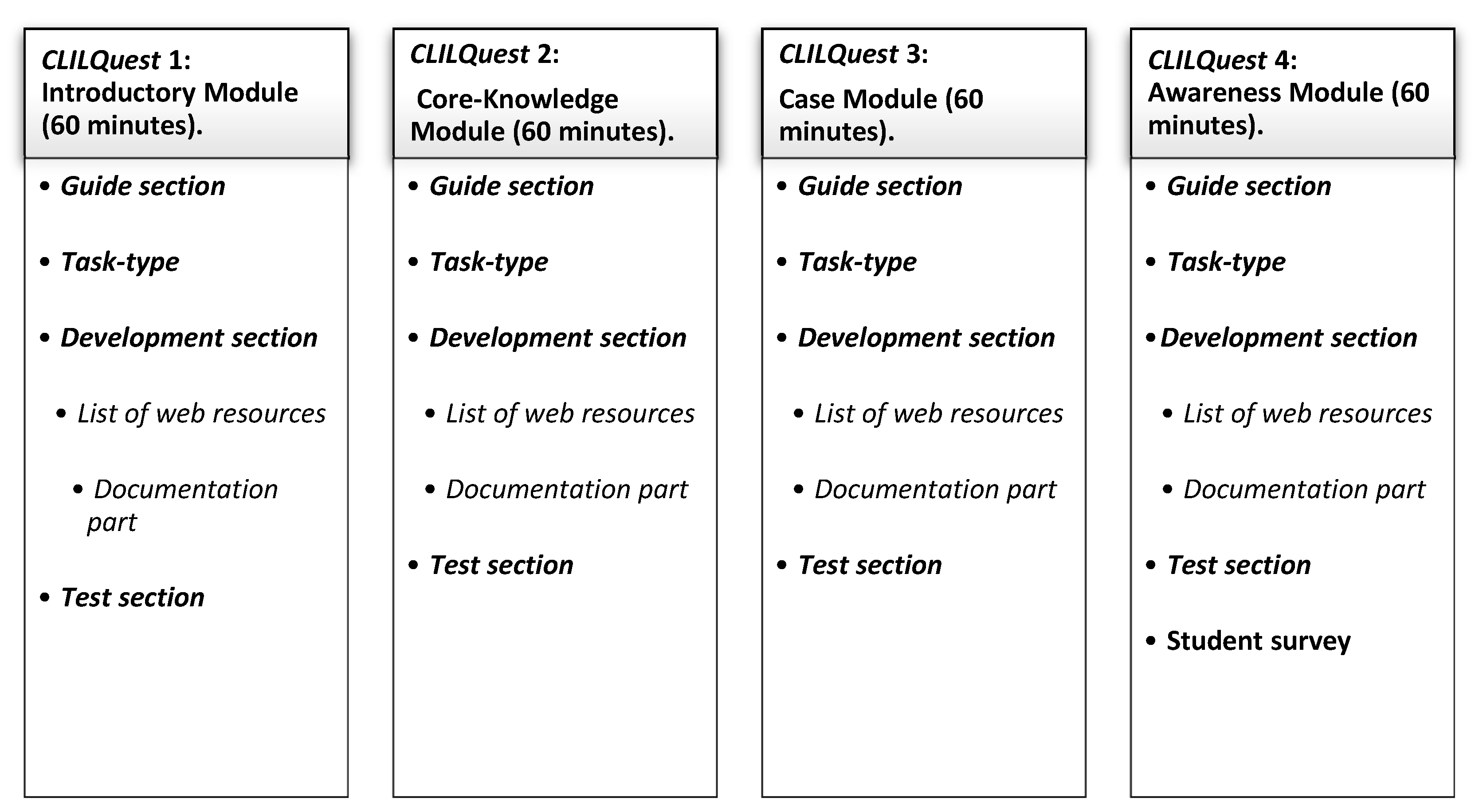
3.7. Lesson Planning
- The guide section aims to introduce the students’ roles, the main goal(s), and the expected outcomes, and some pre-tasks to engage learners and raise schematic knowledge.
- The task type involves the main tasks or quests.
- The development section integrates a list of web resources and a documentation part to help accomplish the quests. This section serves as scaffolding.
- The test section is designed to evaluate learners’ knowledge of the topic and its subtopics.
- A student survey (Awareness Module) is included, designed for students’ self-evaluation (see Section 4).
4. Post-Implementation Results and Discussion
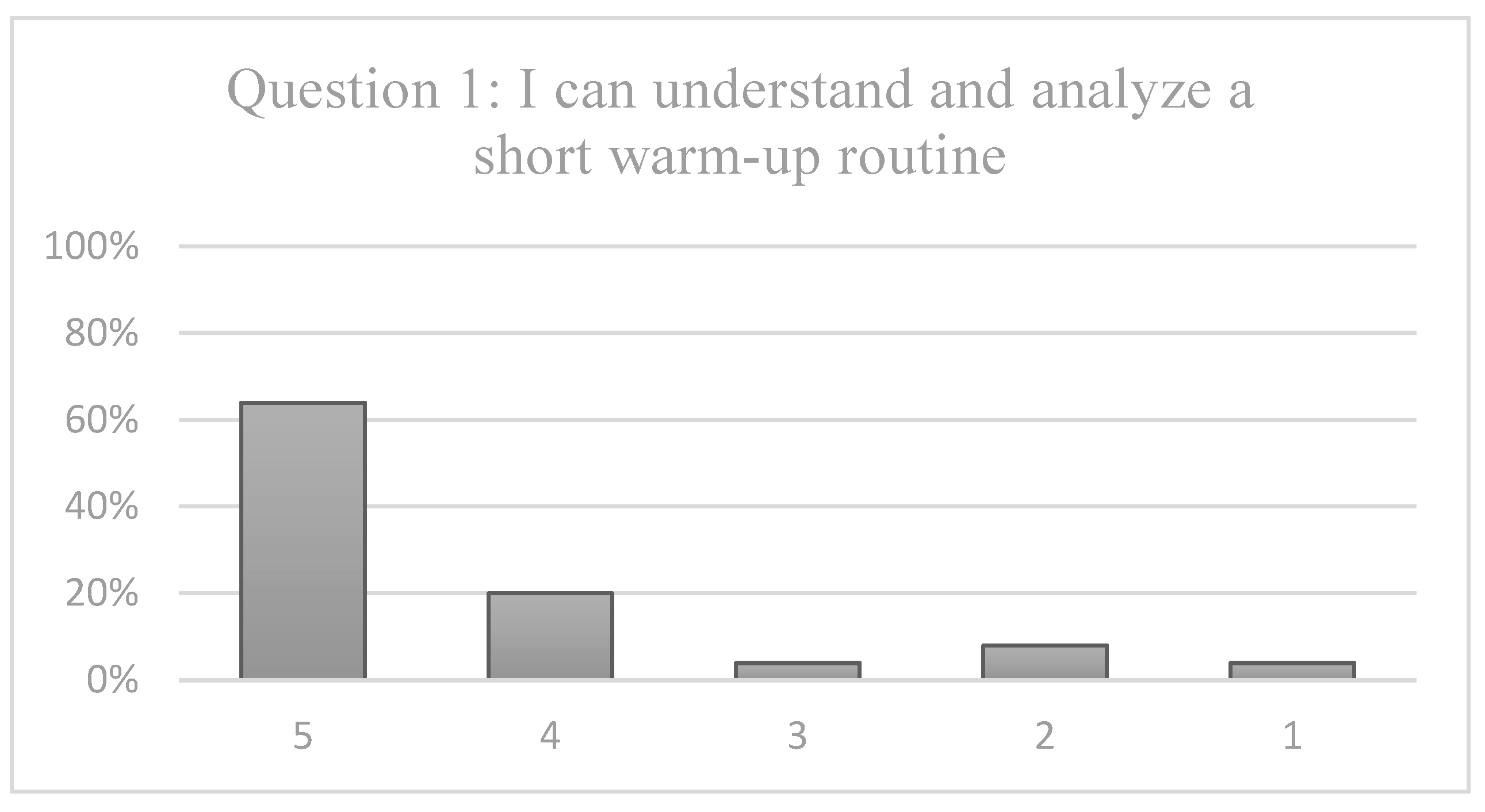
- I can understand and analyse a short warm-up routine.
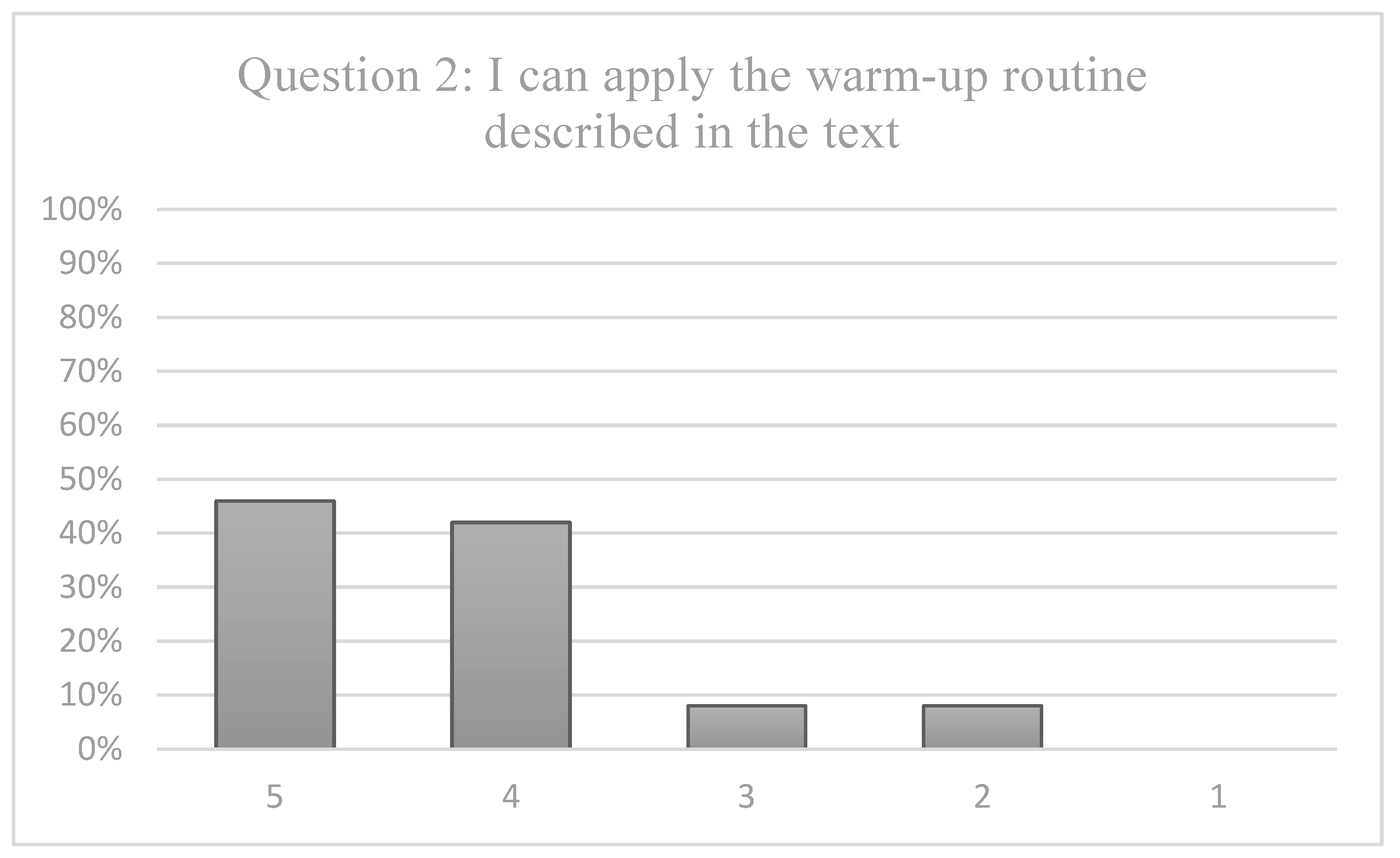
- I can apply the warm-up routine described in the text.
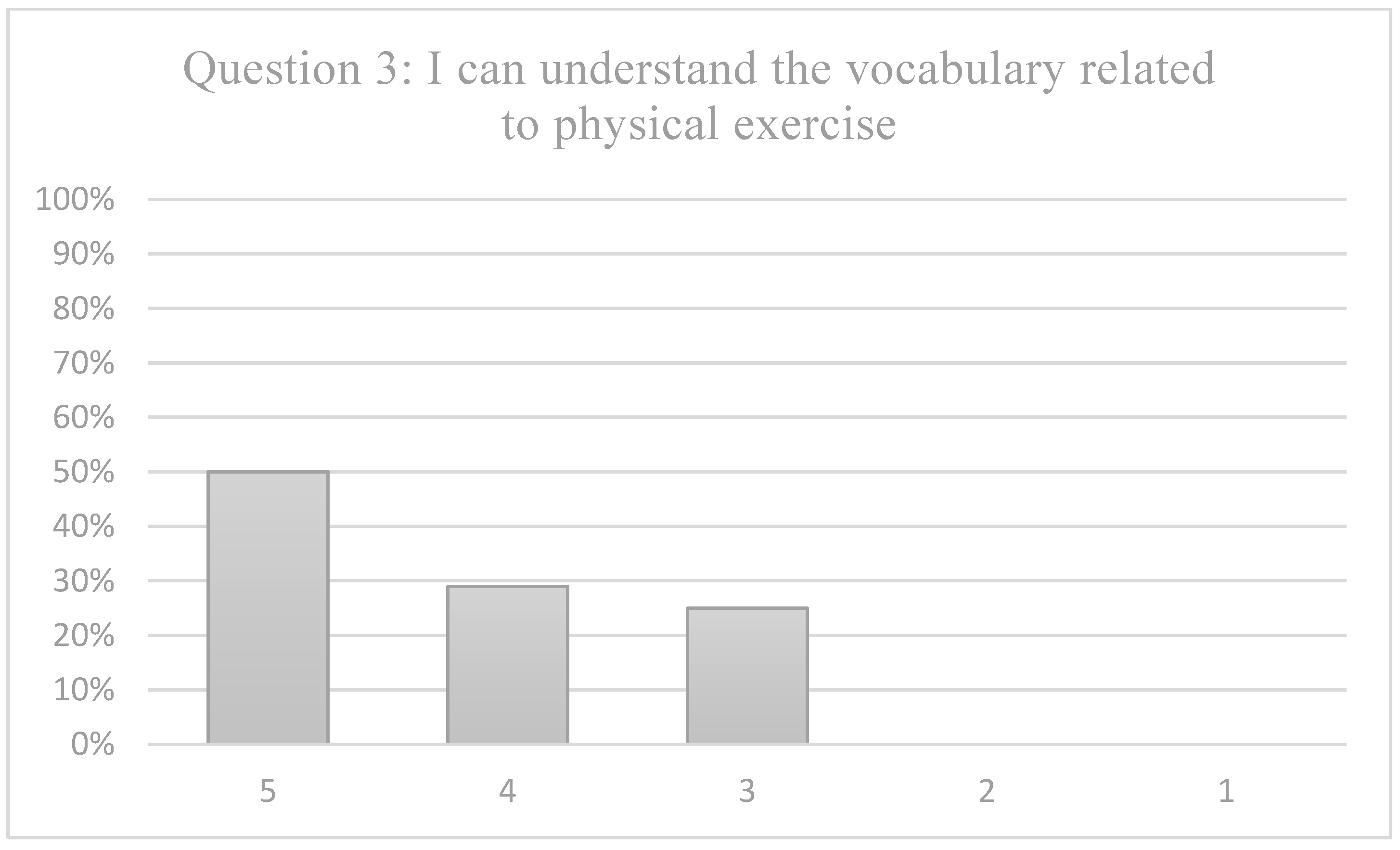
- I can understand the vocabulary related to physical exercise.
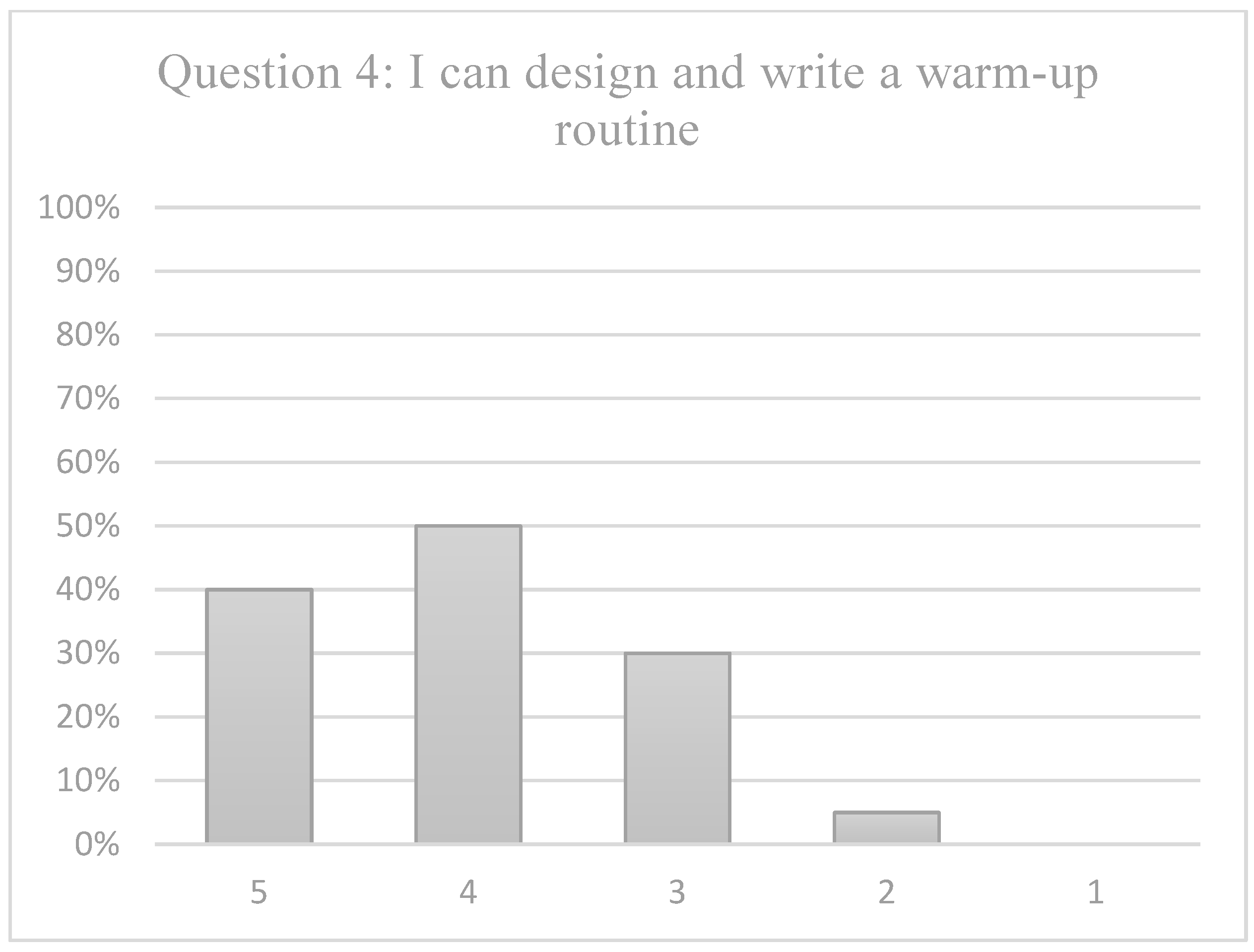
- I can design and write a warm-up routine.
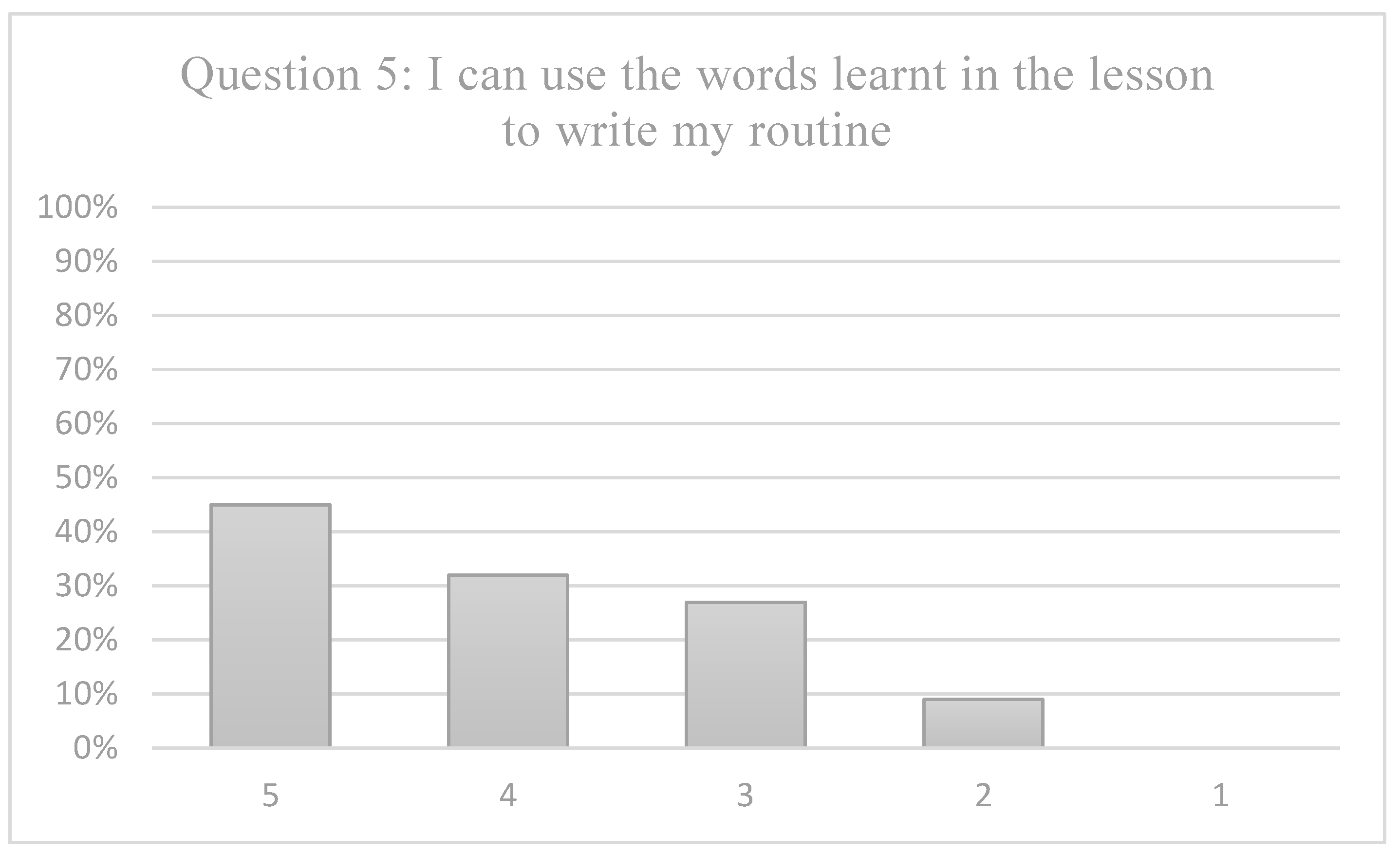
- I can use the words learned in the lesson to write my routine.
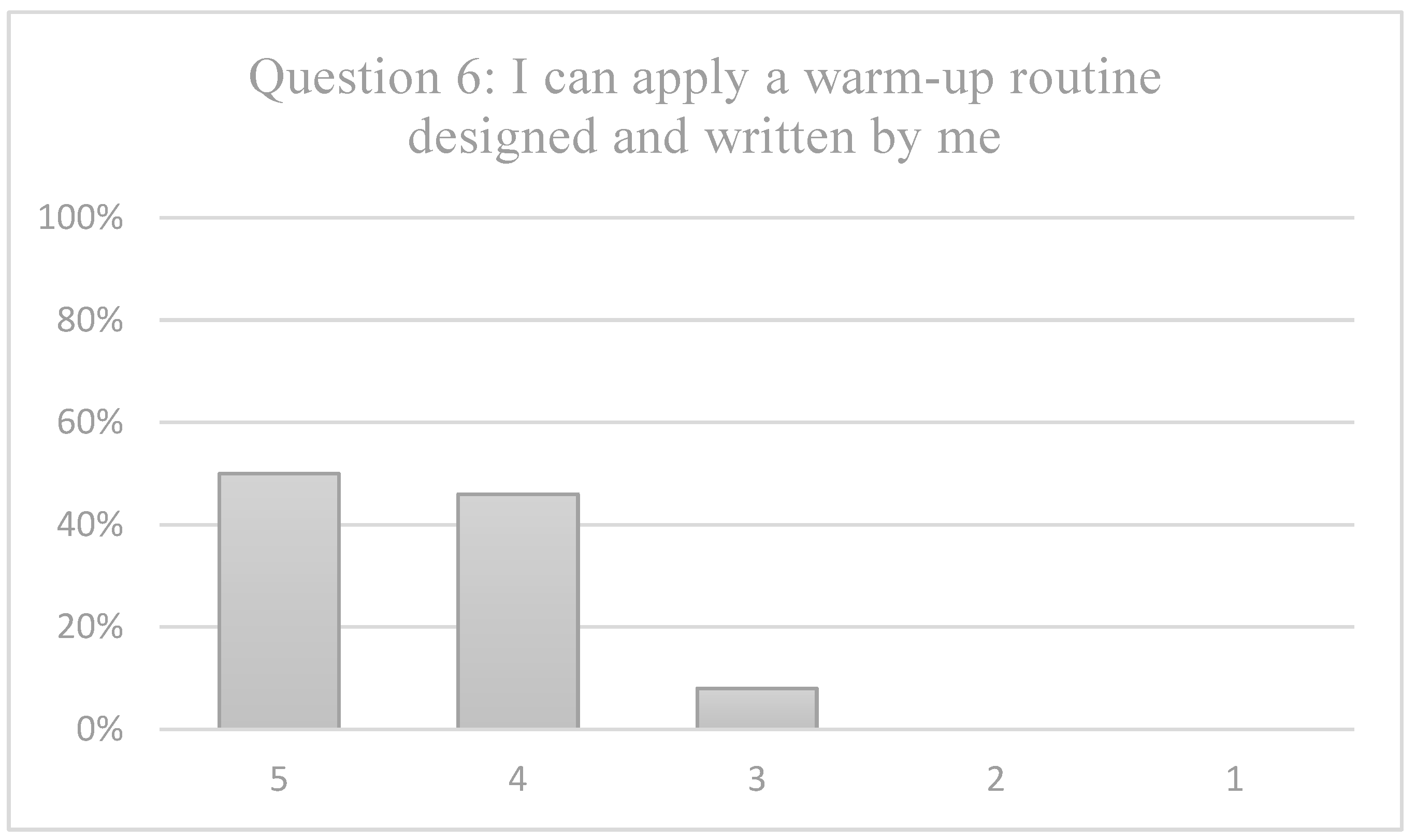
- I can apply a warm-up routine designed and written by me.
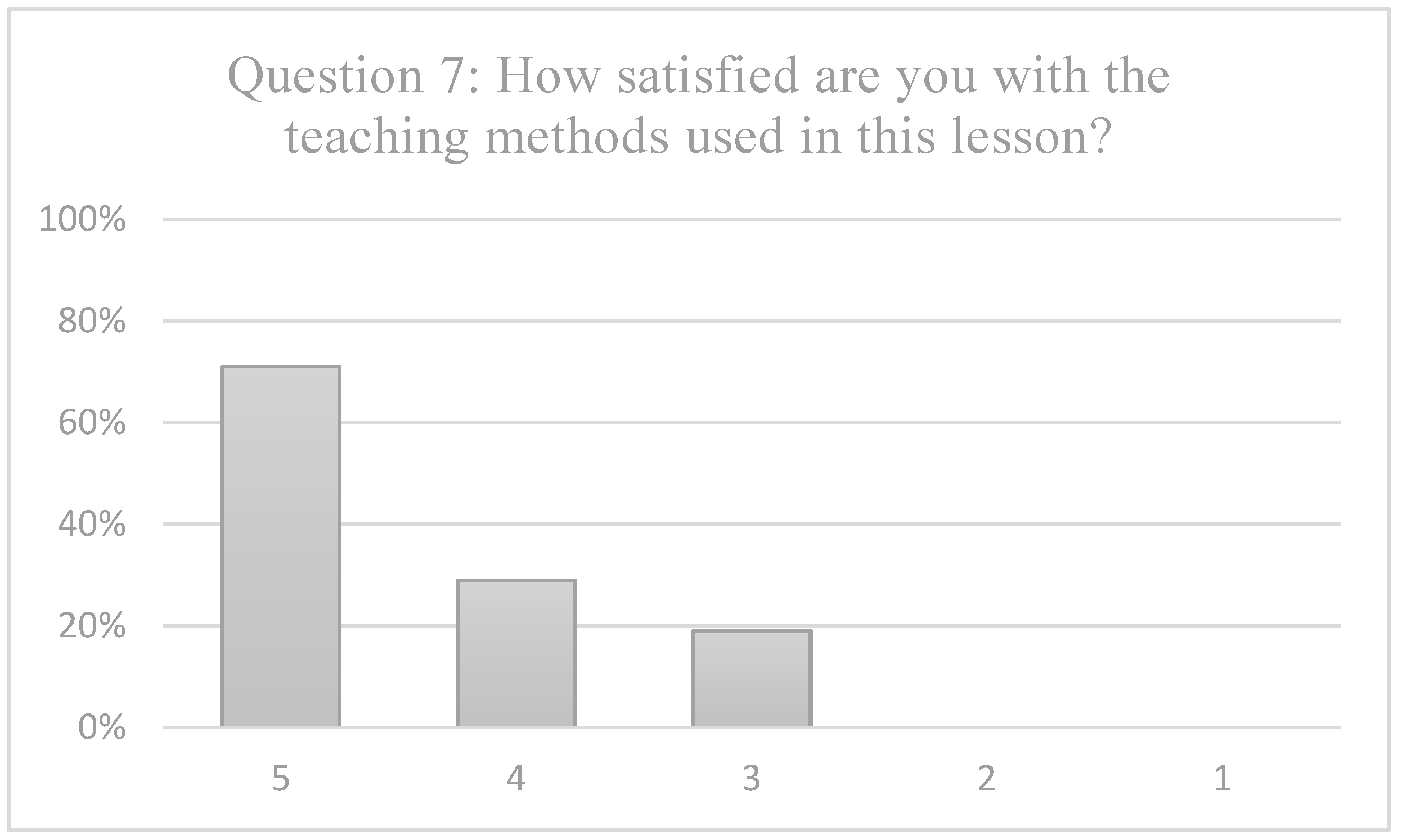
- How satisfied are you with the teaching methods used in this lesson?
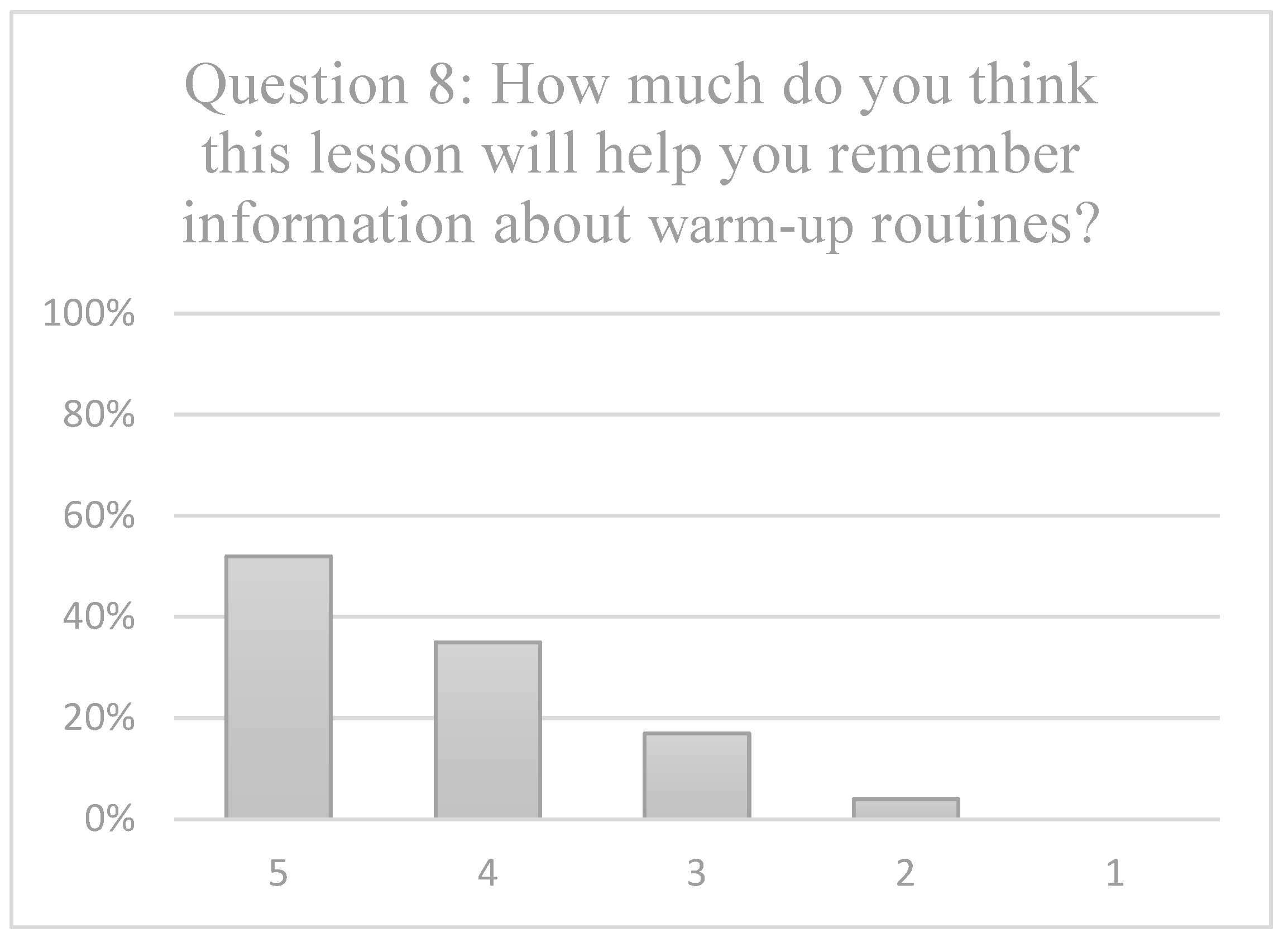
- How much do you think this lesson will help you remember information about warm-up routines?
5. Conclusions and Future Lines of Research
Author Contributions
Funding
Institutional Review Board Statement
Informed Consent Statement
Data Availability Statement
Acknowledgments
Conflicts of Interest
References
- Akay, E., Yılmaz, B., & Yüncü, H. R. (2025). A CLIL-based model proposal for a solution to English-speaking anxiety of gastronomy and culinary arts students. Journal of Hospitality, Leisure, Sport & Tourism Education, 36, 100559. [Google Scholar] [CrossRef]
- Asbury, B. (2000). Why I hated school PE. PE & Sport Today, 4(4). [Google Scholar]
- Ball, P., & Lindsay, D. (2010). Teacher training for CLIL in the Basque country: The case of the Ikastolas—In search of parameters. In D. Lasagabaster, & Y. Ruiz de Zarobe (Eds.), CLIL in Spain: Implementations, results and teacher training (pp. 162–187). Cambridge Scholars Publishing. [Google Scholar]
- Bloom, B., Englehart, M., Furst, E., Hill, W., & Krathwohl, D. (1956). Taxonomy of educational objectives: The classification of educational goals. Handbook I: Cognitive domain. Longman. [Google Scholar]
- Brumfit, C. (1984). Communicative methodology in language teaching. Cambridge University. [Google Scholar]
- Coral, J., Esquerda, G., & Benito, J. (2017). Design and validation of a tool to evaluate physical education and language integrated learning tasks. Didacticae: Revista de Investigación en Didácticas Específicas, (2), 43–58. [Google Scholar] [CrossRef]
- Coral i Mateu, J. (2013). Physical education and English integrated learning: How school teachers can develop PE-in-CLIL programmes. Temps d’educació, (45), 41. [Google Scholar]
- Coyle, D. (2007). Content and language integrated learning: Towards a connected research agenda for CLIL pedagogies. International Journal of Bilingual Education and Bilingualism, 10(5), 543–562. [Google Scholar] [CrossRef]
- Coyle, D., Hood, P., & Marsh, D. (2010a). Content and language integrated learning. Cambridge University Press. [Google Scholar] [CrossRef]
- Coyle, D., Hood, P., & Marsh, D. (2010b). The CLIL tool kit: Transforming theory into practice. In CLIL: Content and language integrated learning (pp. 45–73). Cambridge University Press. [Google Scholar]
- Cui, B., Jiao, W., Gui, S., Li, Y., & Fang, Q. (2025). Innovating physical education with artificial intelligence: A potential approach. Frontiers in Psychology, 16, 1490966. [Google Scholar] [CrossRef]
- Dalton-Puffer, C. (2007). Discourse in content and language integrated learning (CLIL) classrooms. John Benjamins Publishing Company. [Google Scholar] [CrossRef]
- Dalton-Puffer, C. (2008). Outcomes and processes in content and language integrated learning (CLIL): Current research from Europe. In W. Delanoy, & L. Volkmann (Eds.), Future perspectives for English language teaching (pp. 139–157). Carl Winter. [Google Scholar]
- Danilov, A., Salekhova, L., & Yakaeva, T. (2018). Designing a dual focused CLIL-module: The focus on content and foreign language. In INTED2018 Proceedings (pp. 1972–1978). IATED. [Google Scholar] [CrossRef]
- De la Barra, E., Veloso, S., & Maluenda, L. (2018). Integrating assessment in a CLIL-based approach for second-year university students. Profile Issues in Teachers Professional Development, 20(2), 111–126. [Google Scholar] [CrossRef]
- Dinham, J. (2024). The arts as the content-subject for content and language integrated learning (CLIL): How the signature pedagogies of arts education align to CLIL aims. Innovation in Language Learning and Teaching, 18(4), 352–363. [Google Scholar] [CrossRef]
- Escobar Urmeneta, C., & Sánchez Sola, A. (2009). Language learning through tasks in a content and language integrated learning (CLIL) science classroom. Porta Linguarum, 11, 65–83. [Google Scholar] [CrossRef]
- Fareed, M., Ashraf, A., & Bilal, M. (2016). ESL learners’ writing skills: Problems, factors and suggestions. Journal of Education and Social Sciences, 4(2), 81–92. [Google Scholar] [CrossRef]
- Fazio, A., Isidori, E., & Bartoll, Ó. C. (2015). Teaching physical education in English using CLIL methodology: A critical perspective. Procedia-Social and Behavioral Sciences, 186, 918–926. [Google Scholar] [CrossRef][Green Version]
- Fernández-Costales, A. (2023). Cognitive development in CLIL. In D. L. Banegas, & S. Zappa-Hollman (Eds.), The Routledge handbook of content and language integrated learning (pp. 127–140). Routledge. [Google Scholar]
- Fontecha, A. F. (2010). The CLILQuest: A type of language WebQuest for content and language integrated learning (CLIL). CORELL: Computer Resources Language Learning, 3, 45–64. [Google Scholar]
- Fontecha, A. F. (2012). CLIL in the foreign language classroom: Proposal of a framework for ICT materials design in language-oriented versions of content and language integrated learning. Alicante Journal of English Studies, 25, 317–334. [Google Scholar] [CrossRef]
- Gerbic, P. (2011). Teaching using a blended approach–what does the literature tell us? Educational Media International, 48(3), 221–234. [Google Scholar] [CrossRef]
- Goris, J. A., Denessen, E. J. P. G., & Verhoeven, L. T. W. (2019). Effects of content and language integrated learning in Europe. A systematic review of longitudinal experimental studies. European Educational Research Journal, 18(6), 675–698. [Google Scholar] [CrossRef]
- Hartiala, A. (2000). Acquisition of teaching expertise in content and language integrated learning [Ph.D. dissertation, University of Turku]. [Google Scholar]
- Heras, A., & Lasagabaster, D. (2015). The impact of CLIL on affective factors and vocabulary learning. Language Teaching Research, 19(1), 70–88. [Google Scholar] [CrossRef]
- Holmes, W., Bialik, M., & Fadel, C. (2019). Artificial intelligence in education: Promises and implications for teaching and learning (1st ed.). Center for Curriculum Redesign. [Google Scholar]
- Hu, D., Chen, J., Li, Y., & Wang, M. (2025). Technology-enhanced content and language integrated learning: A systematic review of empirical studies. Educational Research Review, 47, 100677. [Google Scholar] [CrossRef]
- Ito, Y. (2019). The effectiveness of a CLIL basketball lesson: A case study of Japanese junior high school CLIL. English Language Teaching, 12(11), 42–54. [Google Scholar] [CrossRef]
- Kang, H. (2022). Effects of artificial intelligence (AI) and native speaker interlocutors on ESL learners’ speaking ability and affective aspects. Multimedia-Assisted Language Learning, 25(2), 9–43. [Google Scholar] [CrossRef]
- Kosmas, P., Ioannou, A., & Zaphiris, P. (2019). Implementing embodied learning in the classroom: Effects on children’s memory and language skills. Educational Media International, 56(1), 59–74. [Google Scholar] [CrossRef]
- Lamb, P., & King, G. (2020). Another platform and a changed context: Student experiences of developing spontaneous speaking in French through physical education. European Physical Education Review, 26(2), 515–534. [Google Scholar] [CrossRef]
- Lasagabaster, D., & Sierra, J. M. (2009). Language attitudes in CLIL and traditional EFL classes. International CLIL Research Journal, (2). Available online: https://urn.fi/URN:NBN:fi:jyu-202504083116 (accessed on 1 December 2025).
- Llinares, A., Morton, T., & Whittaker, R. (2012). The roles of language in CLIL. Cambridge University Press. [Google Scholar]
- Luckin, R., Holmes, W., Griffiths, M., & Forcier, L. B. (2016). Intelligence unleashed: An argument for AI in education. Pearson. [Google Scholar]
- Macwan, H. J. (2015). Using visual aids as authentic material in ESL classrooms. Research Journal of English Language and Literature (RJELAL), 3(1), 91–96. [Google Scholar]
- Maggi, F. (2012). Evaluation in CLIL. In F. Quartapelle (Ed.), Assessment and evaluation in CLIL (pp. 57–74). Ibis Edizioni. [Google Scholar]
- Marsh, D. (2002). CLIL/EMILE–The European dimension. Action, trends and foresight potential. UNICOM, Continuing Education Centre. [Google Scholar]
- Moate, J. (2010). The integrated nature of CLIL: A sociocultural perspective. International CLIL Research Journal, 1(3), 38–45. [Google Scholar]
- Montes Borrego, M. M. (2020). The role of ICT in CLIL. Video as a didactic material [Master’s dissertation, Universidad de Jaén; Universidad de Córdoba]. [Google Scholar]
- Mosston, M., & Mueller, R. (1974). Mission, omission and submission in physical education. In Issues in physical education and sports (pp. 91–107). National Press Books. [Google Scholar]
- Muñoz Acevedo, R., Marco, L., & José, M. (2013). WebQuests and the development of the reading skill [Master’s thesis, Universidad de Zaragoza]. [Google Scholar]
- Nguyen, H. T. M., Nguyen, H. T. T., Gao, X., Hoang, T. H., & Starfield, S. (2023). Developing professional capacity for content language integrated learning (CLIL) teaching in Vietnam: Tensions and responses. Language and Education, 38(1), 118–138. [Google Scholar] [CrossRef]
- Olson, N. (2021). Tools for team-taught CLIL implementation. The Journal of the Japan CLIL Pedagogical Association (JJCLIL), 3, 10–30. [Google Scholar]
- Ó Ceallaigh, T. J., Ní Mhurchú, S., & Ní Chróinín, D. (2017). Balancing content and language in CLIL: The experiences of teachers and learners. Journal of Immersion and Content-Based Language Education, 5(1), 58–86. [Google Scholar] [CrossRef]
- Patty, J. (2024). The use of AI in language learning: What you need to know. Journal Review Pendidikan dan Pengajaran (JRPP), 7(1), 642–654. [Google Scholar]
- Pérez-Cañado, M. L. (2012). CLIL research in Europe: Past, present, and future. International Journal of Bilingual Education and Bilingualism, 15(3), 315–341. [Google Scholar] [CrossRef]
- Ramos, F., & Ruíz Omeñaca, J. V. (2011). La educación física en centros bilingües de primaria inglés-español: De las singularidades propias del área a la elaboración de propuestas didácticas prácticas con AIBLE. Revista Española de Lingüística Aplicada, 24, 153–170. [Google Scholar]
- Reiko, Y., Hideo, T., & Katsuaki, O. (2015). Students’ perceptions of CLIL and topics in EFL University classrooms. Journal of Humanities and Sciences, Nihon University, 21(1), 19–37. [Google Scholar]
- Salvador-García, C., Capella-Peris, C., Chiva-Bartoll, O., & Ruiz-Montero, P. J. (2020). A mixed methods study to examine the influence of CLIL on physical education lessons: Analysis of social interactions and physical activity levels. Frontiers in Psychology, 11, 578. [Google Scholar] [CrossRef] [PubMed]
- Stoller, F. L., Anderson, N. J., Grabe, W., & Komiyama, R. (2013). Instructional enhancements to improve students’ reading abilities. English Teaching Forum, 51, 2. Available online: https://eric.ed.gov/?id=EJ1014068 (accessed on 1 December 2025).
- Sulyman, H. T., Olaosebikan, A. S., Olosunde, J. O., & Oladoye, E. O. (2022). Primary school playground and pupils physical skill acquisition. Indonesian Journal of Sport Management, 2(2), 180–193. [Google Scholar] [CrossRef]
- Tai, K. W., Wei, L., & Loh, E. K. Y. (2025). Enhancing students’ content and language development: Implications for researching multilingualism in CLIL classroom context. Learning and Instruction, 96, 102083. [Google Scholar] [CrossRef]
- Watts-Taffe, S., & Truscott, D. M. (2000). Focus on research: Using what we know about language and literacy development for ESL students in the mainstream classroom. Language Arts, 77(3), 258–265. [Google Scholar] [CrossRef]
- Zhong, Q., Jiang, J., Bai, W., Yin, Z., Liao, Z., & Zhong, X. (2025). Application of digital-intelligent technologies in physical education: A systematic review. Frontiers Public Health, 13, 1626603. [Google Scholar] [CrossRef] [PubMed]





| MODULE | OBJECTIVE |
|---|---|
| Introductory Module | To carry out research into the concept of warm-up and how to implement it in a physical routine. |
| Core-Knowledge Module | To identify the best warm-up strategies for different movement sequences. |
| Case-Module | To analyse the importance of warm-up routines in Physical Education. |
| Awareness Module | To design an efficient warm-up routine for Physical Education and reflect upon its effects on physical performance. |
Disclaimer/Publisher’s Note: The statements, opinions and data contained in all publications are solely those of the individual author(s) and contributor(s) and not of MDPI and/or the editor(s). MDPI and/or the editor(s) disclaim responsibility for any injury to people or property resulting from any ideas, methods, instructions or products referred to in the content. |
© 2026 by the authors. Licensee MDPI, Basel, Switzerland. This article is an open access article distributed under the terms and conditions of the Creative Commons Attribution (CC BY) license.
Share and Cite
Ramírez-Aroca, C.; Javadinejad, A. AI-Enhanced CLIL for Embodied Learning: Applying the CLPS Framework in Secondary Physical Education. Educ. Sci. 2026, 16, 62. https://doi.org/10.3390/educsci16010062
Ramírez-Aroca C, Javadinejad A. AI-Enhanced CLIL for Embodied Learning: Applying the CLPS Framework in Secondary Physical Education. Education Sciences. 2026; 16(1):62. https://doi.org/10.3390/educsci16010062
Chicago/Turabian StyleRamírez-Aroca, Cristina, and Arash Javadinejad. 2026. "AI-Enhanced CLIL for Embodied Learning: Applying the CLPS Framework in Secondary Physical Education" Education Sciences 16, no. 1: 62. https://doi.org/10.3390/educsci16010062
APA StyleRamírez-Aroca, C., & Javadinejad, A. (2026). AI-Enhanced CLIL for Embodied Learning: Applying the CLPS Framework in Secondary Physical Education. Education Sciences, 16(1), 62. https://doi.org/10.3390/educsci16010062